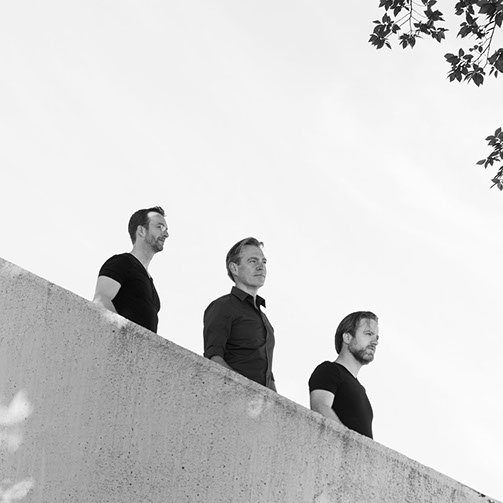
Day Breaks (Blue Note Records), Norah Jones’ stunning sixth solo album, is a kindred spirit to the singer’s breakout debut Come Away With Me and finds the 9-time GRAMMY-winner returning to the piano and her roots. The album features jazz luminaries including her Blue Note label mates saxophonist Wayne Shorter, organist Dr. Lonnie Smith, and drummer Brian Blade on a 12-song set that presents 9 new originals alongside covers of songs by Horace Silver, Duke Ellington and Neil Young.
The Individuation Quintet was formed in 2014 to perform original straight ahead Jazz music influenced by the ideas of Swiss Psychologist Carl Jung. They released their first recording "Unification" (New Origins label) in February of 2017 and have performed at various clubs throughout Chicago. The purpose of the group is to create an awareness of Jung’s concepts such as Individuation, Synchronicity, and Archetypes – and in turn, help enrich people’s lives. What is Individuation exactly? It can be defined as the gradual integration and unification of the self through the resolution of successive layers of psychological conflict (the term was created by Jung). But more simply, it is trying to be the best self possible by realizing your potential and abilities, as well as your Life Destiny. This not only applies well to a jazz group (where many individuals strive for the best expression of their self), but also to the audience and people in general. In current times there is a lot of unexplained and random acts of violence and people are realizing the importance of mental health. Psychology and Music can help open more dialogs about these issues. There is also an overwhelming emphasis by the media to make ourselves better on the outside, but nobody talks about how to make ourselves better on the inside. Psychology and Music can help do that, and by playing Music influenced by Psychology we hope to provide awareness on how a greater examination of our Soul and our Life Destiny can provide meaning and clarity.
Having used his talents as a virtuoso bass player to turn drum & bass & electronica on its head with a series of mind melting albums for Warp, Tom Jenkinson or as most people now him - Squarepusher calls on the help of his allies Strobe Nazard, Company Laser & Arg Nution to take a second turn on what amounts to possibly his most ambitious project yet, Shobaleader One. As those who have been paying attention will know, Shobaleader One debuted back in 2010 with the Demonstrator album, and it's seven years later with Elektrac that they really show off the power of their combined skills.
Made up of eleven covers of classic Squarepusher tracks, what is most striking about Elektrac is that each piece retains the funk that is such a singular part of the Squarepusher originals, the core elements get translated into new forms that show familiar traces, yet are strikingly new. For instance, the 96 drill & bass jazz of Squarepusher Theme in the hands of Shobaleader One gets mutated into a cool robotic funk number, while the Hard Normal Daddy classic Coopers World becomes almost disco, a track that expels so much funk it's hard to not start bopping along the second it starts. On Elektrac, Shobaleader One paint eleven excitingly vivid new landscapes with unmistakably familiar colours.
Je ne vais pas me cacher derrière mon petit doigt: J’aime beaucoup Vladimir Médail, depuis que je l’ai entendu aux côtés de la chanteuse Mathilde il y a trois ans. Tous deux interprétaient avec ferveur et délicatesse les standards de Cole Porter. Des morceaux aussi rebattus que Night and Day étaient soudain débarrassés de leur patine grâce à la sensibilité de ces deux musiciens. Ce que j’aime par dessus tout chez Vladimir Médail, c’est ce lyrisme délicat, presque ingénu à force d’évidence chantante. Je retrouve ces qualités mélodiques dans ses compositions (comme Vladimir est un chouette gars, la plupart sont des bouquets de fleurs adressés à ses proches, qu’il s’agisse de Folk Song for my father, ou Our Sweet home pour sa compagne). La plus belle, la plus lyrique est cette Valse landaise, véritable chanson sans paroles, qu’énonce avec sensibilité le contrebassiste Etienne Renard. Je n’avais pas entendu Vladimir Médail depuis plusieurs mois, et je suis frappé de voir qu’il a « musclé son jeu » , comme le disait jadis Aimé Jacquet à Robert Pirès (je demande pardon aux lecteurs de les écraser sous le poids de mon érudition littéraire). Vladimir Médail a rajouté pas mal de bleu à sa palette. Il se lâche aussi plus volontiers la bride, s’autorisant des traits rapides qu’il s’accordait auparavant avec plus de parcimonie, cela est frappant notamment sur Good Night et Don’t give up.
Les deux partenaires de Vladimir Médail sont sobres mais ne jouent ni les hommes invisibles ni les dérouleurs de tapis rouge. Elie Martin-Charrière, est un fin coloriste qui ne néglige pas les fondamentaux du groove. Son utilisation des mailloches me paraît particulièrement remarquable. Quant à Etienne Renard, il est d’une impeccable solidité. C’est une belle soirée de musique sensible et chantante. Dès que le tapage et le remuement du monde se feront trop pressants, je sais donc qu’il me restera la possibilité d’aller écouter ce chouette et délicat trio.
Un jazz métisse et organique, le Hadouk célèbre la vie et les cultures du monde dans un langage musical onirique et captivant depuis deux décennies. Éléments fondateurs du son Hadouk le Hajouj de Loy Ehrlich et le doudouk de Didier Malherbe ont forgé l’identité sonore du groupe reconnaissable entre toutes. D’abord duo, puis trio avec Steve Shehan (percussions), le groupe est devenu quartette en 2013 après le départ de ce dernier et l’arrivée d’Eric Löhrer (guitare) et Jean-Luc Di Fraya (percussions et chant). Le Hadouk est toujours la promesse d'un voyage poétique entre l’Orient (des rythmes gnawa aux maqams arabes), l’Occident (du rock aux musiques noires américaines), le Nord (des musiques celtes aux airs sino-japonais), le Sud (du blues malien aux transes ancestrales). La formation nous embarque dans un nouveau conte extatique avec Le cinquième fruit prévu le 17 mars chez Naïve.
Thèmes hypnotiques, rythmiques intenses et envolées lyriques, les dix titres de ce cinquième fruit sont autant d'excursions brillantes dans le folklore imaginaire sans limite de ces trois multi-instrumentistes libres. Eric Löhrer délaisse un temps sa guitare acoustique pour l'électrique, élargissant ainsi le spectre musical de l'aventure qui prend parfois des couleurs du jazz-rock progressif de Gong dont Didier Malherbe fut l'un des membres fondateurs. L'album a été enregistré dans les conditions du live, les musiciens ont pu laisser leurs improvisations prendre le pas sur des arrangements aussi riches que rayonnants. Le cinquième fruit est un rêve merveilleux, il y est question d’une rencontre : le premier fruit symbolise le regard; le second fruit incarne la parole; le troisième, le toucher; le quatrième représente le baiser ; le cinquième fruit reste à imaginer…
1 Matin d'un faune
2 Tidzi
3 Dame de cœur
4 Le jardin d'Hadouk
5 So Gong
6 Tchoun
7 Les fées d'Iris
8 Lila et Lampion
9 Valse au pays du tendre
10 Le cinquième fruit
11 Lament (Bonus Track)
Loy Ehrlich (Gumbass, Hajouj, Ribab)
Didier Malherbe (Doudouk, flûtes, sax soprano)
Eric Löhrer (Guitare électrique, guitare acoustique, Lapsteel)
United merges the talents of violinist Jason Anick and pianist Jason Yeager
in a thrilling display of imaginative composition and world class musicianship
Featuring Anick and Yeager with special guests George Garzone, Jason Palmer, John Lockwood, Clay Lyons, and Jerry Leake
"United takes you on an intriguing and picturesque journey. The CD covers a wide range of musical terrain and the writing and playing on each track are adventurous, engaging and passionate, making you eager to hear the next song."- Grammy-nominated violinist and MacArthur Fellow Regina Carter
"Š[Jason] always impressed me with his talent, his curiosity and his desire to create his own music while really investigating the jazz piano tradition."- Grammy-nominated pianist/composer Fred Hersch
CD release concerts on Sunday, March 12 at Press Room, Portsmouth
Monday, March 13 at Berklee Performance Center, Boston, MA
Meshing the outsized gifts of violinist and mandolinist Jason Anick and pianist Jason Yeager, United (to be released March 10, 2017 on saxophonist and jazz visionary Greg Osby's Inner Circle Music label) demonstrates how effectively today's most creative musical artists bloom outside the constrictions of genre and idiom. Rejecting the confining roles of strict categorization, the album draws on the wide swath of musical interests of its co-leaders, blending straight-ahead and post-bop jazz, world music, funk and pop, eagerly embracing what Anick and Yeager have defined as "jazz without borders." Displaying the virtuosic talents of both of these formidable instrumentalists, United also makes a thoroughly convincing claim for their roles as imaginative composers and inclusive conceptualists. Where Anick may be best known as a lynchpin of the acclaimed neo-Gypsy Jazz ensemble, Rhythm Future Quartet, and Yeager is a recognized exemplar of post-bop and third stream piano, their first project as co-leaders doesn't place either in strictly familiar roles. Primarily utilizing bassist Greg Loughman and drummer Mike Connors, as well as valued guests including the saxophonists George Garzone and Clay Lyons, trumpeter Jason Palmer, bassist John Lockwood and percussionist Jerry Leake, United is a shining example of how the two Jasons engage the jazz tradition while gleefully expanding its purview. The album roams freely among musical idioms, utilizing Israeli-inspired rhythms for the propulsive "Achi" and making vivid use of the Argentine chacarera beat for "La Segunda"; waxing a lyrical homage to Billy Strayhorn ("Sweet Pea"); training a rhythmically shifting gaze on George Harrison's "Something"; romping on the new jazz tribute to Joshua Redman, "Well Red"; duetting on a loping version of the Miles Davis standard, "All Blues"; and essaying two post-bop excursions by the innovative Polish jazz violinist Zbigniew Seifert (one of which, "Turbulent Power," features the saxophone avatar George Garzone.) This stylistic diversity frees the leaders, allowing each to explore surprising and eminently satisfying aspects of their musical personalities. For Anick and Yeager-friends since their teenage years, frequent collaborators, and now fellow Berklee instructors-United is both an artistic culmination of a long personal association and a statement of a shared musical aesthetic. "The album has been a great outlet for both of us," says Anick. "We get to stretch our instrumental voices within different contexts. We've always been in sync in terms of a creative vision where melody is never sacrificed to the demands of improvisation. We both believe that you can express yourself within the context of a song. There's a chemistry between us that allows us to create very special sonic soundscapes together."
"The album was also a means to honor and feature trusted musical associates and Berklee colleagues," says Yeager. "Clay Lyons, featured on "Bird's Eye View", Jerry Leake, and the third Jason, Jason Palmer, as well as Greg Loughman, Mike Connors and John Lockwood are all fantastic players who deserve wider recognition. For his part, George Garzone is just a force of nature!" Indeed, the project's Berklee ties are manifest: Recorded by Professor Mark Wessel through a faculty grant at the college's state-of-the-art studios, Garzone, Lockwood, Palmer and Leake are all Berklee professors, and alto saxophonist Lyons is an alum. Even with guests contributing so significantly to the success of the project, it always came back to the creative symbiosis of the co-leaders. "We were looking for different colors to add to the music, says Yeager, "but it was the thread that exists between us, that held United together." One of the youngest instructors at Boston's Berklee College of Music and an award winning composer, Jason Anick is a co-founder and a featured member of the Rhythm Future Quartet, one of the preeminent neo-Gypsy Jazz outfits; he also leads his own contemporary jazz ensemble, and performs with the Grammy-winning guitarist John Jorgenson. With performances all over the world and renowned venues like the Montreal Jazz Festival, Blue Note, Scullers Jazz Club, Yoshi's Jazz Club, and TD Garden, Jason has proven himself to be a leader in the ever-growing contemporary string world. Anick's recordings as a leader include Sleepless, Tipping Point, and Travels. Now based in New York City, Jason Yeager (whose own albums include Ruminations and Affirmation) has considerable personal and professional ties to the New England area where he was born and raised. Currently teaching at Boston's Berklee College of Music, where he is also one of the college's youngest faculty members, Yeager graduated with honors from a double degree program at Tufts University and New England Conservatory. At NEC he was mentored by such significant instrumentalists as Danilo Perez, Fred Hersch, Ran Blake, Frank Carlberg, Jerry Bergonzi and John McNeil. He has performed across the US and abroad in Argentina, South Africa, and Botswana. Among the artists with whom Yeager has performed are Greg Osby, Rudresh Mahanthappa, Linda Oh, Sara Serpa, Ayn Inserto and Ran Blake. He's also featured on Jason Anick's Tipping Point.
HARRIS EISENSTADT'S RECENT DEVELOPMENTS WILL BE RELEASED ON MARCH 10
Latest Songlines Release, The Drummer's Sixth, Introduces His New Nonet, featuring Anna Webber on Flute; Sara Schoenbeck on Bassoon; Nate Wooley on Trumpet; Jeb Bishop on Trombone; Dan Peck on Tuba; Brandon Seabrook on Banjo; Hank Roberts on Cello; Eivind Opsvik on Bass; and Eisenstadt on Drums
CD release concert Scheduled for May 6 at the Greenwich House Sound It Out Concert Series in Manhattan
Recent Developments is the latest project from the Toronto-born, New York-based composer, percussionist, and bandleader Harris Eisenstadt, his 20th release as a bandleader. His five previous Songlines recordings have been by the 4-5 person groups Canada Day and Golden State. His new nonet, which includes many of Brooklyn's most esteemed creative musicians, is the fifth installment of music for medium-sized ensembles, following Fight or Fight (2003), The All Seeing Eye + Octets (2006), Woodblock Prints (2010), and Canada Day Octet (2012). As Harris explains: "Each were explorations in long-form composition and unusual instrumentation. And each walked the line between small group conception and large ensemble ambition. Medium-sized ensembles (groups of, say, 7-10 instruments), present unique sets of compositional problems. They contain many more voices than a small group has to account for. But at the same time, you are not quite dealing in big, heaving blocks of sound - in sections of four and five like instruments, for example, as in big bands, or in orchestral sections with massed strings and complementary-sized winds and brass. Writing for a medium-sized ensemble is, in miniature, something like writing for chamber orchestra. Textures can be massed, but they can just as easily be quite thin. I wanted to explore all of the weights available in Recent Developments, and discovered again that the heaviest weight in a medium-sized group still has a sheerness, a level of exposed-ness, that is neither large nor small."
The range of polyphonic/polyrhythmic textures emphasizes the unique instrumentation's rich timbral variety. Eisenstadt sketched all the music on a transatlantic flight home to Brooklyn at the end of a tour. "Most of the melodic and rhythmic material came rushing out in those nine hours. [But] it took a couple months [spent] mainly revising the counterpoint...to try and balance the orchestrations, to spread the materials throughout the group to exploit as many instrumental textures as I could...The wide range of timbral combinations is at the heart of the recording, and is reflected in the color scheme and shape of David Foarde's beautiful cover design." The form of the suite is divided into fourteen parts: six ensemble sections and eight discreet transitional sections in which snapshots of the material from the ensemble sections are re-imagined and interpreted freely in sub-ensembles of varied instrumentation that were chosen on the day of the recording.
During the revision process Harris drew on such diverse influences as Jane Jacobs' The Death and Life of Great American Cities, David Chase's The Sopranos (mainly for its scope, its long-form arc) and Beni Ourain-style rug weaving of the Berbers from the Atlas mountains of Morocco: "For some reason...I thought a lot about Jacobs' still-prescient views of what was happening to New York City in the mid-20th century, as mixed-use, mixed-income, mixed-ethnicity neighborhoods were razed and low-income housing projects became ubiquitous. The music takes inspiration from Jacobs' ideas of community, [offering] a variety of musical/emotional settings that reflect the many ways in which communities interact; not only in varying numbers, but in interactions of varied emotional tenor... Earlier this year I discovered Beni Ourain-style rugs and fell in love with their instantly-identifiable aesthetic...No two rugs are the same; each design embraces abstraction alongside lyricism, simplicity and minimalism alongside textural complexity, and are often woven by mother and daughter together. They are each examples of communal creation, improvisational whimsy, and refined detail."
Musical influences involve the mid-sized ensemble compositional strategies of Henry Threadgill, Dave Douglas, and John Zorn. "I started working with Zorn this past year, playing ten tunes of his new Bagatelles book (of 300 tunes!) with Chris Dingman and Eivind Opsvik. It's been inspiring to witness first-hand not only how prolific he is, but also his microscopic attention to detail. The Bagatelles are miniatures, yet they contain multitudes. Even though Recent Developments is long-form rather than short form, I wanted to honor that attention to detail in my revisions. I wanted to treat every line, whether main melody, counterpoint, rhythmic/harmonic underpinning, with the same meticulousness... I've always admired [Douglas's] prolific output and his attention to lyricism...Threadgill remains a central source of inspiration as a composer, arranger, and bandleader. His aggregates of unusual instrumentation and their rhythmic vitality continue to astonish."
If this all sounds pretty serious, the music as performed certainly has its beguiling idiosyncrasies that allow for a variety of responses: "This music, though narrative-based, claims, through abstraction or subversion of expectations, no 'program note' of intent. One listener's deadpan is another's lightly ironic is another's dispassionate is another's emotionally charged." For more information: www.harriseisenstadt.com. A full interview with Harris can be found on is linked from the Songlines release page for Recent Developments.
Nerve Dance – saxophonist/composer/bandleader/conceptualist Michaël Attias’ sixth album (available on Clean Feed Records, March 10, 2017), which deals with the aesthetics of spontaneity, the theory of elasticity and the concept of equality in music, is an expansive, spirited debut from Michaël Attias’ new Quartet, featuring Aruán Ortiz (piano), John Hébert (bass) and Nasheet Waits (drums). OnNerve Dance, we are regaled with hearing four hearts, minds and bodies hooking up at an extremely high level on nine Attias compositions, and two from Hébert. Each piece exercises a different set of muscles and faculties for the band, and every member of the Quartet carries within them the historical knowledge and a fluency in the multitude of dialects of this music; consequently we hear them free within the compositions, deep into the zone of this collective creation, transcending their respective instruments and completely surrendering to the music. Attias has been influenced by literature, film, painting, extensive travel, life in general, and of course, a wide spectrum of music, ranging from Moroccan Gnawa rhythms to Renaissance Polyphony, Ligeti, Debussy and the 2nd Viennese School; the AACM, Ornette Coleman, Cecil Taylor and Steve Lacy, but also Andrew Hill, Paul Motian, Konitz & Marsh, plus the first and lasting loves, Ellington, Coltrane, Monk, Miles and Bird. Attias’ music, while dedicated to “creation” rather than “re-creation”, remains firmly rooted in the avant-garde, conceptualized as the true tradition of this music from its earliest recordings onward. Attias asserts that the revolutionary, adventurous spirit of the major figures of jazz, including his aforementioned influences, made bold strokes of genius that only seem inevitable in retrospect, and have paved the way for the audacious improvisers of today who remain singular and fearless in the face of mass conformity. There exists an instinctual, visceral need in Attias and his cohorts to play music that is honest, that rejects inertness and fully embraces the meaning of creativity and evolution. This music is found on Nerve Dance.
Attias, a quietly fierce, improvising force on the international scene, has worked with Anthony Braxton and Paul Motian, and is a frequent collaborator/sideman for Kris Davis, Ralph Alessi, Tony Malaby, Oliver Lake, Anthony Coleman (and many others).
He also leads three bands, his new Quartet, Renku (featuring John Hébert and Satoshi Takeishi), and Spun Tree (featuring Ralph Alessi, Matt Mitchell, Sean Conly and Tom Rainey). He has also composed for theatre, film, big band, and orchestra. So why this new Quartet, and why Ortiz, Hébert andWaits? “There was a particular chemistry I was looking for and a kinship of approach that I can only describe as a fiery mathematics whose combustion is in the blowing itself, a group identity so strong that it becomes the overriding composition.
This band is big fun to play with. Everyone has in common a deep lyricism and a very personal way of bringing design to the turbulence and turbulence to the design. We all share a fearless commitment to every moment of the music, to making it breathe and dance – balancing the yins and yangs, fire and receptivity, mystery and clarity… Hébert, Nasheet and I have played together in countless situations over the last fifteen years, and, of course, those two for years played together with Andrew Hill whose music is a big inspiration to us all.
They bring a deeply singing quality and dance to everything they do. Aruán is the new agent in this chemistry; he has all the qualities I’ve mentioned and a kind of visionary approach to sound and time, order and chaos that I really appreciate.
Music demands of us, as players and listeners, that we put our emotions, minds, bodies, and nervous systems on the line and give it some attention, but the reward is that we can all share in the dance.
“New Artifacts” documents a thrilling concert in Brooklyn by Tony Malaby, Mat Maneri, and Daniel Levin. The performance captured here transformed the listeners in attendance that evening, bringing them into a creative world open with possibilities. Now, with this recording, Malaby, Maneri, and Levin invite you into their narrative of sound. This is music rich in gesture, and a music that is lyrical at its core. Its lyricism does not set itself in song form, yet is deeply reminiscent of the emotional ethos of vocal forms. This lyricism becomes the ground of the compositional field these three artists enter into: It is a field that is open to asides, proclamations, intimate words, and cries across a great space. The human voice is translated to their instruments with great compulsion. We hear Tony Malaby’s voice on his saxophones as a big circle, or perhaps a vibrant sphere in open space, with wind and light inside it – and this shared space is mirrored by the strings. At times, it’s as if Daniel Levin’s cello and Mat Maneri’s viola become saxophones, too, and vice versa. We are lucky to have a document of this special concert, to provide an opportunity for those of us who were not there that night to experience the magic of this music for themselves.
1. New Artifacts 13:09
2. Creation Story 11:51
3. Freedom from the Known 11:01
4. Joe 7:12
Tony Malaby saxophone
Mat Maneri viola
Daniel Levin cello
All compositions by Tony Malaby, Mat Maneri, and Daniel Levin
Recorded by Randy Thaler at Three’s Brewing, Brooklyn, NY on August 9, 2015 | Mixed and mastered by Nick Lloyd at Firehouse 12, New Haven, CT
Produced by Malaby, Maneri & Levin | Executive prodution by Pedro Costa for Trem Azul | Design by Travassos