Showing posts with label Noah Preminger. Show all posts

Friday, October 22, 2021

Michael Feinberg’s HARD TIMES (w/ Orrin Evans, Jeff ‘Tain’ Watts) is out October 22 via Fresh Sound

Bassist Michael Feinberg Releases Provocative New Album HARD TIMES, due out October 22, 2021 via Fresh Sound

Bassist and composer Michael Feinberg issues Hard Times, out on October 22, his eighth album as a leader spotlighting a fiercely integrative sound. At once stark and uplifting, the Fresh Sounds release expresses his layered response to the pandemic that, “offered some challenging opportunities,” according to the New York-based artist, who contends Hard Times “is the culmination of those challenges and opportunities.”

Primed for spontaneous expansion, the collection of largely original compositions reflects an aesthetic containing multitudes. “It’s a pretty diverse album in terms of the music,” he says. “It’s pretty eclectic.” Serving as co-producer alongside Jordi Pujol, Feinberg booked David Amlen to record the music at Sound on Sound Studios in Jersey, and Michael Perez-Cisneros to mix and master the album at Big Orange Sheep
For Feinberg and his collaborators, Hard Times offers room to wail and room to contemplate and, at its core, room to stretch. As a result of the lockdown, he seized an opportunity to assemble a band of perennially touring artists, including Leo Genovese on keyboards and synths, Billy Buss on trumpet, Godwin Louis on alto, Noah Preminger on tenor, Gabriel Globus-Hoenig on percussion, Orrin Evans on piano and special guest Randy Brecker for one texturally lavish, melodious track. 

Once he secured Jeff “Tain” Watts for the studio date, Feinberg began composing much of the music as well as the arrangements with the drummer’s nuanced expression in mind. “He’s someone who I’ve listened to for so long and have such deep respect for,” says Feinberg. “I wanted to bring out elements of his playing I really like.” 

Partly for Tain, partly in service of his own expression, Feinberg sought to create a groove-driven album that welcomes dualities and apparent contradictions. “A lot of the interest I have in music comes from disparate worlds combining — the order in the chaos,” he says. “Not that it’s always chaos [laughs]; it can be beautiful, tranquil.” Hard Times presents structured concepts of patterns and groove, allowing Feinberg and his fellow artists to respond with an elasticity and a pervading freedom to take scripted music and spontaneous melodies wherever they mean to go. “It creates the tension and release within the ensemble,” he says, “rather than just with the notes on the page.” 
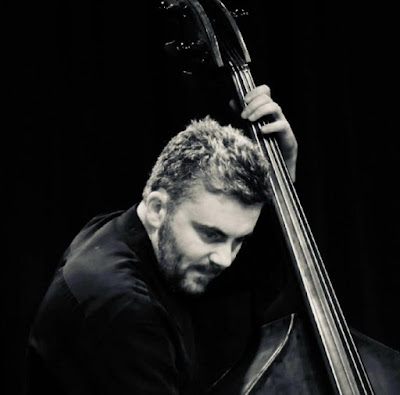
Photos of Michael Feinberg courtesy of the artist

From opening colors on track one’s dedication to master forgers Pei-Shen Qian and Rudy Kurniawan, Hard Times reveals inquiry within the music. In addition to his strength and subtlety on the kit, Tain’s attention to leaving and creating space for idea development persists across the album. Through his arrangement of “Nardis,” Feinberg seeks to honor the pivotal apprenticeship gig with Russell Gunn he landed when he was coming up in Atlanta. Full on the low-end, the groove swells and recedes, arcing the music from one section to the next. “Husafell Stone” hits the listener with a fullness up front. Taking the first solo, Evans allows the composition’s syncopated melody to serve as point of origin before Buss delivers his own swinging response. 

Twin McCoy tracks “Walk Spirit, Talk Spirit” and “Three Flowers” pay tribute to a recently departed hero of Feinberg’s, the latter piece featuring a dualism is his bass solo characteristic of the entire record: strength in sensitivity. “These performances are intended as a tribute to him, as well as keeping the flame lit for those who love his music,” he says in his album notes. Written as a feature for Louis and Buss, “Janky in the Middle” spotlights the artists’ interplay, offering each opportunities to play with, alongside and against what the other proffers. The resulting dialogue creates smaller arcs in the music that punctuate the movement of the tune. Feinberg has played together with both artists for the past decade and a half. “We have that comfort to take those chances,” he says, “knowing we can find our way back once we get out there [laughs].” 

Flush with lamentation, “Every. Damn. Day. (Burn it down blues)” acknowledges and honors the continued generational trauma inflicted on the Black community as a result of racism, police brutality and gun violence. “Lauren’s Song” features another of Feinberg’s beautiful and tender melodies. In his signature language, Brecker speaks in full voice on “Monkeys Never Cramp.” Concluding on a note of jubilance and healing, “Hard Times” features Feinberg’s resonating walk and swinging melodies. He admits, however, he can only make suggestions; in the moment, sound is fluid. “Everything’s always in flux in the music,” he says. “It can go anywhere at any time, and everyone in the band knows that so we’re ready for it.” 

Friday, April 2, 2021

Noah Preminger and Kim Cass - Thunda (April 2, 2021)

When lighting strikes, thunder follows. Such was the electrifying energy when longtime friends and colleagues Noah Preminger and Kim Cass collaborated during the second half of 2020, one of the most trying and unusual years on record. The result is THUNDA, featuring ten entirely original tracks by award-winning saxophonist Preminger and acclaimed bassist Cass. 

Preminger and Cass met during their college days in 2004 but didn't start working together until Cass moved to New York City after a brief stint on the West Coast. Through their mutual focus on pushing the boundaries of instrumental virtuosity toward innovative uses of rhythm and harmony, the two forged a strong connection, working together on countless performances and collaborations, including more than half a dozen of Preminger's albums. 

When the COVID-19 pandemic led to cancellations of their planned live tours, Preminger and Cass turned to technology as a safe outlet for creating and recording new music. THUNDA, Preminger's sixteenth and Cass' second release as band leaders, takes the artists' compositions and improvisations into new territory. "This is the first recording I've made remotely and entirely at home," says Preminger. "It also marks the first recording where I play and layer multiple instruments, all entirely improvised. Kim is one of the most imaginative bassists and musical voices in jazz and this project truly got both of us to reach outside the box."

Cass was equally excited to work with Preminger on a duo album: "I have always admired the way in which Noah navigates harmony, especially on open-ended material," says Cass. "THUNDA unleashes the best of both our playing with countless maelstroms of exposed lines that defy form, yet are strongly rooted in time and pitch. This music was incredibly exciting to create. It's a blast to listen back to each one of these individual storms."

The album's opener, "Slaughter," is a vivid declaration of the duo's instrumental prowess and their ability to elevate it to serve the music. Cass's bass runs wild and free while Preminger's thrilling horn sails above, bolstered by his peerless tone and unparalleled, technical lines. "Me You Sad" follows with an entirely different mood, the edgy pensiveness of Preminger's clarinet underlined by Cass's alternately sing-song and weaving bass lines. "Chron" begins with Cass's fun, technical brilliance and answered by Preminger's crystalline horn, evolving into a spirited dialogue infused with snippets of unison. Preminger's swing-tinged fanfare announces "Tradr Hoez" before Cass's probing bass joins in, ultimately culminating with the two in sonic union. In "Slow Ridah," Preminger's sensitive multi-tracking creates the effect of a woodwind choir, full of wistful sweetness. On "Iris," another slow piece, Cass's technical use of harmonics contrasts with Preminger's haunting, contemplative clarinet melody. "Drone," "Ricky," "Roobz," and "Huck It" round out this collection of extraordinary new music by two of the most forward-thinking improvising instrumentalists in jazz.

Of Brooklyn-based saxophonist Noah Preminger, The New York Times says, "Mr. Preminger designs a different kind of sound for each note, an individual destiny and story." Born in 1986, Preminger grew up in Canton, Connecticut. His debut album, Dry Bridge Road, was released just after his 21st birthday and named Debut of the Year in the Village Voice Critics Poll. Preminger's second and third albums as a leader came in 2011 and 2013 while signed to the Palmetto Records label. He has performed with the likes of Jason Moran, Dave Holland, John Patitucci, Fred Hersch, Dave Douglas, Billy Hart, Rob Garcia, Joe Lovano, Victor Lewis, John and Bucky Pizzarelli, Cecil McBee, George Cables, and Roscoe Mitchell. Preminger, just 34, won the category of Rising Star Tenor Saxophonist in DownBeat Magazine's 2017 Critics Poll, and has released sixteen critically acclaimed albums as a bandleader. 

Kim Cass, originally from Bar Harbor, Maine, spent his early life producing solo recordings of upright bass in electronic composed settings, and always striving to develop a unique voice as an improvisational conceptualizer and technical virtuoso. After receiving his degree from New England Conservatory in Boston, Cass relocated to San Francisco and then New York City. He has worked with Rudresh Mahanthappa, Jason Moran, Matt Mitchell, John Zorn, Mat Maneri, Noah Preminger, Tyshawn Sorey, and David Binney, among others. In 2015, Cass released his acclaimed, self-titled debut recording for solo bass and electronics. He's currently focused on composing for instruments in new ways that stretch rhythmic, technical and harmonic boundaries, and will release a new album of original music in 2021 featuring pianist Matt Mitchell. Cass utilizes a unique style of detailed handwritten notation, which has become an important part of his creative exploration. Cass is part of the faculty at The New School in NYC.

1. Slaughter
2. Me You Sad
3. Chron
4. Iris
5. Tradr Hoez
6. Drone
7. Slow Ridah
8. Ricky
9. Roobz
10. Huck It

Noah Preminger - saxophone/clarinet/flute
Kim Cass - bass

Co-Produced/Engineered by Noah Preminger and Kim Cass
Mixing/Mastering by Matt Marantz
Recorded July 11th - December 20th, 2020
All compositions composed by Preminger (BMI) and Cass (BMI) 2020

Friday, March 26, 2021

Noah Preminger and Kim Cass - Thunda (April 2, 2021)

The album showcases the electrifying energy of the music on ten original tracks. While Preminger and Cass met during their college days in 2004, they didn’t start playing together until Cass moved to New York City after a brief stint on the West Coast. Through their mutual focus on pushing the boundaries of instrumental virtuosity toward innovative uses of rhythm and harmony, the two forged a strong connection, working together on countless performances and collaborations, including more than half a dozen of Preminger’s albums. 

When the COVID-19 pandemic led to cancellations of their planned live tours, Preminger and Cass turned to technology as a safe outlet for creating and recording new music. THUNDA, Preminger’s sixteenth and Cass’ second release as band leaders, takes the artists’ compositions and improvisations into new territory.

1. Slaughter
2. Me You Sad
3. Chron
4. Iris
5. Tradr Hoez
6. Drone
7. Slow Ridah
8. Ricky
9. Roobz
10. Huck It

Noah Preminger - saxophone/clarinet/flute
Kim Cass - bass

Co-Produced/Engineered by Noah Preminger and Kim Cass
Mixing/Mastering by Matt Marantz
Recorded July 11th - December 20th, 2020
All compositions composed by Preminger (BMI) and Cass (BMI) 2020

Monday, February 15, 2021

Noah Preminger and Kim Cass - Thunda (April 2, 2021)

Really excited to announce my new collab recording, THUNDA, with bassist, Kim Cass, is now available for pre-order! It's also @bandcamp Friday, so they waive all the sales fees for the day!
Thanks for your support and hope you love it: Pre-order

1. Slaughter
2. Me You Sad
3. Chron
4. Iris
5. Tradr Hoez
6. Drone
7. Slow Ridah
8. Ricky
9. Roobz
10. Huck It

Noah Preminger - saxophone/clarinet/flute
Kim Cass - bass

Co-Produced/Engineered by Noah Preminger and Kim Cass
Mixing/Mastering by Matt Marantz
Recorded July 11th - December 20th, 2020
All compositions composed by Preminger (BMI) and Cass (BMI) 2020

Wednesday, November 21, 2018

Mariel Austin - Runner in the Rain (2018)


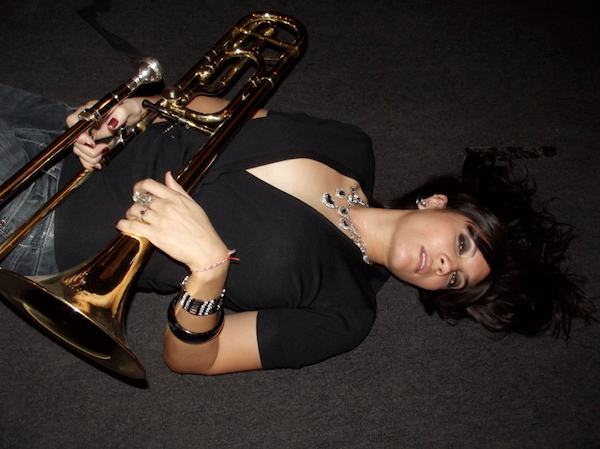
TROMBONIST AND BIG BAND COMPOSER/ARRANGER MARIEL AUSTIN
RELEASES DEBUT EP RUNNER IN THE RAIN

NEW VOICE IN BIG BAND WRITING EMERGES IN AWARD-WINNING RISING JAZZ STAR

Every so often, an article appears in print or social media that ponders whether jazz is dead or just on its last legs. While it’s true that jazz is just a tiny part of the overall music market and the larger venues for jazz performance have become fewer over the last several years, the jazz culture has been kept alive by a growing cadre of hard core fans. And judging by the number of high schools and universities that offer specialized jazz education, the interest in the music among younger people is still very strong.

Trombonist, composer, and arranger MARIEL AUSTIN is an exciting, young talent on the jazz scene. Although still in the early stages of her career, she’s already drawing attention. She’s the recipient of the ASCAP Foundation Phoebe Jacobs Prize, part of the 2018 Herb Alpert Young Jazz Awards, and she was selected by the New York Youth Symphony to compose a First Music Commission piece for the 2015-2016 Jazz Band. Austin is now releasing her first recording project, RUNNER IN THE RAIN, an EP comprising five of her arrangements for a big band.

Born and raised in Berkeley, CA, Austin enjoyed music from a very young age, playing flute, piano, clarinet, and alto sax in public school. However, none of those instruments held her interest for very long. Things changed when her parents took her to a concert by the Berkeley High Jazz Ensemble when she was just 13 years old. “I loved music ever since I was in elementary school, and I always looked up to the Berkeley High Jazz Ensemble.

I actually had a secret goal to make it into the Ensemble once I reached high school." relates Austin. “One day, my parents took me to a concert by the Ensemble, and half way through the performance, they played Charlie Mingus’ “Fables of Faubus.” It was, of course, a big band arrangement.

They began the tune with the famous opening line featuring a bari sax and a particularly zealous bass trombone player. The moment I heard that sound, I was struck. It just clicked with me, and I knew right then that I wanted to be a trombone player.” 

She eventually went to Berkeley High and joined the jazz ensemble, touring with the group to several international festivals, including the Montreux Jazz Festival, the Umbria Jazz Festival in Italy, and the Kurashiki Music Festival in Japan.


As with many creative individuals, Austin has more than one artistic outlet, and after high school, she was torn between majoring in music or in fashion design. She went down to Los Angeles to attend Cal State Northridge, which offered both majors, but it didn’t take long for her to decide that music was her true calling. She became a member of the CSUN Jazz “A” Band and graduated with a Bachelor of Music Degree in Jazz Studies. After graduation, her skills on the trombone got her many TV gigs on shows like American Idol and The Voice, but she wanted to continue growing as an artist and decided to further her education, so she attended the prestigious New England Conservatory of Music, earning a Master’s Degree in Jazz Composition in 2015. After graduating, Austin stayed for a couple of years in Boston and recorded RUNNER IN THE RAIN. She returned recently to LA to restart her studio work.

Austin gathered her compatriots from the NEC and the Berklee College of Music to record RUNNER IN THE RAIN. The high quality of musicianship on this CD belies the relative youth of these players. These musicians are ready to share the bandstand with more experienced professionals.

Austin’s compositions are complex and satisfying. She has a strong visual imagination (the CD cover is one of her paintings) which she translates into musical imagery. She opens the CD with an original tune she calls “A Rough, Unsorted Compiling of Ways Not to Exist.” Inspired by the big band writing of George Russell, who is one of the first to formulate a theory of harmony based on jazz rather than European music, Austin takes you on a trip across distinctive musical landscapes, with each representing a different state of mind. The first section represents frustration and uncertainty. The second section represents brooding. The third section suggests liberating anger. The fourth section is a recapitulation of the first section, modulated a step above, representing reflection and movement forward.

“Night Dreamer” is a Wayne Shorter composition that Austin arranged for a school competition. She added a vibraphone to give the music a dreamy quality and populated the background horn section with musical quotes from Shorter.


“Mirror Shift” is an original composition that was performed by the New York Youth Symphony. Her composition was one of three pieces chosen from hundreds of submissions. At one point in the piece, she directed the woodwind players to sing their parts rather than play them.

“One Way Journey Home” is a funk ballad that Austin wrote for the Jazz Composers Ensemble in grad school when she was feeling homesick. Austin relates, “When I was giving direction to the horn section, I told them to think about someone they really missed. Someone they really longed for.”

Austin lends her lovely voice to “Runner in the Rain,” the title tune. She originally wrote it as an experiment with electronic music, but when she found out that a friend had died, she re-arranged the tune as a touching big band chart. "The tune is an elegy in a way, and not just for my deceased friend, “ says Austin. “I was also thinking of everyone I never got a chance to say good-bye to, especially my mentors and inspirations who helped me become the person I am today.” She was also reading “Watership Down” at the time and included in her CD package a quote from the book which reads, “My heart has joined the Thousand, for my friend stopped running today.”

RUNNER IN THE RAIN is a stellar introduction to a burgeoning musical talent. This first recording by Mariel Austin is only the opening salvo by a composer, arranger, and performer whose career trajectory is surely aimed at the jazz firmament.


Monday, June 4, 2018

Jason Palmer - At Wally's Volume 2 (SteepleChase Productions ApS June 15, 2018)


1. Ethos
2. Style
3. Sunny Rain
4. The Side Eye
5. Cheas

Jason Palmer (tp)
Noah Preminger (ts)
Max Light (g)
Chris McCarthy (p,elp on 5)
Simon Willson (b)
Lee Fish (ds)

Jason Palmer - At Wally's Volume 1 (SteepleChase Productions ApS 2018)


Wally’s, Boston’s historical (est. 1947) live jazz spot, is where the award-winning trumpeter/composer Jason Palmer started to hone his chops some 20 years ago while a student at New England Conservatory. Jason and his Boston-based quintet has been performing there every weekend to the loyal and enthusiastic crowd since 2006. This CD is the first of two documentary live recordings from those electrifying nights in 2016.

“Over the past decade, trumpeter Jason Palmer has proven to be one of the most compelling artists of his generation. With each new volume in a series of CDs for SteepleChase, Palmer reveals a different aspect to his musical mind while the expressiveness of his horn continues to expand as well.” (Ken Dryden – the NYC Jazz Record on SCCD 31820 Beauty ‘n’ Numbers)

1 STOP, DROP AND ROLL 8:48
2 GABBY* 7:52
3 KEMEROVO 18:02
4 PRESERVATION OF THE LOWER 9TH WARD 11:14
5 BE AWARE 15:52
6 AT EASE 11:56

Composed by Jason Palmer

JASON PALMER trumpet
NOAH PREMINGER tenor saxophone
MAX LIGHT guitar
CHRIS MCCARTHY Fender Rhodes*
SIMON WILLSON bass
LEE FISH drums

Sunday, May 20, 2018

Noah Preminger / Rob Garcia - Chopin Project (CONNECTION WORK RECORDS 2018)


Saxophonist Noah Preminger and Drummer Rob Garcia Form Dead Composers Club, Reimagine Chopin Classics on First Outing

Chopin Project, featuring guitarist Nate Radley and bassist Kim Cass, takes a thrillingly imaginative approach to the composer’s Nocturnes and Preludes

“[Preminger and Garcia] are the kind of unblinkered contemporary musicians for whom the restrictions of genre have little meaning.” – The New Yorker

Succinct yet profoundly expressive, deceptively simple and staggeringly beautiful: Frédéric Chopin’s Nocturnes and Preludes are some of the most revered compositions in the classical music canon. Make that the whole of music, as saxophonist Noah Preminger and drummer Rob Garcia prove on Chopin Project, the debut release by their co-led project Dead Composers Club, out May 18 via Connection Works Records. The quartet – which also features guitarist Nate Radley and bassist Kim Cass  - approaches these timeless works with a vitality and urgency that connects these stellar modern musicians with their 19th-century source, regardless of elapsed centuries. 

The idea behind the Dead Composers Club is to celebrate and explore the music of iconic composers, the only common thread being their shuffling off of mortal coils. Though the Chopin Project, the first of the quartet’s planned annual examinations of a deceased composer’s oeuvre, is the farthest thing from an overwrought classical-jazz hybrid, Preminger and Garcia took on these classic works with enough respect to realize that they were strong enough to withstand the most radical of transformations. “These are masterpieces,” Preminger insists. “They play themselves. Some of the songs we played pretty straight up and others we deconstructed a little more, but they’re really beautiful on their own.” 

“These are great songs that can be played with many different treatments,” Garcia adds. “There’s a lot of room for us to just be ourselves.” 

The inspiration for the project came to Preminger during a rare late-night listening session – the ideal setting for a close study of the Nocturnes in particular. In recent years the saxophonist has focused his musical attention far more on output than input, and when he does dust off the headphones it tends to be to listen to the Mississippi Delta blues classics that inspired his stunning 2016 album Dark Was the Night, Cold Was the Ground. Though the elegance of the Nocturnes and Preludes would seem to be the polar opposite of these raw early blues recordings, there’s more soul to Chopin and more grace to Skip James and Blind Lemon Jefferson than a surface listen might imply. 

All of those elements shine through in the Dead Composers Club’s take on these pieces. As Garcia says, “Blues and folk music happen in a very natural way, and that’s the same attitude with which we approach playing Chopin’s music. We don’t intend for it to sound difficult or intricate, although some of the pieces are quite challenging. We want to to have it feel as natural as possible.” 

In part, the success they achieve in meeting that goal stems from the considerable histories shared by the band’s members. Preminger and Garcia first met on a gig with trumpeter John McNeil nearly a decade ago, and since have toured and recorded regularly with Garcia’s critically-acclaimed quartet. Cass is a regular in Preminger’s bands while Radley has played with both leaders in a variety of situations. With that familiarity to build on, the four entered the studio and played the music entirely live in one room, without the safety net of edits or overdubs. That immediacy is palpable despite the intricacy inherent in many of the pieces.

Preminger and Garcia divvied up the arranging duties, each selecting their favorites from among Chopin’s 21 Nocturnes and 24 Preludes. Their takes varied, but at the core each becomes something deeply personal and compelling. “These are basically stories that Chopin wrote,” Preminger says. “We just picked our favorite stories and decided to retell those stories in our own way as a unit.” 


The stories gathered here range from the brooding “Nocturne Op27 No.1 in C# minor,” which opens the album amidst a storm of rumbling drums and ominously droning bass; to the wistful “Prelude Op28 No. 9 in E major, which closes the album with Preminger’s resilient tone flowing over gently loping rhythms. Mysteries abound in “Nocturne Op9 No. 2 in Eb major,” while “Nocturne Op62 No. 2 in E major” becomes a stunningly lyrical ballad countering Preminger’s moaning tenor with Radley’s plangent strings. The driving momentum of “Prelude Op28 No. 6 in B minor” displays the same steely resolve that ran through Preminger’s recent protest album, Meditations on Freedom, combined with the coloristic percussion that characterizes Garcia’s compositional work. 

It was never the point to place a clever twist or complex reimagining onto Chopin’s work. As with any immortal jazz standard or classic folk tune, it was simply to imbibe and personalize music that speaks to the player and the listener alike. “Basically, we wanted to celebrate this wonderful composer and have a blast doing it our way,” Preminger says. “Most important jazz musicians have checked out Chopin, so this is a major part of our history. So acknowledging that, celebrating it and telling our own story using Chopin’s original works is important.” 

“His music is so open to interpretation and can truly stand the test of time,” adds Garcia. “Every one of those compositions has a life of its own.” 

Noah Preminger
© Jimmy Katz

A native of Canton, Connecticut, Noah Preminger released his debut album, Dry Bridge Road, shortly after graduating from the New England Conservatory. He has since recorded more than ten critically acclaimed albums as a bandleader and is steadily listed among the top tenor saxophonists by critics and readers on the annual DownBeat Poll. Two new recordings were released in 2016, including an all-ballads date on the French vinyl label, Newvelle Records, and a recording inspired by Delta Mississippi Blues musicians, Dark Was The Night, Cold Was The Ground.  On Inauguration Day, 2017, Preminger released Meditations On Freedom, a musical protest against ominous political developments in America. Preminger has also been featured in bands led by Fred Hersch and Cecil McBee, and recorded four albums for Brooklyn Jazz Underground as a member of the Rob Garcia 4.  

Rob Garcia
© John Guillemin

A prime mover in the current Brooklyn jazz scene” (Time Out-New York) and "one of New York’s great jazz drummers and composers” (Capital New York), Rob Garcia is a strong presence in the New York and international jazz scene as a sideman and bandleader. He has collaborated with such stellar artists as Joe Lovano, Sheila Jordan, Dave Liebman, Wynton Marsalis, Diana Krall, Myra Melford, Joseph Jarman, Anat Cohen, Vince Giordano, Reggie Workman, Bill McHenry, and Wycliffe Gordon. He has played on over 40 albums including Grammy winners. Rob has released si critically acclaimed albums as a bandleader, featuring such artists as Noah Preminger, Dan Tepfer, Gary Versace, Joe Martin, John Hebert, Dave Kikoski and Mike Formanek. His CD Perennial was named one of the 10 Best Jazz Albums of 2009 in the New York Observer. His most recent album, Finding Love In An Oligarchy On A Dying Planet, includes guest appearances by jazz legend Joe Lovano and vocal sensation Kate McGarry. Rob has received grants from Meet The Composer, DCA and NYSCA and been a major force in artist-run jazz organizations as the founder and artistic director of Connection Works, a member of the Brooklyn Jazz Underground and a founding member of the Douglass Street Music Collective.


Wednesday, February 28, 2018

Noah Preminger: Genuinity via CRISS CROSS RECORDS


Genuinity

Thirty-one-year-old tenor saxophonist Noah Preminger's Criss Cross debut is his tenth leader CD, and fifth in the pianoless quartet context with trumpeter Jason Palmer and bassist Kim Cass, joined for the first time on this ocassion by the brilliant drummer Dan Weiss. Unlike Preminger's four previous no-chordal-instrument dates, the hour-long program consists entirely of the leader's original pieces. Each evokes a different mood and tonal ambiance with strong melodies underpinby percolating grooves that provoke unfailingly cohesive, thematic improvisations by the horns.

In preparing his nine songs, Preminger hewed to his recent m.o. of "sitting down with my saxophone every day, recording what I do, and listeling back-a stream of consciousness. "He contrasted this process with writing on the piano, as he did on his first-ever date, the eclectic 2007 album Dry Bridge Road, Kimbrough, guitarist Ben Morder, trumpeter Russ Johnson, bassist John Hébert and drummer Ted Poor.

"I was writing at the piano a lot then, so I was writing with the piano in mind," he says. "Then the record label I'd signed with had a certain vision for me as an artist, and I was pushed in directions I might not have gone in if I hadn't been guided that way. On this record, the basslines, the harmonies everything came from my horn. I feel taht's a more genuine way to express who I am as an artist than coming up with a form and then writing a melody over it. I play piano just fine, and I still write on piano as well as guitar. But the saxophone is literally my voice."

It's fun to play the name-that-influence game with Preminger, whose vocalized, caress-all-the-notes, reflective-yet-vigorous tonal personality coalesces and refracts a broad swath of tenor saxophone language. "I've dipped my feet in he attended Dave Liebman's Pennsylvania jazz camp. sparking an enduring, fruitful relationship with the elder master, who he calls "my first main guru." He credits Liebman and saxophone sages George Garzone and Jerry Bergonzi (mentors when Preminger attended New England Conservatory between 2003 and 2007) for nurturing his loose, relaxed approach.

"These guys have deep history in their playing," Preminger says. "They understand what has come before them, and each established an individual voice. Each one has a sort of free quality to their improvisation. They're not so confined by changes on a form. I really relate to that. I don't feel necessarily tied to 4/4. or tied to a pulse. That's fun. I don't feel like I'm stuck. It makes me enjoy what I do more."

After graduating NEC, Preminger moved to New York, finding work with elders like Cecil McBee, who employed him, and Billy Hart, whose skills he retained on several occasions. Thrust into the fray, Preminger -who cites a chronological influence tree that moves roughly fron Joshua Redman to Joe Lovano to Ornette Coleman to John Coltrane- grew into the realization that "I want to play every time like it¡s my last day on earth, which is what separates the masters from your Grade-B cat. "As his career evolved, Preminger -who returned to Boston in 2015 to get a Masters degree, and still lives there- has made in his business "to surround myself with cats who understand that."

Each of Preminger's partners herein qualifies for that encomium. You couls describe Palmer, 38, himself the leader of six small ensemble dates, as Preminger's aesthetic doppelganger for his gorgeus tone, broad knowledge of just back in Boston, beelined to Wally's Jazz Café, where Palmer has led the house band most weekends since 2004.


"He's like Don Cherry with chops, " Preminger jokes. "He knows every song ever written in the history of the American book, but he's a true improviser, a real artist, which you don't offen find. We have a special connection on the bandstand."

The Preminger-Kim Cass connection dates to their shared undergraduate experience at NEC. "Kim is a one of a kind player who does things other people can't do, with a unique harmonic and rhythmic approach, " Preminger says. Throughout the proccedings, the Maine-born bassists's catlike reflexes, impeccable time feel, and centered tone stamp him as an occupant of the upper branches of his instrumental tree circa 2017.

Preminger observes that his recent compositions suited the mammoth skill sets of drummer Dan Weiss, familiar to assidous Criss Cross listeners -and an internationel cohort of fans and connoisseurs- for his contributions to six albums by David Binney, and as well as his own sui generis leader albums and sideman work with such upper echelon improvisers as Rudresh Mahanthappa, Rez Abassi, Miles Okazaki, Amir El-Saffar, Jen Shyu, Matt Mitchell and Joel Harrison.

"Dan has incredible energy," Preminger states. "He lets things feel open rhythmically, and whether you're in 4 or 13, it will never fall apart. It will always be tippin', it will always have energy, and he'll be right next to me the whole time. He understands arc, he understands form, and he understands phrasing, which a lot of people don't."

Weiss's prowess in the arts of rhythmic design and thematic development immediately come to the fore on the opening track, Halfway To Hartford, a kinetic opening salvo that evokes and Old and New Dreams ambiance. After Preminger's gnarly, 38-second intro, and then a bravura 50-second-long Premimger-Palmer unison on the melody, each soloist engages Weiss in extended conversation.

Preminger and Palmer exchange ideas and play overlapping lines over Weiss' "stinky funk groove" on Mad Town, Preminger's slightly melancholic depiction of a frigid, snowy winter weekend in Madison, Wisconsin, home of the University of Wisconsin, where the saxophonist was "for a moment contemplating doing a Ph.D."

At Preminger's request, Weiss puts a Clyde Stubblefield 6/4 groove on T.S., a gentle refrain named for the initials of a special friend with whom Preminger has "listened to a lot of music and gone dancing, and who's into what she calls the smile-and-sway. "Preminger's neologism aptly describes the quality of his interplay with Palmer during the tune's first section, after which Cass unleashes his chops onmultiple choruses of dialog with the leader. "Let's say you've had a few drinks, and you're listening to something that really grooves," Preminger continues. "You kind of just smile and sway. I wrote it for her and the arc of her life."


A drum fanfare introduces A.H., for guitar hero Allan Holdsworth, who passed away in 2017. "As I was writing this melody on my horn, and the counter-line below it with the bass, I imagined it as something Holdsworth migth have come up with," says Preminger, whose creative solo, spurred by Cass' and Weiss' instanneous, interlocking responses, includes a quote from Sonny Rollins' Paul's Pal. Palmer assumes the baton, bulids the momentum further, then guides the flow into a closing unison.

Preminger describes the elegiac, medim-slow, not quite rubato My Blues for you as "a gospelly blues that I wrote in freshman year of college." After his achingly soulful melody statement, first Palmer and then the leader testify with a primal-yet-restrained quality on the elemental raw materials, evoking the ambiance of such recent collaborations as the albums Dark Was The Night, Cold Was The Ground and Meditations on Freedom.

Weiss' pointillistic beats are a portal into Nashua, named for the New Hampshire city where Preminger, soon after returning to Boston, took a teaching job that "lasted about two weeks". The querulous tme hints at New England Rust Belt dystopia-Cass, Palmer and Preminger remain true to the melody in their solos.

Preminger wrote the Ornette Coleman-esque Walking On Eggshells after listening to an interview on National Public Radio "with somone who wrote an article how it's difficult to be a white person who's concerned about racial injustice, which he said is like walking on eggshells." He continues; "I started playing this, and then wrote an entire melody like it-the feeling was like skipping along, like walking on eggshells."

The date closes with Acknowledgment, no relation to the opening movement of John Coltrane's A Love Supreme, but nonetheless vibrationally akin to the man Preminger calls "the very top as an improviser." "If you¡ve got 100 levels, Trane is on 100 and everybody else starts at level 60," Preminger says. "To me, Coltrane had the most incredible balance of technique and emotional artistry." After Preminger's bluesy rubato introduction, Cass begins a dialogue, Preminger recapitulates the simple melody, Weiss offers Rashied Ali-like ametric beats before morphing to 4/4 freebop at 3:30, leading to another elegant, forceful Palmer statement, and a closing Preminger solo, patient and intense.

"I don't know why I came up with the title," Preminger says. "Maybe it's acknowledging what's going on in my life-where I am, what my beliefs are, receiving acknowledgment. My style of playing is maybe an acquired taste, but I have a very honest way of performing, and a lot of energy. It's not commercial whatsoever. It's weird-I'm not out here touring that much, but I'm leaving a trail of work. Sure. I'd like to be appreciated for what I do. But I love making albums, and I love laying down my personal statement. I like the procces. I'm happy. That's most important."

Ted Panken


Thursday, January 25, 2018

Noah Preminger & Rob Garcia: Dead Composers Club - Chopin Project (with Nate Radley and Kim Cass) May 18, 2018


"Nocturne Op27 Nº1 in C# minor" - Chopin Project

"Nocturne Op27 Nº1 in C# minor" is the first track on Chopin Project, the debut album from Dead Composers Club, available May 18, 2018 via Connection Works Records.

Dead Composers Club, formed by saxophonist Noah Preminger and drummer Rob Garcia, also features guitarist Nate Radley and bassist Kim Cass. The idea behind the Dead Composers Club is to celebrate and explore the music of iconic composers.

The quartet takes a thrillingly imaginative approach to Chopin's Nocturnes and Preludes, approaching these timeless works with a vitality and urgency that connects these stellar modern musicians with their 19th-century source, regardless of elapsed centuries.

Friday, January 5, 2018

Noah Preminger - Genuinity (CRISS CROSS RECORDS February 16, 2018)


Thirty-year-old tenor saxophonist Noah Preminger's debut on Criss Cross in a piano less context with trumpeter Jason Palmer and bassist Kim Cass, who record here with the brilliant drummer Dan Weiss for the first time on this occasion. The hour-long program consists of nine Preminger originals. Each evokes a different mood and ambiance with strong melodies and percolating grooves that provoke unfailingly cohesive, thematic improvisations by Preminger and Palmer. Genuinity is consistently compelling, and repays repeated hearings.


Wednesday, June 28, 2017

Noah Preminger – #1 Rising Star Tenor Saxophonist in DownBeat's 65th Annual Critics Poll


Noah Preminger earns #1 Rising Star Tenor Saxophonist 
in DownBeat Magazine’s 65th Annual Critics Poll

155 Critics from across the globe vote in poll

Preminger’s most recent album Meditations on Freedom, a protest album released on Inauguration Day, has earned wide critical acclaim


Acclaimed saxophonist and composer Noah Preminger has earned the #1 spot as “Rising Star Tenor Saxophonist” in DownBeat Magazine’s 65th Annual Critics Poll. A group of 155 international critics from organizations including The Boston Globe, Chicago Tribune, DownBeat, Jazziz, JazzTimes, NPR, Rolling Stone, the San Francisco Chronicle, and the Village Voice participated in this year’s poll.

Preminger won handily in his category. A feature article in the current edition of DownBeat cites his “distinctive character” and “huge tenor tone and muscular rhythms.” It calls Preminger’s 2017 Meditations on Freedom “an impassioned musical treatise.”

Meditations on Freedom was released on Inauguration Day (January 20, 2017), as a protest album. It features Preminger’s quartet with trumpeter Jason Palmer, bassist Kim Cass, and drummer Ian Froman. The album, recorded live on the studio floor with no edits by engineer Jimmy Katz, reimagines politically charged songs by Bob Dylan, Bruce Hornsby, Sam Cooke, and George Harrison, and features Preminger originals including “the 99 Percent,” “Women’s March,” “Mother Earth,” “Broken Treatis,” and “We Have a Dream.”

About his motivation to release Meditations, Preminger says, “I realize that the key thing I can hope to do with music – particularly instrumental jazz, with no words – is to heighten emotions. That said, some of the most beautiful, meaningful creations in the history of jazz have been poetic statements of protest, like John Coltrane’s ‘Alabama’ or Sonny Rollins’ ‘Freedom Suite’ and so many more great examples. I would never put myself in that category, but I’m not alone among jazz musicians today who wonder why it is that we do this. Ultimately it’s important to care about something larger than yourself and that’s what I am trying to convey with this music."

30-year-old Preminger has performed on stages from Boston and New York to Europe and Australia, playing with a wide range of jazz greats including Dave Liebman, Dave Holland, Fred Hersch, Dave Douglas, Victor Lewis, John and Bucky Pizzarelli, Billy Drummond, George Cables, Roscoe Mitchell, Dr. Eddie Henderson, Cecil McBee, John McNeil and Frank Kimbrough. A native of Canton, Connecticut, Preminger has released eight critically acclaimed albums.


His 2008 debut Dry Bridge Road was named Debut of the Year in the Village Voice Critics Poll, along with making Top 10 Albums of the Year lists in JazzTimes, Stereophile and The Nation.  In 2011 Palmetto Records released Preminger’s next album Before the Rain, an essay in atmospheric romance that blends virtues both modern and old school. Reviewing that album, All About Jazz said: “Sensitivity and an ear for aural sophistication are the hallmarks of tenor saxophonist Noah Preminger.”  Preminger’s third album, Haymaker (Palmetto, 2013), features the saxophonist in mostly original material (plus a Dave Matthews cover and a tune from Annie for good measure). In The New York Times, Ben Ratliff said: “Mr. Preminger designs a different kind of sound for each note, an individual destiny and story,” while Nate Chinen chimed in, too, lauding his “darkly shaded… warmly expressive” tone and his “fluency, prudence and control.”

The Boston Globe called Preminger’s music “impressive, challenging and beautiful.” In autumn 2016, Preminger followed his fiery, blues-fueled quartet discs Dark Was the Night, Cold Was the Ground and Pivot: Live at the 55 Bar by showing his more intimate, romantic side again with a collection of ballads, Some Other Time, released exclusively as a vinyl LP by Newvelle Records.

He recorded this with a dream band featuring Monder, bassist John Patitucci and drummer Billy Hart. All About Jazz, reviewing Some Other Time, said: “With this all-star band in tow, Preminger does what he does best: He tells a compelling story without frills – and he does it better than he has ever done before.”

Praise for Meditations on Freedom

“His saxophone emits a broad and smoky sound, with a measured inflection that gives the music an unhurried, cogitative pacing.”—Giovanni Russonello, New York Times

4.5 stars—“His playing is like getting a good bottle of wine and smelling the cork.”—Dan Ouellette, DownBeat

“The five Preminger originals traffic in the kind of music-making that makes this young jazz man one of the most intriguing of his generation.”—Steve Feeney, The Arts Fuse

4 stars—“Noah Preminger has recently separated himself from the tenor-saxophone multitudes. He is an immersive improviser. Ideas flow from him in rivers, in continuous adventures of discovery.”—Thomas Conrad, Stereophile


“It’s no stretch to place Preminger’s urgently created art in the lineage of great socially conscious jazz, from the late ’50s civil rights-inspired Freedom Suite by Sonny Rollins and Max Roach’s We Insist! (Freedom Now Suite) to 2005’s Charlie Haden Liberation Orchestra’s Not In Our Name. In keeping with these classic predecessors, Preminger’s music is raw and loose-limbed, starkly emotional but also strikingly poised and eloquent.”—Peter Hum, Ottawa Citizen

“Preminger produces a large, lovely tone, which he shades a dozen different ways depending on aesthetic need, and has plenty of technique in the tank.”—Neil Tesser, Jazziz

“…deep grooving delight with a rich tenor tone…”—George Harris, Jazz Weekly

“Preminger has a monumental achievement on his hands here.”—Alan Young, New York Music Daily

Tuesday, February 14, 2017

Noah Preminger - Meditations on Freedom (2017) + TOUR


Saxophonist Noah Preminger Releases an Album of Musical Protest Meditations on Freedom on Inauguration Day:
January 20, 2017
Featuring Preminger and his quartet – with trumpeter Jason Palmer, bassist Kim Cass & drummer Ian Froman – in searching originals and reimagined classics by Bob Dylan, George Harrison, Sam Cooke & Bruce Hornsby

TOUR
April 7 & 8 at Small's Jazz Club, NYC
April 12 & 13 at West Virginia Wesleyan College, Buckhannon, WV
April 14 at Side Door Jazz Club, Old Lyme, CT
April 15 & 16 at The Rex, Toronto, ON
April 17 clinic at Denison College, Granville, OH
April 19 at Blu Jazz, Akron, OH
April 20 at Bop Stop, Cleveland, OH
April 24 at Black Eyed Sally's, Hartford, CT
May 18 at Scullers Jazz Club, Boston, MA

“He designs a different kind of sound for each note, an individual destiny and story.” — Ben Ratliff, The New York Times on Noah Preminger


As a musical protest at ominous political developments in America, jazz saxophonist Noah Preminger presents his sixth album – Meditations on Freedom – on Inauguration Day: January 20, 2017 (for digital release via Dry Bridge Records, with CD on Feb. 3). It’s the third album featuring the tenor player’s current quartet, with Jason Palmer (trumpet), Kim Cass (double-bass) and Ian Froman (drums). Following two albums inspired by Delta blues, this new recording finds Preminger and company reimagining – in intense, emotive instrumental versions – classic politically charged songs by Bob Dylan (“Only a Pawn in Their Game”), Bruce Hornsby (“The Way It Is”), Sam Cooke (“A Change Is Gonna Come”) and George Harrison (“Give Me Love, Give Me Peace on Earth”). The saxophonist’s deeply felt original compositions are titled “The 99 Percent,” “Women’s March,” “Mother Earth,” “Broken Treaties” and “We Have a Dream,” reflecting pressure points in contemporary society. Meditations on Freedom was recorded – live on the studio floor with no edits – by engineer Jimmy Katz, as with the two previous albums, Dark Was the Night, Cold Was the Ground and Pivot: Live at the 55 Bar. Not available on any streaming sites, Preminger’s most recent recordings are exclusively offered for purchase, whether as digital download or on CD, at noahpreminger.com.


Praising his “creativity and passion,” DownBeat called the 30-year-old Preminger “an old soul,” while the UK’s Jazzwise magazine declared that the saxophonist “oozes integrity, authority and gravitas.” In other words, Preminger has something to say and the means to say it. About Meditations on Freedom, he explains: “I hope the titles of the original tunes – and the encoded messages in the covers – can serve as a conversation starter for listeners and ultimately raise awareness of some subjects I care about, whether it’s women’s rights or climate change or the well-being of Native Americans. I realize that the key thing I can hope to do with music – particularly instrumental jazz, with no words – is to heighten emotions. That said, some of the most beautiful, meaningful creations in the history of jazz have been poetic statements of protest, like John Coltrane’s ‘Alabama’ or Sonny Rollins’ ‘Freedom Suite’ and so many more great examples. I would never put myself in that category, but I’m not alone among jazz musicians today who wonder why it is that we do this. Ultimately it’s important to care about something larger than yourself and that’s what I am trying to convey with this music."


“Artists should always try to really matter, and that includes jazz musicians – we should strive to be relevant to the wider conversations of our time,” Preminger continues. “I started writing the music for this album on Election Day and came into the session a few weeks later with just sketches for the tunes. I wanted Jason, Kim and Ian to react to the music with immediacy – and with the hard feelings from the election fresh in our minds. I come at the issues of the day from a progressive place, as do the guys in the band. This group is made up of open-hearted, forward-minded people, and that’s ideal for conveying emotion in a strong way, whether the music is the deepest blues or about spiritual protest. The recording process was honest, unadulterated. And our recording engineer, Jimmy Katz, is integral to that process. He and I see eye to eye when it comes to intensity in music.”


To Katz, a renowned photographer as well as a recording engineer, the content of Meditations on Freedom matched the method of capturing it, just as with the previous studio album of blues interpretations, Dark Was the Night, Cold Was the Ground. “Noah likes to record live with everybody right next to each other just like on the bandstand, with no booths or headphones – so there’s a lot of subtle communication among the band,” he explains. “And we’re presenting full, unedited takes, no edits or fixes. It’s indeed as honest as it can be, so that the true emotion and intensity of the music comes through to a listener as if the band were right there in front of you, like with a performance in a club.”

Preminger’s previous albums Dark Was the Night, Cold Was the Ground and Pivot: Live at the 55 Bar earned wide acclaim for their emotional intensity and individualist engagement with the blues. Of Dark Was the Night, Cold Was the Ground, the Boston Globe said: “Tenor saxophonist Preminger – a master with standards and ballads, as well as an adventurous composer and bandleader – continued the exploration of the blues that began with last year’s Pivot: Live at the 55 Bar, this time with a collection of early Delta bluesmen, in original, imaginative arrangements…. Preminger lets a little Ornette into his sound to join Coltrane and Rollins. One of the most emotionally satisfying discs of the year.” All About Jazz, reviewing Pivot – recorded in 2015 at the 55 Bar, a gritty Greenwich Village nightspot – extolled the saxophonist’s record-making virtues at length: “In an age when accomplished young jazz musicians are prone to making recordings that are simply too cautious, too precious, obviously ‘dressed to impress,’ or too complicated to digest in one sitting, Pivot: Live at The 55 Bar is a welcome blast of gritty, fearless, sweaty, and intelligent hard-core jazz.” Meditations on Freedom is cut from much the same musical cloth, albeit with the aforementioned political thoughts to the fore.

About the members of his quartet, Preminger says: “Jason has amazing technique, along with a beautiful tone and a rare sense of harmony and rhythmic freedom. He’s the complete improviser – a badass dude, as well as a sweetheart of a guy. Kim Cass and I went to the New England Conservatory together. He has this warm, crisp sound. He’s a great texturalist, but you can also hear each note he plays – uncommon among bass players. And Ian Froman has this incredible energy, driving everything. This quartet is devoted to a certain ideal of playing – swinging hard but with harmonic freedom, plus a blues phrasing in our minds. As I said, this band is all about conveying spirit and emotion with immediacy and intensity. The long jazz tradition is inside us even as we’re working very much in the present, with the issues of today on our minds in every sense.”

Noah Preminger has performed on stages from Boston and New York to Europe and Australia, playing with a wide range of jazz greats including Dave Liebman, Dave Holland, Fred Hersch, Dave Douglas, Victor Lewis, John and Bucky Pizzarelli, Billy Drummond, George Cables, Roscoe Mitchell, Dr. Eddie Henderson, Cecil McBee, John McNeil and Frank Kimbrough. As The Boston Globe says: “He plays with not just chops and composure, but a distinct voice: His approach privileges mood and reflectiveness, favoring weaving lines that can be complex but are also concise, without a trace of over-playing or bravado.”  The Boston Phoenix declared: “Preminger’s sound is beholden to no one. That makes him continually unpredictable and continually satisfying.” 


A native of Canton, Connecticut, Preminger has released six critically acclaimed albums.  His 2008 debut Dry Bridge Road was named Debut of the Year in the Village Voice Critics Poll, along with making Top 10 Albums of the Year lists in JazzTimes, Stereophile and The Nation.  In 2011 Palmetto Records released Preminger’s next album Before the Rain, an essay in atmospheric romance that blends virtues both modern and old school. Reviewing that album, All About Jazz said: “Sensitivity and an ear for aural sophistication are the hallmarks of tenor saxophonist Noah Preminger.”  Preminger’s third album, Haymaker (Palmetto, 2013), features the saxophonist in mostly original material (plus a Dave Matthews cover and a tune from Annie for good measure). In The New York Times, Ben Ratliff said: “Mr. Preminger designs a different kind of sound for each note, an individual destiny and story,” while Nate Chinen chimed in, too, lauding his “darkly shaded… warmly expressive” tone and his “fluency, prudence and control.” The Boston Globe called Preminger’s music “impressive, challenging and beautiful.”


In autumn 2016, Preminger followed his fiery, blues-fueled quartet discs Dark Was the Night, Cold Was the Ground and Pivot: Live at the 55 Bar by showing his more intimate, romantic side again with a collection of ballads, Some Other Time, released exclusively as a vinyl LP by Newvelle Records. He recorded this with a dream band featuring Monder, bassist John Patitucci and drummer Billy Hart. All About Jazz, reviewing Some Other Time, said: “With this all-star band in tow, Preminger does what he does best: He tells a compelling story without frills – and he does it better than he has ever done before.”