Showing posts with label Mat Maneri. Show all posts

Friday, February 25, 2022

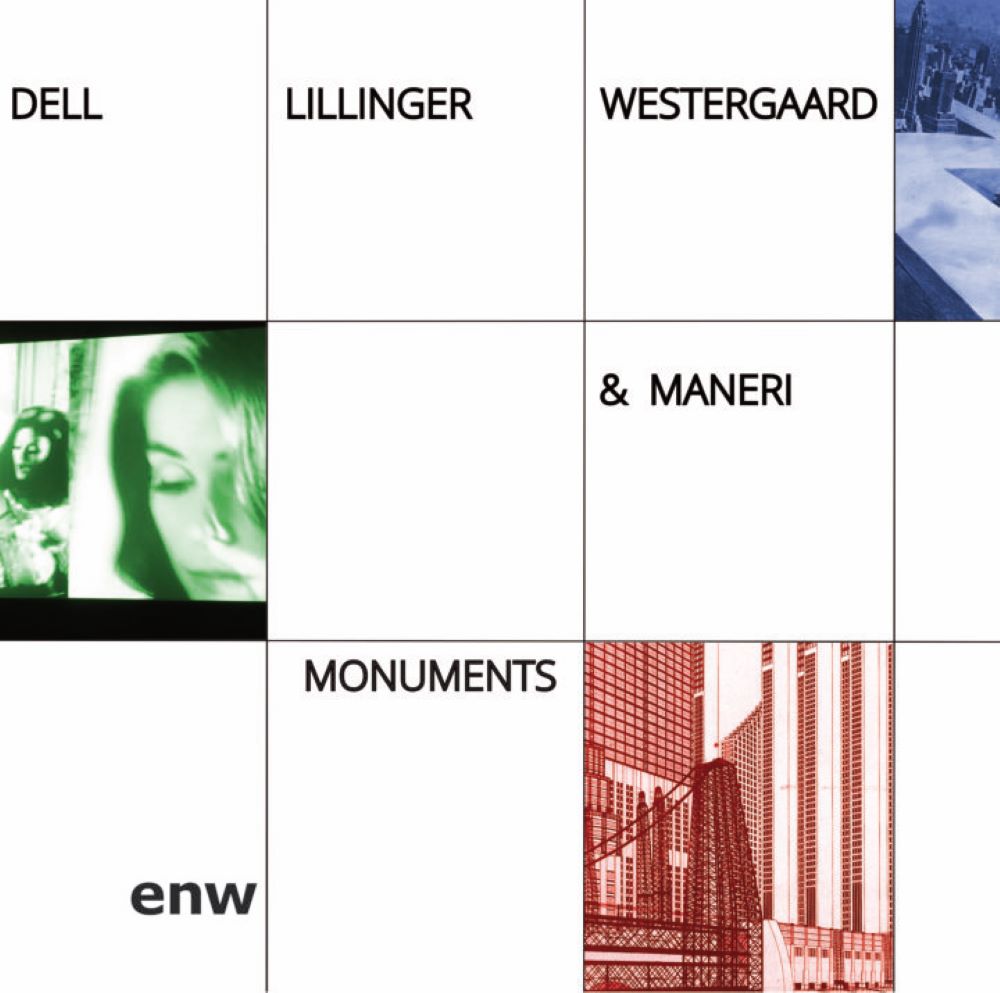
Dell Lillinger Westergaard & Maneri - MONUMENTS / 25 February 2022 on edition niehler werft (enw)

Monuments offers the exciting collaboration of the trio Dell Lillinger Westergard (DLW) and Mat Maneri. In 2015 the internationally acclaimed trio teamed up with the American viola virtuoso to investigate in a fascinating sound landscape. Maneri's unique style is informed by microtonal concepts and open compositions. It blends perfectly well with the innovative structural approach of DLW, while expanding the latter in its harmonic tonal space. Displaying ground-breaking views on and work with musical material, the recording at hand focuses on the commonality and the aspect of balance, especially between the different and contrasting instrument groupings and timbres.

In all cases of approaching compositional aspects, the musicians take their point of departure in questioning their concepts of a musical work over and over again. It is decisive, that the artists can never be sure exactly what defines modern genre types such as New Music, experimental music or Avantgarde. Instead each single composition should always open a path for new perspectives, options and procedures. Against this background, the compositional interspaces, the open structural and fragile cracks, the organizational fluctuation between action/sound/time levels establish the formal design of this at the sam time important and evocative recording: the differentiality and relationality of the work and its performers.

Since its formation in 2011, the trio Dell Lillinger Westergaard (DLW) have been researching energetic playing and structural composition in real time. Their complex interactions result in high energy materializing in different layers of sounds, relationscapes. Form comes into being through musical production. In this way the trio transcends the usual dichotomy of rhythm section vs. solo player.

Nominated for the German Jazz Prize 2021, the trio has released numerous productions and toured worldwide. Their double album „Grammar“ (released 2013 on gligg-records) demonstrates the trio’s specific structural approach to form-making from a variety of perspectives. The renowned German newspaper Frankfurter Rundschau called the band's work "Boulez in real-time". Organizationally and aesthetically, the setup of DLW works as a plug-in structure creating space for guests, who bring their specific character of playing into the band’s sound. One example is the celebrated cooperation with the late John Tchicai, documented on the record „The Traveller“. Released in 2012 on Jazzwerkstatt Berlin, the ground-breaking album received rave reviews and was on the shortlist of the German Recording Award. DLW teamed up with the experimental electronic artist Johannes Brecht for the recording „Boulez Materialism“, released on PLAIST in 2018. Further collaborations include the renowned pianists Tamara Stefanovich, Bob Degen and Søren Kjærgaard.

This publication is the second publication in the new retroactive series of the exclusive artist’s label edition niehler werft (enw). In 2015 Marko Birkner meticulously engineered the session at the Funkhaus-Studios while Gleb Zagrebin provided a retroactive and punctilious mastering of the recordings in 2021.

Tracklist CD

01 Monument 14 * 04:52
02 Monument 13 * 10:24
03 Void 6 00:35
04 Void 4 01:16
05 Monument 12 04:03
06 Monument 18* 11:20
07 Void 10 02:00
08 Void 1 * 00:54
09 Monument 20 10:21
10 Void 11 * 01:11
11 Void 8 01:43
12 Monument 15* 05:17
13 Void 9 * 01:04
14 Void 7 00:40
15 Monument 16* 08:32

Total time: 64:45 *= on vinyl

Christopher Dell – vibraphone
Christian Lillinger – drums
Jonas Westergaard – drums
Mat Maneri – viola

Recorded 15th of May
2015 by Marko Birkner
Mastered 10th of August
2021 by Gleb Zagrebin
All compositions and concept by
Dell Lillinger Westergaard & Maneri
© & ℗ 2021 Christopher Dell
enw 014
retroactive series
Design by Christopher Dell
Produced by enw and DLW

Dell Lilllinger Westergaard & Maneri MONUMENTS is released by the exclusive artist's label edition
niehlerwerft (enw) on

-180g Vinyl CD with inside out cover and inlaycard (LimitedEdition300)
-CD with 6page booklet (Limited Edition300)
-On digital platforms

Dell Lillinger Westergaard & Maneri - MONUMENTS / 25 February 2022 on edition niehler werft (enw)
(In the United States, it will be released on 03/11/2022)

Friday, January 14, 2022

OUT TODAY: Single from “Interpret It Well” / Ches Smith with Frisell, Maneri and Taborn (Pyroclastic Records)

Drummer/vibraphonist/composer Ches Smith leads a breathtaking all-star quartet with guitarist Bill Frisell, violist Mat Maneri and pianist Craig Taborn

Interpret It Well, due out May 6, 2022 via Pyroclastic Records, features stunning explorations of Smith’s ethereal compositions

“A smartly unruly drummer active in devious art-rock and outsider jazz."
– Nate Chinen, New York Times

"[The] nondescript term ‘drummer’ doesn’t get near the chemistry of earworm hooks, sharp-end jazz innovation and global-musical openness of New York percussionist/composer Ches Smith."
– John Fordham, The Guardian

Album Preview Concerts March 30 & 31 at The Stone at the New School, NYC

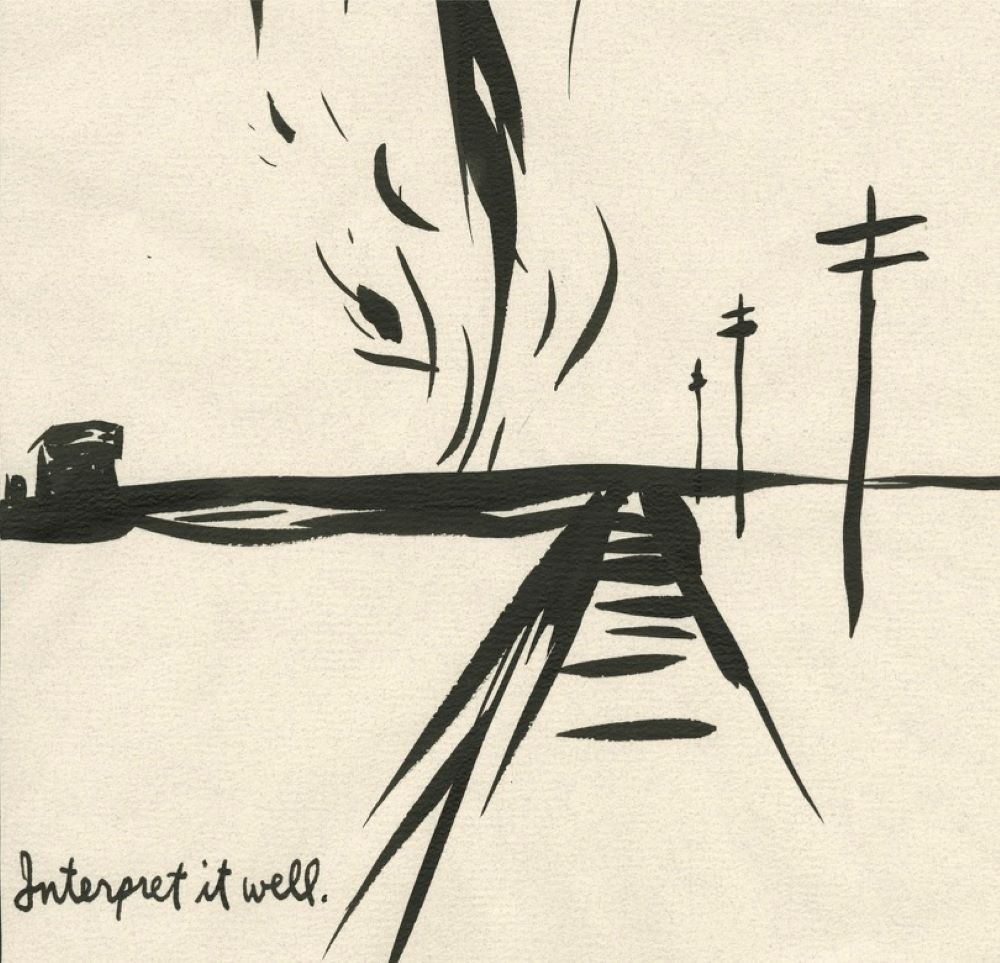
Interpret it well,” reads the script text in Raymond Pettibon’s mysteriously evocative drawing. A few thick black ink strokes describe an enigmatic landscape – the telephone poles, the railroad track and the building in the distance seem obvious enough as markers of desolation, but the swirl of lines on the horizon are more ambiguous. The steam from an approaching train? An oncoming tornado? Hope or dread, connection or destruction, all depend on interpretation.
 
It’s a fitting choice of cover art for drummer/vibraphonist/composer Ches Smith, whose entrancing new album Interpret It Well borrows Pettibon’s three-word prompt as both title and instruction, for bandmates and listeners alike. The album, due out May 6, 2022 from Pyroclastic Records, is his second with keyboardist Craig Taborn and violist Mat Maneri, the much-anticipated follow-up to the trio’s acclaimed 2016 ECM release The Bell. This time out the band becomes a quartet with the addition of master guitarist Bill Frisell, whose contributions bring additional depth, space and texture to a group already rich in all three qualities.
 
It was that sense of openness and exploration, in fact, which intrigued Frisell in the first place. The guitarist attended a Ches Smith Trio concert in late 2018, following which he contacted the drummer with questions about the compositions. “Bill was very nice about the gig – effusive, actually,” Smith recalls. “He told me that he felt the tunes were accessible but challenging at the same time. There's something about the way Craig and Mat and I play together, where we extrapolate to the max but the music feels like the pieces. So I thought Bill might be interested in playing them with us.”
 
It took more than a year for schedules to align, but Frisell was finally able to join the trio for a performance in early 2020. The combination gelled immediately – “Bill felt like a natural part of the band,” Smith writes in his liner notes – but the demands on everyone’s time meant that a recording with all four would prove next to impossible to book.
 
Everyone knows what comes next – the pandemic happened, and suddenly time was all anyone had. Smith reworked his compositions with the newly forged quartet in mind, and the band went into the studio that October when life began to resume some semblance of normalcy (for the first time, at least).
© Kesler Pierre

The results are absolutely striking. As he did for the trio incarnation on The Bell, Smith writes compositions that are minimal but indelible; skeletal enough to allow these remarkable improvisers space to roam far afield yet so vivid that the core image is never lost amidst the daring embellishments.
 
Which brings us back to the Pettibon drawing – what Smith’s music shares with the artist’s work is that idea of a distinctive landscape evoked with a few sketchy lines, with vast stretches of the mysterious left in the spaces between. “There are definitely maximal moments on this record,” Smith says. “But when I think of the music in my head, it's fairly minimal. I like a lot of music where nothing seems to be happening.”
 
That may be true of the music on Interpret It Well in broad terms, but listen closely and a great deal is happening just beneath the misleadingly placid surface. The album is bookended by “Trapped” and “Deppart” (“Trapped” spelled backwards), two alternate versions of the same brief piece, a haunting, repetitive melody that slowly accrues power one voice at a time. “That’s one of the most minimal things I've ever written,” Smith says. “It's simultaneously a bar, a melody and a chord, and people can approach it however they want.”
 
The title track begins with Smith’s tentative, querying vibraphone, with the other voices gradually gathering around him like a deepening fog. The picture eventually comes into focus only to give way to Taborn’s stuttering, agitated solo, which ushers in the urgent, ferocious final section. The piece has been inspiring to artists outside of the band as well – artist/filmmaker Frank Heath, whose works have been described as “poetic interventions into systems of communication, information and understanding,” has created a new film to accompany “Interpret It Well.” The piece will be available May 6 via the Ches Smith and Pyroclastic websites.
 
Frisell contributes a high lonesome intro to “Mixed Metaphor,” soon matched by Maneri’s forlorn bowing. Smith (on vibes) and Taborn then take over for a labyrinthine duet, ultimately leading into a spiraling vamp. The sparse “Morbid” is a ballad of sorts, an elegy unfurling at an achingly slow pace, luxuriating in the evanescent sound while all four take care not to shatter the exquisitely delicate atmosphere. “Clear Major” takes on a more forceful tone, beginning with Taborn’s insistent patterns. The piece is a three-part suite, the volleying first section followed by the lurching rhythms of the middle and the intricately woven lines of the final – each movement separated by clamorous improvisations that deconstruct the composition in order to rebuild again. The complex “I Need More” proceeds at a brisk pace rife with tension, finally exploding into Frisell’s razor-sharp, searing solo. 
 
Interpretation is central to Ches Smith’s compositional approach, and here it yields absolutely breathtaking results. “Bill, Mat and Craig can all turn the ensemble in a new direction on a dime by playing one phrase,” Smith says. “What I love about this band is the way that over time, they'll all change their parts – Craig adding harmony or Mat embellishing the written material to keep it fresh. I’ve played with the two of them a lot over the years, but the music turns out different every time. And I know Bill’s playing very well, but he constantly surprised me. Interpret It Well is really my way of encouraging them – it could be the unspoken credo of the band.”

1. TRAPPED 2:27
2. INTERPRET IT WELL 13:39
3. MIXED METAPHOR 16:26
4. MORBID 7:20
5. CLEAR MAJOR 15:29
6. I NEED MORE 11:42
7. DEPPART 2:36

Ches Smith, drums, vibes
Craig Taborn, piano
Mat Maneri, viola
Bill Frisell, guitar

Ches Smith – Interpret It Well
Pyroclastic Records – PR 19 – Recorded October 12-13, 2020
Release date May 6, 2022

Friday, October 22, 2021

Gordon Grdina 'Pendulum' & 'Klotski' / Two releases on October 22, 2021 Attaboygirl Records

Guitarist, composer and oud master Gordon Grdina launches Attaboygirl  Records with a wide-ranging trio of adventurous new albums

The new label, created in partnership with his partner, photographer and visual artist Genevieve Monro, will make its official debut with its first two releases on October 22, 2021

Inaugural releases include a new solo album for classical guitar and oud along with the studio  debut of the quartet Square Peg with Mat Maneri, Shahzad Ismaily, and drummer Christian Lillinger
 
“Gordon Grdina Makes Music that is Important for Humanity.”
– Eyal Hareuveni, The Free Jazz Collective

“(Nomad) presents the restless spirit of jazz that refuses to be still, searching for a home and never settling down…”
– Jon Davis, EXPOSE

“The prevailing ambience is one of dark mystery, but the ruggedness of Grdina’s tone makes for a palette of rich contrast.”
– David R. Adler, JazzTimes (review of Think Like the Waves)

KLOTSKI
The prolific Vancouver-based guitarist, composer, improviser, and master oud player Gordon Grdina has long been tireless in his pursuit of new possibilities and partnerships for his expansive musical imagination. Seeking a new outlet that can keep pace with his ever-expanding roster of ongoing projects and new collaborations, Grdina has announced the launch of Attaboygirl Records. The endeavor is being undertaken in collaboration with his partner, photographer Genevieve Monro, who will curate the distinctive visual style of the label. At the outset Attaboygirl will begin strictly as an imprint for Grdina’s own efforts, though the founders have plans to eventually expand to include other artists as well.
 
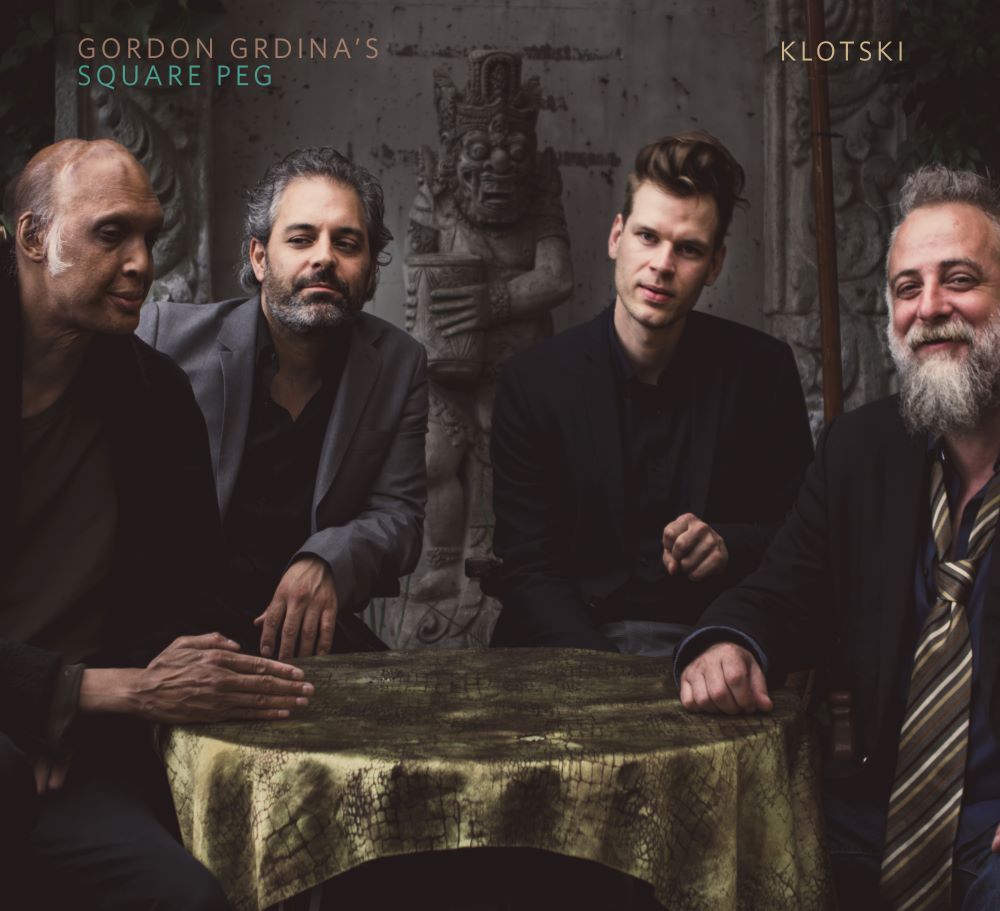
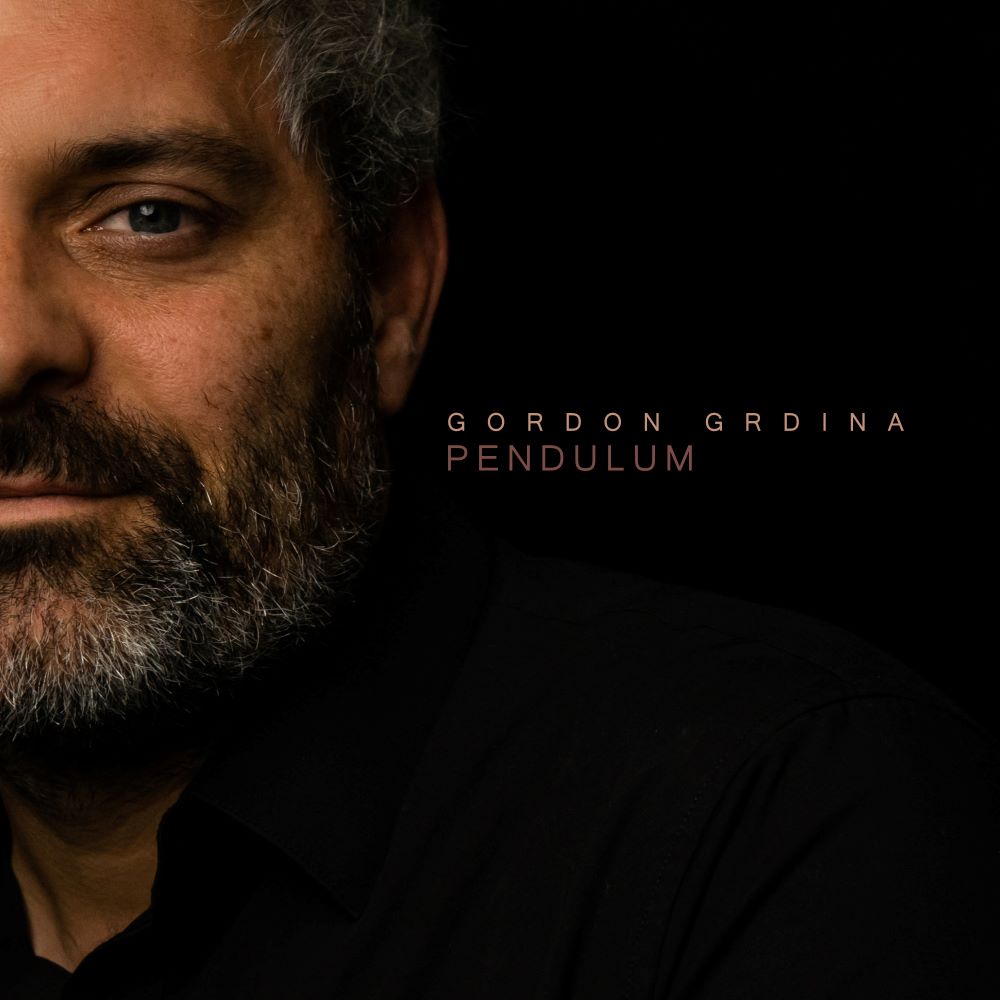
Attaboygirl Records will make its official debut on October 22, 2021, with the simultaneous release of the first two entries in its catalogue. Pendulum is Grdina’s third solo album and the second composed for classical guitar and oud. Klotski, meanwhile, marks the studio debut of Gordon Grdina’s Square Peg, an exploratory quartet featuring Grdina on guitar and oud, Mat Maneri on viola, Shahzad Ismaily on bass and Moog, and Christian Lillinger on drums.
 
A third new release will follow in January 2022, with the meeting of guitar innovator Marc Ribot with Grdina’s Arabic music ensemble Haram. Grdina will also continue to record for other labels in the new year; in May 2022 the much-anticipated second outing by Grdina’s explosive Nomad Trio with pianist Matt Mitchell and drummer Jim Black will be released via Astral Spirits.
 
“I seem to be putting out more music than other labels can handle,” jokes Grdina about the new effort. “The label is a project that Genevieve and I have wanted to take on for a while now. It allows us to release projects when we want and to create a cohesive visual style for these disparate releases.”

The label’s name stems from a favorite saying of Monro’s late father, serving as a personal dedication while alluding to the two partners at the helm. “It's also a positive, encouraging sentiment,” Grdina adds, “which is important when taking on something new like this.”

01 Impending Discomfort 7:22
02 Escherian 6:09
03 Bacchic Barge 7:39
04 Sulfur City 9:21
05 Kaleidoscope 5:41
06 Microbian Theory 8:07
07 Sore Spot 4:13
08 Joy Ride 4:38

Gordon Grdina  guitar / oud
Mat Maneri  viola
Shahzad Ismaily  bass / moog
Christian Lillinger  drums


PENDULUM
Pendulum builds upon the success of Grdina’s previous solo releases. The first, 2018’s China Cloud, featured his usual arsenal – electric guitar and oud – won a Juno Award (the Canadian equivalent of the Grammy) for Instrumental Album of the Year. His Juno-nominated 2020 follow-up, Prior Street, shifted into more of a chamber-jazz concentration with pieces designed for classical guitar and oud. The new album continues in that vein, intricately exploring the harmonic possibilities of the instruments in ways that bridge their Western and Arabic origins.

Square Peg brings Grdina together with Ismaily and Maneri, both longtime members of New York’s downtown scene, and German drummer Christian Lillinger, an award winning player in the European avant- jazz and improvised music world. For Klotski, Grdina penned a number of short, modular compositions that could fit together like puzzle pieces to form a free-ranging but focused setlist. The album’s single, nearly hour-long piece moves through eight of these cellular pieces, each able to be initiated by any member of the group and bridged by captivating improvisations, vividly blurring the lines between the written and the spontaneous.
 
Grdina founded Haram in 2008 with two purposes in mind: to further evolve his work with traditional Iraqi and Arabic folk music, and to convene several of his favorite Vancouver improvisers into one large ensemble. The follow-up to the ensemble’s 2012 debut, Her Eyes Illuminate, features the addition of legendary guitar wizard Marc Ribot, whose fabled career has included influential work with Tom Waits, Elvis Costello, Robert Plant and John Zorn among countless others, as well as his own projects like Ceramic Dog, Los Cubanos Postizos, Spiritual Unity and the Rootless Cosmopolitans.
 
“Ribot's been a hero of mine for a long time,” Grdina says. “He added a whole lot of energy and excitement as well as a punk rock aesthetic to these pieces.”
 
Finally, next May will bring the release of Boiling Point, the second outing for Grdina’s Nomad Trio with Matt Mitchell and Jim Black, two of the most inventive and technically audacious artists in modern jazz. “I can write anything for this band,” Grdina touts. “It's very complex music, rhythmically, harmonically, melodically, and in the way every piece fits together, those guys really can do anything. Since the last album, the group has solidified its unique sound, which is exciting to hear develop on this second record.”

1 Koen Dori  8:02
2 Contra 6:52
3 The Chase  6:53
4 Benbow Blues  8:32
5 Wayward  9:22
6 Pendulum  6:02
7 Always Been The Song II 5:15

Gordon Grdina  classical guitar, oud

Wednesday, July 28, 2021

Guitarist, composer and oud master Gordon Grdina launches Attaboygirl Records with a wide-ranging trio of adventurous new albums

The label, created in partnership with his partner, photographer and visual artist Genevieve Monro, will make its debut with its first two releases on October 22, 2021
 
Inaugural releases include a new solo album for classical guitar and oud along with 
the studio debut of the quartet Square Peg with Mat Maneri, Shahzad Ismaily, and drummer Christian Lillinger
 
In early 2022, Attaboygirl will release the new album by Grdina’s Arabic music ensemble Haram with special guest Marc Ribot, while Astral Spirits will unveil the second album by the Nomad Trio with pianist Matt Mitchell and drummer Jim Black

“Gordon Grdina Makes Music that is Important for Humanity.” 
— Eyal Hareuveni, The Free Jazz Collective

“(Nomad) presents the restless spirit of jazz that refuses to be still, searching for a home 
and never settling down…”
— Jon Davis, EXPOSE

“The prevailing ambience is one of dark mystery, but the ruggedness of Grdina’s tone makes for a palette of rich contrast.”
— David R. Adler, JazzTimes (review of Think Like the Waves)

The prolific Vancouver-based guitarist, composer, improviser, and master oud player Gordon Grdina has longbeen tireless in his pursuit of new possibilities and partnerships for his expansive musical imagination. Seeking a new outlet that can keep pace with his ever-expanding roster of ongoing projects and new collaborations, Grdina has announced the launch of Attaboygirl Records. The endeavor is being undertaken in collaboration with his partner, photographer Genevieve Monro, who will curate the distinctive visual style of the label. At the outset Attaboygirl will begin strictly as an imprint for Grdina’s own efforts, though the founders have plans to eventuallyexpand to include other artists as well.
 
Attaboygirl Records will make its official debut on October 22, 2021, with the simultaneous release of the first two entries in its catalogue. Pendulum is Grdina’s third solo album and the second composed for classical guitar and oud. Klotski, meanwhile, marks the studio debut of Gordon Grdina’s Square Peg, an exploratory quartet featuring Grdina on guitar and oud, Mat Maneri on viola, Shahzad Ismaily on bass and Moog, and Christian Lillinger on drums.
 
A third new release will follow in January 2022, with the meeting of guitar innovator Marc Ribot with Grdina’s Arabic music ensemble Haram. Grdina will also continue to record for other labels in the new year; in May 2022 the much anticipated second outing by Grdina’s explosive Nomad Trio with pianist Matt Mitchell and drummer Jim Black will be released via Astral Spirits.

“I seem to be putting out more music than other labels can handle,” jokes Grdina about the new effort. “The labelis a project that Genevieve and I have wanted to take on for a while now. It allows us to release projects when we want and to create a cohesive visual style for these disparate releases.”
 
The label’s name stems from a favorite saying of Monro’s late father, serving as a personal dedication while alluding to the two partners at the helm. “It's also a positive, encouraging sentiment,” Grdina adds, “which is important when taking on something new like this.”
Pendulum builds upon the success of Grdina’s previous solo releases. The first, 2018’s China Cloud, featured his usual arsenal – electric guitar and oud – won a Juno Award (the Canadian equivalent of the Grammy) for Instrumental Album of the Year. His Juno-nominated 2020 follow-up, Prior Street, shifted into more of a chamber-jazz concentration with pieces designed for classical guitar and oud. The new album continues in that vein, intricately exploring the harmonic possibilities of the instruments in ways that bridge their Western and Arabic origins.
 
Square Peg brings Grdina together with Ismaily and Maneri, both longtime members of New York’s downtown scene, and German drummer Christian Lillinger, an award winning player in the European avant- jazz and improvised music world. For Klotski, Grdina penned a number of short, modular compositions that could fit together like puzzle pieces to form a free-ranging but focused setlist. The album’s single, nearly hour-long piece moves through eight of these cellular pieces, each able to be initiated by any member of the group and bridged by captivating improvisations, vividly blurring the lines between the written and the spontaneous.
 
Grdina founded Haram in 2008 with two purposes in mind: to further evolve his work with traditional Iraqi and Arabic folk music, and to convene several of his favorite Vancouver improvisers into one large ensemble. The follow-up to the ensemble’s 2012 debut, Her Eyes Illuminate, features the addition of legendary guitar wizard Marc Ribot, whose fabled career has included influential work with Tom Waits, Elvis Costello, Robert Plant and John Zorn among countless others, as well as his own projects like Ceramic Dog, Los Cubanos Postizos, Spiritual Unity and the Rootless Cosmopolitans.
 
“Ribot's been a hero of mine for a long time,” Grdina says. “He added a whole lot of energy and excitement as well as a punk rock aesthetic to these pieces.”
 
Finally, next May will bring the release of Boiling Point, the second outing for Grdina’s Nomad Trio with Matt Mitchell and Jim Black, two of the most inventive and technically audacious artists in modern jazz. “I can write anything for this band,” Grdina touts. “It's very complex music, rhythmically, harmonically, melodically, and in the way every piece fits together, those guys really can do anything. Since the last album, the group has solidified its unique sound, which is exciting to hear develop on this second record.”

Friday, February 26, 2021

Goldberger / Jermyn / Maneri / Cleaver - Live at Scholes (February 26, 2021 Out Of Your Head Records)

OOYH Untamed is the digital-only DIY side of Out Of Your Head Records. The focus of Untamed is to release high quality performances with a quicker turnaround than a traditional studio album. They may be a live performance, a home studio recording, or an unearthed gem that never had the proper release outlet. That being said the performances are always first rate, and this is music that we strongly believe should be out in the world.

In the time of COVID-19 all proceeds from Untamed album sales are given directly to the artists. We want to say a huge thank you to TJ Huff (huffart.com) for generously donating original art, time, and talents to the design of these albums.

For every sale of this album OOYH Records will donate $1 to The Nature Conservancy (nature.org), an organization chosen by Jonathan Goldberger and Simon Jermyn.


1. Live at Scholes

2. Live at Scholes Preview (excerpt)


Jonathan Goldberger - guitar

Mat Maneri - viola

Simon Jermyn - electric bass

Gerald Cleaver - drums


Record live to stereo 2-track at Scholes Street Studio on February 24, 2019 by Rene Pierre Allain.

Thursday, February 18, 2021

Junk Magic – Compass Confusion (Pyroclastic Records)

Junk Magic – 2004 record title, and current pseudonym for Craig Taborn –
explores sonic subversion and mingling identities on anticipated follow-up
Compass Confusion

“Collages of dark and dirty parts, musical cast-offs, so to speak, that have been artfully
reattached.” — Patrick Sisson, PopMatters
“More rewards await, rich and replete.” — Phil DiPietro, All About Jazz
For more than a decade, Junk Magic has been honing a collective sound that relies on individual expressions, imagination and subversion. Appearing first as a 2004 album title under pianist-composer Craig Taborn’s name, Junk Magic has transitioned into a sonic identity comprising electronic sound design, production techniques and elements of improvised music.

Compass Confusion presents a holographic snapshot of the Junk Magic sound. “Everything is warped by something else,” says Taborn, who serves as album composer and producer. “You’re still trying to capture things ‘in a moment,’ in a certain sense. But then also, because of how the process works, you’re not. There’s a lot of time to craft things after the fact.”

Compass Confusion features Chris Speed on saxophone, Erik Fratzke on bass, Mat Maneri on viola, David King on drums and Taborn on piano, keyboards and synthesizer. Together, they disarticulate boundaries that imply separation of live music and digital production. “I don’t really view using creative methods in ambient techniques as a ‘different side’ of musical expression,” says Taborn. “It’s all the same expression. But this album is definitely leaning in to the production process as opposed to relying more heavily on the live playing.”

Compositional and textural layers, as well as pacing and extended ebb and flow, emerge intentionally throughout the recording. The artists honor space. They harness movement through time. Using methods that challenge perception and embrace subversion, they develop sound narratives unique to each track that create a story arc across the entire album. The interplay’s the thing. “Laser Beaming Hearts” introduces a cast of characters, layering and mingling their identities, not only through sound design but melody.

“Whenever I hear a melody, it really does set up an identity, a character,” says Taborn, who seeks, at times, to subvert a character’s initial impact by elevating a textural element or an ambience. Often, that relationship inverts. First conjuring an ocean inside a seashell alongside echoing heartbeats, “Dream and Guess” soon moves into a new melody beautiful, mysterious and primed for sonic disruption.
Rather than disorient — despite its title — the album constantly reorients the listener. Many tracks, including “The Science of Why Devils Smell Like Sulfur,” feature sound chambers, through which the artists freely move. Within these chambers, textures layer, flicker, persist, and stories develop; sound collage may enhance as melody recedes. “There are different methods of attending compositionally,” says Taborn. “If I were writing a traditional tune, it would be melody and some chord changes; if I were writing a hip hop track, I would focus more on beats, loops and sound design; if I were writing strictly ambient music, I would focus on the sound relationships, how the shapes are evolving with certain sonic elements. On a lot of these pieces, I’m really playing with the foreground and background of all those things.”

While Taborn’s process serves a fixed vision, his approach preserves spontaneity. He populates each chamber by listening and responding to what he hears. “Each tune kind of has a radically different process,” he says. “I do think about narrative, because it moves through time, but it’s the narrative of these sound worlds, moving between them.”

The artists entered sessions in Minneapolis and Brooklyn knowing each studio hit would be one step of the process. Most of the album’s construction would come together away from mics and amps. Still, Taborn asserts an aesthetic throughout Compass Confusion that reflects his expansive foundation in live, improvised music. Deep admiration for hip hop and EDM production techniques notwithstanding, Taborn seeks to preserve solo performances artists throw down in the studio. “To a large extent, what you hear is what people played in the order that they played it,” he says. “I don’t cut up performances. And that’s not an ethos, it’s just an aesthetic. I’m not cutting up a drum solo and making loops, but I’m doing other things that might trick you into thinking it’s looped.”

Mixed and mastered in Taborn’s native Minneapolis by Brett Bullion (The Bad Plus) and Huntley Miller (Bon Iver, Kassa Overall), respectively, Compass Confusion presents a confluence of expressions within a collective sound. “We’re improvisers,” says Taborn. “While a lot of this material is written, there’s so much improvising in the playing. Even in my approach to making tracks, making beats in the studio, it’s still improvisational. You’re working on things in the moment.”

***

Junk Magic, over the years, has featured countless acclaimed artist-composers, including Craig Taborn, Chris Speed, Erik Fratzke, Mat Maneri, Aaron Stewart, Mark Turner and David King (The Bad Plus). Bonding improvisational aesthetic with digital production and electronic music techniques, the project ethos challenges existing perceptions of sound design. A 2004 self-titled release garnered praise from Pitchfork, PopMatters and All About Jazz, which acknowledged the sound’s “staggering futuristic potential.” Anticipated followup Compass Confusion, released on Pyroclastic Records, positions Junk Magic on the rolling crest of acoustic wave expansion.

1. Laser Beaming Hearts 07:10
2. Dream and Guess 05:37
3. Compass Confusion/ Little Love Gods 08:55
4. The Science Of Why Devils Smell Like Sulfur 10:37
5. The Night Land 04:10
6. Sargasso 08:35
7. Sunsets Forever 05:31

Chris Speed - tenor sax, clarinet
Mat Maneri - viola
Erik Fratzke - bass
David King - acoustic and electronic drums

Monday, February 15, 2021

Jen Shyu & Jade Tongue - Zero Grasses: Ritual for the Losses (April 2, 2021 Pi Recordings)

Jen Shyu is a groundbreaking, multilingual vocalist, composer, producer, multi-instrumentalist, dancer, 2016 Doris Duke Artist, and was voted 2017 Downbeat Critics Poll Rising Star Female Vocalist. Shyu is widely regarded for her virtuosic singing and riveting stage presence, carving out her own beyond-category space in the art world.

1. Living's a Gift | Part 1: Springtime
2. Living's a Gift | Part 2: Everything for Granted
3. Living's a Gift | Part 3: My Unsolved Regrets
4. Living's a Gift | Part 4: Joyful
5. Lament for Breonna Taylor
6. The Human Color
7. A Cure for the Heart's Longing
8. Body of Tears
9. When I Have Power
10. Finally She Emerges
11. Display Under the Moon | 月下の陣
12. Father Slipped Into Eternal Dream
13. With Eyes Closed You See All
14. Life As You Envision

Jen Shyu: Composition, vocals, percussion, piano, Taiwanese moon lute, Japanese biwa
Ambrose Akinmusire: trumpet
Mat Maneri: viola
Thomas Morgan: bass
Dan Weiss: drums

Thursday, November 8, 2018

Ivo Perelman - Strings 1 & Strings 2 (LEO RECORDS November 16, 2018)


Ivo Perelman Reaches Into Distant & Recent Past,

Exploring Newly Forged Collaboration With

Violist Mat Maneri On Strings 1 & Strings 2

Double Disc Set Available

November 16 via Leo Records


In recent years, the irrepressible and inexhaustible tenor saxophonist Ivo Perelman has forged a special relationship with violist Mat Maneri, with whom he has recorded six albums since 2013. “When I play with him, I have the best of both worlds,” Perelman explains. “I have the wonderful sounds that a string instrument can produce – the bowing, the pizzicato, the sad timbre of the viola, the intimate sound; but I also get the wonderful phrasing of a woodwind player.” This no doubt owes to the influence of the violist’s father, the iconoclastic Boston-based saxophonist & clarinetist Joe Maneri. “I don’t have that relationship with anybody else that plays a string instrument,” adds Perelman, who remarked, after their first encounter, “it’s like each of us is playing both instruments at the same time.” 

This musical compatibility undergirds two new albums that inaugurate the saxophonist’s latest themed series of recordings. Strings 1 and Strings 2 (available November 16 via Leo Records) are the first of seven recordings, each of which showcases the core unit of Perelman and Maneri but in different settings formed by the addition of other artists. Perelman has previously employed a similar methodology to great success. In 2015, he issued five albums built around his relationship with drummer Gerald Cleaver. In 2016, he presented two separate projects in which he and his most frequent collaborator, pianist Matthew Shipp, welcomed varying combinations of bass, drums, and trumpet. Such projects present Perelman as a sort of experimental scientist, adding and subtracting reagents to affect the results, and they represent the most ambitious segment of his discography.

On Strings 1, Perelman and Maneri are joined by two admired violinists known for their improvisation, Mark Feldman and Jason Hwang. This creates, for all intents and purposes, a string quartet – except for the fact that here, the tenor saxophone stands in for the cello. While this quartet represents a unique grouping, it is nonetheless rooted in the distinct similarities linking the tenor and the cello. They share an almost identical written range and tonal color, from luscious mahogany in the low notes to a sweet chartreuse in the upper register; each instrument is considered the most “vocally” expressive instrument within its respective family. (In fact, you could say that the cello sounds something like a “tenor violin.”) What’s more, Perelman has previously stated his tendency for his saxophone playing to “mutate” in the presence of the violin family, saying, “I start to incorporate the bowing, the instruments’ phrasing, in my own playing.”

“I am particularly in love with this session,” Perelman admits now, “because I was not expecting anything like it at all. I thought that maybe this wouldn’t work, that maybe it was too many high-pitched violins. I never thought I would become the ‘cello’ anchoring it all down.”

As is the case with any Perelman album, the music on Strings 1 sprouts from total spontaneity, created with neither written music nor even any outline regarding themes, tempos, form, or harmonic movement. But the results seem anything but haphazard: motifs arise and spread, counterpoint blinks in and out of existence, and passage after passage raises the question of where improvisation ends and true composition begins.

Perelman has always had a strong affinity for the instruments that make up the violin family. The roots of this predilection extend to his youth: as a child in his native Saõ Paulo, Perelman played cello for several years before he turned to the saxophone, and the instrument still haunts him. As he explains when discussing Strings 2 – which marks his first partnership with a stand-alone cellist (as opposed to an earlier recording with the Sirius String Quartet) – he initially leaned toward excluding the instrument from any of the recordings in the “Strings” series. “When there’s a cello there,” he admits, “I kind of become a different animal, because I have sentimental values attached to it. Without the cello, I can work without distractions. Throw a cello in there, and it’s something else. The cello just drives me crazy. It’s a powerful thing; the deep, deep sound – it speaks to my soul immediately.”

Strings 2 features cellist Hank Roberts, whose extraordinary eclecticism – he has played traditional jazz, folk and country music, rock, and avant-garde improvisation – has allowed him to perform with artists ranging from Gary Burton and Rudy Royston, to Bill Frisell, to Sting, to Julius Hemphill and Tim Berne. Like Maneri, Roberts de-emphasizes traditional praxis in favor of expressivity, sublimating pyrotechnics to achieve an elegant balance of resolve and fragility. Strings 2 also marks Perelman’s first on-disc meeting with Ned Rothenberg, among the admired reed virtuosos in post-freedom improvisation, who plays bass clarinet on four tracks.

This represents another rare occurrence in Perelman’s extensive discography of 100-plus albums: until the 2018 release of Kindred Spirits and Spiritual Prayers, each of which comprised duo improvisations by tenor and bass clarinet, Perelman had previously recorded with another woodwind player only once. “This means so much to my development as an artist,” Perelman has said in describing the experience of working with bass clarinet. By including that instrument, along with the cello (his first great love) and the viola of Mat Maneri (another “kindred spirit”), Perelman has assembled a group that reaches into his distant and recent past to point his art in yet another new direction.

Tuesday, October 30, 2018

Matthew Shipp & Mat Maneri - Conference of the Mat/ts (ROGUEART 2018)


“Control and impulsiveness, at the crossroads of intellect and intuition”


Nearly 20 years after their only other duet album, "Gravitational System", Matt and Mat have felt the need to meet again to share and confront their respective musical experiences. To have matured does not mean that they have lost creativity and spontaneity; on the contrary, they can afford to put themselves in danger to push the music further. Control and impulsiveness, at the crossroads of intellect and intuition. It was really worth the wait for almost 20 years!


Mat Maneri: viola
Matthew Shipp: piano

Conference #1 (5:34)
Conference #2 (3:09)
Conference #3 (6:05)
Conference #4 (2:42)
Conference #5 (4:30)
Conference #6 (6:40)
Conference #7 (7:12)
Conference #8 (3:24)
Conference #9 (4:35)
Conference #10 (5:46)
Conference #11 (4:57)
Conference #12 (1:53)
Conference #13 (3:39)

All compositions by Mat Maneri and Matthew Shipp

Recorded by Jim Clouse on November 13th 2017 at Park West Studios, Brooklyn, New York, USA
Mixing and mastering: Jim Clouse
Liner notes: Steve Dalachinsky
Photograph: Luciano Rossetti @Phocus Agency
Cover design: Max Schoendorff
Cover realization: David Bourguignon
Executive producer: Michel Dorbon

Monday, May 22, 2017

Mat Maneri / Evan Parker / Lucian Ban - Sounding Tears (CLEAN FEED RECORDS 2017)


Over the course of a quarter century career American violist Mat Maneri has “changed the way the jazz world listens to the violin and viola” (AllAboutJazz.com) and has established an international reputation as one of the most original and compelling artists of his generation. Maneri posses an immediately recognizable sound and approach which marries the distinct worlds of jazz and microtonal music in a fluid, remarkably expressive fashion which The Wire dubbed “endlessly fascinating.” Over the course of his career, Maneri has worked with 20th century icons of improvised music including his father Joe Maneri, Cecil Taylor, Tim Berne, William Parker, Craig Taborn and many others.

For Sounding Tears, his first release under his own name (not as co-leader or collaborator) in 12 years, Maneri has enlisted legendary British saxophonist Evan Parker, one of European avant-garde’s leading voices for the past four decades, alongside his long-standing collaborator, Romanian expat, pianist Lucian Ban.

The improvisations conjured by these improvisers bespeak a music of the new millennium – tender and lyrical while also angular, gritty and suspenseful. Reflecting on Sounding Tears Maneri says: “Music begins before music. As an improviser the first note I play sets in motion the whole world. As a trio, where does musical intimacy come from? Is it improvisation, is it chamber music? Is it jazz? The music on this album, the experience, empathy and the shared history that Evan and Lucian bring to Sounding Tears, is our answer to those questions.”

Maneri and Ban have been working together for close to a decade spanning a number of different projects. They met while working on Ban and bassist John Hebert’s Enesco Re-Imagined (Sunnyside, 2009). On one piece played a memorable duo, so remarkable that they didn’t hesitate to begin touring as a duo. This touring relationship ultimately resulted in their acclaimed recording, Transylvanian Concert (ECM, 2013). It was at the Bucharest release show for Transylvanian Concert that they invited Parker to be a special guest. The music was elevated to a new plane. The three played a few more times together before heading to Tedesco Studios in New Jersey in 2016 to record what would become Sounding Tears.

The music on the album showcases a side of the saxophonist’s playing not often heard on record – a more introverted, crooked way of phrasing, tenderly enveloped in Maneri and Ban’s sonic universe. Over the course of eight free improvisations and two written melodies, this trio showcases a distinct language; a language built on equality and listening with no grandstanding or hierarchical principles at play.

A notable influence on this album’s concept was the seminal 1995 ECM album Time Will Tell by Paul Bley, Evan Parker and Barre Phillips. This album meant an immeasurable amount to both Maneri and Ban. A sense of space invoked throughout and the collective phrasing were influential to both musicians. Bley was also one of the first people to give Joe Maneri and Mat Maneri the recognition they so deserved. Bley recommended them to ECM Records’ Manfred Eicher, with whom they went on to record with Barre Phillips and many others in a series of albums which are still cherished for their inventiveness.

Maneri sums up the spirit of Sounding Tears. “It’s like Lester Young mixed with something insane; rooted in the past of an alternate universe which may have never existed.” No other words can describe the dualities that this record holds within itself – the music is both cutting-edge and remarkably progressive while also being firmly rooted in tradition, song, and improvisational tactics which recall 20th century modern classical music in addition to jazz. The sound of Sounding Tears is the sound of three master musicians playing with integrity and heart, listening as much as asserting, letting silence dictate as much as sonic density. It’s a treat and a delight to hear a recontextualized Evan Parker sitting patiently, enmeshing himself in a codified universe that Maneri and Ban have been crafting for several years.


Friday, March 31, 2017

Whit Dickey / Mat Maneri / Matthew Shipp - Vessel In Orbit (2017)


Whit Dickey is a veteran free jazz drummer who first made his mark in David S. Ware’s band in the 90s and led on some well-regarded albums around the turn of the millennium. Since then he’s mostly kept his profile raised as a member (until 2015) of Matthew Shipp’s revered trio and appearing in many of Ivo Perelman’s recent cascade of full-improv rides. In fact, Dickey’s upcoming, first new album in more than a decade sprung from a conversation Dickey had with Shipp while recording with Perelman; the good vibe they got from that session led to them working together again but under Dickey’s leadership. Even better, viola master Mat Maneri joined them at Shipp’s suggestion.

That makes Vessel In Orbit (March 24, 2017, AUM Fidelity) a reunion of sorts, since it carries over the same lineup from Dickey’s Life Cycle (also on AUM) from sixteen years earlier, less alto saxophonist Rob Brown. It’s all group improvisations, because, well, that’s how the finest from NYC’s downtown scene roll.

Thusly, the success of this music rests on telepathy, and these guys know each other so well. The symmetry of two old cohorts Dickey and Shipp comes to the fore with “Spaceship 9,” with Shipp setting the pulse with a single, repeating note, freeing up Dickey to flutter around it, and Maneri seizes upon his role of flushing out most of the harmony parts. Shipp’s piano opens up melodically on “Space Walk,” interacting with Maneri’s viola while Dickey rustles below, underscoring the uneasiness lying beneath the prettiness. Shipp largely tests the lower end of his register on “Dark Matter,” Dickey with him every step along the way on Shipp’s journey over peaks and valleys.

Maneri and Shipp do a delicate dance around each other on “Galaxy 9,” Dickey adding punctuation; viola and piano layer on more density (especially when Shipp goes into full chord mode) and with that, tension. Maneri’s viola, sweetly sorrowful “To A Lost Comrade,” gets empathetic support from Shipp and Dickey. Dickey’s drums here show a very patient approach, processing inputs from Maneri and letting that guide his path. Dickey tees up “Space Strut” with fastidious cymbal and rim work, setting into motion a fully developed spontaneous composition.

Conceived as it was played, Vessel In Orbit is unpredictable, melodic and has form built around emotion not formal structures. When it’s done by such elastic artists like Whit Dickey along with Matthew Shipp and Mat Maneri, it all comes together beautifully.

1. Spaceship 9 5:15
2. Space Walk 6:37
3. Dark Matter 5:58
4. Galaxy 9 9:13
5. Turbulence 4:51
6. To a Lost Comrade 5:39
7. Space Strut 4:29
8. Hyperspatial 6:12

Whit Dickey drums
Mat Maneri viola 
Matthew Shipp piano


Tuesday, January 31, 2017

Daniel Levin Quartet - Live at Firehouse 12 (CLEAN FEED RECORDS 2017)


Live At Firehouse 12 documents the Daniel Levin Quartet in live performance with its current working line-up, now featuring Mat Maneri on viola. The new palette of timbres and textures afforded by the change in instrumentation from trumpet to viola provides ample opportunities for the band to explore previously uncharted territory, and the musicians take full advantage here, producing music that sounds fresh and exciting. At the same time, there is a sense of familiarity, as the music often travels along several of the distinctly original sonic paths that Daniel Levin and his quartet have forged over many years. In fact, with this recording, Levin chose to focus on four of the key compositional forms, or “archetypal images”, that have been in consistent use by the quartet since its inception in 2001. To round out the program, there are fully improvised duos from Zetterberg and Moran, and also from Levin and Maneri, who can frequently be found working as a stand-alone duo, apart from the quartet.

The music that results from this unique combination of precedents and antecedents can be extremely subtle or epic; it can delight itself in the abstract marvels of timbre and texture; it can embrace the beauty of a melody while exploring rhythm in unexpected ways, but at its core, it’s always lyrical. The mysteries and intricacies within the music invite us to keep coming back to it, in order to uncover yet another layer, another detail, to have another experience of enchantment.


1. Aquamarine (Live) 8:28
2. Lost & Found (Live) 7:53
3. Jumpman (Live) 7:35
4. Glacier (Live) 5:51
5. Mat / Daniel (Live) 4:25
6. Matt / Torbjörn (Live) 5:26
7. Myths & Legends (Live) 9:08

Mat Maneri  viola
Matt Moran  vibraphone
Torbjörn Zetterberg  double bass

All compositions by Daniel Levin, Black Bear Music Industries Inc. (ASCAP) except #5 by Mat Maneri & Daniel Levin, and #6 by Matt Moran and Torbjörn Zetterberg.

Recorded on May 27, 2016 by Greg DiCrosta at Firehouse 12, New Haven | Mixed and mastered by Nick Lloyd at Firehouse 12, New Haven
Produced by Daniel Levin | Executive producer Pedro Costa | Design by Travassos | Photo credits: Daniel Levin by Joachim Ceulemans; Mat Maneri by Remi Angeli; Torbjörn Zetterberg & Matt Moran by Peter Gannushkin


Wednesday, January 20, 2016

Ches Smith, Craig Taborn, Mat Maneri - The Bell (2016)


Ches Smith is best known to indie rock liner-note devotees as a percussionist who has appeared on over half a dozen Xiu Xiu releases (going all the way back to Knife Play). In recent years, he’s been consistently active on the contemporary jazz circuit—lending his talents to a series of celebrated albums by artists such as guitarist Mary Halvorson and saxophonist Tim Berne. The music of both those composers occasionally strays close to avant-rock, which helps explain Smith’s in-demand status around jazz’s cutting-edge galleries. But he also led those bands through quieter, softer passages, proving his depth and range.

For his first album as a composer and bandleader on Germany’s iconic ECM label, Smith has chosen a subtlety that seems influenced by his most recent bandmates and peers. It’s a stylistic course that will be broadly familiar to fans of Manfred Eicher’s jazz-and-classical imprint, and less so to fans of Women as Lovers. But The Bell isn't placid, either: In the company of pianist Craig Taborn and violist Mat Maneri—an experienced pair of collaborators—Smith forges a quiet intensity. There’s heat here, even if it takes some time to feel it.


Things begin calmly. The album’s title-track opener announces itself with a lone, delicate smack of pitched percussion, before the other players enter. Though the nine-minute piece never strays very far from a static and spacious feel, there’s often something new happening: Smith moves from the bell-like elements in his kit to some vibraphone shimmers, or thrumming timpani playing. Maneri moves from a low drone on his viola to high-pitch wisps of brief, almost-scratchy timbre. Collectively, the group’s sound is constantly tempting you into a false sense of ease that individual players delight in subverting with little tics—adding extra notes to minimalist phrases before they become too predictable.

While all The Bell’s tracks were composed by Smith, the group’s status as "an improvising trio" is clear during "Barely Intervallic," a cut where Smith indulges skittering, freer playing. "I’ll See You on the Dark Side of the Earth" and "I Think" follow the big-canvas, pensive-but-driven feeling of "Isn’t It Over?" In the album's final third, "Wacken Open Air" gives up its theme right away, the better to let us hear the group work the spare material into a potent acoustic riff. Maneri deals in some lyrical soloing toward the end of "It’s Always Winter Somewhere." And the finale, "For Days," re-establishes the set’s quiet equilibrium.

The largely hypnotic, not-quite-repetitive quality of the music will, for some listeners, call to mind Taborn’s own Junk Magic, an early-21st century triumph of electrified chamber jazz (and an album that also featured Maneri). But The Bell isn’t just some less kinetic, acoustic redo of that project, with Smith holding down the percussion chair. Despite the album’s restricted range, it suggests a malleable aesthetic, likely the result of the year and a half these improvisers put in together before recording their debut outing. You can imagine this band doing a wide variety of impressive work, in the very near future: perhaps adding in some electronics, or including compositions from all members. But for now, it’s persuasive enough as a demonstration of Smith’s continued career shift into contemporary jazz.


The Bell
Barely Intervallic
Isn't It Over?
I'll See You On The Dark Side Of The Earth
I Think; Wacken
Open Air
It's Always Winter Somewhere
For Days

Ches Smith, drums, vibraphone, timpani
Craig Taborn, piano
Mat Maneri, viola


MENOS QUE UN PERRO