
Showing posts with label Ittetsu Takemura. Show all posts

Sunday, March 28, 2021

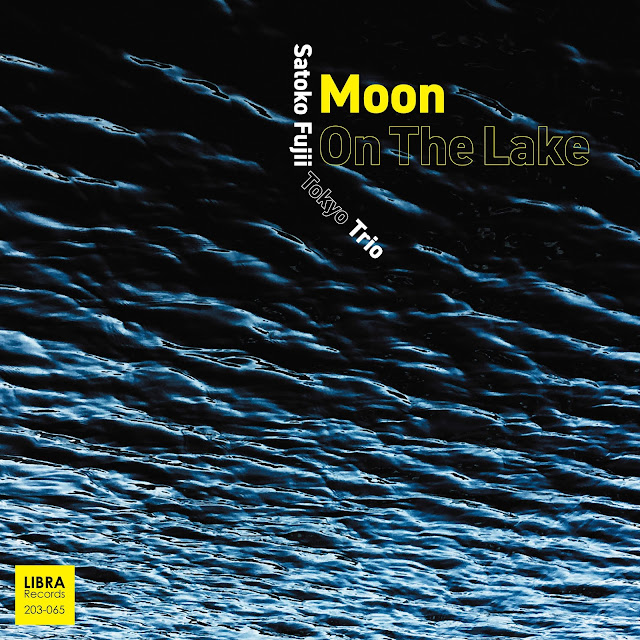
Satoko Fujii / Tokyo Trio – Moon On The Lake (May 7, 2021 Libra Records)

Pianist-composer Satoko Fujii Debuts Tokyo Trio, Her First Standard Piano Trio
Since 2013, on Her Latest CD, Moon on the Lake

“The music rattles the bones as often as it soothes the soul and no composer is more masterful at balancing and
grounding those extremes…continually absorbing and unlike anything else.” – Karl Ackermann, All About Jazz


Pianist-composer Satoko Fujii brings together a new piano trio on her latest release Moon on the Lake captured live at Tokyo’s famous jazz venue, Pit Inn. The Tokyo Trio features Fujii with two of the most indemand younger musicians on the Japanese jazz scene, bassist Takashi Sugawa and drummer Ittetsu Takemura. They form a lithe, quick witted trio, capable of terrific speed and excitement as well as subtle textures and tone colors. Moon on the Lake puts their wide range and capabilities on full display.

Although this new group is a classic jazz piano trio, Fujii isn’t primarily concerned with echoing the jazz tradition. “I of course love jazz piano trio; Bill Evans is my favorite,” she says. “But I don’t try to have an inheritance of tradition in my music. I know it comes out, anyway. I want to hear individual voices in my music.”

Instead she focuses on the personalities of the musicians she works with, independently of the instrument they play, and how well they might work together. Her connection to Takemura goes back to 2017, when he became a member of the Japanese edition of the collective quartet Kira Kira, along with Australian keyboardist Alister Spence and trumpeter Natsuki Tamura. They released Bright Force (Libra Records) as one of twelve CDs celebrating Fujii’s 60th birthday year in 2018. “I was so fascinated by his playing,” Fujii says. “He has super technique, but more importantly he knows how to use his technique musically. He plays straight ahead jazz in many groups, including with Sadao Watanabe, but he loves free improvisation and he’s courageous enough to try new things.”
“I played with Takashi several years ago with Natsuki,” she continues. “He also plays straight ahead but he’s very open and loves free improvisation. When he toured Japan with his trio, which included Tom Rainey on drums, I went to see them and was impressed by the sincerity of his playing.”

The breadth of their experience is something that appealed to Fujii. “They both are very young—Ittetsu is 30 and Takashi is 39. Most of my generation of Japanese jazz musicians are either very conservative or free, sometimes they were like enemies and only a few of them are open to what the others are doing. I like that Ittetsu and Takashi can combine the disciplines and can have fun playing both. They play together in many other groups as well. I can easily imagine that they would sound great together in other settings.”
Since both bassist and drummer are so busy, the opportunities for them to play as a trio with Fujii have been limited. They debuted at Tokyo’s legendary jazz club, Pit Inn, in August 2019. Another gig followed in December at the jazz club Classics, also in Tokyo. Their third date, on September 15, 2020, again at Pit Inn, was recorded for this album. Fujii had to cancel a planned tour in 2020 due to the coronavirus pandemic.

It's clear that even with limited playing time together, they have established a close rapport and a distinctive group sound. “Hansho” (which means “alarm bell”) is a playful, sprinting tune that showcases both the trio’s rapid conversational interplay and the individual talents of each member. Takashi’s unaccompanied melodic inventions are undergirded by the rhythm of the composition, but even his departures from the tune feel organically connected to it. Ittetsu highlights both his smooth speed and attention to sound, from the tight ping of his snares to his crisp cymbal work. Fujii is in a buoyant mood and her joyful, cascading runs and knotty little phrases are strung into a grand dramatic arc. “Keep Running” is a similarly jubilant excursion, which finds Ittetsu orchestrating high energy figures all over his kit. The tune alternates between full-steam-ahead sections and splintered, disjointed parts that interrupt the forward momentum but never stop it.

Elsewhere the tempos slow and interactions are more subtle but no less astute. “Wait for the Moon to Rise” is a superbly paced tone poem featuring a poignant melody and contrasting textures and colors that unify into a tightly constructed nocturnal revery. The title track is a surprisingly Romantic sounding composition during which Ittetsu’s bowed cymbals interject abstract sounds and arco bass makes eerie loon calls to evoke the imagery of the title. Fujii also revisits “Aspiration,” the title track of her 2017 album with Wadada Leo Smith, Natsuki Tamura, and Ikue Mori. Her opening solo is a brilliant example of how she moves from one idea to another to string together phrases into coherent statements. Takamura’s bass solo has a vocal lyricism that makes it feel like a song. Once again Ittetsu shows what a musical concept of the drums he has, moving from one idea to the next and developing each one completely. The joint construction of tone colors, rhythms, and textures is a tribute to their imaginations and rapport.

Saturday, April 28, 2018

Satoko Fujii: Kira Kira - Bright Force (LIBRA RECORDS 2018)


Satoko Fujii Turns 60!

Kira Kira, a Co-operative Band Featuring Musicians from Japan and Australia Deliver Powerful, Uplifting Music on new album Bright Force

Out April 27 via Libra Records, album features Fujii, Natsuki Tamura, Alister Spence, and Ittetsu Takemura


Pianist-composer Satoko Fujii explains that in Japanese, the name of this collaborative quartet, Kira Kira, means to sparkle or twinkle brilliantly. And that’s just what the music does on the band’s live recording Bright Force (Libra, April 27, 2018). Fujii, trumpeter Natsuki Tamura, Australian keyboardist Alister Spence, and drummer Ittetsu Takemura form an incandescent group whose performance flashes powerfully with brilliant ideas, color, and feeling.

The band is an outgrowth of a long musical relationship between Fujii, Spence, and Tamura. They first met in 2008 when Spence’s trio shared a bill with Fujii’s ma-do quartet in Sydney, Australia. In the ensuing years, Spence and Fujii performed as a duet in Australia and later in Japan on a tour that also included concerts with Fujii’s orchestras in Tokyo, Nagoya, and Kobe. In 2016, Australians Spence and drummer Tony Buck of The Necks joined their Japanese companions to form Kira Kira. The Melbourne Jazz Festival commissioned new compositions from band for their appearance at the festival that year. “We had so much fun that we wanted to play the compositions again in Japan,” Fujii says. 

They scheduled a tour of Japan in 2017, but a scheduling conflict prevented Buck from making the trip. Tamura suggested 32-year-old Takemura, whom he knew from working in the Fumio Itabashi band, to replace him. “We were all curious to see how differently the music would turn out with a different drummer,” Fujii says.

Happily, the music turned out so well they decided to release it on CD.

One of the album’s many delights is hearing how distinctive each composer’s contribution is and how the band members bring it to life. Spence’s “Because of the Sun” starts the album with a focused burst of shimmering energy. Fujii, Spence, and Takemura entwine in a roiling skein of sound that forms the basis for a carefully shaped piano solo from Fujii and some high-note pyrotechnics from Tamura. 

Tamura’s “Nat 4” is just as explosive as Spence’s piece, but utterly different. Tamura’s written melodies are bold and declamatory and when he solos, his high notes leap into the Louis Armstrong stratosphere. In his solo, Spence proves himself a melodic improviser prone to unpredictable turns of phrase as well as a shaper and constructor of highly detailed electronic sounds. The quartet shapes and reshapes the music, ranging from passages of rapid-fire exchanges of short spikey phrases to avant-rock episodes to slow, spacious, glimmering sections.


Kira Kira Bright Force

The three-part “Luna Lionfish” is a Fujii composition full of surreal juxtapositions and sharp contrasts that some how cohere into an organic whole. And while the band engages in close collective interplay while negotiating all the composition’s twists, there are also powerful individual solos as well. Tamura takes a wildly expressive muted solo on the second part; Fujii’s unaccompanied solo forms a bridge between the second and third parts; Takemura’s taut, exciting, and melodic drum solo is a highlight of part 3, and Spence is in the center of the action, adding color and texture to ensembles and matching wits in duets with different members of the band. 

“In this group it felt like we were having a party and everyone was having a good time,” Fujii says. “And that is always the best formula for making good music.”

Fujii’s unprecedented birthday bash continues in May with the release of Triad (Long Song Records), which showcases a one-time trio with Italian soprano saxophonist Gianni Mimmo and American bassist Joe Fonda. The summer months start to heat up in June with 1538 by This Is It!, a trio featuring Fujii with Tamura on trumpet and Takashi Itani on percussion. Later in the year, Fujii and bassist Fonda will follow up their acclaimed 2016 duo album with a new one. A new recording by Orchestra Tokyo and the debut of a new piano-bass-drums trio will also arrive. Other surprises and delights will be in store over the course of the year, in what is sure to be an unforgettable outpouring of musical riches. 

Keyboardist-composer Alister Spence is “utterly compelling,” according to Jazz Journal, UK, and the Sydney Morning Herald calls him, “The cutting edge of modern Australia defined.” His trio of 20 years’ standing has toured the world and released six acclaimed CDs. Japanese trumpeter and composer Natsuki Tamura is internationally recognized for a unique musical vocabulary that blends extended techniques with jazz lyricism. He leads Gato Libre, a quartet that features Fujii on accordion, and performs as a duo with Fujii as well as in many of her other projects ranging from trio to orchestra. Ittetsu Takamura is a versatile young drummer who can not only hold his own in a band like Kira Kira but also works regularly with saxophonist Sadao Watanabe. 

Critics and fans alike hail pianist and composer Satoko Fujii as one of the most original voices in jazz today. She’s “a virtuoso piano improviser, an original composer and a bandleader who gets the best collaborators to deliver," says John Fordham in The Guardian. In concert and on more than 80 albums as a leader or co-leader, she synthesizes jazz, contemporary classical, avant-rock, and Japanese folk music into an innovative music instantly recognizable as hers alone. Over the years, Fujii has led some of the most consistently creative ensembles in modern improvised music, including her trio with bassist Mark Dresser and drummer Jim Black, the Min-Yoh Ensemble, and an electrifying avant-rock quartet featuring drummer Tatsuya Yoshida of The Ruins. Her ongoing duet project with husband Natsuki Tamura released their sixth recording, Kisaragi, in 2017.

 “The duo's commitment to producing new sounds based on fresh ideas is second only to their musicianship,” says Karl Ackermann in All About Jazz. Aspiration, a CD by an ad hoc band featuring Wadada Leo Smith, Tamura, and Ikue Mori, was released in 2017 to wide acclaim. “Four musicians who regularly aspire for greater heights with each venture reach the summit together on Aspiration,” writes S. Victor Aaron in Something Else. She records infrequently as an unaccompanied soloist, but Solo (Libra), the first of her projected 12 birthday-year albums, led Dan McClenaghan to enthuse in All About Jazz, that the album “more so than her other solo affairs—or any of her numerous ensembles for that matter—deals in beauty, delicacy of touch, graceful melodicism.” As the leader of no less than five orchestras in the U.S., Germany, and Japan, Fujii has also established herself as one of the world’s leading composers for large jazz ensembles, leading Cadence magazine to call her, “the Ellington of free jazz.”
