Showing posts with label Dave Liebman. Show all posts

Friday, September 3, 2021

Dave Liebman - Selflessness (September 3, 2021 Dot Time Records)

NEA Jazz Master Dave Liebman has always declared that if he had to name one primary influence and inspiration, it would be John Coltrane. The first time he saw Coltrane at Birdland in February 1962, he was 15 years old. As he recounts in his autobiography, What It Is (as told to yours truly), that was the night he saw the light, though he didn’t realize it for years. “Once you see the light,” he explains, “you can never turn away from it, though you may try. I went to see Coltrane from then on, anytime I could.”

This new tribute is special in many ways: it’s by his working band Expansions, not a group of players brought together just to make an album. All of the pieces are newly arranged and rethought—mostly by Liebman, but also by members of the band. It also marks Dave’s return to an album entirely on soprano saxophone--the instrument with which he is most associated.

It’s beyond evident, as well, that Dave has a unique and recognizable style, a strong musical personality that is in no way an imitation of Trane’s.  Liebman is an NEA Jazz Master for good reason— his fluency, clarity and originality on soprano are mind-boggling.

Selflessness will be released on September 3rd to coincide with Dave Liebman’s 75th birthday the following day.

1. Mr. Day
2. Compassion
3. My Favorite Things
4. Ole
5. Lazy Bird
6. Peace On Earth
7. One Up One Down
8. Selflessness
9. Dear Lord

Dave Liebman - Soprano Sax, Wooden Flute (Track 4)
Matt Vashlishan - Alto Sax, Flute (6, 9) Clarinet (4), Wind Synth (2)
Bobby Avey - Piano, Keyboard/Synth (4, 2, 8, 9)
Tony Marino - Acoustic Bass
Alex Ritz - Drums, Frame Drum (4)

Sunday, February 28, 2021

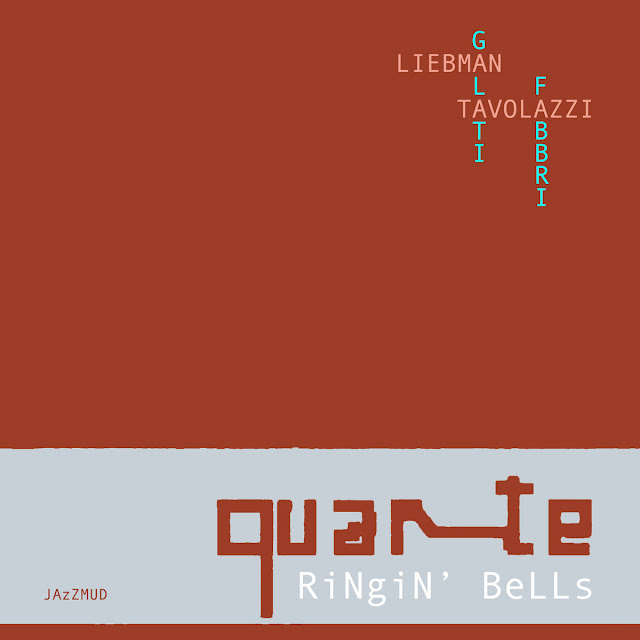
Quarte - Ringin' Bells (February 2021 JazZMUD Recs)

Modern mainstream / Hard bop oriented quartet led by the great David Liebman. Please enjoy this burning recording session.

1. Dreszda 06:36
2. Neptune 09:22
3. Magoo 07:01
4. Amaxonia 09:07
5. My Own Blues 06:03
6. Ringin' Bells 12:53
7. Bye Bye Blackbird (live) 19:31

Dave Liebman - saxophones, indian flute
Alessandro Galati - piano
Ares Tavolazzi - bass
Alessandro Fabbri - drums

Friday, September 21, 2018

Keith Oxman with Dave Liebman in Glimpses, Sept. 21 on CAPRI RECORDS

Tenor saxophonist Keith Oxman partners with legendary sax man David Liebman for new Capri Records release Glimpses

Oxman's working trio with pianist Jeff Jenkins, bassist Ken Walker, and drummer Todd Reid backs the Coltrane-inspired saxophonists in standards and originals

"Keith Oxman is a young man of great consequence. He has learned to function with one foot in the present and the other in the future, while leaning quite heavily in the direction of the future."
- Benny Golson

"Keith Oxman's abilities as a writer make him a force to be reckoned with."
- Ken Dryden, AllMusic

"OxmanŠleans towards bop, but he also throws in a bit of funk and knows how to swing." His tone on the tenor breathes a warm, coaxing fire that he molds into each composition with flair and imagination."
- Jerry D'Souza, All About Jazz

When acclaimed Denver saxophonist Keith Oxman joined forces with the legendary David Liebman, magic happened. Glimpses, out September 21, 2018 on Capri Records, offers listeners more than just a few quick looks at the musical partnership between the two saxophonists. On eight meaty tracks the pair demonstrates virtuosic technique, remarkable musicality, and an astonishing camaraderie.

For more than four decades Oxman listened to and transcribed solos from many jazz greats like Charlie Parker and John Coltrane. Among his first transcriptions was one of Liebman's recordings. Through a former student he was able to connect with Liebman's daughter, then the man himself. The two developed a mutual respect, rapport, and friendship that shines brightly on Glimpses. With Oxman on tenor sax and Liebman on soprano and tenor, the artists approach the music with intelligence, sensitivity, and joy. They are ably backed throughout by Oxman's working band with pianist Jeff Jenkins, bassist Ken Walker, and drummer Todd Reid.

Both Oxman and Liebman are devotees of the late, great John Coltrane, a connection which cements their combined sound. "I really enjoyed Keith's compositions that have challenging and interesting harmonic twists and turns, always framed with lyrical, melodic content." says Liebman.

The conversational, musically sensitive relationship between Oxman and Liebman is established on the record's opening track, Oxman's "Shai," in which the horns interact with solo licks and unison statements before breaking off in hard swinging solos. The exquisite ballad "Lenny," another Oxman original, follows with Liebman's smoky soprano saxophone joined by Oxman's sweet tenor. Oxman's "Trane's Pal" pays homage to the inspirational John Coltrane with a punchy head followed by wailing, bop-inspired solos.


Liebman takes the reins on the Ellington classic "In a Sentimental Mood," showing off his masterful musicianship and sense of fun in a duet with pianist Jenkins, whose wistful, extended piano solo leads into Liebman's expressive, searching rendition of the time-honored melody. "Afreaka" by Cedar Walton has Oxman and Liebman trading eights and grooving to a world beat. On Oxman's upbeat "Louminus," the pair exploit the range of their instruments with guttural low notes and wailing altissimo. Oxman alone is featured on the deep catalogue standard "I Sold My Heart to the Junkman" by Leon Rene, and his expressive horn sings on the gorgeous melody. The album closes with the title track "Glimpses," a Liebman original that delivers a powerful double-barreled saxophone tour de force.

Glimpses is a remarkable achievement, bringing together one saxophonist and his trio with a horn legend who remains as receptive to and excited about the music as ever. "I love this process and the ensuing bond that develops so quickly when jazz musicians interact," says Liebman. That bond is evident all over Glimpses, which brims with lyrical melodies, surprising harmonics, fantastic solos, and masterful horn playing.

From the tender age of 12 when he first picked up a tenor sax given to him by a cousin, Denver native Keith Oxman spent his musical career studying jazz greats like Sonny Stitt, Mel Torme, Louis Bellson, Phil Woods, Buddy Rich, Tom Harrell, Jack McDuff, Joe Bonner, and many others. This is Keith's 10th album on the Capri over the last 24 years.

NEA Jazz Master David Liebman is considered a renaissance man in contemporary music with a career stretching nearly fifty years. He has played with masters including Miles Davis, Elvin Jones, Chick Corea, John McLaughlin, McCoy Tyner, and others, authored books and instructional DVDs which are acknowledged as classics in the jazz field, and recorded as a leader in styles ranging from classical to rock and free jazz.  He has performed on over 500 recordings with over 200 as a leader/co-leader featuring several hundred original compositions.


Monday, August 20, 2018

Quartette Oblique - Quartette Oblique (SUNNYSIDE RECORDS October 12, 2018)


A true gauge of a musician’s ability is in how he or she interprets a piece of a genre’s canon. In the jazz world, there are decades’ worth of standards and classic repertoire that are ripe for adaptation. But the ability to excite and challenge listeners comes not only from technical prowess and musical recall, but from the specific approach to reinterpretation, which favors those who prefer a more adventurous approach.

Four such forward thinking musicians came together to create Quartette Oblique, an ensemble which, as their name suggests, approaches the music from a skewed but engaging angle. Brought together by drummer Michael Stephans, the group features saxophone great Dave Liebman, pianist extraordinaire Marc Copland and the stalwart Drew Gress on bass. Their new eponymously titled recording finds them at their most freewheeling in a live performance at the Deer Head Inn in Delaware Water Gap, Pennsylvania.

Stephans is a college professor, holding a Ph.D. and two Master’s degrees, and a writer of poetry and books on jazz. As an open-minded, progressive drummer, he has long been involved in the creative music scene, performing alongside such greats as Bob Brookmeyer, Joe Lovano, Bennie Maupin, Pharoah Sanders and Bob Dorough.

For Quartette Oblique, Stephans reached out to three brilliant, improvising musicians who he knew would trust their instincts and play collective music in an open and exploratory way. Copland is a pianist who Stephans appreciated for decades and who made perfect sense for the ensemble. Having been a longtime fan of woodwind master Dave Liebman, Stephans first worked with Liebman in 2004 and their relationship has truly blossomed. Gress was a perfect pick on bass, as his personal touch and beautiful sound have buoyed Stephans’s drums in a number of rhythm sections in the recent past.

The goal of the ensemble was to generate performances that represented the sum of the musicians’ highly disciplined and creative musical parts. Their collective knowledge and experience would provide a depth of feeling to their takes on classic jazz repertoire. The off-kilter manner in which they approach these pieces makes for some truly brilliant arrangements, most done without prior planning, on the spur of the moment. Fortunately for the jazz world, these pieces were recorded at the Quartette’s appearance at the Deer Head Inn on June 3, 2017.

The program begins with a haunting version of Miles Davis’s “Nardis,” featuring a searching tenor sax and churning rhythm section led by Stephans’s drum work. The late John Abercrombie’s “Vertigo” begins as an introspective piano feature, which concludes with a spry soprano solo from Liebman. A deconstructed version of Schwartz and Dietz’s “You and the Night and the Music” follows with some remarkable group interplay. Ellington’s “In a Sentimental Mood” receives an elegantly spare treatment that retains the essence of the composer’s gentle message.

Miles Davis’s “All Blues” sounds like an incredible reshuffling of the original with Liebman’s soprano leading to an almost surrealistic reimagining of the tune. Gress’s evocative “Vesper” is a lovely ballad and features the bassist on a distinctive solo flight. The program concludes with Davis’s classic “So What,” a tour de force in group interplay and improvisation with amazing contributions from all.

There is nothing straight-forward in the music of Michael Stephans’ s Quartette Oblique. With trailblazing musicians coming from different backgrounds and musical practices, the Quartette comes together in the spirit of improvisational communication, moving obliquely across dynamic musical landscapes to create a refreshingly unique set of performances that illuminate what jazz writer Whitney Balliett called “The Sound of Surprise.”


Friday, June 1, 2018

Two New Recordings by drummer Phil Haynes with Dave Liebman, Drew Gress, Hank Roberts and Jim Yanda


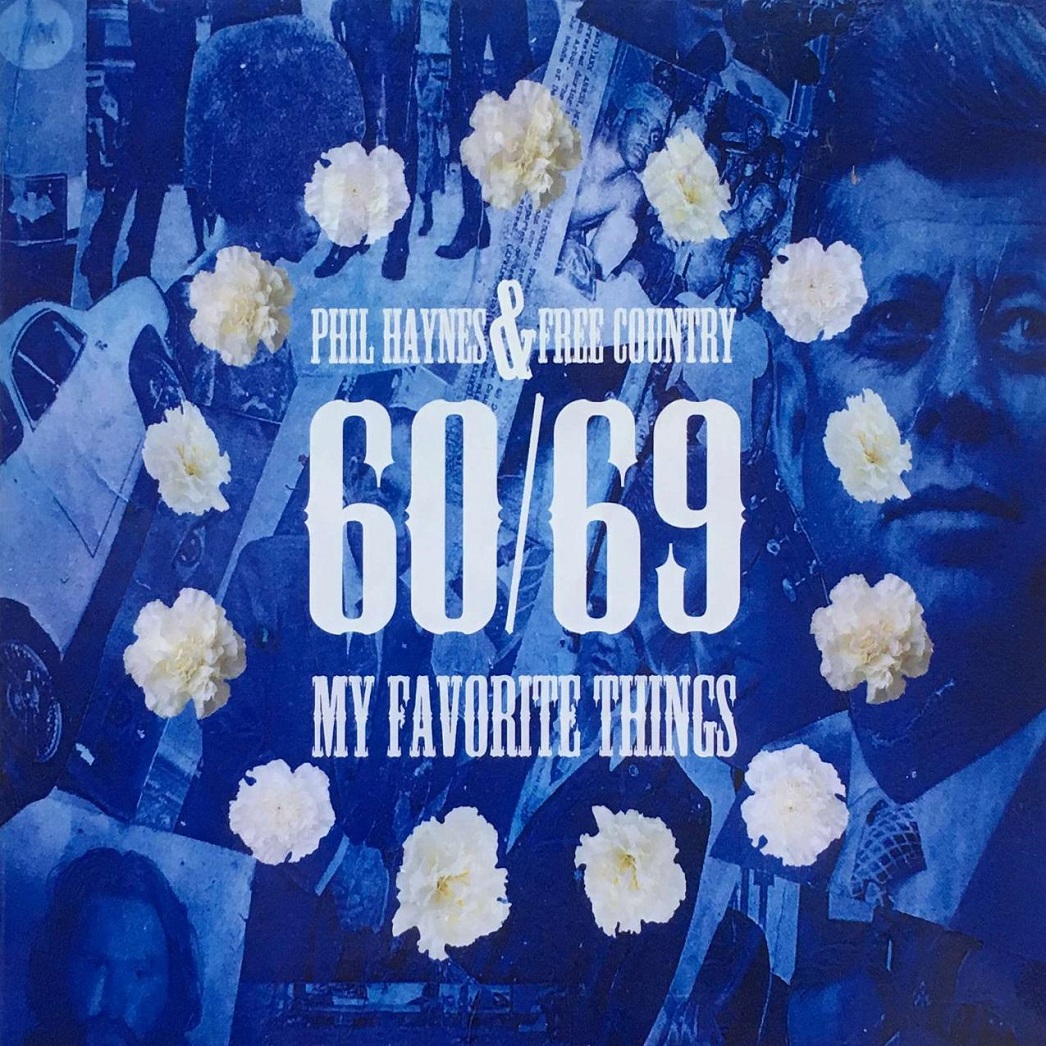
My Favorite Things (1960-1969) takes on The Beatles, Hendrix, Coltrane, James Brown and more with “jazz-grass” string band Free Country with Hank Roberts, Jim Yanda, Drew Gress

No Fast Food’s Settings For Three sparks inspired improvisation 
from bassist Drew Gress and NEA Jazz Master David Liebman

“[No Fast Food is] ridiculously good — One of the two best trios since the legendary Elvin Jones.”  
– CriticalJazz.com

“Just like Jack DeJohnette or Bob Moses, [Haynes] is broadening the beat by means of a significantly melodic component. You don’t have to be a prophet to foresee a great future.”
– Heinrich Oehmsen, Szene

It’s not that he has anything against whiskers on kittens, mind you, but these are a few of drummer Phil Haynes’ favorite things: creating in the moment with old friends, who just happen to be some of the most inventive improvisers on the scene; digging deep into the rich musical legacy of the 1960s; navigating original compositions that offer tricky surprises and wide open spaces, just perfect for inspired spontaneity. With a wide-ranging pair of new releases featuring his bands Free Country and No Fast Food, Haynes gets to indulge all of those faves alongside an amazing crew sure to make you forget any dog bites or bee stings. Both are due for release on June 1, 2018 through Corner Store Jazz.


My Favorite Things (1960-1969) concludes a trilogy by Haynes’ free-wheeling “jazz-grass” string band Free Country, where he’s joined by longtime collaborators Hank Roberts (cello and vocals), Jim Yanda (guitar) and Drew Gress (bass). Released over nearly two decades, the band’s three albums encompass nearly the entire history of American popular music in their own irreverent, stripped-down fashion: their 1999 debut focused on pre-1900 tunes from the Revolutionary War to Stephen Foster; The Way the West Was Won took on the first half of the 20th century, with cowboy songs and Hollywood movie soundtracks.

The concluding chapter narrows the focus to a single decade, but what a decade: over the course of two discs, the quartet takes on everything from John Coltrane, The Beatles and Jimi Hendrix to Burt Bacharach and the theme from Star Trek – as Haynes himself puts it, “you’ve got everything from schmaltz to the highest art.”

Beyond the fact that the ‘60s were the formative years for the band’s members, the decade is so ripe for extensive reinvention because, Haynes explains, “It was our last cultural revolution. This is the last decade that everybody agrees on, so this is a look at that psychedelic, diverse musical landscape. We face many of the same questions now that we faced then, and it will be interesting to see if there’s another social revolution.”

If there is, Free Country is here to provide the soundtrack. With Roberts’ wry baritone, the knotty interaction of the strings, Haynes’ loose-limbed, evocative percussion, and a profound conversational spark forged over decades of collaboration and the magical live sound born of recording in the round, the band captures the spirit of the 1960s with the urgency of now. “The ‘60s had this great American outpouring of creativity,” Haynes says. “There was music that everybody shared: Santana and The Beatles knew about A Love Supreme, from Hendrix to what Bernstein did on Broadway, everything was changing. This band focuses all those things into one sound.”


On the opposite end of the creative spectrum, No Fast Food, with Gress and NEA Jazz Master David Liebman, was formed as an outlet for Haynes’ compositions. The trio’s third album, Settings For Three, is their first not recorded in concert but carries the electricity of their live performances into the studio. As the straightforward title implies, the intent was simply to provide fodder for the three musicians’ estimable improvisational gifts, or as Haynes puts it, “I wanted to give the guys some new settings to play in and also familiar territory to romp in.”

The opening track, “El Smoke,” takes its name and inspiration from a different group – Haynes’ collective quartet Joint Venture, where he and Gress are joined by saxophonist Ellery Eskelin and trumpeter Paul Smoker. Of course, No Fast Food make it utterly their own, ranging from the atmospheric to the rhapsodic over the track’s ten minutes. Haynes has written lyrics for the second tune, “Joy,” though they’re not sung on the recording. No matter, as Lieb and Gress seem to have absorbed the composer’s poetic meaning, which looks at the many different sides of joy, from the outwardly ecstatic to the more profound and complicated. 

“There’s joy as we know it,” Haynes says, “but then there are all these other shadow aspects of joy. I really appreciated how the guys played on it because they reveal those different depths: not just that first expression but then all the ripples that happen beyond that.”

Speaking of multi-faceted, the blues offers an endless supply of variations and possibilities, and that’s certainly the case with the wide-open “Blue Dop.” High-spirited and grooving in this rendition, it’s a piece that suggests myriad approaches and changes each time the trio launches into it. The onomatopoeic “Whack Whap” shows off the mirth and humor that the three can share, a wild avalanche of sounds and sonic surprises.

“Longer Shorter” pays homage to Wayne Shorter, taking the legendary saxophonist’s composition “Pinocchio” as a starting point. The hard-driving, sharp-angled tune nods toward Liebman’s history with Miles Davis and Elvin Jones while spotlighting his singular approach to the soprano. The ballad “String Theory,” which kicks off with Liebman conjuring fluttering bird calls on flute, is a vehicle for Gress’ poignant arco emoting. To close the album, “Shramba” takes a different twist on the samba, progressing through all twelve keys over Haynes’ rollicking rhythmic bed.

Through the simultaneous release of these two thrilling albums, Haynes provides a study of two facets of his expansive musical personality. Both are wildly inventive and thrive on the personal interactions of the musicians involved, but where My Favorite Things is subversively accessible, Settings For Three is an enticing challenge. “You’ve got one group where the universe is the option,” Haynes says, “and another group where the microcosm is the universe. They’re very different kinds of playing yet you look for freedom in both.”


Phil Haynes

A veteran artist based in New York for 25 years, drummer/composer Phil Haynes is featured on more than 70 releases from numerous American and European record labels.  His collaborations include many of the seminal musicians of this generation: saxophonists Anthony Braxton, Ellery Eskelin, and David Liebman; trumpeters Dave Douglas, Herb Robertson, and Paul Smoker; bassists Mark Dresser, Ken Filiano, and Drew Gress; keyboard artists David Kikoski, Denman Maroney, and Michelle Rosewoman; vocalists Theo Bleckman, Nicholas Horner, and Hank Roberts; violinist Mark Feldman, and the composers collective Joint Venture. His current projects include the romantic “jazz-grass” string band, Free Country; the saxophone trio No Fast Food; bluesy power organ unit The Hammond Brothers, featuring young B-3 master Paul Bratcher; and the classic piano trio Day Dream, a cooperative with Yamaha artist Steve Rudolph.


Wednesday, April 11, 2018

New CD Fred Farell "Distant Song" Fred Farell Sings the Music of Dave Liebman and Richie Beirach + Upcoming Live Appearance


Higher Power

Fred Farell brings the good word on Distant Song

What The Press Is Saying About
Fred Farell
"Distant Song"
Fred Farell Sings the Music of Dave Liebman and Richie Beirach

" Fred Farell's new CD is rewarding...adding to the Jazz Vocal Repertoire.
His singing is warm, quietly expressive, and really gets into the messages of the songs.
...Fans will find much to enjoy on this rewarding set." 
Scott Yanow, Jazz Journalist/Historian

"The mood of the Program is dark blue, solemn, and well matched to Fred's Baritone, and the accompanying Instrumentation...with Farell writing all the Lyrics."
D. Oscar Groomes: O's NOTES - O's Place Preview

"...FARELL is the real deal in terms of Sincerity, his voice speaks authority as does the tender Truth expressed in his Lyrics...and musical arrangements...A performance that regularly stops you...in your tracks..."
Stephen Graham/MARLBANK

"I give Fred, and his fellow master (musicians) an energy quotient rating of 4.99 for this CD.
...One of the strongest Jazz Vocal performances I've listened to yet in 2018."
Rotcod Zzaj (Dick Metcalf Associates/"Contemporary Fusion Reviews)

"Listening to Farell is like stepping back in Time, to mid-20th Century America, when Jazz and Romance were popular. His Sounscapes are like Odes to Love...Farell's "Distant Song" provides enough soothing sounds for listeners to ponder the Human condition...

He is joined by Dave Liebman on soprano & tenor Saxophones, and by Richie Beirach on acoustic Piano."  Dodie Miller-Gould, Lemon Wire


Fred Farell "Distant Song"
(Whaling City Sound WCS 103)
Street Date: January 26, 2018 
Fred Farell sings the music of Dave Liebman and Richie Beirach 

Fred Farell Voice
Dave Liebman Soprano & Tenor Saxophones, Wooden Recorder

Richie Beirach-Acoustic Piano


As a featured soloist and ensemble singer, Fred Farell has made a name for himself as a preeminent pro jazz voice. Across five decades and at venues as esteemed and diverse as Avery Fisher Hall, the Brooklyn Academy of Music, and the Museum of Modern Art, Farell has demonstrated inspired interpretive abilities to go with his heartfelt lyricism and sweet pipes. Distant Song, his debut for Whaling City Sound, a home for much quality jazz, is a profound experience, thanks partly due to his composers and loyal accompanists saxophonist Dave Liebman and piano/keys player Richie Beirach, both of whom have collaborated on the original music for this record.

Farell’s own wordsmithing is sublime, requiring deftness, patience and passion on the microphone. His compositions unfold gently, religiously. Infused with sacred messaging, Distant Song is an emotional project -part, jazz, part spiritual, part loving experiment- produced with happiness and love by a veteran talent clearly confident and at peace with himself and his abilities.


1. Broken Wing 5:55
2. Lonnie’s Song 4:53
3. Forgotten Fantasies (Instrumental) 6:16
4. Leaving 7:33
5.Tomorrow’s Expectations 6:58
6. Sunday Song 4:24
7. Mitsuku 7:56
8. Zal (Instrumental) 5:19
9. Places 4:22
10. Distant Song 5:34

Tracks 1,4,6,7
Richie Beirach,
Beirach Music, BMI

Fred Farell (lyrics),
FarellSongs Publishing, BMI

Tracks 2,5,9,10
Dave Liebman,
Liebstone Music, BMI

Fred Farell (lyrics),
FarellSongs Publishing, BMI

Track 3
Dave Liebman,
Liebstone Music, BMI

Track 8
Richie Beirach,
Beirach Music, BMI


FRED FARELL

Fred Farrell began singing professionally during his military service in the USA,
and Europe in 1967. His musical training includes: Jazz Vocal improvisation with
Pianist-composer and educator Richard Beirach; Private voice studies with
Cynthia Hoffman, Richard Dorr, and Larry Chelsi; and Music courses taken at
The City College of New York; at which time he enrolled in Jazz studies taught
by Jazz songstress and educator Sheila Jordan.

His first appearances as a solo artist and group leader in New York, were at
Loft galleries, and Jazz clubs during the 1970's and early 1980's; including
return engagements at Sweet Basil, and Greene Street; during which time he
was an artist-member of Cobi Narita's Universal Jazz Coalition.


As a featured soloist, as well as an ensemble singer, Mr. Farell has performed
at Avery Fisher Hall, The Brooklyn Academy of Music, The Kitchen, WBAI Radio,
The Musuem of Modern Art, and Symphony Space, with such Jazz Masters
and artists as the late saxaphonist Dexter Gordon; Pianists: Barry Harris,
the late Albert Dailey, and Kenny Barron; Bassists: the late Herman Wright,
Rufus Reid and Ratso Harris; Female Vocal Artist-educator Jay Clayton (The
Voice Group); and Natural Sound Composer-pianist Kirk Nurock.

In the creative expression of Jazz used to present the Gospel message, the
singer has been a featured soloist with the Don Hanson Ensemble, led by the
Saxaphonist-composer; has appeared on the Queens Public Cable TV Network;
and is currently co-leader of the Gospel Jazz group "JazzLite". In this group
setting, Mr. Farell ministers with his gospel lyrics for original compositions,
and Jazz standards, and features Pianists Jeff Kruh, and Joel Weiskopf in
varying instrumental formats, depending upon the venues entered.


Tuesday, April 3, 2018

Dave Liebman - Fire (April 27, 2018)


Saxophonist Dave Liebman put together an all-star cast for Fire: percussionist Jack DeJohnette, bassist Dave Holland, and pianist Kenny Werner. All four have shaped modern jazz during the 1970s and 1980s, and continue to do so today. Fire is a unique and innovative album, recorded in 2016, and released in heavyweight 180gram, gatefold sleeve, and extensive liner notes by Liebman.

1. Flash!! (Liebman, Werner, Holland, DeJohnette)
2. Fire (Liebman)
3. Sparks (Liebman)
4. Flames (Liebman)
5. Inferno (Liebman)
6. Ashes (Liebman)

Dave Liebman (ts, ss, wooden flute, c-flute)
Kenny Werner (p)
Dave Holland (b)
Jack DeJohnette (ds)


Tuesday, March 6, 2018

Sab 10 e Dom 11 marzo - Francesco Venerucci feat. Dave Liebman a Lecce e Roma


FRANCESCO VENERUCCI E DAVE LIEBMAN 
IN CONCERTO A LECCE E ROMA

Sabato 10 (ore 21 - info e prenotazioni 0832091231) al Teatro Paisiello di Lecce e domenica 11 marzo (ore 21.30 - info e prenotazioni 0685352527) al Cotton Club di Roma, doppio concerto di presentazione di Early Afternoon, nuovo lavoro discografico del pianista e compositore romano Francesco Venerucci, affiancato dal sassofonista statunitense Dave Liebman. Il concerto leccese è organizzato dall’etichetta discografica salentina Dodicilune, che ha prodotto il disco, distribuito in Italia e all'estero da Ird e nei migliori store digitali, in collaborazione con l'associazione culturale Festinamente e con il sostegno di Carofalo - Agenti di Assicurazione a Lecce dal 1989 - Reale Mutua/Lloyds Open Market Correspondent

Se nel lavoro discografico precedente Tango Fugato (Dodicilune, 2007), Francesco Venerucci aveva dato prova di una sapiente tecnica di scrittura musicale per ensemble, in Early Afternoon l’artista ci conduce nell’universo del “piano solo”. Nella continua e incessante ricerca della sintesi stilistica tra linguaggi musicali, Venerucci trasferisce la densità armonica e la stratificazione polifonica sulla superficie della tastiera, nel solco della tradizione tracciata da Duke Ellington, Bill Evans e Paul Bley; fino a John Taylor e Richie Beirach. «L’album traduce al meglio la complessa personalità di Venerucci in grado di combinare classico e jazz con vivacità compositiva. Pianista eclettico, accoglie nel suo lessico musicale figurazioni che rimandano ora alla spazialità cosmica di Skrjabin, ora al post romanticismo di Rachmaninov, ora alle sinuosità puntiformi di Debussy», si legge nelle note di copertina a cura di Eliana Augusti. «I fraseggi frammentati, i colori decisi e le poliritmie a perdersi definiscono la cantabilità personale di ogni singolo brano. La voce del Sax Soprano di Dave Liebman s’innesta ora quieta ora ispida sui paesaggi compiuti di Venerucci, quasi incisi nel silenzio. Un dono di dolcezza e carattere che impreziosisce l’album».

«Nel 2011 ricevetti l’invito dell’associazione Amore e Psiche a tenere un concerto presso la loro sede, una bellissima libreria del centro storico di Roma. Nel preparare il programma scelsi alcune mie composizioni caratterizzate dall'interazione tra letteratura e musica», sottolinea Venerucci. «Il lavoro di selezione dei brani, scritti nell’arco di circa vent’anni, e della loro rielaborazione ha costituito il nucleo fondamentale di ciò che sarebbe divenuto in seguito l'attuale progetto discografico. La maggior parte dei brani sono eseguiti in “Piano Solo”. In quattro titoli (Exodus, Music for Lilith, Good Morning Mr. Samsa e Early Afternoon) ho coinvolto il sassofonista David Liebman, la cui performance, di rara bellezza e sensibilità, ha reso questo lavoro per me ancora più caro e prezioso», prosegue. «Chiude la raccolta uno standard della canzone popolare americana, Premio Oscar nel 1940 come migliore canzone per il film di animazione Disney “Pinocchio”. È il mio omaggio personale ad uno tra i musicisti più importanti del XX secolo, Louis Armstrong».

Francesco Venerucci si è diplomato in composizione sotto la guida di Claude Ballif, svolgendo contemporaneamente studi di armonia, analisi, direzione d’orchestra, e orchestrazione a Parigi, e in pianoforte sotto la guida di Valentino Di Bella. Ha conseguito un Master post laurea in composizione teatrale e coreutica sotto la guida di Fabio Vacchi per il dramma musicale Kaspar Hauser, su libretto di Noemi Ghetti, eseguito nel 2011 in prima mondiale all’Opera di Tirana. Attivo concertisticamente dal 1985, ha partecipato a numerose rassegne e registrato programmi radiofonici e televisivi. Ha composto musica da camera, lirica e sinfonica, colonne sonore, balletti e musiche di scena. Nel 2012 ha composto l’Opera Lirica Scanderbeg da un melodramma perduto di Vivaldi, su libretto di Quirino Principe, commissionato dal Teatro Nazionale d’Opera e Balletto d’Albania e co-prodotto dalla Verona Opera Academy. Vincitore di concorsi internazionali, ha visto le sue opere eseguite in importanti festival, sale da concerto e teatri d’opera. Ha collaborato, tra gli altri, con l’Orchestra of Colors, il Danish Saxophone Quartet e il Quinteto Tango Extremo. Ha partecipato a varie incisioni discografiche in qualità di compositore, arrangiatore e pianista. A suo nome ha realizzato il cd Tango Fugato (Dodicilune, 2007) con la partecipazione, tra gli altri, di Michele Rabbia, Marco Siniscalco e Gianni Iorio e il cd Early Afternoon (Dodicilune, 2017), con la partecipazione del sassofonista statunitense Dave Liebman. 

Dave Liebman, laureato in Storia alla New York University, ha studiato pianoforte e sassofono fin da ragazzo. Ha suonato con Miles Davis, Elvin Jones, Chick Corea, John McLaughlin, McCoy Tyner. I suoi lavori spaziano dalla classica al rock al free jazz. Diversi i riconoscimenti a livello internazionale: NEA Jazz Masters (2011); Jazz Educators Network (JEN); Legends of Jazz; nominee ai Grammy; vincitore per la categoria sax soprano ai Downbeat/Jazz Times Critics/JEN Poll; Honorary Doctorate alla Sibelius Academy. Nel 1989 fonda ed è direttore artistico della International Association of Schools of Jazz (IASJ). Centinaia le sue collaborazioni e registrazioni.

L’etichetta salentina Dodicilune è attiva dal 1996. Dispone di un catalogo di circa 250 produzioni di artisti italiani e stranieri, ed è distribuita in Italia e all'estero da IRD presso 400 punti vendita tra negozi di dischi, Feltrinelli, Fnac, Ricordi, Messaggerie, Melbookstore. I dischi Dodicilune possono essere acquistati anche online (Amazon, Ibs, LaFeltrinelli, Jazzos) o scaricati in formato liquido su 56 tra le maggiori piattaforme del mondo (iTunes, Napster, Fnacmusic, Virginmega, Deezer, eMusic, RossoAlice, LastFm, Amazon, etc).


Friday, January 26, 2018

Dave Liebman / Adam Rudolph / Tatsuya Nakatani - The Unknowable (RareNoise Records 2018)


'The Unknowable' is a completely improvised, spontaneous group-composed body of music, recorded by three highly regarded players. The music stems from the worlds of free and spiritual jazz, yet goes beyond.

1. Benediction (Opening)
2. The Simple Truth
3. Late Moon
4. The Unknowable
5. Skyway Dream
6. Transmutations
7. The Turning
8. Present Time
9. Distant Twilight
10. Iconographic
11. Cosmogram
12. Premonition
13. Benediction (Closing)

Friday, January 19, 2018

Nathan Ott Quartet - The Cloud Divers (UNIT RECORDS 2018)


The Nathan Ott 4tet, founded in 2014 by the Hamburg-based drummer and composer Nathan Ott, is inspired by the idea of mixing generations of jazz musicians in a remarkable constellation of artists. Most prominently it features the U.S. American- Saxophonist Dave Liebman, whose distinct way of playing in a pianoless quartet-setting melts with the haunting tone of Sebastian Gille (Hamburger Jazzpreis 2015) into an unmistakable texture of sound. David Liebman is considered a renaissance man in contemporary music, with a career stretching nearly fifty years. He has played with many of the great masters of the genre, including Miles Davis, Elvin Jones, Chick Corea, John McLaughlin, McCoy Tyner and others. Together with Cologne-based and in-demand bass player Robert Landfermann (John Scofield, Pablo Held), one of the driving forces of the European avantgarde jazz / improvised music scene, the band met first in 2014 playing Ott’s very personal compositions. The premiere was a big success and led to a two-day recording session in Berlin, which is going to be released on Nathan Ott’s Debut Record in 2017.


All compositions by Nathan Ott except „Fancy Free“ by Donald Byrd (Elgy Music, BMI) and Frank Foster (Swing that Music, Inc., ASCAP) and „Nebula“by Dave Liebman (Liebstone Music-BMI)
Recorded March 2016 at p4 Studios Berlin
Engineer: Oliver Bergner
Mixed by Oliver Bergner
Mastered by Chris von Rautenkranz
Cover Photography: Kuki Walsch
Liner Photos: Kai Ehlers
Design: Hartmut Sawatzky
Produced by Nathan Ott


Tuesday, November 28, 2017

Dave Liebman / Mike Murley Quartet - Live at U of T (2017)


Saxophonists Dave Liebman and Mike Murley have performed together for more than a decade, previously releasing Day and Night on Cornerstone Records. Their second release, Live at U of T, featuring bassist Jim Vivian and drummer Terry Clarke, came about as a result of Liebman's appointment as Visiting Adjunct Professor at the University of Toronto Faculty of Music.  Recorded is a small concert space packed with attentive listeners, Live at U of T captures the spirit and spontaneity of live jazz in an intimate setting. 

The natural rapport between the musicians on this recording is immediately apparent. Murley studied with Liebman in the 1980s at the Banff Jazz Workshop and in New York. He and Vivian have worked frequently with Liebman over the years, primarily in the Toronto area but also at recording sessions and concerts in Halifax and Montreal. Drummer Terry Clarke and Liebman are both veterans of the international jazz scene dating back to the late 1960s and their musical chemistry was instantaneous.

Dave Liebman / Mike Murley

David Liebman is considered a renaissance man in contemporary music with a career stretching nearly fifty years. He has played with masters including Miles Davis, Elvin Jones, Chick Corea, John McLaughlin, McCoy Tyner. He has recorded as a leader in styles ranging from classical to rock to free jazz.  Liebman has performed on over 500 recordings with over 200 as a leader/co-leader featuring several hundred original compositions.  He has been a Visiting Adjunct Professor at the University of Toronto since 2014.

Mike Murley is one of Canada's leading jazz artists, having appeared on 12 Juno Award winning albums, 3 as a leader, 3 as a co-leader (Metalwood), and 6 as a sideman (Rob McConnell, David Braid and others).  Murley has recorded and performed with numerous international artists including John Schofield, John Abercrombie and Kenny Wheeler. In 2011 Murley accepted full-time position at the University of Toronto where he currently holds the position of Jazz Area Chair at the Faculty of Music.

Terry Clarke has recorded over 300 albums with a number of international artists, including Bill Mays, Renee Rosnes, and Joe Lovano.  His collaborations with Canadian musicians include David Braid, Don Thompson, and Rob McConnell.  Clark’s first album as a leader, It's About Time, won the JUNO Award for Traditional Jazz Album of the Year in 2010.  He has been jazz drum instructor at the University of Toronto for more than a decade. Clarke was named a member of the Order of Canada in 2002.

Jim Vivian is one of the most in demand bassists in Canada, having recorded and performed Rob McConnell’s Boss Brass, Don Thompson, and Sonny Greenwich, among others.  He has also worked with international artists such as Kenny Wheeler, Tim Hagans, and John Abercrombie. In 2002 Jim accepted the position of jazz bass instructor and lecturer at the University of Toronto.

1. Split or Whole (Vivian)  5:44
2. YBSN  (Murley) 6:28
3. Off a Bird (Liebman) 6:16
4. Small One (Liebman) 6:01
5. Open Spaces (Murley) 6:56
6. Nebula (Liebman) 6:34
7. And the Angels Sing (Elman/Mercer) 6:55
8. Missing Persons (Liebman) 3:45
9. Blackwell’s Message (Lovano) 7:01

Dave Liebman - Soprano/Tenor Saxophone, Flute
Mike Murley - Soprano/Tenor Saxophone
Jim Vivian - Bass
Terry Clarke - Drums


Thursday, November 9, 2017

Martial Solal & Dave Liebman - Masters In Bordeaux (SUNNYSIDE RECORDS 2017)

The meeting of two musical giants is a pretty common thing these days. Far more uncommon is the first collaboration of two musicians from different generations and continents. That is precisely what is so unique and wonderful about the recent partnership of French piano legend Martial Solal and American saxophone giant Dave Liebman and their new recording, Masters In Bordeaux. 

Born in Algiers and based in Paris since 1950, Solal is arguably the most important name in jazz from Europe. The 90-year-old pianist has been at the cutting edge of jazz music since the 1950s, as one of the first Europeans to master the bop language, scoring Jean-Luc Godard’s Breathless, leading an extraordinary big band, and collaborating with important voices in the music from around the globe.


Twenty years Solal’s junior, NEA Jazz Master Liebman has been a force in the spread of the music. His mastery of the saxophone and his musical eclecticism have made him a role model to many younger players. Liebman’s extensive résumé covers sideman roles with many of the masters, including Elvin Jones and Miles Davis, as well as leading his own revolutionary ensembles. 

Though a fan of Solal’s work, Liebman had never met or played with him before 2016. It was the saxophonist’s former student Jean-Charles Richard who was able to bring the two together. Being Solal’s son-in-law, Richard was able to propose a meeting. Liebman provided some music of his longtime collaboration with the great pianist Richie Beirach. It wasn’t long before Solal reached out in hopes of playing with Liebman. 

Their first performances were at the Sunside Jazz Club in Paris. Liebman was struck by Solal’s complete control and harmonic adventurousness. The two performed standards and a couple of originals in two successful evenings. The exhilaration of performing together, the challenge of their demanding musical knowledge, and their instant rapport made further meetings a priority. 

The duo’s next opportunity came when Jean-Jacques Quesada invited them to perform a concert at Château Guiraud in Sauternes, France as part of the Jazz and Wine Festival in Bordeaux.


The material was selected on the spot. The two decided to play standards that they knew well but that would prove to be intriguing because of the duo’s flair for harmonic experimentation. 

The program begins with a fascinatingly deconstructed version of Kern and Hammerstein’s “All The Things You Are,” the two musicians seemingly finishing each other’s musical statements. Cole Porter’s “Night and Day” is introduced by Solal’s introspective plucking before Liebman’s resonant tenor begins to sing alongside, both bringing real sparks with their playing. Spritely soprano introduces Miles Davis’s “Solar” while Solal’s piano plays brilliant and allusive lines setting off some amazing interplay. 

Porter’s “What Is This Thing Called Love” begins with a fantastic, pointillist tenor cadenza commences with an exhilarating duo passage, followed by a poignant Solal solo. The duo’s take on Kaper and Washington’s “On Green Dolphin Street” is measured yet still seeking. The Davis, Ramirez, and Sherman chestnut “Lover Man” concludes the set with perfectly weighted drama and intent. 

In a true show of musical generosity and spirit, Martial Solal and Dave Liebman have begun a marvelous new partnership. Their new recording Masters In Bordeaux displays the duo’s quickly developing empathy and brilliance in performance.


1. All The Things You Are 07:44
2. Night and Day 09:35
3. Solar 08:21
4. What Is This Thing Called Love 07:01
5. On Green Dolphin Street 05:11
6. Lover Man 07:13

Martial Solal - piano 
Dave Liebman - saxophones