
Saxophonist/Composer Kyle Nasser Strikes a Vivid Balance Between the Cerebral
and the Sensual on New Album
Persistent Fancy, out October 5, 2018 on Ropeadope, draws inspiration from literature and
philosophy as well as personal experience and struggle, with a stellar band
“[Nasser’s] exquisitely balanced works reflect both his ardent creativity and his urbane artistic composure.”
– Hrayr Attarian, All About Jazz
“Kyle Nasser… is intelligent and soulful, has a sense of freedom yet understands the concept of structure and is
a leader with a finely tuned sense of organization and order… vital new music.”
– Donald Elfman, The New York City Jazz Record
CD Release Dates:
• Thurs. Oct. 11 – Café 939 Berklee College of Music, Boston, MA
• Fri. Oct. 12 – Greasy Luck Brewpub, New Bedford, MA
• Sat. Oct. 13 – Cornelia Street Café, NYC

“’Tis no sin for a man to labour in his vocation.” The words of Sir John Falstaff, Shakespeare’s great
tragicomic rogue, grace the inside cover of Persistent Fancy, the latest release by saxophonist/composer
Kyle Nasser. Granted, Nasser’s passionate pursuit of jazz is more easily defensible than Falstaff’s chosen
profession of purse-snatching, but The Bard’s use of eloquent language in the mouth of such an incorrigible,
gluttonous rascal has a strong appeal for the saxophonist, who strikes his own musical balance between the
cerebral and the sensual.
Persistent Fancy, due out October 5, 2018 via Ropeadope, is highlighted by a pair of three-part suites that
straddle that boundary: the “Baroque Suite,” inspired in particular by Shostakovich’s Preludes and Fugues,
foregrounds the elegance of classical composition, while the “Eros Suite” dwells on the carnal, tracing the
stages of desire from initial attraction through consummation to reflection. As with all of Nasser’s music,
however, the intellectual and the emotional coexist vividly in both, epitomizing the same mix of impulses that
makes Shakespearean characters like Prince Hal so compellingly complex.
“Prince Hal had a very dissolute upbringing, palling around with Falstaff, this fat, comic philosopher, then has
to leave that behind to become King Henry V,” explains Nasser, who explores the prince’s maturation in his
piece “The Ascent of Henry Monmouth.” The wry wisdom of Falstaff echoes that of Svidrigailov in Crime and
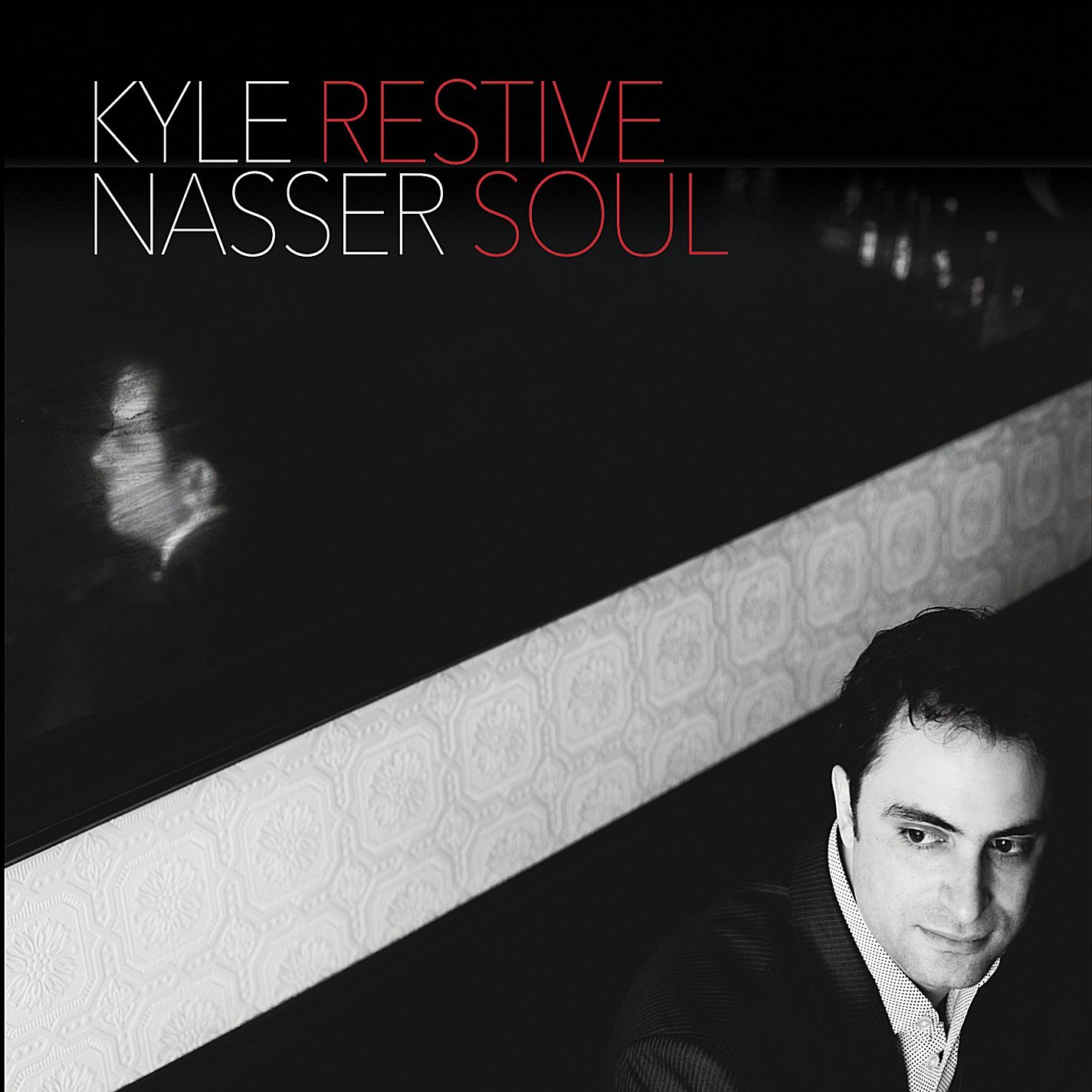
Punishment, whose words provided the epigraph for Nasser’s previous release, Restive Soul. “I always find
that the best insight in literature comes from the most evil characters, or at least the characters that live
outside the mainstream.”
In assembling the ensemble to breathe life into the music of Persistent Fancy, Nasser surrounded himself
with stellar musicians who can deftly navigate the blend of intricacy and fire that these compositions require.
Guitarist Jeff Miles and keyboardist Dov Manski return from Restive Soul; drummer Allan Mednard has
worked with the likes of Kurt Rosenwinkel and Melissa Aldana, bassist Nick Jost swerves between acoustic
jazz virtuosity and powerhouse electric playing with heavy metal band Baroness, and Cuban-born alto
saxophonist Roman Filiú is an innovative voice who has performed with Henry Threadgill, David Murray,
and Chucho Valdés.
Much as Shakespeare’s young prince changed paths to follow his life’s true calling, Nasser switched gears
at a key moment in his own life – albeit somewhat less dramatically. Where Hal left behind a misspent youth
to rule a kingdom, Nasser changed his focus from Economics and Political Philosophy, which he studied at
Harvard, to pursue his love of jazz after crossing paths with iconic pianist Hank Jones. He went on to
Berklee College of Music and hasn’t looked back since, though he’s never wholly turned his back on his
intellectual and literary interests.
Persistent Fancy, in fact, takes its title from an idea posited by the poet and philosopher Samuel Taylor
Coleridge (best known for “The Rime of the Ancient Mariner”), who contrasted the invention of new concepts
(imagination) versus the assembling of pre-existing thoughts or notions (fancy). Nasser comes down on the
side of 20th century critic T.E. Hulme, who countered that modern art should thrive on fancy as it relates to
familiar experience rather than high-flown fantasies.

“I was thinking about the way that thoughts tend to recur over and over again,” Nasser says. “Even if they’re
not the deepest thoughts in the world, they can be insistent and keep coming back so that you can’t shake
them. That’s not imagination, it’s not earth-shattering, it’s fancy – persistent fancy.” The title track is built on
that sort of insistent recurrence, with recurring melodic lines over a cyclical ostinato.
Playing from the gut is one way of praising impassioned musicality, but it became a very literal struggle for
Nasser during the writing of this album. Persistent pain prevented him from playing for a time, until a
physical therapist finally discovered that scar tissue in his abdomen was the cause; it was during Nasser’s
recovery that several of the pieces on Peristent Fancy were composed, including the opening piece, “Split
Gut,” which celebrates the recovery of his voice in dialogue with Roman Filiú’s alto.
The surging “Arrival” was initially written for a trio gig in Chile, where Nasser was collaborating with his
bandmate in the collective quartet Beekman, Chilean drummer Rodrigo Recabarren. Miles is given free rein
to shred over the bombastic grooves of Jost and Mednard on “Sticky Hipster,” named in homage to the rockinclined
denizens of Nasser’s Brooklyn neighborhood.
Despite following the “Eros Suite,” Nasser’s “3-Way” takes its title from a radio term, not a sexual innuendo.
On the air it refers to a conversation between three people, reflecting the tripartite melodic voices of the
composition. The album’s sole non-original tune is “Arioso,” an excerpt from German composer Paul
Hindemith’s “Ludus Tonalis.” Finally, the ebullient “Coffee and Cannabis” ends the album on a joyful note,
finally giving in to those minor vices that may not provide a vocation but can make life that much more
enjoyable.

A Massachusetts native and graduate of both Harvard and Berklee, Kyle Nasser has been described as
possessing "superlative musicianship as a performer, writer and a bandleader…ardent creativity and urbane
artistic composure” (All About Jazz). Since moving to New York City in 2010, he has played at some of the
city's most prestigious venues – including the Blue Note, Smalls, Iridium, 55 Bar, and Cornelia St. Cafe –
and has toured the U.S. and South America. Nasser has shared the stage with jazz luminaries such as Jim
Hall, Hank Jones, Joe Lovano, Dave Douglas, Rich Perry, Ethan Iverson, Michael Formanek, and Ben
Monder, among others. In addition to leading his own group, he also plays with and composes for the
international collective Beekman, whose sound has been described as "a joyful and continued speculation
flowing in almost all facts with surprising ease” (Jazz, ese ruido). Nasser's 2015 debut, Restive Soul,
features his quintet presenting "a collection of sophisticated and complex modern jazz originals" (Jazz
Weekly). The album's songs weave together sonata forms, baroque to 20th century counterpoint, and
modern rhythms with modern jazz vocabulary. "The saxophonist's debut is knotty with a contrapuntal weave
of voices, bumpy mixed meters, and alternating rhythmic currents that nonetheless groove, sometime with a
rocking edge" (Boston Globe).