Showing posts with label Ben Williams. Show all posts

Tuesday, June 22, 2021

Dewa Budjana - Naurora (June 2021 MoonJune Records)

Naurora is undoubtedly Dewa Budjana's most ambitious work yet. Progressive, fresh, engaging, technically brilliant. Budjana’s tunes consistently clasp his listeners in a drape of gorgeous melodies, showpiece guitar parts and astounding ensemble passages that have a spacious air. Naurora, has is an exhilarating mix of styles, it delivers a succession of memorable motifs. It melds East Asian music with progressive jazz fusion and some occasional elements of rock, but most of all it delivers an idiosyncratic sound that is instantaneously identifiable as Dewa Budjana’s own.

1. Naurora 11:03
2. Swarna Jingga 06:51
3. Kmalasana 07:05
4. Sabana Shanti 07:50
5. Blue Mansion 07:48

DEWA BUDJANA - guitars, soundscapes

with

BEN WILLIAMS - upright bass (Sabana Shanti)
CARLITOS DEL PUERTO - bass guitar & upright bass (Naurora, Kmalasana, Blue Mansion)
DAVE WECKL - drums (Swarna Jingga, Sabana Shanti)
GARY HUSBAND - piano, synth (Blue Mansion)
IMEE OOI - vocals (Naurora)
JIMMY JOHNSON - bass guitar (Swarna Jingga)
JOEY ALEXANDER - acoustic piano (Naurora, Sabana Shanti)
MATEUS ASATO - guitar intro & guitar solo (Swarna Jingga)
PAUL MCCANDLESS - soprano sax (Sabana Shanti)
SIMON PHILLIPS - drums (Naurora, Kmalasana, Blue Mansion)

Naurora was recorded remotely during the pandemic in 2020 and 2021.

All recordings were done by featured musicians, except:
Simon Phillips' tracks were recorded by Jason Mariani at Carbonite Sound, Ojai, CA, USA.
Paul McCandless' track was recorded by Dan Feiszli at What’s For Lunch Studio, San Fransisco, CA, USA.
Joey Alexander's tracks were recorded by Raymundus Dimas Daniswara at iCanStudioLive Jakarta, Indonesia.

All songs are composed, arranged, produced and edited by Dewa Budjana at Temple Island Studio, Jakarta.
Executive Producers: Dani Rahadian & Willawati for Mehsada.
Mixed & Mastered by Rich Breen at Dogmatic Sound, Burbank, CA, USA.

Photo Cover by Tompi. N Studio & Carly Bloom Team (Nesha Aurea Hanzdima Chritine Yuniarti)

Artwork by Aga Dilaga, Yogyakarta, Indonesia.

Dewa Budjana exclusively uses Kiesel guitars, D’Addario Strings, Palmer Musical Instruments.

Jopey Alexander appears courtesy of Verve Records.

International album release executive producer by Leonardo Pavkovic for MoonJune Records.

Sunday, April 25, 2021

MidnightRoba - Bitter Boy (feat Jason Moran) [Edits & Carlos Niño & Nate Mercereau 'My Unique Boy' Remix] April 2021

Bitter Boy, as heard on MidnightRoba's 'Golden Seams' LP, is a song in two parts; a Mother's Plea and a Mother's Lament. Part I is a cry of the loss of innocence and the truths faced by parents of black children - the conversations that need to be had to protect them and the helplessness of not knowing if it will be enough.

In their 'My Unique Boy' Remix, Carlos Niño & Nate Mercereau transform the wails of lament of Part II into the energy of meditative prayer, summoning a healing strength.

1. Bitter Boy (feat. Jason Moran) Carlos Niño & Nate Mercereau 'My Unique Boy' Remix 03:33
2. Bitter Boy (feat. Jason Moran) [Edit] 06:26

MidnightRoba - Bitter Boy (feat. Jason Moran)
"My Unique Boy" Remix
by Carlos Niño & Nate Mercereau

Carlos Niño - Editing, Mixing, Arrangement, and added Percussion
Nate Mercereau - added Guitar Synth, Sampler, Drums, and Mixing
Roba – Voice, Vocal Arrangement, Original Production and Composition
Jason Moran - Piano
Ben Williams - Bass

MidnightRoba - Bitter Boy (feat. Jason Moran) [edit]
Roba – Voice, Arrangement, Percussion
Jason Moran - Piano
Tony Nwachukwu – Drum Programming
Ben Williams - Bass
Written and Produced by Roba El-Essawy
Mixed by Tony Nwachukwu
Mastered by John Davis at Metropolis

Monday, December 18, 2017

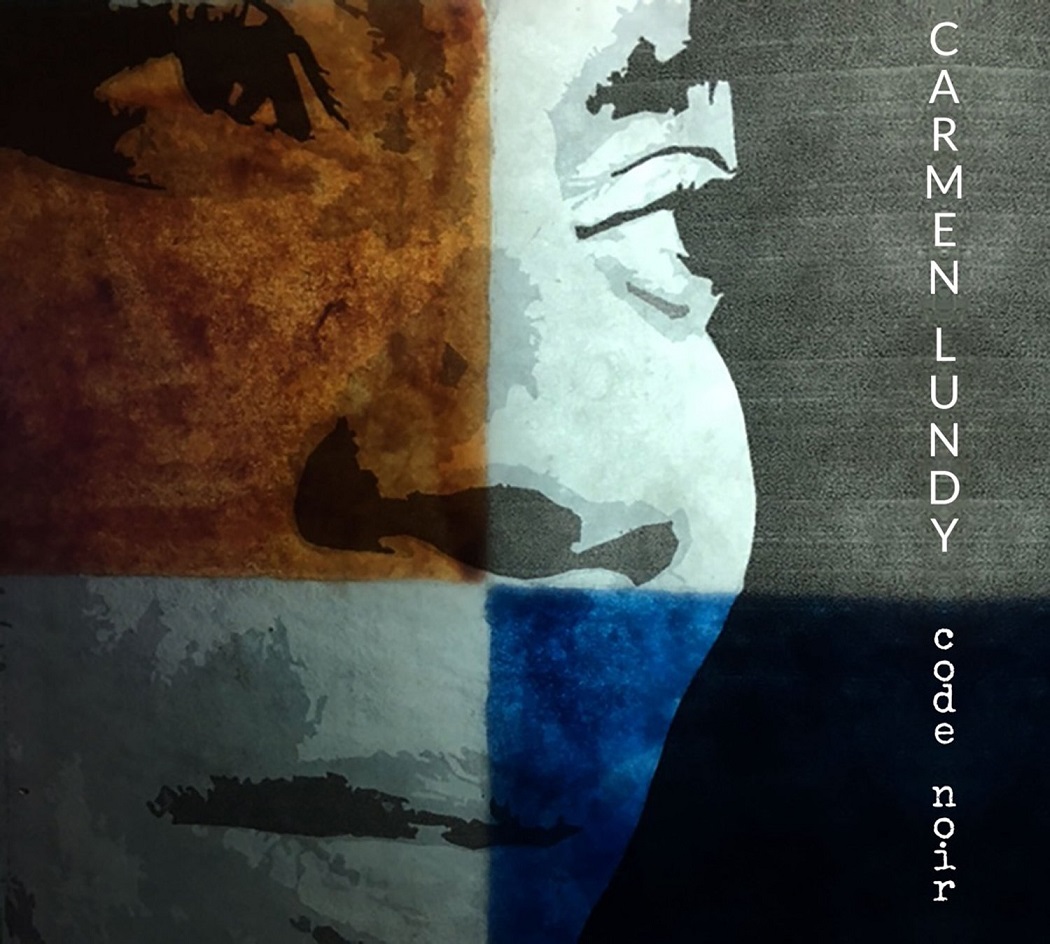
Carmen Lundy - Code Noir (AFRASIA PRODUCTIONS 2017)


Never one to limit her creative journeys, Lundy explores the realms of Jazz, Blues, Brazilian Samba and Pop with a multitude of messages that reflect not only the complexities of her own mindset, but the disparity of the world at large. Poignant, heartfelt, joyous, shocked, saddened and impassioned are just a few of the emotions conveyed by this wonderfully evocative singer on CODE NOIR in a highly personal musical voyage.

Another Chance
Live Out Loud
Black And Blues
Whatever It Takes
Afterglow
Second Sight
The Island, The Sea, And You
I Keep Falling
I Got Your Number
You Came Into My Life
Have A Little Faith
Kumbaya

Carmen Lundy: vocals, keyboards, guitar, background vocals
Patrice Rushen: piano
Ben Williams: acoustic and electric bass
Kendrick Scott: drums, percussion
Jeff Parker: electric guitar
Elisabeth Oei: background vocals track 7


Friday, May 19, 2017

New Diego Barber Recording ft. Alejandro Coello, Eric Harland & Ben Williams! (SUNNYSIDE RECORDS 2017)


Out Today (5/19/17)!

Diego Barber's One Minute Later!
Ft. Alejandro Coello, Ben Williams & Eric Harland!

"Diego Barber, originally from the Canary Islands, is a guitarist whose music draws from modern jazz, classical and Spanish folk music, in a shifting balance. One Minute Later — his intoxicating new album, due out on Friday on Sunnyside — reflects a turn toward Andalusian customs, even as it hums along a post-bop frequency. This track, “Atlas,” has the curvaceous contour and intricate detail you’d associate with a Pat Metheny composition, but very much in Barber’s voice." - Nate Chinen, WBGO.org

"By tapping into two of jazz's most technically gifted rhythmic expressionists—drummer Eric Harland and Ben Williams —and bringing the skills of stylistically nonpartisan percussionist Alejandro Coello to light, Barber manages to knit a rich tapestry of possibility full of vivid colors and grooves, Spanish accents, and classical allusions." - Dan Bilawsky, AllAboutJazz

Stream: "Atlas"

The Andalusia region of Spain stands apart from the rest of the country. There is a certain essence within the breathtaking natural surroundings and the culture, with hints of its Arabic past, that makes the region distinctive. These elements have inspired musicians for generations. Unsurprisingly, guitarist/composer Diego Barber, a native of Lanzarote in the Canary Islands, has long had an affinity for Andalusia, especially  for the city of Granada; an affinity only made stronger by his regular visits there to be with his girlfriend.

Andalusian poet Federico García Lorca’s posthumous book Poeta En Nueva York , which describes Lorca’s time in New York and his affiliation with jazz musicians of the late 1920s, resonated with Barber. It was Lorca’s reflection on the emotional release of improvisers after a performance that inspired the title of Barber’s new recording, One Minute Later. The idea being that Barber identifies with these unnamed musicians’ feeling of catharsis after playing or completing a composition. 

Barber’s work utilizes his dual affinities for classical music and jazz. Having come from a strict classical guitar background, Barber’s jazz playing has really blossomed since moving to New York. His composing bears witness to passions, as he writes in a classical style with jazz elements, creating a poetic blend of highly composed lyrical pieces that open up for the expressionism of jazz improvisation.

For One Minute Later, Barber recruited an incredible rhythm section in bassist Ben Williams and drummer Eric Harland. Both musicians are incredible technicians and fantastic accompanists. Harland has made a name for himself as one of the most exciting and expressive drummers in jazz, while Williams has become a force because of his ultra clean tone and incredible groove.

It was Barber’s discovery of wunderkind percussionist Alejandro Coello that drove Barber to make this recording. Barber was introduced to Coello by friend and virtuoso classical guitarist Ricardo Gallén. Barber was astounded by the proficiency of the 25 year old from Salamanca, who had just begun to teach at Hochschule für Musik Franz Liszt in Weimar, Germany (the youngest person to have done so).

Coello has an orchestral role within the ensemble. He utilizes a multitude of instruments on One Minute Later, including marimba, vibraphone, tympani, gongs, crotales, tam-tam and kalimba, creating tones and colors that make these compositions really stand apart. Most of Coello’s parts are written out, adding a precision within the energy generated by the ensemble.

Barber’s intent while writing the music was to create a diverse program of pieces that sound different from each other. The influences of classical and jazz are apparent in the music. There are also elements of more emphatically rhythmic genres like electronic dance music and rock that influence the structure and drive of many of the pieces.

The recording begins with a tradition of sorts for Barber: a song about a tree. Named for a flowering tree native to Andalusia, “Jacaranda” is introduced by drifting marimba tones and aleatoric guitar before the introduction of bass and drums generate a driving middle-eastern groove. The energetic “Atlas” is an older piece written about Barber’s impressions of the beauty of the Moroccan mountains. “Dilar River” is named for a tributary that Barber, a dedicated ultra marathoner, runs along daily, the piece providing a perfect example of Williams’s fantastic playing.

Highlighting the impressionistic harmonic colorations of the ensemble, the spacious “Mulhacen” is a haunting tribute to Spain’s third highest mountain. The gorgeous “Trevenque” is named for another mountain in the Sierra Nevada range in Spain that holds a place in Barber’s heart, as he can see it  from his girlfriend’s home, which is located on Calle Casa Grande, which the ebullient “Big House” is named for.

Barber generates a subtle but driving intensity on “Veleta’s Peak” with the isolation of drums and the use of a sordena on his guitar, creating a distinctive percussion yet muted tone. The spare and beautifully played “Elvira Maria” is a heartfelt solo guitar ballad written for his girlfriend.

Diego Barber’s wonderfully crafted and emotionally charged One Minute Later displays the inherent romanticism generated by Andalusia and its people for an artist of extraordinary gifts and delivers a highly original and stimulating program of music.

Purchase Here:

Upcoming Sunnyside Releases:

May 26 - Carlos Franzetti & Allison Brewster Franzetti - Luminosa
June 2 - Dan Tepfer Trio - Eleven Cages
June 2 - Adam Kolker - Beckon
June 9 - Dominique Eade & Ran Blake - Town & Country

Friday, April 28, 2017

Jimmy Greene: Flowers – Beautiful Life, Vol. 2 (MACK AVENUE RECORDS 2017)


Every musician, I assume, has a prime source for inspiration. For saxophonist and composer Jimmy Greene, that’s been his daughter Ana, who had given him that inspiration during her life and in the aftermath of her shocking, tragic death that made international news. More than four years after the Sandy Hook massacre that cut short Ana Greene’s life, Ana continues to be a muse for her father. Flowers – Beautiful Life, Volume 2 (April 28, 2017, Mack Avenue Records) finds Jimmy Greene in a better spot in his life, because he chose to turn misery and grief into music that’s a celebration of the spirit of Ana and the forces of good.

Thusly, Flowers isn’t a low key affair that A Beautiful Life was at times, but jazz through the cheerful, carefree lens of a six year old. Greene, rest assured, is still making the same polished, attenuated music that endeared himself to us back in ’09. The difference now is that he makes the music a little more playful and lighter on its feet, music that someone at both six and sixty could dance or at least bob their head to.

You can hear him having a good time recording the 6/8 Brazilian samba festival tune “Stanky Leg” or the Nola-inspired second line “Stink Thumb” (apparently putting forth a notion that if it smells bad, it must sound good). On the former, pianist Renee Rosnes spins a tastefully flowing piano solo and the latter is livened up by Ben Williams’ pocket aware bass and Otis Brown III’s jumpin’ snare drum. On both, Greene delivers a happy, prancing soprano sax.


Other songs are inspired by Ana’s own words: “Big Guy” is what she called her 6’6″ father and the song of that name swings in a unique, dynamic way. “Fun Circuits” (“Don’t let them suck your fun circuits dry, Mom!”) has complex rhythms and Mike Moreno’s guitar with Rosnes’ Fender Rhodes give it a rock-jazz flair but also characterizes childlike exhilaration and unpredictability.

“December” is a song with a multidimensional complexion to portray the range of emotions that occur at the Greene household during this month every year (holiday season without Ana, anniversary of the Newtown massacre). But even here Greene is pushing forward; the song works through the mixed emotions with vigor and Brown’s drums make sure of that.

Sometimes words are needed to fully explain the feeling, and accordingly, a couple of vocal turns are included. Sheena Rattai takes on the task on the titular “Flowers” with words inspired by Ana’s book of flower drawings intended as an expression of love to her father. Greene offers what he calls “some humble advice to parents” as conveyed by Jean Baylor on the sweet ballad “Someday” while Greene’s cool, assuring tenor sax flutters around.

The only song Greene didn’t compose came instead from Level 42. Greene had revealed to us before that there was “something about Ana” so you might say he turned this 1986 hit “Something About You” into a message about her. Greene gets really creative with the middle of it, practically making up a whole new section where he again drops down chops from his soprano sax.

There’s talent galore on this album: besides Rosnes, Moreno, Williams and Brown, there are also appearances by Jeff ‘Tain’ Watts, John Patitucci, Rogerio Boccato and Kevin Hays. They all do their part to help make Flowers – Beautiful Life, Volume 2 a worthy successor to Greene’s gorgeous tribute Beautiful Life. But Jimmy Greene’s biggest help comes from within. Inside his heart, where Ana Grace Greene lives and thrives.

1. Big Guy
2. Stanky Leg
3. Flowers
4. Second Breakfast
5. Fun Circuits
6. Stink Thumb
7. Someday
8. December
9. Amantes
10.Something About You
11.Thirty-Two


Renee Rosnes
Mike Moreno
Ben Williams
Otis Brown III
Jeff ‘Tain’ Watts
John Patitucci
Rogerio Boccato
Kevin Hays


Thursday, June 2, 2016

Oleg Kireyev & Keith Javors - The Meeting (2016) INARHYME RECORDS


present


(Inarhyme)The unprecedented double recommendation this week is because both albums have the brilliant Tom Harrell on trumpet and flugelhorn as a sideman, a rare role for him these days— and because they are among the most compellingly conceived and executed quintet collections in years. Kirk MacDonald is a Canadian tenor saxophonist whose imagination, firmness and drive recall Dexter Gordon and other mainstream tenor heroes. The rhythm section of pianist Brian Dickinson, bassist Neal Swainson and drummer Dennis Mackrel might have been made to order for MacDonald and Harrell. MacDonald’s ten compositions are perfect for the band. The Russian tenor saxophonist Kireyev and American pianist Javors have recorded together before, but The Meeting, with Harrell’s buoyant contribution, takes the collaboration to a new height. Ben Williams on bass and E.J. Strickland on drums round out the rhythm section. Surprise: Kireyev’s Tuvan throat singing in “Caravan.”


April
Inwardly
Estate
The Meeting
Caravan
Body and Soul
Fresh Blues

Oleg Kireyev: tenor saxophone, vocals
Keith Javors: piano
Tom Harrell: trumpet, flugelhorn
Ben Williams: acoustic bass
E. J. Strickland: drums

BUY THIS ALBUM

Thursday, May 26, 2016

Victor Gould - Clockwork (2016) FRESH SOUND NEW TALENT


present


"It’s understandable that a jazz pianist might feel inclined, even obliged, to debut as a leader with a trio album. But Clockwork, the maiden voyage of Victor Gould, includes sextet arrangements, two pieces augmented with strings, and several percussion turns from Pedrito Martinez. There are piano trio showcases as well, but they are part of the mosaic, not the full picture. “I didn’t want to be locked in with instrumentation,” says Gould. “I’ve come to believe that the best orchestration is when you change instrumentation very often. So you could think of that in the scheme of one piece or a whole record.”

The title Clockwork amplifies this point, suggesting that varied instrumentation can in fact yield great coherence. “Clockwork is many different elements working together,” notes Gould. “It’s the very definition of clockwork — the gears of a clock all working together to create something very intricate.” At the heart of it all is an extraordinary synergy between Gould, bassist Ben Williams and drummer E. J. Strickland. It’s consistent throughout the record but most starkly evident on the trio cuts.

Having made his mark in recent years as a sideman with Wallace Roney, Ralph Peterson, Donald Harrison, Louis Hayes, Vincent Herring, Eric Alexander and more, Gould has learned a thing or two about musical clockwork. A native of Los Angeles, he attended Berklee as an undergrad and then earned the high honor of a slot at Thelonious Monk Institute of Jazz from 2009-2011. Studying alongside him at both these institutions was Godwin Louis, the alto saxophonist heard on this album, who happens to be one of Gould’s dearest friends.

Trumpeter Jeremy Pelt, who’s been hiring Gould in his own superb band of late, is a characteristically stirring soloist as well as a focused and dynamic ensemble presence on the sextet pieces. Myron Walden, playing soprano and tenor saxophones, took on an added role as co-producer: “Myron and I decided which would be the best song choices from my catalogue,” Gould recalls. “After that, he helped run the recording session and took charge of time management, so it lifted a lot of the stress from me.”

Pelt plays flugelhorn on “Chaancé,” one of the two pieces to feature strings. Written and named after Gould’s wife, this lovely ballad finds the leader in a tensile give-and-take with the strings during his eloquent solo, blending with and responding to them but soaring with renewed intensity when they fall silent. By contrast, there’s an “apocalyptic” energy, to use Gould’s word, coursing through “Apostle John,” from the foreboding rubato of the prelude to the modal groove and intricate counterpoint of the piece itself. Anne Drummond adds just the right flavor on flute, almost sounding like a soprano voice.

The string arrangements followed from Gould’s prior experience scoring for symphony orchestra (his original piece “Side Angle,” which doesn’t appear here). The sextet arrangements, for their part, were a result of his tenure at the Monk Institute, where he played with a six-piece dream band of fellow students. Along with the swinging, Latin-tinged title track we hear “Three Souls,” a tribute not only to the great Hank Jones but also to two people close to Gould who died around the same time (the fleeting reference to Stevie Wonder’s “Don’t You Worry ’Bout a Thing” seems to imply a fourth soul). Another sextet piece, “Room 416,” is named for the Berklee dorm room that Gould shared with bassist and friend Peter Spear, who died tragically in 2014. “Peter was really good friends with Godwin as well, so I thought it was important for Godwin to take that lead melody in the A section and show some love.”

“The Return,” a quartet number that features Louis again in radiant form, is Gould’s dedication to trumpeter Gregory Diaz, who struggled with embouchure problems at Berklee and was unable to play for a period of time. “Greg and I went to high school together as well and he was one of the best trumpet players I knew. I wrote this tune to encourage him — ‘The Return of Greg Diaz’ is its full name.”

“Sir Carter,” led off by an eccentric intro for horns and drums, is what one suspects: an homage to the great Ron Carter, who visited the Monk Institute for a week and had a profound impact on Gould and his fellow students. “Nefertiti” is of course a legendary Wayne Shorter piece that Carter himself played with the Miles Davis Quintet. Gould’s brisk 5/4 rendition gives it a straight-eighth-note patina and some added twists and turns, without ever sacrificing the tune’s hypnotic legato flavor. Here again the trio chemistry is substantial. Gould solos forcefully before yielding to the virtuosic Williams.

Martinez adds his inimitable congas on “Blue Dales,” which Gould originally composed as an etude to practice independence but later turned into a song. Right away the congas add propulsion and color to the bright, staccato rhythms of the theme, so dazzlingly articulated by Williams and Strickland. The piece is a 16-bar minor blues with dramatic and clever harmonic movement, an ideal framework for improvising: Williams leads off, followed by Gould and finally Strickland over a tumultuous four-bar vamp.

In the end it’s the combination of elements in Gould’s music — the hard-bop drive and harmonic adventure, the chamber-music refinement, the Latin tinge that Jelly Roll Morton theorized all those years ago — that makes Clockwork succeed on the level that it does. It couldn’t be clearer: Gould was ready, after years spent on numerous big-league bandstands, to take the reins and bring all his experience to bear, pursuing a sound deep in technical proficiency and flair but also expressive nuance and immersion in the jazz tradition. May those gears keep turning."


David R. Adler, New York, March 2016


01. Clockwork 7:39
02. Room 7:09
03. Chaancé 5:22
04. Blue Dales 5:21
05. The Return 7:55
06. Apostle John (Prelude) 3:07
07. Apostle John 9:03
08. Sir Carter (Intro) 0:45
09. Sir Carter 4:52
10. Nefertiti 5:38
11. Three Souls 8:06

All songs composed & arranged by Victor Gould, except #5 written by Wayne Shorter

Personnel:
Victor Gould (piano)
Jeremy Pelt (trumpet on #1,2,3,6,7,8 & 11)
Godwin Louis (alto sax on #1,2,3,5,6,7,8 & 11)
Myron Walden (tenor sax on #1,2,3,6,7,8 & 11)
Anne Drummond (flute on #3 & 7)
Ben Williams (bass, except on #6 & 8)
E.J. Strickland (drums, except on #6)
Pedrito Martínez (percussion on (#1,4 & 7)
Yoojin Park (violin, on #3,6 & 7)
Heejin Chang (viola, on #3,6 & 7)
Veronica Parrales (cello, on #3,6 & 7)

Recorded at Systems Two Studios, Brooklyn, New York, December 14, 2015 and January 19, 2016

Sound engineer: Max Ross
Mixing & mastering: Dave Darlington
Photography: Anne Yatskevich
Painting: Martel Chapman

Co-producers: Victor Gould & Myron Walden

Executive producer: Jordi Pujol

BUY THIS ALBUM

Monday, May 9, 2016

Pat Metheny - The Unity Sessions (2016) NONESUCH RECORDS


present


The Unity Sessions, released May 6, 2016, on Nonesuch Records, is taken from a filmed performance with Pat Metheny Unity Group that was released on DVD in 2015; the set comprises 13 songs by Metheny, one he co-wrote with Ornette Coleman, and one well known standard by Ray Noble.

In 2013, for the first time since 1980, Metheny recorded with a band that highlighted tenor saxophone. The resulting Unity Band, which went on to win him his 20th Grammy Award, featured Chris Potter on sax and bass clarinet, longtime collaborator Antonio Sanchez on drums, and Ben Williams on bass. Metheny then took that same ensemble into new territory with the addition of his Orchestrion and a focus on more through-composed material and christened the ensemble Pat Metheny Unity Group. The Group's first record, Kin (←→), was released by Nonesuch in 2014 and was named the best jazz album of the year in the DownBeat Readers Poll Awards. The Group went on a world tour of more than 150 cities; at the end, they hunkered down in a small Manhattan theater to film new performances of music from the original Unity Band, the expansive Kin(←→), and touchstones from the entirety of Metheny's music catalog. The results were released on DVD last year as The Unity Sessions, and now Nonesuch releases the album of the same name.

Over the course of more than three decades, guitarist Pat Metheny has set himself apart from the jazz mainstream, expanding and blurring boundaries and musical styles. His record-setting body of work includes 20 Grammy Awards in 12 separate categories; a series of influential trio recordings; award-winning solo albums; scores for hit Hollywood motion pictures; and collaborations and duets with major artists like Ornette Coleman, Steve Reich, Charlie Haden, Brad Mehldau, and many others. His band the Pat Metheny Group, founded in 1977, is the only ensemble in history to win Grammys for seven consecutive releases.

CD1
Adagia
Sign of the Season
This Belongs to You
Roof Dogs
Cherokee
Geneaology
On Day One
Medley

CD2
Come and See
Police People
Two Folk Songs (1st)
Born
Kin
Rise Up
Go Get It

MUSICIANS
Pat Metheny, electric and acoustic guitars, guitar synth, electronics, orchestrionics
Chris Potter, tenor sax, soprano sax, bass clarinet, flute, guitar
Antonio Sanchez, drums and cajon
Ben Williams, acoustic and electric basses
Giulio Carmassi, piano, flugelhorn, whistling, synth, vocals

PRODUCTION CREDITS
Produced by Pat Metheny
Co-Produced by Steve Rodby
Recorded by Pete Karam and David Oakes at the 52nd St. Project, New York, NY
Mixed by Pete Karam
Mastered by Ted Jensen at Sterling Sound, New York, NY
Guitar Tech: Carolyn Chrzan
Orchestrion Tech and Monitors: Austin Stillwell
Drum Tech: Teo Stoll
Tour Production Manager: Chris Culpepper
Tour Managers: John Nave, Dana Watson (Europe), Jerry Wortman (NYC)
Artist Management: Ted Kurland & David Sholemson for the Kurland Agency
All music composed and arranged by Pat Metheny, except "Police People," composed by Ornette Coleman and Pat Metheny, and "Cherokee," composed by Ray Noble
Antonio Sanchez plays Yamaha drums, Zildjian cymbals and sticks, Remo drumheads, LP percussion and Cympad fets exclusively; Chris Potter plays Rico Jazz Select reeds. Ben Williams appears courtesy of Concord Jazz.


Wednesday, March 30, 2016

The Tony Lustig Quintet - Taking Flight (2016)


IMMEDIATE RELEASE
Critics, Listings, Features
Tony Lustig 
Taking Flight

CLICK HERE


“Tony is an exceptional talent. He has a big, beautiful sound 
with just the right amount of edge.” 
-Joe Temperley Baritone Saxophone, Jazz @ Lincoln Center Orchestra

“The world is ready for Tony Lustig. He’s the baritone 
saxophonist I’ve been waiting for all my life.”
-Wessell “Warmdaddy” Anderson Alto Saxophone 

“Tony is one of the most talented, dedicated, and hardest working people I have ever had the opportunity to work with. When he picks up his horn you know it’s Tony Lustig. With his strong character, integrity, and determination 
the sky is the limit to what he can achieve.”
-Rodney Whitaker Bass, Director of Jazz Studies
Michigan State University


BIOGRAPHY BRIEF

Originally hailing from Detroit, Michigan, Tony Lustig is a dynamic saxophonist who believes strongly in warmth and groove. Taking Flight is a manifestation of those beliefs. Tony began playing violin in grade school. Learning to play the saxophone was almost an accident. Being as there wasn’t a strings program in his school, Tony needed to find an alternate means of expression. His parents offered an alto saxophone left in a dusty corner, abandoned by his older sister. As soon as the horn met his lips he felt that was it – that is what he had been looking for. He spent his childhood years playing around Detroit where he had the opportunity to play with and learn from such Detroit greats as: Marcus Belgrave and Rodney Whitaker. These experiences would lead Tony to further his quest for musical knowledge at both Michigan State University and the prestigious Juilliard School in New York City.

Upon making New York City his home, Tony has performed with some of the biggest names in the country - appearing with: Wynton Marsalis and the Lincoln Center Jazz Orchestra, The Christian McBride Big Band, Arturo O’Farrill and the Afro-Latin Jazz Orchestra, Gerald Wilson Orchestra, Birdland Big Band, George Gee Swing Orchestra, Patti Austin Big Band, Cab Calloway Orchestra, even Gloria Gaynor, amongst others. His playing has brought him all across the United States, France, England, Japan, Colombia, Brazil, Panama, and elsewhere. Tony is a fiery character who attacks his music fiercely and passionately. He writes with the intention of stirring the soul. His melodies are memorable and his sound is moving. He strives to inspire all who listen and bring a smile to everyone he meets.


CD DESCRIPTION 

I believe in creating music that people of all musical interests and backgrounds would enjoy listening to. For this album, it was my goal to write 8 incredibly different tunes that represent what jazz music means, while still making it enjoyable for someone who has never listened to jazz before. I wanted this album to feel good above all else. The players for the band were easy to decide on because they are all incredible musicians who believe in the same thing - creating music at the highest level possible while still keeping the mainstream ear interested. I believe bridging the gap between musical styles is very possible, and this album is the first step in my journey to make that happen. I believe in inclusion, warmth, and groove. This project is the manifestation of those beliefs.

Track Time & Times
Change is Comin’ 5:49
Fraytown 8:47
Prometheus 8:33
For Wayne 5:56
Taking Flight 6:22
Serving it Up 6:18
On the Wings of Icarus 9:46
Burnin’ Grease 4:31
All compositions by Tony Lustig 

Player and instrument:
Tony Lustig – bari sax, bass clarinet
Mike Dease – trombone
Samora Pinderhughes – piano
Ben Williams – bass
Ulysses Owens – drums

BUY THIS ALBUM

ROJ TEAM