Showing posts with label SONGLINES RECORDINGS. Show all posts

Sunday, September 24, 2017

DÁLAVA'S THE BOOK OF TRANSFIGURATIONS EARNING RAVE REVIEWS INTERNATIONALLY


Dálava, the fascinating musical endeavor from guitarist Aram Bajakian and vocalist Julia Ulehla, has been winning over critics across the globe since their release of The Book of Transfigurations this past Spring. The project, which filters 100-year-old Moravian (Czech) folk songs through the lens of 21st century creative jazz and post-rock, also features a band of critically lauded improvisers, including cellist Peggy Lee, Colin Cowan on bass, pianist Tyson Naylor on piano/organ/accordion, and Dylan van der Schyff on drums and percussion. The album was recorded in Vancouver,where Julia is currently writing her PhD dissertation on this music.

On The Book of Tranfigurations, Dálava transcends what could have been merely an academic exploration into Moravian folk music. Inspired by her years in Italy as an actress and singer at the Workcenter of Jerzy Grotowski and Thomas Richards, Ulehla animates the traditional affecting melodies and archetypal story lines through an improvisational yet ritual approach to performance. The results, both on record and live, have moved critics across the globe to wax enthusiastically. Here's what they've had to say.

"Every now and then an album appears that is so overwhelming and so intense that it is hard to put into any category. Such is the case with The Book Of Transfigurations, the second release by Dálava...Saying that The Book Of Transfigurations is a masterpiece is not an exaggeration.” fRoots, August 2017

"The album is not so much a fusion, more an exciting collision of tradition with experimentation, one that will equally appeal to fans of folk, avantgarde improv and jazz." Songlines Magazine, July 2017

"Whether the arrangements are delicate or punishing, though, the beauty of the songs comes through powerfully." Chicago Reader, July 2017

"In concert, in either band or duo format, Bajakian and Ulehla create a sound that is achingly intimate. Their love for the music and for each other is beautifully evident, and not in any kind of saccharine fashion: it’s as if they share a mutual incandescence." Musicworks #128, Summer/Fall 2017

"It’s an album that manages to be thoroughly rooted in its Moravian past while still pushing ahead into the 21st Century, a complete, radical reinvention of Moravian music. Ulehla is the linchpin, with a voice that can seduce like Lorelei on the rocks one moment, then turn strident and martial, passionate and sinuous; while guitarist Aram Bajakian, whose credits include working with John Zorn, offers an instrumental counterpoint. The rest of the six-piece band deserve equal billing, not just for their playing, but also for their invention. These are songs to disturb and to lull, of past and family. Mysterious, yes, but also filled with a curious beauty." fRoots, July 2017

"As Bajakian masterfully crafts an ancient sound-world where ghostly folk and proggy finger-picking wizardry nod to his avant-garde and free-improv roots, Ulehla takes center stage with soaring and meditative pipes that run the gamut from arresting whispers to operatic howls." The Observer, The 10 Best Experimental Albums of 2017 So Far, June 2017

"Somehow, the old songs retain their deep connection to the landscape that produced them, even when recast in expansive new avant-jazz and prog-folk trappings." The Georgia Straight, 50 Albums That Shaped Vancouver, May 2017

"It’s astonishing music and the story behind its creation is emblematic of how Old World traditions can be born again, thousands of miles and several generations away from their roots." The Georgia Straight, March 2017

"Úlehla’s voice is haunting, there is a compressed urgency and a folksiness that doesn’t quite settle into, or leave, your ears... Such contrasts of old and new, and stylistic juxtapositions make the album compelling, while the language leaves many listeners simply hanging onto the expressive emotion of Úlehla’s voice rather than the meaning - the translations, invoking timeless themes, are
provided within the accompanying booklet." The Freejazz Collective, May 2017


"Tender and haunting..., The Book of Transfigurations is an intimate and elegant paean to Ulehla's ancestral heritage. It is far from a mere retelling of a historic cultural expression destined for museums. On the contrary, what makes the album unique is its vivid and soulful rendition of this slice of popular art, thus preserving it by exposing its enduring relevance." All About Jazz, May 2017

"An utterly captivating and addictive recording." The Vancouver Sun, April 2017

"A blend of the exotic with the familiar is always an interesting idea but doesn’t always make for interesting music. The first Dálava went beyond merely interesting, it was fully captivating. Even without the benefit of no expectations this time around, Julia Úlehla and Aram Bajakian’s The Book of Transfigurations manages to captivate, too." SomethingElse! Reviews, April 2017

"The Book of Transfigurations is full of songs of moving beauty. Singer Úlehla sparkles and each song gets a fitting, tasteful and exciting musical performance...a unique and beautiful album." Opduvel, May 2017 (translated from Dutch)

"Ulehla provides beautiful vocalization, and while all the lyrics are in Czech, the inflection of her voice exudes emotion. Her singing portrays shades of sadness and happiness that flow with the instrumentals…Throughout the record, the guitar emits everything from wavy distortions, to low dreamy tones. Reflecting at times off the drumming, Dálava toss in jazzy progressions, or turn up with rock intensity...Dálava have created a unique work that captures a sense of culture and history that is intriguing. Its range of instruments and radiant singing generate an intimate reaction to the music, connecting the listener into the atmosphere. It is a work that presents just enough to guide one on a journey to learn more about the magic found in other parts of the world." New Noise Magazine, April 2017

For more information, visit www.songlines.com. There's an interview with Aram and Julia here. Dálava's website is www.dalavamusic.com.

Mikkel Ploug Will Release Alleviations on Songlines on October 27


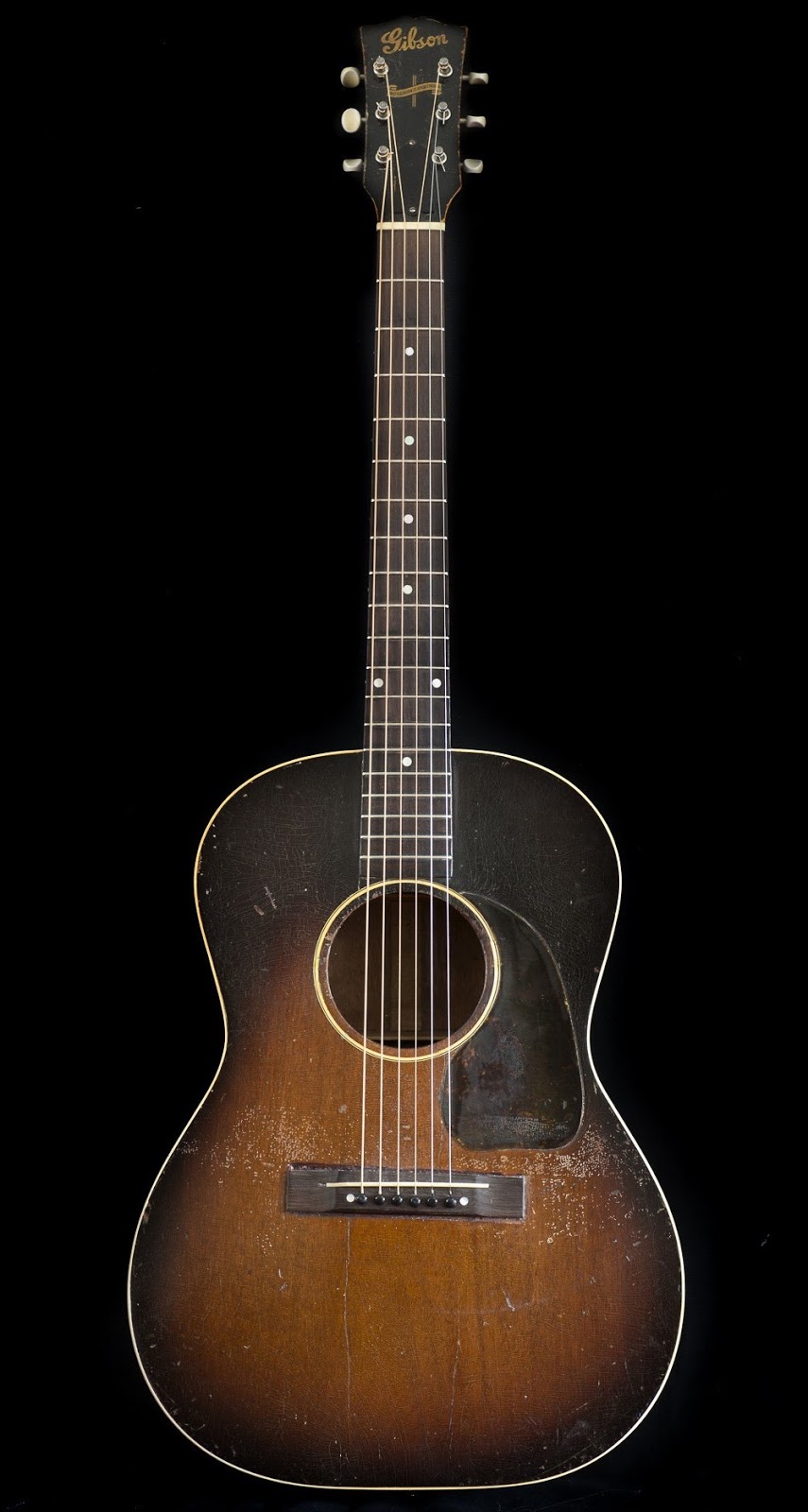
Equilibrium Co-Leader's Solo Guitar Album Was Inspired by a Vintage Gibson Guitar

“Danish guitarist Mikkel Ploug is on his way into the champions league of contemporary jazz. His guitar playing is among the most stylish in the genre.” – Alex Schmitz, Jazz Podium (Germany)

Solo jazz guitar records are not that common, solo acoustic guitar records perhaps even less so outside of the classical and folk/world traditions. Apart from Ralph Towner, Earl Klugh and Gene Bertoncini it’s hard to think of many guitarists in jazz today primarily making music on an unamplified acoustic instrument. But Ploug (co-leader and main composer of the avant chamber jazz trio Equilibrium, with three releases on Songlines) is a jazz guitarist with interests in folk, world and classical music. And the guitar that inspired him to create and record this program is neither a classical guitar nor some ordinary folk/blues/bluegrass guitar.

The background to the record is almost as interesting as the music on it. On tour last year in the U.S., Mikkel chanced upon a well-worn but rare mahogany-top Gibson Banner LG-2 in New York. (The story of the Banners, made during the war by a primarily female work force, is told in John Thomas’s book and film Kalamazoo Gals.) Right away he loved the sound, and eventually he got the guitar to Copenhagen. He spent the next four months playing it every day, generating and refining ideas for pieces. Then it was into the studio (ribbon mics in a warm wooden room) to record the ones he liked best.


He had never really considered himself an acoustic guitar player – his main ax for the last ten years has been a Gibson ES-330 hollow body. “But then I found this old Banner…Part of its warm sound has to do with the mahogany body and top – most Gibson guitars from that time [around 1945] were with spruce tops which have more high end, but this guitar produces a subtle beautiful high end too. To me it sounded like no other guitar I had played before, I would describe the sound as warm, ringing and very balanced from top to bottom. It’s clear to me that the wood has settled beautifully, and the guitar has lots of character…It’s not necessarily easy to play, and certain passages on the tune ‘Arabesque’ for example were next to unplayable for me until just before or actually on the recording date. But that was part of the excitement!”
​​​​​​​
The composing process was different too. “The guitar would push me around stylistically – sometimes ask me to include less notes in a voicing or more open strings, and just opened up new fields of inspiration. Some of the beauty of it to me was that a very simple chord would just sound so good and so rich that often it would feel like it was enough as a starting point to spur a composition. I explored various concepts, whether it was a certain playing style or technique like on ‘Arabesque’ [his own favourite], ‘Alleviation’ and ‘Florescence’ or a melodic or harmonic concept like on ‘Couleurs d’Olivier’, a composition based on Messiaen’s modes of limited transposition. ‘Circle Wind’ is written with Steve Reich’s repetitive work in mind and ‘Luminous’ is my Ben Monder tribute piece.”

He fingerpicks about half the tunes here: “The world of fingerpicking I find fascinating but my inspiration doesn’t come from any particular style, I think more of how a grand piano can resonate when lots of keys are pressed down simultaneously and try to achieve a similar effect with a fast, continuous vibration of the strings on the guitar, like on ‘Florescence’.”


Ploug has already recorded a duet record with longtime collaborator Mark Turner using this guitar, and is organizing solo concert tours for next year. For collectors the record is also being released on limited edition 180g vinyl.

For more information please visit www.mikkelploug.com. The interview is linked from the Songlines release page.

Friday, July 14, 2017

Simon Millerd's Lessons and Fairy Tales, Featuring the Pablo Held Trio, to be Released on Songlines on August 4


Debut Album from  Montreal-Based Trumpeter Features the Pablo Held Trio


Young Montreal trumpeter-composer Simon Millerd has been playing serious jazz trumpet since his teens, but Lessons and Fairytales, which will be released by Songlines on August 4, is his first recording under his own name.

Millerd first performed with Germany’s acclaimed Pablo Held Trio in 2011.That performance greatly inspired the direction of Millerd’s own music going forward, but it was not until 2016 that they had the opportunity to play together again. The results are full of feeling and an authenticity that comes straight from the heart. Lessons and Fairy Tales is is the first documentation of their collaborative, evocative music-making, 

“The trio has been a major inspiration for my own musical direction," says Simon. They are so free, adventurous, interactive, united…I have applied some of their concepts to my own bands, for example they don’t play with a set list but instead have all their music memorized and can jump from any point in any piece to any other point at the drop of a hat. It keeps the music fresh, keeps you on your toes!”

When he learned that the trio was booked for a concert at the German Consulate in New York in the fall of 2016, Simon arranged for them to come to Montreal, where they joined him in the studio for his recording debut. Also featured on some tracks are the mostly wordless vocals of Montreal folk-jazz singer Emma Frank.


Lessons and Fairytales is a very personal record, both in its content and its production. Almost every track includes one or more guest artists who are longtime friends and co-leaders with Simon of the Montreal band Nomad. And like Simon they are all graduates of the jazz program at McGill University and former students of Chris McCann, who Simon credits with reorienting his playing and his life. Simon notes that “Chris was my first teacher to talk at length about the importance of developing as a person, not just as a musician. Music became about the expression of emotion, the illustration of the complexity of how we feel. His lessons were life lessons, philosophy, inquiries into truth. He had a lot of practical advice too, how to practice very efficiently and ‘go deep’ by playing very slowly, how to avoid injury etc. My closest friends were almost all private students of his as well. There was a group of us that really took his stuff to heart. Some of us lived together and formed different bands – Nomad, Isis Giraldo’s Poetry Project, Chronicle Infinitas, Brilliant Ally and others.”

The sad, lovely “Quiet Now,” the first single off the album, was inspired by Simon and vocalist Emma Frank’s relationship and breakup after three years together. Simon muses: “I was just thinking about the double meaning of the title, how it’s quiet after all the fighting of a breakup (it’s quiet now), but it’s also an encouragement to relax or meditate (be quiet now).”

One way or another, all the pieces on the record reference a quest that began for Simon in his early 20s: “I stopped playing for three years after high school because I became very depressed and lost interest in everything. That experience led me to spirituality and the search for a meaning to all the suffering in the world. My music inevitably has become an expression of that, instead of this quest to be the best, impress people.”

“Coltrane and Wayne Shorter are definitely among my biggest influences [others include Icelandic bassist and electronic musician Skuli Sverrisson and Norwegian trumpeter Arve Henriksen]. It’s to Wayne and Trane that I go for relief. Their music is so powerful that it literally can take away my physical pain. It is interesting that they accomplish this in very different ways. Coltrane is very direct in his song titles and is almost always pointing towards the spiritual realm. With Wayne the song titles refer more to adventure, myths and so forth, only rarely alluding to his Buddhist roots.”


“Innocence is a big theme throughout this music, yes…We can look at another’s harmful actions and remember that they just don’t know that they’re doing something wrong and are under the influence of powerful delusions and illusions. A Course in Miracles refers to it more often as our sinlessness. We are forgiven when we realize that there is nothing to forgive. These kinds of ideas are expanded on emotionally, subconsciously informing the music.

The lessons seem to part the clouds for inspiration to come through, and the fairytales are more like little sparks igniting a collective movie that the band is creating together. Free improv is incorporated into these songs as a contrast. It’s a relief from the organized structure, and a chance for everyone to build something collectively. It takes a lot of trust and a lot of imagination and I think it brings out a lot of character and unity in the band, especially in the fairytales such as ‘Gnome Home’ and ‘Jonas and the Dragon’.”

Saturday, March 11, 2017

Harris Eisenstadt - Recent Developments (SONGLINES 2017)


HARRIS EISENSTADT'S RECENT DEVELOPMENTS WILL BE RELEASED ON MARCH 10


Latest Songlines Release, The Drummer's Sixth, Introduces His New Nonet, featuring Anna Webber on Flute; Sara Schoenbeck on Bassoon; Nate Wooley on Trumpet; Jeb Bishop on Trombone; Dan Peck on Tuba; Brandon Seabrook on Banjo; Hank Roberts on Cello; Eivind Opsvik on Bass; and Eisenstadt on Drums


CD release concert  Scheduled for May 6 at the Greenwich House Sound It Out Concert Series in Manhattan


Recent Developments is the latest project from the Toronto-born, New York-based composer, percussionist, and bandleader Harris Eisenstadt, his 20th release as a bandleader. His five previous Songlines recordings have been by the 4-5 person groups Canada Day and Golden State. His new nonet, which includes many of Brooklyn's most esteemed creative musicians, is the fifth installment of music for medium-sized ensembles, following Fight or Fight (2003), The All Seeing Eye + Octets (2006), Woodblock Prints (2010), and Canada Day Octet (2012). 

As Harris explains: "Each were explorations in long-form composition and unusual instrumentation. And each walked the line between small group conception and large ensemble ambition. Medium-sized ensembles (groups of, say, 7-10 instruments), present unique sets of compositional problems. They contain many more voices than a small group has to account for. But at the same time, you are not quite dealing in big, heaving blocks of sound - in sections of four and five like instruments, for example, as in big bands, or in orchestral sections with massed strings and complementary-sized winds and brass. Writing for a medium-sized ensemble is, in miniature, something like writing for chamber orchestra. Textures can be massed, but they can just as easily be quite thin. I wanted to explore all of the weights available in Recent Developments, and discovered again that the heaviest weight in a medium-sized group still has a sheerness, a level of exposed-ness, that is neither large nor small."

The range of polyphonic/polyrhythmic textures emphasizes the unique instrumentation's rich timbral variety. Eisenstadt sketched all the music on a transatlantic flight home to Brooklyn at the end of a tour. "Most of the melodic and rhythmic material came rushing out in those nine hours. [But] it took a couple months [spent] mainly revising the counterpoint...to try and balance the orchestrations, to spread the materials throughout the group to exploit as many instrumental textures as I could...The wide range of timbral combinations is at the heart of the recording, and is reflected in the color scheme and shape of David Foarde's beautiful cover design." The form of the suite is divided into fourteen parts: six ensemble sections and eight discreet transitional sections in which snapshots of the material from the ensemble sections are re-imagined and interpreted freely in sub-ensembles of varied instrumentation that were chosen on the day of the recording.


During the revision process Harris drew on such diverse influences as Jane Jacobs' The Death and Life of Great American Cities, David Chase's The Sopranos (mainly for its scope, its long-form arc) and Beni Ourain-style rug weaving of the Berbers from the Atlas mountains of Morocco: "For some reason...I thought a lot about Jacobs' still-prescient views of what was happening to New York City in the mid-20th century, as mixed-use, mixed-income, mixed-ethnicity neighborhoods were razed and low-income housing projects became ubiquitous. The music takes inspiration from Jacobs' ideas of community, [offering] a variety of musical/emotional settings that reflect the many ways in which communities interact; not only in varying numbers, but in interactions of varied emotional tenor... Earlier this year I discovered Beni Ourain-style rugs and fell in love with their instantly-identifiable aesthetic...No two rugs are the same; each design embraces abstraction alongside lyricism, simplicity and minimalism alongside textural complexity, and are often woven by mother and daughter together. They are each examples of communal creation, improvisational whimsy, and refined detail."

Musical influences involve the mid-sized ensemble compositional strategies of Henry Threadgill, Dave Douglas, and John Zorn. "I started working with Zorn this past year, playing ten tunes of his new Bagatelles book (of 300 tunes!) with Chris Dingman and Eivind Opsvik. It's been inspiring to witness first-hand not only how prolific he is, but also his microscopic attention to detail.

The Bagatelles are miniatures, yet they contain multitudes. Even though Recent Developments is long-form rather than short form, I wanted to honor that attention to detail in my revisions. I wanted to treat every line, whether main melody, counterpoint, rhythmic/harmonic underpinning, with the same meticulousness... I've always admired [Douglas's] prolific output and his attention to lyricism...Threadgill remains a central source of inspiration as a composer, arranger, and bandleader. His aggregates of unusual instrumentation and their rhythmic vitality continue to astonish."

If this all sounds pretty serious, the music as performed certainly has its beguiling idiosyncrasies that allow for a variety of responses: "This music, though narrative-based, claims, through abstraction or subversion of expectations, no 'program note' of intent. One listener's deadpan is another's lightly ironic is another's dispassionate is another's emotionally charged."

For more information: www.harriseisenstadt.com. A full interview with Harris can be found on is linked from the Songlines release page for Recent Developments.


Thursday, June 9, 2016

Brad Shepik & Ron Sanworth - Quartet 1991 (2016) SONGLINES RECORDINGS


present


This recording was never meant to see the light of day. It’s is a tale of two young guitarists and of a would-be producer who didn’t have a clue, but continued to love his flawed step-child – long after it had ceased to have any relevance for the musicians who created it.

Brad Shepik (it was Schoeppach back then) and Ron Samworth met at the Banff jazz workshop in 1987. Ron was playing freelance jazz, r&b/soul and improvised music in Vancouver. Brad was studying at Cornish College of the Arts in Seattle and was putting together a band which included Phil Sparks and Michael Sarin. By 1991 (when this was recorded) Brad was in New York, living with Sarin (who had made the move to NYC in 1989) in a house they shared with Dave Douglas, and they were soon performing with him as a trio. Ron was co-leading Lunar Adventures and the New Orchestra Workshop, both of which had CDs out on Nine Winds, and Creatures of Habit, which had won the CBC/Alcan Grand Prix Concours de Jazz in 1990 and had a CD on Justin Time.

The idea for the record arose from a single gig Brad and Ron played in Vancouver in 1990. Each of them brought new pieces to the session, complemented by Ornette Coleman’s “Ramblin’” and Robin Holcomb’s “Nightbirds” (“Way In” is a reference to Wayne Horvitz, and Ron’s collaboration with Robin, The Point of It All, came out on Songlines in 2010). But there were serious issues with some of the performances, and the project was put on indefinite hold. Ron reflects back on it today: “Music to me has always been about creating a feeling between people, so playing together as a band is far more important than woodshedding cool stuff to play over the tunes. In hindsight it would have been great to have done a couple of live gigs with that material and then hit the studio – it could have been a nice little project. I had so much regard for Brad and Mike and Phil and regretted not being on my game those few days.” Brad comments: “I had completely forgotten about this session. Surprised to hear it again in the sense that much has changed yet remains the same. Not a huge struggle to recognize myself – I guess I have to own it.” Michael’s view is more positive: “It sounds pretty damn good to me.” (Digital editing has dealt with any shortcomings in the performance of composed sections, and two pieces have been shortened, otherwise the music is as played.)

Why release it now? Certainly there is some historical interest in light of these performers’ subsequent careers, including collaborations with other guitarists: Brad with David Tronzo, Kurt Rosenwinkel, Ben Monder, Steve Cardenas and others in Paul Motian’s Electric Bebop Band and Joey Baron’s Killer Joey, and currently with Monder as well as with Nate Radley in the Arthur Kell Quartet; Ron with Tony Wilson in his band Bugs Inside and currently in The Peggy Lee Band, also performances with Bernard Falaise, René Lussier, Fred Frith, and Mark Ribot. And one interesting comparison to be made is the versions of “PLAW” here and on the first, self-titled record by BABKAS, the group that Brad formed in’92 with Briggan Krauss and Aaron Alexander (with three releases on Songlines).

But the ultimate justification is the particular character of this collaboration. It’s true that there are a swirl of influences in the music. Brad: “Conceptually I hear Ornette Coleman, Jerry Granelli, Jay Clayton, Julian Priester, Bill Frisell, Wayne Horvitz. Guitar-wise Frisell, Scofield, Metheny, Abercrombie, Jim Hall, Jimi Hendrix.” Ron: “The Zorn, Frisell, Tom Cora, Tim Berne, Knitting Factory scene was what I was checking out as well as Paul Bley, Ornette, Henry Threadgill and Paul Motian. There were a lot of influences to sort out – all of the jazz guitar guys Brad just cited for sure, Miles, Coltrane and especially the AACM, Ornette and the Downtown New York scene. The NY scene was great because it was not just rock-influenced jazz but full on genre-busting. Skronk, Hendrix, tango, minimalism, bebop, complexity, classical, folk music – whatever you brought to the table could co-exist, and that, to me was liberating.” Michael: “My playing was a compendium of various styles and influences I was processing at time: Ed Blackwell, Roy Haynes, Paul Motian, Shannon Jackson (in the Power Tools Trio with Frisell – that probably accounts for any ‘rock’ element since I was never much influenced by classic rock drummers), Joey Baron, Billy Hart, Al Foster, Jack DeJohnette, Jerry Granelli.”

Yet, out of all these influences, this one-off created some memorable, compelling music. Brad’s pieces especially, four of them never subsequently recorded, display a tense lyricism, and his playing an urgent logic, that would stamp his work with BABKAS. Despite Ron’s demurral his soloing is generally effective, and the way the guitars interact and complement each other is often beautiful. Mike is killing throughout, limning and shadowing the shifting rise-and-fall with unerring grace. Phil, whose recorded sound is unfortunately less than ideal, provides much more than just weight and propulsion at the bottom.

Ron is featured on our other March 2016 release, Michael Blake’s Fulfillment (check out his solo on “The Soldier and the Saint”). Brad is self-releasing a record by the Brad Shepik Organ Trio, Top Down, in late March.


Confluenza
Terrestrials
Bent House
Circa
Nightbirds
PLAW
Ramblin’
Way In
Song of Then

Brad Shepik, electric guitar (l. channel)
Ron Samworth, electric guitar (r. channel)
Phil Sparks, bass
Michael Sarin, drums

Compositions by Brad Shepik (1, 3, 4, 6, 9)
Ron Samworth (2, 8)
Robin Holcomb (5)
Ornette Coleman (7)

BUY THIS ALBUM