
Showing posts with label Andrew Cyrille. Show all posts

Tuesday, February 15, 2022

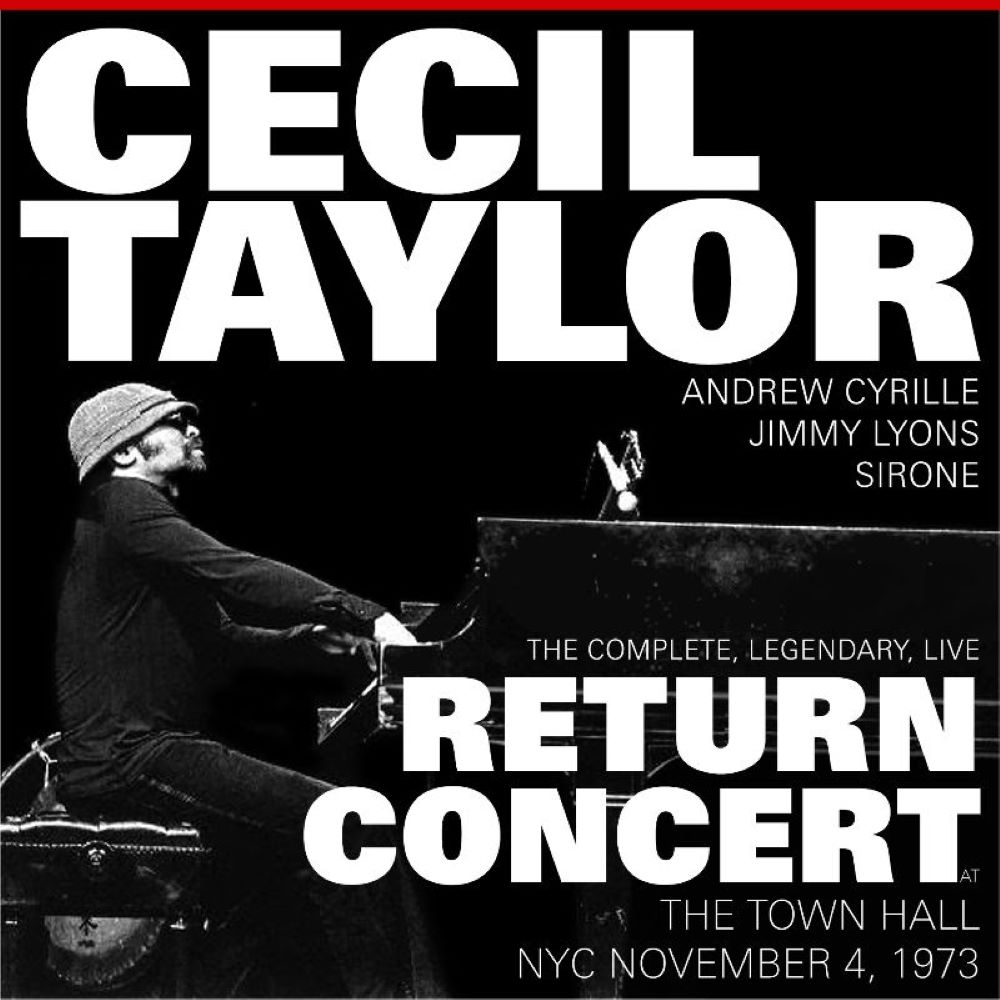
Cecil Taylor – The Complete, Legendary, Live Return Concert - February 15, 2022 (Oblivion Records)

Cecil Taylor – The Complete, Legendary, Live Return Concert to be released on February 15, 2022 via Oblivion Records

Oblivion Records is delighted to announce the February 15, 2022 release of Cecil Taylor – The Complete, Legendary, Live Return Concert, marking the first chance for listeners to hear the legendary pianist’s 1973 return to live performance in full. The concert saw Taylor reunite with Cecil Taylor Unit members Jimmy Lyons (alto saxophone) and Andrew Cyrille (percussion), with the addition of Sirone on bass. This project, assembled by the original producer and recording engineer Fred Seibert, is a much-anticipated opportunity to hear the missing piece of a puzzle long-thought lost, that adds another chapter to the story of Taylor’s search for artistic freedom. 

Taylor, one of the undisputed giants of free improvisation, made his return to live performance at The Town Hall, New York City on November 4, 1973. The second part of the concert produced a recording – a limited-run LP was made of the now seminal two-part ‘Spring of Two Blue-J’s’, released on Taylor’s own Unit Core label. Now, with the advent of digital recordings, the landmark ‘return’ concert is now available in its entirety, committing the 88-minute epic ‘Autumn/Parade’ to official release for the first time ever.

Taylor’s combination of restless pianistic energy and truly virtuosic artistic spirit quickly cemented his unassailable status as a true pioneer of the free jazz movement. Yet, a succession of celebrated Blue Note releases meant that, by the early 1970s, Taylor was entering a period of unprecedented financial security. By 1973, the 44-year-old Taylor had been in self-imposed recording exile for five years, choosing instead to focus on pursuing academia. In that time, Taylor worked as a visiting professor at Antioch College and University of Wisconsin-Madison, as well as dedicating time to composing.
Except for ‘Indent’, a solo piano release recorded at Antioch earlier in ’73, this was a total hiatus from recording – surprising perhaps, given the respect that recent releases Unit Structures and Conquistador! had both commanded, so thoughts of a new live album recorded in New York was a tantalizing prospect. 

And so it proved. Earlier in 1973, Fred Seibert, a student at Columbia who worked at the adventurously minded WKCR Radio station, had been approached by a mysterious figure in David Laura, who had a proposal for aspiring record producer Seibert. He was going to bring the Cecil Taylor Unit to The Town Hall, and he wanted Seibert to record it.
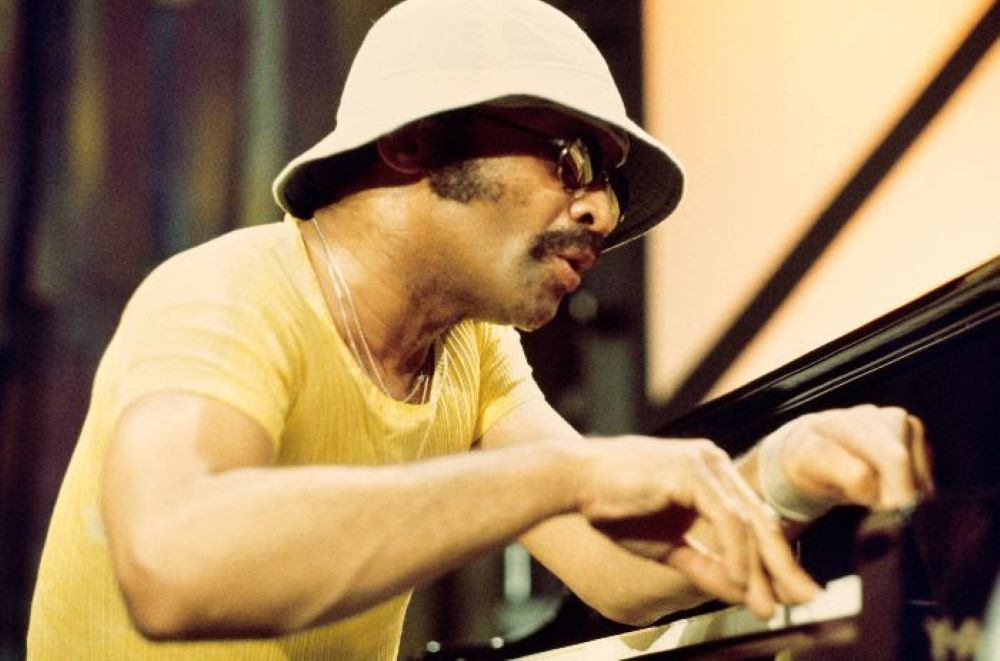
July 09, 1976 Montreux Jazz Festival / Andrew Putler/ Redferns / GettyImages
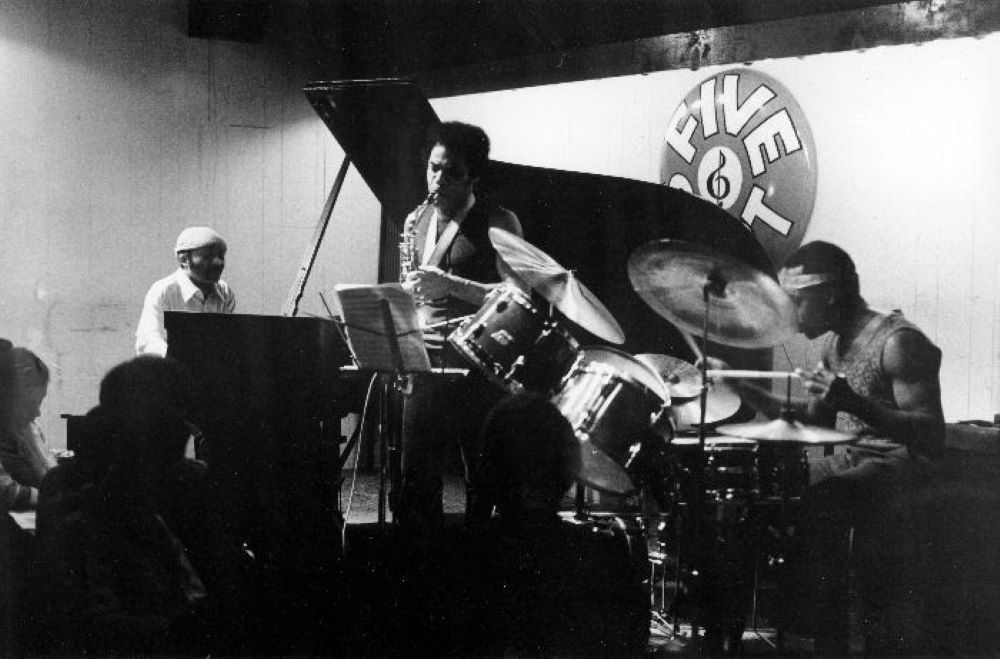
April 18, 1975 Five Spot Cafe / Fred McDarrah / MUUS Collection Getty Images

“We were memorializing what was billed as a triumphant return,” says Seibert in his producer’s note. The Unit concert was a massive success – it reunited Taylor with long-time associates Jimmy Lyons and Andrew Cyrille along with newcomer Sirone on bass. Seibert recorded the whole concert, and, after mixing it with help from legendary engineer Tony May, a recording of the band’s second set, Spring of Two Blue-J’s made it out into the world in 1974.

Critically speaking, Spring of Two Blue-J’s was a success. Village Voice critic Gary Giddins named the album “Record of the Year”, and years later commented that it “announced Taylor’s permanent reestablishment in the music world, an end to his marginalization, and the evidence of a maturity.” It was Giddins’ record of the year. But Blue J-s only represents a third of the concert that occurred that evening. Due to the limitations of the LP format, and the impact that would make on the realisation of the group’s vision, the decision was made to not release the first 88-minute continuous set.

‘Autumn/Parade’ has many of the hallmarks of Taylor compositions and performances of the period: supercharged spontaneity, improvisational stamina, boundary transgressing in its brazen commitment to just keeping on going, and an unfettered exchange of artistic expression from four equal partners. It’s a raw, visceral musical experience for anybody listening today, which speaks to the unrelenting freshness of Taylor’s approach.

Highlights of the new recording include: Taylor’s piano rebounded an hour into the opener that pave the way for something imitative to fly around for just a second; Lyons’ soloistic flitting, oscillations that encompasses the whole of the instrument, and the piano-dominated final half hour of ‘Autumn/Parade’ that reaches the summit of a colossal musical peak, before reaching a hard-fought conclusion. But what emerges over the course of the whole return concert recording is more evidence of Taylor breaking down the final barriers of jazz conventions in pursuit of artistic freedom. The new complete recording is an exhilarating, detailed longshot of one of the greats in full flight.

The Complete, Legendary, Live Return Concert by Cecil Taylor will be available as a digital release on February 11, 2021 via Oblivion Records. Accompanying the digital release is a 23-page booklet featuring an essay by Alan Goodman. This release marks a revival for Oblivion - the label’s last announced release was in 1975. 

1. Autumn/Parade (88:00) (quartet)
2. Spring of Two Blue-J’s Part 1 (16:15) (solo)
3. Spring of Two Blue-J’s Part 2 (21:58) (quartet) 

Cecil Taylor - compositions, piano
Jimmy Lyons - alto saxophone
Andrew Cyrille - percussion
Sirone - bass

Friday, January 21, 2022

Andrew Cyrille / William Parker / Enrico Rava - 2 Blues for Cecil (January 21, 2022 TUM Records)

2 Blues For Cecil brings together three legends of modern improvised music, drummer Andrew Cyrille, bassist William Parker and flugelhornist Enrico Rava, in a tribute to the late, great pianist and bandleader Cecil Taylor (1929-2018). Although the three played together for the first time as members of this trio, they share a common bond through their separate time spent performing and recording with Taylor.

Enrico Rava and Andrew Cyrille are among the elders of improvised music with their careers going back to the 1960s. William Parker rose to prominence during New York’s loft jazz era of the 1970s. The three musicians share one major link in their respective careers. Namely, they all have at different times been members of Cecil Taylor Unit or other ensembles of the legendary late pianist and bandleader Cecil Taylor.

Rava, Parker and Cyrille first performed together as a trio in a tribute to Cecil Taylor, with Taylor himself present, at the Whitney Museum in April 2016 as part of an exhibit/program under the heading “Open Plan: Cecil Taylor.” 2 Blues For Cecil was recorded on February 1 and 2 at Studio Ferber in Paris following the trio’s concert on December 31, 2020 under the heading “Tribute to Cecil Taylor” as part of the Sons d’hiver festival in Paris.

While 2 Blues For Cecil features compositions by all three of its members and even a standard, the emphasis is on improvisation. Four of the ten tracks are extended collective improvisations, including two versions of “Blues for Cecil.” The trio does not seek to emulate Cecil Taylor’s approach to creating music but rather draws on all the experiences, separate and shared, of its members.
“Cecil was a spokesman for individuality, a musical warrior always operating on a high level,” says Parker. “He was not avant-garde, he was a human being who loves life as music. He would not be boxed in by the music world’s value system that asks artists to conform to their standards.”

Although Andrew Cyrille was already an accomplished young musician at the time, his international breakthrough came with his membership in the Cecil Taylor Unit, which lasted for over a decade (1964-75), during which he established his position as one of the leading drummers in freely improvised music and participated in some of Taylor’s most legendary recordings. More than five decades later, Cyrille is still considered to be one of the most creative and versatile percussionists in modern jazz, equally at home in a modern mainstream setting as with more avant-garde music.

Similarly, William Parker first recorded with Frank Lowe, Billy Bang and many others in the 1970s but became internationally recognized when performing with the Cecil Taylor Unit in 1980-91 and participating in more than ten recordings led by Taylor. Parker is now best known for the many groups he has led or co-led over the past four decades. As well as being an improviser, writer and poet, Parker is a prolific composer and has composed everything from operas, oratorios, ballets and film scores to soliloquies for solo instruments. To date, he has participated in approximately 500 recordings with well over 50 albums under his own leadership.

Enrico Rava began his career in his native Italy in the mid-1960s but his work with saxophonists Gato Barbieri and Steve Lacy led to years spent living in New York City in the late 1960s and early 1970s and working with many of the musicians then active on the New York improvised music scene. Soon, Rava began recording under his own name. With more than 50 recordings as a leader or coleader, he is one of the most internationally known Italian jazz musicians and one of the best known in all of Europe. Although Rava met Cecil Taylor in the late 1960s in New York City, the two performed together for the first time almost two decades later, first in Taylor’s Orchestra Of Two Continents in 1984 and then in the Cecil Taylor European Orchestra in 1988.
Andrew Cyrille (b. 1939) was born in Brooklyn, New York, into a family with Haitian parents. He was mentored in the art of drumming by the great Philly Joe Jones circa 1958 and began recording and performing with the likes of Walt Dickerson, Coleman Hawkins, Roland Kirk and Mary Lou Williams when barely 20 years of age. However, Cyrille truly made his mark through his membership in the Cecil Taylor Unit, which lasted for over a decade (1964-75), during which time he established his position as one of the leading percussionists in the then emerging freely improvised music. Cyrille soon became one of the most respected drummers in modern jazz through both of his own recordings as a leader and through his collaborations with virtually every important name on the contemporary scene. Since the 1970s, Cyrille has led or co-led a number of ensembles, including Maono, The Group, the percussion quartet Pieces Of Time and Haitian Fascination that pays homage to his Haitian roots. In 1992, Oliver Lake, Reggie Workman and Cyrille founded Trio 3, a cooperative group that has over time become one of the main performing vehicles for all three of its members, recording more than 10 albums with several of the later ones also featuring a visiting pianist. Altogether, Cyrille has released more than 30 recordings as a leader or co-leader and countless others as a sideman. His most recent recordings as a leader are The Declaration Of Musical Independence (with Richard Teitelbaum, guitarist Bill Frisell and bassist Ben Street) in 2014, Lebroba (with trumpeter Wadada Leo Smith and Bill Frisell) in 2017 and The News (with pianist David Virelles, Bill Frisell and Ben Street) in 2019. In 2020, Cyrille received the Doris Duke Artist Award.
Photos ©Luciano_Rossetti

William Parker (b. 1952) is a composer, improviser, multi-instrumentalist, writer and poet born in the Bronx in New York City. He entered the music scene during New York´s loft jazz era in the early 1970s and quickly became a much sought-after bassist playing primarily with fellow improvisers, such as Billy Bang, Don Cherry, Milford Graves, Khan Jamal, Frank Lowe, Jemeel Moondoc, Charles Tyler and Frank Wright, among many others. Parker became internationally recognized when playing in the Cecil Taylor Unit from 1980 through 1991. Parker´s key collaborators have also included his spouse, dancer Patricia Nicholson, as well as Roy Brown, Peter Brötzmann, Rob Campbell, Cooper-Moore, Hamid Drake, Charles Gayle, Peter Kowald, Joe Morris, Matthew Shipp and David S. Ware. Since the early 1990s, Parker has increasingly led his own ensembles, including In Order To Survive, The Little Huey Creative Music Orchestra and the William Parker Quartet. Parker’s special projects have featured the music of Duke Ellington, Curtis Mayfield and Fats Waller, among others, and he has released several solo bass recordings as well as several duo recordings with fellow bass players. To date, Parker has participated in approximately 500 recordings, including well over 50 albums under his own leadership. Parker is a prolific composer and has composed everything from operas, oratorios, ballets and film scores to oliloquies for solo instruments. He is also a theorist and the author of several books as well as volumes of poetry.

Enrico Rava (b. 1939) was born in Trieste, Italy. Rava began playing the trombone in Dixieland bands when he was 15 but switched to the trumpet at 18 after hearing Miles Davis perform in Turin. Soon Rava was participating in local jam sessions and, in 1963, the Argentine saxophonist Gato Barbieri, who was then living in Rome, convinced Rava to join him there. Rava’s first recordings were in the mid-1960s with Gato Barbieri, Giorgio Gaslini and Steve Lacy. After Barbieri moved to Paris, Rava joined Steve Lacy's quartet, which led to extended stays in London, South America and eventually New York City. After moving to New York City in 1967, Rava soon played with many of the local musicians then active on the improvised music scene, such as Carla Bley, Lee Konitz, Jeanne Lee, Paul Motian and Roswell Rudd. Rava traveled back and forth between the United States and Europe and began making records both in New York City and in Europe with increasing frequency.

Rava’s first albums as a leader were with the Enrico Rava Quartet in 1972 and 1973. His first album for ECM Records was The Pilgrim And The Stars in 1975 and thus began a relationship that still continues today and has resulted in a total of 15 albums with the most recent being Edizione Speciale in 2021. Rava has also continued to work with many other European improvisers, including concerts and recordings with a number of large ensembles, such as ICP Orchestra, Globe Unity Orchestra and Italian Instabile Orchestra. Altogether, Rava has participated in more than 200 recordings with more than 50 of those as a leader or co-leader.Although Rava met Cecil Taylor in the late 1960s in New York City, the two did not perform together until almost two decades later. Rava participated in the recording of Winged Serpent (Sliding Quadrants) in Milan in 1984 by Taylor’s Orchestra Of Two Continents as well as the European tour that followed. In 1988, Rava was a member of Cecil Taylor’s European Orchestra.

01 Improvisation No. 1 (Cyrille, Parker and Rava)
02 Ballerina (Enrico Rava)
03 Blues For Cecil No. 1 (Cyrille, Parker and Rava)
04 Improvisation No.2 (Cyrille, Parker and Rava)
05 Top, Bottom and What’s in the Middle (Andrew Cyrille)
06 Blues For Cecil No. 2 (Cyrille, Parker and Rava)
07 Enrava Melody (Andrew Cyrille)
08 Overboard (Enrico Rava)
09 Machu Picchu (William Parker)
10 My Funny Valentine (Richard Rodgers and Lorenz Hart)

Enrico Rava flugelhorn
William Parker double bass
Andrew Cyrille drums

Friday, August 27, 2021

Andrew Cyrille Quartet - The News (August 27, 2021 ECM)

Andrew Cyrille’s album The News carries forward the story from The Declaration of Musical Independence, the 2014 ECM recording described by Down Beat as “an unabashed exploration into time, pulse space and atmosphere…ambitious yet simple, rich yet stripped-down, challenging yet infinitely satisfying.” The New York Times cited the album as evidence of a “late career renaissance” for the drummer.

A force in improvisation for more than sixty years, Cyrille has played across the landscape of jazz from Coleman Hawkins’s The Hawk Relaxes to Cecil Taylor’s Unit Structures, led his own bands, and worked extensively with Milford Graves, Walt Dickerson, David Murray, Muhal Richard Abrams, Oliver Lake, Reggie Workman and many, many more. His first ECM appearance was on 1970’s Afternoon of a Georgia Faun, Marion Brown’s album with Chick Corea, Anthony Braxton, Bennie Maupin and Jeanne Lee. Half a century later Cyrille appeared with his Lebroba trio with Wadada Leo Smith and Bill Frisell at Lincoln Center’s 50th birthday tribute to the label.

For The News, recorded at Sound on Sound Studio in New Jersey in August 2019, David Virelles was drafted as last-minute replacement for old associate Richard Teitelbaum, whose involvement had been ruled out by ill-health. Virelles had previously played with Cyrille and Ben Street in contexts including the group Continuum. Gently guiding from the drums, Cyrille gives his revised line-up plenty of freedom while also shaping, subtly, the group’s sonic identity with his flowing sense of pulse.

The title track “The News” revisits a conceptual piece that Andrew first recorded on a solo percussion album, The Loop, made for the Italian Ictus label in the late 1970s. Here a newspaper is placed over the snare drum and toms and played with brushes. In the quartet version, Frisell, Virelles and Street all impressionistically extend its rustling, whispering textures on their own instruments.

“Leaving East of Jordan” is a tune by AACM-associated pianist Adegoke Steve Colson. Cyrille has previously played it both with its composer and with the group Trio 3 with Oliver Lake and Reggie Workman. Cyrille’s “With You In Mind” is also a piece that has gone through diverse interpretations: there are earlier recorded interpretations in trio with Hentry Grimes and Bill McHenry and in duo with Greg Osby. Here the music takes off from Andrew’s unaccompanied spoken word introduction with the band amplifying its sentiments, with a particularly tender guitar solo from Bill Frisell.

The guitarist has three tunes here “Mountain”, “Baby” and “Go Happy Lucky”, the last of which, as an abstracted blues, has a distant kinship with Duke Ellington’s “Happy Go Lucky Local.” Frisell has recorded extensively for ECM, from early leader dates such as In Line and Rambler to the recent duet projects Small Town and Epistrophy with Thomas Morgan. Along the way there has also been a long association with Paul Motian and Joe Lovano documented on recordings from Psalm (1981) to Time and Time Again (2006). Frisell has also contributed to other recordings of enduring significance including Paul Bley’s Fragments, Kenny Wheeler’s Angel Song, Marc Johnson’s Bass Desires, Jan Garbarek’s Paths, Prints and Gavin Bryars’s After the Requiem.
 
David Virelles. who contributes the tune “Incienso” to the programme and shares composer credits with Cyrille on the exploratory “Dance of the Nuances”, first appeared on ECM with Chris Potter in 2011. Albums with Tomasz Stanko followed (Wisława, December Avenue) as well as Virelles’s own recordings Mbókò, Antenna and Gnosis.
 
Ben Street and Andrew Cyrille have collaborated in contexts including the trio of Danish pianist Søren Kjærgaard. The bassist’s ECM credits include albums with the Billy Hart Quartet (All Our Reasons, One Is The Other) the Ethan Iverson/Tom Harrell Quartet (Common Practice), and the Aaron Parks Trio (Find The Way).

1 MOUNTAIN (Bill Frisell) 08:25
2 LEAVING EAST OF JAVA (Adegoke Steve Colson) 08:49
3 GO HAPPY LUCKY (Bill Frisell) 05:21
4 THE NEWS (Andrew Cyrille) 05:34
5 INCIENSO (David Virelles) 05:35
6 BABY (Bill Frisell) 05:34
7 DANCE OF THE NUANCES (Andrew Cyrille, David Virelles) 07:24
8 WITH YOU IN MIND (Andrew Cyrille) 07:11

Andrew Cyrille   Drums
Bill Frisell   Guitar
David Virelles   Piano, Syntzesizer
Ben Street   Double Bass

Thursday, November 15, 2018

Andrew Cyrille / Wadada Leo Smith / Bill Frisell - Lebroba (ECM November 2018)


Andrew Cyrille’s title Lebroba is a contraction of Leland, Brooklyn and Baltimore, birthplaces of the protagonists of an album bringing together three of creative music’s independent thinkers.  Each of them made his first ECM appearance long ago: drummer Andrew Cyrille on Marion Brown’s Afternoon of a Georgia Faun (1970), trumpeter Wadada Leo Smith on his own classic Divine Love (1978), and guitarist Bill Frisell on Eberhard Weber’s Fluid Rustle (1979); these are, of course, players of enduring influence.  Frisell contributed to Cyrille’s previous ECM disc The Declaration of Musical Independence, but Lebroba marks a first-time meeting for the guitarist and Wadada Leo Smith.  A generous leader, Cyrille gives plenty of room to his cohorts, and all three musicians bring in compositions, with “Turiya”, Wadada’s elegant dedication to Alice Coltrane, unfurling slowly over its 17-minute duration.  In his own pieces, including the title track and the closing “Pretty Beauty”, Cyrille rarely puts the focus on the drums, preferring to play melodically and interactively, sensitive to pitch and to space.  There are references to West African music and the blues as well as the history of jazz drumming, but Cyrille’s  priority today is an elliptical style in which meter is  implied rather than stated.

Andrew Cyrille   Drums
Wadada Leo Smith   Trumpet
Bill Frisell   Guitar

1 WORRIED WOMAN (Bill Frisell) 07:35
2 TURIYA: ALICE COLTRANE MEDITATIONS AND DREAMS LOVE (Wadada Leo Smith) 17:24
3 LEBROBA (Andrew Cyrille) 05:44
4 TGD (Andrew Cyrille, Bill Frisell, Wadada Leo Smith) 05:17
5 PRETTY BEAUTY (Andrew Cyrille) 06:24

Friday, September 21, 2018

Mark Masters with Andrew Cyrille, Oliver Lake, Tim Hagans, Mark Turner and more - Sept. 21 on CAPRI RECORDS

Composer and arranger Mark Masters paints compelling jazz landscapes for eight original works on new Capri Records release Our Métíer

With Andrew Cyrille, Oliver Lake, Mark Turner, Tim Hagans, Gary Foster,
Dave Woodley, Putter Smith, Anna Mjoll and more

"Masters' arrangements allow the freedom for solos that are creative in the extreme."
- Dan McClenaghan, All About Jazz

"Masters' arrangements are, no pun intended, masterful."
- Scott Albin, JazzTimes

With his Capri release Our Métíer (September 21, 2018), Mark Masters applies his prodigious talent for painting brilliant, complex, and satisfying jazz landscapes.  The eight Masters compositions featured on the album showcase some of the most adventurous creative improvising musicians in jazz today: Andrew Cyrille, Mark Turner, Oliver Lake, Tim Hagans, Gary Foster, Dave Woodley and Putter Smith. In addition, Masters incorporates the unique voice of Anna Mjoll as an orchestral color, mixing with the instrumental waves in wordless swirls of sound. 

The ensemble that supports these improvisers includes Scott Englebright and Les Lovitt (trumpet), Stephanie O'Keefe (French horn), Les Benedict and Ryan Dragon (trombone), Jerry Pinter, Kirsten Edkins and Bob Carr (woodwinds), Ed Czach (piano), and Craig Fundyga (vibes). The group's big band sound is augmented by bass clarinet and vibes giving the project, at times, an ethereal personality.

In his ten previous projects for Capri Records, Masters has reimagined the music of Lee Konitz, Gary McFarland, Dewey Redman, Donald Fagen and Walter Becker (Steely Dan), Grachan Moncur III and Clifford Brown.

With Our Métíer, Masters has produced a classic "free-bop" large ensemble statement.  One key to the success of the recording is the combination of improvisers completely simpatico with the compositions. In fact, the music was conceived and written specifically for these soloists. The music itself is an artist's canvas filled with all the hues and textures that flow from Masters' creative core.

The opening track "Borne Towards the Stars," inspired by the conclusion of Malcolm Lowry's novel "Under the Volcano," shimmers with atmospheric gravity and features explosive solos by Lake and Hagans.  In "51 West 51st Street," drummer Cyrille establishes the groove after an opening steeped in funk featuring Mjoll and Carr's bass clarinet.  When Hagans and Foster boogaloo into the musical space you can close your eyes and imagine being in Toots Shor's legendary New York City bar.  "Lift" is an understated blues featuring Mjoll's exquisite voice and solid solo work from Mjoll, Lake, Smith and Fundyga.  The harmonically engaging "Ingvild's Dance" with Foster and Turner brings to mind the classic pairing of Lee Konitz and Warne Marsh. "A Précis of Dialogue" is the first of two collective improvisations demonstrating clear textures and sparkling musical interplay with Turner, Foster, Cyrille and Smith.  Foster, Smith, Woodley, and Turner deliver emotionally charged solo statements on the heartbreakingly gorgeous ballad "Dispositions of the Heart."  "Obituary" is Masters' tribute to friends and teachers no longer living.  Far from a dirge, the composition is an up- tempo, celebratory romp that shows off the ensemble in top form.  From the haunting opening and trombone clusters aided by Mjoll to the sophisticated tenor sax and trumpet solos that follow, "Luminescence" brings you the blues in an entirely different way. "In Our Time," the second of two collective improvisations is wildly exploratory, conversational and always compelling.  The title track closes the recording with a powerful, quintessential "free-bop" statement.


Mark Masters Biography

Mark Masters (b. 1957) has earned wide acclaim as an inventive and prolific composer and arranger. All About Jazz calls him "one of the great jazz arrangers of the late 20th and 21st centuries."  Born in 1957 in Gary, Indiana, Masters studied jazz at California State in LA. He organized his first ensemble in 1982 and has never looked back.

"A strikingly creative spirit," (Jim Santella, All About Jazz), Masters has led numerous recording sessions, almost all for Capri Records. Among them are Priestess (Capri, 1990) that Masters wrote to feature Billy Harper and Jimmy Knepper.  A subsequent recording with Knepper, The Jimmy Knepper Songbook (Focus, 1993), featured arrangements by Masters of Knepper's compositions.

Masters' most recent recording Blue Skylight (Capri, 2017), features his innovative ensemble writing and unique approach to the music of Gerry Mulligan and Charles Mingus.  Farewell Walter Dewey Redman (Capri, 2008) features Masters' "in and out" approach and re-casts Dewey Redman's music while retaining its substance.  The project features Oliver Lake, Tim Hagans, Dave Carpenter, and Peter Erskine. Other recordings include Wish Me Well (Capri, 2005) with Steve Kuhn, Gary Smulyan, Gary Foster, and Tim Hagans, Exploration (Capri, 2004) with Grachan Moncur III's octet arranged by Masters, One Day With Lee (Capri, 2004) featuring alto saxophonist Lee Konitz, and The Clifford Brown Project (Capri, 2003) featuring Jack Montrose, Gary Smulyan, Tim Hagans, Cecilia Coleman, and Joe La Barbera. In addition, in 2013 Capri released two recordings, Ellington Saxophone Encounters and Everything You Did: The Music of Walter Becker & Donald Fagen.

Masters' 2005 recording Porgy and BessŠRedefined! (Capri) is a more harmonically adventurous approach to Gershwin's classic folk opera than what has come before.  John Kelman, writing for All About Jazz said "ŠMasters' score is the real star here.  From the opening fanfare he introduces two contrasting elements that, to a large part, define the approach to the whole suite-vibrant swing and some surprisingly free passages.  He clearly proves that it's possible to take a piece that has been approached from a variety of angles and still find a new way in."

Since 1998, Masters has been president of The American Jazz Institute, a non-profit organization dedicated to the enrichment and enhancement of the appreciation of jazz. Under Masters' direction, the AJI supports activities that educate and expose the public to jazz through live performance and an oral history project, as well as by supporting charitable endeavors that advance jazz music. One such endeavor is the AJI's Find Your Own Voice mentoring program that takes professional musicians to middle and upper school campuses to present clinics and master classes to student musicians. 

Masters served as a guest lecturer at Claremont McKenna College (1999 - 2006) where he was involved with the History of Jazz class, overseeing an oral history project, and writing for and producing a series of concerts that brought such notable artists to the college as Billy Harper, Billy Hart, Bennie Maupin, Rufus Reid, Sam Rivers, Andrew Cyrille, Mark Turner, Gary Foster, Lee Konitz, Jack Montrose, John La Porta, Tim Hagans, Gary Smulyan, Ray Drummond, Steve Kuhn, Peter Erskine, Joe La Barbera, Ted Brown, Grachan Moncur III, Henry Grimes, and Dewey Redman.

Masters has been named a Rising Star Arranger in DownBeat Magazine's Annual Critics Poll multiple times.


Wednesday, June 27, 2018

Andrew Cyrille / Richard Teitelbaum Duo: Double Clutch (SILKHEART RECORDS 2018)


This historic session was recorded at Soundscape on Valentine's Day 1981 and was the duo's only American appearance. Kevin Whitehead, in his album note points out that: "The success of free-improvised depends to a great extent on something independent of equipment or technique, the ability to listen and respond... The choices Cyrille and Teitelbaum make, improvising in the moment, acknowledge the big picture, showing their concern with broad arcs of rhythm, dynamics, density and changing timbre. Richard takes these good old Milton Babbit blurps and whooshes and hisses and makes them flow like nobody else. The proof is everywhere. And the flow is oxygen for Cyrille, as it is for all swingers." This CD is an extraordinarily fascinating and exciting exposition of rare synthesizer and percussion artistry. 

Impressions of a piece on this CD, via a letter from Andrew Cyrille: "Imagine one sliding on a fragile, somewhat slippery, delicate, wafting bubble moving through the air. One is sliding to and fro, side to side. However, one is somehow attached to the bubble and not able to be released from it. One experiences an aeronautical traveling adventure prompted by the caprices of a mildly blowing wind. Not being able to navigate, one observes what is taking place around one...  more

1. Dance Astral 09:07
2. San Andreas Fault 13:04
3. Cluck Cluck Clock 11:13
4. Double Clutch 15:52
5. Sliding on a Bubble 09:58
6. Driving Pistons 12:36

Andrew Cyrille Ludwig drums, Zildijan cymbals, LP percussion instruments
Richard Teitelbaum PolyMoog synthesizer, modified MicroMoog synthesizer, Zannini custom random generator, SYM-1 single board computer


Tuesday, June 19, 2018

Booker T. - Go Tell It on the Mountain (SILKHEART RECORDS 2018)


"The obsessive soul-searching that prods his work suggests affinities with John Coltrane and Albert Ayler. But unlike too many of the tenor saxophonists who have caught Coltrane and Ayler's fervor, Booker T. has an earthy sense of humor. This is a fascinating records that shouldn't be overlooked." 
Francis Davis, Philadelphia Enquirer, May 11, 1989

I remember thinking how wonderful it must be to be so expressive – not merely to string sounds together and then lend them to the evanescence of the top forty, but to make music – art, born of talent and determination and fuelled by a compulsion to share it. Booker T. is blessed with that gift. 

At first, I thought that Booker T. might be just another jazz musician skilled with his instrument and versed in the accomplishments of say... John Coltrane. So, in July of nineteen-seventy-five, my acceptance of an invitation to hear him play was half-hearted at best. Was I ever in for a surprise! It wasn't just his ease with complex material. Nor was it his effortless coaxing of spirited notes from that tenor saxophone. It was the exhilaration that you experienced. At once frenzied and riveting, you went away thinking that this music needs to be heard. Indeed, you felt privileged that you had heard it. 

Thereafter, I made it a point to hear Booker T. play whenever I could. I quickly learned that the label "jazz" was too narrow for his music. There was always an infusion of other types of music – popular, folk, classical, and most notably gospel. I can still hear his haunting and beautiful Go Tell It on the Mountain. 

Of all the years that I have known Booker T., he has never waivered on three points – his commitment to the family, his need to play and compose music, and his belief in God. These three ideas somehow come together and nourish each other. This album is dedicated to his father, a brother, and his grandmother, all now deceased. And when asked of his inspiration for most of the material on this album, he replied: "This music has been in me for years; it's through the grace of God that I can now put it on this album". In fact, he says that he is drawn even more closely to his mother after the tragedies of the past couple of years and has even composed music born of this resurgence.

If it is true that genuine interest in a particular subject generates boundless energy, then Booker T.'s music is without limits. He would say that his religion is the fulcrum and the music is merely a satellite, an orbit to accentuate the main force. Only he would really know, but consider this: on one visit to New York, as friends are inclined to do, I called Booker T. to meet for lunch and to catch up with what had been going on in our lives. We went to a restaurant just off Sixth Avenue and wound up talking from 2:30 pm until 8:00 pm. All those hours we talked about the saxophone, about music, and how this musician from Seattle was faring in The Apple

Another time, he called me at 2:00 am insisting that I listen to a new musical idea he had forged for himself. Next morning the telephone receiver was on the floor; I had fallen asleep. Embarrassed, I mustered what I hoped was a believable apology I don't think it mattered however. He'd played that night because he couldn't contain the energy, moved to share this wonderful gift of music.

His music, this gift, will inspire you. It's at once bold and incisive, spirited and alarming. Booker T. is daring enough to bring together in his own compositions things that are usually kept separate – jazz and religious music. It makes for a spritely, fun sound. The listener will be moved by the intensity, range and absolute beauty of the entire delivery.

But caution: do nut trust the titles, expect a surprise!! As music brings the warmth and light of beauty into our lives, this recording will warm our hearts and spirits. Through this light, perhaps we will see a little more of ourselves. Possibly, we will come to understand a bit more of each other. Either way, it is a wonderful gift. BookerT. is a colossal talent!

Gregg Gordon


1. Go Tell It on the Mountain 17:35
2. When Mama Cries I Cry 09:57
3. Hussen Kalie Mazeltov 12:29
4. Jesus Loves Me 07:43
5. What a Friend We Have in Jesus 05:40
6. St. Thomas 07:17

Booker T. tenor sax, alto sax
Saheb Sarbib bass
Andrew Cyrille drums


Charles Brackeen Quartet - Worshippers Come Nigh (SILKHEART RECORDS 2018)


"Worshippers Come Nigh is one of this year's finest releases, with yeasty solos by Brackeen and Dara and hard-charging accompaniment by Hopkins and Cyrille on five varied Brackeen originals that boast some of the spunk and rhythmic abandon of the early compositions of Ornette Coleman. The title track – a dour hymn – is especially appealing." 
Francis Davis, Philadelphia Enquirer, May 18, 1989

When Keith Knox, the executive producer of Silkheart Records, helped found the label in 1986 one of his major ambitions was to bring the music of Charles Brackeen back into the wide popular circulation it so richly deserves. Knox wasn't alone in his quest, however, he was just more successful than the multitude of other sharp-eared producers who wondered what had become of Brackeen's distinctive aural imprint.

Through diligent efforts by Knox and Dallas-based producer/composer/musician Dennis Gonzales, who tracked down Brackeen and supervised the recording sessions, the success of the Silkheart musical mission is now a documented fact. Brackeen is back and the world of jazz has regained a voice of unusual clarity, coherence and compassion.

Brackeen, more by the nature of his personality than by his music, has often seemed to be one of the more mysterious of modern jazzmen. He's studiously avoided the limelight of publicity, preferring to search for an inner light by which to guide his music. As a result Brackeen's music is wonderfully unaffected by passing trends and commercial, or even critical, concerns. His music springs whole from an internalized universe where passion and precision meld to produce a marvelous melodic logic that carries his music to a higher plane and communicates a message that rises even above the exalted heights of the music.

The recording sessions which produced this album and its equally intriguing companion piece Attainment (Silkbeart SHCD-110) were not the sort of quick trips to the studio that have unfortunately become all too common in the contemporary record business. This was no "in by 9, out by 5" session where musicians met each other for the first time in the studio and dashed through the tunes before waving good-bye and heading for the airport. Instead producer Gonzalez brought the musicians together for a week long meeting of musical minds where Brackeen's original ideas were explored, expanded and embellished by his fellow players

The songs were worked out in Gonzalez' front room amidst an atmosphere of familial togetherness, marked by the occasional comic relief provided by the producer's children, Aaron and Stefan. While Gonzalez' wife Carol took care of the nutritional needs of the musicians, consistently turning out minor dining masterpieces that were the only competition for the intense musical concentration of the rehearsals, Gonzalez himself was busy with the delicate ongoing evolution of Brackeen's compositions. The lengthy rehearsals had their moments of levity but for the most part they remained intense and involved on everyones' part, assuring Brackeen's music of the proper serious respect its depth and diversity commands. Cornetist Olu Dara, a player with no shortage of finely honed instrumental chops, remarked during one of the marathon rehearsal session I haven't rehearsed this much since I was in high school. But Dara said it with a resigned smile, knowing that all the physical exertion was paying obvious musical dividends which would be reflected in fine form once the recording tapes were rolling.

The success of the approach is readily evident in the strong and supple ensemble playing that gives the group the unified sound of a unit which has spent years together. The finely tuned and well knit ensemble passages are the most conspicuous evidence but equally important is the heightened sense of anticipation during the solos, times when spontaneous flights of fancy by one player trigger perfectly supportive creative responses by the others without a note being lost in the shuffle.

The fact that the rehearsals and sessions took place during Thanksgiving was more of a chronological coincidence than an actual plan but the distinctive American occasion given to the sharing of blessings and the pooling of abilities could not have been better chosen. Brackeen's music is based in just such concerns and the timing seemed to act as a catalyst to focus the other musicians on the same aspects.

Brackeen's playing, at once both mercurial and concise, clearly dominates the vinyl document of the time but, once again, he's not lust a leader blowing for ego's sake while his supporting players are reduced to a purely subordinate role. That's not Brackeen's style, either musically or personally, and the strength of the musicians on the date would almost preclude it if such was attempted. Olu Dara, usually heard with his free-wheeling Okra Orchestra, is a contemporary musical voice that has the bulk of jazz history engrained into his sound. There is no "outside" or "inside" to his playing. All aspects of the music mingle on egalitarian terms and each can be drawn upon when the occasion arises, providing a rich and resilient brass counterpoint to Brackeen's playing.

The rhythm section of bassist Fred Hopkins and drummer Andrew Cyrille needs little intr-duction, so pervasive is its participation in the finest efforts of modern jazz. Cyrille, whose extraordinary endeavors in behalf of the music of Cecil Taylor and Rahsaan Roland Kirk would cap most drummers' careers, continues to find fascinating contexts (and this record surely qualifies) in which to display his talents. Hopkins, a dynamo of enthusiasm on and off stage, has provided the bottom line propulsion for high flying jazz units like Air, as well as involving himself in countless projects with the likes of David Murray and Henry Threadgill.

Much, if not all, of Brackeen's music is infused with a gentle spirituality whose calming qualities are evident during even the most intense passages. The album's opening track and title tune perfectly encapsulates both the method and message of Brackeen's musical creations. With Hopkins' bouncing bass and Cyrille's customary cunning rhythmic attack providing excellent underpinning, Brackeen's tenor sax issues an insistent, yet celebratory, clarion call. Dara darts in to add cornet colorations and the full quartet, sounding somewhat more massive than four musicians have a right to, exudes an air of expansive spirituality.

The other tunes, all from the mind of Brackeen, work equal wonders and most of the fun of this album will come from the listeners discovering them on their own without critical guidance from notes like these. Of particular interest is "Bannar", the tune that served as the title of Brackeen's excellent 1987 Silkheart Records release (SHCD-105) but somehow found its way onto this album instead. A sort of subdued parade feel, with Mardi Gras and Caribbean flavorings dancing around the periphery, adds to the tune's inherent attractions. Brackeen says he pictured "a little civilization" when he first played "Tiny Town" and if such exists it will be hard pressed to come up with a better anthem for the small folks than what he and his fellows produced. Some extra shades of color are inserted via Cyrille's congas and Gonzalez' pao de chuva work and the first side marches off in fine fashion.

Two extended pieces make up the album's second side and both are gems. "Ible", sporting a typically cryptic Brackeen title, is somewhat atypical in compositonal terms but undeniably engaging in listening terms. Superb ensemble work, a brilliant bowed solo by Hopkins and Brackeen's clear questing sax work are highlights of the piece, but its overall unity and emotional impact are its most distinguishing characteristics. "Cing Kong", only vaguely related to its namesake, is a monumental piece that brings out the best in each of the participating players. Its manifold delights are easier to appreciate than describe and, after all, you're buying the record to listen to, not to read.

If his previous Silkheart Records releases haven't convinced you of the triumphant return of Charles Brackeen it's possible you may have some sort of hearing impairment. There's ample aural evidence of Brackeen's brilliance on each but as a matter of purely personal choice I'm convinced his flame burns brightest on the one you are holding. In summoning the musical community to his side with Worshippers Come Nigh Brackeen serves notice that his voice will be heard again. The persuasive power of the music itself holds out the promise that the worship service, however brilliantly realized on this album, is only beginning.

Michael Point
Down Beat

Austin, Texas

1. Worshippers Come Nigh 07:57
2. Bannar 08:11
3. Tiny Town 09:04
4. Ible 10:58
5. Cing Kong 10:34
6. News Stand (Take 1) 09:13

Charles Brackeen tenor saxophone
Olu Dara cornet
Fred Hopkins bass
Andrew Cyrille drums, congas
Dennis Gonzalez pao de chuva


Saturday, June 16, 2018

Charles Brackeen Quartet - Attainment (SILKHEART RECORDS 2018)


"Attainment itself puts you in the mood, with a homily à la Sun Ra before the saxophone takes the lead supported by growls from Olu Dara, among the strongest of free trumpeters. The beauty of this and the other tracks is that Brackeen keeps the most strident passages to a conversational level; on the dirge House of Gold he grips from the start." 
Ronald Atkins, The Guardian, March 11, 1989

"Brackeen's tenor style is reminiscent of both Albert Ayler and Sonny Rollins; he is, though, more restrained and conventional than either, and has clearly picked his own path between models." 
Graham Lock, The Wire, June 1989

Jazz and spirituality are old compadres. Of course, music had spiritual elements back at the very genesis of our sentience. 

These days, though, musicians often get lauded more for how many sessions they play on than for the ascendancy of what they're playing. If you have a resume that's as thick as a Dallas phone book you're a big deal, and if much of the work is specious and facile, so be it. 

On the other hand, we have Charles Brackeen. The lengthy discography jazz buffs love so to natter about isn't present in the Brackeen scenario. The sessions he's been on have been with Paul Motian, Ronald Shannon Jackson, Don Cherry, Billy Higgins, and a few other individualistic jazzmen. Don't get me wrong, I've never heard Brackeen adopt any high falutin' attitude toward players who take any session they can get. But I have heard him call music his religion, and a man doesn't blur the focus of his religion with a lot of mercenary commerce.

His most obvious tenor antecedents are Rollins and Coltrane. He also picked up on Amerindian rhythms while living in his native Oklahoma. In New York, he performed with West Indian musicians at outdoor community events in Brooklyn. In his own right he is a compelling player and there you have much of what matters in a jazz musician; good influences and individuality.

The Brackeen story began in White's Chapel, Oklahoma, but if you sought White's Chapel on a map you'd not find it, because it is now called Eufaula, Oklahoma. He lived on what he calls a "semi-farm" replete with cattle and pigs. His aunt, a schoolteacher, taught him to play piano and violin, and since she was a church-going woman she had him accompany her in duets at both Sunday and weekday services. The young Brackeen took a liking to saxophones after hearing them in the school band, so this benevolent educator bought him an alto.

In the sixth grade, Brackeen and another aunt moved to Paris, Texas. He was a little young to get steeped in the big-toned tenor sound so many Texas saxists possessed, but he did become aware of it. (One can hardly live in Texas without having this occur.) 

After three years in Texas, Brackeen moved to New York, joining up with his sister and her husband who lived in the Bronx. Brackeen recollects that his brother-in-law was "on the hip side" and had a record collection that included stuff by Charlie Parker, Milt Jackson, Stan Getz, Sonny Rollins, Hampton Hawes, and other luminaries. He and Brackeen spent many an hour listening to records together.

"Then later on I turned on to Clifford Brown and later still, to Miles Davis," remembers Brackeen. "Just came up the track like that and then I finally heard Coltrane. He grabbed me after I had already been grabbed by Sonny Rollins. This was both after Bird. I looked old enough to get a cabaret licence and was able to go and play on some of the sessions that were happenin'. The cats were so nice and sweet, I had to play when I walked into a club, they would insist , and that was very encouraging to me. One good cat was Bobby Capers, alto player, we got to know each other. Then there was another man called Royal Hall, nobody knows too much about him but he taught me a lot." 

"He knew all the cats," Brackeen says. "He knew Sonny Rollins, and Sonny came to visit him a lot. He knew Percy Heath, we lived in the same project where Percy was living, right behind Giant's Stadium, where Giant's Stadium originally was. We would see him carrying his bass back and forth to gigs. I would hear this tenor sax playing, and I'd really come to love the tenor, and each time I'd hear this cat, it was like I'd get a bubble in my heart! Finally I met him, and it turned out he had a lot of conservatory learning, and a lot of records. He was a somewhat older cat than me. He'd start out by telling me what the cats were doing, like Trane and Miles, and then he'd show me, on his piano. We were like fanatics. Music was our worship." 

In addition to record collections, Brackeen tapped the multiethnic musicality of New York. He got acquainted with some West Indian musicians, and played with them on various occasions.

"It was fun playing those gigs," he states. "It was also very interesting because of the different rhythms, the different colors they'd come up with. Those gigs were usually in Brooklyn, I'd moved to Manhattan by then. They were big community happenings with tables of food, and between the smells of the food, and the rhythms, and all the Panamanian people around – it was really something! Sometimes we'd play on the Staten Island ferry, too.

Accompanying Brackeen on the Brooklyn dates was a kindred spirit, trumpeter Ahmed Abdullah. He'd met Brackeen in 1970 at a meeting of the Black Artists' Collective, which Brackeen attended clad in a floor-length cape. ("He was obviously a very different kind of cat," observes Ahmed. "Full of imagery!") Ahmed recalled suggestions that he join forces with this saxist whose creativity and committment paralleled his own.

They formed the Melodic Art-tet with drummer Roger Blank (who got the gigs for the group) and the late bassist Ronny Boykins. The Art-tet showcased the compositions of Brackeen. They appeared less frequently in night clubs than in lofts, and performed with some regularity at Sam Rivers' studio in the Soho part of Greenwich Village. The group lasted from 1970-72.

"After the Melodic Art-tet, most of my gigs were with Edward Blackwell," says Brackeen. "We did a lot of duo things, and we did a few things with (bassist) Mark Helias and Ahmed. Again, it was mostly in the lofts, and we also did a few college things. Then I started rehearsing with Paul Motian, who had known about me because Charlie Haden had told him about me. I also did some playing with Don Cherry."

It sounds like Brackeen stayed busy and productive in New York, but these days he says the interval was fraught with "dark periods". 

"It was so dark I didn't know what was comin' or goin', sideways or crossways," offered the saxist. "Musically, it seemed New York was happenin', that was the obvious way to think. But the Lord said it was time for a change in my life."

Brackeen and the Lord decided California was a good place to get away from these dark periods, so in 1983 the saxist settled in Los Angeles. Most musicians go to L.A. to tap into the often lucrative studio scene there, but not Brackeen.

"When I first got there I didn't play sessions or gigs that much," says Brackeen. "I just tried to practice as much as I could. I wasn't familiar with the town, and when I would go 'round to the places with my horn, there wasn't nothin' happenin'! It was either very heavy funk, or blues, which is cool, but it isn't what I wanted to play! So I didn't go out that much, I'd just stay home, or go to the park, because music is my life. It's like I don't live in the world around us – I live in the music.

Right around Thanksgiving Day in 1987, the too-scant recorded legacy of this uncompromising reedman was expanded by sessions conducted in Dallas that yielded two LPs with Brackeen as leader, Worshippers Come Nigh and this effort, Attainment. He had never before worked with bassist Fred Hopkins, drummer Andrew Cyrille, or cornetist Olu Dara. He arrived with several new compositions; the rest date from his New York days.

The Selections

There is a scene in the movie Apocalypse Now in which Martin Sheen and another actor are staring raptly at a virtual tapestry of vegetation in a dark, creepy jungle. A tiger leaps forth, but the audience sensed that there was power behind that wall of weeds before the big feline was actually sighted. Forgive me for imagism but Brackeen's playing evokes that scene to me. His playing is compelling on the surface, like that omnious wall of vegetation, but it also seems to bide a great, and profound, intensity.

This LP's first selection is "News Stand", one of the most recently composed of the numbers here. No, its title was not suggested by any particular news stand; Brackeen says that the fillips comprising its head came to him like "news flashes". Certainly the tune is busy and bustling like some big city newspaper store might be. (Brackeen may have been raised on a farm but he's a quintessentially urban player to me; all the pictures his playing brings to my head are city pictures.) Brackeen's solo is roiling, turbulent. Olu Dara's cornet solo is trim and clear-cut by contrast. As for Fred Hopkins, he contributes the first of the remarkable solos he will do on this record. It won't do to cull their highlights, better just listen to them closely! 

"Prince of Night" dates back from the New York interval and was in fact one of the pieces performed frequently at Sam Rivers'. Its loping opening notes harken (to this writer's ears, anyway) to Amerindian chants, and then it becomes a straightfaced, no-nonsense blowing tune. Brackeen is a singularly fluid improviser who starts a statement ordinarily enough and then evolves it into mutant, surreal forms that connote the original take-off point. Olu Dara's solo here is just great, with flow and whimsy.

The remarkable title track opens with drums, but the thumping you hear isn't Andrew Cyrille's bass drum, but a toy marching drum. Other colors are provided by berimbau and pao de chuva (the latter is a Brazilian shaker within which are seashell fragments and pebbles). You'll notice that Fred Hopkins achieves an unusual, almost abrasive bass sound. He's fretting normally enough with his left hand but he's striking the strings with a drumstick in his right. As said, it's a mite abrasive, but it's entirely within the context of this outstanding, stirring musical endeavor. Far too many jazz works these days are not "compositions" at all but merely hooks from which depend solos unheightened by their uninspired setting.

By contrast," Attainment" is a cohesive, gratifyingly complete set of musical pictures. It has diversity within itself, as well; introduction, improvisation, chant, denouement, and ending. Brackeen and Olo play off each other entrancingly here; Brakeen, feisty and fervid, Dara languid, making smart use of spaces. 

"House of Gold", by the trio without Dara, is a magnificent tour de force for Brackeen.

"Yogan Love"... runs the gamut of sax sounds from lazy to brittle, from subtle to downright lurid. Pay close attention to the no-holes framework Hopkins and Cyrille build here.

After the Dallas sessions, Brackeen returned to California. Los Angeles is supposedly a swell town for musicians, but it still has no abundance of opportunities for Brackeen to perform his significant musical art. I will resist a temptation here to berate the listening public for missing out on music like his, as they mistake glossy showbiz types for musicians, and support song and dance acts who are popular, rather than aural artists who have something to say Well, as the old blues song says, don't start me talkin'. You'd do better to listen, and listen closely to the music of Charles Brackeen.

Tim Schuller
Dallas, TX 1/88

1. Attainment 08:55
2. Prince of Night 13:21
3. New Stand 10:10
4. House of Gold 10:37
5. Yogan Love 13:12

Charles Brackeen tenor saxophone, voice
Olu Dara cornet, voice, berimbau
Fred Hopkins bass, toy drum, voice
Andrew Cyrille drums, congas, voice
Dennis Gonzalez pao de chuva, voice


Monday, February 27, 2017

Trio 3: Andrew Cyrille, Reggie Workman & Oliver Lake - Visiting Texture (INTAKT RECORDS 2017)


Among other things, Visiting Texture illustrates the principle of addition by subtraction. Its the first studio album by Trio 3 as an actual trio with Oliver Lake on alto saxophone, Reggie Workman on bass and Andrew Cyrille on drums  in more than a decade, since the excellent Time Being in 2006. The intervening years have seen the group work powerfully with some serious guest pianists: notably Geri Allen, Irene Schweizer, Vijay Iyer and Jason Moran.

But theres a specific character to the groups trilateral rapport, which finds full expression here. The working history among these musicians stretches back several decades, rooted in an ideal of collectivity and intuition: their motto has long been a group where music is the leader. Improvisation to a large degree is always having an element of surprise, Cyrille reflects. Even if were playing something thats arranged, we want to spark it so that theres always a certain magic happening as the music is being developed. The entirety of Visiting Texture adheres to that conviction, bound by a spirit of real-time discovery.


01. Bumpe 05:40
02. Bonu 06:08
03. Composite 06:40
04. Epic Man 07:47
05. Stick 04:56
06. A Girl Named Rainbow 07:00
07. 7 for Max 02:52
08. Visiting Texture 10:42


Saturday, November 26, 2016

Andrew Cyrille & Bill McHenry - Proximity (SUNNYSIDE RECORDS 2016)


The recessed red and black stage of the legendary jazz institution The Village Vanguard has been a backdrop for creative inspiration and spirited collaboration for over 80 years. It has remained an intimate venue where artists can let music blossom over an extended engagement. It was during a weeklong residency of saxophonist Bill McHenry that Vanguard regular Max Koslow was struck by a particular partnership, enough so to jump into a business in which he had no experience: recordings. 

On his usual Thursday night attendance at the Vanguard, Mr. Koslow heard McHenry perform in a duo with the luminary percussion master Andrew Cyrille. The chemistry between McHenry and Cyrille was palpable and the music magical. Koslow knew that this magic had to be preserved and approached the two musicians to see if they would allow him to record them together. 

The rare duo setting between percussionist and saxophonist has only a few recorded examples, think John Coltrane and Rashied Ali’s classic Interstellar Space. Cyrille has long been a leader in the improvisatory field, most notably in the New York downtown loft and spiritual jazz scenes of the 1970s and 1980s. McHenry hails from a later generation that revamped New York’s small club scene in the 1990s, most visible in the inception of Small’s Jazz Club in the West Village. He has also been regarded as one of the torchbearers of the saxophone over the past decade. 

The resulting Proximity was recorded over two days in November 2014 for Koslow’s newly minted Brain Schism Productions, LLC. The recording features pieces written and improvised by the duo along with tunes written by Cyrille’s peers Don Moye and Muhal Richard Abrams. The approach to the music was relaxed and fluid with both musicians finding inspiration in the other’s voice. 


The recording begins with “Bedouin Woman,” a subtle rumination on Moroccan music that was highlighted in a documentary on John Coltrane that transfixed McHenry and composer Cyrille. The version of Don Moye’s “Fabula” is playful and offbeat. Cyrille’s “Drum Song For Leadbelly” is a joyful tribute to the blues icon Huddie Ledbetter and an adaptation of the guitarist’s “Green Corn,” featuring some tremendous interplay between sax and drums. Muhal Richard Abrams’s “Drum Man Cyrille” is a feature for the man for whom the song bears its name and, in support, equally dynamic playing from McHenry. 

The title track is a somber, even toned tribute to Cyrille’s friend, trombonist John Bernard Gordon. The strident “Let Me Tell You This” is a moving duo improvisation with echoes of Ornette Coleman, which is followed by the brief and beautiful “Broken Heart.” Lithe saxophone introduces “Aquatic Life” before Cyrille swings in with an energetic pulse all his own. “Double Dutch” is playful and demure. “Seasons” is all about tone and pulse with McHenry playing long tones and Cyrille utilizing minimalist percussion in creating a tone poem of sorts. “Dervish” continues the playful Moroccan mood established earlier with a vigorous, percussive conclusion to the recording. 

The duo setting provides an intimate setting for creation. Andrew Cyrille and Bill McHenry’s Proximity presents a fantastic example of the type of inspired music that can come from musicians of high ability and individuality being paired together. Thanks are due to the individual who immediately heard the singular promise of their collaboration within the nurturing confines of the Village Vanguard.


01. Bedouin Woman 03:02
02. Fabula 02:48
03. Drum Song For Leadbelly 04:21
04. Aquatic Life 03:10
05. Proximity 05:03
06. Let Me Tell You This 03:21
07. Broken Heart 00:56
08. Drum Man Cyrille 05:09
09. Double Dutch 03:02
10. Seasons 06:13
11. Dervish 01:35
12. To Be Continued 00:05