Showing posts with label EARSHIFT MUSIC. Show all posts

Friday, March 4, 2022

Cameron Undy - Ghost Frequency (March 4, 2022 Earshift Music)

Ghost Frequency is Cameron Undy’s solo guitar album showcasing his fascination with ancient rhythms of the African diaspora, what he refers to as “ghostly artefacts”. The music’s apparent simplicity hides the inner geometric workings by this deep thinking artist. Ghost Frequency is a major work that sheds new light on Undy’s musical vision with 11 original compositions that present an exquisite and original musical statement.

From the artist:
The Ghost Frequency project is born from my fascination with ancient rhythms of the African diaspora. The idea that these rhythms evolved over thousands of years through human dance, ceremony and ritual is such a powerful one. That the vast majority of this evolution has gone unrecorded and never to be heard again, yet enriches such a wide variety of contemporary music is somewhat mind-blowing!

These rhythms are like ghostly artefacts, that when I ‘pick them up’ and ‘play’ them I can never be totally certain that I am ‘seeing’ them for what they are/were. And yet these distant relics of aeons past fill me with inspiration and imagining, of an everlasting connection with ancient civilisations. Like looking at the light from a star that burnt out millions of years ago they are as real and present as a footprint in the sand from a morning walk yet the sources of each are intangible in the present.
If you go looking for specific African rhythms in my music you may struggle because what I am playing are reflections, shadows and stellations of these ‘ghosts’. Rhythms I have created using natural sequence and generative, rule based principles of analog transformation. They are geometric distortions of the original archetypes, allowing me to enter ‘other places’ in my mind and body previously unknown. I am very grateful to African ritual culture and to Western scientific thinking for the paths made available to me to reach this ‘place’.

Widely known with a deep love of funk, afro-beat, avant-garde jazz and 20th century Classical music, Undy has performed as bassist on countless albums and released two albums with his afro-funk-jazz cult band 20th Century Dog, Bone and Mad Stream. In 2021 he released a self-produced beats album, Blood Shot (Earshift Music). Undy is also known as co0owner of the former Sydney club Venue 505 and Acoustic Ritual.

1. Ghost
2. Footprint
3. Orbit
4. Stars
5. Reflection
6. Sand
7. Shadow
8. Jellyfish
9. Wood
10. Magnolia
11. Shed

Cameron Undy - acoustic guitar

Recorded by Richard Belkner at Free Energy Device Studios, 2021
Cover image by Gordon Undy
Inside image by Sally Flegg
Design by Brodie McAllister

All compositions by Cameron Undy

About the Music

Ghost - The mind may think of music and the body play it so the soul may express.
Footprint - A footprint in the sand is like a shadow of movements past.
Orbit- The balance of the cosmos is unseen yet the most powerful force we know.
Stars - Distant relics of aeons, filled with imagining
Reflection - Reflections are distortion, sometimes more beautiful than reality.
Sand - Time, dissolved into a billion grains.
Shadow - Shadows reveal light, time, space and dimension.
Jellyfish - Their form is unaltered by the flow of the ocean yet never appears the same twice.
Wood - Wood records everything from birth to death.
Magnolia - An ancient genus, symbolic of everlasting connections.
Shed - Any place or time, where and when I practice music (usually not a shed)

Friday, February 4, 2022

Delay 45 - Flux (February 4, 2022 Earshift Music)

"a bold new chapter in Australian jazz"
(Sydney Morning Herald)

“(Delay 45) ...have developed an approach to performing that is creative and individual…”
(Loud Mouth)

Flux is the second release from Sydney quartet Delay 45, Flux. Flux expands yet refines their innovative and individual approach to performance with remarkable agility, musicality and finesse, demonstrating how they are one of the most exciting ensembles to emerge in recent years from Australia’s jazz and improvised music scene.

Led by award-winning trumpeter Tom Avgenicos, Delay 45 is a Sydney-based modern jazz group featuring close collaborators Roshan Kumarage (piano), Dave Quinn (bass) and Ashley Stoneham (drums). The group have gained recognition among peers, critics and audiences for their debut release Big Ears, with critics claiming "a bold new chapter in Australian jazz" (Sydney Morning Herald), and that they “have developed an approach to performing that is creative and individual…” (Loud Mouth).

Their latest work Flux explores notions of flow, movement and shape, ideas that have been developed over a number of years. Bandleader, composer and trumpeter Tom Avgenicos reflects, “an important part of the creative process was to consciously eschew the head-solo-head format commonly found in jazz, instead favouring a more fluid compositional approach that affords an interchangeable relationship between composition and improvisation.”

Moody compositions and open improvised solo sections form the foundation for evocative spaces where musical conversations occur. “It is this space where the ensemble comes into its own,” explains Avgenicos, “flowing seamlessly between structure and spontaneity, underpinned by our shared improvisational language and a deep musical relationship that stretches back as far as high school.”

Highlights include the spontaneous duets between Avgenicos and Kumarage where rich tonal playing from Avgenicos acts as a perfect fold for Kumarage’s minimalistic approach. Having undertaken intense study under Scott Tinkler since their first release, Avgenicos utilises an expanded improvisatory vocabulary of angular melodic lines and extended trumpet techniques. With mentors such as Matt McMahon and Carl Dewhurst, Kumarage displays an effortless sense of patience and ability to toy with musical ideas. Often the quiet achiever in Sydney’s jazz scene, bassist Dave Quinn emerges as an outstanding soloist performing a number of captivating solos. Drummer Ashley Stoneham performs with an exceptional dynamic spectrum, from subtle sonic textures to surges of intense energy. The album captures a sense of joy in music making of these kindred spirits.

Delay 45 is a Sydney-based modern jazz group led by award-winning trumpeter Tom Avgenicos, alongside close collaborators Roshan Kumarage (piano), Dave Quinn (bass) and Ashley Stoneham (drums). The group have gained recognition among peers, critics and audiences for their debut release Big Ears, with critics claiming "a bold new chapter in Australian jazz" (Sydney Morning Herald), and that they “have developed an approach to performing that is creative and individual…” (Loud Mouth).

Released alongside the album is the ‘Flux’ short film: an interdisciplinary collaboration between Delay 45, contemporary dancer Reina Takeuchi, film director Monisha Chippada and videographer Jack Single. Whilst the artists individually operate under contrasting disciplines, an important part of the creative process was for the artists to work and engage with each other’s creative practice, both actively and passively. The result is a deeper understanding of flow, movement and shape, and their function in the artists’ creative practices. Flux demonstrates how interdisciplinary collaboration can lead to a more nuanced understanding on a conceptual level which in turn can enhance the creative practice of the artist. 
1.Hubris
2.Interlude 1
3.I'll Come To The Next One
4.She
5.Foolish
6.Impermanence
7.Interlude 2
8.Hindsight
9.Keep Away

Tom Avgenicos - trumpet
Roshan Kumarage - piano
Dave Quinn - bass
Ashley Stoneham - drums

ABOUT THE MUSIC
All tracks composed by Tom Avgenicos

Hubris
A piano ostinato provides the foundation for collective improvisation. A cathartic unison bass and trumpet melody is heard as the piece reaches its climax.

Interlude 1
The first interlude on the album, this track is entirely improvised. Kumarage patiently toys with an octave motif, whilst the rest of the ensemble experiment with different textures. In post-production, a synth drone and subtle delays were added to enhance the twilit atmosphere.

I’ll Come To The Next One
One of the fascinating things about jazz and improvised music is how much music can be made using such limited material. This track is the longest in terms of length but the shortest in terms of the amount of compositional material. The composition is an 8 bar cyclical motif which takes the listener on a journey; a triumphant ascent leads into a wild open improvised section before the theme returns for a calm resolution.

She
In 2020, Avgenicos was fortunate to receive mentorship from Andrea Keller, who spoke about recycling compositional material from her catalogue to create new works. It can even be as simple as performing a piece with a different stylistic approach, which is the case here. Originally from Avgenicos Brothers Treading Water, this time a subtle rubato approach presents the piece in an entirely new light.

Foolish
Avgenicos had been listening to Kenny Wheeler heavily around the time of writing this piece. The rich harmony provides evocative stimuli to interact with whilst the open solo sections provide a contrast, generating an almost whirly effect.

Impermanence
As humans we crave and cling onto things, thinking that they will last forever. But nothing ever does. No matter how solid things may seem, the universe is in a constant flux.

Interlude 2
Kumarage’s sensitivity, patience and delicate touch is again on display. He skillfully hints and transitions into the next composition.

Hindsight
The oldest piece on the album, Avgenicos wrote this composition in his second year studying at the Sydney Conservatorium of Music. Originally, the way the piece was written interfered with their creative process as it was too structured. They decided to abandon the score and instead used the general idea of the composition as a conduit for musical conversation.

Keep Away
The ensemble performs at full throttle on this shoot-first-and-ask-questions-later composition.

Friday, December 3, 2021

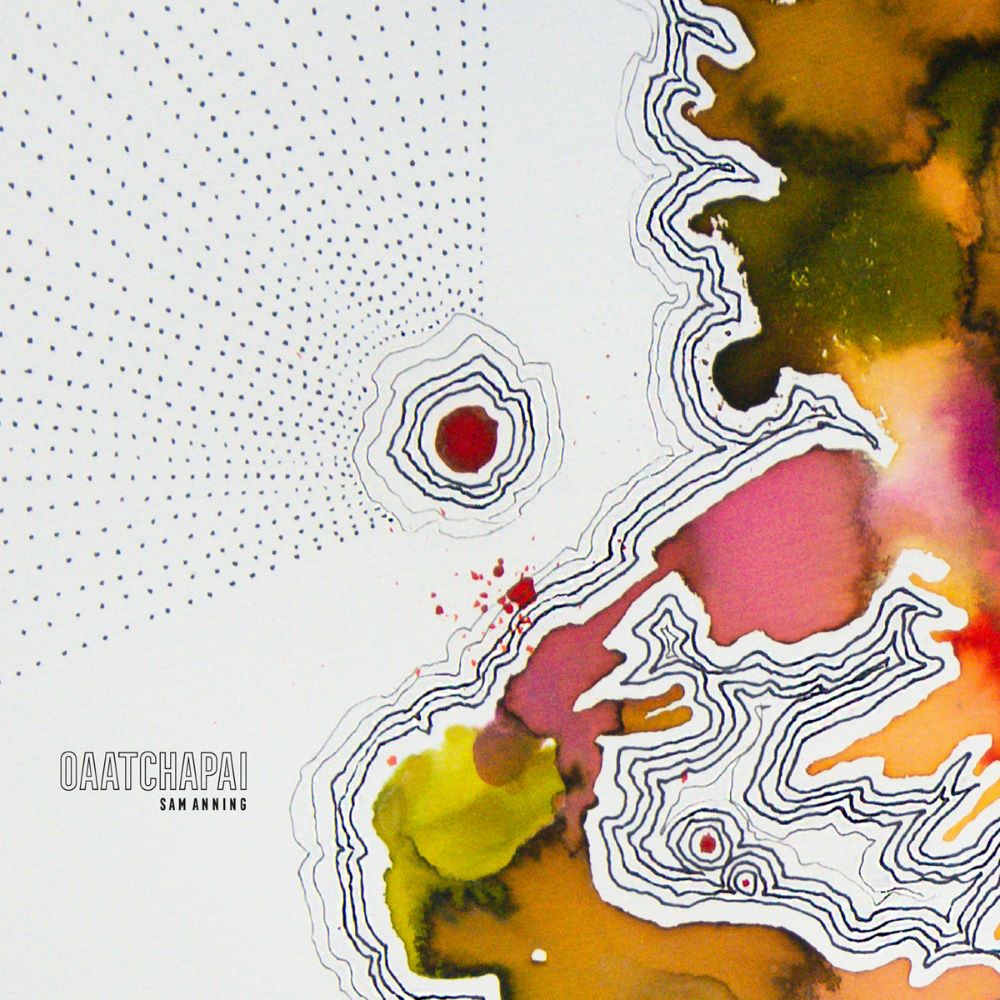
Sam Anning - Oaatchapai (December 3, 2021 Earshift Music)

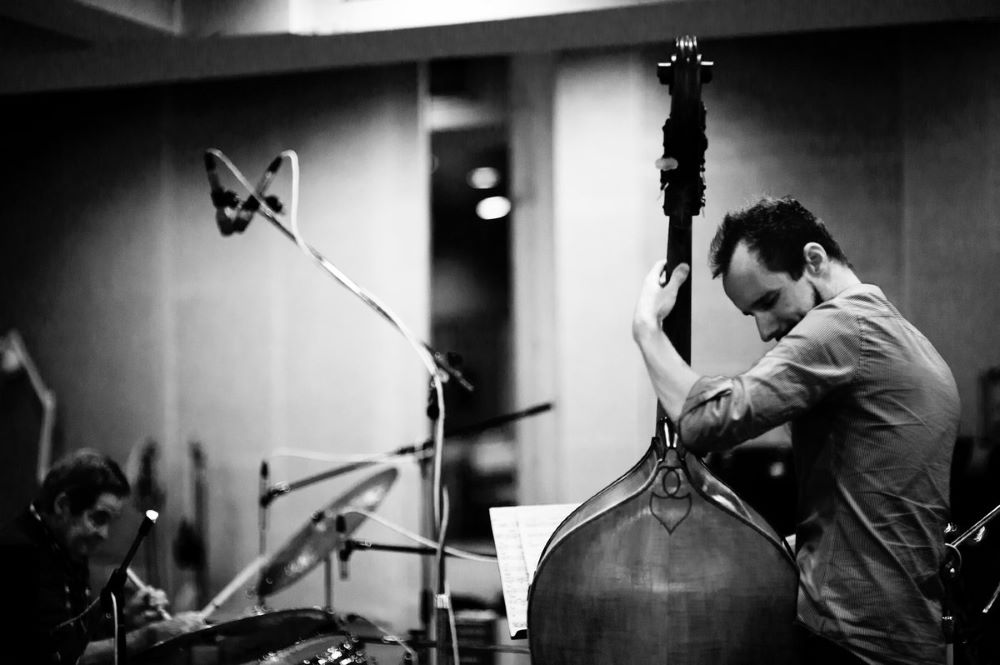
Melbourne bassist-composer Sam Anning’s fourth album as bandleader ‘Oaatchapai’ showcases his compositional flair with references to indie rock, echoes of Charles Mingus and spoken word soundscapes. The lineup of pianist Andrea Keller, trumpeter Mat Jodrell, saxophonists Carl Mackey and Julien Wilson from the award-winning Across a Field as Vast as One is augmented by guitarist Theo Carbo and drummer Rajiv Jayaweera.

1. Tjurunga
2. Oaatchapai
3. Giant Pebble
4. Stretchroactivities
5. Urkraft
6. Ripples
7. Ochre
8. Saccade
9. Off With The Blades

Mat Jodrell (trumpet)
Carl Mackey (alto saxophone)
Julien Wilson (tenor saxophone & bass clarinet)
Andrea Keller (piano & fender rhodes)
Theo Carbo (guitar)
Sam Anning (double bass & voice)
Rajiv Jayaweera (drums)

Friday, November 5, 2021

Anton Delecca - The Offering (November 5, 2021 Earshift Music)

Melbourne based saxophonist-composer Anton Delecca makes his Earshift Music debut with The Offering, an emotional yet powerful dedication to the passing of his parents. Recorded in New York City, the album features pianist Caili O’Doherty, drummer Cory Cox, special guest Blue Note artist, alto saxophonist Immanuel Wilkins, alongside Melbourne expat bassist Matt Clohesy. The album bursts with power, groove and passion, paying homage to the memory of his parents who were major supporters of his life in music.

The Offering is the sister album to his award-winning 2013 release The Healer and represents the artistic culmination of living in NYC from 2017-19. Recorded over two freezing days in Brooklyn in December 2019, the album consists of seven original compositions from Delecca along with Barbara by the great Horace Silver, and Skylark, the Hoagy Carmichael classic ballad. “This album represents the spiritual connection and meaning that New York holds for me,” explains Delecca, “much of the music that I have connected to in my life has been made there.” He felt that his musical growth in Melbourne had stagnated. “This album represents the breaking free of some stagnation I was feeling. Living in NY was like coming into the daylight and this recording is the musical representation of that.”

The band consists of some of the best young musicians that New York has to offer. Matt Clohesy played on Anton’s first album released in 2001 and was a fixture in his band for several years. Caili O’Doherty and Delecca undertook their masters together during which time Anton met and played with her husband, drummer Cory Cox. Anton heard Immanuel Wilkins play during a masters recital of a friend at the Juilliard School. Blown away by his playing, and in particular his level of maturity, he asked him to be a part of this recording. “Recording this album was like hanging out with friends whilst making music for two days!” explains Delecca.

This album is the culmination of several years of writing and playing. Some of the material had already been played extensively in Melbourne by his quartet. There’s also a personal element to the album, as Delecca explains, “it is dedicated to the recent passing of both of my parents Marg and Bill. It is in a sense a gift to them both, as they had been major supporters of my life in music from the start.”
Anton Delecca has undergone some personal challenges over the years and music has always been a counterbalance to these. The creation and performing of music is a necessary, life-giving process for Delecca. His sister, who was a musician, studying at the Melbourne Conservatorium of Music, passed away when he was a child. He was diagnosed with bi-polar disorder in his early 20s which has required ongoing treatment. Through the years he has encountered other challenges including, addiction, the passing of his parents and recently a major operation for bowel cancer.

Anton Delecca has performed with many local and international greats and appeared with his band at the Melbourne International Jazz Festival and the Wangaratta Festival of Jazz among many others. He was also a member of Melbourne funk outfit The Bamboos for 13 years which involved extensive touring and recording commitments.

“The strongest piece for me is the title track, ‘The Healer’……..It is lovely, transporting, spiritual, and has exactly nothing to do with the way much of jazz is played today. Which makes it a truly unique musical experience, beyond genre, as much great music is”

John Hardaker, australianjazz.net

1. Beloved
2. The Offering
3. Invisible Forces
4. Skylark
5. The Flight
6. Barbara
7. The Wooden Bluebird
8. Mother Tongue
9. Promises Promises

Anton Delecca - tenor saxophone
Caili O’Doherty - piano
Matt Clohesy - acoustic bass
Cory Cox - drums
Immanuel Wilkins - alto saxophone tracks 2, 6 & 8

All compositions Anton Delecca except Skylark composed by Hoagy Carmichael, lyrics by Johnny Mercer, arranged by Anton Delecca
Barbara composed by Horace Silver, arranged by Anton Delecca

Recorded 25th & 26th of November 2019, Big Orange Sheep, Brooklyn NYC
Michael Perez-Cisneros - recording & mastering engineer
Kevin Thomas - assistant engineer

Monday, October 25, 2021

Johannes Luebbers Dectet - Divide and Conquer (October 2021 Earshift Music)

Divide and Conquer is the fourth album by Melbourne based composer Johannes Luebbers’ Dectet (JLD). The album marks the end of an ambitious 10 x 10 x 10 project, spanning 10 works in 10 years for 10 players. The album is the second and final installment of the project, featuring five wildly original tracks and some of Luebbers’ best work. The group showcases some of Australia’s most exciting soloists including pianist Andrea Keller, trumpeter Paul Williamson and saxophonist Angela Davis.

Divide and Conquer follows the release of Other Worlds in 2019 and features the second five compositions of the suite, each dedicated to a different soloist within the group. “The 10 x 10 x 10 project resulted from a longstanding interest in collaboration,” says Luebbers. “I wanted to explore how compositions can be seeded from my perception of a performer, rather than developed from my own ideas. Each piece used a starting point based upon the listening habits, musical loves and technical interests of the featured soloist. I then built a compositional world around this. As a result, the music was infused with a wider variety of reference points - more than just my own. Even if the resulting music was at times unexpected, I hope each performer saw a little piece of themselves in the work's soul.”

The title track Divide and Conquer, featuring tenor saxophonist Michael Wallace, leaps around the horn in a playful Balkan inspired melody. Stepping Stones, featuring alto saxophonist Angela Davis, creates a deft sense of inevitability as it gently weaves through unexpected harmonies. In contrast, Jack O’Lantern, featuring trumpeter Paul Williamson, plays with expansions and contractions of time, developing a theme that emphasises the textural possibilities of Williamson’s horn and provides ample space for the kind of ensemble interaction he thrives on.

Hosh Posh stands out among JLD’s repertoire, departing from Luebbers’ typically controlled notation and instead embracing a loose sense of freedom in which featured bassist Hiroki Hoshino shines. The album rounds things out with Contrarian, a feature for pianist Andrea Keller that takes inspiration from her love of Arvo Pärt, in turn provoking an inspired solo from Keller and some of the most magical moments on the album.

Winner of the 2011 ‘Young Australian Jazz Artist of the Year’ (Australian Jazz ‘Bell’ Awards) and the 2011 ‘Jazz Work of the Year’ (APRA/AMC Art Music Awards), Johannes Luebbers has established himself as one of Australia’s most distinctive jazz composers. Supported by the Australia Council for the Arts and Monash University, Divide and Conquer is the fourth studio album with his ensemble, the Johannes Luebbers Dectet (JLD). Throughout his career he has been the recipient of numerous other awards including the 2009 ‘Youth Arts West Australian Citizen of the Year’, 2009 ‘Best Australian Jazz Composition of the Year’ (Bell Awards), 2008 ‘Jazz Song of the Year’ (WA Music Industry Awards), the 2006 ‘APRA Professional Development Award’ for jazz and in 2018 was a finalist for the APRA/AMC Jazz Work of the Year. In addition to his creative practice, Luebbers is an active educator and researcher and is currently Convenor of Composition and Music Technology at the Sir Zelman Cowen School of Music, Monash University.

1. Divide and Conquer 07:53
2. Stepping Stones 08:32
3. Jack 'O' Lantern 09:49
4. Hosh Posh 09:18
5. Contrarian 09:12

Johannes Luebbers (composer/conductor)
Emily Thomas (flute)
Ben Opie (oboe)
Angela Davis (alto sax/clarinet)
Michael Wallace (tenor sax/clarinet)
Paul Williamson (trumpet)
Nicole Dixon (French horn)
Andrew Murray (trombone)
Andrea Keller (piano)
Hiroki Hoshino (bass)
Aaron McCoullough (drums)

Friday, October 1, 2021

I Hold the Lion's Paw - Lost in Place (October 1, 2021 Earshift Music)

If IHTLP’s first album Abstract Playgrounds was the sound of a close-knit group of improvisors riffing on the twisted funk of Miles Davis’s On the Corner, as filtered through the lens of James Brown and Fela Kuti, then this second, Lost in Place, is a whole other matter.

Instead of a continuation of the groove, this new album has taken a decidedly left turn, journeyed to a far darker place. Whereas previously, we heard the sustained groove of a creative unit playing live in the studio, this time round we find ourselves confronted by a portrait of the composer as alchemist, practising the dark arts in secret. If we were to invoke Miles once more, we could say that this is trumpeter and IHTLP leader Reuben Lewis’s Dark Magus phase, an album of stripped-down trumpet utterances, electronic soundscapes, and weird vibrations.

There is a starkness to this music, exemplified in the three and a half-minute opening track, comprised of a trumpet fanfare, modulated and distorted, played over electronic beats and synths. As the album progresses, we get subtle hints of Reggae, the harmolodics of Ornette Coleman’s Prime Time, trance, nods to prog rock, gentle refrains and riffs, free jazz, rhythmic percussion, scraps of guitar, saxophone, trombone. It’s a mash-up of influences, put through a grinder, adventurous and experimental at heart.

Reuben Lewis has drawn upon a talented pool of musicians to create this music: saxophonist Cheryl Durongpisitkul, trombonist Jordan Murray, cellist Freya Schack-Arnott, voice artist Emily Bennett, bassist Tom Lee, guitarists Geoff Hughes and Julius Schwing, electric bassists Mick Meagher and David Brown, and drummers Ronny Ferella, Michael McNab and Maria Moles. Rather than playing set pieces, these artists have instead contributed their sound palette, the base metal from which Lewis builds his vision. Each contribution has been broken down, isolated and sampled, filtered through a maze of electronics, then re-assembled, creating a sum distinct from its parts.

This is the musician as bricoleur, taking inspiration from the constructions of Kurt Schwitters and Dada, the raw sounds of Musique Concrète, the patterns and drones of early minimalism. The art of breaking down each performance into its constituent components, and re-building them into new and arresting forms. This is music as assemblage, using the studio as laboratory, a way of thinking about sound other than performance. Samples, loops, pedals, edits, every tool in the toolbox, whatever works. Making decisions on what to put in, and what to take out. Think Teo Macero and Miles carefully crafting ‘Pharoah’s Dance’, practising sorcery in post-production.

If looking to nominate a guiding spirit behind Lost in Place, we would do well to look to visionary late trumpeter and composer Jon Hassell who, through to his ninth decade, continued to make music as vital and powerful as that of any time in his career. Proponent of a Fourth World aesthetic, Hassell was an innovator and touchstone for the experimental layering of sound built upon samples, overdubs, fragments and loops. A sonic explorer, his musical montages are an acknowledged inspiration for Reuben Lewis’s work.
While Lost in Place is sequenced as eleven tracks, it is best approached as two unbroken flows of music, divided into Side A and Side B. But let’s dwell upon those titles for a moment. The album’s title Lost in Place can’t help but feel like a nod to the Sun Ra classic Space is the Place (and there’s plenty of interplanetary synths going on here), or then again it could be an allusion to the Robinson family, bouncing around in space, dedicating each day (or episode) to finding home. The album’s individual track titles, when lined up, form an incantatory sound poem: finding place / place in space / losing place / rest in place / space in place / losing space (and so on). The music circles, jabs and feints, all-the-while trying to find a place to rest. Layer upon layer, ever-searching, it incrementally builds, progressing headlong toward Emily Bennett’s spoken word piece, sounding a crie de coeur, that effectively closes the circle, reprising an echo of the opening fanfare, this time with renewed urgency. But, alas, there are no easy answers, and the album’s ending remains intentionally unresolved, splintering and fracturing into otherworldly sounds, dark and ambiguous.

More than anything, Lost in Place feels like a bold conceptual statement, a recording seeded out of doubt and uncertainty. In toying with the mirrored words place/space, Reuben Lewis has given us a timely meditation on our growing need to navigate a path through overwhelming social, economic and global turmoil, as we seek a place – even if temporarily – to land. Let’s face it, in these times, we need it now more than ever.

1. finding place
2. place in space
3. losing place
4. rest in place
5. space in place
6. losing space
7. place for space
8. in your place
9. fixed in space
10. Queensland
11. lost in place
12. finding place (radio edit)
13. losing space (radio edit)

Creative Team:
Reuben Lewis – trumpet, synthesisers, pedals, samples
Emily Bennett – voice, words
Freya Schack-Arnott – cello
Cheryl Durongpisitkul – alto saxophone
Jordan Murray – trombone
Julius Schwing – electric guitar
Geoff Hughes – electric guitar
Mick Meagher – electric bass
David Brown – electric bass
Tom Lee – acoustic bass
Ronny Ferella – drums
Michael McNab – drums
Maria Moles – drums

Liner Notes: Des Cowley
Compositions: Reuben Lewis
Produced: Reuben Lewis
Co-Produced: Myles Mumford

Recorded: Reuben Lewis, Ari Roze, Myles Mumford
Mixed: Myles Mumford
Mastered: William Bowden
Photography: Jack Lewis
Design: Dianne Fogwell, Jack Lewis, Takashi Takiguchi

Tuesday, January 16, 2018

I Hold the Lion's Paw - Abstract Playgrounds (EARSHIFT MUSIC February 2, 2018)


Melbourne psychedelic jazz collective I Hold the Lion's Paw present their debut studio album, Abstract Playgrounds. 

Led by trumpeter-composer Reuben Lewis, I Hold the Lion’s Paw (IHTLP) is an eight-piece collective that features some of Melbourne’s most exciting musicians. The music is born out of an organic cross-over of afro-beat, jazz and outré electronics. Expect to hear as much as electro-acoustic noise, slowly evolving soundtracks, afro-beat inspired grooves and psychedelic free jazz.  

The album was produced by Reuben Lewis and edited by sound-artist Mark Shepherd, who assembled a day of live jamming in the studio to prepare material that would later be dissected, abstracted and re-composed into a single-take long-form improvisation and an electro-acoustic remix. Originally conceived as an LP in two chapters, side A is an unedited studio take performed without any pre-planned structure or set-list. Side B reimagines the IHTLP concept through an interconnected series of electro-acoustic pieces. 

Lewis says of the music; “I have always wanted to develop a band that could traverse any of the sound worlds I inhabit, and to go one further, bring these worlds together in a way that enables a constantly evolving dialogue through improvisation. Abstract Playgrounds is a voyeuristic glimpse into the development of the IHTLP concept and the first of many musical chapters to come.” 

“Abstract Playgrounds conjures its own unique rhythmic universe, spurred on by an unfettered belief in improvisation and group dynamics. It’s a high-wire act, made possible by the fact that IHTLP is awash with first-rank improvisers.” - Des Cowley


ABOUT THE MUSIC 

(SIDE A) 

(outtakes from the) sets the tone for what’s (possibly) to come. A muddy, gloriously chaotic mass of sound evocative of the blues with a “Live Evil” twist. 

Snake Charmers' Convention was initially inspired by the Jogi Snake Charmers of Pakistan's Sindh province. Having been converted to wax, transported to Preston and played through an old turntable, it’s safe to assume that a few fundamental principles of the folk tradition were lost in translation. 

Shithead is dedicated to the loved ones past and present who we rely on to keep ourselves healthily unstable. You know, the ones who first introduced you to albums like “On the Corner” or “Zombie”. 

(SIDE B) 

(intakes from the) Snake Charmers reprises and reinvents the opening themes from Side A in a manner that is best described by imagining Ry Cooder in a thunderstorm. 

Deleuzian Lawn Bowls “Here we have made use of everything that came within range, what was closest as well as farthest away. We have assigned clever pseudonyms to prevent recognition. Why have we kept our own names? Out of habit, purely out of habit. To make ourselves unrecognizable in turn. To render imperceptible, not ourselves, but what makes us act, feel, and think.” (Gilles Deleuze & Félix Guattari) 

Forest Song takes inspiration from the Yelli songs of the Baka women in the south-eastern rain forests of Cameroon. However, this particular sonic representation of a lengthy obsession with their music more closely resembles a “Deep Forest” compact disc after 3 minutes in a microwave. 

Afro 1 “This ferment came to the forefront and made itself heard in its own right; and, through the molecular material thus wrought, it made audible the nonsonorous forces of the cosmos that have always agitated music – a bit of Time in the pure state, a grain of absolute intensity . . .” (Deleuze/Guattari) 

Afro 2 is a tribute to the music of Fela Kuti & The Africa ‘70 that is about as cooked as Prince’s guest appearance at James Brown’s Beverly Theatre gig in 1983. 

Time with Black Water “. . . the black nothingness, the indeterminate animal in which everything is dissolved – but also the white nothingness, the once more calm surface upon which float unconnected determinations like scattered members: a head without a neck, an arm without a shoulder, eyes without brows.” (Deleuze) 

Remember what we Said “As Deligny says, it should be borne in mind that these lines mean nothing. It is an affair of cartography. They compose us, as they compose our map. They transform themselves and may even cross over into one another. Rhizome.” (Deleuze/Guattari)

I hold the Lion’s Paw 
Whenever I dance. 

I know the ecstasy of the falcon’s wings 
When they make love against the sky, 

And the sun and moon 
Sometimes argue over 
Who will tuck me in at night. 

If you think I am having more fun  
than anyone on this planet 
You are absolutely correct.

- Hafez

1. (outtakes from the)
2. Snake Charmers' Convention
3. Shithead
4. (intakes from the) Snake Charmers
5. Deleuzian Lawn Bowls
6. Forest Song
7. Afro 1
8. Afro 2
9. Time with Black Water
10. Remember what we Said


Jordan Murray – trombone
Geoff Hughes – guitar
David Brown – electric bass
Tom Lee – double bass
Mark Shepherd – double bass
Christian Windfeld – drums
Ronny Ferella – drums

Recorded on February 4th, 2017 by Myles Mumford at Rolling Stock Recording Rooms 

Mixed & mastered by Myles Mumford 
SIDE B remixed by Mark Shepherd 
Produced by Reuben Lewis 
artwork by Dianne Fogwell 

In loving memory of Mavis June Fogwell 

Selected recordings produced with support from the 2017 Ivan Oliver Listening Musician Award, VCA/MCM Faculty Graduate Student Assistance Grant & VCA/MCM Faculty Small Grants Scheme


I Hold the Lion’s Paw from Reuben Lewis on Vimeo.

Saturday, June 3, 2017

Jeremy Rose (feat. Kurt Rosenwinkel) - Within and Without (EARSHIFT MUSIC 2017)


“I have always been intrigued, amazed, challenged and – to be frank – totally gassed by his restless artistic nature and his consistently questing music, both as a composer and as a soloist.” – australianjazz.net 

“His playing shows subtle glimpses of a mature master.” - The Australian 

'Within and Without', the third album by saxophonist/bass clarinetist-composer Jeremy Rose features him in an impressive collaboration with US guitar luminary Kurt Rosenwinkel, along with Berlin rhythm section of bassist Andreas Lang, drummer Tobias Backhaus, and Sydney pianist Jackson Harrison. 

Born and raised in Sydney, Australia, Rose has travelled extensively, absorbing influences from around the world. Rose shows to be an important emerging voice on ‘Within and Without’, a set of eight distinctive originals, one from Harrison, and an unexpected arrangement of the Australian folk song 'Flashjack'. 

Rose is an award-winning saxophonist-composer with a PhD in composition and almost a dozen releases with his co-led projects including The Vampires, the 17-piece Earshift Orchestra, The Strides and Compass Quartet. Rose recently received the APRA Professional Development Award for Jazz, the Bell Award for Young Australian Jazz Artist of the Year, and was runner up at the National Jazz Awards saxophone competition. 

The music was written in a time of great change in Rose’s life; the tumultuous end of a relationship, introspective travels through Morocco and Indonesia, and newfound creative inspiration. Jeremy describes the album as; “opposing forces of attraction and repulsion, joy and anguish, hope and despair, pain and ecstasy.” 

The title track 'Within and Without' suggests simultaneous opposing forces; attraction and repulsion, enchantment and anguish, hope and despair. The title is also inspired by James Turrell’s skyspace installation at National Gallery of Australia, 'Within Without', which transforms in colour with varying angles of fading natural light. 


'Trawangan' was inspired by a recent trip to Trawangan Island (aka ‘Gili T’), off Lombok in Indonesia. Strange Doors is a quote from a David Bowie song 'Scary Monster.' 'Afensou' is a remote village in the High Atlas Mountains of Morocco where Rose recently traveled, with stunning views of the scenic rugged landscape. 'Night Wanderer' is a nod to those that seek the quite streets after midnight for their solitude. 'Zombie' was written after watching too many episodes of The Walking Dead, and later regretting it. 'From the River to You' is an exploration of the creative process. 'Second Chance' is for those in life that deserve another chance. 

'Ballad for Charlie' was written for the great jazz bassist, Charlie Haden, following his unfortunate death. 'Flashjack' is an arrangement of the Australian folk song, Flashjack from Gundagai. 

Within and Without will be released 2 June on Earshift Music through MGM / Herbie Martin Music. 

Within and Without will be launched Saturday 17 June at the Sound Lounge, the Seymour Centre, presented by Sydney Improvised Music Association, and 14 October at ZigZag, Berlin. 


1. Trawangan
2. Within and Without
3. Strange Doors
4. Afensou
5. Night Wanderer
6. Zombie
7. From the River to You (Harrison)
8. Second Chance
9. Ballad for Charlie
10. Flashjack (trad. Arranged Rose)

Kurt Rosenwinkel – guitar and effects
Jackson Harrison – piano
Andreas Lang – bass
Tobias Backhaus – drums

All compositions by Rose unless indicated. 

Recorded 18-19 April 2016 at Audiocue Studios, Berlin by Rainer Robben 
Mixed and mastered September 2016 with Bob Scott 

Produced by Jeremy Rose 
Cover photography by Seshanka Samarajiwa 
Studio and live photography by Javier Chiocchio 
Design by Pat Harris 
All Compositions Registered with APRA © 2016 All Rights Reserved. 
Unauthorised Duplication is a violation of applicable laws. 

Special thanks to Milly and everyone at APRA, Kurt, Jackson, Andreas and Tobias for their creative input and beautiful playing, Rainer and Bob for capturing such an great sound, my family and Mei for all their love and support. 

This project has been assisted by the APRA Song Hub initiative.


Thursday, May 11, 2017

The Vampires - The Vampires meet Lionel Loueke (EARSHIFT MUSIC 2017)


"First-time collaborations rarely sound as convincing and natural as this one did.” The Age 
“A distinctive gumbo that was more eminently accessible, grooved harder and created a bigger sound than might have seemed possible.” - John Kelman, All About Jazz 
"The Vampires play with wit, soulful melody and invention" – SMH 
“Each member is an expert soloist” - The Advertiser 
“Excite, provoke and soothe.” Sun Herald Sun


The Vampires Meet Lionel Loueke is the fifth album from Australian quartet The Vampires, augmented by special guests and the extraordinary Blue Note Records guitarist Lionel Loueke. 

The music on the album is the result of years of musical development and ambitious preparation, as the band set out to make their fifth album something different to the past four; South Coasting, Chellowdene, Garfish and Tiro. The band brought Lionel to Australia to tour and record, playing new music written for the project. Lloyd Swanton, well known as the bassist from The Necks, produced the album. 

Lionel has enjoyed a meteoric rise in the jazz world, collaborating with seminal jazz figures including Wayne Shorter, Esperanza Spalding and Herbie Hancock, who praised him as “a musical painter”. The Vampires’ co-leader and saxophonist Jeremy Rose says “Lionel effortlessly joined The Vampires, normally a chordless quartet, for this project with humility and a way of collaborating that allowed his own influence and character to come through while perfectly fitting in as a member of the band.” 

The Vampires have been relentlessly touring for the past 10 years throughout Australia, as well as performances in the UK, Canada and Europe. Combining risk-taking improvisation, sophisticated compositions and an uncanny sense of dialogue between the sax/trumpet frontline, the band has developed a style of its own. This collaboration with Lionel Loueke is both an honour for the band, to be working with one of the most distinctive artists of his generation, and a perfectly normal and logical part of The Vampires’ work. 

The Vampires Meet Lionel Loueke features music composed by Jeremy Rose and Nick Garbett for this collaboration. Each has written about half of the band’s music for the past 10 years, and their compositional styles have forged the band’s sound as much as their playing has.


About the music: 

'Endings and Beginnings' (Rose) is an improvised sketch composed by Jeremy in two parts, bookending the album. The piece is dedicated to the memory of his grandfather and the birth of his niece, both of which happened around the same time. 

'Hard Love' (Rose) features Rose’ bass clarinet and Zwartz’s bass, opening with an riff and melody that echoes traditional Jamaican Nyabinghi music. The piece serves to remind us of how difficult but rewarding it can be to love one another, even when things seem too hard.

Freedom Song (Rose) is dedicated to the refugees on Manus Island and Nauru, Australia’s offshore detention centres. These centres are based on an unnecessary and inhumane policy of offshore processing, have been condemned by the UNHCR, Australian Human Rights Commission and others, and have been the site of riots, self immolations and incredible stress amongst the detainees. Many have been stuck on these Islands for years with no certain future, and this work serves to remember those that are incarcerated there. 

'Green Green Green' (Garbett) is a tribute to Al Green and is Nick’s attempt to capture the aesthetic of some of Green’s music. Not a tribute to the other type of green, he swears. 

'Bendalong' (Garbett) is a relaxed reggae feel piece by Nick inspired by the South Coast of New South Wales, Australia, and the sleepy surfing town that gives the piece its title. 

'Torta Salata' (Garbett) is a soul-drenched tune by Nick, inspired by his love of Italy, his Italian girlfriends cooking, and the ‘salty cake’ that gives its title. 

'Suck a Seed' (Rose) takes its title from the critically acclaimed ‘Keep On Keepin’ On’ documentary on trumpeter Clark Terry, directed Jeremy and Nick’s friend and former housemate Al HIcks. The title of the piece comes from a classic Clark Terry line in the film, “If at first you don’t succeed, suck a seed!” 

'Ubud Bubble' (Rose) is penned from an experience staying in the villages of Ubud, Bali, where the smoke filled streets waft with the sounds of Gamelan rehearsals and visitors fill the yoga retreats and massage centres. The piece conjures a sense of magic and mystery of the place, where you can literally lose all sense of time. 

'Brand New' (Rose) is a composition inspired by the feeling of a new start at life, triggered by recent events in Jeremy’s life.

1. Endings & Beginnings pt. I 02:05
2. Hard Love 04:59
3. Freedom Song 06:56
4. Green Green Green 07:43
5. Bendalong 05:10
6. Torta Salata 07:27
7. Suck a Seed 06:19
8. Ubud Bubble 03:57
9. Brand New 07:38
10. Endings & Beginnings pt. II 02:28

Jeremy Rose - alto & tenor sax, bass clarinet 
Nick Garbett - trumpet 
Lionel Loueke - guitar and vocals 
Jonathan Zwartz - double bass 
Danny Fischer - drums (all tracks except 3 & 5) 
Alex Masso - drums (tracks 3 & 5), cajon, bongos, pandeiro, wood block, cowbells, shakers 

Recorded by Tim Whitten at Rancom St Studios, Botany NSW, June 7 & 8, 2016 
Mixed by Tim Whitten at 301 Studios, Sydney, August 4 & 5, 2016 
Mastered by Michael Lynch 
Produced by Lloyd Swanton 

Cover Art by Zdenek Burian 
Design by Pat Harris 

All Compositions Registered with APRA © 2016 All Rights Reserved. 
Unauthorised Duplication is a violation of applicable laws. 

Special thanks to all our families, partners, Pozible supporters, the PPCA, the Australia Council for the Arts, Ben Hauptmann, Jack Leitenberg, Wollongong Con, SIMA, and the Melbourne, Perth and Brisbane International Jazz Festivals. 

This project has been assisted by the Australian Government through the Australia Council for the Arts, its arts funding and advisory body. We acknowledge the support of the Phonographic Performance Company of Australia (PPCA).