Showing posts with label EARS & EYES RECORDS. Show all posts

Monday, December 13, 2021

Alex Massa plays well with others - Adventure #2 Sugimoto + Barton (December 13, 2021 ears & eyes Records)

Recorded in september of 2020 during the pandemic on my front porch in chicago, illinois, the second adventure of 'plays well with others' features reedist mai sugimoto and cellist nora barton. both are master improvisors and composers, and lended their talents beautifully for this live and completely improvised performance.

I am grateful to both of them for leaving their bubble for a few hours on a sunny autumn day during the pandemic for safe and distanced performance, where nearly 50 people stopped and listened for 5-55 minutes on their afternoon walks.

Mixed and mastered by dan pierson, and released under the ears and eyes label, this album is an intense work of art, best enjoyed in silence, with your favorite beverage and listening partner.

1. the bucktown suite - i. overture to the map room 07:57
2. the bucktown suite - ii. a charleston bourrée 02:29
3. the bucktown suite - iii. sarabande de north hoyne avenue 04:39
4. the bucktown suite - iv. the cliff gigue 04:54
5. departure 17:03

Mai Sugimoto - alto saxophone/flute/percussion/toys
Nora Barton - cello/effects/toys
Alex Massa - trumpet/percussion/toys

Mixing and mastering by Dan Pierson

Sunday, December 12, 2021

Pignon / Nebbia / Kleykens / Filip "Giravoltant els espaïs lliures" (December 2021 ears & eyes Records)

The quartet was formed by British Paul Pignon on saxophone, clarinets, and voice, Argentine Camila Nebbia on tenor saxophone, Spanish Carmen Kleykens on cello and voice, and Argentine Axel Filip on drums met and recorded in Stockholm, Sweden during 2021. Nebbia and Filip met the legendary reed player and improviser Pignon on several occasions for playing sessions of free improvised music when Nebbia was based in Stockholm, soon after they completed the quartet with Kleykens. “Giravoltant els espaïs lliures” in Catalan means “Turning empty spaces around” reflects the creation of a unique and personal world full of boundless and fearless experimentation, where the interaction between musicians is powerful and enlightening.

El cuarteto formado por Paul Pignon en el saxo, los clarinetes y la voz, Camila Nebbia en el saxo tenor, Carmen Kleykens en el violonchelo y la voz, y Axel Filip en la batería, se reunió y grabó en Estocolmo, Suecia, durante 2021. Nebbia y Filip se reunieron con el legendario cañero e improvisador Pignon en varias ocasiones para tocar sesiones de música de improvisación libre cuando Nebbia estaba radicada en Estocolmo, poco después completaron el cuarteto con la violonchelista e improvisadora española Carmen Kleykens. "Giravoltant els espaïs lliures" en catalán significa "Dando vueltas a los espacios vacíos" refleja la creación de un mundo único y personal lleno de experimentación sin límites y sin miedo, donde la interacción entre los músicos es poderosa y esclarecedora. 

1. The Curse of Curiosity 15:54
2. Ritual 11:46
3. Intemperie 18:08
4. Sensitive Temperatures 15:59

Paul Pignon - tenor saxophone, clarinets, flutes, voice
Camila Nebbia - tenor saxophone
Carmen Kleykens - cello, voice
Axel Filip - drums

Recorded in May 2021 by Giovanni Onorato in Stockholm, Sweden
Mixed and mastered by Pablo Lopez Ruiz
Album Art by Camila Nebbia
Design by Carmen Kleykens

Marcelo Lanouguere - Especialistas en Revoluciones (December 2021 ears & eyes Records)

Es el reflejo de un camino recorrido a lo largo de estos últimos tiempos, plasmado en un disco de 9 canciones.

Animándome a mostrar por primera vez músicas compuestas por mi y con la intención de dejar ver esta búsqueda constante entre lo que uno siente, piensa, escucha y toca.

La palabra “revolución” para mi tiene sentido en ese cambio inevitable, uno tras otro hasta llegar al próximo y así … tanto en lo individual como en lo colectivo, en eso que te invita a saltar o a quedarse quietx atravesando toda línea de tiempo.

Tengo la inmensa suerte de que me acompañen y abrasen esta búsqueda: Tomas Aiello en el piano, Federico Miyashiki en la bateria, Sebastian Rosenberg en el contrabajo y como invitada Florencia Asttegiano en la voz.

El disco fue grabado el 12 de octubre del 2021 en estudio Insignio por Ariel Schujman y Federico Schujman. Mezclado y masterizado por Paco Amenabar.

El arte lo hizo mi querido hermano Pablo Lanouguere. 

1. Infinito 07:02
2. Balada en Abril 07:50
3. Paradille Cromatico 05:00
4. Elephant Soul 06:33
5. Goodbye Porky Cat 05:02
6. Ggjj 01:04
7. Visiones en el agua (Mundhong) 06:32
8. Edupantodesvsdes 06:26
9. Respirar 09:34

Marcelo Lanouguere, saxo tenor y composición
Tomas Aiello, piano
Sebastian Rosenberg, contrabajo
Federico Miyashiki, batería

Invitada: Florencia Asteggiano, voz (8,9)

Grabado en Estudio Insignio 2021
Grabado Ariel Schujman y Federico Schujman
Mezclado y masterizado por Paco Amenabar
Arte Pablo Lanouguere

Friday, November 26, 2021

Joaquin Muro (feat. Camila Nebbia) - Contracara (November 26, 2021 ears & eyes Records)

NEW: 2nd album from trumpter/improviser Joaquin Muro in free setting feat. Camila Nebbia + more - ears & eyes Records - Nov. 26th

After releasing his first album as a leader, Joaquin Muro quickly returns with his second work: Contracara. It is presented as a B-side of his first album, Oxímoron. Recorded in the same session as the latter, the album has its roots in the free improvisation meetings Joaquin had with his friend and colleague Camila Nebbia (with a musical bond that goes back many years, having shared important projects such as the Juan Izkierdo Grupo and Richard Nant's La Big Nant) during the 2020 lockdown in Buenos Aires. Invited to record on one track of the first work, the original idea was to record two free improvisations that would serve as separators of the album's tracks. Having plenty of time in the studio, these sonic experimentations resulted in 7 tracks (3 as a duo and 4 with the full band) that ended up spontaneously becoming the material for a second album. 

The music of Contracara is presented as the complementary opposite of the music of Oxímoron, a very arranged album, with a lot of written passages and a high presence of counterpoint and irregular metrics as main compositional resources. In this case, the common thread of the album is free and spontaneous improvisation, a field in which Joaquin feels very comfortable and which is also a faithful reflection of his profile as an artist.

The soundscapes of Contracara, although very abstract, reflect images and moods representative of the uncertainty that was experienced both emotionally and artistically during the Covid-19 pandemic, it is an album of a dark and melancholic character, with some flashes of luminosity, and all the strength of spontaneous creation.

Finally, the title of this album has its origin in the concept of complementary opposition, being the music conceptually contrary to that of the first work but equally representative of the artist, it is presented as the other side of the same coin.
About the compositions:

Although the music of each track has its own character, the key element that defines this album is the concept of free improvisation and spontaneous creation.

The first track, Brugmansia Arborea (scientific name of the flower popularly known as floripondio) is a duet between Camila and Joaquin in which they explore from the timbre, with a wide use of extended techniques and with a quite psychedelic aesthetic, which could be framed within noise.

Then follows Sonar (la oscuridad del lecho marino), a track of dark character, whose title has its origin in the first notes of the piano, that refer to the sonority that emits a sonar device and that then develops slowly to show, from the abstraction, diverse imaginary landscapes of the marine bottom, lost objects of shipwrecks, shoals of fish and subaquatic mountain ranges. 

Nadie nos baila lo quitado is perhaps the most accessible track on the album, a frenetic uptempo.

Villa Pueyrredon is the second duet between Joaquin and Camila, which in opposition to the first one, here the exploration happens from the melody, to reflect landscapes of the neighborhood of which they were neighbors and even in which they developed meetings of improvisation to duet in the street.

Astenia is an introspective track, which refers to a journey through the subconscious and its depths, with an exploration also from the timbre, but now at a group level.

Passive Aggressive has a very obvious title and perhaps the most graphic and representative of all the tracks. The idea of this improvisation was that while Joaquin and Camila improvised as a duet, the rhythm section would intervene in an aggressive way, entering and then leaving again.

Bruxismo is the last duet and theme of the album, a short and intense track, whose title comes from the first notes, which refer to the sound of teeth clashing and scraping.

1. Brugmansia arborea 2:49
2. Sonar (la oscuridad del lecho marino) 5:35
3. Nadie nos baila lo quitado 4:41
4. Villa Pueyrredon 3:16
5. Astenia 4:46
6. Pasivo agresivo 3:49
7. Bruxismo 1:35

● Joaquin Muro - Trumpet
● Camila Nebbia - Tenor saxophone 
● Pía Hernandez - Piano 
● Diana Arias - Double bass
● Martín Freiberg - Drums

Recorded by Agustin Silberleib at Estudio Doctor F in Buenos Aires, Argentina
Mixed and mastered by Agustin Silberleib at Estudio Doctor F. in Buenos Aires, Argentina
Produced by Joaquin Muro
Original art by Juana Sallies
Album cover painting by Natalia Nicolau

Wednesday, November 24, 2021

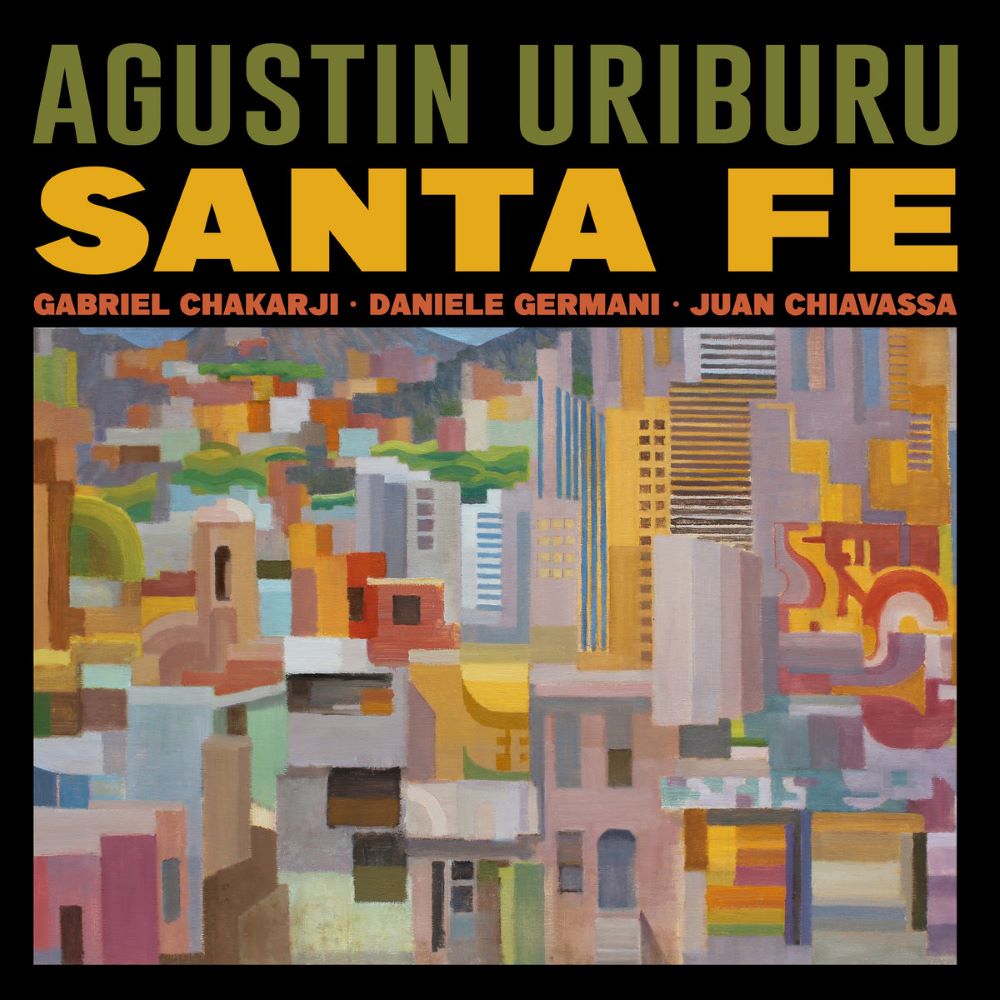
Agustín Uriburu - Santa Fe (November 2021 ears & eyes Records)

Through the years and through many generations, Jazz and Argentina have had a tacit bond, and intangible relationship that can be explained through the immigrant’s suffering and nostalgia, and through having to build culture and identity in a different part of the world, where we feel foreign but that we adopted as our own.

When you sit down and listen to “Santa Fe” those feelings will permeate not only your mind but also your soul because it is impossible not to feel captivated by the expressiveness of this beautiful piece of work, which narrates Agustin Uriburu’s experience and journey away from his home country, the melancholy and vent of emotions that he doesn’t express through words but through music and through his instruments: cello and guitar.

From a totally unprejudiced standpoint, he invents and reinvents ways of interacting with the strings and the sound of wood to generate textures and settings that vary in intensity and tone, that also take you to different places and situations of his life, but also of ours. That’s the power of Jazz, that’s the power of freedom, there are no words because they would simply limit us and wouldn’t let us connect with our true SELF.

All of this intimate world that Agustin shares with us, is completed with elements that also take us to that Argentinean and European root, where folklore, tango, and classical music blend with Jazz to leave us with an intermittent halo of world music but also local music which is clearer at moments, and blurrier at others. A conversation between the person he was, the one he is now, and the one he wants to be, an artist that never loses faith in this path and in what he wants from life.
He shares this process of self-discovery and improvement not only with his audience but also with the musicians that take part in this album, they identify with him and elevate the songs to let the music fly, becoming involved, reinterpreting him and adding their personal experience which touches not only the author but also us.

That’s why, the work of Gabriel Chakarji, Daniele Germani, Juan Chiavassa, and sound engineer Daniel Alba, is key in adding a special tone to an already great piece of art.

In the digital and ultra-processed era, “Santa Fe” is a sonic oasis that forces us to pay attention, to feel the music and let it in, a freeing and healing experience that deals with identity, values, feelings, melancholy, and happiness, and evolution without saying a single word.

Written by Iñaki Durán (inakiduran.wordpress.com)

1. Santa Fe 04:43
2. Don't Smoke 04:51
3. Take a Hike 05:40
4. Intro en Tilcara 01:19
5. Fiesta en Tilcara 04:17 video
6. Ocean 06:08

Daniele Germani - alto saxophone
Gabriel Chakarji - piano
Agustin Uriburu - cello & guitar
Juan Chiavassa - drums

Recorded by Daniel Alba at Big Orange Sheep, Brooklyn New York
Nylon string guitar recorded by Tomas Latorre at MacDonough Studios
Electric guitars recorded by Juan Soria at Wild Coyote Studios
Mixed and mastered by Daniel Alba at Megafonic Studios
Album Cover Painting by Santiago Garcia Pilotto, Design by Luisa Uriburu
Original art by Santiago Garcia Pilotto

Friday, November 19, 2021

De la Cruz · Sampaoli · Flores Catino - Onírica (November 19, 2021 ears & eyes Records)

Noise, loose, free-ish jazz out of Mar de Plata, Argentina where new music has become explosive these past years.

The trio was formed in January 2020. In April of the same year they released their first album, “Correspondencia”, through the label Discos ICM. The group's axis is the interaction between written material and improvisation (trying to blur the limit between these two concepts) and the search for different and new timbral possibilities as a structural part of the compositions.

For this second work, the compositions are, for the most part, small fragments of written music, from which emerge various moments of improvisation that complete their form. We can listen to an aesthetic exploration that ranges from noise on “N1” or rock on “N2”, to situations of free improvisation on “Onírica” (the only song on the album composed for quintet) or the mantric “La Culpa”, in which the only guide is the search for a “tribal” sound. Finally, the album features "(El) Bosque" and "Labios", two songs with a format that resembles more to that of the Standard trio.
About the Tunes:

For this second album there were two main concepts used as a guide or reference. First, some gestures or postures connected with the grunge sound of the 90s band Nirvana. Secondly, the idea of improvising without having to follow an harmonic sequence (as it is traditionally done in jazz) which led to new timbrical and interactional possibilities. The conjunction of these two main aesthetical intentions was what ended up generating the form of the compositions: most of them (except for “N2”) work as sketches of a few bars that are enriched and enlarged with individual or collective improvisation.  

¿How to use improvisation as a form-generator and discursive mechanism?

While trying to find an answer for this question we came up with a compositional decision as an answer. Taking into account the fact that this group is a leader-less trio, we thought that it would be interesting to give every instrument the same improvisational importance (despite some conventions adopted in order to maintain some connections with our jazz roots).

Another key-element was the search for a dreamlike sonority in the whole repertoire, evidenced in the guitar audio with a very surrounding delay.

Finally, the last characteristic that is worth mentioning is the coexistence of many different time signatures that provide rhythmic richness and complexity to the album.

N1” The album starts with this door-kicking tune that begins as a collective improvisation related to the noise aesthetic. Loads of loud activity on the drums and bass work as a forefront background for the guitar, which uses the tremolo arm and Wah Wah referring to the sound achieved by Jimmy Hendrix in Third storm from the sun. Near the end of this moment a sudden change leads to 8 bars of a pop melody over a dark harmonic sequence that alternates different time signatures and uses modal interchange. This resounding end emulates a typical Nirvana´s chorus.

(el) Bosque” This piece starts that dreamlike aesthetic search previously mentioned. As an introduction, a double bass solo emerges over on cue arpeggios in 16th notes on the guitar. The tempo is close to a rubato feeling with fermatas. The drums join this section by playing some small and colourful effect sounds on the cymbals. The following harmonic sequence is extracted from what later on (by the end) is going to be the theme of the tune. As a conclusion of the introduction a 11/4 vamp comes in. Here the guitar gradually takes a protagonist role improvising with material from a melody that we haven´t heard yet but announcing its arrival. Finally, the so long awaited theme of the piece arrives in 7/4 over an ambiguous harmony full of sus2 chords and sequences of “Constant Structures”.

La Culpa” Continues this idea of reverie where there´s no written material and the only guide for interaction is the search for a tribal sound. There are no drums but just two different percussion instruments that are used to create the main 4-bar loop over which the guitar enters with open tuning (C9 Lydian: C-G-E-F#-B-D). The role of the double bass oscillates between free improvisation looking for timbrical textures with the bow and the creation of a rhythmic pattern that induces the listener into a dark introspective journey concluding with the opening percussion loop. 
N2” Again, an explicit reference to Kurt Cobain’s songs but this time everything was composed not just as sketches but as more detailed instrumental parts. The introduction starts with a duo between double bass and guitar playing the first melody in unison while the drums play intermittently a rock-like groove. This main melody makes its first appearance in 4/4 but then mutates into a 7/8 groove with an added 15/8 bar. The harmony of this section is a combination of modal interchange and augmented chords in order to achieve a sonority as close to grunge as possible. Improvisation is characterised by a transitional section led by the bass over which the guitar plays something melodically free but with a defined rhythmic ostinato. Here the drums play the same intermittent gesture of the beginning with different grooves. Finally the piece returns to the main melody in 7/8. 

Labios” It is the brightest composition of the album, it could be defined as a song in G major (with the diminished 6th as a little colour delicacy) in which the trio insteracts in a more traditional way: the guitar has the very mellow melody while the drums and double bass play a G pedal-ostinato in 3/4 that they slowly and progressively abandon. First solo is played by the guitar and deploys an intense use of scales taking advantage of the background pedal in the bass. A B section full of sus2 chords connected with no tonal conception follows. Last solo is played by the double bass which combines improvisation with recalls of the melody. This characteristic is extremely important because the solo superpouses with a final appearance of the first section. Another important feature is the active role of the drums, improvising constantly over the form of the song.

Onírica” It gives the album its name. It’s also the only one as a quintet (featuring a pianist and a saxophonist), the darkest and the one that explores more profoundly that reverie and dreamlike sensation transposed to music. It intensively uses the symmetric diminished scale. The guitar begins improvising with fragments of what will be the theme while the drums gradually join improvising with growing intensity as well as the piano, which plays a polychord arpeggio of C/Gb. Finally, the saxophone weaves in with the guitar playing a melody in unison but quickly starts a very Coltrane-like raging solo. Four bars of solo piano chords work as a separation between sections A and B. In B a bass and piano riff build the background for a new melody, again played by guitar and saxophone. It is important to point out that the piano solo before the recapitulation of A overlaps with the beginning of theme B evoking the structure of dreams, where linearity is always interrupted by some disruptive action. 

Gastón de la Cruz: Guitarist and composer, born in Mar del Plata in 1988. He has released 6 albums to date. "Triptico" 2011 and "Diagonales" 2015 with the group Ert, "Proyecto RTM vol I" with Proyecto Reutemann 2017, "AfroBeats" with Niki Lauda Afrobeat orchestra 2017, "Continuum" 2019 as a soloist, “Correspondencia” 2020 with de la Cruz - Sampaoli - Flores Catino. He is currently perfecting his Jazz career at the Manuel de Falla Conservatory.

Nahuel Flores Catino: Drummer and composer, born in 2001 in Mar del Plata. From 2016 to 2018 he was the drummer of the ICM jazz orchestra which performed in the most relevant cultural spaces of the city accompanying some of the main national jazz artists. In mid-2019, together with Sofía Karpinskyj, he began the creation and management of the "Silvia Malbrán" Chamber Music Cycle. At the end of that year he had the role of promoter and founder of the Contemporary Music collective "Ars Omnium", which brings together young composers and performers. Within this group and within the mentioned cycle he has presented two works of his authorship. In 2020 he participated, with the trio de la Cruz - Sampaoli - Flores Catino, in the recording of the album "Correspondencia", which has two compositions of his own. He is currently studying the Bachelor of Musical Arts with an orientation in Orchestral Conducting at UNA.

Valentino Sampaoli: bassist (upright and electric) and composer. Born in 1996 in La Plata. Since 2011 he has been part on the jazz scene of his city. He was the bass player of Bernardo Casagrande Quinteto, Matías Martin Hargo Grupo, Cribas, Fermín Ferraris Cuarteto and His own group Valentino Sampaoli Cuarteto and Trio. From 2016 to 2019 he studied a Jazz carrera on Conservatorio Manuel de Falla. On oct-2017 he participated in a jazz recidency with Michael Formanek playing his music in the CCK (Centro Cultural Néstor Kirchner).  On July-2018 he realesed his first single called ‘alivio’ with his trio. And next year he realesed some audiovisual production recorded on a live set with his Cuartet. In 2019 he moved to Buenos Aires city, same years he recorded his first álbum as a composer and producer called “arquetipos y esplendores” realased in 2020 by Club Del Disco as a label.

1. N1 01:56
2. Bosque 05:49
3. La Culpa 05:09
4. N2 07:35
5. Labios 07:36
6. Onírica 06:51

Gastón de la Cruz: guitar & composition
Valentino Sampaoli: double & electric bass
Nahuel Flores Catino: drums & percussion

Guests:
José Marín: soprano saxophone (on Onírica)
Ornella Contreras: piano (on Onírica)

Recorded, mixed, and mastered by Jorge Petta in January of 2021 in Mar del Plata, Argentina in Streamhome Studio.

Friday, November 12, 2021

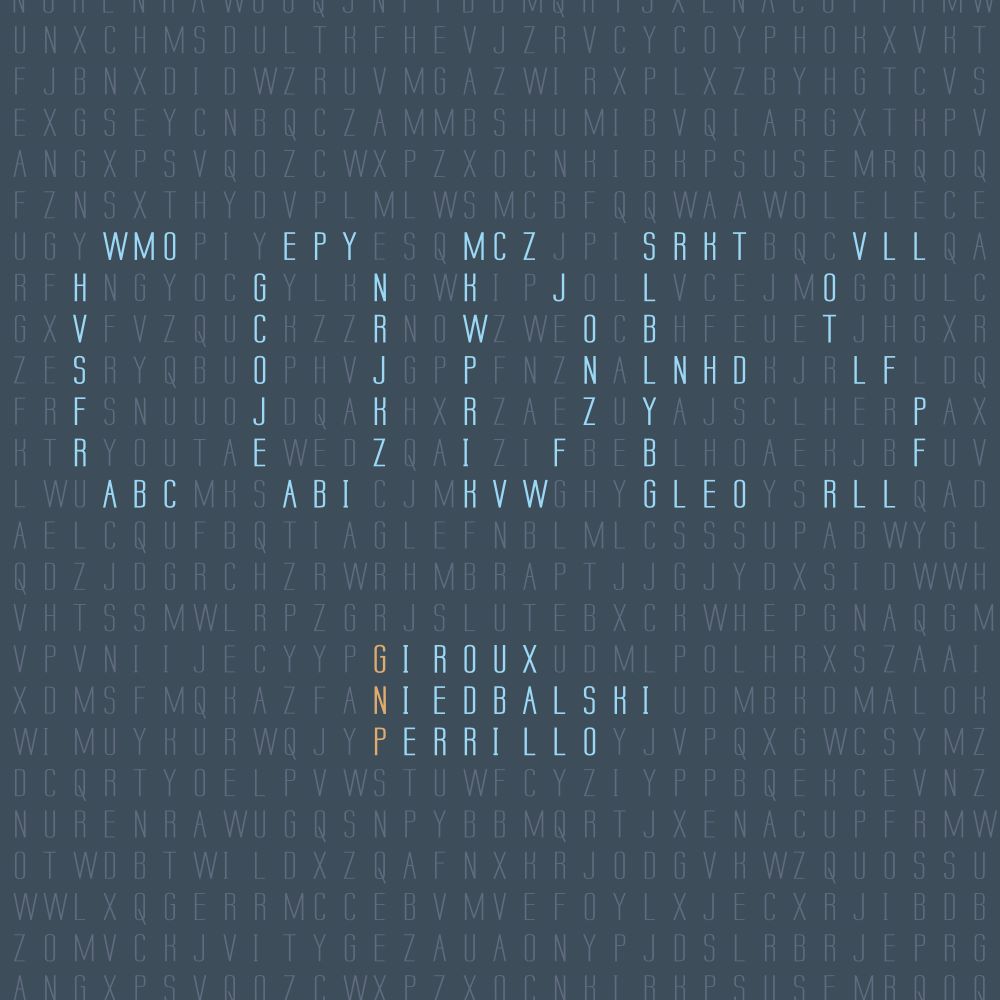
GNP (Giroux / Niedbalski / Perrillo) - Codes (November 12, 2021 ears & eyes records)

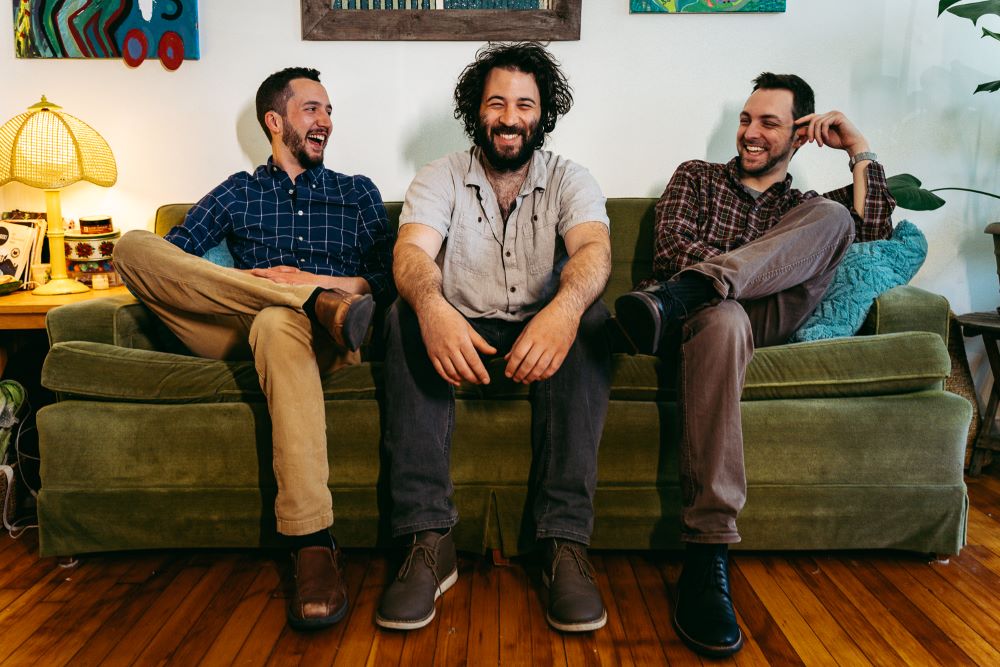
GNP is a jazz trio featuring Tyler Giroux on piano, Matt Niedbalski on drums, and Dylan Perrillo on bass.  Tyler, Matt, and Dylan have been playing together for several years.  They first began playing together at the Speakeasy 518 in Albany, New York, a cocktail bar known for its prohibition era ambiance and live jazz.  Through countless gigs the trio grew together as a unit, playing as a stand-alone group as well as backing up instrumental soloists and vocalists.

In 2020, a shared passion for original music led to the decision to record their debut album as a group, “Codes.”  “Codes” is a reference to the band’s musical communication, the unique vocabulary and cues the group developed over years of playing and growing together.  The album consists of 9 original pieces composed by Tyler, Matt, and Dylan, as well as one standard, Gershwin’s “But Not For Me.”
About the compositions:

“Rise and Grind” is a contrafact on Gershwin’s “I Got Rhythm.”  The title, coined by local jazz radio host Bill McCann, is a reference to the piece’s high energy and upbeat mood.  The song features solos from Tyler and Dylan, as well as trading between Matt and Tyler.

“Takeoff” is an up-tempo selection.  The straight eighth latin groove creates the excitement of an airplane taking off down the runway.  Solos from bass and piano.
 
In literature and storytelling, prolepsis is an anticipating action, or a flash forward to future events.  “Prolepsis,” a medium jazz waltz, (obviously I need to add more to this)
 
“Things To Come,” like “Prolepsis,” is a nod to what may happen in the future.  The composition is played in a slower 5/4 time, almost waltz-like.  The opening ostinato evokes a darker, more ominous mood.  This recurring pattern is contrasted with different melodic sections.  Solos from bass and piano.
 
The album is rounded out with George and Ira Gershwin’s “But Not For Me.”  It is one of the bands favorite standards, and a regular on their setlist for many years.  The arrangement is off the cuff, but through closer listening, one can hear some of the communication and cues, or “Codes,” that form the band’s sound and vocabulary.
Dream Visions is a composition which takes inspiration from a Joe Henderson piece “Black Narcissus” combined with a more contemporary straight 8th feel. The 8th note descending line during the bridge helps to release the tension established in the beginning of the piece. 

JC is a dedication to a dear friend, Joel Cotton. Joel describes his own writing as “little ditties” and always stresses upon simple melodies as a vehicle for soloing, so this tune is a nod to him.
 
Up Here builds its main motif around a unison bass and left hand piano line. A repetitive melody figure is used to break up the bass line in the A sections and the bridge is a release of that melodic idea.

Matt writes, “Scrubs was written as a dedication to healthcare workers that had to work through the pandemic. I live outside of a hospital and was sitting in my studio working on some compositions. I had hit a wall with writing and was trying to break a few habits that I normally find myself in, so I decided to just drop my hands down on the piano randomly and notate the chords. A rubato free flowing melody seemed natural and after bringing in the sketch to our first rehearsal it was finalized.

1 Rise and Grind 5:10 (by Giroux)
2 Dream Visions 5:10 (by Niedbalski)
3 Takeoff 5:07 (by Giroux)
4 Obediah? My kin? 6:50 (by Perrillo)
5 Prolepsis 5:28 (by Giroux)
6 JC 6:24 (by Niedbalski)
7 Things To Come 7:37 (by Giroux)
8 Up Here 4:42 (by Niedbalski)
9 Scrubs 2:49 (by Niedbalski)

Tyler Giroux - Piano
Matt Niedbalski - Drums
Dylan Perrillo - Bass

Recorded by Scott Petito  at NRS in Catskill NY
Mixed and mastered by Matt Niedbalski in Gansevoort NY
Album concept/design by Nate Giroux


Releases on independent label, ears&eyes Records, on November 12th 2021

Byron Asher & Brad Webb - Little Bigby (November 2021 ears & eyes Records)

Little Bigby is the debut duo recording from New Orleans-based clarinetist and saxophonist Byron Asher and drummer Brad Webb. Born out of a many years-long relationship of performing and recording together in each other’s projects as well as a 4-year long stint as next door neighbors in New Orleans’ 7th ward (resulting in countless listening sessions and wanders to the coffeeshop), Little Bigby explores their friendship through improvised composition and free improvisation confined by the technical limitations of their direct-to-cassette recording medium.

Putting the time away from active performing during the pandemic to good use, in January 2021, Asher began experimenting with a busted 4-track cassette recorder he purchased off Craigslist for $40, recording onto blank cassette tapes found in a “free box” on the side of the street. With only three working tracks on his Tascam recorder and a single direct microphone input, he and Webb began trading free improvisations back and forth, overdubbing takes on top of each other, improvising against already recorded material, and developing the tracks released here in a sort of long-form call and response.

Given the medium of the recording project, the performers felt a cassette and digital only release was ideal. The album artwork features a photograph shot by Asher himself, depicting a container ship floating down the Mississippi River from the vantage point of the French Quarter, New Orleans.

1. Dawn Patrol
2. Muffin Tin
3. Les Printemps Perdu 04:12
4. Come Over Red Rover 03:35
5. Narrows
6. I Like This More Than You Do
7. My Uncle Sam Is Dead
8. Tranquillo
9. All By Ourselves

Byron Asher - saxophones and clarinets, synthesizer
Brad Webb - drums, pots and pans

Recorded direct to cassette by Byron Asher and Brad Webb in New Orleans, LA
Mixed by Byron Asher and Jeff Albert
Mastered by Jeff Albert
Produced by Byron Asher and Brad Webb

Music by Byron Asher BMI and Brad Webb My Music Faces BMI except 3 and 7 by Asher

Photo by Byron Asher
Design by Matthew Golombisky

Thursday, November 11, 2021

Enrique Peña - Intersticios (November 2021 ears & eyes Records)

The second album as a leader from the Colombian guitarist (based in Buenos Aires, Argentina) is entitled "INTERSTICIOS" (ears&eyes Records, 2021). This elegant and sophisticated record work in which the expressive freedom of each artist coexists with high-quality instrumental work conforms to a particular sound world, deep, soft, and energetic, and impregnated with an excellent jazz language.

On this occasion, Enrique Peña presents us with a group in trio format with very particular instrumentation, especially for two reasons: the non-use of the drums and the use of the bass clarinet as a melodic instrument, with a wonderful performance by Inti Sabev. To complete the trio, the guitar and clarinet are joined by the flawless participation of double bassist Juan Bayón.

We could say that “INTERSTICIOS” is the product of a different search in the development and evolution of these great musicians. It is a palpable example of his growing musical creativity, accompanied by an impeccable and well-cared-for instrumental elaboration.

The album consists of eight musical pieces, seven composed by Enrique Peña and one by Inti Sabev. Chosen with a good disposition, they tell us a story that reveals exquisite musical moments both in the improvisations and in the arrangements of the works.

When listening to “INTERSTICIOS”, we realize indisputably that we are dealing with high-quality work, both sound, and artistic.
1. Incertidumbre 06:50
2. Aguaneñado 07:15
3. Paysandú 05:28
4. Gris 03:15
5. Lundi 04:50
6. Archipiélago 06:15
7. Paraguas Mojados 04:24
8. Un Sueño Olivdado 06:32

Enrique Peña, guitar
Inti Sabev, bass clarinet
Juan Bayón, double bass

Recorded, mixed and mastered by Mariano Míguez at Ideo Music in Buenos Aires, Argentina
Album art/design by Nicolás Gaggero
Produced by Enrique Peña

Tuesday, November 2, 2021

Pedway - Vitalic (November 2, 2021 Ears & Eyes Records)

Pedway was born in Chicago in 2006 when its members first became regular collaborators in the Chicago jazz scene. Caroline Davis (alto saxophone), Matthew Golombisky (acoustic/electric bass), and Quin Kirchner (drums) decided to form a trio that would only perform completely improvised sets. While sometimes bending towards abstraction, they chose to also remain firmly rooted in rhythm, melody & harmony. Throughout the 15 years that have followed, and even after Caroline & Matthew left Chicago for New York & Buenos Aires respectively, the members of Pedway have continually managed to reconvene from time to time to pick up where they left off.

August 2017 was the last such occasion, manifesting in shows in Chicago at Logan Square establishments The Whistler and Cafe Mustache. Culled from the 3 hours of recorded material those performances produced, Vitalic is a window into the aural communication these players have developed over time. Their 3rd full-length album once again blends elements of rock, jazz, minimalism and abstract expressionism together to form a unique take on the classic sax trio sound. While no two Pedway performances are alike, the musical rapport among its members is always evident and represents the through-line connecting all their work. Vitalic is available both digitally and as a super-limited 12" LP on ears&eyes Records.

1. Personal Floatation Device
2. Segmented Eye
3. Vapor
4. Refresher
5. Film as Dream, Film as Music
6. The Infrared
7. If we opened people up, we´d find landscapes
8. Home of Levi Coffin
9. Channels

Pedway is:
Caroline Davis - alto saxophone
Matthew Golombisky - electric bass
Quin Kirchner - drums

Recorded live by Dave Zuchowski at The Whistler & Cafe Mustache in Chicago IL, USA, August 29 & 30, 2017
Mixed & Mastered by Florencio Justo at Estudio Doctor F. in Buenos Aires, Argentina
Digital Album Mastered by Mikey Young in Melbourne, Australia
Art & Design by Daphné Essiet

All music improvised by Pedway

Adán Mizrahi - DISSIDENT (ears & eyes Records)

Containing Argentinean textures and traditional rhythm influences, 20th century “classical music” ideas, deep grooves, and free improvisation would land this record in the overall genre of “contemporary jazz.” It’s fusion music in the sense that it takes elements from different worlds and puts them together to create new, well conceived music with clear influences and yet its own identity. The compositions are often contrasting in style with one another, whilst keeping a coherent aesthetic as a whole. These contrasts will probably lead to a favorite track depending on each listener’s taste. The kind of album that can satisfy the Jazz and Improvised Music enthusiast but also tickle the curiosity of others, like a Rock or World Music lover.

The ensemble is made up of musicians from different backgrounds and generations. This is true in many aspects. Not only is there a 20 year difference of age between the oldest and the youngest member but also their careers have been formed from various “schools” and literal varying hemispheres giving the overall sounds a richness that’s not often heard. It features the Argentina-born, Netherlands-living tenor saxophonist Natalio Sued and the Dutch alto saxophonist Ben Van Gelder - icons of two different generations and latitudes.

Adán had a late start, and was a “mature student” during his Jazz and Classical studies at the Conservatory of Amsterdam where his varied influences included (but were not limited to) Contemporary Jazz, Free Improvisation, Argentinian Music, Blues, Rock and more and represents the unity of Adán’s musical life.

With his beginnings rooted on blues guitar, he was active in several scenes in Buenos Aires from the late 90s throughout the 2000s. He played punk guitar at the iconic Cemento, and was later a member of the Jazz and also the Tango scenes, now with the double bass, performing at virtually all Tango Saloons, opening the Buenos Aires Tango festival and later touring Europe, getting to share a stage with the legendary bandoneonist Luis Stazo.

Once settled in Amsterdam, a strong, long lasting collaboration with Natalio Sued was born. Besides performing together frequently as a duet and a trio, they co-founded Antimufa together with other Argentinian members of the local improv scene. The quartet revisited the Argentinean Tango and Folklore songbook, subsequently performing original compositions and was eventually joined by guest Martín Sued on bandoneón.

Here on this debut as a leader, Mizrahi allows any and all of the above to influence the compositions of DISSIDENT.
Mizrahi states that the choice of musicians came out of their affinity with the styles and good camaraderie. He wasn’t planning on a super-group, it just happened that way. In fact when he decided to pursue a career in music he didn’t really envision having such a top notch group of musicians playing his material, it just happened that way. 

The double bass is always present without becoming dominant, with subtle inflections and suggestions that spark responses from the combo. A very elegant conversation that happens within the framework provided by the compositions, which also share the understated beauty and intelligence.

It’s a very well balanced recording, fresh without being superficial, adventurous without being pretentious.

1. Javastraat 04:59
2. Open Flag 04:11
3. Tone Deaf Morning Chant 04:15
4. Sin Cobrar 06:29
5. Picadita Tropical 04:40
6. Rubata e Ritrovata 10:31
7. Melush 03:42

About the tunes:

JAVASTRAAT: While in a funky 7-4 groove, the opening tune Javastraat utilizes Tango practices with its sudden stops, chromatics (think: Pugliese) and semitone modulations (think: Piazzolla). The piece also serves as a presentation card of the band, with everyone but the drums taking a solo. First is the bandleader's which is very groovy, fluid and makes eloquent use of the “chromatic” element in combination with open strings. The tune modulates a semitone down for the guitar solo; an interesting incorporation of harmony to what is otherwise a “vamp-heavy tune”. And once more, we venture a semitone down for the short, yet distinct alto sax solo. For the tenor sax solo, we go back to the original key of C. But now for a sequence: 4 bars of C and 4 bars of B, and this will loop throughout the solo. Sued takes good advantage of this for what is probably the most developed solo, making use of several elements from the tune and from previous solos. While being the only instrument not taking a solo, this tune introduces us to what is clearly a refined, groovy drummer. Hip too, yet supportive and unpretentious.

OPEN FLAG starts off as a bluesy tune with some interesting phrasing. The B section, with the guitar now playing a melodic role seems at first to have more of an introspective vibe which is surprising but very satisfyingly matched with some Tristano-like lines, magnifically performed in unison by Sued and Van Gelder. Semey’s rock sounding solo is also somewhat contrasting in a satisfying way. The next section now features a sax duo improvised “soundscape”, over which the original guitar (counter)melody takes place.

TONE DEAF MORNING CHANT turns the quintet into a sextet with the addition of George Dumitriu on guitar. The big sounding orchestration in the beginning is followed by the quizzical main theme in parallel 6ths and dominant chords moving by intervals of seconds and thirds catapulting Van Gelder into his freely improvised solo. 

SIN COBRAR includes an intriguing bass groove that simulates the “bordoneo” of the Tango guitar and is so smoothly performed the 5/4 bar goes barely noticed. What seemed to be a dark tune turns to a fresher, more Folkloric aesthetic, reminiscent of Guillermo Klein’s music. It later turns into a faster, danceable groove with a guitar solo and later an obsessive ending loop where Tijn Jans shows some fine drumming.

PICADITA TROPICAL is a fun uptempo tune in the Latin Rock style but chord progressions reminiscent of Tom Petty. The kick off energy is never lost, but rather augmented soloist after soloist.

RUBATA e RITROVATA is two compositions in one. The first part is totally rubato, and stays so during the solos. There is a bass cadenza connecting to the next piece which features solos on a jazz waltz, being the only moment of the album with a swing feel.

MELUSH is an “Argentinean Zamba” ballad performed without harmonic instrument but with guest Marcos Baggiani on the characteristic Argentine drum bombo legüero and cymbals. Mizrahi stayed on the bow with a captivating tone on the melody and made use of some Tango technique subtleties before going to pizzicato. A nice, relaxed, simple, open aired closure to a recording that is otherwise energetic and rather “in your face”.

Adán Mizrahi - Double Bass & Compositions
Ben Van Gelder - Alto Sax
Natalio Sued - Tenor Sax
Teis Semey - Guitar
Tijn Jans - Drums

Special Guests:
George Dumitriu - Guitar on 3
Marcos Baggiani - Drums on 7

Monday, September 20, 2021

Michaël Attias / Nataniel Edelman / Santiago Lamisovski / Nicolás del Águila - Los Ángeles (September 2021 Ears & Eyes Records)

Los Ángeles is the collaborative musical outcome of the relationship between four musicians of different generations and places. New York-based saxophonist and sound poet Michaël Attias and three young Argentinian musicians: Nataniel Edelman (piano), Santiago Lamisovski (bass), and Nicolás del Águila (drums). The record here presented is a document of fearless improvisation, a strong sensitivity for compositions and songs, and a compassionate stand on musical dialogue. After a tour in Buenos Aires and other cities of Argentina in 2019, and a remarkable performance in Buenos Aires’ Jazz Festival the band entered the studio to record the music that was to become part of the album. 

Some of the material was part of the book the band was playing on tour and other stuff was let to grow in the moment of recording. Most of the songs recorded were written by different members of the band, bringing a singular color to the whole. Also two Paul Motian compositions (Mumbo Jumbo and Mode VI) are included in the record along with the old standard “My Ideal”. But first a brief history of the group:

In 2016 Santiago Lamisovski and Nataniel Edelman traveled to New York to attend the Summer Workshop of the School for Improvisational Music (SIM), a unique workshop held every year in that city that features some of the best artists in the improvised and jazz music scene as teachers in the faculty. Michaël Attias was one of the teachers that year, and the exchange between teachers and students was very fluid. After a day of work, Santiago and Nataniel approached Michaël to ask him about a recording he did with the greats Paul Motian and Masabumi Kikuchi (On Broadway 5). A recording both of them deeply loved and felt close to, thus wanting to know more about it.

Michaël was very generous from the beginning, sharing stories and thoughts around it and also curious about these two Argentinians who wanted to know more about this record and the association between Motian and Kikuchi. The conversation ended with Michaël inviting the two for a session at his studio once the workshop was over. In 2018 Nicolás del Águila was living in New York City and attended a concert of Attias. After the concert, Nicolás approached him and among other things, they talked about their mutual Argentinian acquaintances.

The conversation resolved in Nicolás inviting Attias to a session at his studio, which happened a few days later. That was the beginning of a strong musical relationship between the four and that was to develop through the years and the distance. As Attias puts it:

“There is an interesting bridge happening between New York City and Buenos Aires, people from here going there, people from there coming here, sharing different ways of improvising and dealing with compositions going back and forth, so I felt really in my element right away.” 

1. Ping Pong Angel Fold 12:16
2. Corcho Blanco 05:28
3. Libson 05:30
4. Mumbo Jumbo 04:19
5. Mode VI 05:23
6. #63 (settled) 06:56
7. My Ideal 06:28
8. Perecedero 08:04

Michaël Attias - alto saxophone
Nataniel Edelman - piano
Santiago Lamisovski - contrabass
Nicolás del Aguila - drums

Tracks 1,3 and 6 composed by Michael Attias
Track 2 composed by Santiago Lamisovski
Track 8 composed by Nataniel Edelman
Track 4 and 5 composed by Paul Motian
Track 7 composed by Richard Whiting, Leo Robin and Newell Chase

Recorded by Gonzalo Manco at Estudio Libres in Buenos Aires, Argentina
Mixed and mastered by Mariano Miguez in Buenos Aires, Argentina
Cover photo by Celeste Rojas Mugica
Design by Tomás Würschmidt

Friday, September 10, 2021

James Gilmore - Decorating Time (September 10, 2021 Ears & Eyes Records)

"I have a basic mechanical knowledge of the operation of the instrument, and I got an imagination, and when the time comes up in the song to play... it's me against the laws of nature...it's a game, where you have a piece of time and you get to decorate it."
- Frank Zappa

Decorating Time is a product of North Carolina's fertile musical environment, reflecting the players’ roots in NC’s #BAM and free improvised music scenes. The group has a dark, rich sound with fantastic communication and togetherness. Indeed the ethos seems to be to prioritize the group sound throughout. Because of this, there is an abandon, an edge, and raw energy to the music. There is also, at times, a sweetness, and some surprising ear worms (‘The Drip’). There are ‘out’ sounds and some free-ish time (e.g. on the wave-like ‘Theme for Kassem’), but the rhythmic language is funk and post bop: Listeners should come away with the feeling of having gone through a few unexpected doors in the twisting passages of the jazz tradition. In Gilmore’s playing you can hear the work and effort to absorb the sounds that shaped his generation of guitarists, but the result has edges and always more than a tinge of the blues.

Gilmore’s use of effects, when he does use them, has a compositional dimension (e.g. on ‘The Soul Is A Lattice’ and ‘Theme for Kassem’), but for the most part, his tone is spare, natural, and clean, giving the music room to breath and allowing the compositions to speak for themselves. In navigating his own songs, Gilmore often seems to go out of his way to find angles in the music: He’s on his toes and he wants you to be as well. Amidst this stretching, his reach sometimes exceeds his grasp, but the result always compels.

Williams and Knowles equally shine. Williams’ nuanced, rich vocabulary is especially potent in the context of the tunes, bringing crispness and a sure grasp of the jazz language to Gilmore’s by turns eerie and sweet compositions. However, it’s on the free(er) tunes that Williams really shines. On the group’s reimagining of Willie Nelson’s ‘Crazy’ Williams swings completely free of Knowles’ and Gilmore’s together-but-not-together pulse with a glittering patter of cymbals and snare that one associates with Milford Graves or Andrew Cyrille.
Knowles, for his part, is possessed of a massive sound and never seems to run out of ideas, which makes his playing perfect for a trio album. Like Gilmore and Williams, Knowles is shaped by the central North Carolina musical ecosystem: To work, one must have ‘the goods’. But (as with Gilmore) listeners will recognize the unmistakable stamp of the 60’s avant-garde in Knowles’ playing, especially Richard Davis and Charles Mingus.

In both Knowles’ and Williams’ playing there is palpable seriousness and engagement, and a commitment to the music, qualities one often finds lacking in younger players with lots of technique. 

1. Decorating Time
2. Ding, Dong
3. Mammal Female Mother Laws
4. The Drip
5. Stairs I
6. The Soul Is A Lattice
7. Stairs II
8. Vulture and Cockroach
9. Theme For Kassem
10. Crazy (Willie Nelson)

James Gilmore - guitar & compositions
Butler Knowles - bass
Kassem Williams - drums

All the songs are original compositions except for Gilmore and co’s re-imagining of Willie Nelson’s ‘Crazy’.

Recorded and Mixed by Kris Hilbert at Legitimate Business, Greensboro, NC
Mastered by Mell Dettmer at Studio Soli, Seattle WA
CD Jacket Design by Andrew Duke
Album design concept by James Gilmore and Andrew Duke
CD cover art: ‘Out to Pasture’ by Jenna Schwartz (beadwork)
Cover photo by Harrison Haynes
Interior Photos by Daniel White

Tuesday, August 31, 2021

Axel Filip - Sendero (August 2021 Ears & Eyes Records)

Story and about the music: Young and active Argentine drummer and composer continue his journey as a leader with the adventuresome album, with clear jazz influences crossed by Argentinian folklore music, as well as Afro-American reminiscences.

Axel Filip's second album as a leader and composer.

Inspired by landscapes from his childhood in the woods, walking through trails to find rivers, waterfalls and being in communion with nature, Axel conceived this album by imagining each song as a path to a certain place, historic event, or feelings reminding of love, loneliness, and quietude. (more on Axel’s career at the end).

It's about half and half piano trio, with Mariano Sarra - piano (young pianist and composer with an original and fresh approach) and Flavio Romero - contrabass (Oscar Giunta SuperTrio, Minino Garay - one of the most virtuosic and busy bassists in Buenos Aires), and then with featured artists Pablo Passini on guitar, Milton Amadeo and Melina Moguilevsky in vocals and Juan Klas conducting a string quartet arrangement.

Axel is a super-active musician in the Buenos Aires scene, he has played and/or recorded with Camila Nebbia, Juan Cruz de Urquiza, Rodrigo Dominguez, Sol Liebeskind, Kenneth Jimenez, Fred Selva, Frederico Heliodoro, Andres Beeuwsaert, Ernesto Jodos, Jim Rotondi, Sergio Wagner, Juan P. Arredondo, Sebastian de Urquiza, Francisco LoVuolo, Hernan Jacinto, among others, recording more than 20 albums as a sideman.
1) “Repleto de raices” is the opening track, which starts with an exciting drums groove- that can be related to Candombe or Brazilian music- that is quickly joined by piano and bass, arriving at a more relaxed and melodic moment. That doesn’t last for so long, growing into a sequence of frenetic and irregular piano chords, played in unison with drums, which serves as a platform to a bass improvisation by virtuoso bassist Flavio Romero.

A vibrant piano solo by the great Mariano Sarra takes place afterward, leading to a brief moment of block chords only played by him, and the whole ensemble is given entrance for a varied reexposure, with a more extended bass improvisation, evolving to a wild unison ending.

This song was inspired by massive tree roots coming off the ground, making the ground difficult to walk and creating exotic figures in the ground.

2) The second track is “A la inconsciencia”, a song that invites the listener to dive into a deep immersion into subconsciousness, evoking melancholic emotions.

It starts right away with the piano trio featuring the raw yet velvety voice of Milton Amadeo, with a slow groove that flows between 4/4 to 3/4 measures seamlessly, asking the listener to “empty his/her mind and wake up”. It continues with an instrumental bridge and voice chorus, reminding of a chacarera (Argentinian folkloric rhythm) that is followed by a second verse.

We hear afterward an interlude with a darker atmosphere, which takes place with a unison ostinato played by bass and piano with a ternary feel, where a 5/8 superimposed feel played by the drums and right hand on the piano is added, creating a playful tension to land on a perfectly constructed melodic piano solo by Mariano Sarra, using the first section of the song as an improvisation platform. The piano improvisation slowly walks us again into the interlude’s darker atmosphere, adding a lot of mystery with the use of intrepid lines, until the whole ensemble stops for a second to bring back Milton’s voice and retake the song’s initial exposition.

3) “Alambre de púa” is a micro-piece, one of three composed for this album. This one represents wire spiked fences that impeded going from one place to the other and forcing them to change course.

It starts with a free improvisation that flows into a slow tempo, spacious and airy groove. It features the first appearance in the album of the brilliant guitarist Pablo Passini.

4) The fourth track is “Nocturnal”, a piano trio piece inspired by going through paths in the middle of the night, where the vision enhances itself, and it’s possible to hear strange sounds originated by nocturnal life.

It starts with a high-energy intro in 6/8 played by the whole ensemble, leading to a slower tempo groove and piano melody, incorporating different dynamics and riffs with metric changes shifting from 4/4 to 9/16 and 3/4. It continues with a solo by bassist Flavio Romero, beautifully constructed and very rich melodically, followed by a powerful piano solo by Mariano Sarra.

It ends with a reexposure and a coda in 9/16, with a slowed-down unison played by piano and bass, with a final hit played by the whole ensemble.

5) “Cerrado por el tiempo” is the title of the fifth song of the album. It is a high-energy instrumental piece in 7/4 and 4/4 inspired by paths that, for the lack of use, are obstructed by vegetation growth, which makes you decide whether to continue through that path passing between branches and leaves or try to find another way.

It features guitarist Pablo Passini playing the lead melody, flowing from a binary feel to a ternary 9/8 metric modulation, with African music rhythmic traces. The song continues with a fantastic guitar solo by Pablo Passini, owner of a very personal sound and ideas, which grows until an interlude where piano joins the melody, to end with a reexposure from a high energy melody section of the head is followed by a ternary Afro in unison.
6) “Vertiente” is the second micro-piece of the album, played in a quartet setting with Pablo on guitar. It is inspired by natural watersheds that can appear along the way.

It is a slow and groovy piece, which contrasts the previous piece with its joyful mood, anticipating the next one.

7) The seventh track of the album is “Hacia vos”, an instrumental piece inspired by the path that takes us to find the people we love. It is a playful song played by the piano trio, composed using a danceable riff that is variated and put into different metric measures, shifting from 4/4 to 3/4 and 7/8 measures where drummer Axel Filip grooves comfortably, feeling like navigating through a 4/4 feel. It stands as the groovy piece of the album, due to its structure, repetition and bass and drums cadence and with a duration of 4 minutes sharp.

The song structure is maintained through the whole piece, with a venturous spirit piano solo by Mariano Sarra, ending with the initial melody, in a traditional jazz manner of the head in, solo, and head out.

8) “Al río” is the eighth track of the album, featuring bassist Flavio Romero. It’s a piano trio piece, which starts in a subtle and gentle way, with a slow piano ostinato in 3⁄4 (with an inner clave which can be felt as three measures of 7/8 and one in 3/8, popularized by composer Guillermo Klein), which ascends and descends in a dreamlike fashion and serves as a platform for a bass improvisation played in a duo setting.

This mood is interrupted by the entrance of the drums, giving place to an intricate yet hip groove. It flows from 4/4 to 5/8 measures, and 4/4 on the B section of the melody, landing on a 6/4 structure for an extended bass solo, accompanied by piano and drums, followed by a strong interlude to land on the initial melody and groove played in the head in and a coda in 9/8, with a Latin-American feel, where drummer Axel Filip builds a spicy solo until the end of the piece.

This composition was inspired by paths that take you to rivers, and the ones that follow rivers through its courses.

9) “A la memoria” is the third and last micro-piece of the album, with a more introspective mood, played by the piano trio plus Pablo on guitar. It contains testimony from a member of the Napalpi community, native people from El Chaco (Argentinian province) who speaks about a massacre that occurred in 1947 at the hands of the Argentinian military force.

This piece was inspired by the communion with nature, which native people considered their goddess (The Pachamama), and the opposite face represented by white man civilization, who treats nature almost with contempt and oppresses native communities with extreme violence.

10) The closing track of the album is “El Brujo” a piece composed to and dedicated to the memory of Santiago Maldonado, who died under dark circumstances in an operation of the Argentine gendarmerie while violently evicting a Mapuche community in La Patagonia (south of Argentina). This case took international relevance and touched a great part of Argentinian society.

This piece features an octet setting, featuring the amazing singer Melina Moguilevsky on vocals and Surdelsur string quartet (conducted by Juan Klas) who join the piano trio. The piece starts with a string quartet intro, evoking feelings of peace and tranquility, representing in some way Santiago’s life and the trip that took until he got to La Patagonia. This intro is followed by a section where the trio plus Melina, who sings a melody that floats over a 7/8 groove, with the drums playing a microgroove in 11/8 over it.

The string quartet appears through the piece playing backs and adding tension to specific moments, and in the middle plays a complex soli over a 7/8 measure, that concludes when Melina joins to sing “may the gods hear our prayers, where are they? There’s no mercy nor justice, the ancestors sing” with violinist Guillermo Rubino playing unison and the rest of the strings adding supporting backs.

The tune ends with the whole ensemble in action and Melina singing an epic solo, backed by an intense rhythm section comping and counterpointed canonic string backs.

1. Repleto de raíces 4:29
2. A la inconsciencia 5:21
3. Alambre de púa 0:59
4. Nocturnal 5:28
5. Cerrado por el tiempo 4:59
6. Vertiente 0:41
7. Hacia vos 4:00
8. Al río 5:16
9. A la memoria 0:44
10. El Brujo 3:42

Axel Filip - drums/compositions/arrangements/lyrics
Mariano Sarra - piano
Flavio Romero - contrabass

Guests:
Melina Moguilevsky – voice (track 10)
Milton Amadeo – voice (track 2)
Pablo Passini – guitar (track 5)
Surdelsur Ensemble – string quartet (track 10)

Recorded at Estudio Dr. F in Buenos Aires, engineered, mixed & mastered by Pablo Lopez Ruiz
All music and lyrics by Axel Filip
Album art/design by Daniel Rivas
Camera: Mariano Asseff
Visual interventions on videos: Axel Filip/Camila Nebbia

The single A la inconsciencia (Spotify) and Nocturnal, available here are already available on all streaming platforms

Releases on the independent label, ears&eyes Records, on August 30th, 2021

(Digital Release - ears&eyes Records August 20, 2021)