Showing posts with label Marquis Hill. Show all posts

Friday, March 18, 2022

Marquis Hill - New Gospel Revisited (March 18, 2022 Edition Records)

New Gospel Revisited is the new album from the fearless and formidable American composer and trumpeter Marquis Hill. A live recording that revisits and reinterprets his debut 2012 album New Gospel, this time round employing a band of super-heavyweight musicians including Walter Smith III, Joel Ross, James Francies, Kendrick Scott and Harish Raghavan. Marquis Hill’s rise over the last few years has been striking and there’s no letting up. Since winning the prestigious Thelonious Monk Institute Jazz Composition award he has demonstrated full command of his art and built a reputation for synthesizing what he describes as the essential elements of the Africa-American creative heritage including contemporary and classic jazz, hip-hop, R&B, house and neo-soul. Now, his sights are set even higher. New Gospel Revisited, is an extraordinary live recording that reimagines his debut as a leader with a new band, a new focus and a sharpened ear as a bandleader, composer and performer. The set is breathtakingly good with a band that sounds as inventive and creative as it reads on paper.

“… New Gospel was my debut album and my first completed production. To revisit this music in a fresh way, with a new band has been uniquely invigorating —and hugely rewarding.”
Marquis Hill

1. Intro (Live) 1.44
2. Law & Order (Live) 14.11
3. Walter Speaks (Feat. Walter Smith III) 2.16
4. The Believer (Live) 9.17
5. Oracle (Feat. Kendrick Scott) 2.1
6. New Gospel (Live) 6.04
7. Lullaby (Feat. Joel Ross) 3.21
8. Autumn (Live) 9.44
9. New Paths (Live) 2.24
10. A Portrait Of Fola (Live) 10.42
11. Perpetual (Feat. Harish Raghavan) 1.27
12. The Thump (Live) 8.03
13. Farewell (Feat. James Francies) 4.56

Marquis Hill - Trumpet
Walter Smith III - Tenor Sax
Joel Ross - Vibraphone
James Francies - Piano
Harish Raghavan - Bass
Kendrick Scott -Drums

Music composed by Marquis Hill - ASCAP (MHILLMUSIC)

Recorded live at Constellation, Chicago IL, by Anthony Gravino, 8th December 2019
Mixed by Dave Vettraino, 2019 in Chicago IL
Mastered by David Allen, 2019 in Chicago IL

Album Artwork by Oli Bentley, Split
Portrait Photograph by Chollette
Astrophotography — ‘The Butterfly Nebula’ by Gabe Shaughnessy

James Francies & Joel Ross appear courtesy of Blue Note Records

Produced by Marquis Hill
Executive producers Bryan Farina and Dave Stapleton

Thursday, March 3, 2022

Joel Ross - The Parable of the Poet (April 15, 2022 Blue Note)

Vibraphonist and composer Joel Ross returns with stunning conviction on The Parable of the Poet, an expansive album-length suite composed by Ross which marks his 3rd release for Blue Note following his 2019 debut KingMaker and 2020’s Who Are You?. The Parable of the Poet will be released April 15 on vinyl, CD, and digital formats, and is introduced today with the sublime opening movement “PRAYER” which is available to stream or download now.

Steadfast in his commitment to skewing perceptions of improvisation and written composition, Ross explores new territory with his 8-piece Parables band, bringing together young artists of sharply defined expression: Blue Note labelmate Immanuel Wilkins on alto saxophone, Maria Grand on tenor saxophone, Marquis Hill on trumpet, Kalia Vandever on trombone, Sean Mason on piano, Rick Rosato on bass, Craig Weinrib on drums, and special guest Gabrielle Garo on flute.

The album embodies Ross’ collaborative spirit. His lyrical aesthetic activates an ebb and flow from one movement to the next. Moments of intentional discourse drive sections of collective melody and spontaneous counterpoint. “This band is more than just the instruments,” says the Chicago-born, New York City-based artist. “Every person on here means something to me. They’re all my friends. Everybody involved committed themselves to the vision.”
Ross’ vision for the music is at once explicit and mysterious. He seeks to express themes present in parable tellings and retellings, while leaving each story’s particulars open to interpretation. Each title of the 7-movement suite references an emotional decision or experience for Ross. But in the studio he focused on fresh interpretations, allowing his past experiences to exist without dictating the band’s present treatment of the music. “I told them, ‘This is what the music is and this is how I want you to approach it — let everything we play be inspired by the melody.’ Not much else was decided,” says Ross, who enjoys “blurring the lines between melody and improvisation,” in part, as a way to facilitate communication and meaningful musical discourse.

Obscuring divisions between scripted and spontaneous is more than a romantic notion. For Ross, it’s truthful and intrinsic. Each composition he explores on The Parable of the Poet represents a near intact improvisation, some dating back to 2017, all of which emerged during creative sessions with his friend and colleague, saxophonist Sergio Tabanico. “We would record it, then I would go back and flesh out the composition,” he says. “I tried my best not to change any harmonic information or add too much more than what was already there. I just tried to organize the information in a manner that would yield sensible improvised group interaction, while giving enough direction.”

That choice prompts striking moments of deep listening and self-orchestrating among Ross and his fellow artists. The first movement “PRAYER” sets a tone of rumination and collective inquiry. Apart from Ross’ tender solo introduction, the piece exercises restraint. “There’s no one person who’s taking the mic,” says Ross. “Everyone has a moment of playing the theme,” kindling shared navigation and discourse.

1. PRAYER
2. GUILT
3. CHOICES
4. WAIL
5. THE IMPETUS (To Be And Do Better)
6. DOXOLOGY (Hope)
7. BENEDICTION

Joel Ross - Vibraphone
Immanuel Wilkins - Alto Saxophone 
Marquis Hill - Trumpet
Maria Grand - Tenor Saxophone
Kalia Vandever - Trombone
Gabrielle Garo - Flute
Sean Mason - Piano
Rick Rosato - Bass
Craig Weinrib - Drums

JOEL ROSS – 2022 TOUR DATES:

April 8: Annenberg Center – Philadelphia, PA

April 9: Kupferberg Center for the Arts – Flushing, Queens

April 14: Jefferson Center – Roanoke, VA

April 15: Christina Cultural Arts Center – Wilmington, DE

April 16: BlackRock Center for the Arts – Germantown, MD

April 23: Cullen Theater at Wortham Theater Center – Houston, TX

April 24: Duet – Tulsa, OK

May 7: Capitol Bop – Washington, DC

May 8: Creative Alliance – Baltimore, MD

May 10: Robin Hixon Theater – Norfolk, VA

May 13-14: The Jazz Gallery – New York, NY

June 25: The Cube – Detroit, MI

June 28: Victoria Jazz Festival – Victoria, BC

June 29: Vancouver Jazz Festival – Vancouver, BC

June 30: Earshot Jazz Festival – Seattle, WA

July 6-24: European Tour TBA

August 11: The Lodge Room – Los Angeles, CA

August 12: San Jose Jazz Festival – San Jose, CA

August 13-14: Telluride Jazz Festival – Telluride, CO

August 17: Myrna Loy Center – Helena, MT

September 20: Musical Instrument Museum – Phoenix, AZ

September 22: Outpost Performance Space – Albuquerque, NM

September 23: SFJAZZ – San Francisco, CA

September 24: Monterey Jazz Festival – Monterey, CA

September 26: For the Love of Jazz – Reno, NV

October 14: University of Chicago – Chicago, IL

October 16: Wisconsin Union Theater – Madison, WI

Sunday, January 30, 2022

Greg Spero - The Chicago Experiment (January 2022 Ropeadope Records)

Renegade independent label turned collaborative artist community Ropeadope announces the return of their acclaimed Experiment series, beginning with a 2022 release of The Chicago Experiment. The Experiment series began in June 2001 with The Philadelphia Experiment - featuring ?uestlove, Christian McBride, and Uri Caine with special guest Pat Martino. Widely known as a hallmark in progressive Jazz, The Philadelphia Experiment set a standard for artist-controlled improvisation in the studio. The Detroit Experiment, produced by Aaron Luis Levinson and Carl Craig, followed soon after with a stellar cast including Amp Fiddler, Geri Allen, Karriem Riggins and many more. 2007 saw the release of The Harlem Experiment, once again produced by Levinson, which dug into a crossover blend of Latin Jazz and Funk with a diverse cast including Steven Bernstein, Carlos Alomar, Don Byron, Taj Mahal, Olu Dara, Queen Esther, and Steve Berrios.

At a time when communities are physically disconnected, and even history is being disrupted by a global pandemic and restricted travel, Ropeadope returns to the series to highlight the musical legacy of cities around the globe. The Chicago Experiment was born of collaborations organized by Greg Spero (Spirit Fingers) and his hometown friends Makaya McCraven, Marquis Hill, Joel Ross, Irvin Pierce, Jeff Parker, and Darryl Jones.

"As we resume and expand this series, It could not be more appropriate to begin with Chicago; as we recall Barack Obama’s historic speech in 2008 that began a new era in US politics and culture, we are inspired by the people of Chicago and their contribution to the world. As we move forward, wrestling with the ugliness that moment exposed in our culture, we seek to celebrate the inevitable destiny that this awareness has invoked - one of common human striving for beauty and peace" (Louis Marks, Ropeadope)
Greg Spero’s Take:
The musical fabric of Chicago dates back beyond our lifetimes. The original home of the electric blues, Chicago's voices has carried its deep soul into genre after genre, producing artists of every idiom from gospel to hip hop, minting unique characters and artists bending and molding genres in new and evolving ways. Today is no exception, as some of the 21st century's most innovative and groundbreaking artists herald from Chicago. Makaya McCraven has been featured in the worlds biggest popular music outlets, Marquis Hill won the Thelonious Monk competition, and Joel Ross is commonly considered the most exciting young player in jazz today. These are just a few, but they come from a tight-knit group of individuals with a lineage of collaboration, improvisation, and exploration within their musical community.

For the past 15 years, Greg Spero and Makaya McCraven have been collaborators and supporters of each other's musical development. Darryl Jones, of the generation above Spero and McCraven, was introduced to Spero over a decade ago when co-composing for the record of another Chicago bass veteran Frank Russell. Years ago, Marquis and Spero road-tripped to Canada in Fareed Haque's RV for two nights at the Trane Jazz Club. The Velvet Lounge with Fred Anderson, the New Apartment Lounge with Vaughn Freeman, and the Jazz Showcase with Joe Segal have all been mainstays for these members of Chicago's new musical generation.

Through of the deep history of collaboration and community shared by Chicago artists, a distinct sound has made its appearance on the world stage. This sound is organic; you can hear it in the recordings of Spero and McCraven with Corey Wilkes and Junius Paul in recordings made 12 years ago at Close Up 2 in the south loop. It is genuine, improvisatory, and transparently soulful in a way that can only come as a natural expression of genuine history. Out of all the cities in the world, Chicago proved to be the ideal breeding ground for the next iteration of the Ropeadope Experiment series, following up the legendary Philadelphia Experiment with its new baby brother 20 years later, entitled The Chicago Experiment.

For this record, Spero brought in his long-time Chicago collaborators into the studio for 4 days of improvisation and performance. Spero came to the table with some compositions, but in the true spirit of Chicago, the sessions were filled with improvisation. The all-star group walked away from the 4 days with a huge slate of raw creative material, which Spero then distilled town into succinct groovy improvised compositions. The result is a record that embodies the true Chicago sound, and serves as a great example of the improvisational magic woven into the cultural fabric of Chicago's music scene. 

1. The Chant (feat. Joel Ross, Irvin Pierce, Darryl Jones, Marquis Hill, Jeff Parker) 04:26
2. Sizzle Reel (feat. Irvin Pierce, Jeff Parker) 03:26
3. Always Be (feat. Darryl Jones, Marquis Hill) 05:41
4. Cloud Jam (feat. Joel Ross, Marquis Hill) 03:20
5. Still Of Water (feat. Joel Ross, Irvin Pierce, Marquis Hill) 04:24
6. Double Take (feat. Joel Ross, Marquis Hill) 03:52
7. Maxwell Street (feat. Joel Ross, Irvin Pierce, Darryl Jones, Marquis Hill, Jeff Parker) 04:00
8. For Too (feat. Marquis Hill) 06:24
9. Rose Petal (feat. Darryl Jones) 03:57
10. Tiny Beat 01:34
11. Straight Shooter (feat. Darryl Jones, Jeff Parker) 03:53

Greg Spero (piano)
Makaya McCraven (drums)
Marquis Hill (trumpet)
Joel Ross (vibraphone)
Jeff Parker (guitar)
Darryl Jones (bass)
Irvin Pierce (tenor sax)

Friday, September 24, 2021

Jared Schonig - Two Takes, Vol. 1: Quintet (September 24, 2021 Anzic Records)

When at home in New York City, Schonig is a fixture in both the jazz and Broadway scene- he recently held the drum chair for the critically acclaimed Tony, Grammy and Emmy-award winning Broadway Revival of The Color Purple and is currently playing drums and percussion for Moulin Rouge! The Musical. He also is an in-demand drummer/percussionist for studio recordings, jingle sessions and other commercial music recordings. 

Jared is releasing not one but TWO impressive solo albums - his first as a band leader - featuring his own compositions. One in a quintet setting, the other with big band realizations penned by some of today’s leading arrangers including Jim McNeely, Darcy James Argue, John Daversa and Miho Hazama. This is a stunning, ambitious debut.
Jared Schonig

1. Intro to White
2. White Out
3. Climb
4. Nuts
5. Drum Interlude #1
6. Eight Twenty
7. Drum Interlude #2
8. Tig Mack
9. Sound Evidence
10. Drum Interlude #3
11. Sabotage
12. Gibbs St.

Marquis Hill - trumpet
Godwin Louis - alto saxophone
Luis Perdomo - piano
Matt Clohesy - acoustic bass
Jared Schonig - drums & compositions

Recorded by Owen Mulholland at Sear Sound on September 17-18, 2019 Assisted by Grant Valentine Mixed by Chris Allen at The Mud Room on February 4-5, 2020 Mastered by Mark Wilder at Battery Studios in May, 2021 Artwork and Graphic Design by Madeline Sturm Band Photo by Amy Crawford

Produced by Jared Schonig and Amy Crawford

Friday, August 27, 2021

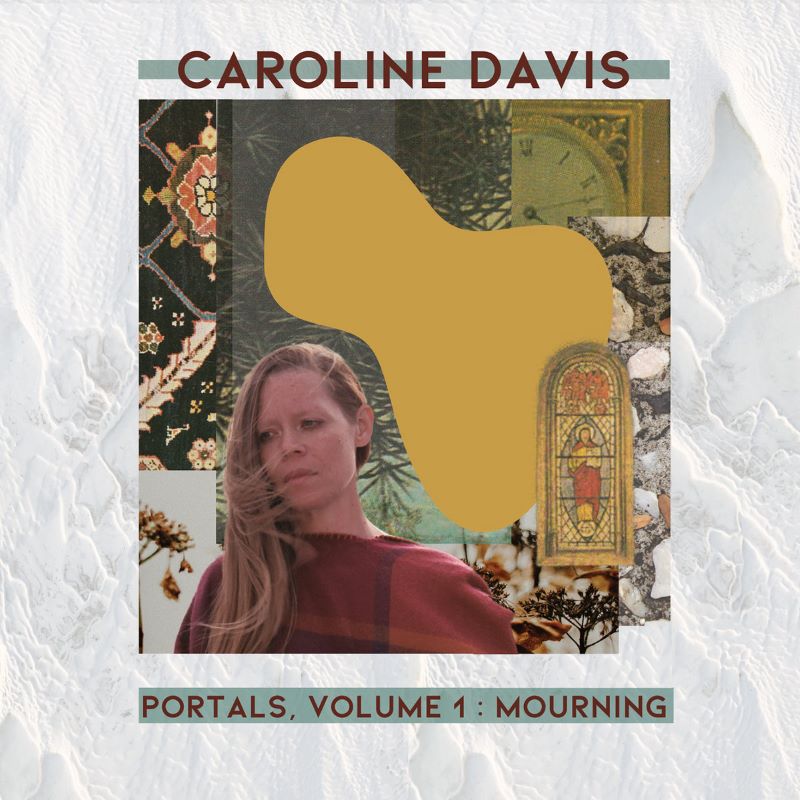
Caroline Davis - Portals, Volume 1: Mourning (August 27, 2021 Sunnyside Records)

One challenge of this frustrating time has been finding methods to handle grief. The loss of loved ones, enforced isolation, and abounding uncertainty have only heightened anxiety and its painful effects. Learning how to cope with grief and work through it is imperative for one’s mental health.

Saxophonist and composer Caroline Davis has done much to try to allay her own emotions after the harsh period she dealt with in 2019. Davis lost her father early in the year and was trying to cope with this devastating event when the pandemic descended. She turned to research and creation to work herself out again. Her new recording, Portals, Volume 1: Mourning, is a culmination of a year of suffering, accepting, and channeling her mourning through a unique process to find equilibrium through composition and reflection.

Davis has always found ways to deepen her musical work by allowing her current preoccupations drive the generation of her art. When her father suddenly passed, Davis was stunned and needed to find a way to express her feelings. She read about grief and trauma, studying the work of Bessel van der Kolk, Mary Oliver, Resmaa Menakem, and Margaret Stroebe. Kübler-Ross’s five stages of grief did not occur in a similar sequence for Davis, so she looked toward the self-help and mystical teachings her father expressed interest in, even up until his passing.

Looking back on her time with her father, Davis began to realize that she must deal not only with the immediate results of his passing but with the legacy of residual pain that he inflicted, intentionally or not. Living at a distance from one another, and his workaholic lifestyle, made things difficult in their relationship. Davis was still wrestling with this.

A welcome aid to Davis’s recovery and work was a residency at the McDowell Artists’ Colony in New Hampshire. At McDowell, she was able to begin sculpting what would become the pieces on Portals, Volume 1. A grant from the Jerome Foundation made it possible for her to complete the remainder of the compositions and recording in 2020.

Portals, Volume 1 is a collection of pieces that Davis wrote for her current quintet along with a string quartet, her first time orchestrating for this instrumentation. The quintet has been her regular group since 2019 and features trumpeter Marquis Hill, pianist Julian Shore, bassist Chris Tordini, and drummer Allan Mednard. For the string quartet, Davis knew that she desired string players who placed improvisation at the center of their practice. Having had the good fortune to work previously with a number of multi-talented players, she was able to recruit violinists Mazz Swift and Josh Henderson along with violist Joanna Mattrey and cellist Mariel Roberts.
The recording was made at Oktaven Audio in Mt. Vernon, New York during December 2020. The studio was a perfect environment for the musicians, and each had COVID tests prior to the dates. Engineer Ryan Streber offered advantageous assistance, helping with pacing and following the musical scores, insuring that every nuance was captured.

The music that Davis composed followed three distinct themes, all tied to recovering from the effects of trauma. The first refers to the intellectual thinking brain and how grief can reorganize one’s memories. The other two focus on the emotional and somatic impacts of grief, one relating to the experience of love and the other associated with bodily and chemical reactions to traumatic events. The experience of trauma is remembering, and reflecting on the past helps to consolidate, as feelings can be complicated and change over time. Examining her bodily reactions and re-drawing physical elements like heart rate, breathing, and eye movements, became a central part of Davis’s practice. These strategies recognized the full scope of using her body as a portal in the process of healing.

The recording begins with “Yesterday’s Seven Thousand Years,” a dynamic piece for the quintet that builds from the rhythm of a quatrain from The Rubaiyat of Omar Khayyám, a poem that Davis discovered when looking back at her father’s photo, accompanied by a quote from this poem as the caption, in his high school yearbook. The next two pieces, “Hop On Hop Off” and “Highlighter Hearts,” are paired, and reflect on specific memories of Davis’s father, fond memories that are also tied to discontent. The first mirrors a hop on, hop off bus tour, the rhythm is the bus slowing down and speeding up, skipping and extending through the piece before halting for a cello feature from Roberts. The swirling “Highlighter Hearts” refers to loving but rushed letters that her father used to send, written in highlighter as it was at hand in the quick, as he was always working.

Davis meditated on nature frequently during her process, especially on textures that could be transferred to human experience. Though her approach to texture in rhythm and harmony can be heard on every piece, “On Stone” is the most representative of this grief as tactile manifestation, as Davis asked the string players to express this hard nature in their improvisations. Continuing that thought, “How to Stop a Drop of Water from Evaporating” takes the rhythm and rationale of one of her father’s riddles (the answer is to throw the water into the sea) and construct a groove-based tune. This piece and “Acephalous Placebo” channel Davis’s father’s interest in energy and faith-based healing, the latter utilizing the ratio of 5:6 to inform the harmonic and rhythmic directions of the composition.

The quiet “Respite” is just that and a thematic foreshadowing of the recording’s conclusion. The tense “Left” deals with the apprehension of being abandoned as a child and the anxiety of not knowing what to do, a violin feature building into an intense ensemble explosion. The subtle “Faced” is entirely improvised and leads to “The Inflated Chariot Awaits Defeat,” a moving meditation on pride and its senselessness with Davis’s poetry and saxophone driving into a dramatic ensemble workout. The recording concludes with the haunting “Worldliness and Non-Duality,” which honors Davis’s father’s last words to her, about his attempts to accept non-duality.

Caroline Davis’s Portals, Volume 1: Mourning is simultaneously melancholy and bright. This is entirely appropriate as the best way to conquer grief is to face the trauma and mindfully engage in its bodily affectations, a message to reflect on as the world begins to blossom again.

1. Yesterday's Seven Thousand Years
2. Hop On Hop Off
3. Highlighter Hearts
4. On Stone
5. How To Stop a Drop of Water From Evaporating
6. Acephalous Placebo
7. Respite
8. Left
9. Faced
10. The Inflated Chariot Awaits Defeat
11. Worldliness and Non-Duality

Caroline Davis - alto saxophone
Marquis Hill - trumpet
Julian Shore - piano
Chris Tordini - bass
Allan Mednard - drums
Mazz Swift - violin
Josh Henderson - violin
Joanna Mattrey - viola
Mariel Roberts - cello

Recorded by Ryan Streber at Oktaven Audio (December 2020)
Mixed & Mastered by Dave Darlington
Original Artwork by Alexa Lima
35mm Photography by Attis Clopton

Friday, August 6, 2021

Adi Meyerson - I Want to Sing My Heart Out in Praise Of Life (August 6, 2021)

My journey with this album started in December 2017, when A friend of mine invited me to go see a Yayoi kusama exhibit. After reading her artist statement while waiting in line to get in to the gallery, I was deeply moved by the message even before seeing the art - all this art was created to provide an alternate universe for people (and the artist herself) to mentally and spiritually exist in, with nothing but love and compassion for each other and for nature.

The art itself resonated with me as well - I have synesthesia, a neurologic condition in which two senses overlap and trigger one another. In my case it relates to colors, and kusama's color palette used on her paintings were almost identical to some of the colors I see when I hear pitches.

After that day, the idea to write a piece of music inspired by Kusama's art was born. Fast forward a few years later, after getting a little push from my grad school professor Dave Leibman, I started to put down notes on paper.

I chose to use the word journey because a lot has happened from the time I started thinking about and writing this music to the time I finished it and released it to you. We have since entered a global pandemic, which has effected every single one of us in one way or another. We were forced to not only stay home, but also face many issues we were always running from and too busy to face, both as individuals and as a society.

The music on this album and the message behind it took a new shape and form, and became a personal exploration of mental health, womanhood and identity in our currant society. Inspired by kusama's story and my own personal experience with depression and anxiety, I really wanted to create a work that will let the listener fall into that utopian world for its entire duration, and take them on their own personal journey.

I know that as an artist, if I wanted to create that for my listeners, I would have to take a deep and honest look inside myself in order to understand what that means to me - what are some things that need to change in order to actually create that kind of world?

- Adi
About the Music -

Album opener “Prelude” establishes the mood with spoken word artist Eden Girma leading the charge. Treating the celestial melodic theme as if it were a drone, the emotional charge builds swiftly as new colors and vibrant textures envelop the listener, setting the stage for what’s to come. Track two is “Kabocha”, which features a counterpontal melody presented over Meyerson’s groovy ostinato bass line. The pitch material for this track, which takes inspiration from Kusama’s fantastical installation of the same name and means “pumpkin” in Japanese, was derived from the colors Meyerson sees in the work, and the rhythmic pattern comes from a well-known recording of Kusama reciting her poem “On Pumpkins”. Both Lucas Pino, on bass clarinet, and flutist Anne Drummond take particularly affecting solos on this dynamic musical odyssey, which opens with Kush Abadey’s masterful drumwork.

Marquis Hill features prominently on “Follow the Red Dot”, which like its predecessor, utilizes the pitches that coincide with the bandleader’s synesthesia. The driving energy of the piece mimics the “simultaneous feeling of chaos and perfect organization I felt when standing in Kusama’s Red and White Polka Dot Room,” shares Meyerson. This tune is also an ode to the artist’s provocative 1965 work “Phalli’s Field”, which is a favorite of Meyerson. Lined with mirrors and carpeted with a plethora of polka-dotted fabric protrusions that Kusama called ‘a sublime, miraculous field of phalluses’, the installation was an important moment for the artist. Next up is “Caged Bird”, a brilliant feature for Camille Thurman who sings and scats a compelling ode to the “perfect world” and what we’d have to change as a people to get there. In composition and lyric, Meyerson paid tribute to two of her favorite literary pillars: Angela Davis and Maya Angelou.

Part V, “Infinity”, is once again directly inspired by Kusma – in this case, her famous Infinity Mirror Rooms. Opening with an exceptional solo by Meyerson and prominently featuring Sabeth Perez’s ethereal wordless vocals, this contemplative tune is written from the perspective of one looking in the mirror, and examining oneself. It is also an homage to Meyerson’s native Israel, and a nod to its infinite complexities – both as a place, and in relation to her own identity. The poignant and moving title track closes the album, and is a thoughtful parting gift from the bandleader. ““I Want to Sing My Heart Out in Praise of Life” is meant to be a prayer for those who feel they cannot live their life to the fullest,” says Meyerson. “It’s also a reminder for all humans that being alive is a gift and worth celebrating.” This emotional closer is made even more powerful by it’s pared down instrumentation – Thurman’s soulful voice is accompanied only by Sam Towse’s gorgeous accompaniment.

I Want To Sing My Heart Out in Praise of Life is an important new addition to Adi Meyerson’s impressive musical canon. Her debut album, Where We Stand, was released in 2018 to widespread acclaim. Bob Doerschuk of Downbeat Magazine awarded the album a coveted four and a half stars and called it “intuitive and perspicacious…displays a musical maturity that belies her newcomer status.” Since arriving in New York in 2012, Meyerson has established herself as a first-call bassist – she performs regularly throughout the city’s top jazz venues, and has played with a who’s who of jazz greats including Joel Frahm, Joe Magnarelli, Steve Nelson and Charli Persip, among many others. With her own group and as a side musician, Meyerson has performed all throughout the United States, Latin America and Canada.

Track listing:
Part I – Prelude
Part II – Kabocha
Part III – Follow The Red Dot
Part IV – Caged Bird
Part V – Infinity
Part VI – I Want To Sing My Heart Out In Praise of Life 

Personnel:
1. Marquis Hill - trumpet
2. Anne Drummond - Flute
3. Lucas Pino - Bass Clarinet & Saxophone
4. Sam Towse - Piano, Fender Rhodes, Synthesizers
5. Kush Abadey - Drums
6. Sabeth Perez - Vocals (Track 1 & 5)
7. Camille Thurman - Vocals (Track 4 & 6 )
8. Spoken Word - Eden Girma (Track 1)
9. Adi Meyerson - Bass, Composition, Lyrics (except for track 1)

Additional personnel:
Miki Yamanaka - Japanese spoken word & original poem (Track 2)

Produced by Adi Meyerson
Additional co-production - Willerm Delisfort
Recorded & Mixed by Dave Stoller at Samurai Hotel studio in Queens, NY
Additional vocal & spoken word on "Prelude" recorded by Eden Girma in London, UK
Additional spoken word on "Kabocha" recorded by Adi Meyerson in NYC
Mastered by Michael Perez-Cisneros at Big Orange Sheep studio in Brooklyn, NY
Cover Photo by Ronald Steward
Cover art and design by Adi Meyerson

Friday, June 11, 2021

NEW RELEASE: Lauren Henderson's 'MUSA' - Due Out June 11th, 2021 via Brontosaurus Records

Award-winning singer, composer and bilingual lyricist Lauren Henderson honors her cultural and musical heritages with release of Musa, due out June 11th, 2021 via Brontosaurus Records

Acclaimed vocalist-composer and lyricist Lauren Henderson returns with her most  personal gesture to date. A multilingual rumination on themes of love and longing, Musa explores existing connections — and creates new relationships — among Henderson’s mingling lineages.  

Toward the beginning of the pandemic, the New York artist sought to record an album  braiding together traditions that influence her sound. “I wanted my next record to blend  jazz, flamenco and Afro-Latinx music” says Henderson, “kind of melding all that makes me me, culturally and musical identity-wise.”  

Due out on June 11th, 2021 via Henderson’s label Brontosaurus Records, Musa — her eighth release as a leader  — features eleven tracks of original compositions and vibrant interpretations of standard tunes, including “I Concentrate on You,” “Wild is the Wind” and Valerie Parks Brown’s, “Forget Me.” Layer by layer, the lattermost title — Musa’s first single release — reveals an undercurrent of intensity pervading Henderson’s expression. Through each satin-swaddled lyric, she intuits dynamic tension and release. Her unrelenting awareness serves every dimension of the music. “I love being a musician because we’re always learning and we’re always growing,” says Henderson, who assembled a deft and dextrous outfit to interpret Musa’s range of identity. “Some of these songs blend jazz, R&B and soul; others incorporate flamenco, so I had to ask, ‘Who would be perfect for this record?’” 

“This is jazz mastery” — DownBeat Magazine

Core personnel includes Sullivan Fortner on piano, Eric Wheeler on bass and Joe Dyson on drums. When Henderson felt ready to share her music, she went straight to Fortner, her longtime collaborator who has played on all her leader releases since 2011. “Sullivan is the first person I usually go to to share my original music,” she says, “just to get feedback from someone I trust, someone I know will give their honest opinion of what they think about the music.” Following a socially distant duo rehearsal, Henderson set the record dates.
Throughout the recording, Henderson engages a complexity of both musical and cultural identities, allowing them to influence the direction of the music in a head-on and  multidimensional way. The sound she sought for each track emerged as bold, textural and authentic. After laying down mixes at Flux Studios in Manhattan — under the direction of  studio engineer Daniel Sanint — Henderson sent tracks to extended ensemble members, trumpet player-composer Marquis Hill; electric guitarist Nick Tannura; stage, screen and studio performer Daniel J. Watts; Madrid-based flamenco guitarist Paco Soto; and legendary flamenco percussionist Sabu Porrina. “Paco is an amazing flamenco guitarist,” says Henderson, who met the Spanish artist when she spent a semester abroad in Spain. The two developed a friendship and creative partnership via Instagram, “Like a lot of other millennials [laughs].” 

“Somewhere between a comforting whisper and a cogent declaration” — The New York Times 

“As a composer, I really want to honor honesty and integrity,” says Henderson. “As a  vocalist, it’s my responsibility to deliver a story to the listener and share my interpretation of the story. I just try to be kind of simple with my compositions and let things breathe. It’s been such an honor — and a blessing — to work with the people I’ve been able to call because they add so much life and their own voice to the music.” 

Wheeler casts vivid shadows of tension and tenderness on “La Marejada” as Soto’s guitar radiates across Henderson’s melodies and interludes. Full of grace and syncopation, “Luz” features signature interplay between Henderson and Fortner buoyed by Dyson’s nuanced and reflexive touch. “Wild is the Wind” reveals the impact of intimacy — contemplative, purposeful and engaging a conflux of time feels. The album’s sole English-lyric original  “Leeward” presents a hymn to the enduring nature of love. Hill’s lustrous conversational melody and moments of self-talk call and response serve the mood’s surrender. Porrina joins the ensemble for the album’s title track, providing textural dimension and resonating authenticity.  

Composing for her own sound has taken Henderson on a journey of self-discovery. She found her shy disposition could become the focal point of her music — the most intimate aspect of her expression. “I’m not a belter,” says Henderson. “It’s more nuanced. While intensity is a powerful tool that we can use in a beautiful way and in a positive way, I can be more private at times, and I think I bring some of that to the stage. I’m so grateful for people who take the time to listen. I’m saying more with less and people have to listen to be able to receive it.” 

1. “I Concentrate On You” feat. Paco Soto, Sullivan Fortner, Eric Wheeler & Joe Dyson
2. “La Marejada” feat. Paco Soto, Sullivan Fortner, Eric Wheeler & Joe Dyson
3. “Forget Me” feat. Marquis Hill, Sullivan Fortner, Eric Wheeler & Joe Dyson
4. “Corazón, No Llores” feat. Nick Tannura, Sullivan Fortner, Eric Wheeler & Joe Dyson
5. “Wild Is The Wind” feat. Sullivan Fortner, Eric Wheeler & Joe Dyson
6. “Luz” feat. Sullivan Fortner, Eric Wheeler & Joe Dyson
7. “Leeward” feat. Marquis Hill, Sullivan Fortner, Eric Wheeler & Joe Dyson
8. “Ahora” feat. Sullivan Fortner, Eric Wheeler & Joe Dyson
9. “The Sweetest Sounds” feat. Paco Soto, Sullivan Fortner, Eric Wheeler & Joe Dyson
10. “Musa” feat. Paco Soto, Sullivan Fortner, Eric Wheeler, Joe Dyson & Sabú Porrina
11. BONUS TRACK: “Leeward (Love)” feat. Daniel J. Watts, Marquis Hill, Sullivan Fortner, Eric Wheeler & Joe Dyson

Lauren Henderson (voice)
Sullivan Fortner (piano)
Eric Wheeler (bass)
Joe Dyson (drums)
Daniel J. Watts (spoken word)
Marquis Hill (trumpet)
Paco Soto (guitar)

Arrangements: Lauren Henderson & Sullivan Fortner

Recorded at Flux Studios NYC (New York, NY Feb 11th & 12th of 2021)

Produced by Lauren Henderson
Brontosaurus Records

Recording and Mixing Engineer: Daniel Sanint
Mastering Engineer: Oscar Zambrano

Friday, April 2, 2021

April 4 Kickoff for Giant Step Arts & KEYED UP!: Series of Jazz Concerts in Central Park

Artist-focused non-profit Giant Step Arts partners with Jazz Generation's KEYED UP! for new edition of acclaimed concert series Walk With The Wind

Free performances beginning April 4 in Central Park honor legacy of congressman and civil rights leader John Lewis

Featuring Wayne Escoffery/Jeremy Pelt Quartet, William Parker Trio, James Brandon Lewis Freed Style Free Trio, Melissa Aldana Trio, Chris Potter Trio, Antonio Sanchez Trio, Marquis Hill Quartet, Michael Thomas Quartet, Nasheet Waits, Mark Turner, Marika Hughes, and Immanuel Wilkins

"Sitting socially distanced on The Mall and listening to live jazz feels like an optimistic moment...Jimmy Katz and Giant Step Arts are plugging a gap with Walk With The Wind." - Dan Bergsagel, London Jazz News

Giant Step Arts in partnership with Jazz Generation’s KEYED UP! continues the acclaimed performance series Walk With The Wind honoring civil rights activist and congressman John Lewis. The concerts – curated by Jimmy Katz and Nasheet Waits – will take place at pop up locations in New York City’s Central Park.

Shows run from 11 a.m. – 3 p.m. and feature at least two bands. They will be rescheduled in case of inclement weather.

CONCERT SCHEDULE

• Sunday, April 4 – Note new location at The South End of the Mall
11 a.m. – Alto saxophonist Sarah Hanahan, trumpeter Giveton Gelin, bassist Phil Norris, and drummer Robert Lotreck   
1 p.m. – The Wayne Escoffery/Jeremy Pelt Quartet with Dezron Douglas and Johnathan Blake  

• Saturday, April 10
11 a.m. – Alto saxophonist Sarah Hanahan, bassist Phil Norris, and drummer Robert Lotreck 
1 p.m. – William Parker Trio with Cooper Moore and Hamid Drake 

• Sunday, April 11 
11 a.m. – Alto saxophonist Sarah Hanahan, bassist Phil Norris, and drummer Robert Lotreck 
1 p.m. – Melissa Aldana Trio with Pablo Menares and Kush Abadey  

• Saturday, April 17Chris Potter Trio with Joe Martin and Nasheet Waits

• Sunday, April 18Antonio Sanchez Trio with Donny McCaslin and Matt Brewer

• Saturday, April 24Marquis Hill Quartet

• Sunday, April 25Michael Thomas Quartet with Michael Rodriguez, Edward Perez and Johnathan Blake

• Saturday, May 1James Brandon Lewis, Freed Style Free Trio with Rashaan Carter and Chad Taylor; Aaron Burnett Quartet with Peter Evans, Nick Jozwiak, and Tyshawn Sorey

• Saturday, May 8Marika Hughes: The New String Quartet with Hughes, Charlie Burnham, Marvin Sewell, and Rashaan Carter

Other upcoming dates will include bands led by Nasheet Waits, Mark Turner, and Immanuel Wilkins.

“The pandemic has been disastrous for musicians, many of whom normally earn a living through live performances and tours,” says Katz. “We wanted to find a way to continue supporting musicians, bring them together with audiences safely, and enable them to have a payday! Walk with the Wind, honoring the legacy of the great American John Lewis, is one way we are accomplishing this, and the response has been tremendous.”  

The well-received series, which began August 28, 2020 with Wayne Escoffery’s trio, has also featured The Marquis Hill Quartet, the Michael Thomas Trio, Marcus Strickland Trio, the Eric McPherson Trio, the Leap Day Trio and the Joel Ross Quartet. 

Founded by renowned photographers Jimmy and Dena Katz in January 2018, Giant Step Arts is an innovative, artist-focused non-profit organization dedicated to commissioning and showcasing the work of innovative modern jazz artists. Giant Step Arts offers musicians the artistic and financial resources to create bold, adventurous new music free of commercial pressure. Giant Step Arts provides promotional material and publicity services, presents premiere performances and compensates artists, records performances for independent release, provides artists with CDs and digital downloads to sell directly, conveys complete ownership of masters to artists, and provides PR support for the recordings. “Giant Step Arts does not sell any music,” Katz says. “Our goals are to help musicians make bold artistic statements and to advance their careers.”

Jazz Generation was founded in 1999 to emphasize the importance of live jazz as an art form and the performing arts as a cultural asset. The Jazz Discovery Program (JDP) and The Jazz Standard Youth Orchestra (JSYO), and since 2014 KEYED UP!, an anti-poverty program, has offered services that support professional jazz artists in their performing careers, revitalize local businesses, and develop a new generation of audiences and performers. KEYED UP! Has quickly become a favorite NYC entity for musicians, audiences, and venues. Operating simultaneously in over 25 partner venues spanning from Jersey City to Boston, KeyedUP! Is proud to keep hundreds of musicians working and thousands of jazz listeners happy at no extra cost to partner venues.

Tuesday, November 20, 2018

Marquis Hill - Modern Flows Vol. II (BLACK UNLIMITED MUSIC GROUP November 2018)


Trumpeter Marquis Hill Set to Release Follow Up to

Critically Acclaimed EP with Modern Flows Vol. II

15 Original Compositions Continue to Blur Genre Lines
and Celebrate the Distinct Black Creative Forces

That Are Hip-Hop, Blues, Rock, Gospel, and
Modern Perception of Jazz

Available November 9 on Black Unlimited Music Group

Album Features Core Band of Josh Johnson,
Joel Ross, Junius Paul, and Jonathan Pinson with

Special Guests M’Reld Green, King Legend,
Braxton Cook, and Rachel Robinson


On Modern Flows Vol. II, trumpeter Marquis Hill’s mission is clear: “I want to continue to blur the genre line between quote-unquote ‘jazz’ and hip-hop, because I’m a true believer that it is the same music,” he says. “their roots come from the same tree; they just blossomed on different branches.”

Hill— “a smart post-bop player who circumvents genre clichés by incorporating elements of hip-hop and contemporary R&B,” says the New Yorker—is uniquely and extraordinarily qualified for the job. He’s one of the most gifted trumpeters on the scene and arguably the finest of his generation—the victor of the 2014 Thelonious Monk competition, and the recipient of the Rising Star title for trumpet in the 2016 DownBeat Critics Poll. A Chicagoan now based in New York and barely into his 30s, Hill learned the jazz language during a thrilling period in hip-hop history and the golden age of neo-soul. In recent years, he’s developed a global reputation as a determined and tastefully innovative bandleader.

In shaping the 15 original pieces that comprise Modern Flows Vol. II, Hill assembled a group featuring other young masters—most of them raised in or near Chicago as well—who share his ability to blend virtuosity with a certain sonic rawness. The trumpeter tapped in alto saxophonist Josh Johnson for his highly personal sound and the positive challenges he presents as a frontline partner. “With a lot of players, you can tell they’ve checked out this person or transcribed that musician. When I hear Josh, I hear Josh,” Hill says. “I’m a firm believer that you should have people in your band who push you, and playing with Josh pushes the hell out of me.” In Joel Ross, Hill recruited the most buzzed-about and in-demand vibraphonist/marimbist currently in jazz. 

For “the young genius,” as Hill calls Ross, the gig marks the achievement of a long-held goal. “I remember Joel coming to shows in Chicago and saying, ‘I wanna be in your band one day,’” Hill recalls. “And his time is now.” Junius Paul, a deft acoustic and electric bassist who focuses on the latter throughout Vol. II, is “like a walking library of music, and when he plays it just all comes out,” Hill says. He has also informed the trumpeter’s composing, in profound ways. “The type of basslines he naturally improvises, I try to mimic those and write the music around them,” he explains.

On drums is L.A.’s Jonathan Pinson, whose versatility and willingness to invent seem tailor-made for Hill’s genre-bending music. “He swings hard, and the music comes from that,” Hill says. “But he’s from the hip-hop generation, so he has a limitless number of grooves and beats.” 


Of course, a fiercely talented and deeply interactive jazz band is only about half the story on Modern Flows Vol. II. Among the simmering intensity of instrumentals like “The Watcher” and “As I Am,” Hill and company provide elastic, organic backing for some of today’s most incisive spoken-word artists—poets who embody the hip-hop tenets that first attracted Hill to the art form. “I value the truth aspect of hip-hop,” he explains. “I’m a fan of music with a message.” On “Modern Flows II Intro,” emcee Brandon Alexander Williams lays down the project’s mission statement, flowing a through line that connects various corners of black musical culture; on “It Takes a Village,” he meditates on issues of black identity and family.

Chicago’s M’Reld Green does impassioned work on “Prayer for the People,” probing such social problems as gentrification, substance abuse and racial disparities in policing; on “Herstory,” she illuminates the plight of minority mothers, because the media won’t. Another brilliant Chicago wordsmith, King Legend, closes the album with a message of self-empowerment on “Legends Outro III.” Along the way, Vol. II takes additional inspired detours. “Kiss and Tell,” featuring singers Braxton Cook and Rachel Robinson, is a soulful dip into old-school R&B romance. Using a strategy he picked up by studying Count Basie, Hill forgoes any improvised solos on “Stellar,” and instead encourages his band to savor the beautiful melody. A brief but potent exercise in Dilla-esque beatmaking, “Smoke Break” pays tribute to a controversial healing herb—one that can be “necessary to the creative process,” especially for musicians working a 12-hour day in the studio, Hill says, chuckling. 

For as long as Hill has been interested in the music of his community, he’s refused to entertain the notion of stylistic barriers. “It comes naturally; that’s the way I hear the music,” he says. “I was raised in a household where my mom played Motown, R&B, Isley Brothers, Barry White, Marvin Gaye… Then I received my first jazz record, by Lee Morgan, and that was added to the collection… I truly believe that the music is all the same.”


Hill grew up on Chicago’s South Side, where he began playing drums in the 4th grade before switching to trumpet in the 5th grade. He attended high school at Kenwood Academy, with its renowned jazz-performance program, and was mentored by Bobby Broom, Willie Pickens, Tito Carrillo and other Chicago greats through the Ravinia Jazz Scholars program. Hill earned his bachelor’s in music education from Northern Illinois University, and did his graduate work at DePaul University. Throughout college he made gigs and sessions around Chicago, jamming with and learning from the likes of Fred Anderson, Ernest Dawkins and Von Freeman, and making a name for himself as a stunningly skilled trumpeter.

By the time he won the Monk competition (and its Concord recording contract) in the fall of 2014, Hill was a known commodity in Midwestern jazz, having played in the Chicago Jazz Orchestra and self-released several projects—including, just weeks prior, Modern Flows EP Vol. I. A move to New York that same year helped him elevate his national profile, as did his Concord Jazz debut of 2016, The Way We Play, a fantastic postmodern standards record. “The groove-laden arrangements provide the perfect soundscape for Hill’s fluid improvisational style, which, with its glass-like lucidity, recalls the crisp elegance of hard-bop stalwart Donald Byrd,” DownBeat commented. Hill has also been a powerhouse sideman for Marcus Miller, Joe Lovano, his trailblazing Chicago peer Makaya McCraven, and other heavyweights.

Modern Flows Vol. II, which Hill is releasing on his Black Unlimited Music Group imprint, is in many ways the definitive statement of his musical life up to this present moment—as a player, composer, bandleader, collaborator and, perhaps most important, as an artist with something to say. “If you look at my past projects, there’s always been some kind of message,” Hill explains. “Because the greatest music, the music that lasts, has some kind of message. That’s what I try to aim for.”


Josh Johnson - Alto Saxophone
Joel Ross - Vibraphone
Junius Paul - Bass
Jonathan Pinson - Drums

Special Guests:
M’Reld Green, King Legend, Braxton Cook, and Rachel Robinson

1 Modern Flows II Intro (feat. Brandon Alexander Williams) [Explicit] 1:53
2 Twin Flame 6:00
3 Ego vs. Spirit 8:13
4 The Watcher 5:52
5 It Takes a Village (feat. Brandon Alexander Willams) 2:16
6 Prayer for the People (feat. M'reld Green) 6:05
7 Moments of Flow 6:02
8 Smoke Break 1:55
9 Kiss and Tell (feat. Braxton Cook & Rachel Robinson) 4:51
10 It's All Beautiful 3:33
11 As I Am 6:03
12 Herstory (feat. M'reld Green) 2:57
13 Stellar 4:38
14 Law of Vibrations 5:34
15 Legend's Outro III (feat. King Legend) 2:32


Sunday, September 16, 2018

Stu Mindeman - Woven Threads (SUNNYSIDE RECORDS September 14, 2018)


It is remarkable how people and places from one’s past may become intertwined down the line. The Chicago based pianist and composer Stu Mindeman spent his toddler years in Chile. As an adult Mindeman revisited Chile, became tied to the culture, and decided to embark upon a project celebrating Chile’s musicians and legendary wordsmiths on his new recording, Woven Threads. 

When Mindeman was very young, his father took a job with a symphony orchestra in Chile; the family lived there for several years. Mindeman was too young to have received much direct influence, but he did grow accustomed to hearing the sounds of Chilean folk music from the records his mother and father brought home, and he began learning Spanish from Chilean close family friends he spent time with. 

The pianist grew up to become a busy composer, arranger and producer. Mindeman has performed all over the world, most notably with Branford Marsalis, Kurt Elling, and Antonio Sanchez, among many others. His debut recording, In Your Waking Eyes: Poems by Langston Hughes, was released in 2014 to critical acclaim. 

In 2017 Mindeman returned to Chile. He immediately became immersed in the modern Chilean music scene, where he met a number of like-minded musicians who use Chilean folk, jazz and other Latin music to express themselves. These musicians subsequently became the core of Mindeman’s upcoming project. The celebrated vocalist Francesca Ancarola stood out for her interest in jazz and Latin music. Bassist Milton Russell and drummer Carlos Cortez Diaz rounded out the rhythm section. 

As his ideas progressed, Mindeman began to focus on the poetry of two revolutionary Chileans, Violeta Parra and Víctor Jara. Parra and Jara were titanic figures in their country’s Nueva Canción Chilena and for their stance against the dictator Augusto Pinochet. A brilliant singer, composer, and teacher, Jara was arrested, tortured and killed by the Pinochet regime, shortly after the US-backed military coup. Parra was known for her poetry, songs and visual artwork. She also met a sad end, committing suicide in 1967. 

Parra’s famous tapestries and the idea of blending the music and musicians from Chile and the United States led to Mindeman’s idea of Woven Threads. Mindeman had worked in the realms of Latin jazz and Latin American music in the past and wanted to preserve the textures of the South American influences as they melded with North American jazz. The composer utilized his connections in Chile and Chicago, along with special guests, to record eight pieces with an incredible emotional scope. The Chicago contingent was made up of bassist Matt Ulery, drummer Makaya McCraven, guitarist Matt Gold, and saxophonists Geof Bradfield and Greg Ward. 

The program begins with a folk song from the Altiplano region of northern Chile entitled “Casi, Casi,” featuring a cueca/chacarera rhythm and Ancarola’s persuasive vocals. Jara’s homage to Che Guevara, “El Aparecido,” follows with its moving lyrics touching on rebellion and human rights, passionately wrought by Ancarola with an incredible rhythmic underpinning. French-Chilean hip-hop artist Ana Tijoux lends her powerful voice to Mindeman’s “Sin Sentido,” which features a wonderful back and forth between the vocals and Marquis Hill’s sublime trumpet. Mindeman’s churning “La Rueda” generates steam over a compound 5-metered groove and features the fiery alto of Miguel Zenón. The ballad “La Casa de al Lado” comes from the pen of Uruguayan songwriter Fernando Cabrera and is adapted with a new harmonic palette and structure based on candomblé and timba. 

The next two pieces are a tribute to Violeta Parra, with lyrics inspired by her poetry, penned by poet Tim Stiles and performed by the great Kurt Elling. Mindeman felt that trying to translate poems directly into English, namely “Qué Palabra Te Dijera” and “Como el Roble en el Verano,” would be a disservice to the work, so the lyrics are reimagined, based on Parra’s original imagery and emotion evoked. The introspective “What Word” is a beautifully swelling piece that highlights Elling’s emotive breath and Zenón’s plainchant tone. “A Thousand Stars” is equally stirring, with its full harmonic wealth and Elling at his heartbreaking best. The recording finds a perfect conclusion in Jara’s bittersweet “No Puedes Volver Atrás,” a song about desperation and losing hope, that entreats the listener to have faith and move forward, because there is no going back. 

Completing a circle of sorts, Stu Mindeman returned to a source of inspiration he never quite fully grasped in his early home of Chile. On his recording, Woven Threads, the pianist/composer is able to reach out to old and new friends on two continents to create passionate music that speaks to the triumph of heart over the elements.

Stu Mindeman - piano, keyboards, organ
Francesca Ancarola - vocals (1, 2, 5, 8)
Ana Tijoux - vocals (3)
Kurt Elling - vocals (6, 7)
Milton Russell - bass (1, 2, 5, 6, 7)
Matt Ulery - bass (3, 4, 8)
Carlos Cortes Diaz - drums (2)
Malaya McCraven - drums (1, 3, 6, 7)
Juan Pastor - drums (4, 5, 8), percussion (1-6)
Yuri Hevia - bombo legüero (1, 8), percussion (5)
Matt Gold - guitar
Quentin Coaxum - trumpet (7)
Victor Garcia - trumpet (1, 3, 5), percussion (5)
Marquis Hill - trumpet solo (3)
Geof Bradfield - tenor saxophone, bass clarinet
Greg Ward - alto saxophone (1, 2, 3, 5)
Miguel Zenón - alto saxophone (4, 6)
Sally Blandon - background vocals (2, 5)
Devin Velez - background vocals (2)
Sarah Marie Young - background vocals (3, 4, 7)

1. Casi Casi (feat. Francesca Ancarola) 04:52
2. El Aparecido (feat. Francesca Ancarola and Matt Gold)
3. Sin Sentido (feat. Ana Tijoux and Marquis Hill)
4. La Rueda (feat. Miguel Zenón)
5. La Casa de al Lado (feat. Francesca Ancarola)
6. What Word (feat. Kurt Elling and Miguel Zenón)
7. A Thousand Stars (feat. Kurt Elling)
8. No Puedes Volver Atrás (feat. Francesca Ancarola)