Showing posts with label Sirone. Show all posts

Tuesday, February 15, 2022

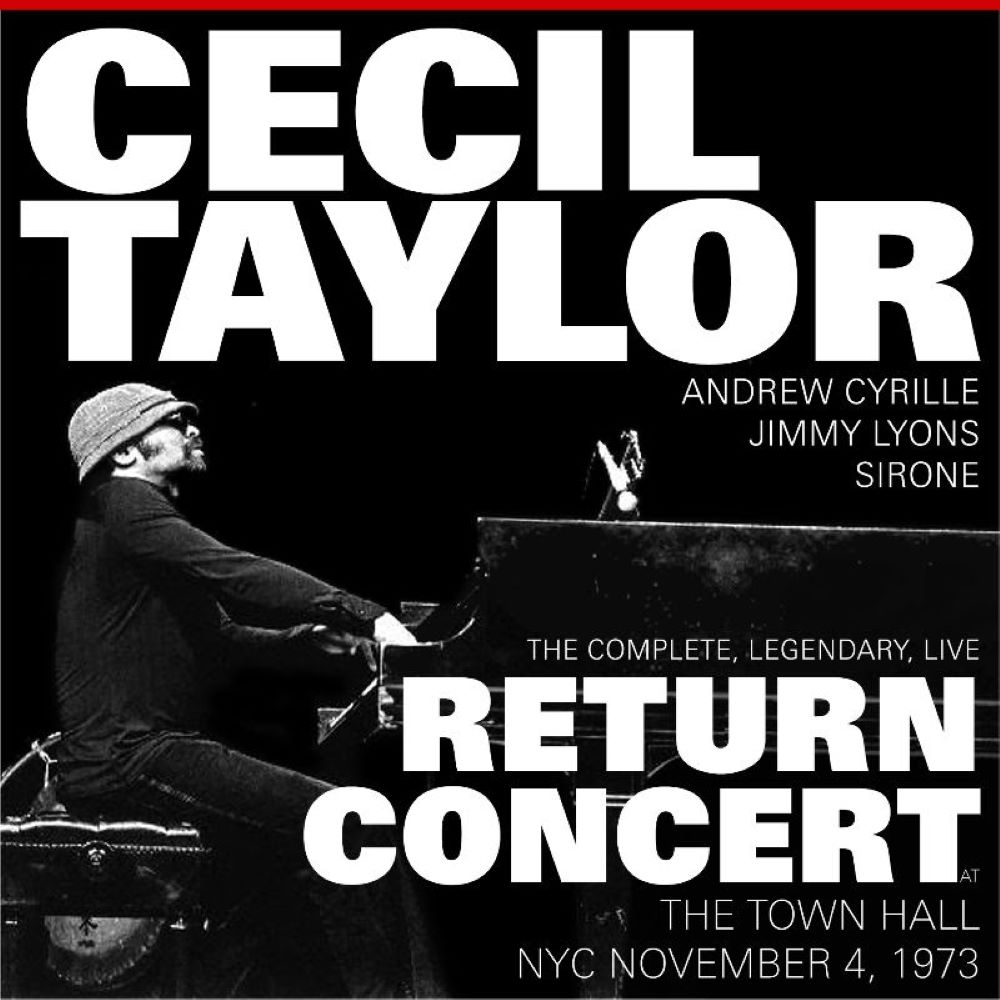
Cecil Taylor – The Complete, Legendary, Live Return Concert - February 15, 2022 (Oblivion Records)

Cecil Taylor – The Complete, Legendary, Live Return Concert to be released on February 15, 2022 via Oblivion Records

Oblivion Records is delighted to announce the February 15, 2022 release of Cecil Taylor – The Complete, Legendary, Live Return Concert, marking the first chance for listeners to hear the legendary pianist’s 1973 return to live performance in full. The concert saw Taylor reunite with Cecil Taylor Unit members Jimmy Lyons (alto saxophone) and Andrew Cyrille (percussion), with the addition of Sirone on bass. This project, assembled by the original producer and recording engineer Fred Seibert, is a much-anticipated opportunity to hear the missing piece of a puzzle long-thought lost, that adds another chapter to the story of Taylor’s search for artistic freedom. 

Taylor, one of the undisputed giants of free improvisation, made his return to live performance at The Town Hall, New York City on November 4, 1973. The second part of the concert produced a recording – a limited-run LP was made of the now seminal two-part ‘Spring of Two Blue-J’s’, released on Taylor’s own Unit Core label. Now, with the advent of digital recordings, the landmark ‘return’ concert is now available in its entirety, committing the 88-minute epic ‘Autumn/Parade’ to official release for the first time ever.

Taylor’s combination of restless pianistic energy and truly virtuosic artistic spirit quickly cemented his unassailable status as a true pioneer of the free jazz movement. Yet, a succession of celebrated Blue Note releases meant that, by the early 1970s, Taylor was entering a period of unprecedented financial security. By 1973, the 44-year-old Taylor had been in self-imposed recording exile for five years, choosing instead to focus on pursuing academia. In that time, Taylor worked as a visiting professor at Antioch College and University of Wisconsin-Madison, as well as dedicating time to composing.
Except for ‘Indent’, a solo piano release recorded at Antioch earlier in ’73, this was a total hiatus from recording – surprising perhaps, given the respect that recent releases Unit Structures and Conquistador! had both commanded, so thoughts of a new live album recorded in New York was a tantalizing prospect. 

And so it proved. Earlier in 1973, Fred Seibert, a student at Columbia who worked at the adventurously minded WKCR Radio station, had been approached by a mysterious figure in David Laura, who had a proposal for aspiring record producer Seibert. He was going to bring the Cecil Taylor Unit to The Town Hall, and he wanted Seibert to record it.
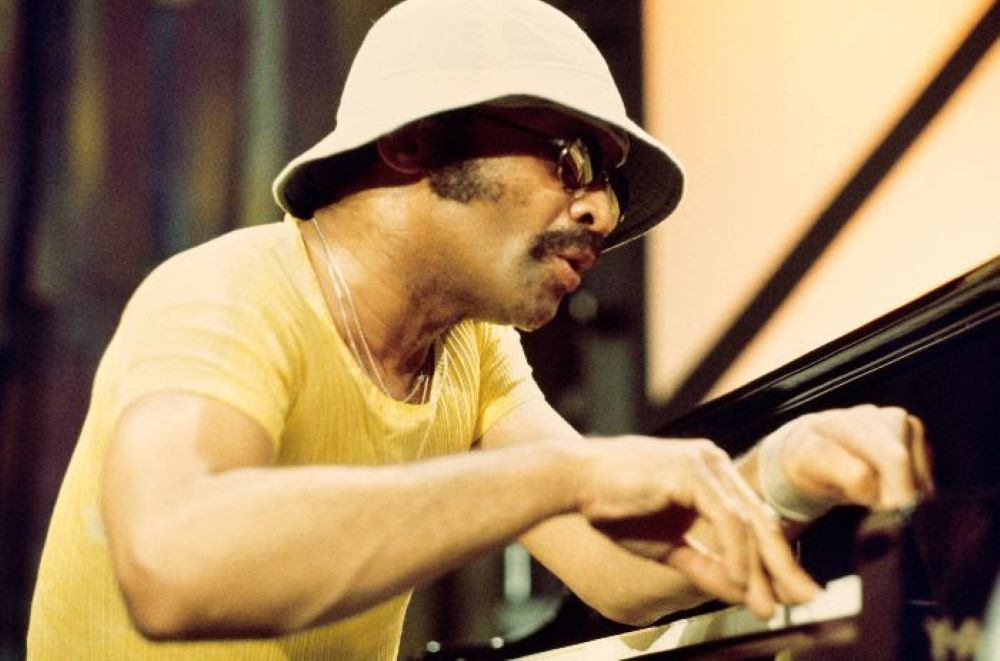
July 09, 1976 Montreux Jazz Festival / Andrew Putler/ Redferns / GettyImages
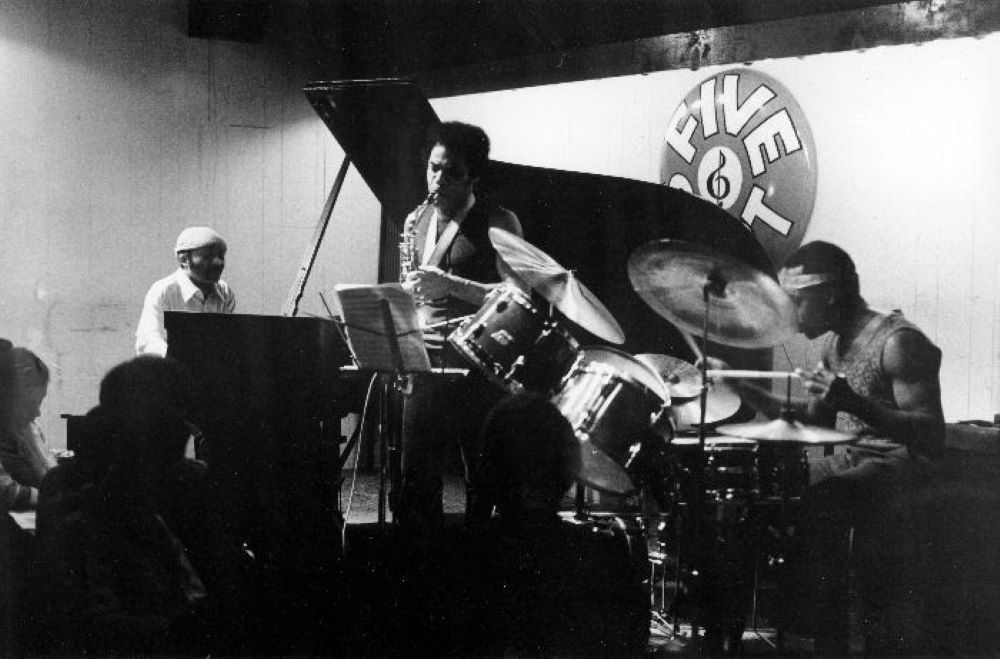
April 18, 1975 Five Spot Cafe / Fred McDarrah / MUUS Collection Getty Images

“We were memorializing what was billed as a triumphant return,” says Seibert in his producer’s note. The Unit concert was a massive success – it reunited Taylor with long-time associates Jimmy Lyons and Andrew Cyrille along with newcomer Sirone on bass. Seibert recorded the whole concert, and, after mixing it with help from legendary engineer Tony May, a recording of the band’s second set, Spring of Two Blue-J’s made it out into the world in 1974.

Critically speaking, Spring of Two Blue-J’s was a success. Village Voice critic Gary Giddins named the album “Record of the Year”, and years later commented that it “announced Taylor’s permanent reestablishment in the music world, an end to his marginalization, and the evidence of a maturity.” It was Giddins’ record of the year. But Blue J-s only represents a third of the concert that occurred that evening. Due to the limitations of the LP format, and the impact that would make on the realisation of the group’s vision, the decision was made to not release the first 88-minute continuous set.

‘Autumn/Parade’ has many of the hallmarks of Taylor compositions and performances of the period: supercharged spontaneity, improvisational stamina, boundary transgressing in its brazen commitment to just keeping on going, and an unfettered exchange of artistic expression from four equal partners. It’s a raw, visceral musical experience for anybody listening today, which speaks to the unrelenting freshness of Taylor’s approach.

Highlights of the new recording include: Taylor’s piano rebounded an hour into the opener that pave the way for something imitative to fly around for just a second; Lyons’ soloistic flitting, oscillations that encompasses the whole of the instrument, and the piano-dominated final half hour of ‘Autumn/Parade’ that reaches the summit of a colossal musical peak, before reaching a hard-fought conclusion. But what emerges over the course of the whole return concert recording is more evidence of Taylor breaking down the final barriers of jazz conventions in pursuit of artistic freedom. The new complete recording is an exhilarating, detailed longshot of one of the greats in full flight.

The Complete, Legendary, Live Return Concert by Cecil Taylor will be available as a digital release on February 11, 2021 via Oblivion Records. Accompanying the digital release is a 23-page booklet featuring an essay by Alan Goodman. This release marks a revival for Oblivion - the label’s last announced release was in 1975. 

1. Autumn/Parade (88:00) (quartet)
2. Spring of Two Blue-J’s Part 1 (16:15) (solo)
3. Spring of Two Blue-J’s Part 2 (21:58) (quartet) 

Cecil Taylor - compositions, piano
Jimmy Lyons - alto saxophone
Andrew Cyrille - percussion
Sirone - bass

Wednesday, June 20, 2018

Charles Gayle Trio - Spirits Before (SILKHEART RECORDS 2018)


One of the right night, Gayle live is one of jazz's sublime experiences; Spirits Before will clue you why." 
Kevin Whitehead, Down Beat, December 1991

A very private man, tenor saxophonist Charles Gayle's early career in music is shrouded in mystery. Raised in Buffalo, New York, Gayle was part of New York's free jazz movement in the late 1960's, but he has chosen to remain out of the spotlight, shunning the business of music. 

Charles Gayle has appeared on the New York Club and loft scene maybe half a dozen times in the past fifteen years and somehow or other we've managed to hear him in all kinds of different settings, always forthrightly projecting his personal approach to playing. He has always been a gut player, with ideas and no fear.

To all intents and purposes, Charles was living up the streets of New York in 1987 when we approached him with the idea of letting more people hear his music. The result was that be organized a trio with Hill Green on bass and David Pleasant on drums, which made its debut at the 4th Lower East Side Music Festival. From then on the Charles Gayle Trio began to generate a great deal of excitement and interest on the New York music scene. 

His music has a strength, a purity and a beauty that is completely spontaneous and devoid of pretence. We discussed his approach to the music with Charles and his reply was, "The music I am playing at this point is totally spontaneous, nothing set – just go for the Spirit, the Holy Ghost. I feel I am pushing for the Black Sanctified Spirit beyond the ego consciousness. I always feel uplifted and filled with the Holy Black Spirit – propelled (or drawn) to the unconscious." 

This album represents an overture to the music and musicians who have preceeded him – Charles feels he owes them. For our part, we find that blues, gospel, avant-garde, the music of changes, etcetera – somehow all-inclusive in these works. 

We've had the opportunity of hearing Charles a good deal during the past year and have begun to understand that his music is forever changing, with a constant stream of fresh ideas and new searchings. Very particular directions have been set up and pursued from one gig to the next and, as avid listeners, we can only hope that Charles Gayle's wider audience will have a chance to hear this outpouring of musical directions as they unfold. 

We feel compelled to include portions of an article in the New York Times for Thursday, September 3rd, 1987, written by music critic Jon Pareles: 

"The challenge of free jazz is to create coherent, compelling music without such obvious devices as melody, recurring chord sequences or a steady beat. It's a challenge that has defeated many a virtuoso since the free-jazz heyday of the 1960's. But Charles Gayle, a tenor saxopbonist, is carving out a free jazz that is muscular, impassioned, clearly structured and wonderfully volatile. 

Mr. Gayle plays contours and textures rather than melodies, using a different range and technique for each composition. He gets a huge saxophone tone, whether he's playing wide-open low notes or shrieking overtones, and he holds the stage with calm dignity while generating a fusillade of music. 

Mr. Gayle's trio makes music to move mountains by. We realize, of course, that words are an implication of reality. For the past forty years we've witnessed the music and musicians at first hand from generation to generation, the greats and the near-greats. On an average of four or five nights a week in all those years we've seen them all. We express this to give credence to our words when we say that Charles Gayle will definitely get your attention if you dare to listen to him. 

Irving and Stephanie Stone
N.YC. 1988

1. Eternal Now 07:34
2. Spirits Before 17:49
3. Heart's Nectar 09:53
4. Earth's Families 07:57
5. Give 06:49
6. Black Oil 08:04
7. Sometimes 09:03

Charles Gayle tenor saxophone
Sirone bass
Dave Pleasant drums


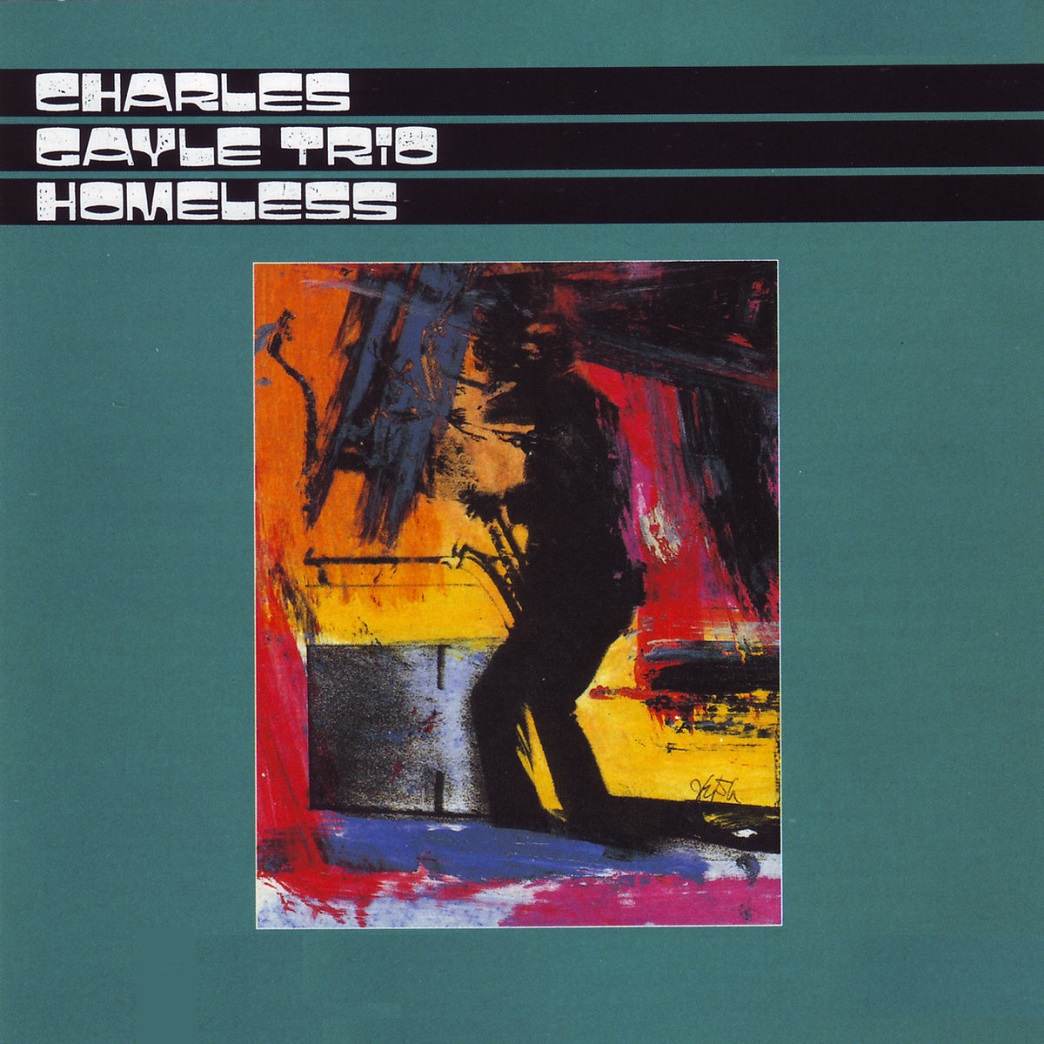
Charles Gayle Trio - Homeless (SILKHEART RECORDS 2018)


"Gayle's been around for decades, since this style was new, but he's never gotten much acclaim. Partly that's because he doesn't much care whether he gets recorded or not; partly it's because this is strong stuff; and partly because the rude style of music he plays better than almost anyone else around now is pretty far from the buttoned-down jazz that makes the cover of Time." 
Kevin Whitehead, City Paper, November 24, 1990

It was a stormy night the first time I went to hear Charles Gayle. He was doing a couple of Mondays at a then up and corning club called the "Knitting Factory", not too far from where I live. 

He was first brought to my attention by someone who knew my face around the local jazz clubs. I was handed a flyer and told, "Go see him. I don't think you'll be sorry". 

After catching his name again and again from other jazz regulars – fanatics like myself who took every possible opportunity to see anyone, old or new, who was felt to have any merit – I decided to lend it an ear. By now I had accumulated enough gossip to know that Gayle, recently returned from Europe, was living in a storefront in Brooklyn, hitting fifty and was as strong as, if not stronger than any player alive or dead. Also he remained virtually unknown as well as unrecorded. So, filled with intrigue I walked briskly to the club hoping to be overwhelmed, but expecting to be more than likely disappointed, as I had been on 50 many other occasions of this nature. I asked my wife, who usually accompanies me, "Mr Obsessive", to come along. But due to the weather and the unknown factor she refused, so I went alone and sat alone in the half empty club

While waiting for the music to begin, I ordered a raspberry soda and struck up a conversation with a jazz collagist by the name of John D'Agostino who told me that he had seen Gayle before and that he was right out of the Sixties. He's the best in outside playing and the only one to do it air the way." Or, as Gayle himself would subsequently put it, "Knock down the walls. Blow my GUTS out!"

About twenty minutes later he walked onto the stage, tall, lean, quiet and unpretentious looking... basic... yes, very basic. He stood at the left corner of the stage, fidgeted a bit, nervously distant, attached his horn nodded to the other members of the trio, raised his horn to his lips, bent down low at the knees and as he rocked up and down the wind started howling. 

He played non-stop for about one full hour and with such intensity that I fell into a great smiling stupor of improvisational ecstasy; of which one result was the following poem written sometime during the first set:


The Sleeping Tree 
You 
& the wind 
thru the young tree blowing 
bending 
screaming 
& wondering 
& the wind outside 
we cannot feel & the ghosts we 
can 
not 
feel 
the wind outside 
that shakes the tree young tree
the soul inside 
a willing tree 
that seems to go where you 
push it.

A few months earlier I had met Keith Knox at "Sweet Basil", a jazz club in lower Manhattan, and, like a lot of jazz buffs we struck up a conversation at the bar. Keith was in town to do some recording for a new label called Silkheart Records. We exchanged addresses and phone numbers and soon after became penpals. In letters and phone calls Keith would, from time to time, ask me to help him locate particular people he wished to record, as well as informing him of anyone I thought deserving, who was either under-recorded or not recorded stall. Gayle was perfect. 

I returned to the "Knitting Factory" in due course complete with a tape machine and my wife (who now believed in my belief), and asked Charles Gayle if I could record him. To which he replied, "I can't stop them from whipping out their microphones in Europe, why stop you?" I said, "Thanks", and taped two fantastic sets, after which I went up to him and mentioned how I really loved the last tune. He looked quizzically over to Stephanie Stone and muttered, "What was the last tune?" 

That same week I sent the tape off to Keith complete with my feelings about Gayle as a musician, and his powerful, raw, seemingly unfathomable energy. I was new at this and very excited! 

Several correspondences pro and con, passed before Keith informed me that it was tentatively agreed to record Gayle for Silkheart. By this time he was living in an abandoned building on the Lower Eastside, playing on the street and doing an occasional gig in a bar or gallery. When I told him at one such gig of the possibility of his being recorded. He replied nonchalantly, "Well, if it happens that's fine. If it doesn't, that's fine too." 

Almost a year went by before dates were finally set up and one of three results is the disc you are now holding in your hands. And, when spinning it you will hear some of the freest and most awesome blowing that has ever been produced. 

One of Gayle's great loves is boxing and he says he want to play the way a good boxer fights. With the key element being DRIVE. His ideal group, or "sparring partners", would be himself and two drummers, so that when one gets tired and drops out, the other steps into the ring. 

Charles Gayle is an action player. For me he is to the saxophone what Jackson Pollack is to painting. The colors caress you as they burst all over the canvas in a carefully controlled frenzy. He is completely involved, yet at the same time totally uninvolved. His compositions cover the entire spectrum of feeling and thought. Charles Gayle is unique! Listen closely, and invite comparisons if you dare.

As for the other musicians on this date: Sirone is a co-founder of The Group, a fine working quintet, and the quartet, Phalanx, with "Blood" Ulmer, George Adams and Rashied Ali. He is a seasoned veteran whose playing on this date is total joy and whose overall work seems to get more beautiful with each stroke. He can do it all under any circumstances.

Drummer Dave Pleasant was born in Savannah, Georgia on January 1st, 1961, and raised on Supelo Island (one of the Georgia Sea Islands). Dave has a B.A. in psychology and was working on his Master's Degree at Columbia when he dropped out to concentrate on music full time.

This is his first major recording and the first time he has been able to make use of a full set of drums to compliment Charles' music, and the results are phenomenal! Live, Dave usually uses two snares, a hi-hat, assorted soundmakers, and his feet. He is a working member of the Charles Gayle Trio along with Hilliard "Hill" Green of Iowa, a fine young bass player. 

I had the privilege of being at this session and can only say that these three outstanding musicians came the closest I've ever heard to sounding like one impassioned voice. When it was over I walked all the way downtown, towards HOME, feeling totally full.

So put on this disc, button up your coat, and get ready for a GAYLE FORCE... and watch those walls come tumblin' down.

Steve Dalachinsky
N.YC. 1988


1. Then Creations 19:31
2. Prayers and Fears 04:56
3. Homeless 11:28
4. Lift Every Voice 12:13
5. Your Design 08:59
6. Warm Bones Cold 09:22

Charles Gayle tenor saxophone
Sirone bass
Dave Pleasant drums


Charles Gayle Quartet - Always Born (SILKHEART RECORDS 2018)


"Charles Gayle is carving out a free jazz that is muscular, impassioned, clearly structured, and wonderfully volatile." 
Jon Pareles, New York Times

I met Steve Dalachinsky at the bar one night when we were both listening to the Steve Lacy Sextet at "Sweet Basil" in lower Manhattan and we agreed to write to each other once in a while. So one day Steve wrote a card to me with a couple of suggestions for artists likely to be of interest to Silkheart, and one of them was Charles Gayle. He said that if we'd cover his tape costs he'd send a tape, and in due course it turned up in the mail.

The music was pretty interesting, but I wasn't sure just how special it was and turned the tape over to my associate, Lars Olof Gustavsson, for his reactions. Some little while later Lars and I got together and talked about Steve's tape and about Charles Gayle. He was quite lukewarm about the whole thing, which is a fair indication of just how hard it can be to assess new music and new musicians when presented via low fidelity live recordings. I sounded out Lars again and he was rather concerned because, in principle, the project was just the kind of thing Silkheart should be working with and he wished he liked the tape more.

We left it on that note, but some weeks afterwards Lars was in New York on business and had the opportunity of hearing the Charles Gayle Trio at the "Knitting Factory" in East Houston Street. He came back to Stockholm shortly before Christmas full of enthusiasm for Gayle's music, having clearly heard things during the personal appearance that he hadn't ear on Steve's tape. It was agreed that Silkheart arrange to record Gayle with a trio, and it was also decided to record him as part of a quartet with John Tchicai alongside.

For some time, Silkheart had had the intention of recording John Tchicai in New York and Lars wanted to find a situation in which Tchicai could be featured with New York musicians who would push him into producing music of a different nature from that of his recent Danish and European efforts. The two of them had discussed the idea in a general sort of way and I was given the job of putting a session together. 

Archie Shepp and Bill Dixon met John Tchicai in Helsinki in 1960 and suggested that he move to New York. Tchicai was active on the New York scene for a large part of the sixties, with a celebrated background of performances and recordings together with the New York Contemporary Five, the New York Art Quartet, John Coltrane ("Ascension"), and Carla Bley.

He played at the Cellar Cafe during Bill Dixon's 'October Revolution' of 1967 and became a charter member of the Jazz Composers' Guild, a brave venture having much importance in retrospect. At the present time, he has not recorded in a new jazz Situation in the U.S.A. for more than twenty years, and the sad fact is that Tchicai has tended more and more to cease being the jazz visionary he once was and has become almost journeyman in his approach.

Sirone was chosen as the bassist for the Charles Gayle Trio and seemed also an appropriate choice for the quartet. Sirone has an impressive history in new jazz, beginning with his involvement in the activities of Bernard Stollman's ESP label during the sixties. Since then he has played with many of the artists active on the new jazz scene in the U.S., leading groups of his own on occasion, and co-leading the Revolutionary Ensemble for a number of years. Currently he is co-founder of The Group. Sirone is an astonishingly creative improviser with a style that is very much his own. To describe him as an individualist is an understatement and he is a good man to have on a session.

It was proposed from the outset that the quartet and trio sessions would have different drummers. It was decided that the Chicagoan, Reggie Nicholson, now based in New York, would perform with the quartet while Gayle's regular drummer, Dave Pleasant, would record with the trio. Reggie Nicholson is a young drummer with a bright future, who has already played with a good many artists including the Henry Threadgill Sextet, Amina Claudine Myers, and Wilber Morris' Wilberforce.

He was more than happy to have the opportunity of taking part in the recording session and played superbly; being more than a little responsible for the overall success of the proceedings.

The question of rehearsals was brought up, but Charles Gayle was quite adamant; there were to be none. Charles and John did speak on the telephone when Charles was in Germany a few weeks before the session, but they didn't talk about the same things. Charles was into energy and intensity and John spoke of colors, shades and textures. 

Gayle doesn't plan what he's going to play until he plays it, although it would as likely as not be high energy; It was in this spirit that he aimed to go into the studio and simply play his music. In retrospect, while this strategy can be seen to have worked perfectly well as far as the trio recordings were concerned, there were a few matters that required attention before the quartet began to produce real music.

To iron out the differences in musical philosophy between the two saxists, a public gig for the quartet was arranged to take place at "The Knitting Factory" before the recording. Charles was more than willing to appear with the quartet and, since the music was not notated, the session would have been particularly valuable. Although arrangements were made well ahead, the club got into a tangle with its dates and was unable to offer the quartet space until after the recording session had been completed.

Charles Gayle is extremely forceful when he needs to be and there were occasions during the early part of the quartet recording session when this was necessary. First of all, there was the matter of historical perspective which he had to clear up. Gayle explained that he could play many kinds of music and in specific circumstances he played what was appropriate. For a recording of his own music, he intended to play material of a kind that had not been played before. Otherwise why bother? Power was what his music had to offer and it would be of a different order from music that had gone before. A few quotations will best give the idea of what Gayle was trying to get across to the other members of the quartet. 

"All of my music is completely spontaneous 
I plan nothing and say nothing to the musicians." 
"If the building is still standing when we're through, we've failed." 
"What I play has to do with power, my father was a steelworker." 
"When I play I want to go through the wall."

As far as the quartet was concerned there was an additional vector to account for and John Tchicai put his finger on it when he said, "We only started to pull into shape when Gayle understood that the music had to be played as a cooperative endeavor by all four of us." What actually happened in the studio on those two days was fascinating in the extreme. At the outset there were several violent expressions of intent from Gayle and a fair number of musical upsets. Tchicai was simply magnificent, playing with the benefit of long experience as he worked on making the quartet into a group.

This realization appeared to come simultaneously from all four musicians partway through that first day; All of a sudden there was music coming out from the studio and, as time went by, it simply got better. In the end, the results were eminently satisfactory and a great deal of highly varied, fascinating, and exciting music was produced. Especially noteworthy perhaps is the extraordinary bass and drums duo, "Coming Together", between Sirone and Nicholson.

Gayle is heard elsewhere in the right channel, with Tchicai in the left channel where he can be easily recognized by his more staccato approach and his fruitier tenor sound. Gayle has a huge saxophone tone and a blistering attack, which is based on wide intervals and astonishing melodic turns. Two more contrasting musicians would be hard to find and they complement each other very well in a certain way. 

Gayle utilizes a variety of approaches to each piece he plays, with, as he puts it, "A different range and a different technique." When he speaks of variety, he is referring to the contours and textures inherent in a particular composition, not so much the melodies, and this aspect of his playing is exceedingly well organized. As a result, the form presented in a group performance is invariably very clear indeed and there is little doubt that, in this sense, Charles Gayle has taken a significant step forward in his presentation of free jazz.

Towards the end of the second day, John Tchicai and I were in the control room listening to playbacks and John leaned over and said with a laugh, "Dear me, what is this you and Lars have got me into!" I replied that I thought it hadn't been so bad and he agreed, very warmly, that he'd thoroughly enjoyed the experience. Finally he said, "I hope you can arrange to have a line on the cover saying 'featuring me'." I agreed. 

Keith Knox

1. Always Born 09:48
2. Needs 11:52
3. Sold Clouds 12:58
4. Coming Together 05:22
5. Rainbow's Praise 06:17
6. Then Offer All 10:31

Charles Gayle tenor saxophone
John Tchicai soprano saxophone, tenor saxophone
Sirone bass
Reggie Nicholson drums