Friday, January 8, 2016

Rich Perry - Organique (2015)


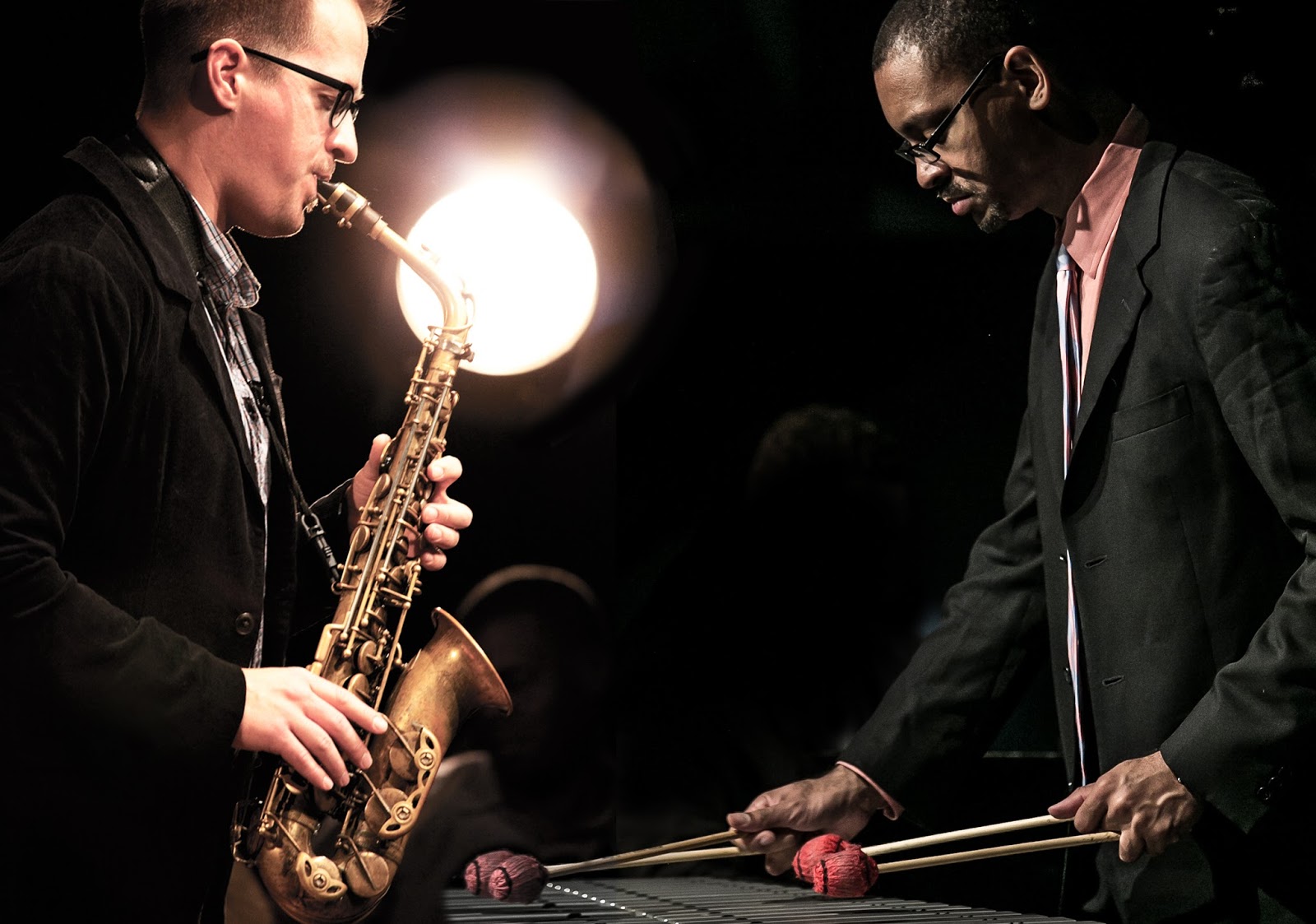
As Rich Perry’s previous release “Nocturne” deviated the standard quartet configuration by replacing piano with guitar, on this his 22nd album Rich tries something new again: an organ trio. With his two long-time creative partners (Gary Versace at the keyboard and Jeff Hirshfield on drums) Rich Perry opens a new chapter of the art of jazz improvisation.


Rich Perry, tenor sax
Gary Versace, organ [Hammond B-3 Organ]
Jeff Hirshfield, drums 

1. Toys
Composed By – Herbie Hancock

2. I Didn't Know What Time It Was
Composed By – Rodgers & Hart

3. Afternoon In Paris
Composed By – John Lewis (2)

4. Without A Song
Composed By – Billy Rose, Edward Eliscu, Vincent Youmans

5. Thad's Pad
Composed By – Thad Jones

6. Dance Of The Infidels
Composed By – Bud Powell


JAVI

The Derek Nash Acoustic Quartet - You've Got to Dig It to Dig It, You Dig? (2015)


If you’ve heard Jools Holland’s Rhythm & Blues Orchestra, you’ll have heard Derek Nash. He’s a prominent member. But to get some idea of the sheer breadth of his accomplishment as a saxophonist, composer and bandleader, you should hear this. From smooth cool to groovy funk, to ingeniously recast standards, to one quite gorgeous ballad, the music fizzes with energy, even at its most restrained. Pianist David Newton, bassist Geoff Gascoyne and drummer Sebastiaan de Krom complete the band, along with guest trumpeter Martin Shaw, and it all goes to show what five brilliant jazz musicians can do when left to get on with it. The album title, in case you wondered, is a quotation from the collected wit and wisdom of Thelonious Monk.


Secret Love
Let Some Things Go By
You've Got To Dig It To Dig It, You Dig?
Time Lag
Swing Thing
Homecoming
Vertigo
I'm Getting Temperamental Over You
Winter Solstice
Keep It To Yourself
Morning Glory

Derek Nash: saxophones
David Newton: piano
Geoff Gascoyne: bass
Sebastiaan De Krom: drums
Martin Shaw: trumpet (3, 5, 8, 10)


JAVI

Haxholm / Schmidt (feat. Seamus Blake & John Escreet) - Moras (2015)


Morten Haxholm: bass
Rasmus Schmidt: drums
Seamus Blake: saxophone
John Escreet: piano

Prometheus
Brazen
Umber
Deepsea Explorer
Cognitive Dissonance
Miyagi
Subtle Drift
Happy Ever After Is So Once Upon A Time


Haxholm Schmidt is the bassist’s co-led group with drummer Rasmus Schmidt. For Moras (it’s both a wordplay of Morton and Rasmus, but also means messy or entangled in Danish. Haxholm stresses the delights of a mess – in a good pawn shop, for example – rather than suggesting the music is insufficiently thought through) the rhythm pair wanted to play with two players they admired and so booked a studio in Brooklyn and made sure saxophonist Seamus Blake and pianist John Escreet could be there.

Made in the old classic jazz style of a single session (in this case an intense five hours in the studio) the chief bonus is the fresh feel of the encounter. But clearly with musicians of this calibre, a quick in-and-out doesn’t have to mean the material or the results are simple.

Brazen has a fast and tricky theme but minimal chords so the improvisations need to be highly inventive – and Blake and Escreet make damned sure they are, with the latter’s solo in particular being a highlight, both for its developing drive and the support Haxholm and Schmidt bring to it. Blake’s marvellous, almost vocal tone is highlighted in the increasingly impassioned ballad Umber, and the Haxholm gets a few moments in the limelight in Cognitive Dissonance which is in fact far less dissonant than one might expect, and a particularly impressive, fleet-fingered solo on Miyagi.

If Morten Haxholm has a fault it is that, taking both albums together, he stays in the background quite a lot of the time, but that is probably the result of his clear enjoyment and value as a vital support player as well as his admiration for all his fellow musicians, and players like Lund, Blake and Escreet in particular. And generosity is never really a fault, is it?

Two strong and rewarding albums.


Domi

Morten Haxholm Quartet - Viridian (2015)


Morten Haxholm: bass
Lage Lund: guitar
William Larsson: piano
Morten Lund: drums

Eldritch
CNTDWN
Stella by Starlight
Frantic
Birthday Waltz
Umber
Gloria
Along Came Betty


Morton Haxholm is a Danish double bass player. One of these albums was recorded in Copenhagen and the other in Brooklyn; both were released on 29 May 2015.

For Haxholm it’s his third Quartet album, though each has had a different personnel. On Viridian he has guitarist Lage Lund, drummer Morten Lund and pianist William Larsson. It’s a beautifully balanced band so although Lage Lund is the obvious star name – Haxholm first heard him on a trip to New York back in 2012 and has having him in his band ever since – the other three are equally impressive.

Most of the material is the leader’s with two standards – Stella By Starlight and Along Came Betty – included because Haxholm loves Lage’s playing on well-known tunes, and a particularly tricky Larsson piece called Cntdwn (a highly-adapted arrangement of Coltrane’s Countdown).

The moods vary but the playing is uniformly impeccable. Haxholm said he wanted to give this music a more European feel, and that’s inevitable I suppose with all the players being Scandinavian, but also retain a New York inspiration which is important to him and was more obvious on his first two quartet discs. I think he’s achieved that, though in a blind listening test I might have identified it as an American unit.

Try Birthday Waltz for a satisfying and representative morsel of the whole. Read more.


Domi

Terri Lyne Carrington - The Mosaic Project: Love and Soul (2015)


A few years ago, the drummer, bandleader, composer and producer Terri Lyne Carrington won her first Grammy, for best jazz vocal album. The album was “The Mosaic Project” (Concord Jazz), which highlighted a regal procession of guest talent — heavy-gauge jazz singers like Carmen Lundy, Cassandra Wilson and Dianne Reeves — along with an estimable all-female band.

Conditions have changed a bit for Ms. Carrington since then: She now stands dead-center on the Grammy radar, having also won the award for best jazz instrumental album last year. (She was the first woman ever to win in that category, a fact worth chewing on for a moment.) So Ms. Carrington’s new album, “The Mosaic Project: Love and Soul,” comes preloaded with a proven format and a set of expectations.

The subtitle can be taken more or less at face value: to the extent that “The Mosaic Project” was a jazz-vocal album, its sequel delves into romantic, quiet-storm R&B. Here, then, is Oleta Adams, purring her way through the Luther Vandross hit “For You to Love.” Here, too, is Chaka Khan, drawing out her smoky phrases in a slow-funk take on Frank Sinatra’s “I’m a Fool to Want You.” And Natalie Cole, striking a pop-gospel tone on a buoyant drum-and-bass revision of Duke Ellington’s spiritual “Come Sunday.”

Ms. Carrington is a seasoned adept in the studio, and her production sounds lush and crisp. Where she pushes herself is in the songwriting: Half of the tracks bear her credit, either alone or with partners like the soignée jazz singer Nancy Wilson, who contributed to “Imagine This,” a persuasive argument for rekindling distant youthful passions. (“And if we dare go back again,” Ms. Wilson proposes, in a sensuous half-whisper, “our finest years are still ahead.”)

Most of Ms. Carrington’s other tunes are well-made vehicles for their assigned singers: Lalah Hathaway, Ledisi, Jaguar Wright, Chanté Moore. A samba-inflected track called “Can’t Resist” finds Ms. Carrington doing the singing herself, more than passably; it also has a smart wah-wah flute solo by Elena Pinderhughes.

It’s no longer necessary (if it ever was) for Ms. Carrington to explain her reasons for stocking these albums with female musicians. But it’s hard to understand fully her motive for bringing in the actor Billy Dee Williams as a kind of masculine counterweight, a smoldering yang to the music’s yin.

“Women have always been very much a part of my life,” he intones at the top of one track, “and I don’t mean just from a sexual point of view, but in a very beautiful, wonderful way, actually.” You don’t say. By NATE CHINEN / The New York Times

Then comes the romantic side of jazz. Drummer Terri Lyne Carrington dives deep into the realm of charm, affection and personal relationships with The Mosaic Project: Love and Soul (Concord Records, 2015).

Each of the 12 songs is fronted by a different vocalist. Carrington and the singers are accompanied by a variable lineup of all-female musicians. They are: Amy Bellamy, piano, keyboards, organ, Rhodes, Elin Sandberg, bass on “Come Sunday”; Angie Swan, guitar and acoustic guitar; Tia Fuller, alto saxophone and flute; Negah Santos and Zayra Pola, percussion; TLC, drums, programming, “additional” guitar and backing vocals; Rhonda Smith, Linda Oh and Meshell Ndegeocello, bass; Linda Taylor and Felicia Collins, guitar; Tineke Postma, soprano sax; Paulette McWilliams, background vocals on “For You to Love”; Valerie Simpson, piano on “For You to Love”; Rachel Z, Rhodes, keyboards and piano; Melissa Aldana, tenor sax on “For You to Love”; Elena Pinderhughes, flute; Tanya Darby, Arnetta Johnson and Ingrid Jensen, trumpet; Netta Ranaan, tenor sax; Geri Allen, piano on “Somebody Told a Lie”; Lalah Hathaway, background vocals on “Imagine This”; Lauren Fuller, keyboards, piano, Rhodes; Merissa Magdael-Lauron, trombone; Alyson Williams, background vocals; Patrice Rushen, piano and Rhodes; Helen Sung, Rhodes on “Can’t Resist”; Regina Carter, violin on “You Just Can’t Smile It Away”; Grace Kelly, soprano sax solo on “When I Found You”; DJ Val Jeanty, turntable on “When I Found You.”

The singers, in order of appearance, are Natalie Cole, Chaka Khan, Oleta Adams, Jaguar Wright, Valerie Simpson, Nancy Wilson, Chante Moore, Lalah Hathaway, Carrington, Paula Cole, Ledisi and Lizz Wright.

The lone male listed is actor Billy Dee Williams, who narrates some tracks. Star power is the selling point for this set. The singers are immensely popular, and the song selections pay homage to several songwriters whom Carrington counts among her influences. Among them are Duke Ellington, Frank Sinatra, Marcus Miller, Luther Vandross, and the team of Nicholas Ashford and Valerie Simpson. Carrington also composed six songs for the album, partnering with Wilson and Simpson for the songs they lead.

“Come Sunday,” one of the songs narrated by Williams, is one of the jazzier pieces. Fuller and Bellamy get a moment out front during the instrumental break, and Cole shifts from lyrics to scat during the fade.

Khan leads “I’m a Fool to Love You” and complements Postma’s solo with vocal fills. Carrington’s background drumming is superb. Smith’s bass line adds a bit of funk. Other standout titles include “Imagine This,” “This Too Shall Pass” and “Get to Know You.”

Love and Soul has a strong R&B lean. But if you listen to R&B or “urban” radio, you haven’t heard music like this since the 1970s. It’s not jazzy from the perspective of extended instrumental breaks, but unlike contemporary R&B over the past 25 years, the musicians all play significant roles in supporting the vocalists. Every player gets noticed without necessarily having a solo. This is the kind of album that’s perfect for the listener who wants to hear everything, from the congas to the rhythm guitar to the subtle changes employed by the bassist or the drummer.

Carrington won a Grammy for Best Jazz Vocal album for 2011’s The Mosaic Project.

Born in 1965 in Medford, Massachusetts, she spent 20 years touring with artists such as Herbie Hancock, Wayne Shorter, Al Jarreau, Stan Getz, David Sanborn, Joe Sample, Cassandra Wilson, Clark Terry, Dianne Reeves and more. She gained widespread recognitions as drummer with the house band for late night television’s Arsenio Hall Show and later on Vibe, hosted by comedian Sinbad. Other associations include George Duke, Everette Harp, Kirk Whalum, Jimmy Haslip, Greg Phillanganes, Christian McBride, Danilo Perez, Chuck Loeb, Dwight Stills, DeeDee Bridgewater and Esperanza Spalding.


01. "Come Sunday" (feat Natalie Cole)
02. "I'm A Fool To Want You" (feat Chaka Khan)
03. "For You To Love" (feat Oleta Adams)
04. "So Good (Amazing)" (feat Jaguar Wright)
05. "Somebody Told A Lie" (feat Valerie Simpson)
06. "Imagine This" (feat Nancy Wilson)
07. "Best Of The Best" (feat Chante Moore)
08. "This Too Will Pass" (feat Lalah Hathaway)
09. "Can't Resist" (feat Terri Lyne Carrington)
10. "You Just Can't Smile It Away" (feat Paula Cole)
11. "Get To Know You" (feat Ledisi)
12. "When I Found You" (feat Lizz Wright)


SONIA

Thursday, January 7, 2016

Fredrik Kronkvist - Monk Vibes (2015)


Alto saxophonist Fredrik Kronkvist releases album with Thelonious Monk’s music along with three American superstars.

When Kronkvist releases his new album MONK VIBES he continues cooperate with some of the hottest names on the jazz scene with Jason Marsalis on vibraphone, Reuben Rogers on bass and Gregory Hutchinson on drums. This time they dedicate themselves to interpret the genius composer Thelonious Monk’s music and spirit. The unusual constellation with alto saxophone, vibraphone, bass and drums create a different, challenging sound without the piano and gives the group wide open spaces for colorful improvisations. MONK VIBES reflects Thelonious multidimensional universe where simplicity and complexity come together in a beautiful, danceable and contrasting music.The album contains wild conversations, humor, calypso beat, odd time signatures, blues, beautiful ballads and a tonal language that sounds as skewed as obvious.


01 Skippy
02 Misterioso
03 Teo
04 Brilliant Corners
05 Trinkle Tinkle
06 Round Midnight
07 Evidence
08 Kronk’s Monk
09 Four in One
10 The Virtue of Patience

All tracks by Thelonious Monk except tr.8 by Fredrik

Fredrik Kronkvist – alto sax
Jason Marsalis – vibraphone
Reuben Rogers – bass
Gregory Hutchinson – drums


Domi

Jessica Jones Quartet - Moxie (2015)


Label: Self Released


Moxie is both an extension of tenor saxophonist Jessica Jones' previous work and a glimpse back to an earlier point in her career: she continues to explore the possibilities inherent in a piano-less quartet with a two-tenor front line while reuniting with a rhythm duo that she worked with in the '80s—bassist Stomu Takeishi and drummer Kenny Wolleson. The music that she makes here, with that team and fellow tenor/husband Tony Jones, is predictably unpredictable, grounded yet far-reaching, and irresistibly intriguing in its unfolding.

The album opens with the true-to-name title track—a funky and off-kilter composition that periodically dissolves, only to be brought right back to form with a swiftly executed rhythmic figure. The tenors move along with a combination of patience and attitude, enhancing the underlying feel with there cool-headed, hot-blooded moves. "In A Sentimental Mood" follows, both lining up with and defying expectations. The song largely adheres to its well-worn melodic and harmonic paths, but, thanks in large part to the way the rhythm section dissects the beat, it's subtly reborn in three.

Headier sounds appear on the Jones-Jones penned "Haitian Cotillion," a number that's both insistent and open in its delivery. It's the first piece to really highlight this group's penchant for free thought married to rhythmic specificity. The follow-up—"Soft Target"—looks at the same topic from a different angle. It opens in uncertain lands, but the tenors soon find their footing(s) atop Wolleson's steady eighth note groove. They're free to roam around as his drums and Takeishi's rubbery bass lines hold things in place.

The second half of the album starts with Tony Jones' "Dear Toy"—a sonic search for meaning—and closes with three numbers from the leader's pen: "The Clapping Song," an odd-metered vehicle that opens on a Takeishi solo over handclaps before settling into the saddle; "Tag On A Train," a piece that coalesces, confounds, and then connects on a deep spiritual level; and "Manhattattan," a cheery sendoff with some surprising twists of form. It's the perfect ending to a program that's both unrestrained and structurally sound. 


1. Moxie 07:35
2. In a Sentimental Mood 06:10
3. Haitian Cotillion 08:40
4. Soft Target 05:54
5. Dear Toy 05:06
6. Clapping Game 06:42
7. Tag on a Train 06:40
8. Manhattattan 05:28

Jessica Jones, sax
Tony Jones, sax
Stomu Takeishi, bass
Kenny Wollesen, drums


BUY THIS ALBUM 


Arne Huber - Pearls (2015)


Source & Label: Meta Records
2nd Source: Jazz Page


A bass player as band leader is still quite uncommon. Arne Huber proves that there is no musical reason for this. “Pearls” is the second album of the Arne Huber Quartet, after “Jordan” (2009). On “Pearls”, which consists mainly of original compositions by Huber, he again explores the depth of modern jazz, with great skill and a lot of musical sensitivity. The bass player is joined in this endeavour by his band colleagues.

Nach der Debut CD »Jordan« stellt Arne Huber mit seinem 4tett die zweite CD »Pearls« vor. Durch seine Kompositionen und sein unaufdringliches Spiel prägt er die außergewöhnliche Stimmungen dieser Musik. Mit seinen herausragenden Mitmusikern gelingt es ihm so eine Atmosphäre fern von Effekthascherei zu erschaffen.


Huber, 1977 in Offenburg geboren, absolvierte 1997 bis 2001 ein Jazzstudium an der Musikhochschule Mannheim bei Thomas Stabenow, dem er 2002 bis 2006 ein klassisches Kontrabassstudium an der Musikhochschule Freiburg folgen ließ. Arne Huber lebt in Mannheim und in der Nähe Freiburgs. Sein Können und seine musikalische Versiertheit machen ihn zu einem viel gefragten Bassisten. Huber ist unter anderem Mitglied des Trio »Böhm-Huber-Daneck«, mit dem Quintett »L14,16« gewann er zwei Mal den »Vierteljahrespreis der Deutschen Schallplattenkritik«. Er spielte u.a. mit Ingrid Jensen, Johannes Enders, Tony Lakatos, Randy Brecker, Adrian Mears, Julian Argüelles, Paul Heller, Ack van Rooyen, Bob Degen, Nils Petter Molvaer und Julien Lourau.


01. Erie     8:18
02. Pearls     5:35
03. Syracuse     7:19
04. You do something to me     6:17
05. Delaware     6:40
06. Ornaments     4:33
07. Monrovia     4:14


Domenic Landolf - tenor saxophone, bass clarinet
Rainer Böhm - piano
Jochen Rückert - drums
Arne Huber - bass


BUY THIS ALBUM


Arne Huber Quartet - Jordan (2011)


Label: Nagel Heyer Records
Source: Arne Huber


Leader de ce quartet, Arne Huber est contrebassiste. Cette place centrale dans la disposition de l’ensemble le rend très sensible à l’équilibre des voix instrumentales. Attaché à la mélodie, il a composé un ensemble de pièces originales dont on apprécie la faîcheur et la finesse autour d’un élément central emprunté au répertoire de Cole Porter pour la référence aux standards. Chacun des membres du quartet s’exprime ouvertement sans menacer l’équilibre d’un ensemble dont la stabilité rythmique repose sur le talent reconnu du batteur Jochen Rückert. Encore une très belle référence du label Meta Records, plus « jazz » que ses dernières productions 2014.


1 Lantana
2 My Little Brown Book
3 Jordan
4 Gemini
5 Freitag
6 Reincarnation Of A Lovebird
7 Yesterday, Today & Tomorrow
8 Everything I Love


Arne Huber - bass
Domenic Landolf - tenor saxophone, clarinet
Rainer Böhm - piano
Jochen Rückert - drums


BUY THIS ALBUM


Jake Saslow - Crosby Street (2011)


Label: 14th Street Records


One of 2011's many notable debuts is saxophonist Jake Saslow's Crosby Street, an ode to the street in New York's iconic SoHo, where the musician's formative years recalled the neighborhood's sights, music, and people. An analogy is formed between the music and the community, one that speaks of a distinct personality carried in Saslow's full-bodied horn that's filled with lyricism and communication interpreted by peers and fellow-New Yorkers that include guitarist Mike Moreno and pianist Fabian Almazan.

The seven pieces visualize an assortment of aural dreamscapes and tempos, supported by bassist Joe Martin and drummer Chris Persad Group, The Dautaj, Marcus Gilmore , Coquito, Fri, as the soloists deliver lively movements in Saslow's "Early Riser" and "Taiga Forest." But it's the chord-less trio rendition of Horace Silver's "Lonely Woman" where Saslow's sepia-toned notes give a truer indication of his capabilities. Its depth and detail exudes not only knowledge of the source material but also a fresh statement.

"Lucky Thirteen" is the smoothest piece in set with its street-savvy cadence and elastic solos, whereas "Until Next Time" has the most personality. With a rich sonic quality it begins slowly with Saslow's sumptuous horn, before the melody changes and swings seductively, carried by Moreno's unique phrasing. It's got a certain ambiance and personality—just like a vibrant neighborhood, the essence of what Saslow's debut portrays.


1. Early Riser
2. Taiga Forest
3. Lonely Woman
4. Lucky 13
5. Crosby Street
6. How Things Were
7. Until Next Time


Jake Saslow: tenor saxophone
Mike Moreno: guitar
Fabian Almazan: piano
Joe Martin: bass
Marcus Gilmore: drums


BUY THIS ALBUM 


Lionel Loueke - GAÏA (2015)


Guitarist Lionel Loueke chose to record GAÏA—his remarkable rock-infused fourth Blue Note album—live in the studio with an intimate audience in attendance. The purpose was to achieve a raw energy and reach a musical essence, and to that end he reunited with the two musicians who accompanied him on his 2008 Blue Note debut Karibu—bassist Massimo Biolcati and drummer Ferenc Nemeth—a simpatico trio that first formed when the three attended the Berklee College of Music in Boston together in the late 1990s.

“I always wanted to record this trio live” says Loueke of the sessions, which were captured at Sear Sound in New York City. “We were all in the same room with a small audience, no headphones, no isolation and no overdubs of course. It has a real live feel. It was a very special event.”

Loueke's compositional mastery is evident in the construction of the 11 original songs presented here and the trio's performances are extraordinary. “I don't think we sound like any other trio on the scene today" says an understated Loueke. “I have been writing for this trio for a long time. They can handle every metrical challenge in my songs. There is an inside communication between the three of us.”

The musical dialogue on the album—which was produced by Blue Note president and GRAMMY-winning producer Don Was—pertains to the nature of the Earth and man's effect on it, an urgent message at a time when the warning signs of global warming have become undeniable. In Greek mythology, Gaïa is the personification of the Earth, the mother goddess who birthed the planet and the entire universe. "She would be angry,” Loueke states bluntly. “We have not taken good care of her child."

“Broken” opens the album with an otherworldly flourish.  “It’s a very electric song,” says the Benin native. “The chord is a little de-tuned. It keeps you on edge. It represents a broken ecological system. It's actually in 33/8 = 6/8+7/8+6/8+8/8+6/8. It creates a little skip in the rhythm and doesn't let you relax or become complacent.”

“’Sleepless Night’ could also have been titled ‘Day And Night’” says Loueke. “There are two movements—one in a major chord, the other in a minor chord. I play the whole intro on one string, imitating the sound of the gimbri,” he explains referring to the lute-like African instrument. The 19/4 time signature keeps the song bubbling.

“Sources of Love” draws its warmth and energy from the strength of the family, both cosmic and personal. “I wrote this thinking about the love that holds a family together and the love that Gaïa gives,” says Loueke. “It's a lyrical tune. You don't hear the notes' attack because I use a type of delay to soften the attack.”

The other end of the sound spectrum is brought to the fore in the aptly titled “Wacko Loco.” The track is an unabashed electric guitar showpiece which finds Loueke channeling the raw distorted power of the live Jimi Hendrix album Band of Gypsys. “This is Gaïa's anger and madness becoming evident. It was also a lot of fun to play.”


“Rain Wash” is an aural equivalent of a cleansing rain. Played on acoustic guitar and bass it is supported with a wave-like flow of cymbals and brushes on the drums before ending on a slight dissonance.

A deceptively simple guitar figure opens the heartfelt plea to Gaïa for “Forgiveness.” The longest track on the album, the song builds slowly towards a driving African highlife groove. “It's probably one of the strongest melodies” said Loueke. “We just played it and let it build.”

“Even Teens” is a pun on the 17/4 time signature of the piece, which begins with Loueke’s extended-technique intro where he makes the guitar sound more like a talking drum before the trio crashes in with roiling rhythms. “It's like seven teenagers each given a day of the week to help find a solution for the earth, each with their own rhythm and heading in their own directions, but also aware of their friends’ searches.”

The time signature of the title track “Gaïa” is a propulsive 35/8. "This band can handle any rhythmic challenge. But the most important thing to remember is to write strong music no matter what the time signature may be. The rhythm must flow naturally and not draw attention to itself. It's a tool of expression.”

“’Veuve Malienee’ is a widow crying for the loss of her husband” says Loueke. The lyric sound is created by his adept use of the volume pedal, softening the attack of the note throughout the piece. “You don't hear my voice. There is no singing on this disc but I'm trying to speak through my instrument.”

The quiet is quickly broken by the opening fanfare of the rock-edged “Procession.” “B.B. King and Jimi Hendrix were my heroes,” says Loueke. “I see this as a ceremonial piece for the forgiveness of mother earth. It brings to mind a bunch of people marching through the graveyard, tapping the ground with their canes.”

The album ends surprisingly with a spry version of the Bee Gees hit “How Deep Is Your Love” which leaves us pondering how we might change this destructive course. “I didn't understand the words when I was young,” says Loueke. “I just loved the beautiful melody and voices.” Even presented wordless, the lyrics take on new meaning here: “And you may not think I care for you / When you know down inside that I really do.”


Lionel Loueke, guitar
Massimo Biolcati, bass
Ferenc Nemeth, drums

Broken
Sleepless Night
Sources of Love
Wacko Loco
Aziza Dance
Rain Wash
Forgiveness
Eventeens
Gaïa
Veuve Malienne
Procession
How Deep Is Your Love


SONIA

Wednesday, January 6, 2016

Seamus Blake - Superconductor (2015)


Label: 5Passion
Source: Seamus Blake


New York based tenor saxophonist/composer SEAMUS BLAKE is recognized as one of the finest exponents of contemporary jazz. His music is known for its sophistication, bold improvisations and “sheer swagger".  John Scofield, who hired Seamus for his “Quiet Band,” called him “extraordinary, a total saxophonist.” Seamus Blake’s recent releases, Live at Smalls (Smalls Live 2010), Bellwether (Criss Cross Jazz 2009) and Live in Italy (Jazz Eyes 2009), have garnered considerable critical praise for his masterful playing, his fine compositional skills and for his facility as a leader.  Live in Italy was awarded 4.5 stars in Downbeat. Described as “a knockout”,  “one of the elite albums of the year” and “as exhilarating as a shot of espresso”, it is on many Top of the Year lists.

Seamus Blake was born December 1970 in England and raised in Vancouver, Canada. At age 21, while still a student at Boston's prestigious Berklee College, he was asked to record with legendary drummer Victor Lewis.  After graduation, he moved to New York, where he rapidly established himself on the New York jazz scene.  In February 2002, Seamus took first place in the Thelonious Monk International Jazz Saxophone Competition in Washington D. C. As the winner, he performed with Wayne Shorter and Herbie Hancock.

As a leader, Seamus has released six albums on Criss Cross Records,  including his 1993 debut The Call.  These include the 1995 premiere of the “Bloomdaddies,” a “funky, alternative grunge” jazz band that employed electronic effects.  He has also recorded as a leader for the Fresh Sound label ( Stranger Things have Happened), and as a co-leader on   Mosh for Lovers (Bloomdaddies, co-leader Chris Cheek), and Fear of Roaming (Sangha Quartet,  co-leader pianist Kevin Hays). His band members on these recordings have included David Kikoski, Kurt Rosenwinkel, Larry Grenadier, Bill Stewart, fellow Thelonius Monk winner Lage Lund, Chris Cheek and Jorge Rossy (Brad Mehldau Trio).

Seamus works with a wide variety of artists.  A long-standing member of the Grammy nominated Mingus bands, he is featured on six of their albums.  He continues to play and record with Bill Stewart, Kevin Hays, David Kikoski and Alex Sipiagin, and is a member of the Victor Lewis Quintet.  He is also a member of BANN, led by drummer Adam Nussbaum. Their first recording was released in 2011 on the Jazz Eyes label. Seamus is frequently featured as a guest artist. In 2010 he was guest of honor at the International Saxophone Symposium in Washington hosted by the US Navy Band.  Seamus was a member of John Scofield’s Quiet Band and toured and recorded with Dave Douglas. Some of the many other artists he has worked with include Eric Reed, Antonio Sanchez,  Scott Kinsey, Tal Wilkenfeld, Jane Monheit, Kenny Barron, Sam Yahel, Michael Brecker, Randy Brecker, Wayne Krantz, Ingrid Jensen, Maria Schneider, Mark Turner,  Brad Mehldau, Al Foster, Brian Blade, Jeremy Pelt,  Jack Dejohnette.  
Seamus continues to work with his fine quintet (David Kikoski, Lage Lund, Bill Stewart, Matt Clohesey) and on his ongoing explorations of electronic applications in jazz, especially with the EWI (electronic wind instrument). For the last two summers he toured in Italy with his electric project which included Scott Kinsey (keyboards), Tim Lefebvre (bass) and Jordy Rossy (drums).


1. Ohm (7:29)
2. Sofa Song (6:30)
3. Forecast (9:02)
4. Last Continent (7:01)
5. Send In The Clones (8:44)
6. Kepler-186F (5:43)
7. Gracia (7:32)
8. Entheogen (5:33)
9. I Do (5:55)


Seamus Blake - saxophone
Rachel Fastenow - flute
Douglas Yates - clarinet
Rob Mosher - english horn/clarinet
John Ellis - bass clarinet
Marshall Gilkes - trombone
Tom Chiu - violin
Stephanie Griffin - viola
Felix Fan - cello
Gonzalo Rubalcaba - piano
Matt Clohesy - bass
Nate Smith - drums 


BUY THIS ALBUM


Mauro Gargano - Suite for Battling Siki (2016)


Label: Gaya Recoring
Source: Mauro Gargano


Le 16 décembre 1925, le boxeur Battling Siki est abattu à coups de revolver dans une rue de New-York. Il n’a pas trente ans. On ne retrouvera jamais son assassin. Une mort à l’image de sa vie, tissée d’énigmes.

Il naît à Saint-Louis du Sénégal en 1897. Puis, vers l’âge de dix ans, il est emmené en Europe par une danseuse hollandaise. Elle l’ abandonne à Marseille. Il y dispute ses premiers combats de boxe, vers l’âge de 13 ans, avant de participer, en tant qu’engagé volontaire, à la guerre de 14-18 – où sa bravoure lui vaut la croix du mérite, la croix du guerre et le titre d’adjudant. Sa carrière pugilistique reprend en 1919. Il gagne sur tous les rings d’Europe, mais sans convaincre : il n’affronte, dit-on, que des boxeurs de second plan. En 1922, près de Paris, il rencontre pour le titre mondial l’immense champion Georges Carpentier, le héros de toute la France et, à la surprise générale, il le surclasse, le dévaste, l’envoyant définitivement au tapis en six rounds…

Une enfance romanesque, une guerre héroïque, un triomphe sportif déjouant tous les pronostics : ces circonstances devraient lui valoir la gloire et l’argent. Or, Siki ne récolte que railleries et diffamations. Dans la presse, largement acquise au racisme, ses hauts faits se retournent contre lui. Son courage sous les drapeaux ? Allons, ce n’était que l’inconscience propre aux nègres ! Sa victoire sur Carpentier ? Un coup de chance, peut-être même une tricherie ! Siki s’exile alors aux Etats-Unis, mais là-bas aussi, c’est à devenir fou. Malgré ses qualités, il ne peut pas boxer contre les meilleurs, car ceux-ci sont blancs et ne veulent pas risquer le sort de Carpentier.
Alors, puisque les rings le refusent, Siki l’indomptable se bagarre dans les cafés, quand on refuse de le servir parce qu’il est noir…  Il se bat aussi dans la presse, rendant coup pour coup. « Vous avez une statue de la liberté, déclare-t-il à un journaliste américain, mais c’est un mensonge. Il n’y a pas de liberté ici, pas pour les gens comme moi ! » C’est sans doute en voulant corriger un raciste qu’il trouvera la mort – à moins que la mafia n’ait voulu le punir pour un combat où il avait refusé de se coucher…

La vie a fait de Siki un nomade. Au fil des titres de son album, le musicien Mauro Gargano a choisi, pour lui rendre hommage, de suivre sa trace dans les villes où s’est déroulée son histoire. Cela va de Saint-Louis à Amsterdam, où Siki a rencontré son épouse, de Dublin où il a perdu son titre de champion du monde, au quartier irlandais de  New York où il a été descendu... Et cela donne une brillante sarabande musicale, jouant avec jubilation des influences les plus diverses. Mais le principal enjeu n’est pas là. L’album « Do do boxe » est, plus encore qu’un voyage géographique, une exploration intime – Mauro Gargano a pratiqué la boxe, et ça s’entend, sa musique la raconte de l’intérieur...

Chacun des morceaux qui compose cette œuvre s’ouvre dans une sorte de brouhaha. On devine qu’on est au bord du ring, lors du fameux match de Siki contre Carpentier. On entend la voix de l’entraîneur qui donne ses consignes au boxeur (« Crois-moi, tu fais ce que je te dis ! T’as confiance en moi ? ») Mais que valent ses mots ? Parle-t-il pour son bien ou pour le trahir ?  On entend aussi Siki qui, dans des monologues intérieurs, s’exhorte, s’interroge, confie ses espoirs, ses rêves, sa trouille. « J’en ai marre de me salir les mains avec mon propre sang. Dieu sait si ça fait mal… » Saisissante sincérité, que celle d’un homme acculé dans un coin, dans une impasse où la seule échappatoire est de se battre encore et encore. 

Puis, quand le gong retentit, quand le match reprend, l’entraîneur et le boxeur se taisent, la musique prend le relais. Six fois, à chaque round, la bagarre de cuivres blessés, de cymbales froissées, de notes courant sur la contrebasse recommence. Six fois, c’est une succession de mélodies nerveuses, de tempos saccadés racontant la boxe, comme dans les beaux films noirs qui lui ont été consacrés. Six fois, on devine Siki repartant au combat et Mauro Gargano trouve de nouvelles harmonies pour chanter son énergie, son courage…

Siki a inspiré des intellectuels et des artistes divers : Ho Chi Minh, Paul Vaillant-Couturier, Ernest Hemingway, Henry Miller ont écrit sur lui. Plus récemment, un opéra et une bd lui ont été consacrés. L’aventure continue, le champion est de retour, aux couleurs du jazz cette fois !


BUY THIS ALBUM


Elijah Jamal Balbed - Lessons from the Streets (2015)


Label: Self Released
Source: Cdbaby


Saxophonist and composer Elijah Jamal Balbed is a native of Washington, DC. He has been named Best Tenor Saxophonist (2013) and Best New Jazz Musician (2010) by the Washington City Paper, and has participated in residencies at the Kennedy Center (Betty Carter's Jazz Ahead), Strathmore, and Bohemian Caverns. Over the last decade, he has established himself as one of the most versatile saxophonists in the DMV area, having performed with artists ranging from McCoy Tyner, Bennie Maupin and Pharoah Sanders, all the way to Lalah Hathaway, Eric Benet and Dr. John. He also worked regularly with the Godfather of Go-Go music, the late Chuck Brown. In 2012, Elijah released his debut album "Checking In", and in 2015 he released his sophomore album as a leader, "Lessons From the Streets".

Elijah performs in and around the DC area with many different groups, and even has a band dedicated to combining elements Jazz and Go-Go musics, called The JoGo Project.


1. Butch Warren
2. Firm Roots
3. What Matters Most (In Life)
4. Lessons from the Streets
5. From the Streets to the Mansion
6. Infant Eyes
7. Sonny Suspended
8. On Green Dolphin Street


Elijah Jamal Balbed - saxophones
Dr. Alex Norris– trumpet
Warren Wolf– vibraphone
Paul Bollenbeck– guitar
Mark Meadows– piano
Kris Funn– bass
Carroll “CV” Dashiell III- drums
Romeir Mendez- bass
Corey Fonville– drums
Alex Brown– piano
Samir Moulay– guitar


BUY THIS ALBUM 


Steve Smith, Tony Monaco, Vinny Valentino - Groove: Blue (2015)


We owe the existence of this precious jewel of an album to a chance encounter in Indonesia's capital Jakarta in March 2011. Drummer Steve Smith and guitarist Vinny Valentino decided to go for a nightcap after playing the Java Jazz Festival with their band Vital Information. As they approached the lounge bar, they heard the sound of a wild swinging electric organ. Wondering “who the hell was banging those black and white keys” they walked in and there they saw Tony Monaco, one of the “unsung heroes” of the Hammond B3. Few people knew much about him apart from that he had been promoted by organ legend Jimmy Smith and had spent two years touring with jazz guitarist Pat Martino. Smith and Valentino made their way through the crowd and asked if they could join in. They proceeded to spent the rest of the night jamming out together later joined by festival greats like George Benson and Roy Hargrove.

Five months later, fate once again intervened. Smith and Valentino had been booked for a workshop in Cleveland Ohio. Tony Monaco lived close by in Columbus, a modest 230 km drive away. A spontaneous phone call resulted in a car journey and resulted in the three of them playing in Monaco’s small home studio. Steve borrowed a small jazz drum kit from a friend of Tony’s as his own didn’t fit in the car. Valentino plugged his guitar into the only available amplifier and they were off. They worked so well together, they decided there and then to record an album. One and a half days later the recording was in the box!

To get a sense of the style of this album, think of the classic Blue Note organ trios of the 60s. These true musos inject effortlessly this 50 year old sound into their own compositions, adding a few specially arranged jazz standards along the way such as the legendary 1958 Miles Davis classic version of "On Green Dolphin Street" which Smith’s zestful drumming gives a distinct Latin feeling; Ray Nobles "Cherokee" is gently modernised with a funky groove; Nat King Cole’s immortal "It's Only A Paper Moon" from the Broadway musical "The Great Magoo" retains a timeless swing but with a walking pedal bass from the Hammond organ; they wind down with a gentle version of "That's All", an unforgettable ballad from the Great American Songbook.

Although Smith, Monaco and Valentino had virtually no time for rehearsals, they harmonise on "Groove: Blue" as if they’d known each other all their lives. This is what happens with topflight musicians, they manage to blend perfectly together in every musical situation. They know every trick in the book as a glance at their biographies show. Let's start with Steve Elliott Smith. Born in Massachusetts in 1954 he was artist aged nine and taking drum lessons from big band veteran Bill Flanagan. As a teenager he developed his skills at school and in garage bands. After high school he trained at the prestigious Berklee College of Music in Boston. Later Smith toured with jazz violinist Jean-Luc Ponty and was drummer on the last album of the famous Focus formation. While on tour with rock musician Ronnie Montrose in 1978, Smith was asked to join the band Journey. He stayed with the internationally acclaimed Arena rockers for seven years, playing on successful albums like "Escape" (1981) and "Frontiers" (1983) which enjoyed a number of Top 40 hits. To make sure his rock stardom didn’t overshadow his passion for jazz, Smith founded a side project ‘Vital Information’, which became his focus of attention after leaving Journey.

Vital Information went on to release the universally acclaimed albums "Orion", "Fiafiaga", "Easier Done Than Said "and" Where We Come From ". Jazz journalist Bill Milkowski wrote: "There is no more flexible and disciplined 'band of killer players' in today's jazz scene.". Although leading the Fusion Jazz line-up took most of his time, Smith still made time for studio sessions and / or live performances with Mariah Carey, Zucchero, Bryan Adams, Larry Coryell, Randy Brecker, Mike Stern, Victor Wooten and Hiromi. Through such extensive experiences Steve Smith has mastered many if not all styles of todays music. From marching drums festive parades that fascinated him in his childhood, through swing and bop to pop, power rock, fusion jazz and the rhythms of South Indian Konnakol School of Americans he’s done it all. Not surprisingly "Modern Drummer" magazine voted him the best all-round drummer five years running and added him to the list of the 25 best drummers of all time in 2001.

Vinny Valentino has worked with jazz greats such as John Patitucci, Bob Moses and Steve Gadd. In 1993, he debuted a solo album "The Distance Between Two Lines". His solo back catalogue now stands at twelve recordings. In 2006, he joined Steve Smith’s Vital Information and quickly established himself as a driving creative force. His idol George Benson described him as a "young genius with brilliant tone and fresh ideas".

Tony Monaco always dreamt of making his career as a musician but despite playing jazz clubs as a young man his wish remained unfulfilled. To feed his family he had to play safe and earned his living in the hometown of Columbus, Ohio as a restaurateur and food broker. Only after his friend and fellow organist Joey DeFrancesco made his debut album "Burnin Grooves" in 2000 were his talents recognised by a wider audience. Monaco decided to finally take the plunge. He has long been celebrated in insider circles but continued to be largely unknown. After eight solo albums and collaborations with Mel Lewis, Adam Nussbaum, Jon Faddis, Harvey Mason and Russell Malone, his latest work "Groove: Blue" has finally confirmed his status as an "unsung hero of the Hammond B3".


01. The Brush Off (6:20)
02. On Green Dolphin Street (4:37)
03. Cherokee (5:42)
04. It's Only A Paper Moon (6:00)
05. I Remember Jimmy (4:35)
06. Indonesian Nights (5:31)
07. Bugalulu (5:09)
08. Slingshot Blues (5:29)
09. That's All (5:35)

Tony Monaco: Organ
Vinny Valentino: Guitar
Steve Smith: Drums


Domi