Sunday, September 24, 2017

Mark Zaleski Band - Days Months Years (2017)


The Mark Zaleski Band Returns After Nearly a Decade With Its Wide-Ranging, Hard-Swinging Second Album, Days, Months, Years

Bandleader/composer Zaleski pulls off the impressive feat of playing both saxophone and bass on the album, which features his long-running ensemble

CD Release Concerts
Thursday, October 5 - Scullers Jazz Club, Boston, MA 
Friday, October 6 - Smalls, NYC  
Saturday, October 7 - The Side Door, Old Lyme, CT

Sparks can fly from an initial meeting, but true chemistry only comes with time. That's true in jazz as it is in life, as can be heard by listening to the evolution of the music's great bands as they grow and evolve over time. Nearly a decade after their debut release, the Mark Zaleski Band returns with the fruits of their own long tenure together. On Days, Months, Years, due out October 6, 2017, the quintet (and sometime sextet) reveals the fruits that come from putting in the time, year after year, gig after gig.

While the Mark Zaleski Band has been together for 11 years, the relationships between the bandleader and some of his collaborators reach back even further - nearly a lifetime in the case of keyboardist Glenn Zaleski, Mark's younger brother and a gifted composer/bandleader in his own right. Tenor saxophonist Jon Bean has been Zaleski's best friend since the two met as students at Boston's New England Conservatory 12 years ago. Both guitarist Mark Cocheo and bassist Danny Weller (who is a regular part of the live band and appears on one track here) first crossed paths with Zaleski at that prestigious institution as well. In that company drummer Oscar Suchenek is the relative newcomer, joining four years ago after meeting Zaleski in the ranks of the acclaimed Either/Orchestra.

It takes the kind of telepathic communication that only comes with such longevity and chemistry to manage the album's most impressive feat. Zaleski does double duty in the band's line-up, part of both his namesake band's frontline, playing alto and soprano saxophone, as well as its rhythm section, playing bass on five of the six tracks. A lot of planning and some complicated logistics (not to mention a bit of studio acrobatics) were required, though as with the best magic the effort never shows in the final product. The music on Days, Months, Years is as lively, swinging and robust as if a sixth member - Zaleski clone or not - was playing along with them.

"Playing bass and saxophone for a jazz record is obviously kind of tricky," Zaleski admits. "I don't think I'd be able to pull it off with just any group of musicians. It requires the real life bond that everybody in this band has with each other."

While saxophone has been Zaleski's primary instrument since he first picked one up at 9 years old, he's maintained a lifelong flirtation with the bass. Growing up listening to classic and modern rock, the guitar loomed larger in his imagination than the clarinet that he played in the school band, which seemed to have little to do with the music of Led Zeppelin or Metallica. Even as he shifted his focus to jazz, Zaleski would sneak away from his sax shedding to play around with a friend's upright bass while studying at the Dave Brubeck Institute or NEC.

Seven or eight years ago, that tinkering became a little more serious as Zaleski finally invested in a bass of his own and quickly found himself in demand for gigs and recording sessions as a bassist. "What I thought was going to be a fun little hobby suddenly blew up," he recalls. "I always felt this organic connection to the bass, but it's now become a real part of my life that I couldn't let go of. Though it was kind of crazy, it seemed like the most accurate representation of myself as an artist had to do with bass playing as well as saxophone playing."

Days, Months, Years kicks off with the anthemic "Mark in the Park," which has become something of a theme song for the band. Over the course of its ten minutes, the band gets to show off nearly every facet of its sound, from bracing swing to lilting groove, modern jazz angularity and a rocking, funky backbeat. The first solo belongs to Zaleski's alto, over his own thick, Ray Brown-influenced bass line. Pulling that off required a bit of in-studio juggling and after-the-fact tracking, but the seams never show. "I didn't want anything to seem overproduced," Zaleski says. "I wanted to maintain the organic quality of the improvisational sections."


"Cerina," named for the street where the band used to practice in Boston's Jamaica Plain neighborhood (not far from the park where "Mark in the Park" was written), begins with an unaccompanied duo improvisation between the two saxophonists that offers a glimpse of the deep friendship and understanding that Zaleski and Bean share. The rest of the band kicks in with a fiery, Latin-tinged rhythm, which later gives way to a more atmospheric section for Cocheo's entrancing solo.

The title track was penned by a younger Zaleski in a moment of career anxiety, its simmering intensity revealing of his frustration, though the song ultimately ends on a hopeful note, one that has since been paid off with the composer's success as both a musician and an educator. A funky arrangement of Thelonious Monk's "Epistrophy" follows, offering a glimpse of a well-known piece reimagined through Zaleski's own singular voice.

An elegiac ballad showcasing Zaleski's soprano playing, "Katie's Song" is a dedication to a close childhood friend who was killed far too young in a tragic car accident. Finally, the swaggering "Big Foot" offers a glimpse of the live Mark Zaleski Band experience, with regular bassist Danny Weller (who was busy attending to the birth of his child when the rest of the album was recorded) joining the fold. Zaleski's arrangement of the lesser-known Charlie Parker tune melds the original bebop sound with a burly blues feel.


A native of Boylston, Massachusetts, Zaleski has enjoyed a diverse career, playing with jazz greats like Christian McBride, Dave Brubeck, Antonio Sanchez and Dave Liebman, among others, while also working with singer Connie Francis and touring with rock legends Jethro Tull. At just 31, he's become one of the most in-demand educators in Boston, serving as chair of the Woodwind and Brass departments at Bard College's Longy School of Music and harmony professor at Berklee College of Music, and teaching ear training, lessons and ensembles at his alma mater, New England Conservatory. In addition to leading his own band, he's currently a member (on electric bass) of the long-running Either/Orchestra and Planet Radio, a funk/soul band that he co-founded.


Cowboys and Frenchmen (produced by Ryan Truesdell) - Bluer Than You Think (October 13, 2017)


Bluer Than You Think

New album by Cowboys & Frenchmen

Available October 13, 2017 on Outside in Music

Eight-city album release tour October 17-27, 2017
October 17 - An Die Musik, Baltimore, MD
October 18 - Blues Alley, Washington D.C. 
October 20 - Radio Bean, Burlington, VT
October 21 - Three Heads Brewing, Rochester, NY 
October 22 - Cliff Bell's, Detroit, MI
October 24 - Alphabet City, Pittsburgh, PA 
October 26 - High Rock Outfitters, Lexington, NC
October 27 - Sharp 9 Gallery, Durham, NC

"[Cowboys & Frenchmen] are masters of mood and atmosphere, with the ability to coordinate colour and structure to a rare degree. Bluer Than You Think consistently reveals their exceptional versatility and resourcefulness...."
- Raul da Gama, Jazz Global Media

Outside In Music will release the sophomore album by the innovative quintet Cowboys & Frenchmen on Friday, October 13, 2017.  For this album, the band joined forces with Grammy award winning producer Ryan Truesdell and the result is an album that "consistently reveals their exceptional versatility and resourcefulness," says Raul da Gama of Jazz Global Media.  The album is the ideal vehicle for co-leaders/saxophonists/composers Owen Broder and Ethan Helm to further explore their individuality within the context of the ensemble.  The group celebrates the album with a eight-city US tour October 17-27, 2017.  

Following the success of their widely praised 2015 debut recording Rodeo, which JazzTimes called "innovative as well as inspiring . . . electric and emotional," Cowboys & Frenchmen were featured presenters at the 2016 North American Saxophone Alliance Conference, and guests at both the D.C. Jazz Festival and the Umbria Jazz Festival's Conad Jazz Contest. Over the two years since their debut, the band - which along with Broder and Helm includes Chris Ziemba (piano), Ethan O'Reilly (bass), and Matt Honor (drums) - has honed and solidified their vision and conceptual direction, deftly weaving ideas from a broad spectrum of influence into their sound.

"There is no one tune that encapsulates our sound, and that's what we like about the band. When looking for inspiration, we are not reaching beyond ourselves to create some sort of postmodern stylistic collage, but reaching within ourselves to access the multitudes we contain as artists and human beings," says Helm about their genre-bending aesthetic.

Each composition on Bluer Than You Think has been thoughtfully conceived and conceptualized to draw out the individual personalities within the whole of the ensemble. The album begins in a state of harmonic openness with Broder's "Wayfarer," which hovers somewhere between major and minor, the melody symbolic of a traveler wandering the world, open to its mysteries, eventually weaving itself into a dance of merging ideas and tonalities. Helm's "Beasts" is embodied by different tiny, circulating, interwoven melodies, underpinned and united by repeating rhythms and patterns like an otherworldly creature DNA.


Playing with the theme of independence within interdependence is Broder's "Companion Plan," with individual hemiolic patterns in each part, creating an interlocking complexity that would be incomplete without each element. "Lilies Under the Bridge" (Helm's sequel to his "A Bridge Inside My Mind" from Rodeo), evokes the impressionist floral imagery of Monet with the lush serenity in the piano, while acerbic microtonal melody lines in the reeds render the daring color palettes of later Pissarro or Seurat. "We were seeking to elicit a wide variety of expression with these compositions," said Broder. "We feel it arises primarily for us from the intellect, body, and soul, and in this recording, it coalesced in dynamic and interactive performances in service to an inclusive vision of both music and the humans that make it."

The title track, "Bluer Than You Think," is an unusual blues with a quirky melody that starts out groovy and quickly unwinds, in a microcosm of Cowboys & Frenchmen's aesthetic: rooted in the conventional forms of jazz, but transformed beyond the boundaries of tradition. "One of my more technical goals for this band," Helm says, "is to find ways to package esoteric musical concepts in a way that is not alienating to jazz listeners. This album has quarter tones, mixed and odd meter, and some very quirky ideas about harmony, melody and form. My hope is that the listener will appreciate these aspects, because as a band we still groove, interact, and emote." 

The remaining three compositions on the new album - "Clear Head" by Chris Misch-Bloxdorf (the only composition from an outside source and the result of a "composition trade" between Helm and Misch-Bloxdorf), Helm's "C&F Jam," (inspired by the dueling car stereos on the streets of NYC), and Broder's "Uncommon Sense" with a push and pull of uncommon phrase structures beneath the flowing melody - round out an album that is a veritable map of Cowboy's & Frenchmen's diverse musical palette, and a promise of this inventive quintet's musical exploration to come. 


DÁLAVA'S THE BOOK OF TRANSFIGURATIONS EARNING RAVE REVIEWS INTERNATIONALLY


Dálava, the fascinating musical endeavor from guitarist Aram Bajakian and vocalist Julia Ulehla, has been winning over critics across the globe since their release of The Book of Transfigurations this past Spring. The project, which filters 100-year-old Moravian (Czech) folk songs through the lens of 21st century creative jazz and post-rock, also features a band of critically lauded improvisers, including cellist Peggy Lee, Colin Cowan on bass, pianist Tyson Naylor on piano/organ/accordion, and Dylan van der Schyff on drums and percussion. The album was recorded in Vancouver,where Julia is currently writing her PhD dissertation on this music.

On The Book of Tranfigurations, Dálava transcends what could have been merely an academic exploration into Moravian folk music. Inspired by her years in Italy as an actress and singer at the Workcenter of Jerzy Grotowski and Thomas Richards, Ulehla animates the traditional affecting melodies and archetypal story lines through an improvisational yet ritual approach to performance. The results, both on record and live, have moved critics across the globe to wax enthusiastically. Here's what they've had to say.

"Every now and then an album appears that is so overwhelming and so intense that it is hard to put into any category. Such is the case with The Book Of Transfigurations, the second release by Dálava...Saying that The Book Of Transfigurations is a masterpiece is not an exaggeration.” fRoots, August 2017

"The album is not so much a fusion, more an exciting collision of tradition with experimentation, one that will equally appeal to fans of folk, avantgarde improv and jazz." Songlines Magazine, July 2017

"Whether the arrangements are delicate or punishing, though, the beauty of the songs comes through powerfully." Chicago Reader, July 2017

"In concert, in either band or duo format, Bajakian and Ulehla create a sound that is achingly intimate. Their love for the music and for each other is beautifully evident, and not in any kind of saccharine fashion: it’s as if they share a mutual incandescence." Musicworks #128, Summer/Fall 2017

"It’s an album that manages to be thoroughly rooted in its Moravian past while still pushing ahead into the 21st Century, a complete, radical reinvention of Moravian music. Ulehla is the linchpin, with a voice that can seduce like Lorelei on the rocks one moment, then turn strident and martial, passionate and sinuous; while guitarist Aram Bajakian, whose credits include working with John Zorn, offers an instrumental counterpoint. The rest of the six-piece band deserve equal billing, not just for their playing, but also for their invention. These are songs to disturb and to lull, of past and family. Mysterious, yes, but also filled with a curious beauty." fRoots, July 2017

"As Bajakian masterfully crafts an ancient sound-world where ghostly folk and proggy finger-picking wizardry nod to his avant-garde and free-improv roots, Ulehla takes center stage with soaring and meditative pipes that run the gamut from arresting whispers to operatic howls." The Observer, The 10 Best Experimental Albums of 2017 So Far, June 2017

"Somehow, the old songs retain their deep connection to the landscape that produced them, even when recast in expansive new avant-jazz and prog-folk trappings." The Georgia Straight, 50 Albums That Shaped Vancouver, May 2017

"It’s astonishing music and the story behind its creation is emblematic of how Old World traditions can be born again, thousands of miles and several generations away from their roots." The Georgia Straight, March 2017

"Úlehla’s voice is haunting, there is a compressed urgency and a folksiness that doesn’t quite settle into, or leave, your ears... Such contrasts of old and new, and stylistic juxtapositions make the album compelling, while the language leaves many listeners simply hanging onto the expressive emotion of Úlehla’s voice rather than the meaning - the translations, invoking timeless themes, are
provided within the accompanying booklet." The Freejazz Collective, May 2017


"Tender and haunting..., The Book of Transfigurations is an intimate and elegant paean to Ulehla's ancestral heritage. It is far from a mere retelling of a historic cultural expression destined for museums. On the contrary, what makes the album unique is its vivid and soulful rendition of this slice of popular art, thus preserving it by exposing its enduring relevance." All About Jazz, May 2017

"An utterly captivating and addictive recording." The Vancouver Sun, April 2017

"A blend of the exotic with the familiar is always an interesting idea but doesn’t always make for interesting music. The first Dálava went beyond merely interesting, it was fully captivating. Even without the benefit of no expectations this time around, Julia Úlehla and Aram Bajakian’s The Book of Transfigurations manages to captivate, too." SomethingElse! Reviews, April 2017

"The Book of Transfigurations is full of songs of moving beauty. Singer Úlehla sparkles and each song gets a fitting, tasteful and exciting musical performance...a unique and beautiful album." Opduvel, May 2017 (translated from Dutch)

"Ulehla provides beautiful vocalization, and while all the lyrics are in Czech, the inflection of her voice exudes emotion. Her singing portrays shades of sadness and happiness that flow with the instrumentals…Throughout the record, the guitar emits everything from wavy distortions, to low dreamy tones. Reflecting at times off the drumming, Dálava toss in jazzy progressions, or turn up with rock intensity...Dálava have created a unique work that captures a sense of culture and history that is intriguing. Its range of instruments and radiant singing generate an intimate reaction to the music, connecting the listener into the atmosphere. It is a work that presents just enough to guide one on a journey to learn more about the magic found in other parts of the world." New Noise Magazine, April 2017

For more information, visit www.songlines.com. There's an interview with Aram and Julia here. Dálava's website is www.dalavamusic.com.

Mikkel Ploug Will Release Alleviations on Songlines on October 27


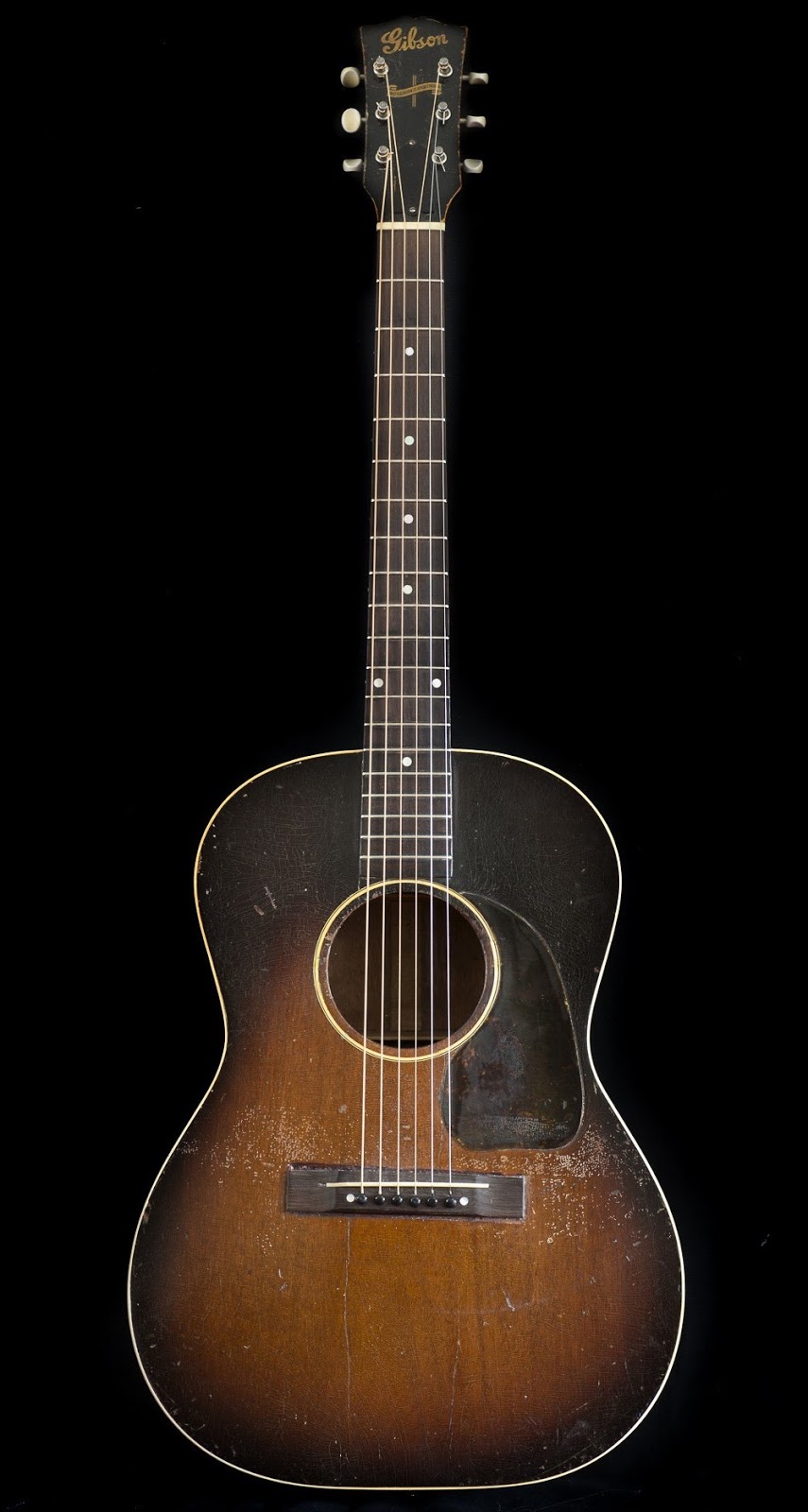
Equilibrium Co-Leader's Solo Guitar Album Was Inspired by a Vintage Gibson Guitar

“Danish guitarist Mikkel Ploug is on his way into the champions league of contemporary jazz. His guitar playing is among the most stylish in the genre.” – Alex Schmitz, Jazz Podium (Germany)

Solo jazz guitar records are not that common, solo acoustic guitar records perhaps even less so outside of the classical and folk/world traditions. Apart from Ralph Towner, Earl Klugh and Gene Bertoncini it’s hard to think of many guitarists in jazz today primarily making music on an unamplified acoustic instrument. But Ploug (co-leader and main composer of the avant chamber jazz trio Equilibrium, with three releases on Songlines) is a jazz guitarist with interests in folk, world and classical music. And the guitar that inspired him to create and record this program is neither a classical guitar nor some ordinary folk/blues/bluegrass guitar.

The background to the record is almost as interesting as the music on it. On tour last year in the U.S., Mikkel chanced upon a well-worn but rare mahogany-top Gibson Banner LG-2 in New York. (The story of the Banners, made during the war by a primarily female work force, is told in John Thomas’s book and film Kalamazoo Gals.) Right away he loved the sound, and eventually he got the guitar to Copenhagen. He spent the next four months playing it every day, generating and refining ideas for pieces. Then it was into the studio (ribbon mics in a warm wooden room) to record the ones he liked best.


He had never really considered himself an acoustic guitar player – his main ax for the last ten years has been a Gibson ES-330 hollow body. “But then I found this old Banner…Part of its warm sound has to do with the mahogany body and top – most Gibson guitars from that time [around 1945] were with spruce tops which have more high end, but this guitar produces a subtle beautiful high end too. To me it sounded like no other guitar I had played before, I would describe the sound as warm, ringing and very balanced from top to bottom. It’s clear to me that the wood has settled beautifully, and the guitar has lots of character…It’s not necessarily easy to play, and certain passages on the tune ‘Arabesque’ for example were next to unplayable for me until just before or actually on the recording date. But that was part of the excitement!”
​​​​​​​
The composing process was different too. “The guitar would push me around stylistically – sometimes ask me to include less notes in a voicing or more open strings, and just opened up new fields of inspiration. Some of the beauty of it to me was that a very simple chord would just sound so good and so rich that often it would feel like it was enough as a starting point to spur a composition. I explored various concepts, whether it was a certain playing style or technique like on ‘Arabesque’ [his own favourite], ‘Alleviation’ and ‘Florescence’ or a melodic or harmonic concept like on ‘Couleurs d’Olivier’, a composition based on Messiaen’s modes of limited transposition. ‘Circle Wind’ is written with Steve Reich’s repetitive work in mind and ‘Luminous’ is my Ben Monder tribute piece.”

He fingerpicks about half the tunes here: “The world of fingerpicking I find fascinating but my inspiration doesn’t come from any particular style, I think more of how a grand piano can resonate when lots of keys are pressed down simultaneously and try to achieve a similar effect with a fast, continuous vibration of the strings on the guitar, like on ‘Florescence’.”


Ploug has already recorded a duet record with longtime collaborator Mark Turner using this guitar, and is organizing solo concert tours for next year. For collectors the record is also being released on limited edition 180g vinyl.

For more information please visit www.mikkelploug.com. The interview is linked from the Songlines release page.

Saturday, September 23, 2017

Katayoun: love songs for a heartsick world bring the poetry of Rumi to life


We Should: Iranian Poetry, Indian Tunes, and a hint of Jazz Gel on Will You, Love Songs for a Heartsick World

Tune snippets sung over Whatsapp, inspired by translated phrases from a beloved 13th-century poet. Then a studio session, unrehearsed, when all the outpourings of grief, fear, and mad love came to a head.

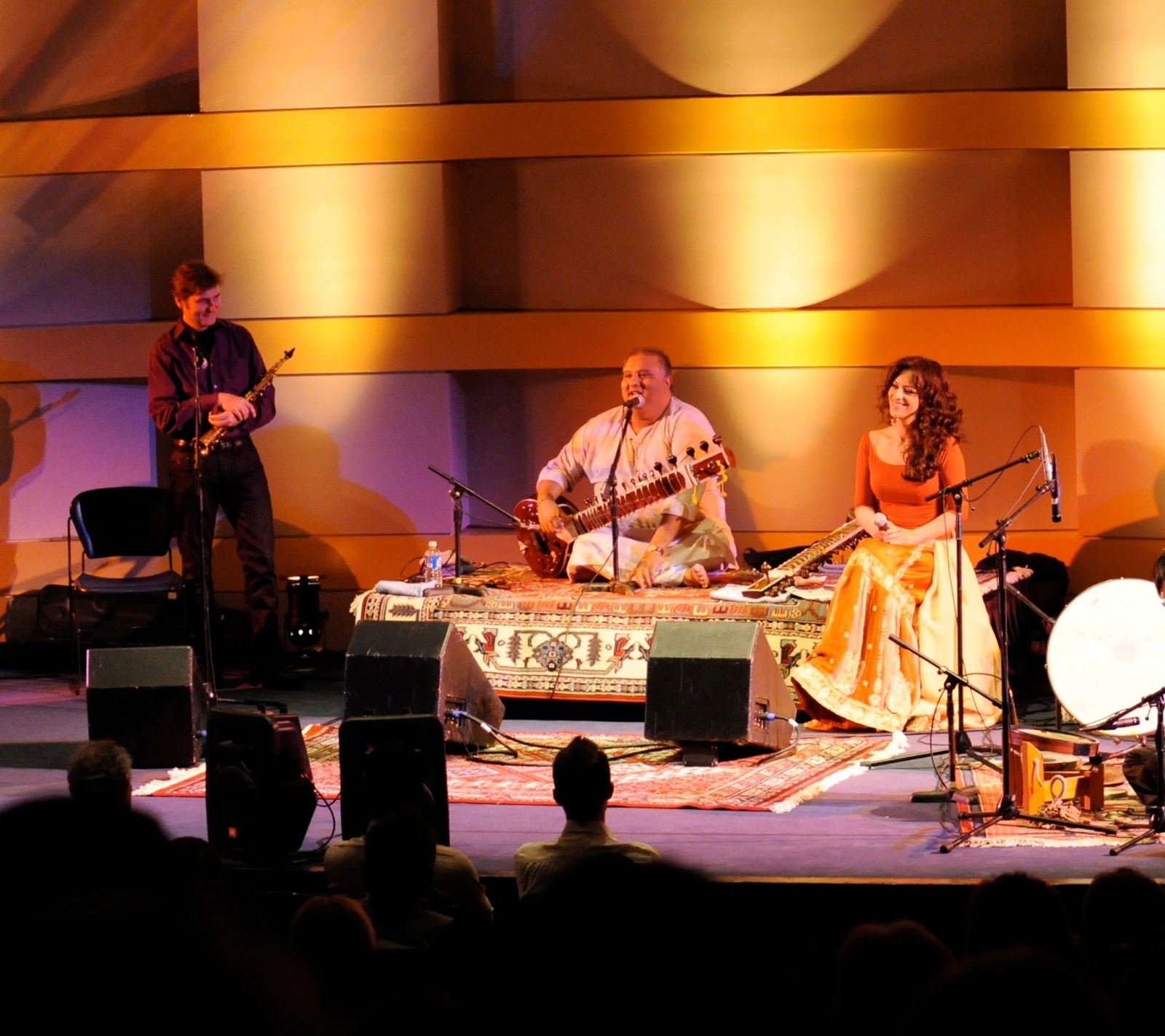
The close friendship of several culturally diverse musicians is captured on Will You (release date: September 22, 2017 by Tames Records), the latest from Iranian-American vocalist Katayoun Goudarzi, master sitar player Shujaat Khan, highly respected saxophonist Tim Ries (who’s played with jazz greats like Jack DeJohnette and Donald Byrd and rock icons like The Rolling Stones, Donald Fagen, and Rod Stewart), artful pianist Kevin Hays, and tabla player Dibyarka Chatterjee. Together, they have forged an unlikely ensemble that finds striking new settings for Rumi’s centuries-old yet ever-urgent words.


“I come up with the skeleton of the tunes, but that’s really just what we build out from,” notes Khan. “We converse to make this music. It’s never the same interpretation, the same sound, the same song twice.” “The music is not classical Persian music,” adds Goudarzi. “It’s Persian classical poetry sung in Indian idioms, but with a touch of jazz. In that respect, it’s perhaps different than things that have been done in the past.”

Goudarzi is a perfectionist who pays meticulous attention to details. She’s constantly experimenting in hopes of honoring the spirit and sense of the poetry she loves. “Don’t”--a plea to save the beloved from arrest and torment--demanded a different vocal approach from Goudarzi. Goudarzi began her vocal career employing traditional recitation of Persian poetry, its sweeping spoken approach. For this album, she decided to return to singing, employing several different vocal styles to heighten the intensity, matched by Khan’s supple, responsive playing.

“That poem was the reason I sang on this album. The lyrics are saying, he’s my life, don’t beat him up, don’t take him away. I had to portray that pain,” muses Goudarzi. “I had to sing those lyrics with all the passion it required. If I couldn't do it right, I wouldn’t touch them. That was one of the inspiring songs that made me think of singing a lot of the album.”

“With Rumi you can find all different kinds of poems, chronicling all different kinds of human experience,” reflects Goudarzi. “Some are wildly romantic. Some are edgier like ‘Don’t.’ Most of the verses we use on the album are love poems. The way I present the lyrics this time, on the title track, is to use three different poems to make sure I’m completing the story.”

Her ensemble-mates expand the story by contributing pieces (Hays’ “Sweet Caroline”) and by weaving their instruments’ voices into Goudarzi’s. Sometimes they respond, as Khan does at the end of “Void,” playing and humming the role of the beloved whom Rumi so often evokes in his poems. Sometimes they set the stage with a dramatic haunting and chilling solo as Ries does skillfully at the beginning of “Don’t.” Sometimes they stop playing entirely and allow Goudarzi to sing solo, heightening the emotional intensity, as at the end of the title track “Will You.”


One of the defining qualities of Rumi’s work is its sustained ability to resonate emotionally, across ages and across cultures. Goudarzi feels this resonance has particular relevance to our day and age. Through the words and music, she and the ensemble want to bring listeners deeper into these varied emotions, feelings universal in nature. “Happiness and sadness. Love and hatred. These are universal feelings, no matter what language we speak, the color of our skin. No matter how you express it, the feelings are the same. We wanted to bring those emotions to the surface.”

In a context of heightened political tensions, when conversation and connection are being abandoned for harsher ways, Goudarzi points to the importance of connecting, of the small symbol the ensemble presents. “Isn’t it something? A diverse group can create things a homogenous group can’t,” reflects Goudarzi. “Each of us interpreted these emotional musical phrases through all our experiences, all different, yet it all gels. Perhaps because at the end of the day, we’re all human. It’s important to remember that.”

Musicians
Shujaat Husain Khan: Sitar & Vocal
Kevin Hays: Piano
Katayoun Goudarzi: Vocal
Tim Ries: Tenor & Soprano Saxophone, Alto Flue
Dibyarka Chatterjee:  Tabla


Grammy award nominee and Master sitarist Shujaat Husain Khan, Saxophonist Tim Ries (of the The Rolling Stones), award winning Jazz pianist Kevin Hays, Iranian vocalist Katayoun Goudarzi and percussionist Dibyarka Chatterjee create a delicate balance between form, content and creativity in their new album 'Will You?' The band started working together in 2009. Their first album, dawning released by Palmetto records and Tames records was on the top 40 CMJ charts for more than 7 weeks in 2013. Below are what critics have said about their work:

"world music in the truest sense of the world." Rolling Stone

"Katayoun...always tonally luscious" – Songlines

"one of the most fascinating cross-cultural collaborations of the year."  World Music Central

"a band whose work represents the best of a musical union" – Arts Nash

"the quavers and attack in Goudarzi's vocal presentation, while as beautiful as the instruments, add piquancy that sets this music apart. " – Exclaim!

"hypnotic" – New York Music Daily


Malleus Trio - Malleus Trio (2017)


Malleus trio is a high-energy jazz combo; they play through genres, altering traditional sense of form while sneaking across bar lines. The dynamic sound scape is supported by sturdy groove. The group assembles Dominic Conway on tenor sax, Ben Brown on kit and Geordie Hart on upright bass.


1. Salem 04:49
2. Heavyweight 07:07
3. East-Van Holiday 05:01
4. Nets Away 04:49
5. In The Ghost 04:36
6. The Hustler 04:26
7. Throbbing Walrus 06:44

Christian McBride Big Band – Bringin’ It (MACK AVENUE RECORDS 2017)


Iconic bassist Christian McBride has been doing what the title of his upcoming big band album implores for years: Bringin’ It. This highly anticipated release, which follows the Christian McBride Big Band’s 2011 Grammy® Award-winning debut, The Good Feeling,puts his status and skills as an all-around entertainer on full display. With a list of growing accolades including his recent appointment as Artistic Director at the Newport Jazz Festival, hosting shows on SiriusXM (“The Lowdown: Conversations with Christian”) and NPR (“Jazz Night in America,” as well as frequent online contributions to various programs including “All Things Considered”), speaking engagements, and occasional DJ performances under the alias DJ Brother Mister, he’s more than just a bandleader: Christian McBride is transcending that title to something more complete.

Getin' To It
Thermo
Youthful Bliss
I Thought About You
Sahara
Upside Dow
Full House
Mr. Bojangles
Used ' Ta
Could
In The Wee Small Hours Of The Morning

Christian McBride: bass
Steve Wilson: alto saxophone, soprano saxophone, flute
Todd Bashore: alto saxophone, flute, piccolo
Ron Blake: tenor saxophone, flute
Dan Pratt: tenor saxophone, flute
Carl Maraghi: baritone saxophone, bass clarinet
Frank Greene: trumpet
Freddie Hendrix: trumpet
Brandon Lee: trumpet
Nabate Isles: trumpet
Steve Davis: trombone (11)
Michael Dease: trombone
Joe McDonough: trombone (1-10)
James Burton: trombone
Douglas Purviance: bass trombone
Xavier Davis: piano
Quincy Phillips: drums
Rodney Jones: guitar
Melissa Walker: vocals (6, 8)
Brandee Younger: harp (10)


Dave Rempis Solo - Lattice (AEROPHONIC RECORDS October 10th, 2017)


Dave Rempis is a mid-career artist whose deep roots in the Chicago improvised music scene have by now stretched themselves out across the world through his multiple ongoing collaborations. But he waited a long time to put out this first solo recording. Highly aware of the singular statements in this context put forth by artists such as Coleman Hawkins, Eric Dolphy, Anthony Braxton, Steve Lacy, Joe McPhee, Evan Parker, Ab Baars, and Mats Gustafsson to name just a few, left him wary of taking this challenge on too soon. But in the fall of 2016, the time felt right. So he decided to combine the development of a unique solo vocabulary on his instrument into the larger goal of exploring and expanding the crucial network of artists, presenters, and fans that support improvised music in the United States. In the spring of 2017, he brought the idea to fruition by undertaking a massive journey across the country, performing thirty-one solo concerts in twenty-seven different cities, while also collaborating with local artists at each stop. This singular odyssey gave him the opportunity to delve methodically, night after night, into his own process towards solo improvisation. It also gave him a new understanding of the multiplicity of perspectives playing themselves out in the improvised music scene across the country. These lessons had a great effect on the music presented on this recording, culled from several live performances along the way. And the record and overall project were titled with this informal but essential artistic network in mind – Lattice.


The music on Lattice is expansive, incorporating Rempis’ interest in his own Greek musical heritage, his longstanding interest in the many varied musical traditions of Africa, his love for American jazz, and his enthusiasm for the seemingly endless sonic possibilities of the saxophone itself. The sheer physicality of his approach – sometimes achingly gentle, and sometimes a full blown fervor that feels as though it may burst the horn open at its seams, is palpable on all of these pieces. But that raw, human, almost vocal quality combines with a studied control of spontaneous form and structure in each piece to produce explorations of remarkable depth and focus.


1. A Flower Is A Lovesome Thing (Billy Strayhorn) 6:09
2. Loose Snus 6:45
3. If You Get Lost In Santa Paula 5:38
4. Linger Longer 7:46
5. Horse Court 10:02
6. Serene (Eric Dolphy) 7:25

Track 1 recorded April 27th, 2017 at Candela Books & Gallery, Richmond, VA
Tracks 2, 4, 5, recorded April 24th, 2017 at The Mothlight, Asheville, NC
Track 3 recorded April 26th, 2017 at Neptune’s Parlour, Raleigh, NC
Track 6 recorded May 4th, 2017 at Hallwalls, Buffalo, NY


Rempis Percussion Quartet, The - Cochonnerie (AEROPHONIC RECORDS October 10, 2017)


With a band that’s been around for thirteen years, one might reasonably ask with a new recording, what’s new here? Are there now dance beats superimposed on the music? Maybe some electronics? A different instrumentation, or perhaps some special guests? The answer on this recording – the eighth official document of this improvising quartet since it started in 2004 - is a resounding no. It’s the same old stuff – a band fiercely committed to reconciling the constantly evolving ideas that each of its members brings to the table as improvisers. 

Sure, you can look at the superficial. Flaten hauls out the electric here for the first time with this band, as an example. That sounds different. But the quartet’s underlying methodology remains the same despite the outward-facing sonic results. The tension of resolving individual ideas and interests requires constant attention, and the intensity and focus for which this quartet’s long-form improvisations are known feed off of that commitment.


Hashing this musical and intellectual dialogue out for over a decade now, the band’s evolution over time is no joke. But those early days of regular work when all four members lived in the same city and could sort it out in a more leisurely manner are long gone. Instead, each one of these musicians travels the world with a myriad of bands, and borrows new perspectives from each one. Interestingly, as each member’s path diverges further, the quartet tours that take place once every year or so provide the backdrop by which to measure those tectonic shifts. 

The music on Cochonnerie demonstrates exactly that type of shift, without moving an inch. A band that hasn’t played a gig for over a year convenes in Chicago to get reacquainted over two nights at the start of a two-week North American tour in the fall of 2015. But the idea of having a warm up period flies out the window as these four dive in fearlessly as ever. Whatever the difference in the sonic output may be on this record compared to previous outings, their fundamental commitment towards reconciling individual ideas into a coherent and compelling sound is exactly what continues to fuel the laser-bream focus and relentless energy on display here.

1. Straggler 32:58
2. Green And Black 07:57
3. Enzymes 17:56

Ingebrigt Håker Flaten – bass
Frank Rosaly – drums
Tim Daisy – drums

Friday, September 22, 2017

Happy Five Dollar Friday! Today's 1-Day Only $5 album is...


Happy 
Five Dollar
Friday!

Only one day to Buy a Brilliant Album
from the Cuneiform Catalog for Only $5!
This sale ends 11:59pm UTC on 09/22/2017

THIS WEEK'S ALBUM
Namesake Caution by Time Of Orchids


HOW IT WORKS:

1) Click the link below which will take you to the above album on Bandcamp

2) Click "Buy Digital Album"

3) Type "10" into the Name your price field (The discount comes next! ;) )

4) Type the word "FRIDAY" into the Discount code field.

5) Click "apply". 

6) Click "Check out now" or "Add to Cart".

That's it! Easy, right?


Potlatch - Agora (2017)


Potlatch
Besançon, France

Quintet de jazz. Des influences de chacun naissent des compositions mêlant écriture et improvisation.


1. Ecloplosion 08:15
2. Be hop 07:30
3. Intrication 12:06
4. Palmyre 11:41
5. Métro 07:46


BuJazzO - Verley Uns Frieden (DOUBLE MOON RECORDS 2017)


Martin Luther's thesis in 1517 was the beginning of the Reformation - An event which has a world-historical significance in its impact on politics, religion, culture and society. In 2017 the Reformation Jubilee is celebrated nationwide with a variety of events. The BuJazzO is also participating in this 500th anniversary.

VERLEY UNS FRIEDEN - this Latin choral in the arrangement of Martin Luther serves as the title of a commission composition, composed by Michael Villmow for the BuJazzO and a vocal ensemble. 

The focus is on the setting and interpretation of selected Luther texts and chorales.The 10-piece vocal ensemble of the BuJazzO is an integral part of this program. As an artistic director, a personality has been found who has both experience in the composition, arrangement and direction of a big band, as well as in the field of composition and arrangement of church music, in order to create something new and unique for the Luther Jubilee year. Villmow, himself a saxophonist, has the right mixture of education and many years of experience in composing and directing choirs and big bands.


"The work VERLEY UNS FRIEDEN will reflect respect for the strength, courage and spirituality of Martin Luther and the Reformation, but also before the musical tradition. However, this will be done from today's musical and personal perspective, in the sense of Luther's and jazz! With space for individuality, creativity and individual, also freaky ideas of the soloists - supported by the community of the ensemble and the overall sound, "says Michael Villmow.


In the process of rehearsing, renowned teachers support young musicians: Rob Bruynen (tp), Tobias Wember (tb), Matthias Erlewein (sax), Hanno Busch (git, rhythm), Hans-Kristian Kjos Sørensen.

1 Ich bin kein Besessener  07:54
2 Sola Gratia  09:31
3 Tok Tok Tok  04:56
4 Hier stehe ich!  07:10
5 Jimi's Castle  03:06
6 Aus tiefer Not  14:37
7 Ein feste Burg  08:17
8 Verley uns Frieden  05:05