Tuesday, February 14, 2017

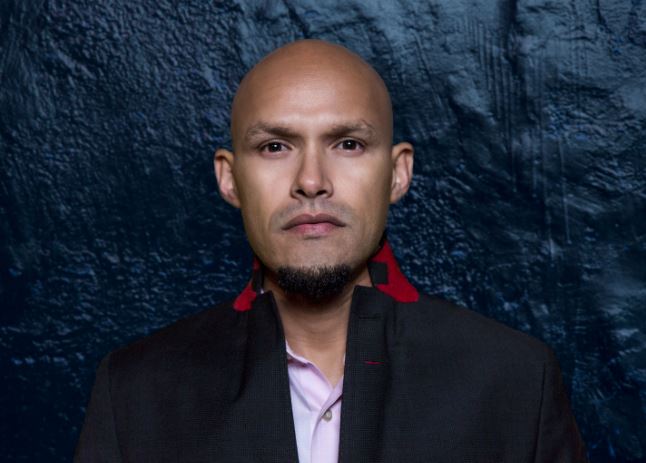
Noah Preminger - Meditations on Freedom (2017) + TOUR


Saxophonist Noah Preminger Releases an Album of Musical Protest Meditations on Freedom on Inauguration Day:
January 20, 2017
Featuring Preminger and his quartet – with trumpeter Jason Palmer, bassist Kim Cass & drummer Ian Froman – in searching originals and reimagined classics by Bob Dylan, George Harrison, Sam Cooke & Bruce Hornsby

TOUR
April 7 & 8 at Small's Jazz Club, NYC
April 12 & 13 at West Virginia Wesleyan College, Buckhannon, WV
April 14 at Side Door Jazz Club, Old Lyme, CT
April 15 & 16 at The Rex, Toronto, ON
April 17 clinic at Denison College, Granville, OH
April 19 at Blu Jazz, Akron, OH
April 20 at Bop Stop, Cleveland, OH
April 24 at Black Eyed Sally's, Hartford, CT
May 18 at Scullers Jazz Club, Boston, MA

“He designs a different kind of sound for each note, an individual destiny and story.” — Ben Ratliff, The New York Times on Noah Preminger


As a musical protest at ominous political developments in America, jazz saxophonist Noah Preminger presents his sixth album – Meditations on Freedom – on Inauguration Day: January 20, 2017 (for digital release via Dry Bridge Records, with CD on Feb. 3). It’s the third album featuring the tenor player’s current quartet, with Jason Palmer (trumpet), Kim Cass (double-bass) and Ian Froman (drums). Following two albums inspired by Delta blues, this new recording finds Preminger and company reimagining – in intense, emotive instrumental versions – classic politically charged songs by Bob Dylan (“Only a Pawn in Their Game”), Bruce Hornsby (“The Way It Is”), Sam Cooke (“A Change Is Gonna Come”) and George Harrison (“Give Me Love, Give Me Peace on Earth”). The saxophonist’s deeply felt original compositions are titled “The 99 Percent,” “Women’s March,” “Mother Earth,” “Broken Treaties” and “We Have a Dream,” reflecting pressure points in contemporary society. Meditations on Freedom was recorded – live on the studio floor with no edits – by engineer Jimmy Katz, as with the two previous albums, Dark Was the Night, Cold Was the Ground and Pivot: Live at the 55 Bar. Not available on any streaming sites, Preminger’s most recent recordings are exclusively offered for purchase, whether as digital download or on CD, at noahpreminger.com.


Praising his “creativity and passion,” DownBeat called the 30-year-old Preminger “an old soul,” while the UK’s Jazzwise magazine declared that the saxophonist “oozes integrity, authority and gravitas.” In other words, Preminger has something to say and the means to say it. About Meditations on Freedom, he explains: “I hope the titles of the original tunes – and the encoded messages in the covers – can serve as a conversation starter for listeners and ultimately raise awareness of some subjects I care about, whether it’s women’s rights or climate change or the well-being of Native Americans. I realize that the key thing I can hope to do with music – particularly instrumental jazz, with no words – is to heighten emotions. That said, some of the most beautiful, meaningful creations in the history of jazz have been poetic statements of protest, like John Coltrane’s ‘Alabama’ or Sonny Rollins’ ‘Freedom Suite’ and so many more great examples. I would never put myself in that category, but I’m not alone among jazz musicians today who wonder why it is that we do this. Ultimately it’s important to care about something larger than yourself and that’s what I am trying to convey with this music."


“Artists should always try to really matter, and that includes jazz musicians – we should strive to be relevant to the wider conversations of our time,” Preminger continues. “I started writing the music for this album on Election Day and came into the session a few weeks later with just sketches for the tunes. I wanted Jason, Kim and Ian to react to the music with immediacy – and with the hard feelings from the election fresh in our minds. I come at the issues of the day from a progressive place, as do the guys in the band. This group is made up of open-hearted, forward-minded people, and that’s ideal for conveying emotion in a strong way, whether the music is the deepest blues or about spiritual protest. The recording process was honest, unadulterated. And our recording engineer, Jimmy Katz, is integral to that process. He and I see eye to eye when it comes to intensity in music.”


To Katz, a renowned photographer as well as a recording engineer, the content of Meditations on Freedom matched the method of capturing it, just as with the previous studio album of blues interpretations, Dark Was the Night, Cold Was the Ground. “Noah likes to record live with everybody right next to each other just like on the bandstand, with no booths or headphones – so there’s a lot of subtle communication among the band,” he explains. “And we’re presenting full, unedited takes, no edits or fixes. It’s indeed as honest as it can be, so that the true emotion and intensity of the music comes through to a listener as if the band were right there in front of you, like with a performance in a club.”

Preminger’s previous albums Dark Was the Night, Cold Was the Ground and Pivot: Live at the 55 Bar earned wide acclaim for their emotional intensity and individualist engagement with the blues. Of Dark Was the Night, Cold Was the Ground, the Boston Globe said: “Tenor saxophonist Preminger – a master with standards and ballads, as well as an adventurous composer and bandleader – continued the exploration of the blues that began with last year’s Pivot: Live at the 55 Bar, this time with a collection of early Delta bluesmen, in original, imaginative arrangements…. Preminger lets a little Ornette into his sound to join Coltrane and Rollins. One of the most emotionally satisfying discs of the year.” All About Jazz, reviewing Pivot – recorded in 2015 at the 55 Bar, a gritty Greenwich Village nightspot – extolled the saxophonist’s record-making virtues at length: “In an age when accomplished young jazz musicians are prone to making recordings that are simply too cautious, too precious, obviously ‘dressed to impress,’ or too complicated to digest in one sitting, Pivot: Live at The 55 Bar is a welcome blast of gritty, fearless, sweaty, and intelligent hard-core jazz.” Meditations on Freedom is cut from much the same musical cloth, albeit with the aforementioned political thoughts to the fore.

About the members of his quartet, Preminger says: “Jason has amazing technique, along with a beautiful tone and a rare sense of harmony and rhythmic freedom. He’s the complete improviser – a badass dude, as well as a sweetheart of a guy. Kim Cass and I went to the New England Conservatory together. He has this warm, crisp sound. He’s a great texturalist, but you can also hear each note he plays – uncommon among bass players. And Ian Froman has this incredible energy, driving everything. This quartet is devoted to a certain ideal of playing – swinging hard but with harmonic freedom, plus a blues phrasing in our minds. As I said, this band is all about conveying spirit and emotion with immediacy and intensity. The long jazz tradition is inside us even as we’re working very much in the present, with the issues of today on our minds in every sense.”

Noah Preminger has performed on stages from Boston and New York to Europe and Australia, playing with a wide range of jazz greats including Dave Liebman, Dave Holland, Fred Hersch, Dave Douglas, Victor Lewis, John and Bucky Pizzarelli, Billy Drummond, George Cables, Roscoe Mitchell, Dr. Eddie Henderson, Cecil McBee, John McNeil and Frank Kimbrough. As The Boston Globe says: “He plays with not just chops and composure, but a distinct voice: His approach privileges mood and reflectiveness, favoring weaving lines that can be complex but are also concise, without a trace of over-playing or bravado.”  The Boston Phoenix declared: “Preminger’s sound is beholden to no one. That makes him continually unpredictable and continually satisfying.” 


A native of Canton, Connecticut, Preminger has released six critically acclaimed albums.  His 2008 debut Dry Bridge Road was named Debut of the Year in the Village Voice Critics Poll, along with making Top 10 Albums of the Year lists in JazzTimes, Stereophile and The Nation.  In 2011 Palmetto Records released Preminger’s next album Before the Rain, an essay in atmospheric romance that blends virtues both modern and old school. Reviewing that album, All About Jazz said: “Sensitivity and an ear for aural sophistication are the hallmarks of tenor saxophonist Noah Preminger.”  Preminger’s third album, Haymaker (Palmetto, 2013), features the saxophonist in mostly original material (plus a Dave Matthews cover and a tune from Annie for good measure). In The New York Times, Ben Ratliff said: “Mr. Preminger designs a different kind of sound for each note, an individual destiny and story,” while Nate Chinen chimed in, too, lauding his “darkly shaded… warmly expressive” tone and his “fluency, prudence and control.” The Boston Globe called Preminger’s music “impressive, challenging and beautiful.”


In autumn 2016, Preminger followed his fiery, blues-fueled quartet discs Dark Was the Night, Cold Was the Ground and Pivot: Live at the 55 Bar by showing his more intimate, romantic side again with a collection of ballads, Some Other Time, released exclusively as a vinyl LP by Newvelle Records. He recorded this with a dream band featuring Monder, bassist John Patitucci and drummer Billy Hart. All About Jazz, reviewing Some Other Time, said: “With this all-star band in tow, Preminger does what he does best: He tells a compelling story without frills – and he does it better than he has ever done before.”


Jazz at Princeton University Presents Diverse and Compelling Spring 2017 Season


Jazz at Princeton University Presents Diverse and Compelling Spring 2017 Season


Guest artists include Walter Smith III, Steve Lehman’s Sélébéyone, Darmon Meader and Billy Childs premiering a new work commissioned by Jazz at Princeton University


Jazz at Princeton University, helmed by acclaimed saxophonist/composer Rudresh Mahanthappa, presents a diverse and compelling series spring 2017 season, March 5 – May 13, 2017. Highlights include the world premiere of a Princeton-commissioned work by pianist/composer Billy Childs, and appearances by saxophonist Walter Smith III, saxophonist Steve Lehman’s global hip hop project Sélébéyone, and vocalist, arranger and saxophonist Darmon Meader.

“Jazz at Princeton University has a very exciting spring season that embraces this music in its many styles and forms,” says Mahanthappa. “Some of the top jazz artists of our day will be performing and working with out students.  From saxophonist Walter Smith III performing with our top small jazz group to esteemed composer and alto saxophonist Steve Lehman’s global hip-hop project Sélébéyone to a newly commissioned work by the amazing pianist Billy Childs, this will truly be a season to remember.”


Spring 2017 Schedule

Sunday, March 5 – Small Group I with special guest saxophonist Walter Smith III 
8 p.m. – Richardson Auditorium in Alexander Hall
Tickets are $15; $5 for students, available at 609-258-9220, or online at tickets.princeton.edu.

The Los Angeles Times simply states the future of Jazz is bright with rising saxophonist Walter Smith III. Although it may appear Smith is a young gun on the scene at age 33, he is widely recognized as an adept performer, accomplished composer, and inspired educator. Small Group I will be performing music from his most recent album Still Casual.

Tuesday, March 28 – Steve Lehman’s Sélébéyone
7:30 p.m. – Taplin Auditorium in Fine Hall
Free and open to the public.

Formed in 2015 by award-winning saxophonist Steve Lehman, HPrizm, Maciek Lasserre, and Bamar Ndoye, Sélébéyone is a collaborative project that draws from Senegalese rap, French spectral music, modern jazz, underground Hip Hop, interactive electronics, and beyond.  The band’s first full-length album was called one of the “Top 10 CDs of 2016 by NPR Music, The NY Times Popcast, The Denver Post, The LA Times and The Chicago Reader, among many others.
   
Wednesday, April 12 – Small Group 1 and Small Group A
7:30 pm – Taplin Auditorium in Fine Hall
Free and open to the public.

Sunday, April 23 - Small Group A 
2 p.m. at Princeton Public Library
Free and open to the public.

Come celebrate Jazz Appreciation Month in a special concert of jazz standards from Princeton’s Small Group A.  

Thursday, April 27 – Jazz Vocal Collective I and II with special guest Darmon Meader
7:30 pm – Taplin Auditorium in Fine Hall
Free and open to the public.

Recognized in both the jazz vocal and instrumental worlds, Darmon Meader is a highly respected vocalist, arranger and saxophonist. Meader has achieved international recognition as the founder, musical director, chief arranger, composer, producer, saxophonist, and vocalist with New York Voices. As a member of New York Voices, he has released numerous recordings on the GRP, RCA/Victor, Concord and MCGJazz labels.

Saturday, May 13 – Creative Large Ensemble with special guest pianist/composer Billy Childs 
8 pm – Richardson Auditorium in Alexander Hall
Tickets are $15; $5 for students, available at 609-258-9220, or online at tickets.princeton.edu.


Creative Large Ensemble with special guest pianist and composer Billy Childs, one of the foremost American composers of his era working in jazz, classical, and rock.  CLE will be premiering a new work of Mr. Childs commissioned by Jazz at Princeton University as well as performing his previous work in arrangements by Grammy Award Nominee Darcy James Argue.

Jazz at Princeton University serves to promote this uniquely American music as a contemporary and relevant art form.  Our goals are to convey the vast musical and social history of jazz, establish a strong theoretical and stylistic foundation with regard to improvisation and composition, and

emphasize the development of individual expression and creativity. Offerings of this program include academic course work, performing ensembles, master classes, private study, and independent projects.


THROES + THE SHINE, la sensación del Kuduro aterrizará en España a primeros de Marzo


THROES + THE SHINE
DESDE ANGOLA Y PORTUGAL

Miércoles 1 de Marzo · BARCELONA · Sala Apolo [2]
Viernes 3 de Marzo · MADRID · Sala Caracol
Sábado 4 de Marzo · GRANADA · Sala Boogaclub

Entradas a la venta en www.rootsound.com

Throes + The Shine es el nuevo fenómeno de la música Kuduro que está contagiando al continente, danza electronica, riffs afro rockeros y tropical bass son los otros pasajeros que van en la nave que aterrizará en España a primeros de Marzo.


Los componentes de Throes + The Shine utilizan cada impulso de creatividad para construir un estilo único, que se concentra en una infecciosa energía en sus directos. Oriundos de Oporto y Luanda (Angola), basan su sonido en la fusión, en cuyo caso comenzó mezclando kuduro y rock and roll y extendiéndose hasta alcanzar influencias de multitud de culturas, de África a Europa, pasando por El Caribe, Asia y EEUU.

El pasado 2016 publicaron “Wanga”, que significa "hechizo" en kimbundo, dialecto hablado por los ancianos angoleños. Y eso es lo que recoge este trabajo, hechizos de los que te hacen bailar, de esa manera empoderada y sumamente placentera. “Wanga” supone la cumbre de un estilo de creación propia, el “rockuduro”, y sus diez cortes hacen retumbar las paredes a base de intensos beats y profundas melodías sintéticas. Una suerte de mixtura de pop electrónico, tropical bass, afro, rock y kuduro, revitalizando la estela que en su momento dejaron M.I.A., Buraka Som Sistema y Vampire Weekend.

Atención, porque cuando este trío aterriza en el escenario, la fiesta atraviesa la estratosfera y pegan chispas.

BALKAN BEAT BOX en España · Gira "Shout It Out"


BALKAN BEAT BOX 
Presenta:
“Shout It Out”


SPANISH TOUR MARZO 2017

Miércoles 29 de Marzo · BARCELONA · Sala Apolo 

Jueves 30 de Marzo · MADRID · Sala Arena #MadTownDays

Viernes 31 de Marzo · JEREZ · Primavera Trompetera

Entradas a la venta en www.rootsound.com


Balkan Beat Box llega en Marzo a los escenarios españoles con su sorprendente nuevo disco Shout it Out.

Los líderes mundiales del movimiento “Balkan Beat” vuelven a nuestra tierra presentando su nuevo trabajo “Shout It Out”. Tras agotar todas las entradas en su último tour, la banda americana- israelí actuará en la Sala Apolo de Barcelona el miércoles 29 de Marzo, el jueves 30 de Marzo lo harán en Madrid en la Sala Arena y el viernes 31 de Marzo en el festival Primavera Trompetera de Jerez de la Frontera.

Ha llovido mucho desde que en 2005 con su primer y homónimo LP, Balkan Beat Box diera un golpe de estado a los patrones de la música tradicional y a las nuevas tendencias, creando un nuevo estilo, que sorprendía tanto a críticos como a público de todo el planeta, desconformes ante lo que sucedía en el mundo sus letras siempre han estado llenas de mensajes de protesta, de gritos de paz y unidad. Nunca se encasillaron en ningún estilo musical porque los creadores de esta original amalgama musical son tan diferentes como la procedencia de sus componentes; Tomer Yosef (voz, percusión, samplers), Ori Kaplan (saxo) y Tamir Muskat (batería, programación); y tan versátiles como la propia exploración que realizan disco a disco, en las músicas de raíz, la música electronica y urbana.

Ahora, tras cuatro años de la publicación de “Give”, llega el esperado regreso discográfico de Balkan Beat Box, “Shout It Out”, el cual está siendo muy bien recibido por toda su parroquia de seguidores, nuevamente rompiendo cliches. Temas como “I Trusted U” o “Chin Chin” ya superan el millón de reproducciones.

BRUUT! - Superjazz (DOX RECORDS 2017)


Maarten Hogenhuis, organist Folkert Oosterbeek, bassist Thomas Rolff and drummer Felix Schlarmann bring their brand of postmodern popcorn grooves and hi-octane soul jazz with a sense of joyful interaction not unlike like-minded outfits as Flat Earth Society and Medeski, Martin & Wood. I’ve always felt there just might be that young newcomer to jazz having a revelation after hearing Bruut! perform an homage to the boogaloo period of saxophonist Lou Donaldson. Wishful thinking? I don’t think so.

Sparse boogaloo traits on Superjazz, strictly speaking, but Papa Lou’s spirit is certainly hovering over the exotic Camel. And the increasingly hot groove on Plume, which starts as the sound of a shellac disc of Cab Calloway, Wild Bill Davis or Bill Doggett that one might find in an East-Texan thrift store, develops into a cut many will recognize from the late sixties funk jazz output on Prestige and Blue Note by the likes of Rusty Bryant and Boogaloo Joe Jones. There’s Yamazaki, a fast-paced cartoonesque bopswing tune right out of the Raymond Scott bag. The old-timey Sonora swings merrily in 4/4 time.

The soundtracks of Quinten Tarantino have always been a big inspiration for Bruut!. Maybe one day the director might consider including Saga in one of his flicks, a sleazy grunge affair that reveals a lot of ‘rage against the machine’… Organist Folkert Oosterbeek conjures up his meanest Hammond sound available. Throughout the album, the playful Oosterbeek alternates between textures that range from shades of the Farfisa organ, old-fashioned, accordion-type chords to the crunchy sound and crisp lines of the organ modernists from the sixties.


Above all, the sing-songy, slightly husky alto sax of Hogenhuis earmark the straightforward, Dick Dale-influenced surf tunes Baha and the punky, jumpin’ and jivin’ Prince as quite out of the ordinary. Occasional twists, turns and flurries of notes reveal the work ethic of a jazz cat that grew up with Parker and the Parker-influenced giants of jazz. The poppy ballad Loulou finds Hoogenhuis, like a daddy soothing a daughter with a fractured knee, reaching for a soft spot in the heart.

Bruut! appeals to the hearts and minds of jazz and popular music fans that appreciate tongue-in-cheek, uplifting tunes performed with deftness and unbridled enthusiasm.


Baha
Camel
Plume
Loulou
Prince
Yamazaki
Kors
Saga
Binson
Sonora


Brandon Coleman Quartet - Infinite Loop (2017)


A young, energetic and passionate improviser, Brandon Coleman seeks to stretch the limits of being a guitarist by constantly searching for sounds beyond the normal barriers of the instrument.

Brandon's compositions, whether in a improvisatory context or a classical one, embrace both the rhythmic intensity and complexity of stravinsky and zappa with the harmonic brilliance of Debussy and Messiaen.


01. Hoopwood 6:45
02. I Fell 5:18
03. Morphic Gate 1:35
04. Bathynerita 5:39
05. Smoke Gets In Your Eyes 7:49
06. Infinite Loop 6:13
07. Frozen Lake 6:01
08. Orb 2:42
09. A Key 8:06
10. Engram 1:18 

Brandon Coleman - Guitar, Guitar Synth
Keigo Hirakawa - Piano
Matt Wiles - Bass
Jeff Mellott - Drums


Kurt Rosenwinkel - Caipi (SUNNYSIDE RECORDS 2017)


The most influential and strikingly original guitarist/composer of his generation makes a radical leap in his musical direction on Caipi, the debut release on his new label Heartcore Records. Ten years in the making, Caipi is easily his most personal expression to date and features Kurt Rosenwinkel playing all the instruments (drums, bass, piano, synthesizers, percussion) and showcases his vocals prominently on tunes like the hard rocking "Hold On," the ethereal "Summer Song" and the slow ballad "Ezra," named for his son. The lilting "Little B" is named for his other son Silas, who was nicknamed Little Bear as a toddler. Elements of rock and jazz co-exist happily with all the easily recognizable features of his personal style; above all, there is ample space for the evolving world of Brazilian music in its most recent guise and, in particular, the Brazilian love song. To some extent this symbolizes Rosenwinkel's natural leaning towards the creation of melodies of considerable emotional impact, a highly distinctive feature and an unavoidable element in his markedly romantic artistic vision. 

Although most of the instruments on the album were played by Rosenwinkel, there are some notable guests: Amanda Brecker (daughter of Eliane Elias and Randy Brecker) provides Portuguese lyrics on "Kama" and contributes layered backing vocals throughout Caipi. Special guest Eric Clapton offers a subtle touch of signature string-bending on the upbeat pop number "Little Dream." And Rosenwinkel's former musical partner Mark Turner delivers potent tenor sax performances on "Ezra" and "Casio Escher." "I had to bring Mark in because it was very important to me to have that close friendship and collaboration represented on the album." Caipi also features the participation of a new young Brazilian multi-instrumentalist and singer Pedro Martins. 

Regarding his new role as a frontman singing his own thoughtful, metaphysical lyrics, Rosenwinkel says, "Writing songs with lyrics has always been very much a part of my musical world, but they've usually stayed in my private sphere. With Caipi, I realized that these were also lyric songs and that ultimately I would sing them as well. It's definitely something different from my other albums, but it's a familiar place for me and it was just a matter of doing what the music needed." 

With Caipi, Rosenwinkel presents eleven tantalizing, effervescent compositions. It is the most uplifting album he has ever made; it is an ode to resilience, a call not to give in to negativity. Deeper songs from an even deeper well.


01. Caipi
02. Kama
03. Casio Vanguard
04. Summer Song
05. Chiromatic B
06. Hold On
07. Ezra
08. Little Dream
09. Casio Escher
10. Interscape
11. Little B

Kurt Rosenwinkel - acoustic & electric guitars, electric bass, piano, drums, percussion, synth, casio, voice
Eric Clapton - guitar
Pedro Martins - voice, drums, keyboards, percussion
Alex Kozmidi - baritone guitar
Mark Turner - tenor saxophone
Kyra Garéy - voice
Antonio Loureiro - voice
Zola Mennenöh - voice
Amanda Brecker - voice
Frederika Krier - violin
Chris Komer - French horn
Andi Haberl - drums


Sunday, February 12, 2017

A brand new album by Trichotomy (CHALLENGE RECORDS)

Trichotomy - Known-Unknown (2017)

The Australian trio Trichotomy returns with The Known and the Unknown on Challenge Records. In a distinct step into new territory electronic sounds merge with acoustic improvisations, while the complexity of their compositions and group improvisations are balanced by graceful melodies and rich harmonies. Vivid and bright, it is compelling listening.

4**** star review by The Guardian:
''Svensson would have been proud of the lyrical simplicity and gentle piano-bass exposition of drummer John Parker’s misty ballad It’s Strange Coming Back.''

Inspired by a diverse range of influences from Aphex Twin to Vijay Iyer, and Tortoise to The Bad Plus, Trichotomy’s music combines a dense rhythmic focus with the melodic clarity of a Pat Metheny, Brad Mehldau, or the modern European jazz of Tord Gustavsen & Nik Bärtsch.

Compositions often find a fine balance between heavily notated sections and completely free improvisations. The Known and the Unknown is an apt description of the material the trio brought to the studio to record in June 2016, but more importantly it is a representation of the push and pull within improvised music. The music cannot exist without both, and both must remain in balance.


© 2017 - NewArts International / Challenge Records Int.

Miguel Zenón - Típico (MIEL MUSIC 2017) & Tour Dates


Internationally Acclaimed Saxophonist/Composer Miguel Zenón
releases intimate new recording Típico

February 10, 2017 on Miel Music
Zenón's 10th recording as a leader celebrates his longstanding quartet
with Luis Perdomo, Hans Glawischnig, Henry Cole


Miguel Zenón's new album, Típico, is above all a celebration of his longstanding quartet. His past several releases have generally fleshed out that core unit with additional instrumentalists as Zenón has looked outward to explore various aspects of his Puerto Rican heritage. This new album feels more intimate. Its focus stays closer to home, with nods to Zenón's own personal and professional life as it zeroes in on what makes his band unique.

"I was thinking about what this band and the guys in the band mean to me as I was writing the music," he explains. "I kept going back to this idea of us developing this common language that identifies us as a band."

That language has been developing for more than a decade. Pianist Luis Perdomo and bassist Hans Glawischnig have been with Zenón since the turn of the millennium; Henry Cole joined the band in 2005. Their language is thoroughly fluent modern jazz, with all the instrumental prowess and rhythmic and harmonic complexity that that implies. But the dialect they've created together through the years is distinctive.

"'Típico' refers to something that's customary to a region or a group of people," Zenón says. "Or something that can be related to a specific group of people. And when I was writing the music, I was thinking about music that identified us and this band."

Each of the album's final three tracks, Zenón notes, was composed around a solo or signature rhythmic line that one of the band members had played before. "My approach was more systematic on those three compositions specifically. But the whole record essentially is about representing the sound of the band. The sound of our band."

The album opens with "Academia," a tune inspired by Zenón's teaching at New England Conservatory, where he serves as part of the jazz faculty. "One of the great things about teaching at NEC is that I get the opportunity to create a personalized curriculum for each of my private students, depending on their needs and on what I feel they should be working on. So I find myself having to come up with new exercises constantly, in order to keep our interactions interesting and challenging. This composition is built around various harmonic and rhythmic exercises that I developed with some of my more recent students at the school."


The second track, "Cantor," honors Zenón's friend and frequent collaborator Guillermo Klein. "Gullermo's music has a very personal voice, something very unique. With this piece I was trying to convey some of what I feel are his most interesting qualities as a composer, like the lyrical character of his melodies and the very nuanced harmonic movement of his pieces. He also has very particular way of organizing the 3/4 bar, which he breaks down into three bars of 7/8 and one bar of 3/8. The piece touches on this a bit towards the end, sort of as a way of tipping my hat to a great friend and musician."

The third and fourth tracks both stem from Zenón pondering what gives a particular song a folkloric feel. "Ciclo" emphasizes melody and rhythm, Zenón taking "a melody that is meant to sound very folkloric - a bit simpler harmonically and delineating a very specific beat" and building a complex extended cycle around it using smaller, interlocking rhythmic cells.

"Típico" approaches its folkloric aims harmonically. "There's a harmonic cadence that is very common in Latin American music, especially music in the Caribbean. Something that revolves around a minor key and then slides down, going 'Subdominant Minor - Tonic Minor - Dominant - Tonic Minor.' A very simple cadence, but one that is very unique and effective. It's always caught my ear because I'm always on the lookout for things that serve as sort of musical connecting threads, things that makes me feel that the music from all these different countries and cultural expressions is somehow connected and coming out of the same combination of elements. I built this specific composition around this cadence, and called it "Típico" in reference to this Pan-American idea."

"Sangre Di Me Sangre" is a tune the quartet has been playing for a while now, a balladic tribute to Zenón's 4-year-old daughter, Elena, written before her first birthday. "I was sitting in this park with her," he recalls. "She was playing around and I sat down and sketched out the song on my notepad." Zenón wrote the piece first with lyrics, then orchestrated it for the quartet, featuring Glawischnig's bass both on a sprightly introductory melody played in unison with Perdomo and on a solo meant to convey a singing quality.

Glawischnig is also featured on "Corteza," its melody derived from Zenón's transcription of his bass solo opening the track "Calle Calma" on the 2009 Zenón album Esta Plena. It, too, has a balladic feel, with lyrical solos from Zenón and Perdomo leading to a closing uptempo restatement of the theme.


The Perdomo feature "Entre Las Raíces" ("Amongst the Roots") is more fiery, emphasizing two key facets of the pianist's musical personality. The intricate melody he and Zenón whip through together was transcribed from a Perdomo solo on "Street View: Biker," the opening track on Perdomo's album Awareness. But this arrangement opens with Perdomo playing wild and free, and Zenón's alto solo when it comes reveals a free side of his own, veering more toward Ornette Coleman or Albert Ayler.

"The piece is very free in terms of the way we deal with the improvised segments," says Zenón. "Luis always talks about listening to Bud Powell and Cecil Taylor at the same time when he was growing up in Caracas, and always having a foot in this freer, avant-gardish world of jazz. And when you hear him play on that track, it sounds that way. For that piece specifically, he really sounds like he's 100 percent in his element."

Cole's playing is suitably free on "Entre Las Raíces" as well, but his featured track, "Las Ramas" ("The Branches," Cole's own debut album having been titled "Roots Before Branches"), required more discipline. "I wrote the piece around this figure that he has been developing over the last few years and plays all the time," says Zenón. "The piece is very difficult to play - sort of like an etude for the drums, pretty much. And I know he worked very hard on it. Even though the original idea came from him, he worked very hard on making it precise and making it clean, and really sounded amazing on this track."


It's no accident that the final three songs are named for parts of a tree. "I was thinking of the band as a tree," Zenón acknowledges. "And thinking of myself as the watcher. I mean, I'm part of it also. But mostly I'm observing these amazing musicians night after night, and how together they kind of make up this living organism."

Zenón is onto something with that metaphor. The spotlight cast by Típico illuminates how alive his quartet's music has always been, while never ceasing to evolve and grow.

About Miguel Zenón

A multiple Grammy® nominee and Guggenheim and MacArthur Fellow, Zenón is one of a select group of musicians who have masterfully balanced and blended the often-contradictory poles of innovation and tradition. Widely considered one of the most groundbreaking and influential saxophonists of his generation, Zenón has also developed a unique voice as a composer and as a conceptualist, concentrating his efforts on perfecting a fine mix between Latin American folkloric music and jazz. Born and raised in San Juan, Puerto Rico, Zenón has recorded and toured with a wide variety of musicians including Charlie Haden, Fred Hersch, Kenny Werner, Bobby Hutcherson and Steve Coleman and is a founding member of the SFJAZZ Collective. 


TOUR DATES

o Thursday, February 9 - La Nouvelle Scene, Studio, Ottawa Jazz Winter Series, Ottawa, Canada
o Friday, February 10 - Villa Victoria Center for the Arts - Boston, MA
o Saturday, February 11 - Annenberg Center Live,  Philadelphia, PA
o Tuesday - Sunday, February 14 - 19 - Village Vanguard, New York, NY
o Wednesday, February 22 - The Loft at UCSD - San Diego, CA
o Thursday, February 23 - Kuumbwa Jazz Center - Santa Cruz, CA
o Friday - Sunday, February 24 - 26 - SFJazz Center, Joe Henderson Lab - San Francisco, CA
o Wednesday, March 1- Cornish College of the Arts, Earshot Jazz - Seattle, WA
o Thursday & Friday, March 2 & 3 - Dazzle Jazz, Denver, CO
o Sunday, March 5: Bach Dancing & Dynamite Society,  Half Moon Bay, CA
o Tuesday, March 7: Appalachian State University, Boone, NC
o Wednesday, March 8:  Jazz Kitchen, Indianapolis, IN
o Thursday - Sunday, March 9 - 12 - Jazz Showcase, Chicago, IL