Thursday, January 7, 2016

Lionel Loueke - GAÏA (2015)


Guitarist Lionel Loueke chose to record GAÏA—his remarkable rock-infused fourth Blue Note album—live in the studio with an intimate audience in attendance. The purpose was to achieve a raw energy and reach a musical essence, and to that end he reunited with the two musicians who accompanied him on his 2008 Blue Note debut Karibu—bassist Massimo Biolcati and drummer Ferenc Nemeth—a simpatico trio that first formed when the three attended the Berklee College of Music in Boston together in the late 1990s.

“I always wanted to record this trio live” says Loueke of the sessions, which were captured at Sear Sound in New York City. “We were all in the same room with a small audience, no headphones, no isolation and no overdubs of course. It has a real live feel. It was a very special event.”

Loueke's compositional mastery is evident in the construction of the 11 original songs presented here and the trio's performances are extraordinary. “I don't think we sound like any other trio on the scene today" says an understated Loueke. “I have been writing for this trio for a long time. They can handle every metrical challenge in my songs. There is an inside communication between the three of us.”

The musical dialogue on the album—which was produced by Blue Note president and GRAMMY-winning producer Don Was—pertains to the nature of the Earth and man's effect on it, an urgent message at a time when the warning signs of global warming have become undeniable. In Greek mythology, Gaïa is the personification of the Earth, the mother goddess who birthed the planet and the entire universe. "She would be angry,” Loueke states bluntly. “We have not taken good care of her child."

“Broken” opens the album with an otherworldly flourish.  “It’s a very electric song,” says the Benin native. “The chord is a little de-tuned. It keeps you on edge. It represents a broken ecological system. It's actually in 33/8 = 6/8+7/8+6/8+8/8+6/8. It creates a little skip in the rhythm and doesn't let you relax or become complacent.”

“’Sleepless Night’ could also have been titled ‘Day And Night’” says Loueke. “There are two movements—one in a major chord, the other in a minor chord. I play the whole intro on one string, imitating the sound of the gimbri,” he explains referring to the lute-like African instrument. The 19/4 time signature keeps the song bubbling.

“Sources of Love” draws its warmth and energy from the strength of the family, both cosmic and personal. “I wrote this thinking about the love that holds a family together and the love that Gaïa gives,” says Loueke. “It's a lyrical tune. You don't hear the notes' attack because I use a type of delay to soften the attack.”

The other end of the sound spectrum is brought to the fore in the aptly titled “Wacko Loco.” The track is an unabashed electric guitar showpiece which finds Loueke channeling the raw distorted power of the live Jimi Hendrix album Band of Gypsys. “This is Gaïa's anger and madness becoming evident. It was also a lot of fun to play.”


“Rain Wash” is an aural equivalent of a cleansing rain. Played on acoustic guitar and bass it is supported with a wave-like flow of cymbals and brushes on the drums before ending on a slight dissonance.

A deceptively simple guitar figure opens the heartfelt plea to Gaïa for “Forgiveness.” The longest track on the album, the song builds slowly towards a driving African highlife groove. “It's probably one of the strongest melodies” said Loueke. “We just played it and let it build.”

“Even Teens” is a pun on the 17/4 time signature of the piece, which begins with Loueke’s extended-technique intro where he makes the guitar sound more like a talking drum before the trio crashes in with roiling rhythms. “It's like seven teenagers each given a day of the week to help find a solution for the earth, each with their own rhythm and heading in their own directions, but also aware of their friends’ searches.”

The time signature of the title track “Gaïa” is a propulsive 35/8. "This band can handle any rhythmic challenge. But the most important thing to remember is to write strong music no matter what the time signature may be. The rhythm must flow naturally and not draw attention to itself. It's a tool of expression.”

“’Veuve Malienee’ is a widow crying for the loss of her husband” says Loueke. The lyric sound is created by his adept use of the volume pedal, softening the attack of the note throughout the piece. “You don't hear my voice. There is no singing on this disc but I'm trying to speak through my instrument.”

The quiet is quickly broken by the opening fanfare of the rock-edged “Procession.” “B.B. King and Jimi Hendrix were my heroes,” says Loueke. “I see this as a ceremonial piece for the forgiveness of mother earth. It brings to mind a bunch of people marching through the graveyard, tapping the ground with their canes.”

The album ends surprisingly with a spry version of the Bee Gees hit “How Deep Is Your Love” which leaves us pondering how we might change this destructive course. “I didn't understand the words when I was young,” says Loueke. “I just loved the beautiful melody and voices.” Even presented wordless, the lyrics take on new meaning here: “And you may not think I care for you / When you know down inside that I really do.”


Lionel Loueke, guitar
Massimo Biolcati, bass
Ferenc Nemeth, drums

Broken
Sleepless Night
Sources of Love
Wacko Loco
Aziza Dance
Rain Wash
Forgiveness
Eventeens
Gaïa
Veuve Malienne
Procession
How Deep Is Your Love


SONIA

Wednesday, January 6, 2016

Seamus Blake - Superconductor (2015)


Label: 5Passion
Source: Seamus Blake


New York based tenor saxophonist/composer SEAMUS BLAKE is recognized as one of the finest exponents of contemporary jazz. His music is known for its sophistication, bold improvisations and “sheer swagger".  John Scofield, who hired Seamus for his “Quiet Band,” called him “extraordinary, a total saxophonist.” Seamus Blake’s recent releases, Live at Smalls (Smalls Live 2010), Bellwether (Criss Cross Jazz 2009) and Live in Italy (Jazz Eyes 2009), have garnered considerable critical praise for his masterful playing, his fine compositional skills and for his facility as a leader.  Live in Italy was awarded 4.5 stars in Downbeat. Described as “a knockout”,  “one of the elite albums of the year” and “as exhilarating as a shot of espresso”, it is on many Top of the Year lists.

Seamus Blake was born December 1970 in England and raised in Vancouver, Canada. At age 21, while still a student at Boston's prestigious Berklee College, he was asked to record with legendary drummer Victor Lewis.  After graduation, he moved to New York, where he rapidly established himself on the New York jazz scene.  In February 2002, Seamus took first place in the Thelonious Monk International Jazz Saxophone Competition in Washington D. C. As the winner, he performed with Wayne Shorter and Herbie Hancock.

As a leader, Seamus has released six albums on Criss Cross Records,  including his 1993 debut The Call.  These include the 1995 premiere of the “Bloomdaddies,” a “funky, alternative grunge” jazz band that employed electronic effects.  He has also recorded as a leader for the Fresh Sound label ( Stranger Things have Happened), and as a co-leader on   Mosh for Lovers (Bloomdaddies, co-leader Chris Cheek), and Fear of Roaming (Sangha Quartet,  co-leader pianist Kevin Hays). His band members on these recordings have included David Kikoski, Kurt Rosenwinkel, Larry Grenadier, Bill Stewart, fellow Thelonius Monk winner Lage Lund, Chris Cheek and Jorge Rossy (Brad Mehldau Trio).

Seamus works with a wide variety of artists.  A long-standing member of the Grammy nominated Mingus bands, he is featured on six of their albums.  He continues to play and record with Bill Stewart, Kevin Hays, David Kikoski and Alex Sipiagin, and is a member of the Victor Lewis Quintet.  He is also a member of BANN, led by drummer Adam Nussbaum. Their first recording was released in 2011 on the Jazz Eyes label. Seamus is frequently featured as a guest artist. In 2010 he was guest of honor at the International Saxophone Symposium in Washington hosted by the US Navy Band.  Seamus was a member of John Scofield’s Quiet Band and toured and recorded with Dave Douglas. Some of the many other artists he has worked with include Eric Reed, Antonio Sanchez,  Scott Kinsey, Tal Wilkenfeld, Jane Monheit, Kenny Barron, Sam Yahel, Michael Brecker, Randy Brecker, Wayne Krantz, Ingrid Jensen, Maria Schneider, Mark Turner,  Brad Mehldau, Al Foster, Brian Blade, Jeremy Pelt,  Jack Dejohnette.  
Seamus continues to work with his fine quintet (David Kikoski, Lage Lund, Bill Stewart, Matt Clohesey) and on his ongoing explorations of electronic applications in jazz, especially with the EWI (electronic wind instrument). For the last two summers he toured in Italy with his electric project which included Scott Kinsey (keyboards), Tim Lefebvre (bass) and Jordy Rossy (drums).


1. Ohm (7:29)
2. Sofa Song (6:30)
3. Forecast (9:02)
4. Last Continent (7:01)
5. Send In The Clones (8:44)
6. Kepler-186F (5:43)
7. Gracia (7:32)
8. Entheogen (5:33)
9. I Do (5:55)


Seamus Blake - saxophone
Rachel Fastenow - flute
Douglas Yates - clarinet
Rob Mosher - english horn/clarinet
John Ellis - bass clarinet
Marshall Gilkes - trombone
Tom Chiu - violin
Stephanie Griffin - viola
Felix Fan - cello
Gonzalo Rubalcaba - piano
Matt Clohesy - bass
Nate Smith - drums 


BUY THIS ALBUM


Mauro Gargano - Suite for Battling Siki (2016)


Label: Gaya Recoring
Source: Mauro Gargano


Le 16 décembre 1925, le boxeur Battling Siki est abattu à coups de revolver dans une rue de New-York. Il n’a pas trente ans. On ne retrouvera jamais son assassin. Une mort à l’image de sa vie, tissée d’énigmes.

Il naît à Saint-Louis du Sénégal en 1897. Puis, vers l’âge de dix ans, il est emmené en Europe par une danseuse hollandaise. Elle l’ abandonne à Marseille. Il y dispute ses premiers combats de boxe, vers l’âge de 13 ans, avant de participer, en tant qu’engagé volontaire, à la guerre de 14-18 – où sa bravoure lui vaut la croix du mérite, la croix du guerre et le titre d’adjudant. Sa carrière pugilistique reprend en 1919. Il gagne sur tous les rings d’Europe, mais sans convaincre : il n’affronte, dit-on, que des boxeurs de second plan. En 1922, près de Paris, il rencontre pour le titre mondial l’immense champion Georges Carpentier, le héros de toute la France et, à la surprise générale, il le surclasse, le dévaste, l’envoyant définitivement au tapis en six rounds…

Une enfance romanesque, une guerre héroïque, un triomphe sportif déjouant tous les pronostics : ces circonstances devraient lui valoir la gloire et l’argent. Or, Siki ne récolte que railleries et diffamations. Dans la presse, largement acquise au racisme, ses hauts faits se retournent contre lui. Son courage sous les drapeaux ? Allons, ce n’était que l’inconscience propre aux nègres ! Sa victoire sur Carpentier ? Un coup de chance, peut-être même une tricherie ! Siki s’exile alors aux Etats-Unis, mais là-bas aussi, c’est à devenir fou. Malgré ses qualités, il ne peut pas boxer contre les meilleurs, car ceux-ci sont blancs et ne veulent pas risquer le sort de Carpentier.
Alors, puisque les rings le refusent, Siki l’indomptable se bagarre dans les cafés, quand on refuse de le servir parce qu’il est noir…  Il se bat aussi dans la presse, rendant coup pour coup. « Vous avez une statue de la liberté, déclare-t-il à un journaliste américain, mais c’est un mensonge. Il n’y a pas de liberté ici, pas pour les gens comme moi ! » C’est sans doute en voulant corriger un raciste qu’il trouvera la mort – à moins que la mafia n’ait voulu le punir pour un combat où il avait refusé de se coucher…

La vie a fait de Siki un nomade. Au fil des titres de son album, le musicien Mauro Gargano a choisi, pour lui rendre hommage, de suivre sa trace dans les villes où s’est déroulée son histoire. Cela va de Saint-Louis à Amsterdam, où Siki a rencontré son épouse, de Dublin où il a perdu son titre de champion du monde, au quartier irlandais de  New York où il a été descendu... Et cela donne une brillante sarabande musicale, jouant avec jubilation des influences les plus diverses. Mais le principal enjeu n’est pas là. L’album « Do do boxe » est, plus encore qu’un voyage géographique, une exploration intime – Mauro Gargano a pratiqué la boxe, et ça s’entend, sa musique la raconte de l’intérieur...

Chacun des morceaux qui compose cette œuvre s’ouvre dans une sorte de brouhaha. On devine qu’on est au bord du ring, lors du fameux match de Siki contre Carpentier. On entend la voix de l’entraîneur qui donne ses consignes au boxeur (« Crois-moi, tu fais ce que je te dis ! T’as confiance en moi ? ») Mais que valent ses mots ? Parle-t-il pour son bien ou pour le trahir ?  On entend aussi Siki qui, dans des monologues intérieurs, s’exhorte, s’interroge, confie ses espoirs, ses rêves, sa trouille. « J’en ai marre de me salir les mains avec mon propre sang. Dieu sait si ça fait mal… » Saisissante sincérité, que celle d’un homme acculé dans un coin, dans une impasse où la seule échappatoire est de se battre encore et encore. 

Puis, quand le gong retentit, quand le match reprend, l’entraîneur et le boxeur se taisent, la musique prend le relais. Six fois, à chaque round, la bagarre de cuivres blessés, de cymbales froissées, de notes courant sur la contrebasse recommence. Six fois, c’est une succession de mélodies nerveuses, de tempos saccadés racontant la boxe, comme dans les beaux films noirs qui lui ont été consacrés. Six fois, on devine Siki repartant au combat et Mauro Gargano trouve de nouvelles harmonies pour chanter son énergie, son courage…

Siki a inspiré des intellectuels et des artistes divers : Ho Chi Minh, Paul Vaillant-Couturier, Ernest Hemingway, Henry Miller ont écrit sur lui. Plus récemment, un opéra et une bd lui ont été consacrés. L’aventure continue, le champion est de retour, aux couleurs du jazz cette fois !


BUY THIS ALBUM


Elijah Jamal Balbed - Lessons from the Streets (2015)


Label: Self Released
Source: Cdbaby


Saxophonist and composer Elijah Jamal Balbed is a native of Washington, DC. He has been named Best Tenor Saxophonist (2013) and Best New Jazz Musician (2010) by the Washington City Paper, and has participated in residencies at the Kennedy Center (Betty Carter's Jazz Ahead), Strathmore, and Bohemian Caverns. Over the last decade, he has established himself as one of the most versatile saxophonists in the DMV area, having performed with artists ranging from McCoy Tyner, Bennie Maupin and Pharoah Sanders, all the way to Lalah Hathaway, Eric Benet and Dr. John. He also worked regularly with the Godfather of Go-Go music, the late Chuck Brown. In 2012, Elijah released his debut album "Checking In", and in 2015 he released his sophomore album as a leader, "Lessons From the Streets".

Elijah performs in and around the DC area with many different groups, and even has a band dedicated to combining elements Jazz and Go-Go musics, called The JoGo Project.


1. Butch Warren
2. Firm Roots
3. What Matters Most (In Life)
4. Lessons from the Streets
5. From the Streets to the Mansion
6. Infant Eyes
7. Sonny Suspended
8. On Green Dolphin Street


Elijah Jamal Balbed - saxophones
Dr. Alex Norris– trumpet
Warren Wolf– vibraphone
Paul Bollenbeck– guitar
Mark Meadows– piano
Kris Funn– bass
Carroll “CV” Dashiell III- drums
Romeir Mendez- bass
Corey Fonville– drums
Alex Brown– piano
Samir Moulay– guitar


BUY THIS ALBUM 


Steve Smith, Tony Monaco, Vinny Valentino - Groove: Blue (2015)


We owe the existence of this precious jewel of an album to a chance encounter in Indonesia's capital Jakarta in March 2011. Drummer Steve Smith and guitarist Vinny Valentino decided to go for a nightcap after playing the Java Jazz Festival with their band Vital Information. As they approached the lounge bar, they heard the sound of a wild swinging electric organ. Wondering “who the hell was banging those black and white keys” they walked in and there they saw Tony Monaco, one of the “unsung heroes” of the Hammond B3. Few people knew much about him apart from that he had been promoted by organ legend Jimmy Smith and had spent two years touring with jazz guitarist Pat Martino. Smith and Valentino made their way through the crowd and asked if they could join in. They proceeded to spent the rest of the night jamming out together later joined by festival greats like George Benson and Roy Hargrove.

Five months later, fate once again intervened. Smith and Valentino had been booked for a workshop in Cleveland Ohio. Tony Monaco lived close by in Columbus, a modest 230 km drive away. A spontaneous phone call resulted in a car journey and resulted in the three of them playing in Monaco’s small home studio. Steve borrowed a small jazz drum kit from a friend of Tony’s as his own didn’t fit in the car. Valentino plugged his guitar into the only available amplifier and they were off. They worked so well together, they decided there and then to record an album. One and a half days later the recording was in the box!

To get a sense of the style of this album, think of the classic Blue Note organ trios of the 60s. These true musos inject effortlessly this 50 year old sound into their own compositions, adding a few specially arranged jazz standards along the way such as the legendary 1958 Miles Davis classic version of "On Green Dolphin Street" which Smith’s zestful drumming gives a distinct Latin feeling; Ray Nobles "Cherokee" is gently modernised with a funky groove; Nat King Cole’s immortal "It's Only A Paper Moon" from the Broadway musical "The Great Magoo" retains a timeless swing but with a walking pedal bass from the Hammond organ; they wind down with a gentle version of "That's All", an unforgettable ballad from the Great American Songbook.

Although Smith, Monaco and Valentino had virtually no time for rehearsals, they harmonise on "Groove: Blue" as if they’d known each other all their lives. This is what happens with topflight musicians, they manage to blend perfectly together in every musical situation. They know every trick in the book as a glance at their biographies show. Let's start with Steve Elliott Smith. Born in Massachusetts in 1954 he was artist aged nine and taking drum lessons from big band veteran Bill Flanagan. As a teenager he developed his skills at school and in garage bands. After high school he trained at the prestigious Berklee College of Music in Boston. Later Smith toured with jazz violinist Jean-Luc Ponty and was drummer on the last album of the famous Focus formation. While on tour with rock musician Ronnie Montrose in 1978, Smith was asked to join the band Journey. He stayed with the internationally acclaimed Arena rockers for seven years, playing on successful albums like "Escape" (1981) and "Frontiers" (1983) which enjoyed a number of Top 40 hits. To make sure his rock stardom didn’t overshadow his passion for jazz, Smith founded a side project ‘Vital Information’, which became his focus of attention after leaving Journey.

Vital Information went on to release the universally acclaimed albums "Orion", "Fiafiaga", "Easier Done Than Said "and" Where We Come From ". Jazz journalist Bill Milkowski wrote: "There is no more flexible and disciplined 'band of killer players' in today's jazz scene.". Although leading the Fusion Jazz line-up took most of his time, Smith still made time for studio sessions and / or live performances with Mariah Carey, Zucchero, Bryan Adams, Larry Coryell, Randy Brecker, Mike Stern, Victor Wooten and Hiromi. Through such extensive experiences Steve Smith has mastered many if not all styles of todays music. From marching drums festive parades that fascinated him in his childhood, through swing and bop to pop, power rock, fusion jazz and the rhythms of South Indian Konnakol School of Americans he’s done it all. Not surprisingly "Modern Drummer" magazine voted him the best all-round drummer five years running and added him to the list of the 25 best drummers of all time in 2001.

Vinny Valentino has worked with jazz greats such as John Patitucci, Bob Moses and Steve Gadd. In 1993, he debuted a solo album "The Distance Between Two Lines". His solo back catalogue now stands at twelve recordings. In 2006, he joined Steve Smith’s Vital Information and quickly established himself as a driving creative force. His idol George Benson described him as a "young genius with brilliant tone and fresh ideas".

Tony Monaco always dreamt of making his career as a musician but despite playing jazz clubs as a young man his wish remained unfulfilled. To feed his family he had to play safe and earned his living in the hometown of Columbus, Ohio as a restaurateur and food broker. Only after his friend and fellow organist Joey DeFrancesco made his debut album "Burnin Grooves" in 2000 were his talents recognised by a wider audience. Monaco decided to finally take the plunge. He has long been celebrated in insider circles but continued to be largely unknown. After eight solo albums and collaborations with Mel Lewis, Adam Nussbaum, Jon Faddis, Harvey Mason and Russell Malone, his latest work "Groove: Blue" has finally confirmed his status as an "unsung hero of the Hammond B3".


01. The Brush Off (6:20)
02. On Green Dolphin Street (4:37)
03. Cherokee (5:42)
04. It's Only A Paper Moon (6:00)
05. I Remember Jimmy (4:35)
06. Indonesian Nights (5:31)
07. Bugalulu (5:09)
08. Slingshot Blues (5:29)
09. That's All (5:35)

Tony Monaco: Organ
Vinny Valentino: Guitar
Steve Smith: Drums


Domi

George Colligan & Theoretical Planets - Risky Notion (2015)


“4-STARS ...Colligan's drumming is as joyful as his music is enthralling.” 

KEN MICALLEF, DOWNBEAT

A wildly inventive, dynamic and ubiquitous pianist for the last two decades, George Colligan certainly needs no introduction in that role. But with his Portland-based band Theoretical Planets, Colligan displays an alternate yet equally effective side as he leads his chord-less, two saxophone quartet from behind the drums. With Colligan's long hours spent on the bandstand with a multitude of the world's premier drummers (he currently tours with Jack DeJohnette and Lenny White), their influences are apparent, but his powerful and distinctive musical vision always prevails.


George Colligan - drums 
Nicole Glover - tenor saxophone, soprano saxophone 
Joe Manis - tenor saxophone, alto saxophone 
Jon Lakey - bass 
Tony Glausi - trumpet (3,4.5)

01. Gorgasaurus 5:01 
02. Constantly Breaking My Heart 7:30 
03. Harmawhatics? 6:48 
04. Con Woman 8:15 
05. Impromptu Ballad 3:56 
06. Risky Notion 6:00 
07. Space Gives You Time 6:49 
08. Transparent 6:04 
09. Phantom Friend 4:57 
10. Losing Our Way 5:19


Domi

Tuesday, January 5, 2016

Julian Argüelles - Tetra (2015)


Source & Label: Whirlwind Recorings


Esteemed British saxophonist Julian Argüelles brings his working quartet, Tetra, to Whirlwind in an immersive, hour-long sequence of material written specifically with his colleagues in mind: Kit Downes (piano), Sam Lasserson (bass) and James Maddren (drums).
Known widely as an original member of seminal big band Loose Tubes, as well as for his outstanding compositional and performing involvement with the Frankfurt Radio Big Band, smaller creative ensembles have always been close to Argüelles’ heart, previously recording with such luminaries as Mike Walker, Dave Holland, Martin France and the late John Taylor. In this new release, his respect for, and collaboration with, today’s eclectic strain of younger jazz musicians kindles a mutually imaginative spark with an equal emphasis on composition and freedom of improvisation, often melodically or texturally blurring those divisions.
Having already worked successfully with Downes and Maddren, Argüelles knew that they would possess an innate ability to connect with the complexities of his writing, as well as the spirit to soar extemporarily – and bassist Lasserson was discovered as the perfect rounder of this creative circle. Tetra have toured variously over the last three years, developing and shaping their alliance into this vibrant debut recording which ripples and sings with unpredictability and consummate musicianship.At one stage conceived as a continuous suite (and, to some degree, still expressed that way in a live setting), the album’s eight tracks present an absorbing interconnected flow of grooves and ballads – from the rapid Portugeuse-influenced intensity of “Hurley Burley”, via smouldering “Yada Yada” which increasingly surges to latitudinous, gritty tenor, through to the charming soprano playfulness of “Hocus Pocus”. Argüelles’ writing revels in the thrill of diversity, the serene Spanish lilt of ten-minute “Nitty Gritty” contrasting markedly with the wide-swinging ebullience of “Iron Pyrite”; and beautiful, melodious “Asturias” has its origins in the leader’s transcriptions of solo vocal folk music from north-west Spain.
Kit Downes’ summation of the bandleader’s music – “there’s a lot of room for being myself, and being creative in it” – speaks volumes about Argüelles’ empathy with the distinguished musicians he surrounds himself with, especially when he also challenges with so many technically tricksy grooves and ideas. As Maddren puts it, “His compositions are so strong… they really affect and influence the way you improvise, which I find really exciting.”
This is just the beginning, as Julian Arguëlles has ambitions for Tetra to evolve, looking to achieve music which is accessible yet multi-layered, with real depth and interest which might engage intellectually and/or emotionally. “First and foremost, I’m an improviser, and this is a band I feel very comfortable with.”


01. Hugger Mugger 01:43
02. Yada Yada 06:13
03. Hurley Burley 07:38
04. Hocus Pocus 07:00
05. Nitty Gritty 10:36
06. Asturias 08:16
07. Fugue 05:40
08. Iron Pyrite 10:23


Julian Argüelles - saxophones
Kit Downes - piano
Sam Lasserson - bass
James Maddren - drums


BUY THIS ALBUM 


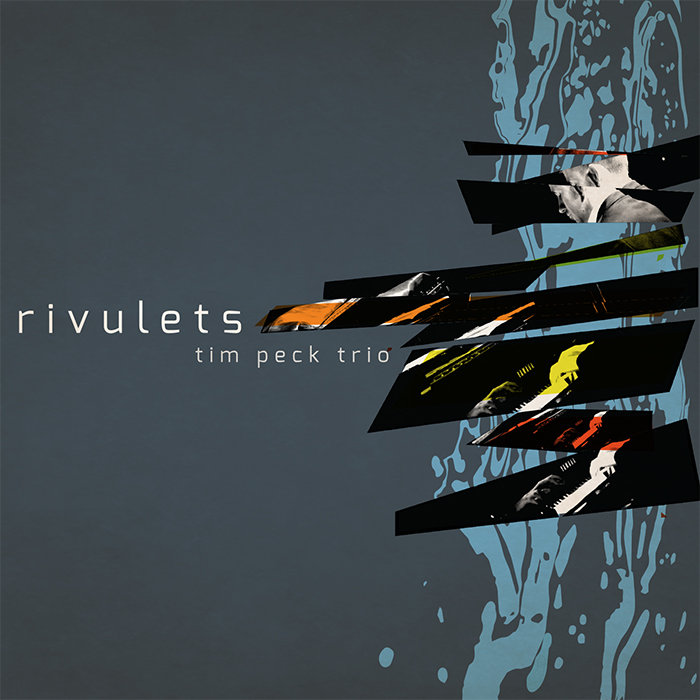
Tim Peck Trio - Rivulets (2016)


Label: Self Released
Source: Tim Peck


Tim Peck is a noted composer and performer hailing from the Quiet Corner of Connecticut. Tim has composed over sixty original works, ranging from solo themes for improvisation to full ensemble scores. He has also created over 400 arrangements. His current project, Rivulets, contains ten new original jazz compositions performed by the Tim Peck Trio. This new album is in production and has an expected release in the fall of 2015. He released Ms. Matched, a collection of original music for jazz piano trio, in 2007. Tim has also been featured as a guest artist on numerous recordings, including Dave Maswick’s The News From Here in 2013, Joel Brown’s Places in 2011, and Planting Seeds with Maria Sangiolo in 2011.
Tim is an original founding member of several performance ensembles. The Tim Peck Trio is modeled on a traditional jazz piano trio. Incorporating acoustic and electronic instruments, the trio blends traditional and genre-bending song forms into engaging original and arranged pieces. By composing and arranging music specifically for this group, Tim showcases the band’s creativity, filtered through his compositional palette.
Tim’s other ensemble, Carte Noire, is a free music trio that explores the textural sonic possibilities and dynamic interplay of piano, flute, and guitar. Carte Noire performs widely throughout the Northeast. In addition to its active performance schedule, Carte Noire also presents concerts, discussions, and workshops in free music, active listening, and collaborative music-making in New England communities and schools.
Tim has performed with David Amram, Fernando Michelin, Mark Vinci, Charlie Kolhase, and Walter Cunningham Jr., among others. He has been featured at venues including Ryles, The Regatta Bar, The Lilypad, the Hopkins Center for the Arts, Helen Filene Ladd Concert Hall, and Pickman Hall. Tim has also toured in Cuba, Japan, Bolivia, South Africa, Ireland, and Italy.
Currently, Tim is Artist-in-Residence and Director of Contemporary Music at Pomfret School, a coeducation boarding and day school, where he guides students through a centuries-old musical conversation, teaching courses in Contemporary Music, musicianship, composition, and music production.
Tim received his Master of Music in Modern American Music from the Longy School of Music of Bard College in Cambridge, MA. While at Longy, Tim studied classical piano with Robbie Merfeld and free improvisation & jazz piano with Dave Bryant, George Russel’s Lydian Chromatic Concept of Tonal Organization with Ben Schwendener, and jazz composition and arranging with Greg Hopkins. Additionally, Tim has studied jazz piano and composition with Peter Cassino.
Tim received his Bachelor of Art in Music from Skidmore College in 2004, where he received the Periclean Award for his work composing music for an original nine-piece band. While at Skidmore Tim studied jazz piano with John Nazarenko, classical piano with Pola Baytelman, and jazz arranging with Mark Vinci.


1. Express With Change for Local Weekdays
2. John & Leo Walk Into a Bar
3. Detour
4. Rivulets
5. Metropolitan Avenue
6. Horse
7. The Split
8. Sketches of Summer
9. Increasing Rates of Flow
10. When It All Goes According to Plan It's Relatively Easy

Tim Peck- piano, keyboards & composition
Sean Farias- bass
Miki Matsuki- drums


BUY THIS ALBUM


Jerry Weldon - On The Move! (2016)


Label: Doodlin' Records
Source: MVD


Jerry Weldon is one of today's leading proponents of Soul Jazz who represents the 'bar-walkin', hard-blowing, tenor legends in our contemporary American Jazz scene. Jerry's tenure with the Lionel Hampton Band in the early 80's gave him the experience of his life: developing his performance skills and creating within him the energy and motivation to perform this great music for discriminating audiences worldwide. Today, Jerry continues his big band showmanship with the Harry Connick, Jr. Band where he is featured as a leading instrumentalist in various tunes and in several stage acts. Rarely heard on the west coast with his own bands, Jerry was brought to the west coast by the Jazz Organ Fellowship organization and teamed for this recording with a former Jimmy Smith guitarist, Steve Homan; the original drummer from Herbie Hancock's 'Head-Hunters', Mike Clark; and the remarkable jazz organist from Columbus, Ohio, once hailed as the 'next great Jazz Organist', Bobby Pierce. This stellar group was assembled at the 25th Street Recording Studio in Oakland, CA on Monday, August 10th 2015 and given ample time to discuss the particulars and experience the camaraderie . Tune selection for this recording was done by Jerry himself, from the Illinois Jacquet classic, 'Black Velvet', to the Meredith Willson classic, 'Till There Was You', made popular by Paul McCartney and the Beatles. The simpatico between these musicians was instantaneous as the groove was there from the onset and the shared love of Soul Jazz was evident in each track. Adding greatness to the ever-increasing list of contemporary jazz organ recordings, Jerry's 'On The Move!' will serve to strengthen his reputation as a top-shelf jazz performer and recording star, as well as, span the love for his music from coast to coast. Whether he is rockin' a room in Harlem or reelin' back his horn in an Oakland club, Jerry Weldon is the real deal with energy to spare while he's "On The Move!"


1 Do You Know a Good Thing When You See One?
2 Black Velvet
3 Donald Duck
4 Stringin' the Jug
5 You've Changed
6 There Are Such Things
7 Till There Was You
8 On the Move!

Jerry Weldon - sax
Steve Homan - guitar
Mike Clark - drums
Bobby Pierce - hammond


BUY THIS ALBUM 


Valery Ponomarev - Our Father Who Art Blakey (2015)


Label: Zoho
Source: Allaboutjazz


Who is Russian-born trumpeter Valery Ponomarev's favorite musician? A clue may be found in the title of Ponomarev's first CD as leader of his New York City-based big band: Our Father Who Art Blakey. The first jazz recording he heard while still in Russia, Ponomarev recalls, was Blakey's Jazz Messengers with trumpeter Lee Morgan playing pianist Bobby Timmons' jazz touchstone, "Moanin.'" Later on, Ponomarev was able to play that song (and many others) as a member of the Messengers in the late '70s, wherein the irrepressible Blakey served as his friend, mentor and "jazz father."

Ponomarev continues to repay that debt, this time transposing tunes associated with the Messengers to a big-band format while adding a pair of his own emphatic charts (the brief curtain-raising "Overture" and spicy "Gina's Cooking") to the mix. The band is reinforced on two numbers ("Moanin,'" "Blues March") by another former Messenger, the illustrious tenor saxophonist Benny Golson (still swinging at age eighty-five), who composed "Blues March" for Blakey himself (drummer Victor Jones sits in admirably for the maestro on this new version). Completing the in-concert program are Freddie Hubbard's "Crisis" and a couple of winners by Duke Jordan, "Jordu" (publicized by the renowned Max Roach / Clifford Brown Quintet) and "No Hay Problemas."

Listening to Ponomarev's arrangements, it's clear that his roots are in bop. Not that anything sounds the least dated, but the harmonic designs and rhythmic patterns would have been right at home on a Blue Note album from the '50s or '60s. Ponomarev has taken those components and redesigned them for a twenty-first century audience. It's a strategy that works well throughout. Ponomarev's lively "Overture," which runs for less than a minute, leads seamlessly to "Moanin'" and the first of Golson's masterful solos. "Crisis," from the 1961 album Mosiac, is a mid-tempo groover that showcases trumpeter Josh Evans, tenor Steven Carrington and trombonist Stafford Hunter. "Jordu" is next (hermetic ensemble work underscoring bright solos by trumpeter Chris Rogers and tenor Peter Brainin), followed by the prancing "No Hay Problemas," featuring Evans, Carrington and drummer Jones.

Baritone saxophonist Anthony Nelson is eloquent on "Gina's Cooking," as are Rogers, alto Todd Bashore and pianist Mamiko Watanabe. Golson takes his second solo, and Ponomarev his first, on the iconic "Blues March," which ends the concert on a buoyant note punctuated by robust statements from Bashore, Watanabe, Jones and trombonist Corey Wallace. In sum, a splendid performance, one that embraces Ponomarev's tradition-bound stance while pointing inflexibly toward the future. Somewhere, Art Blakey must have been smiling broadly. Jack Bowers


1. Overture
2. Moanin'
3. Crises
4. Jordu
5. No Hay Problemas
6. Gina's Cooking
7. Blues March


Valery Ponomarev, trumpet, composer/arranger, musical director.
Victor Jones, drums
Ruslan Khain, bass
Mamiko Watanabe, piano,
Todd Bashore (lead), Chris Hemingway, alto saxes
Peter Brainin (lead), Steven Carrington, tenor saxes
Anthony Nelson, baritone sax
Stafford Hunter (lead), Alvin Walker, David White, Jack Jeffers, trombones
Rick Henly (lead), Eddie Allen, Josh Evans, Chris Rogers, trumpets


BUY THIS ALBUM


Phil Robson - The Cut Off Point (2015)


Label: Whirlwind
Source: Allaboutjazz


With four albums already to his name and another four by the band Partisans which he co-leads with saxophonist Julian Siegel, British guitar phenomenon Phil Robson hardly needs any introduction, save that his new musical departure is realised by an organ trio offering a smörgåsbord of exciting and imaginative compositions. 
"Thief" hits the ground running, with Phil Robson's lithe fast guitar running alongside nimble Hammond lines to carve out the melody and a subsequent brief but enticing organ solo ensues. The pulsating groove of "Second Thoughts" is facilitated by Ross Stanley's Hammond organ and Gene Calderazzo drums, providing a solid backing to Robson's articulate guitar phrasing.  
Dave Liebman's "Dimi And The Blue Men" has a spacey feel with echoey, oscillating stereo effects to the fore and even some touches of wah wah guitar before a consolidating theme resolves this captivating piece. 
"Vintage Vista" is most redolent of the high energy staccato outbursts first heard on the electrifying Tony Williams' Lifetime albums with John McLaughlin and Larry Young and is all the more engaging for that. By contrast "Astral" is a searching ballad where guitar and Hammond weave their respective bluesy solos. 
The title track, a more exploratory Lifetime-esque number, sees Robson on fuzz-laden guitar, taking an altogether more daring approach than previous tracks, culminating in a satisfyingly robust ending. "Berlin" is less frenetic and more measured, taken at a mid-to-fast pace with Calderazzo providing a keen rhythmic accompaniment. "Ming The Merciless" the final number, (all are penned by Robson with the exception of the Liebman track) has the guitarist stretching out with a funkier approach and is replete with blues licks and a sudden ending. 
Whilst comparisons with Lifetime or John McLaughlin's 1994 album, After the Rain with Joey DeFrancesco and Elvin Jones may seem inevitable, the vast majority of the music here owes little to these groups. Robson is his own man and this trio has successfully achieved what it set out to do, making for a very satisfying album indeed. Roger Farbey


01. Thief​
02. Second Thoughts
03. Dimi And The Blue Men
04. Vintage Vista
05. Astral
06. The Cut Off Point
07. Berlin
08. Ming The Merciless

Phil Robson: Guitar
Ross Stanley: Hammond Organ
Gene Calderazzo: Drums


BUY THIS ALBUM


Joris Roelofs - Amateur Dentist (2015)


Label: Pirouet
Source: Jazziz 


Joris Roelofs was born February 21, 1984 in Aix-en-Provence, France, but was raised in Amsterdam in the Netherlands.
Roelofs won the prestigious Pim Jacobs Prize in 2001, and in 2003 he was the first non-American to win the International Association of Jazz Education’s (IAJE) Stan Getz/Clifford Brown Fellowship Award. The IAJE also awarded Roelofs their First Level Prize. The Netherland’s Deloitte Jazz Award followed in 2004.
He has played with the likes of Brad Mehldau, Aaron Goldberg, Dee Dee Bridgewater, Matthias Schriefl, and Sonny Fortune.
In 2007 he recorded his debut album Introducing Joris Roelofs on Material Records.
In 2010, he made the switch to bass clarinet as his main instrument. Next year, on March 11, 2016, Roelofs will be releasing his second CD. Entitled Amateur Dentist, the album will be released on Pirouet Records, and it will be his second outing on the label.
The line-up that will be featured on the record is the trio he formed in 2011, with Ted Poor on drums and Matt Penman on bass, featuring Joris himself on bass clarinet. This has been his steady trio for the past few years, and it is the same trio with which he made his previous Pirouet outing, entitled Alien Deliberating, in 2014. On Amateur Dentist the trio once again aim to surprise and deliver music that reverberates with shimmering colors as they fathom the possibilities of this unique lineup. It all leads to an engaging world of sound – music that is both fun and captivating.  Matt Micucci


Snakes and Eagles
Broadway
Pseudo Bebop
Para Poli
Funèbre
Amateur Dentist
Twerp
Samurai Curtain
Such Sweet Thunder
Kyrie and Gloria

Joris Roelofs bass clarinet
Matt Penman bass
Ted Poor drums

BUY THIS ALBUM


The Watershed - Inhale / Exhale (2015)


Label: Shed Music
Source: The Watershed


Pierre Perchaud had the initial idea - form a group with friends who share a love of the Beatles, have firm roots in jazz and have a penchant for adventure. The first meeting was decisive and a band was born.

One rule was set from the beginning: No finished songs allowed! However, melodic fragments scratched onto scrap paper; a partial bass line captured on a cell phone and short guitar loops were welcome! And then, as is common practice with many rock bands, the music found itself by stretching the ideas, as a group, until only the essential remained.

Literally, a watershed is a turning point - a moment when everything changes and, for these four musicians, key players in a new generation of jazz in France, this band has a brand new feeling. It is a band in which everyone plays an equal role of leader and sideman. Their debut CD “Inhale/Exhale” breathes in four individual lives of concerts, rehearsals and late night listening sessions and breathes out music that challenges definition and was created in a state of bliss.

The Watershed’s combined resumé is as impressive as it is diverse having performed with musicians including Michel Legrand; Carla Bley; Orchestre National de Jazz; Brad Mehldau; Lee Konitz; Lionel Loueke; Vincent Peirani; Milk Coffee & Sugar; Kurt Rosenwinkel; Fredrika Stahl; Mark Turner; Randy Brecker and Steve Lehman. Individually they have toured all over the world and have played in pretty much every possible venue in France. In 2015 they founded the label Shed Music to house their individual and collective projects.


1. Watershred
2. Diana
3. Peter Hot Father...
4. Pas De Deux
5. Inhale_Exhale
6. Dark Water
7. Bright Sun
8. HKJ
9. Trickle-Down
10. Fat Burn
11. Running Water...
12. Vermilion Sky

Pierre Perchaud : guitar
Christophe Panzani : tenor sax, bass clarinet
Tony Paeleman : keyboards
Karl Jannuska : drums 


BUY THIS ALBUM


Fatbeat! - Animals (2015)


Label: Rock Cd Records
Source: Facebook


El grupo "Fatbeat!" nace en 2009 como un proyecto de cinco músicos que buscan un sonido propio y un repertorio original en la escena madrileña.
En su estilo encontramos multitud de referentes de estilos diversos desde el pop, el jazz, el rock, la música clásica del siglo XX, etc.
Siempre con un sello personal y una energía desbordante Fatbeat! busca texturas muy arregladas sin por ello renunciar a la improvisación como vehículo de desarrollo expresivo.
Cuentan con un primer disco titulado Fatbeat! y preparan la salida de su segundo disco también con música original.

FATBEAT! ES UN PROYECTO TOTALMENTE AUTOFINANCIADO. HEMOS PRODUCIDO ESTE DISCO Y TRES VIDEOS NOSOTROS MISMOS SIN CROWDFUNDING NI AYUDAS ECONOMICAS DE NINGUN TIPO. POR ELLO HEMOS DECIDIDO QUE ESTE SEGUNDO DISCO NO ESTE DISPONIBLE EN SU TOTALIDAD EN PLATAFORMAS TALES COMO SPOTIFY NI ITUNES. SI OS GUSTA LO QUE HACEMOS Y OS APETECE APORTAR ALGO AL PROYECTO OS DAMOS MUSICA A CAMBIO!
POR SI NO NOS CONOCEIS AUN OS DEJAMOS AQUI LOS DOS PRIMEROS VIDEOS DEL DISCO ANIMALS! EN BREVE PUBLICAREMOS EL TERCERO.


1. NEW LIFE 06:43
2. BOWIE 08:09
3. CLOUDS 07:38
4. NEWKA 06:17
5. NORTE 04:48
6. ANIMALS1 04:27
7.A NIMALS2 01:27
8. ANIMALS3 05:52
9. STROMBOLI 07:13
10.PLAID 05:58

Alberto Morales- Piano
Mario Quiñones- Guitarra
Andres Miranda- Saxos
Daniel Moreno- Bajo
Miguel Benito- Batería
Lorea Aranzasti- Voz ( Animals1/ Animals 3)
Ana Torralba- Flauta (Plaid) 


BUY THIS ALBUM


Harry Allen - For George, Cole & "Duke" (2015)


There is no greater paragon of tenor saxophonist taste than Harry Allen. While the fickle winds of prevailing styles continue to blow this or that way, Allen stands tall like the mighty oak, unswayed by fad fashions and firmly rooted to the music of the Great American Songbook. 

On this appealing date, Allen visits the music of George Gershwin, Cole Porter, and Duke Ellington. It's not a novel concept, and Allen has gone here countless times, both with single song nods to these men and, on at least two occasions, album-length tributes—Cole Porter Songs (BMG, 2001) and Plays Ellington Songs (RCA Victor/RCA, 2000). But does that really matter? Allen continues to find inspiration in the work of these masters—men whose respective compositional wells never run dry—and his interpretations of their music are things of beauty. You could even go so far as to call them gifts to the ears. 

For George, Cole, and Duke finds Allen working with a classy crew of like-minded traditionalists. Pianist Ehud Asherie delivers twinkling and sparkling solos, light and comforting comping, and beautiful beds of sound; Nicki Parrott provides balmy vocals ("In A Mellow Tone," "How Long Has This Been Going On?," and "Mood Indigo"), pleasing solos, and sturdy walking bass lines that act as the heartbeat of this music; and Chuck Redd proves to be a master of feel and economy whether providing a cheery swing pulse from behind the kit or gliding over his band mates with his vibes ("Who Cares?). The majority of the album is a quartet affair, pairing those three with Allen's attractive tenor, but percussionist "Little Johnny" Rivero drops in for the occasional guest shot, adding Latin seasonings to lively numbers ("Love For Sale") and slow roaming episodes of Ellingtonia ("Mood Indigo"). 

Harry Allen isn't likely to win any originality contests with this one, but that doesn't seem to bother him, nor should it. He's got his sublime saxophone, a group of top-notch musicians, and the music of the masters to work with. In this case, and throughout his career, that's proven to be a formula for success.

Always True To You In My Own Fashion
In A Mellow Tone
Happy Reunion
Silk Stockings
Purple Gazelle
How Long Has This Been Going On?
I Love You Samantha
Shall We Dance?
By Strauss
Love For Sale
They All Laughed
Who Cares? (So Long As You Care For Me)
Mood Indigo

Harry Allen: tenor saxophone
Ehud Asherie: piano
Nicki Parrott: acoustic bass, vocals
Chuck Redd: drums, vibraphone
"Little Johnny" Rivero: shakere, conga, bongo (5, 10, 13)


SONIA