Showing posts with label Sarah Rossy. Show all posts

Friday, March 18, 2022

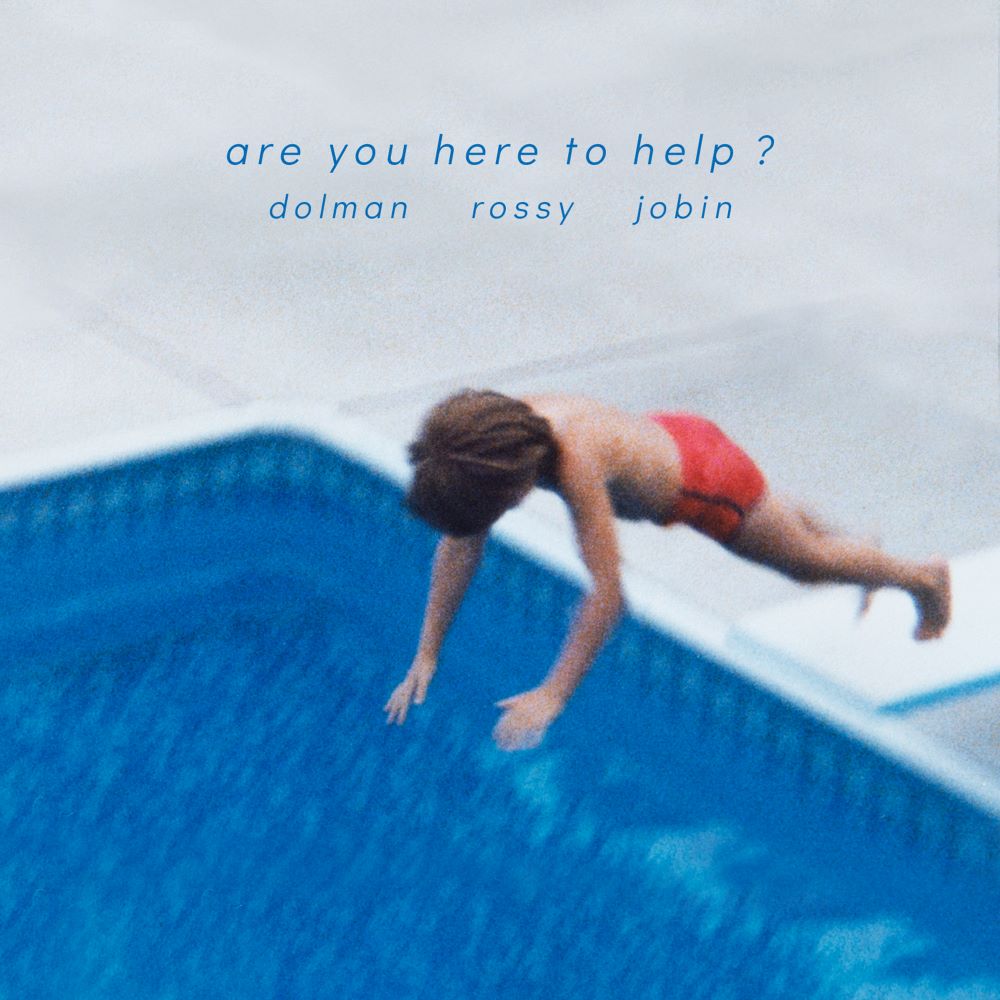
Dolman / Rossy / Jobin - Are You Here to Help? (March 18, 2022)

This is music about space. The space between each note, each word, each breath. Between what was, what is, and what can be. Between you and me. The challenge of giving, taking, and making space. The precious and vast potential of the material spaces around us and the intangible spaces within us. The gentle potency of silence. This is music about the spaces that hold the ones we love and that are left empty when they are lost.

1. Two Boats and the Lighthouse Keeper
2. Giving (With)
3. Together
4. The Mountain Sighs a Heavy Breath
5. Borrow a Memory
6. Apart
7. Are You Here to Help? (Intro)
8. Are You Here to Help?
9. The Fiddle and the Drum
10. When We Get There
11. To Hold Love

Aaron Dolman - Drums
Sarah Rossy - Voice
Eugénie Jobin - Voice and Vibraphone (tracks 2, 4, 8)

Monday, January 17, 2022

Dolman / Rossy / Jobin — Are You Here To Help? (CD/ Digital) March 18, 2022

DOLMAN / ROSSY / JOBIN 

Are You Here To Help?

Out: March 22nd, 2022 (CD/ DL)

There's something undeniably immediate and elemental about music that employs only drums and voices—two of humankind's most universal means of expression. The striking debut album of Montreal trio Dolman / Rossy / Jobin largely eschews the raw, exuberant force one might associate with such instrumentation. Instead, the group turns toward more delicate channels to articulate a vivid awareness of their unusual ensemble's evocative potential. Led by drummer and composer Aaron Dolman, the band's lineup is completed by vocalists Sarah Rossy and Eugénie Jobin, the latter of whom occasionally plays vibraphone. Are You Here To Help? unfurls an alluringly elusive soundworld and uses a diverse array of vocal and percussive sonorities to conjure intimacy and profound vulnerability.

Dolman's compositions speak with a clear and distinct artistic voice, while leaving leaving ample room for both improvisation and silence. His writing derives its unique personality through the disarming nakedness of the band's sound palette. Rather than working to conceal its apparent limitations, he embraces his group's in-built minimalism as well as the intrinsic features of each constituent element. There's a straightforwardness to Dolman's melodic ideas; a folk-like transparency that's matched by the gentle precision of Rossy and Jobin's delivery. And while this ensures that the singing retains a certain crispness and economy, there are always deviations from the expected—sometimes in the form of subtle jazzish inflections, other times in full-on textural excursions. A little over half of the album's tracks feature original texts, which are remarkably congruent with the band's unadorned sound. Dolman's use of language is efficient yet emotive, managing to subtly reference imagery from folk songs and jazz ballads, while remaining concise and personal. His drumming is similar—spartan, sophisticated, prone to surprising twists. Often, he seems content to underline the sung phrases with tidy, elegant accompaniment punctuated with thoughtful ornamentation. However, when his playing eventually becomes more extrovert—and it does—it  imbues the music with unconventional momentum, deliberate yet rousing.

Even as the three musicians drift into more nebulous territory, melody and pulse remain close at hand, lending cohesion and amiability to the hovering sonorities they generate collectively. There's a feeling of candour at every turn—no matter where the music falls along the continuum between lyricism and abstraction.  Their wondrous, haunting, and thoroughly original take on the early Joni Mitchell tune “The Fiddle and the Drum”—the album's lone cover—is telling. Dolman unfolds a rousing, dynamic solo, as Jobin and Rossy intone the song in a dreamlike, staggered unison, eventually finishing the piece with a minute of faint acapella.
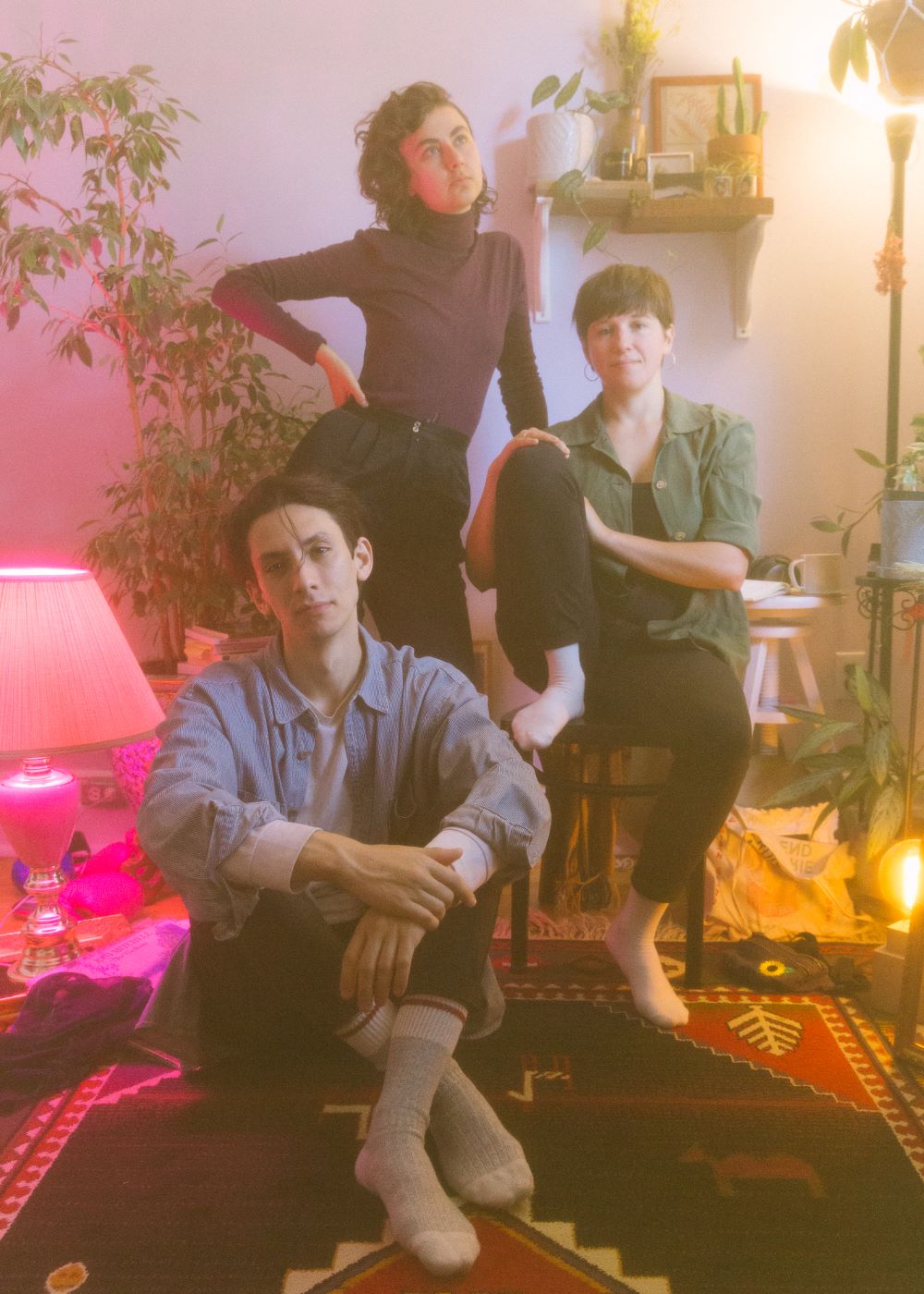
Photo by Pipa Jones

Part of what makes this collaboration so potent is that the singers both lead and compose for their own groups, each of which also blends exploratory minimalism and song. Sarah Rossy's 2019 album The Conclusion folds hushed yearning into strange atmospherics, and threads beautiful snaking melodies through volatile ensemble arrangements.  Marc Chénard of La Scena Musical praised one of Rossy's live engagements at Montreal's Off Jazz Festival as: “Shimmering with quiet intensity, full of subtle timbral and dynamic shadings.“ “Introspective as it may seem,” he continued, “it is also adventurous, both from a melodic and harmonic angle.” Where Rossy's work seems to emerge from a similar world to Sidsel Endresen or Jenny Hval, Eugénie Jobin's equally compelling Ambroise project has shades of mutant folk such as Josephine Foster and Eric Chenaux. Ambroise's 2018 recording À la tonalité préférable du ciel on Delphine Dora's Wild Silence label was praised by French experimental music site Inactuelles as follows: “La voix d'Eugénie se fait plus fine encore, module chaque mot avec une infinie délicatesse.” Jobin is also a member of acclaimed composer and musician Isaiah Ceccarelli's new quartet, House of Gold.

Montreal's Aaron Dolman made his recorded debut in November 2019 with the pastoral quintet disc Nostalgia and Other Fantasies. Showing equal affection for improvised musics and folk idioms, the heartfelt collection swayed between evocative melodies, energetic improvisations and ethereal soundscapes. Japan's long-running Jazz Life Magazine enthused of it: “With a mixture of jazz, avant-garde, folk, and bluegrass, drummer Aaron Dolman, only in his twenties, has perfected his own unique style.”At the moment, Dolman is based in Basel, Switzerland until August 2022. There, he is participating in FocusYear, a program that assembles a small international ensemble to work and perform with a remarkable selection of visiting artists under the musical direction of the acclaimed German guitarist Wolfgang Muthspiel. The 2021/22 visiting artists include Aaron Parks, Jeff Ballard, Larry Grenadier, Guillermo Klein, Linda May Han Oh, and Becca Stevens. An in-demand accompanist, Dolman has also played alongside the likes of  André White, Sasha Berliner, Jean-Michel Pilc, Kevin Dean, Mike Rud, Yesseh Furaha-Ali and Josh Rager, as well as members of Canada’s diverse folk music scene, such as Connie Kaldor and Folle Avoine. You can find his full bio here.

1. Two Boats and the Lighthouse Keeper
2. Giving (With)
3. Together
4. The Mountain Sighs a Heavy Breath
5. Borrow a Memory
6. Apart
7. Are You Here to Help? (Intro)
8. Are You Here to Help?
9. The Fiddle and the Drum*
10. When We Get There
11. To Hold Love

Aaron Dolman — drums / compositions
Sarah Rossy — voice 
Eugénie Jobin — voice & vibraphone (tracks 2, 4 & 8)

Music and Lyrics by Aaron Dolman, except * by Joni Mitchell.
Produced by Aaron Dolman. Recorded and Mixed by Jon Kaspy at Studio
Dandurand in Montreal, QC. Mastered by Piper Payne at Infrasonic Sound.
Graphic Design by Anita Cazzola and Sam Boer

Friday, October 22, 2021

Beth McKenna - Beyond Here (Friday, October 22nd 2021)

Born in Nova Scotia and a Montrealer since 2008, Beth McKenna is one of Montreal’s most versatile saxophonists, bandleaders, and composers. A Prix Opus Laureate (Concert of the Year – Jazz/World Music) and a 2-time finalist for Revelations Radio- Canada (Jazz), Beth has studied with a wide range of jazz music’s top voices, including Christine Jensen, Darcy James Argue, Jim McNeely, Rémi Bolduc, John Roney, and Chet Doxas.

Written almost entirely prior to the emergence of the COVID-19 pandemic, McKenna’s new album Beyond Here was inspired by the impact we as humans have on the world around us. From conflict and climate change, to the fusion of North American culture with global influences, Beyond Here is pure energy from start-to-finish, pushing a sense of urgency to reflect on where we stand with our planet, and how our actions can echo far beyond the present.

This album mixes a wide range of influences: from Pat Metheny to Brad Mehldau, Snarky Puppy to Jacob Collier, and from Pink Floyd to the Brian Blade Fellowship. As a composer, McKenna writes with plenty of room for improvisation and spontaneous musical conversation, with a diverse pallet of colours and shifting rhythmic textures in each piece. As the album weaves from darker to more upbeat moments, McKenna’s unique through-composed approach to writing breaks through traditional jazz forms, creating a strong narrative that runs through the album from start to finish.
Beyond Here will be released worldwide on Friday, October 22nd 2021. The release will be celebrated with a concert - in person and streamed online - at L’Astral in Montreal on October 27th. Tickets: www.bethmckenna.ca.

1. Intro: Spaces Beyond Here 1:48
2. Perspective 6:20
3. Interlude: Not Alone 2:31
4. Streets of Mexico City 6:34
5. Interlude: Finding a Place 2:03
6. Far From Familiar Ground 4:51
7. Divided to One 5:07
8. Interlude: Indifference 1:24
9. Letting Go 5:58
10. Tides 6:42
11. Interlude: Human Malfunction 2:31
12. Running Out 5:44
13. After the Storm 8:02
14. Ele(ctro)phant 5:54

Beth McKenna - Saxophone, Flute, Clarinet
Guillaume Martineau - Piano, Rhodes, Wurlitzer
François Jalbert - Guitar, Effects
Olivier Babaz - Electric and Upright Bass
Peter Colantonio - Drums
Sarah Rossy - Voice

Recorded at Studio MixArt (April 2021)
Recording Engineer: Boris Petrowski
Mixing/Mastering Engineer: Brett Leonard

PREORDER

Wednesday, July 28, 2021

Altus - Riot Cycle (July 2021)

Riot Cycle is a series of collaborative compositions and improvisational pieces written and recorded entirely remotely. In March of 2020, having only recently witnessed the potential of our musical bond, we, like the rest of the world, were separated from each other. Over the following year, we found ourselves gathering remotely to reflect, share our inspirations, and encourage one another during an incredibly difficult time.

These meetings were our anchor.

Our conversations inspired composition: Nathan Reising suggested that Dave Adewumi, Neta Raanan, Isaac Levien and himself compose individual pieces under the same restrictions. “Utopia Adjacent” was based on one of Olivier Messiaen’s modes of limited transposition, which Nathan had been experimenting with at the time. In an attempt to break compositional habits and as a substitute for live musical communication, we began to compose collaboratively. One of us would compose a musical sketch, and it would not be finished until Nathan, Dave, Neta, and Isaac had all contributed equally to it. “Axis,” “The Merchant, Tertius,” “Hexagonal Hawk,” and “Riot Cycle Repeats” are the results of this process.

Dave Adewumi suggested that we document our creations in the form of an album, and in September of 2020 we began the process of remote recording. Our intent was to make an album that embraced the circumstances we found ourselves in. We considered the limitations of remote recording carefully, and sought creative ways to use these barriers to our advantage. By recording on our own time we had the opportunity to manipulate and transform every performance.

Ryan Sands was the missing element in our universe. With Ryan on board, we began recording. One at a time. Alone in our rooms.

In the months that followed, Nathan prompted improvisational sketches among the horns, leading to “Blind Contour” and “Negative Space”. Isaac dug deep into a special moment from a pre-pandemic rehearsal, manipulating it into “Meditation”. Neta wrote and recorded the poem featured in “Riot Cycle Repeats,” with Sarah Rossy contributing her voice as well. All arrangements were collaborative.

As members of the band became vaccinated and some semblance of normalcy could be found in New York City, we partnered with Jack Broza on production, mixing, and mastering. Just as Ryan had invigorated Altus, Jack brought an entirely new dimension to our music, giving a live and organic quality to a project otherwise recorded in total isolation.

Riot Cycle is a reflection of our own experiences during the first year of the COVID-19 pandemic. It is the unlikely first chapter in what promises to be an enduring and prolific musical alliance.

A special thank you to Amir Bar Akiva for his contribution on “Meditation” and for being present for the genesis of this band.

Riot Cycle Repeats

Sunlight ebbs and flows
The glow rolls across the floor
like a breath,
Fills the house with warmth then recedes

Eery sparkle, the same images gleam through the screens
around the house, the town, the nation

The present came chasing out

Clash the crashing cycles present now and future

Ghosts reemerge, chanting for justice
From mouths fly chants, songs of sorrow cross generations
Tragedy rippling through layers of time

The possibility to exist in a brief moment
To bare joy when justice has yet to return homebound

Acidity of sun
Rolling through the moments to afford bliss, despite
Welcomes joy
not as contrast but reaffirms
To anchor purpose 

1. Blind Contour 01:04
2. Axis 03:14
3. The Merchant, Tertius 03:47
4. Utopia Adjacent 06:07
5. Negative Space 02:14
6. Hexagonal Hawk 03:40
7. Meditation 03:59
8. Riot Cycle Repeats 05:11

David Adewumi - Trumpet
Isaac Levien - Bass
Neta Raanan - Tenor Saxophone, Voice on Riot Cycle Repeats
Nathan Reising - Alto Saxophone
Ryan Sands - Drums
Sarah Rossy - Voice on Riot Cycle Repeats

Recorded by Everyone at home
Mixed, Mastered, and Produced by Jack Broza