Sunday, January 3, 2016

Marinucci​/​Hopkins​/​DiSario - Live​@​Bennetts Lane Jazz Club (2015)


Label: Self Produced


Those aware will tell you that to listen to Gianni Marinucci's tonal expressions is to hear poetry of the heart. It is no different here with Live @ Bennett's Lane. From the first few pitches on this vividly unique performance—vulnerable, yet filled with emotional depth—to the joyous last few, the Australian trumpeter and his sidekicks, Colin Hopkins and Frank DiSario provide an enthralling near hour of gorgeous, thought-provoking balladic material. And, given that this is a live effort, any warts that surface seem to be part of the art in a Miles Davis sort of non-silent way.

The nine selections offered bear a unique similarity in that they are all balladic and highly lyrical in both melody and in the musicians' improvisations. One might get the correct impression that this is intentional, as opposed to any limitation on the players' abilities to stretch out at a faster pace. On this gig, a well-chosen less means significantly more. Marinucci's trumpet and flugelhorn seek (and deliver) that which is gorgeous and not to gorge on never-ending ribbons of "Carnival of Venice"-like notes, as some of his trumpeting contemps do. Longtime collaborator Hopkins' keyboard approach—more Bill Evans than Oscar Peterson—provides ample harmonic platforms for the elegant simplicity around him. And, bassist DiSario renders both rhythmic flair and harmonic drive, even at these slower goings. It all works seamlessly.

Marinucci is a highly-gifted and marvelously restrained player possessing a luscious, seductive sound that's filled with both muscular strength and emotional fragility. His melodic and improvisational approach is economical with a superb (and swinging, even at slower tempos) sense of note-placement. This is a player whose horn indeed tells tales. Read more...


Simple Song
A Minor Thing
Song of the Survivor
Child's Play
Waltz for Ruth
Falling
Johnsburg, Illinois
An Offer You Can't Refuse
Ruby's Arms


Gianni Marinucci: trumpet, flugelhorn
Colin Hopkins: piano
Frank DiSario: bass


BUY THIS ALBUM 


Alper Yılmaz - Different City/Different Mood (2015)


Label: Kabak & Lin Records
Source: Cdbaby 


Bassist / Composer / Arranger Alper Yilmaz is back with a brilliant follow up to his critically acclaimed albums titled “Clashes" (2007) and “Over the Clouds” (2010). The new release is titled “Different City, Different Mood" and features new compositions from the Turkish-born, Istanbul- and Brooklyn-based bassist. Yilmaz surrounds himself here with some of the top jazz artists of Istanbul, including Ercument Orkut on piano and Volkan Oktem on the drums. While the album has a strong statement and sound framed around Yilmaz’s compositions and bass playing, each musician’s unique and versatile approach can be distinctly heard in “Different City, Different Mood” within a collective musical platform of free expression and improvisation.


1. XX - Revisited
2. Deep Down
3. A Day in Granada
4. Different City, Different Mood
5. Depth of Field
6. Monte Vista Avenue
7. L.I.E.
   

Alper Yilmaz - Bass
Volkan Öktem - Drums
Ercüment Orkut - Keys, Piano 


BUY THIS ALBUM


Martin Schulte Quartet - Walking Distance (2015)


Label: Laika Records
Source: Allaboutjazz 


German jazz guitarist Martin Schulte opens this excellent quartet outing with the title tune. The title must be a play on the prominent walking bass line provided by bassist Matthias Nowak, but it's also a catchy, swinging piece with dramatic, unexpected stops (as well as a showcase for guest trumpeter Frederik Köster). Tenor saxophonist Peter Ehwald gets plenty of space to strut his stuff on the following "Driftin.'" The longest track "On A Silent Day" brings Köster back for his second guest spot, and takes its time building to a climax with both horns, along with plenty of heat from the rhythm section.

"Picture Hunting" gives drummer Mirek Pyschny a chance to break out the brushes, and to play a brief drum solo. "Lights" provides interesting contrast: after a gentle opening, Schulte kicks in an overdriven guitar sound, and the whole band responds with a frenetic interlude, much freer than the rest of the record. The final track is the only cover in the set, an often rubato treatment of the McCoy Tyner ballad "Search For Peace." A somewhat surprising choice from a band that would clearly have enjoyed digging into an up-tempo Tyner tune, but a lovely way to end the program.

Schulte is an exceptional modern jazz guitarist with an international perspective. Following his study of jazz guitar at the Hochschule fuer Musik und Tanz in Cologne, he spent a year at the Escola de Musica de Catalunya in Barcelona, Spain, and a year studying "Performing Arts" in Queens College at New York City University. His basic sound and approach come from bebop, but there's room for rock influences, and he's also a fine composer and arranger. Worth keeping an eye on.
Track Listing: Walking Distance; Driftin; Curiosity; On a Silent Day; Picture Hunting; Lights; Lucid Dreaming; Search For Peace.  Mark Sullivan


Walking Distance
Driftin
Curiosity
On a Silent Day
Picture Hunting
Lights
Lucid Dreaming
Search For Peace


Martin Schulte: guitar
Peter Ehwald: tenor saxophone
Matthias Nowak: bass
Mirek Pyschny: drums
Frederik Ko¨ster: trumpet (1,4)

BUY THIS ALBUM


Didier Ithursarry Quartet - Kantuz (2015)

Label: LagunArte


Encore chaud dans les bacs, après le concert du 28 octobre à l’Ermitage parisien, Kantuz, le nouveau CD du quartet de Didier Ithursarry, nous fait voyager dans des territoires aimés. Difficile de renier ses origines, Kantuz, traditionnel basque, exprime dans cette langue difficile et mystérieuse, « l’instant présent où l’on chante». Du chant, il y en a encore avec «Habanera pour François Béranger», hommage au chanteur militant des années soixante dix, trop tôt disparu, titre qui prolonge délicatement l’une de ses chansons «Grand-mère», en écho. De la danse encore, car si « Kantuz » invite à la danse avec son rythme éblouissant, il y a encore plus virtuose avec «L’antichambre», positivement à couper le souffle. Tourbillon d’une valse qui n’est pas ravélienne, qui rappelle aussi qu’elle n’est pas synonyme des seuls plaisirs bourgeois. Eh oui, cet accordéoniste vient aussi du bal et de cette tradition populaire, qui n’est pas un folklore imaginaire. Encore que, partant de ce socle qui le constitue et de ses racines, l’accordéoniste nous emmène fort loin avec le concours de ses camarades de jeu, parfaitement en osmose. Une rythmique de rêve, Joe Quitzke et Matyas Szandai et un soufflant toujours émouvant Jean Charles Richard, tant il sait nous emporter dans les volutes de son soprano dont il nous fait aimer la sonorité caractéristique, toujours un peu aigre. L’association avec le saxophone, en particulier le soprano est un des éléments les plus convaincants de cette musique, vite incandescente. Une affaire de matières, de textures qui souligne le caractère original de cet instrument, loin des clichés qui lui sont associés. Ithursarry n’a-t-il pas tenté avec succès un autre alliage inusité dans cet Oboréades absolument unique, porté par le hautbois de Jean-Luc Fillon ? Si Didier Ithursarry est un taiseux, ses projets parlent pour lui. Il est l’un des accordéonistes qui comptent aujourd’hui, engagé dans les projets les plus divers, depuis son passage à l’ONJ de Claude Barthélémy, l’Orphicube d’Alban Darche, le Danzas de Jean Marie Machado... Il faut le suivre, les yeux fermés. Comme dans cet album magnifique, construit avec délicatesse et intelligence qui s’ouvre sur tempo vif et se conclut sur un «Sonne» plus introspectif, tout aussi intense. A découvrir vite.  Sophie Chambon


1 Kantuz
2 Leho Song
3 L'antichambre
4 Elle
5 La porte
6 Oihan Song
7 Là
8 Choro
9 Grand-mère
10 Habanera pour François Béranger
11 Hangok
12 Sonne


Didier Ithursarry - accordéon
Jean-Charles Richard - saxophone
John Quitzke - batterie
Màtyàs Szandai - contrebasse


BUY THIS ALBUM


Andreas Hertel Trio Feat. Dusko Goykovich & Tony Lakatos - Keepin' the Spirit (2015)


Source & Label: Laika Records


„Keepin‘ The Spirit“ – ein Titel, wie er passender nicht gewählt sein könnte. Das neue Album des Wiesbadener Pianisten Andreas Hertel steht im Geist und in der Tradition der Blue Note Ära. Und Hertels Stücke strahlen die gleiche Leichtigkeit und Spielfreude aus, wie sie für zahlreiche Jazzlegenden der 1950er und 1960er Jahre typisch war. Ob Miles Davis, Bill Evans, Oscar Peterson, Duke Ellington oder Charlie Parker - sie alle hatten eine besondere Gabe: Musik zu komponieren, die Tiefgang und Niveau hatte und das Publikum zugleich aufs Beste unterhielt.
  „It must schwing!“ Diesen Spruch von Alfred Lion, einer der beiden Gründer von Blue Note Records, hat sich Andreas Hertel zur Maxime gemacht. „Mein Ziel ist es, zeitlose Musik zu schaffen, die nicht nur für Jazz-Liebhaber interessant ist, sondern kraft ihrer Unmittelbarkeit auch für Hörer zugänglich bleibt, die wenig oder keine Jazz-Hörerfahrung haben“, erklärt der Wiesbadener Pianist und Komponist. Für „Keepin‘ the Spirit“ ist ihm ein besonderer Coup gelungen. Mit Dusko Goykovich (Trompete), Tony Lakatos (Saxofon) und Lindy Huppertsberg (Kontrabass) konnte er drei lebende Jazzlegenden für sein Projekt gewinnen, die selbst mit zahlreichen Stars der Blue Note Ära auf den Bühnen der Welt standen. Zusammen mit dem Schlagzeuger Jens Biehl- einer festen Größe in der Jazz-Szene des Rhein-Main-Gebiets –präsentiert Hertel eine mitreißende, swingende Mischung aus melodischen Eigenkompositionen und ausgewählten Standards.
Um den Blue Note-Spirit möglichst authentisch einzufangen, standen auch die Aufnahmen des Albums in der Tradition des Kult-Labels. Auf einen Probentag folgten zwei Aufnahmetage, die ganz im Zeichen von Spielspaß und –Freude standen. Vom Verhalten seiner beiden Gaststars zeigte sich Hertel tief beeindruckt. „Dusko und Tony haben das perfekt gemacht“, bilanziert Hertel, „indem sie ihre individuellen Stärken eingebracht, sich aber gleichzeitig ganz in den Dienst der Kompositionen gestellt haben“. Heraus gekommen sind Gänsehaut-Momente wie auf „All My Life“, in denen Altmeister Goykovich eindrucksvoll beweist, dass er auch mit 84 Jahren zur ersten Garde der europäischen Jazz-Trompeter gehört. „Mit welchem Gefühl und welcher Präsenz Dusko diese Ballade bläst, da läuft es mir jedes Mal kalt den Rücken runter“, schwärmt Hertel.  Read more...


1 Ratz-Fatz
2 I’d Like To Know
3 Blues for H.G.
4 Timelessness Remembered
5 Avanti
6 Waltz for Bill
7 UH HUH
8 All My Life
9 Blues for Lindy
10 Never Let Me Go
11 One for Charlie
12 I’m Getting Sentimental Over You


Dusko Goykovich - Trumpet, Flügelhorn
Tony Lakatos - Tenor Saxophone
Andreas Hertel - Piano
Lindy Huppertsberg - Kontrabass
Jens Biehl - Schlagzeug


Joe Rosenberg Ensemble - Rituals And Legends (2015)


Label: Quark Records
Soulce: Joe Rosenberg

 
Der aus Boston stammende Sopransaxophonist und Komponist Joe Rosenberg widmete sich in den 90er Jahren dem Werk von Ornette Coleman und Eric Dolphy und nahm für die Labels Music & Arts und Black Saint auf.  Mitte der 90er Jahre zog er zunächst nach Hongkong, später nach Bali.  Seither versucht er, Anregungen, die er von der asiatischen und der afrikanischen Musik empfangen hat, in den Jazz zu integrieren.  Seine Aufnahmeaktivitäten hat er nach Europa verlagert.  Im Mini-label Quark Records seines bevorzugten Schlagzeugers Edward Perraud sind drei Aufnahmen erschienen, die vielleicht zum Feinsten gehören, was Avantgarde-Jazz derzeit zu bieten hat. 

“Resolution” ist eine 2013 entstandene Aufnahme mit seinem französischen Ensemble, dem nebst Edward Perraud der Cellist Didier Petit, der Bassist Arnault Cuisinier und der italienische Pianist Bruno Angelini angehören.  Das Programm beginnt mit einer dreiteiligen afrikanischen Suite, die sehr behäbig und unaufgeregt voranschreitet.  Danach eine Reihe von freien Improvisationen, die von erstaunlichem Unterhaltungswert sind, weil sie, so scheint es, alle Tabus der freien Improvisation durchbrechen.  Da gibt es formale Entwicklungen mit wechselnden Instrumentalkonstellationen, die offenbar auf vorgefertigten Konzepten basieren, es gibt retardierende Momente, insistierende oder vertiefende Wiederholungen, rhetorische Formeln eines musikalischen Diskurses oder von Erzählungen, da gibt es keine Angst vor der Langsamkeit oder dem temporären Stillstand.  Die beiden Höhepunkte der CD sind allerdings Fremd-Kompositionen: zum einen das mysteriöse „Blue Jay Way“ von George Harrison, das 1967 auf der Beatles-LP „Magical Mystery Tours“ erschienen war, zum andren John Coltranes „Resolution“, dem zweiten Teil seiner Suite „A Love Supreme“ – beide waren übrigens wie Joe Rosenberg stark an indischer Musik interessiert.  Besonders in „Blue Jay Way“ kommt das Ensemble in seinen Improvisationen zu völlig ungeahnten, eigentlich abwegigen Ergebnissen, aber das Spannende gerade an diesem Stück ist die innere Logik des Prozesses, der zu diesen Ergebnissen führt.  Read more...


1 Ramkali
2 Akazehe
3 Teen taal
4 Kecak
5 Ramkali (Alternative Version)

Daniel Erdmann (saxophone)
Stéphane Payen (saxophone)
Olivier Py (saxophone)
Robin Fincker (saxophone)
Antonin-Tri Hoang (saxhophone)
Bruno Angelini (piano)
Arnault Cuisinier (basse)
Edward Perraud (batterie)


BUY THIS ALBUM


Pawel Kaczmarczyk Audiofeeling Trio - Something Personal (2015)


Label: Hevhetia
Source: Allaboutjazz


For fans of Pawel Kaczmarczyk it's been a lengthy wait for a follow-up to Complexity in Simplicity (ACT Music, 2009), his sole recording for Siggi Loch's label. Six years seems like too long a gap for such a prodigiously talented performer and composer but this extended stewing period sees the Krakow pianist return in absolutely splendid form with Something Personal, his fourth album as a leader. On Complexity in Simplicity Kaczmarczyk was bursting with ideas, harnessing a dozen of Poland's brightest young musicians in settings ranging from trio to septet. Yet paradoxically, in the reduced trio format of Something Personal, the pianist, it appears, has much more to say.

The overt flirtations with post-bop, harp-bop and an elegiac tribute to Esbjorn Svensson on his previous album signposted Kaczmarczyk's influences, whereas on the aptly titled Something Personal these idioms are refined and absorbed into something altogether more forward-looking. Last time out Kaczmarczyk hinted at his interpretive and balladeering nuance on Elton John's "Blue Eyes," but even Brad Mehldau would have to doff his cap to the caressing lyricism and improvisational flare Kaczmarczyk brings to Massive Attack's "Teardrop," deftly accompanied by bassist Maciej Adamczak and drummer Dawid Fortuna. Kaczmarczyk's writing, however, is on a par with his often breath-taking/beguiling delivery and his impressionistic ballad "Sunrise" and the gorgeous, slow-burning, "Garana" are no less moving.

The trio chemistry is pronounced throughout, notably on the spirited title track where the three voices interweave in exhilarating fashion. Virtuosity, however, is never an end in itself, and the sense of balance and space in the trio's dialogue is a big part of the music's charm—the grooving, Vince Guaraldi-esque "Birthday Song" the perfect illustration of less is more. Adamczak in particular is afforded ample solo time where his measured lyricism shines; his affinity with Kaczmarczyk, in whatever gear, is notable. Fortuna's whispering cymbals and fine brushwork illuminate the gentler passages, while his more animated, inventive rhythms stoke Kaczmarczyk's fire.

When in full flow, as on the dramatic "Mr. Blacksmith," Kaczmarczyk combines the rhythmic intensity of Neil Cowley and the thrilling melodic invention of Esbjorn Svensson, yet his modern jazz vocabulary is equally colored by a baroque vein and a pop sensibility that values tunefulness. A little of all these traits merge in the outstanding "Crazy Love," whose elegant, Beatles-esque melody and Bach underbelly rubs shoulders with Kaczmarczyk's more charged pianism. Adamczak's exquisitely weighted solo—nicely framed at the tune's midpoint—provides a compelling mini-narrative and an album highlight.

Something Personal, in turn thrilling and gently hypnotic, makes a persuasive case for Kaczmarczyk's Audiofeeling Trio as one of jazz's most exciting contemporary piano trios. If Kaczmarczyk gains the wider international recognition his talents merit, then the void left in the wake of the Esbjorn Svensson Trio's demise might not seem quite so big.  Ian Patterson


1 Mr. Blacksmith
2 Garana
3 Something Personal
4 Birthday Song
5 Crazy Love
6 Sunrise
7 I.E.Q.

Pawel Kaczmarczyk: piano
Maciej Adamczak: double bass
Dawid Fortuna: drums  


BUY THIS ALBUM


Bill Carrothers - Sunday Morning (2013)


Label: Vision Fugitive
Source: Citizen Jazz


Fasciné par l’empreinte de la mémoire collective dans le discours musical, le pianiste Bill Carrothers explore depuis des années une approche contemplative de l’histoire de son pays. Ses disques, animés par l’écume du quotidien comme par les chamboulements collectifs, tiennent plus de la succession d’instantanés que de la fresque. Des chants de la Guerre de Sécession aux climats tourmentés de la Première Guerre mondiale (le magnifique Armistice 1918), sa musique est une incursion dans le cœur des hommes, plus que jamais « carcasse du temps », que de l’exaltation d’un quelconque « roman national ».
Accompagné de fidèles, dont le violoncelliste Matt Turner, Carrothers retrouve avec Sunday Morning les églises des premiers temps de l’Amérique. « One Nation Under God »… Or, visiter les églises, c’est aborder les Etats-Unis par leur plus petit dénominateur commun. C’est chose faite via des morceaux à la simplicité troublante tels que « Jesus Loves Me », où la voix cristalline et légèrement voilée de Peg Carrothers anime une foi primitive. Comme pour ses précédentes excursions dans l’histoire de son pays, c’est par une succession très scénarisée d’atmosphères que le pianiste plante le décor d’ensemble où évolue sa musique. Après avoir envisagé ce répertoire en solo, c’est finalement en quintet avec chœur qu’il a entrepris, pour le label Vision Fugitive, une démarche aux confins des genres.
Que l’on considère ici les bulles de jazz (« A Mighty Fortress Is Our God ») ou bien les pièces égrenant des accords diaphanes sur fond de chœur époustouflant (« Lift High The Cross »), tout suggère que c’est l’option collective qui sert le mieux l’album, notamment quand Bach s’invite au détour d’un arrangement, d’une atmosphère ou d’une citation - cf. « Oh God Our Help In Ages Past », morceau inaugural et final ; cet hymne anglican débarqué avec les premiers immigrants emprunte au Cantor une certaine douceur, celle de la nostalgie des déracinés de la Vieille Europe.
Certes, on peut être déstabilisé par cette succession de chants où les voix caressantes de Jean-Marc Foltz et de Turner encadrent le chœur et teintent la musique de mysticisme. Ce serait oublier deux réalités immuables : les athées ont le droit d’apprécier en connaisseurs la beauté des églises, mais surtout, les musique les plus profanes, qu’elles se réclament du jazz ou de la tradition écrite occidentale, puisent toutes leurs racines dans de luxueux ciboires originels ! Et c’est ce retour aux sources qui intéresse Carrothers, dont on apprécie ici le talent d’arrangeur. La grande force de Sunday Morning est en effet de s’emparer de toute la spiritualité, de tout le bouillonnement de ces chants sans sombrer dans la ferveur illuminée. Pour le diaphane « Eternal Father, Strong To Save », qui évoque ceux qui se sont perdus en mer entre deux continents, le choeur explore les abysses en compagnie de Foltz et Turner pendant que le roulis emporte le pianiste. Un mouvement incertain qui fait renaître, le temps d’un morceau, la langueur onirique du trio de To The Moon
Le psautier ouvert par Carrothers témoigne de la rusticité de la foi élémentaire, au sens des éléments et des grands espaces. Dans les harmonies du chœur, dans la dynamique entre musiciens, se retrouve la simplicité, la communion naturelle chère à Thoreau ; une facette du mythe américain et de sa culture populaire sur laquelle le pianiste a construit son univers. Sunday Morning n’est pas, espérons-le, la dernière pierre de cet édifice ; il y a de quoi construire bien des cathédrales.  Franpi Barriaux


1  Oh Gold Our Help In Ages Past
2  Jesus Loves Me
3  Children of the Heavenly Father
4  Beautiful Savior     s
5  Eternal Father, Strong To Save
6  A Mighty Fortress Is Our God
7  Just a Closer Walk With Tree
8  Crown Him With Many Crowns    
9  Watchman, Tell Us of the Night
10 This Is My Father's World    
11 Lift High the Cross    
12 Just As I Am, Without One Plea
13 The Lord's Prayer    
14 Oh God, Our Help In Ages Past    

Bill Carrothers (p)
Peg Carrothers (voc)
Matt Turner (cello)
Jean-Marc Foltz (cl, bcl)
Nicolas Thys (b)
choir


BUY THIS ALBUM


Dennis DeMille - Sonority (2015)


Dennis grew up in Cardiff and developed a love for song, dance and drama at an early age.  His first stage appearance at 8 years old was a self choreographed rendition of “I’m a Yankee Doodle dandy’’ in the heart of Tiger bay in Bute town Community Centre.  It was here that he also first experience photography as a child and attended classes in Tap and Jazz dance.  At 17 years old he saw an ad in the regional newspaper for a DJ competition. It was for Young Welsh DJ of the year. After practicing what to say between songs and no experience he nervously took to the decks for the very first time on that day and beat experienced contenders to win third place.  

In that same year he appeared in the chorus line in The Sherman Theatre production of “Damn Yankees’’ a Broadway musical comedy. It was the singing tuition that Dennis received here that led him back into musical performance and it wasn’t long until he was recruited as front man for “3ND’’, a jazz funk electro collective at a time when mutual friends Eric Martin (Technotronic) and Damon Rochfort (NOMAD) we’re featured in the UK Charts, with before he moved on to Sheffield Hallam University in 1994 to study Film, where he worked with a range of notable musicians including Shaun Ward, Bass player with Simply Red and writer of the title track of album “Stars’’ and Britpop minor players “The Longpigs” who had a taste of chart success with “She Said”.  His 9 piece funk band “Brained” supported “Freakpower” during their 1995 tour before he joined “Dr Octopus” before heading back to Cardiff in 1998. 

On arriving in Cardiff, he immediately became immersed in film-making, writing short films and making the occasional appearance as actor in local productions. He was featured in Justin Kerrigan’s cult hit, “Human Traffic” and also appeared several times along side Eva Myles in “Belonging”. A chance meeting with long term friend Daniel Lambert (Johnny Cage and the Voodoo Groove) led to Dennis joining “Strangetown” before making the pivotal decision to go solo in 2012. 


For the first time ever, with full creative control, Dennis finally found his jazz voice and started to carve out a formidable reputation as a powerful and present baritone with a hand in blues, soul and reggae.  A search for competent players led him to Circo Bar in Bath, where he met pianist Tom Berge and together they worked on his highly acclaimed 2014 EP “Sonority”, a selection of straight ahead jazz standards, including a departure from familiar jazz standards and a new exploration of original material by Andrew ‘Hozier’ Byrne. 

Even though his is essentially a jazz singer Dennis loves to mix the styles at regular gigs as his day to day repertoire consists of Motown Soul, Reggae and pop including songs from Elvis Presley, Lionel Richie, Barry White, John Holt, Aloe Blacc, Lou Rawls, Marvin Gaye and many more well known songs.

Dennis DeMille: vocal

1. Work Song
2. Something
3. Do You Feel
4. The Nearness of You
5. Hey Laura
6. What the World Needs Now is Love


SONIA

Saturday, January 2, 2016

Jeff Cosgrove / Frank Kimbrough / Martin Wind - Conversations With Owls (2015)


Rising jazz star Jeff Cosgrove joins veteran bandleaders and first-call sidemen Frank Kimbrough and Martin Wind in uncovering yet another facet of Cosgrove’s flair for challenging jazz. Like his prior recording project, the drummer is placed in a trio setting involving a pianist and bassist. But as Alternating Current highlighted the spontaneous music-making of Cosgrove with free jazz all-stars Matthew Shipp and William Parker, Conversations With Owls (now on sale by Grizzley Music) is structured around a co-led effort that underscores a high spirit of collaboration around some imaginative arrangements.

Taking in the open-ended, sensitive “The Owls,” where Cosgrove’s drum kit serves as a third conduit for emotion, it’s clear that the drummer is carrying on the legacy of his last mentor Paul Motian better than anyone is right now. Kimbrough and Wind deliver their notes with poignancy and the pauses between the notes with the same hushed passion. A bass solo ushers in “Stacks of Stars,” as unconventional and unpredictable as any I’ve heard in some time, and Cosgrove’s cymbals immediately connects to its unpredictable vibe. Kimbrough’s fractured notes gain momentum and evolve into a defined groove.
“The Shimmer” is relatively short but also skittish, especially on the part of Cosgrove, who even then maintains a light touch, always leaving space unfilled as Kimbrough goes at his own, unhurried pace.

Kimbrough’s facility for tapered angularity — at times sounding akin to the incomparable Shipp — bolsters the beauty to George and Ira Gershwin’s “I Loves You Porgy,” supported by a rhythm section that is likewise playing only the essential parts, leaving the listener to fill in the blanks in their own minds. “My Favorite Things” is another jazz standard that’s been done every way imaginable yet these three again find a different approach that’s also compelling. Turning it into a pensive, dark ballad, Wind locks in on an up-and-down repeating figure while Kimbrough takes his time revealing the true melody of the song. Once he reveals his intentions, Wind moves on to a harmonic counterpoint.

Conversations With Owls isn’t really about birds, it’s about cats, and these cats are having musical conversations that are on a higher plane than most.

1. The Owls 05:30
2. Stacks of Stars 06:25
3. I Loves You Porgy 07:46
4. Excitable Voices 08:37
5. Forest Hunters 08:11
6. My Favorite Things 07:49
7. The Shimmer 03:21

Jeff Cosgrove - Drums 
Frank Kimbrough - Piano 
Martin Wind - Bass


JAVI

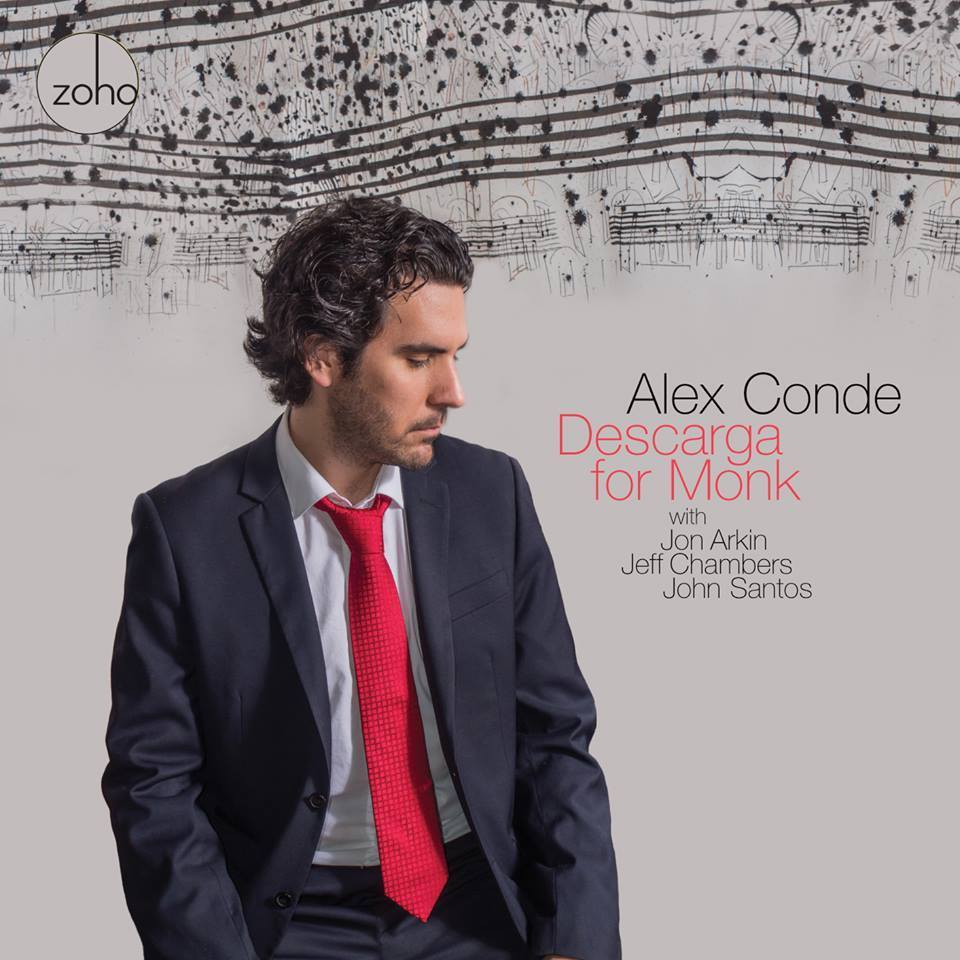
Alex Conde - Descarga for Monk (2015)


The singular music of jazz legend Thelonious Monk has been interpreted by countless players over the years. Great jazz pianists like Bud Powell, McCoy Tyner, Bill Evans, Randy Weston, Barry Harris, Keith Jarrett and Chick Corea have dealt with his unorthodox dissonances, angular melodic twists, percussive attack and dramatic use of silences and hesitations. Saxophonists from Sonny Rollins and John Coltrane to Steve Lacy and Anthony Braxton and trumpeters from Miles Davis and Chet Baker to Woody Shaw and Wallace Roney have covered Monk’s music. Others like salsa king Tito Puente and trumpeter-conguero Jerry Gonzalez and his Fort Apache Band have interpreted Monk’s idiosyncratic rhythms through their own Afro-Cuban prism while the great Andalusian pianist Chano Dominguez has offered a passionate flamenco spin on Monk.

What is it about Monk's music that makes it so 'ripe' for interpretation? “It’s because he’s so hip in so many ways!,” says the Valencia-born pianist-composer and current Bay Area resident Alex Conde. “I can’t imagine a more hip jazz pianist than Monk. And has there ever been a hipper composer in the history of jazz? While his colleagues were playing at such a speed in the era of bebop, thousands of notes, he came along with such a unique tone, a cluster approach. Bang! Keeping a hot, alive swing feel was his goal. How can anybody resist or not feel attracted to such energy? I couldn’t keep myself away from his infectious style and compositions.”

On Descarga for Monk, his ZOHO Music debut (and third recording as a leader overall), the gifted 33-year-old pianist-composer and Chano Dominguez protege has his way with the high priest of bop in an adventurous all-Monk program that is teaming with the spirit of Spanish duende. Accompanied by the Bay Area rhythm tandem of bassist Jeff Chambers and drummer Jon Arkin, and featuring special guest percussion master John Santos, Conde draws on his own personal experiences in the rich flamenco tradition to craft a stirring set of music that pays tribute to Monk while taking great liberties with the familiar themes and rhythms of such staples as Bemsha Swing, Evidence, Monk’s Dream and others. From his fiery buleria interpretation of Played Twice to his clave-fueled Catalan rumba rendition of Thelonious, as well as dramatic solo piano extrapolations on Monk’s hauntingly beautiful ballads Pannonica and ‘Round Midnight, this flamenco flavored take on Monk is as inventive as it is invigorating.

The son of famed flamenco singer Alejandro Conde Sr., a superstar in the Cancion Española style, Alex reinvents Monk’s music with his remarkably flexible, highly interactive rhythm tandem of Chambers and Arkin while also showcasing his impeccable technique, remarkable chops and fertile imagination along the way. “As a flamenco pianist -- I’ve been working for the last four years at a renowned US flamenco company, the Juan Siddi Flamenco Theatre Company, now fused with the prestigious Aspen Ballet Santa Fe -- I understand something about keeping a solid groove, playing a precise cluster and making good use of rests and silence,” says the graduate of the Conservatorio Superior de Musica, Joaquin Rodrigo de Valencia who later attended the Berklee College of Music in Boston. “And because of that I feel deeply connected, as many other composers did too, to Monk from a compositional perspective and undoubtedly from a performance perspective as well.”

He adds, “The truth is that after thinking for many years about Monk’s music, besides some arrangements that I specifically wrote down, like ‘Think of One,’ ‘Bemsha Swing’ and ‘Ugly Beauty,’ I wanted to preserve the fresh and breathable improvisation of the group playing live in the studio.”


And you can hear that loose, in-the-moment interaction from track to track on this extraordinary project. Performing on the same 9-foot Yamaha piano in the Fantasy studios that McCoy Tyner, Bill Evans and Chick Corea have played on their recordings, Conde displays breath-taking facility and a remarkable sense of two-handed independence on burning numbers like “Evidence,” “Monk’s Dream” and a dazzling, rhythmically-charged “Played Twice.” Chambers, the world class veteran bassist who has played with a Who’s Who in Jazz, including Jazz Dizzy Gillespie, McCoy Tyner, Joe Henderson, Tony Williams, Ahmad Jamal and Pharoah Sanders, delivers a virtuosic upright solo on “Bemsha Swing” while providing the appropriate deep-toned tumbao feel on “Evidence” and “Thelonious.” The exceptionally musical drummer Arkin deftly switches from brushes to sticks on an elegant reading of “Monk’s Dream” then explodes on the kit over a son montuno groove on a scintillating rendition of “Think of One.” And Santos fuels and colors the groove throughout on cajon and congas. “I feel honored to have John Santos and all his knowledge of rhythm and history on this recording,” says Conde. “He plays cajon with his own unique approach coming from the vast Afro-Cuban tradition, which made it sound so unique. And he has such a beautiful soul that it is always a nice experience to make music with him.”

Conde explains that the genesis of this brilliant flamenco Monk project came from a single notion. “My first idea for this album, when I sat down at my desk and started messing around with the melodies and different rhythms, was wanting to hear a tune like ‘Played Twice’ adapted into a buleria de Jerez style. I thought, ‘I would love to see a flamenco dancer put footwork to that melody. That would be pretty sweet to see those 16th notes on the B section with a flamenco tap dancer!’” 

For the session he ended up recruiting his sister and mother to supply palmas and compas [handclaps and foot stomps] on “Played Twice” and “Ugly Beauty,” just two of his triumphant flamenco make-overs on Descarga for Monk. “My sister Amparo and mother Carmen came from Spain to help in creating this special environment at the studio with a solid and groovy compas. That’s exactly what we were looking for, an intimate atmosphere of claps and acoustic instrumentation where you can hear an ‘ole, en compas!’ It’s the essence of flamenco.”

The rising star Bay Area pianist-composer adds, “I invite anybody to go to a tablao flamenco, anywhere! Because there is good flamenco anywhere on the globe nowadays. Spend $20 and see with an open heart and mind a traditional flamenco show. I guarantee there is no difference between those environments and the ones of the jazz/blues sessions, because both are directly connected by awakening the senses and celebrating life itself.”

From the startling, energized opener “Played Twice” to the Conde’s delicate solo reading of “Pannonica,” this flamenco re-imagining of Monk’s music awakens the senses in a very profound way. It will makes you want to sit up and shout “Ole!” - Bill Milkowski

Alex: Conde Piano
John Santos: Percussion
Jeff Chambers: Bass
Jon Arkin: Drums
Amparo Conde, Carmen Carrasco: Palmas & Compas (hand claps, foot stomps)

1. Played Twice 
2. Thelonious 
3. Think of One 
4. Ugly Beauty 
5. 'Round Midnight
6. Monk's Dream 
7. Evidence 
8. Ruby My Dear
9. Pannonica


Domi

Billy Brandt - Get It Going (2016)


Billy Brandt sings and swings with a style marked by soul, grit and groove. His original music speaks to everyman themes of love, loss and possibility, reflecting a depth of influences from Ray Charles and Lou Rawls to Frank Sinatra and Mose Allison. Armed with persuasion, stage presence and his rockin‘ group The Thing & the Stuff Jazz Band, Billy charms audiences with a confection of jazz, rock, blues and soul.

Placing a high value on collaboration, Billy is inspired by the wealth of talent in the Seattle arts community. For the past six years, he has produced the highly successful variety shows The Big Gig and The Big Giggle, which feature the talents of Northwest artists from a mix of disciplines.


01. Get It Going (feat. The Thing & the Stuff Band)
02. You're a Mean One (feat. The Thing & the Stuff Band)
03. We Met Online (feat. Josephine Howell)
04. Song for Joesephine (feat. The Thing & the Stuff Band)
05. Hug Me for Real (feat. Gretchen Yanover)
06. The Only Way (feat. The Thing & the Stuff Band)
07. Randall LO'Dowd (feat. The Thing & the Stuff Band)
08. Jumpin' Jack Flash (feat. The Thing & the Stuff Band)
09. Cruel World (feat. The Thing & the Stuff Band)
10. Ode to Billie Joe (feat. The Thing & the Stuff Band)
11. Shoup Shoop (feat. The Thing & the Stuff Band)
12. Jazz Songs and Lovers (feat. The Thing & the Stuff Band)


SONIA

Tyler Kaneshiro & The Highlands - Amber of the Moment (Limited Edition Compact Disc) 2014


First impressions mean everything. Amber of the Moment, trumpeter / composer Tyler Kaneshiro's debut album opens with a cloying cover of Bjork's "Who Is It." While nicely rendered, and suitably arranged, Kaneshiro's version plays it safe, replacing all of the oddness of the original with slick nu-jazz gloss. The cover of Bon Iver's "Holocene" fares better, though it's not that interesting a tune to begin with. Further penetration into the tracklist of Amber of the Moment, however, reveals that Kaneshiro's overall musical vision is a bit more individualistic than his cover versions would lead you to expect. Occasionally, the music here even gets a little transgressive. The first such move comes courtesy of guitarist Keisuke Matsuno, whose gloriously effects-laden solo on "Irene" is both eloquent and attention-grabbing. 

The party continues with Matsuno's own piece, "Elevator," a dynamic 6/8 romp which uses an extended feedback-charged drone as a jumping-off point. Kaneshiro's "Dawn at Sea" is a dark, rubato piece enlivened by Chad Lefkowitz-Brown's emotive tenor solo against a backdrop of sizzling cymbals and spectral electronic sounds. "Passing Fields" is yet another pretty tune that is abruptly energized by Matsuno's guitar solo. The remainder of the album is less distinctive, but thoughtfully composed and arranged, with warm, inviting surfaces reminiscent of contemporary fusion artists such as Brian Blade's Fellowship, James Farm, and Kurt Rosenwinkel. 

As a player, Kaneshiro takes some cues from Dave Douglas: he's an economical soloist with a clear, bright, almost classically-informed tone, but with unmistakably jazzy phrasing. His website has a section dedicated to his work in film scoring, which seems compatible with his musical vision as presented on Amber of the Moment.

Who Is It
Irene
Elevator
Dawn at Sea
Holocene
Time That Never Was
Passing Fields
'Til We Meet Again
Our Love


This album, co-produced by 2013 Downbeat Critics Poll Best Vibraphonist, Stefon Harris, is a vision that melds the rough edge of rock with the spontaneous nature of jazz. It hopes to guide the listener through the sonic worlds of 21st Century imagination.

Released October 21, 2014

Tyler Kaneshiro - Trumpet & Effects 
Chad Lefkowitz-Brown - Tenor Saxophone 
Keisuke Matsuno - Guitar & Effects 
Adam Kromelow - Piano 
Dave Baron - Bass 
Jason Burger - Drums 

All compositions written by Tyler Kaneshiro except: 
"Who Is It" - Composed by Björk Guðmundsdóttir 
"Elevator" - Composed by Keisuke Matsuno 
"Holocene" - Composed by Justin Vernon 

Executive Producer - Howard Wenger 
Producers - Tyler Kaneshiro & Stefon Harris 
Recorded, Mixed, and Mastered in September 2013, by Mike Marciano 
at Systems Two, Brooklyn, NY 

Photography by David Bailen 
Album Artwork by William Cathcart


JAVI

Daniel Fortin - Brinks (2015)


I have, long ago, empathised with the emotional relationship of the bassist and his instrument. In fact I myself have fallen love with the instrument – with its bass-specific tone colour and mighty five-octave range; with the idea that contained within the bass is a blueprint for all other string instruments. I have listened in awe as Jimmy Blanton made the bass front and centre of Duke Ellington’s orchestra, jumped out of my skin when Oscar Pettiford played, followed the dizzying heights of Ray Brown’s melodic soli, been struck speechless by Charles Mingus (for other reasons as well) and have since fallen prey to the charms of Charlie Haden and Cameron Brown, Harvie S… Avishai Cohen and…

Dan-Fortin-Brinks-JDGAnd it’s no coincidence that I have also fallen for Brinks and the group that has made this record, led by the sublimely talented bassist Daniel Fortin. Mr. Fortin’s recital disc works best when resonating in sympathy with the instrument’s tonal grain and registral colours. The bassist has the technical facility like few bassists have. You do not hear much of his arco playing, on Brinks but pound-for-pound Dan Fortin is the finest pizzicato player among bassists of his generation in Canada. He favours colours that are dark, almost sinister with notes and lines seeming to tell stories that are forbidden. He makes his bass roar like a beast. And sometimes probably by lowering his E-string a semitone he harvests the resulting frequency overtones and here Mr. Fortin and instrument is as one.

Of course Daniel Fortin is never alone. In fact I cannot remember a solo throughout the album. He has, however, surrounded himself with players who play a magnificent supporting role. The vibraphonist, Michael Davidson and David French seem to read the innards of his music well, as does drummer Fabio Ragnelli. Each of the supporting cast play with a physical commitment that transforms their instruments into tuned resonating chambers. Dan Fortin’s music is kept unsullied and dangerous. In writing as he does the bassist allows his fellow musicians to breathe deep – as deeply as he does – in a manner of speaking. This allows Mr. Fortin to explore the full topography of his instrument.


However there are moments on the record – few and far between, that is, when some of the music’s more lyrical contours are allowed to break the spell of harder edged music. At times like these it might be possible to also caress notes and play lines that arc through the air like a series of parabolas. These softer moments are rarely allowed to get out of control, so that the playing is never mushily sensuous. There is real machismo in the music and this is equally true of the highly impressionistic “Verona” as we’ll as in the brevity of “Mince”.

This music could not have been easy to record but Sam Ibbett the engineer of note on this session has brought off a near miraculous sound, especially to the bass. Whatever he has done is as close to making the music resonate in the body of the bass giving it a rich and woody sound. You don’t hear such expertise on recordings these days; not even on the much vaunted bass-direct that is used on the recordings for Wynton Marsalis.

David French: saxophone
Michael Davidson: vibraphone
Daniel Fortin: acoustic and electric bass
Fabio Ragnelli: drums


Verona
Ends
I Don’t Know
Flecks
So As To
Smithereen
ADLDMBDLD
Mince
Progress Bar
But Still And Yet

Label: Fresh Sound New Talent
Release date: August 2015
Running time: 57:56
Buy music on: amazon

JAVI

Friday, January 1, 2016

Jason Miles & Ingrid Jensen - Kind of New (2015)


It’s one thing to make a Miles Davis tribute album; lots of good musicians have done this. It’s quite another to pay homage to Miles by exploring his most mysterious, impenetrable period — the classic fusion era of the early 70s — and create entirely new compositions inspired by this period.

Jason Miles has successfully done this…twice, now. While such a concept has been attempted before — the Wadada Leo Smith/Henry Kaiser venture Yo Miles! comes most immediately to mind — the award-winning producer, keyboardist, arranger and composer Miles approaches this task not by aping his old friend whose first name matches Jason’s last one, but bottling his aura and pouring it out on contemporary grooves. 2005’s start-studded Miles to Miles: In the Spirit of Miles Davis was just that.

Similarly, that’s why Kind Of New (out now by Whaling City Sound Records) is more than just a play on words with Davis’ best known masterwork; it, too, is fundamentally different from the Yo Miles! records in that it doesn’t strive to “go retro” in the sonic sense. At the same time, New is positioned much closer to those Bitches Brew and A Tribute To Jack Johnson opuses than Miles to Miles and that is due in large part to adding a key partner for this project: Canadian-born trumpet player Ingrid Jensen. Berklee product Jensen has made her mark since the 90s primarily as a post-bop trumpet and flugelhorn specialist but before all that she was jamming to Bitches Brew. The Kind Of New provided her an opportunity to go all in returning to one of her earliest influences.

So yes, Jensen plays the crucial “Miles Davis” role in this endeavor, but that doesn’t mean she plays her trumpet just like Davis. Adopting the Prince of Darkness’ moody sense of melodicism, she plays mostly contemplative, which makes the occasional outburst of notes more impactful. On “The Faction of Cool,” she responds to the cool, easy strut but allowing the melody come to her and maneuvers pretty easily around a rhythm section constructed by Amanda Ruzza’s fat bass line and a crisp snare stroll by Jensen’s husband Jon Wikan.

Nearly every song in this collection, in fact, has some variation of a cocky strut to it and a woodwind foil (usually provided by Jay Rodriguez), but beyond these strong Davis signifiers, Jason Miles and Ingrid Jensen rely on their own instincts. Thus, if they wanted a baritone sax to counter Jensen’s lines as they did in the chugging, uptempo funk of “Super City,” what does it matter that Davis preferred tenor and soprano sax foils? It works, and works great.


“Shirley,” named after favored Davis vocalist Shirley Horn, slows down the groove for a moment for this fetching ballad that actually would have been a nice fit inside of Tutu or Amandla, two Davis albums Jason Miles was involved with. Each of Jensen’s notes seem to hover a bit before dissolving, phrasing herself like a veteran singing. “Seeing Through The Rain” is another strain rendered delicately by Miles’ flowing electric piano with a soprano sax counterpart this time, from Jeff Coffin, and a mildly African vibe.

“Close To The Action” is a harder, jungle groove that finds Jensen conversing with tenor sax, soprano sax and bass clarinet all coming from Jay Rodriguez. “Kats Eye” is a Sly and Robbie type Afro-Caribbean groove that features Jensen’s sensitive muted trumpet skills.

Three live tracks were sprinkled throughout this mostly studio creation, which didn’t disturb the vibe of the album at all, revealing that the years Miles and Jensen spent trying out material on the bandstand before committing them to tape paid off with crisp, consistent performances no matter the setting. “Ferrari,” a tune Miles co-wrote with Michael Brecker, actually leads off the Miles to Miles album but this rendition is rawer (in a good way) as Miles’ dirty Rhodes conjures up Jarrett’s boss Cellar Door Sessions performances from 1970. “Street Vibe” is tough, rubbery bass-driven funk fueled by a James Brown break beat. And then there’s (officially) the one Miles Davis cover: a sublime reading of “Sanctuary,” that captures the free spirit of the original Bitches Brew track perfectly, especially the splotches of color Miles adds with his electric piano. Following that after some silence is an Easter egg, a concert performance of “Jean-Pierre.”

With fusion jazz having strayed so far from the roots laid down by Miles Davis, a record like Kind of New is a refreshing reconnect with the innovations he introduced some forty-five years ago. Jason Miles and Ingrid Jensen show us the genius of Davis with pointed musicianship but also didn’t leave out Davis’ most critical ingredient: his attitude.


Jason Miles: keyboards
Ingrid Jensen: trumpet
Jay Rodriguez: tenor, baritone, soprano sax, bass clarinet (2, 5, 7, 8, 11, 12)
Jeff Coffin: tenor, baritone, soprano sax (7)
James Genus: bass (7)
Jerry Brooks: bass (5, 11,12)
Amanda Ruzza: bass (2, 3, 8)
Adam Dorn: bass (7)
Nir Felder: guitar (9)
Gene Lake: drums (4, 7)
Brian Dunne: drums (3, 7)
Mike Clark: drums (5, 11, 12)
Jim Wilson: drums (2), percussion (1, 5, 6, 8, 11, 12)
Steven Wilson: drum programming (9)
Cyro Baptista: percussion (7)

Interlude
The Faction of Cool
Super City
Shirley
Film Noir Interlude
Ferrari
Seeing Through the Rain
Close to the Action
Kats Eye
Street Vibe
Twilight Interlude
Sanctuary


Domi