Friday, October 29, 2021

Patrick Shiroishi - Hidemi (October 29, 2021 American Dreams)

“The concentration camps that Japanese Americans had to go through has been a major part of my work for the last couple of years,” says Los Angeles based composer and saxophonist Patrick Shiroishi. His last album Descension was heavily focused on the experience inside Japanese-American concentration camps, but his new album Hidemi, a solo multilayered woodwind journey, is more on the personal experience of his grandfather after getting out. “His name is Hidemi Patrick,” Shiroishi explains, “so I was named after him, but I never got to meet him, as he passed away before I was born.” As Patrick’s name is in memory to his grandfather, Hidemi is too, and across the album’s nine tracks, Shiroishi brings the listener through tension and release, showcasing something unfiltered, beautiful, and ultimately hopeful, a testament to perseverance and grace.

If you’ve ever wondered what trios, quartets, and quintets of Patrick Shiroishi’s sounded like, Hidemi was made for you. All of the album was written and performed by Shiroishi who sang and played alto, baritone, tenor, C melody, and soprano saxophones, stacking up layers of harmonies often each recorded in one take. The album’s opening blasts on “Beachside Lonelyhearts” blow the doors open, but are quickly replaced by loping, interplaying melodies that swell, recede, then slowly, methodically shuffle off. Other songs like “To Kill A Wind-Up Bird” start with woodwind flurries and free jazz that metamorphosize into something serene before Shiroishi’s baritone sax, breaks open the piece, and brings back the beginning’s composed but frenetic energy.

Shiroishi wanted to allow for community expression, too, to be a part of Hidemi regarding the Asian-American experience, so he curated and edited a chapbook featuring writings and art by fellow Asian-American artists - Tangled. The book was made to provide a platform for thoughts considering the recent rise of violence against Asian-Americans due to racism spurred by misinformation on Covid-19, and features artists such as Dylan Fujioka, Mai Sugimoto, Tashi Dorji & Susie Ibarra.

In an evocative, personal essay from Tangled, Shiroishi explains the Japanese concept of “‘gaman,’ which means to endure the seemingly unbearable with patience and dignity, or simply put, to bite your tongue.” It’s a chilling, profound passage in which the history of Japanese-Americans have had to “gaman” with Shiroishi ultimately stating that “We can no longer ‘gaman.’ We must be loud and speak up, so what our grandparents and ancestors went through will not be forgotten or taken for granted.”

Hidemi functions as a warning, but there is ecstasy and hope in it, too. In the last song “The Long Bright Dark,” a short, blossoming tear-jerker that crescendos with Shiroishi’s vocals, the artist cries out in Japanese “Is This The End Of The Storm?” It’s the sole sung passage in Hidemi, but its effectiveness is chill-inducing - it contextualizes everything, pushing forward while acknowledging historical evil. It’s moving and impactful, moving towards a society where - in his essay he writes - “our children and future generations may live without fear. So that they won’t have to “gaman.” 

1. Beachside Lonelyhearts
2. Tule Lake Like Yesterday
3. Jellyfish In The Sky
4. What Happens When People Open Their Hearts
5. Stand Up And Let Us Go And Witness This Ourselves
6. To Kill A Wind-Up Bird
7. Without The Threat Of Punishment There Is No Joy In Flight
8. The Dowager's Clipped Wings
9. The Long Bright Dark

Jamire Williams - But Only After You Have Suffered (October 29, 2021 International Anthem)

'But Only After You Have Suffered' is a densely layered and deeply personal new work from multidisciplinary artist, composer, percussionist & producer Jamire Williams.

Conceived as a spiritual, autobiographical artistic statement, Jamire applies sound collage practice to modern jazz composition, beat production, MC/vocalist features, and his uniquely impressionistic drumming style – making an album as akin to minimalist painting as an art-house film soundtrack or a classic hip-hop mixtape. A “self-reflective, almost testimonial work” that swiftly cycles across a vast spectrum of styles, it's the culmination of his five-year musical journey to the outer reaches of his own sound. It’s the album he has always wanted to make.

To do so he engages his faith and the friends and family that shaped him, working with a host of close collaborators in a free and spontaneous manner. The shared musical, communal, and spiritual sensibility gives the album its sense of unity. “It’s a whole work,” Jamire explains. “It flows seamlessly, and it’s meant to keep playing until you really understand all the messages, prayers, and cries.”

Across twelve multi-faceted tracks, he brings together artists from his hometown of Houston (vocalists Corey King, Lisa E. Harris, Fat Tony, Jawwaad Taylor), those he became close to over several years living in LA (Sam Gendel, Zeroh, Mic Holden, Josh Johnson, fellow International Anthem artist Carlos Niño), and other creative partners from his life-long journey in sound (Chassol, Svet, Kenneth Whalum).

As such, 'But Only After You Have Suffered' builds its own world from the pull between Jamire’s jazz heritage - eleven years as a drummer in NYC recording with world-renowned musicians like Jason Moran, Christian Scott, and Dr. Lonnie Smith - and the experimental, narrative art-pop of his more recent work with Solange, Moses Sumney, and Blood Orange.

Its origins can also be traced to his 2016 solo percussion album '/////// Effectual' (released by Leaving Records) - a turning point for Jamire, who has since embarked on a process of stripping back and breaking down his musical identity, creating a new sound from the fragments that most speak to his experience as a musician and a person.

Rooted in his faith, Jamire opens the album with “Hands Up,” a devotional hymn cut against the stark reality of the modern world that sounds like an apocalyptic middle-grounding of Kendrick Lamar’s 'To Pimp A Butterfly' and Merry Clayton’s “Gimme Shelter.” Whether in the rousing, spiritual “Just Hold On” or the fluid verses of Fat Tony on “Safe Travels,” the music exists in the tension between higher realms and social realities - what Jamire calls the “duality of a personal thing and what I’m seeing in my community, in the Black community, as a Black man.”

The album reaches its climax on “Pause In His Presence,” which features a chilling operatic performance from Lisa E. Harris, recorded in one take off the back of a single conversation and a shared vision between the two artists. “Every time I hear that song, I cry,” Jamire says. “It’s so real.”

Having recently moved back to Houston, the release of 'But Only After You Have Suffered' marks a moment of Jamire coming full circle. A literal homecoming and his arrival as an undeniably multi-faceted artist in his own right. 

1. Hands Up
2. Bow (feat. Corey King)
3. Ugly (feat. Mic Holden)
4. Just Hold On
5. Take Time Look Up (Jawwaad Speaks)
6. Safe Travels (feat. Fat Tony & Zeroh)
7. C'est Un Mot
8. For The Youth (feat. Corey King)
9. Pause In His Presence (feat. Lisa E. Harris & Sam Gendel)
10. No One Knows
11. When It Gets Dark (feat. Kenneth Whalum)
12. And Then The Anointing Fell

Jamire Williams – drums, vocals, drum programming, samplers, mellotron, synthesizer, sequencer, electric piano
Brandon Owens – bass guitar
Burniss Travis – bass
Carlos Niño – percussion
Chassol – keyboards, synthesizer, programming
Corey King – vocals
Daniel Aged – bass guitar
Fat Tony – vocals
Flash Gordon Parks – turntable
Jason Arce – bass clarinet
Jason Moran – piano
Jawwaad Taylor – vocals
Joelle Corey – vocals
Josh Johnson – mellotron, synthesizer, programming
Kenneth Whalum – vocals
Lisa E. Harris – vocals
Matthew Stevens – lead guitar
Mic Holden – vocals
Mike Haldeman – guitar synthesizer
Paul Cornish – midi strings
Peter Lee Johnson – strings & string arrangement
Sam Gendel – guitar synthesizer, alto saxophone
Svet – vocals
Zeroh – vocals

Produced by Jamire Williams.
Recorded & Mixed by Jake Viator at Stones Throw Studios in Los Angeles, CA.
Mastered by Dave Cooley at Elysian Masters, Los Angeles, CA.

"Safe Travels" contains a sample of the recording “I Need Your Love” performed by Skip Mahoaney & The Casuals, courtesy of The Numero Group. Written by Skip Mahoaney & James Purdie. Published by Dust Index (BMI). Used with permission. All rights reserved.

Christopher Parker & The Band of Guardian Angels - Soul Food (October 29, 2021 Mahakala Music)

Soul food, food for the soul. Greens, okra, fresh tomatoes, all the food from the earth to nourish us. Sounds of harmony, rhythm, and soulfulness, also to nourish our souls. The antidote to the ugliness and division in our world. Guardian Angels, here to deliver meals from on high. High notes, low notes, everything in between, feeding us with love and rhythms that rock us into a better world.

Sounds fill our ears, lift our spirits, put us at ease, and heal our bodies. These are the tools of the Guardians. Sound, like food, to bring forth health and peace. We offer these to the listener and hope you will eat and listen to this music.

1. Morning Ritual 08:35
2. Guardian Angels 13:38
3. Over Your Own Two Feet 10:04
4. Truth and Fiction 15:00
5. Soul Food 07:24

Christopher Parker - piano
Kelley Hurt - vocals
Daniel Carter - winds
Jaimie Branch - trumpet
William Parker - bass
Gerald Cleaver - drums

Levitation Orchestra - Illusions & Realities (October 29, 2021 Gearbox Records)

Levitation Orchestra presents one of the most adventurous albums to bless our ears in 2021, bringing together multiple inspirations ranging across spiritual jazz, classical, electronica, soul, spoken word, M-Base, and no-holds-barred free improvisation. With trumpeter Axel Kaner-Lidstrom (Cykada, Gary Bartz) as musical director, the collective comprises some of London's most promising young musicians, who together play in or with the likes of Alabaster de Plume, Shunaji, Nihilism, PÆN, and Nardedey. Lluis Domenech Plana on flute, James Akers on tenor saxophone, and Ayodeji Ijishakin on tenor saxophone complete the horn section, with Saskia Horton on violin, Beatriz Rola on violin, and Emma Barnaby on cello making up the strings. Rhythm is available in handfuls from Hamish Nockles-Moore on double bass and Harry Ling on drums, complemented by Roella Oloro on keys, Maria Osuchowska on harp, and Paris Charles on guitar, with last but not least, Plumm and Dilara Aydin-Corbett on vocals.

As a true collective, each member is vital, contributing equally to the whole in terms of playing and writing. Compositions formed out of group discussions, which in the case of Illusions & Realities, delved into childhood, stoicism, astrophysical theories, and neurological delusions, all interweaving and circling the point where truth and reality enter the realm of illusion. The result is a record which manages to channels the energy of Sun Ra's Arkestra, the spiritual ambience of Alice Coltrane, and the harmonic subtleties of Debussy, whilst ultimately producing something tantalisingly original.

"Many In Body, One In Mind" - so reads the the final track title from Levitation Orchestra's forthcoming record Illusions & Realities. It's a statement that embodies both the album and the prime philosophy behind London's foremost powerhouse collective. The album is set for global release on October 29th via Gearbox Records. The album will be available on double vinyl LP with gatefold sleeve, CD with gatefold sleeve, and digital. Limited quantities of Japanese Edition vinyl LP and Japanese Edition CD will also be available to pre-order.

1. Life Is Suffering / Send And Receive Love Only
2. Listen To Her
3. Spiral (Die, Die, Die)
4. Delusion
5. Child: Part I
6. Child: Part II
7. Child: Part III
8. Child: Part IV
9. Between Shadows
10. Many In Body, One In Mind

Axel Kaner-Lidstrom - Trumpet
Lluis Domenech Plana - Flute
James Akers - Tenor Saxophone
Ayodeji Ijishakin - Tenor Saxophone
Saskia Horton - Violin
Beatriz Rola - Violin
Emma Barnaby - Cello
Maria Osuchowska - Harp
Paris Charles - Guitar
Hamish Nockles-Moore - Double Bass
Harry Ling - Drums
Plumm - Vocals
Dilara Aydin-Corbett - Vocals
Roella Oloro - Keys

Recorded at Soup Studio
Produced by Axel Kaner-Lidstrom & David Holmes
Engineered and Mixed by David Holmes
Mastered by Caspar Sutton-Jones and Darrel Sheinman at Gearbox Records

Mastered using all-valve Decca equalisation and Telefunken limiters. Lacquer discs cut on a Haeco Scully lathe with Westrex RA1700 series amps, Westrex 3DIIA cutting head. Monitored on Audio Note equipment

Artwork by River Cousin
Graphic design by Alan Foulkes

Jamael Dean - Primordial Waters (October 29, 2021 Stones Throw Records)

1. Èṣù
2. Odù Tó Dá Ìwà
3. Orí Apẹrẹ
4. Ifá
5. Akoda
6. Overstood
7. Ṣàngó
8. Ọranmiyan
9. Galaxy In Leimert
10. Ọṣun
11. Ba'Ra'Ka feat. mickey & Sharada Shashidhar
12. Orí Inu
13. Oye
14. Abyss
15. Galaxy 4 Leimert
16. Ọya
17. Time
18. Thicket feat. Sharada Shashidhar
19. Aiku
20. Lake Corcoran

Theon Cross - Intra​-​I (October 29, 2021 New Soil)

Theon Cross' new album, Intra-I, finds the gifted tuba player and composer creating a sound system powered by breath. This unique record is an uplifting celebration of Black music that, thanks to Cross' pioneering approach, helps to redefine the sonic possibilities of the tuba. Reflecting his own heritage, the young virtuoso melds jazz with dub, hip-hop, soca, grime and other sounds connected to the Afro-Caribbean diaspora. Additionally, the record - which features Remi Graves, Shumba Maasai, Afronaut Zu, Ahnansé, Consensus and Oren Marshall - is Cross' first music to include collaborations with guest vocalists, adding a further new dimension.

Theon Cross is at the forefront of the thriving London jazz scene. In 2015 he released solo EP Aspirationsand in 2019 followed it with his acclaimed debut solo album, Fyah. In addition to his solo endeavours, Cross is a core member of Mercury nominated group Sons Of Kemet and has collaborated with Little Simz, Stormzy, Moses Boyd, Nubya Garcia, Kano and others. An incredible live performer who's constantly looking to push boundaries, Cross participated in SXSW Online earlier this year by playing a live set from Abbey Road Studios and, using motion capture technology, as a 3D digital avatar in a VR showcase.

1. Intro feat. Remi Graves
2. We Go Again
3. Roots feat Shumba Maasai
4. The Spiral feat. Afronaut Zu & Ahnansé
5. Trust The Journey
6. 40Tude
7. Watching Over (Bless Up Dad)
8. Forward Progression II
9. Play To Win feat. Consensus
10. Universal Alignment feat. Oren Marshall

Kansas Smitty's - Plunderphonia (October 29, 2021 7K!)

On this essential new collection of forward-looking jazz reinterpretations, Kansas Smitty's bandleader Giacomo Smith delves deep into the catalogues of celebrated yet often overlooked artists that inspire his work with Kansas Smitty's; Jelly Roll Morton, Bix Beiderbeck, even Maurice Ravel. Created for the ‘Plunderphonia’ series for 7K!, itself a reinterpretation of the acclaimed !K7 DJ-Kicks series, the album owes as much to Giacomo's decade of living and playing in London as it does to the forefathers of jazz that he is paying homage to here. The release will be marked with a show for the London Jazz Festival at Earth in Hackney on 20th November.

Themes and melodies from compositions dating back to the 1920s have been adapted, inverted, transformed, and plunderized to make a collection of tunes that are undoubtedly jazz and when heard with contemporary ears, sonically of our times. This is not a straight up covers LP. Giacomo, who is joined by a fresh group musicians that connects all corners of the London contemporary jazz landscape, from Dylan Jones of Ezra Collective to rising star Jaz Kayser, sees his compositions here more aligned to hip hop mindset, starting with “samples'' and turning them into something completely new.

"I didn’t choose the part of the song that sounds the coolest, I chose the parts of the song that were a reflection of where I believe the soul of the song was.” explains Giacomo. “The parts that I tried to adapt and sample for this new band were the parts that they would sound the best on. The far reaching vision of this record is to try to be as bold as Jelly Roll was in his composing and to rise to the occasion”. 

1. High Society
2. Bump
3. Inner Mist
4. Blue River
5. Water Dance
6. Mamanita
7. Jungle Blues
8. Ganjam
9. Pearls

Ayumi Tanaka Trio - Subaqueous Silence (October 29, 2021 ECM)

Subaqueous Silence, pianist Ayumi Tanaka’s leader debut for ECM – following critically acclaimed releases with Thomas Strønen (Lucus, Bayou) – is a strikingly original statement. Tanaka met bassist Christian Meaas Svendsen and drummer Per Oddvar Johansen shortly after arriving in Oslo a decade ago and they have been developing their musical language together, exploring the implications of Ayumi’s compositions. Deep interest in the work of Norwegian improvisers prompted Tanaka’s move to the West, but she also speaks of a growing awareness of her own cultural roots; there is an ascetic rigour in her playing, as well as a sense of space suggesting affinities with Japanese classical music. Ayumi views the trio as “more like a chamber ensemble. We share a flow of energy, even in silence.” Per Oddvar Johansen’s subtle drumming has previously distinguished recordings with Trygve Seim, Christian Wallumrød and others. Christian Meaas Svendsen makes his first ECM appearance on Subaqueous Silence; his intensely expressive arco bass on “Black Rain” is among the album’s highlights.

1 RUINS (Ayumi Tanaka) 06:39
2 BLACK RAIN (Ayumi Tanaka) 04:52
3 RUINS II (Ayumi Tanaka) 02:42
4 ICHI (Per Oddvar Johansen, Christian Meaas Svendsen, Ayumi Tanaka) 03:35
5 ZEPHYR (Per Oddvar Johansen, Ayumi Tanaka) 03:04
6 TOWARDS THE SEA (Per Oddvar Johansen, Christian Meaas Svendsen, Ayumi Tanaka) 04:14
7 SUBAQUEOUS SILENCE (Ayumi Tanaka) 09:25

Ayumi Tanaka   Piano
Christian Meaas Svendsen   Double Bass
Per Oddvar Johansen   Drums


CONCERTS
November 28 Thomas Strønen/ Ayumi Tanaka/ Marthe Lea BRAND! Jazz festival Mechelen Belgium
December 07 Ayumi Tanaka Trio Jazzclub Unterfahrt Munich Germany
December 08 Ayumi Tanaka Trio Bærum Kulturhus Sadvika Norway

Elizabeth Shepherd & Michael Occhipinti (ES:MO) - The Weight Of Hope (October 29, 2021 Modica Music)

ES:MO

We are Elizabeth Shepherd and Michael Occhipinti: ES:MO. Having performed together since 2012, we often found ourselves supplementing our larger ensemble tours with a few duo dates at the tail end. Our repertoire changed accordingly - you can’t perform the same songs with a 6-piece band as a 2-piece. Over time, we were surprised to discover the versatility that we could bring to such a stripped-down show. We each brought some of our respective musical past to the table - favourite tunes we’d never done, revisited covers that we had played in other contexts, and ideas for new arrangements.  After many shows and jams, the music took on a life of its own. We’ve both recorded projects where we’ve each put our stamp on other peoples’ music, but the real joy of this project lies in meeting each other as friends and equals who can bounce ideas off of one another, where the sky's the limit. After 4 years of accumulated repertoire, we figured we should really commit this to record - and the result is this little gem. 

In 2019 we had the opportunity at the end of a tour to book a few days in the studio at the Banff Centre For The Arts.  We wanted to capture some of our live duo set, as well as work on some new ideas, and we left with a dozen songs and a memory of the unforgettable sound a mother elk makes to her herd when a few coyotes appear (we happened to be in the middle of that encounter). However, we wanted to expand on that first session, and planned to record more.  Once the Covid pandemic hit and canceled all of our concerts and tour plans, it all got very real: Michael is based in Ontario, and Elizabeth in Quebec, so if we couldn’t even get together with our friends and family locally, we were definitely going to have trouble recording.  

Luckily, summer 2020 gave us a window where we could “bubble” with our families, and we got together in Quebec so our kids could play and we could do some writing.  We were also able to get together in Toronto a few months later with Davide and Roberto, but just as we were close to having all the songs we wanted ready for mixing, the next Covid wave hit, so the internet proved to be our lifeline. We Facetimed or uploaded ideas, and recorded additional parts at home.  Where mixing would usually mean being in the studio with David Travers-Smith to shape the record in real time, we ended up typing or phoning our mixing comments back and forth.  All of this to say that it has been a long journey to The Weight of Hope.  It seems surreal to even write this now, but while the dark period we’ve gone through globally has very much coloured this album, as it did all aspects of life, we’ve also tried to colour it with the joy and intimate communication we have playing live with other people.  It has been very heavy to be deprived of that indeed. 

The Weight of Hope comes from a line in a poem by Alice Oswald that we both thought fit the times we are living through, so much so that Michael referred to it in his lyrics for October Daughters, and Elizabeth created the words for the title track. We think it sums up a little of what emerged from the chaos; as the world seemed to be splitting at the seams while we were all holed up in our homes, we still forged ahead to create something beautiful, not knowing exactly how or even why at times. Music is a gift, as evidenced even in the most difficult times, so it seemed fitting that this album, which came together in a dark chapter, should teeter between the imperative and the desire to believe that things will be better. The thing we can always cling to is hope, however difficult that may at times feel; what better vehicle to deliver that hope than music? 

1. Riverman
2. Any Other Way
3. Lovers In A Dangerous Time
4. October Daughters
5. Visions
6. Pacing The Cage
7. The Weight of Hope
8. Night Comes On
9. Lord of The Starfields
10. Wondering Where The Lions Are
11. All The Lovely Ladies
12. Moon Ray

Elizabeth Shepherd - vocals, pianos, OP 1 and MOOG synthesizers, synth percussion, vocal loops.
Michael Occhipinti - guitars, electric bass, cat toy and cardboard box percussion, backup vocals, loops and guitar effect magic.  
Roberto Occhipinti - acoustic bass on Any Other Way, Riverman, Visions, Lord of The Starfields, Wondering Where The Lions Are
Davide Direnzo - drums and percussion on Visions, Riverman, Lord Of The Starfields, drums and backup vocals on Wondering Where The Lions Are
Mark McLean - drums on Any Other Way
David Travers-Smith - bells and bowls

All songs arranged by Elizabeth Shepherd and Michael Occhipinti

Produced by Elizabeth Shepherd, Michael Occhipinti, and David Travers-Smith

Edited, Mixed, and Mastered by David Travers-Smith

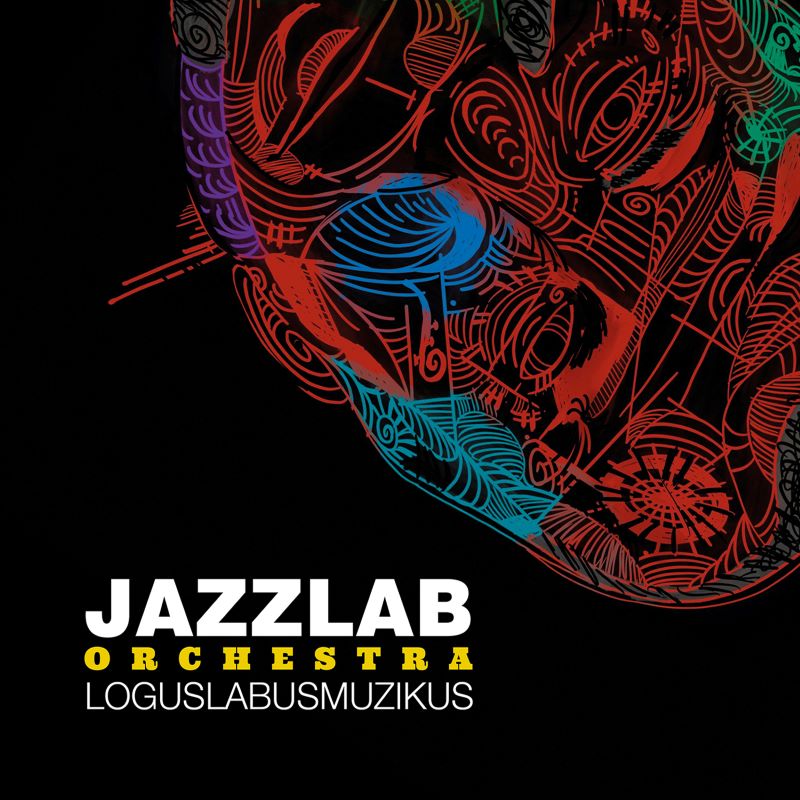
Jazzlab Orchestra - LOGUSLABUSMUZIKUS (Friday, October 29th on Effendi Records)

Montreal’s JAZZLAB ORCHESTRA has been a Canadian jazz institution since 2004. For over 15 years, the multi-generational ensemble of Montreal’s finest improvisors has explored a wide variety of musical styles and approaches to writing and playing. Always original, every project they’ve undertaken has been inspired and audacious.

Practically the only group of its kind in Canada, the group has released seven albums and performed more then 300 concerts at many of the most prestigious festivals and venues across North America and Europe, including New York’s Jazz at Lincoln Center, the New Morning and Café de la Danse in Paris, Casa del Jazz in Rome, the Grande Teatro in Sicily, the Jazz Station in Brussels, and at the Budapest Music Center. Over the years, their concerts have featured guest appearances by many of jazz music’s leading lights, including Donny McCaslin, Mark Feldman, Ted Nash, Michael Blake, Zhao Ke, Francois Théberge, Stephane Belmondo, and Don Thompson.

LOGUSLABUSMUZIKUS - Jazzlab’s newest opus - features nine new pieces by bassist and composer Auguste Le Prez, all of which reflect the spirit of modern jazz today. It’s an exciting and dynamic record executed masterfully by the band. Each member manages to simultaneously lift the band up while also staking out their place as a distinct individual voice in the group. As Jazzlab Orchestra continues to evolve, the temperature continues to rise…
1. La Grande Sauve Majeur 10:41
2. Humor de la Seconda Noche… 6:35
3. Pum la suite 10:15
4. Bluesy del Lunedi 6:57
5. Criucm 8:07
6. Le Grain blanc dans les Voiles 6:28
7. Casse-pattes/casse-gueule/casse-tête 11:15
8. Lunes & Marées 7:55
9. Compte-rendu II 7:29

Mario Allard - Soprano & Alto Sax, Clarinet
Benjamin Deschamps - Soprano & Tenor Sax, Flute
Samuel Blais - Soprano Sax & Bass Clarinet
Jacques Kuba Séguin - Trumpet
Thomas Morelli-Bernard - Trombone
Félix Stüssi - Piano
Alain Bédard - Double Bass
Michel Lambert - Drums

LOGUSLABUSMUZIKUS will be released worldwide on Friday, October 29th on Effendi Records.

Enrico Rava | Edizione Especiale | Available October 29 via ECM

Trumpeter Enrico Rava's
Musical Enthusiasm Returns With
New Live Recording Edizione Speciale

Quartet Features Francesco Diodati,
Gabriele Evangelista, and Enrico Morello


Enrico Rava delivers a characteristically outgoing performance in this live recording from Antwerp’s Jazz Middelheim festival. In the summer of 2019, the doyen of Italian jazz was in buoyant mood as he zigzagged between celebrations marking ECM’s 50th anniversary and his own 80th. For these concerts, the core of his current quartet with guitarist Francesco Diodati, bassist Gabriele Evangelista and drummer Enrico Morello was augmented with guests to form a special unit, an Edizione Speciale able to rove across the totality of Enrico’s musical enthusiasms. To differing degree, all the players heard here have been inspired by Enrico Rava’s example: he has been a mentor to most of them and, in turn, draws fresh energy from their spirited interaction. “I give them a lot of freedom,” he has said of his sidemen, “because I trust them. I have to trust them, and they have to trust me – at that point, everything is possible.”
 
Always a special case among the improvisers, Rava (born in Trieste in 1939) stood out in the late 1960 and early 1970s era of the new music, as a tradition-conscious player in the inner circle of the free blowers. This is apparent on some of his earliest recorded appearances - with Steve Lacy on The Forest and the Zoo, for instance, or with Manfred Schoof on European Echoes or with Carla Bley in the massed ranks of Escalator Over the Hill.
 
“I always felt connected to the tradition of jazz, and started to discover a more ‘Italian’ way of feeling the music which to me means giving greater importance to the melody”, Rava explained in the book Horizons Touched. The trumpeter/flugelhornist gradually dove deeper into his “personal musical world, which represents a synthesis of the many experiences of my life.” This meant jazz from New Orleans to Ornette Coleman and beyond, influences from Italian classical and popular music, and also “the feeling of South America, in a way my second home, with tango and Brazilian music…I’m putting all the musics that I love together making something that is still essentially jazz but also unmistakably my music.” 
 
The repertoire of Edizione Speciale expresses this autobiographical flavour from the first moment. “Infant” begins with briefly unaccompanied Rava flugelhorn, soon to introduce a theme that moves initially like one of Ornette’s themes for his early group with Don Cherry, as saxophonist Francesco Bearzatti plays tight unisons with Enrico. The entry of guitarist Gabrieli Evangelisti subverts the association in an explosion of sound-colour and by the time Giovanni Guidi, one of Rava’s most gifted protégés, arrives with a boiling piano solo the feeling is established that this music, brimming over with personality, can go anywhere, swinging with insouciant recklessness from mood to mood.
Michel Legrand’s “Once Upon A Summertime” is gradually untethered from associations with the Miles Davis/Gil Evans collaboration on Quiet Nights, with poetic and limpid Guidi piano easing the ballad into freer areas which coalesce into Rava’s “Theme for Jessica Tatum” from his Noir collection of darkly cinematic tunes. 
 
“Wild Dance”, title track of the Rava Quartet’s 2015 album, proposes balletic movement over a floating pulse with flugelhorn juxtaposed against distorted electric guitar texture, which Rava refers to as “clouds of sounds.” “The Fearless Five”, meanwhile, takes us back to the heyday of Enrico’s group with the late Roswell Rudd, with roots in Dixieland and the lurching rhythms of Thelonious Monk, while always reaching for other freedoms. 
 
“Le Solite Cose/Diva” brackets a piece that was a favourite of Enrico’s duo with Stefano Bollani together with another noir-ish portrait, which Rava has returned to on several occasions (including Wild Dance). And finally, there is a carnival-spirited account of the popular Cuban tune “Quizás, Quizás, Quizás”. (Guidi has recorded it previously for ECM on his own album This Is The Day). Rava’s Edizione Speciale ensemble uses its syncopated groove as a launching pad for cheery solos from each of the band members. Enrico Morello, whom Rava hails as “the best drummer in Italy right now”, elegantly negotiates the shifting Latin rhythms.

Enrico Rava made his earliest ECM recordings on The Pilgrim And The Stars (1975) and The Plot (1976), with his international quartet with John Abercrombie, Palle Danielsson and Jon Christensen. Since then he has been heard in many other contexts including, recently, the album Roma, with a quintet co-led by Joe Lovano and also featuring Giovanni Guidi, Dezron Douglas and Gerald Cleaver (recorded 2018). Edizione Speciale is Enrico Rava’s 18th recording for ECM.  Further recordings are in preparation. 

1 INFANT 13:01
2 ONCE UPON A SUMMERTIME / THEME FOR JESSICA 16:58
3 WILD DANCE 06:17
4 THE FEARLESS FIVE 12:57
5 LE SOLITE COSE / DIVA 09:43
6 QUIZÁS, QUIZÁS, QUIZÁS 05:24

Enrico Rava   Trumpet & Flugelhorn
Francesco Bearzatti   tenor saxophone
Francesco Diodati   Guitar
Giovanni Guidi   Piano
Gabriele Evangelista   Double Bass
Enrico Morello   Drums


CONCERTS
November 01 Enrico Rava Elbphilharmonie, kleiner Saal Hamburg Germany

Adam Bałdych Quintet - Poetry (October 29, 2021 ACT Music)

Chance rem arks can have far-reaching consequences. When Adam Bałdych was in the early stages of working on the compositions for this new album, among the first feedback he received from a friend was the phrase “you are a poet of the violin.” That remark didn’t just give him the title of the album. It also set him thinking about the effect that music has on him and that, by extension, it can hopefully have on other people... Bałdych, described by Jaz z wise’s Stuart Nicholson as “probably the greatest violinist in jaz z today,” explains that im pulse quite sim ply: "I want to com m unicate." He has a strong desire, as he explains, to “create music which will come into people’s lives and stay with them.” Such beliefs have been reinforced and seemingly made more urgent by the detachment of the pandemic. He started asking himself the question: “What is there in my life story that I can share?” And that in turn led him to search for other lyrical and poetic voices, kindred spirits to place alongside his own. Thus we find one of the great lyrical voices of European jazz, Sardinian trumpeter Paolo Fresu, of whom Bałdych says: “This soul connection is the basic and most important thing, which can then be expressed in the music.” Fresu is on five tunes, most notably on the title track “Poetry”, a true gem at the heart of this programme. We also hear a saxophonist with whom Baldych feels a particularly strong affinity, Marek Konarski.

Both musicians grew up in the same town, Gorzów, roughly ten years apart.Their paths diverged in the years Konarski made his home in Denmark, where he is still involved in several projects. Bałdych says: “He is younger than me, but we have so much in common I sometimes feel we must have known each other in a past life.” That sense that this group is producing music which is rooted in a past reality is there right from the opening track, “I Remember”. The decision to place his own solo voice alongside others in “Poetry” m arks a further step in Baldych’s m usical journey, away from virtuosity towards the kind of authentic individual expression that feels most natural to him. “I stopped trying to be a virtuoso producing huge numbers of notes. I want to tell a story, and to shape and balance simplicity with the innovative language of the violin.”
He has also - literally - deepened his m usical voice, through the use of the renaissance violin, tuned a seventh below the normal violin. That sonorous voice has become more confident, and is to be heard at its most yearning and soulful on the deeply touching short tune "Grace". “Poetry” is also a landm ark album for Bałdych in another sense. It is about to be ten years since his appearance at a late night show at the Quasim odo club as part of Jaz z Fest Berlin in 2011. That performance, which also included pianist Krzysztof Dys, now part of Bałdych’s regular band, led to Siggi Loch signing the violinist the very next day to the ACT label, This is the Pole's sixth album for the label.

There have been other changes in Bałdych’s life in the past year. The album is dedicated to the violinist’s wife Karina, and to his young son Teodor who was born in 2020. Time not spent on the road has clearly had its compensations, and when Baldych talks, his deeply positive spirit shines through: “Troubles give the opportunity to do things you wouldn’t normally do. I have an improviser’s soul.” Adam Bałdych also feels a very strong connection to the regular quartet he has worked with for the past three years. Krzysztof Dys on piano, Michał Barański on bass, Dawid Fortuna on drums and Bałdych himself worked successfully together on “Sacrum Profanum”. Over the past three years the trust and the teamwork have deepened, and the way they dovetail together on “Poetry” shows that they are a working band in the truest sense of that phrase. “We really explore together, we work on the music like a string quartet does,” he says. And the listener can hear in tracks such as “I Remember” and “Open Sky” with their folk music energy, just how eager this band is to stretch out on these tunes in the live context. And audiences are responding too: the quartet scooped up the audience prize at the July 2021 BMW Jazz Welt Competition. Adam Bałdych has m arked the tenth anniversary of his arrival at ACT with an im portant album . “Poetry” is not just instantly appealing, it also has depth, honesty and soul.

1. Adam Bałdych with Paolo Fresu - Heart Beats 03:56
2. Adam Bałdych with Paolo Fresu - I Remember 06:09
3. Stars 05:14
4. Adam Bałdych with Paolo Fresu - Teodor 06:03
5. Adam Bałdych with Paolo Fresu - Poetry 03:52
6. Hyperballad 05:19
7. Wish 04:52
8. Psalmody 05:44
9. Birds 03:38
10. Grace 01:21
11. Adam Bałdych with Paolo Fresu - Open Sky 06:47

Adam Bałdych / violin, renaissance violin
Paolo Fresu / trumpet, flugelhorn
Marek Konarski / tenor saxophone
Krzysztof Dys / piano
Michał Barański / double bass
Dawid Fortuna / drums

Music written, arranged & produced by Adam Bałdych, except Hyperballad, composed by Björk

Recorded by Ignacy Gruszecki at Monochrom Studio, June 18 & 19, 2021
Mixed and mastered by Piotr Taraszkiewicz
Piano tuned by Zbigniew Wajdzik

Anna Gréta - Nightjar in the Northern Sky (October 29, 2021 ACT Music)

Nightjar in the Northern Sky. An iconic, almost familiar image that instantly sets up a scenery, a temperature, a state of mind. Why? Probably because it has such a strong effect describing a place of longing that many people are only too happy to imagine themselves in.

The album of the same name by pianist and singer Anna Gréta creates such a setting, implying vast spaces, diffused Nordic light and comforting intimacy. Her music is shaped by these familiar yet surreal Nordic sounds, which her native Iceland has instilled in her since birth. Growing up near the capital of Reykjavík, her father (who also guests on the album) is a jazz saxophonist – so it’s evident that music surrounded her throughout her childhood. The first formative influence that Anna Gréta remembers was The Beatles’ Let It Be: “This song, its simplicity and power, and the harmony between voice and piano, touch me to this day”. But jazz, also, was a constant companion throughout her youth - among many others, the music of Bill Evans opened up a whole musical world. Indeed, her talent for the piano came to light early on, as did her affinity with jazz; and, as a youngster, she played her first steady jazz gig in Reykjavik. In 2014, Anna Gréta eventually moved to Stockholm - where she still lives today - to study music at the Royal College of Music.

Anna Gréta quickly caused a stir in Sweden. She began to work with the country’s prominent jazz musicians such as Joakim Milder, Magnus Lindgren, or the Norrbotten Big Band, receiving numerous prizes, including the ‘Monica Zetterlund Scholarship’, a nomination for ‘Jazzkatten’ from Swedish Radio, the Icelandic Music Award as ‘Newcomer of the Year’ and the ‘Jazzclub Fasching Society Award’. She made prominent live appearances such as at the Nobel Prize in 2020 and a concert at Stockholm Concert Hall. In 2019, Brighter, her first album as co-leader with Swedish guitarist Max Schultz, was released. Hearing Anna Gréta at the piano, one witnesses an astonishingly mature artist, with profound technique, a deep understanding of style and harmony and a vast range of expression.
So as a pianist she has already made a real name for herself. But her songwriting affinity for vocal expression was calling for something else: “I always had the greatest respect for female singer-instrumentalists, like the wonderful Norah Jones. But at the same time, I didn’t want to be forced into this stereotype, that a woman in a jazz band automatically needed to be the singer. So it was important for me to dive deeper into the piano to grow as a musician as a whole, until I could finally introduce my own voice when it felt right, rather than meeting any kind of expectation.” Eventually, over a period of two years, and partly influenced by the isolation of the global pandemic, the twelve compositions of Nightjar in the Northern Sky emerged – with Anna Gréta now as both pianist and vocalist. Together with pop-experienced producer Albert Finnbogason, she chose the perfect, hand-picked line-up and sound for each of her refined, harmonious  compositions. And, although created within a cohesive framework, she draws elements from a diverse range of musical styles – especially blending elements of jazz, pop, classical and folk.

The recording’s title sets the tone for the imagery created by Anna Gréta’s songs – a metaphor for Scandinavian expanses, tranquillity and the close connection to nature. As she says, “Nature is just so much bigger than most of the other things that otherwise seem so significant to us. And it is, in its infinite facets, perhaps the greatest inspiration for my music. A place where the noise falls silent and you can feel and hear yourself again. Recently, I have been introduced to birdwatching – something that I reflect on in the title track. When you observe nature carefully, you can experience something unique – a little like searching for love. The nightjar is a bird that is rarely seen flying across the sky in Sweden and has been seen in Iceland less than five times. I feel that everyone is looking for something unique in their lives; and nature can offer that to those who are open to it.” And so, with each of the tracks on this album, she creates self-contained worlds that are part of a bigger picture, light-footed, relaxed, reduced, concentrated. And a remarkably multilayered, immersive and beautiful experience.

1. Nightjar in the Northern Sky 04:47
2. Ray of Sun 04:43
3. Sleepless 04:34
4. The Tunnel 03:06
5. Blue Streams 04:26
6. Mountain 04:25
7. Falling Down 03:08
8. Like a River 03:17
9. Home 03:25
10. Waiting Never Ends 05:16
11. Guide the Way 03:04
12. Carry Me Across the Sky 04:06

Anna Gréta / piano, keyboards, vocals, backing vocals
Skúli Sverrisson / bass
Einar Scheving / drums
Hilmar Jensson / guitar
Sigurður Flosason / saxophone
Johan Tengholm / double bass
Ragnheiður Gröndal / backing vocals

All music and lyrics by Anna Gréta, except The Tunnel, based on a poem by Robert Creeley

Recorded at Sundlaugin Studio, Iceland on January 5-6th 2021; at Studio Á, Iceland during January 2021; and at Studio 1010 in Stockholm during March 2021

Engineered and mixed by Albert Finnbogason Mastered by Hoffe Stannow at Cosmos Mastering, Stockholm Produced by Anna Gréta and Albert Finnbogason

Christian Brückner & Michael Wollny - Heinrich Heine / Traumbilder (October 29, 2021 ACT Music)

Lyrik & freie Improvisation: Heinrich Heine bereitet die Bühne, setzt den Ton - der entlaufene Romantiker, bekannt für seine elegante Leichtigkeit und den zeit- und gesellschaftskritischen Scharfsinn in seinen Gedichten. Seinen Worten wohnt Musik inne. Deshalb gehört er zu den meist-vertonten deutschen Lyrikern. Nun kosten Christian Brückner und Michael Wollny die fruchtbare Beziehung von Text und Musik aus. Beides führende Künstler in ihrem Metier. Brückner, bekannt als Synchronstimme von Robert De Niro und aus unzähligen Hörbüchern und Filmen, gilt gegenwärtig als erfolgreichster Sprecher Deutschlands. Und Wollny, „der vielseitigste und innovativste deutsche Jazzpianist seiner Generation“ (Der Tagesspiegel), schafft es wie wenige andere, aus den verschiedensten Einflüssen heraus immer wieder neue, atemberaubende musikalische Erlebnisse zu kreieren.

Die Verbindung aus Lyrik und Jazz hat eine lange Geschichte: Anfang der 1960er Jahre wurde sie in Deutschland populär, nachdem zuvor Autoren der US-amerikanischen Beat-Generation, wie Jack Kerouac, diese Welle ausgelöst hatten. Jazzpapst Joachim-Ernst Berendt brachte diese Gattungsmelange in den Hörfunk des SWR und etablierte unter dem Titel „Lyrik & Jazz“ auch eine ganze Schalplattenserie für das Label Philips in Kooperation mit dem legendären Magazin „twen“. Eine Produktion stach dabei besonders heraus und ist bis heute als CD und digital erfolgreich: Heinrich Heine. Siggi Loch, der damals die Serie betreute, machte Berendt den Vorschlag, diese Ausgabe von „Lyrik & Jazz“ Iive im Studio mit Sprechern und Musikern aufzunehmen. Die Protagonisten der Aufnahme aus dem Jahr 1964 waren der „König der Vorleser“ Gert Westphal, sowie der Jazz-Gitarrist Attila Zoller und weitere hochkarätige Musiker wie Emil Mangelsdorff oder Peter Trunk. „Dieses Hörbuch ist eine Kostbarkeit“, befand seinerzeit „Die Welt“.

Nun, 57 Jahre nach der Erstaufnahme, ist Loch erneut und zusammen mit Christian Brückner und Michael Wollny ins Studio gegangen, um eine zeitgenössische Interpretation dieser Idee zu realisieren. Brückner und Wollny erweisen sich als perfektes Paar, um Heine neu erklingen zu lassen. Die beiden kennen sich schon lange und standen schon mehrfach gemeinsam auf der Bühne - vor allem für Vertonungen von Texten des Wort- und Collagen-Künstlers Ror Wolf, zusammen mit Saxofonist Heinz Sauer oder Wollnys aktuellem Trio. Aber auch mit Texten aus dem Jazz-Erzählband „But beautiful“ von Geoff Dyer.
Brueckner & Wollny Photo: Gregor Hohenberg

Die Aufnahmen für „Heinrich Heine: Traumbilder“ profitieren sehr von der aus vielen Auftritten entstandenen Vertrautheit und Chemie zwischen Brückner und Wollny. Im Studio entstanden 24 musikalische Kurzgeschichten, voller Witz, Ironie, Charme und Eindringlichkeit, genau wie auf der Bühne: Als echte Improvisationen. Wollny vertont Brückners Vortrag frei und aus dem Moment heraus, dieser reagiert wiederum so spontan wie virtuos in Ton, Stimmung und Charakter. Bei vier Stücken bilden, auf Impuls von Produzent Siggi Loch, verschiedene Fragmente aus bereits existierenden Stücken den musikalischen Rahmen für die folgende Improvisation: Wollnys „Polygon“ (auf „Ich habe gerochen alle Gerüche“) und „Der Wanderer“ (auf „Ich hab im Traum geweinet“), sowie die Volkslieder „Die Loreley“ (nach dem gleichnamigen Heine-Gedicht) „Es sungen drei Engel“ (auf „Im traurigen Monat November war’s“). Das Resultat der Zusammenarbeit ist eine Verbindung aus Musik und Wort, die einen immer wieder aufhorchen, schmunzeln, nachdenken und bei jedem Hören neue Nuancen entdecken lässt. Ein echtes, einmaliges Hörerlebnis eben.

1. Denk' ich an Deutschland in der Nacht 02:21
2. Traumbild 02:14
3. Ich hatte einst ein schönes Vaterland 02:21
4. Ich habe gerochen alle Gerüche 01:37
5. Ein Jüngling liebt ein Mädchen 01:22
6. Liebesantrag 01:38
7. Die Welt ist dumm 00:33
8. Religion (Dabei muss ich ihnen auch gestehen, Herr Doktor) 03:38
9. Die kleine Harfenistin 01:53
10. Nimmer glaub' ich 01:10
11. Die Loreley (Ich weiß nicht, was soll es bedeuten) 02:35
12. Die Stadt Göttingen, berühmt durch ihre Würste 00:59
13. Die Franzosen glaubten... 00:57
14. Anno 1839 (O Deutschland, meine ferne Liebe) 03:03
15. Liebessehnen 01:33
16. Ein Weib (Sie hatten sich beide so herzlich lieb) 02:51
17. Wenn ich an Deinem Hause vorübergeh' 01:27
18. Im traurigen Monat November war's 04:08
19. Wie sehnt' ich mich so oft 01:39
20. Ich hab' im Traum geweinet 01:50
21. Mr. Heines Blues (Aber ach! Jeder Zoll) 01:51
22. So übel war's in Deutschland nie 02:32
23. Die alten, bösen Lieder 03:05
24. Sie erlischt (Der Vorhang fällt) 02:24

Michael Wollny / piano
Christian Brückner / voice

Text by Heinrich Heine
Recorded by Michael Wollny
Produced by Siggi Loch

Kyle Bruckmann - Mesmerics​​ / Hindsight B (October 29, 2021 Infrequent Seams)

Restless new music chameleon Kyle Bruckmann (best known as an improvising oboist mining the intersection of free jazz, noise rock and contemporary classical) offers his first fully electronic solo release.

Sourced primarily from vintage analog synthesis, this double-album diptych anachronistically evokes, from a sardonic post-techno vantage point, both late 60s and late 70s experimentation. Attempted minimalisms chafe at their own restraints, bursting at the seams to comprise “a suite of weighted blankets for an intracranial dancefloor.” By turns hypnotic, immersive and bludgeoning, "Mesmerics/Hindsight" charts an unlikely Venn diagram linking the Day-Glo legacy of the San Francisco Tape Music Center with proto-Industrial’s bleak, gray throb.

While the influences of those two seminal electronic music eras map roughly onto the two albums respectively, echoes of each reverberate throughout. "Mesmerics/Hindsight A," on balance, prioritizes space; "Mesmerics/Hindsight B," periodicity. The limited-edition 90-minute cassette contains both albums; purchases of the physical edition include digital downloads of both.

Throughout the quarantined conditions of 2020-21, Bruckmann sought a stop-gap for his preferred creative modes of highly collaborative, real-time interactivity by indulging in a hermetic practice of solo electronic explorations. Between his home studio and the electronic music labs of two colleges where he teaches, he exploited access to an instrumentation featuring classic Buchla, Moog and E-mu gear alongside more contemporary Eurorack modules.
"The physically and psychosocially distanced circumstances of 2020-21 have found me driven further into my own head and deeper into solo work and circuitry. Offered here are selected research findings from that at times harrowing journey: a suite of weighted blankets for an intracranial dancefloor.

A parallel dimension of hindsight: as I hurtle through middle age and devote an ever larger portion of my career to teaching, I’m confronted with the inevitability of my aesthetics growing ever more ossified, anachronistic, irrelevant. To my students and younger colleagues, I suspect I have become the equivalent (vis-à-vis Ohio in the mid-70s, the Lower East Side in the early 80s, Chicago in the late 90s, etc. etc.) of the boomer who won’t shut up about Woodstock.

One possible response? Double down, as they say; make that central to the creative exercise. This is, in part, an interleaved love letter to two volatile junctures (both especially salient in the history of the synthesizer) on which I’ve remained perennially fixated: the heady intersection of 'art music' experimentalism with 'popular' psychedelia as the 60s skidded through the Altamont Pass into the 70s, and the gag reflex of post-punk and industrial as the 70s gave way to the Anglo-American neocon hellscape of the 80s.

I particularly acknowledge indebtedness to a West Coast electronic music legacy with roots in the San Francisco Tape Music Center, but that also encompasses the likes of the League of Automatic Music Composers, the Residents, Screamers, and the ongoing Brutal Sound FX empire. (Rest in power, Mills College CCM.)" 


1. Blindside 03:32
2. Used To Dance 04:12
3. Mind Blight 03:53
4. Mesmeric (sedimentary) 05:38
5. Large Gatherings 03:57
6. Mesmerics (metaphoric) 04:29
7. Use for Dance 03:18
8. Fight | Flight 02:55
9. Mesmeric (igneous) 05:07
10. Keinzeit 04:31

Kyle Bruckmann, electronics

Mastered by Myles Boisen, Headless Buddha Mastering Labs, Oakland, June 2021
Cover image & Layouts: Dustin Krcatovich / Golden Feelings

Kyle Bruckmann - Mesmerics​ / ​Hindsight A (October 12, 2021 Infrequent Seams)

Restless new music chameleon Kyle Bruckmann (best known as an improvising oboist mining the intersection of free jazz, noise rock and contemporary classical) offers his first fully electronic solo release.

Sourced primarily from vintage analog synthesis, this double-album diptych anachronistically evokes, from a sardonic post-techno vantage point, both late 60s and late 70s experimentation. Attempted minimalisms chafe at their own restraints, bursting at the seams to comprise “a suite of weighted blankets for an intracranial dancefloor.” By turns hypnotic, immersive and bludgeoning, "Mesmerics/Hindsight" charts an unlikely Venn diagram linking the Day-Glo legacy of the San Francisco Tape Music Center with proto-Industrial’s bleak, gray throb.

While the influences of those two seminal electronic music eras map roughly onto the two albums respectively, echoes of each reverberate throughout. "Mesmerics/Hindsight A," on balance, prioritizes space; "Mesmerics/Hindsight B," periodicity. The limited-edition 90-minute cassette contains both albums; purchases of the physical edition include digital downloads of both.

Throughout the quarantined conditions of 2020-21, Bruckmann sought a stop-gap for his preferred creative modes of highly collaborative, real-time interactivity by indulging in a hermetic practice of solo electronic explorations. Between his home studio and the electronic music labs of two colleges where he teaches, he exploited access to an instrumentation featuring classic Buchla, Moog and E-mu gear alongside more contemporary Eurorack modules.

"The physically and psychosocially distanced circumstances of 2020-21 have found me driven further into my own head and deeper into solo work and circuitry. Offered here are selected research findings from that at times harrowing journey: a suite of weighted blankets for an intracranial dancefloor.
A parallel dimension of hindsight: as I hurtle through middle age and devote an ever larger portion of my career to teaching, I’m confronted with the inevitability of my aesthetics growing ever more ossified, anachronistic, irrelevant. To my students and younger colleagues, I suspect I have become the equivalent (vis-à-vis Ohio in the mid-70s, the Lower East Side in the early 80s, Chicago in the late 90s, etc. etc.) of the boomer who won’t shut up about Woodstock.

One possible response? Double down, as they say; make that central to the creative exercise. This is, in part, an interleaved love letter to two volatile junctures (both especially salient in the history of the synthesizer) on which I’ve remained perennially fixated: the heady intersection of 'art music' experimentalism with 'popular' psychedelia as the 60s skidded through the Altamont Pass into the 70s, and the gag reflex of post-punk and industrial as the 70s gave way to the Anglo-American neocon hellscape of the 80s.

I particularly acknowledge indebtedness to a West Coast electronic music legacy with roots in the San Francisco Tape Music Center, but that also encompasses the likes of the League of Automatic Music Composers, the Residents, Screamers, and the ongoing Brutal Sound FX empire. (Rest in power, Mills College CCM.)

Track-specific notes are due only to A Perforated Kakemono for Henri Michaux, the earliest completed of these pieces (premiered in February 2020 at SF’s Center for New Music in 8-channel diffusion, thanks to Chris Brown’s curation). It is a souvenir from a New Year’s ritual with loved ones – an auspicious transition into what became a most inauspicious year. In tethering it to literary baggage, I must thank Matt Shears, who leant me Thousand Times Broken: Three Books, translated from the French by Gillian Conoley (City Lights, 2014). From Michaux’s introduction to Peace in the Breaking (1959):

“This vibratile carpet, which had something in common with electrical discharges with ramified sparks, as well as with magnetic spectra, a certain something that trembled, that burned, that tingled, like spasms turned into nerves, this tree with fine branches, that could also be lateral bursts, that tempestuous fluid, contractile, shaken, effervescent, but elastically held and kept from overflowing through some sort of surface tension, that nervous projection screen, even more enigmatic than the visions that arose on it, I don’t know, I will never know how to talk about it properly.” (p. 43) 

1. Hindsight I: Epigraph 04:15
2. Hindsight II: Occam’s Blunderbuss 17:02
3. Hindsight III: October 2020 (Fallen Leaf Lake) 06:11
4. Hindsight IV: A Perforated Kakemono for Henri Michaux 16:50

No double reeds were harmed in the making of this music.

Mastered by Myles Boisen at Headless Buddha Mastering Labs, Oakland, June 2021