Coasting into the nebula from parts unknown, Admiral takes the helm with a debut E.P release coming on Panoram's Wandering Eye Imprint. Omitting rhodes licks, cosmic lunar drones and warbled space-funk, it exists in an amoebic state between the past, future and present, distilling down ideas of genres and musical innovation once played in clubs across the 9th planet. Alien terms such as "jazz", "brazilian music", "boogie and "left-field pop" could be said to grace its bows - past ideas and innovations that would be eventually lost to glacial shifts, pacific waste dumps and rise of industrialised states.
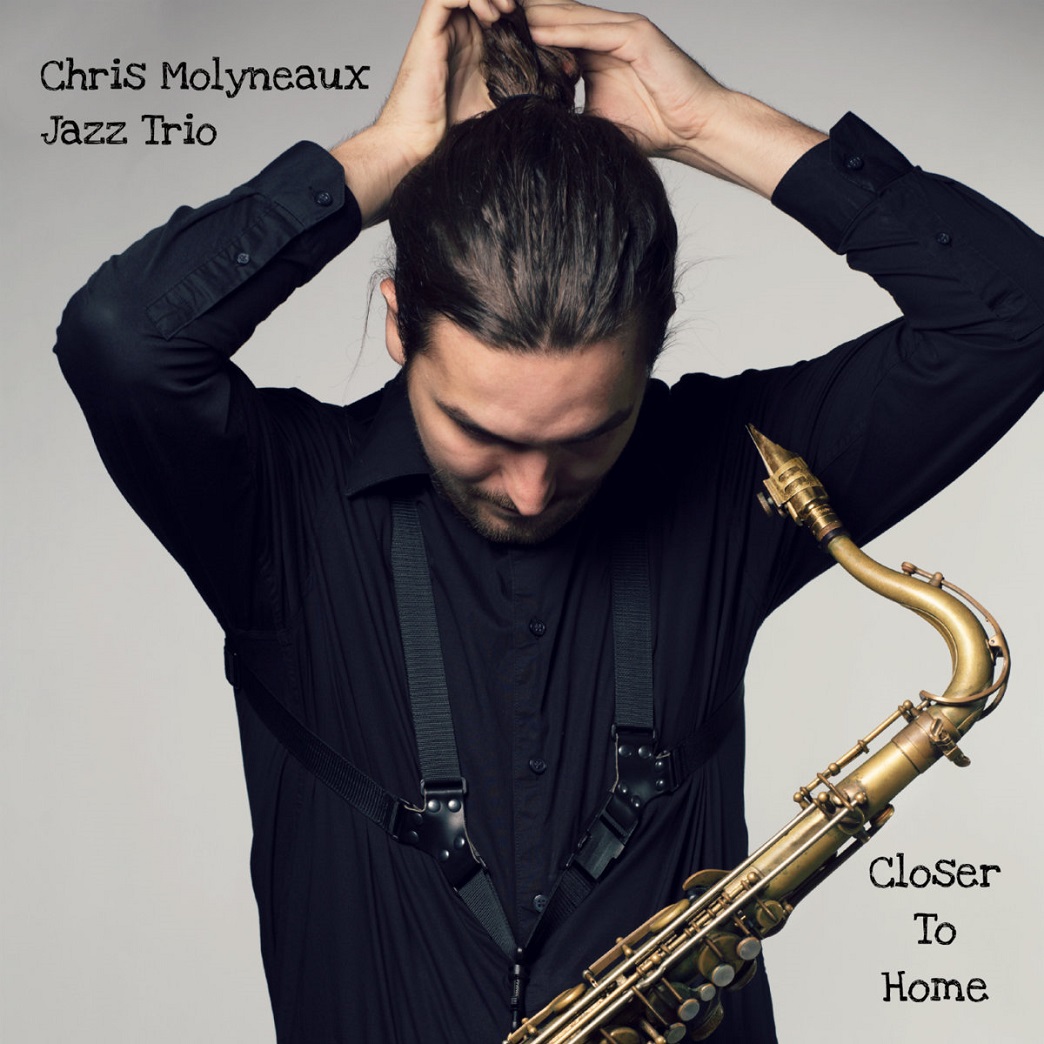
The Chris Molyneaux Jazz Trio is the latest project of Canadian saxophonist Chris Molyneaux. With his bandmates Wesley Collett-Taylor on bass, and Mark Athanasiadis on drums, this band has written and performed six original jazz songs influenced by R&B and funk music to create a unique experience only heard on their debut album, "Closer to Home".
Chris Molyneaux - tenor saxophone
Wesley Collett-Taylor - bass
Mark Athanasiadis - drums
1. Up For Grabs 07:38
2. Don't Pity The Fool 06:03
3. Someone's Husband 04:59
4. Begin Again 08:14
5. Restoration 08:10
6. Consider This 05:19
Produced and mixed by Mike McKyes of The Grove Productions
Mastered by Siegfried Meier of Beach Road Studios
All songs written by Chris Molyneaux except for "Someone's Husband", written by Wesley Collett-Taylor
Fela Kuti meets Miles Davis, meets Karlheinz Stockhausen. Melbourne psychedelic jazz collective I Hold the Lion's Paw sounds familiar and, at the same time, like nothing else you’ve ever heard. Nominated for ‘Best Australian Jazz Ensemble’ in the 2018 “Jazz BELL Awards”, I Hold the Lion’s Paw (IHTLP) is led by Reuben Lewis and features some of Australia’s most exciting musicians. The music is born out of an organic cross-over of afro-beat, jazz and outré electronics. Expect to hear as much as electro-acoustic noise, slowly evolving soundtracks, afro-beat inspired grooves and psychedelic free jazz.
“Is this exactly where jazz needed to have ended up in the year 2018? It is an exhilarating spirit that moves this collective, taking the best from the past, and from the future and grafting them to the present.”
- John Hardaker, Words About Music
“Danceable, infectious, and the inevitable deconstructions are subtle - ★★★★”
Prodotto dall'etichetta pugliese Dodicilune, esce mercoledì 31 ottobre - distribuito in Italia e all’estero da IRD e nei migliori store online da Believe Digital - "Trigonos", il nuovo lavoro discografico del trio composto da Andrea Centazzo (percussioni, malletkat, sampling), Giancarlo Schiaffini (trombone) e Sergio Armaroli (vibrafono), artisti protagonisti indiscussi della scena jazz sperimentale contemporanea italiana. Nei dieci brani originali, Trigonos è l’imperfetto equilibrio di tre artisti che «viaggiano, cercano insieme. Cercano il dettaglio, la bellezza non come valore estetico autocompiacente, ma moltiplicatore di energie creative, di visioni, di sguardi sulla vita. La trasgressione sta nella dilatazione del proprio Dna musicale per offrirlo agli altri come spazio d’indagine sonora, di idee da condividere. Ma anche nell’esporla con una poetica quasi sottovoce in un momento nel quale troppi urlano parole orrende», sottolinea Paolo Carradori nelle note di copertina. «Può risultare forse emblematico ma al primo approccio con Trigonos mi è sorta alla mente una riflessione, letta qualche tempo prima, di Salvatore Sciarrino, compositore apparentemente lontano da ciò che stavo ascoltando. Sono andato a ricercarla: ”Io sono convinto che l’evoluzione della musica consista nelle trasgressioni di singoli individui, rispetto ad un vocabolario comunemente accettato. Come dire che più è trasgressivo il linguaggio, di tanto diviene personale”. Devo dire che la connessione, l’interdipendenza trasgressione/evoluzione mi piacque subito», prosegue Carradori. «Anche se estrapolato da un contesto più ampio, un ragionamento quello di Sciarrino che rende bene l’idea su una musica in continuo movimento, in permanente negazione di estetiche consolidate, come rovesciamento di cliché noti. Il compositore non parla di nuovo, termine rischiosissimo e altamente ambiguo, ma di superamento di un vocabolario acquisito. Qui sta il nodo della questione, allora», continua. «Sergio Armaroli, Andrea Centazzo e Giancarlo Schiaffini in Trigonos lavorano, riflettono, creano insieme sulle loro storie musicali, intellettuali e umane. Li accomuna l’improvvisazione, come procedura, spazio mentale, immersione nei suoni, in se stessi. Artista irrequieto, emancipatore della percussione, affascinato dalla multimedialità, compositore, Centazzo svela lo scenario con un colpo di gong. Suono evocativo, spirituale. Il vibrafono di Armaroli, poeta, pittore, provocatore visuale, risponde e si muove come una farfalla colorata che svolazza elegante. I due viaggiano per un po' insieme senza scontrarsi, sfiorandosi, sognando. Il trombone di Schiaffini, forte di storie che vanno da New Orleans a Ornette Coleman, da Cage a Scelsi, irrompe con quel distacco concreto che modella, offre forma ai suoni. L’elettronica satura con discrezione, amplifica lo sfondo». Compositore, percussionista e artista multimediale italiano, Andrea Centazzo è stato per 40 anni un audace esploratore dell'arte contemporanea. Nei primi anni '70 ha introdotto un nuovo concetto di percussione, migrando dal Free Jazz a una nuova forma di musica improvvisata. Alla fine degli anni '70, Centazzo fu uno dei fondatori della NY Downtown Music Scene con la sua collaborazione con John Zorn, Tom Corra, Eugene Chadbourne, Toshinori Kondo e altri, documentati in molti album. Nel 1976 fonda la ICTUS Records, una delle prime etichette gestite da musicisti, registrando con Steve Lacy, Evan Parker, Pierre Favre, Derek Bailey, John Zorn, Alvin Curran, Albert Mangelsdorff, Don Cherry e molti altri. Lasciò la scena musicale improvvisata nel 1986, spostandosi poco dopo a Los Angeles, CA e dedicandosi alla composizione e al video making, Centazzo realizzò 3 opere, 2 sinfonie e quasi 500 composizioni per tutti i tipi di ensemble, oltre a molti film pluripremiati. Torna a esibirsi dal vivo nel 1998, ha creato concerti da solista e concerti solisti multimediali, suonando dal vivo in sincronia con i video che spara e modifica. Il suo ultimo progetto "Einstein's Cosmic Messengers" è stato prodotto da LIGO, Caltech e NASA. La Biblioteca dell'Università di Bologna al DAMS, recentemente dedicata al compositore Fondo Andrea Centazzo dove tutte le sue opere sono raccolte e messe a disposizione di studenti e studiosi.
Compositore, trombonista e tubista, Giancarlo Schiaffini è nato a Roma nel 1942. Laureato in fisica, studia musica da autodidatta e partecipa alle prime esperienze di free jazz in Italia negli anni ’60. In quel periodo comincia la sua attività di compositore ed esecutore nel campo della musica contemporanea e del jazz. Ha studiato a Darmstadt con Stockhausen, Ligeti e Globokar e ha fondato il gruppo strumentale da camera Nuove Forme Sonore. Fa parte della Italian Instabile Orchestra. Ha tenuto corsi e seminari in Italia e all’estero e insegnato presso i conservatori “G. Rossini” di Pesaro, “A. Casella” dell’Aquila e nei corsi estivi di Siena Jazz (strumento, improvvisazione, composizione). Ha collaborato con John Cage, Karole Armitage, Luigi Nono e Giacinto Scelsi. Ha partecipato, come compositore ed esecutore, a stagioni concertistiche e festival tra i più importanti del mondo. Sono state a lui dedicate composizioni da numerosi autori come Scelsi, Nono, Alandia, Amman, Castagnoli, Dashow, Guaccero, Laneri, Mencherini, Renosto, Ricci, Villa-Rojo. Ha inciso dischi per BMG, Curci, Cramps, Edipan, Horo, Hat Records, Pentaflowers, Pentaphon, Red Records, Ricordi, Vedette. Gli è stata dedicata una voce dalla Biographical Encyclopedia of Jazz (Oxford University Press) e dall’Enciclopedia della Musica (Utet/Garzanti). La poetica di Sergio Armaroli abbraccia molteplici ambiti espressivi alla costante ricerca di un’unità dell'esperienza. Si dichiara pittore, percussionista concreto, poeta frammentario e artista sonoro oltre a fondare il proprio operare all'interno del "linguaggio del jazz" e dell'improvvisazione come "estensione del concetto di arte". Concentrato su una scrittura diffusa, consapevole di essere produttore "di-segni", dove l'invenzione verbale è "gesto poetico", nella vita è costretto ad uno sforzo pedagogico costante (www.sergioarmaroli.com). Svolge un’intensa attività artistica caratterizzata da un eclettismo stilistico accentuato con una tendenza alla dispersione linguistica come alla rinuncia e ad una forte predilizione per il "silenzio". Si è esibito in qualità di "attore musicale" e percussionista concreto in prestigiosi teatri e sale da concerto internazionali esponendo come artista in ambito off e sperimentale. Ha al proprio attivo numerose pubblicazioni in campo teorico musicale e poetico. L’etichetta Dodicilune è attiva dal 1996. Dispone di un catalogo di quasi 250 produzioni di artisti italiani e stranieri ed è distribuita in Itali a e all'estero da IRD in circa 400 punti vendita tra negozi di dischi e store. I dischi Dodicilune possono essere acquistati anche online, ascoltati e scaricati su una cinquantina tra le maggiori piattaforme del mondo.
Andrea Centazzo, percussion, malletkat, sampling
Giancarlo Schiaffini, trombone
Sergio Armaroli, vibraphone
1 - Deuterium #1
2 - Deuterium #2
3 - Metapenta #1
4 - Metapenta #2
5 - Reloaded Again
6 - The Real Vibone
7 - Trigonos #1
8 - Trigonos #2
9 - Trigonos #3
10 - Trigonos #4
Compositions by Andrea Centazzo/Giancarlo Schiaffini/Sergio Armaroli except 1, 2, 3, 4 by Andrea Centazzo/Sergio Armaroli, 5 by Andrea Centazzo/Giancarlo Schiaffini, 6 by Giancarlo Schiaffini/Sergio Armaroli
Production by Sergio Armaroli and Gabriele Rampino for Dodicilune edizioni, Italy
Tras su arrollador paso este verano por Etnosur y Pirineos Sur, los colombianos regresan a la península para dar tres conciertos en Granada, Madrid, y Barcelona.
Ghetto Kumbé son la tríada cósmica que desde finales de 2015 llevan revolucionando la siempre innovadora escena colombiana. Este combo de brujos, percusionistas y maquinistas invoca a los públicos del mundo entero y los espíritus de la rumba digital y consciente en unos rituales de corte indígena con base de percusiones caribeñas y ritmos afro-colombianos, acompañados de electrónica minimalista y elegante. Ghetto Kumbé es la fiesta del gran barrio donde vivimos, la Madre Tierra. Este verano pudimos disfrutar de ellos por primera vez en España en los festivales Etnosur y Pirineos Sur, y ahora vuelven para sumergirnos en su espéctaculo de salas, donde harán que el público olvide el frío del exterior.
Tra i più importanti chitarristi jazz italiani degli ultimi vent’anni, Domenico Caliri non è, contrariamente a molti suoi colleghi, musicista discograficamente prolifico, soprattutto come leader. Proprio per questo ogni suo nuovo lavoro, sempre lungamente meditato, risulta pregnante di contenuti e non delude quasi mai i suoi numerosi estimatori. In questo suo quarto disco per Caligola il chitarrista siciliano, ormai bolognese d’adozione, rispolvera quel Cal Trio che tanto aveva fatto parlare di sé nello scorso decennio, quando al suo fianco c’erano Antonio Borghini e Cristiano Calcagnile, poi sostituito da Federico Scettri. Da un paio d’anni – dopo la faticosa ma esaltante esperienza con l’ensemble allargato di «Camera lirica» (2014) – Caliri è tornato a frequentare la formazione a lui molto congeniale del trio, trovandosi a suonare abbastanza regolarmente con il contrabbassista Stefano Senni ed il batterista Marco Frattini. Concerto dopo concerto è così rinato, dopo qualche anno di pausa, il Cal Trio, delineando un’identità sempre più precisa ed originale, tanto da spingere il suo leader a scrivere nuova musica e quindi a registrarla. Con l’unica eccezione rappresentata da My mind on a surf, composta nel 2013 per «Dialoghi a corde», disco registrato in duo con Ares Tavolazzi e pubblicato nel 2015 dall’Onyx Club di Matera, tutte le altre composizioni sono state scritte fra il 2015 ed il 2018; Nini G. proprio a ridosso della registrazione. Sia i brani più impegnativi, come Aria mossa e Serpe, caratterizzati da arpeggi veloci e continui cambi di tempo, che quelli apparentemente più “leggeri” e scanzonati, come la già citata My mind on a surf o la latineggiante M’usciau, hanno in comune la ricerca di una cantabilità melodica ed allo stesso tempo l’irregolarità, spesso imprevedibile, della struttura ritmica. Tutti i brani del chitarrista sono infatti allo stesso tempo melodici e “storti”, una caratteristica consolidata del suo stile compositivo, ed il lavoro svolto dalla solida coppia ritmica formata da Senni e Frattini per cercare di smussare degli angoli spesso molto spigolosi, risulta a tal fine encomiabile e prezioso.
David Dominique's forthcoming album, Mask, is a surrealist, cross-genre expression of angst and catharsis, an exploration of Dominique’s diverse heritage and musical interests, from 60s jazz to avant-rock to contemporary classical. Written over eight years, Dominique's new Orenda Records release bounds between styles, strategies, attitudes and textures. Somehow, the project furthers the language Dominique developed on his enthralling 2013 album, Ritual, while offering a perpetual sense of surprise. Mask’s aesthetic is one of upheaval; during the period in which he composed this music, Dominique, a Ph.D. with a thriving academic career, moved across the U.S. three times. He also endured tremendous loss, with his father, grandmother and uncle passing away within a span of 18 months. A cycle of grief followed, during which Dominique grasped at the fractured pieces of his personal and family history, in hopes of reassembling them into a cohesive identity. That’s the process in play throughout Mask: an artist in the midst of profound, sometimes painful change, inhabiting and discarding one stylistic or cultural veil after another. The music feels like a surrealistic, stream-of-consciousness dreamscape where any part of Dominique’s imagination or memory can suddenly emerge in full color, without warning or musical transition. While often rollicking and joyous on the surface, these sonic collages are the composer’s attempt to heal his inner strife—a continuing catharsis rooted not only in the feeling of loss but in Dominique’s lifelong effort to communicate through multiple heritages. In the end, however, Mask’s seemingly incompatible parts are embraced and normalized into a fluid listening experience that remains compelling even when the music’s backstory goes untold. A multi-hyphenate artist with wide-ranging tastes and curiosities, Dominique’s inside-outside take on the avant-garde is as entertaining as it is cerebral, with points of entry for those coming from jazz, the rock underground or the contemporary classical scene.
The brilliantly raucous small-group music of Charles Mingus with Eric Dolphy might be a good touchstone - Dominique names Mingus at Antibes as an all-time favorite - but there’s so much more in the mix, built up and then refracted in cubist fashion. “Licks and rhythms are reimagined and warped from multiple perspectives, techniques I’ve learned from Stravinsky - especially the ballet Petrushka,” Dominique writes. “In many of these cases, a particular lick or groove is repeated obsessively, in the mode of American minimalists like Steve Reich - in my case representing fixation on a particular thought and the return to that thought again and again.” He has immersed himself in the art of two renowned Austrian composers, and throughout Mask you can hear the sharp experimentalism of Beat Furrer as well as the electronic and avant-rock leanings of Bernhard Lang. Joining Dominique is a powerful cast of collaborators up to the tasks set by his visionary music. Shaping potent, direct sound and performances as the album’s producer is jazz trumpet great Nolan Shaheed, a former lead player for the Count Basie Orchestra who’s also shared stages and studios with Miles Davis, Marvin Gaye, Stevie Wonder, Freddie Hubbard, Jimmy Smith, Phil Collins, David Byrne, Tom Waits and others. Dominique’s cohorts include some of Los Angeles’ brightest rising musicians, all of them sharing his love for composing and his stylistic wanderlust. In addition to Dominique on his trademark flugabone, a compressed valve trombone most often used in marching bands, Mask features Brian Walsh (tenor saxophone, clarinets, co-producer); Joe Santa Maria (alto saxophone, flute); Sam Robles (alto and baritone saxophones); Lauren Baba (viola); Alexander Noice (guitar and electronics); Michael Alvidrez (basses); and Andrew Lessman (drums and drumKAT). Their credits cover a vast range of forward-looking artists, including Eugene Chadbourne, Vampire Weekend, Solange, Niia, Vinny Golia and Wadada Leo Smith. Raised in New York City and Long Island, Dominique lived on and off in Los Angeles for a decade, and his time in daring L.A. ensembles like Killsonic proved a robust influence on his current music. He is now based in Richmond, Virginia, and works as a professor of music composition and theory at the College of William & Mary, in Williamsburg. In 2013 he conducted his score for Starcrosser’s Cut, Joseph Tepperman’s innovative theatre piece about the disgraced astronaut Lisa Nowak. “The musical composition by David Dominique never merely backs or underscores the action,” the Hollywood Reporter said, “but instead comprises an integral component of the overall expression.” Dominique garnered equally effusive praise for his Ritual album, a striking showcase for his ingenious blend of divergent sounds, evoking everything from Mingus and Ellington to Ligeti and Furrer and on to Blonde Redhead and Flying Lotus. “A maximalist inspired by minimalists, composer David Dominique practices a rowdy, muscular brand of modernism. Picture Charles Mingus staging a hostile takeover of the Sun Ra Arkestra with arrangements by Sonic Youth,” DownBeat said. “Dominique’s band teeters on the fulcrum where discipline crumbles into anarchy.” Dominique will tour with an octet in support of Mask this fall, hitting Brooklyn, Washington, D.C., Baltimore, the Philadelphia area and three cities in Virginia: Richmond, Charlottesville and Williamsburg. He will direct the ensemble and play flugabone, and the band will feature cornetist Victor Haskins, the director of the Kennedy Center’s Jazz Outreach Program, and Ian McColm, acclaimed DC-based drummer and composer.
The idea for this project started back in 2008. I would take two related bands that I’d been writing for—The Mentones (Tony Atherton, Bill Barrett, Joe Berardi, me) and the Tee-Tot Quartet (Dan Clucas, Scot Ray, Joe Berardi, me)—and combine them. I started to write the music, I started the artwork, I had the album title—but life and the world intervened. Then in 2017, I had the opportunity to play a fairly high-profile gig and I asked to do this, my deferred dream band. The presenter put faith in me (thank you, Lisa Mezzacappa!) and Men-Tot Six was back.
I reworked the two and half tunes I had already started and then got to work on some other preliminary sketches. As usual, original ideas can start changing once the music starts coming out. For example, the plan was to write seven tunes, but after a couple of rehearsals, an eighth emerged (which ended up being the title tune, nine years after the fact). And the writing itself changed. Some of it became quite a bit more contrapuntal then I had anticipated . . . what had started as an extension of the skewed American music I’d done for the two bands became something a bit different—something (perhaps) a bit more skewed—once we got into it. The guys in the band . . . they’ve put their talents and hard work into this project. They really supported and encouraged me (even when I wasn’t so great to be around), which is incredibly important in the creative world. (I’m grateful!) They also played their asses off. There are too many moments, great solos, bits of interaction, etc., to go into detail. One of the great joys for me is the way this band can be fluid with the material (and there is a bunch of written music)—we can go skittering off the page. Just take a listen.
Tony Atherton - Alto Saxophone
Bill Barrett - Chromatic Harmonica
Scot Ray - Slide Guitar
Dan Clucas - Cornet
Joseph Berardi - Drumset, Percussion
Steuart Liebig - Contrabass Guitars
Recorded 4-5 November 2017 by Wayne Peet at Newzone Studios, LA
On their debut album Watt Doom, the instrumental group Twin Whales synthesizes disparate landscapes, divergent sonic backgrounds, and a shifting musical direction. Think improvisation, think modularity, think inspiration. Formed in 2015, the group has found a voice in music that they refer to as “pure survival mode” – frenetic and complex stuff that allows for unpredictable stylistic shifts and moments of quiet beauty. Watt Doom has an accomplished sound, especially considering the entire album was self-produced and recorded on a low budget using the bands rehearsal studio by drummer Caleb Dolister, and later mastered by Sam Minaie at Birdfood Studios, NY. Joining the band for the recording is guest-keyboardist Kevin Lum–who shared a common background with Ty Williams and Caleb Dolister who are both formerly from Reno’s music scene. Twin Whales’ members bring a musical sensibility to the group. “It's probably obvious that at least some of us really like Black Sabbath a lot,” Hill notes. “That being said, we've always just let the songs go where they wanted to go, and if we have moments where it sounds like Carlos Santana playing in a Krautrock band with a jazz drummer, we're absolutely, totally fine with that.” Over the course Watt Doom’s ten songs, Twin Whales explore a host of musical and tonal dynamics. This can range from the rhythmically complex breakdown in "No College" to the atmospheric, drone-influenced “Science and Sorcery.” The slow build of opener “Everyone in a Womb" makes for a particular showcase for Williams’s chiming guitars, while the subtler melodies heard on “Eggs” demonstrate the band’s more restrained side. As for the name of the album, that arose after Hill saw a particularly memorable set from Mike Watt. “When we started out we didn't have names for any of the songs and we'd just call them ‘the pretty juan,’ ‘the doomy juan,’ etc,” he recalls. The latter of those evolved into “Watt Doom,” which eventually gave the album its name. It’s a perfect encapsulation of what this band does best: they’re aware of the musical history that informs them but aren’t bound to it, and they’ve found their own way to inform their compositions with plenty of mood and emotion. Whether you’re seeking instrumental virtuosity or a sense of ominous depth, there’s plenty of both to be found in the music of Twin Whales.
Ty Williams, guitar and compositions
Bradford Hill, bass and compositions
Kevin Lum, keyboards
Caleb Dolister, drums
Production and engineering by Caleb Dolister
Mastered by Sam Minaie at Bird Food Studio, New York