Tuesday, September 4, 2018

new wave of jazz: SEPTEMBER - OCTOBER, MUSIC and CONCERTS


"After some three or more hours of Tonus music on a succession of days I believe this is an ensemble with much potential." Vital Weekly 
- The Netherlands

A New Wave Of Jazz profiles itself more than ever as a label that not only materializes curator Dirk Serries immense passion for the wilful in music, whether free impro or minimal music, but also tries to tie/bridge those specific genres.  The label towards the future will expand its catalogue with a series of excellent albums by prominant and exciting artists.

This Fall however the label focuses on the realization of the first three TONUS albums.  TONUS as an ensemble grew out of Dirk Serries' jazzcase residency in 2017 for which he brought together a sextet to work around a slow piano motif by Martina Verhoeven. The literal translation of Tonus is muscle strength, but in this context defines a musical system that places equal importance on the space between notes. Both definitions apply here as the music is an exercise in discipline and anticipation while controlling the clarity, sustain and effect of each single note played.

The birth of the TONUS happened when Serries realised that he needed a vehicle to explore and perform these exercises, as well as a general classification for his ongoing study in minimalism and free improvisation.

These albums are officially out on October 13th 2018 !


disc one : I (performed and recorded at Jazzcase, Neerpelt Belgium November 16th 2017) personnel : colin webster (alto sax), nils vermeulen (double bass), martina verhoeven (piano), dirk serries (acoustic guitar), george hadow (drums), jan daelman (flute)

disc two : IV (performed and recorded at Hundred Years Gallery, London UK January 14th 2018) personnel : otto willberg (double bass), colin webster (alto sax), tom ward (bass clarinet), benedict taylor (viola), dirk serries (acoustic guitar), cath roberts (baritone sax)


performed and recorded at the Sunny Side Inc. studio, Anderlecht Belgium December 9th 2017. Personnel : Dirk Serries (acoustic guitars), Benedict Taylor (viola), Martina Verhoeven (piano)


performed and recorded at Sunny Side Inc. studio, Anderlecht Belgium March 10th 2018. Personnel : Dirk Serries (acoustic guitar), Martina Verhoeven (piano)

CONCERTS :

Celebrating Dirk Serries' 50th birthday in par with the release of three TONUS albums,  the TONUS ensemble (in varying line-ups) will play five special events.  

Friday, October 12th 2018 - Pletterij, Haarlem (Netherlands)

ensemble : Dirk Serries (accordion, acoustic guitar), Benedict Taylor (viola), Martina Verhoeven (piano), Colin Webster (alto sax)

Saturday, October 13th 2018 - De Singer, Rijkevorsel (Belgium) 
OFFICIAL RELEASE SHOW

ensemble : Patrick De Groote (trumpet), Dirk Serries (accordion, acoustic guitar), Benedict Taylor (viola), Martina Verhoeven (piano), Nils Vermeulen (double bass), Colin Webster (alto sax)

Sunday, October 14th 2018 - AB salon, Brussels (Belgium)

ensemble : Dirk Serries (accordion, acoustic guitar), Benedict Taylor (viola), Martina Verhoeven (piano), Nils Vermeulen (double bass), Colin Webster (alto sax)


Friday, October 19th 2018 - Oratoriënhof, Leuven (Belgium)

ensemble : Dirk Serries (accordion/melodica, acoustic guitar), Martina Verhoeven (piano)


Saturday, October 27th 2018 - Cafe OTO, London (UK)

ensemble : Graham Dunning (snare drum, objects), Kristoffer Lo (flugabone), Cath Roberts (baritone sax), Dirk Serries (accordion, acoustic guitar), Benedict Taylor (viola), Martina Verhoeven (piano), Tom Ward (bass clarinet), Colin Webster (alto sax), Otto Willberg (double bass) 

Judith Lorick feat. Eric Reed Trio CD Release Show: @ Smoke Thursday, October 18th Showtimes: 7pm, 9pm & 10:30pm


Judith Lorick
featuring
The Eric Reed Trio  

“The Second Time Around”
CD Release Show
Thursday, October 18, 2018
Smoke Jazz & Supper Club
2751 Broadway, NY
Showtimes:
7pm, 9pm & 10:30pm
Tickets: $15

Judith Lorick (v)
Eric Reed (p)
Dave Baron (b)
McClenty Hunter (d)

“Gifted with an extraordinary voice, Judith Lorick combines charm, elegance and refinement”
“Les Nuits du Jazz” Cannes (France)

JUDITH LORICK is a vocalist we should have heard from long before now. In an era of exaggeration and pyrotechnics, Judith’s voice is a soothing reminder of what it means to have quality of tone and sophistication, all captured on her latest project, The Second Time Around, an array of popular pieces, warmly and refreshingly treated by Judith and her collaborator, multi-faceted pianist Eric Reed. Supplementing accompaniment is a diverse collection of talent including Jeremy Pelt on trumpet, McClenty Hunter on drums, Kiyoshi Kitagawa on bass, and a recent arrival to the music scene, tenor saxophonist Chris Lewis. 

The Second Time Around celebrates several life events for Judith, most notably the reunion with her long lost love, Artie. To tell the story, Reed encouraged her to select songs that were intrinsic to it; not surprisingly, the most appropriate and moving songs turned out to be ballads. “Eric was in tune to the fact that singing ballads is something that I’m passionate about, and that this passion would resonate with others,” Judith recalls. This heartwarming and poignant tale is rendered through the lyrics of tireless classics like “I’ll Be Seeing You”, the title track “The Second Time Around” and rarer gems like “Why Did I Choose You”and “I’m Gonna Laugh You Right Out of My Life”. Judith explains her ease with the repertoire, stating, “Interpreting ballads comes naturally to me because they resonate in my soul, and that’s where I sing from, where I live. As long as I can feel it, as long as I can react spontaneously in my interpretation and phrasing, I can relate honestly to people.”More than anything, pure and unfettered honesty pours out of this project.

Judith’s passion is not just limited to ballads, but to music in general. “My mother ‘gave me voice’. She constantly had music on in our home, so by the time I was a teenager, and began to sing jazz, I already knew three hundred songs!”she exclaims. This carefully selected program of songs is rooted in Judith’s natural proclivity towards education:“When I perform, I tend to do songs that people might not know because I feel part of my job is to make people aware of great songs that are rarely interpreted.” In the midst of music, family, and a very successful business career, Judith has found and lost love, finding it againfour decades later; she has lived every lyric sung.


A native of Philadelphia (as is her collaborator Reed), Judith has traversed the globe not only as performer, but as resident, having spent extensive time in southern California, and almost thirty years in the south of France, where she first met Eric at an after-hours jam session in 1995, where “The magic was immediate,”she remembers. “When you breathe together like that, from the first note, well, it was a musical experience one never forgets.”  When Judith returned to the U.S. in 2014, they reconnected after one of Eric’s performancesand not long after, their collaboration ensued – the secondtime around.

“Judith and I were diligent about every aspect of this project, which was a treat for me,”says Reed. “Her trust was paramount in doing this.”Their due diligence paid off in the assemblage of a masterful and sympathetic quintet, an unusual choice for a vocal recording. Judith explains, “I love what Jeremy Pelt and Chris Lewis add to the overall sound. Sometimes, we were just going for sounds and colors versus full-on solos. Eric and I were interested in scoring a storyline versus simply recording songs.”Illuminating further about her collaborator and co-producer, “Eric is amazing – talented, creative, meticulous, and sensitive. He’s not merely an accompanist here, it’s as if we’re singing together.”

Although the songs are familiar, the story of The Second Time Around, is a unique and moving saga about which Judith summarizes,“I’m glad I came home. It was time.”

(JLJ International LLC JLJ2014) 
Street Date: September 28, 2018

Vocals: Judith Lorick
Piano: Eric Reed
Trumpet: Jeremy Pelt
Drums: McClenty Hunter
Bass: Kiyoshi Kitagawa
Tenor Saxophone: Chris Lewis


Media Contact
Jim Eigo
Jazz Promo Services
E Mail: jim@jazzpromoservices.com
"Specializing in Media Campaigns for the music community, artists, labels, venues and events.”

The 5th Annual New York HOT JAZZ FESTIVAL presented by THE MCKITTRICK HOTEL & HOT JAZZ PRODUCTIONS :: Sunday, September 30, 2018 2pm-2am!


THE MCKITTRICK HOTEL AND HOT JAZZ PRODUCTIONS PRESENT

THE 5TH ANNUAL NEW YORK HOT JAZZ FESTIVAL

LIVE AT GALLOW GREEN AND THE HEATH ON SEPTEMBER 30

“One of the most enjoyable hangs of the year!”
– DOWNBEAT

TIME OUT NEW YORK CRITICS’ PICK

2018 marks the 5 Year Anniversary for what has become a New York institution, The New York Hot Jazz Festival.  Music Impresario and Hot Jazz Productions founder, Michael Katsobashvili and The McKittrick Hotel, 530 West 27th Street, NYC (home of Sleep No More), announce the return of the festival to its yearly headquarters on Sunday, September 30th,  across three stages within The McKittrick.

The hot jazz and swing party of the year returns to Chelsea’s McKittrick Hotel once again featuring three stages with continuous live music for 12 hours from sixteen ensembles and a myriad of special guests and performance artists. Celebrating traditional (pre-bop) jazz, with rising stars and legendary performers alike, the festival will showcase the best talent of the hot jazz and swing worlds in New York and beyond with music spanning the entire scope of early jazz – from its New Orleans beginnings through the Jazz Age and into the Swing Era.

LINEUP

(subject to change)

• Vince Giordano & The Nighthawks
• The Hot Sardines
• Mwenso and The Shakes
• Evan Christopher
• Julien Labro & Olli Soikkeli Quartet
• Sasha Masakowski
• Tatiana Eva-Marie & the Avalon Jazz Band
• Olivier Franc & Jean Baptiste Franc
• Cynthia Sayer Trio
• Blind Boy Paxton
• Nicole Rochelle
• DeWitt Fleming Jr.
• Eddy Davis
• Queen Esther
• Sugartone Brass Band
• Charlie Halloran Band
• New Eureka Jass Band 
• The Moonlighters
• Evan Arntzen’s Animule Dance
• Tuba Machine
• Midnight Speakeasy All-Star Band

MYSTERY TRAIN PHONOGRAPH TABLEAU

• Lilian Lorraine & her Lovely Ladies
• Antique Phonograph DJ MAC

Additional artists will be announced shortly.

The top headliner of the 5th anniversary festival is the biggest name in the world of hot jazz: Grammy-winning Vince Giordano & The Nighthawks (subjects of last year’s documentary film There’s A Future In The Past). The acclaimed big-band leader and multi-instrumentalist, Vince Giordano, will be the first recipient of the New York Hot Jazz Festival's new lifetime achievement award in recognition of his immeasurable contributions to traditional jazz.

Mr. Giordano will be presenting two separate programs at the Fest: Hot Potpourri and From Harlem To Montmartre: a Jazz Age Voyage. The second program will celebrate the centennial of James Reese Europe’s 369th infantry regiment, the “Harlem Hellfighters” band, who brought their form of ragtime and jazz to France for the first time when they arrived on the battlefields of Europe in WWI. The program will also celebrate the subsequent influence of the Hellfighters' distinguished veterans, who channelled the Harlem Renaissance to the Lower Montmartre district of Paris in the 1920s.

The Nighthawks will be joined by several special guests, including tap dance whiz DeWitt Fleming Jr., with an homage to the legendary Bill “Bojangles” Robinson, who appeared in Lower Montmartre in the '20s and later starred in a James Reese Europe biopic. The luminescent French vocalist/dancer Nicolle Rochelle will join the Nighthawks in an tribute to the most famous celebrity to come out of Lower Montmartre: Josephine Baker. More artists joining Mr Giordano are to be announced shortly.

Another notable homage in the Fest will be the New York premiere of a new Fats Waller revue, created by tap dance star Michela Marino Lerman with the explosive Michael Mwenso & The Shakes. This production has already enjoyed a successful run in London’s West End and will be presented here to commemorate the 75th anniversary of the passing of this legendary piano player and songwriter.

The French theme of this year's edition of the Festival will be extended by a number of French artists. French-born Elizabeth Bougerol will co-lead the exhilarating Hot Sardines, one of the founding ensembles of the Festival and one of the most prominent acts of the current hot jazz and swing revival.

French accordion virtuoso Julien Labro with Gypsy swing guitar wizard Olli Soikkeli will make the Fest debut with their new quartet.

Another of the Fest's founding bands, Avalon Jazz Band, led by the rising star vocalist Tatiana Eva-Marie, will present From Paris To New Orleans program with both Manouche and Eastern European Romani twist. NOLA's-own rising star, Sasha Masakowski, will join the Avalon as a special guest.

Soprano saxophonist Olivier Franc, one of the top living disciples of Sidney Bechet, will be joined by his son, the stride piano specialist Jean Baptiste Franc, for a tribute to Bechet: the native son of New Orleans, who became a major presence in the clubs of Lower Montmartre in the '20s then rose to worldwide prominence.

The greatest New Orleans clarinet player of our time, the inspiring Evan Christopher, will be appearing as part of the New York Hot Jazz Festival’s year-long celebration of  Crescent City tricentennial. 

Big Easy celebration will also include a representative of a younger generation of New Orleans hot jazz specialists — formidable trombonist Charlie Halloran, who is making his Fest debut with a band of his own."

Several New York-based bands will also salute the Big Easy, Gotham-style! Among them are John Gill’s New Eureka Jass Band and the exhilarating Sugartone Brass Band, led by tuba powerhouse Kenneth Bentley, bringing NOLA brass sound to the Fest for the first time.

Another traditional jazz sound to be heard at the Fest for the first time is the Hawaiian-style string band swing of Bliss Blood’s Moonlighters.

Vince Giordano

The ultimate string highlight of the festival will occur as three acclaimed banjo masters Cynthia Sayer, Blind Boy Paxton, and Banjo Hall Of Fame inductee Eddy Davis join forces and battle it out in hot jazz Banjo Summit. The award winning four string banjo star Cynthia Sayer and her trio and the inspired bluesman multi-instrumentalist Blind Boy Paxton will have individual set before the banjo summit.  

The Festival will feature a visual and sonic art installation dedicated to the early history of jazz recording. The installation is created by Phonograph DJ MAC (aka Michael Cumella), the host of the long-running The Antique Phonograph Music Program on WFMU and the visual/immersive/performance artist Lillian Lorraine (aka Syrie Moskowitz.) Ms. Moskowitz will also be exhibiting her Jazz Age-inspired artworks throughout the McKittrick’s Heath.

DeWitt Fleming Jr. and Tatiana Eva-Marie will serve as the 5th anniversary Festival’s co-hosts.

SCHEDULE

2pm-4pm: Hot Jazz Brunch

4pm-12am: Hot Jazz Festival Marathon

12am-2am: Midnight Speakeasy Party (included with tickets above)

SCHEDULE

“Hot Jazz Benefactor” tickets are $200, and include priority entry from 4pm, reserved seating at both main stages and acknowledgement in the festival newsletter.

Reserved Seating tickets are $135, with access to reserved seating area at the lower level stage from 4pm.

General Admission first tier tickets are $49, with 4pm entry. Succeeding advance GA tiers are $59 and $69. Advance pricing available while tickets last.

Hot Jazz Brunch that kicks off the Festival at Gallow Green at 2pm is an additional $39 (must be combined with General Admission, Reserved Seating or Benefactor tickets) and features an additional Festival band. Brunch comes complete with coffee, tea, the rooftop’s seasonal brunch buffet and live hot jazz music.

For complete festival details and lineup, visit the official site www.nyhotjazzfest.com. For the venue information, visit www.mckittrickhotel.com or call 212-904-1880.

Exit North - Book of Romance and Dust (October 1, 2018)


An uncompromising debut album that explores the collective psyches and diverse influences of its renowned members. The focus is on songcraft that seamlessly combines genres and lyrical perspectives that shift between shadows and light.


Ulf Jansson - Piano, Keyboards
Charles Storm - Synthesisers, Treatments, Guitars, Bass, Voices
Steve Jansen - Keyboards, Drums, Percussion, Sound Design, Backing Vocals
Thomas Feiner - Lead Vocals, Trumpet, Additional Piano, Additional Guitar, Harmonium

Strings
Max Wulfsson - Violin I
Hanna Eliasson - Violin II
Tuula Fleivik Nurmo - Viola
Jung Hyun Byun - Cello
Hans Adler - Double Bass

Strings conducted by Mikael Backegård

String Arrangements
LESSONS IN DOUBT Mikael Backegård
BESTED BONES & ANOTHER CHANCE Mikael Backegård & Thomas Feiner
SEVER ME Thomas Feiner, orchestrated by Max Wulfson

Additional Vocals
Fyfe Dangerfield BESTED BONES
Robbie Lloyd-Wilson BESTED BONES
Hedda Älveby BESTED BONES & SHORT OF ONE DIMENSION
Anna Bylund LOSING

Additional Contributors
Lars Danielsson - Double Bass BESTED BONES & SPIDER & LESSONS IN DOUBT
Richard Hauer - Guitar NORTH
Mattias Tell - Acoustic Guitar - SHORT OF ONE DIMENSION
Bashar Sharifah - Cello ANOTHER CHANCE
Isak Eldh - Field Recording LOSING
‘Saxophobia’ sample ANOTHER CHANCE courtesy of Saidera Records

1. Bested Bones 05:20
2. Short Of One Dimension
3. Sever Me
4. Passenger's Wake
5. North
6. Lessons In Doubt
7. Spider
8. Losing
9. Another Chance
10. trailer: Exit North - Book of Romance and Dust

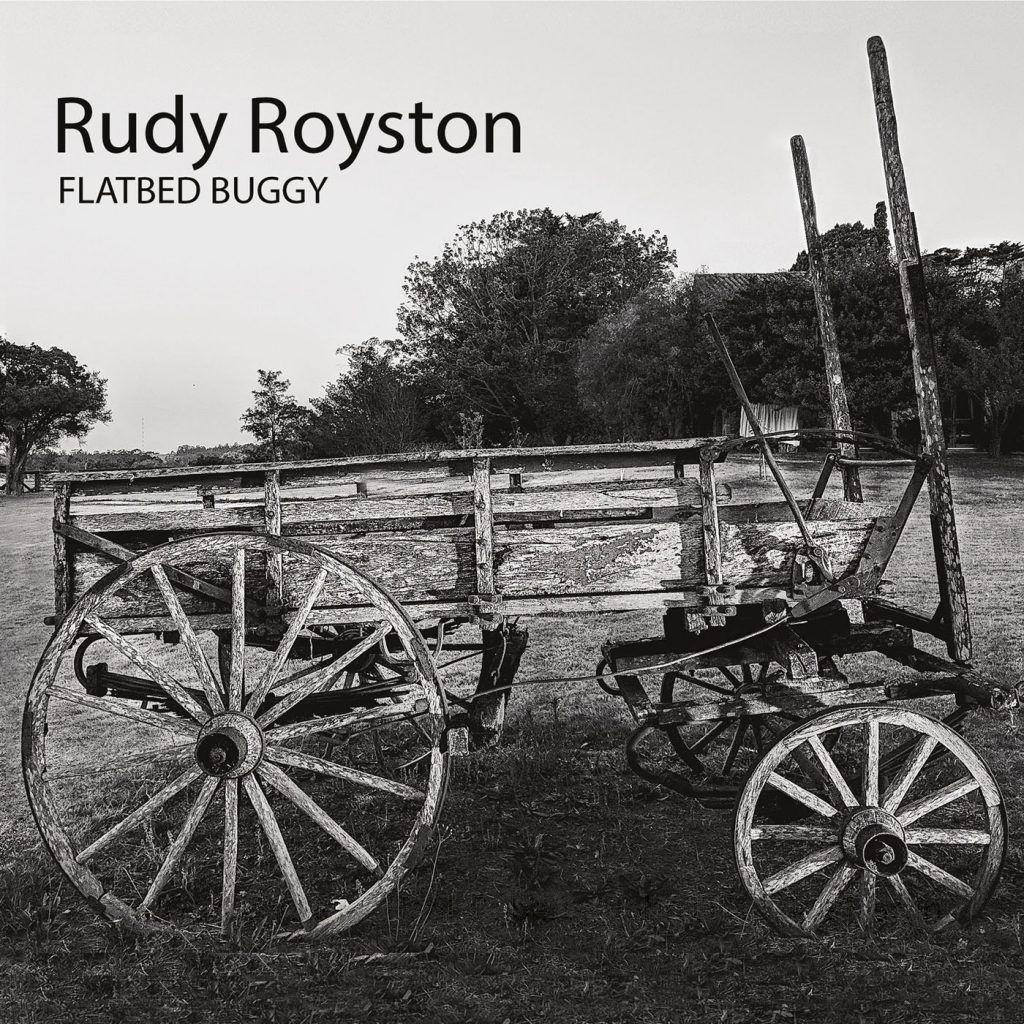
Rudy Royston - Flatbed Buggy (GREENLEAF MUSIC October 26, 2018)


Introducing Rudy Royston’s new record Flatbed Buggy

We’re announcing Rudy Royston’s third album as a bandleader. Flatbed Buggy features a new chamber-like quintet performing Rudy’s original compositions inspired by his youth growing up in Texas.

The album will be available worldwide on October 26


The new album, Rudy’s third as a bandleader, features thirteen original compositions for a new chamber-like quintet that includes Gary Versace (accordion), John Ellis (bass clarinet/saxophones), Hank Roberts (cello) and Joe Martin (bass).

Rudy Royston, first-call drummer with Bill Frisell, JD Allen, Dave Douglas and a host of other jazz greats, has honed a thoroughly engaging voice as a composer and bandleader with his compelling debut 303 (2014) and the raw and bracing trio follow-up Rise of Orion (2016). To these fine releases, both on Dave Douglas’ Greenleaf Music imprint, Royston now adds his third, Flatbed Buggy, rich in tonal contrast and mood yet steeped in the supple, enduring swing and groove that has driven his writing and playing from the start.

Right away the instrumentation is a striking departure: Royston leads a compact, almost chamber-like quintet featuring Gary Versace (accordion), John Ellis (bass clarinet/saxophones), Hank Roberts (cello) and Joe Martin (bass). “I was going for something that was more about melodies,” Royston declares. “I wanted to illustrate a story.” And indeed, the melodies flow forth on Flatbed Buggy, with rich harmony and surpassingly subtle orchestration and interplay occurring at every step as well.

Of the album title, Royston says: “Flatbed buggies to me mean country, they mean home, they mean earth. We lived in Denver but my father lived in Texas, and I would spend time in the country there. I remember riding on this kind of flatbed buggy thing when I was a child. The whole feeling that brought me … it was comforting, it was outside, this bitter shrubbery smell, my friends are there, my family’s there. So it’s about that, but the album also has to do with time: a time in my life, the beginning of things, the process of them. The buggy moving along up a road represents the movement of time. And the titles on the album really have to do with time and motion.”

The warmth and immediacy captured by Royston and the group, the unorthodox sound of the instrumental combinations themselves, marks Flatbed Buggy as a creative breakthrough. “Ron Miles is always my major influence,” the drummer offers, “because his music is so sing-able and melodically rich. I wanted that melodic quality but also moments underneath in the harmony where it was a little scratchy, a little dusty. My neighborhood in Texas was a little dusty.”

Together with the deep and woody instrumental timbres of Flatbed Buggy, there’s the way Royston keeps them continuously in play, beyond conventional jazz-combo roles: “I wanted us all to be constantly playing. I wanted us all to orchestrate or color or have a little input regardless of who is soloing. So if you check out the little stuff Hank is doing on Gary’s solos, for instance — all these neat little themes are happening. It sounds very orchestra-like for me. Some of it is written but 90 percent is those guys just interjecting their own taste into what’s going at the time.


At points in the program are short, rhythmically propulsive interludes — “Bed Boppin’,” “Dirty Stetson,” “Hold My Mule” (an old church expression), “I Guess It’s Time to Go” — that serve as what Royston calls “leaps of time.” “They remind you that you’re moving forward,” he says. “I hope there’s no ending on anything: a lot of these pieces fade out, because even when we pass away things still seem to be going forward somehow.”

In particular, the thematically related “Boy…Man” and “Girl…Woman” bring the passage of time further into focus, each a musical story not only of growth and maturation but eternal life: “That’s why I fade out, because it’s not about endings. It’s not like, ‘She lived her life and then passed away.’ It’s kind of like nothing ends, not yet.”

While Flatbed Buggy presents far more than a succession of virtuosic solos, the passion and technical depth of the performances themselves — including standout improvisations from all involved — can’t go unremarked. John Ellis, among the great saxophonists of his generation, plays mainly bass clarinet throughout, achieving a remarkable sound and impact. Gary Versace, a top organist and pianist of our time, is equally stunning on accordion, bringing a reedy melodic sustain and full harmonic weight to the music. On the low strings, whether bowed or pizzicato, Hank Roberts and Joe Martin contribute a wealth of subtlety and energy as well, intersecting and digging in, never in the expected ways. And Royston, even though he lays back and never dominates here (he notes there’s only one drum solo on the record), still offers what amounts to a master class on the jazz drummer’s art.

There’s an endless amount to discover: the melodic development and final triumphant letting-loose of the opening “Soul Train”; the hint of New Orleans rhythm in “Flatbed Buggy”; the picture of innocence in a young child twirling, on “Twirler,” with a startlingly brilliant tempo shift into slow swing; or the fast, twisty bop theme and soprano sax showcase of “Bobble Head” (where that lone drum solo crops up).

Another major statement is “The Roadside,” inspired by memories of a drive through wide open space in Texas, with great expanses of weeds and wildflowers. “It was very beautiful to be in the midst of all that,” Royston says. “It was moving, it was in motion, these flowers on the side of a dirt road, sprawled everywhere. My dad loved to fish, so we were driving somewhere to some pond, in the back of the country somewhere. The piece takes you back to that moment and reminds you that no matter where you are now, you’re on a journey someplace.”

PERSONNEL
Rudy Royston, drums
John Ellis, bass clarinet / saxophones
Gary Versace, accordion
Hank Roberts, cello
Joe Martin, bass

PRODUCTION CREDITS
Produced by Rudy Royston
Executive Producer: Dave Douglas
Engineered, edited and mixed by David Kowalski at Teaneck Sound Studios, Paramus, NJ, April 2018
Mastered by Kevin Blackler at Blackler Mastering, Brooklyn, NY, May, 2018
All songs by Rudy Royston (Rudy Royston Publishing / ASCAP)
Cover Design by Rudy Royston
Cover Buggy Photo by Isabella Oprete

TRACK DETAILS
1. Soul Train (9:44)
2. Bed Bobbin’ (0:35)
3. Flatbed Buggy (5:45)
4. boy…MAN (5:43)
5. Twirler (5:24)
6. Dirty Steson (0:32)
7. Hourglass (7:15)
8. Bobblehead (5:51)
9. The Roadside Flowers (6:54)
10. Hold My Mule (0:36)
11. girl…WOMAN (11:07)
12. I Guess It‘s Time To Go (1:35)
13: I Wanted To Be Home Soon (9:26) * Bonus track, Bandcamp download only

Check out the album’s title track, on Apple Music and Spotify.

Pre-order the album now on Bandcamp, iTunes, Amazon and you’ll receive the lead track instantly!

And watch for tour dates to be announced soon!

Enjoy the music!


Monday, September 3, 2018

Peter Nelson - Ash, Dust and the Chalkboard Cinema (Outside In Music 2018)


Trombonist/Composer Peter Nelson Triumphs Over His Five-Year Struggle with Mysterious Chronic Pain on Stunning New Album

Ash, Dust, and the Chalkboard Cinema, out August 31 on Outside In Music, features three ensembles taking listeners on a narrative journey through suffering, discovery and healing

“Peter Nelson is an exciting and creative trombonist making waves on the NYC jazz scene.  If his name is on it, you know you are getting something good! With the music world brimming with talent more than ever, Peter’s one to keep an eye on.”
– Michael Dease, award-winning trombonist and educator

“Nelson has a sweet, stutter shuttled virtuosity on his valveless instrument of mystical musical astronomers, floating on deep rhythmic currents.”
– Kitty Montgomery, Chamber Music America

With the evocatively titled Ash, Dust, and the Chalkboard Cinema, trombonist/composer Peter Nelson retraces his five-year struggle with a debilitating condition that threatened to end his career as a musician just as it was entering its ascendancy. The album’s vivid compositions and enthralling playing draw the listener in to experience the grueling emotional journey that Nelson undertook, from the onset of mysterious symptoms through the isolating battle with physical and mental pain through the rigor of healing and the joy and revelation of recovery.

Due out August 31 via Outside In Music, Ash, Dust, and the Chalkboard Cinema enlists three different ensembles to tell its compelling story, all featuring Nelson on trombone: an ethereal trio featuring vibraphonist Nikara Warren and the wordless vocals of Alexa Barchini; a hard-swinging quartet with pianist Willerm Delisfort, bassist Raviv Markovitz, and drummer Itay Morchi; and a brilliant septet supplementing the quartet with alto saxophonist Hailey Niswanger, trumpeter Josh Lawrence, and bass clarinetist Yuma Uesaka.

A native of Lansing, Michigan, Nelson earned his degree in Jazz Studies at Michigan State University, where he studied with heavy hitters like bassist Rodney Whitaker. After recording two albums in his home state he decided to move to Brooklyn in 2013, and soon found himself performing with longtime heroes like pianist/bandleader Orrin Evans and drummer Matt Wilson. Almost simultaneously, however, he started to develop strange symptoms while playing.

At first the issues were minor: small, localized pain and subtle feelings of anxiety. Before long, the symptoms escalated to include chronic hyperventilation, severe shortness of breath, and excruciating pain in the face down his back and arms. “Here I was playing with a lot of my heroes, in musical settings that I’d dreamed about and I spent a lot of time trying to cultivate,” Nelson recalls. “And it became very difficult to be on the bandstand while at the same time fighting my horn and fighting my body. It felt like a physically violent way of losing my medium for relating to the world, and was emotionally and spiritually crippling.”

Nelson sought the help of innumerable doctors, physiologists and educators, failing to find satisfactory answers from any source. After more than a year and a half of intense pain and frustrating questions, Nelson found his way to physiologist and trombonist Jan Kagarice, one of the world’s leading authorities on musicians’ health. Kagarice diagnosed him with focal dystonia, chronic hyperventilation and Chvostek sign, and in a single lesson reversed 60% of his pain, immediately allowing him to play again.


His symptoms, it turned out, were the result not of some curious illness but of bad pedagogy – bad habits inherited from teachers working from a misunderstanding of the human body and the physical process of making music. “The stereotype is that brass players have chops problems and difficulty with endurance,” he explains. “But the entirety of brass pedagogy is not only physiologically destructive but physics-wise has very little to do with how sound is actually made.”

Five years after the onset of his symptoms, Nelson is fully recovered and playing as beautifully as ever, pain-free. Writing the ten compositions on this album meant excavating a number of difficult feelings, but the trombonist was intent on engaging fully and honestly with the full spectrum of his ordeal. He brings his experiences vividly to life with the help of his gifted collaborators, each of whom have played an important part in his life in one context or another, from the bandstand to the classroom. 

Nelson is hesitant to reveal the meaning behind his somewhat cryptic album title, but a few themes emerge: Ash and Dust make obvious references to things crumbling away and left behind, referring perhaps to the composer’s symptoms or incorrect approaches. The Chalkboard Cinema, meanwhile, suggests the somewhat illusory nature of education, jazz education in particular – lessons taught as gospel but more akin to the flickering images of the silver screen.

Ash, Dust, and the Chalkboard Cinema traces each step along Nelson’s road to recovery, from the creeping onset in “It Starts Slowly (First in Your Heart)” to the confounding spiral of “Cyclical Maze (Round and Round We Go)” through the zen-like mantra “Do Nothing (If Less Is More),” a tribute to Kagarice and her life-altering teachings. “Behind Kind Eyes (Thank You)” is a meditation on the loss of a loved one, a nod to the tragedies that can occur around us while we’re struggling through our own, while “Closure is a Wasted Prayer (Release, Relax)” ends with the ambiguous acknowledgment that expecting any chapter of life to neatly draw to a conclusion is a fool’s errand.

“We always want closure,” Nelson says, “but it’s an almost laughable concept. I’m always going to be dealing with dystonia, but it’s not something that controls my life. The idea of putting a cap on this whole process does a disservice to the process of excavating these feelings and dealing with them. Everything that I learned about brass playing -- and more importantly about myself and what music-making really means to me –those lessons are priceless and I wouldn’t change a thing.”


Miguel Zenón's Yo Soy la Tradición with Spektral Quartet Out 9/21 via Miel


MIGUEL ZENÓN
Yo Soy la Tradición

An ambitious concert-length work for string quartet and saxophone,
drawing upon the rich cultural-folkloric traditions of Puerto Rico and expressed through the modernist lens of Zenón’s compositions

ALBUM TO BE RELEASED SEPTEMBER 21, 2018 ON MIEL MUSIC

With his eleventh release as a leader and fourth for Miel Music, saxophonist and composer Miguel Zenón has produced a work of startling clarity, synthesizing and building upon Puerto Rican folkloric forms through his unmistakable, multilayered compositional approach.

Yo Soy la Tradición, commissioned by the David and Reva Logan Center for the Arts and the Hyde Park Jazz Festival, is a collection of eight works for alto saxophone and string quartet which feature Zenón and the Chicago-based, internationally renowned Spektral Quartet. These chamber works reach far beyond the formula of a horn backed by strings, with the Spektral Quartet taking a central role in both driving and navigating the intricate compositional forms that are a trademark of the saxophonist’s music.

Zenón set out to compose a series of chamber pieces taking both creative inspiration and formal patterning from his native Puerto Rico’s cultural, religious, and musical traditions. The results are thrilling, and defy neat categorization with their emergent contemporary sensibility: structural beauty paired with emotional urgency.

The traditions Zenón takes as his points of departure include some he has explored in depth before such as Jíbaro, a major musical genre of rural Puerto Rico and the namesake of a groundbreaking album by Zenón in 2005. Other inspirations include traditions, both musical and not explicitly musical, that he had not studied in depth previously.

“My goal is to identify the elements that make each tradition unique,” says Zenón. “If these elements are musical in nature, I’ll extract them and use them as the main seed for a new piece of music—not trying to emulate the original, but using the original source as inspiration.”

Another musical tradition informing Yo Soy la Tradición occurred as a result of Zenón’s extensive preparation in string quartet writing. Although he has previously written music for string quartet on Awake, his fourth album released a decade ago, this new hour-long work led him to revisit works by the masters of the Western canon.

“I studied many chamber works from various periods,” Zenón says, noting the collaborative aspect of working with Spektral as part of his compositional process. “As I was writing and revising, I was also able to integrate feedback from the members of the quartet, whom I would send sections and passages to.”

In one sense, Yo Soy la Tradición is a culmination of Zenón’s study of the cultural traditions of Puerto Rico. For over a decade, his regular trips to the country and his ongoing field research has granted him uncommon insight into the artistic resources afforded by the culture of the Island—in his words, a “seemingly endless well of information and inspiration,” which is continually replenished by the families and communities who carry it forward as it evolves over generations.


Miguel Zenón © Jimmy Katz

The album begins with “Rosario,” whose title references El Rosario Cantado, a tradition related to the Holy Rosary of the Catholic Church. The ceremonial quality to this opening of the suite—variations on a theme framed in variously contrapuntal and contrasting episodes which move between the lyrical and the animated—echoes the format of traditional rosarios, settings of the Rosary to music typically reserved for funerals and religious occasions. This accompaniment is passed down by musicians and has developed striking formal qualities due to the functional nature and specific context of the music.

“It’s one of those things that’s very folkloric, but can be very complex,” says Zenón. “Some of those songs might have a bar of five beats followed by a bar of seven and a bar of three, because the composers and songwriters were trying to accommodate a lyric or a phrase within a specific harmonic sequence.”

Cadenas,” a lively work that features the Spektral Quartet in expansive rhythmic layering, evokes the work of recent Minimalist composers while harkening to the origins of las cadenas, traditional Puerto Rican music that takes its name from a chain-like dance formation (cadenas means “chains”). With alternating passages of expressive verse statements and propulsive string interludes, “Cadenas” exemplifies Zenón’s uncanny ability to juxtapose rhythmic complexity and melodic directness in honor of this tradition with deep roots in Spanish and African music.

In “Yumac,” Zenón takes the listener on a suspenseful ride as the strings produce interwoven bursts of pizzicato while the composer improvises a delicate, virtuosic solo statement. Named after the town of Camuy (with the letters spelled backwards), where singer Germán Rosario originated this style in the mid-twentieth century, “Yumac” comes out of the Jíbaro tradition in its structural organization, but its jagged harmonies and breathtaking unison passages for violin and saxophone are unmistakably Zenón’s.

Milagrosa” begins with an unabashedly futuristic introduction, where nimble melodic shapes played by the strings filter through modern harmonies, before settling into a flowing feature for Zenón’s elegant, melodic playing. The inspiration for the work comes from the religious practice of La Promesa—making a promise to a Catholic deity in return for a favor; specifically, the title refers to a promise made to La Virgen de La Milagrosa (“The Miraculous Virgin”), a traditional song upon whose foundations Zenón crafted an entirely new and vital work. The ending is perhaps worth the price of admission for the breathless, extended soli passage with saxophone and the entire Spektral Quartet in lockstep—a tour de force of melodic invention that sets the stage for an unadorned statement of a folkloric melody that is frequently related to “La Virgen de La Milagrosa.”

Moving into an elegiac register, “Viejo” highlights Zenón’s mastery of traditional musical expression, conveying emotional impact through the tonal shifts between major and minor. In this pensive movement, the saxophone is incorporated more as an ensemble voice as the string quartet moves into the spotlight. The majestic and dignified melodies in “Viejo” are fitting as an allusion to Aguinaldo Viejo, a genre of Jíbaro believed to be the tradition’s oldest example, with a harmonic cadence traced by some historians to medieval times.

Harmony also provides the organizing principle for “Cadenza,” a brooding exploration of two fundamental cadences found in Puerto Rican traditional music, La Cadenza Jíbara (from the same Aguinaldo Viejo in the preceding movement), and La Cadenza Andaluza, which suggests tinges of Flamenco, with Andaluza referring directly to Andalucía, Spain. The latter presents an opportunity that Zenón embraces with a clever, surprising coda of accented handclaps, which through aural sleight of hand slowly morphs back into a chorus of plucked strings before concluding.

The longest piece in the hour-long suite is “Promesa,” which presents an imaginative rendering written from the same inspiration as “Milagrosa.” In this case, it alludes to the most famous promesa of all: La Promesa de Reyes, in reference to the celebration of the Three Kings.  Beginning with a haunting, accompanied statement in the cello, the work cycles through repetitions of varied melodic elements whose even, steady elaboration reveals the patience underlying Zenón’s approach—a cinematic sense of pacing that rewards the attentive listener.

Yo Soy la Tradición concludes with “Villalbeño,” named after a variant of El Aguinaldo Jíbaro from the town of Villalba. With a self-assured sense of forward motion, the Spektral Quartet lays down a restrained but infectious groove over which Zenón holds forth; this builds until a sudden breakdown section, where a repeated figure gains momentum over shifting rhythmic subdivisions leading to the climactic ending.

In this momentous work, Zenón succeeds in finding common ground between various traditions—jazz, classical, and folk musics—while continuing to elevate, honor, and extend the cultural heritage of Puerto Rico as he has done over the course of his career. “Puerto Rican music is an integral part of who I am,” Zenón writes, “and my ultimate goal as an artist would be to synthesize and express everything it means to me.”

With Yo Soy la Tradición, Zenón has attained another milestone in his musical development, music that stands at both the intersection and forefront of the musical traditions that he has studied and now made his own.


Clara Lyon, violin
Maeve Feinberg, violin
Doyle Armbrust, viola
Russell Rolen, cello


A multiple Grammy® nominee and Guggenheim and MacArthur Fellow, Zenón is one of a select group of musicians who have masterfully balanced and blended the often-contradictory poles of innovation and tradition. Widely considered one of the most groundbreaking and influential saxophonists of his generation, Zenón has also developed a unique voice as a composer and as a conceptualist, concentrating his efforts on perfecting a fine mix between Latin American folkloric music and jazz. Born and raised in San Juan, Puerto Rico, Zenón has recorded and toured with a wide variety of musicians including Charlie Haden, Fred Hersch, Kenny Werner, Bobby Hutcherson and Steve Coleman and is a founding member of the SFJAZZ Collective.

About Spektral Quartet

Spektral Quartet actively pursues a vivid conversation between exhilarating works of the traditional canon and those written this decade, this year, or this week. With its most recent album described by Gramophone as “highly-interactive, creative and collaborative...unlike anything its intended audience—or anyone else—has ever heard,” Spektral is known for creating seamless connections across centuries, drawing in the listener with charismatic deliveries, interactive concert formats, an up-close atmosphere, and bold, inquisitive programming.

The album release concert will take place at the Segundo Ruiz Belvis Cultural Center, and will benefit the Chi Aid for Puerto Rican Arts Fund.


Get your tickets HERE

Sunday, September 2, 2018

Alexis Ffrench - Evolution (SONY MUSIC 2018)


LA RÉVÉLATION NÉO-CLASSIQUE ET FIGURE DE PROUE DE
LA NOUVELLE GÉNÉRATION DE COMPOSITEURS SORT
AUJOURD’HUI SON NOUVEL ALBUM EVOLUTION

Pianiste anglais aux dizaines de millions de streams, ALEXIS FFRENCH est une étoile montante dans le monde de la musique néo-classique. Autant influencé par sa formation classique que par son amour du R&B et de la Roots Music, Ffrench souhaite apporter des moments de quiétude et de beauté dans un monde qui semble toujours plus chaotique.

EVOLUTION est donc une rencontre avec ses compositions puissantes et évocatrices, où les envolées majestueuses répondent à des mélodies plus intimes, toutes aussi envoûtantes les unes que les autres.

Alexis Ffrench

EVOLUTION s’inspire de la fragilité de l’expérience humaine – la mort, l’amour, la naissance,
le chagrin, la vulnérabilité, le triomphe et le désespoir… et par-dessus tout, notre capacité à
surmonter l’adversité et à répandre la meilleure version de nous-même.

Cet album explore la beauté cachée du monde et la vérité qui nous unit.


TRACKLISTING
Reborn
At Last
Moments
Bluebird
Tomorrow Song
Exhale
Flow and Begin Again
Forgiven
Where Worlds Collide
Waiting to Breathe
Waterfalls
The Last Post (Evolution)