Superb trumpeter Tom Harrell, who has been releasing recordings as a leader since 1989, has a new album out, Something Gold, Something Blue, on HighNote featuring fellow trumpeter Ambrose Akinmusire, as well as guitarist Charles Altura, bassist Ugonna Okegwo and drummer Johnathan Blake. Harrell is a prolific arranger and composer and a mysterious yet mesmerizing presence in concert and a regular in the recording studio. His resume is impressive, with contributions to bands led by Stan Kenton, Horace Silver and Joe Lovano. He has written scores for ballets and arrangements for symphony orchestras and his last HighNote album “First Impressions” (HCD 7276) was in the Top Ten Best Jazz albums of 2015 in the 64th Annual Downbeat Critic’s Poll while Akinmusire and Harrell took the top two slots in the trumpet category in the same poll.
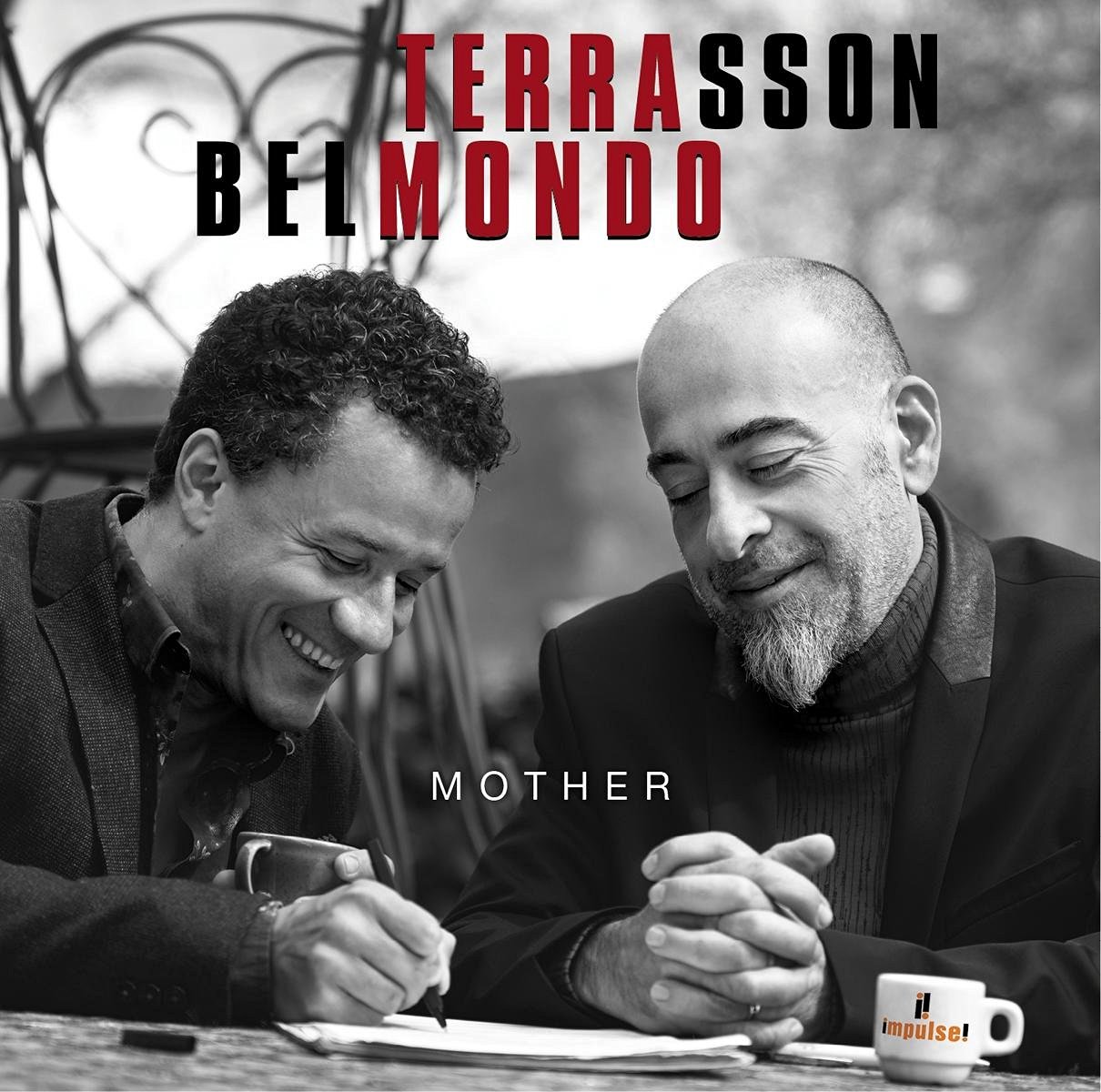
La collaboration de Jacky Terrasson et de Stéphane Belmondo remonte à leurs débuts dans le monde du jazz, il y a près de trente ans. Une époque où ils entretenaient déjà une relation musicale privilégiée. Ils se sont retrouvés il y a six ans pour un concert donné en duo dans le sud-ouest de la France au Festival de Saint-Emilion. Depuis ils ont eu l’occasion de cultiver leur complicité et de donner naissance à un univers qui leur appartient en propre. « Mother » (Impulse!/Universal) dont la sortie est annoncée pour le 02 septembre, est l’aboutissement logique de leurs retrouvailles.
A l’origine, Jacky Terrasson et Stéphane Belmondo ont enregistré une trentaine de titres au Recall Studios. Après écoute, ils « se sont rendus compte que les ballades sonnaient superbement » explique le pianiste. Ils ont donc pris le parti de conserver les « morceaux les plus lents » pour « Mother ».
« Mother », un album de ballades comme une rêverie nostalgique reflet des états d’âme des deux artistes. Dans cet opus Jacky Terrasson et Stéphane Belmondo explorent le registre d’une intimité mélancolique. Non dénuée de lyrisme et d’humour, l’atmosphère du disque est teintée d’un romantisme sobre et raffiné.
Le répertoire de « Mother » comprend des compositions originales, Souvenirs de Belmondo et Hand in Hand de Terrasson, des standards du jazz américain, des classiques de la chanson française, une reprise de Stevie Wonder et des interludes.
Au moment de l’enregistrement l’album devait s’intituler « Twin Spirit ». De fait, après que la production de l’album ait été achevé et à la suite de la disparation de la mère de Jacky Terrasson, le disque a été rebaptisé « Mother » d’après le titre de la composition du pianiste figurant au cœur du CD. Ainsi, comme le dit le pianiste, l’album devient un hommage à dédié à sa mère mais aussi « plus largement à toutes les mères et les femmes qui ne peuvent l’être ». L’interprétation du titre éponyme est particulièrement sensible et intense.
L’album ouvre avec First Song, le morceau poignant de Charlie Haden dont les deux musiciens font ressortir la beauté mélancolique. Il se referme avec une interprétation splendide du célèbre Que reste-t-il de nos amours ? de Chauliac et Trenet sorti en 1943.
Du côté de la chanson française on aime une version remarquable de La chanson d’Hélène composée pour le film de Claude Sautet « Les Choses de la vie ». Le thème exposé très sobrement par les deux instrumentistes est harmonisé de belle manière par le pianiste dont le toucher délicat sied à cette interprétation raffinée.
Par son équilibre, le dialogue entre les instrumentistes contribue à la réussite de l’interprétation de Lover man où les deux musiciens croisent et entrecroisent leurs lignes musicales. Sobre mais lyrique. Sans esbroufe, juste la musicalité comme cheval de bataille. Le tissage de You don’t know what love is est de la même veine sensible. On écoute avec bonheur les échanges parfaitement maîtrisés. On se plaît à savourer le toucher minimaliste du pianiste qui n’est pas sans rappeler l’influence 300_-j-terrasson-s-belmondo-2016-copyright-philippe-levy-stabdes musiques de Debussy, Poulenc, Ravel et Fauré.
On apprécie aussi les « interludes » posés comme des virgules sonores décalées parmi les autres titres. La fantaisie de Pic Saint Loup, nom d’un vin de la région où se trouve le studio d’enregistrement Recall. Les propos interrogatifs de Pompignan, en clin d’oeil à la ville qui a accueilli les musiciens pour l’enregistrement. L’atmosphère désuète mais malicieuse du titre de Stéphane Grappelli, Les Valseuses. La rupture rythmique de Fun Keys où l’on retrouve la frappe percussive et explosive du pianiste, ancien lauréat du prix Thelonious Monk (1993).
La reprise du grand succès de Stevie Wonder, You are the sunshine of my life est une surprise savoureuse. En effet, le morceau est presque méconnaissable. Déconstruit et malaxé, il est reconstruit avec des modifications harmoniques et un parti-pris rythmique qui transfigurent le morceau. On dira à juste titre que les deux interprètes se sont réellement réapproprié la composition pour la faire leur.
Tout au long des plages de l’album, l’accompagnement subtil du pianiste Jacky Terrasson procure une trame de musicalité propice à l’expression des lignes mélodiques très dépouillées que dessine le trompettiste Stéphane Belmondo. La simplicité et la subtilité de leur expression contribuent à créer l’atmosphère feutrée et raffinée qui caractérise l’album « Mother ».
Noted by Nate Chinen of the New York Times as a “crisp, young alto saxophonist”, Manhattan-based saxophonist and composer Alex LoRe is quickly making himself known throughout the New York City jazz scene. Originally from Tarpon Springs, Florida, LoRe has been mentored by a “who’s who” of saxophonists, including Lee Konitz, Bunky Green, George Garzone, Jerry Bergonzi, James Moody, and Steve Wilson to name a few. The aforementioned Green says LoRe “…will emerge to become one of the leading voices on the international jazz scene.” Saxophonist George Garzone describes his playing as “bold and unforgiving”, with “…a beautiful sound; he understands the concept of melody.” With a strong upbringing in classical music, LoRe’s playing and compositions are influenced by many genres, ranging from European classical music through today’s most influential artists on both the jazz and popular music scenes. LoRe has been featured at venues such as New York City’s Museum of Modern Art (MoMa), the Jazz at Ravinia Festival held at the Stean’s Institute for Young Artists in Chicago, the Monterey Jazz Festival in California, the Jacksonville and Clearwater Jazz Festivals in Florida, and the Savannah Jazz Festival in Georgia, among others. In New York, he frequents prominent venues such as Smalls Jazz Club, Dizzy’s Club Coca Cola, The Iridium Jazz Club, and Smoke Jazz Club both as a leader of his own groups and as a sideman. He is a member of saxophonist Lucas Pino’s “No Net” Nonet, which currently holds a residency at Smalls Jazz Club and is releasing their debut album in late 2014. LoRe has had the opportunity to perform and work with artists George Garzone, David Liebman, Tony Malaby, Jim McNeely, Steve Wilson, and John Riley, among others. Internationally, he has performed throughout the Netherlands, Israel, and Canada.
par Philippe Méziat / citizenjazz Cependant que Gauthier Toux vient de remporter le prix de groupe au Concours de la Défense, après avoir gagné haut la main celui d’Orléans, nous avons le plaisir de rappeler à nos lecteurs que nous n’avons pas attendu ces distinctions pour attirer l’attention sur ce pianiste, originaire de Chartres mais qui a fait un détour par la Suisse pour se former et se faire connaître. Précisément pour ce qui nous concerne à Cully l’an dernier. Avec des complices éprouvés et avec lesquels la connivence est parfaite, il fait valoir d’abord dans « Always There Anyway » un joli sens des contrastes, passant de la retenue à l’éclat et retour, sans jamais forcer le trait dans un sens ou dans l’autre. « Step » s’inscrit dans le champ maintenant bien balisé depuis Brad Mehldau des thèmes populaires repris et joués par les jazzmen. Comme compositeur, Gauthier Toux est un musicien plutôt tourmenté, très sensible aux humeurs du monde et aux siennes, en tous cas très généreux, et capable aussi de s’exprimer en solo, dans le répertoire de Thelonious Monk par exemple. Capable de faire monter la sauce jusqu’à des « climax » orageux, il sait aussi faire patte de velours dans des ballades solitaires (« J & J »). La formation s’augmente parfois de guitare et trompette, sans perdre son unité et en y gagnant des couleurs plus contrastées. De la belle ouvrage qui demande à se poursuivre pour une affirmation plus personnelle encore.
Avant-Rock Icons Richard Pinhas, Tatsuya Yoshida and Merzbow Form a
French-Japanese Noise Summit on Process and Reality, a Richly Textured, Politically Charged Soundtrack for the Collapse of Modern Society
Three founding fathers of experimental music join forces to conjure a serenade for a society on the verge of collapse on Process and Reality, an hourlong whirlwind of pessimistic prophecy transformed into a heady monolith of sound. Boundary-stretching guitarist Richard Pinhas, founder of the influential French electronic-rock band Heldon, teams with two icons of the Japanese avant-garde – drummer Tatsuya Yoshida, mastermind of warped-prog legends Ruins, and Masami Akita, a.k.a. noise guru Merzbow – to summon a brutally honest, politically potent, sonically tumultuous reflection of the last gasps of the industrial age.
Process and Reality, due out September 16, 2016 on Cuneiform Records, marks the first recorded convergence of these three avant-rock giants, though Pinhas has recorded with both Yoshida and Merzbow in the past and all three have toured extensively together in Japan (often joined by the equally iconic guitarist Keiji Haino). The album, recorded in Tokyo during a recent high-profile tour, captures the fevered intensity and violently textured depth of the trio’s collaborative improvisations
Simultaneous with his studies on the guitar, Pinhas earned a PhD in philosophy from the Sorbonne, where he studied with the late French philosopher Gilles Deleuze, and his aggressive, combustible music has always been honed to a keen edge by its philosophical bent. Process and Reality takes its name from an influential 1929 book by English mathematician and philosopher Alfred North Whitehead, which posits reality as a continual process of becoming.
That’s an apt summation of the music made by Pinhas, Yoshida and Akita, which seethes and roils in a constant state of both turbulent flux and visceral realization. The guitarist says of his collaborators, “They explore 100% of their possibility. We have the same kind of spirit.”
That spirit seems to blanch in the face of the modern age. Though he doesn’t regard Process and Reality as the still-to-come third part of his “Devolution Trilogy,” which began with 2014’s Desolation Row and continued with 2014’s Welcome… In the Void, a duo collaboration with Yoshida, Pinhas obviously feels that the music created on the new recording expresses a similarly foreboding worldview. The album arrives in the shadow of a series of tragic terrorist attacks in the guitarist’s native France, in the midst of an unprecedentedly ugly American presidential election, and in the aftermath of the Brexit vote that sent shockwaves across Europe, with no end in sight to the crisis in the Middle East and ensuing refugee crisis.
The global forecast on the album’s 2016 release is riddled with dark clouds, as an overwhelming mood of political turmoil roils the global consciousness.
While many of those world events were still in the future or in a more nascent stage when Process and Reality was recorded, they fulfill Pinhas’ bleak vision of our fates. In what he calls “the Industrial Age Final Times,” the economically distressed Detroit is the “city of the future” and civilization will be transitioning from wars over oil and gas to battles for water, the very stuff of life itself. In his darkly clouded crystal ball, ecological disaster, global terrorism, a sweeping wave of Fascism in Europe and increasing technological reliance all forebode decades of “very bad things happening.”
While those subjects weren’t expressly discussed during the making of the album, Pinhas says they can’t help but have made an impact on it. “A musician is doing what he’s doing when he’s doing it,” he explains. “All your thoughts, everything you do is the result of the historical time where you’re living. The mood is changing and we’re heading toward something very chaotic. The music I’ve been doing over the last several years is trying to be a reflection of this chaos and void that we’re coming to.”
If all of this sounds more like the dystopian vision of a science fiction writer rather than that of a ground-breaking experimental musician, that’s no accident. Pinhas has enjoyed intellectual friendships with a number of science fiction writers tracing back decades, including Michael Moorcock, Philip K. Dick, Norman Spinrad and the late Maurice Dantec, with whom Pinhas formed the project Schizotrope. He sees his own fatalistic premonitions as akin to their writings.
“Normally musicians and writers have a premonition of reality before it happens,” Pinhas explains. “That’s why I’m very involved with science fiction writers. They have an insight or vision of what will become our near future. If you read the books of very good science fiction writers in the ‘70s, they describe the society where we’re living now.”
The outlook embodied by the music on Process and Reality is stunningly pictured in cover art worthy of a cyberpunk novel, rendering an oil tanker as a surrogate for the decaying post-industrial future. It was created by Patrick Jelin, the gifted French designer also responsible for the covers for classic Heldon albums Interface (1977) and Stand By (1979), as well as Pinhas’1979 solo effort Iceland.
Despite the dark context, the very process that the title Process and Reality hints at is one of transforming chaotic reality into a gorgeous, densely layered and richly textured monolith of beauty, one radiant with the breathtaking colors of a purple-tinged sky preceding a storm. The music swells into being on the first track, “TVJ 00 (Intro)” – not much for elaborate titles, Pinhas assigns his pieces a letter/number combo a la the Köchel numbers associated with Mozart’s compositions – as Pinhas and Akita create a dizzying maelstrom of guitar and electronics noise over Yoshida’s pummeling drum assault, a torrent of layered noise that won’t seem unfamiliar to Merzbow aficionados.
The centerpiece of the album is the 35+ minute second track, “TVJ 33 (Core track),” on which Yoshida establishes a lurching groove under the gradually swelling colors that bloom from Pinhas’ lush guitar blooms and Akita’s insistently buzzing electronics. The sound builds to a glimmering intensity, both punishing and blissful, which the trio maintains for nearly 20 minutes. Finally the barrage disperses, leaving behind rippling echoes of metallic tones occasionally disrupted by blasts of digital noise, unexpectedly revealing the bandmates’ Fripp and Eno influences.
The respite doesn’t last long, however, as a harsh metal-on-metal industrial soundscape overwhelms the calm. “TVJ 66 (Non-Sens)” follows with crushing waves of sound, an aural whirlwind stirred by Merzbow’s piercing gales. The album concludes with the relatively serene “TVJ 77 (Quiet Final),” a stop-start mind-bender that delves into space-rock psychedelics.
Process and Reality arrives well into Richard Pinhas’ fifth decade as a recording artist and constant innovator. Recognized as one of France's major experimental musicians and a pivotal figure in the international development of electronic rock music, Pinhas' stature in France is analogous to Tangerine Dream's in Germany: the father figure of an entire musical movement. Inspired by a wide range of music from classic ‘60s rock to ‘70s jazz fusion and progressive rock, Pinhas recorded seven albums with Heldon between 1974 and 1979 before disbanding the project to focus on his work with a wide range of collaborators.
Throughout his long career he’s constantly evolved, remaining on the bleeding edge of multiple genres, while younger generations continue to catch up and rediscover his work, whether sampling it in new music or simply revealing its profound influence. He’s reissued his early work on Cuneiform as well as releasing a steady stream of new music, while also penning books on philosophy and his mentor, Deleuze.
His collaborators on the album are two of the most revered and influential musicians of the Japanese experimental music scene. Since 1985, Tatsuya Yoshida has led the avant-prog group Ruins, a power duo (usually) with its own invented language and an equally singular sound. Yoshida has also led several other groups, including Zubi Zuva, Koenji Hyakkei and Korekyojinn, and released a number of solo projects.
He spent time as the drummer of the influential prog group YBO2 alongside guitarist KK Null, whom Yoshida currently joins in the latest incarnation of the longrunning noise-rock band Zeni Geva. Yoshida has worked with many of the most prominent figures in the avant-garde, including Fred Frith, John Zorn, Derek Bailey, Bill Laswell, Yoshihide Otomo, Acid Mothers Temple and countless others.
Recording as Merzbow, the prolific Masami Akita has released more than 400 recordings of ear-shattering noise music, becoming one of the foremost icons of the music. He’s previously released three duo albums with Pinhas on Cuneiform: Keio Line, Rhizome, and Paris 2008. Merzbow’s work draws inspiration from a number of divergent streams, including early electronic music, free jazz and fusion, heavy metal and prog, to extra-musical sources including Dada, fetish and BDSM culture, visual arts, Butoh dance and surrealism. In recent decades he’s adhered to a vegan and straight edge lifestyle and been strongly committed to the causes of animal rights and environmentalism.
Process and Reality Track Listing:
1. TVJ 00 (Intro) (3:14)
2. TVJ 33 (Core track) (36:29)
3. TVJ 66 (Non-Sens) (12:10)
4. TVJ 77 (Quiet Final) (10:33)
Tatsuya Yoshida: drums
Masami Akita (Merzbow): noise electronics
Richard Pinhas: guitars & analog synth guitar
All titles composed by Richard Pinhas / Tatsuya Yoshida / Masami Akita.
Recorded at Gok Sound studio, Tokyo, Japan.
Guitar overdubs at Heldon studio, Paris, France.
Mixed by Joe Talia in Melbourne, Australia, December 2015.
NEC Faculty Member and Jazz Trumpet Legend John McNeil Receives 2016 FONT Music Award of Recognition
September 25 Concert “Honoring John McNeil” Caps FONT Music Festival
New England Conservatory faculty member and trumpet legend John McNeil is the recipient of this year’s Award of Recognition from New York’s prestigious Festival of New Trumpet Music (FONT Music). Previous recipients include Wadada Leo Smith, Kenny Wheeler, Raymond Mase, Bobby Bradford, Eddie Henderson, and Laurie Frink.
The FONT Music Festival (September 19-25) culminates in “Honoring John McNeil” on Sunday, September 25, 5 p.m. at The New School, Theresa Lang Community and Student Center, Arnhold Hall, Room I-202, 55 West 13th St., New York City. Admission by donation. For more information visit www.fontmusic.org
The concert will include a performance of “Anxiety Option” for trumpet and electronics written and performed by Jeff Beal, an accomplished trumpeter and composer of music for film, television, and the concert hall – and a student of McNeil. Following Beal’s set, John McNeil will take the stage with his ensemble: Gary Versace, piano; Jerome Harris, bass; and Jay Sawyer, drums. The 2016 Laurie Frink Career Grant award winner, Tony Glausi, will join them.
The theme for this year’s festival is Flexus, taken from the title of an influential book by the late Laurie Frink and John McNeil. Asked about the selection of McNeil as the FONT Music Awardee for 2016, NEC alum Dave Douglas said, “McNeil has long been a forward-looking voice on the instrument in jazz, influencing many in subsequent generations. His unique view of jazz practice has opened doors for countless players. FONT Music is proud to be able to celebrate him in our community this year.”
Douglas co-founded the FONT Festival in 2003 with the late Roy Campbell Jr. “The Festival of New Trumpet Music started on a cocktail napkin,” Douglas said in a 2013 interview. He had been asked to program a month of music at a venue on New York’s Lower East Side, and he and Campbell wondered whether it could be filled with creative trumpet music. “We started this list, and within ten minutes we were already way over the number that we could program,” said Douglas. The festival has been promoting and supporting music by a diverse community of brass players ever since.
John McNeil was born in 1948 in Northern California and was a largely self-taught trumpeter. By the time he graduated from high school in 1966, he had already begun playing professionally. He moved to New York in the mid-1970’s, where his reputation as an innovative trumpet voice grew. Today, he is regarded as one of the most original and creative jazz artists in the world.
For over three decades he has toured with his own groups and received widespread acclaim as both a player and composer. His highly personal trumpet style communicates across the full range of contemporary jazz, and his compositions combine harmonic freedom with melodic accessibility. McNeil’s restless experimentation has kept him on the cutting edge of new music and has prevented easy categorization of his music.
Although his background includes such mainstream jazz groups as the Horace Silver Quintet, Gerry Mulligan, and the Thad Jones/Mel Lewis Orchestra, McNeil is equally at home in free and unstructured settings.
This stylistic versatility has put him on stage with such disparate artists as Slide Hampton and John Abercrombie. In addition to his revelatory trumpeting and composing, he is in demand as an arranger and record producer. McNeil has been a member of the New England Conservatory jazz faculty since 1981.
NEC's Jazz Studies Department was the first fully accredited jazz studies program at a music conservatory. The brainchild of Gunther Schuller, who moved quickly to incorporate jazz into the curriculum when he became president of the Conservatory in 1967, the Jazz Studies faculty has included six MacArthur "genius" grant recipients (three currently teaching) and four NEA Jazz Masters.
The program has spawned numerous Grammy winning composers and performers and has an alumni list that reads like a who's who of jazz. As Mike West writes in JazzTimes: “NEC's jazz studies department is among the most acclaimed and successful in the world; so says the roster of visionary artists that have comprised both its faculty and alumni.” The program currently has 105 students; 55 undergraduate and 50 graduate students from 16 countries.
88, out October 21 on Capri Records, features compositions by Mal Waldron, Sonny Clark, Harold Mabern, Lennie Tristano, Cedar Walton and others
"Fire in velvet. A fitting description of Joshua Breakstone's jazz guitar."– Paul Weidman, The Santa Fe New Mexican
" Breakstone produces guitar lines that flow through smooth, mellow-toned, bop-based phrasing.....There is depth and thoughtfulness in his playing, a sense of graceful development even when he is swirling along with jumping intensity." – John S. Wilson, The New York Times
Though he may only have six strings at his disposal, guitarist Joshua Breakstone has felt a lifelong connection to jazz’s great piano players. On his latest release, 88 (due out October 21 from Capri Records), Breakstone pays tribute to some of his favorite pianist-composers with a smoking set of pieces penned by some of the music’s greatest keyboard practitioners. Along with a new composition from Breakstone written in tribute to his piano-playing heroes, the album features classics by the likes of Mal Waldron, Barry Harris, Cedar Walton and Elmo Hope.
“I feel like pianists and guitarists are related, in a way,” Breakstone says. “Supplying harmony as well as being a soloist, I'm called on to fill the same interactive role as my brothers on the piano – so I have a lot of appreciation and love for the instrument and those who play it.”
Despite the theme of the album and the row of ivories prominently featured on its cover, 88 doesn’t actually include a single note played on the piano. Instead, the recording is the third outing for Breakstone’s unique Cello Quartet, with cellist Mike Richmond, bassist Lisle Atkinson and drummer Andy Watson. That singular instrumentation provides a different perspective on the music itself, which is precisely what Breakstone intended to celebrate.
“There’s so much great music by pianists that I’ve played over the years,” he explains. “These aren't necessarily my favorite tunes by pianists or the greatest songs ever by piano players, nothing like that. It’s just a nice set of nine songs that offer my take on the different conceptions of these piano players and composers and what they mean to me.”
While in recent years he’s played most often with the Cello Quartet or in a trio setting, Breakstone has a long history with some legendary piano players. His 1983 debut release as a leader, Wonderful!, featured Barry Harris, who’s represented on 88 by the simmering “Lolita.” The guitarist’s follow-up, 4/4=1, was the first of several recordings he made alongside Kenny Barron. Over the course of his career he’s also worked with Tommy Flanagan, Sid Simmons, Joanne Brackeen and organ great Jack McDuff, and led tributes to Thelonious Monk and Bud Powell.
A lovely solo guitar meditation opens the album, setting the stage for Harold Mabern’s urgent burner “The Chief,” its forceful melody rendered in unison by Breakstone and Richmond. The slinky, serpentine groove of Sonny Clark’s “News for Lulu” follows, highlighted by the leader’s flowing, elusive lines and a soulful solo turn by the cellist. Atkinson’s knotty rubato phrases kick off Cedar Walton’s scintillating “Black,” while Breakstone virtually whispers his way through Mal Waldron’s tender classic “Soul Eyes.”
The title tune, Breakstone’s sole original on the album, is a finger-snapping mid-tempo bop tune that fits perfectly in the spirit of the album. Watson’s vigorous swing fuels Elmo Hope’s fiery “Moe Is On,” while the drummer’s hushed brush work supports Tadd Dameron’s mournful ballad “If You Could See Me Now.” The album wraps up with the whole band at its most muscular for Lennie Tristano’s surging “Lennie’s Pennies.”
“With each song that I play,” Breakstone says, “I try to communicate to the audience what it is that I love about that tune. Is it exciting, is it beautiful, is the harmony stimulating, is it funny, is it sweet, is it romantic, does it break my heart?”
The Cello Quartet is keenly adept at capturing the full gamut of emotions, despite its unusual make-up. The idea for the band was one of many inspirations that Breakstone has taken from his travels in Japan, a country that has eagerly embraced the guitarist and his music for nearly 30 years. His regular tours of the country are one component of a new documentary, Joshua Breakstone, Soft Hands: Jazz Ethereal, that was recently produced for Colorado Public Television. In the case of the Cello Quartet, its original incarnation was assembled at the behest of the late bassist and promoter Mitsuru Niushiyama, Breakstone’s close friend and collaborator. “He was getting a little older,” Breakstone recalls, “and didn't feel like dragging around a bass anymore, so he came up with an idea. He called me up and asked if it was cool to book me with a rhythm section plus cello.” The idea wasn’t unprecedented – bassists including Ray Brown, Oscar Pettiford, Sam Jones and Ron Carter have played the cello, although not with guitar – and Breakstone immediately embraced the concept. Immediately upon returning home he began assembling a Stateside version of the band. “My original idea was that it was going to be like a guitar trio with the cello as a solo instrument, just like if we added a saxophone or trumpet,” Breakstone says. “But after a few nights the group gelled in a different way and became a string section accompanied by percussion.” 88 shows off just how dynamic and interactive the Cello Quartet can be. The album offers a fresh slant on the post-bop tradition, deeply rooted in the language of the music yet boasting a distinctive blend of colors and textures that create an utterly contemporary sound. Doubtless these pioneering pianists would approve of being honored that way.