Monday, August 22, 2016

Borah Bergman / Peter Brötzmann / Frode Gjerstad - Left (2016) NOT TWO RECORDS


present


"Borah Bergman was my favorite pianist. One of the few pianists who can work with me at all."
Peter Brötzmann

"One of the greatest pianists of our time."
John Zorn 

"Borah Bergman is perhaps the most technically accomplished pianist in jazz -- and if he's not at the top, then he's certainly on a short list of two."
Chris Kelsey

Featuring Borah Bergman on piano, Peter Brotzmann on ten or sax, bass clarinet & taragato and Frode Gjerstad on alto sax. This set was recorded live at the Molde International Jazz Festival in Norway in July of 1996. When Borah Bergman passed in 2012, we lost one of the finest and most distinctive pianists to emerge from New York in the past century. Mr. Bergman has recorded duo CDs with both Mr. Brotzmann and Mr. Gjerstad in the past, as well as a couple of trios with Anthony Braxton or Andrew Cyrille.

Mr. Brotzmann erupts with his unique, clarion call tenor right from the first note. He is soon joined by Mr. Bergman’s explosive piano and later by Mr. Gerstad’s equally distinctive, bent-note cluster. The sound here is superb, the performance well-balanced and well-recorded. There are three long pieces here, each with the word “Left” in the title as in “Left Hand”. Mr. Bergman was well-known for his singular-style ambidextrous playing, even recording an entire album side of just his left hand at the piano. What makes this combination so intriguing is that Mr. Bergman is often balancing two separate lines or strategies with each hand as well as interacting with each saxist independently. This makes for some fascinating listening which requires some deep concentration as two strong forces shift between different poles. Both Mr. Brotzmann (on tenor or clarinet) and Mr. Gerstad are well-matched saxists. Sometimes Brotzmann slows down to carefully bend certain notes while Gjerstad speeds up, interjecting occasional streams of notes. I like that this session is not all, over-the-top bluster, there are a number of more stark moments which are filled with suspense and thoughtful ruminations. This is a colossal trio effort that had me at the edge of my seat throughout its 55 minute length.

(Bruce Lee Gallanter, DMG


1. Left hand 18:23
2. Left us 11:54
3. Left out 24:47

Borah Bergman: piano
Peter Brötzmann: tenor sax, clarinet and tarogato
Frode Gjerstad: alto sax

Recorded at Molde International Jazzfestival, July 17, 1996

BUY THIS ALBUM

John Stowell & Michael Zilber Quartet - Basement Blues (2016) ORIGIN RECORDS


present


"The music here is beautiful, lyrical and thoughtful. Two pros taking care of business!!"
- DAVID LIEBMAN

After a decade of collaboration, master guitarist John Stowell and Bay­Area saxophonist Michael Zilber along with the dynamic bass/drum duo of John Shifflet and Jason Lewis, have developed a sound widely hailed as empathetic, intuitive and conversational. For their third Origin release, they offer another set of melodic and reflective modern jazz, drawing equally from modern swing, post-bop and their deep life experiences. "...an intimate quartet affair, marked by the kind of soulful, instinctual interplay that fans have come to expect." ­ JazzTimes


1 Basement Blues 5:19 (Michael Zilber/BMI) 
2 Nobody Else But Me 5:49 (Jerome Kern) 
3 Stowell in Heart 5:11 (Michael Zilber/BMI) 
4 Stay Right There 5:09 (John Stowell/BMI) 
5 Violin Memory 4:45 (John Stowell/BMI) 
6 Later That Night 5:54 (Lewis­Shifflett­Stowell­Zilber/BMI) 
7 I Wish 4:36 (John Stowell/BMI) 
8 Have Yourself a Vince Guaraldi Xmas 9:41 (Michael Zilber/BMI) 
9 Stowell Mates 8:31 (Michael Zilber/BMI) 
10 Very Early 4:24 (Bill Evans)

John Stowell - Guitars 
Michael Zilber - Saxophones 
John Shifflett - Bass 
Jason Lewis - Drums

Produced by John Stowell & Michael Zilber 
Recorded by Dan Feiszli at Trilogy, San Francisco, and John Schimpf at 25th Street, Oakland, CA 
March, 2012 & March, 2015 
Mixed by Dan Fesizli at What's For Lunch? Recording, El Cerrito, CA 
Cover photos by Eugene Sergeev 
Artist photos by Andy Nozaka 
Cover design & layout by John Bishop

BUY THIS ALBUM

Basement Blues

Anna-Lena Schnabel Quartet - Books, Bottles & Bamboo (with Florian Weber, Thomas Morgan & Dan Weiss) 2016


Anna-Lena Schnabel ist mit 24 Jahren schon eine der beeindruckendsten Saxofonistinnen, von vielen bereits als Ornette-Coleman-Nachfolge gefeiert. 

Anna-Lena Schnabel, junges Jazz-Talent aus Hamburg, von der Presse schon als Ornette-Coleman-Nachfolge gefeiert, ist nach Produktion im SYSTEMS TWO-Studio in Brooklyn, N. Y. mit ihrem Debüt bei ENJA RECORDS untergekommen. 

Es bedeutet schon etwas wenn sie auf ihrem Debütalbum so viel mehr erreicht als nur mit ihren Kollegen auf Augenhöhe zu sein und mitzuhalten. Sie führt diese Welt mit erfahrenen, erfolgreichen Musiker in frisches, nicht vorhersehbares musikalisches Terrain mit ihren kühnen Kompositionen, einer Ballade und einer freien Gruppen Improvisation. 


Die junge Musikerin (geb. 1989) schrieb ihre Masterarbeit an der Hamburger Musikhochschule über die Improvisationstechnik Charlie Parkers auf seiner Aufnahme von »My Old Flame«. 

Sehr verschiedene Musiker wie Parker und Harry Partch haben sie geprägt, durch deren Musik sie doch immer einen stimmigen Weg findet. »Für mich geht es im Jazz vor allem um Emotion, alles andere kommt danach.« 

Ihr rauher Alto-Sound erinnert an Ornette Coleman und Eric Dolphy, aber auch John Coltrane und Mike Brecker sind ihr wichtig. Anna-Lena traf Florian Weber im Deutschen Jugend Jazz Orchester, später erste Aufnahmen mit Dominic Miller und Lars Danielsson, Konzerte mit den Legenden Kenny Wheeler und John Taylor folgten. Webers CD »Biosphere« mit Thomas Morgan, Dan Weiss und Lionel Loueke inspirierte sie und ist wohl ein Schlüssel zum Erfolg ihrer ersten eigenen Session. Die Dichte und ihre kantigen Linien erinnern auch an den George Russel der 60er-Jahre. Im Gegensatz dazu steht die wunderschöne Horace-Silver-Ballade »Peace«, die Anna-Lena immer Frieden gibt, wenn es ihr nicht so recht gut geht, wie sie sagt. 


1. Burnout 5:57
2. Toy 4:41
3. Drunken Books 7:48
4. Dying Swan Under The Bamboo Moon 7:48
5. Luggage 5:14
6. Loss Laments 7:14
7. Reef 4:39
8. Plop 6:06
9. Peace 4:16

Alto Saxophone – Anna-Lena Schnabel
Artwork – David Winckelmann, Susanne Scherff
Bass – Thomas Morgan (4)
Composed By – Anna-Lena Schnabel (tracks: 1 to 8), Horace Silver (tracks: 9)
Drums – Dan Weiss (3)
Liner Notes – David R. Adler
Melodica – Florian Weber (2) (tracks: 1)
Mixed By – Martin Ruch
Mixed By, Edited By – Uwe Schwidewski
Photography By [Booklet] – Scott Friedlander
Photography By [Front] – Steven Haberland
Piano – Florian Weber (2)
Producer – Anna-Lena Schnabel, Matthias Winckelmann
Recorded By – Joe Marciano, Mike Marciano*

Recorded at Systems Two Studios, 
Brooklyn, NY, March 10, 2015 by Mike and Joe Marciano
Mixed by Martin Ruch, 
additional mix and editing by Uwe Schwidewski at the ENJA Studio July 2015

BUY THIS ALBUM

Sunday, August 21, 2016

Trumpeter, composer, musical visionary Wadada Leo Smith receives Hammer Museum’s 2016 Mohn Career Achievement Award


Trumpeter, composer, musical visionary Wadada Leo Smith receives Hammer Museum’s
2016 Mohn Career Achievement Award

Selected by a jury of professional curators, award honors 
Smith’s “brilliance and resilience”

Trumpeter, composer and musical visionary Wadada Leo Smith has received the Hammer Museum 2016 Mohn Award for Career Achievement “honoring brilliance and resilience.”  The $25,000 Award was announced August 16 by the museum and presented in conjunction with the exhibition Made in L.A. 2016: a, the, through, only, organized by Hammer curator Adam Moshayedi and Hamza Walker, director of education and associate curator, Renaissance Society.   Dancer and choreographer Adam Linder also received a Mohn Award for artistic excellence and Kenzi Shiokava received the Public Recognition Award.

“The jury wants to acknowledge Wadada Leo Smith’s outstanding achievements as a musician, his influential work as a teacher and a mentor for younger artists in Los Angeles, and the decades-long expansion of an inventive, completx and layered system of notation simultaneously interrogating the picotral and the performative,” stated Juse Luis Blondet, curator, Special Initiatives, Los Angeles County Museum of Art.

“I’m so honored to have won this award,” said Smith.  “I’m so happy that my scores are being viewed as works of art.  That means the world to me.”  

Smith, who turns 75 in December 2016, recently received a 2016 Doris Duke Artist Award and received an honorary doctorate from CalArts, where he was honored as Faculty Emeritus. He maintains an active touring and recording schedule. His latest epic recording America’s National Parks will be released October 14, 2016 on Cuneiform Records.  A six-movement suite inspired by the scenic splendor, historic legacy, and political controversies of the country’s public landscapes the recording features Smith with pianist Anthony Davis, bassist John Lindberg, drummer Pheeroan akLaff and cellist Ashley Walters.  Later this year TUM Records will release Wadada Leo Smith: Nagwa featuring Smith with guitarists Michael Gregory Jackson, Henry Kaiser, Brandon Ross and Lamar Smith, plus Bill Laswell on electric bass, Pheeroan akLaff on drums and Adam Rudolph on percussion. Coming on TUM in early 2017 will be Alone: Reflections and Meditations on Monk, a solo recording. 

Smith’s 2016 schedule includes performances at the Montreal International Jazz Festival, Berlin Jazz Festival, Molde Jazz Festival, Pittsburgh International LiveJazz Festival, Jazz at Lincoln Center, Vision Festival, Festival Suoni Per il Pipolo, Summer Stage, NYC and the premiere of his opera /cantata Rosa Parks at the FONT Festival, among others (see full schedule at end of this release.) 


About the Mohn Awards

Totaling $150,000, the Mohn Awards are among the largest art prizes dedicated to recognizing the work of emerging and under-recognized artists from the greater Los Angeles region. A jury of professional curators selected the Mohn Award and the Career Achievement Award while the Public Recognition Award was determined by on-site voting from June 11 through August 14, 2016. The jury included Ingrid Schaffner, curator, 57th Carnegie International, 2018, Carnegie Museum of Art, Pittsburgh, Mika Yoshitake, associate curator, Hirshhorn Museum and Sculpture Garden, and Jose Luis Blondet, curator, Special Initiatives, Los Angeles County Museum of Art. All three awards were once again funded through the generosity of Los Angeles philanthropists and art collectors Jarl and Pamela Mohn and the Mohn Family Foundation as part of Made in L.A., the Hammer's biennial exhibition series highlighting emerging and under-recognized artists from the Los Angeles region.

“Curators Aram Moshayedi and Hamza Walker selected a tight group of artists and offered them room to stretch. This exhibition is stunning in terms of the range of practices and performers, the depth of exploration, and the array of programs it presents. It's as it if everyone won and gave a prize through their participation in Made in L.A. 2016: a, the, though, only,” said Ingrid Schaffner.


About Wadada Leo Smith

Wadada Leo Smith, whose roots are in the Delta blues, is one of the most boldly original figures in American jazz and creative contemporary music and one of the great trumpet players of our time.  As a composer, improviser, performer, music theorist/writer and educator, Smith has devoted a lifetime to navigating the emotional heart, spiritual soul, social significance and physical structure of jazz to create new music of infinite possibility and nuance.

A 2016 Doris Duke Artist and 2013 Pulitzer finalist, Smith was DownBeat Magazine’s 2013 “Composer of the Year” and the Jazz Journalist Association’s 2013 Musician of the Year and Trumpeter of the Year. In 2014 DownBeat magazine named him “One of the 80 Coolest Things in Jazz Today,” citing his “magisterial instrumental voice, his inspirational leadership, and his command of classical, jazz and blues forms to remind us of what’s gone down and what’s still happening.” The Jazz Journalists Association named Smith Composer of the Year in 2015. Early in his career, Smith developed Ankhrasmation, a radically original musical language that uses visual directions and remains the philosophical foundation of his oeuvre. In October 2015, The Renaissance Society at the University of Chicago presented the first comprehensive exhibition of his Ankhrasmation scores.

Smith has released more than 50 albums as a leader. His landmark 2012 civil rights opus Ten Freedom Summers was called “A staggering achievement… It merits comparison to Coltrane’s A Love Supreme in sobriety and reach,” (Francis Davis, Rhapsody Jazz Critics Poll). Recent recordings include The Great Lakes Suites, which earned second place in NPR Music’s 2014 Jazz Critics Poll and Celestial Weather, which garnered extensive praise as “a perfectly suited twosome…4.5 stars” (DownBeat).  In March 2016 ECM released a cosmic rhythm with each stroke featuring pianist Vijay Iyer and Smith, whom Iyer calls his “hero, friend and mentor.” The recording has earned wide critical acclaim and the duo is touring internationally in 2016 and 2017.

Born December 18, 1941 in Leland, Mississippi, Smith began performing at age thirteen with his stepfather, bluesman Alex Wallace and went on to play in his high school bands. He received his formal musical education from the U.S. Military band program (1963), the Sherwood School of Music (1967-69), and Wesleyan University (1975-76). Part of the first generation of musicians to come out of Chicago’s AACM (Association for the Advancement of Creative Music), Smith collaborated with a dazzling cast of fellow visionaries. He has received commissions to write music for numerous groups including the Wroclaw Philharmonic Orchestra, and was invited to perform and speak on human rights at the Onassis Cultural Centre in Athens. 

Smith has been awarded grants and fellowships from the John Simon Guggenheim Memorial Foundation, the Fromm Music Foundation at Harvard University, Chamber Music America with support from the Doris Duke Charitable Foundation, Meet the Composer/Lila Wallace-Reader's Digest Commissioning Program, the MAP Fund and the National Endowment for the Arts, among many others.


Wadada Leo Smith Upcoming Events

• Saturday, Sept. 24 – Premiere of Smith’s opera /cantata Rosa Parks – FONT Festival, NYC

• Tuesday, Sept. 27 – Smith and Iyer – Amherst, MA

• Friday, Oct. 14 – AACM concert featuring Wadada Leo Smith with Bobby Naughton and Dwight Andrews – The Community Church of New York, NYC

• Sunday, Oct. 23 – Smith & John Lindberg duo Celestial Weather – LaFontsie Galleries, Grand Rapids, MI

• Wednesday, Oct. 26 – Smith & John Lindberg duo Celestial Weather – Edgefest (20th Anniv. Edition), Ann Arbor, MI

• October 28 & 29 – Smith & John Lindberg duo Celestial Weather w. drummer Mike Reed – Constellation, Chicago, IL

• Sunday, Oct. 30 – Smith & John Lindberg duo Celestial Weather – Woodland Pattern, Milwaukee, WI

• Thursday, Nov. 3 – Smith’s Great Lakes Quartet performing The Great Lakes Suites – Berlin Jazz Festival

• Sunday, Nov. 6 – Wadada duet with pianist Alexander Hawkins – Berlin Jazz Festival

• Wednesday, Nov. 9 – Wadada Leo Smith & Vijay Iyer duo – Benaroya Hall’s Nordstrom Recital Hall – Earshot Jazz Festival

• Saturday, Nov. 19 – Wadada & Iyer – Bielsko-Biala – Poland

• December 14-17 – Wadada Leo Smith’s Four Symphonies – Kadist, Wattis, & The Lab – San Francisco, CA

• Friday, Jan. 6 – Wadada-Vijay duo – Wigmore Hall, London, England

• Saturday, Jan. 7 – Wadada-Vijay duo – Klub Zak, Gdansk, Poland

• Sunday, Jan. 8 – Wadada-Vijay duo – Lantaren Venster, Rotterdam, Netherlands

•  Monday, Jan. 9 – Wadada-Vijay duo – Harpa, Reykjavik

• Wednesday, Jan. 11 – Wadada-Vijay duo – Philharmonie Chamber Hall, Luxembourg

• Thursday, Jan. 12 – Wadada-Vijay duo – Kölner Philharmonie, Köln, Germany
    
• Friday, Jan. 13 – Wadada-Vijay duo – Brussels Jazz Festival – Flagey, Brussels, Belgium

• Sunday, Jan. 15 – Wadada-Vijay duo – Teatro Manzoni , Milan, Italy

• Tuesday, Jan. 17 – Wadada-Vijay duo – Sons D'Hiver Festival – Espace Jean Vilar, Arcueil, France

Jimmy O'Connell Sixtet - Arrhythmia (September 9, 2016) KARI-ON PRODUCTIONS


present


BUY THIS ALBUM

Friday, August 19, 2016

Sara Serpa & André Matos - All the Dreams (September 16, 2016) SUNNYSIDE RECORDS


Vocalist Sara Serpa and Guitarist André Matos Release All the Dreams, an Album Rich in Melody and Luminous Atmosphere

All the Dreams - to be released on September 16, 2016, via Sunnyside Records - presents the Serpa/Matos duo exploring a poetic soundscape of original compositions,
with guest performances by drummer Billy Mintz and synthesist Pete Rende

CD Release Concerts  
* September 15, 2016 9:30 p.m. at Joe's Pub, NYC 
* November 18 at Constellation in Chicago


"Sara Serpa is cool all over, from concept to execution." - Ben Ratliff, The New York Times

 "André Matos is a free thinker." - Phil DiPietro, All About Jazz

"The duo excels at combining pure sounds - vowels, strings, words, horn, keys, breath - to
create inspiring musical sketches." - Suzanne Lorge, New York City Jazz Record


The reception for Primavera - the first album by the duo of vocalist Sara Serpa and guitarist André Matos - was rapturous, with reviews for the 2014 release using such apt descriptors as "enchanting" (The New Yorker), "breathtaking" (JazzTimes) and "spellbinding" (All About Jazz). The New York Times praised Primavera at length, calling the album "calmly stunning" while adding that the pair's music "capitalizes on their many affinities: as limber improvisers, as thoughtful composers, as selfless ensemble players, and as internationalists hailing originally from Portugal (by way of Boston and New York)Š Primavera is gemlike in its beauty and precision." Now, Serpa & Matos present their second duo album, the gorgeous All the Dreams, to be released September 16, 2016, via Sunnyside Records.

As with Primavera - which All About Jazz lauded for being "sonically lustrous," with an "intricate melodic sense" - the new All the Dreams glimmers with luminous melodicism and magical atmosphere, the music again casting a spell. The sound of All the Dreams mixes the organic and the electronic seamlessly, with Serpa and Matos playing multiple acoustic and electric instruments along with using the studio as an instrument; several tracks also feature Billy Mintz on drums and Pete Rende on ambient, Eno/Budd-like synthesizers. Along with Serpa's signature wordless vocalese and the duo's own lyrics, there are songs that draw on words of great poets, both Portuguese and English. Atmosphere and image, poetry and melody - this is the stuff of which All the Dreams is made.

The title of the album comes from its lovely song "Nada," which features universalist lines by the Portuguese poet Fernando Pessoa (via his heteronym Álvaro de Campos): "I am nothing, I shall never be anything / I cannot even wish to be anything. / Despite all that, I have within me all the dreams of the world." The title phrase also appears in the poetry of Walt Whitman, a key influence on Pessoa: "I dream in my dream all the dreams of the other dreamers / And I become the other dreamers." These words mirror the feelings of creative reverie Serpa and Matos had while composing the music for the album. The singer says: "We felt that this music was making us dream and disconnect somehow from the reality of the outside world - and that seemed to be a positive feeling. For us, to be able to work in this dreamlike state of mind is fundamental to staying creative and happy."  


About the leap from Primavera to the even more accomplished All the Dreams, Matos says: "Primavera planted a seed for us. Our duo identity developed throughout the making of that first album, and with the new one, we knew more about how to use the studio to our advantage. We wanted to pay even more attention to detail - sound, texture, words. We didn't hesitate to depart from a 'duo sound' and do whatever it took to get the right feel for each song, whether through sonically multiplying ourselves or developing the sounds we produced. The mixing and post-production process was more intensive this time, and we did things like reverse the vocals on 'amlaC.' Pete Rende played such an important role in this, not only adding synthesizers to a few tracks but mixing the album, too. It's hard to imagine the album without his contribution."

As for the contribution of veteran drummer Billy Mintz, Matos adds: "We met Billy a few years ago, and he has become an important musician for me. He was super-meticulous in the studio, and the results are amazing, like pure gold. His dedication to music is inspiring, and his playing gives the record a nice contour. With Billy, there's a search for a primal beat, playing almost like a child in the sense of being free. But at the same, he has all this knowledge and experience to apply. He is a master."

Serpa and Matos make for a kindred-spirit duo, even beyond being husband and wife. Her fresh, subtly virtuosic singing blends beautifully with his gleaming, flowing guitar playing. "We do complement each other as performers easily, with most of the songs being reducible to just voice and guitar," Matos says. "In the studio, we're able to guide each other to the best performances possible, with sometimes even the best arrangements coming after the first take. Our tunes tend to have slightly different vibes, with Sara's a bit more intricate and mine less dense, simpler. It creates a nice balance, we hope."

In addition to those of Pessoa/Campos, the songs of All the Dreams include words by his fellow Portuguese writer Luis Amaro, Brazilian poet Clarice Lispector and the great Englishman William Blake, as well as lyrics by Serpa and Matos. There are songs about night, dreams and the imagination, about accepting sadness and offering forgiveness, about identity and empathy, about love and memory. Even the songs without words impart a sense of mystery and romance, with Serpa singing vocalese on such gems as the opening "Calma." One of the album's other, lyrical highlights is "Lisboa," Serpa's tune-rich paean to the ancient capital of Portugal. "The words stem from something a taxi driver once told me about Lisbon having 14,000 streets, alleys and staircases - and all those reflecting so many memories, for me, for everyone who has lived there," Serpa says. "Because I live in America now, the city is distant from me, but somehow it remains so close to my heart. Every time I return to Lisbon, the memories come flooding back, the sense of place and time so strong. And music can evoke feelings of time and place - of memory - like little else in art."


Sara Serpa & André Matos

JazzTimes has called Serpa "a rising star," while All About Jazz has said: "Her unique style of vocalese allows her to utilize the full range of her exquisite and clear voice with the agility of an instrumentalist, standing out of the crowd as a sublime interpreter and a bold improviser." The New York Times has described Matos as a guitarist who "advances a pointedly contemporary air." Both born and bred in Portugal but based in New York City for nearly a decade, Serpa and Matos met through music in Boston, where they both studied at the Berklee College of Music and New England Conservatory.

Serpa and Matos each have long associations with some of the most important musicians in jazz. Serpa studied with iconic pianist Ran Blake, with whom she has recorded two albums, Camera Obscura (2010) and Kitano Noir (2015). Serpa joined saxophonist Greg Osby's band right out of school in 2008, performing with the group at such hallowed venues as the Village Vanguard and contributing to his album 9 Levels. Osby's Inner Circle Music label also released Serpa's debut album as a leader, Praia (2008), and her quintet album Mobile (2011), along with Camera Obscura. Inner Circle released Matos's third album, Quare (2010), and Osby also contributed sax to their duo debut, Primavera. Individually and together, Serpa and Matos have performed with such prominent musicians as John Zorn, Danilo Perez, Guillermo Klein, Tyshawn Sorey, Dan Weiss, Leo Genovese and Thomas Morgan, among others. Beyond their duo together, Serpa leads such projects as her vocal group City Fragments, while Matos leads a trio featuring saxophonist Tony Malaby and drummer Billy Mintz.


Sara Serpa & André Matos: All the Dreams

1. "Calma" (Matos)
2. "A La Montagne" (Serpa)
3. "Estado De Graça" (Matos)
4. "Story Of A Horse" (Matos)
5. "Programa" (Serpa/Amaro)
6. "Água" (Matos)
7. "Nada" (Matos/Campos)
8. "Night" (Matos/Blake)
9. "Hino" (Matos)
10. "Lisboa" (Serpa)
11. "Espelho" (Matos)
12. "Os Outros" (Serpa/Lispector)
13. "Postlude" (Matos)
14. "amlaC" (Matos/Rende)

Sara Serpa: voice, piano (5, 9, 10), Fender Rhodes (4, 7)
André Matos: guitar, electric bass (1, 3, 4, 6, 8, 10, 11), percussion (11)
Pete Rende: synthesizer (1, 4, 14)
Billy Mintz: drums and percussion (1, 3, 6, 10)

Produced by Sara Serpa & André Matos
Recorded at The Bunker Studio (Todd and Andy), Estúdios Valentim de Carvalho (by Nélson Carvalho) and Eastside Sound (Marc Urselli); mixed by Pete Rende; mastered by Nate Wood


Postlude

Thursday, August 18, 2016

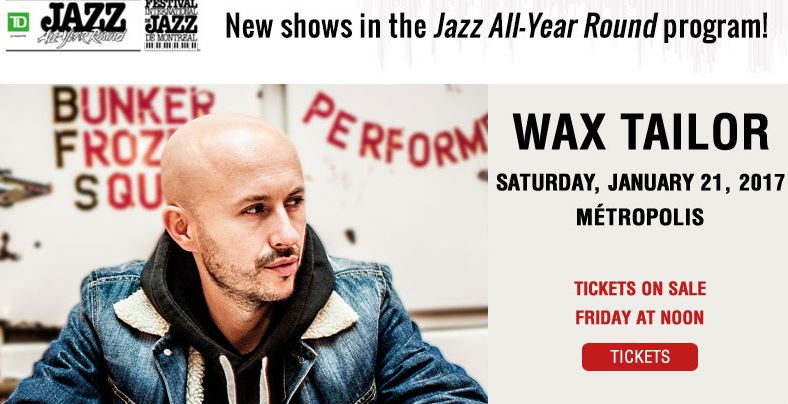
Wax Tailor, Jain and the Simon Denizart Trio added to Jazz All-Year Round!


Dave Stryker - Eight Track II (Street Date: September 2, 2016) JAZZ PROMO SERVICES


Dave Stryker
“Eight Track II"
Dave Stryker –guitar
Steve Nelson - vibraphone
Jared Gold – organ
McClenty Hunter – drums

(Strikezone 8814)
Street Date: September 2, 2016


Upcoming Live Appearances

Tue Sept 6 The Bar Next Door
Dave Stryker Trio 

Sun Sept 11 The Falcon  Marlboro NJ
Dave Stryker Quartet with Steve Nelson 

Fri Sept 16 The Nate Holden Theatre LA CA -Dave Stryker Quartet w/ Eric Alexander

Sat Sept 17 Wes Montgomery Tribute Day IUPUI Campus Center Indianapolis IN http://www.indyjazzfest.net/

Sun Sept 18 Monterey Jazz Fest
Dave Stryker Quartet w Eric Alexander 

Wed Sept 21 Clark University Worchester MA
Dave Stryker and Friends w/ Steve Slagle,
Freddie Hendrix, Carolyn Leonhart 
Fri Sept 23 Hendershots Coffee Athens GA
Dave Stryker Trio www.hendershotscoffee.com

Sat Sept 24 Savannah Jazz Fest -Dave Stryker Trio

Fri Sept 30 Trumpets Montclair NJ -Dave Stryker Quartet
w/ Steve Nelson 


Dave Stryker “Eight Track II"
(Strikezone 8814)
Street Date: September 2, 2016
Dave Stryker –guitar,  Steve Nelson-vibraphone, 
Jared Gold – organ, McClenty Hunter – drums

Guitarist Dave Stryker hit on a ‘groovy’ idea with 2014’s Eight Track, his reimagining of classic pop tunes from the ‘70s with his working trio plus vibes. Their hip renditions of those tunes were eagerly received by audiences and critics alike. Eight Track was the #1 most-played CD on WBGO for the year and reached #3 on JazzWeek Radio chart.  “Styker’s Eight Track is straight up fun,” wrote Dan Bilawsky in All About Jazz while Steve Greenlee declared in Jazz Times: “Forget those Time-Life collectors’ editions sold on late-night infomercials. Buy this.” Downbeat’s Ken Micallef called it ”a stone groove.”

Stryker put his own personal spin on Eight Track and now continues that successful formula on Eight Track II, his 27th recording as a leader. (His previous CD “Messin’ with Mister T” was #1 on JazzWeek and made many end-of-the-year lists including 4.5 Stars in Downbeat). Returning from Eight Track are Stryker’s longtime right-hand man Jared Gold on B-3 and the exciting McClenty Hunter on drums. Special guest this time out is vibraphonist Steve Nelson, a longtime member of Dave Holland’s quintet and big band who has also played and recorded with such giants as Jackie McLean, Kenny Barron, Johnny Griffin,George  Shearing, and Mulgrew Miller. “Steve is a great cat and a very soulful player,” says Stryker. “I really like what he did on this album.”
           
“A lot of people like hearing these tunes that they grew up with,” says the guitarist, who remembers playing some of these ‘70s staples on the 8-track console in his ’69 GMC van with shag carpeting back in his youthful days in Omaha, Nebraska. “It brings people in and they’ll go with you when they hear a tune that they recognize. But the challenge, always, is to find tunes that I can do my thing to, improvise and play as creatively and musically as I would on any jazz standard. And I enjoy the challenge.”

Four years after moving from Omaha to New York in 1980, Stryker began playing on the organ circuit with bluesy Hammond B-3 organ master Jack McDuff, who had seen such great guitarists as George Benson, Pat Martino, Grant Green and Billy Rogers pass through the ranks of his band. So dealing in that earthy B-3 format on Eight Track and Eight Track II is like returning home for Stryker. But 30 years later, the guitarist’s six-string expression has deepened while his blues-and-bop chops remain razor sharp. 

“I’m very grateful that I had the opportunity to play with masters like McDuff and Stanley Turrentine, guys who played that style and just had it in their blood. There’s nothing like being able to be on the bandstand with guys like that. Now I try to play my own way and stretch things a little bit. It’s still in the pocket but I feel like I’m trying to have my own take on things with this new group.”

The intrepid quartet kicks off Eight Track II with the Isley Brothers’ anti-war protest song “Harvest for the World,” which they handle as a vibrant shuffle with some hip reharmonizations. Stryker’s warm-toned flow of notes is mirrored by Nelson’s glistening vibes on the catchy head. The guitarist takes his time building an impressive solo, which is brimming with double-timed flurries and blues-soaked lines. 

Their take on Marvin Gaye’s anthemic “What’s Going On,” title track of his 1971 song cycle addressing drug abuse, poverty and the Vietnam War -- themes that still resonate with relevancy today -- opens with a delicate balladic intro featuring vibes and guitar in unison. As they fall into the familiar theme, rendered here in 6/8, Stryker ‘sings’ the melody through his axe before developing that motif through the course of his probing solo. Nelson explores in introspective fashion on his vibes solo and Gold pushes the envelope on his own dextrous solo as Stryker comps pianistically behind him. The band shifts to a 4/4 groove for the last minute of the piece, giving the listener a little jolt. 

Another Gaye staple, 1972’s “Trouble Man,” is given an earthy shuffle-swing treatment. Nelson channels his inner Bobby Hutcherson on his envelope-pushing solo here while Stryker remains firmly rooted in a blues ‘n hard bop bag, summoning up some Wes-like octaves along the way.

A mellow rendition of John Barry’s evocative “Midnight Cowboy,” the Grammy-winning instrumental theme from the 1969 movie of the same name, features nice octaves work and gentle extrapolation by Stryker. Nelson’s luminous solo is underscored by McClenty’s supple brushwork and Gold’s luxurious B-3 cushion. 

Stretching the rules a bit, Stryker next leaps out of the ‘70s and into the early ‘80s for a killer uptempo swing version of Prince’s 1984 hit, “When Doves Cry,” fueled by McClenty’s rapid-fire ride cymbal work and Gold’s unerring walking basslines. Stryker’s cooking here, while both Nelson and Gold bring some heat of their own with incendiary solos. Hunter adds an exhilarating drum solo to put an exclamation point on this burner.

A gentle reading of Stevie Wonder’s “Send One Your Love” showcases Stryker’s lyrical side while the quartet digs into The Temptations’ “Can’t Get Next to You” with visceral intensity, spurred on by Hunter’s muscular backbeat. “That’s what I love about McClenty,” says Stryker. “He can swing but he’s got a serious pocket too, and he can slam!” Gold delivers the kind of show-stopping solo here that harkens back to the golden days of the organ lounges. “I played with McDuff, I got to play with Jimmy Smith and Dr. Lonnie Smith, and they were all masters,” says Stryker, “but of the new generation, Jared is my man. His harmony is heavy. His lines are not the typical thing you hear from organ players. I really think he’s special.”

Their rendition of The Zombie’s “Time of the Season” is handled as a cool shuffle swing number with the guitar-vibes combo upfront and Gold’s hip, syncopated basslines percolating underneath. Stryker lets it rip in his solo here and is followed by Gold and Nelson, who each turn in dazzling solos. The three exchange eights with Hunter at the tag in classic bop fashion.

A driving rendition of Stevie Wonder’s “Signed Seal Delivered” features one of Stryker’s most inspired solos on the record. From that dynamic number, they slide into the alluring James Ingram ballad “One Hundred Ways,” handled with relaxed soulfulness by the crew.  They close with a tough shuffle-swing rendition of Cream’s ‘Sunshine of Your Love” that sounds like something Stryker might have played with McDuff up at Dude’s Lounge in Harlem back in the day. Everyone gets a taste on this foot-stomping finale. “I have a long history with that song,” says the guitarist. “I actually played it as a solo guitar piece in my 6th grade talent show!"
    
These nostalgic ‘70s anthems are deeply ingrained in Stryker’s consciousness. And the earthy feel of the organ quartet sound is imbedded deep in his bones after 30 years of playing on the scene. He successfully, joyfully combines the two on Eight Track II.

(condensed from the liner notes by Bill Milkowski)


National Press Campaign

Jim Eigo Jazz Promo Services
Ph: 845-986-1677 / jim@jazzpromoservices.com

"Specializing in Media Campaigns for the music community, artists, labels, venues and events.”

Short break