Friday, October 29, 2021

Anna Gréta - Nightjar in the Northern Sky (October 29, 2021 ACT Music)

Nightjar in the Northern Sky. An iconic, almost familiar image that instantly sets up a scenery, a temperature, a state of mind. Why? Probably because it has such a strong effect describing a place of longing that many people are only too happy to imagine themselves in.

The album of the same name by pianist and singer Anna Gréta creates such a setting, implying vast spaces, diffused Nordic light and comforting intimacy. Her music is shaped by these familiar yet surreal Nordic sounds, which her native Iceland has instilled in her since birth. Growing up near the capital of Reykjavík, her father (who also guests on the album) is a jazz saxophonist – so it’s evident that music surrounded her throughout her childhood. The first formative influence that Anna Gréta remembers was The Beatles’ Let It Be: “This song, its simplicity and power, and the harmony between voice and piano, touch me to this day”. But jazz, also, was a constant companion throughout her youth - among many others, the music of Bill Evans opened up a whole musical world. Indeed, her talent for the piano came to light early on, as did her affinity with jazz; and, as a youngster, she played her first steady jazz gig in Reykjavik. In 2014, Anna Gréta eventually moved to Stockholm - where she still lives today - to study music at the Royal College of Music.

Anna Gréta quickly caused a stir in Sweden. She began to work with the country’s prominent jazz musicians such as Joakim Milder, Magnus Lindgren, or the Norrbotten Big Band, receiving numerous prizes, including the ‘Monica Zetterlund Scholarship’, a nomination for ‘Jazzkatten’ from Swedish Radio, the Icelandic Music Award as ‘Newcomer of the Year’ and the ‘Jazzclub Fasching Society Award’. She made prominent live appearances such as at the Nobel Prize in 2020 and a concert at Stockholm Concert Hall. In 2019, Brighter, her first album as co-leader with Swedish guitarist Max Schultz, was released. Hearing Anna Gréta at the piano, one witnesses an astonishingly mature artist, with profound technique, a deep understanding of style and harmony and a vast range of expression.
So as a pianist she has already made a real name for herself. But her songwriting affinity for vocal expression was calling for something else: “I always had the greatest respect for female singer-instrumentalists, like the wonderful Norah Jones. But at the same time, I didn’t want to be forced into this stereotype, that a woman in a jazz band automatically needed to be the singer. So it was important for me to dive deeper into the piano to grow as a musician as a whole, until I could finally introduce my own voice when it felt right, rather than meeting any kind of expectation.” Eventually, over a period of two years, and partly influenced by the isolation of the global pandemic, the twelve compositions of Nightjar in the Northern Sky emerged – with Anna Gréta now as both pianist and vocalist. Together with pop-experienced producer Albert Finnbogason, she chose the perfect, hand-picked line-up and sound for each of her refined, harmonious  compositions. And, although created within a cohesive framework, she draws elements from a diverse range of musical styles – especially blending elements of jazz, pop, classical and folk.

The recording’s title sets the tone for the imagery created by Anna Gréta’s songs – a metaphor for Scandinavian expanses, tranquillity and the close connection to nature. As she says, “Nature is just so much bigger than most of the other things that otherwise seem so significant to us. And it is, in its infinite facets, perhaps the greatest inspiration for my music. A place where the noise falls silent and you can feel and hear yourself again. Recently, I have been introduced to birdwatching – something that I reflect on in the title track. When you observe nature carefully, you can experience something unique – a little like searching for love. The nightjar is a bird that is rarely seen flying across the sky in Sweden and has been seen in Iceland less than five times. I feel that everyone is looking for something unique in their lives; and nature can offer that to those who are open to it.” And so, with each of the tracks on this album, she creates self-contained worlds that are part of a bigger picture, light-footed, relaxed, reduced, concentrated. And a remarkably multilayered, immersive and beautiful experience.

1. Nightjar in the Northern Sky 04:47
2. Ray of Sun 04:43
3. Sleepless 04:34
4. The Tunnel 03:06
5. Blue Streams 04:26
6. Mountain 04:25
7. Falling Down 03:08
8. Like a River 03:17
9. Home 03:25
10. Waiting Never Ends 05:16
11. Guide the Way 03:04
12. Carry Me Across the Sky 04:06

Anna Gréta / piano, keyboards, vocals, backing vocals
Skúli Sverrisson / bass
Einar Scheving / drums
Hilmar Jensson / guitar
Sigurður Flosason / saxophone
Johan Tengholm / double bass
Ragnheiður Gröndal / backing vocals

All music and lyrics by Anna Gréta, except The Tunnel, based on a poem by Robert Creeley

Recorded at Sundlaugin Studio, Iceland on January 5-6th 2021; at Studio Á, Iceland during January 2021; and at Studio 1010 in Stockholm during March 2021

Engineered and mixed by Albert Finnbogason Mastered by Hoffe Stannow at Cosmos Mastering, Stockholm Produced by Anna Gréta and Albert Finnbogason

Christian Brückner & Michael Wollny - Heinrich Heine / Traumbilder (October 29, 2021 ACT Music)

Lyrik & freie Improvisation: Heinrich Heine bereitet die Bühne, setzt den Ton - der entlaufene Romantiker, bekannt für seine elegante Leichtigkeit und den zeit- und gesellschaftskritischen Scharfsinn in seinen Gedichten. Seinen Worten wohnt Musik inne. Deshalb gehört er zu den meist-vertonten deutschen Lyrikern. Nun kosten Christian Brückner und Michael Wollny die fruchtbare Beziehung von Text und Musik aus. Beides führende Künstler in ihrem Metier. Brückner, bekannt als Synchronstimme von Robert De Niro und aus unzähligen Hörbüchern und Filmen, gilt gegenwärtig als erfolgreichster Sprecher Deutschlands. Und Wollny, „der vielseitigste und innovativste deutsche Jazzpianist seiner Generation“ (Der Tagesspiegel), schafft es wie wenige andere, aus den verschiedensten Einflüssen heraus immer wieder neue, atemberaubende musikalische Erlebnisse zu kreieren.

Die Verbindung aus Lyrik und Jazz hat eine lange Geschichte: Anfang der 1960er Jahre wurde sie in Deutschland populär, nachdem zuvor Autoren der US-amerikanischen Beat-Generation, wie Jack Kerouac, diese Welle ausgelöst hatten. Jazzpapst Joachim-Ernst Berendt brachte diese Gattungsmelange in den Hörfunk des SWR und etablierte unter dem Titel „Lyrik & Jazz“ auch eine ganze Schalplattenserie für das Label Philips in Kooperation mit dem legendären Magazin „twen“. Eine Produktion stach dabei besonders heraus und ist bis heute als CD und digital erfolgreich: Heinrich Heine. Siggi Loch, der damals die Serie betreute, machte Berendt den Vorschlag, diese Ausgabe von „Lyrik & Jazz“ Iive im Studio mit Sprechern und Musikern aufzunehmen. Die Protagonisten der Aufnahme aus dem Jahr 1964 waren der „König der Vorleser“ Gert Westphal, sowie der Jazz-Gitarrist Attila Zoller und weitere hochkarätige Musiker wie Emil Mangelsdorff oder Peter Trunk. „Dieses Hörbuch ist eine Kostbarkeit“, befand seinerzeit „Die Welt“.

Nun, 57 Jahre nach der Erstaufnahme, ist Loch erneut und zusammen mit Christian Brückner und Michael Wollny ins Studio gegangen, um eine zeitgenössische Interpretation dieser Idee zu realisieren. Brückner und Wollny erweisen sich als perfektes Paar, um Heine neu erklingen zu lassen. Die beiden kennen sich schon lange und standen schon mehrfach gemeinsam auf der Bühne - vor allem für Vertonungen von Texten des Wort- und Collagen-Künstlers Ror Wolf, zusammen mit Saxofonist Heinz Sauer oder Wollnys aktuellem Trio. Aber auch mit Texten aus dem Jazz-Erzählband „But beautiful“ von Geoff Dyer.
Brueckner & Wollny Photo: Gregor Hohenberg

Die Aufnahmen für „Heinrich Heine: Traumbilder“ profitieren sehr von der aus vielen Auftritten entstandenen Vertrautheit und Chemie zwischen Brückner und Wollny. Im Studio entstanden 24 musikalische Kurzgeschichten, voller Witz, Ironie, Charme und Eindringlichkeit, genau wie auf der Bühne: Als echte Improvisationen. Wollny vertont Brückners Vortrag frei und aus dem Moment heraus, dieser reagiert wiederum so spontan wie virtuos in Ton, Stimmung und Charakter. Bei vier Stücken bilden, auf Impuls von Produzent Siggi Loch, verschiedene Fragmente aus bereits existierenden Stücken den musikalischen Rahmen für die folgende Improvisation: Wollnys „Polygon“ (auf „Ich habe gerochen alle Gerüche“) und „Der Wanderer“ (auf „Ich hab im Traum geweinet“), sowie die Volkslieder „Die Loreley“ (nach dem gleichnamigen Heine-Gedicht) „Es sungen drei Engel“ (auf „Im traurigen Monat November war’s“). Das Resultat der Zusammenarbeit ist eine Verbindung aus Musik und Wort, die einen immer wieder aufhorchen, schmunzeln, nachdenken und bei jedem Hören neue Nuancen entdecken lässt. Ein echtes, einmaliges Hörerlebnis eben.

1. Denk' ich an Deutschland in der Nacht 02:21
2. Traumbild 02:14
3. Ich hatte einst ein schönes Vaterland 02:21
4. Ich habe gerochen alle Gerüche 01:37
5. Ein Jüngling liebt ein Mädchen 01:22
6. Liebesantrag 01:38
7. Die Welt ist dumm 00:33
8. Religion (Dabei muss ich ihnen auch gestehen, Herr Doktor) 03:38
9. Die kleine Harfenistin 01:53
10. Nimmer glaub' ich 01:10
11. Die Loreley (Ich weiß nicht, was soll es bedeuten) 02:35
12. Die Stadt Göttingen, berühmt durch ihre Würste 00:59
13. Die Franzosen glaubten... 00:57
14. Anno 1839 (O Deutschland, meine ferne Liebe) 03:03
15. Liebessehnen 01:33
16. Ein Weib (Sie hatten sich beide so herzlich lieb) 02:51
17. Wenn ich an Deinem Hause vorübergeh' 01:27
18. Im traurigen Monat November war's 04:08
19. Wie sehnt' ich mich so oft 01:39
20. Ich hab' im Traum geweinet 01:50
21. Mr. Heines Blues (Aber ach! Jeder Zoll) 01:51
22. So übel war's in Deutschland nie 02:32
23. Die alten, bösen Lieder 03:05
24. Sie erlischt (Der Vorhang fällt) 02:24

Michael Wollny / piano
Christian Brückner / voice

Text by Heinrich Heine
Recorded by Michael Wollny
Produced by Siggi Loch

Kyle Bruckmann - Mesmerics​​ / Hindsight B (October 29, 2021 Infrequent Seams)

Restless new music chameleon Kyle Bruckmann (best known as an improvising oboist mining the intersection of free jazz, noise rock and contemporary classical) offers his first fully electronic solo release.

Sourced primarily from vintage analog synthesis, this double-album diptych anachronistically evokes, from a sardonic post-techno vantage point, both late 60s and late 70s experimentation. Attempted minimalisms chafe at their own restraints, bursting at the seams to comprise “a suite of weighted blankets for an intracranial dancefloor.” By turns hypnotic, immersive and bludgeoning, "Mesmerics/Hindsight" charts an unlikely Venn diagram linking the Day-Glo legacy of the San Francisco Tape Music Center with proto-Industrial’s bleak, gray throb.

While the influences of those two seminal electronic music eras map roughly onto the two albums respectively, echoes of each reverberate throughout. "Mesmerics/Hindsight A," on balance, prioritizes space; "Mesmerics/Hindsight B," periodicity. The limited-edition 90-minute cassette contains both albums; purchases of the physical edition include digital downloads of both.

Throughout the quarantined conditions of 2020-21, Bruckmann sought a stop-gap for his preferred creative modes of highly collaborative, real-time interactivity by indulging in a hermetic practice of solo electronic explorations. Between his home studio and the electronic music labs of two colleges where he teaches, he exploited access to an instrumentation featuring classic Buchla, Moog and E-mu gear alongside more contemporary Eurorack modules.
"The physically and psychosocially distanced circumstances of 2020-21 have found me driven further into my own head and deeper into solo work and circuitry. Offered here are selected research findings from that at times harrowing journey: a suite of weighted blankets for an intracranial dancefloor.

A parallel dimension of hindsight: as I hurtle through middle age and devote an ever larger portion of my career to teaching, I’m confronted with the inevitability of my aesthetics growing ever more ossified, anachronistic, irrelevant. To my students and younger colleagues, I suspect I have become the equivalent (vis-à-vis Ohio in the mid-70s, the Lower East Side in the early 80s, Chicago in the late 90s, etc. etc.) of the boomer who won’t shut up about Woodstock.

One possible response? Double down, as they say; make that central to the creative exercise. This is, in part, an interleaved love letter to two volatile junctures (both especially salient in the history of the synthesizer) on which I’ve remained perennially fixated: the heady intersection of 'art music' experimentalism with 'popular' psychedelia as the 60s skidded through the Altamont Pass into the 70s, and the gag reflex of post-punk and industrial as the 70s gave way to the Anglo-American neocon hellscape of the 80s.

I particularly acknowledge indebtedness to a West Coast electronic music legacy with roots in the San Francisco Tape Music Center, but that also encompasses the likes of the League of Automatic Music Composers, the Residents, Screamers, and the ongoing Brutal Sound FX empire. (Rest in power, Mills College CCM.)" 


1. Blindside 03:32
2. Used To Dance 04:12
3. Mind Blight 03:53
4. Mesmeric (sedimentary) 05:38
5. Large Gatherings 03:57
6. Mesmerics (metaphoric) 04:29
7. Use for Dance 03:18
8. Fight | Flight 02:55
9. Mesmeric (igneous) 05:07
10. Keinzeit 04:31

Kyle Bruckmann, electronics

Mastered by Myles Boisen, Headless Buddha Mastering Labs, Oakland, June 2021
Cover image & Layouts: Dustin Krcatovich / Golden Feelings

Kyle Bruckmann - Mesmerics​ / ​Hindsight A (October 12, 2021 Infrequent Seams)

Restless new music chameleon Kyle Bruckmann (best known as an improvising oboist mining the intersection of free jazz, noise rock and contemporary classical) offers his first fully electronic solo release.

Sourced primarily from vintage analog synthesis, this double-album diptych anachronistically evokes, from a sardonic post-techno vantage point, both late 60s and late 70s experimentation. Attempted minimalisms chafe at their own restraints, bursting at the seams to comprise “a suite of weighted blankets for an intracranial dancefloor.” By turns hypnotic, immersive and bludgeoning, "Mesmerics/Hindsight" charts an unlikely Venn diagram linking the Day-Glo legacy of the San Francisco Tape Music Center with proto-Industrial’s bleak, gray throb.

While the influences of those two seminal electronic music eras map roughly onto the two albums respectively, echoes of each reverberate throughout. "Mesmerics/Hindsight A," on balance, prioritizes space; "Mesmerics/Hindsight B," periodicity. The limited-edition 90-minute cassette contains both albums; purchases of the physical edition include digital downloads of both.

Throughout the quarantined conditions of 2020-21, Bruckmann sought a stop-gap for his preferred creative modes of highly collaborative, real-time interactivity by indulging in a hermetic practice of solo electronic explorations. Between his home studio and the electronic music labs of two colleges where he teaches, he exploited access to an instrumentation featuring classic Buchla, Moog and E-mu gear alongside more contemporary Eurorack modules.

"The physically and psychosocially distanced circumstances of 2020-21 have found me driven further into my own head and deeper into solo work and circuitry. Offered here are selected research findings from that at times harrowing journey: a suite of weighted blankets for an intracranial dancefloor.
A parallel dimension of hindsight: as I hurtle through middle age and devote an ever larger portion of my career to teaching, I’m confronted with the inevitability of my aesthetics growing ever more ossified, anachronistic, irrelevant. To my students and younger colleagues, I suspect I have become the equivalent (vis-à-vis Ohio in the mid-70s, the Lower East Side in the early 80s, Chicago in the late 90s, etc. etc.) of the boomer who won’t shut up about Woodstock.

One possible response? Double down, as they say; make that central to the creative exercise. This is, in part, an interleaved love letter to two volatile junctures (both especially salient in the history of the synthesizer) on which I’ve remained perennially fixated: the heady intersection of 'art music' experimentalism with 'popular' psychedelia as the 60s skidded through the Altamont Pass into the 70s, and the gag reflex of post-punk and industrial as the 70s gave way to the Anglo-American neocon hellscape of the 80s.

I particularly acknowledge indebtedness to a West Coast electronic music legacy with roots in the San Francisco Tape Music Center, but that also encompasses the likes of the League of Automatic Music Composers, the Residents, Screamers, and the ongoing Brutal Sound FX empire. (Rest in power, Mills College CCM.)

Track-specific notes are due only to A Perforated Kakemono for Henri Michaux, the earliest completed of these pieces (premiered in February 2020 at SF’s Center for New Music in 8-channel diffusion, thanks to Chris Brown’s curation). It is a souvenir from a New Year’s ritual with loved ones – an auspicious transition into what became a most inauspicious year. In tethering it to literary baggage, I must thank Matt Shears, who leant me Thousand Times Broken: Three Books, translated from the French by Gillian Conoley (City Lights, 2014). From Michaux’s introduction to Peace in the Breaking (1959):

“This vibratile carpet, which had something in common with electrical discharges with ramified sparks, as well as with magnetic spectra, a certain something that trembled, that burned, that tingled, like spasms turned into nerves, this tree with fine branches, that could also be lateral bursts, that tempestuous fluid, contractile, shaken, effervescent, but elastically held and kept from overflowing through some sort of surface tension, that nervous projection screen, even more enigmatic than the visions that arose on it, I don’t know, I will never know how to talk about it properly.” (p. 43) 

1. Hindsight I: Epigraph 04:15
2. Hindsight II: Occam’s Blunderbuss 17:02
3. Hindsight III: October 2020 (Fallen Leaf Lake) 06:11
4. Hindsight IV: A Perforated Kakemono for Henri Michaux 16:50

No double reeds were harmed in the making of this music.

Mastered by Myles Boisen at Headless Buddha Mastering Labs, Oakland, June 2021

Thursday, October 28, 2021

Matt Lavelle - Bass Clarinet Square Pluto (October 28, 2021)

Every human being has their own personal relationship with the dark.

In childhood we are faced with decisions as we learn just what good and bad are. We may be told what is right or wrong, but the real answer to those questions happens inside us. As we get older we may start to see just what kind of human beings we are.

Along the way we will encounter darkness in some way. For me darkness is most associated with death. In astrology, death equals transformation, and is represented by the planet Pluto.

Astrology comes and goes in my life. When I feel my life get especially intense, I turn to it to try and understand the spiritual mechanics. In the last month or so I have been dropped off on Pluto with no map back to Earth. I discovered that I'm traveling through a transit called Sun square Pluto. I have never faced a more severe trial of transformation where the past must die so that my new life may begin anew.

Throughout my life I have had extreme dreams, nightmares, and visions on a regular basis. In the last month or so, the volume was turned up to 12, higher than I have ever experienced. I woke up one night feeling that my soul had been stabbed. It is during these moments that I turn to my beloved 70's beat down and taped up Bass Clarinet. My horn is what you might say working class, just like me.

The Bass Clarinet has power and depth that still remains unexplored. It's true power is it's incredible dynamic range. You can shout like a flamenco singer, but you can also whisper in the dark. The Bass Clarinet is where I can engage my relationship with that darkness. By playing it solo, I can walk through my own haunted landscape, using the sound as my guide

Listen then, as I try to survive myself as I play through my subconscious, and integrate with my own shadow

ML

1. Sun square Pluto 04:15
2. Moon square Pluto 05:31
3. The 8th House 05:32
4. Mars square Neptune 04:16
5. Saturn square Uranus (for Eric Dolphy) 04:19
6. Mars opposite Neptune (for Bennie Maupin) 03:51
7. Jupiter in Scorpio Retrograde (for David Murray) 06:56
8. Pluto Retrograde 06:55
9. Liner notes narration aka bonus track 02:56

*I went to a sweat lodge once and asked the medicine man if I could stay after everyone left and play my bass clarinet in extreme darkness. He said as long as I remember that I would be playing on sacred ground.

**I believe Eric Dolphy is the king of the BC. David Murray and Bennie Maupin are princes. I may be the local magistrate in Philly, but I'm very committed to my office :

Headphones and a quiet environment recommended. Under a full moon on a clear night ideal (: 

Matt Lavelle: Bass Clarinet

Recorded at Chew Studio, Philadelphia 10/27/21

Tuesday, October 26, 2021

Human Feel - Speak To It (Remastered) October 2021

The American quartet Human Feel – reeds players Andrew D’Angelo and Chris Speed, guitarist Kurt Rosenwinkel and drummer Jim Black was formed in Boston in 1987 and soon was one of New York’s most distinctive downtown bands of the mid 90s. 'Speak To It' was released to great acclaim in 1996 and is the fourth album of the quartet. Human Feel regrouped again in 2007 for 'Galore' (Skirl) and released its last album 'Gold' in 2019 (Intakt).

This new mastering of 'Speak To It' keeps the music of this quartet fresh, urgent and edgy. Human Feel was at the mid-nineties a powerful working band, fierce but also openly emotional, risk-taking but with an almost telepathic interplay, and a great sense of fun. Human Feel’s inclusive kind of downtown free jazz welcomed heavy riffs from Seattle’s grunge rock bands and irregular rhythmic patterns, injected a quirky sense of humor to its tight dynamics and sounded like no other band of the nineties. D’Angelo and Speed sound like identical twin brothers, always complementing each other’s ideas, and never surrender to familiar narratives; Rosenwinkel pushes Human Feel into unpredictable courses and often anchors the commotion; the hyperactive drumming of Black keeps all on their toes and supplies uplifting grooves. Great album.

Eyal Hareuveni
1. Darker Joys 02:35
2. Speak To It 06:47
3. Spaze 12:44
4. Not About You 04:53
5. Nimble Demons 08:06
6. Left Alone 04:16
7. Tic, Tics 04:37
8. Eno Eva Yood Nodi 08:32
9. Hey Roma Ain't Vein 04:34
10. Cat Teachers 07:28

Remastered Oct 2021 by Chris Gestrin for digital release. these files are 16/44.
Originally released May 15, 1996 on Songlines.

Andrew D'Angelo - bass clarinet, alto saxophone
Chris Speed - clarinet, tenor saxophone
Kurt Rosenwinkel - guitar
Jim Black - drums

Greg Amirault - News Blues (October 2021)

A jazz quartet recording with some trio tunes and two solo guitar pieces.

1. News Blues 03:55
2. Tribute Tune 08:30
3. Sweet Way 06:19
4. Song for Nova Scotia 03:52
5. Uninvited 05:22
6. Meeting the Master 05:27
7. If You Could See Me Now 02:30
8. Reissued 05:49
9. Embraceable You 02:08

Greg Amirault - guitar
Steve Amirault - piano
Adrian Vedady - bass
Jim Doxas - drums

Valmaggia Project - But Still (October 15 2021)

Valmaggia Project is an Amsterdam-based octet, whose repertoire has original music only.

A mix of innovation and tradition, improvisation and structure. With the never-ending goal of telling something.

1. But still 03:44
2. The man with the umbrella 05:08
3. Fare finta di avere una vita sociale 05:22
4. La Mutti e il Putti 04:54
5. Two realities 03:52
6. The fight (love at first fight) 04:24
7. Ballad for the weather 06:34
8. Wrong day 03:48
9. Life of an expat 05:42

Agnese Valmaggia - drums & compositions
César Puente - double bass & electric bass
Jelle Willems - piano
Álvaro Artime - trumpet & flugelhorn
Pablo Castillo - trumpet & flugelhorn
Willy Becuwe - trombone
Martí Mitjavila - clarinet & bass clarinet
Martín Díaz - alto sax, soprano sax & flute

Special guests:
Vera Morais - voice on track 7
Simone Bottasso - diatonic accordion on track 9

Recorded at Conservatorium van Amsterdam with Ido Zilberman, April 2021
Editing and mixing: Canteen Music Studio
Master: Udo Pannekeet
Artwork: Maria Soffientino

Oct 26: Ches Smith celebrates 'Path of Seven Colors' at Roulette in Brooklyn (live & live streamed)

© Mimi Chakarova

Ches Smith and We All Break celebrate Pyroclastic Records release
Path of Seven Colors
 
Live & live streamed on Tuesday, October 26 at Roulette in Brooklyn
 

Project melds Haitian Vodou and contemporary improvisation
 
5 stars “A tour de force of jazz innovation.”
– John Fordham, The Guardian
 
4 stars “[Smith] breaks new ground with We All Break, and with no template for this hybrid model, he has created something new and extraordinary. Highly recommended.”
– Karl Ackermann, All About Jazz
 
“I’ve been on the scene, and know a lot of people, but projects like this are the kind of thing you live for.”
– saxophonist and MacArthur Fellow Miguel Zenón 

Drummer/composer Ches Smith and his extraordinary ensemble We All Break celebrate their “sublime magnum opus” (Jazziz) Path of Seven Colors with an album release concert at 8 p.m. on Tuesday, October 26 at Roulette, 509 Atlantic Avenue, Brooklyn. The concert will also be live streamed free of charge on the night of the performance and archived for future viewing. 
 
The performance features the band from the album including Smith on drums and vocals, pianist Matt Mitchell; alto saxophonist Miguel Zenón; vocalist Sirene Dantor Rene; rising star bassist Nick Dunston; and Daniel Brevil, Markus Schwartz, and Fanfan Jean-Guy Rene on tanbou and vocals. Also performing will be vocalists Tossie Long and Lalin St. Juste. Tickets $20. For information call 917-267-0363 or visit https://roulette.org/event/ches-smith-and-we-all-break-path-of-seven-colors-record-release-show/.
 
Path of Seven Colors (Pyroclastic Records, June 11, 2021) – a remarkable merging of traditional Haitian Vodou music and au courant composition and improvisation – is earning wide critical acclaim.
“A groundbreaking album…stunningly original and mesmerizing in its ritualistic power.”
– Allen Morrison, DownBeat
 
“Ches Smith has produced one of the most significant, beautiful and exciting works of this first part of the century.”
– Aldo Gianolio, AudioReview
 
“Drummer-composer Smith, who has immersed himself in Haitian vodou music for nearly two decades, delivers a sublime magnus opus.”
– Eric Snider, Jazziz
 
“Inviting and engaging, playing to tradition without being beholden to it.”
– Kurt Gottschalk, Stereophile
 
“Path of Seven Colors is nothing short of stunning… It would be a shame if it does not end up on multiple Best Of lists for 2021.”
– Robert Bush, New York City Jazz Record
 
“Path of Seven Colors promises to make the spirits take notice.”
– Emily Pothast, The Wire

The project features deluxe packaging including two extensive booklets with photos, track-by-track narratives, and lyrics in Haitian Creole and English; it also includes a bonus disc of the 2015 eponymous recording by the original quartet (Smith, Mitchell, Brevil, and Schwartz). In addition, the ensemble’s music and collaborative process are highlighted by a 50-minute film “We All Break,” available on the release date via the websites of Pyroclastic, Smith, and award-winning filmmaker Mimi Chakarova.
 
While the band’s first album featured a quartet of three drummers with piano (and occasional vocals), the new recording uses an octet to orchestrate the material and greatly expands the vocal dimension, pushing the band into new terrain. “There is no existing model marrying traditional Haitian songs with original instrumental compositions and contemporary improvisation in this way,” says Smith. “We just had to keep trying things, in the spirit of experimentation, until the balance was right and we’d created our own mold.”
 
Smith’s dedication to Haitian Vodou began more than twenty years ago. “My attraction was instant and strong,” he says. “In 2000 I got called to accompany a Haitian dance class. I was captivated, likely because things central in the various musics I play – polyrhythm, polytonality, improvisation, extended timbral awareness, tension and release, channeled aggression and power, and most vitally surprise – I found again, and anew, in this traditional form.”
 
His compositional vision aimed to incorporate and transform elements of this tradition. “I wanted these elements – lead/chorus song structure, polytonal relations among singers and drums, conversations between the drums, and kase (‘breaks’) – at the center of each piece,” he says. “A traditional rhythm would be the foundation of each composition, while that rhythm’s spiritual, political, and visual associations could function as deep wells of information and feeling, levering the work into a new dimension.”
 
Pianist Mitchell’s melodic and harmonic sense, improvisational talents, and keen sense of rhythm made him a natural for the band. Smith also enlisted his master-teachers, Brevil and Schwartz. “I knew they would tell me straight whether this project was flying or not,” says Smith. He also brought in Jean-Guy Fanfan Rene, co-leader with Sirene Dantor Rene of Vodou-activism group Fanmi Asòtò. Smith also had an idea to pile-drive the bottom end, bringing in Nick Dunston: “I pictured a broad, taut, multi-colored tapestry dense with rhythmic detail in the low range of the music. This sound would include the contrabass for its harmonic and time-keeping roles, but also to function, slyly, as a fifth drummer.” Serendipitously, Ches played a gig with alto saxophonist Miguel Zenón, who expressed an interest in Haitian drumming. Smith says, “His playing on his own records, and his stunning compositions, told me he would be another force to push the music forward.” The final addition to the octet arose from Brevil’s suggestion to add a female voice. Enter Sirene Dantor Rene. “She sings with supreme conviction,” says Smith, “using traditional inflections in a voice wholly hers.”
 
Brevil began finding traditional Vodou songs, melodies and lyrics to nestle within Smith’s instrumental compositions. “Daniel composed many of the songs himself,” says Smith, “and fervently searched for others in the tradition, coming back with a multi-authored body of work. His curation brought up questions about the distinction between ‘traditional’ and ‘original.’ I once read that new songs may be created in a particular Vodou house and enter the tradition in that fashion. Perhaps this was happening before my eyes with Daniel’s original songs.”
 
The result is a triumphant, pioneering ascent, tracked and mixed beautifully by the legendary Ron Saint Germain. The band rehearsed and recorded for a week in February 2020 amidst mutual respect, focus, excitement, and a commitment to going all in on their trailblazing collaboration. Says Smith, “An almost uncanny feeling accompanied us the whole time. If I may be allowed a bit of speculation: if in Vodou the invisible becomes visible, here, perhaps, the inaudible becomes audible.”

Monday, October 25, 2021

Johannes Luebbers Dectet - Divide and Conquer (October 2021 Earshift Music)

Divide and Conquer is the fourth album by Melbourne based composer Johannes Luebbers’ Dectet (JLD). The album marks the end of an ambitious 10 x 10 x 10 project, spanning 10 works in 10 years for 10 players. The album is the second and final installment of the project, featuring five wildly original tracks and some of Luebbers’ best work. The group showcases some of Australia’s most exciting soloists including pianist Andrea Keller, trumpeter Paul Williamson and saxophonist Angela Davis.

Divide and Conquer follows the release of Other Worlds in 2019 and features the second five compositions of the suite, each dedicated to a different soloist within the group. “The 10 x 10 x 10 project resulted from a longstanding interest in collaboration,” says Luebbers. “I wanted to explore how compositions can be seeded from my perception of a performer, rather than developed from my own ideas. Each piece used a starting point based upon the listening habits, musical loves and technical interests of the featured soloist. I then built a compositional world around this. As a result, the music was infused with a wider variety of reference points - more than just my own. Even if the resulting music was at times unexpected, I hope each performer saw a little piece of themselves in the work's soul.”

The title track Divide and Conquer, featuring tenor saxophonist Michael Wallace, leaps around the horn in a playful Balkan inspired melody. Stepping Stones, featuring alto saxophonist Angela Davis, creates a deft sense of inevitability as it gently weaves through unexpected harmonies. In contrast, Jack O’Lantern, featuring trumpeter Paul Williamson, plays with expansions and contractions of time, developing a theme that emphasises the textural possibilities of Williamson’s horn and provides ample space for the kind of ensemble interaction he thrives on.

Hosh Posh stands out among JLD’s repertoire, departing from Luebbers’ typically controlled notation and instead embracing a loose sense of freedom in which featured bassist Hiroki Hoshino shines. The album rounds things out with Contrarian, a feature for pianist Andrea Keller that takes inspiration from her love of Arvo Pärt, in turn provoking an inspired solo from Keller and some of the most magical moments on the album.

Winner of the 2011 ‘Young Australian Jazz Artist of the Year’ (Australian Jazz ‘Bell’ Awards) and the 2011 ‘Jazz Work of the Year’ (APRA/AMC Art Music Awards), Johannes Luebbers has established himself as one of Australia’s most distinctive jazz composers. Supported by the Australia Council for the Arts and Monash University, Divide and Conquer is the fourth studio album with his ensemble, the Johannes Luebbers Dectet (JLD). Throughout his career he has been the recipient of numerous other awards including the 2009 ‘Youth Arts West Australian Citizen of the Year’, 2009 ‘Best Australian Jazz Composition of the Year’ (Bell Awards), 2008 ‘Jazz Song of the Year’ (WA Music Industry Awards), the 2006 ‘APRA Professional Development Award’ for jazz and in 2018 was a finalist for the APRA/AMC Jazz Work of the Year. In addition to his creative practice, Luebbers is an active educator and researcher and is currently Convenor of Composition and Music Technology at the Sir Zelman Cowen School of Music, Monash University.

1. Divide and Conquer 07:53
2. Stepping Stones 08:32
3. Jack 'O' Lantern 09:49
4. Hosh Posh 09:18
5. Contrarian 09:12

Johannes Luebbers (composer/conductor)
Emily Thomas (flute)
Ben Opie (oboe)
Angela Davis (alto sax/clarinet)
Michael Wallace (tenor sax/clarinet)
Paul Williamson (trumpet)
Nicole Dixon (French horn)
Andrew Murray (trombone)
Andrea Keller (piano)
Hiroki Hoshino (bass)
Aaron McCoullough (drums)

Three Lower Colours (feat. Marco Tamburini, Stefano Onorati & Stefano Paolini) / Red - Early Recordings (October 2021 Caligola Records)

Risulta preziosa questa “riscoperta” da parte di Stefano Onorati delle prime registrazioni dei Three Lower Colours, fatte subito dopo che Stefano Paolini era subentrato a Walter Paoli: qui termina il percorso del trio di Marco Tamburini ed inizia quello di un gruppo davvero paritetico. Incisioni per questo importanti, che precedono sia le colonne sonore del breve film muto di Georges Méliès, «Le voyage dans la lune», e del lungometraggio «Blood and Sand» di Fred Niblo – pubblicate entrambe soltanto su Dvd – che gli album «First Take» e «Contemporaneo immaginario» (con Il Vertere String Quartet). «Red» testimonia la nascita di un trio che avrebbe presto dato prova di non comune coesione, originalità e fantasia, proiettato come poche altre formazioni italiane del periodo verso il futuro. Così chiude le sue calzanti note di copertina il critico Guido Festinese “…

In «Red» … trovate già una sintesi guizzante, movibile e intelligente dei molti stimoli che attraversavano menti, cuori e corpi di Tamburini, Onorati e Paolini. È una musica cresciuta sui dischi del primo e del secondo Miles Davis elettrico, ma con quel quid in più di spaziosa malinconia ed estrema raffinatezza che permea le incisioni di Arve Henriksen e di tanti ricercatori del suono nordici, e qualche ifa va anche a raggiungere le terre incognite di un Jon Hassell. O a sfiorare certe mappe frequentate da Ibrahim Maalouf. Il jazz di valore ascolta e si ascolta. 

E Marco Tamburini aveva i sensi allertati e la mente reattiva, sempre.” . Ogni brano meriterebbe un’attenta analisi, sia le composizioni originali che le personali riletture di vecchi e nuovi standard, ma ci preme almeno evidenziare il riuscito e suggestivo passaggio da Angolo a Blue in Green, esecuzioni accumunate da un’atmosfera estremamente ipnotica e sognante. Quel che stupisce è che la musica sin qui documentata dei Three Lower Colours, uno dei gruppi più importanti diretti da Tamburini, copra a malapena l’arco ristretto di due anni. L’augurio non può essere che quello di poter presto tornare a gustare “riscoperte” altrettanto emozionanti. 

1. Angolo 08:40
2. Blue in Green 07:20
3. Gruvone 06:10
4. Knives Out 07:41
5. Naima 07:22
6. Relaxin' at Home 05:03
7. Red Subway Sound 07:49
8. TLC 07:33

Marco Tamburini (trumpet, flugelhorn, live electronics)
Stefano Onorati (keyboards, live electronics)
Stefano Paolini (drums, live electronics)

Recorded at Simple Sound Studio, Castelmaggiore (Bologna), in January 2009 by Marco Tamburini
mixed on 15th July 2009 by Gianluca Gadda; mastered at SOP Studio on 14th December 2020 by Stefano Onorati

Shiver - Night School (New Jazz and Improvised Music Recordings)

1. Night School 53:05

“I can’t remember exactly when my old school burnt down, but I can tell you I was there...”

Chris Sharkey (Guitar)
Andy Champion (Bass)
Joost Hendrickx (Drums)

Recorded April 2015 in Leeds
Recorded, Mixed and Mastered by Chris Sharkey
Publishing and Recordings © Chris Sharkey

Shiver Cover Image by Andy Champion
Design by Andrew Delanoy

Kathya West, Alberto Dipace & Danilo Gallo - The Last Coat of Pink (October 2021 Caligola Records)

A tre anni da «Oxymoron», Kathya West e Danilo Gallo proseguono la loro originale rivisitazione del repertorio rock con questo riuscito ed intrigante «The Last Coat of Pink», in cui è bastato cambiare solo uno dei membri del trio per ottenere un risultato musicale completamente diverso. Lì a venire rilette erano le canzoni del binomio Beatles/Rolling Stones e Gallo compariva nell’inedita veste di chitarrista affiancato da Valerio Scrignoli. Qui invece torna a suonare il contrabbasso per affrontare, in modo ancor più creativo, insieme all’ipnotica suggestiva voce di Kathya West, il repertorio dei Pink Floyd, chiamando a completare il trio l’inventivo pianista Alberto Dipace, che aveva già accompagnato in «Eyes and Madness» e nel più recente «Collera City».

È una rilettura visionaria ed onirica quella offerta dal trio, come spiegano bene le parole della West: “Non è semplice suonare una vastità, ma la si può far suonare. Per il vento si può soffiare. Per l'illusione ci sono i sogni. Per i vuoti c'è la musica, quella che suona ciò che non esiste… Nella vastità spesso ci si perde. Dalla volontà di ritrovarsi, in questa vastità, è nato il nostro racconto musicale… Una vastità visionaria, quella dei Pink Floyd, in cui abbiamo voluto immergerci per sorprenderci nel ritrovarsi, sempre”. È un omaggio ai Pink Floyd il loro, intimo e personale, ma rispettoso di quelle indimenticabili melodie che hanno cambiato il corso della popular music. Brani come Money, Wish You Were Here, Hey You o Mother sembrano trovare nuova vita in un progetto audace quanto particolare, che non ha bisogno di urlare per farsi sentire, perché in questo immaginifico viaggio sonoro i sussurri sono più rumorosi delle grida. Chiude l’album Is There Anybody Out There?, che solo in questa quarta splendida versione (è ghost track nel Cd e visibile invece nel digitale), riesce a dispiegare tutta la sua struggente bellezza, dopo che le prime tre (nessuna dura più 30 secondi) ce l’avevano appena fatta assaggiare. 

1. Is There Anybody Out There? 00:11
2. Nobody Home 03:57
3. Wish You Were Here 04:03
4. Hey You 05:01
5. Is There Anybody Out There? - Reprise 1 00:28
6. Don't Leave Me Now 03:15
7. Mother 05:44
8. On the Turning Away 04:18
9. Money 04:24
10. Comfortably Numb 05:10
11. Is There Anybody Out There? - Reprise 2 00:26
12. Goodbye Blue Sky 02:39
13. Time 07:54
14. The Show Must Go On 04:47
15. Is There Anybody Out There? - Reprise 3 02:27

Kathya West (vocals)
Alberto Dipace (piano)
Danilo Gallo (double bass)

Recorded, mixed and mastered at Crossroad Recording Studio,
Cologno Monzese (Milano), Italy, in July 2020, by Vincenzo De Leo

Peter Jacquemyn / Dirk Serries - Live At Lokerse Jazzclub (October 25, 2021 Raw Tonk Records)

1. Live at Lokerse Jazzclub 54:20

Peter Jacquemyn : double bass
Dirk Serries : guitar

Live performance at the Lokerse Jazzclub, Lokeren (Belgium) on September 5th, 2020
Recorded, mixed and mastered by Dirk Serries

Le Jager - Snow Lotus (October 28, 2021)

The four creative forces forming LE JAGER combine their refreshing compositional concepts and unique improvisational interplay to generate deeply emotional music.

1. Proclamación
2. Nine
3. Danse Frénétique
4. Avril
5. This Is a Personal Void
6. Kindness
7. Wormhole
8. Alba

Damien-Jade Cyr - Sax
Jean-Michel Leblanc - Guitar
Carlos Maldonado Cisneros - Double bass
Olivier Guertin - Drums

Vincent Néron - Sound Engineer
Mathieu Quenneville - Mixing Engineer
Harris Newman - Mastering
Frédérik Généreux - Drawings
El Barrio Bien Acá - Graphic Design

All songs composed by Le Jager

Funky Ella - I Put A Spell On You (October 26, 2021)

"I Put A Spell On You" is the debut recording of Funky Ella a Paris based sextet lead by American jazz musicians Leslie Lewis (voice) and Gerard Hagen (piano/arranger). Along with four in-demand musicians from the Parisian scene - Peter Giron (contrebasse) Nicolas Peslier (guitar) Mourad Benhammou (batterie) and Jean-Philippe Naeder (percussion) - they perform music that is steeped in jazz and R&B but is all about the groove.

1.) I Put A Spell On You (Jalacy "Screamin' Jay" Hawkins) 5'45
2.) Have You Seen The Child   (Al Jarreau) 4'51
3.) Hallelujah (Leonard Cohen) 6'21
4.) Work Song  ( Nat Adderley- Oscar Brown Jr) 3'27
5.) To Love Somebody   (Barry & Robin Gibb) 6'21
6.) Sinnerman  (Will Holt) 5'24
7.) Come Together  (John Lennon & Paul McCartney) 6'19
8.) Feelin' Good (Anthony Newley- Leslie Bricusse) 4'57

Leslie Lewis (vocal)
Gérard Hagen (piano)
Peter Giron (bass)
Nicolas Peslier (guitar)
Mourad Benhamou (drums)
Jean Philippe Naeder (percussion)

Recorded at:
Studio de Meudon Paris
Sami Bouvet Engineener
Antoine Aubier Assistant Engineer

Mixed & Mastered at:
Studio “J” Jerry Kalaf Mixing Engineer

Guido Spannocchi / Martin Siewert / Gina Schwarz / Matheus Jardim - ease & ooze (2021 Chant Records)

ease & ooze is the debut album from four of Europe’s most exciting contemporary improvisers: Guido Spannocchi (alto sax), Martin Siewert (guitar, effects), Gina Schwarz (electric bass, prepared electric bass) and Matheus Jardim (drums). Spanning genres, generations, genders, histories and continents, Spannocchi Siewert Schwarz Jardim had never been in the same room let alone played music together before the recording of this album. Tracked in an afternoon at Audiomanufaktur Studios (Vienna) and without cuts, edits or overdubs, ease & ooze beautifully captures the spontaneous creation of distinct compositions and soundscapes. It is a four-way musical conversation illustrating the elusive truth that playing together is always secondary to listening together.

1. Prelude
2. Allegro
3. Triple Axle
4. Scherzo
5. Coda

All songs collectively spontaneously composed by:
Guido Spannocchi alto saxophone
Martin Siewert guitar, slide guitar, effects
Gina Schwarz electric bass
Matheus Jardim drums

Recorded at Audiomanufaktur Vienna by Florian Jauker, mixed and mastered by Martin Siewert

Artwork screenprint on 35mm film by Julia Vogl 2021

Guido Spannocchi is endorsed by Austrian Audio, Corry Bros Mouthpieces UK and Marca Reeds France

Friday, October 22, 2021

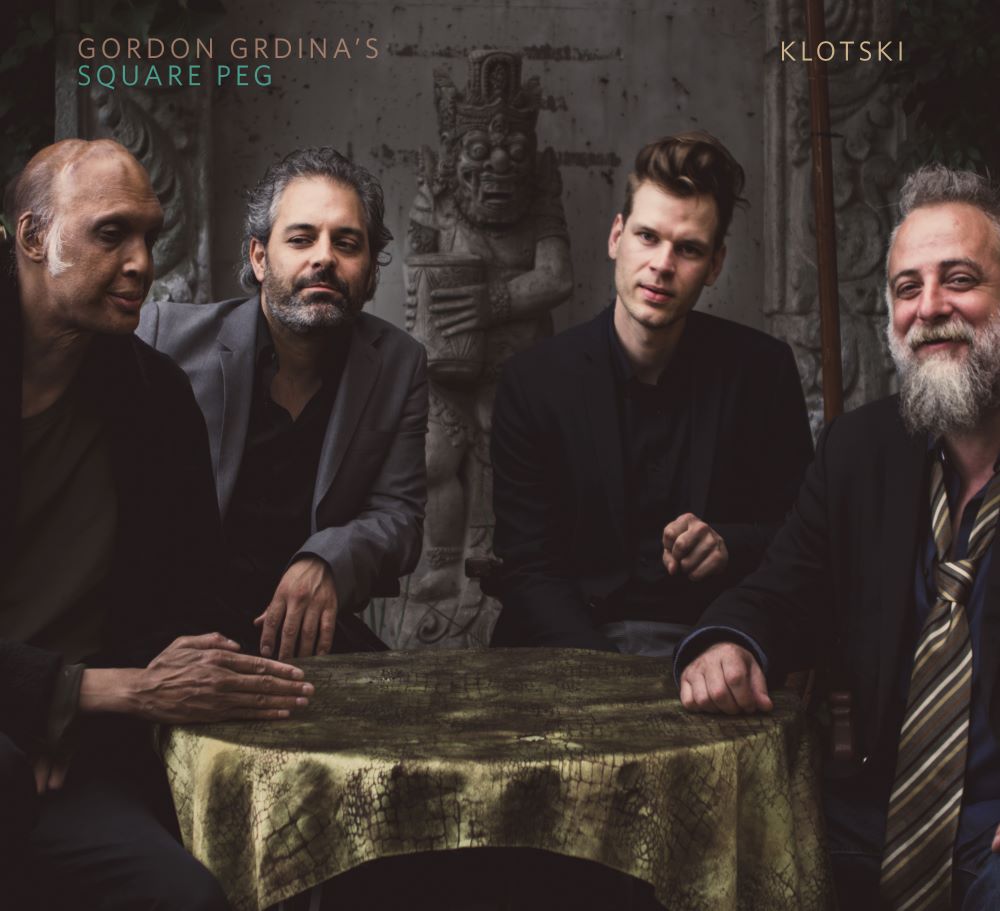
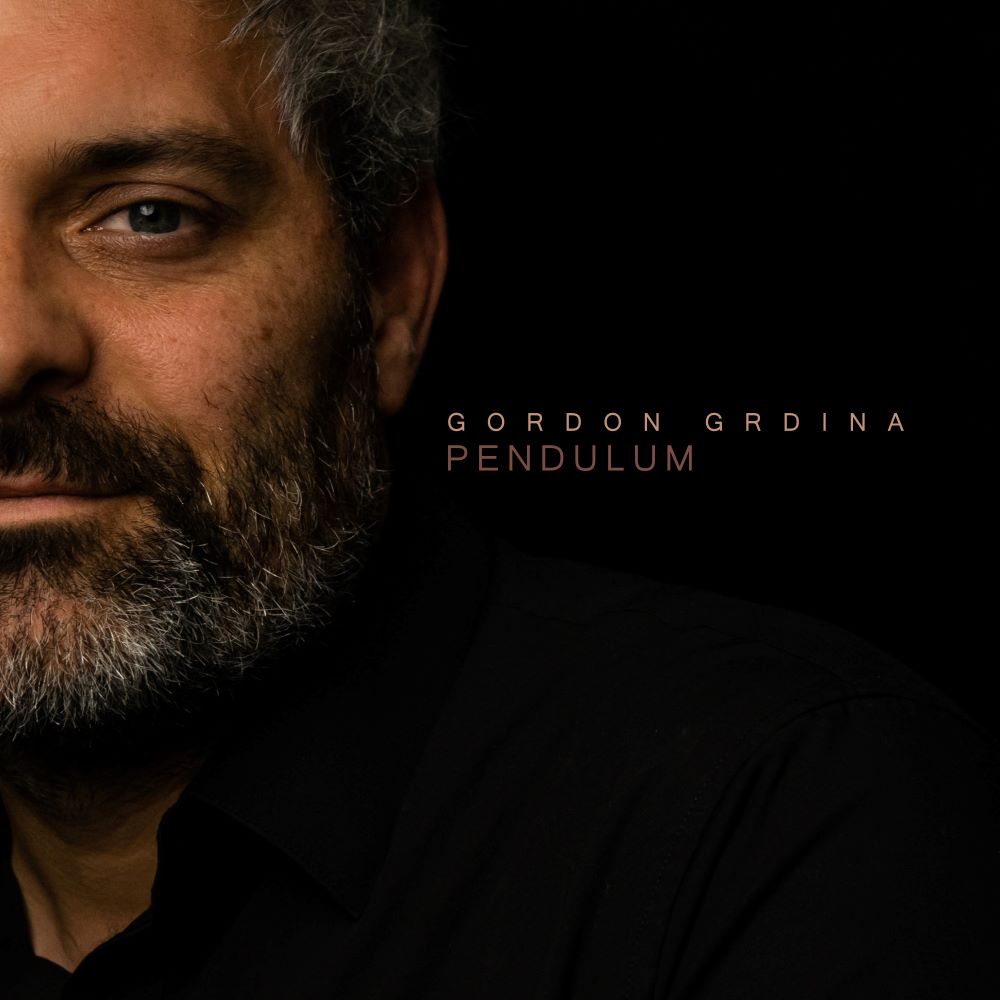
Gordon Grdina 'Pendulum' & 'Klotski' / Two releases on October 22, 2021 Attaboygirl Records

Guitarist, composer and oud master Gordon Grdina launches Attaboygirl  Records with a wide-ranging trio of adventurous new albums

The new label, created in partnership with his partner, photographer and visual artist Genevieve Monro, will make its official debut with its first two releases on October 22, 2021

Inaugural releases include a new solo album for classical guitar and oud along with the studio  debut of the quartet Square Peg with Mat Maneri, Shahzad Ismaily, and drummer Christian Lillinger
 
“Gordon Grdina Makes Music that is Important for Humanity.”
– Eyal Hareuveni, The Free Jazz Collective

“(Nomad) presents the restless spirit of jazz that refuses to be still, searching for a home and never settling down…”
– Jon Davis, EXPOSE

“The prevailing ambience is one of dark mystery, but the ruggedness of Grdina’s tone makes for a palette of rich contrast.”
– David R. Adler, JazzTimes (review of Think Like the Waves)

KLOTSKI
The prolific Vancouver-based guitarist, composer, improviser, and master oud player Gordon Grdina has long been tireless in his pursuit of new possibilities and partnerships for his expansive musical imagination. Seeking a new outlet that can keep pace with his ever-expanding roster of ongoing projects and new collaborations, Grdina has announced the launch of Attaboygirl Records. The endeavor is being undertaken in collaboration with his partner, photographer Genevieve Monro, who will curate the distinctive visual style of the label. At the outset Attaboygirl will begin strictly as an imprint for Grdina’s own efforts, though the founders have plans to eventually expand to include other artists as well.
 
Attaboygirl Records will make its official debut on October 22, 2021, with the simultaneous release of the first two entries in its catalogue. Pendulum is Grdina’s third solo album and the second composed for classical guitar and oud. Klotski, meanwhile, marks the studio debut of Gordon Grdina’s Square Peg, an exploratory quartet featuring Grdina on guitar and oud, Mat Maneri on viola, Shahzad Ismaily on bass and Moog, and Christian Lillinger on drums.
 
A third new release will follow in January 2022, with the meeting of guitar innovator Marc Ribot with Grdina’s Arabic music ensemble Haram. Grdina will also continue to record for other labels in the new year; in May 2022 the much-anticipated second outing by Grdina’s explosive Nomad Trio with pianist Matt Mitchell and drummer Jim Black will be released via Astral Spirits.
 
“I seem to be putting out more music than other labels can handle,” jokes Grdina about the new effort. “The label is a project that Genevieve and I have wanted to take on for a while now. It allows us to release projects when we want and to create a cohesive visual style for these disparate releases.”

The label’s name stems from a favorite saying of Monro’s late father, serving as a personal dedication while alluding to the two partners at the helm. “It's also a positive, encouraging sentiment,” Grdina adds, “which is important when taking on something new like this.”

01 Impending Discomfort 7:22
02 Escherian 6:09
03 Bacchic Barge 7:39
04 Sulfur City 9:21
05 Kaleidoscope 5:41
06 Microbian Theory 8:07
07 Sore Spot 4:13
08 Joy Ride 4:38

Gordon Grdina  guitar / oud
Mat Maneri  viola
Shahzad Ismaily  bass / moog
Christian Lillinger  drums


PENDULUM
Pendulum builds upon the success of Grdina’s previous solo releases. The first, 2018’s China Cloud, featured his usual arsenal – electric guitar and oud – won a Juno Award (the Canadian equivalent of the Grammy) for Instrumental Album of the Year. His Juno-nominated 2020 follow-up, Prior Street, shifted into more of a chamber-jazz concentration with pieces designed for classical guitar and oud. The new album continues in that vein, intricately exploring the harmonic possibilities of the instruments in ways that bridge their Western and Arabic origins.

Square Peg brings Grdina together with Ismaily and Maneri, both longtime members of New York’s downtown scene, and German drummer Christian Lillinger, an award winning player in the European avant- jazz and improvised music world. For Klotski, Grdina penned a number of short, modular compositions that could fit together like puzzle pieces to form a free-ranging but focused setlist. The album’s single, nearly hour-long piece moves through eight of these cellular pieces, each able to be initiated by any member of the group and bridged by captivating improvisations, vividly blurring the lines between the written and the spontaneous.
 
Grdina founded Haram in 2008 with two purposes in mind: to further evolve his work with traditional Iraqi and Arabic folk music, and to convene several of his favorite Vancouver improvisers into one large ensemble. The follow-up to the ensemble’s 2012 debut, Her Eyes Illuminate, features the addition of legendary guitar wizard Marc Ribot, whose fabled career has included influential work with Tom Waits, Elvis Costello, Robert Plant and John Zorn among countless others, as well as his own projects like Ceramic Dog, Los Cubanos Postizos, Spiritual Unity and the Rootless Cosmopolitans.
 
“Ribot's been a hero of mine for a long time,” Grdina says. “He added a whole lot of energy and excitement as well as a punk rock aesthetic to these pieces.”
 
Finally, next May will bring the release of Boiling Point, the second outing for Grdina’s Nomad Trio with Matt Mitchell and Jim Black, two of the most inventive and technically audacious artists in modern jazz. “I can write anything for this band,” Grdina touts. “It's very complex music, rhythmically, harmonically, melodically, and in the way every piece fits together, those guys really can do anything. Since the last album, the group has solidified its unique sound, which is exciting to hear develop on this second record.”

1 Koen Dori  8:02
2 Contra 6:52
3 The Chase  6:53
4 Benbow Blues  8:32
5 Wayward  9:22
6 Pendulum  6:02
7 Always Been The Song II 5:15

Gordon Grdina  classical guitar, oud