Music From Man of La Mancha is a 1964 musical with a book by Dale Wasserman, lyrics by Joe Darion, and music by Mitch Leigh. It is adapted from Wasserman's non-musical 1959 teleplay I, Don Quixote, which was in turn inspired by Miguel de Cervantes and his 17th-century masterpiece Don Quixote.
The original 1965 Broadway production ran for 2,328 performances and won five Tony Awards, including Best Musical. The musical has been revived four times on Broadway, becoming one of the most enduring works of musical theatre. The principal song, "The Impossible Dream", became a standard.
Eliane previously recorded these tracks at the request of the original composer, Mitch Leigh, Guest artists are talented and GRAMMY Award-winning jazz artists Marc Johnson (bass), Satoshi Takeshi (drums), Manolo Badrena (percussion), Eddie Gomez (bass), Jack DeJohnette (drums).
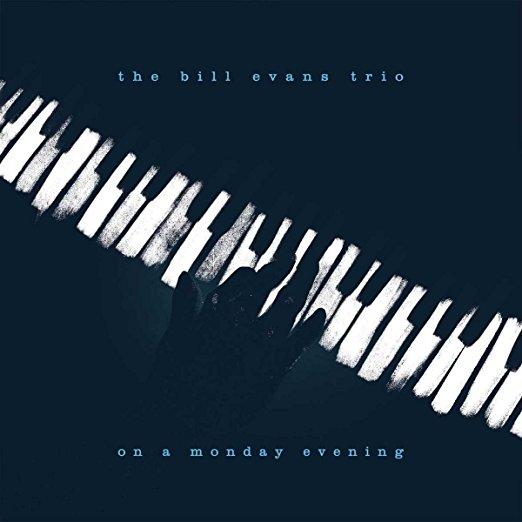
On A Monday Evening offers Bill Evans fans a rare treat: an unreleased (and never bootlegged!) concert recording of The Bill Evans Trio, featuring Eddie Gomez and Eliot Zigmund from Monday, November 15, 1976. Captured live at Madison, Wisconsin’s Union Theater, On A Monday Evening finds Evans at the top of his game, performing both contemporary compositions from that era, as well as his longstanding signature tunes to a packed house. New liner notes by GRAMMY Award-winning jazz historian Ashley Kahn round out the package, featuring commentary by Eddie Gomez and Eliot Zigmund.
Chick Corea first laid eyes on New York’s Greenwich Village in 1959, fresh from high school, with a head full of music that only he could have imagined. With this new release The Musician, recorded in the epicenter of Chick’s original NYC haunts and more than 50 years later, Corea finally brings all that music together at once. The new live 3-CD and Blu-ray set captures Corea’s 70th birthday celebration at the famed Blue Note Jazz Club in 2011, where he assembled a staggering lineup of musical friends and fellow-travelers – among them Herbie Hancock, Bobby McFerrin, Wynton Marsalis, John McLaughlin and Stanley Clarke – for a month-long residency featuring 10 different bands, including triumphal sets by his own Chick Corea Elektric Band and Return to Forever. All of it is captured brilliantly in the first feature-length documentary on Corea’s life, music and genius musical partners. The film takes you inside the heads and "hangs” of some of the greatest artists of our time – backstage and personal – and the CDs capture almost four hours of live recordings of every band. The deluxe hardcover edition, including the film on Blu-ray, in addition to the 3 CDs, an essay by Robin D. G. Kelley and exclusive photos, will be available from Concord Jazz on April 21, 2017, as well as a 3-CD edition. A 3-LP edition on 180-gram vinyl is planned for June 2. Return to Forever Unplugged, with Clarke (bass), Lenny White (drums) and Frank Gambale (guitar), opens the set like a thundercrack. Lyrical explorations in a trio with Gary Peacock (bass) and Brian Blade (drums) follow, cutting a path for even more fireworks from fan-favorite Five Peace Band, co-led with McLaughlin (guitar), featuring Kenny Garrett (sax), John Patitucci (bass) and Blade. A duet with McFerrin (vocals) is pure improvisational magic from two masters of the form. Corea and his most frequent collaborator, Gary Burton (vibraphone) add the Harlem String Quartet for a virtuosic chamber jazz set.
From Miles, with Wallace Roney (trumpet), Gary Bartz (sax), Eddie Gomez (bass) and Jack DeJohnette (drums) is a Davis tribute like no other: vibrant and swinging with the spirit of Miles himself. Flamenco Heart is a classic late-night Madrid party, featuring Concha Buika (vocals), Jorge Pardo (sax and flute), Carles Benavent (bass), Niño Josele (guitar), and Jeff Ballard (drums). Piano duets with Hancock and Marcus Roberts are brilliantly alive with emotion and virtuosity. The Elektric Band – Dave Weckl (drums), Patitucci, Eric Marienthal (sax) and Gambale – closes the album with a jolt of musical energy. Nobody who saw these shows will ever forget it. The CDs capture the music with Corea’s characteristic thrilling live sound, and the documentary goes even further: with total access to Chick’s creative process, the film features live footage, but also rehearsals, backstage hangs and candid interviews with the musicians. Everything that goes into making music at this level – the hours of practice, rehearsals, gear moving in and out – is in full view. The Musician is one of the great portraits of a true genius in his prime, at work. In every musical setting, Corea’s long history of creative adventurism made for the ultimate present-tense music. The title of the set followed naturally. "That’s what the story’s about. It’s about musicians, being musicians,” Corea says. "When people ask me, ‘What did you learn from Miles?’ – that’s the salient thing that I took from my experience. Miles just let his musicians be themselves. He let them be musicians.” The Musician is a look at Corea’s ongoing creative journey, one that never rests for long. His constant innovation as a composer, piano player and bandleader have earned him just about every award available to jazz musicians, including his status as a Downbeat Magazine Hall of Famer and NEA Jazz Master. He sits at #4 on the list of artists with the most Grammy nominations of all time. From straight-ahead to avant-garde, bebop to jazz-rock fusion, children’s songs to chamber works – all of which are embraced on The Musician – Corea has touched an astonishing number of musical bases in his career. "One question I’m asked all the time is what setting do I like best – trios or full bands – or which musician do I like best to work with? Do I like to play the piano more than the Rhodes? The answer to any of those questions is the same, really – it’s all so less in importance to the act of creating, and the act of collaborating with another musician.” The Musician shows Corea welcoming his 70th year with friends and thousands of fans. Now, five years later, he shows no sign of slowing down. He continues to look forward to more tours, more gigs, and more sessions. Looking back on the month-long celebration that is now remembered on The Musician, Corea calls it motivation "to keep on experimenting and researching and putting new bands together and playing music. It’s that simple.”
Disc One
1 Captain Marvel (Live at the Blue Note Jazz Club, New York, NY October-November 2011)
08:15 Chick Corea, Return To Forever
2 Light As A Feather (Live at the Blue Note Jazz Club, New York, NY October-November 2011)
14:16 Chick Corea, Return To Forever
3 I Hear A Rhapsody (Live at the Blue Note Jazz Club, New York, NY October-November 2011)
09:25 Chick Corea, Chick Corea Trio
4 Spirit Rides (Live at the Blue Note Jazz Club, New York, NY October-November 2011)
13:00 Chick Corea, John McLaughlin
5 Special Beings (Live at the Blue Note Jazz Club, New York, NY October-November 2011)
16:43 Chick Corea, John McLaughlin
6 I've Got The World On A String (Live at the Blue Note Jazz Club, New York, NY October-November 2011)
05:54 Chick Corea, Bobby McFerrin
7 Spain (Live at the Blue Note Jazz Club, New York, NY October-November 2011)
09:34 Chick Corea, Bobby McFerrin
Disc Two
1 Overture (Live at the Blue Note Jazz Club, New York, NY October-November 2011)
07:57 Chick Corea, Gary Burton, Harlem Quartet
2 Your Eyes Speak To Me (Live at the Blue Note Jazz Club, New York, NY October-November 2011)
04:32 Chick Corea, Gary Burton, Harlem Quartet, Gayle Moran Corea
3 If I Were A Bell (Live at the Blue Note Jazz Club, New York, NY October-November 2011)
22:09 Chick Corea
4 Nefertiti (Live at the Blue Note Jazz Club, New York, NY October-November 2011)
10:54 Chick Corea
5 Zyryab (Live at the Blue Note Jazz Club, New York, NY October-November 2011)
16:38 Chick Corea
6 Mi Nina Lola (Live at the Blue Note Jazz Club, New York, NY October-November 2011)
09:22 Chick Corea
Disc Three
1 CC's Birthday Blues (Live at the Blue Note Jazz Club, New York, NY October-November 2011)
09:26 Chick Corea, Marcus Roberts, Wynton Marsalis
2 Caravan (Live at the Blue Note Jazz Club, New York, NY October-November 2011)
08:29 Chick Corea, Marcus Roberts
3 Hot House (Live at the Blue Note Jazz Club, New York, NY October-November 2011)
05:00 Chick Corea, Herbie Hancock
4 Dolphin Dance (Live at the Blue Note Jazz Club, New York, NY October-November 2011)
09:10 Chick Corea, Herbie Hancock
5 Cantaloupe Island (Live at the Blue Note Jazz Club, New York, NY October-November 2011)
06:38 Chick Corea, Herbie Hancock
6 Ritual (Live at the Blue Note Jazz Club, New York, NY October-November 2011)
13:39 Chick Corea, Chick Corea Elektric Band
7 Silver Temple (Live at the Blue Note Jazz Club, New York, NY October-November 2011)
Two years after seducing fans with her GRAMMY®-winning Made in Brazil (Best Latin Jazz Album), the internationally acclaimed pianist, singer, composer and arranger Eliane Elias returns with the ebullient Dance of Time.
The former disc commemorated a homecoming for her; it was the first time she recorded in her native country of Brazil since moving to the United States in 1981. JazzTimes magazine praised Made in Brazil as "a warm embrace,” while Jazziz magazine wrote, "Surrounded by Brazilian-bred luminaries, Elias brilliantly captures the complexities of human emotions in a seamless display that reconciles past and present, loss and fulfillment, melancholy and bliss, all while celebrating her homecoming.”
Dance of Time, like its predecessor, was recorded in Brazil. "Recording in Brazil was such a high,” explains Elias as to why she returned to the country. But thematically, Dance of Time is its own beautiful beast. Whereas Made in Brazil was a tantalizing toast to three generations of Brazilian composers, Dance of Time’s themes are multifold.
With the presence of extraordinary guests including pianist Amilton Godoy plus singer-songwriting guitarists João Bosco and Toquinho—from Brazil—along with trumpeter Randy Brecker, vibraphonist Mike Mainieri and singer Mark Kibble—from the United States, Dance of Time celebrates certain people who were integral in Elias’ early artistic journey in both Brazil and the U.S. "I wanted to include musicians who were very important in the start of my career,” Elias says. "Dance of Time represents the spectrum of my career from the very beginning until now.” Dance of Time also applauds the samba, a genre originating from Bahia, via Africa. Last year marked the 100th anniversary of the first samba ever recorded and registered, "Pelo Telefone.” "Samba is the most authentic and contagious dance rhythm of Brazil, and there is no better place in the world to capture this music. I just had to be in Brazil to make Dance of Time.”
On The Way We Play, Hill fronts his regular ensemble of four years, the Blacktet, which consists of alto saxophonist Christopher McBride, vibraphonist Justin Thomas, drummer Makaya McCraven, and bassist Joshua Ramos. It’s a smart tactic because it plays to the strengths of Hill as a bandleader and affords the music a vivacious group accord that often comes from years of playing together. Hill, however, flips the scripts on the new disc. Instead of offering entirely original material as he did on his last three discs, he revisits a handful of jazz standards. "I want to pay homage to some of my favorite jazz standards and American songbook classics,” Hill says. "These are some of the songs that I came up playing in various jam sessions; these songs really taught me how to play jazz.”
The Way We Play is hardly a color-by-numbers jazz standards album. As Hill has done on his previous discs, he revitalizes the material by placing heavier emphasis on the groove, which enables the compositions to resonate more to a 21st-century jazz audience – hence the disc’s witty title. "I really want to make it very clear that this is the sound of my band, which is uniquely Chicago. I wanted to put everything on the table – this is the way that we play,” Hill explains.
The Chicago Tribune asserts that the spirit of Chicago is deeply integral to his music by stating, "…his music crystallizes the hard-hitting, hard-swinging spirit of Chicago jazz.” Indeed, Chi-town references burst forward at the very beginning with "Welcome / ‘Bulls Theme’,” on which guest vocalist Meagan McNeal introduces the band with the same hypnotic theme used by the Chicago Bulls in the 1990s when Michael Jordan played with the team.
From there, Hill launches into an entrancing take on a Gigi Gryce’s 1950s minor-blues classic with the two-part mashup "The Way We Play / Minority.” The ensemble accentuates Gryce’s original opening bass line groove before Hill and McBride articulate the zigzagging melodic figure in unison. The rhythm soon breaks into a quicksilver swing forward motion that sweeps Hill’s authoritative improvisation. The inventive makeover also features spoken-word artist Harold Green III delivering lyrical prose that aptly describes the Chicago sound.
"Prelude,” a dulcet trumpet solo, gives way to the mesmerizing rendition of Horace Silver’s late-1950s composition "Moon Rays” with which McCraven and Ramos underpin with a skittering, almost drum-n-bass flow. "I learned that tune when I was a sophomore in high school in an after-school program called the Merit School of Music,” Hill recalls. "The melody is so beautiful and so singable.”
The mood simmers down for Hill’s sensual take on Victor Young and Ned Washington’s classic ballad "My Foolish Heart.” In addition to the subtle, R&B rhythmic flourishes lurking underneath, Hill’s makeover also stars Christie Dashiell, who brings a soothing, sunny verve to the fore as Hill’s muted trumpet interjects melodic asides.
Amorous overtones continue with a stunning reading of Jimmy Van Heusen and Johnny Burke’s "Polka Dots and Moonbeams” of which Hill almost plays entirely solo on flugelhorn, which allows listeners to full luxuriate inside his velvety tone and graceful improvisation.
With the help of percussionist Juan Pastor, the tempo picks back up with an Afro-Cuban take on Donald Byrd’s mid-1960s burner "Fly Little Bird Fly,” another tune highlighted by Green’s uplifting prose. This tune is especially personal for Hill because Byrd is one of his biggest and earliest jazz influences. "When I was in high school, he was the cat that I wanted to sound like,” Hill remembers. "When I was in high school, I was on a mission to find every record that Donald Byrd was on.”
The Chicago connection between Hill and the material becomes even more pronounced with the delightful cover of "Maiden Voyage,” a mid-1960s standard, written by fellow Windy City-native Herbie Hancock. On Hill’s version, he slowed the tempo and dropped the key to G-flat to give the evocative composition darker hues.
After bursting through a flinty exploration through the Thelonious Monk mid-1960s staple "Straight No Chaser,” Hill digs deep into the post-bop canon and unearths Carmell Jones’ rare 1965 tune, "Beep Durple,” on which the frontline horns deftly tackle the tricky melody atop a fractured yet forward motion rhythmic bed. The ebullient rendition also features trombonist and fellow-Chicagoan Vincent Gardner of the Jazz at Lincoln Center Orchestra.
Peruvian rhythms burst forth from Pastor’s cajón drumming on "Juan’s Interlude,” before the disc concludes with an Afro-Latin 7/4 version of Charlie Chaplin’s 1936 signature tune "Smile.” Featuring just trumpet, bass and cajón, Hill’s zesty rendition makes a fitting conclusion for The Way We Play, a fetching refurbishing of old favorites with a decidedly 21st-century twist.