Showing posts with label Kris Davis. Show all posts

Friday, March 11, 2022

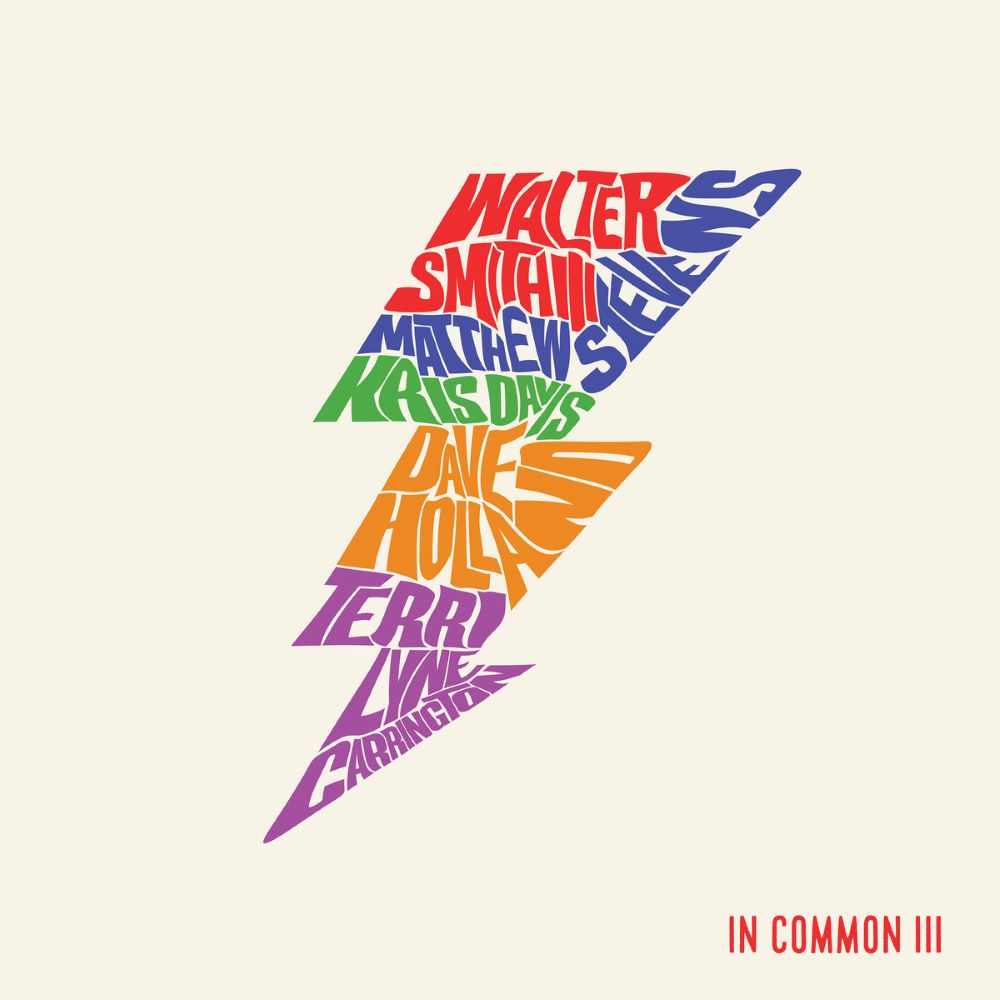
Walter Smith III & Matthew Stevens - In Common III (March 11, 2022 Whirlwind Recordings)

Walter Smith III and Matthew Stevens are two musicians at the forefront of developments in jazz and improvised music, listing the likes of Terence Blanchard, Ambrose Akinmusire, Esperanza Spalding and Christian Scott as collaborators. The pair started working together in 2017, and four years later, they’re back for the third iteration of their highly commended In Common project. Previous guests include Nate Smith, Linda May Han Oh and Marcus Gilmore; on In Common 3, Kris Davis takes the piano chair vacated by Micah Thomas, and completing the lineup are two legends of the game – Dave Holland and Terri Lyne Carrington.

What’s new, third time around? “It’s longer, freer, and yet more spontaneous,” says Smith. The successful In Common formula – inventive ‘one-page songs’ written with specific musicians in mind – disguises the through-line that uniquely shapes this record: “The spotlight is on the community of musicians as a whole,” Smith comments. “The general vibe is sculpted by the musicians’ interpretations of what we bring in.” Davis’ influential presence means the project leans into the aesthetics of free improvisation for the first time; the resulting soundworld lends itself to electronic manipulation, another first for the series. The span of fifteen tracks showcases the duo’s knack for reinvention, slipping into unfamiliar contexts without losing sight of the album’s focused essence.

Smith is keen to emphasise the standalone nature of the divergent In Common recordings. Some aspects carry through though, like their commitment to remembering lost influences – opener ‘Shine’ serves as both a thank you and an acknowledgement to McCoy Tyner, Wallace Roney, Chick Corea, Jimmy Health and Ellis Marsalis. That introduces the remaining fourteen tracks, that divide nearly exactly into spontaneously constructed ideas that introduce fully composed tracks.
‘Loping’ was Stevens’ part-tribute to Carrington and Holland: “being of a certain ilk and having come up a certain way, I knew they would have had a specific way of playing this track” – Smith and Stevens feature in their trademark coolly cast melodic divisi. The single riff of ‘Oliver’ dissolves into ‘Hornets’s slinky groove, where we catch a glimpse of the sense of humour amongst the group. ‘Orange Crush’ squeezes all the juice out of a lop-sided ostinato, a concentration of the In Common philosophy into a three-minute segment. Then comes ‘After’, which captures Smith’s “never-ending optimistic thoughts about things being better ‘after’” – the opaque whirrs of the ensuing ‘Lite’ show that outcomes are far from clear-cut.

‘For Some Time’ does provide Smith with some closure, however – a timeworn composition that “finally finds a solidified direction amongst this quintet,” as Carrington and David jostle for position. ‘Reds’ sees Stevens back to Holland’s 1990 album ‘Extensions’, and “those big beat, odd meter songs.” ‘Variable’ involved Smith venturing into non-determinacy – “it’s written to be played in many tempos, meters, and approaches, but was not discussed prior to recording it” – and, via ‘Dust’s twanging landscapes and ‘Familiar’s misty acquaintance, In Common 3 concludes with the pensive ‘Miserere’, an aptly reflective conclusion to this wide-ranging endeavour.

1. Shine
2. Loping
3. Oliver
4. Hornets
5. Orange Crush
6. After
7. Lite
8. For Some Time
9. Shutout
10. Reds
11. Variable
12. Prince July
13. Dust
14. Familiar
15. Miserere

Walter Smith III - saxophone
Matt Stevens - guitar
Kris Davis - piano
Dave Holland - bass
Terri Lyne Carrington - drums

Recorded at Clubhouse (June 4-6 2021)
Mixed by Jay Dudt
Mastered by Jay Dudt & Jesse Naus
Produced by Matthew Stevens & Walter Smith III
Executive Producer - Michael Janisch
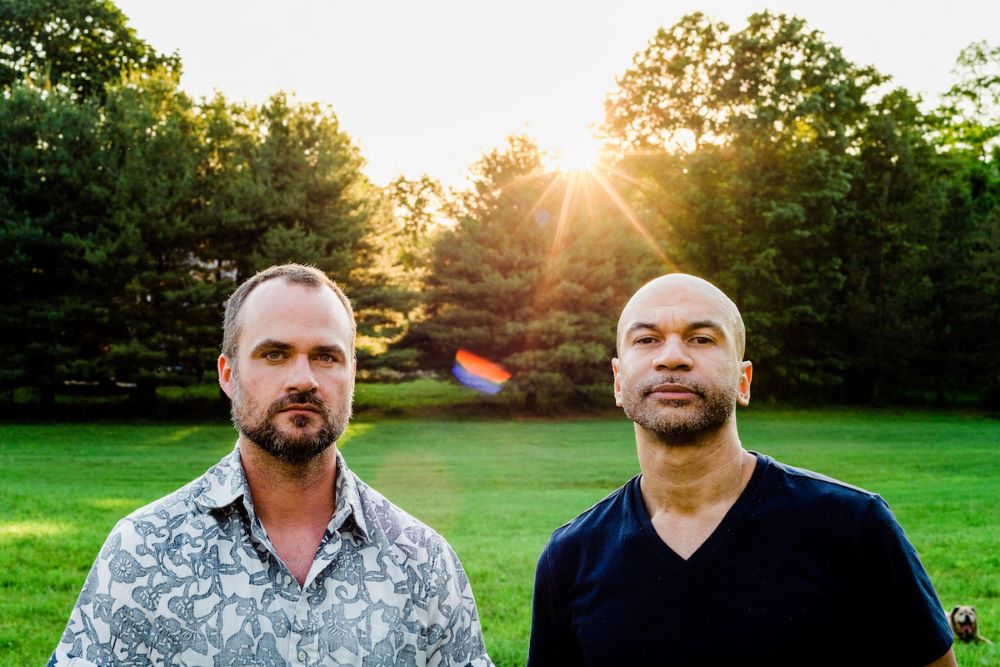
Photography - Pierce Johnston
Album Artwork/Graphic Design - Dave Bush

Friday, September 17, 2021

Borderlands Trio with Stephan Crump, Kris Davis, Eric McPherson - Wandersphere (September 17, 2021 INTAKT RECORDS)

Following the stunning debut album "Asteroida", the New York trio Borderlands with Stephan Crump, Kris Davis and Eric McPherson release a double CD with four improvisations which range in length from just under twenty to over forty minutes. Recorded during the coronavirus pandemic in New York in 2020, the music contrasts the New York mood of isolation with an uncommon passion for playing, intensity and musical intimacy.

Chicago/Berlin jazz critic Peter Margasak writes in the liner notes: “The works float, roil, swing, breathe, rush, and sparkle without every revealing any sort of hesitation or falling into a rut. The musicians don’t follow one another and they eschew glib reaction. Instead, they sit with the flowing ideas, thinking ahead about where the music could go. They play a long game with their spontaneity. These four amazing explorations reflect a kind of total music.” He writes full of enthusiasm: “The Borderlands Trio engage in four mind-boggling explorations here – patiently, generously, and almost telepathically building a unified sonic architecture that celebrates the act of collective improvisation as profoundly, as beautifully, and as completely as anything I’ve ever heard.” McPherson turned 50 on the day of the session, and calls the experience “the ultimate birthday gift.”

1. Super-Organism
2. An Invitation to Disappear
3. Old-Growth
4. Possible Futures

Stephan Crump: Acoustic Bass
Kris Davis: Piano
Eric McPherson: Drums

Music by Eric McPherson, Kris Davis, and Stephan Crump.
Recorded December 11, 2020, at The Samurai Hotel, Queens, NY,
by David Stoller. Mixed by Stephan Crump at The Butler Plaza, Brooklyn, NY. Mastered by Liberty Ellman at 4D Studios, San Francisco, CA.
Cover art and design: Jonas Schoder
Liner notes: Peter Margasak
Photos: Patrick Lambin, Jazzdor, Strasbourg, 2019
Produced by Kris Davis, Stephan Crump, Eric McPherson and Intakt Records, Patrik Landolt, Anja Illmaier, Florian Keller
Published by Intakt Records

Thursday, February 18, 2021

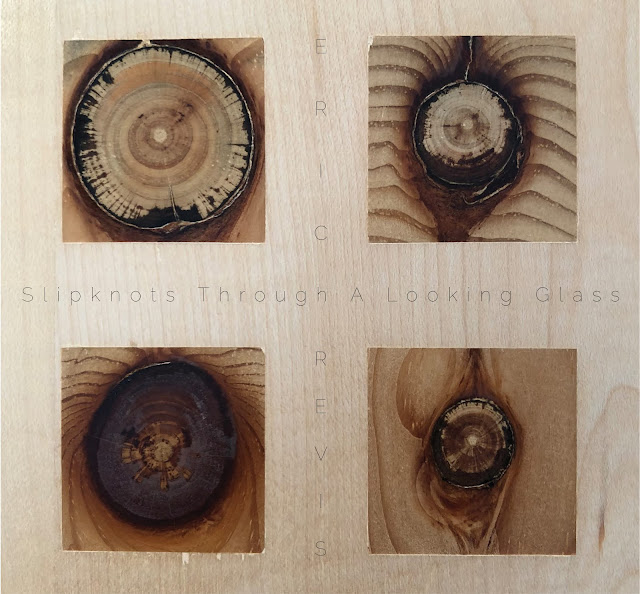
Eric Revis - Slipknots Through A Looking Glass (Pyroclastic Records)

Eric Revis flexes conceptual sensitivity with release of 
Slipknots Through A Looking Glass 

Featuring Revis with Chad Taylor, Kris Davis, Darius Jones and Bill McHenry

“A bassist with a strong rhythmic compass and a stout, beefy tone” — The New York Times


A highly skilled master of sound and sense, GRAMMY award-winning bassist and composer Eric Revis has crafted his artistic legacy around asking the same question again and again: Why not? Experimenting remains integral to his expression. Over the years, the critically-acclaimed artist’s willingness to traverse the unknown has prompted collaborative partnerships with Branford Marsalis, Nasheet Waits, Kris Davis, Peter Brötzmann and Jason Moran.

Heralded by critics as “powerful,” “raw” and “fierce,” Revis’ playing frequently becomes mischaracterized by way of omission. While he plays and composes with master-level intensity, the intrinsic vulnerability present in any form of experimenting — and deeply present in Revis’ artistry — rarely yields recognition among music writers. “I don’t mind those kinds of descriptions or monikers,” he says, “but not when it’s at the negation of everything else. There may be an air of robustness around my music, but there is a lot of sensitivity and intellectual content.”

Poised to challenge those limited views of Revis’ expression, Slipknots Through a Looking Glass — his eighth solo-led album, and first release on Pyroclastic Records — explores new territory alongside familiar travelers: drummer Chad Taylor, pianist Kris Davis and saxophone masters Darius Jones and Bill McHenry. “The band is kind of an amalgam of groups I’ve previously recorded with,” says Revis, who sought to combine the energies of various project iterations on a single record.

Much of the album’s music — primed for enquiry and collaborative input — emerged during several weeks of solitude. Through a partnership with The Jazz Gallery, the LA native received a 2017 grant from The Rockefeller Foundation to spend some time at the Kykuit estate in Pocantino Hills, NY. Two compositions from that retreat found their way on to Marsalis’ 2019 GRAMMY-nominated recording The Secret Between the Shadow and the Soul. Revis sought to interpret the remaining music through a range of treatments — both scripted and spontaneous — on Slipknots Through a Looking Glass, an album that exposes the full flower of his conceptualism. Master producer Ron St. Germain serves as production and mixing engineer for the recording – an instrumental force in the development of its character, at once sprawling and intimate. 

Beginning as a developing conversation between Revis and Taylor, “House of Leaves” represents a conceptual flex for Revis as a composer. The track centers around textural shapes — each, according to Revis, its own island. Exploiting space, the artists leave one island and reenter “nothingness” before traveling to the next. “It was interesting to see how the band could collectively navigate these islands,” says Revis. “Without giving it over to the musicians entirely, the process was more, ‘I have this sparse idea; let’s develop it into this next sparse idea, and then go on from there.”
Rendered as a “visceral approach to melody,” according to Revis, “Vimen” serves the artist’s appetite for exploring energies that surround the music — and the session — thoroughly and critically. “I wanted more emphasis on the energy than on exact notes or notation,” he says. He asked his collaborators to approach title track “SpÆ” with similar controlled spontaneity. “We kind of deconstructed the composition,” says Revis. The trio tune features Davis on prepared piano and Taylor on mbira. “We just played,” he says. 

Incorporating three separate takes, the track features crossfades leading from one take to the next. “It’s almost like if you had people speaking in three separate rooms, and then you put them together — all of a sudden you have this great conversation that, even though it was intended to be about disparate things, really makes a whole lot of sense.” 

An artist fascinated by the surrealist movement, Revis keeps a digital journal of images and concepts flashing before him so that he might one day use them in his music. “The image of slipknots through a looking glass came up and I thought, ‘Wow — this is really cool.’” Immediately he connected his own artistry to the image’s inherent symbolism: the slipknot’s ephemeral nature further complicated by its reflection through the looking glass — was it even there to begin with, and where does it go when it disappears? “All those ideas are very, very much a part of this record,” he says. “The idea of a journey — although it wasn’t something that I set out to do, it’s a theme that runs through all of this record.” 

How listeners might interpret his music matters less to Revis than the act of composing and recording it. “We can hear things and say, ‘Wow, I feel a certain foreboding quality about this,’ and the next person says, ‘Wow, this is such a happy song,’ or for example, Tchaikovsky being able to evoke all this emotional gravitas and almost melancholy — out of major chords! He’s able to exact pathos from major chords.” 

“Hopefully, it’ll be heard,” he says. “When somebody really doesn’t like something, I think that’s incredibly honest and beneficial. If [my music] truly evokes real happiness, that is absolutely beautiful. But if it makes you uncomfortable, that’s a real emotion. And to have something do that — I think that that’s amazing.”

1. Baby Renfro 04:59
2. SpÆ 04:47
3. Earl & The Three-Fifths Compromise 07:14
4. Slipknots Through A Looking Glass, Part 1 02:21
5. Shutter 04:43
6. ProByte 06:19
7. Slipknots Through A Looking Glass, Part 2 01:28
8. House Of Leaves 07:07
9. When I Become Nothing 03:30
10. Vimen 11:33
11. Slipknots Through A Looking Glass, Part 3 03:10

Kris Davis Piano
Bill McHenry Tenor Saxophone
Darius Jones Alto Saxophone
Chad Taylor Drums, Mbira
Justin Faulkner Drums on Tracks 1 and 3

All compositions by Eric Revis except:
Track 2: Eric Revis, Kris Davis and Chad Taylor
Track 5: Darius Jones Track 9: Bill McHenry

Monday, February 15, 2021

Hafez Modirzadeh - Facets (March 5, 2021 Pi Recordings)

Facets is saxophonist/composer Hafez Modirzadeh’s latest radical entreaty against the cultural hegemony of the Western notion of equal temperament and his argument that musicians should be free to explore a variety of tonal possibilities, even on piano. His 2012 release Post-Chromodal Out! was the first documentation of this concept, where the piano was tuned to a variety of temperaments. Performed with pianist Vijay Iyer, The New York Times called that album “Dauntless… There’s heady discipline at work here, along with the stirrings of a hard-fought individualism.” With his new release, Modirzadeh has distilled the idea to a single re-tuning, which is performed in duets with three towering musicians in contemporary improvised music: Kris Davis, Tyshawn Sorey and Craig Taborn, each interrogating the piano’s new possibilities with imagination and ingenuity. Modirzadeh himself utilizes alternate fingerings and embouchure adjustments on his instrument to achieve intervals between major and minor, and the pieces sway with an elasticity reminiscent of Persian poetic meter. With eight keys re-tuned and the remainder left in equal temperament, the music explores the coexistence of familiar with unfamiliar, and in the process, discovers new logic and mysterious beauty within.

Modirzadeh, who the San Jose Mercury News has called “visionary,” described the imperative to re-tune the piano this way: “The standardized temperament for piano, as beautiful as it is, carries an unbalanced weight of influence over players and listeners, leading many to believe that there is no other resonance to work with but this one. This creates a value system that is unjust and ultimately limits the discovery of other, more personal tuning possibilities. By retuning the piano – the one instrument that imposes a dominant influence on the world’s music – the musician is freed to explore all tonal possibilities.” This urge is the culmination of a system he originally called “chromodality,” which he developed to explore the harmonic possibilities of integrating Persian tones with Western equal temperament. The concept has since evolved to allow all intervals to co-exist, which empowers each musician to use their own distinctive voice to explore music from a full palette of tonal possibilities, irrespective of cultural background. The tuning Modirzadeh has chosen for this program was one that spoke to him personally after much testing and tweaking. Vijay Iyer says of Modirzadeh: “The scope of Hafez’s synthesis of concepts across cultures is staggering. There is great detail in his critical engagement with traditional intervallic systems, tuning systems, and modes, and there is also a grand sweep to his vision across disciplines and historical eras. In spite of its technical complications, there is genuine heart to this music and a real spiritual clarity. Modirzadeh is not simply a ‘scholar’ or ‘musicologist,’ but a genuine artist, with a profound, lifelong stake in the unification of research, creative work, and personal inner quest that is expressed in his music.”

Interested in hearing the different approaches that each musician will bring to the concept, Modirzadeh has been inviting pianists from various disciplines to engage with this music. For the recording of Facets, Modirzadeh chose three of the most acclaimed musicians in improvised music: Kris Davis is recognized as one of the foremost pianists in jazz. Her release Diatom Ribbons (2019) topped most year-end lists as best album of the year. For a quarter century, Craig Taborn has been similarly recognized as a master of sheer invention on the piano. Tyshawn Sorey, who is a stalwart with Pi Recordings, has won recent praise for the premiere for his new works with the Seattle Symphony and Detroit Symphony Orchestra. Primarily known as a drummer, he brings the same sensitivity and openness to discovery as the other pianists. They were sent the scores in advance, but their first encounter with the actual re-tuned piano was at their respective recording sessions. Each musician works from the same set of pieces, spending time exploring the novel resonances, before running through the entire book of compositions. Modirzadeh gave minimal instructions, preferring to allow each musician to shape the music as they imagine it. As Modirzadeh said in an interview: “It takes more heart than head, with the intention of something beautiful.” He subsequently chose what he felt to be the most magical of these performances for this release.

The program unfolds with “Facet Taborn,” which was improvised by the pianist at the very end of his session after intense focus on the compositions. The otherworldly resonances are introduced, opening the door to further mysteries within. “Dawn Facet” and “Facet 27 Light” are interpretations of the same composition, first by Sorey, then by Davis. Modirzadeh’s saxophone is gentle, vulnerable, as if opening himself to all possibilities from his partners. Modirzadeh calls “Facet 28 Nora” “the cornerstone melody of all Facets.” His playing is delicate and loving, tender and haunting. “Facet 34 Defracted” is Davis’s radical mash-up of Thelonious Monk’s “Pannonica” and “Ask Me Now,” compositions that Modirzadeh separately interprets in duet with Taborn. For Davis, “It all made sense when we started playing the Monk tunes. Monk had this effect where he would try to ‘bend’ the note on the piano by adding a note below the melody subtly for a moment, and I heard that connection right away between Hafez’s tuning system and the Monk tunes he chose. It’s like living in those bends that Monk was creating, committing fully to the microtones he was trying to achieve in that effect. I believe that if he heard these versions of his compositions, he would consider re-tuning his piano for good!”

As Iyer notes: “This album signals that we are entering a crucial new phase in this journey: a collective meditation, an unlocking of forms and truths. I can hardly imagine a clearer monument, to our cataclysmic year than this set of stark, intimate, heartfelt jewels by these four singular truth-seekers.”

1. Facet Taborn
2. Dawn Facet
3. Facet 27 Light
4. Facet 28 Nora
5. Facet 29 Night
6. Facet 34 Defracted
7. Ask Me Now
8. Facet Sorey
9. Facet 31 Wake
10. Ebb Facet
11. Facet 33 Tides
12. Flow Facet
13. Pannonica
14. Facet BB
15. Facet 35 Ode B'kongofon
16. Facet 32 Black Pearl
17. Facet 39 Mato Paha
18. Ode Reprise

Hafez Modirzadeh - tenor saxophone (2-5, 7, 10, 11, 13, 15, 17)
Kris Davis - piano (3, 4, 6, 9, 12, 16)
Tyshawn Sorey - piano (2, 5, 8, 10, 14, 17)
Craig Taborn - piano (1, 7, 11, 13, 15, 18)

Monday, October 15, 2018

INGRID LAUBROCK ANNOUNCES CONTEMPORARY CHAOS PRACTICES ON INTAKT RECORDS (OUT NOVEMBER 16)


CONTEMPORARY CHAOS PRACTICES:

Why does a composer write for orchestra? The amount of time, labor, expense, and struggle involved, not just in composing an orchestral work but in having it accepted, rehearsed, performed, and (in a perfect world) documented, would seem to indicate a Sisyphean chore. Why would anyone invite the risk of pushing that mythic boulder to the mountaintop, only to be flattened by its descent?

“Because it’s there,” the celebrated mountaineer George Mallory is famously reported by The New York Times to have said, when asked – after he’d attempted to climb Mount Everest in 1921 and 1922 – why he intended to have another go in 1924. The quotation might be apocryphal; it doesn’t matter. To the alpinist, the risk of the journey and the cost of the venture are far outweighed by the potential reward of an achievement few people can claim.

Ingrid Laubrock is a born alpinist, to judge by this, her first recorded collection of orchestral works. Perhaps it should come as no surprise: She is, after all, a saxophonist and composer who risked much in venturing from Berlin via London to establish a base in busy, competitive New York City – an improviser’s Everest, one might claim. From her arrival in 2009, she wasted no time in making an impression with her piquant writing and potent playing.


Ingrid Laubrock ©Caroline Mardok

Laubrock, it bears asserting, had nothing to prove when she set her sights on the orchestra. Her credentials as an ambitious, skillful composer of intricate yet visceral works for small ensembles is well established—not least on the evidence of her excellent, much-admired Intakt recordings. Whether writing for conventionally constituted assemblages like her quintet Anti-House and trio Paradoxical Frog, or for a more unusual complement, like the mix of tuba, koto, electronics, and more that she convened two years ago for Serpentines, Laubrock has demonstrated a formidable capacity for writing music of intricacy, integrity, and broad appeal.

Still, no adventurous soul is content to stay in place. “The mountains are calling & I must go,” the naturalist John Muir is quoted as having said about his own call to action. Laubrock, an artist whose influences and formative experiences were many and varied, likewise felt the call of heights intrinsic to the orchestral experience: the mighty presence of massed musicians, the elemental weight and prismatic variety of the sounds they can produce, perhaps even the daunting scale of the venture itself.

Both of the works included on this album are of recent vintage: Laubrock wrote Vogelfrei for the second Jazz Composers Orchestra Institute Reading, presented by the American Composers Orchestra at Columbia University in 2013, and created Contemporary Chaos Practices for the 2017 moers festival. But the creative spark that led to their conception came many years before, shortly after Laubrock landed in New York, when she attended a program of large-ensemble works led by Anthony Braxton and Walter Thompson at Brooklyn’s Irondale Center.

Braxton, among the most original, accomplished artists America has produced, needs no introduction in this context. Thompson, less well known outside a circle of cognoscenti and devotees, is a bandleader, multi-instrumentalist, and composer who developed a practice called “Soundpainting,” a system in which an elaborate vocabulary of hand signals is used to initiate and shape large-ensemble improvisations. (The practice is distinct from Butch Morris’s similarly conceived “conductions,” but not wholly dissimilar in practice.)

For Laubrock – who had encountered conduction previously as a performer with the London Improvisers Orchestra, and who had been mulling notions of orchestral composition already – the seamless blend of composition, improvisation, and conduction she encountered at Irondale proved invigorating. Still, that a largely self-taught musician would entertain the notion of orchestral writing was itself a show of courage and resolve. The orchestral world, even in the 21st century, is a gated community, seemingly off limits to composers whose background, heritage, or training deviates from narrowly conceived standards. Fundamental characteristics, like race and gender, also pose obstacles, if tacitly.

Ingrid Laubrock &  Nate Wooley

Such issues were what motivated the American Composers Orchestra and the Institute of Jazz Studies at Columbia University to establish the Jazz Composers Orchestra Institute. “A stupid word like jazz is not going to hold me back from doing what I want to do with a set of instruments, or with a set of people, or with an environment, or with discourse,” the great composer and improvising trombonist George Lewis said during a public event in the institute’s first year.

Taking Lewis’s message to heart, Laubrock participated in the second institute, held in Los Angeles. She produced the first version of Vogelfrei for that occasion, and then had opportunities to revisit and refine it subsequently for performances by the Tri-Centric Orchestra in New York and the EOS Chamber Orchestra Cologne at the moers festival— in the process adding an instrumental soloist (pianist Kris Davis), prominent parts for amplified contrabass clarinet (Josh Sinton) and trumpet (Nate Wooley), guided orchestral improvisations, and eight vocalists. The happy serendipity of a Moers curator being present for the Tri-Centric performance also led to Laubrock’s second opportunity to write for orchestra, resulting in Contemporary Chaos Practices, which involves an orchestra augmented with improvisers on saxophone, trumpet, guitar, and piano.


Mary Halvorson

Kris Davis

Gazing at the scores for both works, one senses immediately the formal discipline Laubrock derived from close studies of scores by Ligeti, Lutoslawski, Xenakis, and other modern composers, who all had found practical, effective ways to codify spontaneous performance into their rigorously scored works. Laubrock goes even further to establish a confident détente between control and chance by employing two conductors: one to guide the ensemble in exactingly scored material, and another to reconcile Laubrock’s architecture with the players’ elaborations in improvised sections, tailoring the work to a given setting and circumstance.

The present recording, recorded in a studio by an ensemble of first-call freelancers led by two ideally sympathetic conductors, Eric Wubbels and Taylor Ho Bynum, provides eloquent evidence of what Laubrock has achieved. Both of her orchestral pieces – Vogelfrei, with its variegated textures, animated rhythms, swooping vocals, and inexorable momentum; and Contemporary Chaos Practices, where four instantly distinguishable soloists (Mary Halvorson, Davis, Wooley, and Laubrock herself) retain their individuality while negotiating a brilliantly rendered aural landscape – serve notice of an estimable composer who has something to say, and knows exactly how to say it.

Shout it from the mountaintops.

Steve Smith is the director of publications for National Sawdust, a performing-arts venue in Williamsburg, Brooklyn. His writing has appeared in The New York Times, the Washington Post, the Village Voice, and other publications, and he previously served as a staff editor and writer for the Boston Globe and Time Out New York.


PERFORMANCES:

with Tom Rainey's Obbligato
10/15 JazzClub Hannover, DE

with GGRIL (Grand Groupe Régional d'Improvisation Liberée)
10/27 Rimouski, QC
10/28 Casa del Popolo, Montreal, QC

with Zeena Parkins & Tom Rainey
10/29 I-Beam, Brooklyn, NY

with Mary Halvorsen and more musicians TBA
11/03 Berlin Jazz Festival, Berlin, DE 

with Mary Halvorsen Octet
11/04 Berlin Jazz Festival, Berlin, DE 
11/08 Oslo, NO
11/09 Bergen, NO
11/10 Gdansk, PL
11/11 Mantova Auditorium Monteverdi, Mantova, IT
11/12 Venice  Auditorium Santa Margherita, Venice, IT
11/13 Madrid, ES

with Nate Wooley's Battle Pieces
12/03 Roulette, New York, NY

with Tom Rainey Trio
12/30 Cornelia St. Cafe, New York, NY


Michael Formanek Elusion Quartet - Time Like This (INTAKT RECORDS 15 Oct 2018)


One marker of bassist Michael Formanek's creativity and versatility is the range of distinguished musicians of several generations he's worked with. While still a teenager in the 1970s he toured with drummer Tony Williams and saxophonist Joe Henderson. Starting in the '80s he played long stints with Stan Getz, Fred Hersch and Freddie Hubbard.

Formanek is also a composer and leader of various bands. One of his principal recording and international touring vehicles has been his acclaimed quartet with Tim Berne, Craig Taborn and Gerald Cleaver. His occasional groups include the 18-piece all-star Ensemble Kolossus, roping in many New York improvisers he works with. Currently his primary focus is the Michael Formanek Elusion Quartet with Tony Malaby, Kris Davis, and Ches Smith. 

In putting together the Elusion Quartet, interpreting his music with these specific musicians, Michael Formanek says he sought "a more direct connection to emotions: mine, theirs and the listener's." Hank Shteamer writes in the liner notes: "As one zeroes in on the details of Time Like This, it's clear that this sort of emotional immediacy permeates the album. You hear it in Kris Davis' flowing, balletic solo on "A Fine Mess"; in Tony Malaby's ululating tenor cries on "The Soul Goodbye"; in Ches Smith's raucous grooves on "That Was Then"; or the leader's poised, sinewy lines on "Culture of None." Elusive? Certainly. But as this album proves, under the right conditions, with the right personnel, it's still out there."


Der New Yorker Bassist und Komponist Michael Formanek präsentiert mit seinem Elusion Quartett ein neues, wegweisendes Projekt. Sein erstes Album auf Intakt Records versammelt vier höchst profilierte Musiker/innen verschiedener Generationen aus der New Yorker Jazzszene: den Saxophonisten Tony Malaby, die Pianistin Kris Davis und den Schlagzeuger Ches Smith.

Er suche mit dieser Besetzung einen direktere Verbindung zu den Emotionen, sagt Formanek. Der Jazzkritiker Hank Shteamer schreibt in den Liner Notes: "Wenn man sich auf die Musik von "Time Like This" einlässt, wird evident, wie eine emotinale Unmittelbarkeit das Album durchdringt. Man hört es in Kris Davis' fliessendem, tänzerischem Solo auf "A Fine Mess", in Tony Malaby's heulenden Tenorklängen auf "The Soul Goodbye", in Ches Smith's rauen Grooves auf "That Was Then" oder in den balancierten, sehnigen Linien des Leaders auf "Culture of None". 

"Time Like This" ist die Musik unserer Zeit: erdig, atmosphärisch und bewegend. Musik, die Grenzen überspringt, swingt und anregt, reich an Klangfarben, voller Kanten und Schönheit und überraschend.

Michael Formanek Double Bass
Tony Malaby Tenor and Soprano Saxophones
Kris Davis Piano
Ches Smith Drums, Vibraphone, Haitian Tanbou

1 Down 8 Up 5
2 Culture of None
3 A Fine Mess
4 This May Get Ugly
5 The Soul Goodbye
6 That Was Then
7 The New Normal

All music by Michael Formanek.
Recorded February 14th, 2018, at Oktaven Audio, Mount Vernon, New York, USA, by Ryan Streber.
Mixed in April 2018 and mastered in July 2018 at Oktaven Audio by Ryan Streber.
Cover art: Heike Liss. Graphic design: Jonas Schoder. Photos: John Rogers. Liner notes: Hank Shteamer.
Produced by Michael Formanek and Intakt Records, Patrik Landolt and Anja Illmaier.
Published by Intakt Records, P. O. Box 468, 8024 Zürich.

Saturday, March 3, 2018

Kris Davis / Craig Taborn - Octopus (2018)


On her 2016 album Duopoly, pianist Kris Davis highlighted her deeply attuned artistry as never before. Conceived as a set of rotating duo performances, Duopoly found Davis in the company of Bill Frisell, Tim Berne, Don Byron, Julian Lage, Marcus Gilmore and other musical giants. Of all these fascinating encounters, it was the pairing of Davis and fellow piano great Craig Taborn, that sparked further extensive collaboration. Soon the two pianists would embark on a 12-city tour of the U.S., with new music for the occasion. Octopus, a magisterial live album drawn from three of those concerts, is the result. 

Recalling the Duopoly session with Taborn, Davis writes in her liner notes: “From the moment we started playing I felt instantly transported and free within the music, and had the sense we could go anywhere.” Taborn responded similarly: “It was remarkable how effortless and inspired it felt. It was immediately apparent that it was easy to make music happen in this pairing and that we were well matched in terms of both aesthetics and approach.” 

With the support of The Shifting Foundation, Davis and Taborn set out to translate their in-studio rapport to the concert stage, which resulted in the Octopus tour: from Brooklyn’s Roulette to Seattle’s Earshot Festival, from the Kennedy Center in Washington, DC to the Wexner Center in Columbus, Ohio. Ron Saint Germain, engineer on the Duopoly duo sessions, came along on the road with a recording rig designed to capture two grand pianos in a variety of spaces. 


“The pieces on Octopus are the pieces we played every night on the tour,” Davis explains. “Each concert was different, in some cases radically so. We often left out large sections of the compositions in favor of developing new, wholly improvised sections which became more and more expansive.” Along with their new original works, the duo included absorbing interpretations of Carla Bley’s “Sing Me Softly of the Blues” and Sun Ra’s “Love in Outer Space.” 

Of Davis’s two contributions, “Ossining” is the more contemplative and restrained, inspired by the composer’s recent move to the Hudson Valley with her husband, the guitarist Nate Radley, and their son, Benjamin. The move took place while Davis was on the Octopus tour. “Moving is always stressful and I wanted to be there with my family.” she says. “My son was walking me through the new house on the phone while we were traveling to each city, telling me all about his new room and the backyard, which we didn’t have in Brooklyn. I was missing out on those first impressions, but I was happy to have a little piece of the experience with him on the phone that day.” 

Davis’s subtle prepared piano on “Ossining” serves not only to differentiate the piano sounds but to heighten their rhythmic interplay: “When I wrote the piece, I was listening to some West African music and looking into how some of that music is constructed. I began studying this music when I was a student at Banff 20 years ago, studying with Abraham Adzenyah and have continued to be fascinated by it.” 

There’s a very specific, conversational quality to this West African percussion music – trance-like repetition, variation, and contrapuntal pulse. Davis was drawn to this, as it placed her and Taborn on an equal plane from the piece’s onset. She elaborates “In performance, Craig and I intertwine a series of improvised repetitive rhythms, with the idea being that the whole supersedes the sum of the parts.” 

The high dissonance and denser, more urgent rhythmic attack of Davis’s “Chatterbox” creates a striking contrast: brilliantly articulated masses of notes and harmonic ideas unfurl; Taborn ultimately grounds the piece in a more defined bass motion and Davis perceptively responds. 

Taborn’s “Interruptions” transpire as three distinctly different pieces. “The ‘Interruptions’ were conceived as just that,” he reveals, “small composed pieces or objects that could be used within a larger improvisation to redirect or recondition the musical environment. They could be selected and dropped in at some point as a composed statement that interrupts another texture. They seemed to stand on their own enough as compositions, but I intended them almost as interstitial material. So there’s no through-line between them. I intended each one to change the musical space in different ways.” 


The choice of Sun Ra’s elegant “Love in Outer Space” was Taborn’s: “I always liked it and thought it would work well in the two-piano context because of its interlocking groove.” It is here that the contrast between piano voices is most immediately apparent: Taborn plays the intro and the initial bass line, then Davis enters with the main melody. Davis brought in Carla Bley’s “Sing Me Softly of the Blues” (famously played by Art Farmer with Steve Kuhn in the mid-’60s), a 14-bar blues with a slowly unfolding, lopsided feel that morphs imperceptibly into Taborn’s third and final “Interruption.” 

Whether leading her Capricorn Climber quintet or her four-bass-clarinet-octet Infrasound; working with the great Andrew Cyrille as a member of Eric Revis’s trio; or lifting up recent music by John Zorn, Terri Lyne Carrington, Tom Rainey, Michael Formanek, Ingrid Laubrock and more, Davis is one of the groundbreaking artists of our time, hailed by Jason Moran as “a freethinking, gifted pianist [who] lives in each note that she plays.” 

Taborn’s recent ECM releases Chants, Daylight Ghosts and Avenging Angel, along with his work in Farmers By Nature, Chris Lightcap’s Bigmouth and many others, have earned him distinction as “one of the greatest living pianists,” in the words of his colleague Vijay Iyer. Together, Davis and Taborn have a way of merging into “one sort of shape-shifting organism,” as Davis ventures in her liner notes. Octopus, evoking limitless limbs and rapid, graceful, unpredictable movements, is the Davis-Taborn sensibility incarnate.


1. Kris Davis/Craig Taborn - Interruptions One 10:54
2. Kris Davis/Craig Taborn - Ossining 08:02
3. Kris Davis/Craig Taborn - Chatterbox 10:04
4. Kris Davis/Craig Taborn - Sing Me Softly Of The Blues – Interruptions Two 14:36
5. Kris Davis/Craig Taborn - Interruptions Three 07:15
6. Kris Davis/Craig Taborn - Love in Outer Space 07:47

Kris Davis (piano / composition) 
Craig Taborn (piano / composition)


Friday, September 15, 2017

Tom Rainey Obbligato - Float Upstream (with Ralph Alessi, Ingrid Laubrock, Kris Davis, Drew Gress) INTAKT RECORDS 2017


On this second CD with his band Obbligato Tom Rainey surprises with standards and beautiful love songs like «Stella by Starlight», «What Is This Thing Called Love» or «I Fall in Love too Easily».

Tom Rainey has played in bands with Tim Berne, Fred Hirsch and Craig Taborn, and his own trio with Ingrid Laubrock and Mary Halvorson.

For this ensemble he chose some of the finest players New York has to offer: Ingrid Laubrock, Ralph Alessi, Kris Davis and Drew Gress.

Christian Broecking writes (liner notes): «With Obbligato, Rainey brings two familiar acquaintances from Jazz history to the fore – collective playing and improvising on Standards – the actual material itself, the well-known melodies and chord progressions are not overly taken apart.

With Obbligato he wanted to find his own way of playing the milestones of Jazz history.


1. Stella by Starlight (Victor Young) 5:15
2. Beatrice (Sam Rivers) 6:21
3. What Is This Thing Called Love (Cole Porter) 4:02
4. What's New (Bob Haggart) 10:35
5. There is no Greater Love (Isham Jones) 6:48
6. Float Upstream (Obbligato) 5:23
7. I Fall in Love too Easily (Jule Styne) 4:53

Ralph Alessi Trumpet
Ingrid Laubrock Saxophones
Kris Davis Piano
Drew Gress Bass
Tom Rainey Drums

Recorded at Brooklyn Recording in NYC by Andy Taub on January 19th, 2017. 
Mixed by Andy Taub on January 26th, 2017. Mastered by Alan Silverman at Arf! Productions Inc. on May 3rd, 2017. 
Cover art: Christine Reifenberger. Graphic design: Jonas Schoder. Photo: Peter Gannushkin. 
Liner notes: Christian Broecking. Executive production by Anja Illmaier. 
Produced by Tom Rainey and Intakt Records, Patrik Landolt.

Tuesday, July 18, 2017

Eric Revis - Sing Me Some Cry (CLEAN FEED RECORDS 2017)


Whether frontier his own ensembles with colleagues like Orrin Evans, Nasheet Waits, Kris Davis, Andrew Cyrille, Darius Jones and Jason Moran, double bassist Eric Revis has established himself as much for his experimentations into the unknown as with mainstream jazz forms (Branford Marsalis Quartet, Betty Carter). On his newest album as a leader, “Sing Me Some Cry” (Clean Feed), he goes a long way beyond anything he’s achieved before. “Sing” is the next step beyond 2013’s “Parallax” (Clean Feed), his first recorded pairing with multi-reedist and MacArthur Fellow Ken Vandermark, the Chicago experimental scion. It shows Revis’ astoundingly flexible range with a huge grounded sound.

Vandermark returns to this session in a quartet with Kris Davis (Revis’ frequent trio partner in a handful of recorded dates with drummer Andrew Cyrille), and a former Chicagoan, Chad Taylor, whom the bassist employed on his acclaimed 2014 quartet session “In Memory of Things Yet Seen.”  Together, they reinforce the idea that the identity of the music is relative to context and shared experience.

The various points of departure sprouting from each player’s unique identity fit within the same context because of a shared willingness to experiment with sound and form. Modern creative music is invariably composed of multiple sensibilities. This recording explores these qualities, confirming what has already been said about Revis’ personal aesthetic — one committed to the “stretching the jazz fabric without ripping it apart.”  So, in “Sing Me Some Cry” you have traditional vocabulary, free-bop and more, with a continued indifference to established aesthetic ideologies.

2. Good Company 8:01
3. Pt 44 5:29
4. Solstice....The Girls (For Max & Xixi) 5:40
5. Obliogo 5:08
6. Rye Eclipse 9:29
7. Rumples 5:45
8. Drunkard's Lullaby 4:49
9. Glyph 5:49

Eric Revis  double bass
Ken Vandermark  tenor saxophone and clarinet
Kris Davis  piano
Chad Taylor  drums

Wednesday, November 30, 2016

Kris Davis - Duopoly (2016)


01. Prairie Eyes 06:04
02. Surf Curl 04:15
03. Fox Fire 08:58
04. Beneath The Leaves 05:58
05. Eronel 05:29
06. Dig & Dump 06:04
07. Trip Dance for Tim 06:34
08. Prelude to a Kiss 04:21
09. Don Byron 04:04
10. Tim Berne 04:05
11. Marcus Gilmore 03:34
12. Billy Drummond 04:15
13. Angelica Sanchez 04:12
14. Craig Taborn 04:27
15. Julian Lage 03:24
16. Bill Frisell 03:09

Kris Davis: piano
Don Byron: clarinet
Tim Berne: alto saxophone
Marcus Gilmore: drums
Billy Drummond: drums
Angelica Sanchez: piano
Craig Taborn: piano
Julian Lage: guitar
Bill Frisell: guitar

Pianist, composer and bandleader Kris Davis, just named one of Downbeat magazine’s “25 for the Future,” has made outstanding music in trio, quartet and quintet formats; her most recent output ranges from solo piano (Massive Threads) to an octet with four bass clarinets (Save Your Breath). The next logical step seemed to be duo. After brainstorming with producer David Breskin, Davis was ready to make 'Duopoly,' a series of duos with eight colleagues, all highly regarded and accomplished improvisers. Each duo would play two pieces, one composed and the other free, 16 tracks in all. The album is out September 30th, 2016 on Davis' imprint, Pyroclastic Records.


“We decided to limit the instrumental palette of the guests,” writes Davis in her booklet text, and so she chose guitarists Bill Frisell and Julian Lage, pianists Craig Taborn and Angelica Sanchez, drummers Billy Drummond and Marcus Gilmore, and reed players Tim Berne and Don Byron. It was only later that the album’s two-part structure emerged, and within that structure, “a symmetrical, palindromic sequence,” Davis writes, “with what [Breskin] calls a ‘mobius twist’ in the middle.” In other words, the players rotate once through and then again in reverse order, with Frisell starting and finishing. The midway shift from structured writing to free improv feels entirely fluid and continuous. 


“Additionally,” writes Davis, “the tracks are paired by instrument, for cohesive focus and the suggestive hint (or illusion) of a ‘phantom duo’ between each of the guitarists, pianists, drummers, and horn players.” 


The DVD portion of Duopoly brings the music even more vividly to life: “We also chose to make a visual record … which we hoped would be as live and uncompromising as the music. Shot by Mimi Chakarova with one fixed camera and one handheld, the goal was for this film to have a kind of 1:1 or indexical relationship to the music itself.”


With Davis at the center of it all, her pianism a marvel of dynamic control, harmonic mystery and sonic invention, Duopoly opens with the richly contrasting sounds of Frisell and Lage: first ethereal Telecaster-plus-effects on “Prairie Days,” then the pure, warm timbre of Lage’s 1939 Martin acoustic on “Surf Curl.” The duos with Taborn and Sanchez bring out yet more facets in Davis’s playing: “Two pianos is a unique experience,” she remarks. “I can lose myself in the sound. Angie and Craig are such great listeners, and it was an especially freeing and spiritual experience for me.” 


The drummers, too, are a study in contrast, hailing from different generations: Drummond the veteran, Gilmore the rapidly rising newcomer, both with complementary approaches to sound and pulse and a remarkable gift for listening. Berne and Byron, on their respective free improvisations, create one of the album’s most captivating transitions — from legato, middle-register clarinet to wrenching, extreme extended techniques on alto saxophone. 


There are five Davis originals as well as two standards, in keeping with Davis’s approach on her solo piano discs: the Hakim/Sulieman/Monk classic “Eronel” features Drummond while Ellington’s “Prelude to a Kiss” features Byron in a gorgeously oblique clarinet rendering. There is one piece by Sanchez, “Beneath the Leaves,” a satisfying contrast with Davis’s vehicle for Taborn, “Fox Fire.” Davis’s original piece for Berne, “Trip Dance for Tim,” takes inspiration from the title of a great Berne composition, “Hard Cell (for Tom).” 


The free pieces still convey a structural logic, as Davis remarks in the notes: “In some cases, the free playing sounds more ‘composed’ than the tunes do.” Some are first takes; other pieces needed more thinking through: “There was reconfiguration, experimentation, exploration: these were searching dialogues. This album captures the rawness, intimacy, and immediacy of that process.”


Released September 30, 2016 

Music recorded live at Sear Sound in New York City May 21st, 22nd, & 31st, 2015 

No Mixing, No Editing, No Overdubbing, No Punching 
Gutbucket Digital > All Dialogue Guaranteed Verbatim 

DAVID BRESKIN - producer 
RON SAINT GERMAIN - sonic photographer 
JOE GASTWIRT - mastering engineer 
SPOTTSWOOD ERVING - art direction 
NICOLE MILLER - layout 
MIMI CHAKAROVA - still + moving pictures 
STEPHANIE MECHURA - movie editor 

Composition Credits 
1>Prairie Eyes, 2>Surf Curl, 3>Fox Fire, 6>Dig & Dump, and 7>Trip Dance for Tim by Kris Davis (Rye Eclipse Music, BMI) 
4>Beneath The Leaves by Angelica Sanchez (Sancha Music, Sesac) 5>Eronel by Sadik Hakim, Idrees Sulieman,and Thelonious Monk 
(Thelonious Music, BMI) 
8>Prelude to a Kiss by Duke Ellington (EMI Music Publishing) 
9<Don Byron by Kris Davis and Don Byron (Nottuskegeelike music, BMI) 
10<Tim Berne by Kris Davis and Tim Berne (Party Music, BMI) 11<Marcus Gilmore by Kris Davis and Marcus Gilmore 
(Marcus Gilmore Music, BMI) 12<Billy Drummond by Kris Davis and Billy Drummond 
13<Angelica Sanchez by Kris Davis and Angelica Sanchez (Sancha Music, Sesac) 
14<Craig Taborn by Kris Davis and Craig Taborn (Light Made Lighter Music, BMI) 
15<Julian Lage by Kris Davis and Julian Lage (Julian Lage Music, BMI) 
16<Bill Frisell by Kris Davis and Bill Frisell (Friz-Tone Music, BMI) 

All Kris Davis credits, tracks 9-16 (Rye Eclipse Music, BMI) 

General Grant Valentine ably assisted Ron Saint Germain at Sear Sound 

Bill Frisell appears courtesy of OKeh Records / Sony Classics 
Julian Lage uses D’Addario Strings and Blue Chip Picks 
Billy Drummond plays Gretsch Drums, Zildjian Cymbals, Vic Firth Drum Sticks 
Marcus Gilmore plays Craviotto Drums, Remo Drum Heads, Zildjian Cymbals and Innovative Percussion sticks 
David Breskin wishes to thank Barbara & Don Ruhman, Billie Miro Breskin, Thelonious Blue Breskin, Isabel Breskin & Ornette