Showing posts with label Hank Roberts. Show all posts

Friday, July 23, 2021

Hank Roberts Sextet - Science of Love (July 23, 2021 Sunnyside Records)

Creation can be a lonely process. The meticulous crafting of art frequently requires isolation for focus, but the process can be aided by the spark of a change of location or meeting new collaborators. Cellist/composer Hank Roberts believes that the acts of creating and sharing music help bring positivity needed to balance the world. In essence, bringing more of a particular life-sustaining energy into the world, namely, love. How better to spread love than through enthusiastic participation with friends in artistic endeavors?

Roberts’s new recording, Science of Love, finds the longtime stalwart of the creative Downtown music scene returning to New York City, after raising a family in Ithaca, NY, in an effort to rekindle the vital, creative energy that only the metropolis can provide. Roberts discovered inspiration in droves, which allowed him to create a unique program of original music unlike anything he had done in the past.

Of course, Roberts has been well known for playing alongside music greats, like Bill Frisell, Tim Berne, and Joey Baron. He has also put together singular and celebrated ensembles of his own that cover a wealth of musical ground, including folk, rock, modern classical, gospel, and world music influences.

In the summer of 2015, Roberts decided to return to New York City. A renewed sense of urgency in creation had struck him and he felt that his burgeoning work should be heard. The pieces heard on Science of Love were already begun prior to Roberts’s arrival but they really blossomed as soon as he began to fit himself back into the rhythms of the City. Immediately, he was seized by inspiration and found himself awakening at 4AM to compose, attaining a near sensual experience as he set his ideas to paper.

It didn’t take long for Roberts to begin meeting invigorating new collaborators. Trombonist Brian Drye was one of the earliest, as Drye asked Roberts to perform with his group at a local concert. Woodwind expert Mike McGinnis and pianist Jacob Sacks were musicians Roberts had been following and with whom he quickly established ties. Drummer Vinnie Sperrazza was introduced by McGinnis, and he met violinist Dana Lynn while performing with her in another group.

The assembly of what would become the Hank Roberts Sextet was entirely organic, evolving out of chance meetings, preexisting friendships between members, and a quick understanding of the leader’s goals. All of the musicians shared similar languages, interacting comfortably between jazz, improv, and classical musical idioms. The group proved to be a perfect size for the emerging music, a reasonably sized ensemble that could sound large.
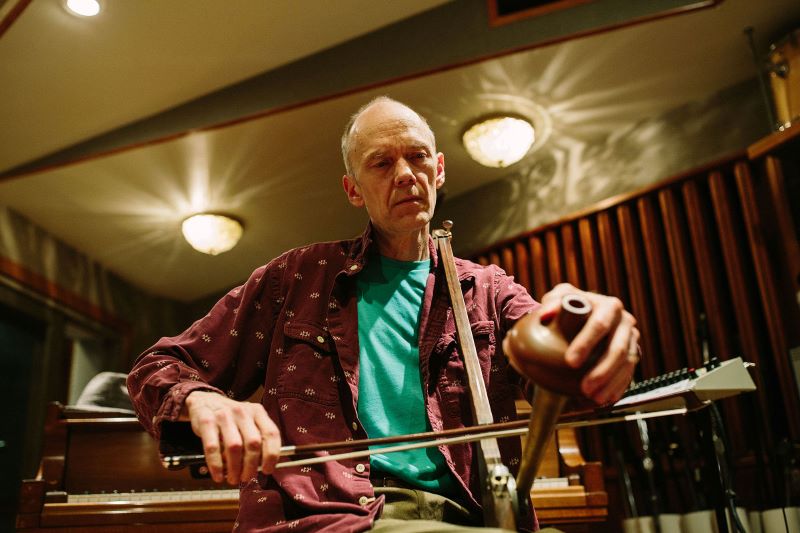
As a former trombonist, Roberts has always been attracted to the instrument’s possibilities (as can be heard on his debut solo album, Black Pastels) and Drye’s impeccable playing aligned perfectly with the composer’s ideas. The combination of trombone with cello and piano allowed Roberts to experiment with low pitch clusters, unique phrasing, and intonation, all of which brought a lot of energy to the music through their natural tension.

As the music for Science of Love began to emerge, Roberts was reflecting on the energies at work in the world and in the universe, from the wind rustling leaves in a tree to the consciousness shared between all human beings. His takeaway was that love was an important power in the universe and that artists are proponents in spreading that power through their work. These thoughts manifested in Roberts’s desires to push his work farther and to step into a more active role as a conduit for expressing these feelings.

Roberts’s initial phase of composing these pieces began by constructing series of chords or small melodies and expanding them day after day into larger frameworks. His level of focus propelled him into another level of preparation. Roberts’s move to New York and assembly of his Sextet brought the project full circle, as he had a regular outfit for rehearsals and performances where the pieces really began to bloom as he continued to sculpt them with the aid of the other musicians’ specialties.

Many of the compositions are extremely complex, the harmony and voicings meticulously arranged, extending farther and farther into organic abstractions, and balanced relative to traditional forms, as well. Even with this framework, Roberts wanted to maintain the instrumentality of improvisations. He created the materials but gave the performers the opportunity to more deeply clarify and expand their meanings.

The recording begins with “Sat/Sun Pa Tu X,” an amazing expansion of the piece “Saturday/Sunday” from Little Motor People (JMT, 1993) with a controlled added abstraction. “G” is a 14-piece suite of sorts that began as small piece that kept building. The titles reflect the codes that generated the pieces and, occasionally, descriptive elements of the pieces reflected by the performers. Among the many pieces, the leading “The Sharp Peak of The Science of Love” is a fantastic example of the breadth of the suite, with fantastic solos by Sacks and Drye that fit the drive of the music. Dynamic strings and close harmony highlight “Shifting Paradigms in Pre GLC 3,” while the slow “Shuffle of GLC Magnetic Floating Stripper” provides an intriguing dynamism for weaving the ensemble with McGinnis’s soaring soprano saxophone. The delicate “205” concludes the program with tart sentimentality.

A life change allowed Hank Roberts to undertake one of the most meaningful projects in his life. The journey may have begun as a move to New York City, but it evolved into something deeper, the fostering of new friendships and a new, collection of music. Science of Love is a testament to Roberts’s craft, perseverance, and ability to propel the power of love through music. 

1. SAT / SUN PA TU X
2. G - The Sharp Peak of The Science of Love
3. G - Human Circuits
4. G - One Floor Axis
5. G - Equatorial Conductivity
6. G - Earth Sky Realms
7. G - D23
8. G - Levity Village
9. G - Second First
10. G - Story
11. G - Shifting Paradigms In Pre GLC 3
12. G - GLC Magnetic Floating Stripper
13. G - 17
14. G - B45 L
15. G - Circular Rejuvenation
16. 205

Hank Roberts - cello
Brian Drye - trombone
Dana Lyn - violin
Mike McGinnis - clarinet, soprano saxophone
Jacob Sacks - piano
Vinnie Sperrazza - drums

Thursday, November 8, 2018

Ivo Perelman - Strings 1 & Strings 2 (LEO RECORDS November 16, 2018)


Ivo Perelman Reaches Into Distant & Recent Past,

Exploring Newly Forged Collaboration With

Violist Mat Maneri On Strings 1 & Strings 2

Double Disc Set Available

November 16 via Leo Records


In recent years, the irrepressible and inexhaustible tenor saxophonist Ivo Perelman has forged a special relationship with violist Mat Maneri, with whom he has recorded six albums since 2013. “When I play with him, I have the best of both worlds,” Perelman explains. “I have the wonderful sounds that a string instrument can produce – the bowing, the pizzicato, the sad timbre of the viola, the intimate sound; but I also get the wonderful phrasing of a woodwind player.” This no doubt owes to the influence of the violist’s father, the iconoclastic Boston-based saxophonist & clarinetist Joe Maneri. “I don’t have that relationship with anybody else that plays a string instrument,” adds Perelman, who remarked, after their first encounter, “it’s like each of us is playing both instruments at the same time.” 

This musical compatibility undergirds two new albums that inaugurate the saxophonist’s latest themed series of recordings. Strings 1 and Strings 2 (available November 16 via Leo Records) are the first of seven recordings, each of which showcases the core unit of Perelman and Maneri but in different settings formed by the addition of other artists. Perelman has previously employed a similar methodology to great success. In 2015, he issued five albums built around his relationship with drummer Gerald Cleaver. In 2016, he presented two separate projects in which he and his most frequent collaborator, pianist Matthew Shipp, welcomed varying combinations of bass, drums, and trumpet. Such projects present Perelman as a sort of experimental scientist, adding and subtracting reagents to affect the results, and they represent the most ambitious segment of his discography.

On Strings 1, Perelman and Maneri are joined by two admired violinists known for their improvisation, Mark Feldman and Jason Hwang. This creates, for all intents and purposes, a string quartet – except for the fact that here, the tenor saxophone stands in for the cello. While this quartet represents a unique grouping, it is nonetheless rooted in the distinct similarities linking the tenor and the cello. They share an almost identical written range and tonal color, from luscious mahogany in the low notes to a sweet chartreuse in the upper register; each instrument is considered the most “vocally” expressive instrument within its respective family. (In fact, you could say that the cello sounds something like a “tenor violin.”) What’s more, Perelman has previously stated his tendency for his saxophone playing to “mutate” in the presence of the violin family, saying, “I start to incorporate the bowing, the instruments’ phrasing, in my own playing.”

“I am particularly in love with this session,” Perelman admits now, “because I was not expecting anything like it at all. I thought that maybe this wouldn’t work, that maybe it was too many high-pitched violins. I never thought I would become the ‘cello’ anchoring it all down.”

As is the case with any Perelman album, the music on Strings 1 sprouts from total spontaneity, created with neither written music nor even any outline regarding themes, tempos, form, or harmonic movement. But the results seem anything but haphazard: motifs arise and spread, counterpoint blinks in and out of existence, and passage after passage raises the question of where improvisation ends and true composition begins.

Perelman has always had a strong affinity for the instruments that make up the violin family. The roots of this predilection extend to his youth: as a child in his native Saõ Paulo, Perelman played cello for several years before he turned to the saxophone, and the instrument still haunts him. As he explains when discussing Strings 2 – which marks his first partnership with a stand-alone cellist (as opposed to an earlier recording with the Sirius String Quartet) – he initially leaned toward excluding the instrument from any of the recordings in the “Strings” series. “When there’s a cello there,” he admits, “I kind of become a different animal, because I have sentimental values attached to it. Without the cello, I can work without distractions. Throw a cello in there, and it’s something else. The cello just drives me crazy. It’s a powerful thing; the deep, deep sound – it speaks to my soul immediately.”

Strings 2 features cellist Hank Roberts, whose extraordinary eclecticism – he has played traditional jazz, folk and country music, rock, and avant-garde improvisation – has allowed him to perform with artists ranging from Gary Burton and Rudy Royston, to Bill Frisell, to Sting, to Julius Hemphill and Tim Berne. Like Maneri, Roberts de-emphasizes traditional praxis in favor of expressivity, sublimating pyrotechnics to achieve an elegant balance of resolve and fragility. Strings 2 also marks Perelman’s first on-disc meeting with Ned Rothenberg, among the admired reed virtuosos in post-freedom improvisation, who plays bass clarinet on four tracks.

This represents another rare occurrence in Perelman’s extensive discography of 100-plus albums: until the 2018 release of Kindred Spirits and Spiritual Prayers, each of which comprised duo improvisations by tenor and bass clarinet, Perelman had previously recorded with another woodwind player only once. “This means so much to my development as an artist,” Perelman has said in describing the experience of working with bass clarinet. By including that instrument, along with the cello (his first great love) and the viola of Mat Maneri (another “kindred spirit”), Perelman has assembled a group that reaches into his distant and recent past to point his art in yet another new direction.

Tuesday, September 4, 2018

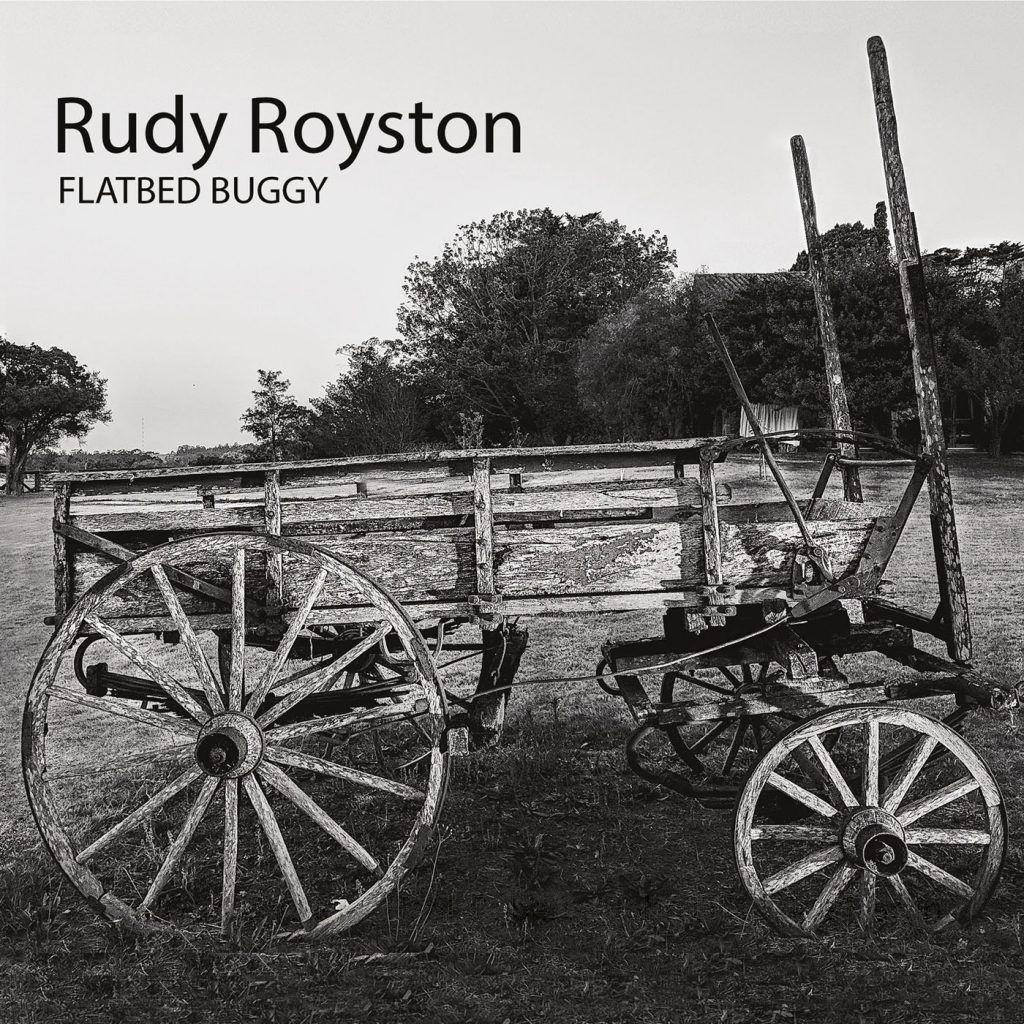
Rudy Royston - Flatbed Buggy (GREENLEAF MUSIC October 26, 2018)


Introducing Rudy Royston’s new record Flatbed Buggy

We’re announcing Rudy Royston’s third album as a bandleader. Flatbed Buggy features a new chamber-like quintet performing Rudy’s original compositions inspired by his youth growing up in Texas.

The album will be available worldwide on October 26


The new album, Rudy’s third as a bandleader, features thirteen original compositions for a new chamber-like quintet that includes Gary Versace (accordion), John Ellis (bass clarinet/saxophones), Hank Roberts (cello) and Joe Martin (bass).

Rudy Royston, first-call drummer with Bill Frisell, JD Allen, Dave Douglas and a host of other jazz greats, has honed a thoroughly engaging voice as a composer and bandleader with his compelling debut 303 (2014) and the raw and bracing trio follow-up Rise of Orion (2016). To these fine releases, both on Dave Douglas’ Greenleaf Music imprint, Royston now adds his third, Flatbed Buggy, rich in tonal contrast and mood yet steeped in the supple, enduring swing and groove that has driven his writing and playing from the start.

Right away the instrumentation is a striking departure: Royston leads a compact, almost chamber-like quintet featuring Gary Versace (accordion), John Ellis (bass clarinet/saxophones), Hank Roberts (cello) and Joe Martin (bass). “I was going for something that was more about melodies,” Royston declares. “I wanted to illustrate a story.” And indeed, the melodies flow forth on Flatbed Buggy, with rich harmony and surpassingly subtle orchestration and interplay occurring at every step as well.

Of the album title, Royston says: “Flatbed buggies to me mean country, they mean home, they mean earth. We lived in Denver but my father lived in Texas, and I would spend time in the country there. I remember riding on this kind of flatbed buggy thing when I was a child. The whole feeling that brought me … it was comforting, it was outside, this bitter shrubbery smell, my friends are there, my family’s there. So it’s about that, but the album also has to do with time: a time in my life, the beginning of things, the process of them. The buggy moving along up a road represents the movement of time. And the titles on the album really have to do with time and motion.”

The warmth and immediacy captured by Royston and the group, the unorthodox sound of the instrumental combinations themselves, marks Flatbed Buggy as a creative breakthrough. “Ron Miles is always my major influence,” the drummer offers, “because his music is so sing-able and melodically rich. I wanted that melodic quality but also moments underneath in the harmony where it was a little scratchy, a little dusty. My neighborhood in Texas was a little dusty.”

Together with the deep and woody instrumental timbres of Flatbed Buggy, there’s the way Royston keeps them continuously in play, beyond conventional jazz-combo roles: “I wanted us all to be constantly playing. I wanted us all to orchestrate or color or have a little input regardless of who is soloing. So if you check out the little stuff Hank is doing on Gary’s solos, for instance — all these neat little themes are happening. It sounds very orchestra-like for me. Some of it is written but 90 percent is those guys just interjecting their own taste into what’s going at the time.


At points in the program are short, rhythmically propulsive interludes — “Bed Boppin’,” “Dirty Stetson,” “Hold My Mule” (an old church expression), “I Guess It’s Time to Go” — that serve as what Royston calls “leaps of time.” “They remind you that you’re moving forward,” he says. “I hope there’s no ending on anything: a lot of these pieces fade out, because even when we pass away things still seem to be going forward somehow.”

In particular, the thematically related “Boy…Man” and “Girl…Woman” bring the passage of time further into focus, each a musical story not only of growth and maturation but eternal life: “That’s why I fade out, because it’s not about endings. It’s not like, ‘She lived her life and then passed away.’ It’s kind of like nothing ends, not yet.”

While Flatbed Buggy presents far more than a succession of virtuosic solos, the passion and technical depth of the performances themselves — including standout improvisations from all involved — can’t go unremarked. John Ellis, among the great saxophonists of his generation, plays mainly bass clarinet throughout, achieving a remarkable sound and impact. Gary Versace, a top organist and pianist of our time, is equally stunning on accordion, bringing a reedy melodic sustain and full harmonic weight to the music. On the low strings, whether bowed or pizzicato, Hank Roberts and Joe Martin contribute a wealth of subtlety and energy as well, intersecting and digging in, never in the expected ways. And Royston, even though he lays back and never dominates here (he notes there’s only one drum solo on the record), still offers what amounts to a master class on the jazz drummer’s art.

There’s an endless amount to discover: the melodic development and final triumphant letting-loose of the opening “Soul Train”; the hint of New Orleans rhythm in “Flatbed Buggy”; the picture of innocence in a young child twirling, on “Twirler,” with a startlingly brilliant tempo shift into slow swing; or the fast, twisty bop theme and soprano sax showcase of “Bobble Head” (where that lone drum solo crops up).

Another major statement is “The Roadside,” inspired by memories of a drive through wide open space in Texas, with great expanses of weeds and wildflowers. “It was very beautiful to be in the midst of all that,” Royston says. “It was moving, it was in motion, these flowers on the side of a dirt road, sprawled everywhere. My dad loved to fish, so we were driving somewhere to some pond, in the back of the country somewhere. The piece takes you back to that moment and reminds you that no matter where you are now, you’re on a journey someplace.”

PERSONNEL
Rudy Royston, drums
John Ellis, bass clarinet / saxophones
Gary Versace, accordion
Hank Roberts, cello
Joe Martin, bass

PRODUCTION CREDITS
Produced by Rudy Royston
Executive Producer: Dave Douglas
Engineered, edited and mixed by David Kowalski at Teaneck Sound Studios, Paramus, NJ, April 2018
Mastered by Kevin Blackler at Blackler Mastering, Brooklyn, NY, May, 2018
All songs by Rudy Royston (Rudy Royston Publishing / ASCAP)
Cover Design by Rudy Royston
Cover Buggy Photo by Isabella Oprete

TRACK DETAILS
1. Soul Train (9:44)
2. Bed Bobbin’ (0:35)
3. Flatbed Buggy (5:45)
4. boy…MAN (5:43)
5. Twirler (5:24)
6. Dirty Steson (0:32)
7. Hourglass (7:15)
8. Bobblehead (5:51)
9. The Roadside Flowers (6:54)
10. Hold My Mule (0:36)
11. girl…WOMAN (11:07)
12. I Guess It‘s Time To Go (1:35)
13: I Wanted To Be Home Soon (9:26) * Bonus track, Bandcamp download only

Check out the album’s title track, on Apple Music and Spotify.

Pre-order the album now on Bandcamp, iTunes, Amazon and you’ll receive the lead track instantly!

And watch for tour dates to be announced soon!

Enjoy the music!


Friday, June 1, 2018

Two New Recordings by drummer Phil Haynes with Dave Liebman, Drew Gress, Hank Roberts and Jim Yanda


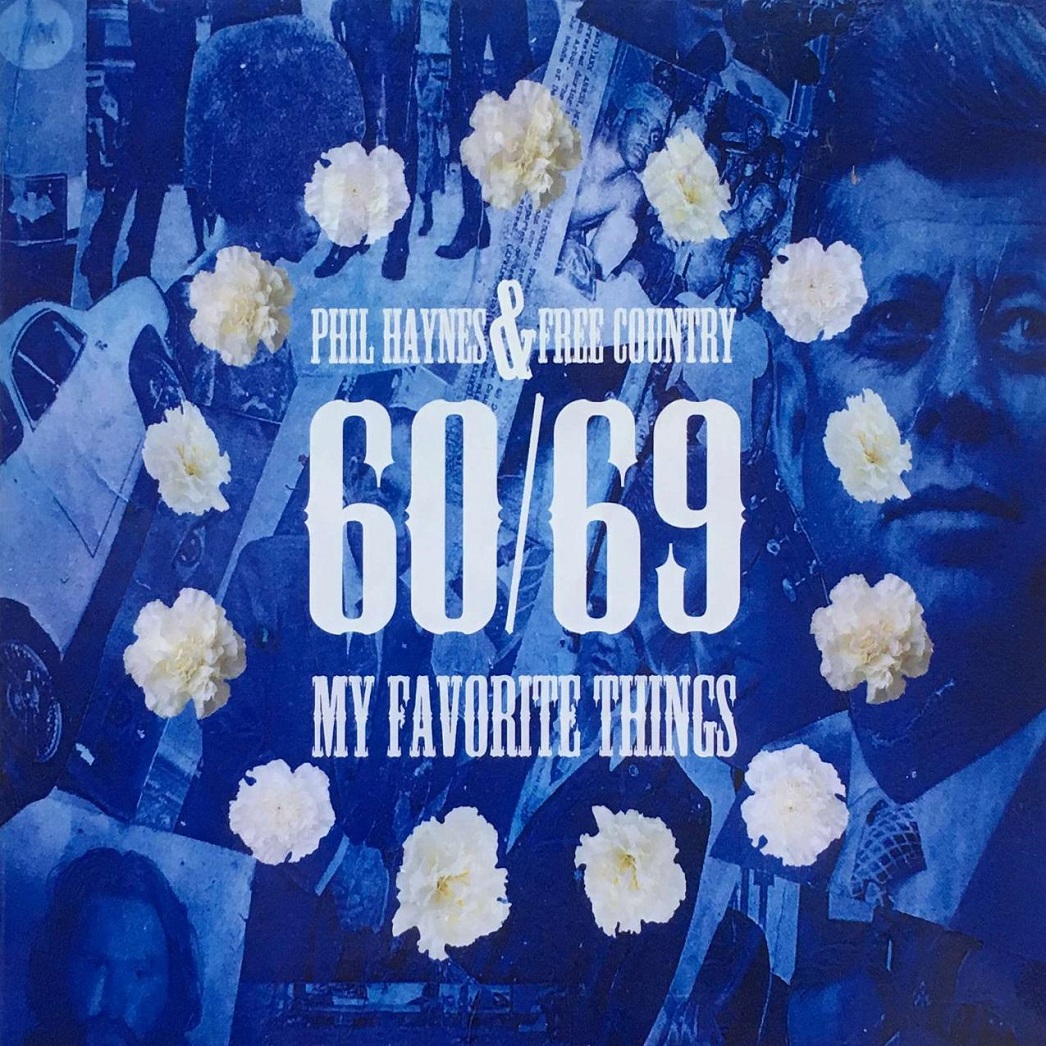
My Favorite Things (1960-1969) takes on The Beatles, Hendrix, Coltrane, James Brown and more with “jazz-grass” string band Free Country with Hank Roberts, Jim Yanda, Drew Gress

No Fast Food’s Settings For Three sparks inspired improvisation 
from bassist Drew Gress and NEA Jazz Master David Liebman

“[No Fast Food is] ridiculously good — One of the two best trios since the legendary Elvin Jones.”  
– CriticalJazz.com

“Just like Jack DeJohnette or Bob Moses, [Haynes] is broadening the beat by means of a significantly melodic component. You don’t have to be a prophet to foresee a great future.”
– Heinrich Oehmsen, Szene

It’s not that he has anything against whiskers on kittens, mind you, but these are a few of drummer Phil Haynes’ favorite things: creating in the moment with old friends, who just happen to be some of the most inventive improvisers on the scene; digging deep into the rich musical legacy of the 1960s; navigating original compositions that offer tricky surprises and wide open spaces, just perfect for inspired spontaneity. With a wide-ranging pair of new releases featuring his bands Free Country and No Fast Food, Haynes gets to indulge all of those faves alongside an amazing crew sure to make you forget any dog bites or bee stings. Both are due for release on June 1, 2018 through Corner Store Jazz.


My Favorite Things (1960-1969) concludes a trilogy by Haynes’ free-wheeling “jazz-grass” string band Free Country, where he’s joined by longtime collaborators Hank Roberts (cello and vocals), Jim Yanda (guitar) and Drew Gress (bass). Released over nearly two decades, the band’s three albums encompass nearly the entire history of American popular music in their own irreverent, stripped-down fashion: their 1999 debut focused on pre-1900 tunes from the Revolutionary War to Stephen Foster; The Way the West Was Won took on the first half of the 20th century, with cowboy songs and Hollywood movie soundtracks.

The concluding chapter narrows the focus to a single decade, but what a decade: over the course of two discs, the quartet takes on everything from John Coltrane, The Beatles and Jimi Hendrix to Burt Bacharach and the theme from Star Trek – as Haynes himself puts it, “you’ve got everything from schmaltz to the highest art.”

Beyond the fact that the ‘60s were the formative years for the band’s members, the decade is so ripe for extensive reinvention because, Haynes explains, “It was our last cultural revolution. This is the last decade that everybody agrees on, so this is a look at that psychedelic, diverse musical landscape. We face many of the same questions now that we faced then, and it will be interesting to see if there’s another social revolution.”

If there is, Free Country is here to provide the soundtrack. With Roberts’ wry baritone, the knotty interaction of the strings, Haynes’ loose-limbed, evocative percussion, and a profound conversational spark forged over decades of collaboration and the magical live sound born of recording in the round, the band captures the spirit of the 1960s with the urgency of now. “The ‘60s had this great American outpouring of creativity,” Haynes says. “There was music that everybody shared: Santana and The Beatles knew about A Love Supreme, from Hendrix to what Bernstein did on Broadway, everything was changing. This band focuses all those things into one sound.”


On the opposite end of the creative spectrum, No Fast Food, with Gress and NEA Jazz Master David Liebman, was formed as an outlet for Haynes’ compositions. The trio’s third album, Settings For Three, is their first not recorded in concert but carries the electricity of their live performances into the studio. As the straightforward title implies, the intent was simply to provide fodder for the three musicians’ estimable improvisational gifts, or as Haynes puts it, “I wanted to give the guys some new settings to play in and also familiar territory to romp in.”

The opening track, “El Smoke,” takes its name and inspiration from a different group – Haynes’ collective quartet Joint Venture, where he and Gress are joined by saxophonist Ellery Eskelin and trumpeter Paul Smoker. Of course, No Fast Food make it utterly their own, ranging from the atmospheric to the rhapsodic over the track’s ten minutes. Haynes has written lyrics for the second tune, “Joy,” though they’re not sung on the recording. No matter, as Lieb and Gress seem to have absorbed the composer’s poetic meaning, which looks at the many different sides of joy, from the outwardly ecstatic to the more profound and complicated. 

“There’s joy as we know it,” Haynes says, “but then there are all these other shadow aspects of joy. I really appreciated how the guys played on it because they reveal those different depths: not just that first expression but then all the ripples that happen beyond that.”

Speaking of multi-faceted, the blues offers an endless supply of variations and possibilities, and that’s certainly the case with the wide-open “Blue Dop.” High-spirited and grooving in this rendition, it’s a piece that suggests myriad approaches and changes each time the trio launches into it. The onomatopoeic “Whack Whap” shows off the mirth and humor that the three can share, a wild avalanche of sounds and sonic surprises.

“Longer Shorter” pays homage to Wayne Shorter, taking the legendary saxophonist’s composition “Pinocchio” as a starting point. The hard-driving, sharp-angled tune nods toward Liebman’s history with Miles Davis and Elvin Jones while spotlighting his singular approach to the soprano. The ballad “String Theory,” which kicks off with Liebman conjuring fluttering bird calls on flute, is a vehicle for Gress’ poignant arco emoting. To close the album, “Shramba” takes a different twist on the samba, progressing through all twelve keys over Haynes’ rollicking rhythmic bed.

Through the simultaneous release of these two thrilling albums, Haynes provides a study of two facets of his expansive musical personality. Both are wildly inventive and thrive on the personal interactions of the musicians involved, but where My Favorite Things is subversively accessible, Settings For Three is an enticing challenge. “You’ve got one group where the universe is the option,” Haynes says, “and another group where the microcosm is the universe. They’re very different kinds of playing yet you look for freedom in both.”


Phil Haynes

A veteran artist based in New York for 25 years, drummer/composer Phil Haynes is featured on more than 70 releases from numerous American and European record labels.  His collaborations include many of the seminal musicians of this generation: saxophonists Anthony Braxton, Ellery Eskelin, and David Liebman; trumpeters Dave Douglas, Herb Robertson, and Paul Smoker; bassists Mark Dresser, Ken Filiano, and Drew Gress; keyboard artists David Kikoski, Denman Maroney, and Michelle Rosewoman; vocalists Theo Bleckman, Nicholas Horner, and Hank Roberts; violinist Mark Feldman, and the composers collective Joint Venture. His current projects include the romantic “jazz-grass” string band, Free Country; the saxophone trio No Fast Food; bluesy power organ unit The Hammond Brothers, featuring young B-3 master Paul Bratcher; and the classic piano trio Day Dream, a cooperative with Yamaha artist Steve Rudolph.


Saturday, August 13, 2016

Gordon Grdina's Oud Trio - Live at Shapeshifter (2016)


Gordon Grdina, Compositions / Oud 
Hank Roberts, Cello 
Mark Helias, Bass

1. Morning Moon 11:18
2. Hope in Being 09:35
3. Cluster 07:28
4. Traore 10:05

Juno award winner Gordon Grdina is a Oud/Guitarist whose sound is a combination of his interests in mainstream jazz, free- form improvisation and Arabic classical music. Out of Vancouver GG Trio, Qalandar, Haram and Peregrine Falls. Out of NYC The Gordon Grdina Quartet with Oscar Noriega, Russ Lossing, and Satoshi Takeishi, The Oud Trio with Hank Roberts and Mark Helias, and Ismaily/Grdina/Maneri.

BUY THIS ALBUM