Send For Me, Out April 1, 2022 via Dot Time Records
Release Tour Kicks off February 4 through May 13
“One of jazz’s most celebrated vocalists…a dogged song sleuth with a vast and varied book of salty blues, swooning ballads, pre World War II pop tunes, and vintage R&B.”
– San Francisco Chronicle
“At a moment when the world can seem out of balance, it’s still possible for a musician to project a groundedness and a joy…a strength, good humour and intelligence…”
– New York Times
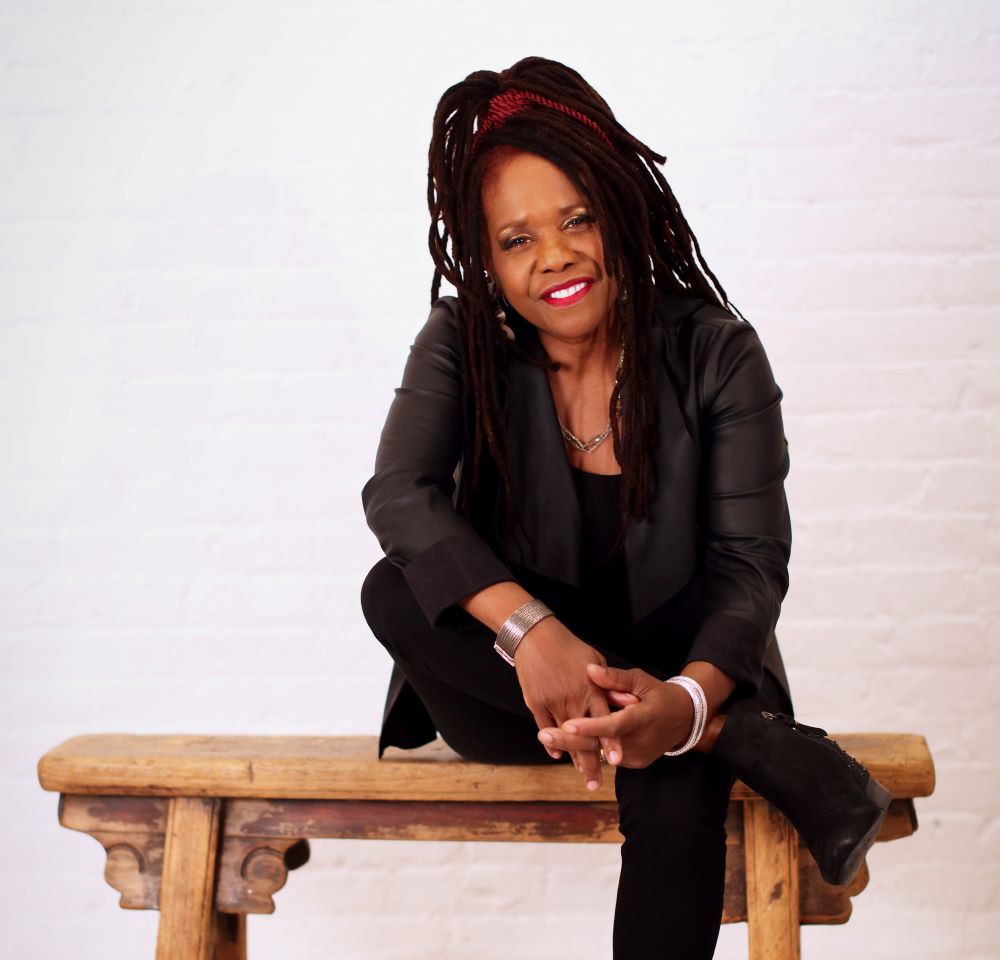
GRAMMY®-nominated vocalist Catherine Russell, when asked to characterize her new album, Send For Me, replied, “I love romance that swings.” Due out on April 1, 2022 via Dot Time Records, Send For Me features a baker’s dozen of newly recorded tunes on her eighth album as a leader, meeting a simple exacting standard. “Songs that inspire or touch me in some way. When I find a song I like, it haunts me until I learn it.” Her mission is finding songs that you might not have heard but deserve attention.
Russell’s deep connection to her chosen material is part of a calling. As the daughter of pioneering and legendary musicians, pianist/orchestra leader/composer/arranger Luis Russell, and bassist/guitarist/vocalist Carline Ray, Catherine Russell was born into jazz royalty. In culling material for her new album from the likes of Billie Holiday, Nat King Cole, Luis Russell, Betty Carter, Kay Starr, Joe Liggins, Earl King, Jack Teagarden, Helen Humes, Frank Sinatra, Dakota Staton, Henry Red Allen, and Louis Armstrong, the vocalist swims in familiar waters. She sings a language that comes naturally, furthering a profound legacy.
Send For Me is a follow up to Russell’s 2019 release Alone Together, which received a GRAMMY® nomination for Best Jazz Vocal Album, and landed on the JazzWeek year-end radio chart as the #1 most played album. “I like to invite the people in,” she says of her new album, which is also her philosophy of performing live. The album is an invitation, welcoming the audience to come along on a journey.
“Send For Me”, the title track, was first recorded by Nat King Cole, and became a crossover hit in 1957, reaching #1 on the U.S. R&B charts, and #6 on the U.S. Pop Chart. “Nobody thinks of Nat King Cole as a blues singer, but he sang some really great blues,” observes Russell.
“At The Swing Cats Ball” has a strong family connection. Russell recalls, “My mother had given me sheet music a long time ago, saying, ‘your father co-wrote this tune, and Louis Jordan covered it.’” The song was among the first recordings by Louis Jordan. Luis Russell never recorded his tune, although he performed it on gigs. “We found a live version performed by my dad’s orchestra on a radio broadcast, and we adapted his arrangement. I love the image of people going to a swing dance.”
Another highlight is “Make It Last,” a gorgeous standard written by Dick Haymes and Bill Paxton, made famous by Betty Carter in 1958. “A good friend of mine sent me “Make it Last” and when I heard it I said, ‘wow, this is another great tune with an interesting chord progression, and a Melba Liston horn arrangement.’ Another connection: Russell’s mother worked with trombonist/arranger Liston and a young Russell had seen Betty Carter perform, leaving a great impression. “Make It Last” is about holding onto what’s really important, and hoping it will continue. “It’s not wanting to lose a beautiful moment, because tomorrow the moment may be gone,” the singer reflects.
“Going Back To New Orleans” was written and originally recorded by Joe Liggins, who shared bills in the late 1940s with both Luis Russell and His Orchestra and The International Sweethearts of Rhythm, including Catherine’s mother, Carline Ray, on guitar and vocals. Interestingly, these intersections happened years before Luis Russell and Carline Ray first met in 1955; Luis was 23 years her senior and they married before Catherine was born in 1956.
Russell’s professional life began at age 7, when she first took the stage as a dancer with Katherine Dunham’s company for four seasons at The Metropolitan Opera’s production of Aida. After graduating with honors from the American Academy of Dramatic Arts, she was fortunate to work with David Bowie, Steely Dan, Cyndi Lauper, Paul Simon, Jackson Browne, Michael Feinstein, Levon Helm, Wynton Marsalis, Dr. John, Rosanne Cash, Toshi Reagon, and Carrie Smith, among others. Russell performed extensively as a backup singer, multi-instrumentalist, and lead singer, before launching her solo recording career in 2006. She amassed decades of experience touring and recording with cutting edge songwriters and iconic artists, appearing on over 200 albums.
Co-producers Katherine Miller, Paul Kahn and Catherine Russell, the team behind Russell’s albums, Alone Together (2019) and Harlem On My Mind (2016), both GRAMMY® nominees for Best Jazz Vocal Album, are reunited on Send For Me, their 6th album together. The winning streak began with Inside This Heart of Mine (2010), which reached #1 on iTunes and Amazon jazz charts. Strictly Romancin’ (2012) was awarded the Prix du Jazz Vocal (Vocal Album of The Year) by the French Jazz Academy and Grand Prix du Hot Club de France. Her fifth solo album, Bring It Back (2014), received a 5 Star Review in Downbeat Magazine.
Significant film and TV credits include Russell contributing the song, “Crazy Blues,” as a featured artist on the 2012 GRAMMY® winning soundtrack album of the HBO series, Boardwalk Empire. In 2017, she performed the song on PBS-TV’s Great Performances special, ‘Grammy Salute To Music Legends’. In 2019, she had a cameo in the feature film Bolden, a biopic about jazz pioneer Buddy Bolden, while also contributing lead vocals on two songs to Wynton Marsalis’s soundtrack album.
Russell’s versatility shines through on an array of new recordings released over the past 18 months. She added harmony vocals on albums by Sarah Jarosz (a GRAMMY® Award winner for Best Americana Album in 2021), Brett Eldredge, and Little Feat, while also contributing a song on renowned banjo player Tony Trischka’s new album Shall We Hope. In addition, she appeared as a guest lead vocalist on albums by Andy Farber and His Orchestra (Early Blue Evening), reedman Evan Arntzen (Countermelody), and on Steven Bernstein’s MTO featuring Catherine Russell, Good Time Music, the second album in the four-part Community Music series by trumpet player and arranger, Steven Bernstein. Russell continues to tour with Steely Dan, as recently as in the fall of 2021, and she sings on two new releases including Northeast Corridor Live! and a live version of the acclaimed album by Donald Fagen, The Nightfly Live.
Sixteen years into her solo career, Catherine Russell is on the move. Her band, including guitarist/musical director Matt Munisteri, pianist Mark Shane, bassist Tal Ronen, and drummer Mark McLean, has performed at major festivals on four continents, while also selling out concert halls from SFJazz Miner Auditorium in San Francisco, to Zankel Carnegie Hall in New York City, to Tchaikovsky Hall in Moscow. In addition, Catherine has appeared as a featured vocalist with today’s leading big bands and symphony orchestras including the Jazz at Lincoln Center Orchestra with Wynton Marsalis, Vince Giordano’s Nighthawks, Count Basie Orchestra, Andy Farber and His After Midnight Orchestra, Knoxville Jazz Orchestra, Jazz Philharmonic Orchestra of St. Petersburg, Russia; Miami’s New World Symphony, The Philly Pops, and The Pasadena Pops Orchestra. Most recently, Russell joined forces with John Pizzarelli to perform a salute to Billie Holiday and Frank Sinatra.
As Catherine sings on the title track of her new album, “Anywhere, Oh Yeah, Send For Me, and I’ll be there.”
1. Did I Remember (Harold Adamson, Walter Donaldson)
2. Send For Me (Ollie Jones)
3. At The Swing Cats Ball (Luis Russell, William Campbell)
4. Make It Last (Dick Haymes, Bill Saxton)
5. Going Back To New Orleans (Joe Liggins)
6. If I Could Be With You (James P. Johnson, Henry Creamer)
7. You Can Fly High (Earl King, John Vincent)
8. East of The Sun (and West of the Moon) (Brooks Bowman)
9. In The Night (Norman Mapp)
10. You Stepped Out of A Dream (Nacio Herb Brown, Gus Kahn)
11. Blue And Sentimental (Count Basie, Mack David, Jerry Livingston)
12. Sticks and Stones (Cavanaugh/Razaf/Palmer)
13. Million Dollar Smile (Porter Roberts, Lionel Hampton)
Upcoming Catherine Russell Tour Dates 2022
Feb 4-5 / The Lift at Cascade Village/ Durango, CO
Feb 14-19/ Birdland / New York, NY
Mar 9-10 / Jazz St. Louis / St. Louis, MO
Mar 15 / Theatre at Renovation Square / Rochester, NY
Mar 16 / Sarasota Jazz Festival / Sarasota, FL
Mar 18-19 / Jazz Forum / Tarrytown, NY
Mar 24 / Carnegie Hall / New York, NY
Mar 26 / Rose Theater, Jazz at Lincoln Center / New York, NY
Mar 31 / Jimmy’s / Portsmouth, NY
Apr 1 / Scullers / Boston, MA
Apr 8 / Modlin Center for The Arts / Richmond, VA
Apr 14-17 / Jazz Alley/ Seattle, WA
Apr 19 / Yoshi’s / Oakland, CA
Apr 20 / Kuumbwa Jazz / Santa Cruz, CA
Apr 21 / Irvine Barclay Theatre / Irvine, CA
Apr 29 / Festival Hall / Greensboro, GA
May 6 / Kupferberg Center for The Arts / Queens, NY
May 7 / Kingsborough Community College / Brooklyn, NY
May 13 / Kleinhans Music Hall / Buffalo, NY
Catherine Russell · Send For Me
Dot Time Records · Release Date: April 1, 2022