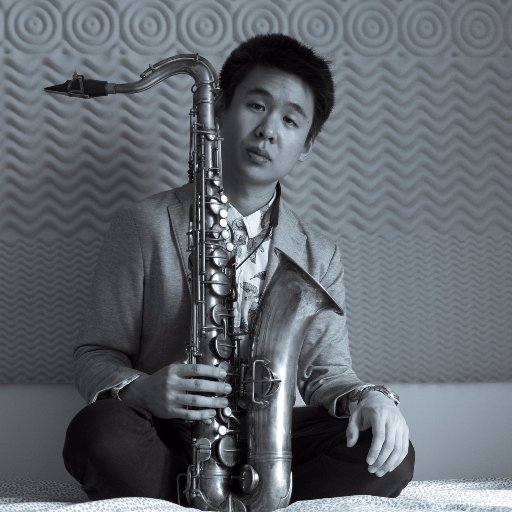
Showing posts with label Kevin Sun. Show all posts

Sunday, January 2, 2022

Kevin Sun - 3 Bird (endectomorph music)

<3 BIRD is Kevin Sun’s love letter to the towering father of modern jazz, Charlie Parker. In a concise but wide-ranging program of 12 original compositions and three arrangements, Sun draws electrifying and futuristic conclusions from Parker’s musical innovations.

With <3 BIRD, Sun proves himself a formidable contributor to the continuing legacy of Parker’s music in this new century. In doing so, he also shares his vision for future directions in jazz and even more creative work to come.

"An outstanding recording...The album acknowledges the past, lives in the present and looks to the future... The spirit of Charlie Parker is very much alive on this one, an album that seems to bring new discoveries with every listen. Highly recommended.”
– Miguel Zenón, saxophonist/composer

★★★★☆
— DownBeat Magazine (December 2021)

"...an engaging, delightful excursion into Birdology"
– Hot House Jazz Guide

"Of all the centennial tributes to Charlie Parker that did or did not happen, I can’t think of one that honors the protean and soaring spirit of Charlie Parker more appropriately than Kevin Sun’s does here"
— Let's Call This

"...tremendous compositional acuity and flawless execution."
— JazzTrail

“...radically inventive original compositions inspired by Charlie Parker.”
— Jazziz

"..utterly brilliant."
– Art Music Lounge

"...Birding it up all so ingeniously."
— Marlbank

"Finally, a jazz tribute album that doesn't try to put arms on the Venus de Milo."
– Jay Harvey Upstage

"It is clear Sun has spent some serious time thinking about his approach to Parker’s work."
— London Jazz News

"...Sun captures the spirit of Charlie Parker so much so that young hipsters won't know the originals from the covers."
– Midwest Record

"However you categorize it, though, this is classy music."
– Music Street Journal

"...ένα πολύ μελετημένο άλμπουμ σύγχρονης και απαιτητικής jazz"
– Vinyl Mine

"...alle Bebop-beschlagen, eloquent und mit einer modernen, ebenmässig glatten Coolness."
– Jazz'N'More

"...det tok kun kort tid å skjønne at Sun hadde gått inn i Charlie Parkers univers på et helt spesielt vis og tatt det videre slik utvilsomt Bird ville satt pris på."
– Nettavisen

"...det hele er bare deilig!"
– salt peanuts*
1. Greenlit 04:16 video
2. Adroitness, Part I 01:22
3. Adroitness, Part II 02:41
4. Composite 01:36
5. Onomatopoeia 03:49
6. Dovetail 07:02
7. Cheroot 02:13
8. Du Yi's Choir 05:24
9. Big Foot 04:41
10. Sturgis 01:42
11. Schaaple (Intro) 00:44
12. Schaaple from the Appel 04:30
13. Salt Peanuts 03:50
14. Arc's Peel 01:00
15. Talck-overseed-nete (Klact-oveereds-tene) 04:07

Kevin Sun ⋅ tenor saxophone & clarinet*
Adam O’Farrill ⋅ trumpet (1, 10, 11, 12, 13)
Max Light ⋅ guitar (5, 8, 15)
Christian Li ⋅ piano & Fender Rhodes (2, 3, 4, 6, 9, 13)
Walter Stinson ⋅ double bass
Matt Honor ⋅ drums

*sheng on “Du Yi’s Choir” only

Recorded by Aaron Nevezie at The Bunker Studio, Brooklyn, NY on February 26 & 27, 2021 ⋅ Mixed by Juanma Trujillo ⋅ Mastered by Eivind Opsvik at Greenwood Underground ⋅ Produced by Kevin Sun ⋅ Art direction and photography by Kevin Sun ⋅ Layout and additional photography by Diane Zhou

All songs composed by Kevin Sun (The Kevin Sun Music / ASCAP) except the following, arranged by Sun:

“Big Foot” and “Klacto-veereds-tene,” composed by Charlie Parker
“Salt Peanuts,” co-composed by Dizzy Gillespie and Kenny Clarke

Tuesday, August 31, 2021

Kevin Sun - 3 Bird (August 2021 endectomorph music)

<3 BIRD is Kevin Sun’s love letter to the towering father of modern jazz, Charlie Parker. In a concise but wide-ranging program of 12 original compositions and three arrangements, Sun draws electrifying and futuristic conclusions from Parker’s musical innovations.

With <3 BIRD, Sun proves himself a formidable contributor to the continuing legacy of Parker’s music in this new century. In doing so, he also shares his vision for future directions in jazz and even more creative work to come. 

1. Greenlit 04:16
2. Adroitness, Part I 01:22
3. Adroitness, Part II 02:41
4. Composite 01:36
5. Onomatopoeia 03:49
6. Dovetail 07:02
7. Cheroot 02:13
8. Du Yi's Choir 05:24
9. Big Foot 04:41
10. Sturgis 01:42
11. Schaaple (Intro) 00:44
12. Schaaple from the Appel 04:30
13. Salt Peanuts 03:50
14. Arc's Peel 01:00
15. Talck-overseed-nete (Klact-oveereds-tene) 04:07

Kevin Sun ⋅ tenor saxophone & clarinet*
Adam O’Farrill ⋅ trumpet (1, 10, 11, 12, 13)
Max Light ⋅ guitar (5, 8, 15)
Christian Li ⋅ piano & Fender Rhodes (2, 3, 4, 6, 9, 13)
Walter Stinson ⋅ double bass
Matt Honor ⋅ drums

*sheng on “Du Yi’s Choir” only

All songs composed by Kevin Sun (The Kevin Sun Music / ASCAP) except the following, arranged by Sun:

“Big Foot” and “Klacto-veereds-tene,” composed by Charlie Parker
“Salt Peanuts,” co-composed by Dizzy Gillespie and Kenny Clarke

Recorded by Aaron Nevezie at The Bunker Studio, Brooklyn, NY on February 26 & 27, 2021
Mixed by Juanma Trujillo
Mastered by Eivind Opsvik at Greenwood Underground
Produced by Kevin Sun
Art direction and photography by Kevin Sun
Layout and additional photography by Diane Zhou

Sunday, February 4, 2018

Saxophonist / Composer Kevin Sun Creates Compelling New Music on his Solo Leader Debut, Trio

Due out Feb. 2, 2018, Trio features bassist Walter Stinson and drummer Matt Honor on a set of Sun's thrillingly complex compositions, devised from close study of the jazz tradition

Kevin Sun - Trio

"[Kevin] Sun is... clearly a player who sees the big picture and his evolving place within it."
-David R. Adler, The New York City Jazz Record

"Kevin Sun is a full-throated, rapturous tenor man." -Jerome Wilson, All About Jazz

It's something of a cliché - though no less true for it - for gifted musicians to proclaim themselves to be perpetual students, their accomplishments achieved in part through a lifelong appetite for learning and new experiences. While still in the early stages of an incredibly promising, already impressive career, saxophonist Kevin Sun has more then taken that idea to heart. A tireless student of the jazz tradition, Sun has dedicated himself to dissecting the music of his forebears with a scientific precision, only to reassemble the pieces in new ways as only the most instinctual of artists can do.

On his first album under his own name, Trio, Sun puts the results of his intensive studies into thrilling practice, crafting era-spanning compositions that are as propulsive and swinging as they are intricate and challenging. The titular trio teams Sun, on tenor as well as clarinet and the rarely-seen C-melody saxophone, with bassist Walter Stinson and drummer Matt Honor, two peers from the contemporary New York City jazz scene.

Trio, set for release February 2, 2018 on Sun's own Endectomorph Music, follows equally adventurous releases by two collective quartets, Great on Paper (with drummer Robin Baytas, bassist Simón Willson and pianist Isaac Wilson) and Earprint (with Simón Willson, trumpeter Tree Palmedo and drummer Dor Herskovits). Here, though, the vision is entirely Sun's, though his complex writing leaves Stinson and Honor ample opportunity to show off their estimable skills.

"Composing for three voices, I feel like I can really challenge myself," Sun says. "There's plenty of room to make something happen when you have three musicians interacting with each other. I picture it as a triangle versus a square: it's still very sturdy, but you have to give it a point."

There's no lack of sharp edges on Trio's dozen jaw-dropping compositions (supplemented by a pair of fiery free improvisations captured in the wee hours of an all-day recording session). While to the listener these songs offer knotty melodic lines and shape-shifting rhythms that are tricky but enticing to navigate, for Sun, each one posed a unique challenge. Captivated by the higher-order writing of modern jazz innovators like Steve Coleman, Vijay Iyer, and Steve Lehman, Sun conceived of the music on Trio as a way of summoning similarly advanced music from his own pen. The trio itself, with Stinson and Honor, was originally assembled to workshop that music - it was only when they realized the chemistry they shared together that it evolved into a working group.

"I was thinking of people who I thought would be willing to get together a lot and really dig into the music," Sun says. He had shared bandstands in the past with both Stinson and Honor, and soon found that both shared his own enthusiasm for plumbing the depths of his compositions.

That scholarly approach has served Sun well, both in his education at Harvard College and New England Conservatory, in his studies with master composers Miguel Zenón and John Hollenbeck, and beyond, in his own research. He's been noted for his solo transcriptions, having published more than 120 on his blog by the likes of John Coltrane, Steve Coleman, Joe Henderson, Clifford Brown, and Vijay Iyer.


"I work on inhabiting the sound, the beat, and the vibe of the musicians I transcribe," Sun says, a practice he learned from Zenón as well as tenor saxophonist Mark Turner. "Coming from an oral tradition like jazz, you want to be able to communicate the details that convey the feeling that comes out of the great playing of those musicians. Ideally you'd get that in person, but when many of them are no longer around, the next best thing is to listen to, say, Lester Young recordings and try to generate the same excitement."

Beyond simply striving for the sound of such masters, Sun has recently begun to delve into emulating their gear. He recorded Trio with an instrument almost identical to that played by Lester Young on his classic recordings with Count Basie - a gold-plated Conn New Wonder sax and an early metal Otto Link mouthpiece. He began to experiment with the C-melody for a similar reason, as the instrument as played by virtuoso Frankie Trumbauer was a not insignificant influence on Young's sound.

Though the ensuing sound links him to a tradition that weaves circuitously from Young through more modernist players like Lee Konitz and Warne Marsh, Sun's voice is wholly his own. That's evident from the breathy, insistent notes that open "Transaccidentation," a piece that takes fragments of harmonic ideas from Charlie Parker's "Confirmation." Bird is also an inspiration behind the drum chant of "Find Your Pose" as well as "Air Purifier," a play on Parker's "Air Conditioning" that also pays homage to the modern appliance crucial to living in Beijing, China, where Sun spends time each year when not in his Brooklyn home.

Sun's supple clarinet can be heard on the mysterious "Loading Screen" and the elegiac "Deliver the Keys." The C-melody comes to the fore on the album's sole standard, "All of Me," which most clearly shows how Sun has reimagined Lester Young's sound in a 21st-century context, and on the first of the two completely improvised tracks - "One Never Knows Now" and "Does One, Now Does One, Now Does" - which take their curious titles from a story by the late David Foster Wallace.

The taut, wiry "Three Ravens" was originally written as an etude, while "Bittergreen" is a negative reharmonization of "Sweet Georgia Brown." The waltz is abstracted on "Ballroom Dancing," the brutal "Misanthrope" delivers heavy metal intensity, and "Announcements" offers an unconventional setting for every concert's obligatory band introductions. Finally, "Thunder" ends the album on a starkly expressive note.


1. Transaccidentation
2. Loading Screen
3. Three Ravens
4. One Never Knows Now
5. Does One, Now Does One, Now Does
6. Find Your Pose
7. Air Purifier
8. Bittergreen
9. Deliver the Keys
10. Ballroom Dancing
11. Misanthrope
12. Announcements
13. Thunder

Kevin Sun – tenor saxophone, c-melody saxophone, clarinet
Walter Stinson – bass
Matt Honor – drums


A saxophonist, improviser, composer, and blogger, Kevin Sun has studied composition with Miguel Zenón and John Hollenbeck, and cites contemporary composers such as Steve Coleman, Vijay Iyer, Miles Okazaki, Henry Threadgill, Steve Lehman, and Mark Turner as key influences. Currently based out of Brooklyn, New York, Sun performs with the collective quartets Great On Paper and Earprint and has shared the stage with Vijay Iyer, James Moody, Kenny Burrell, Dave Liebman, and Rich Perry, among others. He is an active contributor to Jazz Speaks, the official blog of The Jazz Gallery, where he has conducted interviews with artists such as Herbie Hancock and Joshua Redman. His blog on jazz and literature, A Horizontal Search, has been recognized by National Public Radio's A Blog Supreme and Ethan Iverson's Do the Math.

Sunday, September 18, 2016

EARPRINT - EARPRINT (October 21, 2016) ENDECTOMORPH MUSIC


Saxophonist Kevin Sun, trumpeter Tree Palmedo, bassist Simón Willson, and drummer Dor Herskovits merge diverse backgrounds and inspirations

"Earprint is a joy to listen to. Really great music and playing by everyone, with lots of highlights. Will definitely be on my playlist for a while." - saxophonist/composer Miguel Zenón

"[Kevin] Sun is... clearly a player who sees the big picture and his evolving place within it." -David R. Adler, The New York City Jazz Record

"[Simon] Willson is a serious bassist with all the right influences." - Ethan Iverson


CD Release Concerts  o October 25 at The Jazz Gallery, NYC 
o November 13 at Riverwalk, Nashua, NH


Fired by a shared passion for challenging but engaging music, Earprint has quickly forged a sound with what its members refer to as an "aggressively melodic, shamelessly youthful approach." The explosive quartet's self-titled debut, due out October 21 on Endectomorph Music, displays creative invention, intricate composition, and raw combustibility in equal measure.

The chordless collective brings together four musicians from diverse backgrounds: saxophonist Kevin Sun comes from picturesque New Jersey and trumpeter Tree Palmedo from the grayer Pacific Northwest. Bassist Simón Willson hails from Santiago, Chile, while drummer Dor Herskovits was born and raised in Israel. Despite their far-flung histories, the quartet established an immediate rapport while studying together at Boston's New England Conservatory, and Sun encouraged them to work together - and to challenge one another.


"I wanted to put something together where I could really work on writing difficult music," Sun explains, a desire prompted by such inspirations as Steve Coleman, Vijay Iyer, John Hollenbeck, and Sun's mentor, saxophonist-composer Miguel Zenón. "One thing about being in school is that you can rehearse an insane amount; I could write music that was as hard as I wanted it to be and, eventually, we could make it happen."

Perhaps most impressive about the group's music is that, despite the level of virtuosity demanded to play it, listening to it is anything but an abstruse experience. All four members of Earprint contribute memorable tunes, whose hairpin twists and turns inspire spirited improvisations. The lack of a chordal instrument provides ample space and freedom, which the quartet seizes with bravado.
"We're all players that like to take chances and feel free to venture out to different places in the music, and that's really allowed when there's that space between us," says Herskovits. "After a while, it felt like we could play anything. Eventually it didn't matter if the music was complex or simple - it was all something that we could hear naturally and that felt amazing to play."

The darting horn lines of Sun's "Nonsense" open the album. Written years ago while the saxophonist was participating in the Banff International Workshop in Jazz and Creative Music in the scenic mountains of Alberta, Canada, the piece is a densely layered miniature that serves as a jaunty and odd-angled introduction to the quartet. It's followed by Herskovits's Ornette Coleman-inspired "Happy," where the punchy, speech-inspired melodies and whiplash shifts capture the titular mood, however idiosyncratically.


The title of Willson's "School Days" acknowledges Earprint's beginnings in the halls of NEC, but shares its name with a painting by the late Boston-based, African-American artist Allan Rohan Crite. The color and sense of movement in that piece was a direct model for Willson's taut, supple composition. Sun wrote "Boardroom" from a less obviously inspirational source: after playing a background music gig for a corporate function (hey, those student loans aren't gonna pay themselves), he found himself stuck listening to a litany of quarterly earnings and projected revenues, so he turned those droning numbers into a far more interesting musical equivalent.

Sun's meditative "The Holy Quiet" was inspired by the tragic shootings in Charleston; the piece captures the sorrow and anger invoked by the terrible incident with a percussive clamor featuring both Sun and Palmedo joining Herskovits, while Willson intones a harrowing bowed howl. A driving rock beat fuels Palmedo's more light-hearted tune "The Golden Girder Strikes Again," a fanfare for the "brutish elegance" of an imaginary supervillain whose body has been replaced by a mass of gold-plated support beams.

Sun's "Malingerer" is the album's most spacious piece, featuring a slowly accumulating melody and a languorous air but ending with an unexpectedly vigorous conclusion. The alternately methodical and frenetic "Clock Gears" is Herskovits's sonic portrait of the intermeshed workings of a clock mechanism, while the aptly named "Anthem" is the result of a task that Sun set for himself, scrawled in an old notebook and later rediscovered: to write an "anthemic, two-horn song." Voilà.

Sun's sprightly "Colonel" is named after his family's beloved Yorkshire Terrier, and greets the ear with the hopping, yipping brio of an excited Yorkie. Finally, Herskovits's "Six Nine" is indicative of the evolutionary paths that many of the band's tunes take, starting as a simple groove and growing in emotional and musical complexity to its current form.


In some ways, the members agree, the band itself is following a similar path, with the depth and profundity coming from the players rather than the page. "It's a little bit more balanced between things that are more challenging and things that are more free to play on, with a mixture of styles: free music, jazz, neo-classical, rock and roll, all kinds of stuff," Herskovits says. Sun adds, "In the beginning, I would write a 7-page score for a song that would be six minutes long. Gradually I ended up writing less and less, so by the time we got to the album I could just write one sheet and there would be enough material."

Maybe some of these discoveries have been made by composers before, but with each passing generation inspiration and urgency are found anew. Earprint declares the arrival of a band that's harnessed state-of-the-art composition and earthy tunefulness, with no sign of slowing down.