Showing posts with label Joe Martin. Show all posts

Friday, March 25, 2022

Mark Turner Quartet | "Return from the Stars" | ECM

Saxophonist Mark Turner Leads an
Exploratory and Thought Provoking Journey
in his Latest Release, Return from the Stars

Quartet features Jason Palmer,
Joe Martin, and Jonathan Pinson

Available Now via ECM Records

"...a brilliant tenor saxophonist who has never rushed any facet of his artistry...”
— WBGO

"Turner, known for a floating, lightness of tone, has delivered several strong compositions and has been pushed on some of them beyond his usual comfort zone to more intense, fiery expressions.”
— Glide Magazine
Mark Turner has been a frequent and significant presence on ECM recordings of the last dozen years, bringing his saxophone artistry and his musical commitment to recordings with Enrico Rava, the Billy Hart Quartet, the cooperative Fly trio (with Jeff Ballard and Larry Grenadier), Stefano Bollani and, most recently, Ethan Iverson, on the duo recording Temporary Kings. Albums under Turner’s leadership, however, have been rare and Return from the Stars is the first ECM recording to feature his quartet since 2014’s Lathe of Heaven.
 
Turner’s writing for his group on Return from the Stars gives the players plenty of space in which to move, on an album both exhilarating and thoughtful in its arc of expression. Solos flow organically out of the arrangements and, beneath the dazzling interplay of Turner’s tenor and Jason Palmer’s trumpet, bassist Joe Martin and drummer Jonathan Pinson often roam freely. The absence of a chordal instrument keeps the conversational possibilities in the music wide open, as the compositions modulate between the meticulously structured and the loosely guided. Mark Turner puts a lot of faith in intuition and the shared artistic goals of an ensemble, and cherishes the narrative tension arising from the juxtaposition of freedom and responsibility:
 
“My process in writing is that I write for the people playing,” he says. “I don’t like to say a lot to them about the compositions. I like to write a piece of music and know that the people I’ve chosen are going to play it, basically, the way they play. I’d rather they find themselves in the music. The tunes are written in such a way that each musician has a choice in terms of how they take care of what they’re supposed to be doing. There are parts written for the horns. Not so much is written for the rhythm section, except for a few ‘hits’ and maybe time changes in sections. I just give guidelines about how the section should feel and then I let bass and drums figure out how to do it. Whatever makes the rhythm section sound good, that’s what we do. Then, the horns will play on top of that. “
 
Bassist Joe Martin is the sole musician retained from the Lathe of Heaven line-up. He’s been playing with Turner in diverse contexts since 1995. And, as he outlined it to Music & Literature magazine: “I always feel, playing with Mark I have to play as well as possible and raise the bar. In the quartet, because there isn’t a piano or guitar player to fill a certain harmonic space for everybody, I’m more probably more conscious of my note choices. Just one single note choice changes everything, suggesting tonality, harmony.”
 
Turner met dynamic drummer Jonathan Pinson while playing with Israeli guitarist Gilad Hekselman’s group. Pinson’s CV begins at a high level: he dived into the music at the deep end, touring with Herbie Hancock, Wayne Shorter and Greg Osby while still in his early twenties. His résumé also includes work with Kamasi Washington, Ambrose Akinmusire, Dave Liebman and many others. Pinson makes his ECM debut with Return from the Stars, as does trumpeter Jason Palmer.
 
Palmer and Mark Turner first encountered each other as sidemen in bands a decade ago. Mark subsequently played in projects led by the trumpeter, also recording in some of his projects (Places, Rhyme and Reason and The Concert). He singles out Palmer’s “willingness to go into zones unknown to him” among his outstanding qualities. The two of them share an encyclopaedic knowledge of the music. The Boston Phoenix has said of Palmer that he “builds fire with his secure tone and the cool deliberation of his solos”. The same could be said of Turner, who, according to National Public Radio, “has an innovative sonic signature, a certain floating chromaticism, rhythmic mindfulness and lightness of tone, filled with subtleties.”
 
Return from the Stars takes its title from Stanisław Lem’s science fiction novel in which an astronaut returns from an exploratory space mission to find life on earth greatly changed, and his own values out of step with those of a conformist, risk-averse society. Turner’s sci-fi enthusiasms are well known, and some observers have perceived a kind of idiomatic ‘time travelling’ quality in his work: The Guardian described his ECM quartet album Lathe of Heaven (named after an Ursula K. Le Guin story) as “sounding like Birth of the Cool floated over a 21st-century rhythmic concept.” Deep study of a range of jazz masters has informed his style, his expressivity on the full range of the tenor saxophone, and the scope of his writing, which brings the music forward while being acutely aware of its history.
 
Return from the Stars was recorded at New York’s Sear Sound Studio and mixed at Studios La Buissonne, in Southern France. The album was produced by Manfred Eicher.

Mark Turner   Saxophone
Jason Palmer   Trumpet
Joe Martin   Double Bass
Jonathan Pinson   Drums

1. RETURN FROM THE STARS (Mark Turner) 09:35
2. TERMINUS (Mark Turner) 07:22
3. BRIDGETOWN (Mark Turner) 08:56
4. IT’S NOT ALRIGHT WITH ME (Mark Turner) 10:26
5. NIGERIA II (Mark Turner) 04:37
6. WASTE LAND (Mark Turner) 05:16
7. UNACCEPTABLE (Mark Turner) 12:22
8. LINCOLN HEIGHTS (Mark Turner) 06:15

Wednesday, February 2, 2022

Emile Parisien - Louise (2022 ACT Music)

“The best new thing that has happened in European jazz for a long time” (Le Monde), Emile Parisien has formed a top-flight American-European sextet for this album, his seventh as leader or co-leader on ACT. The band will be touring in 2022, the year which also marks the tenth anniversary of Parisien’s first appearance on an ACT album.

The saxophonist developed his strong sense of direction in music remarkably early: he was 10 years old when the news reached his family in Cahors that a new music school would be opening up roughly 200 kilometres away in Marciac. The young-ster told his parents that this was the school he wanted to go to as a boarder...and so, with their support and approval, off he went. And it was through the school and the festival in Marciac that he received mentorship from some of the greats of North American jazz: Wynton Marsalis (who appeared as a guest on the album Sfumato Live), Clark Terry, Bobby Hutcherson, Oscar Peterson…

The fact that three of the musicians in the sextet on "Louise or half of the band is American (Theo Croker (trumpet), Joe Martin (bass), and Nasheet Waits (drums) is important for Parisien: “It was time for me to return to the source that gave me the love for this music in the first place,” he explains. The idea of a ‘return to the source’ is especially true of Parisien’s choice to work alongside Theo Croker, the grandson of trumpeter Doc Cheatham (1905-97). Parisien describes their meeting on the “Jazz Animals” tour in 2018 as having been a ‘super-rencontre’, and a particularly strong musical connection and a personal friendship have developed since those meetings. On “Louise” Parisien has not only ensured that a huge emotional and stylistic range can be heard in Croker’s trumpet-playing, but has also enjoyed matching and intertwining his own melodic voice with Croker’s. Their interaction is something special, and provides some of the many joyous moments on this wide-ranging yet very coherent album. Parisien has also generously given Croker the chance to have last word on the album, with his solemnly evocative composition, “Prayer for Peace”.
Drummer Nasheet Waits is a vivid and energising presence throughout the album, and especially in the third part of “Memento”, the most substantial piece on "Louise", which Parisien dedicates to his mother. “I just love Nasheet’s playing, he’s unbelievable. It was a dream to play with him,” says Parisien who first admired Waits’ playing on record, before their paths started to cross at festivals. This is the first time they have worked together. Joe Martin is one of the first-call New York bassists; Parisien knows him from their time as fellow members of Yaron Herman’s quartet.

Manu Codjia and Robert Negro are two of Emile Parisien’s very closest musical colleagues. “We have played in so many contexts, explored so much music together,” says Parisien. Guitarist Codjia was one of the very first musicians whom he met when he first moved to Paris nearly two decades ago. “Manu has an amazing ability to be the ‘glue’ that holds a band together and creates a common sound.” Codjia has contributed the composition "Jungle Jig", an energetic piece in which an ideal balance has been struck between chaos and order. Roberto Negro has also played with Parisien regularly as a duo, in Sfumato and other contexts. “European music, classical, jazz, Roberto plays them all so well! He’s such a complete musician,” says Parisien. Roberto Negro’s composition “Il giorno della civetta” (civet) is elegantly paced and has a wonderfully natural flow.

The title track “Louise” is gentle, spacious and meditative. The title refers to the ‘spider’ sculptures of Louise Bourgeois. These sculptures have mostly been seen in public spaces, and that has caused Parisien to reflect on how confinement during lockdown has deprived us all of the joy of being out in the open. Bourgeois’ sculptures are also very strongly connected to themes of motherhood, and to the metaphors of spinning, weaving, caring and protecting. Parisien’s affection for and valuing of the unconditional love of mothers for their children is the emotional background to this evocative track, with its glorious solos from Theo Croker and Manu Codjia.

Two pieces bring to the fore European musicians from earlier generations who have been decisive influences on Parisien: “Jojo” is a happy reference to Joachim Kühn; the track is unmistakably, intentionally, and deeply ‘Ornette-ish’ in its inspiration. “Madagascar” by Weather Report recalls a time when Parisien played in The Syndicate, the band formed in 2007 to carry on Joe Zawinul’s legacy and to perform his music.

“Louise” is a remarkable album in which ferocious energy contrasts and co-exists happily with a much softer side. Its subtleties and joys emerge the more one listens. As a result, "Louise" gives us the closest insight yet into the character and the creative individuality of one of Europe’s leading jazz musicians.

1 Louise (Emile Parisien) 05:47
2 Madagascar (Joe Zawinul) 08:21
3 Memento Part I (Emile Parisien) 07:14
4 Memento Part II (Emile Parisien) 02:56
5 Memento Part III (Emile Parisien) 05:15
6 Il giorno della civetta (Roberto Negro) 05:35
7 Jojo (Emile Parisien) 05:23
8 Jungle Jig (Manu Codjia) 03:36
9 Prayer 4 Peace (Theo Croker) 05:51

Emile Parisien / soprano saxophone
Theo Croker / trumpet
Roberto Negro / piano
Manu Codjia / guitar
Joe Martin / bass
Nasheet Waits / drums

Recorded by Mathieu Pion at Studio Gil Evans de La Maison de la Culture, Amiens (France), June 2021
Mixed by Mathieu Pion in October 2021
Mastered by Klaus Scheuermann

Cover art by Helena Soubeyrand


Wednesday, October 3, 2018

Jerome Sabbagh & Greg Tuohey - No Filter (SUNNYSIDE RECORDS October 26, 2018)

There are special bonds that can withstand distance and time. Saxophonist Jerome Sabbagh and guitarist Greg Tuohey’s partnership has lasted from their days in college at the beginning of the 1990s, through moves and interruption, only to be reinvigorated with the creation of a new ensemble and recording. The resultant No Filter eschews pretension in an effort to provide music that cuts straight to the heart. 

Sabbagh and Tuohey met at Berklee College of Music in Boston. Coming from opposite sides of the world (Sabbagh from France and Tuohey from New Zealand), they stared playing together, and quickly became friends and roommates. The two moved to New York around the same time and created the band Flipside, which included bassist Matt Penman and drummer Darren Beckett. Flipside recorded an eponymous album for Naxos Jazz in 1997 and toured for a number of years. 

In the early 2000s, Tuohey took a ten-year leave from the jazz scene but remained active in rock bands, touring and recording, most notably with singer/songwriter Joe Pug. Upon moving to Illinois, where he lived for three years, Tuohey began to play jazz again around Chicago and recorded an album, First, before eventually moving back to New York. There he reconnected with, among others, pianist Aaron Parks, who hired him for his band Little Big. 

Sabbagh remained involved in jazz, playing in a trio with Paul Motian in one of the legendary drummer’s last appearances at the Village Vanguard and releasing a string of well-received albums, including The Turn (Sunnyside, 2014) with his quartet, featuring guitarist Ben Monder. 

In New York, Sabbagh and Tuohey put a band together. Joe Martin, one of today’s great bassists and an alumnus of Sabbagh’s quartet, was an obvious choice. Drummer Kush Abadey impressed when he came to a session at Sabbagh’s house; his commitment, versatility and musicianship cemented his position in the quartet. 

The two leaders knew they wanted to record an album of original pieces. Following the success of The Turn in the audiophile community, they also aimed to release the best sounding record possible (No Filter will be available in audiophile vinyl, cut all analog by Bernie Grundman, as well as high resolution download). Sabbagh and Tuohey both wrote a number of tunes, fourteen of which were recorded live to two-track tape by James Farber at Sear Sound in New York City. 

Recording direct to analog tape, all in the same room, without edits or overdubs, required some preparedness. Following a tour last fall, the band knew the material and veteran engineer Farber mixed on the fly. This urgency and directness are very much representative of the band’s esthetics. The goal was to capture the moment and produce an album in which there is as little barrier as possible between the artists and listeners. 

The seven pieces eventually chosen for the album are short and punchy, melodic and lyrical. They keep the listener engaged and provide the four musicians a canvas for improvising, interplay and exploration. Though Sabbagh and Tuohey have different compositional identities, their contributions work well together and the history and deep trust between the two leaders is evident in the way they phrase melodies together and play off each other throughout the album. 


The recording begins with Sabbagh’s exploratory “Vicious,” an extended minor blues on which the band really lets loose. Tuohey’s “Lurker” is meant to have a slightly sinister vibe, though it remains engaging and grooving. On the beautiful ballad “No Road,” Tuohey expresses the emotion of coming to the end of the road, in this case a marriage, while his “Chaos Reigns” holds together by the faintest of structures even as it lets the solos fly off with abandon. 

Tuohey’s “Ghostly” has an Elvin Jones inspired groove and the lyricism of the solos belies the song’s intricate harmonic structure. Sabbagh’s “Cotton” is a through-composed melody on which the saxophonist sought to emulate the vulnerability of the human voice, singing over dissonant chords. The recording concludes with Sabbagh’a “You Are On My Mind,” a catchy melody, which shows the band’s deep connection to swing and the jazz tradition. 

With this new record, Jerome Sabbagh and Greg Tuohey have sought to bring listeners a performance of emotion, depth and resonance. After ten years apart, they have reunited to take their longtime musical partnership to new height with No Filter. 

Recorded by James Farber at Sear Sound, New York City, live to 1/2 inch two track analog tape at 30 ips, December 22, 2017 

Mastered by Bernie Grundman at Bernie Grundman Mastering, Hollywood 

There are no edits or overdubs on this recording. 

Produced by Jerome Sabbagh & Greg Tuohey

Jerome Sabbagh - tenor saxophone
Greg Tuohey - guitar
Joe Martin - bass
Kush Abadey - drums

1. Vicious
2. Lurker
3. No Road
4. Chaos Reigns
5. Ghostly
6. Cotton
7. You Are On My Mind

Tuesday, September 4, 2018

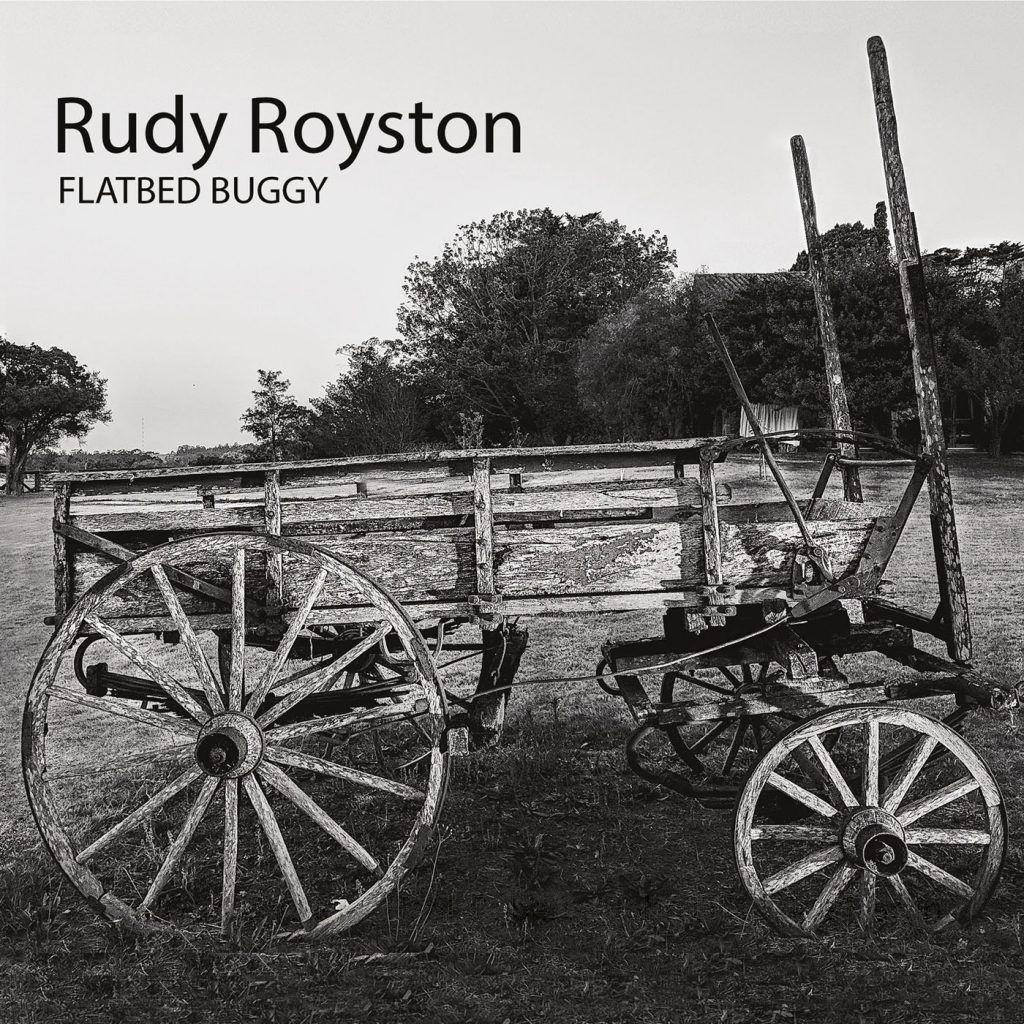
Rudy Royston - Flatbed Buggy (GREENLEAF MUSIC October 26, 2018)


Introducing Rudy Royston’s new record Flatbed Buggy

We’re announcing Rudy Royston’s third album as a bandleader. Flatbed Buggy features a new chamber-like quintet performing Rudy’s original compositions inspired by his youth growing up in Texas.

The album will be available worldwide on October 26


The new album, Rudy’s third as a bandleader, features thirteen original compositions for a new chamber-like quintet that includes Gary Versace (accordion), John Ellis (bass clarinet/saxophones), Hank Roberts (cello) and Joe Martin (bass).

Rudy Royston, first-call drummer with Bill Frisell, JD Allen, Dave Douglas and a host of other jazz greats, has honed a thoroughly engaging voice as a composer and bandleader with his compelling debut 303 (2014) and the raw and bracing trio follow-up Rise of Orion (2016). To these fine releases, both on Dave Douglas’ Greenleaf Music imprint, Royston now adds his third, Flatbed Buggy, rich in tonal contrast and mood yet steeped in the supple, enduring swing and groove that has driven his writing and playing from the start.

Right away the instrumentation is a striking departure: Royston leads a compact, almost chamber-like quintet featuring Gary Versace (accordion), John Ellis (bass clarinet/saxophones), Hank Roberts (cello) and Joe Martin (bass). “I was going for something that was more about melodies,” Royston declares. “I wanted to illustrate a story.” And indeed, the melodies flow forth on Flatbed Buggy, with rich harmony and surpassingly subtle orchestration and interplay occurring at every step as well.

Of the album title, Royston says: “Flatbed buggies to me mean country, they mean home, they mean earth. We lived in Denver but my father lived in Texas, and I would spend time in the country there. I remember riding on this kind of flatbed buggy thing when I was a child. The whole feeling that brought me … it was comforting, it was outside, this bitter shrubbery smell, my friends are there, my family’s there. So it’s about that, but the album also has to do with time: a time in my life, the beginning of things, the process of them. The buggy moving along up a road represents the movement of time. And the titles on the album really have to do with time and motion.”

The warmth and immediacy captured by Royston and the group, the unorthodox sound of the instrumental combinations themselves, marks Flatbed Buggy as a creative breakthrough. “Ron Miles is always my major influence,” the drummer offers, “because his music is so sing-able and melodically rich. I wanted that melodic quality but also moments underneath in the harmony where it was a little scratchy, a little dusty. My neighborhood in Texas was a little dusty.”

Together with the deep and woody instrumental timbres of Flatbed Buggy, there’s the way Royston keeps them continuously in play, beyond conventional jazz-combo roles: “I wanted us all to be constantly playing. I wanted us all to orchestrate or color or have a little input regardless of who is soloing. So if you check out the little stuff Hank is doing on Gary’s solos, for instance — all these neat little themes are happening. It sounds very orchestra-like for me. Some of it is written but 90 percent is those guys just interjecting their own taste into what’s going at the time.


At points in the program are short, rhythmically propulsive interludes — “Bed Boppin’,” “Dirty Stetson,” “Hold My Mule” (an old church expression), “I Guess It’s Time to Go” — that serve as what Royston calls “leaps of time.” “They remind you that you’re moving forward,” he says. “I hope there’s no ending on anything: a lot of these pieces fade out, because even when we pass away things still seem to be going forward somehow.”

In particular, the thematically related “Boy…Man” and “Girl…Woman” bring the passage of time further into focus, each a musical story not only of growth and maturation but eternal life: “That’s why I fade out, because it’s not about endings. It’s not like, ‘She lived her life and then passed away.’ It’s kind of like nothing ends, not yet.”

While Flatbed Buggy presents far more than a succession of virtuosic solos, the passion and technical depth of the performances themselves — including standout improvisations from all involved — can’t go unremarked. John Ellis, among the great saxophonists of his generation, plays mainly bass clarinet throughout, achieving a remarkable sound and impact. Gary Versace, a top organist and pianist of our time, is equally stunning on accordion, bringing a reedy melodic sustain and full harmonic weight to the music. On the low strings, whether bowed or pizzicato, Hank Roberts and Joe Martin contribute a wealth of subtlety and energy as well, intersecting and digging in, never in the expected ways. And Royston, even though he lays back and never dominates here (he notes there’s only one drum solo on the record), still offers what amounts to a master class on the jazz drummer’s art.

There’s an endless amount to discover: the melodic development and final triumphant letting-loose of the opening “Soul Train”; the hint of New Orleans rhythm in “Flatbed Buggy”; the picture of innocence in a young child twirling, on “Twirler,” with a startlingly brilliant tempo shift into slow swing; or the fast, twisty bop theme and soprano sax showcase of “Bobble Head” (where that lone drum solo crops up).

Another major statement is “The Roadside,” inspired by memories of a drive through wide open space in Texas, with great expanses of weeds and wildflowers. “It was very beautiful to be in the midst of all that,” Royston says. “It was moving, it was in motion, these flowers on the side of a dirt road, sprawled everywhere. My dad loved to fish, so we were driving somewhere to some pond, in the back of the country somewhere. The piece takes you back to that moment and reminds you that no matter where you are now, you’re on a journey someplace.”

PERSONNEL
Rudy Royston, drums
John Ellis, bass clarinet / saxophones
Gary Versace, accordion
Hank Roberts, cello
Joe Martin, bass

PRODUCTION CREDITS
Produced by Rudy Royston
Executive Producer: Dave Douglas
Engineered, edited and mixed by David Kowalski at Teaneck Sound Studios, Paramus, NJ, April 2018
Mastered by Kevin Blackler at Blackler Mastering, Brooklyn, NY, May, 2018
All songs by Rudy Royston (Rudy Royston Publishing / ASCAP)
Cover Design by Rudy Royston
Cover Buggy Photo by Isabella Oprete

TRACK DETAILS
1. Soul Train (9:44)
2. Bed Bobbin’ (0:35)
3. Flatbed Buggy (5:45)
4. boy…MAN (5:43)
5. Twirler (5:24)
6. Dirty Steson (0:32)
7. Hourglass (7:15)
8. Bobblehead (5:51)
9. The Roadside Flowers (6:54)
10. Hold My Mule (0:36)
11. girl…WOMAN (11:07)
12. I Guess It‘s Time To Go (1:35)
13: I Wanted To Be Home Soon (9:26) * Bonus track, Bandcamp download only

Check out the album’s title track, on Apple Music and Spotify.

Pre-order the album now on Bandcamp, iTunes, Amazon and you’ll receive the lead track instantly!

And watch for tour dates to be announced soon!

Enjoy the music!


Thursday, September 7, 2017

Sept. 25 - Rising star guitarist Ricardo Grilli, Eric Harland, Joe Martin, Kevin Hayes & Mark Turner at Smalls


Mark Turner – Reeds
Kevin Hays – Piano
Joe Martin – Bass
Eric Harland – Drums

"... a post-bop guitarist with a sideline interest in the cosmos and a taste for the ultramodern." 
– Nate Chinen, New York Times 

Rising star guitarist Ricardo Grilli returns to Smalls Jazz Club with an amazing quintet.   The powerhouse rhythm section of Eric Harland and Joe Martin, both members of Grilli's "1954" quartet, is complemented by pianist Kevin Hays, and saxophonist Mark Turner, both leading voices on their instruments.

The repertoire will feature compositions from Grilli's critically acclaimed 2016 album 1954 as well as new pieces from his upcoming album.


"...Grilli's considerable chops are in full effect in each setting.... This is an admirable outing by a new face on the scene." 
– Bill Milkowski, DownBeat Magazine

Saturday, April 29, 2017

David Kikoski - Kayemode (CRISS CROSS RECORDS 2017)


Since his first appearance on record (Randy Brecker's album In the Idiom), pianist David Kikoski has demonstrated an infinite capacity to swing, a rare sensitivity as a ballad interpreter and genuine harmonic savvy as a composer. He delivers once again on all counts on Kayemode.

Kikoski says:
"I'm very proud and lucky to have 2 new collaborators in my trio. I met Justin Faulkner on a Monday night at "the Jazz Standard" where I play with the Charles Mingus Big Band and was very impressed. Soon after we really hooked up on a gig with Branford Marsalis and I remember thinking I would love to try and use him on my own project. We had a ball hanging at my house and shedding and listening to music.

Joe Martin was someone we both agreed on to be the perfect bassist for the session. I recently heard him at "Mezzrow" with Spike Wilner and was blown away. His use of harmony and counterpoint is more advanced than most bass players I've known. I knew he could get inside of my concept.

We are using 1st or 2nd takes with no fixing or editing, because I wanted the freshness and honesty to be there".

1. Au Privave (Charlie Parker)  7:30
2. Binge Watching (David Kikoski)  7:48
3. Morning Glory (David Kikoski)  8:37
4. H & H (Pat Metheny)  6:37
5. Switching Roles (David Kikoski)  7:54
6. Mirror Mirror (Chick Corea)  6:14
7. Trinkle Tinkle (Thelonious Monk)  5:48
8. nSmoke Gets In Your Eyes (Jerome Kern)  7:44
9. Blues For Gerry (David Kikoski)  3:58

Total Time: 62:15 
Recorded September 20, 2016 in Brooklyn, NY, USA by Michael Marciano

Joe Martin (B)
Justin Faulkner (D)


Thursday, April 6, 2017

Chris Potter, David Virelles, Joe Martin & Marcus Gilmore - The Dreamer Is the Dream (ECM 2017)


For his third ECM album as a leader ? released on both CD and 180g vinyl ? Chris Potter presents a new acoustic quartet that naturally blends melodic rhapsody with rhythmic muscle. 

The group includes superlative musicians well known to followers of ECM's many recordings from New York over the past decade: keyboardist David Virelles, bassist Joe Martin and drummer Marcus Gilmore, who each shine in addition to the leader on multiple horns. The Dreamer Is the Dream features Potter on tenor saxophone ? the instrument that has made him one of the most admired players of his generation ? in the striking opener "Heart in Hand" and such album highlights as "Yasodhara," as well as on soprano sax ("Memory and Desire") and bass clarinet (the title track). 

Potter is an artist who "employs his considerable technique in service of music rather than spectacle," says The New Yorker, and his composing develops in texture and atmosphere with every album. Along with his previous ECM releases, Imaginary Cities and The Sirens, he has appeared on some of the label's most acclaimed discs, including Paul Motian's classic Lost in a Dream and Dave Holland's Grammy Award-winning What Goes Around.


1. Heart In Hand
2. Ilimba
3. The Dreamer Is The Dream
4. Memory And Desire
5. Yasodhara
6. Sonic Anomaly

Chris Potter (tenor & soprano saxophones, bass clarinet, clarinet, ilimba, flute, samples)
David Virelles (piano, celeste)
Joe Martin (double bass)
Marcus Gilmore (drums, percussion)


Monday, September 26, 2016

Ricardo Grilli - 1954 (October 7, 2016) TONE ROGUE RECORDS


Brazilian-born guitarist/composer Ricardo Grilli explores personal, musical and cosmic history on 1954, out October 7 on Tone Rogue Records

Grilli’s entrancing second album features the stellar line-up of pianist Aaron Parks, bassist Joe Martin and drummer Eric Harland

“Evocative, ethereal, and eclectic… Grilli [hits] that sweet spot somewhere between post bop and the avant garde.” – Critical Jazz

“Excellent... Can't stop listening.” – Steve Greenlee, JazzTimes


The title of 1954 (due out October 7 via Tone Rogue Records) comes from the year in which Grilli’s father was born – one possible beginning point for his own story. It also falls at the dawning of the Space Age, a time when people were looking optimistically forward to a future full of innovation and exploration. Significantly for the music contained within, it was also a time when jazz - bebop in particular - was thriving in Grilli’s adopted home of New York City, ghosts of which he can’t help but encounter as he walks through the city today.

“It gets a little mystical as you imagine it in your head how things were back then,” Grilli says. “I wonder if those musicians ever thought that the music they were shaping would evolve to become the way it is now. The concepts we use in today’s jazz still very much use the format of the bebop and hard bop era, even though they have more modern harmonies and meters.”

No matter how much he engages in a dialogue with the past, Grilli’s music is decidedly of the moment, replete with sleek, captivating melodies over tense, balance-challenging rhythms, combined in intricate but emotionally engaging structures. His compositions reveal the influence of modern masters like Kurt Rosenwinkel and Mark Turner alongside adventurous pop experimentalists like Radiohead and Sigur Ros, with a relaxed but expressive melodicism imbued by a youth spent absorbing the tropical sounds of Jobim and Elis Regina.

Grilli’s 2013 debut, If On a Winter’s Night a Traveler, captured the guitarist in a transitional moment. It documented not only his move from Brazil to Boston and then New York, but also his emergence onto the jazz scene after graduating from Berklee College of Music. Having picked up the guitar for the first time at the relatively advanced age of 20 and starting school at 23, five years later than most of his classmates, he recorded the album feeling like an underdog facing an uphill struggle.

That notion is left behind on 1954, which finds a more mature, self-assured Grilli in sophisticated communication with some of modern jazz’s most renowned musicians. “For the longest time I felt like I had missed the start of the race and had to catch up to the competition,” he says. “However, I have been very lucky to be able to play with so many of my heroes, and this record is, hopefully, a statement of my acceptance of my own playing and thinking myself worthy of playing with the musicians on it.”


Long fascinated with astronomy and the cosmos (Stephen Hawking sits on his bookshelf beside the likes of Italo Calvino, the surrealist author who lent both If On a Winter’s Night a Traveler and the current album’s “Vertigo” their titles), Grilli weaves interstellar concepts throughout the tunes on 1954. Opening track “Arcturus” is named for the brightest star in the eastern celestial hemisphere, its gradual build in intensity (thanks to Harland’s subtly insistent rhythms) suggesting the massive star’s gravitational pull. 

“Cosmonauts,” meanwhile, was inspired by the story of “phantom cosmonauts,” an unconfirmed theory suggesting that Yuri Gagarin’s successful flight may have been preceded by other ill-fated attempts.

“It’s a terrifying story,” Grilli says. “I imagined the fear of going into the unknown and not coming back. Jazz has a bit of that feeling, but not in the deadly sense. So I wanted to write an eerie, sad song, something a little somber, dark and mysterious.”


That combination of the cosmic and the intimate is echoed throughout 1954. Especially poignant is the lovely, ethereal “Rings,” which suggests the celestial rings surrounding Saturn and other planets as well as being a musical analog for the rings that symbolize union between people. The simmering, atmospheric “Radiance,” partially inspired by Brian Blade’s soulful Fellowship Band, evokes the far-off glow of heavenly bodies while pondering the loss of loved ones. “Breathe,” essentially a cha cha cha with modern contours, provides a respite from the frantic “Arcturus,” replicating the moment that a shuddering spacecraft breaks through the atmosphere into weightlessness.

Grilli also pays homage to some of his peers and mentors on 1954. “Pogo56” was written for trumpeter and Berklee professor Jason Palmer, while “Far Away Shores” is an homage to pianist Julian Shore, a close friend and collaborator. The album closes with “Pulse,” a final word on the idea of looking backward to look forward: a modernist bop tune that swings hard over contemporary harmonic movement.