Showing posts with label Brian Drye. Show all posts

Friday, July 23, 2021

Hank Roberts Sextet - Science of Love (July 23, 2021 Sunnyside Records)

Creation can be a lonely process. The meticulous crafting of art frequently requires isolation for focus, but the process can be aided by the spark of a change of location or meeting new collaborators. Cellist/composer Hank Roberts believes that the acts of creating and sharing music help bring positivity needed to balance the world. In essence, bringing more of a particular life-sustaining energy into the world, namely, love. How better to spread love than through enthusiastic participation with friends in artistic endeavors?

Roberts’s new recording, Science of Love, finds the longtime stalwart of the creative Downtown music scene returning to New York City, after raising a family in Ithaca, NY, in an effort to rekindle the vital, creative energy that only the metropolis can provide. Roberts discovered inspiration in droves, which allowed him to create a unique program of original music unlike anything he had done in the past.

Of course, Roberts has been well known for playing alongside music greats, like Bill Frisell, Tim Berne, and Joey Baron. He has also put together singular and celebrated ensembles of his own that cover a wealth of musical ground, including folk, rock, modern classical, gospel, and world music influences.

In the summer of 2015, Roberts decided to return to New York City. A renewed sense of urgency in creation had struck him and he felt that his burgeoning work should be heard. The pieces heard on Science of Love were already begun prior to Roberts’s arrival but they really blossomed as soon as he began to fit himself back into the rhythms of the City. Immediately, he was seized by inspiration and found himself awakening at 4AM to compose, attaining a near sensual experience as he set his ideas to paper.

It didn’t take long for Roberts to begin meeting invigorating new collaborators. Trombonist Brian Drye was one of the earliest, as Drye asked Roberts to perform with his group at a local concert. Woodwind expert Mike McGinnis and pianist Jacob Sacks were musicians Roberts had been following and with whom he quickly established ties. Drummer Vinnie Sperrazza was introduced by McGinnis, and he met violinist Dana Lynn while performing with her in another group.

The assembly of what would become the Hank Roberts Sextet was entirely organic, evolving out of chance meetings, preexisting friendships between members, and a quick understanding of the leader’s goals. All of the musicians shared similar languages, interacting comfortably between jazz, improv, and classical musical idioms. The group proved to be a perfect size for the emerging music, a reasonably sized ensemble that could sound large.
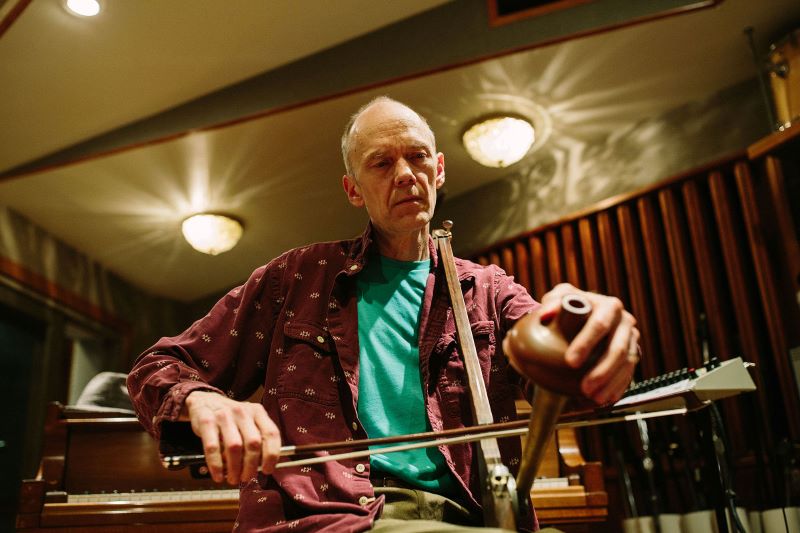
As a former trombonist, Roberts has always been attracted to the instrument’s possibilities (as can be heard on his debut solo album, Black Pastels) and Drye’s impeccable playing aligned perfectly with the composer’s ideas. The combination of trombone with cello and piano allowed Roberts to experiment with low pitch clusters, unique phrasing, and intonation, all of which brought a lot of energy to the music through their natural tension.

As the music for Science of Love began to emerge, Roberts was reflecting on the energies at work in the world and in the universe, from the wind rustling leaves in a tree to the consciousness shared between all human beings. His takeaway was that love was an important power in the universe and that artists are proponents in spreading that power through their work. These thoughts manifested in Roberts’s desires to push his work farther and to step into a more active role as a conduit for expressing these feelings.

Roberts’s initial phase of composing these pieces began by constructing series of chords or small melodies and expanding them day after day into larger frameworks. His level of focus propelled him into another level of preparation. Roberts’s move to New York and assembly of his Sextet brought the project full circle, as he had a regular outfit for rehearsals and performances where the pieces really began to bloom as he continued to sculpt them with the aid of the other musicians’ specialties.

Many of the compositions are extremely complex, the harmony and voicings meticulously arranged, extending farther and farther into organic abstractions, and balanced relative to traditional forms, as well. Even with this framework, Roberts wanted to maintain the instrumentality of improvisations. He created the materials but gave the performers the opportunity to more deeply clarify and expand their meanings.

The recording begins with “Sat/Sun Pa Tu X,” an amazing expansion of the piece “Saturday/Sunday” from Little Motor People (JMT, 1993) with a controlled added abstraction. “G” is a 14-piece suite of sorts that began as small piece that kept building. The titles reflect the codes that generated the pieces and, occasionally, descriptive elements of the pieces reflected by the performers. Among the many pieces, the leading “The Sharp Peak of The Science of Love” is a fantastic example of the breadth of the suite, with fantastic solos by Sacks and Drye that fit the drive of the music. Dynamic strings and close harmony highlight “Shifting Paradigms in Pre GLC 3,” while the slow “Shuffle of GLC Magnetic Floating Stripper” provides an intriguing dynamism for weaving the ensemble with McGinnis’s soaring soprano saxophone. The delicate “205” concludes the program with tart sentimentality.

A life change allowed Hank Roberts to undertake one of the most meaningful projects in his life. The journey may have begun as a move to New York City, but it evolved into something deeper, the fostering of new friendships and a new, collection of music. Science of Love is a testament to Roberts’s craft, perseverance, and ability to propel the power of love through music. 

1. SAT / SUN PA TU X
2. G - The Sharp Peak of The Science of Love
3. G - Human Circuits
4. G - One Floor Axis
5. G - Equatorial Conductivity
6. G - Earth Sky Realms
7. G - D23
8. G - Levity Village
9. G - Second First
10. G - Story
11. G - Shifting Paradigms In Pre GLC 3
12. G - GLC Magnetic Floating Stripper
13. G - 17
14. G - B45 L
15. G - Circular Rejuvenation
16. 205

Hank Roberts - cello
Brian Drye - trombone
Dana Lyn - violin
Mike McGinnis - clarinet, soprano saxophone
Jacob Sacks - piano
Vinnie Sperrazza - drums

Sunday, December 2, 2018

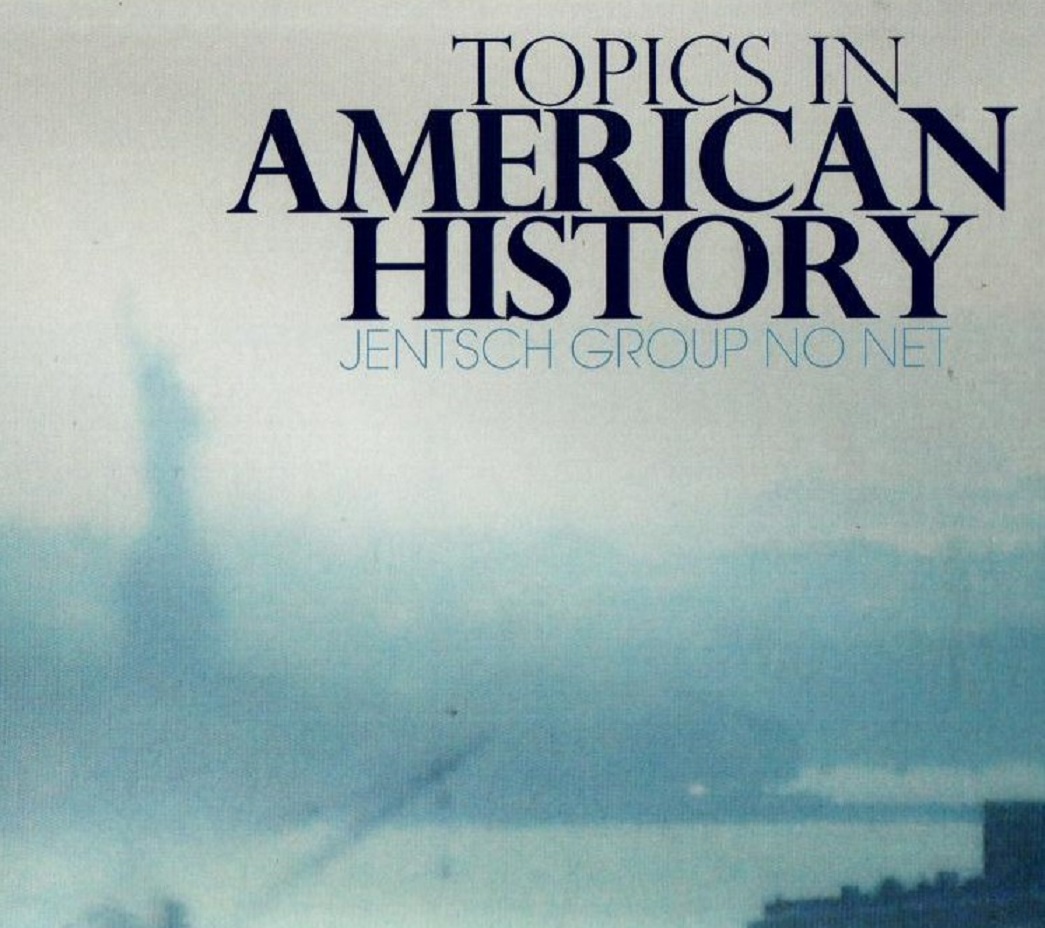
Chris Jentsch: Jentsch Group No Net – Topics in American History


Live recording of Chamber Music America commission hits all the right notes

Jentsch’s all-star Jentsch Group No Net features flutist Michel Gentile, clarinetist Michael McGinnis, saxophonist Jason Rigby, trumpeter David Smith, trombonist Brian Drye, pianist Jacob Sacks, bassist Jim Whitney, drummer Eric Halvorson, conductor JC Sanford

“(Jentsch) writes lavish suites – which he then plays with remarkable terseness and attention to detail. His narratives are vivid and often very funny. His latest, Topics in American History, couldn’t be more relevant.”
— New York Music Daily

 “Chris Jentsch’s Brooklyn Suite was one of last year’s most satisfyingly ambitious jazz efforts.”
— Richard Gehr, Village Voice


On his new album, acclaimed guitarist and composer Chris Jentsch pairs his extraordinary skill at writing long form musical suites with his expertise in history. Jentsch earned a B.A. in history from Gettysburg College, but his approach to expressing his knowledge through music is anything but academic. Topics in American History (out November 30, 2018 on Blue Schist Records), featuring jazz interpretations of seven historical events and concepts, takes listeners on an emotionally exhilarating, compellingly thoughtful journey through selected corners of our nation’s past. “In learning about music there is always the historical facet,” says Jentsch. “Aspects of classical music, world music, jazz, and now even rock music have their backgrounds of decades or even centuries past. With the Topics project, for the first time, to express my present I have merged what I have learned from the chronicles of music with my general interest in American history.” 

The hour-long Topics, a result of a Chamber Music America/Doris Duke New Jazz Works commission, follows Jentsch’s previous highly-acclaimed large ensemble works including Miami Suite, Brooklyn Suite, and Cycles Suite. The new CD is a live recording of the Topics premiere, presented on December 2, 2016 at ShapeShifter Lab in Jentsch’s hometown of Brooklyn. Combining the immediacy and excitement of in-the-moment performance with Jentsch’s masterful musical vision, the recording features Jentsch Group No Net’s roster of extraordinary musicians: flutist Michel Gentile, clarinetist Michael McGinnis, saxophonist Jason Rigby, trumpeter David Smith, trombonist Brian Drye, pianist Jacob Sacks, bassist Jim Whitney, drummer Eric Halvorson, and conductor JC Sanford.

Jentsch’s large group music generally invokes contemporary improvisation with an eclectic mix of influences ranging from jazz to rock and world to classical, always striving for a careful balance between lyricism and dissonance, and a deliberate combination of complexity and simplicity. “1491,” the CD’s first track, brings us into Jentsch’s vision with the ensemble producing airy, gently percussive bell and bird-like sounds that capture a Caribbean beach at the dawn of European entry. 

As the piece develops with a walking bass ostinato, interweaving horn lines, and plaintive, wandering flute, the sense of change to come is unmistakable. “Manifest Destiny” explores ideas about America’s spread across North America with a harmonically rich expansiveness that gives the soloists plenty of room to stretch out and explore. An animated full band statement announces “Lincoln-Douglas Debates,” which features raucous, spirited interplay between trumpet and trombone—the clear winner is the listener. 


“Tempest-Tost,” which takes its title from an inscription on the Statue of Liberty, captures the weariness, hope, and awe of the huddled, yearning masses making their way through Ellis Island. It also offers poignant connections to the present day, drawing inspiration from Jentsch’s sympathy for the plight of refugees and his gratitude for his own citizenship status. “Suburban Diaspora” delves into the idea that a shared cultural heritage exists among American middle class Baby Boomers who were raised in the burbs then migrated to urban and rural areas. With its tight cluster chords, fascinating harmonies, searching solos, and staggered entrances, the gripping “Dominos” evokes the dread and uncertainty of the Cold War and McCarthyism.

The suite closes with “Meeting at Surratt’s,” an homage to Mary Surratt, the first woman executed by the United States government after Abraham Lincoln’s assassins plotted their crime at her boarding house. From the opening march cadence of the snare drum to the powerful anthem-like build that follows, the piece is a fitting conclusion to a superior jazz suite. The band is in top form throughout, with notable solos from the horns, flute, piano, and bass. Jentsch’s exemplary guitar playing presides over it all, with stunning effects, muscular lines, and consummate musicality.

Topics in American History by Christopher Jentsch and Jentsch Group No Net has been made possible with support from Chamber Music America’s 2015 New Jazz Works Program funded through the generosity of the Doris Duke Charitable Foundation.


JENTSCH GROUP NO NET
Michel Gentile, flutes
Michael McGinnis, clarinets
Jason Rigby, saxophones
David Smith, Trumpet, flugelhorn
Brian Drye, tromboneJacob Sacks, piano
Jim Whitney, acoustic bass
Eric Halvorson, drums, percussion
JC Sanford, conductor

1 1491 11:36
2 Manifest Destiny 11:36
3 Lincoln-Douglas Debates 09:37
4 Tempest-Tost 09:12
5 Suburban Diaspora 07:26
6 Dominos 09:24
7 Meeting at Surratt’s 06:23


Chris Jentsch is a Brooklyn-based composer, bandleader, and guitarist working primarily in jazz and contemporary improvisational forms. Based in NYC since 1999, his main ensemble is Jentsch Group in its trio, quartet, nonet, or large configuration. As a composer he has been the recipient of grants, commissions, or fellowships from the Maelstrom Percussion Ensemble, the Penfield Commission Project, American Composers Forum, the Composers Assistance Program of the American Music Center, New Music USA, Meet the Composer, New York State Council on the Arts, Ucross Foundation, the Commission Project, the New Music Collective, the Donald Knutson Memorial Faculty Development Fund, and Chamber Music America/Doris Duke New Jazz Works.

As a bandleader and sideman Jentsch has worked with such diverse musical personalities as George Russell, John Cage, Maria Schneider, and Chris Wood. He appears as a guitarist on the CD John Cage, Volume 11. He is also featured in Scott Yanow’s book The Great Jazz Guitarists. All About Jazz says, “Jentsch is more than just a seasoned musician; he’s a composer who can convey his ideas on a grand scale.” Of Brooklyn Suite, DownBeat said that Jentsch “created a contrasted and kaleidoscopic patchwork with marvelous melodies, splendid voicings, and a skillful use of dynamics.” Jentsch has released five CDs as a leader: Media Event (1998); Miami Suite (1999); Brooklyn Suite (2007); and Cycles Suite (2009). Fractured Pop, a CD/DVD production featuring Jentsch’s jazz quartet was released in 2017. Jentsch attended the Berklee College of Music and has liberal arts and jazz guitar degrees from Gettysburg College, the New England Conservatory, and the Eastman School of Music. 

He earned the Doctor of Musical Arts degree from the University of Miami in 1999 and is published by the University of Northern Colorado Press, Advance Music, and Fleur de Son Records.