
Showing posts with label John Hébert. Show all posts

Friday, January 14, 2022

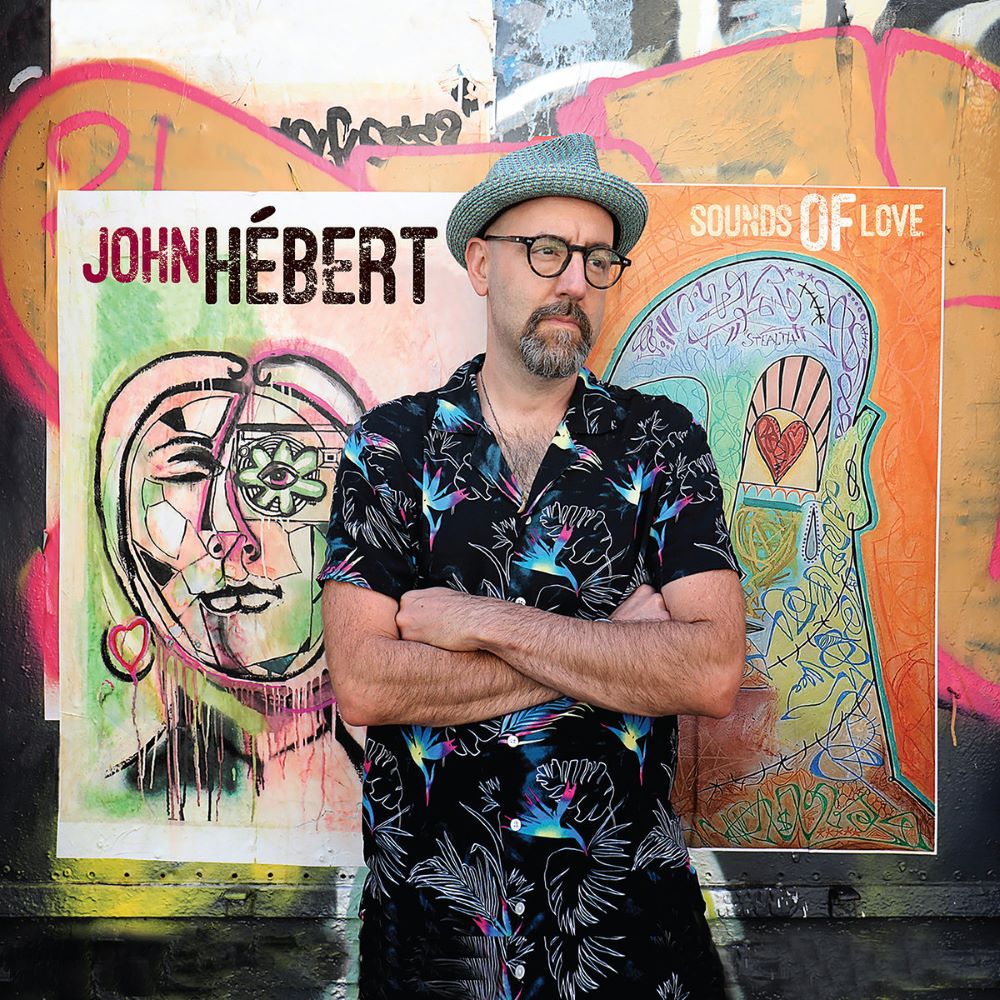
John Hébert - Sounds of Love (January 14, 2022 Sunnyside Records)

Composer and bassist Charles Mingus’s legendary status is undeniable. Tributes to his genius tend to come up short because there isn’t a way to improve what he has already wrought. One element of Mingus’s vision that tends to get overlooked was his ability to create singular ensembles of strong, individual performers to play his music, ensembles that have gone down in history as some of the greatest of all time.

Bassist John Hébert has long been influenced by Mingus’s music. It was Mingus’s 1975 Atlantic recording, Changes One, that etched the clarity of the legend’s vision and tone into Hébert’s mind. Using the music and ensemble fluidity of the album as a direct inspiration, Hébert assembled an incredible band to play with the spirit of Mingus as a beacon for a number of performances from 2011 to 2013. The recording, Sounds of Love, presents the ensemble in their element, in a thrillingly dynamic live performance.

Having set roots in New York in the mid-1990s, Hébert became one of the most in demand bassists of his generation, upholding duties in bands led by Andrew Hill, Paul Bley, Mary Halvorson, and Uri Caine. Hébert continues to participate in a longstanding musical relationship with piano great Fred Hersch and has found himself in academia as a professor at Western Michigan University.

Assembling cohesive lineups of musicians is an art form that Mingus mastered. For this band, Hébert wanted to put together a shocking combination of musicians that would make the music come to life. Fred Hersch was a natural selection for the piano chair, as he had even studied with Mingus’s longtime pianist, Jaki Byard. The singular saxophonist and composer Tim Berne is a key fixture on New York’s Downtown scene where Hébert immersed himself and Berne makes a rare appearance as a sideman on Sounds of Love. Trumpeter Taylor Ho Bynum proves a fitting foil to Berne and Hébert’s Halvorson rhythm section partner, drummer Ches Smith, proves once again that he can handle any musical challenge.

The musicians hadn’t played with each other before the first rehearsal. Their contrasting sounds were what Hébert wanted to make the music come together and still stand apart. It was a true balance of personalities and styles that would have made Mingus proud.

Hébert did not intend for the group to be a repertory band. They did develop arrangements of a handful of Mingus pieces, mostly from the Changes recording. Other pieces were written by the leader as vehicles for improvisation, with more than slight nods to the Mingus’s style, as he was obviously on Hebert’s mind.

The first performance of the group was in 2011 and, based on the strength of the ensemble, Hébert was able to take them on a short tour of Europe in 2013. The Sounds of Love recording comes from a live performance at Jazz in Bess in Lugano, Switzerland on March 27, 2013.

The recording begins with Ho Bynum’s vehement trumpet and Hersch’s pointillistic piano leading into Hébert’s “Constrictor,” an ominous waltz that sets the mood of noirish mystery as it builds to dynamic heights with Berne’s solo. Smith’s drums introduce the leader’s “Blank Faced Man,” a loose, subtle piece that shows the ensemble’s interplay. A fantastic solo bass feature from Hébert leads into Mingus’s “Duke Ellington’s Sound of Love,” the ensemble keeping their intensity at simmer, allowing Mingus’s melody to sing.

Hébert’s “Love What?” was written in response to Mingus’s “What Love?” The piece pushes and pulls, the ensemble staying dramatically malleable before ramping up the energy in an off-kilter groove. The rhythmic structure of Mingus’s bluesy “Remember Rockefeller at Attica” makes the piece incredibly exciting to solo over and the ensemble takes full advantage, as the band members sing and shout. The recording concludes with the leader’s “Frivolocity,” a piece that contorts and twists over a bassline that was loosely based on Mingus’s “Sue’s Changes.”

Perhaps the best method to honor Charles Mingus’s work isn’t through imitation. John Hébert looked to the legend’s ability to match musical personalities in service to the music as inspiration for his band on Sounds of Love, though with plenty of Mingus DNA in their output. 

1. Constrictor
2. The Blank-Faced Man
3. Duke Ellington's Sound of Love
4. Love What?
5. Remember Rockefeller at Attica
6. Frivolocity

John Hébert - bass
Taylor Ho Bynum - cornet
Tim Berne - alto saxophone
Fred Hersch - piano
Ches Smith - drums & percussion

Monday, September 13, 2021

Thomas Heberer - The Day That Is (October 22, 2021 Sunnyside Records)

The dramatic events of the past two years have altered the social and political landscape of the world. The pandemic had the world’s population reeling. Performing artists were particularly affected by COVID-19, as their livelihood was taken away from them in one fell swoop. Veteran trumpeter, improviser, and composer Thomas Heberer took the opportunity while sequestered in his New York City home to compose and coordinate the recording of his new album, The Day That Is.

Well known for his work in the improvisatory jazz world with the likes of the Instant Composers Pool and the Nu Band, Heberer has been focused on showcasing his artistic breadth. His knowledge of the jazz tradition is encyclopedic and his open approach to the music proves just as catholic. The past few years have seen Heberer look more and more to the music of bebop, post-bop, and the New Thing as much as the free music he has long been associated with.

Heberer knew that he wanted to write for a quartet composed of two horns and a rhythm section of bass and drums on his new project, returning to an ensemble size he had familiarized himself with in the 1990s with the group Tome XX. As a fifteen-year member of the New York creative music scene, Heberer was in a perfect place to select a group of musicians who he trusted to interpret his vision and to provide the special, spontaneity that the music requires.

The trumpeter had long been a fan of drummer Michael Sarin, whom Heberer had initially heard with the late, great woodwind master Thomas Chapin. A partnership began to flourish when Heberer joined Sarin in the faculty at Maine Jazz Camp, where they began performing together regularly. Heberer got to know bassist John Hébert as a member of Angelica Sanchez’s Nonet. Hébert’s brilliant musicianship and warm, Southern vibe made him a perfect collaborator. The trio came together for a handful of sessions and a number of live performances prior to the pandemic.

Heberer took some time to decide on the other horn voice, eventually deciding to call on fellow German expat and saxophonist Ingrid Laubrock. Heberer has known Laubrock for years and had long appreciated her strategic, compositional minded approach to music making.

The concept for The Day That Is was born just before the pandemic but was accelerated once Heberer’s touring schedule came to a halt. At home, Heberer fell back into his rigorous practicing and composing routines. By the summer of 2020, he realized that the social isolation might last for some time, so he decided to be proactive and have something to show for his time spent at home. The leader’s pieces focused on a number of compositional elements, including ambiguous sounding symmetrical scales. He was also cognizant of providing different parameters for each piece and the architecture of the album as he put the program together. Heberer began to contact the other musicians in the fall to align schedules.
December saw the quartet assemble for the first time to rehearse at the Michiko rehearsal studios in New York’s deserted Midtown. The situation felt particularly ominous as the musicians had to socially distance and cover their horns.

The quartet were joined by engineer David Stoller at the Samurai Hotel recording studio on January 6th, totally unaware of the events that were about to unfold in Washington, DC. As the recording proceeded, Hébert kept the participants abreast of what was happening at the Capitol Building. The group remained focused but alert as they went through the day, only realizing the full magnitude of the insurrection later.

The program begins with the title track, a compressed 6-bar composition that utilizes an ambiguous tonality to allow the improvisations to travel in any direction. Inspired by a sauntering camel ride he had on a visit to Morocco, Heberer’s “Erg Chebbi” echoes the atmosphere of Juan Tizol and Duke Ellington’s “Caravan.” The pseudo ballad “Seconds First” is inspired by the compositional ideas of Andrew Hill and allows the melody to move from trumpet to sax to bass, in a tense but beautiful harmony. The propulsive “Caro Pook” is named for Heberer’s friend, the German composer. It is a piece custom built for Sarin’s unique rockingly swinging drumming and group improvisation, keeping all ensemble members fully occupied.

Heberer’s “Then There Were Three” is an unusually structured piece that presents three independent parts coming together to build into a programmatic long form composition with an extended solo from Sarin. The beautiful melody of “The Sleeping Bag Unfolds” pairs the trumpet of Heberer alongside Laubrock’s soprano sax. The tune’s title refers to Heberer and his wife’s promise to isolate from each other in sleeping bags if necessary during the pandemic. “Closing the Gap” is a brief interlude inspired by the binary musical world of improv/jazz legend Steve Lacy. Dedicated to a departed friend who invited Heberer to East Germany as the Wall fell, “Jimi Metag” is slightly dark and mysterious, an allusion to the dark side of the pseudo- socialist experiment of East Germany.

Composed prior to the pandemic for the Nu Band, “One for Roy” was written for trumpeter Roy Campbell, whose chair Heberer took over when the Downtown legend passed away. The piece splits the ensemble into two, sax with trumpet and bass with drums, with two independent scores which allow the music to overlay at its own pace. “Mapping the Distance” is built over a symmetrical scale ostinato and is a vehicle for solos from Sarin and Laubrock. The program concludes with “The Sky Above,” a gorgeous coda written in a richly harmonious Bill Evans style.

The crazy years of the Trump presidency and the political challenges they amplified had the world on edge. The addition of the pandemic only heightened the tension. Thomas Heberer aimed to provide art that was the opposite of the “ideals” trumpeted during these times. The Day That Is presents music concerned with sharing and creating together, fighting the ideals of those who decided to attack the Capitol Building on that day in January 2021. 

1. The Day That Is
2. Erg Chebbi
3. Seconds First
4. Caro Pook
5. Then There Were Three
6. The Sleeping Bag Unfolds
7. Closing The Gap
8. Jimi Metag
9. One for Roy
10. Mapping The Distance
11. The Sky Above

Thomas Heberer - trumpet
Ingrid Laubrock - tenor & soprano saxophones
John Hébert - bass
Michael Sarin - drums

Tuesday, July 20, 2021

The Bill Evans Guitar Project - Echoes of Bill (July 20, 2021)

On July 2, 2000 John Hebert, Bruce Hall, Rez Abbasi and I got together to play some Bill Evans tunes in Bruce Hall's Brooklyn home studio. Bruce was recording into a now-obsolete digital recording platform (mini disc) at the time, there was a lot of mic bleed, small room, mini-disc....it wasn't Avatar. Despite this the end product sounds remarkably good. Bruce did some beautiful playing and some beautiful engineering here. As far as any of us can remember we just got together to record in this two guitar configuration that one time although we had all played together on many different gigs and recording projects...in a lot of ways New York was and is a small town. We were pretty much reading through some Evans tunes, coming up with quick arrangements, recording and moving on to the next tune. It's got a really nice vibe and for all you guitar players, Rez is absolutely burning.

We met at Bruce's house, read through some tunes, hung out afterward, did a lot of bullshitting and for the next 20 years didn't give the recording much thought, if any. Then...about a year ago Bruce remixed the tunes we recorded and sent us all a copy. It was an emotional experience for me to hear this so many years later and I think for the others as well. All the great memories I have of playing with these stellar musicians, all the miles between then and now, the gratitude that I felt and still feel to these musicians that I admire and respect for including me and for the commitment, heart, soul and talent they put into any and all music that they make. I think you can hear all that in this recording. We got it mastered through Gene Paul at GandJ Audio - Gene and Joel Kerr did a freaking great job on that. Huge thanks to Bruce Hall for his hosting, playing and engineering.
Bruce Saunders / July 16, 2021

1. Bill's Hit Tune 05:11
2. Children's Play Son 04:57
3. Twelve Tone Tune 03:47
4. Re: Person I Knew 06:06
5. Showtype Tune 05:07

Rez Abbasi - Guitar
Bruce Hall - Drums/Engineer
John Hébert - Bass
Bruce Saunders - Guitar

Recorded S. Portland St, Brooklyn, NY on July 2, 2000
Recorded and Mixed by Bruce Hall
Mastered by G and J Audio

Thursday, May 6, 2021

Tony Malaby - Cellar Notes (2021)

I never had the opportunity to document this quartet, so I am happy that I can now share these live sets from Cornelia St. Cafe. At the time of these recordings, I was leading the groups Tamarindo, Apparitions, and Paloma Recio, as well as many sideman projects, several of which featured Ralph Alessi and John Hébert . The three of us were yearning for an outlet to stretch out in a casual, relaxed setting with no predetermined solo order, solo length or complicated road maps. When I was offered a weekend at Cornelia Street, I jumped at the chance and called Billy Drummond.

I put together four books of tunes that were laying around the pad, mostly by peers such as Chris Lightcap, Angelica Sanchez, Dave Scott, Michael Attias, Eivind Opsvik, and Billy Mintz. We filled out the book with Ralph and John’s tunes, along with some Ornette, Frisell, Motian, and Sidney Bechet. At the time I called it “The Reading Band.” Drew Gress often subbed for Hébert . This group never played to an empty room. Please follow us here at Bandcamp and enjoy Cellar Notes.

1. Ralph and the Red Head (Dave Scott), Blind Pig (John Hébert), Flight (Billy Mintz) 29:31
2. Mirror Me (Angelica Sanchez), Humpty Dumpty (Ornette Coleman), Endless(Paul Motian) 21:17
3. Cajun Christmas (John Hébert) 10:59

Tony Malaby - Tenor Saxophone
Ralph Alessi - Trumpet
John Hébert - Bass
Billy Drummond - Drums

Recorded by Scott Friedlander
Mastered by Eivind Opsvik
Cover Art by Tim Berne
Recorded Live at Cornelia St. Cafe on March 13, 2009

Thursday, February 25, 2021

Simon Nabatov Quintet - Plain (February 2021)

Let's be clear from the start. There's nothing "plain" about the new recording by Simon Nabatov, if by plain you mean "not attractive" or "undistinguished". Nabatov clarifies: "in Plain I was consciously looking for that minimum of compositional conditions which would provide an interesting work frame. I mean "plain" as in simple, understandable, approachable - not as primitive or boring, and hoped to walk this thin dividing line (hopefully on the right side)." Be assured he has succeeded magnificently. Unsurprising really when you consider his background. Since leaving the Soviet Union in 1979 aged 20, Nabatov has brought a breathtaking finesse to a staggering range of styles, equally at home in modern jazz, free improvisation, the canons of Thelonious Monk and Herbie Nichols, and Brazilian music, as well as his own works which defy easy classification.

Plain is the second in an ongoing series of recordings (after 2019's excellent Last Minute Theory) in which Nabatov reconnects with the NYC scene after some 30 years, enthused by the increasing profile there for challenging music. He's recruited some of the city's finest talents for this session. Having worked twice with Chris Speed in the past he knew he wanted the reedman on board. "I’ve been a big fan for a long time. Love his clarinet sound, love this instrument." And of course it recalls Nabatov's first significant gig with the late clarinetist Perry Robinson. Alongside him is trumpeter Herb Robertson, a consummate player who's made a career out of avoiding the obvious, who appeared on Nabatov's The Master And Margarita (Leo, 2001).

"He is definitely one of the unsung heroes of this music." Anchoring the band is the formidable tandem of Tom Rainey and John Hébert, a staple from the bands of Kris Davis and Ingrid Laubrock. While Nabatov's alliance with Rainey is longstanding, he's never performed with Hébert before. That fits the template: "The idea is to have on board at least one or two I never played with, but enjoyed their musicianship for some time."

That push-pull between familiarity and the unknown finds its echo in the material which mixes mood-morphing pieces with others where a narrative is more easily discerned. But whatever the conception, the outcome is thrilling. The mutable title track begins with a coolly elegant duet between Nabatov and Speed, on that clarinet, before becoming by turns portentous, rhapsodic, choppy and sparkling. Like all the charts here it contains more than enough leeway for the starry cast to lean into, and their sensitivity, commitment and exceptional prowess prove a continual pleasure as they ease gracefully between unfettered expression and precise notation.

Each number is its own world, often embracing similar juxtapositions. That's evident on "Copy That" where the tightly coiled theme is set amid lightly plotted interplay which includes a bristling tenor/trumpet exchange, and on "Cry From Hell" where the jaunty melody is bookended by inspired ensemble give and take. If you detect a Brazilian flavour here you would not be wrong. Nabatov is a mad keen fan of the country's popular music, and visits regularly. "The core tune is written in the genre "Choro" - a very popular instrumental genre born in Rio de Janeiro in the 1870s. The Portuguese word "choro" means a cry. And since it’s not exactly a clean authentic reading of the music - why not a somewhat ironic title?"

"Rambling On", the only improv on the date, envelops a text by Robertson, delivered through a bullhorn. "I felt its harsh nature would be a good contrast to the rest of the program. It has the compelling nature of a passionate (political?) statement, reflecting something of the zeitgeist of today." Nabatov rounds off the album with an urbane rendition of Herbie Nichols' "House Party Starting". As he explains, "It displays my take on "plain" perfectly - no hip arrangement, an unadorned, soothing conclusion."

What better way to finish. John Sharpe


1. Plain 12:00

2. Copy That 08:38

3. Cry From Hell 06:50

4. Break 07:42

5. Ramblin' On 03:03

6. Slow Thinker 10:29

7. House Party Starting 07:30


Chris Speed - tenor saxophone, clarinet

Herb Robertson - trumpet, cornet, voice

Simon Nabatov - piano

John Hébert - bass

Tom Rainey - drums


all music by Simon Nabatov (GEMA)

except track 5 (collective improv on the text of Herb Robertson)

and track 7 by Herbie Nichols


recorded June 1 2019 at the Trading8s Studio, New Jersey

recorded by Christopher Sulit, mixed and mastered by Stefan Deistler


Pre-order

Wednesday, February 17, 2021

Russ Lossing - Metamorphism (2021 Sunnyside Records)

The ultimate goal for most composers is to make the complicated seem effortless. It takes a great deal of individual talent and an incredible amount of trust in your ensemble mates to accomplish this feat. Pianist Russ Lossing’s brilliant work has long been appreciated for its complex blend of rhythmic, harmonic and chance elements that are highly approachable and resonant.

Lossing’s latest recording, Metamorphism, is an extension of his continually evolving compositional identity. Here he presents eight original compositions, each written with its own particular strategy for interplay among a stalwart ensemble of longtime collaborators. It is only with musicians with whom he has established a deeply felt musical connection that this music could actually be realized.

The members of the Quartet have been regular collaborators with Lossing for decades. Each member of the ensemble is a unique instrumentalist with a broad palette and ability to play many styles without conforming to established sounds. Lossing met Michael Sarin some thirty years ago when the drummer moved to New York City from Seattle. Sarin’s pairing with bassist John Hébert, already a longtime associate, provides a variety of rhythmic and harmonic feels necessary for Lossing’s pieces. Lossing was a member of Loren Stillman’s first recorded ensemble, when the saxophonist was only 14 years old, and their musical affinity has grown exponentially over the past 25 years.

The ensemble is crucial to the success of the pieces. The open, impressionistic sensation of Lossing’s tunes has been one that he has always aimed for. The only method of achieving a sensation of naturalness is by allowing the other players a freedom of choice, which means avoiding the temptation to over arrange the pieces. The key is to leave the technical stuff in the background, while focusing on ensemble communication and expression.

The recording begins with the insistent “Three Treasures,” a piece that utilizes call and response patterns based on a theme that repeats itself after variations over a dramatic pedal point in Hébert’s bass. The oldest and most difficult piece is “Sojourn” which features a very technical polyrhythmic motif and a melody that lays across bar lines, making for a particular out-of-time feel. Stillman’s singing alto and Sarin’s flexible drumming style are vital to the success of the performance. The title track is written as a tribute to, and in the intervallic composing style of, the late great drummer/composer Paul Motian. The title of the piece is not only a metaphor for the metamorphosis of an improvisational piece, like a stone - through heat and pressure, it was also Mr. Motian’s email address.

Unlike many of the other pieces presented here, the thematic “Mai” sticks to its tricky compositional form and changes rather than going free during improvisations, an aspect of jazz music performance that is amazing especially as it is carried out in the composer’s intended floating style, as it is done here. “Pileatus” is a short, rhythmic piece, used here as a drum feature for Sarin, and whose title is derived from the scientific name of the Pileated Woodpecker, a species that is common in Lossing’s backyard. The quietly introspective “Blind Horizon” is a tribute to the late pianist/composer Andrew Hill. The piece takes a single idiosyncratic chord that Hill played repeatedly throughout his career to generate the melodic content while transforming the arrangement from structure, where Stillman shines over harmonic changes, into an open, spacy place reminiscent of, but not owing to, Hill’s spacious style.

The dancing melody for “June Jig” was worked from an improvisation that Lossing recorded into his computer with a MIDI keyboard, which was then notated and reworked a number of times by hand and through the notation software Finale until it became this dynamic ensemble piece. The program ends with “Canto 24,” a piece that uses a 13 measure cycle, each measure with a different time signature (much like in Indian classical music), with each instrument playing the unison melody until the cycle breaks, allowing individual improvisations and only bringing back the melody with Stillman at the end while Hébert and Sarin continue to improvise.

Russ Lossing’s music reminds listeners of the importance of both a singular approach to composing and the importance of group interplay in order to carry the performances out. Metamorphism captures Lossing’s musical principles through spirited and ethereal readings from his incredible Quartet.

1. Three Treasures 08:54
2. Sojourn 08:13
3. Metamorphism (for Paul Motian) 12:24
4. Mai 10:51
5. Pileatus 02:30
6. Blind Horizon (for Andrew Hill) 09:21
7. June Jig 06:33
8. Canto 24 09:30

Russ Lossing - piano
Loren Stillman - alto saxophone
John Hébert - bass
Michael Sarin - drums

Wednesday, November 2, 2016

John Escreet - The Unknown (SUNNYSIDE RECORDS 2016)


The idea of jumping into a completely improvised musical situation can be daunting, especially a live performance. To muster the energy and the ideas to fill a concert is extremely taxing and takes some preparation and motivation. To carry out a performance of this sort, especially one that is communicative and entertaining, requires skill and a bit of serendipity. 

Pianist John Escreet left New York for a four-date tour in Europe in February of 2016 with a bit of trepidation. It was with this sense of nervousness that Escreet arrived and met up with his long standing trio of bassist John Hébert and drummer Tyshawn Sorey along with their illustrious guest, saxophone and improvisational music legend Evan Parker. 

It wasn’t until he hit his first note on the piano at Brussel’s Bozar that Escreet’s worries disappeared and this extraordinary ensemble began to coalesce. Escreet had recorded with this ensemble before for their Sound, Space and Structures release in 2014 and, though Escreet had managed to perform with the group in a couple of single performances, this was the first time they had been on the road as a unit. The natural advantage to this is the camaraderie that builds when the group spends time together off the bandstand. 


The six years that Escreet has spent playing with Hébert and Sorey have made their unit a highly functioning organism, their musical and individual personalities intertwined in close friendship. The addition of the amiable and jocular Parker did not add any strain. The time spent with this progenitor of free music added to the collective’s drive and creativity. 

The ensemble’s rapport can be heard on The Unknown, Escreet’s new live album (his first) that compiles two recordings made on the last two nights of the tour at the Bimhuis in Amsterdam and Lantaren Venster in Rotterdam. These two professionally recorded sets showcase the ensemble in a natural performing environment without a script, or any intention of being released, producing music that is honest and deep. 

Unlike the ensemble’s first recording, which presented a collection of shorter group improvisations split between duos, trios and quartet done in a studio, The Unknown’s two tracks are long group improvisations that evolved naturally throughout the set, the shapes and structures coming on their own accord. There was no discussion about the concept or direction the ensemble would take, the music developed on the spur of the moment creating a revelatory album of breathtaking music. 


From the piano’s quietly ominous opening to the unabashed blowouts in its heart, “The Unknown (Part One)” is a forty-five minute improvised suite recorded on February 12th at the Bimhuis that presents all the textural diversity that this ensemble can provide. Recorded the next evening in Rotterdam, “The Unknown (Part Two)” is shorter but no less varied and may provide the best examples of the dynamic balance between softly introspective and loudly unabashed. 

John Escreet’s The Unknown is an incredible document highlighting some fascinating interdynamics of a regularly working ensemble and an icon of free music. The music is certainly an investment for listeners but one that is highly worth the effort.


Released October 28, 2016 

01. The Unknown (Part One) 45:09
02. The Unknown (Part Two) 29:38

03. Sample from The Album


Monday, March 14, 2016

Renku - Live in Greenwich Village (2016)


Renku – the kindred-spirit New York trio of saxophonist Michaël Attias, bassist John Hébert and drummer Satoshi Takeishi – was named after a collaborative, improvised form of Japanese poetry that balances freedom and precision. The trio makes music like its name: searching and empathetic, thoroughly in the moment, resonant with meaning. Renku played a two-night stand at Manhattan’s Greenwich House in early 2014 to launch a second decade together, recording the shows for the band’s third album following Renku (Playscape, 2005) and Renku in Coimbra (Clean Feed, 2009). The resultant Live in Greenwich Village features new pieces by each member, fresh takes on vintage numbers and an absorbing interpretation of Paul Motian’s “The Sunflower.” A serpentine feel is set from the start by Attias’s “Tapstone,” the album coursing with melodies fit to charm snakes; the trio’s performances flow with kinetic energy, the vibe sensual like a New York night.

For Renku, harmony lies in the personalities. Takeishi is an improviser of depth, with a singular time feel and sense of drama. Hébert possesses one of today’s most alluring sounds on double-bass. His three-minute soliloquy on Takeishi’s brooding “Soledad” serves as an intro to Attias’s “Lions of Cayuga,” the latter’s ricochet of melody characteristic of its composer. Throughout Live in Greenwich Village, Attias taps into the sound of surprise. Such noirish highlights as Hébert’s “ ’70s & ’80s Remix” see the saxophonist’s lines swoop and sing, keen and cry, while his squalls in the bassist’s tune “Lurch” are richly expressive. The trio reprises signature Attias pieces “Dark Net” and “Renku” from their debut album, and Live in Greenwich Village closes with his new “Goodbye Rumination.” About Renku, critic Jim Macnie said in the Village Voice: “Michael Attias’ beguilingly mercurial trio is one of those bands that give delicacy a good name. Like Air, this reeds-bass-drums outfit dedicates as much room to extended hushes as they do knotty expressionism, giving their sound an almost ghostly vibe. As it gracefully insinuates itself, the music gathers more and more depth.”

Michaël Attias


Michaël Attias | alto sax
John Hébert | double bass
Satoshi Takeishi | drums

1. Tapstone (Live)
2. Renku (Live)
3. The Sunflower (Live)
4. Lurch (Live)
5. Dark Net (Live)6. Soledad (Live)
7. The Lions of Cayuga (Live)
8. 70's & 80's Remix (Live)
9. Goodbye Rumination (Live)

BUY THIS ALBUM!!!

Domi