Wednesday, October 31, 2018

Satoko Fujii CD/DVD "Weave" Blending Improvised Music & Dance


Satoko Fujii Turns 60!

Pianist Satoko Fujii and percussive dancer Mizuki Wildenhahn 
make music you can see and hear

New quartet Amu also features trumpeter Natsuki Tamura and percussionist Takashi Itani

“Satoko is truly one of the few great originals on the piano today.”  Luigi Santosuosso, All About Jazz Italia

“[Wildenhahn] weds visceral, heart pounding Flamenco-inspired dance to scintillating, thought-provoking 21st century music. … Finally!” — Dave Wayne, All About Jazz


Weave, a special CD/DVD set by multi-arts quartet Amu, blends dance and improvised music into a unique sensory experience. With sound and motion, pianist Satoko Fujii, trumpeter Natsuki Tamura, percussionist Takashi Itani, and percussive dancer Mizuki Wildenhahn make music so vivid and colorful you can practically see it and percussive footwork that adds a dimension to the dance that you can hear.  Weave will be released on October 26, 2018 via Libra Records

Amu is the latest project in a 17-year friendship and artistic collaboration between Wildenhahn, Fujii, and Tamura. Bassist Mark Dresser introduced them at an Orchestra Tokyo concert in Japan back in 2001 and they immediately clicked. They have since toured Germany, Japan and the U.S. in several different ensembles including Hakidame-ni-Tsuru with guitarist Yasuhiro Usui and percussionist Takaaki Masuko, and Dos Dos, a quartet that also featured percussionist and Radio Tarifa musical director Faín S. Dueñas. “It is hard to explain our chemistry,” Fujii says. “I can feel what she is dancing, even without looking, although I do watch her dance when we perform together, because I like her dancing. I think we are using a kind of sixth sense when we play.” Weave at last documents their extraordinary audio-visual magic. 

Amu, which means “to knit” in Japanese, is the perfect name for a quartet that so effortlessly interlaces melody, sound, rhythm, and motion into intricate and beautiful patterns. Each of the six completely improvised quartet tracks (the seventh, “Hajori” is by the instrumentalists alone) is a collective orchestration of a dazzling range of sound and motion.

The opening “Megosona” evolves from the subtle sounds of trumpet half valve squeaks, the quiet dragging of a foot along the floor, and nuanced piano chords into a high-energy climax highlighted by Fujii’s rapidly developing lines buoyed by Wildenhahn’s clearly articulated heel and toe rhythms and Itani’s percolating explorations of rhythm and timbre. There’s a similar conversational ebb and flow to “Ubega,” a beautifully shaped improvisation that opens with a multi-hued kaleidoscopic percussion solo, then moves into a collective improvisation blending flamenco-influenced footwork, soaring, whooshing trumpet, and Fujii’s short, flitting motifs and calm, stately chords. On each track the band seems to discover something new and beguiling to investigate. The bright, powerful “Bittagando” revels in speed and energy. “Gorondari” swings between sonic extremes, with Tamura’s slightly mad and frantic trumpet muttering giving way to a spacious dance and percussion duo.

The crackling conclusion features Fujii and Tamura freewheeling improvisations powered by Wildenhahn and Itani’s locked-in rhythms.


The artfully directed DVD gives viewers the fully immersive experience of the band in action, with Wildenhahn’s gestures and body movements integrated into the sound. Fujii conceives of the CD more as an invitation to the listener’s imagination. “A friend of mine said it was quite interesting to listen to the CD while imagining the dance,” Fujii says. “I think you can listen to the CD like that. In Japan we have a sense of beauty in which what is left unsaid is important. The artist doesn’t have to explain or express everything and you can enjoy reading between the lines. I really hope listener can enjoy the CD in this way.” 

As Fujii’s 60th birthday bash draws to its conclusion, look for two more stunning releases. The year’s outpouring of musical riches will continue in November with Diary 2005–2015: Yuko Yamaoka Plays the Music of Satoko Fujii, a double CD featuring the renowned classical pianist performing more than 100 compositions selected from Fujii’s daily composition notebooks. The scores will be available separately for purchase on Fujii’s website. Fujii’s kanreki year ends with Kikoeru: Tribute to Masaya Kimura, the explosive fifth release from the Satoko Fujii Orchestra Tokyo. 

After studying in Madrid, Mizuki Wildenhahn worked as a flamenco dancer in Hamburg, but increasingly combined rhythmic and motor elements of flamenco with other genres such as jazz, rock, and free improvisation in her projects, thus developing her own kind of percussive dance. She has performed with a wide range of musicians around the world, including Grammy-nominated Spanish world music group Radio Tarifa, German improvisers pianist Aki Takase and reed player Silke Eberhard, and New York jazz percussionist Jeff Haynes and guitarist Marvin Sewell. She has been invited to South Korea several times, once as a member of percussionist Jechun Park’s project Drum on Drum with her New Flamenco Trio, and for performances with the renowned Samulnori Ensemble, Molgae.

In Germany, she regularly collaborates with Ge-Suk Yeo, a soprano singer and electro-acoustic video artist. Her project Double Kick is loosely based on flamenco music and includes percussionist Dueñas. Wildenhahn’s collaboration with Fujii “makes the case that ‘experimental’ music is as much ‘body music’ as that drawn from the flamenco tradition,” says music writer Jon Garelick.


Critics and fans alike hail pianist and composer Satoko Fujii as one of the most original voices in jazz today. She’s “a virtuoso piano improviser, an original composer and a bandleader who gets the best collaborators to deliver," says John Fordham in The Guardian. In concert and on more than 80 albums as a leader or co-leader, she synthesizes jazz, contemporary classical, avant-rock, and Japanese folk music into an innovative music instantly recognizable as hers alone.

Over the years, Fujii has led some of the most consistently creative ensembles in modern improvised music, including her trio with bassist Mark Dresser and drummer Jim Black, the Min-Yoh Ensemble, and an electrifying avant-rock quartet featuring drummer Tatsuya Yoshida of The Ruins. Her ongoing duet project with husband Natsuki Tamura released their sixth recording, Kisaragi, in 2017. “The duo's commitment to producing new sounds based on fresh ideas is second only to their musicianship,” says Karl Ackermann in All About Jazz. Aspiration, a CD by an ad hoc band featuring Wadada Leo Smith, Tamura, and Ikue Mori, was released in 2017 to wide acclaim. “Four musicians who regularly aspire for greater heights with each venture reach the summit together on Aspiration,” writes S. Victor Aaron in Something Else. She records infrequently as an unaccompanied soloist, but Solo (Libra), the first of her projected 12 birthday-year albums, led Dan McClenaghan to enthuse in All About Jazz, that the album “more so than her other solo affairs—or any of her numerous ensembles for that matter—deals in beauty, delicacy of touch, graceful melodicism.”

As the leader of no less than five orchestras in the U.S., Germany, and Japan, Fujii has also established herself as one of the world’s leading composers for large jazz ensembles, leading Cadence magazine to call her, “the Ellington of free jazz.” 


Uncivilized Halloween Single: "Melted Candy STOMP" (October 31, 2018)


It's been almost exactly a year since Uncivilized's Twin Peaks-themed Halloween concert, which was later released as a live album (www.uncivilizedplayspeaks.com). This Halloween, in celebration, we’re releasing an “Outtake” from the album: a video single of Uncivilized performing its own “Melted Candy STOMP”, captured live at the album release show at a local Record Shop in Red Hook, Brooklyn, one of the few places you can purchase Uncivilized’s 2016 debut EP *Melted Candy* on limited edition clear 7" vinyl.

Recorded @ 360 Van Brunt Street by Joe Labate, 30 June 2018

Linton Smith (trumpet)
Rachel Housle (trap drums, percussion)
Nick Jozwiak (double bass)
Julian Cubillos (electric guitar)
Tom Csatari (electric guitar, slide guitar)
Levon Henry (alto saxophone)
Casey Berman (bass clarinet)
Tristan Cooley (flute)
Michael Sachs (clarinet)


Admiral - Cash On The Line (WANDERING EYE November 5, 2018)


Coasting into the nebula from parts unknown, Admiral takes the helm with a debut E.P release coming on Panoram's Wandering Eye Imprint. Omitting rhodes licks, cosmic lunar drones and warbled space-funk, it exists in an amoebic state between the past, future and present, distilling down ideas of genres and musical innovation once played in clubs across the 9th planet. Alien terms such as "jazz", "brazilian music", "boogie and "left-field pop" could be said to grace its bows - past ideas and innovations that would be eventually lost to glacial shifts, pacific waste dumps and rise of industrialised states.

1.Pearl Diver
2.Halfraw Meat
3.Lonely Palms Couch Party
4.Magic Mentor
5.Soho Girl
6.You Left Me Empty

Kaidi Tatham - In My Life (2000BLACK 2018)


All instruments, vocals and music production by Kaidi Tatham 
except 'But You Bring It Up' features vocals performed by Nadine Charles 
vocal production by Mr Mensah lyrics D.Mcfarlane


1. Freddie Can't Run Away 04:25
2. But You Bring It Up 06:15
3. Is Crimbo Really Here 05:38
4. In My Life 05:49

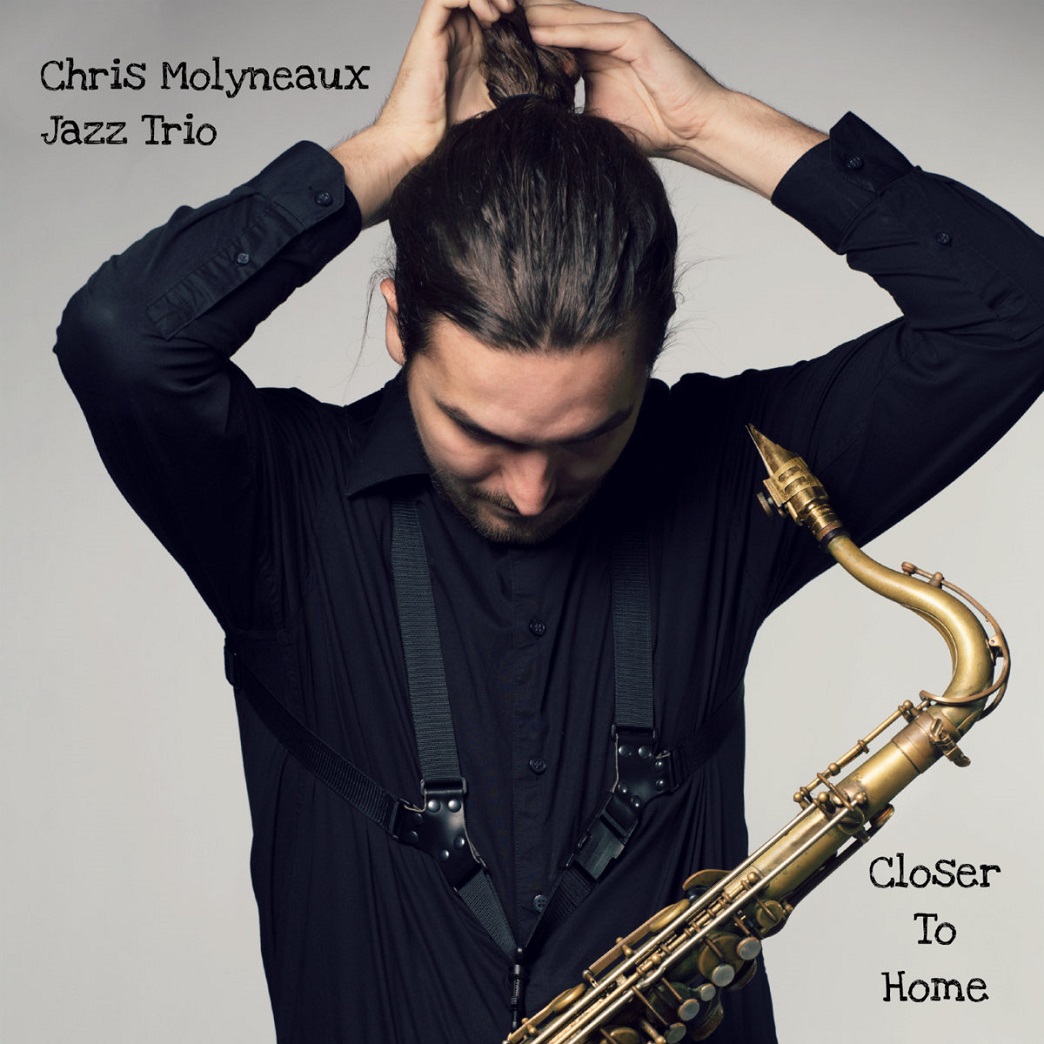
Chris Molyneaux Jazz Trio - Closer To Home (October 31, 2018)


The Chris Molyneaux Jazz Trio is the latest project of Canadian saxophonist Chris Molyneaux. With his bandmates Wesley Collett-Taylor on bass, and Mark Athanasiadis on drums, this band has written and performed six original jazz songs influenced by R&B and funk music to create a unique experience only heard on their debut album, "Closer to Home".


Chris Molyneaux - tenor saxophone
Wesley Collett-Taylor - bass
Mark Athanasiadis - drums

1. Up For Grabs 07:38
2. Don't Pity The Fool 06:03
3. Someone's Husband 04:59
4. Begin Again 08:14
5. Restoration 08:10
6. Consider This 05:19

Produced and mixed by Mike McKyes of The Grove Productions
Mastered by Siegfried Meier of Beach Road Studios

All songs written by Chris Molyneaux except for "Someone's Husband", written by Wesley Collett-Taylor

I Hold the Lion's Paw - Live @ COMA (2018)


Fela Kuti meets Miles Davis, meets Karlheinz Stockhausen. Melbourne psychedelic jazz collective I Hold the Lion's Paw sounds familiar and, at the same time, like nothing else you’ve ever heard. 

Nominated for ‘Best Australian Jazz Ensemble’ in the 2018 “Jazz BELL Awards”, I Hold the Lion’s Paw (IHTLP) is led by Reuben Lewis and features some of Australia’s most exciting musicians. The music is born out of an organic cross-over of afro-beat, jazz and outré electronics. Expect to hear as much as electro-acoustic noise, slowly evolving soundtracks, afro-beat inspired grooves and psychedelic free jazz. 

“Is this exactly where jazz needed to have ended up in the year 2018? It is an exhilarating spirit that moves this collective, taking the best from the past, and from the future and grafting them to the present.”
- John Hardaker, Words About Music 

“Danceable, infectious, and the inevitable deconstructions are subtle - ★★★★
– Eric Myers, The Australian

Reuben Lewis

David Brown - electric bass
Ronny Ferella - drums
Fabian Hevia - percussion

Abstract Playgrounds 05:48 / 44:56

Recorded live by Marty Jones on 5th March, 2018
at the Wheatsheaf Hotel, Adelaide
Mixed by Jarrad Payne
Artwork by Loretta Wilde

Centazzo / Schiaffini / Armaroli - Trigonos (DODICILUNE / IRD 2018)


Prodotto dall'etichetta pugliese Dodicilune, esce mercoledì 31 ottobre - distribuito in Italia e all’estero da IRD e nei migliori store online da Believe Digital - "Trigonos", il nuovo lavoro discografico del trio composto da Andrea Centazzo (percussioni, malletkat, sampling), Giancarlo Schiaffini (trombone) e Sergio Armaroli (vibrafono), artisti protagonisti indiscussi della scena jazz sperimentale contemporanea italiana. Nei dieci brani originali, Trigonos è l’imperfetto equilibrio di tre artisti che «viaggiano, cercano insieme. Cercano il dettaglio, la bellezza non come valore estetico autocompiacente, ma moltiplicatore di energie creative, di visioni, di sguardi sulla vita. La trasgressione sta nella dilatazione del proprio Dna musicale per offrirlo agli altri come spazio d’indagine sonora, di idee da condividere. Ma anche nell’esporla con una poetica quasi sottovoce in un momento nel quale troppi urlano parole orrende», sottolinea Paolo Carradori nelle note di copertina.  

«Può risultare forse emblematico ma al primo approccio con Trigonos mi è sorta alla mente una riflessione, letta qualche tempo prima, di Salvatore Sciarrino, compositore apparentemente lontano da ciò che stavo ascoltando. Sono andato a ricercarla: ”Io sono convinto che l’evoluzione della musica consista nelle trasgressioni di singoli individui, rispetto ad un vocabolario comunemente accettato. Come dire che più è trasgressivo il linguaggio, di tanto diviene personale”. Devo dire che la connessione, l’interdipendenza trasgressione/evoluzione mi piacque subito», prosegue Carradori. «Anche se estrapolato da un contesto più ampio, un ragionamento quello di Sciarrino che rende bene l’idea su una musica in continuo movimento, in permanente negazione di estetiche consolidate, come rovesciamento di cliché noti. Il compositore non parla di nuovo, termine rischiosissimo e altamente ambiguo, ma di superamento di un vocabolario acquisito. Qui sta il nodo della questione, allora», continua. «Sergio Armaroli, Andrea Centazzo e Giancarlo Schiaffini in Trigonos lavorano, riflettono, creano insieme sulle loro storie musicali, intellettuali e umane. Li accomuna l’improvvisazione, come procedura, spazio mentale, immersione nei suoni, in se stessi. Artista irrequieto, emancipatore della percussione, affascinato dalla multimedialità, compositore, Centazzo svela lo scenario con un colpo di gong. Suono evocativo, spirituale. Il vibrafono di Armaroli, poeta, pittore, provocatore visuale, risponde e si muove come una farfalla colorata che svolazza elegante. I due viaggiano per un po' insieme senza scontrarsi, sfiorandosi, sognando. Il trombone di Schiaffini, forte di storie che vanno da New Orleans a Ornette Coleman, da Cage a Scelsi, irrompe con quel distacco concreto che modella, offre forma ai suoni. L’elettronica satura con discrezione, amplifica lo sfondo».

Compositore, percussionista e artista multimediale italiano, Andrea Centazzo è stato per 40 anni un audace esploratore dell'arte contemporanea. Nei primi anni '70 ha introdotto un nuovo concetto di percussione, migrando dal Free Jazz a una nuova forma di musica improvvisata. Alla fine degli anni '70, Centazzo fu uno dei fondatori della NY Downtown Music Scene con la sua collaborazione con John Zorn, Tom Corra, Eugene Chadbourne, Toshinori Kondo e altri, documentati in molti album. Nel 1976 fonda la ICTUS Records, una delle prime etichette gestite da musicisti, registrando con Steve Lacy, Evan Parker, Pierre Favre, Derek Bailey, John Zorn, Alvin Curran, Albert Mangelsdorff, Don Cherry e molti altri. Lasciò la scena musicale improvvisata nel 1986, spostandosi poco dopo a Los Angeles, CA e dedicandosi alla composizione e al video making, Centazzo realizzò 3 opere, 2 sinfonie e quasi 500 composizioni per tutti i tipi di ensemble, oltre a molti film pluripremiati.

Torna a esibirsi dal vivo nel 1998, ha creato concerti da solista e concerti solisti multimediali, suonando dal vivo in sincronia con i video che spara e modifica. Il suo ultimo progetto "Einstein's Cosmic Messengers" è stato prodotto da LIGO, Caltech e NASA. La Biblioteca dell'Università di Bologna al DAMS, recentemente dedicata al compositore Fondo Andrea Centazzo dove tutte le sue opere sono raccolte e messe a disposizione di studenti e studiosi.


Compositore, trombonista e tubista, Giancarlo Schiaffini è nato a Roma nel 1942. Laureato in fisica, studia musica da autodidatta e partecipa alle prime esperienze di free jazz in Italia negli anni ’60. In quel periodo comincia la sua attività di compositore ed esecutore nel campo della musica contemporanea e del jazz. Ha studiato a Darmstadt con Stockhausen, Ligeti e Globokar e ha fondato il gruppo strumentale da camera Nuove Forme Sonore. Fa parte della Italian Instabile Orchestra. Ha tenuto corsi e seminari in Italia e all’estero e insegnato presso i conservatori “G. Rossini” di Pesaro, “A. Casella” dell’Aquila e nei corsi estivi di Siena Jazz (strumento, improvvisazione, composizione). Ha collaborato con John Cage, Karole Armitage, Luigi Nono e Giacinto Scelsi. Ha partecipato, come compositore ed esecutore, a stagioni concertistiche e festival tra i più importanti del mondo. Sono state a lui dedicate composizioni da numerosi autori come Scelsi, Nono, Alandia, Amman, Castagnoli, Dashow, Guaccero, Laneri, Mencherini, Renosto, Ricci, Villa-Rojo. Ha inciso dischi per BMG, Curci, Cramps, Edipan, Horo, Hat Records, Pentaflowers, Pentaphon, Red Records, Ricordi, Vedette. Gli è stata dedicata una voce dalla Biographical Encyclopedia of Jazz (Oxford University Press) e dall’Enciclopedia della Musica (Utet/Garzanti).

La poetica di Sergio Armaroli abbraccia molteplici ambiti espressivi alla costante ricerca di un’unità dell'esperienza. Si dichiara pittore, percussionista concreto, poeta frammentario e artista sonoro oltre a fondare il proprio operare all'interno del "linguaggio del jazz" e dell'improvvisazione come "estensione del concetto di arte". Concentrato su una scrittura diffusa, consapevole di essere produttore "di-segni", dove l'invenzione verbale è "gesto poetico", nella vita è costretto ad uno sforzo pedagogico costante (www.sergioarmaroli.com). Svolge un’intensa attività artistica caratterizzata da un eclettismo stilistico accentuato con una tendenza alla dispersione linguistica come alla rinuncia e ad una forte predilizione per il "silenzio". Si è esibito in qualità di "attore musicale" e percussionista concreto in prestigiosi teatri e sale da concerto internazionali esponendo come artista in ambito off e sperimentale. Ha al proprio attivo numerose pubblicazioni in campo teorico musicale e poetico. 

L’etichetta Dodicilune è attiva dal 1996. Dispone di un catalogo di quasi 250 produzioni di artisti italiani e stranieri ed è distribuita in Itali a e all'estero da IRD in circa 400 punti vendita tra negozi di dischi e store. I dischi Dodicilune possono essere acquistati anche online, ascoltati e scaricati su una cinquantina tra le maggiori piattaforme del mondo.

Andrea Centazzo, percussion, malletkat, sampling
Giancarlo Schiaffini, trombone
Sergio Armaroli, vibraphone

1 - Deuterium #1
2 - Deuterium #2
3 - Metapenta #1
4 - Metapenta #2
5 - Reloaded Again
6 - The Real Vibone
7 - Trigonos #1
8 - Trigonos #2
9 - Trigonos #3
10 - Trigonos #4

Compositions by Andrea Centazzo/Giancarlo Schiaffini/Sergio Armaroli except 1, 2, 3, 4 by Andrea Centazzo/Sergio Armaroli, 5 by Andrea Centazzo/Giancarlo Schiaffini, 6 by Giancarlo Schiaffini/Sergio Armaroli

Production by Sergio Armaroli and Gabriele Rampino for Dodicilune edizioni, Italy
Label manager Maurizio Bizzochetti (www.dodicilune.it) 
Recorded 8, 9 Dicember 2017 by Piergiorio Miotto at Il Pollaio, Ronco Biellese (Bi), Italy
Mixed and edited January 2018 by Andrea Centazzo at Ictus Records Studio, Long Beach, CA, USA
Mastered September 2018 by Piergiorgio Miotto at Il Pollaio, Ronco Biellese (Bi), Italy 
Covers and photos by Roberto Masotti
Contact: www.sergioarmaroli.com, www.erratum.it


Tuesday, October 30, 2018

Ghetto Kumbé esta semana en España: 31/10 Granada, 01/11 Madrid, 02/11 Barcelona


Ghetto Kumbé, esta semana en España

Tras su arrollador paso este verano por Etnosur y Pirineos Sur, los colombianos regresan a la península para dar tres conciertos en Granada, Madrid, y Barcelona.


Ghetto Kumbé son la tríada cósmica que desde finales de 2015 llevan revolucionando la siempre innovadora escena colombiana. Este combo de brujos, percusionistas y maquinistas invoca a los públicos del mundo entero y los espíritus de la rumba digital y consciente en unos rituales de corte indígena con base de percusiones caribeñas y ritmos afro-colombianos, acompañados de electrónica minimalista y elegante. Ghetto Kumbé es la fiesta del gran barrio donde vivimos, la Madre Tierra.

Este verano pudimos disfrutar de ellos por primera vez en España en los festivales Etnosur y Pirineos Sur, y ahora vuelven para sumergirnos en su espéctaculo de salas, donde harán que el público olvide el frío del exterior.


Granada - 31 de octubre
Mestizao Festival - Sala El Tren

Madrid - 1 de noviembre
Sala Caracol

Barcelona - 2 de noviembre
La Cumbiamba vol. 0 - La Nau

Domenico Caliri Cal Trio - Aria Mossa (CALIGOLA RECORDS 2018)


Tra i più importanti chitarristi jazz italiani degli ultimi vent’anni, Domenico Caliri non è, contrariamente a molti suoi colleghi, musicista discograficamente prolifico, soprattutto come leader. Proprio per questo ogni suo nuovo lavoro, sempre lungamente meditato, risulta pregnante di contenuti e non delude quasi mai i suoi numerosi estimatori.

In questo suo quarto disco per Caligola il chitarrista siciliano, ormai bolognese d’adozione, rispolvera quel Cal Trio che tanto aveva fatto parlare di sé nello scorso decennio, quando al suo fianco c’erano Antonio Borghini e Cristiano Calcagnile, poi sostituito da Federico Scettri. Da un paio d’anni – dopo la faticosa ma esaltante esperienza con l’ensemble allargato di «Camera lirica» (2014) – Caliri è tornato a frequentare la formazione a lui molto congeniale del trio, trovandosi a suonare abbastanza regolarmente con il contrabbassista Stefano Senni ed il batterista Marco Frattini.

Concerto dopo concerto è così rinato, dopo qualche anno di pausa, il Cal Trio, delineando un’identità sempre più precisa ed originale, tanto da spingere il suo leader a scrivere nuova musica e quindi a registrarla. Con l’unica eccezione rappresentata da My mind on a surf, composta nel 2013 per «Dialoghi a corde», disco registrato in duo con Ares Tavolazzi e pubblicato nel 2015 dall’Onyx Club di Matera, tutte le altre composizioni sono state scritte fra il 2015 ed il 2018; Nini G. proprio a ridosso della registrazione.

Sia i brani più impegnativi, come Aria mossa e Serpe, caratterizzati da arpeggi veloci e continui cambi di tempo, che quelli apparentemente più “leggeri” e scanzonati, come la già citata My mind on a surf o la latineggiante M’usciau, hanno in comune la ricerca di una cantabilità melodica ed allo stesso tempo l’irregolarità, spesso imprevedibile, della struttura ritmica.

Tutti i brani del chitarrista sono infatti allo stesso tempo melodici e “storti”, una caratteristica consolidata del suo stile compositivo, ed il lavoro svolto dalla solida coppia ritmica formata da Senni e Frattini per cercare di smussare degli angoli spesso molto spigolosi, risulta a tal fine encomiabile e prezioso.

David Dominique - Mask (ORENDA RECORDS November 9, 2018)


David Dominique's forthcoming album, Mask, is a surrealist, cross-genre expression of angst and catharsis, an exploration of Dominique’s diverse heritage and musical interests, from 60s jazz to avant-rock to contemporary classical. 

Written over eight years, Dominique's new Orenda Records release bounds between styles, strategies, attitudes and textures. Somehow, the project furthers the language Dominique developed on his enthralling 2013 album, Ritual, while offering a perpetual sense of surprise. 

Mask’s aesthetic is one of upheaval; during the period in which he composed this music, Dominique, a Ph.D. with a thriving academic career, moved across the U.S. three times. He also endured tremendous loss, with his father, grandmother and uncle passing away within a span of 18 months. A cycle of grief followed, during which Dominique grasped at the fractured pieces of his personal and family history, in hopes of reassembling them into a cohesive identity. 

That’s the process in play throughout Mask: an artist in the midst of profound, sometimes painful change, inhabiting and discarding one stylistic or cultural veil after another. The music feels like a surrealistic, stream-of-consciousness dreamscape where any part of Dominique’s imagination or memory can suddenly emerge in full color, without warning or musical transition. While often rollicking and joyous on the surface, these sonic collages are the composer’s attempt to heal his inner strife—a continuing catharsis rooted not only in the feeling of loss but in Dominique’s lifelong effort to communicate through multiple heritages. 

In the end, however, Mask’s seemingly incompatible parts are embraced and normalized into a fluid listening experience that remains compelling even when the music’s backstory goes untold. A multi-hyphenate artist with wide-ranging tastes and curiosities, Dominique’s inside-outside take on the avant-garde is as entertaining as it is cerebral, with points of entry for those coming from jazz, the rock underground or the contemporary classical scene. 


The brilliantly raucous small-group music of Charles Mingus with Eric Dolphy might be a good touchstone - Dominique names Mingus at Antibes as an all-time favorite - but there’s so much more in the mix, built up and then refracted in cubist fashion. “Licks and rhythms are reimagined and warped from multiple perspectives, techniques I’ve learned from Stravinsky - especially the ballet Petrushka,” Dominique writes. “In many of these cases, a particular lick or groove is repeated obsessively, in the mode of American minimalists like Steve Reich - in my case representing fixation on a particular thought and the return to that thought again and again.” He has immersed himself in the art of two renowned Austrian composers, and throughout Mask you can hear the sharp experimentalism of Beat Furrer as well as the electronic and avant-rock leanings of Bernhard Lang. 

Joining Dominique is a powerful cast of collaborators up to the tasks set by his visionary music. Shaping potent, direct sound and performances as the album’s producer is jazz trumpet great Nolan Shaheed, a former lead player for the Count Basie Orchestra who’s also shared stages and studios with Miles Davis, Marvin Gaye, Stevie Wonder, Freddie Hubbard, Jimmy Smith, Phil Collins, David Byrne, Tom Waits and others. Dominique’s cohorts include some of Los Angeles’ brightest rising musicians, all of them sharing his love for composing and his stylistic wanderlust. In addition to Dominique on his trademark flugabone, a compressed valve trombone most often used in marching bands, Mask features Brian Walsh (tenor saxophone, clarinets, co-producer); Joe Santa Maria (alto saxophone, flute); Sam Robles (alto and baritone saxophones); Lauren Baba (viola); Alexander Noice (guitar and electronics); Michael Alvidrez (basses); and Andrew Lessman (drums and drumKAT). Their credits cover a vast range of forward-looking artists, including Eugene Chadbourne, Vampire Weekend, Solange, Niia, Vinny Golia and Wadada Leo Smith.

Raised in New York City and Long Island, Dominique lived on and off in Los Angeles for a decade, and his time in daring L.A. ensembles like Killsonic proved a robust influence on his current music. He is now based in Richmond, Virginia, and works as a professor of music composition and theory at the College of William & Mary, in Williamsburg. In 2013 he conducted his score for Starcrosser’s Cut, Joseph Tepperman’s innovative theatre piece about the disgraced astronaut Lisa Nowak. 

“The musical composition by David Dominique never merely backs or underscores the action,” the Hollywood Reporter said, “but instead comprises an integral component of the overall expression.” Dominique garnered equally effusive praise for his Ritual album, a striking showcase for his ingenious blend of divergent sounds, evoking everything from Mingus and Ellington to Ligeti and Furrer and on to Blonde Redhead and Flying Lotus. “A maximalist inspired by minimalists, composer David Dominique practices a rowdy, muscular brand of modernism. Picture Charles Mingus staging a hostile takeover of the Sun Ra Arkestra with arrangements by Sonic Youth,” DownBeat said. “Dominique’s band teeters on the fulcrum where discipline crumbles into anarchy.” 

Dominique will tour with an octet in support of Mask this fall, hitting Brooklyn, Washington, D.C., Baltimore, the Philadelphia area and three cities in Virginia: Richmond, Charlottesville and Williamsburg. He will direct the ensemble and play flugabone, and the band will feature cornetist Victor Haskins, the director of the Kennedy Center’s Jazz Outreach Program, and Ian McColm, acclaimed DC-based drummer and composer. 

Steuart Liebig Men-Tot Six: Last Call (ORENDA RECORDS 2018)


The idea for this project started back in 2008. I would take two related bands that I’d been writing for—The Mentones (Tony Atherton, Bill Barrett, Joe Berardi, me) and the Tee-Tot Quartet (Dan Clucas, Scot Ray, Joe Berardi, me)—and combine them. I started to write the music, I started the artwork, I had the album title—but life and the world intervened. 

Then in 2017, I had the opportunity to play a fairly high-profile gig and I asked to do this, my deferred dream band. The presenter put faith in me (thank you, Lisa Mezzacappa!) and Men-Tot Six was back. 


I reworked the two and half tunes I had already started and then got to work on some other preliminary sketches. As usual, original ideas can start changing once the music starts coming out. For example, the plan was to write seven tunes, but after a couple of rehearsals, an eighth emerged (which ended up being the title tune, nine years after the fact). And the writing itself changed. Some of it became quite a bit more contrapuntal then I had anticipated . . . what had started as an extension of the skewed American music I’d done for the two bands became something a bit different—something (perhaps) a bit more skewed—once we got into it. 

The guys in the band . . . they’ve put their talents and hard work into this project. They really supported and encouraged me (even when I wasn’t so great to be around), which is incredibly important in the creative world. (I’m grateful!) 

They also played their asses off. There are too many moments, great solos, bits of interaction, etc., to go into detail. One of the great joys for me is the way this band can be fluid with the material (and there is a bunch of written music)—we can go skittering off the page. Just take a listen. 


Tony Atherton - Alto Saxophone
Bill Barrett - Chromatic Harmonica
Scot Ray - Slide Guitar
Dan Clucas - Cornet
Joseph Berardi - Drumset, Percussion
Steuart Liebig - Contrabass Guitars

Recorded 4-5 November 2017 by Wayne Peet at Newzone Studios, LA
Mixed by Wayne Peet and Steuart Liebig
Mastered by Wayne Peet

All music by Steuart Liebig
© sisong music (ASCAP) 2018

1. Crescent Limited 07:36
2. 7-06-71 10:07
3. Trouble By The Toe 07:07
4. Smokey Valley Lament 11:21
5. All Lit Up & Nothing To Do 07:08
6. No Picture No You 09:56
7. Honeysuckle Bounce 11:11
8. Last Call 08:24