Friday, March 17, 2017

Free Walking Trio - Mind Our Business (feat. Nanni Teot) ANGAPP MUSIC 2017


I primi esperimenti di pratica collettiva del trio formato da Giuliano Vozella (chitarra), Michele Ciccimarra (batteria e percussioni) e Giovanni Cristino (pianoforte e tastiera) hanno come sfondo i comuni studi nel conservatorio di musica N. Rota di Monopoli. L'affinità è alimentata dal comune bagaglio didattico e dal differente percorso musicale che i tre seguono fuori dall’istituzione praticando i linguaggi del rock, del blues, del jazz e dell’improvvisazione libera, congiunti ad un interesse poliedrico per la produzione musicale in genere e ad un'attenzione per la musica dal vivo. Nel 2014 il chitarrista Giuseppe Pascucci dopo aver affiancato il trio per un periodo, sostituisce Giuliano Vozella, contribuendo assieme a Cristino e a Ciccimarra alla costituzione di un nuovo repertorio originale.

Insieme collaborano nelle residenze per artisti Focare e Con.Divisione nelle quali si misurano con altri media espressivi. Nel agosto 2015 incontrano Angapp nell’ambito del Festival “neXt”, che propone al trio una collaborazione per la produzione di un disco. Nel corso dell’anno il trombettista Nanni Teot si unisce al trio dopo averli seguiti per alcuni concerti, arricchendo di un timbro nuovo e di un’altro livello narrativo la formazione. Ad aprile 2016 il quartetto realizza le registrazioni del primo disco con Angapp records: "Mind Our Business“ a nome di Free Walking Trio feat Nanni Teot.


The Free Walking Trio was born in 2012 with M. Ciccimarra - drum, G. Vozella - Guitar, G. Cristino - Keyboard and Piano, during their jazz class studies in the Conservatorio di Musica N. Rota in Monopoli. The experimental sound of the trio conforms with their musical practice explored outside the boundaries of the music school and beyond: playing jazz, world, rock even classical music, creating a musical crossroad with a specific identity in original compositions. In 2014 after a short period in 4tet with a double guitar, G. Pascucci - Guitar, replaces Vozella and the FWT renews its repertoire with new original compositions.

They join special context of musical performance and art exhibitions in “Focare” and “Con.Divisione” since 2012. In 2015 they meet N. Teot - Trumpet and Flugelhorn: he brings about another narrative level and a warm tone to the compositions. In August 2015 during the “nExt” Festival, in Corato, they meet An-gapp Music label. They will produce the first Free Walking Trio feat Nanni Teot album, out in February 2017: MindOur Business, available in the main digital stores.

1. At the Corner 6:17
2. Cupaclap 2:53
3. Fenomenali poteri cosmici in un minuscolo spazio vitale 5:37
4. Matted 2:05
5. Lo 10:19
6. Go Up 8:33
7. Wait 7:12
8. Plue 2:45
9. Go Up (Alternative) 8:21


Reflections in Cosmo - Reflections in Cosmo (RareNoise Records 2017)


The fire and fury of ‘60s free jazz and the tumult of electronic rock-tinged experimental music is on full display on this new powerhouse offering from four cutting edge Oslo-based musicians collectively known as Reflection in Cosmo. With Kjetil Moster on saxes, Hans Magnus Ryan on guitar, Stale Storlokken on keyboards and Thomas Stronen on drums, these four kindred spirits strike a tumultuous accord on their self-titled debut on RareNoiseRecords, which represents Moster’s followup on RareNoise to his edgy avant-jazz collaboration in 2014 with the Hungarian power trio Ju. At times recalling the ferocious intensity of the late ‘80s free jazz quartet Last Exit (Peter Brotzman, Sonny Sharrock, Bill Lawell, Ronald Shannon Jackson), this potent Norwegian outfit pushes the envelope with Moster’s blowtorch intensity on baritone and tenor saxes, Ryan’s wailing electric guitar work, Storlokken’s crunchy, distortion-laced keyboards and Stronen’s thunderous drumming.

“This band was initiated by Thomas and Ståle,” explains Moster. “They have been releasing albums on Rune Grammofon under the name Humcrush for 15 years and they wanted to try out an expanded direction, both in terms of band members and references. They asked me and Hans Magnus ‘Snah’ Ryan from Motorpsycho, actually not being aware of the fact that Hans Magnus just took over for Ståle in my own quartet Møster! Yes, it’s a small inbred world, this.”

This small world that Moster refers to is the world of genre-crossing musicians operating in the twilight zone between experimental electric jazz, noise rock and psych rock. As Moster says,

“Instead of the jazz-rock we had in the 70’s and 80’s, maybe we now can talk of rock-jazz? Jü would definitely be a part of this fellowship, as would Elephant9 and Møster!”

Add Reflection in Cosmo to that list. And whether or not they are following in the footsteps of Last Exit, Moster is quick to point out, “Any comparison to Brötzmann I take as a big compliment! He has definitely been a huge influence on me for big periods of my musical upbringing. Last Exit is sure ringing in the back of my head in this band, even though we have not been discussing explicit references like that. We all bring in our own musical backgrounds and add it to the stew.”

Recorded in spacious Øra Studio in in Trondheim, Norway, Reflection in Cosmo reveals some uncanny group-think by these four Norwegian musicians. “I don’t like rules in music,” says Stronen, “and with the background we all have, from free-music to hip-hop and contemporary music, that’s not going to be an issue.”

Moster does bring a Brotzman-like intensity to bear on his bari blowouts like “Fuzzstew,” “Cosmosis” and the kinetic “Perpetual Immobile.” He switches to soprano sax on the spacious, ambient number “Ironhorse” and blows bold tenor lines on “Cosmic Hymn” and the title track. Ryan unleashes his ferocious guitar chops on the aptly-named “Fuzzstew” and “Balklava.” Says Moster of his six-string partner,

“Hans Magnus is one of my favorite guitarists of all time. His sense of texture and ability to build tension and raise this hellacious ferocity is quite unique. I think it comes from playing for about 30 years with Motorpsycho, thus rooted in a heavy but detailed rock aesthetic, but still been deeply into a broad variety of improvisational styles.’

Drummer Stronen is featured traversing the kit with power and precision on the crushing title track. Regarding his own drum influences, Stronen points to myriad inspirations.

“As a kid I was lucky to play a lot with older and better musicians. The first thing I learned was to listen to the other musicians and react to what they did. I played everything from pop/rock music to free improvised music and got the chance to perform on stage quite early. By the time I turned 18, I started to practice seriously. Since then I’ve been influenced by lots of jazz music, from Pharaoh Sanders, Miles Davis and John Coltrane to lots of European musicians on ECM Records. For a longer time, I was massively into Japanese classical music, West African Wolof music and American minimalist composers. Drumming-wise, I’ve picked from the history of jazz, Japanese drum ensembles and classical drummers. Ultimately, it doesn’t matter what you dig into as long as you dig. It’s a long and thorough process of collecting what’s great about what you hear and putting that in the big melting pot, and with a large vocabulary you can put what’s needed into the music.”

Their combination of refreshing new ideas, uninhibited improvisations and heavy-duty, throbbing intensity places Reflection in Cosmo in rarefied air. “The main key to the four of us, I think, is that we´re open minded and don’t have a presumption of how to play,” adds Stronen. “I find Snah, Kjetil and Ståle to be daring, curious and generous in the way they play. Our agenda is to put the music in front and not some solo performance. The instruments and way of playing blends well, I think. We all have a lot of energy too, which can make the music powerful.”

1. Cosmosis
2. Ironhorse
3. Cosmic Hymn
4. Balklava
5. Perpetuum Immobile
6. Fuzzstew
7. Reflections In Cosmo

Kjetil Møster: saxophones
Hans Magnus Ryan (Snah): guitar
Ståle Storløkken: keyboards
Thomas Strønen: drums


Rebecca Kilgore & Bernd Lhotzky - This And That (ARBORS RECORDS 2017)


You know those moments in conversation when communication truly works, so that simple words carry deeper meaning - when speaker and hearer get one another? This communion can happen when musicians who live their art deeply create a heartfelt kinship. This CD captures fifteen such lovely interludes created by a most empathic pair. ~Michael Steinman

01. I'm Shooting High (2:59)
02. Lotus Blossom (3:40)
03. Pick Yourself Up (2:52)
04. Baltimore Oriole (4:20)
05. Flying Down To Rio (2:53)
06. A Flower Is A Lovesome Thing (2:49)
07. Grievin' (4:26)
08. Who Cares (3:10)
09. Star Crossed Lovers (2:44)
10. By Strauss (3:11)
11. Do-Do-Do (4:30)
12. The Best Thing For You (2:59)
13. I Hear The Music Now (2:47)
14. Sweet And Lovely (3:24)
15. You Can't Lose A Broken Heart (3:24)

Rebecca Kilgore, vocals
Bernd Lhotzky, piano


Organized Crime - Kiss the Ring (2017)


by George Wilde / liveforlivemusic.com

unk is a way of life in New Orleans. Tracing back to The Meters, the progenitors of the style, funk music has moved audiences—literally and figuratively—for decades. In line with renewed post-Katrina interest in the city, the funk culture has reached a new critical mass, with nightly live-music dance parties on Frenchmen Street, as well as large-scale funk events like Oak Street Block Party, Fiya Fest, Bear Creek Bayou, and packed shows for contemporary funk luminaries Dumpstaphunk, Eric Krasno, Nigel Hall, and the extended family of acts and side projects loosely organized around the festival favorite, Lettuce.

So if New Orleans is the spiritual and geographical home of the genre, where the hearth of the backbeat groove shines brightly, consider Organized Crime to be Keepers of the Flame. While out-of-towners descend upon New Orleans each year at Jazz Fest to ply their booty-shaking wares to the masses, Organized Crime is a collective of transplants who have come to call New Orleans home. Working day and night in the trenches of the live music scene, the band’s latest effort Kiss The Ring transcends the nightly party (though they are fluent in that craft) to develop a new iteration of the New Orleans funk sound.

Consider the title track, opening with Patrick Kelleher’s rock-solid drum groove, worthy of any breakbeat crate-digger’s sample collection. While the song employs the classic funk elements—unison pentatonic scale riffs, dance beat, drums/organ/guitar instrumentation implied by the band name—it morphs from the vintage sound to the present day with Andriu Yanovski’s crunchy synth low-end. Delay-effected arpeggios imply an R&B tinge, perhaps a byproduct of his weekly Baptist church service gig, where he accompanies the sermons of a black Southern preacher.


This student-of-the-past turned contemporary-creator is thematic throughout the record. Blue Note organ trio interludes are interspersed with love songs. “Come Back” features heartfelt lyrics and a soulful trombone solo from Evan Oberla (Allen Stone, Elle King, OAR), an iconic instrument in Organized Crime’s home town. “Freaky Girl” highlights Henry Green’s (Brass-A-Holics, Big Easy Brawlers) R&B stylings, as well as prog-rock guitar tones. The band’s cultivated musical training comes through with the complex rhythmic and melodic composition “Lion’s Den.”

But perhaps most important for a band that lives, breathes, and sings New Orleans is the inclusion of two covers. First is legendary New Orleans jazz and funk drummer James Black’s “Storm In The Gulf.” If taken figuratively and symbolically, including this track signals the band’s claim to a place in the culture (i.e. they are the storm). If taken literally, the choice could signal the uneasy position of a city whose very existence hangs in the balance of rising sea levels and ever more volatile weather. This nod to the significance of climate change in New Orleans life is driven home with the final track: Tower of Power’s classic “Only So Much Oil In The Ground.” The lyrics—convincingly rendered by local recording engineer and vocalist Gio Blackmon—serve as a reminder to a foolish fossil fuel-addicted society, as pressing today (if not more) as they were when originally recorded.

The album is also an opportunity to expose local horn-section Brass Lightning (Evan Oberla, Ari Kohn, Cyrus Nabipoor), who has made their own way as a live and recorded act, collaborating with rising star Tarriona “Tank” Ball and punk-rock percussion expert Mike Dillon.


The 9-track opus was brought to life by by two-time Grammy Award-winner producer Chris Finney, who himself is steeped in the NOLA traditions having worked with legends Dr. John, Allen Toussaint, every member of The Meters, Dumpstaphunk, and more. Informed by the inimitable musical past of the city but unafraid to dig in to the contemporary, Finney offers the same expertise of experience to Organized Crime that he has leveraged in cultivating The Revivalists, Sexual Thunder!, and Naughty Professor.

With a record release party planned for March 16 at Gasa Gasa in New Orleans, and an summer East Coast tour in the works, Organized Crime is staking a claim to the past, present, and future of the New Orleans funk brand. Listen closely. Pay your dues.

1. Kiss the Ring
2. Storm in the Gulf
3. Come Back
4. Freaky Girl
5. Goodfellas
6. Lion's Den
7. Do You?
8. Cop Out
9. Only so Much Oil in the Ground

Andriu Yanovski - Keyboards, Hammond B3, Synthesizers, Key Bass, Vocals
Henry Green - Lead Guitar
Patrick Kelleher - Drums
Horn Arrangements by Brass Lightning (Ari Kohn - Saxophones, Cyrus Nabipoor - Trumpet, Evan Oberla - Trombone)
Guest Vocals on "Only so Much Oil in the Ground" By Gio Blackmon


Harriet Tubman - Araminta (SUNNYSIDE RECORDS 2017)


The anthroponym Araminta means “lofty” and “protective.” Araminta was also the given name of one of the most important figures in US and world history, abolitionist Harriet Tubman. Guitarist Brandon Ross, bassist Melvin Gibbs and drummer J.T. Lewis have proudly worn Harriet Tubman’s chosen name as their eponym for nearly 20 years, reaching for the heights of musical expression while preserving elements of their musical path. 

Harriet Tubman’s new recording Araminta is about becoming. It is also about evolution and collaboration. Just as Araminta Ross adopted the name Harriet on her path to legend, Harriet Tubman the band has taken the monumental name for their own partnership and sonic growth. The group’s lengthy association has allowed for an instinctive musical relationship among the members, who have affiliations with music and musicians spanning genres and the globe. Together, their music is a cumulative repository of their musical influences, a sort of transcendental blues. 

For Araminta, the trio invited the astounding trumpet player and musical conceptualist Wadada Leo Smith to add his unique sensibilities to their musical world as an electric improvisatory group. There is evidence of the musical weight that each musician has to bear. Each has his own approach to music, whether it be in motion, gesture or space. Their history comes through in the music they play, which spans nearly 50 years of black music. Though less “weighty” musicians might have found it intimidating to join a group as cohesive as Harriet Tubman, Smith fit right in. When their linguistic elements came together, Tubman and Smith immediately began a joint conversation. 

This ensemble is a manifestation of Tubman’s quest to maintain the thread of creative musical construction that had to a large extent existed in a state of suspended animation for the past 30 years or so in the U.S., a style of musical exploration that was largely blocked in favor of a more conservative brand of jazz. This compositional approach, which blends jazz, rock, funk, dub and electronic music into a reconfigured whole that is Tubman’s singular take on “free” music, is compositionally akin to, and melds easily with, Smith’s own ideas on spontaneous composition. His idea of “concentration of activity,” which frames sound in space and intensity without relying on notation, fit seamlessly within Lewis’s and Gibbs’s multivalent rhythmic constructions and alongside Ross’s personal remix of theoretical and compositional elements as expressed through his guitar. 

As a whole, these elements created an emergent compositional space, a matrix of creativity. None of the pieces on Araminta are traditionally notated. Some music was constructed using the quasi-fractal geometric constructions encoded in quilts made by the Shoowa peoples of Congo as the “score.” This method served to keep the ensemble’s music reflexive, allowing the members of the ensemble to respond to each other spontaneously. 

Recording engineer and producer Scotty Hard was intimately involved in the shaping of the music. He participated in the selection process of the raw recordings from the first two recording sessions, and helped shape the music from the third. He was a vital collaborator, and was instrumental in turning the recordings that make up Araminta into a powerful musical statement. 

The recording begins with the evocative “The Spiral Path To The Throne,” which begins with strident tones from the ensemble, breaking down into a simmering groove with a tremendous dialog between Ross and Smith. “Taken” floats atmospherically until the tension between the overdriven guitar, propulsive bass and rampant drums brings the piece to a controlled boil. Lewis’s steady backbeat introduces “Blacktal Fractal” and establishes a powerful groove with Gibbs that Smith and Ross’s plaintive melody soars over. “Ne Ander” is a powerful piece showcasing each individual on searing solos. 

“Nina Simone” is a sedate meditation with washes of sound that seem to float on a churning electric ether. The otherworldly groove and incendiary solos of “Real Cool Killers” shows the real strength of the trio as the crossroads of many paths of black music, from Funkadelic to Hendrix to Robert Johnson. Smith’s powerful “President Obama’s Speech at the Selma Bridge” is especially moving with the trumpeter communicating his intentions through the air and the trio responding in kind. The recording concludes with the beautifully restrained “Sweet Araminta,” an improvised ballad with an expressive guitar’s vox humana-like response to the smooth bass and skitteringly responsive percussion. 

What does freedom and equality sound like? Harriet Tubman are on a mission to inform the world and, with the addition of the great Wadada Leo Smith on their new Araminta, the ensemble proves that they have all the sonic information needed to be the next step in Black music’s evolution.

1. The Spiral Path To The Throne 06:05
2. Taken 03:04
3. Blacktal Fractal 05:15
4. Ne Ander 08:05
5. Nina Simone 07:26
6. Real Cool Killers 04:59
7. President Obama's Speech At The Selma Bridge 07:02
8. Sweet Araminta 04:04 

Brandon Ross - guitar
Melvin Gibbs - bass
JT Lewis - drums
Wadada Leo Smith - trumpet


Thursday, March 16, 2017

CONCERTOS PORTA-JAZZ: Sábado, 18 março 19:00 + 22:00


Sala Porta-Jazz 
Sábado, 18 março
19:00 + 22:00

TALMOR - IRNIGER
"CounterpointS"


Ohad Talmor - saxofone tenor
Christoph Irniger - saxofone tenor
André Fernandes - guitarra
Demian Cabaud - contrabaixo
Vinnie Sperrazza - bateria

Ohad Talmor é um gigante compositor, arranjador, intérprete e líder, nascido em França, com raízes em Israel, cresceu na Suíça e reside há longos anos em Brooklyn (EUA). A sua experiência passa por trabalhos ao lado dos músicos mais reconhecidos a nível internacional, como Dan Weiss, Lee Konitz, Jason Moran, Joshua Redman, Chris Cheek, Dave Douglas, Carla Bley, Kurt Rosenwinkel, Fred Hersh, Joe Lovano, entre tantos outros.

Dedica-se ao estudo da música e herança hindustani, para além dos diversos projetos nos quais colabora como compositor e saxofonista, e lecciona em Geneve e em Nova York, juntando todas essas experiências e vivências como inspiração para a sua música. Lidera este grupo com Christoph Irniger, um dos mais ativos músicos e compositores suíços, de destaque na sua geração, que conta já com seis discos como líder, de entre os mais de vinte títulos que gravou até agora.

CounterpointS e o seu álbum editado pela Fresh Sound New Talent Records - Subway Lines (2016) - serão protagonistas de um dos concertos mais notáveis deste ano na Sala Porta-Jazz, podemos garantir.


PRÓXIMO CONCERTO SALA PORTA-JAZZ
Sábado 19:00 + 22:00

25 março - Miguel Ângelo Quarteto
João Guimarães - saxofone alto
Joaquim Rodrigues - piano
Miguel Ângelo - contrabaixo
Marcos Cavaleiro - bateria

Auditório da FEUP
- entrada livre - 

27 março, 21:30 
Rui Filipe Freitas Sexteto - "Axis Mundi"
Rui Filipe Freitas - vibrafone
José Pedro Coelho - saxofone tenor e clarinete-baixo  
João Mortágua - saxofone alto e saxofone soprano
Mané Fernandes - guitarra
Filipe Teixeira - contrabaixo
João Martins - bateria

18 abril, 21:30
The Nada
João Guimarães - saxofone
Eurico Costa - guitarra
Simon Jermyn - baixo
José Marrucho - bateria

18 maio, 21:30
AP Quarteto
AP - guitarra
Carlos Azevedo - piano
Filipe Teixeira - contrabaixo
Acácio Salero - bateria

19 junho, 21:30
João Mortágua "AXES"
João Mortágua - saxofone alto e soprano
José Soares - saxofone alto
Hugo Ciríaco - saxofone tenor 
Rui Teixeira - saxofone barítono e clarinete baixo
Pedro Vasconcelos - bateria e percussões
Alex Lázaro - bateria e percussões

CICLO JAZZ DE SANTO TIRSO
Centro Cultural de Vila das Aves
- entrada livre -

1 abril, 21:30 - Renato Dias Trio
Renato Dias - guitarra
Filipe Teixeira - contrabaixo
Filipe Monteiro - bateria

16 junho, 21:30 - AP Quarteto
AP - guitarra
Carlos Azevedo - piano
Filipe Teixeira - contrabaixo
Acácio Salero - bateria

1 julho, 21:30 - Rui Filipe Freitas Sexteto
Rui Filipe Freitas - vibrafone
José Pedro Coelho - saxofone tenor e clarinete-baixo  
João Mortágua - saxofone alto e saxofone soprano
Mané Fernandes - guitarra
Filipe Teixeira - contrabaixo
João Martins - bateria


Jimmy Halperin with Pål Nyberg Trio - Live at A-trane, Berlin (KLANGVERK RECORDINGS 2017)


Jimmy Halperin with Pål Nyberg Trio is a collaboration between the legendary NYC saxophonist Jimmy Halperin and Swedish guitarist Pål Nyberg. Since early 2014, the group has toured extensively and appeared at many of Europe's most important venues for contemporary jazz. 2015 the group released their debut album Snow Tiger, the album received a very warm reception by the press and public.

Now it's time again, two hot nights in Berlin in the end of July 2016 the group recorded two of their concerts at the prestigious club A-Trane, a selection is now being released through Klangverk Recordings as the album Live at A-Trane - Berlin. Jazz recorded in it ́s natural habitat, without cosmetics or vain editing. 

Halperin has a unique place in history of jazz as one of the main standard-bearers of the legacy of Lennie Tristano's New York Cool School. As a former student of Tristano and later Sal Mosca, he has developed a unique sound that is highly influenced by the cool approach that is associated with Tristanos "cool school". Halperin has worked extensively with both Warne Marsh and Lee Konitz, and is today perhaps the most interesting improviser derived from underground jazz scene in New York.

"There´s no doubting he's one of the continent's strongest standard bearers for the straight-ahead jazz guitar sound." (London Jazz News). The Swedish guitarist and composer Pål Nyberg heard and often seen at jazz clubs and festivals around Europe. In recent years, with his original style is getting recognition as a strong voice on the young European jazz scene. 

1. It´s You 6:31
2. Feather Bed 6:06
3. Psalm 7:10
4. Cycle Logical 8:40
5. Wow 5:20
6. Subconscious-Lee 6:49
7. 317 East 32nd Street 6:15
8. All About You 7:02

Jimmy Halperin - tenor saxophone
Pål Nyberg - guitar
Robert Erlandsson - bass
Andreas Fryland - drums


SuPerDoG - In The Court Of The Crimson King (2017)


Un trompette ou bugle, un trombone, un sax baryton et un batteur, un brass band minimal donc, voilà les nouveaux troubadours qui s'infiltrent dans la cour du Roi Pourpre, comme l'avait tenté déjà il y a cinq ans Mederic Collignon avec son groupe électro jazz accompagné d'un quatuor à cordes pour À la recherche du roi frippé.

Comme Robert Fripp, le guitariste enluminé qui accompagne l'histoire d'un groupe à géométrie variable, King Crimson, et pour simplifier deux grandes périodes. L'une, de  1969 à 1974, avec le flutiste saxophoniste, Ian McDonald — coauteur de trois des titres repris ici— qui s'impose dès le premier morceau du premier album : 21st century schizoïd man, au son d'un sax hérissé sonnant aussi free que la guitare frippée. L'autre sans sax, ou presque, de 1981 à nos jours.


Ce cédé singulier, titré comme l'originel, débute pareil, histoire de fonder sa légitimité cuivrée dans cet univers purpurin, en revisitant quatre thèmes de la première période et cinq de la seconde. Un bon équilibre. Et comme toute recréation jazz à partir de chansons de Broadway ou d'ailleurs, il ne faut pas chercher à retrouver forcément l'original.

Mais simplement se laisser porter dans cette réinvention des mélodies, des timbres, des matières, des couleurs, des rythmes, quand ça fonctionne. Et c'est le cas ici, grâce aux arrangements de Florent Briqué, le trompettiste, de Guillaume Nuss, le tromboniste sur Elephant talk.

Vroom Vroom fait d'abord chauffer les moteurs, puis le thème surgit tout rutilant, avant de reviser les soupapes du baryton et le bon coulissage du trombone. Quant aux pistons, pas de problème. Puis le sax de Fred Gardette part en roue libre, essayant de freiner pour retrouver sa troupe et repartir en quadruple vitesse.

Une pause, le temps de parler au vent, qui friselise les cymbales, et finalement laisse la trompette exposer I talk to the wind avant d'enfler en souffles divers, singuliers ou emmêlés.

Mais attention en redémarrant, Dangerous curves à l'horizon, et la batterie de Christophe Telbian s'emballe, au risque de ne pouvoir éviter l'éléphant qui traverse en se dandinant, dansant presque.

Autre pause, Sex sleep eat drink dream tout un programme bien chaloupé en effet, qui se pratique à deux, trois ou quatre.

Après The power to believe, percussif et persuasif, retour aux Indoor games —  jeux de mains, jeux de quatrain — où miroite le trio de cuivre au fil des syncopes. De quoi faire rêver l'enfant Moonchild qui chuchote une étrange berceuse. En souvenir de la pochette du premier album.

Une aventure musicale surprenante, très frippienne dans l'esprit cependant, et qui mérite le détour.

En live à Paris au New Morning le 5 avril avant une tournée en Chine, Taiwan, Thaïlande fin mai début juin.

Alain Lambert
2 février 2017


1. 21 St Century Schizoid Man 05:42
2. VROOOM VROOOM 06:57
3. I Talk To The Wind 06:02
4. Dangerous Curves 05:20
5. Elephant Talk 04:08
6. Sex Sleep Eat Drink Dream 05:03
7. The Power To Believe 06:14
8. Indoor Games 04:55
9. Moonchild 04:50


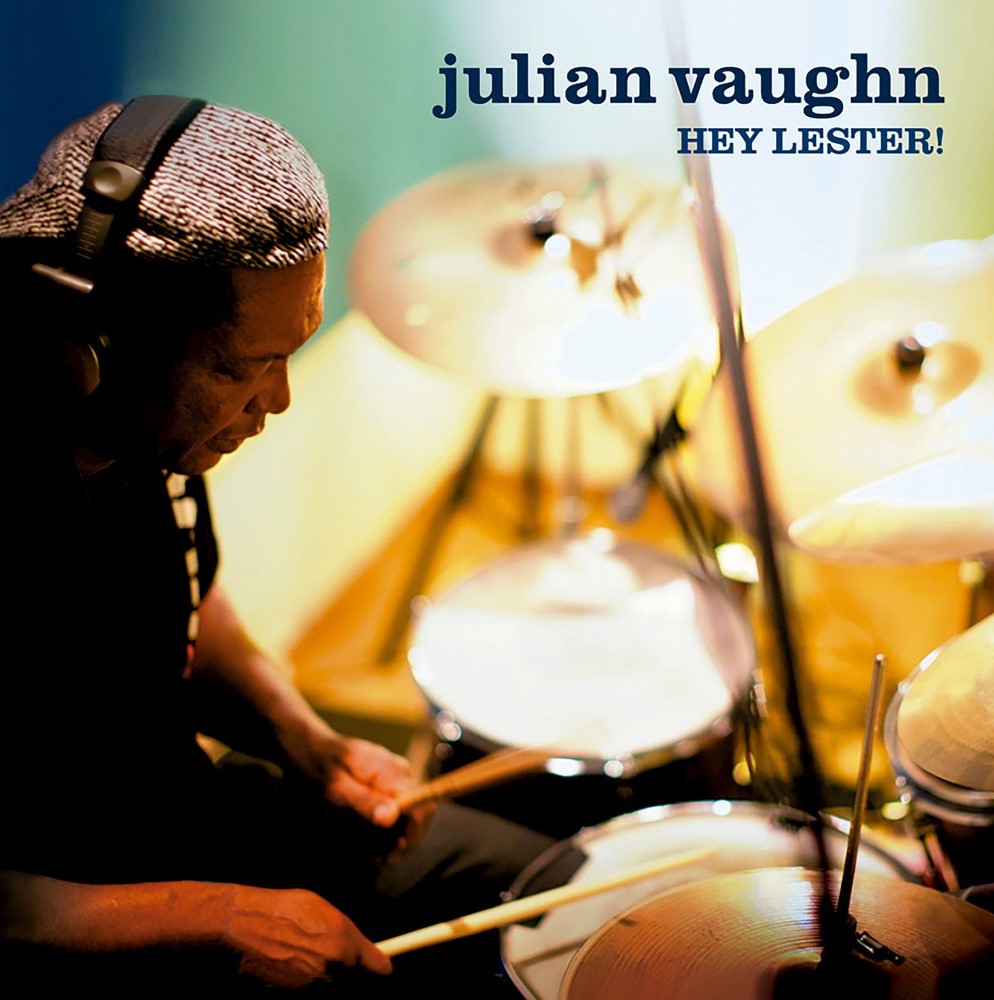
Julian Vaughn - Hey Lester! (FRESH SOUND RECORDS 2017)


Hey Lester! Is a composition dedicated to Lester Bowie who was a great jazz trumpeter and married to the late great Fontella Bass whose big hit was Rescue Me. Lester was one of my biggest influencers and inspirations. A bit more about my original compositions: New Leans was inspired from the rebirth of New Orleans following Hurricane Katrina. The concept of Afro Blues was an idea inspired combining the blues of Nat King Cole and John Coltrane together. What’s Up is a different piece I created alongside my girl Dana Leese Roth. Three Strikes was originally in 3/4 which I later changed to 4/4.


01. Hey Lester! (Julian Vaughn) 4:02
02. Three Strikes (Julian Vaughn) 7:50
03. He Bop (Fredrik Carlquist) 5:06
04. Afro Blue (Santamaria-Vaughn) 4:01
05. New Leans (Julian Vaughn) 5:23
06. Equinox (John Coltrane) 7:30
07. Night and Day (Cole Porter) 6:29
08. Yes or No (Wayne Shorter) 8:34
09. What’s Up (Julian Vaughn) 3:52

Albert Bover (piano)
Fredrik Carlquist (tenor sax)
Dennis “El Huevo” Hernández (trumpet, Flugelhorn)
Barnabas Hangonyi (cello)

Special Guest Artists
Randy Greer (vocals on #4)
Danna Leese Roth (vocals on #9)
Fernando Tejero (keyboards)


Esaie Cid - Maybe Next Year (FRESH SOUND RECORDS 2017)


D’origine barcelonaise, le saxophoniste Esaie Cid débute sa carrière au sein du Barcelona Jazz Orchestra, big-band dirigé par Oriol Bordas,  avec lequel  il enregistre et tourne  avec Jesse Davis ainsi que Frank Wess. Arrivé en France  en 2002, il  fonde  le groupe Jazzpel, quintet jazz aux influences gospel avec trois albums à son actif.


Installé depuis 2005 à Paris, Esaie Cid investit la scène du Jazz français en multipliant ses collaborations en tant que sideman avec de nombreux musiciens (Mourad Benhammou, Michel Pastre, François Laudet, Hugo Lippi, …), en créant son propre quartet (parfois augmenté en quintet avec le concours du trompettiste Fabien Mary), en tenant le premier alto du Red Star Orchestra et du Jean Pierre Derouard Big Band (avec qui il joue aussi de la clarinette dans son Octet en hommage à Armstrong). Il est également sollicité à l'international (Lisa Lindsley, Masatoshi Toshi). Fin connaisseur du style West Coast, il joue la musique d'Art Pepper au théâtre dans la pièce  La solitude du coureur de fond.

Toute cette activité se traduit par une abondante discographie, et la participation à de nombreux festivals (Jazz à Juan, Jazz à Montauban, Banlieues Bleues, Jazz sous les Pommiers, Rhino Jazz, Jazz à Saint-Germain des Prés, Festival de Montlouis, Enghien Jazz, Dima Jazz en Algérie, Saint-Louis au Sénégal …), ainsi qu'à la programmation des clubs parisiens (Sunside, Autour de midi/minuit, Caveau de la Huchette, Petit Journal de Saint-Michel et Montparnasse, Duc des Lombards...).

Lire l'interview d'Esaïe Cid par Jérôme Partage

Sortie mars 2017 du dernier album "Maybe next year" d'Esaïe Cid quartet

«…Esaie Cid, qui porte bien son nom tant sa façon de jouer s’inscrit dans l’héritage des maîtres»
Félix W. Sportis, Jazzhot

« Le sax alto est catalan (…) son humour est surréalistissime. Un héritier musical de Salvador Dali.»
Guillaume Lagrée, Citizen Jazz


01. Way Out West (Sonny Rollins) 5:26
02. Music Forever (Freddie Redd) 4:26
03. Double Spoon (Esaie Cid) 4:29
04. Nothing Ever Changes My Love for You (Segal-Fisher) 9:00
05. How Long Has This Been Going On (G. & I. Gershwin) 7:22
06. Sweethearts on Parade (Newman-Lombardo) 5:27
07. Farewell (Esaie Cide) 5:57
08. Pea Eye (Clark Terry) 4:20
09. Jessica’s Day (Quincy Jones) 4:36
10. Maybe Next Year (Duane Tatro) 7:30

Gilles Rea (guitar)
Samuel Hubert (bass)
Mourad Benhammou (drums)


Allegra Levy - Cities Between Us (SteepleChase Records 2017)


Burgeoning vocalist/composer/lyricist Allegra Levy grabbed attention of critics and public with her 2014 debut album “Lonely City” SCCD 33118.

Allen Morrison of Downbeat remarked, “Allegra Levy has a pleasing alto, a sultry delivery and a propensity to swing. Her debut album, Lonely City, is consistently engaging.”

“Discovering a fresh, dynamic jazz voice is always a delight. When the singer proves an equally gifted songwriter, the pleasure is squared. Allegra Levy is one such double-barreled talent.” (Christopher Loudon – JazzTimes)

Here on her new album, Allegra teamed-up with a powerhouse quintet tells her stories in both contemporary and timeless fashion.


1. Cherry Blossom Song 6:38
2. Lullaby of the Orient 5:13
3. I Shouldn't Tell You 5:24
4. Misery Makes the Music 4:12
5. Yesterdays 5:07
6. Dear Friend 5:14
7. Sleepwalk with Me (In Sek Tong Tsui) 5:28
8. Soy Califa 4:37
9. Leaving Today 8:40
10.Down Sunday 6:18
11. Cities Between Us

Allegra Levy vocal
Kirk Knuffke cornet
Stephen Riley tenor saxophone
Carmen Staaf piano
Jay Anderson bass
Billy Drummond drums


Peter & Will Anderson - Clarinet Summit (SteepleChase Records 2017)


Young Anderson Brothers (Peter and Will are identical twins) both on clarinet here band together with two veteran clarinetists Ken Peplowski with rich background in big band jazz and multiple Grammy Award winner Paquito D’Rivera to perform live to a jubilant audience.

“They are sparkling virtuosos and their clever, tidy arrangements for various combinations of clarinet, alto and tenor saxophone are smart and refreshing…. everything they play sounds fresh, creative and in the moment.” (Paul de Barros – Soundposts)

01. How About You? 6:37
02. When You Wish Upon a Star 6:08
03. Very Saxy 6:43
04. Prelude to a Kiss 2:14
05. I'll Never Be the Same 2:06
06. Cry Me a River 2:42
07. Make Someone Happy 5:33
08. How Insensitive 4:23
09. Groovin' High 6:12
10. Creole Love Call 8:41
11. A Night in Tunisia

Will Anderson clarinet
Peter Anderson clarinet
Paquito D'Rivera clarinet
Ken Peplowski clarinet
Tardo Hammer piano
David Wong bass
Kenny Washington drums


Pre- Recording Show Arnan Raz Quintet


Pre- Recording Show Arnan Raz Quintet

Hello dear friends. I wish to invite you to our next and last show before we are recording our second album. This is a special show for us because 4 days after that we will be recording this music. I anticipate something special on stage. I hope you can make it. 

Rockwood Music Hall Stage 1 ( 196 Allen St, New York, NY 10002), 11:00 PM. *FREE*