Monday, April 11, 2016

Ralph Peterson - Triangular lll (2016)


Label: Self Released
Source: Cdbaby


To invert a Ducal dialectic, this music does mean a thing, and means it right from the start—and swing at this level of vigor and accomplishment means no less than the vitality of jazz at the present time. Swing rhythm has always represented an engagement with time—clock time, musical time, historical time: all the unavoidable times in which we live—with the power to liberate us from time’s constrictions and open a human, syncopated pathway to life more abundant. I’m glad it’s still with us, on this record and in clubs like New Haven’s Firehouse 12—“I like the intimacy of the room,” Ralph Peterson told me. “It’s a great place to play, the piano is fantastic and the tech stuff is always on the highest level.”—to light us up in this increasingly punchback, backbeat world.
The first tune is pianist-composer Walter Davis Jr.’s near-standard, “Uranus”, the first of three Davis compositions Peterson has chosen in tribute to a master musician who was an influence and mentor early on. “I was nineteen years old, studying at Rutgers, and Walter came to town with Philly Joe Jones’s Dameronia. At the time, I was trying to play as much like Philly Joe as I could, and I wasn’t cutting it, but for some reason Walter took an interest in me, and we started talking regularly. He’d mention a record, not tell me to check it out, just mention it, but then he’d call the tune on me without even counting off. That was the way back then, the masters would give you one chance to not know something, and if you weren’t paying attention, that would be the end of their interest in you. Walter gave me my first real gig in New York City, in a band that also included Wynton and Branford Marsalis, and we play three of Walter’s tunes on this CD.”
The fleetness of the trio-playing coming out of the gate on the first of these is a particular thrill: even listeners who take bassists for granted—and you know who you are—should perk up at Luques Curtis pushing his bass line into the forefront of the beat to fuse with the leader’s multiform sense of push and pocket. Peterson notes that although Luques Curtis is heir to the great tradition of Latin bass from Cachao to Andy Gonzalez, his walking bass is impeccable. “He was a student at Berklee and when I first heard him he was at a level above where I expected him to be, and now, fourteen years down the line, well, his development speaks for itself in the music.” Peterson similarly says of Zaccai Curtis that while most pianists anchored in Latin music don’t play jazz with equal authority, and vice versa, there is no such division in the pianist on this date, as his athletically longlined improvisation on “Uranus” makes clear. Also note his graceful variations on the catchy melody of Sam Rivers’ “Beatrice”, the first of two tunes associated with Joe Henderson—“He’s one of the main non-drum playing influences on what I do,” said Peterson, “and Luques and Zaccai’s arrangement of “Inner Urge” is a particularly brilliant take on the tune, combining clavé and odd meter ingeniously.”
And so on into the rest of this very live recording, through powerhouses like Peterson’s “The Art of War”—note the nod of homage to McCoy Tyner’s early composition, “Inception”—lyrical remissions via “Moments” and Hoagy Carmichael’s classic “Skylark”, and all sorts of variety lights and darks. “Backgammon”, “Manifest Destiny”, and “400 Years of War” demonstrate how much rhythmic variety a muscular, intelligent piano trio can bring to the conversation. Extraordinary throughout is the fullness that Peterson’s drumming achieves without overwhelming either busily or dynamically the necessary balance of the trio format.
“That kind of sonic balance comes from thirty years of experiemce. A lot of people with a lesser vocabulary tend to use the words loud or powerful, whereas the word dynamic, and the understanding of the word dynamic, escapes them. Dynamics isn’t playing soft all the time any more than it’s playing loud all the time. It’s the distance between the two and how you navigate it . . . Trio drumming, or any drumming, is not not so much about what to play or how much to play, but why, and where, and when. Understanding what the music calls for and placing it correctly enhances the dynamic impact of the music you’re trying to get acrosss.”
The session closes with the speedball “Blues for Cooch”, and if you lose track of the structure, as I did, it helps to be told, as I was, that it’s an eighteen-bar blues, shaped from three groups of six bars, with an extra harmonic nuance at the end of the chorus, and it’s full of rich three-way invention and the jazz language of our time spoken at peak eloquence, with a full measure of fire and wit and passion: a live event capped, appropriately, by Peterson acknowledging his bandmates, then including the audience: “And you, and you, and you!”
Your luck is running high: now you’re in on it too.


COMING NEXT ON REPUBLIC OF JAZZ


STAY TUNED...

YOUR FRIENDLY NEIGHBORHOOD

Greg Fishman - New Journey (2016)


Label: Self Produced
Source: Cdbaby


Greg Fishman has been a dynamic tenor-saxophonist on the jazz scene for the past twenty-five years. His bright and appealing tone, his ability to sound equally at home with up-tempo bop romps and Brazilian-oriented music, and his steady stream of creative ideas have made him a major force in both the Chicago and international jazz scenes. His collaborations with his wife, pianist-singer Judy Roberts, guitarist-singer Paulinho Garcia in their duo, known as Two For Brazil, the late pianist Eddie Higgins (on their duet album Indian Summer) and as the leader of his own quartets display his talents as a multifaceted improviser with melodic beauty in everything he plays.

Throughout his career he has focused on straight-ahead jazz and Brazilian music, performing everywhere from the NorthSea and Monterey Jazz Festivals to concerts and clubs in SE Asia. He can always be relied upon to uplift any bandstand with his enthusiastic playing and inventive ideas. Greg is also well-known for his work in jazz education as a teacher, and as owner of Greg Fishman Jazz Studios, which has published more than twenty highly acclaimed books focusing on jazz saxophone, music theory, and improvisation.

New Journey is arguably Greg Fishman’s finest recording to date, featuring performances of seven originals with a top-notch quartet. “Most of these tunes were written when I was on concert tours of Bangkok, Singapore and Japan. The music is mostly straight-ahead but with some unusual chord changes and twists.”

On New Journey, Fishman teams up with his regular Chicago rhythm section. He is rightfully enthusiastic about their abilities. “Dennis Luxion is a lyrical player with a sensitive touch, beautiful voicings and comping that is really interactive. Eric Hochberg sets the groove, and creates what I call a “long arc” on the bass-- melodic lines that frequently stretch over an entire phrase. Phil Gratteau is a fantastic drummer who is very knowledgeable in a lot of styles, always stretching the music and making it sound personal, always playing in the moment."

The program begins with a perfect opener, “Champagne Jane.” The uptempo swinger has a catchy and singable melody, some cooking tenor, a piano solo by Luxion that keeps the momentum flowing, and a brief trade of fours with drummer Gratteau. One could imagine Dexter Gordon or Richie Cole having fun on this tune, a song that could very well catch on as a standard in the future.

“Dahlia” is a hard bop piece with a Latin feel that would have fit in well on a Blue Note album of the mid-1960s. While there are hints of Joe Henderson and Stanley Turrentine in spots, Fishman plays throughout in his own distinctive style.

The atmospheric piece “Floating Down” has an unusual chord progression (major seventh chords descending in whole steps) and a melody that gives one the impression of a consistently downward motion. The tricky jazz waltz includes a counter-melody played by bassist Hochberg that answers the ideas of Fishman.

A downward harmonic pattern is also used as part of “New Journey,” although primarily as an introduction and transition between soloists. It also acts as an exciting coda to the tune. The medium tempo straight-ahead original finds Fishman’s tenor flying effortlessly over the complex harmonies.

“Boppertunity,” like Charlie Parker’s “Little Willie Leaps,” outfits the chord changes of “All God’s Children Got Rhythm” with a new and fresh melody. Greg Fishman takes a hot boppish solo and both Dennis Luxion and Phil Gratteau get to stretch out on this stimulating performance.

“The Ninth Degree,” a modern Brazilian-flavored tune, has Fishman nodding in Stan Getz’s direction but in his own distinctive voice, caressing the piece and playing with a great deal of warmth.

The final selection, “Constellations,” opens with shimmering bursts of cymbals, and with the saxophone exploring the harmony in a series of short cadenzas before launching into a straight-ahead swing tune with a harmonic approach worthy of John Coltrane during his Atlantic years (circa 1960).

With this album, Greg Fishman and his quartet have created a truly memorable recording, with each musician exploring and discovering musical treasures that will invite the listener to come along on this New Journey.

Scott Yanow, jazz journalist/historian and author of 11 books including Bop, The Jazz Singers and Jazz On Record 1917-76

 
1. Champagne Jane
2. Dahlia
3. Floating Down
4. New Journey
5. Boppertunity
6. The Ninth Degree
7. Constellations

Greg Fishman - Saxophone
Dennis Luxion - Piano
Eric Hochberg - Double Bass
Phil Gratteau - drums   


Live Out Loud Band - Organizing Chaos (2016)


UNKNOWN INFORMATION


HELP


Original Release Date: April 8, 2016
Release Date: April 8, 2016
Label: The Live Out Loud Enterprise
Copyright: 2016 The Live Out Loud Enterprise

1. Poke-Her-Dots I (feat. DJ Fire)
2. Cali Groove
3. Beautiful Eyes (feat. Teri Gina)
4. We Use to Be (feat. Charlie B.)
5. Poke-Her-Dots II (feat. DJ Fire)
6. S.L.T.S (feat. Philippe Edison)
7. Inductive Reasoning


BUY THIS ALBUM

VÍCTOR


Eco-Music Big Band - Colors of Resistance (2016)


ECO MUSIC BIG BAND

The Eco-Music Big Band is proud to present the Philadelphia premiere of its COLORS OF RESISTANCE program at the Painted Bride!  Equal parts radical big band music by living composers, theatrical performance art, and classical-turned-jazz, COLORS OF RESISTANCE features new works by up-and-coming composers Livio Almeida, Felix Del Tredici, Marie Incontrera, Albert Marques, Zack O’Farrill, and Stefan Zeniuk; celebrates the five-decade career of bass trombonist and composer David Taylor; and reimagines iconic works by the late Chinese-American composer and baritone saxophone virtuoso Fred Ho and late composer and activist Cal Massey.

COLORS OF RESISTANCE tells a joyful story of music that comes from the tradition of resistance to oppression: fusing virtuosic radical jazz with hip hop, heavy metal, Latin rhythms, and blues forms, the Eco-Music Big Band promises a one-of-a-kind experience that intends to propel the jazz idiom into the 21st century.  The title of the program was conceived during bandleader Marie Incontrera’s final conversation with band’s founder Fred Ho before his death, in which Ho said “all the colors of resistance… all the colors of life… hold them…”

The Eco-Music Big Band is a 16-piece, multigenerational and unique big band that includes some of the nation’s most acclaimed jazz musicians (such as bass trombonist David Taylor, drummer Zack O’Farrill, and trumpeter Adam O’Farrill).  Hailed as “…music and activism at its finest” (DooBeeDooBeeDoo), the Eco-Music Big Band regularly commissions works by younger and emerging composers, and performs music with a vision for a better world.  The band also performs the exclusive repertoire of the music of its late founder, Fred Ho, and the 1970s jazz composer and bandleader Cal Massey.  The Eco-Music Big Band has performed on respected stages throughout the New York area such as the Blue Note Jazz Club, Red Rooster’s Ginny’s Supper Club, Joe’s Pub at the Public Theater, Zinc Jazz club, BAMcafe, Roulette.


ABOUT MARIE INCONTRERA

Marie Incontrera is a composer, conductor, and band leader whose work spans queer opera, political big band, and music for the oppressed.

Marie has conducted as a bandleader as well as in classical and operatic settings at Brooklyn Academy of Music, WOW Cafe, Red Rooster Harlem, BarnArts Center for the Arts, and others. Marie conducted the Green Monster Big Band for Fred Ho’s final album, which has an international release date for later in 2014. Marie was Fred Ho’s last composition and conducting protege.

A fierce revolutionary warrior and Fred Ho’s last music student, Marie was tasked to take his music to the highest level of harmoniously merging music and ecology, or PONO — a Kanaka Maoli, indigenous Hawaiian concept, for elegant and exquisite equilibrium. Eco-Music strives for this equilibrium and beyond.


01. Action and Reaction (feat. Adam O'Farrill)
02. Rag House
03. Double Tier (feat. David Taylor)
04. Mission Accomplished
05. Foggy Conscience
06. Iron Man Meets the Black Dog Meets David Taylor (feat. David Taylor)
07. Seven Generations
08. The Channel (feat. Lauren Lee)
09. I.D.N (feat. Gabriel Globus-Hoenich)
10. Prayer

BUY THIS ALBUM

JAVI

Sunday, April 10, 2016

Murray Allen & Carrington Power Trio - Perfection (2016)


Label: Motema
Source: Jazz Times


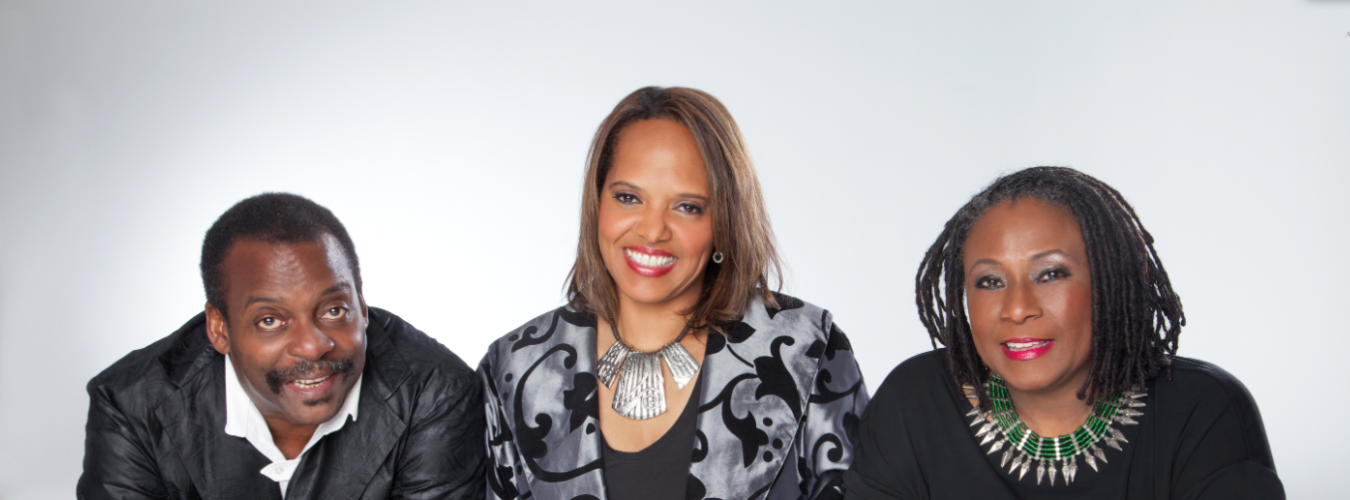
Recording artist and producer Terri Lyne Carrington has combined forces with David Murray and Geri Allen on a new CD project, Perfection. The newly formed Murray, Allen & Carrington Power Trio will release the CD on Motéma Music on April 15. The Carrington-produced album (co-produced by Murray and Allen) was recorded in June 2015.
Murray, Allen & Carrington Power Trio: Geri Allen, David Murray, Terri Lyne Carrington
“I wrote ‘Geri- Rigged’ for the amazingly talented Geri Allen," says Carrington. "She is one third of the Murray, Allen & Carrington Power Trio along with David Murray and myself. Geri and I have been playing together for over three decades. We have a strong synergy and a deep musical understanding that feels uncanny, due to having had similar reference points that helps us to know where each other are going. I tried to write something that reminded me of her and that was challenging for us as well. The Murray, Allen & Carrington Power Trio is a perfect outlet to play with two incredible musicians that push the envelope. David Murray’s credentials speak for themselves. He has accomplished more in his lifetime thus far than many people would ever dare to dream. He is a real force to reckon with and I am trying to keep up with the two of them."
JazzTimes is pleased to present this exclusive preview of "Geri-Rigged" from the Murray, Allen & Carrington Power Trio's Perfection.


1  Mirror of Youth
2  Barbara Allen
3  Geri-Rigged
4  The David, Geri & Terri Show
5  The Nurturer
6  Perfection
7  D Special (Interlude)
8  Samsara (For Wayne)
9  For Fr. Peter O'brien
10 Cycles and Seasons

David Murray
Geri Allen
Terry Lyne Carrington


David Murray, Geri Allen, Terri Lyne Carrington Power Trio

Wed, May 18, 2016

Doors: 7:30 pm / Show: 8:30 pm

Birdland

New York, NY

$40.00


There is a $10.00 food or drink minimum per person. Dinner is served between 5pm-1am


Birdland
315 West 44th St
New York, NY 10036


Walt Weiskopf - The Way You Say It (2016)


Label: Posi-tone


Do jazz jukeboxes exist? I'm not referring to an online streaming service that tells you what to like. I'm talking about a mechanical box in a roadhouse you put money in, and everyone in the joint listens to your selections. If there are such establishments with said jukeboxes, I'm certain customers would select WW1, WW2, WW3, et cetera, for most of the tracks on Walt Weiskopf's The Way You Say It.

The saxophonist a veteran of the big bands of Buddy Rich and Toshiko Akiyoshi, plus a requested sideman with Steely Dan, has produced a dozen outings as a leader, first for Criss Cross, and three now for Positone Records. The latest follows Open Road (2015), a quartet and the sextet Overdrive (2014) both with pianist Peter Zak. With The Way You Say It, he swaps piano for the organ of Brian Charette, an instrument we haven't heard with the saxophonist since A World Away (Criss Cross, 1995).

Charette, the de facto house organist for Positone, comports himself quite well here, supporting Weisskopf and vibraphonist Behn Gillece, who we heard on Overdrive. With drummer Steve Fidyk, the quartet can negotiate a speedy burner like "Inntoene" and "Blues Combination" with jaw-dropping ease. Weiskopf has all the tools, a broad and deep sound with a very well balanced attack. In other words, a beautiful tone. That richness is showcased on the flavor-rich ballad "Candy" and "Invisible Sun." Weiskopf penned ten of the twelve pieces here. "Envisioned" allows for each musician to stretch out a bit as it burns with a hot blue flame.

The quartet picks through two contrasting covers, Charlie Parker's "Segment" and the Weather Report classic "Scarlet Woman." The quartet turns Joe Zawinul's fusion into a stormy blues romp with Bird's music sailing with a nonchalance befitting such a sprezzatura artist as Weiskopf.  


Daniel Díaz - Swan Song (2015)


This album is called Swan Song. Here you will find the last chapter in the research I started with my very first album in 1993. In terms of style, Swan Song can be considered as the third and last part of a trilogy (started with The Years Alone and Segundo Ciclo in between) of solo "composer" albums where I can also show my skills as a multi-instrumentalist and arranger, and gather compositions written in different places and times, with varied styles and instrumentations. 

Here you’ll find simple and catchy instrumental compositions with strong, sensitive melodies, passionate and sophisticated harmonies and atmospheres, rather gentle rhythms and a variety of instruments and sounds. 

In Swan Song there are tracks with odd and irregular metric, unexplained modulations, dozens of time-signature changes, erroneous dissonances, tempo shifts, etc. But hopefully it all goes unnoticed (only visible to the musicians who read the sheet music and to those who try to transcribe this music). 

DD November 2014

Daniel DIAZ  is an Argentinean bass player and multi-instrumentalist, arranger, producer and composer. He recorded several  solo albums, from 1993 "The Years Alone" to 2015 "Swan Song", including his best sellers: 2010  "Musique Mécanique" and 1997 "LOW Vol. 1": an album fully performed on acoustic and electric basses. 

His production music (films-TV) is present on some of the most prestigious publishers and music libraries in the world.

In the above menu you'll find his Bio in three different languages, as well as full discography and links mp3 samples.


01. Otoño y Martes (love theme number 1) 02:25
02. Os Historicos 01:41
03. Romantica Cromatica 07:18
04. Antefinal 06:55
05. Ganimedes 04:31
06. Erik Satie’s Farewell 05:33
07. Alexis Luminoso 01:48
08. Tristesse Collateral 03:33
09. Same Old Song 03:35
10. Harold's Lake 05:04
11. Resumé (Swan Song) 04:59

Released October 15, 2015 


Composed by Daniel Díaz.

Performed by D.D. : basses, guitars, pianos, vibes, hang, harmonium, percussion, accordina, charango, ukelele, synths

These great musicians gave life to these songs and added musicality and talent to Swan Song. They managed to interpret the meaning I intend of all this: simplicity and beauty prevail over technique. 

Steve Arguelles (UK) Drums 
Patrick Bebey (Cameroun): Fender Rhodes 
Gustavo Bulgach (USA/Arg) Clarinet 
Javier Estrella (Argentina): Drums 
Leandro Guffanti (Argentina/FR): Soprano sax 
Damian Jarry (France) Cello 
Line Kruse (Danemark) Violin 
David Lewis (Australia) Flugel Horn 
Olivier Manoury (France) Bandoneon 
Daniel Miguez (Argentina) Drums 
Norberto Pedreira (Argentina): Guitar 
Bobby Rangell (USA): Sax & flute 
Luis Rigu (Argentina/FR): Quena, Sikus, Flutes 
Inor Sotolongo (Cuba): Congas 
Miguel Yanover (Argentina/FR): Tenor Sax 

Cover photo: Juan Hitters

READ MORE


ROJ TEAM

Daniel Diaz - Tristesse Collateral