Josh Quinlan releases his fourth album as a leader, this time featuring the amazing trumpeter, Terell Stafford (www.terellstafford.com). The Q'tet has been playing music together for over six years and this marks their third tour in Colorado with Stafford. The new album this night celebrates is called In From Somewhere and is comprised of Quinlan's original compositions that reflect his experiences as a Colorado based musician who travels the world performing and teaching.
This concert is not to be missed if you enjoy high energy trumpet and saxophone accompanied by an amazingly interactive and communicative rhythm section sound.
The Chopin Project features six original arrangement's of Frederic Chopin's Nocturnes and Preludes and a lyrical waltz composed by Quinlan and inspired by classical harmonic movement. The group features Matt Smiley (bass), Ed Breazeale (drums) and Josh Quinlan (saxophone, piano and arrangements). If you like beautiful classical melodies and harmony fused with modern jazz rhythm and conception you will really enjoy the Chopin Project.
Josh Quinlan is a saxophonist, composer and educator based out of the state of Colorado. He holds a Doctor of Musical Arts degree in Jazz Studies from the University of Colorado. As well, he is a graduate of the Cincinnati Conservatory of Music (BM) and DePaul University (MMA).
Quinlan is currently an Instructor of Jazz Studies at the University of Colorado, music faculty member at Denver School of the Arts, Director of Education for the Colorado non-profit Gift of Jazz, Director of the Dazzle Recordings label and Co-Director of the Telluride Jazz Celebration Educational Program. In addition, he is an endorsing artist of P. Mauriat saxophones, Bari Woodwind saxophone mouthpieces and Gonzalez Reeds.
Quinlan has released three albums as a leader, saxophonist and composer (Mountain Time Standards, Open Space and Hear, Here) with a fourth coming out in February, 2016 that features Terell Stafford on trumpet. Since moving to Colorado, he has toured throughout the world with performances and teaching in Asia, South America, Central America, Europe, the U.S. and Australia. Recent highlights include concerts as a guest soloist and composer with the National Symphonic Orchestra of Panama performing “Charlie Parker with Strings,” a residency with his trio at the National University of Costa Rica and tours with Greg Osby and Terell Stafford.
Jaimeo Brown Transcendence’s Work Songs Resurrects
Stories of Workers and Prisoners Worldwide in a
Call to Action During Tense Times in America
Album Fuses Jazz, Hip Hop, and Blues on
12 Sample-Heavy Original Tracks
Available February 12, 2016 on Motéma Music
At a time where it feels like history is repeating itself and the world has lost its way, drummer, composer, educator and activist Jaimeo Brown asks, “What is important?” For Brown, the answer is to tell the unheard stories in the name of those who need them. To tell the stories of life and the human experience. To tell the stories of the forgotten: to honor the workers and the music of their lives. February 12, 2016 marks the release of Work Songs, the second installment in the Jaimeo Brown Transcendence series. “Work Songs represents us,” Brown explains. “It’s our human journey of transcending the difficult.”
Jaimeo Brown Transcendence is the product of long-time collaboration between Brown and co-producer/guitarist Chris Sholar (who won a GRAMMY® Award for his work on Kanye West and Jay-Z’s Watch the Throne). Both emerging from a generation that appreciates the jazz in hip-hop, the artists with whom this duo has collaborated with speaks for itself. Brown, as drummer, has sat behind the skins for Stevie Wonder, Carlos Santana, Q-Tip, Carl Craig, Kenny Garrett, Geri Allen, and Bobby Hutcherson, among others. Sholar’s work as guitarist and producer has spanned the likes of Beyonce, Kanye West, Jay-Z, Frank Ocean, A Tribe Called Quest, Robert Glasper, D’Angelo, Just Blaze, Common, Dr. Dre and more.
The digital tapestry that birthed Work Songs also hosts several contributors: Jaleel Shaw and JD Allen on alto and tenor saxophone, respectively; legendary soul and blues vocalist Lester Chambers; the Gee’s Bend Quilters (who were the central focus of Jaimeo Brown Transcendence’s debut album), and rising star keyboardists BIG YUKI and James Francies.
More than just music, Jaimeo Brown Transcendence is a movement, a moment, and an imperative: home to a variety of collaborators and contributors, from different eras and across the globe. Work Songs is a call to action, a call to transcend: transcend traditional limits of creativity; transcend oppression; transcend to come together through the essential humanity that unites us. Work Songs samples the unknown laborer, the jailhouse, the coal miner, gandy dancer, and stonemason. The album resonates with echoes of protest and rhythms of a call to freedom.
Borne of oppression and sung in conditions of hardship, the music is visceral but inherently uplifting. It weaves the present through the past to the future, teaching us how to transcend an immediate suffering through strength and mutual support. “The music of Transcendence, on a social scale, allows us to reach out to communities and help restore culture and identity. Work Songs tells powerful stories of perseverance and human ingenuity,” explains Brown. “Tales of enduring communities through song, from African-American slaves to the stonemasons of Japan. These songs paint a picture of struggle we still feel today.”
In search of new sounds (which includes sampled sounds of construction outside of Brown’s own apartment), Work Songs deftly weaves together the acoustic and the digital, connecting jazz and classic blues with contemporary rock, hip-hop and electronic music.
“My goal is to create something that feels good, is soulful and speaks to hearts. Something spiritual and moving,” says Brown of his creative process. “I hope that people will be moved in the way I was when creating it.”
Through an exploration of differing global “scenes” (as Brown refers to the tracks), Work Songs depicts the tale of the human condition, that which make us all the same. The album is sonic cinema. “For Mama Lucy” is a powerful intersection between blues, rock and jazz. The track prominently features a sample of Leroy Grant, a prison inmate from the Parchman Farm Prison in Mississippi in 1959, grieving over a sick family member, singing the multiple emotions associated with love and death. The accompanying video juxtaposes Grant’s cry and a driving guitar riff with sensory-blowing visuals. Flashing images of oppression and injustice, which echo several overarching themes of Jaimeo Brown Transcendence, overwhelm the video’s protagonist.
“Be So Glad” showcases the divergent musical influences that typify Jaimeo Brown Transcendence. It at once exhibits the soulful-hip hop influence that underpins the group, highlighting also their drum and bass influences. The sample sounds workers using hoes in fields under a hot sun. The emotional chant repeats, the refrain lifting and falling with each effort.
“Safflower” imagines a young Japanese boy listening to records in his basement, discovering a cultural tradition of another lifetime, and celebrating it in his own time. The song also pays tribute to the resilience of a country surviving the 2011 earthquake and tsunami disaster.
Jaimeo Brown Transcendence was born when the drummer connected with JD Allen and Chris Sholar while in search for new forms of musical expressions. With an MPC salvaged from the garbage, the group sampled songs from the Gee’s Bend Quilters in Alabama for their debut eponymous album. The rest of the project grew organically from there and continues to flourish.
“When recording, our aspiration is always to marry art, history and technology so Transcendence can live as a music and movement that speaks to tomorrow, as well as yesterday,” explains Brown. “We created the album Work Songs to explore the interaction between work and music. It’s fascinating to see the variety of ways that music and work actually weave together.”
Brown’s view of the world is one of togetherness. His life, like his work, is a patchwork of people, cultures and examples of the great human potential for acceptance and integration. His early years were spent living on a Native American reservation in Arlee, Montana, a community in which the Native American voice was an ever-present part of the social dialogue. Later, as a teen amidst the aimless youth and gang culture of the Bay Area, Brown discovered multiculturalism within a west coast hip-hop culture shared and celebrated by a broad group of minorities. Inspired equally by the beats and samples of J Dilla, Dr. Dre, and DJ Premier, and the raw eloquence of John Coltrane, Miles Davis and Art Blakey, he found shelter in creation: the epicenter of his spiritual awakening.
About Jaimeo Brown:
2013 marked the international debut of Jaimeo Brown: a fearless renegade; an artist who seeks new pathways for personal musical expression; an artist who honors a deep and broad lineage of musical and cultural traditions. With the release of Transcendence on Motéma Music, the drummer launched an international career—playing festivals including The Love Supreme Festival and London Jazz Festival—and garnered critical acclaim, earning a spot on year end lists for NPR, The Los Angeles Times, DownBeat, and more. Shortly after the release of the album, Jaimeo Brown Transcendence collaborated with eminent producers Carl Craig and Q-Tip to produce a remix with a radical recasting of “Mean World,” one of Transcendence’s singles.
"Listening again to this album as I sit and write this a mere neighborhood away from the one with which this quartet shares a name, I think again of the staggering number of inventive musicians based in or closely associated with Brooklyn. For most musicians here this is beyond a cliche in 2015. Yet, as I spend roughly half the year playing music outside of Brooklyn it occurs to me that while devotees of creative music / improvisation / etc might have a surface-level notion about this, the true extent of this only reveals itself after one spends significant time spent here, and even then still only to a fractional extent. I imagine trying to play once a year with every musician around here who is either a friend, acquaintance, or someone I admire, and I'm not sure how I'd do it.
Michaël, Max, and Jeff are three of those friends with whom I am fortunate to play and they're pretty appropriately matched here, as I know all of them as irrepressibly and indefatigably creative; this recording definitely confirms that. Eva and I met years ago when we both were beginning to make our own inroads here. We've both since found ourselves enveloped by this community. Her playing and musical direction on this record establish an atmosphere of fecundity.
Not all the music made in these neighborhoods sounds like this. It's a particularly apropos fuse, though. Thanks for listening".
Desde pequeño estuvo muy ligado al rico folclore comarcal participando de forma activa como guitarrista y vocalista de manera autodidacta. A los 16 años, comienza tocando el bajo eléctrico influenciado por músicas como el flamenco, y el pop. Más tarde, compagina sus estudios de Magisterio de Educación Musical con una afortunada e intensa actividad profesional, llegando a realizar numerosas giras y grabaciones con artistas relevantes de diversos estilos con los que recorre todo tipo de festivales, salas y recintos más importantes del panorama nacional. (EA!, Maita Vende Ca, Alba Molina, India Martínez, Lya, David de María, Lidia Guevara y Rojas, etc)
Realiza seminarios con bajistas como Paul Gill (NY) y Chris Higgins (Boston). Ya en 2010 se afinca en Barcelona donde finaliza el grado superior bajo eléctrico en Jazz & Música Moderna en la Escola Superior de Música de Catalunya (ESMUC) con profesores como Gary Willis, Mario Rossy, Joan Sanmartí, Ferran Conangla, Dani Pérez y Luis Vergés entre otros. Actualmente compagina su actividad como sideman, para diversos artistas y proyectos, con la realización de su propia música, su primer proyecto personal que muy pronto se verá reflejado en el que será su primer disco.
Ha colaborado con artistas como: David de Maria, Rojas, Lidia Guevara, Jimmy Malla, India Martinez, Lya, David Palomar, Rancapino, Mariana Cornejo, Joaquín de Sola, Jose Mercé, Hakim, EA!, Juan de Juan, Rycardo Moreno, Antonio Lizana, Radio Macandé, Maita Vende Ca, Manolo Carrasco, Sergio Monroy, Alba Molina, Fado Violado, José Carlos Gomez, Saurom, Fernando Lobo, The Gramophone Allstars Big Band, Pau Figueres, Xaluq…
BASS LIFE es el resultado de más de 10 años de experiencia profesional realizando giras con diversos artistas del panorama nacional. El proyecto ve la luz el pasado año en L´Auditori de Barcelona y evoluciona hasta convertirse en el primer álbum del músico gaditano.
Desde sus comienzos en su ciudad natal tocando flamenco y folclore, el bajista también ha gozado de una intensa actividad como músico de sesión para artistas de pop nacional. En Barcelona, profundiza en el estudio del jazz y la música moderna con profesores como Gary Willis y Mario Rossy, pudiendo colaborar con distintas formaciones de la ciudad condal. Actualmente, además de apostar por su propia música, está involucrado en varios proyectos y continua con su faceta como freelance.
1. Latin Day 06:29 2. Tú 05:00 3. Bipolar 04:11 4. Home 05:57 5. Solo 01:52 6. Introspección 06:24 7. WTF 04:15 8. Nana 08:20
Ismael Alcina - bajo eléctrico fretted, fretless, voz y palmas. Adri Gonzalez - piano, rhodes, hammond y synth. Enric Peinado - guitarra eléctrica y guitarra acústica. Antonio Torres Vega - batería, percusiones y palmas (batería DW y platos Zildjian)
Cuarteto de cuerda (#4 y #8): Asier Suberbiola - violín, Ariadna Rodriguez Masafrets - violín, Nuria Garcia - viola y Carmen Enjamio - cello
Epi Pacheco - cajón (#3) Grabado en Studio TMA (Chiclana de la fra, Cádiz) Jordi Bastida - guitarra eléctrica (#6)
This recording happened the day after two concerts at the New York venue directed by John Zorn, The Stone, in September 2015. Harris Eisenstadt thought it was the right opportunity to revive a forgotten trio with Jeb Bishop and Jason Roebke and to finally accomplish an old purpose: to have a quartet with the addition of Tony Malaby. After the gigs they went immediately to a studio and this is it. With such a reunion of improvisers it wasn’t difficult to arrange things; some written material was prepared only to define a unified identity to the music, and everything else was kept open. No other word would describe better what you’ll discover here: open jazz. An urgent, passionate and vibrant kind of jazz. “Old Growth Forest” HAD to happen, HAD to be. It took 10 years to finally get here, but each moment of this CD sounds like destiny. It’s done and we only hope that they do it again, and again, and again…
Jeb Bishop | trombone
Tony Malaby | tenor saxophone
Jason Roebke | double bass
Harris Eisenstadt | drums & compositions
1. Larch
2. Pine
3. Hemlock
4. Redwood
5. Spruce
6. Fir
7. Big Basin
8. Cedar
All compositions by Harris Eisenstadt, Heresy Music (SOCAN)
Recorded September 2, 2015 by Michael Brorby at Acoustic Recording, Brooklyn, NY | Mixed by Jeremiah Cymerman, October, 2015, NY | Mastered by Luis Delgado
Produced by Harris Eisenstadt | Executive production by Pedro Costa for Trem Azul | Design by Travassos | Inside photograph(s) by Peter Gannushkin
Harris Eisenstadt uses Istanbul Cymbals and Regal Tip Brushes.
Thanks to Jeb, Tony, Jason, and the folks at Clean Feed.
This is the first duo effort to be released by Canada-born, but long time contributor to the San Francisco Bay Area scene trumpeter Darren Johnston, and the legendary guitar iconoclast Fred Frith. They can also be heard together on the fine release “Reasons For Moving,” (Not Two, 2007), alongside Larry Ochs, Devin Hoff and Ches Smith, but in this more intimate musical gathering, the results are truly astonishing. The genesis for this session was originally to provide sounds for a short dance film for filmmakers John Haptas and Kristine Samuelson and choreographer Amy Seiwert in a commission for the SF Dance Film Festival, but as can happen when improvisors are effectively inspired by one another, this led to a full release’s worth of exciting new music.
With the distinct and unusual combination of a guitar and trumpet duo, from the very first moments of “Everybody’s Somebody’s Nobody” we feel that they’re inventing a new timbral map and a new format. These are musicians from different generations, but they have more in common than what you might suppose. Johnston has started a path with his instrument similar to the one taken by Frith 40 years ago. After the termination of the prog band Henry Cow, the British six-string player started intense exploratory work around techniques, vocabularies and forms – frequently creating unprecedented and beautiful new sounds – and his accomplishments have since widely expanded the possibilities of the guitar. Now, Johnston is doing the same with the trumpet, taking it to its limits and sometimes beyond. Don’t miss this important step of today’s music evolution.
Fred Frith, guitar
Darren Johnston, trumpet
01. Barn Dance
02. Scribble
03. Luminescence
04. Everybody's Somebody's Nobody
05. Bounce
06. Morning and the Shadow
07. Down Time
08. Rising Time
09. Scratch
10. Ants
11. Standard Candles
All music by Fred Frith and Darren Johnston
Recorded September 5th, 2013 and December 17th, 2014 at Guerrilla Sound | Engineered and mixed by Myles Boisen | Mastered at Headless Buddha Labs by Myles Boisen | Creative engineer Myles Boisen
Produced by Fred Frith and Darren Johnston | Executive production by Pedro Costa for Trem Azul | Design by Travassos | Cover art by Heike Liss
Many thanks to Amy Seiwert’s Imagery, John Haptas, Kristine Samuelson, SF Dance Film Festival, Liss Fain Dance
Renku – the kindred-spirit New York trio of saxophonist Michaël Attias, bassist John Hébert and drummer Satoshi Takeishi – was named after a collaborative, improvised form of Japanese poetry that balances freedom and precision. The trio makes music like its name: searching and empathetic, thoroughly in the moment, resonant with meaning. Renku played a two-night stand at Manhattan’s Greenwich House in early 2014 to launch a second decade together, recording the shows for the band’s third album following Renku (Playscape, 2005) and Renku in Coimbra (Clean Feed, 2009). The resultant Live in Greenwich Village features new pieces by each member, fresh takes on vintage numbers and an absorbing interpretation of Paul Motian’s “The Sunflower.” A serpentine feel is set from the start by Attias’s “Tapstone,” the album coursing with melodies fit to charm snakes; the trio’s performances flow with kinetic energy, the vibe sensual like a New York night.
For Renku, harmony lies in the personalities. Takeishi is an improviser of depth, with a singular time feel and sense of drama. Hébert possesses one of today’s most alluring sounds on double-bass. His three-minute soliloquy on Takeishi’s brooding “Soledad” serves as an intro to Attias’s “Lions of Cayuga,” the latter’s ricochet of melody characteristic of its composer. Throughout Live in Greenwich Village, Attias taps into the sound of surprise. Such noirish highlights as Hébert’s “ ’70s & ’80s Remix” see the saxophonist’s lines swoop and sing, keen and cry, while his squalls in the bassist’s tune “Lurch” are richly expressive. The trio reprises signature Attias pieces “Dark Net” and “Renku” from their debut album, and Live in Greenwich Village closes with his new “Goodbye Rumination.” About Renku, critic Jim Macnie said in the Village Voice: “Michael Attias’ beguilingly mercurial trio is one of those bands that give delicacy a good name. Like Air, this reeds-bass-drums outfit dedicates as much room to extended hushes as they do knotty expressionism, giving their sound an almost ghostly vibe. As it gracefully insinuates itself, the music gathers more and more depth.”
L’élégance du jazz avec l’énergie du rock et les mélodies de la pop ?
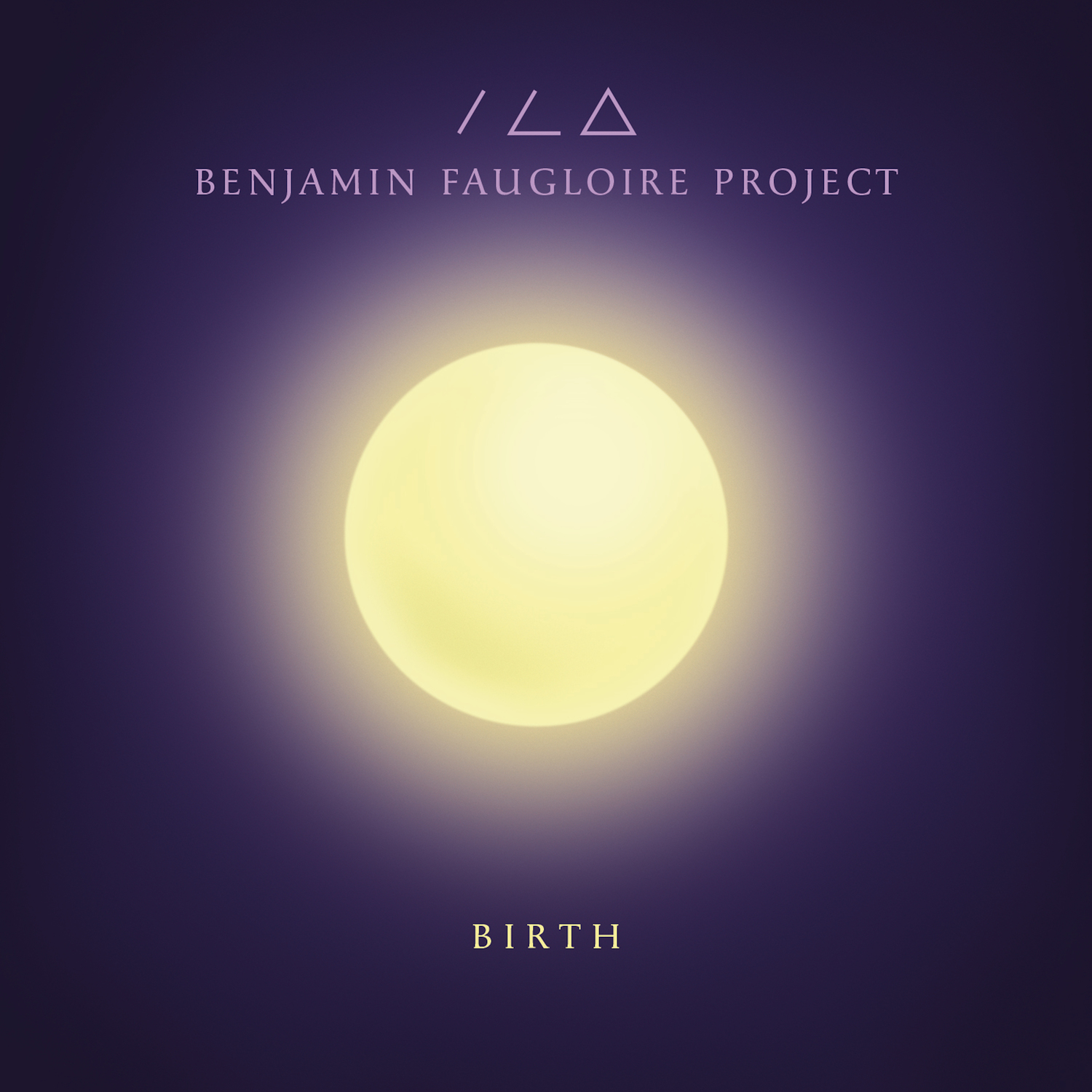
On pourrait oser ce raccourci pour évoquer Birth, le dernier enregistrement du trio du pianiste Benjamin Faugloire. Ce mélange est à l’œuvre dès « Foundations » qui ouvre l’album, et où un riff simple et entêtant alterne avec des passage plus « jungle » (on retrouvera cet esprit, par exemple, dans « Heavy Idea » ou « Reaction »).
Comment dire ?
C’est un peu Monsieur Propre (clarté des lignes mélodiques du piano, inspiration classique) dans la brousse (drumming brut, lignes telluriques sur la contrebasse). Avec des compositions qui sont l’évidence même - par leur côté immédiatement familier, presque entêtant - un trio « classique » aurait privilégié un jeu élastique et soyeux, un écrin de joaillier.
La force de ce trio réside, à l’inverse, dans sa capacité inouïe à varier les dynamiques au cours d’un même thème. Idem pour les métriques avec quelques passages « escarpés » qui permettent d’accentuer les contrastes, comme des « hiatus rythmiques ». On perçoit des moments de quiétude, de fragilité (« Beautiful Day For a Birth », « Euphoria », « Depression’s promises », « Alive »…), et peut-être même un zeste de nostalgie, quand arrive une rupture au détour d’une barre de mesure. Ici, le dénivelé est toujours positif. Cet enregistrement, dont on ne louera jamais assez la qualité des compositions de Benjamin Faugloire, ne comporte aucun temps faible. On a bien compris que le calme n’est jamais de longue durée et qu’il annonce toujours la tempête. Entre l’eau (le piano), qui cependant ne stagne jamais, et le feu (la batterie de Jérôme Mouriez) qui reste maîtrisé, c’est la contrebasse, ancrée sur terre, qui est gardienne du tempo. Ce mélange de jazz et de musique pop évoque parfois le trio EST. On y retrouve le même raffinement et une aisance identique pour marier des univers différents.
Après deux précédents disques ensemble, ces trois musiciens ont acquis une complémentarité qui flirte avec l’osmose. Il est fréquent de noter l’empathie entre les musiciens dans une chronique de disque ; il est rarissime de la constater à ce point. Avec quelque dix années de compagnonnage, ces trois-là poussent l’aventure encore un plus loin, vers une sorte de jazz « garage ».
On peut être un grand sensible et jouer les déménageurs.
The last work of Arnan Raz received very positive reviews !!!
"Raz has all the tools, and most importantly it would seem, the heart, to be one of the leading lights on the international jazz scene formany years to come." Mike Gates, UK Vibe.
“Superbe debut album, another confirmation that there is a new wave of young players coming up out of Israel at the moment”. Chris Phillips, Jazz fm.
"Raz is an excellent melodist, you can almost see his melodies being painted on a canvas." Ben Shalev, Galeria, Haharetz.
“Raz is a phenomenal improviser, if this album is a springboard from which Raz intends to lift off, he made a really promising start.” A slice of Jazz Radio Cardiff, London.
"No doubt - it is one of the most beatiful jazz album that came out recently" - Third-Ear Record store, Tel- Aviv, Israel.
When a gifted young jazz musician holds one hero above the rest, it can be hard to see past the anxiety of influence. “Back Home,” the fourth and finest album by the tenor saxophonist Melissa Aldana, shows what can happen when that dynamic no longer feels so fraught. It’s a supremely focused statement that makes no attempt to blur its lineage and yet feels largely unburdened by legacy.
Ms. Aldana, 27, hails from Santiago, Chile, where she studied the saxophone with her father. But the home in “Back Home” refers to the midcentury style of Sonny Rollins, her North Star on the instrument. The title track, an original feint-and-parry routine between tenor saxophone and drums, recalls the playful gallantry of a Rollins album like “Way Out West,” from 1957.
As on that classic album — and “Melissa Aldana & Crash Trio,” released on Concord in 2014 — the instrumentation here consists of tenor saxophone, bass and drums. Ms. Aldana has retained the warmly assured bassist Pablo Menares and brought in the agile, flowing drummer Jochen Rueckert, calling not only on their hair-trigger alertness but also their skills as composers, with two songs apiece. (This trio appears at Birdland on March 30 and 31.)
Ms. Aldana has a dry but limpid sound on tenor and an expressive command that stretches into an altissimo register. This, along with some aspects of her phrasing, reveals influences other than Mr. Rollins, notably Mark Turner. But she has relaxed into her own style, and she often exudes a pragmatic calm, digging in with her rhythm team.
So she’s as coolly formidable on “Time,” her own wistful ballad, as on “En Otro Lugar,” a drifting groove by Mr. Menares. And the album’s superb sound — courtesy of James Farber, the engineer — puts you in the room as she finesses Kurt Weill’s standard “My Ship,” with a tip of the hat to Mr. Rollins and John Coltrane but also a persuasive self-possession. Nate Chinen
01. Alegria 02. Desde La Lluvia 03. Obstacles 04. En Otro Lugar 05. My Ship 06. Servant #2 07. Before You 08. Time 09. Back Home