Wednesday, October 20, 2021

Fred Hersch to release major new album Jan. 7, 2022

Pianist/Composer Fred Hersch reemerges from pandemic isolation with an ambitious new album pairing jazz piano trio with string quartet
 
Breath By Breath, due out January 7, 2022 via Palmetto Records, features a stunning new suite inspired by Hersch’s meditation practice performed by Hersch with Drew Gress, Jochen Rueckert, Rogerio Boccato, and the Crosby Street String Quartet

"[Fred Hersch is] a pianist, composer and conceptualist of rare imaginative power.” 
– Nate Chinen, The New York Times

“Hersch’s work has developed an intensity of intelligence and emotional directness unparalleled among his peers.”
– Steve Futterman, The New Yorker 

Album release concerts January 4 – 9 at Village Vanguard, NYC 
Pianist Igor Levit premieres new Hersch work January 13 at Carnegie Hall

Iconic pianist/composer Fred Hersch was an early adopter of new technologies and new ways forward when the pandemic hit in early 2020. But he’s also been among the most eager to return to live performance and collaboration now that life has begun to resume some semblance of normality. In August he returned to the studio to record one of his most ambitious projects to date: Breath By Breath, his first album ever pairing jazz rhythm section with string quartet.
 
“I’ve put all my streaming gear away,” declares Hersch, whose lockdown months started off with daily performances on Facebook and culminated in last year’s solo release Live From Home. “It was great while that was what it was, and now I'm in this place where it's live or nothing.”
 
Due out January 7, 2022 via Palmetto Records, Breath By Breath draws inspiration from the pianist’s longtime practice of mindfulness meditation, centered on the new eight-movement “Sati Suite.” But while the album is certainly contemplative and lustrous, it’s far from being merely an ambient backdrop for blissful relaxation – the music on Breath By Breath is as fully engaged and emotionally rich as any that Hersch has made over the course of his remarkable career.

In part that’s due to the musicians Hersch has enlisted for the album. Bassist Drew Gress was a member of the pianist’s first trio and has been an inspiring bandstand partner for more than three decades. Jochen Rueckert is one of the most in-demand drummers on the modern scene, having played with such greats as Kurt Rosenwinkel, Mark Turner, Melissa Aldana and Pat Metheny. The Crosby Street String Quartet, named for the NYC address where they first rehearsed with Hersch, combines four of the city’s busiest freelance string players: violinists Joyce Hammann and Laura Seaton, violist Lois Martin, and cellist Jody Redhage Ferber. 

“String quartets have been some of my favorite music to listen to my whole life,” Hersch explains. As he writes in the album’s liner notes, “I grew up listening to string quartets as a very young musician in Cincinnati. My piano teacher was the wife of the cellist in the famous LaSalle Quartet. I used to lie on the rug in their living room as an elementary school student while they rehearsed, quietly following along, hearing how the viola part meshed with the first violin, or the second violin and the cello. And ever since I started studying composition at age eight, almost all of my music has always focused on four melodic parts - so string quartets are a natural musical configuration for me.” 
The string writing on Breath By Breath spotlights the broad scope of Hersch’s compositional imagination. With each piece the quartet seems to take on a new role in relation to the piano trio: a lush background on one tune, an equal partner in dialogue on the next, an abstract instigator on yet another. “It was important to me that we record live with the strings so I could interact with what they were playing,” Hersch says. “I didn't want to lay down the music and then have them come in later and overdub. I felt like the fun of the project was to do it live.”

“Sati” is a Pali word meaning “mindfulness” or “awareness,” an idea that is central to Hersch’s meditation practice – which itself took on an even more profound importance during the pandemic. “It basically saved me,” he says with no hint of exaggeration. “Meditation is not about not emptying your mind; it's about observation. The phrase I like to use is, ‘relax, allow and observe.’ When I meditate it’s about recognizing sensations or thoughts as they come in and out, observing them and realizing that they're just phenomena. The brain thinks, and there's nothing wrong with that.”

The first movement, “Begin Again” references the cycle of renewal that begins fresh with each moment. Other pieces touch on different aspects of the process. “Know That You Are,” the composition that initiated the suite, refers to the foundational instruction, “When you sit, know that you are sitting and when you breath, know that you are breathing.” The often frantic activity of a mind struggling to be at rest is the subject of “Monkey Mind,” while “Mara,” which features a guest appearance by percussionist Rogerio Boccato, is the name of the god who tempted Buddha with wine, women and wealth.

Bringing meditation to the forefront of his music brings Hersch full circle in a sense, as he recognized when he began the practice decades ago. “When I started, I realized that in a way I've been meditating my whole life – but on a piano bench. I close my eyes when I play and I go into in that world. Occasionally I get distracted, but I don't get wrapped up in it. Instead of my breath being an anchor, the anchor is the sound that I get, the tactile feeling of my fingers on the keys, hearing the space around the music, and leaving that space for other musicians to contribute.”

Breath By Breath, then, is a recognition that meditation has been a way for Hersch to align his daily existence with the enlightened state he reaches while playing the piano. With the release of this captivating new recording, the rest of us are fortunate enough to glimpse that place and to feel its life-affirming impact on our own hearts and souls.

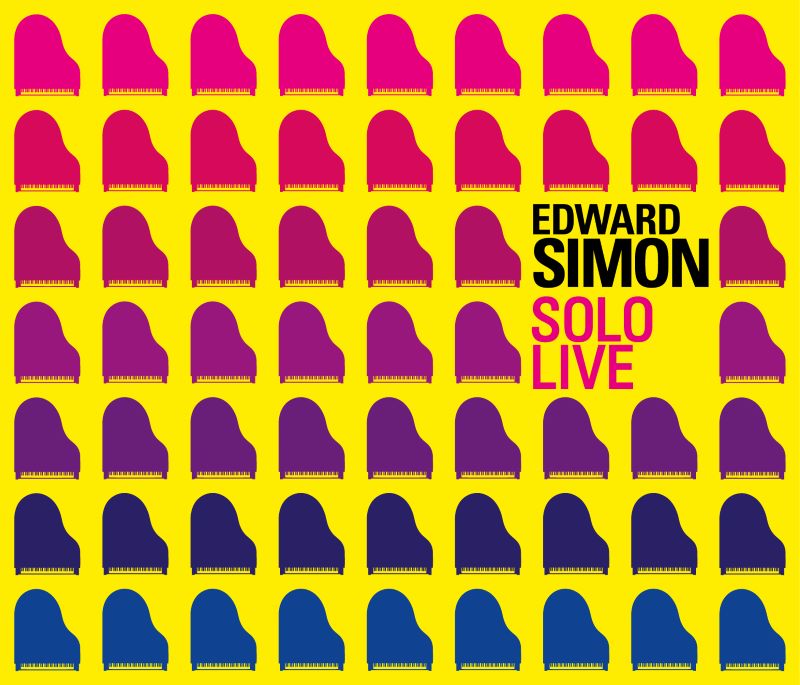
Edward Simon - Solo Live (October 2021 Ridgeway Records)

On his 15th album as a leader, pianist Edward Simon delivers a gorgeous statement with Solo Live, his first unaccompanied recording

Available October 2021 via Ridgeway Records

Edward Simon has been at the center of the jazz scene for the past quarter century, helping shape the music’s evolution through a series of seminal ensembles and recordings. Now acclaimed as a pianist, composer, arranger, educator and bandleader, he provided a jolt of inspiration as a young sideman in bands led by Bobby Watson, Greg Osby and Terence Blanchard. As a leader, he’s recorded a series of groundbreaking albums featuring renowned peers similarly devoted to merging kindred currents in jazz and Latin American music. But he’s never made an album like Solo Live, scheduled for release on Ridgeway Records on October 15, 2021. 
 
Recorded at Oakland’s Piedmont Piano Company on his 50th birthday in 2019, Solo Live is Simon’s first unaccompanied recording (and only his second album documenting a concert). Unedited, it’s a ravishing portrait of one of jazz’s most eloquent improvisers investigating a setting that’s become one of his primary outlets during the pandemic. Long leery of performing alone, a situation that leaves a pianist “really exposed,” he described the Piedmont Piano date as “a leap of faith. But I plan to be doing more solo piano playing and recording.” 
 
The Venezuelan-born Simon is best known for all-star collaborations such as the collective trio Steel House with bassist Scott Colley and drummer Brian Blade. Holding down the piano chair since 2010, he’s the longest-serving current member of the SFJAZZ Collective. In 2020, Ridgeway Records released 25 Years, a two-disc anthology drawn from 13 earlier albums focusing mostly on his original compositions and arrangements designed for players such as tenor saxophonists Mark Turner and David Sanchez, altoists Miguel Zenón and David Binney, bassists Ben Street, John Patitucci and Joe Martin, and vocalist Luciana Souza and Gretchen Parlato. 
 
Without an illustrious supporting cast, Simon was left to his own devices on July 27th, 2019, a celebratory night surrounded by family and friends in Piedmont Piano Company’s piano-filled showroom. While Solo Live reconfigures the order of the pieces he performed, the album reflects the concert’s carefully calibrated ebb and flow, with the first three tracks unfolding in the original sequence. Opening with a breathtaking version of Billy Strayhorn’s “Lush Life,” Simon gives a master class in dynamics, flow, and melodic invention. 
 
“It’s an extraordinary tune, just one of those timeless pieces that’s so profound,” Simon said. “You play what’s on the page, but to make it your own you have to internalize it and figure out how to give it a spin that’s uniquely yourself.”
 
Simon has clearly assimilated the solo work of piano greats like Keith Jarrett, and Chick Corea, who he credits with providing inspiration for his take on “Lush Life.” It’s the opening track on Corea’s Expressions, a 1994 solo piano album that also turned Simon’s ear to “Monk’s Mood,” one of Thelonious’s most sublime ballads. Simon displays exemplary patience as he strolls inquisitively through the melody, letting the tempo shift to accentuate Monk’s reverie. 
 
“Chick doesn’t play it in strict time and that’s the approach I took as well,” Simon said. “One of the beauties of playing solo is that it offers great flexibility with respect to how you play time. You can be very articulate about the time or completely free of it and everything in between because you don’t have to worry about being in sync with others.”
 
Simon digs into the knotty rhythms of “Monk’s Dream” while revealing the tune’s steely harmonic architecture. Swinging with authority, he captures Monk’s singular combination of sly, earthy humor and intellectual curiosity. 
“His music is introspective,” Simon said. “It’s one of the things that attracts me to it. It’s asking for you to look into it, but not necessarily reaching out to you. There’s a mystery to it that I really love. The chords he places around the melody and the harmonic rhythm,  where the chords fall, are really unexpected.”    
 
Simon’s composition “Country” is the album’s longest track. Originally recorded by Steel House on the collective trio’s eponymous 2015 debut album, Simon’s joyous solo rendition, with its . spritely, spinning melody evokes the leaping sense of possibility inspired by moving across a sun-steeped landscape. It’s a piece that seems to call out for lyrics, and it’s likely Simon will record the tune again with Luciana Souza singing her original verse.
 
The album concludes much as it started, with a classic American ballad interpreted with patience and deep empathy. Simon caresses Gershwin’s astoundingly sad and beautiful “I Loves You, Porgy” with hushed intensity and tenderness. “It’s one of those timeless pieces, like ‘Lush Life,’ if you allow yourself to open up to it, it can take you to those unearthly places,” he said. “It takes a certain level of maturity before you can capture that feeling. You have to allow yourself to feel that vulnerability.”
 
Solo Live is both a snapshot of a particular night and a harbinger of future developments for Simon. A relative newcomer to solo recitals, he’s spent the past couple of years focusing on the demanding format. “It takes some time to develop your voice as a soloist,” he said. “I feel like I’m still finding my way. There are several other pianists who do that really well and have made a strong mark. I’m listening to what the masters have done, taking what inspires me and trying make it my own, which is pretty much the process of jazz. Learn what the masters have done, and take it from there.”
 
As his anthology 25 Years vividly documented, Simon is a master himself who has played an essential role in expanding jazz’s frontiers in recent decades. At this point he’s spent far more of his life in the United States than his homeland, but Venezuela still provides the life-sustaining marrow of his music. Born July 27, 1969 in the oil port of Punta Cardón, he grew up in a household filled with music. His father hailed from Curaçao in the Dutch West Indies, and he instilled a love of music in his sons, percussionist Marlon Simon, trumpeter Michael Simon and Edward. 
 
The brothers performed music for dancing at local fiestas and events, tapping into an array of rhythms from Venezuela and beyond. “My older brother played timbales at the time, and we had our band, playing private parties and anniversaries,” he says. “In a way that strong connection with the dance floor and dancers left a great imprint on me. To this day, a groove is an important element in my music.” 
 
Simon was serious enough about the piano that at the age of 15 he left Venezuela and moved by himself to Pennsylvania to enroll at the Philadelphia Performing Arts School, a now-defunct private academy. He continued his classical studies, but he also discovered jazz, and eventually connected with Philly masters like bassist Charles Fambrough and guitarist Kevin Eubanks, who encouraged him to move to New York. Landing in Manhattan in 1988 at the age of 19, he quickly established himself as a vital new voice. A five-year stint with the great altoist Bobby Watson and a nine-year run with trumpeter Terence Blanchard firmly established Simon as one of his generation’s leading accompanists. 
 
While many of his early albums were released on European labels with little North American distribution, his three projects for Sunnyside have earned widespread acclaim. On 2013’s Live in New York at Jazz Standard his mastery of the trio format was front and center as he stretched out with Brian Blade and John Patitucci. He followed up with his most ambitious project, 2014’s Venezuelan Suite, a groundbreaking synthesis of post-bop and traditional Venezuelan forms and rhythms for his 10-piece Ensemble Venezuela. And on 2016’s Latin American Songbook he interpreted songs drawn from all across Latin America with Adam Cruz and Joe Martin. 
 
In many ways, Simon is just getting started. As with 25 Years, an anthology that refocused attention on the sweeping breadth of his work, Solo Live reflects Simon’s recently established role as associate artistic director of the Bay Area nonprofit Ridgeway Arts, an arts organization, label and presenter founded and run by Jeff Denson, the bassist, composer and dean of instruction at the California Jazz Conservatory. Simon has some beautiful surprises in store. 

Monday, October 18, 2021

Nick Maclean - Can You Hear Me? [double album] October 31, 2021 Browntasauras Records

This double album, a debut SOLO PIANO release from award-winning Toronto pianist Nick Maclean, takes influences from jazz piano greats like Bill Evans, Keith Jarrett, and Brad Mehldau as it traverses jazz standards, spontaneous improvisations, and epic, original odysseys - all suffused with courageous risk taking and musical exploration springing from Maclean's in-the-moment inspirations and shaped by producer Brownman Ali's guidance. This release is a true collaboration between Maclean and Ali, showcasing a deep musical relationship of trust and mutual respect. Thus its completion represents Maclean's most personal and intimate recordings to date with all the intriguing challenges, opportunities and possibilities that go with it.

1. Dolphin Dance
2. All Of You
3. Someday My Prince Will Come
4. Why The Caged Bird Sings
5. Difficulties Of Discernment
6. Rational Discourse
7. It Could Happen To You
8. Circle Of Influence
9. Estratagema (feat. Brownman Ali)
10. Blackbirds
11. Spartacus Love Theme / Nardis
12. Tell Me Something I Don't Know
13. Footprints
14. Things Ain't The Way They Used To Be
15. Variations On A Porkpie Hat
16. The Truth Of It
17. Message To My Unborn Child
18. Zion

Nick Maclean -- piano
Brownman Ali -- producer, percussion, drum set
Chalet Studio -- recording studio (David Chester, owner)
Justin Meli -- tracking engineer
Josh Bowman -- mix engineer
Luisito Orbegoso -- percussion mix engineer
Justin Gray -- mastering engineer
Browntasauras Records -- record label
Neil Padaloy -- album cover art
Dave Restivo -- liner notes

Trio In Transit - Trio In Transit (October 2021 zoar records)

In 1967, in an effort launched by reading the obituary of John Coltrane, I began to immerse myself in jazz with important guideposts being the books Black Music by Amiri Baraka (LeRoi Jones), Four Lives In The BeBop Business by A.B. Spellman and As Serious As Your Life by Val Wilmer. Denis Charles was featured in Wilmer's book and appeared as an important figure in the others. My ears led the search and Denis' sound from records by Cecil Taylor, Roswell Rudd, and Steve Lacy became deeply imprinted. A few months after moving to NYC in 1979, I paid a visit to drummer Mark E Miller's building on E. 7th St, where I would soon be living. There in front, chatting with Miller was Denis himself! I was awestruck - a living legend, one of my sonic heroes. Denis, as always, was sweet and humble - he lived across the street and we soon became friends. More time passed and I began to acquire the ability to book infrequent gigs of my own and Denis and I began an informal trio with bassist Jay Oliver with performances at Cub 57 and Ali's Alley.

After Jay moved to Europe, my old friend Steve Piccolo joined the group and we were scheduled to play Soho's Performing Garage. Our "book" was a set of simple core gestures designed to be catalysts for our improvising. Denis' Caribbean heritage was revealed in his groove yet expanded in all directions from his position at the crux of the free-jazz movement during its creative peak. Drumming for Denis always told a story filled with secret smiles and nods to friends and ancestors. Steve and I had both been students of Roswell Rudd and we absorbed his joy in ancient and future cultures, his methods, his sense of orchestration, and his insistence on the narrative arc. Whether consciously or not, we applied our learnings in our playing with Denis. The operative word for this trio was indeed 'transit' as we never again played in this format. Sadly, Denis passed from this plane in 1998. Steve and I continue our collaborations on many different fronts.

The time of covid engendered a variety of novel activities. I acquired a high-quality cassette deck and began the sometimes-tedious task of digitizing recordings from my archives with the thought of possibly releasing the better ones. I was excited to come across a document of this trio's brief existence. Though the sound quality on the cassette was quite challenging, I applied whatever forensic-audio techniques I had at my disposal to upgrade this audio to at least listenable levels which may now be heard, a sonic intersection between free jazz and no-wave. 

1. Opening The Box 09:54
2. Tone Time 09:21
3. Careless 09:00
4. Flurries 09:55
5. Detrit R Us 05:09
6. Cornered 13:56
7. Lectric 06:55
8. Intercession 06:26

Elliott Sharp - soprano, alto, and tenor saxophones; fretless and electric guitars
Denis Charles - drums
Steve Piccolo - electric upright bass

All music by Elliott Sharp, Denis Charles, Steve Piccolo

Produced by Elliott Sharp
Recorded in concert at The Performing Garage, NYC, June 1981
All compositions published by zOaR Music - BMI

André Carvalho - Lost in Translation (October 2021 Outside in Music)

Humanity is creating a more and more interconnected world. In less than 50 years, we have developed new forms of communication, not only much faster and more accessible, but also with an increased capacity of conveying what we want to express and say. Apparently, the space for misunderstanding should be smaller. However, there are still moments when we are unable to express exactly what we want, lacking words that serve the purpose. These would be extremely precious for the clarity of our speech.

If it is a fact that there is, and probably always will be, a gap between meaning and interpretation, emotion and intention, it is also true that by expanding our lexicon, we automatically increase our expression capacity. However, if there is no such word in our language, it does not mean that there isn’t in another.

This is how the so-called untranslatable words entered my world and inspired me to write a new cycle of compositions titled “Lost in Translation”. These words can be the solution to things we have always thought, but never knew how to name them. Or, they can even mean something we never thought of, opening up our mind for new perspectives and cultivating the imagination.

Words are without any doubt a tool and, like any tool, they are born after a certain need. That’s why it is so curious to notice that a given culture doesn’t have a word for a certain idea / object / action even if this is present in their lives. At the same time, another culture felt the need to create their own word. It is also extremely curious and sometimes hilarious to observe that some of these untranslatable words are occasionally associated with the lifestyle, the geographical location or even the philosophy of a particular culture. A great example is Karelu, a Tulu word that means the mark left on the skin by wearing something tight.

Although we want to systematically differentiate and leave our mark in the world, the truth is that we are all made of the same material. That’s why languages have an enormous weight and are responsible, in large part, for acculturation. It is in this process that the identity of a civilization is created. For me, these unique and distinct characteristics make the world so special and Human civilization so interesting.
It’s unquestionable that music is a language and curiously an universal one. From the most remote tribes of Papua New Guinea to the cosmopolitan and avant-garde movements of large cities, music serves as a "vehicle" for communication and interaction. It’s this link between language and music, unique words and unique musical moments that “Lost in Translation” explores. If learning a new word is, by itself, already a rewarding and exciting thing, if we add music to this learning process, the experience will surely be enhanced.

Wittgenstein said that "the limits of my language mean the limits of my world". I truly believe this. This does not mean that the world is not bigger than what we know. In fact, it is bigger and deeper than what we really know and the mental projection we create of it, that is, our reality. That is why, I believe that as we learn new words, our conscience becomes more sensitive to others, we become more empathetic and our world becomes richer.

The same happens as we are in contact with unfamiliar music. That’s also why “Lost in Translation” embraces the unknown, by having a very strong improvisational and spontaneous component, making each performance very unique.

Musically, this new cycle was inspired by the influences that I have absorbed in recent years, not only because I am exposed to the New York Jazz scene, but also because I travel regularly to other countries. The relentless search for new sounds has led me to discover and explore musical areas such as improvised music, experimental music and contemporary classical music. 

1. Luftmensch 05:42
2. Kilig 05:10
3. Uitwaaien 08:40
4. Goya 04:04
5. Alcheringa 05:08
6. Kalpa 05:21
7. Karelu 08:41
8. Murr-ma 02:36
9. Mångata 04:54
10. Boketto 03:40
11. Resfeber 05:01
12. Wabi-sabi 02:12

José Soares - alto saxophone
André Matos - guitar
André Carvalho - double bass and composition

João Almeida - trumpet (4, 7, 11)

Recorded at Teatro Municipal Amélia Rey Colaço in December 2020.
Mix and master by Tiago de Sousa.
Artwork by Margarida Girão.
Out on Outside in Music.

Hunter Diamond + Charles Rumback - We Stand (October 2021 Curio Records)

The first release in the Metal and Wood series, We Stand (CUR002) features Hunter Diamond in collaboration with Charles Rumback .

The Metal and Wood project is a series of live improvisations between woodwind artist Hunter Diamond and various drummers living in the United States. Captured in different locations in Chicago and New Orleans, these recordings document Diamond’s ongoing interest in the saxophone-drums duo pairing made historic by legendary collaborations between John Coltrane & Rashied Ali, Archie Shepp & Max Roach, Dewey Redman & Ed Blackwell, Charles Lloyd & Billy Higgins, Joe McPhee & Hamid Drake, and many others.

Thank you to Bordel Chicago, QMusic, and Dave Zuchowski for supporting the creation of this recording, to Jacquelyne Collett for committing to this vision, to Marine Tempels Black for the unending support, and to Charles for the ongoing exploration.

-Hunter

1. The Water Is Hot 05:33
2. Quatre Petits Morceaux 07:58
3. ...And Then We Stand 12:15
4. After Shock 03:39
5. Anti-Gravity In My Boots 15:04
6. Stumble Catch 08:53
7. Tell Me More About Ike Day 06:52

Hunter Diamond // saxophone, clarinet, percussion, voice.
Charles Rumback // drums

Recorded live at Bordel Chicago on 3.11.20
Recorded, Mixed, and Mastered by Dave Zuchowski
Original album art by Jacquelyne Collett
Layout and Design by Hunter Diamond and Marine Tempels Black

Jungle Debris - Jungle Debris (October 2021 Ma Records)

The music of Jungle Debris ranges from playful songs and drone minimalism, through dissonant lyricism, to dense free improvisations and intensely urgent expressions. Their compositions are interwoven with concepts of free improvisation. The building of form and structure is replaced by its subsequent deconstruction. They are making effort to go beyond the frames set by genre and instrument.

1. Mini 1 02:48
2. Mango 06:24
3. Last Yew 08:48
4. Mini 2 01:23
5. Děcka, ticho! 06:54
6. Velrybí klec 09:18
7. V bublině 05:08
8. Gdáck 03:55
9. 1511 08:09
10. I'vory 10:44

Martin Debřička - tenor saxophone
Luan Gonçalves - bass
Jakub Švejnar - drums

Guests:
Michal Wroblewski - alto saxophone (8)
Jenda Pudlák - grand piano (6), electric piano (5)
Jan Bára - electric guitar (3)

Compositions by Martin Debřička, except for 1 and 9 by Luan Gonçalves

Recorded at Divadlo 29 in Pardubice on February 23 –28 2021 as part of
the Jazzconnexion residency project.
Sound Engineer: Mirek Škop
Mental support during the recording: Michal Wroblewski
Mix: Václav Šafka at studio Rozsochanec
Master: Marek Buranovský
Cover art: Jana Nunčič

KAU trio. - II (2021)

KAU trio. is an instrumental project based in Brussels consisting of André Breidlid (drums), Matteo Genovese (bass) & Jan Janzen (keys). Representing various European backgrounds, their coming-together is in the spirit of the city they grew up in.

Taking inspiration from jazz, they create a head-bobbing atmosphere using bassy beats and catchy melodies. By implementing acoustic instruments, the trio stays true to an organic and rich sound, granting themselves the liberty for improvisation & spontaneous happenings. Influenced by artists like BADBADNOTGOOD & Christian Scott, their music is contemporary, powerful, and audacious. 

"II" is the second EP released by KAU trio… After experimenting with beats and live instruments, this second opus marks the evolution towards a more hybrid and powerful sound defined by their willingness to create extended compositions. The trio adds a unique flavor to each track by inviting guest artists to take part in the production. The bobbing and gritting atmosphere reigning in this EP is in the continuum of their first release, keeping in touch with their identity.

The first track "Nightgrazer" represents an exploration of the doubts and fears of our inner self in a remote place where there is nowhere to hide. Darkness is where it all starts...but trying to find a way out is the mission. This feeling is strengthened by the flute melody, which is sweet and hopeful.

"Challenger" makes reference to the tragic story of the U.S.S Challenger, a failed space shuttle mission resulting in the explosion of the vehicle moments after launch. This story is the perfect example of human pride, but also how desperate we are to reach the stars. The sweet trumpet melodies guide this narrative, which is ultimately tragic.

In "Pink", our courage is shattered by the electrifying roars of the guitar that leads us to feel anger and frustration. The epic ending of the track releases a feeling of understanding: letting go of our fears is the answer.

We finally see a ray of light piercing through the darkness in "Daylight". The only track with lyrics, sang by Rebecca Driesmans and accompanied by Maxime Dereux on sax, catches us into the hope that everything will be eventually alright.

Breathe and relax, everything is good. Led by the wavy synth and bass lines, ''Napoli" is this upbeat song where all you want to do is dance. We celebrate the fond memories and the magic energy that resemble the one you can experience in this vibrant city.

We conclude our journey with 'Dot', a track inspired by the famous speech by Carl Sagan which can be heard throughout the track. This tune is about looking at the world from outer space, reflecting on how really futile all our preoccupations can be compared to the vastness of the cosmos, the perfect ending to our story.

1. Nightgrazer 04:42
2. Challenger 03:41
3. Pink 03:43
4. Interlude 01:18
5. Daylight 04:23
6. Napoli 04:20
7. Dot 04:11

André Breidlid (drums)
Matteo Genovese (bass)
Jan Janzen (keys)

Features:
"Nightgrazer": Eduardo Yaguez
"Challenger": Marthe van Droogenbroeck
"Pink": Khalta
"Interlude" & "Daylight": Rebecca Driesmans and Maxime Dereux
Recorded and mixed: Louis Potin-Paraisot (King's Field Studio)
Mastering: Pieter de Wagter (Equus Mastering)
Artworks: Beatriz Leonardo
Photos: Virgilio Martini
Management: Alexandre Grimaldi (Right Hand Production)

Mark Kavuma & The Banger Factory - Arashi No Ato (2021 Banger Factory Records)

Leading trumpeter and composer, Mark Kavuma, launches his new label, Banger Factory Records with the release of Arashi No Ato. “It was something I wrote just before the pandemic and has somewhat become the theme on gigs. Originally it was just "after the storm" but I really loved how itsounds in Japanese,” explains Kavuma. “I thought it to be a fitting title for the album with everything that has been going on over the last year and a half.”

Arashi No Ato was recorded with The Banger Factory, a band that has developed from a weekly residency in Brixton’s POW, to become one of the most engaging ensembles in the UK with a truly unique and unmistakable sound.

Mark infuses this indelible musical movement with the energy, attitude and swagger of a new generation of creators. He has a unique and distinctive trumpet sound. His lyricism, soulful tone and grace of technique spread infectious joy and mutual excitement among audiences and fellow musicians alike. His music is full of energy, vibe, blues and rhythm. Hints of gospel, soul and spiritual jazz can also be traced within his compositions. With this groovy music he may just bring jazz back to the dance floor.

"There is an emphasis on exploring original material and the album features some of the most gifted and masterful musicians on the scene today,” says Kavuma. “What is more, the band brings together and unifies the local London jazz scene. Spreading love and good vibes. 
1. Arashi No Ato (Kavuma) 06:36
2. Eulid (Kavuma) 06:43
3. Love Will Find a Way (Blake/Sissle) 05:08
4. Brother James (Kavuma) 01:58
5. Hedz (Edwards) 05:46
6. David Danced (Ellington) 05:55
7. One More River (Rev. J Cleveland ) 06:10

Mark Kavuma - trumpet

Mussinghi Brian Edwards & Ruben Fox - tenor saxophone
Artie Zaitz - guitar
David Mrakpor - vibraphone
Reuben James - piano/organ
Deschanel Gordon - piano/Rhodes
Trevor Edwards - trombone
Michael Schrimpling - double bass
William Cleasby - drums

Guests:
Dylan Jones - trumpet (7)
Theon Cross - tuba (3, 7)
Misha Fox - trombone/vocals (7)
Deji Ijishakin - tenor saxophone (7)

Vocalists (7):
Shayanna Harris, Marcina Arnold, Megan Linnell
Livi Graham, Leena Chabula, Felicia Thandie Bhebhe
Django Booker-Roi Edwards, Ijishakin
and Ritchie Seivwright

Recorded at Fish Factory Studios, London
Engineered and mixed by Ben Lamdin
Mastered by Noel Summerville

Produced by Mark Kavuma

Artwork / Graphic Design by Kasia Zaitz
Liner Notes - Jake Zaitz
Photography by Joe Hart

Friday, October 15, 2021

'Brian Lynch Songbook Vol.1: Bus Stop Serenade' is out October 15, 2021 via Hollistic MusicWorks

MULTI-GRAMMY® Award-winner Brian Lynch Reclaims And Updates His
Catalogue
on Brian Lynch Songbook Vol. 1: Bus Stop Serenade, Album Out October
15 on Hollistic MusicWorks

The all-star quintet will celebrate the album release at the legendary Deer Head
Inn on October 22 and famed NYC Jazz club Smalls on October 23

MULTI-GRAMMY® Award-winning trumpeter Brian Lynch is proud to announce the upcoming release of Brian Lynch Songbook Vol. 1: Bus Stop Serenade, his new recording on Hollistic MusicWorks due out October 15, 2021. The first in a series of “Songbooks” intended to reclaim the many original compositions that Lynch has recorded for other labels throughout his distinguished career as a recording artist, Bus Stop Serenade focuses on music originally composed between the mid 1990s through the mid 2000s, configured here for the classic quintet formation of Lynch on trumpet and flugelhorn along with longtime front line partner Jim Snidero on alto saxophone, the redoubtable creative Orrin Evans on piano, stalwart virtuoso Boris Kozlov on bass and the swingingly inventive Donald Edwards on drums. 

This quintet will be celebrating Bus Stop Serenade’s release with two very special club appearances on Friday, October 22 at the famed Deer Head Inn in Delaware Water Gap, PA, and on Saturday, October 23 at the famed Smalls Jazz Club in New York City  Lynch states: “The Deer Head Inn has a quite special place in my heart, having played there so many times with the great Phil Woods (the Quintet’s last album was recorded live there) and with my own groups. Having recorded this album in the Poconos (Red Rock Studio in Saylorsburg, PA), and having “prepped” the music on a gig at the Deer Head before the record date, playing for the release at The Deer Head is like coming home. Smalls is another special venue for me, where I’ve played often over the years with my own bands and always have enjoyed hanging out in the atmosphere of one of the most authentic jazz clubs left on the planet. Presenting the music from the album at these two sacred spaces is a perfect launch for this record.”

What provoked Lynch to re-record his old material? Brian explains: “I’m quite attached to all the tunes that I’ve written over the years, and have often felt that they would benefit from a little attention in the form of new versions that would introduce them to contemporary listeners who may not be familiar with my earlier work. Also, I seem to have become quite stubborn in recent years about invoking artistic self-determination for myself at every opportunity, and having masters of my complete catalogue in my possession has become a bit of an obsession. Accordingly, I have embarked on a quest to re-record for my own label Hollistic MusicWorks every single original tune of mine that was recorded on other labels between the beginnings of my recording career in the 1980s up to the last album I recorded outside HMW in 2010.  I will be releasing a series of “Songbook” albums, of which Bus Stop Serenade is the first volume, updating this body of work for a new generation of listeners as well as for those familiar with the original versions. I think, actually I KNOW, that these remakes will reflect favorably on the years that have passed and bear the most exacting scrutiny as both compositions and performances!”

Well put, and it is certainly evident that “invoking artistic self-determination” has reaped benefits for Lynch ever since his first fully self-produced and fully owned recording project, the breakout Grammy® Award winning The Brian Lynch-Eddie Palmieri Project: Simpático was released 15 years ago. The ambit of Lynch’s independent and artist-owned label Hollistic MusicWorks has been distinguished by many triumphs, including a 5-star Downbeat review for the label’s first release, Unsung Heroes; critical acclaim for Questioned Answer, which first introduced new piano star Emmet Cohen to wider recognition; a Grammy nomination (one of the very first for a independent artist-owned label) in 2016 for Madera Latino, celebrating the music of Woody Shaw with an all-star cast of trumpeters and Latin jazz aces; and most recently, Lynch’s second Grammy Award for 2019’s magisterial The Omni-American Book Club, his first big band album and a project inspired both by Brian’s love of reading and his lifelong passion for social justice.
The rewards of revisiting Lynch’s past oevure on this new album are plentiful. Whether the quintet is burning on swingers like 24/7, Keep Your Circle Small, or On The Dot, hitting a Afro-Caribbean groove on such numbers as Afinque or Clairevoyance, or getting pensive and deep on the delicate Before The First Cup, Lynch and his all-star quintet bring a level of virtuosity, nuance and just pure vibe to these songs only hinted at in their original recordings. Jim Snidero’s probing alto sax stylings bring a new dimension to compositions recorded originally in quartet form, such as Charles Tolliver (a salute to the iconic trumpeter/composer) and the title track, Bus Stop Serenade. And the stellar work in solo and accompaniment of pianist Orrin Evans, bassist Boris Kozlov, and drummer Donald Edwards, along with the fearsome swing these three generate, transform all they touch into musical gold, notably Woody Shaw, a Lynch classic from the turn of the millennium and also a highlight of The Omni-American Book Club in big band form. 

As always, Lynch’s trumpet and flugelhorn never fails to excite, delight, and edify the listener, whether aficionado or causal newcomer to his sound. Brian’s exacting dedication to excellence on his chosen instrument, along with his oceanic comprehension of the many idioms that comprise his musical territory - and a good dose of a natural soul deepened by life, experience and loss - has resulted in his remaining at the top of the heap of today’s trumpeters and indeed, as he experiences it: “…playing the best that I ever have in my life at this point!”

A special note about the recording process and the resultant track list for this album, as Brian relates in his liner notes: “We cut this album in a single day in Kent and Lois Heckman’s beautiful Red Rock Studio out in the Poconos, after a warmup gig the night before at the famed Deer Head Inn. In order to get through all the material in time for the rhythm section to drive back to the city for their Saturday night gigs (boy, could we use some of those now), things had to move quickly. There wasn’t generally time for more than two takes of anything - a “warmup” first take that allowed us to get comfortable with the tune (we sometimes stretched out more on those) and then a second pass for the record. When I reviewed the session for mixing, to my surprise I found that so many of those first takes were special, along with the “real” takes being so outstanding, that it was exceedingly hard to make a choice. So I decided to include them all! On some tunes there's a shorter “radio-friendly” and a longer “stretching out” version, and on other tunes the two takes are more or less uniform in length. I’ve organized the album itself as two “takes” of the program (“The Express Route” and “The Alternate Route”), with Keep Your Circle Small (the only tune represented as a single take) as the bridge between the two programs.” These “routes” correspond to each CD on the 2 CD physical version of the album; all tracks in both routes are included on the digital release.

A special aspect of Bus Stop Serenade is the design for both digital and CD presentations of this album. The unique line drawings of Robin D. Williams, executed using her signature “blind drawing” technique, and the contemporary yet classic package design from Jamie Breiwick combine to delight the eye every bit much as Bus Stop Serenade’s music delights the ear. For those who love artistry in both sight and sound, Bus Stop will be also released in a special edition, limited to 100 copies box set, featuring reproductions of Williams’ artwork from the album suitable for framing and a deluxe booklet to accompany the two CDs. 

Brian Lynch looks forward confidently to a positive reception of his “new wine, old bottles” project and the success of its first volume. Brian states: “This album will appeal to anyone who wants to experience through sound the bracing immediacy of gifted improvisers in flight, conversing with both the distinctive musical frames I’ve provided them and with each other. Whether on your device, in your car, or even sitting in your special listening room, Bus Stop Serenade will provide a satisfying musical journey worth taking, on either express or alternate routes.”

“THE EXPRESS ROUTE”
1. 24-7 5:50
2. AFINIQUE 7:12
3. ON THE DOT 5:06
4. BUS STOP SERENADE 7:26
5. CLAIREVOYANCE 9:17
6. WOODY SHAW 6:29
7. BEFORE THE FIRST CUP 8:45
8. CHARLES TOLLIVER 8:39
9. KEEP YOUR CIRCLE SMALL 6:01

“THE ALTERNATE ROUTE”
10. ON THE DOT take 1 / 5:25
11. CHARLES TOLLIVER take 1 / 8:44
12. BEFORE THE FIRST CUP take 1 / 8:39
13. WOODY SHAW take 1 / 10:15
14. CLAIREVOYANCE take 2 / 9:13
15. BUS STOP SERENADE take 1 / 8:37
16. AFINIQUE take 1 / 7:04
17. 24-7 take 1 / 9:32

Brian Lynch, trumpet, flugelhorn
Jim Snidero, alto saxophone
Orrins Evans, piano
Boris Kozlov, bass
Donald Edwards, drums

All music composed by Brian Lynch (Hollistic Music - BMI)

Michael Eckroth’s PLENA (f/ John Fedchock & Brian Lynch) is out October 15, 2021 via Truth Revolution Records

Pianist and Composer Michael Eckroth Presents New Album Plena, due out October 15, 2021 via Truth Revolution Records

Featuring Special Guests John Fedchock and Brian Lynch

“A modern renaissance musician with the kind of insights into the music that will surprise you.” 

Raul DaGama / Latin Jazz Network

Truth Revolution Records is proud to announce the October 15, 2021 release of Plena, a new album by renowned pianist and composer Michael Eckroth. On this eight-track collection of original music, Eckroth has assembled a brilliantly cohesive set that maintains a firm relationship with the foundations of Afro-Latin jazz while actively seeking new avenues of expression. “I was looking to create music that was lyrical, modern, and true to its Afro-Latin roots, but never purist in its approach,” he shares. The resulting work is a mesmerizing Latin jazz set that embraces a wide variety of musical lineages. 

Equally at home playing straight ahead jazz, Latin jazz, and a plethora of Latin American and Caribbean styles, the Phoenix, Arizona-native has enjoyed a fruitful career as a bandleader and sideman. A GRAMMY nominated artist, Eckroth’s releases have been received with universal praise and his skills as a pianist and keyboardist have made him a regular fixture on the New York jazz scene commanding the attention of such staple names as John Scofield and Sheena Easton. Recently, Eckroth gained further acclaim as the co-founder of Orquesta Akokán, one of the most invigorating Cuban mambo bands in recent history; their self-titled 2018 release featuring Eckroth’s arrangements went on to receive a Grammy nomination for Best Tropical Latin Album. 

Eckroth comes to the fore on Plena, his first full-length release as a leader since 2015’s well-received Piano + Rhythm. The musicians on Plena, which is named in relation to the folkloric music from Puerto Rico, prove to be important contributors exemplified by galvanizing performances by bassist Alex “Apolo” Ayala, drummer Joel Mateo and ubiquitous percussionist Mauricio Herrera. Together, these world-class musicians command attention from the opening moments of “And So It Goes”, laying a solid foundation for Eckroth to let loose. The veteran saxophonist Peter Brainin is a fresh secondary solo voice, laying down a mesmerizing soprano saxophone performance on “Superspreader”, a tune that at times recalls the very best of Hermeto Pascoal’s output. 

The music on Plena relies heavily on the superimposition of disparate harmonic and melodic elements with the rhythms of bomba and plena. The title track “Plena” features the ensemble playing a melancholic melody over a slow but effervescent plena rhythm with the percussion section augmented to a great effect by Carlos “Carly” Maldonado. A standout moment is a lyrical solo by bassist Ayala who navigates the harmony with strong melodicism and inviting tone. 
Alex ‘Apollo’ Ayala, Mike Eckroth, Mauricio Herrera and Joel Mateo

The track serves as a blueprint of sorts for the entire project. Eckroth explains: “I’ve felt inspired to incorporate the bomba and plena rhythms of Puerto Rico in this band’s music, partially because of what Joel and Alex bring to the table, and partially as a way to expand the rhythmic repertoire of the group.” A central element to the recording, the role of the percussion in the compositions has been comprehensively considered. “There is a deliberate dialogue between the percussion of Carly Maldonado and the compositional elements I’ve presented, as well as references evident in the playing style of the other musicians,” Eckroth illustrates. 

Firmly in the jazz tradition, “Invernadero” is a post-modern contrafact over the changes of the standard “What Is This Thing Called Love”, showcasing the dynamic rhythm section in bassist Edward Perez, drummer Juan Felipe Mayorga, and percussionist Samuel Torres. 

The undeniably cool “Soul Cha” features seasoned trombonist John Fedchock blends seamlessly with Brainin on the head, and then shines on a short but masterfully crafted solo. The Grammy-winning trumpeter Brian Lynch lends his distinct voice on “Exotic Particles”,  a composition that would be equally at home on a 60’s Blue Note record – or a classic Latin jazz LP. 

Throughout the album, Eckroth demonstrates a keen aesthetic sense in blending folk traditions with modern jazz compositions. “Like much of Latin jazz, this is a fusionistic approach, as I’m not attempting to recreate folkloric playing styles,” the bandleader shares. “This is carving out an individualistic path, all with respect to the creators of these varied folkloric and jazz forms.” The experience and mastery of Eckroth and his cohorts make Plena a delight to listen to, and a worthy addition to the bandleader’s already stellar discography.

1 And So It Goes 3:15
2 Summer Of Love and Discontent 6:10
3 Superspreader 7:01
4 Plena 4:46
5 Invernadero 5:55
6 Soul Cha 5:44
7 Exotic Particles 2:56
8 Rain Song 5:44

All music by Michael Eckroth

James Brandon Lewis Quartet with Aruán Ortiz, Brad Jones and Chad Taylor - Code of Being (October 15, 2021 Intakt Records)

The charismatic saxophonist and composer James Brandon Lewis is the musician of the moment in the broad field of contemporary jazz. With Code of Being, James Brandon Lewis now presents his second album. The debut CD Molecular, which Lewis recorded with his quartet in 2020 just a few months before Lockdown, was roundly acclaimed as one of the most exciting releases in 2020 (Intakt CD 350). Code of Being is a powerful work consisting of eight compositions by James Brandon Lewis. Beautiful melodies are responsible for the magic of the songs. 

The four exceptional musicians, each with personalities of their own, create an urgent ensem ble sound, moving through a broad palette of sound-colours, rhythms and moods, charged with energy. With a profound sense for lyrical melodies, tonal concision and dynamics, the quartet develop a spirited interplay, reacting to the tiniest atmospheric oscillations on the sound and groove level. “This is captivating music which it is hard to resist, especially the melodies with their thematic beauty.," writes Florian Keller in the liner notes.
1. Resonance
2. Archimedean
3. Every Atom Glows
4. Per 4
5. Code of Being
6. Where is Hella
7. Per 5
8. Tessera

James Brandon Lewis: Tenor Saxophone
Aruán Ortiz: Piano
Brad Jones: Bass
Chad Taylor: Drums

All compositions by James Brandon Lewis (James Brandon Lewis Music/ascap).

Recorded on May 16 and 17 2021 by Michael Brändli at Hardstudios Winterthur. Mixed and mastered in July 2021 by Michael Brändli at Hardstudios Winterthur, Switzerland.
Cover art and graphic design: Paul Bieri, Berlin.
Photo: Palma Fiacco, unerhört!-Festival Special Edition, Rote Fabrik, Zürich, May 15, 2021.
Liner notes: Florian Keller.
Produced and published by Intakt Records.

Fitz Gore & The Talismen - Soundnitia (October 15, 2021 Sonorama Records)

This is the first ever reissue of the lost debut LP by Jamaican tenor saxophone player Fitz Gore and his experimental group The Talismen from 1975. The work was originally released on Gore’s GorBra label and delivers an introspective, sensitive form of Spiritual Jazz. Recorded live in West Germany, the personnel are “Shepherd” Fitz Gore with Ulrich Kurth (Piano), Gérard Ebbo (Bass), Philippe Zobda-Quitman (Drums) and Lamont Hampton (Congas). The LP includes versions of John Coltrane’s “Dahomey Dance“ and the Horace Silver classic ‘Song For My Father“. The reissue was carefully remastered in 2021 and features the original cover design with a two page insert of the original notes, completed by the inclusion of Fitz`s poem “Sketches of Pain“.

Original Sleeve Notes by Eberhard Gockel (1975)

"Soundnitia" is the cipher under which the experimental group "The Talismen" constituted in 1974 and made its presence known on the Jazz scene with the first LP. The initiator and spiritus rector of the avant-garde ensemble is the saxophonist Fitz Gore, a "stormer of the valves" and unknown to the augurs of the jazz scene. As a saxophonist and a newcomer, he documents with his ultra-hard sound. Fukara (Swahili) is a clear affinity to the school of "hard blowing" tenor players. In the 1960’s Fitz managed various bands. Firstly, in the south of France, then Paris, which took part in Galas, concerts and film productions, where he made a name for himself primarily as an interpreter of spirituals and Negro folk songs.

Fitz Gore, born on 16th August 1935 in Kingston, Jamaica, has been making music since the age of six. As a member of the school choir, he studied the diatonics of the Gregorian chant and played classical Hawaiian guitar. His favourite composers include Duke Ellington, Sonny Rollins, Richard Wagner and Gil Evans. While establishing himself in the music business, he worked as an actor and writer. Like Charlie Parker before him, for whom the poetics of the Persian lyricist Omar Chajjam was a spiritual leitmotif, the man from Jamaica is a committed poet. The International Book Exchange presented a part of his literary oeuvre.

Fitz Gore draws his ideational impulses from biblical texts, especially from the Psalms of David. Dreams of a new paradise are articulated in his arrangements and compositions. He says, " The music - Soudnitia - has a spiritual fulcrum, which must act or foist with its compelling leverage(s), a form of panacea. To heal, as to vehicle sanctified pastus, hope and joy, to mankind". "Healing" became the code word of the "Talismen”.

Technically and stylistically, Fitz Gore's improvisations are reminiscent of the musical language of Sonny Rollins and Colerman Hawkins, but John Coltrane, Ben Webster, Sonny Grey, Johnny Griffin, Wilton Gaynair and Jo Maka were not without influence. Fitz Gore and pianist Ulrich Kurth began their collaboration in Autumn 1973, performing together for the first time in January 1974 at the Winterfest of Bonn University followed by a guest performance in Strasbourg. In the Autumn of the same year, Fitz Gore engaged two of his former partners, the French bassist Gérard Ebbo and the Martinique-born drummer Philippe Zobda-Quitman and staged the first concert with this quartet in a monastery near Bonn under the lemma "The Talismen".

In the spring of 1975, the American percussionist Lamont Hampton joined the Talismen collective and brought with him a bundle of new musical impulses. The Jazz Studio of the Bonn "Collegium Musicum" served as the experimental laboratory, where they discussed and rehearsed in endless nightly séances. This resulted in the live recording of the concert from June 14th 1975. This became the LP and seems like the product of an alchemist's kitchen. Whether "Toxon" or "Panacee" depends on the dosage. For it is "the dose that makes it, that something is a poison", teaches Theophrastus Bombastus von Hohenheim, known as Paracelsus.

The Musicians:

Ulrich Kurth (Piano) was born on 29.09.1953 in Kaltenkirchen near Hamburg and received eight years of classical piano lessons, most recently at the Cologne Conservatory. As a second and third instrument, he plays the guitar and the flute. Besides Ludwig van Beethoven, his favourite composers include modern classics such as Maurice Ravel, Béla Bartok and Olivier Messiaen. At the age of eighteen, he came to jazz via rock music. Musically he was influenced by Fitz Gore, stylistically by Thelonious Monk, Mal Waldron, Bill Evans and Irvin Rochlin.

Gérard Ebbo, "Prof. Dr. Splüm”, (Bass) was born on 27.11.1942, "in the middle of the last useless war" in Casablanca, Morroco. His favourite bass players are Oscar Pettiford, Ray Brown, Paul Chambers and Charlie Mingus. He is closely associated with the black musicians from the Nuer tribe, who were deported from Sudan to Morocco. As a member of the "Talismen", Gérard Ebbo not only guarantees the crucial rhythmic and harmonic basis, but also provides fundamental impulses for musical coordination.

Philippe Zobda-Quitman (Drums) was born on 08.08.1947 in Martinique. He has been making music since early childhood and later worked as a musician and dancer in France. His musical idols are Alan Dawson and Elvin Jones.

Lamont Hampton (Conga Drums) was born on 07.08.1951 in Indianapolis. He studied with Carlos Santa Cruz and was significantly influenced by the Afro-Cuban drumming style of Chano Pozo.

Singing songs, blasé hymns,
Singing OUR SONGS
Surely echoes hear waves, hear from our strains
In the harvest of T-I-M-E
Since we disharmonise/
Should we not SLUMBER CHORUS
in dischord?
--- MORE PRACTISE??

(from „SKETCHES OF PAIN/ Hymn To a Heart“ by Fitz Gore) 

Concert performance - recorded June 14, 1975 in Arnsberg, West Germany

Fitz Gore (Tenor Sax), Ulrich Kurth (Piano), Gérard Ebbo (Bass),
Philippe Zobda-Quitman (Drums), Lamont Hampton (Congas),
Guest: Dousty Santos (A Go Go) on „Mariella` Amor“

Produced by Fitz Gore and Gisela Braasch, shepherd & spoken words: Fitz Gore, co-leadership: Ulrich Kurth and Gérard Ebbo, cover design: Gisela Braasch

In memory of Fitz Gore,
mastered 2021 by Roskow Kretschmann at Audiomoto, vinyl cut at SST,
producer for reissue: Ekkehart Fleischhammer,
reproduction of original cover design by Gisela Gore:
Patrick Haase aka rab.bit. thanks to Gisela Gore and Fabian Stephenson.

1. Theme - The Man With The Horn
2. Song For My Father
3. My Foolish Heart 09:15
4. Mariella` Amor
5. Dahomey Dance
6. Theme

Fred Frith Trio with Lotte Anker and Susana Santos Silva - Road (October 15, 2021 Intakt Records)

Fred Frith is a multi-instrumentalist and a shrewd outsider who walks the line between rock and jazz, improvisation and composition, and hereby presents a breathtaking live double CD with his long-time Bay Area trio. CD1 documents an inspiring trio concert by these extraordinarily creative musicians at Stadthalle Köln as part of Week- End Fest 2019. CD2 features the trio with guests Lotte Anker and Susana Santos Silva. Both musicians have a long history with the trio – Lotte Anker has played with the trio in San Francisco and New York, and Susana Santos Silva joined them for performances in Brazil in 2018, while both have joined the trio to tour the U.S. East Coast and Europe in 2019. Lotte Anker and Susana Santos Silva fire up the trio. And in turn the trio’s inspiration has an effect on Lotte and Susana which feeds back into the group. This creates a unique collective sound that delivers an infectious live energy.

1. Lost Weekend 1
2. Lost Weekend 2
3. Lost Weekend 3
4. Lost Weekend 4
5. Lost Weekend 5
6. Lost Weekend 6
7. Lost Weekend 7
8. Color of Heat
9. The Trees Speak
10. Sinking In
11. Color of Heart

CD 1 (Tracks 1-7)
Fred Frith: Electric Guitar, Voice
Jason Hoopes: Electric Bass
Jordan Glenn: Drums

CD 2 (Tracks 8-11)
Fred Frith: Electric Guitar, Voice
Jason Hoopes: Electric Bass
Jordan Glenn: Drums
Lotte Anker: Saxophones (Tracks 9+10)
Susana Santos Silva: Trumpet (Tracks 8+11)

All music by Fred Frith Trio (CD 1); Fred Frith Trio, Susana Santos Silva, Intakt Records
Lotte Anker (CD 2).
Mixed and compiled at Guerrilla Recordings, Oakland, CA, on May 12, 2021. Mastered at Headless Buddha, Oakland, CA, on July 23, 2021. Creative engineer: Myles Boisen.
Cover art and photo: Heike Liss.
Graphic design: Fiona Ryan.
Produced by Fred Frith and Intakt Records.
Published by Intakt Records.