Wednesday, August 25, 2021

Curtis Olawumi - Goat Tape Vol. 1 (August 2021)

Curtis Olawumi is 19 year old Jazz Trumpeter based out of Atlanta, Georgia. He has played for various events such as Atlanta Jazz Festival, Dogwood Festival, Music In The Park, etc. He as also worked with various musicians including Morgan Guerin, Rhonda Thomas, Zacchea'us Paul, etc.

1. Untitled_1 02:48
2. Untitled_2 01:45
3. Untitled_3 03:09

Mixing/Mastering: Curtis Olawumi
Piano: Curtis Olawumi
Bass: Curtis Olawumi
Production: Curtis Olawumi

Palladium - Don't Look Back (August 25, 2021)

Palladium - Don’t Look Back
Liner notes by Jesse Markowitz

Don’t look back…” - Wayne Shorter

Hello young lovers, whoever you are; I hope your troubles are few….welcome to the 2nd Palladium album entitled “Don’t Look Back” and released on Wayne Shorter’s 88th birthday; August 25, 2021. I am writing from Toronto, as I have once again produced an album of Wayne Shorter’s music remotely; recorded in New York, mixed in Panama, mastered in Houston, produced in Toronto. Unlike the first Palladium album “2020” which was different musicians on every song, and almost entirely dictated by the circumstances of the early stages of the pandemic, this one was done at a time when I could afford a little bit more creative control with minimal risk to anyone’s health or safety.

On June 9th I sent my team into the legendary Sear Sound studio in New York and in one day we knocked out the 90 minutes of music you hear before you. I was in Toronto beamed into the studio via Zoom, and a nervous wreck. With so much time, energy and resources put into preparing for that day, I naturally had a meticulous set of expectations mapped out of how every single little thing should go. I wanted this or that song to be played in the way it was played at a particular gig, the recording of which I may have obsessed over for months, while the actual musicians just hit it and quit it, and moved on to the next gig; they are all at the very top level of demand for gigs around New York City which means top shelf the world over, and therefore unless we are gigging steadily, which we are not, then they are going to interpret these songs in the way that comes out on a particular day, and one cannot attempt to mediate that level of skill. Whatever wild 20 minute exploration on “Sanctuary” they conjured in a darkened basement room in front of an audience in April has no bearing on whatever wild exploration will come out in a hallowed 5th floor studio in June. The great lesson I learned that day was that I’m in the wrong business, or perhaps the wrong planet, if I cling to my expectations as dogma. I’ll get into the specifics of that day’s mania later on. First, two stories…

I once took a 25 hour series of buses from New York to Tallahassee, Florida to spend a few days with Wayne & Co; attending rehearsals between the Quartet and a FSU student wind ensemble, filming a great Facebook Live session with Wayne at the breakfast table in his hotel, filming a beautiful half hour of Wayne gabbing with the students about life, and attending a concert performance of Wayne’s piece “The Unfolding”. After the show I was standing with Wayne at the hotel bar; my bags off to the side as I was going straight to the bus station to get back to New York. He ordered a chocolate ice cream, I ordered a Guinness. Wayne looked me in the eye and very earnestly said, “That will make you tired,” to which, without really thinking about it, I responded, “Oh that’s fine I’m about to get on a bus for 25 hours, I could use the rest,” to which he just said, “oh.” There was a pause, and our eyes locked again. It was a rare moment in which whoever he was speaking to didn’t acquiesce to whatever it was he was saying, and his eyes told me he appreciated the sacrifice I was making, and that he trusts me.

Speaking of which, I once posted a bad review to Wayne’s social media. A concert in Wellington, New Zealand was not enjoyed by the arts critic of the local newspaper, who found the show boring and meandering. I posted it because for most, to know and love Wayne is to feel so deeply that one can easily forget that his music isn’t for everyone, and that to read of someone having the exact opposite reaction to his music would be at the very least an interesting endeavor. Wayne’s then agents were flabbergasted at what I did, and took it down as soon as they found out, but Wayne made sure to tell me he understood what I did and appreciated it. Those agents were replaced soon after...not because of this, but it surely didn't help their cause.

OK, now on to the music…

1. ESP 14:48
2. Fee Fi Fo Fum 08:22
3. Contemplation 06:48
4. House Of Jade 03:45
5. Sanctuary 06:51
6. Palladium 10:45
7. Face On The Barroom Floor 05:47
8. She Moves Through The Fair 07:46
9. Ana Maria 20:51
10. Sanctuary > Palladium Reprise 04:15

“ESP”
[from Miles Davis “ESP”; 1965]

For several years now I have known of Sasha Berliner to be a forerunner in the synthesis of music and sound design, which is to say using electronics as an instrument in an otherwise traditional setting. Aside from the various Sasha Berliner concerts with her band and solo, the only other time in my endless consumption of music in which I have noticed this synthesis is the duo music of Wayne Shorter & Herbie Hancock from around 2014-16. I don’t know if I’m missing some rare groove exotic forgotten subgenre that some jaded old timer will abrasively correct me for not knowing, but my educated guess is that these sounds are the cusp of some new shit, and that within a few years there will be a lot more of this kind of collaboration between human and machine, ideally stopping short of a Skynet-like takeover….if Judgement Day ever comes, you can blame me. What follows is an absolutely wild and out of control rendition of the first song Wayne wrote for the Miles Davis Quintet book; I’d like to think that Miles would dig this version.

Special thanks to Carolina Shorter for facilitating this most special collaboration with my hero Wayne Shorter, who drops 30 seconds of wisdom on all of us that I hope will fuel your imagination and help celebrate your individuality.

That 71 year old Victor Lewis jumps right in with these sounds is so damn inspiring. Victor is the only one in the core band that wasn’t on the first Palladium album, so these sounds were entirely new to him in that moment, and did not phase him one bit. I’ve loved Victor as long as I’ve been hearing jazz; my dad had a cassette tape of the Stan Getz album “Anniversary!” which Victor plays on and was a staple in the car on our various road trips.

Within the first minute of this record we all hear the sweetest dialogue from my dear friend Russell Hall, bassist extraordinaire. The depth of his humanity is matched by the sheer magnitude of strength with which he pulls those bass strings. If Wayne has taught us anything it is that your humanity is your instrument, and that the goal is to be a great person who plays music, and no one struts that mentality with more confidence and ease than Russell.

“Fee Fi Fo Fum”
[from “Speak No Evil”; 1964]

An all time great 2nd track on any gig or record. This was one of the first songs recorded that day, and is the third take. The first two takes were a little bit brighter than I wanted and didn’t have a bass solo. “Too radio friendly,” I told them, and got them to slow it down a bit. I think my nitpicking in this instance inspired (irritated) Sean into putting some really different and creative stuff into his comping which you hear right off the bat. The band swings like a mad dog at this tempo. A great take.

“Contemplation”
[from Art Blakey & The Jazz Messengers “Buhaina’s Delight”; 1961]

This is the first take of the day. Right before they started Nicole suggested they play this ballad with no solos / everyone soloing at the same time. Feeling so relieved that everyone had arrived and set up, the last thing I was going to do in that moment was protest. When it was done I thought that was an interesting experiment, but now let’s get down to business, and a second take was recorded with more conventional solo form. For months the conventional take was the take, until a miscommunication between myself and Rob Griffin the mixer resulted in him sending the first take which I was hearing for the first time since a day or two after the session and wow with only slight hyperbole, my brain exploded. I absolutely love what they did with this piece. At first I was clinging to the idea of this being played as a romantic ballad as it always had been, but that feeling can be left behind as the band drift somewhere in and out of many different textures and levels of synergy. Sometimes ideas bounce off each other, sometimes they clash; but it’s all very musical and reflects the journey of Palladium. I am so enamored with the chances they took on this, the first take of the day.

“House Of Jade”
[from “Juju”; 1964]

General assembly of the Pathos club on this beautiful and melancholy duo rendition of one of Wayne’s most celebrated ballads. Going in the opposite direction of Wayne, Nicole sticks to the lower register which really highlights a buttery tone, which, dare I say, lingers like a haunting refrain. Nicole is easily one of the great saxophone players of her generation, and incidentally, her debut album “Strange Lands” drops this Friday; quite a week! Sean’s accompaniment is the perfect balance of complementary and assertive. The moments of silence between phrases which pop up every now and then on this track say so much. I hope to hear this one on Newark’s WBGO radio some day.

“Sanctuary”
[from Miles Davis “Bitches Brew”; 1969]

More than any other composition on this album, this one has gone through the most transformations since it was first recorded by the Miles Davis Quintet + guest George Benson in 1968, then deconstructed by Miles’ expanded band for the “Bitches Brew” sessions, then used as Miles’ theme song for several years, then completely reworked by Wayne with a pop backbeat on his 1990 quintet tours, and again with the onset of his trusty Quartet and their debut album “Footprints Live”. I first included it in a Palladium set at our annual Christmas Eve concert in 2020 and then again at the debut of this exact quintet in February of this year (both performances are available on the Smalls Jazz Club Youtube page). Neither performance had a rehearsal, nor a competent chart (sorry!), but on the wings of this spellbinding composition the musicians soared into the stratosphere. None of the performances of this song sound alike which speaks to the very nature of this album, “Don’t Look Back”.

“Palladium”
[from Weather Report “Heavy Weather”; 1977]

Sean Mason is one of the most special musicians I have ever come across, possessing a very unique and rare set of qualities which call to mind Keith Jarrett at times, Roy Hargrove at others, but in general have no precedent. He is soft spoken, but also immediate to call me on my shit when necessary. His Trio with Butler Knowles & Malcolm Charles must be heard to be believed. Like with Sean’s solo piano take on Wayne’s piece “Pandora Awakened” on the first Palladium album “2020”, Sean takes Wayne’s piece and completely makes it his own. I would describe this as a Keith Jarrett-like improvisation which explodes into a powerhouse gospel revival.

“Face On The Barroom Floor”
[from Weather Report “Sportin’ Life”; 1985]

From Sean Mason’s earthy soulfulness to Sasha Berliner’s futuristic wizardry, I am so delighted to have these two foils with which to bounce off disparate ideas and thus further expand the spectrum of Wayne. I gave Sasha carte blanche with this, one of my very favorite of Wayne’s compositions, and had no idea it would turn into a psychedelic Latin dance number until I heard it at the session. This was one of the last tunes recorded in a long day, and Sasha was an absolute boss. After spending the day trying desperately to balance my producerly suggestions with letting the professionals do their thing, for this track I had absolutely nothing to say, and just watched my Zoom screen with my jaw on the floor while Sasha created layer upon layer of aural kaleidoscope, occasionally looking over to me to which I sheepishly offered a thumbs up.

Big ups to mixer Rob Griffin for bringing out the subtlety of these many layers; each mix revealed new worlds that Sasha had created to the extent that the final version was almost unrecognizable from the rough mix mp3 with which I had originally become familiar with the track. I’m just an idea guy; thank goodness for my team.

“She Moves Through The Fair”
[from “Alegria”; 2003]

This is the only song not composed by Wayne Shorter. Its exact origin is unknown, and it is credited as Traditional. It is from the canon of Irish folk songs of the 19th and early 20th centuries, though some speculate that it was brought to Ireland from eastern Europe or possibly the Middle East early in the last millennium. Wayne heard it on a Charlotte Church record. For this track we have a meeting of Sasha Berliner with the incredible Emilio Modeste in a guest appearance. I’ve always struggled with finding the words that would adequately explain Emilio. When I hung out with Wayne in his living room in the Hollywood Hills, I told him, “Ya so there’s this kid Emilio who plays just like you; you’d swear it was you at Plugged Nickel….” Wayne just stared at me blankly. But Emilio isn’t just some imitator or even someone who has been influenced by Wayne; those words do not suffice. When I hear Emilio play, I’m hearing Wayne. There is no separation from this 21 year old wunderkind and the 88 year old hero; they inhabit the same spirit. It goes beyond music, too; I see Wayne when looking at Emilio as they kinda look alike. They also speak in a very similar way that is both abstract and succinct to the extent that if I didn’t know Emilio was a musician and only talked to him, I would be struck by the similarity. And beyond that, Emilio’s fashion sense, while not directly the style of clothes Wayne wears, is full of gems that Wayne would or could wear, eg, an NBC Sports sweatshirt, a technicolor checkered vest, an NYU hat…oh right, they both go/went to NYU, and not for jazz; Emilio’s major is anthropology while also taking classes in humanities, film scoring and Japanese cinema while Wayne majored in music education. For there to be any person of that age with any sound with such a deep and mature resonance for this music and the sacrifice it entails is completely out of this world. Emilio has expanded my perception of humanity. It’s no coincidence that he grew up hanging around writer Albert Murray, and spent his formative (teenage) years as a member of the Wallace Roney Quintet; Wallace himself being in a similar role of protege to mentors Wayne & Herbie a few decades ago. While Emilio is not a primary member of Palladium, just the fact that he exists gives me confidence in continuing this project and having boundless ideas that I hope to accomplish in my lifetime and hopefully training a protege of my own to take over so this thing never ends. Wayne says, “Don’t look back,” and with these musicians at my side, I look forward with confidence, anticipation and excitement.

“Ana Maria”
[from “Native Dancer”; 1974]

This track was a great lesson for me. “Ana Maria” was debuted by Palladium by this very quintet at the February gig at Smalls. That day they were feeling it as a slow bossa nova which floored me. Like I said before I was a nervous wreck the whole day, as the many things that diverged from my expectations sent me into somewhat of a tailspin, never more than this track. For months I was excited for the record to feature a slow bossa nova rendition of “Ana Maria”, which this very clearly is not. It took a few days of recovery from the session before I truly understood the depth of what they had laid down. This 20 minute quest unfolds like a movie, starting with the quiet elegance of Victor Lewis’ drum solo, easing into a very patient, out of time but also grooving portrayal of the melody, which bursts into the avant garde….Wayne would call it zero gravity. Up from the rubble, around the 17 minute mark they shift to what I call the “Field Of Dreams” vibe, which pulls so gently at my heartstrings and is the culmination of 3 years of fine tuning this band. Thanks to you all.

Some more credits:

Infinite thank you to Rob Griffin who spent countless hours working his magic to make these tracks jump out of the speaker. The traditional credit would be mixer, but what you do goes so far beyond that, resulting in an otherworldly quality to the sound of this album. I can’t believe how fortunate I am to have you in my corner. I first met Rob when I went to Chicago 5 years ago to hear Wayne’s Quartet at Symphony Center. I was immediately struck by his boundless energy and supreme knowledge and artistry in running sound as well as taking care of Wayne, two tasks he has been in charge of since the mid 90s. This album is as much Rob’s as it is mine.

Thanks to Harold LaRue who for the second year in a row has mastered my album during the inconvenient week that is both his birthday and anniversary, but at least there wasn’t a hurricane this time. Next year I’ll try to have this all done beforehand.

Thanks to Adekunle Adeleke, a brilliant artist in Nigeria who painted the stunning digital artwork that is the cover to this album. Find him on Instagram @kunle_paints.

Thanks to Madeleine Ertel for the incredible and thorough transcription work, and for your dedication to Wayne’s music. You are on your way.

Thank you to the incredible team at Sear Sound, a beautiful space that has given birth to some of this world’s most treasured music, eg, “Songs In The Key Of Life”; in particular thanks to owner Roberta Findlay, engineer Christopher Allen and assistant engineer Steven Sacco. Bringing this music to your Studio A was a serious level up.

Special thanks to:
Wayne Shorter, Carolina Shorter, Melodie Hebscher, Tom Markowitz, Jen Markowitz, Scout, Debbie, Isaac Ezer, Emma Barnes, Li’l Sebastian Edward Ezer, Chelsea Simpson, Buster Williams, Lily Stern, Dave Drake, Immaculate Mutebi, Daisaku Ikeda, Michelle Mercer, Herbie Hancock, Zoh Amba, Christopher Butcher, Emmet Cohen, Spike Wilner & Jerome Sabbagh.

Last but not least I want to thank all of my clients in this crazy jazz world who have faith in me and without whom I’d surely be passed out in a ditch somewhere: Wayne Shorter, Dave Holland, Chris Potter, Kurt Elling, Fred Hersch, Kevin Hays, Aaron Diehl, Benny Green, Joe Magnarelli, Buster Williams, David Hazeltine, Luba Mason, Melissa Aldana, Sherman Irby, Ben Wolfe, Sullivan Fortner, The Cookers, Vanguard Jazz Orchestra & the magnanimous Johnny O’Neal. And to Roy Hargrove for starting it all.

This album and my whole life is dedicated to the memory of my best friend Salbu Price (1936-2020); somebody got to do it xoxo

Nam myoho renge kyo

“It's more of a celebration of different people's input musically, but more than the music, a celebration of life's eternity, our eternal existence, and on top of eternity, to celebrate what eternity could possibly be for -- what is it for? And what is music for, and what is anything for? But a valuable purpose is to realize that eternity affords us the adventure of life, and the adventure never ends. The answer to living goes on, and I celebrate that.” - Wayne Shorter 

Nicole Glover - Tenor Saxophone
Sasha Berliner - Vibraphone & Sound Design
Sean Mason - Piano
Russell Hall - Bass
Victor Lewis - Drums

plus guests

Wayne Shorter - Spoken Word
Emilio Modeste - Soprano Saxophone

All compositions by Wayne Shorter except "She Moves Through The Fair" (Traditional).

Produced by Jesse Markowitz (Toronto)
Mixed by Rob Griffin (Panama)
Mastered by Harold LaRue (Houston)

Recorded at Sear Sound (New York) on June 9, 2021 & at Wayne's house (Los Angeles) on August 15, 2021.
Recorded by Christopher Allen w/ assistance from Steven Sacco [New York] & Carolina Shorter [Los Angeles].

Cover art by Adekunle Adeleke (IG: @kunle_paints)

Photography by Max Kennedy & Anna Yatskevich.

Nicole Glover appears courtesy of Savant / Highnote Records.

Wayne Shorter appears courtesy of Blue Note Records.

Tuesday, August 24, 2021

Mythen - L H (August 2021)

1. KODAK 05:41
2. La Suite du Pantographe 03:05
3. La Baleine 04:54
4. Cabaret Jenny 04:21
5. Jultagi 05:44
6. Le Vestiaire 04:07
7. Ad Astra 03:54
8. L H 04:36

Marius Rivier - Drums
Daniel Roelli - Piano
feat. Michael Roelli - Guitar

n° 7 composed by Michael Roelli

Mix by Léo Spiritoff
Master by Ladislav Agabeko

Monday, August 23, 2021

Jackalope (feat. John Abercrombie) Live Volume 2 (August 2021)

1. Long Ago And Far Away 10:38
2. Open Land 10:07
3. How Deep Is The Ocean 11:38
4. Improvisation 06:25
5. It Could Happen To You 11:32
6. With You 11:28

Jackalope
Loren Stillman, saxophone
John Abercrombie, guitar
Bob Meyer, drums

Jackalope (feat. John Abercrombie) Live Volume 1 (2021)

1. On The Loose 11:13
2. Spring Song 10:56
3. Stop And Go 09:05
4. The Brothers Breakfast 08:41
5. Densities 14:39
6. Kryptonite 08:18
7. Darling Clementine 07:09

Jackalope
Loren Stillman, saxophones
John Abercrombie, guitar
Bob Meyer, drums

Recorded live at Brooklyn College June 14, 2008

Lionmilk Quartet - O​.​T​.​S. (August 2021 Preference Records)

OTS, short for On The Spot, was a monthly installment at the local underground event Backbeat LA. Every first Wednesday we gathered friends in the LA community to showcase experimental improvisation. It was a place where artists were encouraged to play a set perpendicular to their usual performance material.

Improvisation was the magnetic pull of the show.

The Lionmilk house band was sometimes a trio, a duet, or a quintet. In this occasion, the Lionmilk Quartet was formed with homegrown Los Angeles musicians and dear friends Diego Gaeta, Caleb buchanan and Will Logan. True Homies are able to create without fear, trust in each other’s fonk you know? We let that trust speak for itself.

That day, everything was “slightly” behind and late, in great LA fashion. The handful of people that showed up on time didn’t really mind either, they came and hung out with us while we were setting up. I took my time to setup the speakers, chairs, dj booth, gear…

I even went to grab Vietnamese noodles for Caleb and Diego. When I came back with the food, Pax was starting the night, strumming his guitar and singing his song…

Moki

1. Welcome Back 02:32
2. Take a Breath 05:27
3. Caleb's Vocoder Solo 01:33
4. I'm a Dumb Idiot 07:24
5. Quartet Vibrations I 02:30
6. Gotta Start Somewhere 06:55
7. Quartet Vibrations II 05:31
8. Dead Inside 04:58
9. Quartet Vibrations III 01:11
10. Quartet Vibrations IV 01:19
11. Arched Feet From Now On 09:34
12. Penelope 04:04
13. Moki's Dark Side 02:23
14. Quartet Vibrations V 03:15

Moki Kawaguchi - rhodes, juno 106, sp404, voices
Diego Gaeta - Kurzveil K2000, Casio CZ1
Caleb Buchanan - Bass
Will Logan - Drums

Recorded by Muwosi
Mixed by Lionmilk
Mastered By Daddy Kev
Artwork by Tommy Sugimoto

Friday, August 20, 2021

OUT TODAY / Jim Yanda – A Silent Way: Exploratory Improvisations featuring Herb Robertson and Phil Haynes (August 20, 2021 via Cornerstone Jazz)

A Silent Way, due out August 20, 2021 via Corner Store Jazz, evokes the rich textures and absorbing atmospherics of the Miles Davis classic while striking out into startling new territory
 
"[Yanda] flaunts melodic imagination and a brisk feel for swing."
– Bob Doerschuk, DownBeat

“[Yanda] is a wonderful guitarist… He combines [Larry] Coryell’s looseness with [Jim] Hall’s precise tone in a unique burning style.”
– Jerome Wilson, Cadence

For even the most casual of jazz fans, the title of A Silent Way, the latest album by the exploratory guitarist Jim Yanda, will inevitably evoke the name of another album by one of the music’s most iconic figures. That’s no accident. Like Miles Davis’ In a Silent Way, Yanda’s trio excursion with trumpet player Herb Robertson and drummer Phil Haynes ventures into often stark, spacious, richly textured territories. 
 
Beyond that commonality, however, there’s very little chance that the two albums could be mistaken for one another – while each proposes a silent way, each carves its own distinctive path into the vast quietude. Due out August 20, 2021 via Corner Store Jazz, Yanda’s Silent Way is a constantly surprising and inventive conversation between three longtime collaborators determined to discover new possibilities with their respective instruments and the interaction between them.
 
“The connection is a little oblique,” admits Yanda. “But it's definitely there in the approach, the openness – the idea of letting the horn be out there playing ideas with the group responding. Something about that aesthetic allowed us to be audacious enough to call the project A Silent Way, which I think gives people a reference point to draw them into its world.”
 
Having some recognizable landmarks does help in navigating the mysterious, amorphous landscapes conjured by Yanda and his trio on A Silent Way. It can be equally effective, though, to simply allow oneself to get lost wandering its cavernous sonic spaces, delighting in the crunch and scrape of Haynes’ percussive arsenal, being lured along by Yanda’s wiry lines before getting startled by a sudden blast from Robertson’s trumpet. Sputtering horn bleats are shrouded in howling feedback, an insistent rattling is dissected by the skittering of fingers on strings, a nonsensical chorus of chattering voices erupts from Robertson’s synthesizer – it’s an array of sounds as seemingly limitless as it is fascinatingly abstract.
 
“Our sensibilities about space and texture are fostered by our common ethos,” Yanda explains. “There has to be a kind of deep listening and deep empathy there. From the first note, Herb opens an immediate portal into a subconscious space of pure creativity. Phil and I join him in that space and that fosters an incredible camaraderie.”
 
Despite the longevity of the relationships represented in the trio – Yanda and Haynes have been working together since their student days at Coe College in Cedar Rapids, nearly four decades ago, while both connected with Robertson through their Brooklyn rehearsal space, the Corner Store, in the 1990s – A Silent Way marks the first time that they’ve convened as a trio. 
Haynes and Yanda are typically found in more composed scenarios, such as Haynes’ “jazz-grass” string band Free Country, the genre-bending organ trio The Hammond Brothers with Steve Adams, and Yanda’s decades-long trio with bassist Drew Gress. Yanda and Robertson, meanwhile, share a long-running free improvisational duo, while Haynes and Robertson released a pair of improvised recordings on CIMP back in 2000, Ritual and Brooklyn-Berlin.
 
A Silent Way was recorded in Yanda’s New Jersey living room, the same space where it was born. The guitarist hosted a series of free improv sessions at his home, and invited Haynes and Robertson to join him one particularly fruitful day in early 2019, with engineer Jon Rosenberg expertly capturing the fragile atmosphere. “Right after the first session, it was universally agreed by all of us that there was something special here,” Yanda recalls. “We immediately said, ‘Let's do it again.’ So we had another couple of sessions throughout the spring, and eventually came to the realization that we should document this. We met over a weekend in June, rolled tape, and ended up with a tremendous amount of material.”
 
In another parallel to Miles’ In a Silent Way, Haynes took on the Teo Macero role, sifting through the hours of material to assemble the most captivating moments. That he found enough thrilling music to fill two full discs is testament to the scintillating chemistry shared by these three master improvisers. Despite the lack of strictures on the trio’s interactions, a definite architecture emerges from even the most sparse and ephemeral of pieces. 
 
“There's a tendency in free improvisation to make sound without listening deeply, because it’s so open and there are no rules,” Yanda says. “It's a much greater challenge to make what you're doing cohere with the overall context, to try to give things some form and structure.”
 
Yanda, Haynes and Robertson are all deeply attuned to that approach, each with his own long history of creating compelling music from the moment’s inspiration. A Silent Way is a particularly shining example of those tendencies, one that rewards the same close, focused listening and inspired discovery that the artists felt when creating it.

Jim Yanda – A Silent Way
Corner Store Jazz – CSJ 0126 0127 – Recorded June 29-30, 2019
Release date August 20, 2021
 

Komos Jazz - Power Of Soul / The Music of CTI (August 20, 2021)

When his mother brought Stanley Turrentine’s Salt Song LP back from a trip to Canada, Julien Lourau, then a teenager, was impressed by the scope of the sound and the groove of the saxophone. He was also charmed by the lush arrangements and funky sound of the record, typical of releases on the CTI label. Created by producer Creed Taylor, CTI left an imprint in the minds of 70s jazz fans much like Blue Note did in the 60s, and it even ended up releasing work by artists who started out on this mythical label such as Stanley Turrentine and Freddie Hubbard. The two even shared the same sound engineer, the great Rudy van Gelder.

Yet CTI, though highly prolific during its 15 years of activity, has not benefitted from the same aura as its predecessor.

“To breathe life into this album, I listened to a wealth of CTI releases and discovered some I had never heard before. I noticed, oddly, that many of today’s musicians know very little about CTI - a label unfairly considered as minor.”

The choice of tracks was determined by Julien’s personal tastes, always keeping in mind a desire to help people discover them yet focusing on the joy of actually playing them too.

“The album is made up of 9 pieces. Mathieu Débordes got everything down to the nearest note before we even attempted to play them. CTI didn’t hold back in fuelling their compositions with brass and violins, but I erased this aspect and pared things down to a bass, drums and two keyboards.”

English drummer Jim Hart, someone Julien worked with during his London years, propels the group - from hard-bop polyrhythms with “drum & bass” inflections to a reworking of classic Red Clay.

Sylvain Daniel on the bass and Arnaud Roulin on the analogue keys are two musicians close to the saxophonist, and that he met when they were students in 1999 while organising a master class at the Conservatoire de Nantes. Since then, they have become his esteemed companions.

The collaboration with young pianist Léo Jassef began on this recording, where he also plays the Prophet 5. The dynamic and overlap of the many keyboards played by Arnaud and Léo bring the record a richness of timbre and harmony that the strings and brass provided on the CTI recordings.

For the final track on the record, Julien called upon his friend of 30 years, guitarist Bojan Z, for a fresh, Gospel take on Love and Peace, a track recorded by Quincy Jones in 1969, which here, is dedicated to Bojan’s recently departed brother.

“When it comes down to it, this album really is as I had imagined it, with, luckily, a few unexpected turns. I created a playlist I then claimed as my own. But in the end, I must admit that I would have loved to have composed some of these tracks.” 

1. People Make The World Go Round
2. Psalm 150
3. Westchester Lady
4. Piece Of Mind
5. Power Of Soul
6. Don't Mess With Mr. T
7. Red Clay
8. Firebirds - Birds of Fire
9. In The Beginning
10. Love and Peace

Julien Lourau : tenor and soprano saxophones
Arnaud Roulin : analog synthesizers
Léo Jassef : piano & prophet 5
Sylvain Daniel : bass
Jim Hart : drums, percussions, vibes, marimba

Arrangements by Mathieu Débordes and Julien Lourau

'Love and Peace' in memory of Nebojsa 'Keba' Sulfikarpasic featuring Bojan Zulfikarpasic on guitar, Mathieu Débordes on trombone and Sylvain Daniel on fluegelhorn

A&R : Antoine Rajon

Recorded by Félix Rémy at Studio Pigalle, Paris, January 2021
Mastering by Frank Merritt at The Carvery, London

Cover artwork by Brüno

Why Kai - Deep Fishing (August 20, 2021 Jazzland recordings Norway)

Why Kai is pianist and electronic musician Kai von der Lippe. With an upbringing and education in improv and jazz, and journeyman years in both electronic and acoustic music, he combines two musical worlds in "Deep Fishing" his first release for Jazzland Recordings. Rather than simply create standard dance music with repetitive elements as an accompaniment to improvised solos, he instead creates carefully composed and evolving pieces where sounds from the jazz and improv scenes are seamlessly blended with danceable rhythms and heavy bass, as well as incorporating field recordings.

Multiple moods appear throughout "Deep Fishing", from the impatient shuffle of "Water Dance", the stumbling melodic ambience of "Pling", the upbeat cognitive disco of "Wherever", the mellow, yet somehow slightly tense "Crab", to the retrofuturism of "Futuma". Each composition bears the fingerprint of its composer.

Throughout 2020 Why Kai has developed a live performance based around a four-piece band. This has evolved into a multimedia journey where retro films, animations and MIDI-triggerered robots are an integral part of the concert experience. They debuted at Victoria Nasjonal Jazzscene in Oslo in October 2020.

1. Water Dance 05:41
2. Pling 03:58
3. Wherever 05:01
4. Crab 01:39
5. Futuma 04:21

Walter Balaszczuk Trio - Everytime We Say Goodbye (August 20, 2021 BBaudio)

1. Upper Manhattan Medical Group 04:28
2. Just Friends 04:49
3. Pfracing (No blues) 05:37
4. Yarbird Suite 04:13
5. Darn That Dream 05:26
6. How Deep Is The Ocean? 04:13
7. I'll Remember April 05:06
8. Hot House 04:58
9. Everytime We Say Goodbye 05:49

Walter Balaszczuk - Piano
Leonel Cejas - Double Bass
Lerenzo Curik - Drums

Recording, mixing & mastering by Elio Vicent at Bebop Studio.
Cover photo & design - Octavio Gomez

Jared Hall - Seen on the Scene (August 20, 2021 Origin Records)

Seattle trumpeter Jared Hall presents his second recording as a leader and debut on Origin Records - an exciting program featuring original compositions & classics by Tadd Dameron. Along with alto saxophonist Vincent Herring, and his Seattle-based rhythm section of pianist John Hansen, bassist Michael Glynn, and drummer Matt Jorgensen, Hall explores a variety of moods and topics. "Thinker" is full of jovial curiosity in honor of the birth of his son, "Seen on the Scene" is urgent & urban, and Francis Lai's "Theme from Love Story" is rich with romantic poignancy. On Dameron's compositions, Jorgensen's drums propel Vincent Herring's soaring solo on "Mating Call," while Hall pairs with pianist John Hansen for an intimate reading of "If You Could See Me Now." Since moving to Seattle in 2015 after receiving his DMA from Miami's Frost School of Music, Hall has been a dynamic addition to the scene while expanding his international reach through education and performances.

1 Seen on the Scene 6:17
2 Mating Call 5:44
3 Theme from Love Story 8:31
4 Thinker 5:51
5 Coral Way 5:42
6 If You Could See Me Now 2:41
7 Force for Good 4:34
8 Farewell 2:16
9 If You Could See Me Now 6:49

Jared Hall - trumpet
Vincent Herring - alto saxophone
John Hansen - piano
Michael Glynn - bass
Matt Jorgensen - drums

All music by Jared Hall (Jared Hall Music), except: (2) Tadd Dameron (Carbaby Music Co); (3) Francis Lai/arr. Jared Hall (Sony/ATV Harmony); (6,9) Tadd Dameron/Carl Sigman (Music Sales Co./EMI Robbins Catalog Inc.)

Produced by Jared Hall / Executive Producer: Phil and Starla Petersen
Recorded by Reed Ruddy at Studio X, Seattle, WA May 12, 2018
Mixed by Dave Darlington / Floyd Reitsma / Brian Lynch
Bass Hit Studio, New York, NY / Studio Litho, Seattle, WA / Hollistic MusicWorks Studio, Miami, FL
Mastered by Dave Darlington at Bass Hit Studio, New York, NY

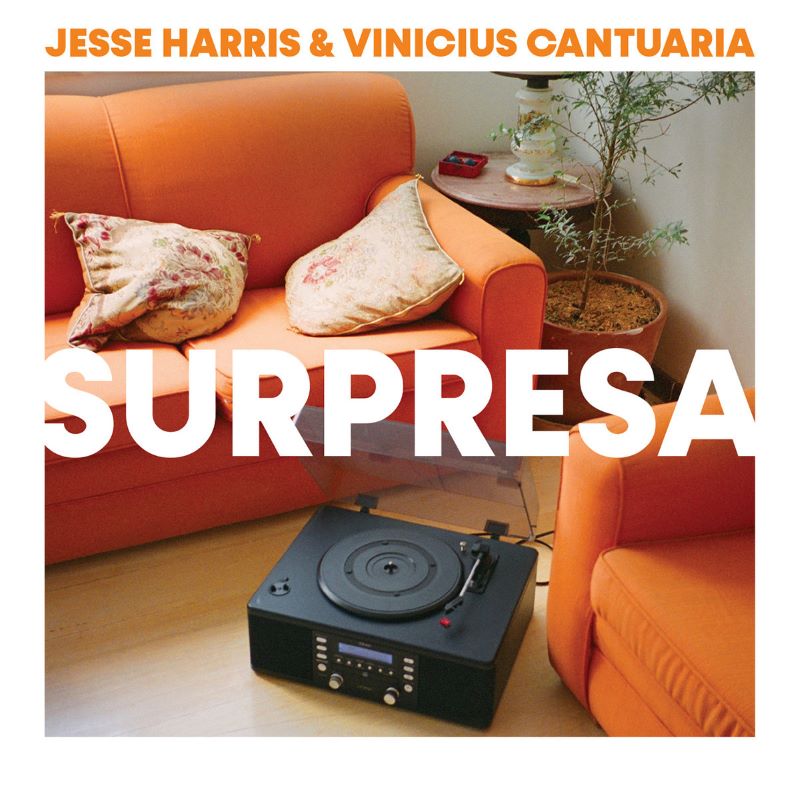
Jesse Harris & Vinicius Cantuaria - Surpresa (August 20, 2021 Sunnyside Records)

The past year found the whole world waiting. The COVID-19 pandemic paused life for most people and found everybody looking ahead to when life would return to normalcy. Singer/songwriters Jesse Harris and Vinicius Cantuaria took the time provided by the lull to record a project that had been evolving over the previous few years. Surpresa is the enchanting culmination of their efforts and it shows that some things are well worth the wait.

Both artists are well-known for their superior songwriting abilities. Harris came to the attention of the music world as a member of Once Blue and, later, writing hit songs for Norah Jones, Melody Gardot, Solomon Burke, and more. Beginning his professional work as a member of Caetano Veloso’s band, the multi-instrumentalist and composer Cantuaria has made a name for himself with his unique approach to the music of his native Brazil and his intriguing collaborations with artists as diverse as Ryuichi Sakamoto and Laurie Anderson.

Harris and Cantuaria initially met in 2011 when their mutual friend Dadi Carvalho introduced them, allowing Harris to stay at Cantuaria’s Rio de Janeiro home while Harris was in Brazil. Once he returned to New York, Harris visited Cantuaria and his wife Claire in Brooklyn. They struck up an immediate friendship and began hanging out and writing music. The writing eventually led to Harris inviting Cantuaria to play on gigs where they would incorporate each other’s songs and those of Tom Jobim into a working repertoire. Harris would go on to write “This Time” for Cantuaria’s 2012 recording, Indio De Apartamento.

It was about the time that they had decided to record together that the pandemic hit. Rather than becoming disillusioned, Harris began to ramp up his creative efforts. His home studio, Secret Sun West, allowed him to create any time he felt inspired to. When Cantuaria was able to finally return to the States, the two friends jumped immediately into recording Surpresa.

The majority of the tunes were written collectively, or separately by Harris or Cantuaria, with the exception of Gilberto Gil’s “Ó, Maria.” They recorded most of the instruments themselves, bringing in a handful of special guests to add to their work. Having worked with Melody Gardot for years, it was only natural that Harris invited her to add her vocals and a little piano. Guitar wizard Bill Frisell was also brought in to wonderful effect on a couple of tunes. Other guests included vocalist Gabi Hatmann, horn arranger CJ “CARM” Camerieri, percussionist Jeremy Gustin, and Will Graefe.

The recording begins with Harris’s folky “Waiting,” a wistful piece written about waiting for things to get better. Cantuaria wrote “Rio Negro” years back with the legendary Caetano Veloso and revisits it here in a cool, bittersweet style. Harris wrote “Far Away” as he watched planes flying over Gardot’s Paris apartment, missing places and people he’d love to visit. The first song the duo of Cantuaria and Harris wrote together, “How Long?” came together when the two friends were still in isolation, Cantuaria providing the music and Harris the lyrics, which ask the question that was on everybody’s mind during the Summer of 2020. The breezy yet resonant title tune follows on a positive note, the duo’s tune expressing the beautiful feeling of people coming together again, amplified by their collective voices and Gardot’s sonorous piano.

Taking inspiration from a photography book by Roe Ethridge, the duo’s jaunty “Broken Umbrellas” is about summer ending and its unfulfilled dreams. Gilberto Gil’s “Ó, Maria” finds Harris singing in touching Portuguese and Frisell adding his tasteful plectrum of strings. Frisell is also featured on Cantuaria and Argentinean composer Alejandro Corvalan’s “Colibri,” adding his typical haunting, bluesy touch alongside Cantuaria’s penitent vocals. Harris’s moving instrumental “Little Star” is revisited with the aid of Jeremy Gustin on percussion. Though it began as a Cantuaria instrumental, the bouncy “West Broadway Shuffle” finds additional charm with Harris’s guitar-doubling melody and lyrics. Harris’s “You, The Queen” is a song that Cantuaria loves to perform and it is a fitting end to their quietly poignant program.

It seems all too appropriate that Jesse Harris and Vinicius Cantuaria’s collaborative album, Surpresa, would have that uniquely Brazilian feeling of saudade. Their music and words could easily express the thoughts and feelings of the population as it sat and waited longingly for the world to start spinning again. 

1. Waiting
2. Rio Negro
3. Far Away
4. How Long (feat. Melody Gardot)
5. Surpresa (feat. Melody Gardot)
6. Broken Umbrellas
7. Ó, Maria (feat. Bill Frisell and Gabi Hartmann)
8. Colibri (feat. Bill Frisell)
9. Little Star
10. West Broadway Shuffle
11. You, The Quee

Vinicius Cantuaria - guitar, vocals, drums, and percussion
Jesse Harris - guitar, vocals, and drums
Melody Gardot - harmony vocals (1, 2, 4, 5) and piano (5)
Bill Frisell - electric guitar (7, 8)
Gabi Hartmann - harmony vocals (6, 7)
CJ Camerieri - horns and horn arrangement (1, 3)
Tony Scherr - upright bass (1, 3, 10)
Jeremy Gustin - percussion (1, 5, 6, 7, 9, 11)
Will Graefe - piano (4)

Sarah Buechi Contradiction of Happiness & Jena Philharmonic - The Paintress (August 20, 2021 INTAKT RECORDS)

They’ve taken to the skies – the chamber orchestra and the septet of Sarah Buechi – masterfully beyond all categorisation. The singer’s septet Contradiction of Happiness with piano, bass, drums and three string players is in itself already something of a polyphonic and liberated orchestra. Sarah Buechi has expanded this ensemble with the chamber orchestra of the Jena Philharmonic. The success of the first performance was overwhelming and the recordings on this album, which also took place in Jena, enable one to experience and relive the playful ease with which this ambitious project was accomplished. Classical intonation, Jazz vocalisations, chanting, microtones reminiscent of Indian music and Konnakol, rhythmic vocalisation – all these elements exist companionably in the compositions. "A music full of the joy of understanding," writes German jazz journalist Bert Noglik in the liner notes, "of the flapping of the wings of the poetic in the joint flight of the septet and the orchestra."

1. Creation
2. Lullaby (for Conan)
3. C-Void 91
4. Lion Heart
5. Precious Stone
6. Stets i Truure
7. Hungry Crocodiles
8. T.A.S. Mani
9. Nobody Knows (the future I`ve seen)

Sarah Buechi: Voice, Composition
Vincent Membrez: Piano
Wolfgang Zwiauer: E-Bass
Lionel Friedli: Drums
Estelle Beiner: Violin
Isabelle Gottraux: Viola
Sara Oswald: Cello

+

JENA PHILHARMONIC: Simon Gaudenz, Conductor

Lyrics and compositions by Sarah Buechi (except “Stets i Truure”, trad./arr. S. Buechi). Recorded September 28 – 30, 2020 at Volkshaus Jena, Germany. Recording engineer: Moritz Wetter. Mixed by Moritz Wetter at Hardstudios Winterthur 2021. Mastered by Michael Brändli at Hardstudios Winterthur 2021. Cover art: Conor Flynn O’Donnell. Graphic design: Jonas Schoder. Liner notes: Bert Noglik. Produced by Sarah Buechi and Intakt Records, Patrik Landolt, Anja Illmaier, Florian Keller. Published by Intakt Records.

Angelika Niesicer & Alexander Hawkins - Soul in Plain Sight (August 20, 2021 INTAKT RECORDS)

When Alexander Hawkins played at the Jazzfest Berlin in a duo with the american trumpeter Wadada Leo Smith, he met the saxophonist Angelika Niescier. Niescier was playing at the festival with her New York Trio with bassist Christopher Tordini and drummer Tyshawn Sorey ("The Berlin Concert", Intakt CD 305). Niescier has also been honored in Berlin with the Albert Mangelsdorff Prize, Germany's most prestigious jazz award. Hawkins is fascinated by Niescier's saxophone playing, and Niescier in turn is ardent about Hawkins' music. They stand on the same ground – both have their roots in jazz, and both love the jazz avant-garde of Ornette Coleman and Cecil Taylor. Two technically skilled instrumentalists with sparkling temperament, drive and joy in experimentation.

After several duo concerts, the studio album by Niescier and Hawkins, recorded at the loft in Cologne, is now available. The american jazz critic Stephanie Jones writes in the liner notes: “Soul in Plain Sight reveals layers of mutual navigation. Angelika Niescier and Alexander Hawkins court similarities and delight in differences …Buoying and challenging each other’s inclinations, the artists navigate shared sound with compassion and nuance.”

1. Brawls And Squabbles
2. Arhythm Songy
3. Why Didn’t You
4. Un_Tamed
5. Shipwrecked Words
6. Scops
7. Weft
8. Nexus
9. Metamorphose einer Karelle
10. Loom
11. As Hemispheres at Home
12. Limnetic Zone
13. Tar’ai
14. Scope

Angelika Niesicer: Alto Saxophone
Alexander Hawkins: Piano

All music by Hawkins/Niescier except “Arhythm Songy” by Muhal
Richard Abrams,“Un:Tamed”, “Nexus” and “Tar’ai” by Angelika Niescier , “Scops” and “as Hemispheres at Home” by Alexander Hawkins. Recorded in September 2020 at loft köln by Christian Heck. Mixed in March 2021 at Tonart Studio by Christian Heck. Mastered in April 2021 at Hardstudios Winterthur by Michael Brändli. Cover photo: Anja Illmaier. Graphic design: Paul Bieri. Liner notes: Stephanie Jones. Photo: Viktoria Sophie Conzelmann. Produced by Angelika Niescier, Alexander Hawkins and Intakt Records, Patrik Landolt, Anja Illmaier, Florian Keller. Published by Intakt Records

Stan Sulzmann & Vein with The Mon Ami Ensemble - Mon Ami (August 20, 2021)

* All proceeds to Médecins Sans Frontières *

Early in 2020 like many colleagues, I found myself left high and dry for creative output as the pandemic took a hold. I took a leap of faith into recording virtually as the only foreseeable option, which was a daunting prospect. “No previous experience” but up for learning.

Having played some great UK concerts as a guest with the Swiss trio Vein over a previous couple of years I was so disappointed at the inevitable cancellation of our short tour in UK and Ireland at the end of 2020.

For quite some time a couple of the young members of my Neon Orchestra , particularly Tom Walsh had broached the idea of a virtual recording of some of my big band music. As always young musicians were already finding a way to experiment with this option. So I thought ok maybe I could combine Vein with an ensemble of players from here, and Jim Hart in the Alsace recording virtually. Vein had already issued such a recording ‘ The Chamber Music Effect’ which sounded lovely.

This collection is the result. Great! A Lockdown Project to work on which involved writing some new compositions and arrangements whilst learning a little about recording virtually without the live interaction we all so love. I'd already heard some excellent large ensemble recordings as in Billy Marrows ‘Genmaicha’ with the Patchwork Orchestra which inspired me to want to get involved in the possibilities and not be beaten by the demoralising circumstances that we all faced. No live Music-making!

I set out to make an albums worth of music, culminating in 6 varied pieces.

'Chu Chu' (originating from my trio NEON), 'Between Moons' (a commission from composer John Taylor from my 65th Birthday tour), and 'Shadow Painting' from my 70th tour in 2019 plus three new pieces; 'Love for Sale' (the Cole Porter classic) blended with 'Resolution' ( John Coltrane) into one long arrangement that was premiered on a Royal Academy socially distanced Big Band online concert, itself another new experience in a great new theatre but with no audience. Then an arrangement of 'One Day I'll Fly Away' ( Joe Sample & Will Jennings from The Crusaders) I just always liked this tune sung by Randy Crawford.

Finally a brand new composition 'Mon Ami' which reflects this project at a time when we were all thinking about our friends and personal and musical relationships, not to mention what does the future hold in store for us all!

Stan Sulzmann

1. Love For Sale/Resolution
2. Chu Chu
3. Mon Ami
4. Shadow Painting
5. Between Moons
6. One Day I'll Fly Away

Stan Sulzmann - tenor sax

VEIN:
Michael Arbenz - piano
Florian Arbenz - drums
Thomas Laehns - bass

Trumpets - Tom Walsh, James Copus, George Hogg, Nick Smart
Trombones - Mark Nightingale, Olli Martin, Harry Maund
Saxes - Matt Sulzmann, Sam Glaser, Tom Barford, James Allsopp
Alex Munk - guitar
Jim Hart - vibraphone
Phil Todd - flute (5)

Produced by Jim Hart
Mixed and Mastered by Alex Bonney
Executive Producer - Stan Sulzmann
Project Consultant - Elaine Crouch

Tectonic Triplet - Absturz im DingDong (August 20, 2021)

Like three tectonic plates that move against each other by subducsive movements, Tectonic Triplet creates an energy with its impulsive music that puts the listener in an earthquake-like state of ecstasy. The young Leipzig artists Markus Rethberg on saxophone, Lukas Heckers on drums and Vincent Meißner on piano do not use clichés or pre-made statements in their work. 

1. Konstante Subduktionsüberladung 02:53
2. Atheistische Danksagung 02:45
3. Hämmern statt Nageln 02:16
4. Schlafe sanft mein Bärchen 02:42
5. Aporie 03:17

Markus Rethberg - sax
Lukas Heckers - drums
Vincent Meissner - piano

music and concepts by the band

Thursday, August 19, 2021

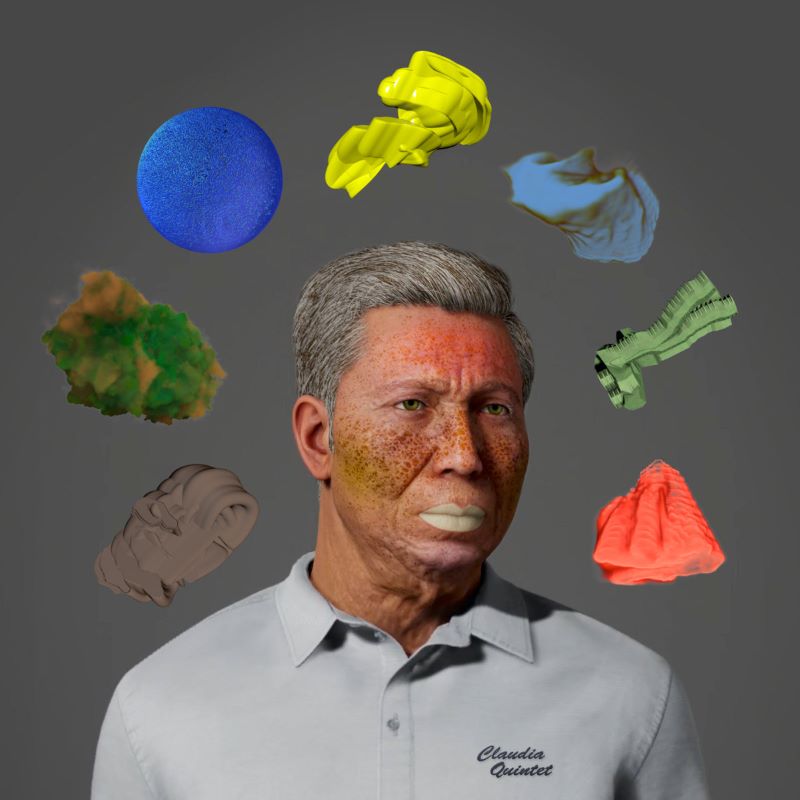
The Claudia Quintet with special guest: Eileen Myles - Evidence​-​Based (September 3, 2021)

“But if thought corrupts language, language can also corrupt thought.”
― George Orwell, 1984

The story of the album starts in 2017, when the Centers for Disease Control (CDC) outraged many by apparently banning seven words from use in their official documents: "evidence-based," "transgender," "entitlement," "fetus," "diversity," "science-based," and "vulnerable." It subsequently turned out the words were discouraged rather than banned, but by then the onslaught of the news cycle had already pushed the story out of public awareness. Hollenbeck paid attention.

"The CDC has become very important," Hollenbeck said, "and we've seen the repercussions of politicizing the CDC during the pandemic. At some point I realized this story that everyone forgot about is relevant to what we're all dealing with right now."

Hollenbeck started out by using six of the seven words as the titles of new pieces. His musical transliterations of the terms range from punning ("Evidence-Based" contains rhythmic elements from Thelonious Monk's "Evidence") to direct ("Fetus" has a soundscape that sounds womb-like) to aspirational ("Transgender" takes a very loaded word and places it in a gentle, beautiful setting).

Hollenbeck met poet Eileen Myles several years ago when both were in residence at the MacDowell Colony artists retreat. He contacted Myles and asked them to collaborate. Myles described the process:

"The first thing I received was the vocabulary list," Myles said, "which ended up being the titles of each of the things I wrote. Some time after that John gave me rough cuts of the tracks. I liked the music a lot, so that was great news. I do a lot of things at once all the time, and so sometimes the way to focus is to get the hell out of town. So I went up to Provincetown [MA] for the weekend and listened to the music a lot and took a lot of notes and tried to create a reality in which these pieces had some meaning."

Myles's poems (or "talks" as they call them, to pair them with the music created by the band) are, for the most part, not direct statements about either the CDC story or even the usual meaning of the words themselves. Instead they offer yet another lens on language and its use, one that compliments Hollenbeck's music.

"A piece of music always has a vibe and a pace and a context and a momentum," said Myles. "So I wanted to imagine occupying that in a different way. Sometimes John would indicate 'from this moment in the cut to this moment is where i imagine you,' so that contributed to the size or the amount of language I was going to construct. Because the words refer to a kind of government, I felt like I had to be inventing a government in which these texts would occur."

The current membership of the Claudia Quintet is Hollenbeck on drums, tenor saxophonist Chris Speed, bassist Drew Gress, Matt Moran on vibraphone and Red Wierenga on accordion and piano. Gress and Wierenga also added an electronic score for "Fetus." The band has been together for a long time, though Hollenbeck notes that as they age and get married and have kids, the challenges mount for the ensemble. Despite those difficulties, or maybe because of them, the band sounds committed and cohesive and exciting on Evidence-Based.
John Hollenbeck

The new album is being released on Flexatonic Records, the label attached to Hollenbeck's nonprofit Flexatonic Arts. It's part of a plan to bring all of Hollenbeck's albums under one label.

"I've been gathering up all of my releases from various labels," Hollenbeck said. "Some of the labels didn't exist anymore anyway. We'll be releasing all these records on Bandcamp, the preferred platform for musicians at the moment. Our first release was Songs You Like A Lot. Evidence-Based is the second release overall and the first by the Claudia Quintet. We're going to simultaneously re-release two of our older records, Super Petite and our other poetry record, What Is The Beautiful."

Besides being a direct comment on a particular news story, Evidence-Based also tackles, by its existence, the idea of how the arts and politics interact.

Said Myles: "I betray my politics all the time in my work. There's no way to keep the conditions of our moment out of the work. It's impossible. It's like using specific details of people's names and locations. You can choose to be abstract and not drop points on the map but why? Everybody knows you're on the map. It doesn't matter if I know the name of the tree but the name of the street might be nice. I think the specificity of politics is exciting and edgy to include. I don't have to but I can't help it. "

Hollenbeck is on the same page: "I think you can't avoid it and shouldn't avoid it. I don't want to come down on people but I find you can provide some information or a different way to look at the same thing. The music is aspirational. I'm not in a vacuum. I'm hearing all the news everyone else is hearing. Then I go into the practice room or the composing room and it's not like that stuff goes away."

In many ways, our current social, technological and political conditions have already left Orwell's 1984 far behind. As we grapple with this new world, we need artists to help us find our center, to assist us in navigating the minefield. With Evidence-Based, Hollenbeck offers us a compass and a map. We all end up feeling a little less lost.

Jason Crane

1. Evidence-based
2. Son of...
3. Transgender
4. Entitlement
5. Fetus
6. Diversity
7. Nice Tune
8. What is the name of this piece?

EVIDENCE-BASED THE CLAUDIA QUINTET

Special guest: Eileen Myles: “talk”

The Claudia Quintet is:
Chris Speed: clarinet/tenor sax
recorded in North Atwater Village, Los Angeles California.

Red Wierenga: accordions, electronics (on fetus)
Accordion recorded at his mother-in-law's basement in Toms River, New Jersey; piano recorded at his apartment in Fort Greene, Brooklyn, New York

Matt Moran: vibraphone
recorded in the music room on Van Buren St, Brooklyn when no one else was home

Drew Gress: acoustic bass, electronics (on fetus)
recorded at Merriewold Lake Studios, South Blooming Grove, NY

John Hollenbeck: drums, percussion, electronics (on fetus), composition

Recorded in E-323 (Schulich School of Music) Montréal, Canada

Produced by John Hollenbeck
Mixing Engineer: Andy Taub, Brooklyn Recording
Mastering: Brent Lambert, Kitchen Mastering
Design: karlssonwilker

Compositions by John Hollenbeck - Grand Blvd Music ASCAP/GEMA
“Talk” by Eileen Myles (unpublished)
All rights of the manufacturer and of the owner of the recorded work reserved. Unauthorized copying, public performance, broadcasting and file sharing of this recording prohibited
© 2021 John Hollenbeck Flexatonic Records