Tuesday, July 20, 2021

The Bill Evans Guitar Project - Echoes of Bill (July 20, 2021)

On July 2, 2000 John Hebert, Bruce Hall, Rez Abbasi and I got together to play some Bill Evans tunes in Bruce Hall's Brooklyn home studio. Bruce was recording into a now-obsolete digital recording platform (mini disc) at the time, there was a lot of mic bleed, small room, mini-disc....it wasn't Avatar. Despite this the end product sounds remarkably good. Bruce did some beautiful playing and some beautiful engineering here. As far as any of us can remember we just got together to record in this two guitar configuration that one time although we had all played together on many different gigs and recording projects...in a lot of ways New York was and is a small town. We were pretty much reading through some Evans tunes, coming up with quick arrangements, recording and moving on to the next tune. It's got a really nice vibe and for all you guitar players, Rez is absolutely burning.

We met at Bruce's house, read through some tunes, hung out afterward, did a lot of bullshitting and for the next 20 years didn't give the recording much thought, if any. Then...about a year ago Bruce remixed the tunes we recorded and sent us all a copy. It was an emotional experience for me to hear this so many years later and I think for the others as well. All the great memories I have of playing with these stellar musicians, all the miles between then and now, the gratitude that I felt and still feel to these musicians that I admire and respect for including me and for the commitment, heart, soul and talent they put into any and all music that they make. I think you can hear all that in this recording. We got it mastered through Gene Paul at GandJ Audio - Gene and Joel Kerr did a freaking great job on that. Huge thanks to Bruce Hall for his hosting, playing and engineering.
Bruce Saunders / July 16, 2021

1. Bill's Hit Tune 05:11
2. Children's Play Son 04:57
3. Twelve Tone Tune 03:47
4. Re: Person I Knew 06:06
5. Showtype Tune 05:07

Rez Abbasi - Guitar
Bruce Hall - Drums/Engineer
John Hébert - Bass
Bruce Saunders - Guitar

Recorded S. Portland St, Brooklyn, NY on July 2, 2000
Recorded and Mixed by Bruce Hall
Mastered by G and J Audio

Percy Jones / Alex Skolnick / Kenny Grohowski / Tim Motzer - PAKT (July 20, 2021 MoonJune Records)

PAKT is made up of fretless bass guitar icon Percy Jones, guitarists Alex Skolnick and Tim Motzer, and drummer Kenny Grohowski. They are all very experienced players. Skolnick is best known as the lead guitarist in the thrash metal band Testament; he went on to freelance work, playing jazz with his Alex Skolnick Trio, and experimenting with World Music and Progressive Rock.

Welsh bassist Jones (a New York resident) is known for his tenure in the jazz fusion group Brand X, as well as extensive studio work with Brian Eno, Kate Bush, Suzanne Vega, David Sylvian Motzer has a long background in free improvisation as well, including the bands Bandit65 (with fellow guitarist Kurt Rosenwinkel) and Orion Tango, plus many other recorded collaborations for his 1k Recordings label. 

Grohowski is one of the busiest drummers in business, and his recent associations include John Zorn, Brand X, Imperial Triumphant, Kilter, Felix Pastorius & Hipster Assassins, John Medeski, Lonny Plaxico, Tony Levin, Beledo, Markus Reuter, and many others.

PAKT recalls the fearless attitude and daring approach that originally defined progressive music: where the magic of the moment always triumphed over preconception. Templates be damned ... this music blazes its own path! This is truly exquisite fare, serving as a reminder to aficionados of what initially drew them to this most creative, visionary of genres.

1. Emergence
2. Over Strange Lands
3. The Mystery
4. The Unsilence
5. Brothers Of Energy
6. Perseverance
7. The Sacred Ladder
8. Drifts & Alignments
9. Nigh Crossings
10. The Great Spirit
11. Departure Sanctuary
12. Cosmic Fire

PERCY JONES - bass guitar
ALEX SKOLNICK - guitar
KENNY GROHOWSKI - drums
TIM MOTZER - guitars, electronics

Recorded live at the ShapeShifter Lab, Brooklyn, NY, August 15, 2020, during the lockdown. 

Mixed and mastered by Benjamin Schäfer and Markus Reuter. Mastered by Fabio Trentini and Markus Reuter. 

Produced by PAKT and Leonardo Pavkovic.
Executive production by Leonardo Pavkovic.

LCSM "Likwid Continual Space Motion" - Earthbound Remixes (July 2021 CoOp Presents)

CoOp Presents proceed to give you what you need! Following on from the 'Plug One' series, a whole slew of releases are scheduled for the second half of the year, as we enter the next phase of the CoOp Presents universe.

First up, the Selectors Assemble crew with a mammoth remix project reinterpreting tracks from LCSM's subliminal album 'Earthbound'.

Originally released last year on Dutch label, Super Sonic Jazz, 'Earthbound' was a highly-acclaimed project from a band headed by CoOp Presents label-boss IG Culture, featuring a heavyweight band comprised of some of London's most talented players, including members of Steam Down, Wonky Logic, Nathaniel Cross and IG's label partner, Alex Phountzi, amongst others.

LCSM (aka Likwid Continual Space Motion) is an exploration into afro-futurism, inspired by the likes of Sun Ra, but forming a sound entirely unique with a hybrid of bruk, boogie, funk and jazz. The album received rave reviews from the likes of Gilles Peterson, XLR8R and Beat Caffeine, with the vinyl quickly selling out globally, and featuring highly in numerous end of year lists, from Sound Shelter (Sydney), to Bandcamp to The Vinyl Factory, as well as a nomination for "Track of the Year" at the Worldwide Awards and named "Album of the Year" by Rush Hour!

So to this new EP released on IG Culture & Alex Phountzi's own imprint. As you'd expect, the Selectors Assemble gang deliver the goods; firing on all cylinders across this 6-track bruk opus.

Cengiz kicks off the session with his flip on 'Frequency' ahead of James Rudie's stark sub-heavy version of 'The Box'. There are two mixes of 'More Brilliant Centre', the first from Entek, the second from CoOp Presents co-founder Alex Phountzi. The hyper-tempo'ed 'World Order Is Chaos' sees IG & Alex team up again under their NameBrandSound moniker, and we close out with Xtra Brux's take on 'Let Me' (which originally featured Natalie May & Neue Grafik); keeping it soulful and jazzy but adding drums that knock, as they do throughout the EP, staying true to the cosmic-jazz source material, but re-shaping it exceptionally for the bruk dancefloors. 

1. Frequencies (Cengiz Remix) 04:56
2. The Box (James Rudie Remix) 05:20
3. More Brilliant Centre (Entek Remix) 07:46
4. More Brilliant Centre (Alex Phountzi Remix) 04:38
5. World Order Is Chaos (NameBrandSound Remix) 04:55
6. Let Me (Xtra Brux Remix) 04:49

Kika Sprangers & Pynarello - No Man's Land (July 2021 ZenneZ Records)

Kika Sprangers is on the forefront of the new jazz generation in the Netherlands. Her new release No Man’s Land was recorded live on November 22, 2020 at CloudNine in TivoliVredenburg.

“To me No Man’s Land is a special work, created in a quiet, pandemic world, with the focus theme: the position of women in the present time”, says Kika.

She explains how she has tried to capture reconciliation and vulnerability on this recording, “the most important elements in the gender discussion, if you ask me. The music is about connection and emotion. Character should be first in the ranking, gender comes later. Or perhaps it should not really matter at all?”

1. Walllflower 03:53
2. Terra 07:21
3. No Man's Land 07:03
4. A Minor Interlude 04:56
5. Jakob 09:20
6. Ravi 06:17
7. Ronja 10:26
8. All We Have Left 07:54

Kika Sprangers – saxophones and compositions
Merel Vercammen, Jeffrey Bruinsma - violin
Annerien Stuker, Hadewijch Hofland - violin
Liselot Blomaard, Judith Wijzenbeek - viola
Anne Meike Burgel, Sebastiaan van Halsema - cello
Wolfert Brederode - piano
Thomas Pol - bass
Jasper van Hulten - drums

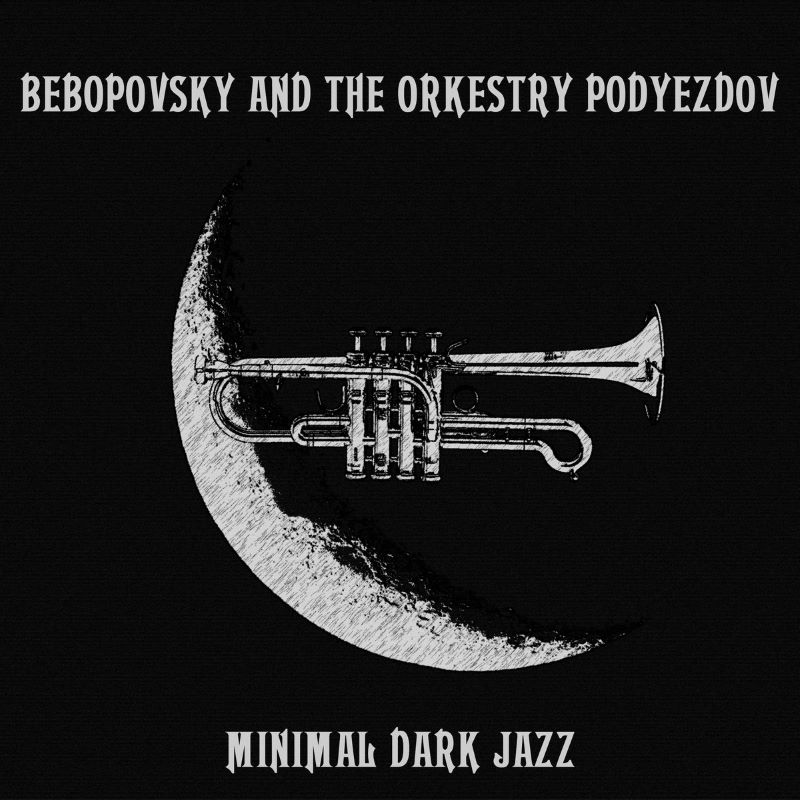
Bebopovsky And The Orkestry Podyezdov - Minimal Dark Jazz (July 2021)

Like classic dark jazz, but more spacy and minimalistic

1. Kindred of Saint Petersburg 05:19
2. Red Planet Blues 05:42
3. Uninvited Guest 05:19
4. Moon Vampires 03:42
5. Rain Angels 05:27

David Mirarchi - Talk Honestly (July 2021)

"Talk Honestly" is the 3rd recording of my solo project "Keepsake Box."

These compositions & improvisations are about living with integrity.

I hope you'll enjoy them.

1. E.B.Y.E. 04:16
2. Talk Honestly 06:41
3. Brutalist Fast Food Joints 07:55
4. Lull 02:13
5. Dusk Lantern IV 09:31
6. Slow Walk Home (G to K) 03:33

David Mirarchi - alto & soprano saxophones, flute, bass clarinet

All compositions by David Mirarchi
Recorded, mixed, and mastered by David Mirarchi

Monday, July 19, 2021

Natacha Atlas Official - The Inner & The Outer (2021)

Natacha Atlas is an internationally-acclaimed artist with one of the world’s most distinctive voices. She is long known for synthesising western and middle eastern vocal traditions with mind-blowing dexterity, pushing vocal and musical boundaries.

1. Natacha Atlas feat. Jason Singh - The Outer 05:39
2. Natacha Atlas feat.Yazz Ahmed - The Inner 06:02
3. Natacha Atlas feat.Yazz Ahmed - Inner Sunset 03:38
4. Natacha Atlas feat. Yazz Ahmed - The Inner Dimension 10:39
5. Natacha Atlas X Basha Beats feat. Yazz Ahmed - Inner Stardust 04:19
6. Natacha Atlas feat. Jason Singh - The Outer - Radio Edit 04:01

Natacha Atlas - Vocals (1-6)
Yazz Ahmed - Flugelhorn (2-5)
Jason Singh - Beatbox, Analogue Synths (1 & 6)
Alcyona Mick - Original Piano Takes (1-6)
Samy Bishai - Violin, Viola, String Arr. (2), Electric Bass (3), Beats (1, 3, 5, 6), Programming & Sound Design (1-6)

All Tracks by Atlas/Bishai (Wise Music Publishing)
Produced & Arranged by Samy Bishai
Mixed by Samy Bishai
Mastered by Jon Astley

Young Pilgrims - We're Young Pilgrims (2021 Stoney Lane Records)

Young Pilgrims, the addictive young brass band brimming with jazz-rock energy, release their much-anticipated new studio album We’re Young Pilgrims this June, alongside a cluster of live dates as Britain’s live music scene reawakens!

"The feverish, brassy, raucous intensity of 'Canal Tripping' is refreshing from Young Pilgrims new this June on Brum jazz indie Stoney Lane. The ballsy 'Hall of Meat' is also streaming drawn from We're Young Pilgrims. Strap yourself in." - Marlbank

Growing out of the thriving Birmingham jazz scene, Young Pilgrims have found themselves drawing fans from across Europe and beyond with their intense live performances - from beer-soaked dance floors to London’s South Bank, the Paris Jazz Festival to Love Supreme Festival.

The Pilgrims’ adventurous brass-heavy, rock-influenced sound is brought together by their explosive nine-strong line-up, featuring trumpets and trombones alongside the baritone sax, sousaphone and two drummers driving the band’s high-energy rhythmic groove.

With improvising invention set against their infectious melodies, the band follow their 2016 debut (Little Things) with their first fully produced studio album - released 18th June on Stoney Lane Records - with an unorthodox tour reclaiming Britain’s old bandstands, festivals and venue dates taking their imaginative music across the UK later in 2021 and into 2022.

Inspired by renegades, Scottish cities, skateboarding and even a brief and murky incursion into a local canal, We’re Young Pilgrims features eight originals from frontman Richard Foote alongside fellow Scots Kieran McLeod and drummer Jonathan Silk, with striking new arrangements of music from Vulfpeck, Elliot Smith and D’Angelo.

Canal Tripping is written in homage to trombonist Richard Foote’s unfortunate plunge from his bike into one of Birmingham’s canals, giving a nod to the now legendary passerby who saved Richard, his bike and his trombone from the depths of the waterways. Foote’s Hall of Meat, meanwhile, takes its name from “a notorious and gnarly” Instagram page from Thrasher Magazine, as Richard writes: “a tribute to all the skaters out there, taking slams, getting smoked, bouncing back up and making some serious tricks.” Silk’s original Pilgrimage draws inspiration from the band’s long-running residency at Birmingham’s Hare & Hounds, whilst i Of The Underground (Kieran McLeod) is a subtle nod to an oft-missed piece of design circulating around London since 1916. The lowercase ‘i’ designed by Uruguayan-born Edward Johnston, for the famous original London Underground typeface, represents all renegades and non-conformists, with the music conjuring images of typewriters, train noises and the many characters encountered on the Tube.

1. Intro 00:36
2. Rufio 05:34
3. Hall Of Meat 03:48
4. Kabuki Dance 08:01
5. Back Pocket 03:15
6. Pilgrimage 03:42
7. Everything Means Nothing To me 03:27
8. Dear Green Place 04:29
9. Canal Tripping 04:41
10. i of The Underground 04:21
11. Feel Like Making Love 06:29

Young Pilgrims are ...

Richard Foote – Trombone
Sam Wooster – Trumpet
Chris Maddock – Baritone Saxophone
Jonathan Silk – Drums
Mike Adlington – Trumpet
Euan Palmer – Drums
Sean Gibbs – Trumpet
Michael Owers – Sousaphone
Kieran McLeod – Trombone

Tracks 1, 2, 3, 8 and 9 composed by Richard Foote. Tracks 5 and 7 arranged by Richard Foote. Tracks 4 and 10 composed by Kieran Stickle McLeod, track 11 arranged by Kieran Stickle McLeod. Track 6 composed by Jonathan Silk. Track 5 written by Jack Stratton. Track 7 written by Steven Paul Smith.

Produced by James Gardiner-Bateman
Recorded by Luke Morrish-Thomas at East Cote Studios

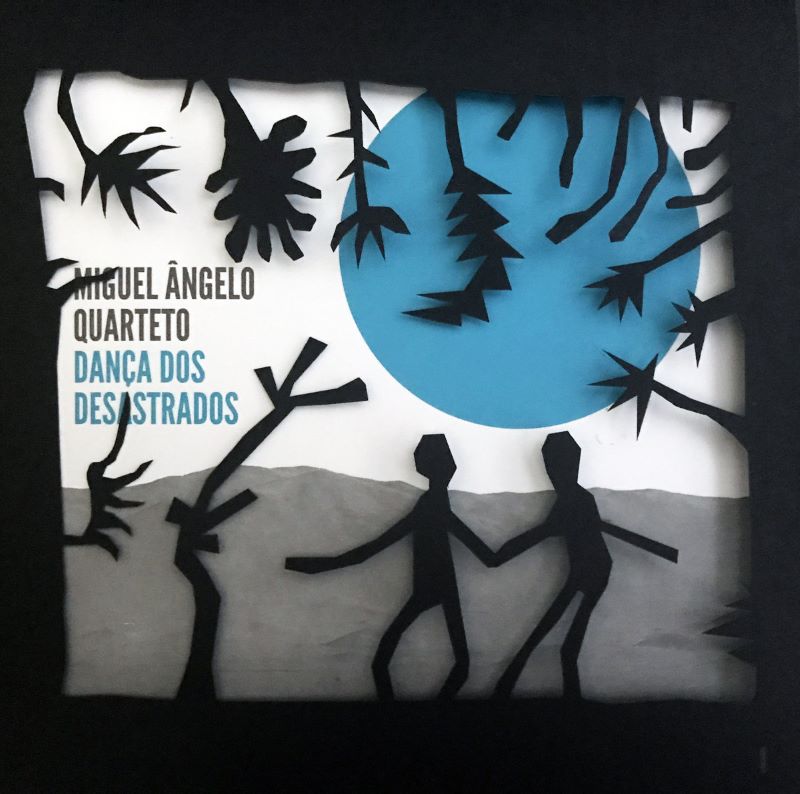
Miguel Ângelo Quarteto - Dança dos Desastrados (2021)

On Dança dos Desastrados, every note, every beat has a melodic perspective in mind. This is not a new thing for Miguel Ângelo. The bassist has a talent for establishing epic dialogues on the strength of his flowing melodic statements. His Porto, Portugal-based quartet with alto saxophonist João Guimarães, pianist Joaquim Rodrigues, and drummer Marcos Cavaleiro is a go-to for those of you who can’t get enough of the Brian Blade Fellowship—or any musician with a similar approach to a melody.

1. Capítulo I 01:47
2. Era Uma Vez... 06:26
3. Caminho dos Perdidos 05:56
4. Dança dos Desastrados 07:09
5. Capítulo II 03:15
6. Valsa do Solitário 08:34
7. Soldado Desconhecido 06:26
8. Capítulo III 03:12
9. Vira do Avesso 04:39
10. Réquiem do Insignificante 06:44

KAMA Kollektiv - Toivo (2021 Berthold Records)

The KAMA Kollektiv’s second album TOIVO is released by BERTHOLD records.

The line-up: Kirsi Harju (Finland) on trumpet and vocals, Jonathan Nagel (Germany) on bass, Jetse de Jong (Netherlands) on piano and Yoad Korach (Israel) on drums. Harju who – alongside Nagel – composed the songs, leads the quartet.

Harju is an original and accomplished trumpeter and singer. She excels at both. “I didn’t choose the trumpet, the trumpet chose me,” she recalls. “I wanted to play everything else, particularly violin, but as a kid I made mistakes in the music school exam, I was so nervous.” She was put into the wind department, given a pocket trumpet and soon found she could play beautiful melodies. She also sang. “My friends said I was too loud but I loved it. I was in choirs and vocal groups at school. Later I heard Chet Baker and realised I could combine the two.”

Toivo (also the title of one of the tracks) is the Finnish word for hope. According to the band “the music brings together the confusion of the current international situation with desire for unity and hope, in a musical tapestry. It expresses influences from melancholic Nordic atmospheres and landscapes, minimalism, folk and indie pop, as well as jazz artists like Mathias Eick.”

The melodic idea for the track Distance Song was already in Harju’s mind in Finland before she moved to Amsterdam to study in the conservatory, where she met her fellow musicians. “Then it became a song about homesickness and distance,” she explains. “This is reflected in the changing tonality of the music.”

I wish you could see my true nature begins with the drone of a bowed double bass, duetting with Harju’s almost breathless, sensitive voice. “The inspiration was the book – The Things You Can See Only When You Slow Down, by Haemin Sunim,” says Harju. “I was reading it during the pandemic. It’s very philosophical and leaves a lot open. There are no answers. Even I don’t know my own true nature.” Muiden Käsissä “is a Finnish title,” explains Harju “which means – in the hands of others – it's about not being in control or dependency.” Paradoxically the lyrical music on this track displays Harju’s masterly control as both singer and trumpeter, in perfect, complex balance with piano, bass and drums.
Of the songs written by Nagel, Once to scar me for life got its title from a poem given him after a meeting a stranger. “The brief encounter,” he explains “was casual, but it triggered thoughts about this person and our lives in general. This song is about taking risks. Just go for it. Just once, to scar for life.”

Nagel’s song Maybe tackles self-image, and “the way we manipulate our bodies – dream fantasies. The body as designed or sexualized object. The song starts out in a funky rock groove, sounding cheerful and innocent, then becomes satire, when it suddenly changes to a swing rhythm mocking a showband.”

Phlegmatic Escapism “draws you into a flow state,”explains Nagel. “The feeling of time is stretched by continuous repetitions of a dull and mellow melody. The song hovers unimpressed over the busy beat, in a dream state. Like looking out of a train window, seeing the countryside flying by endlessly. Then suddenly a big shift, an intermezzo reminding of folk and country music from a different, bizarre dream world, with distorted echoes and a futuristic retro charm, which eventually merges back to the initial flow. It’s about trying to escape our hectic everyday routines and information overflows.”

Inventing Memories also a Nagel song “is about idealising the past. I have mostly good memories of Berlin and other placed I’ve lived, my childhood, ex-girlfriends. I know that there have been many problems and good reasons why I moved on. But the memories give the illusion that it mostly was all good – inventing and reshaping the past.”

Harju sees her band as a collective.“Discussing and deciding things together as much as possible is important,” she says “but there also has to be a leader.” She loves the poetry of Jonathan Nagel’s ideas, but also respects his musicality and versatility as a bass player. She is very grateful to have the pianist Jetse de Jong on the album as he is in much demand on other projects. “I love his diversity and it’s effortless to work with him,” she explains. The drummer Yoad Korach “has worked on a range of projects. With each new one he incorporates all the different ideas, to create a fresh and unique style.”

1. Distance Song 05:15
2. Maybe 04:14
3. Once To Scar Me For Life 06:10
4. Toivo 06:08
5. Phlegmatic Escapism 05:24
6. Inventing Memories 04:30
7. Muiden Käsissä 06:12
8. I Wish You Could See My True Nature 05:45
9. Silence Your Own Voice 05:43

Ben Goldberg - Everything Happens To Be. (BAG Production Records 2021)


The echoes of traditional jazz bounce off the walls of Ben Goldberg’s music. The music is warped and strange, as if buckling beneath the strain of being compressed to fit the length of the clarinetist’s latest recording. For this session, Goldberg collaborates with musicians who have a proven track record with that kind of approach. Guitarist Mary Halvorson, tenor saxophonist Ellery Eskelin, bassist Michael Formanek, and drummer Tomas Fujiwara traverse time and distance, recalling the sound of New Orleans one hundred years ago as they offer a vision of what it could become a hundred years from now.

1. What About 05:41
2. 21 06:14
3. Fred Hampton 04:48
4. Everything Happens To Be. 07:04
5. Cold Weather 06:23
6. Chorale Type 09:53
7. Tomas Plays the Drums 05:51
8. Long Last Moment 05:10
9. To-Ron-To 05:32
10. Abide With Me 01:10

Mary Halvorson - electric guitar
Ellery Eskelin - tenor saxophone
Michael Formanek - bass
Tomas Fujiwara - drums
Ben Goldberg - clarinets

All compositions by Ben Goldberg, except "Abide With Me," by William Monk (by way of Thelonious Monk).

Recorded June 2018 at Firehouse 12 Studio, New Haven
Nick Lloyd, engineer
Mixed January 2021 by Michael Coleman

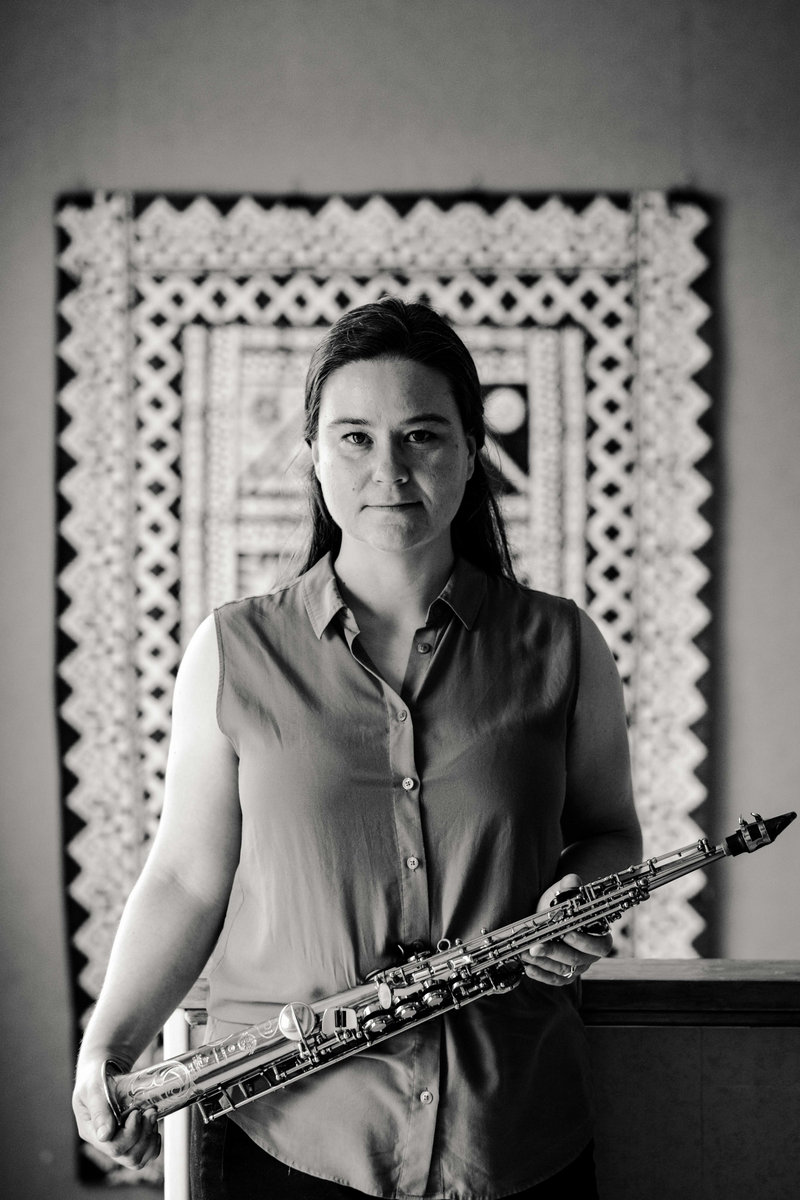
Jake Baxendale & Jasmine Lovell-Smith - Sanctuary (2021)

Sanctuary is a collaborative album featuring works by New Zealand jazz composers Jake Baxendale and Jasmine Lovell-Smith for eleven-piece ensemble. The material on the album was developed as part of a live performance residency named the Arthur Street Loft Orchestra at now defunct Wellington venue the Tuatara Third Eye. Running weekly every Monday night for three years, the series featured works by local and national jazz composers for large ensemble. The musicians featured on the album are a multi-generational cast of favourite collaborators from the Wellington jazz scene. With the inclusion of flute and bass clarinet along with traditional winds, brass and rhythm, the ensemble has a rich, chamber-like texture, yet maintains the fluidity and agility that are typical of small group jazz, allowing space for the improvising voices of each musician.

The title of the album is taken from Lovell-Smith’s composition of the same name. The concept of Sanctuary gained further significance at the time of recording when much of the world was stuck in COVID-19 lockdown while New Zealand had emerged back into relative normality. New Zealand has been a kind of sanctuary from the chaos of the pandemic over the past year, and the gratitude that the musicians felt to be able to be making music together in the same room pervades the album.

The two composer/bandleaders first met in 2007 when Lovell-Smith became Baxendale’s saxophone teacher upon his move to Wellington at age 17. They reconnected as peers ten years later when Lovell-Smith returned to Wellington after a number of years in the U.S. and Mexico. Both are accomplished improvisers and composers in their own right, with Baxendale’s works documented on his recordings with the Jac and Antipodes, and Lovell-Smith’s with her New York-based quintet Towering Poppies. Sanctuary sees both composers expanding the scope of their work into longer forms and more varied ensemble textures, exploring a broad instrumental palette and a diverse array of strategies for ensemble interaction, ranging from tightly composed to fluid and free.

The album is centered around two suites, one by each composer. The opening work is Baxendale’s three part suite Leaves of Grass. Named for the poetry of Walt Whitman, it expresses the humanist and egalitarian ideals of the great poet, integrating a range of musical influences from the American continent, from pastoralism to free jazz to the blues. There is a songlike sense of wonder on “I: Opening” which features Lovell-Smith on a fluid soprano saxophone, aptly supported by a rich ensemble chorale. “II: A Chants of Paints and Joys” opens with Baxendale’s plaintive alto saxophone over a melancholy brass wail, eventually accelerating into a bittersweet, dance-like theme. Drummer Hikurangi Schaverien-Kaa heralds the transition to “III: I Sing the Body Electric,” an unabashedly celebratory down-home bluesy piece featuring the guitar work of Aleister James Campbell. The sense throughout Leaves of Grass is of an earthy reflection upon nature, community, and the ups-and-downs of life.

Lovell-Smith’s “Noche Oscura” follows, a haunting, minor chorale which shows another facet of the ensemble's performance as they maintain a sense of delicately listening throughout. Next is the other major work of the album, Lovell-Smith’s Sanctuary, a suite in three continuous movements presented here as a single track. The piece represents Lovell-Smith’s emotional journey upon moving back to New Zealand after a number of years abroad to embark on doctoral studies in music. The sanctuary the piece refers to is an internal sense of calm and groundedness that she has sought to cultivate to carry her through these challenging transitions.

“I: Optimism” opens with Louisa Williamson’s mellifluous tenor saxophone over a lilting accompaniment, evoking the bright-eyed excitement of starting a new venture. The joyful finish of the piece dissolves into the atmospheric “Interlude,” where overlapping improvisations mark the transition to the muddied waters of “II: Strangely Familiar.” Resonant bass clarinets set the scene for a wistful soprano saxophone theme, evoking the experience of emotional overwhelm. An undulating, collective improvisation at the end of the work aids the transition to “III: Inevitable.” Accumulating melodies build tension over an insistently pulsing bass, eventually reaching a much-needed release to a burning swing feel. Blair Latham’s gritty and exuberant baritone sax solo leads the piece with steely determination to a surprising finish. Baxendale’s “Sleep (A Glimpse of Plimpse)” is an evocative postscript to the album. The ensemble explores Baxendale’s dream world in a beautiful collective meandering, feeling their way through the fog together.
Biographies:

Jake Baxendale is a saxophonist and composer based in Wellington, Aotearoa. Raised in remote Golden Bay, he demonstrates in his life and music a freedom of expression, a love of nature and a community oriented mindset that is heavily influenced by his upbringing. Jake's music has taken him throughout Aotearoa, Australia and South Korea to New York City. His work has been recognised by APRA NZ (Best Jazz Composition, 2020) and the Aotearoa Music Awards (Best Jazz Album/Artist - nominated 2015 for "Nerve", 2019 for "Good Winter" and 2020 for “A Gathering”). As well as performing and composing, Jake is involved in the local and national jazz community as the musical director of the Rata Music School jazz ensemble, curator of the Arthur Street Loft Orchestra concert series, and founder of jazz networking and advocacy group, Jazz Aotearoa.

Jasmine Lovell-Smith is a composer and soprano saxophonist from Wellington, New Zealand whose work explores the intersections of jazz, improvisation and chamber music. She was based for a number of years in the U.S. and Mexico, during which time she released two albums with her New York-based quintet Towering Poppies, graduated from Wesleyan University (Middletown, CT) with a Master of Arts in composition, and taught jazz studies and saxophone at the Universidad Michoacana de San Nicolás de Higalgo in Morelia, Mexico. Jasmine performs regularly with her own ensembles the Noveltones, the Jasmine Lovell-Smith Quintet, and as part of the Wellington composers’ collective the Arthur Street Loft Orchestra. She is an Artist Teacher at the New Zealand School of Music - Te Kõkī. 

Track details:

LEAVES OF GRASS - Baxendale
1 I: Opening 4:16
2 II: A Chant of Pains and Joys 10:55
3 Drum-Taps 1:58
4 III: I Sing the Body Electric 5:20

5 NOCHE OSCURA - Lovell-Smith 6:51

6 SANCTUARY - Lovell-Smith 18:51
I: Optimism (0:00-5:00)
Interlude (5:00-7:51)
II: Strangely Familiar (7:51-13:43)
III: Inevitable (13:43-18:51)

7 SLEEP (A GLIMPSE OF PLIMPSE) - Baxendale 5:03

Rachelle Eastwood - flute
Ben Hunt - trumpet
Jasmine Lovell-Smith - soprano saxophone
Jake Baxendale - alto saxophone and bass clarinet
Louisa Williamson - tenor saxophone
Kaito Walley - trombone
Blair Latham - baritone saxophone and bass clarinet
Aleister James Campbell - guitar
Anita Schwabe - piano
Chris Beernink - bass
Hikurangi Schaverien-Kaa - drums

Recorded on July 25th and 26th 2020 at Massey Studios by Thomas Voyce
Assisted by Michael Sutherland
Mixed by Thomas Voyce at Rhombus Studios
Mastered by Arnold Kasar at Calyx Studio, Berlin
Produced by Jasmine Lovell-Smith, Jake Baxendale and Thomas Voyce
Compositions ©Jake Baxendale (APRA) or ©Jasmine Lovell-Smith (APRA)

Album art by Eden Fainberg
Album design by Jamie Breiwick

Saturday, July 17, 2021

July 17 on Resonance – Roy Hargrove / Mulgrew Miller "In Harmony" – 2-LP Record Store Day exclusive

RESONANCE RECORDS TO ISSUE IN HARMONY IN JULY 2021 FEATURING TRUMPETER ROY HARGROVE AND PIANIST MULGREW MILLER IN A CAPTIVATING DUO

Previously unreleased live recordings from 2006 and 2007, available July 17th as a limited-edition 180-gram 2-LP Record Store Day exclusive and July 23th as a deluxe
2-CD and digital edition issued in coordination with the Hargrove and Miller Estates

Elaborate booklet with rare photos, informative essay by Ted Panken, interviews and statements from Sonny Rollins, Christian McBride, Common, Ron Carter, Jon Batiste, Karriem Riggins, Keyon Harold, Ambrose Akinmusire, Chris Botti, Robert Glasper and others

Resonance Records, the award-winning label home of acclaimed archival releases by Nat King Cole, Bob James, Charles Lloyd, Sonny Rollins, Bill Evans, Wes Montgomery and more, is thrilled to announce the release of In Harmony, a stunning set of live performances by Roy Hargrove on trumpet and Mulgrew Miller on piano, available on July 17, 2021 for Record Store Day. In Harmony provides a rare glimpse of these two now departed and dearly missed greats, united in song and improvisational mastery in front of audiences at Merkin Hall in New York City (January 15, 2006) and Lafayette College in Easton, Pennsylvania (November 9, 2007).
 
Co-produced by Zev Feldman and Larry Clothier with executive producer George Klabin, In Harmony is the first posthumous Hargrove release since the trumpeter’s untimely passing on November 2, 2018 at age 49. Aida Brandes-Hargrove, President of Roy Hargrove Legacy, said: “Roy’s daughter Kamala and I are excited to collaborate with Resonance and to get this great new album out to Roy’s many fans.”
 
Miller passed away on May 29, 2013 at age 57. With In Harmony, we are back in the musical company of these two greats for a short but precious time. And though the settings heard here were ticketed concerts, the vibe unfolds exactly as it might have back in the day at Bradley’s, when Hargrove was first coming up in the late ’80s and Miller loomed large from his associations with Art Blakey, Tony Williams and others. Acclaimed jazz journalist Ted Panken, in his extensive booklet essay for In Harmony, evokes that scene, and its central importance to Hargrove’s development, in vivid detail.
 
Hargrove told Panken, “Bradley’s was like going to school. It was like your masters. You go in there, and you’re playing, and there’s Freddie Hubbard at the bar! What do you do? Everything I’m playing right now I owe to that whole scene.”
Hargrove hailed from Texas, Miller from Mississippi. Each of them drank deep from the Black music traditions of their respective regions, absorbing lessons from family, the church, and blues and soul artists long before they became immersed in the language of their jazz forebears. In Harmony finds the two alluding to those great jazz legacies in many ways, from song choices to improvisational flourishes to off-the-cuff yet impeccably placed arranging details.
 
We hear Hargrove calling out to Clifford Brown, Dizzy Gillespie, Blue Mitchell, and more. Yet he plays from the perspective of a prescient bandleader who burst through genre boundaries collaborating with leading lights of hip-hop, neo-soul and Afro-Cuban music, laying the groundwork for such next-generation trumpeters as Keyon Harrold and Theo Croker (both of whom are quoted in the booklet as well).
Miller, as Panken observes, had his own “fluid personal argot,” even as he drew on influences from Bill Evans, McCoy Tyner, Herbie Hancock, Chick Corea and Keith Jarrett to Woody Shaw. “His concept drew on piano-as-orchestra signposts like Art Tatum, Oscar Peterson, Ahmad Jamal and Erroll Garner, the ‘blowing piano’ of Bud Powell, the disjunctive syncopations and voicings of Thelonious Monk, and the melodic ingenuity of gurus like Hank Jones, Tommy Flanagan and Cedar Walton,” Panken adds.
 
It’s all there, in the bright tempos of “What Is This Thing Called Love” and “Invitation,” the majestic balladry of “I Remember Clifford” and “Never Let Me Go,” or the funk of “Fungii Mama,” where one can practically hear Al Foster’s signature drum groove from the Blue Mitchell original. Which brings us to another key Panken observation: In Harmony is the only recording in Hargrove’s entire discography not to feature a drummer. Miller, for his part, has one solo album and a scant few duos in his catalog, making In Harmony an even more significant addition to the historical record.
 
“From the very first time I heard these recordings, I was immediately taken by the sheer virtuosity of these two masters’ ability to mesh with each other,” says Resonance Records Co-President and Co-Producer of In Harmony Zev Feldman. “They’re playing their hearts out. I personally find these to be some of the most daring and beautiful interpretations of classic jazz repertoire I’ve heard. It’s an honor for Resonance to be able to collaborate with the families of Roy Hargrove and Mulgrew Miller to bring this music to their many fans, and we thank them for the opportunity.”
 
Resonance Records is a multi-GRAMMY® Award-winning label (most recently for John Coltrane’s Offering: Live at Temple University for “Best Album Notes”) that prides itself in creating beautifully designed, informative packaging to accompany previously unreleased recordings by the jazz icons who grace Resonance’s catalog. Headquartered in Beverly Hills, CA, Resonance Records is a division of Rising Jazz Stars, Inc. a California 501(c) (3) non-profit corporation created to discover the next jazz stars and advance the cause of jazz. Current Resonance Artists include Aubrey Logan, Polly Gibbons, Eddie Daniels, Christian Howes, and Donald Vega.

Friday, July 16, 2021

OUT FRIDAY: Greg Ward, Sharel Cassity, & Rajiv Halim - ALTOIZM via AFAR Music

Greg Ward, Rajiv Halim, and Sharel Cassity Are Altoizm

New Self-Titled Album out July 16, 2021 via AFAR Music

AFAR Music is proud to announce the July 16, 2021 release of Altoizm, the self-titled debut recording from a three-headed alto saxophone supergroup led by Greg Ward, Rajiv Halim, and Sharel Cassity. 

Featuring a rocksteady yet explosive rhythm section of Richard D. Johnson (piano), Jeremiah Hunt (bass), and Michael Piolet (drums), Altoizm is seven tracks and 42 minutes of original jazz. Ward, Cassity, and Johnson have each written two tunes, and Halim adds “Bembe’s Kids,” a melodically complex tune that’s perhaps the first to simultaneously honor both the bembé rhythms native to sub-Saharan West Africa and the madcap animated comedy Bébé’s Kids, a symbolic nod, Halim says, to “the chaotic social, economic, and political environment in which Black American music has been— and continues to be—developed.”

Musically, it’s a bluesy, noirish tune that sees that chaos and raises it a mischievous grin, while getting the absolute most out of three saxophones playing both in unison and in harmony.

It takes great individual talent but also real chemistry as a unit to pull off the kinds of sophisticated arrangements presented here. Even though these three saxophonists are used to being featured soloists and, collectively, have released about a dozen albums as leaders, their chemistry with each other is palpable. Far from being able to discern any ego, what shines through most prominently is the collective desire to produce purposeful and meaningful compositions. 

Maybe it’s a Chicago thing. 

All three—Ward, Halim, and Cassity—are stalwart stewards of the Second City’s jazz scene. Ward, a prolific instrumentalist and composer, counts pioneering free jazz saxophonist Fred Anderson as a mentor and Chicago rapper Lupe Fiasco as a colleague. There are few compositional commissions for which he’s not qualified. He’s composed classical music and jazz, scores for ballet and film, and concerti for symphony orchestra and chamber ensembles, as well as tunes for his own bands, Fitted Shards and Phonic Juggernaut. His 2010 debut with the former, South Side Story, was named Recording of the Year by the Chicago Tribune, and he’s presently a member of the jazz studies faculty at Indiana University’s Jacobs School of Music.

Halim, like Ward, has collaborated regularly with the Jazz Institute of Chicago, and, like Ward, possesses a boundless musicality. As a young saxophonist, he found a mentor in iconic Chicago tenorman Von Freeman, frequently sitting in at Freeman’s long running jazz jam at the South Side’s New Apartment Lounge. And not far removed from his high school graduation, he played Lollapalooza as a member of the hip-hop-fueled sonic cauldron that was Kids These Days. From that association, he befriended Chance the Rapper, appearing on the latter’s 2017 Grammy-winner Coloring Book.
Sharel Cassity, Greg Ward, and Rajiv Halim courtesy of AFAR Music Group

A similar thing happened when Halim found himself in the same recording studio as Cassity. The DIVA Jazz Orchestra’s lead alto saxophonist from ’07 to ’14, Cassity has released four albums as a leader (most recently 2018’s Evolve), has played in bands led by Cyrus Chestnut, Nicholas Payton, and the late Jimmy Heath, and has shared stages with Christian McBride, Wynton Marsalis, Dee Dee Bridgwater, and too many other jazz immortals to properly note here. She and Ward had met touring together a decade prior in New York, but she’d never played with Halim.  Each in the studio working on individual projects, Cassity and Halim got to talking—then soon got to jamming. Feeling instant chemistry, Cassity suggested “an alto summit.” Halim quickly agreed, but they needed one more. It had to be Ward. 

Wise choice. Ward understood instinctively how to get the best out of these three altos, both individually and collectively. Case in point is his first composition here, “The Mighty Mayfly of Truth,” which explodes warmly and gradually like the break of a bluebird day, with brilliant three-part section playing that shines warm on your face and solos that melt it.  

“I thought about each saxophonist and tried to imagine how our sounds would come together,” said Ward. “And then, ‘The Mighty Mayfly of Truth’ almost jumped out of me.”

Next, Cassity’s “Thoroughbred,” introduces an original melody of the highest pedigree over the chord changes to Benny Golson’s “Stablemates,” raising the stakes down the stretch with an eight-bar tag reminiscent of the late Jimmy Heath’s elegant codas. 

Not only can she end a tune with grace and style, Cassity can also open an album with authority; allow “Cedar Groove” to testify. Composing atop the chord changes to Cedar Walton’s “Fantasy in D,” Cassity has constructed a theatrical yet muscly tribute to the late Jazz Messenger, with a couple of rejuvenating micro-cations to Latin America woven into the tune’s hard-swinging and eminently hummable main theme. 

Alto summits bringing together three saxophonists of this caliber are rare. Factor in the quality of the rhythm section—see Johnson’s “Last Minute,” the album’s closer, for masterclasses from both Piolet and Hunt and Ward’s “John Cotton” for bluesy improvisational pianism at its breeziest from Johnson—and you can forget about it.

Cassity knew when she caught Halim in that studio that they couldn’t let the pitch go by. “This opportunity” she said, “has allowed us to work together in a way we never would have been able to otherwise.” 

1. Cedar Groove (4:53) - Cassity
2. Bembe’s Kids (5:36) - Halim
3. The Mighty Mayfly of Truth (6:25) - Ward
4. Thoroughbred (6:46) - Cassity
5. The Time Has Come (5:16) - Johnson
6. John Cotton (6:50) - Ward
7. Last Minute (6:02) - Johnson

Rajiv Halim, Sharel Cassity, Greg Ward - Alto Saxophone
Richard Johnson - Piano
Jeremiah Hunt - Bass
Michael Piolet - Drums


Date and time
Thu, July 29, 2021
8:00 PM – 9:30 PM CDT

Location
Jazz Showcase
806 South Plymouth Ct
Chicago, IL 60605
United States

Out Friday, July 16: Scott Reeves' The Alchemist

Trombonist, multi-instrumentalist and composer Scott Reeves unearths a buried treasure from his past on thrilling new release

The Alchemist, due out July 16, 2021 via Origin Records, rescues a brilliant 2005 performance by the masterful Scott Reeves Quintet, featuring Russ Spiegel, Mike Holober, Howard Britz, Andy Watson, and Reeves on alto flugelhorn, alto valve trombone and electronics
 
“[Scott Reeves’] compositions are sophisticated yet accessible, his arrangements scrupulously burnished and invariably engaging.”
– Jack Bowers, All About Jazz
 
 “[The quintet’s] sound slips out of the ‘standard’ description, with its atmosphere of adventure and edgy energy, and an approach that more than hints at the avant-garde in a way that perhaps Jackie McLean did on his '60s Blue Note recordings… [Reeves’] solos are spirited and spontaneous.”
– Dan McClenaghan, All About Jazz

Multi-instrumentalist, bandleader and composer Scott Reeves expected to have some time on his hands upon his retirement from teaching, following an illustrious career on the faculties of the City College of New York, Juilliard and other prestigious institutions. But when the pandemic struck just a few months later, Reeves suddenly found himself with an abundance of free time as performance opportunities disappeared. In addition to a productive period of writing for his longstanding big band, the Scott Reeves Jazz Orchestra (with two recent recordings on Origin), he now had the opportunity to revisit his own archives and discover some hidden gems.
 
That search unearthed the stunning new release The Alchemist, featuring a previously unheard live date by the Scott Reeves Quintet – a never-recorded band featuring Reeves on alto flugelhorn, alto valve trombone and electronics, alongside guitarist Russ Spiegel, pianist and keyboardist Mike Holober, bassist Howard Britz and drummer Andy Watson. Captured in May 2005 at the City College of New York, the album is set for long-overdue release on July 16, 2021 via Origin Records.
 
“I don't even know if I ever meant to release it,” Reeves says of the shelved recording. “But when I listened to it last summer I thought the band sounded really inspired that night. I also thought it might have been some of the best playing I've ever done that's been recorded. So I determined to get this project out there.”
 
The issue that Reeves faced, and that may have discouraged him from attempting to release the concert at the time, was that the recording suffered from audio issues. The evening was well recorded by students from the college’s recording technology program, but it was intended merely to document a collection of new compositions. No baffling was used between the instruments, leading to drum leakage and other flaws.
 
In the intervening years, however, Reeves had begun working with Grammy Award-winning recording/mixing engineer Brian Montgomery, who has worked with such luminaries as Paul McCartney, Esperanza Spalding, Donald Fagen and the Maria Schneider Orchestra. Reeves brought the files to Montgomery, who worked his audio magic and rescued the recording, isolating each instrument and remixing it. “I have high regard for Brian’s abilities to bring out the best quality in a project,” Reeves says. “Eventually he was able to get the sound to what you would expect out of a good studio recording.”
Why go to all this trouble for a single concert recording from a decade and a half in the past? The music speaks for itself in response to that question. The Alchemist finds these five brilliant musicians in top form, exploring what was for Reeves new and adventurous territory. Best known as a trombonist, the axe he yields in big bands led by Dave Liebman and Bill Mobley as well as his own 17-piece Scott Reeves Orchestra, Reeves here focuses on some more unusual instruments from his arsenal: the alto valve trombone and the alto flugelhorn. In addition, he’d recently begun experimenting with altering the sound of his horns with electronics, a path he abandoned not long after. (The rediscovery of this recording, however, has led him to dust off some of that equipment once again.)
 
“I started playing trombone when I was 10,” Reeves explains. “As I got along in my career I struggled to find my own voice outside the influence of J.J. Johnson, Curtis Fuller, Slide Hampton and the like. I found the alto flugelhorn, which is a German instrument between the range of a trombone and a trumpet, and I really fell in love with that sound.” 
 
The alto valve trombone had been used in 19th military bands but long since passed into obscurity when Reeves had one specially made for him. “The sound of these two instruments being slightly higher than the trombone as well as the use of valves opened up ways of reshaping what I was going to play,” Reeves describes. “I really started finding my own individual identity on them. In fact, Dave Liebman once had me take a solo in his big band and told me, ‘Play that alto whatever-you-call-it thing. You have more of an identity on that.’ Which is similar to what Miles Davis told him about the soprano saxophone.”
 
Exploring the mysterious contours of a Phrygian vamp, “New Bamboo” opens the album with Reeves’ altered horn and Spiegel’s guitar lines melding into shimmering textures. The Gil Evans-inspired “Shapeshifter,” based on a 12-tone row, is one of three pieces debuted at this concert that has since been revived with the Jazz Orchestra; the melancholy bossa nova “Without the Trace” gave the big band’s 2018 album its title, and Reeves’ funky arrangement of the classic “All Or Nothing At All” was expanded for the same recording. “The Alchemist” is a scintillating soul-jazz burner dedicated to Miles Davis, while “Remembrances” is an achingly tender ballad.
 
Thoroughly modern in conception and timelessly thrilling in execution, The Alchemist sounds like it could have been recorded yesterday and is every bit as exhilarating as if it was. “I think it's probably the best small group work I've ever done in my life,” Reeves concludes. “I'm very happy to finally have it out there.”

1. New Bamboo 7:57
2. Shapeshifter 8:21
3. Without a Trace 7:57
4. The Alchemist 7:29
5. Remembrances 6:02
6. All or Nothing at All 7:09

Scott Reeves - Alto valve trombone, Alto flugelhorn, Electronics
Russ Spiegel - Guitar
Mike Holober - Piano, Electric piano
Howard Britz - Bass
Andy Watson - Drums

All compositions by Scott Reeves published by Reebone Music, BMI, except: "All or Nothing at All," Arthur Altman & Jack Lawrence, published by Range Road Music, Inc.)

Produced by Scott Reeves
Recorded by Miho Goto in May 2005
at The City College of New York, Harlem, NY
Mixed by Brian Montgomery, Astoria, Queens, NY
Mastered by Michael MacDonald at
Algo Rhythms Mastering, Santa Fe, NM
Photo of Scott by Dennis Connors, with
astrophotography by Vinny Coulehan
Cover photograph by Maksud
Cover design & layout by John Bishop

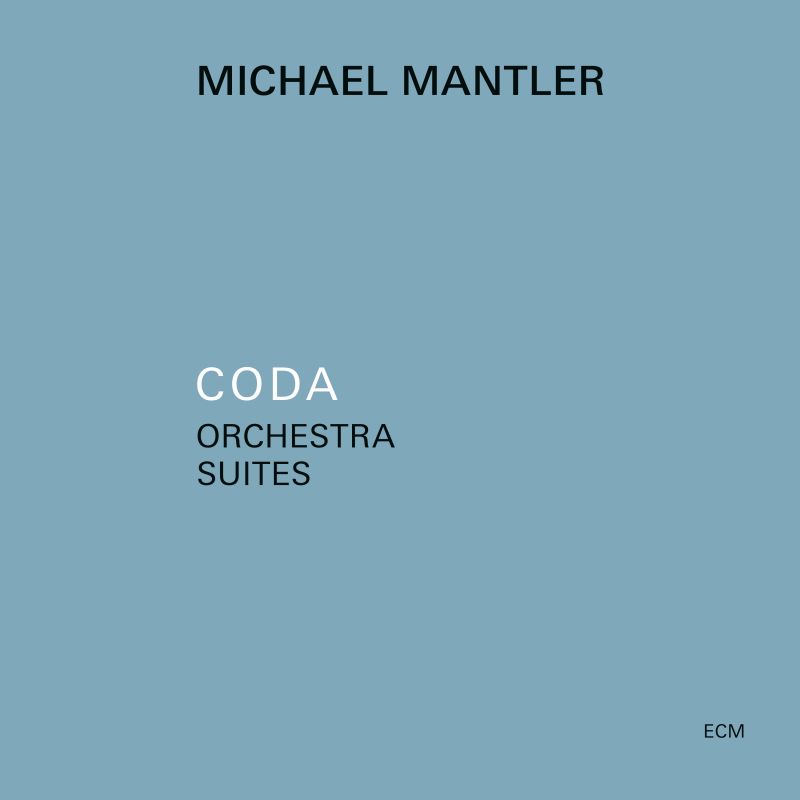
Michael Mantler | "Coda" | Available July 16th via ECM

Michael Mantler Reimagines New Arrangements
from Several Phases of his Career in Coda

Available July 16 via ECM
The CD booklet begins with a definition: “Coda: a concluding statement serving as a summation, based on elaborations of thematic material from selected past work.”

Michael Mantler, who was born in Vienna in 1943, explains that reworking his earlier compositions has been an essential part of his modus operandi over the decades. “Re-using material from my own musical universe has, as a matter of fact, been my compositional procedure for a long time. Musicologists could have an interesting time divining what in my music has come from where and how it might have been re-shaped and recycled… Almost always, when I start a new composition, I begin with materials from previous work. More often than not, that procedure would spark or beget a new line of musical thought from which to continue.”

With the Jazz Composer’s Orchestra Update, issued in 2014, Mantler made his work method the subject of a new release. Reassessing, re-contextualizing and reshaping material written for his iconic album The Jazz Composers Orchestra in the 1960s, he was able to illuminate the music in new ways. DownBeat hailed the outcome as “pretty fantastic.” “Update is really what it says. Not a reproduction or look back, but a new take on this music… This unique counterpart album is quite simply required listening for anyone with a scintilla of interest in large-scale modern jazz,” London Jazz News emphasized.

Now Coda takes its concept further, as Mantler newly arranges and refashions music from several phases of his career – a personal “best-of “– into musical suites conducted by Christoph Cech. Where the large ensemble on the Jazz Composers Orchestra Update was an augmented jazz big band, here the orchestra is comprised primarily of classical players, although the presence of jazz soloists, including pianist David Helbock, guitarist Bjarne Roupé, and Mantler himself on trumpet “anchors the music in an environment clearly coming from jazz.” The focus is on Mantler compositions premiered between 1975 and 2010, and previously recorded – in very different form – on the WATT albums 13 & 3/4 and Alien, and the ECM albums Cerco un Paese Innocente, Hide and Seek, and For Two. The Coda transformations, complete in themselves, will send the attentive listener also back to the originals: old and new versions each have their own integrity, and Mantler’s compositional signature is unmistakable, then and now.
“I have always considered myself an orchestral composer,” says Michael Mantler, “even when circumstances dictated smaller ensembles. This time I did not retain the original instrumentation but settled on what seems to be my current favourite – a chamber orchestra consisting of flute, oboe, clarinet, bass clarinet, trumpet, french horn, trombone, tuba, guitar, piano, marimba/vibraphone, plus a string section…” explains Mantler.

The chamber orchestra fleshes out ideas sketched on the skeletal original version of “Alien” performed just by Mantler and keyboardist Don Preston back in 1985. Now the composer’s distinctive trumpet moves against evocative, otherworldly strings on the “Alien Suite”, with Bjarne Roupé’s tense guitar also contributing to the uneasy atmosphere. The Swedish-born guitarist has been an important contributor to Mantler’s music of the last 25 years, featured on a number of albums including the 2011 release For Two. The present album opens with the “Two Thirteen Suite” incorporating material from 1975’s 13, which featured two orchestras plus Carla Bley on piano. Expanding and contracting his instrumental forces, merging elements from pieces written in different phases of his life, and featuring Roupé and David Helbock as soloist-interpreters, Mantler signals at once that these Orchestra Suites are indeed new music. 

The “Folly Suite” similarly brings fresh orchestral colours into play, building upon the template of 1992’s Folly Seeing All This. The “Cerco Suite” and the “HideSeek Suite” present music originally created to envelop the words of, respectively, Giuseppe Ungaretti and Paul Auster, with vocal lines assigned now to the instrumentalists. 

The Orchestra Suites were premiered in September 2019 at Vienna’s Porgy & Bess, where Coda was recorded, with additional recording and mixing taking place at Studios La Buissonne in the South of France in November 2019 and June 2020. 

1. TWOTHIRTEEN SUITE (Michael Mantler) 11:41
2. FOLLY SUITE (Michael Mantler) 09:53
3. ALIEN SUITE (Michael Mantler) 12:37
4. CERCO SUITE (Michael Mantler) 10:53
5. HIDESEEK SUITE (Michael Mantler) 09:13

For more information on ECM, please visit:


CONCERTS
September 10   Michael Mantler   Porgy & Bess   Vienna   Austria
September 11   Michael Mantler   Porgy & Bess   Vienna   Austria