
Sunday, September 18, 2016

EARPRINT - EARPRINT (October 21, 2016) ENDECTOMORPH MUSIC


Saxophonist Kevin Sun, trumpeter Tree Palmedo, bassist Simón Willson, and drummer Dor Herskovits merge diverse backgrounds and inspirations

"Earprint is a joy to listen to. Really great music and playing by everyone, with lots of highlights. Will definitely be on my playlist for a while." - saxophonist/composer Miguel Zenón

"[Kevin] Sun is... clearly a player who sees the big picture and his evolving place within it." -David R. Adler, The New York City Jazz Record

"[Simon] Willson is a serious bassist with all the right influences." - Ethan Iverson


CD Release Concerts  o October 25 at The Jazz Gallery, NYC 
o November 13 at Riverwalk, Nashua, NH
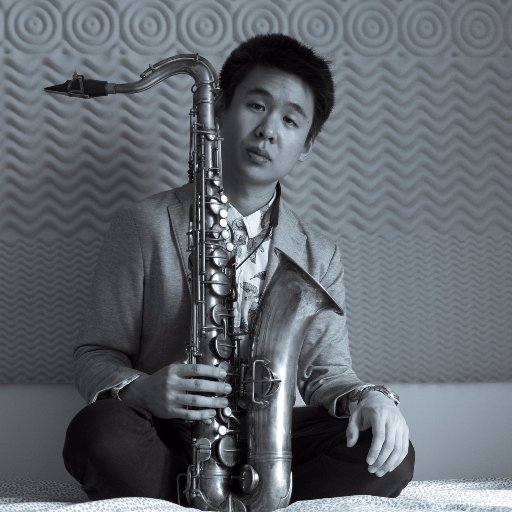

Fired by a shared passion for challenging but engaging music, Earprint has quickly forged a sound with what its members refer to as an "aggressively melodic, shamelessly youthful approach." The explosive quartet's self-titled debut, due out October 21 on Endectomorph Music, displays creative invention, intricate composition, and raw combustibility in equal measure.

The chordless collective brings together four musicians from diverse backgrounds: saxophonist Kevin Sun comes from picturesque New Jersey and trumpeter Tree Palmedo from the grayer Pacific Northwest. Bassist Simón Willson hails from Santiago, Chile, while drummer Dor Herskovits was born and raised in Israel. Despite their far-flung histories, the quartet established an immediate rapport while studying together at Boston's New England Conservatory, and Sun encouraged them to work together - and to challenge one another.


"I wanted to put something together where I could really work on writing difficult music," Sun explains, a desire prompted by such inspirations as Steve Coleman, Vijay Iyer, John Hollenbeck, and Sun's mentor, saxophonist-composer Miguel Zenón. "One thing about being in school is that you can rehearse an insane amount; I could write music that was as hard as I wanted it to be and, eventually, we could make it happen."

Perhaps most impressive about the group's music is that, despite the level of virtuosity demanded to play it, listening to it is anything but an abstruse experience. All four members of Earprint contribute memorable tunes, whose hairpin twists and turns inspire spirited improvisations. The lack of a chordal instrument provides ample space and freedom, which the quartet seizes with bravado.
"We're all players that like to take chances and feel free to venture out to different places in the music, and that's really allowed when there's that space between us," says Herskovits. "After a while, it felt like we could play anything. Eventually it didn't matter if the music was complex or simple - it was all something that we could hear naturally and that felt amazing to play."

The darting horn lines of Sun's "Nonsense" open the album. Written years ago while the saxophonist was participating in the Banff International Workshop in Jazz and Creative Music in the scenic mountains of Alberta, Canada, the piece is a densely layered miniature that serves as a jaunty and odd-angled introduction to the quartet. It's followed by Herskovits's Ornette Coleman-inspired "Happy," where the punchy, speech-inspired melodies and whiplash shifts capture the titular mood, however idiosyncratically.


The title of Willson's "School Days" acknowledges Earprint's beginnings in the halls of NEC, but shares its name with a painting by the late Boston-based, African-American artist Allan Rohan Crite. The color and sense of movement in that piece was a direct model for Willson's taut, supple composition. Sun wrote "Boardroom" from a less obviously inspirational source: after playing a background music gig for a corporate function (hey, those student loans aren't gonna pay themselves), he found himself stuck listening to a litany of quarterly earnings and projected revenues, so he turned those droning numbers into a far more interesting musical equivalent.

Sun's meditative "The Holy Quiet" was inspired by the tragic shootings in Charleston; the piece captures the sorrow and anger invoked by the terrible incident with a percussive clamor featuring both Sun and Palmedo joining Herskovits, while Willson intones a harrowing bowed howl. A driving rock beat fuels Palmedo's more light-hearted tune "The Golden Girder Strikes Again," a fanfare for the "brutish elegance" of an imaginary supervillain whose body has been replaced by a mass of gold-plated support beams.

Sun's "Malingerer" is the album's most spacious piece, featuring a slowly accumulating melody and a languorous air but ending with an unexpectedly vigorous conclusion. The alternately methodical and frenetic "Clock Gears" is Herskovits's sonic portrait of the intermeshed workings of a clock mechanism, while the aptly named "Anthem" is the result of a task that Sun set for himself, scrawled in an old notebook and later rediscovered: to write an "anthemic, two-horn song." Voilà.

Sun's sprightly "Colonel" is named after his family's beloved Yorkshire Terrier, and greets the ear with the hopping, yipping brio of an excited Yorkie. Finally, Herskovits's "Six Nine" is indicative of the evolutionary paths that many of the band's tunes take, starting as a simple groove and growing in emotional and musical complexity to its current form.


In some ways, the members agree, the band itself is following a similar path, with the depth and profundity coming from the players rather than the page. "It's a little bit more balanced between things that are more challenging and things that are more free to play on, with a mixture of styles: free music, jazz, neo-classical, rock and roll, all kinds of stuff," Herskovits says. Sun adds, "In the beginning, I would write a 7-page score for a song that would be six minutes long. Gradually I ended up writing less and less, so by the time we got to the album I could just write one sheet and there would be enough material."

Maybe some of these discoveries have been made by composers before, but with each passing generation inspiration and urgency are found anew. Earprint declares the arrival of a band that's harnessed state-of-the-art composition and earthy tunefulness, with no sign of slowing down.


Martijn van Iterson - It's Happening (2016)


“Digital only” reissue of Martijn’s 1998 smoothjazz album It’s Happening. In the mid-nineties Martijn was asked by his friend and producer Lou Guldemond to record a smoothjazz album. Accompanied by Holland’s finest studio-session musicians like, among others, Karel Boehlee on Fender Rhodes, Peter Tiehuis on Rhythm Guitar, Toon Roos on Saxophones, Michel van Schie, Theo de Jong and Boudewijn Lucas on Bassguitars and Martin Verdonk on Percussion the final result couldn’t have been any better.

or at your favourite streaming platform.


01. It's Happening 5:11
02. Cool 5:42
03. Something Special 4:55
04. A Rose with a Nose 5:17
05. Indianapolis 4:18
06. Strings Attached 4:03
07. Some Keys 4:56
08. I Can't Hear You 5:15
09. What's It Gonna Be 4:43
10. A Cup of T 4:43


Johannes Mueller Jazz Mile - Gloomy Smokey Light (2016) PERSONALITY RECORDS


Johannes Mueller JAZZ MILE invites us on a historic musical excursion to one of most impulsive places in jazz. It is 9:48 PM and we saunter through the smoky Frenchmen Street in the French Quarter of New Orleans. Faraway, you can hear the sound of a saxophone, carrying the melody and being rhythmically supported by the contrabass and the drums. More sides appear, this time a trumpet and a piano. As we arrive in front of Snug Harbour, a very traditional jazz bar, we recognize, through the gloomy light, Johannes Mueller on the saxophone with his band JAZZ MILE on stage in his favourite bar. It could have been occurred this way or in a similar way.

At the first listen of the new album of Johannes Mueller JAZZ MILE - Gloomy Smokey Light, one immediately feels the emotional deepness of his music. A well mixed compound of traditional pieces in a modern and fresh guise. Indeed, who closes their eyes will be carried away into the Snug Harbour. The particular energy of the jazz in such a city can literally be felt, as well as the spiritual, Creole passion that nowadays is still deeply buried within the music. Whether it is a never ending night in one of the many bars in the French Quarter or the unique carnival during the weeks of Mardi Gras; join the journey.

Through his compositions and arrangements, Johannes Mueller bridges the gap be-tween Jazz, Blues, Salsa, Swing, Soul, and Bossa. A classical quintet, which is con-temporary, young, but also deeply rooted in the tradition. It mirrors the musical ease of an entire generation and still manages to connect to the 21st century through pieces as Happy and Every Breath You Take. As simple as that might sound, the implementation is valuable and detailed. Every track on this album tells its own story. Therefore, the music shall not lose its groove and soul, the audience shall be enthralled, that is our goal, this is how Johannes Mueller describes Gloomy Smokey Light. The different cast is aligned to the diversity of the songs. The distinct focus on the saxophone and the trumpet in A Dogwalk shows the band leaders and Carlo Nardozza playful refinement. Back To Mardi Gras transports the feeling of the New Orleans carnival in such a well way, that one would like to be-lieve, that he is even there himself. Especially, Chris Strik on the drums literally draws the streets of the French Quarter with his instrument. Likewise, on Loss Of A Tooth, Volker Engelberth on the piano demonstrates the deep Blues feeling in a contemporary way. Also, Philipp Schug and Gautier Laurent shine on the trombone and the contrabass.

In general, the cast of the band Jazz Mile could not be more colourful. Germany, Belgium, France, the Netherlands and America are united in one band whom has committed itself to traditional but modern Jazz. Since already over 12 years, the formation has been a well-received guest on national and international jazz festivals. From Germany to Morocco, back to Spain and across all Europe. Even with their first two albums, the artists have demonstrated how jazz shall sound.

With their new album Gloomy Smokey Light, Johannes Mueller JAZZ MILE creates an absolutely pure and honest kind of jazz. The title of the production delivers more than it promises, and the listener can look forward to a modern, musical expedition, that he will definitely join more than only one time.


01. A Dogwalk
02. Back To Mardi Gras
03. Every Breath You Take
04. Gloomy Smokey Light
05. Great Expectations
06. Happy
07. Loss Of A Tooth
08. Save Your Love For Me
09. Unami
10. Whistle

Johannes Mueller – Saxophone

Volker Engelberth– Piano

Gautier Laurent – Bass

Chris Strik – Drums

Carlo Nardozza – Trumpet

Philipp Schug - Trombone


Shabaka and the Ancestors - Wisdom of Elders (2016)


“The grand scheme of this album is to present the musical language that I normally associate with my UK bands in the context of SA musicians and musical sensibilities,” explains Shabaka Hutchings. 

8 men in a studio in Johannesburg; one tenor sax, one alto sax, one trumpet. One on vocals, one on ivory, one bass, one on percussion and one the drums. 800 million voices. 700 years. Millions of bones cracking under the weight of 22 false free years. Innumerable tiny sparks. One uncontrollable blaze.


Released September 16, 2016

01. Mzwandile 13:31
02. Joyous 06:38
03. The Observer 09:02
04. The Sea 11:47
05. The Observed 01:43
06. Natty 09:57
07. OBS 05:14
08. Give Thanks 08:09
09. Nguni 09:29

Shabaka Hutchings - Tenor Sax
Mthunzi Mvubu - Alto Sax
Mandla Mlangeni - Trumpet
Siyabonga Mthembu - Vocals
Nduduzo Makhathini - Rhodes, Piano
Ariel Zomonsky - Bass
Gontse Makhene - Percussion
Tumi Mogorosi - Drums


Christophe Panzani - Les âmes perdues (Piano duets) 2016 JAZZ&PEOPLE MUSIC


Saxophoniste parmi les plus demandés de l’Hexagone, Christophe PANZANI (Carla Bley Big Band, Anne Paceo, Hocus Pocus…) sort enfin du rang et signe un premier album constitué par une série de duos enregistrés au domicile de sept pianistes différents.

Sept duos, enregistrés en autant de lieux différents, un peu partout en France, et jusqu’en Allemagne, pour immortaliser une série de compositions originales, inspirées par des lectures et les mythes antiques.

Sept pièces, spécialement imaginées par Christophe PANZANI, pour ceux qui allaient les interpréter, qui s’enchaînent comme une longue suite.

Sept pianistes des plus talentueux, qui apportent leur personnalité et leur toucher, reflet de leur parcours et de leur sensibilité : Yonathan AVISHAI, Edouard FERLET, Laia GENC, Leonardo MONTANA, Tony PAELEMAN, Guillaume PONCELET et Dan TEPFER.
Un « road-album » intime et sensible, en forme d’autoportrait, mélancolique et envoûtant.

1. Sisyphe (with Edouard Ferlet) 04:24
02. Endless Wars (with Leonardo Montana) 05:52
03. Die Grünen Bohnen (with Laia Genc) 06:25
04. Le Jardin aux sentiers qui bifurquent (with Dan Tepfer) 06:57
05. Traduire Eschyle (with Guillaume Poncelet) 05:11
06. Etrangement calme (with Tony Paeleman) 05:33
07. Le Rêve d'Icare (with Yonathan Avishai) 08:59


Piano:
Yonathan AVISHAI
Edouard FERLET
Laia GENC
Leonardo MONTANA
Tony PAELEMAN
Guillaume PONCELET
Dan TEPFER


Saturday, September 17, 2016

Vincent Peirani & Michael Wollny - Tandem (2016) ACT MUSIC


"What this Nice-born Parisian coaxes out of the piano accordion is something the likes of which has never been heard before. You can tell it is a future legend who is playing here!" – Süddeutsche Zeitung. The French accordion player, singer and composer Vincent Peirani was born on 24.4.1980 in Nice. At the age of 11 he began playing the accordion, initially classical music. As a teenager he already won numerous international awards. At 16 he discovered jazz and soon took up the study of jazz in Paris. At the beginning he faced scepticism with his accordion and his classical training, but he quickly convinced the critics with an entirely new way of looking at the instrument, made a name for himself in France's jazz scene and was soon playing with the creme de la creme of French jazz, the likes of Michel Portal, Daniel Humair, Renaud Garcia Fons, Louis Sclavis and Vincent Courtois. 

Parallel to that he pursued many of his own projects, drawing from the widest range of genres – from jazz, chanson and world music through to classic and even heavy rock. Since 2011, Peirani has been playing regularly in the quartet of the Korean singer Youn Sun Nah, the most successful female jazz artist in France in recent years. Through this engagement he also made the acquaintance of Swedish guitarist Ulf Wakenius and ultimately the boss of the ACT label Siggi Loch. Peirani played on the Wakenius album "Vagabond" recorded in February 2012, also astonishing and enthralling live audiences everywhere. "Thrill Box" came out in May 2013 and was Vincent Peirani's first album as a leader – star-studded with pianist Michael Wollny, bassist Michel Benita and saxophonists Michel Portal and Émile Parisien. The album showcases the entire wealth of facets of Peirani's musical influences, and reveals more impressively than ever before what an intelligent and artful composer he is, and what a masterful and profoundly musical instrumentalist and storyteller.


01. Song Yet Untitled 4:16
03. Hunter 3:55
04. Bells 3:13
05. Did You Say Rotenberg? 5:02
06. Sirenes 5:05
07. Uniskate 4:03
08. Vignette 4:02
09. Fourth of July 4:33
10. Travesuras 6:20

Vincent Peirani, accordion
Michael Wollny, piano


Giovanni Guidi, Gianluca Petrella, Louis Sclavis, Gerald Cleaver - Ida Lupino (2016) ECM RECORDS


Ida Lupino is a fresh and creative album, distinguished by deep listening and focused interaction. At its centre is the remarkable improvisational rapport of two Italian musicians – pianist Giovanni Guidi and trombonist Gianluca Petrella. Their musical understanding – already apparent to listeners who heard them in Enrico Rava’s band – has been further refined in a widely-travelled duo which seeks encounters with fellow improvisers. “Our duo work is really defined by our collaboration with other artists,” Guidi says. The present album both builds on established relationships and the stimulus of new encounters as they are joined by – in Petrella’s words – “two masters of contemporary jazz who are really on our wavelength”.

For this recording, Manfred Eicher brought Guidi and Petrella together with US drummer Gerald Cleaver and French clarinettist Louis Sclavis, for a set of music by turns introspective and outgoing. The Italians had played previously with Cleaver, on an early Guidi album called We Don’t Live Here Anymore, but Sclavis had never met the other musicians prior to the session at Lugano’s Stelio Molo RSI auditorium. “It’s very precious this kind of musical relationship,” Louis Sclavis says, “on the one hand, it’s very fragile but at the same time there is a strong connection between the players. We are four people for one music, and we don’t know where we’re going, but we control the journey.”

“In this album we are searching for many different things,” says Giovanni Guidi. “Improvised music has to be very democratic. At the same time, one of its components should be a sense of wonder. And the more you have a strong idea, at the concept level, the more you know you must not impose it…”

Gerald Cleaver: “I liked the completely open way Giovanni and Gianluca approached this: not telling me what they wanted, but having some sort of underlying plan, and what I had to do was basically surrender to it. That could have been difficult, but it ended up being a really enjoyable ride.”

The emphasis is on lyrical group improvising and tunes by the players, created in the moment or otherwise. There are a couple of exceptions: “Per i morti di Reggio Emilia (To the Dead of Reggio Emilia)” is a protest song penned by Turin folk singer-songwriter Fausto Amodei. And the title track, “Ida Lupino” , does double duty as a salute to composer Carla Bley in her 80th year (Petrella once played in a big band under Carla’s direction) and as a tribute to the late, great Paul Bley, who popularized the tune and influenced so many improvisers – not least Giovanni Guidi


“I find the music we played to be above all very sincere,” says Guidi. “It is an exact photograph of where our individual journeys have brought us, and what we were able to create together. And it wouldn’t have been possible without Manfred, who is in a way the fifth musician – hearing every note, every sound, every detail…” The album was recorded and mixed in three days, in time-honoured ECM tradition. “When we listen to what we’ve played, we’re left a little speechless, because there are so many subtleties that transform the whole quality of the music.”

Guidi, born in Foligno, was encouraged in his musical directions by Enrico Rava at summer master classes in Siena, and subsequently played on the Rava albums On The Dance Floor and Tribe. His previous ECM albums include City of Broken Dreams and This is the Day, featuring his trio with Thomas Morgan and João Lobo. Gianluca Petrella, born in Bari, plays on four ECM albums with Enrico Rava: Easy Living, The Words and the Days, Tribe and Wild Dance. The two of them, Guidi and Petrella, are frequently instanced by critics as key figures in a new “golden age” for Italian jazz.

Louis Sclavis, from Lyon, has made ten albums as a leader for ECM since 1993, the most recent being Silk and Salt Melodies and Sources, released respectively in 2014 and 2012. Where previous recordings have stressed his originality as conceptualist and jazz composer, Ida Lupino emphasizes his capacity as quick-thinking melodic improviser.

Detroit-born Gerald Cleaver, one of the very finest drummers of the present moment, made his ECM debut in 1997 as a member of Roscoe Mitchell’s Note Factory on Nine To Get Ready and has since appeared on the label as a member of Tomasz Stanko’s New York Quartet, the Michael Formanek Quartet and the Craig Taborn Trio. The most recent release featuring Cleaver is Miroslav Vitous’s Music of Weather Report.

01. What We Talk About When We Talk About Love
02. Just Tell Me Who It Was
03. Jeronimo
04. Ida Lupino
05. Per i morti di Reggio Amilia
06. Gato!
07. La Terra
08. No More Calypso?
09. Rouge Lust
10. Things We Never Planned
11. Fidel Slow
12. Hard Walk
13. Zweig
14. The Gam Scorpions

Giovanni Guidi: piano
Gianluca Petrella: trombone
Louis Sclavis: clarinet, bass clarinet
Gerald Cleaver: drums