Thursday, March 17, 2016

Marc Copland - Zenith (2016)


Label: Innervoice Jazz
Source: Allaboutjazz


After releasing a series of excellent but under-recognized CDs on various small record labels—starting in the mid-1980s— pianist Marc Copland rose in prominence in 2006 when he took up residence on Germany's Pirouet Records. The highlight of his Pirouet days was a set of trio discs wrapped in a marketing package dubbed "The New York Trio Recordings." Modinha (2006); Voices (2007); and Night Whispers (2008), with a shifting set of band mates: Gary Peacock or Drew Gress on bass, Paul Motian or Bill Stewart drums, showcased Copland's skills to perfection. These discs attain the pinnacle of the very best piano trio offerings, ever, and they won for Copland some very well-deserved recognition. Copeland's sound in the piano trio is singular: he dips deeply into harmony, creating glistening chords and shimmering rhythms, a sort of diaphanous dream music so beautiful it's almost hard to believe.

Then there's Marc Copland teaming with horns, whether it's with saxophonist Greg Osby on Crosstalk (Pirouet Records, 2011), or with trumpeter Randy Brecker on Both/And (Nagel Heyer, 2006), the horn additions to his trio set-up changes his music, giving it a different momentum, more urgency, more grgariousness.

Zenith finds Copland with long time cohorts Drew Gress (bass) and Joey Baron (drums), teaming with trumpeter Ralph Alessi, for perhaps the best of the pianist's non-trio outings. It also finds him without the backing of a record company. Marc Copland has started InnerVoice Jazz, his own label.

Alessi, after releasing very successful records on the Clean Feed and CamJazz labels, has landed on ECM Records with Baida (2013), and in early 2016, Quiver. He is a consummate jazz man/improviser, with sideman slots in recordings, sitting in with Drew Gress on Black Butterflies (Premonition Records, 2005), plus set with Ravi Coltrane, Sam Rivers, Don Byron and Steve Coleman. He brings to Zenith a brashness and energy, a beautiful sense of abstraction.

"Sun at the Zenith" opens the disc with Copland's impressionistic melody. His piano is, as expected, gorgeous. The band floats. Alessi's open horn has a measured richness as it issues wandering lines that weave sinuously in and around the rhythm section. "Mystery Song," from the Duke Ellington songbook, 1931, doesn't sound Ellingtonian. It's a controlled tumult, a shifty, sneaky version, Copland's piano work sounding particularity inspired and on edge, with Baron and Gress injecting the sense of rolling, tumbling mystery.

The centerpiece, "Air We've Never Breathed," is a fourteen minute group improvisation, a sometimes playful, sometimes introspective rumination on Bill Zavatsky's poem, printed on the inside of the fold-out cover. "Waterfalls" is roiling rapids, an implacable rush of water. "Best Bet" brings in a beautiful ballad mood, and "Hurricane" begins gently, calm before the storm mode, then slow cranks things up to near gale force.

Zenith, Marc Copland's debut on his new label, meets all of the expectations his stellar work at Pirouet Records established.  Dan McClenaghan


1. Sun At the Zenith  8:26
2. Mystery Song  9:17
3. Air We've Never Breathed  14:00
4. Waterfalls  7:52
5. Best Bet  9:11
6. Hurricane  10:39  


Marc Copland piano
Ralph Alessi trumpet
Drew Gress bass
Joey Baron drums


BUY THIS ALBUM


Joe Chambers - Landscapes (2016)


Label: Savant
Source: All Music


 Joe Chambers is an extremely versatile and tasteful master of all post-bop idioms. Chambers drives an ensemble with a light hand; his time is excellent and his grasp of dynamics superb. He's not a flashy drummer by any means, but he's a generous collaborator who makes any group of which he's a part as good as it can possibly be. Chambers worked around Washington, D.C., in his late teens. After moving to New York in 1963, he played with Eric Dolphy, Freddie Hubbard, Jimmy Giuffre, and Andrew Hill. In the mid-'60s, Chambers played with a number of the more progressively inclined musicians associated with the Blue Note label, such as vibist Bobby Hutcherson and saxophonists Joe Henderson, Wayne Shorter, and Sam Rivers.

In 1970, Chambers joined Max Roach's percussion ensemble, M'Boom, as an original member. During the '70s, Chambers played with a great many of jazz's most prominent elder statesmen, including Sonny Rollins, Tommy Flanagan, Charles Mingus, and Art Farmer. With Flanagan and bassist Reggie Workman, Chambers formed the Super Jazz Trio. In the late '70s, he co-led a band with organist Larry Young. Chambers recorded with bands led by trumpeter Chet Baker and percussionist Ray Mantilla in the early '80s. He also maintained his association with Roach into the '90s.

As a solo artist, Chambers has released a tidy number of albums including Almoravid (1973) with trumpeter Woody Shaw, New World (1976), New York Concerto (1981), Phantom of the City (1992), Mirrors (1998), and Urban Grooves (2002). Beginning with 2006's Outlaw, Chambers released a steady stream of albums for Savant Records with Horace to Max (2010), Joe Chambers Moving Pictures Orchestra (2012), and Landscapes (2016), featuring bassist Ira Coleman and pianist Rick Germanson. 


BUY THIS ALBUM


Nolatet - Dogs (2016)


Label: Rotal Potato Family


The wit in the name of Nolatet finds a direct reflection in the music they make. Yet together as a four piece unit, keyboardist Brian Haas (Jacob Fred Jazz Odyssey), vibraphonist Mike Dillon (Critters Buggin,' Garage A Trois), bassist James Singleton (John Scofield, John Medeski) and drummer Johnny Vidacovich (Charlie Hunter, Robert Walter), create a seamless sound that transcends comparisons to their previous work. No question Dogs is steeped, and deeply so, within the grand tradition of New Orleans, but even as Nolatet pay reverent homage to the Crescent City, they do so only fleetingly as they nod to their own previous work.

Thus, "Pops" hearkens to the atmospheric likes of Haas' work with JFJO even as Singleton's bowing calls to mind his trio outing with drummer Stanton Moore. Likewise, his jaunty intro to "Bongo Joe," as he's joined with Vidacovich in a parallel bounce, gives way to recurring stretches of melody, explored by Haas on acoustic piano, underpinned with their fused rhythm work. At moments like these---and there are more than a few of them here—it sounds like there were more than four musicians within NOLA's Esplanade Studios making this album.

In a marked contrast to his often jarring eccentricity, Dillon knows when to lay out and remain in the shadows of deep support, no doubt fully aware he gets his room to shine when it counts, as in his point counterpoint with Haas, again on grand ivories during the title song. No man in this band remains invisible or inaudible for long though and each has a savvy instinct for when to step up, as does Singleton here, after Vidacovich's brushes enact a gateway for him to enter.  Read more...


Pops
Bongo Joe
Dogs
Morphine Drip / Lento
There’s No Fire
Mellon Ball
Nails


Brian Haas: piano
Mike Dillon: vibraphone, percussion
James Singleton: acoustic bass
Johnny Vidacovich: drums


BUY THIS ALBUM 


Nik Bartsch's Mobile - Continuum (2016)


Source & Label: ECM


"This music draws its energy from the tension between compositional precision and the self-circumvention of improvisation. From self-implied restriction stems freedom. Ecstasy through asceticism.”


Swiss pianist and composer Nik Bärtsch was born in 1971 in Zurich, where he still lives. He took piano and percussion lessons from the age of 8 and subsequently studied at the city’s Musikhochschule and university, simultaneously freelancing in diverse bands, “playing everything from fusion to free-funk, and all kinds of extroverted jazz”.

As Bärtsch’s interest in composition grew and he immersed himself in the practices of John Cage and Morton Feldman, his attraction to live jazz waned: “I just didn’t see the sense of it any more, for me as an instrumentalist”. In 1997 he created an acoustic group, Mobile, which “develops integral musical concepts within a musical framework”.  Continuum, with an “extended” version of the Mobile ensemble is scheduled for Spring 2016 release on ECM.

The band Ronin (named after the freelance warriors in Japanese history who served no master) was born in 2001 out of Bärtsch’s desire for a group that could also work in the clubs and “play with more power”. The pianist has described the band’s work as “Zen-funk” and “ritual groove”: “Our music is somewhere between jazz and modern composition, progressive pop, ritual music, groove music in general”. Writer Michel Mettler has characterised the group’s aesthetic as “creating the maximum effect by minimum means”: phrases and motives are repeated, combined and layered, creating shifting, complex rhythmic patterns which typically build slowly over time with overwhelming dramatic impact.

Ronin has released three studio albums on ECM to date, Stoa (2006), Holon (2008) and Llyrìa (2010), as well as a double CD, Live (2012), which anthologises a suite of concert performances from their appearances around the world between 2009 and 2011, a collection which reveals its own inner logic and dramaturgy.


BUY THIS ALBUM


Hendrik Meurkens - Harmonicus Rex (2016)


Label: Height Advantage


While the swing side of harmonica master Hendrik Meurkens' personality has basically been dormant for the past fifteen years, it hasn't disappeared. After highlighting his Brazilian jazz bona fides on record after record, Meurkens now returns to straight-ahead jazz on this instantly pleasing date.

Harmonicus Rex, despite it's humorously monstrous title, isn't a roaring beast. There are no high speed scenarios to speak of and no bash-and-crash displays to witness. This record's strength is in its ability to get the point across without all of that needless showboating. It's essentially a model for how feel and taste can trump tempo and dynamic excess in terms of establishing a swinging environment. And with a cast that includes drumming legend Jimmy Cobb and under-the-radar heavies like pianist Dado Moroni and bassist Marco Panascia, it's easy to see why this album projects that train of thought.

In observing Meurkens here, it becomes increasingly clear that he's a master conversationalist with some incredible ears and reflexes. That's something that's often overlooked in discussions of his work, but it's central to the success of his art. Whether trading solos with trumpeter Joe Magnarelli on "Mundell's Mood," responding to Moroni with brief and subtle gestures during "In Your Own Sweet Way," blending and balancing his sound against that of Anders Bostrom's alto flute, or playing off of the rhythm section when in the spotlight, Meurkens' foremost concern is how he relates to the other musicians and the music at hand.

Meurkens clearly relies on a recipe that calls for stirring all of the essential elements of a straightforward date together and cooking everything on low to medium settings. It's a formula for success. By exploring the mellow environs of ballads like "Afternoon" and "Darn That Dream," inviting a little heat and embracing the swing uplift on "SKJ" and "Up Jumped Spring," finding the sweet spots between those locales, and even taking a quick dip into bossa territory on "A Summer In San Francisco," Meurkens manages to create a complete picture that offers rich viewpoints to admire from wherever you happen to be standing. 


Mundell's Mood
Slidin'
In Your Own Sweet Way
Afternoon
SKJ
Falling In Love With Love
A Summer In San Francisco
Up Jumped Spring
Mean Dog Blues
Darn That Dream
 What's New


Hendrik Meurkens: harmonica
Dado Moroni; piano
Marco Panascia: bass
Jimmy Cobb: drums
Joe Magnarelli: trumpet, flugelhorn (1, 4, 5, 8)
Anders Bostrom: alto flute (2, 5, 7, 9)


BUY THIS ALBUM


Wednesday, March 16, 2016

Chris Ziemba - Manhattan Lullaby (2016)


My debut album. Featuring: Chris Ziemba (piano, compositions/arrangements); Hans Glawischnig (bass); Jimmy Macbride (drums); Michael Thomas (alto saxophone, bass clarinet).

Manhattan Lullaby encompasses the duality of life in the big city. When people envision New York City, usually some combination of the following springs to mind: people, giant buildings, taxis, car horns, people, buses, shouting, pizza restaurants, people, Starbucks, subway platforms, standing in line everywhere, pigeons, people... What I've come to find is that all of this hustle and bustle brings into stark relief the seemingly random pockets of tranquility that can be found when you least expect it. When you find yourself deep in one of the parks and you can't really hear the traffic. When you're walking along a street on the Upper West Side at night and there's no one else around. On the roof of your apartment building. You know you're still in the City, so there's still an intangible energy, but it's a peaceful energy. That's what Manhattan Lullaby is about.


1. Josie
2. The Road Less Traveled
3. Manhattan Lullabye
4. I Wish I Knew
5. Escher's Loop
6. Wandering
7. Little T
8. An Instropective

BUY THIS ALBUM!!!

Domi

Joe Baer Magnant Group - Liminal Spaces (2016)


Guitarist Joe Baer Magnant's second release with his quartet doesn't aim to stake any claims in the world of jazz. Instead, Liminal Spaces reflects the ever-changing living venue that resides inside a working musician who has spent a majority of his life working through bar bands, jazz clubs, and folk coffee houses. But rather than challenging the rules of genre in protest, the Joe Baer Magnant Group happily uses it all, melting together influences; the jazz, folk, blues, rock, and even surrealism of Erik Satie in his swaggering arrangement of the first of Satie's "Trois Gnossiennes." "Coagulate," the opening track, glides softly through some odd time signatures and key changes without the need for fanfare: this is Magnant's intention when telling the story of packing up gear and heading to the next gig.


The quartet includes Chris Lujan on bass (leader of classic R&B/ Soul group, The M-Tet), Tony Capriccio on Fender Rhodes (leader of fusion group, The Hexaphonics), and Michael Reed (drummer for electronica/jazz groups Secret Sidewalk and The Edomites).

1. Coagulate
2. Trois Gnossiennes (I)
3. Equipoise
4. Tezeta (Nostalgia)
5. Poinciana
6. Liminal Spaces

BUY THIS ALBUM!!!

VÍCTOR

The Giving Trio - Defuser (2016)


The Giving Trio is a Chicago-based jazz group with a style and sound reminiscent of late 50's and 60's cool-jazz and pop music. Think: Bill Evans, Lennie Tristano and Lee Konitz. Spice all that up with hints of Motown, The Beach Boys and The Beatles  and you'll have yourself a good taste of “Defuser,” The Giving Trio’s first full-length studio recording.  

The trio is made up of John W. Lauler on upright bass, Justin Cash on guitar, and Alex Kerwin on alto saxophone. All three met while attending Columbia College Chicago, and after graduating they continued to work together on the Chicago music scene. They began to meet and play together regularly in 2014, building a repertoire of their favorite jazz standards and classic pop tunes. From these sessions they developed a group rapport and began playing out as The Giving Trio

“Defuser” showcases six all new original compositions written by both Lauler and Kerwin. While the compositions are firmly rooted in the jazz tradition, they also take many cues from pop and rock as well. Their first single, “Old Bull Lee,” is reminiscent of all things Lennon and McCartney. Their second single, “She’s Skeptic,” strikes a similar harmonic vibe to that of Stevie Wonder and is set beneath a very ghostly, supernatural sounding melody. With each new original composition the trio crafts wonderful, fun-loving sounds in this unique, drummer-less setting.


Justin Cash - Guitar | John W. Lauler - Upright & Electric Bass | Alex Kerwin - Alto Sax

Featuring

Sam Trump Harris - Trumpet

1. Old Bull Lee
2. She's Skeptic
3. The Believer
4. Web We Weave
5. Culdesac
6. 317 E 32nd St
7. Let's Go Exploring
8. Happy Trails to You

BUY THIS ALBUM!!!

VÍCTOR

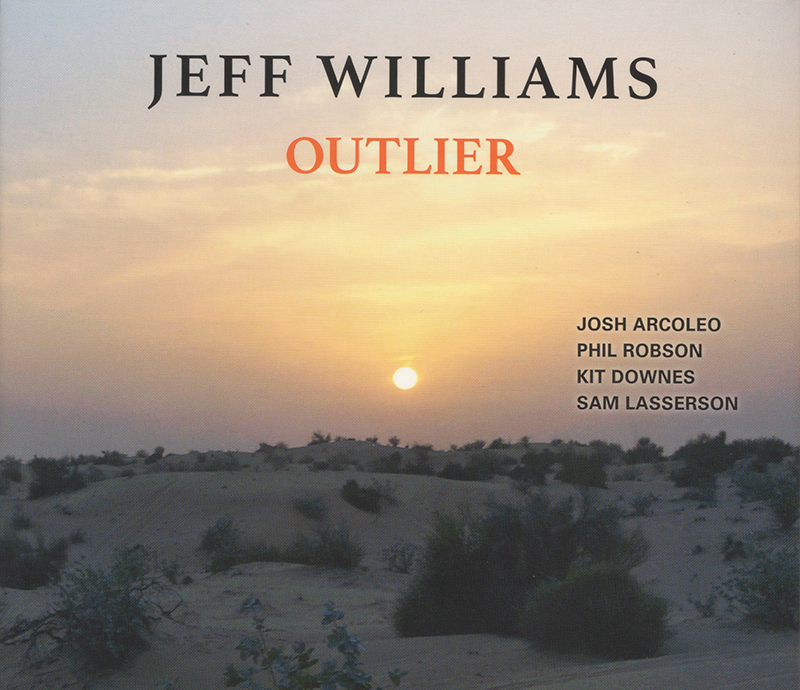
Jeff Williams - Outlier (2016)


Across a career spanning four decades, it would seem easiest to consider the musicians with whom Jeff Williams hasn’t worked. A respected stalwart of the international jazz circuit, the American drummer has notably rubbed shoulders with Stan Getz, Dizzy Gillespie, Lee Konitz, Dave Liebman, Randy Brecker, John Abercrombie and Joe Lovano.

Williams has graced innumerable New York and London stages over the years, making frequent Atlantic crossings between the two cities. In his latest solo project, the accomplished band leader and composer collaborates with both seasoned and up-and-coming colleagues from the UK: Josh Arcoleo (tenor saxophone), Phil Robson (guitar), Kit Downes (keys) and Sam Lasserson (basses). This engaging album of originals prompts a dynamic quintet response to a variety of energized compositions.

His third album for Whirlwind (following 2011’s Another Time and 2013’s The Listener), Williams’ Outlier combines previously unrecorded works from the ‘70s and ‘80s – such as the driving, fusion-laced ‘Dream Visitor’ and Brazilian-hued ‘Hermeto’ (after Hermeto Pascoal) – with more recent, equally assertive compositions. As an experienced leader at the kit with an instinctive, deeply-imbued jazz sensibility, Williams coaxes intelligent, colorful interplay from his colleagues. As Jeff confirms: “It always astonishes me what these guys – leaders in their own right – bring to the music that I write. They find things I didn’t even know existed.”

The scope of this imaginative working band ranges from the smouldering, Joe Henderson-influenced oscillations of the title track ‘Outlier’ to the relentless ‘Oddity,’ which swings with unbridled vitality. The straight forward beauty of ‘New and Old’ recalls poignant memories with tender detail. Also a pianist, adding Rhodes to this album, Williams describes ‘Meeting a Stranger’ as “one of those rare tunes that came out whole”. Possessing a wide brashness, ‘The Interloper’ exudes a joyful, Monkish abandon.

Like all masters of a genre, Jeff Williams has profoundly internalized the traditions of jazz without being tyrannized by its conventions. Combining his influences and broad experience to form his own unique voice, he refuses to constrain himself to a single stylistic approach. Most vitally, he wants his audience to respond to his music emotionally: “It’s my continued vision – my aim to offer something that’s universal but also personal, and which might transport the listener into a realm that’s pleasurable and thought-provoking. It’s important to me that, within the construction of the music, there’s a feeling and a warmth to be discovered.”


Jeff Williams - drums, percussion, Fender rhodes
Josh Arcoleo - tenor saxophone
Phil Robson - guitar
Kit Downes - piano and Fender rhodes
Sam Lasserson - double & electric basses

Recorded 13 & 14 April, 2015 at Fish Factory Studio, London
Engineered by Benedic Lamdin and Alex Bonney
Mixed by Alex Bonney and Jeff Williams, London
Mastered by Max Ross, Systems Two, NY
Produced by Jeff Williams
Executive Producer - Michael Janisch

1. Outlier
2. The Interloper
3. Dream Visitor
4. Meeting a Stranger
5. New and Old
6. Hermeto
7. Oddity

BUY THIS ALBUM
IN

Domi

Tuesday, March 15, 2016

Arturo O'Farrill Sextet - Boss Level (2016)


Source & Label: Zoho


I used to hate video games and blamed the world’s evils on them. That’s easy to do, blame something unrelated for something else. Then I had offspring. One Christmas I relented and we got a game system. Christmas Eve, I started to gift wrap the system and thought “why not?” Let’s make sure this thing works and is age appropriate (I was 37 at the time).

Three hours later, I feel exhilarated. I’ve been floating, running, jumping, swimming, sliding, disappearing, materializing and having an amazing time. All set to a cartoonlike music that is as wide stylistically as the worlds are geographically. And what worlds: desert worlds, underwater worlds, space worlds, haunted worlds, an endless assortment of colors, sights, and sounds.

At every world, one gains mastery over skills that allow you to move to the next, balancing, thinking, timing, and reflex skills. It’s either learn them or game over. At the end of each world, you must fight the boss. And, me oh my, what bosses! Big rainbow-colored bosses, slithery serpent-like bosses, tiny bosses, bosses that breath fire, bosses that stomp on you, in short, bosses with no charm whatsoever.

Believe it or not, life is somewhat like this, a place of magic and adventure, a place of many worlds, many skills and, most certainly, evil and un-charming battles. But herein lies the tale. As you rise to meet the challenges the universe throws at you, as you slay the dragons and bosses that would steal from you your joy and essence, you realize that, like a video game, none of this really belongs to us, that joy comes from within, from your determination, from your mastery, and that until you get that final game over, this is a fine place to be after all. Read more...


01. Miss Stephanie 8:33
02. True That 7:18
03. The Moon Follows Us Wherever We Go 9:11
04. Circle Games 7:50
05. Maine Song 7:13
06. Compay Doug 8:47
07. Not Now, Right Now 5:06
08. In Whom I Am Well Pleased 9:29
09. V. F. S. 6:31
10. Peace 4:22 


Livio Almeida tenor saxophone
Shawn Conley bass
Adam O’Farrill trumpet
Arturo O’Farrill piano
Zack O’Farrill drums
Travis Reuter guitar


BUY THIS ALBUM


Fernando Huergo - Hashtag (2016)


Source & Label: Zoho


While the tango is the heartbeat of Argentina’s bustling capital city, Buenos Aires, 600 miles to the north in Santiago del Estero the characteristic rhythm is chacarera, a 6/8 folkloric rural counterpoint to the cosmopolitan tango. Between the two cultural centers lies Cordoba, hometown of bassist-composer Fernando Huergo. A longtime resident of Boston and currently a Professor at Berklee College of Music, Huergo grew up listening to Argentine tango and folklore, along with American jazz. He represents all of those seemingly disparate elements from his own musical makeup on Hashtag.

“It’s kind of a combination of who I am,” he says of his seventh recording as a leader and debut for ZOHO Music. “I’m from Argentina, I love the music from there, is in my blood. I love Astor Piazzolla and I love folklore music, but I also love Duke, Monk, Mingus and Benny Golson and all the jazz greats. So I tried to combine those things and create something hopefully interesting.”

What Huergo has created on Hashtag is a collection of powerfully compelling tunes that incorporate folkloric traditions, courtesy of Franco Pinna’s deep understanding of Argentinean musical styles and Yulia Musayelyan’s stellar flute work, along with modernist flourishes from Leo Genovese’s Fender Rhodes electric piano, Rick DiMuzio’s urgent blowing on tenor sax and the leader’s impeccable electric bass lines.

“I’m very lucky to be playing with these guys for a while now,” says Huergo of his bandmates. “They’re such heavy players. Yulia, who is from Moscow, is amazing. I love her sound. It’s the color of the folkloric music that was missing before when I just had a tenor in the band. Yulia is very deep into Latin music and she has a great talent for improvising melodies. Rick is just one of my favorite tenor players anywhere, beautiful sound and lines, a true Boston legend. Leo’s contribution is wonderful not only for his own harmonic world that he brings to the music but for his knowledge of the traditions and his fresh approach to them.” Huergo prominently features Musayelyan and DiMuzio on the intricate unison and harmony lines that characterize his writing throughout Hashtag, like on the surging title, which opens the collection with a bang.

“I love the sound of those two instruments together and those guys have such a blend. I really enjoy the intonation and the warm sound that they get.” Pinna’s crisp, rapid-fire, drum ‘n’ bass-inspired work on the kit fuels this bristling opener while Genovese supplies a crackling Rhodes solo. Huergo also exhibits tremendous facility, uncanny articulation and remarkable lyricism in his solo on this energized number. He cites Jaco Pastorius as a major influence on his approach to the electric bass guitar. “He’s like Trane, Bird, or Herbie,” says Fernando. “If you’re a modern player, you can’t avoid the guy. I think there are very few musicians who had an impact like Jaco did on the bass. He changed the whole spectrum.”

A folkloric aspect comes into play strongly on the driving Trunca which is underscored by Pinna’s infectious chacarera groove. “Franco is from Tucuman in the north of Argentina, an area very rich in folkloric traditions,” explains Huergo. “He has mastered all those rhythms and adapted them to the drum set in a very unique and personal way.” This dynamic offering also showcases Musayelyan’s brilliant flute playing and has DiMuzio stretching heroically on a robust tenor solo.

The beautiful ballad Cerca has Pinna switching to brushes and fellow Argentine Genovese playing gentle piano. “Cerca means ‘close,’ and it’s dedicated to my kids,” explains the composer. DiMuzio delivers a dusky tenor solo and Musayelyan follows with a luminous flute solo. Genovese’s delicate touch and sparse approach on his piano solo here is simply sublime.  Read more...


01. Hashtag
02. Trunca Beat
03. Cerca
04. Evidence
05. Troesma
06. Falling
07. Infant Eyes
08. Weather
09. Afternoon at the Gallery
10. Afro Blue
11. Astor
12. U.M.M.G.

 
YULIA MUSAYELYAN flute
RICK DiMUZIO tenor sax
FERNANDO HUERGO electric bass
LEO GENOVESE piano, Fender Rhodes electric piano
FRANCO PINNA drums 


BUY THIS ALBUM


Michael Blake - Fulfillment (2016)


Source & Label: Songlines


“Blake gets incredible range from his band here…beautiful stuff for our ears…[not] any less great than Joshua Redman or Banford Marsalis or even Sonny Rollins.”

– Will Layman, PopMatters, reviewing In the Grand Scheme of Things
Over the last 9 years, New York saxophonist Michael Blake has been periodically returning to Vancouver, which he left in 1986, to create and record new works with his pick of Vancouver improvisers. Amor de Cosmos (2007), a sextet somewhat inspired by his BC roots, featured Chris Gestrin, Dylan van der Schyff and André Lachance. In the Grand Scheme of Things (2012) was by his Variety Hour quartet (Gestrin, van der Schyff and JP Carter). This new release, his most ambitious in terms of writing and arranging, adds cello and guitar plus guest instrumentalists and, on two pieces, Michael’s own lyrics. It is also his most conceptual work since his debut as leader, Kingdom of Champa (1997), his jazz portrait of Vietnam. This time the connection is, more indirectly, with India. Originally titled The Komagata Maru Blues, this suite of music was inspired by a tragic immigration incident in Vancouver in 1914, when a Japanese freighter carrying several hundred East Indian immigrants (almost all Sikh) was turned away using exclusionist, racists laws. Michael has a family connection to this history through his great grand uncle H.H. Stevens, a Conservative Member of Parliament who declared at a public meeting, “I intend to stand up absolutely on all occasions on this one great principle – of a white country and a white British Columbia.”
Blake never knew Stevens, and grew up in a progressive environment. But the connection catalyzed a creative process, one which was also affected by the Syrian war: “I didn’t want the center of the work to be about the failure of it all, rather I wanted to tell the story from several different perspectives and show how far we’ve come. But then the current refugee crisis came into play and that definitely sank into my conscience while I was writing the music….The biggest departure for me was writing lyrics. Most people have never heard of the KM and probably never will. So I think the lyrics broaden the scope of the music into what listeners can imagine for themselves. For me ‘The Ballad of Gurdit Singh’ captures that moment in Vancouver harbor when the passengers are not welcomed with open arms.”  Read more...


1 Sea Shanty
2 Perimeters
3 The Ballad of Gurdit Singh
4 Arrivals
5 Departures
6 Battle at Baj Baj
7 Exaltation
8 The Soldier and the Saint

Michael Blake, tenor & soprano saxophone, compositions
J.P. Carter, trumpet, electronics
Peggy Lee, cello
Chris Gestrin, piano, MicroMoog
Ron Samworth, electric guitar, banjo
André Lachance, bass
Dylan van der Schyff, drums, percussion
Special guests:
Aram Bajakian, acoustic & electric guitar (1, 6, 7)
Emma Postl, voice (1, 3)
Neelamjit Dhillon, tabla (7)


BUY THIS ALBUM


Michael Herring Quartet - A Very Large Gap (2016)


Label: Self Released


The Michael Herring Quartet is a new project from accomplished Toronto bassist and composer Michael Herring that explores the influences and sounds of 1960’s jazz in a classic chord-less quartet format. The front-line is made up of saxophonists Chris Gale and David French, each taking turns playing tenor and baritone, and joining Herring in the rhythm section is his long-time collaborator, drummer Nick Fraser.

The band has a real rapport, and brings a hard-swinging 1960’s sound to its performances. This is a horn blowing party inspired by Mingus and Ellington, mixing classic jazz sounds with Herring’s more modern approach to composition.

They will be releasing their debut album, A Very Large Gap, in 2016, dedicated to the reconciling of disparities – rebalancing inequities, and building bridges between cultures – and it uses a grooving bluesy sound to deliver this message.

“Michael Herring has established himself as one of the most creative musicians on the Canadian scene” Joseph Blake – Times-Colonist

“the boss’s bass soars and swoops and the overall impact is tremendous” Geoff Chapman –  Toronto Star


1. Treefology 04:51
2. Midden 07:14
3. Impermanence (Changes) 04:50
4. With Both Feet On The Ground 05:05
5. Moanin' 05:42
6. Fearless and Kind 05:23
7. Seedy Underbelly Button 05:52
8. Roadhouse, Mass. 05:50
9. Blues Bird (White Throated Sparrow) 04:46
10.Further Than The Future 04:34
11.Quantum 04:00
12.Tzac 06:02
13.A Very Large Gap 05:02
    

David French -- Tenor and Baritone Saxophones (left channel)
Chris Gale -- Tenor and Baritone Saxophones (right channel)
Michael Herring -- Double Bass
Nick Fraser -- Drums


BUY THIS ALBUM


Charlie Apicella & Iron City - Payin' the Cost to Be the Boss (2016)


Label: Zoho


"Apicella is a lithe, swinging guitarist with an affinity for the contrasting styles of both Grant Green and Wes Montgomery... An all-around impressive debut by a guitarist of substance." - Mark Gardner, Jazz Journal

"Apicella is a no-nonsense player of unquestioned chops and whose soul drips from each note... This is 'organic' music, and Apicella is an exciting young player." - John Heidt, Vintage Guitar


1 You Upset Me, Baby    
2 I'm King    
3 Rock Me, Baby
4 Mosaics    
5 Delia Soul    
6 Outer Space    
7 Farid
8 Over in the Gloryland 


Charlie Apicella - guitar
Stephen Riley - tenor, alto saxophones
Freddie Hendrix - trumpet
Dave Braham - organ
Mayra Casales - congas
Alan Korzin - drums


BUY THIS ALBUM