Friday, December 10, 2021

Dawn Derow - My Ship: Songs from 1941 (December 10, 2021 ZOHO Music)

DAWN DEROW’S AWARD-WINNING SHOW MY SHIP: SONGS FROM 1941 RELEASED AS HER SOLO DEBUT STUDIO ALBUM BY ZOHO MUSIC ON DECEMBER 10
 
CD RELEASE CELEBRATION SHOW SLATED FOR THE GREEN ROOM 42 ON JANUARY 15 AT 7 PM

In her acclaimed cabaret show, My Ship: Songs
from 1941, and on her debut ZOHO CD release,
Award-winning vocalist Dawn Derow delivers a
perfect storm of entertainment. In this wonderfully
crafted work, her voice is crystalline and confident,
while her vocal control and phrasing evoke the
emotional climate of America as it entered WWII.

World War II is so far behind us that almost every living link to it is gone. But in her acclaimed cabaret show, My Ship: Songs from 1941, and in this album of its music, Dawn Derow—a smart, sexy, expressive and vocally polished woman of today—evokes that year as vividly as if it were happening now. You’ll be plunged into a time of massive upheaval and all its colliding emotions—the wistfulness, the loss, the giddy escapism that music could bring.

Directed by the acclaimed cabaret singer Jeff Harnar, My Ship, which premiered in 2017, earned MAC Awards (from the Manhattan Association of Cabarets and Clubs) for both her and Harnar. The show is, in part, a tribute to the performers who kept hopes high until victory was ours. Dawn recalls the sassy swing of Boogie Woogie Bugle Boy, the Andrews Sisters’ hosanna to a trumpet god who did double duty in the military. She conjures up the torchy yearning of Billie Holiday, whose Lover Man (Oh, Where Can You Be?) spoke for a country full of women left alone. Dinah Shore, the G.I.’s favorite singing sweetheart, comes to mind as Dawn sings one of Shore’s early trademarks, Skylark, with lullaby tenderness. In Dawn’s hands, Chattanooga Choo Choo is a come-hither invitation to loosen your tie and stay awhile.

Why Don’t We Do This More Often? was a hit for the grinning, professorial bandleader Kay Kyser and his two wholesome songbirds, Ginny Simms and Harry Babbitt. Dawn’s version is as cozy as a goodnight kiss. Teamed with Aaron Heick on clarinet, she makes a jam session out of Let’s Get Away from It All, a double-sided hit for Tommy Dorsey and his legendary flock of singers: Frank Sinatra, Jo Stafford, and Jo’s fellow Pied Pipers.
From Walt Disney’s Dumbo comes Baby Mine, a lullaby. Dawn and her pianist/music director, Ian Herman, go it alone. Then she unleashes the wrath of a woman spurned in Johnny Mercer and Harold Arlen’s Blues in the Night, which was all over the 1941 charts in five hit versions.

In 1960, Etta James took a dreamy Glenn Miller hit, At Last, and added R&B licks that singers have been borrowing ever since. Dawn’s arrangement nods to both eras. She turns Duke Ellington’s Just Squeeze Me (But Please Don’t Tease Me) into two a.m. pillow talk. “To me,” she says, “that’s the 1941 broad who is having an affair with a married man. As the song changes to I Got It Bad (and That Ain’t Good), in my mind he puts his wedding ring back on and goes home to his wife.”

From across the pond comes (There’ll Be Bluebirds Over) The White Cliffs of Dover, a song with which Britain’s Vera Lynn (and, in the States, Kate Smith) consoled the war-torn masses. In White Christmas, Dawn sings about the longing for home that made Bing Crosby’s recording so precious to the men at war.

Turning her attention to Broadway, Dawn finds the wacky wit in The Saga of Jenny from Lady in the Dark, the Kurt Weill-Ira Gershwin Broadway musical about a career woman’s misadventures in the land of psychoanalysis. From the same show comes this album’s title song My Ship, a daydream about a love that no treasure on earth can equal. Dawn connects with its bittersweet ache.

Ian Herman leads a formidable rhythm section: bassist Tom Hubbard and drummer Daniel Glass. Horn players Benny Benack III, Dan Levine, Aaron Heick, guitarist Sean Harkness, and a string quintet round out the ensemble. With their help, Dawn gives these classic songs new meaning.

- James Gavin

1. LOVER MAN (OH, WHERE CAN YOU BE?) 3:29
(Davis, Ramirez, Sherman)
2. LET’S GET AWAY FROM IT ALL / HOW ABOUT YOU 3:21
(Dennis, Adair, Lane, Freed)
3. SKYLARK 4:18
(Carmichael, Mercer)
4. BOOGIE WOOGIE BUGLE BOY / DON’T SIT UNDER THE APPLE TREE / HUT SUT SONG 2:42
(Raye, Prince, Brown, Stept, Tobias, Killion, McMichael, Owens)
5. WHY DON’T WE DO THIS MORE OFTEN? 2:37
(Wrubel, Newman)
6. CHATTANOOGA CHOO CHOO 2:55
(Warren, Gordon)
7. JUST SQUEEZE ME (BUT PLEASE DON'T TEASE ME) / I GOT IT BAD (AND THAT AIN'T GOOD) 8:11
(Ellington, Gaines, Webster)
8. BLUES IN THE NIGHT 3:16
(Arlen, Mercer)
9. BABY MINE (from Dumbo) 2:49
(Churchill, Washington)
10. THE SAGA OF JENNY (From Lady In The Dark) 3:50
(Weill, Ira Gershwin)
11. MY SHIP (From Lady In The Dark) 3:51
(Weill, Ira Gershwin)
12. AT LAST 2:57
(Gordon, Warren)
13. WHITE CHRISTMAS 2:33
(Berlin)
14. (THERE’LL BE BLUEBIRDS OVER) THE WHITE CLIFFS OF DOVER 3:50
(Kent, Burton)

Dawn Derow- vocals
Ian Herman - piano, music director
Tom Hubbard - bass
Daniel Glass - drums, percussion
Robin Zeh, Joyce Hammann, Paul “Dale” Woodiel - violins
Katarzyna Bryla - viola
Deborah Assael - cello
Sean Harkness - guitar
Benny Benack III - trumpet & cornet
Aaron Heick - saxophone, flute & clarinet
Dan Levine - trombone

Arrangements by: Ian Herman & Barry Levitt.
Orchestrations by: Tom Kochan (tracks: 1-4, 6, 10 & 12)  & Blake Allen (tracks: 5, 11, 14).

Produced by Paul Rolnick

Recorded by: David Stoller at Samurai Hotel Studios, Astoria, NY on February 20 and September 29, 2020.
Produced and mixed, with additional vocal engineering, by: Paul Rolnick at Zevely Recording, New York, NY.
Strings & Horns recorded by: Zach Grappone at Dubway Studios on March 25th and April 1st, 2021.

Mastered by: Alan Silverman at Arf! Digital, New York, NY.
Executive Producers: John Williams, Derow Enterprises Inc., Joachim “Jochen” Becker.

MC4 - Music In Unusual Spaces (December 10, 2021)

Music In Unusual Spaces” documents the strange feeling of coming out of lockdown, of spaces opening up, gigs back on (and then off), the joy of getting out, being allowed out, a record of the city waking up…

Matt Clark’s previous releases have evoked a sense of space, of moving through a city, written and recorded with a feeling of wanting to escape during lockdown.

With this new quartet, the urban theme is continued with an exploration of music recorded in unconventional spaces; field recordings, jams recorded using unconventional methods; free improvisation, developing themes without rehearsing to retain an air of immediacy, spontaneity.

Matt and James were recorded live at The Bees Mouth in Hove on 17th September 2021. The performance took place in the bar by the front windows, which were left open a little and a mic placed in the gap. This way, both the music and the ambient sounds of the street during the performance were recorded.

Ozzy was recorded on Trafalgar Street, Brighton, in the tunnel under the station concourse. The mic was placed close to the bass, but with a wide pan to capture passersby and moving traffic.

Charlotte was recorded by the canal at Camden Lock, London. The acoustics were fantastic - reflecting off the water and the apartment block opposite, creating a natural delay. The mic was wide panned, but held facing the building opposite, to maximise the capture of reflected sounds from nearby.
Matt Clark

1. Holmes' Return
2. Inhibition Vanishes
3. End Of The Beginning

Matt Clark - guitar
Charlotte Keeffe - trumpet
Ozzy Moysey - double bass
James Edmunds - drums

All compositions/arrangements by Matt Clark 2021

Engineered, mixed and mastered by Nick Endacott-Gibb at Wizard Audio, Hove

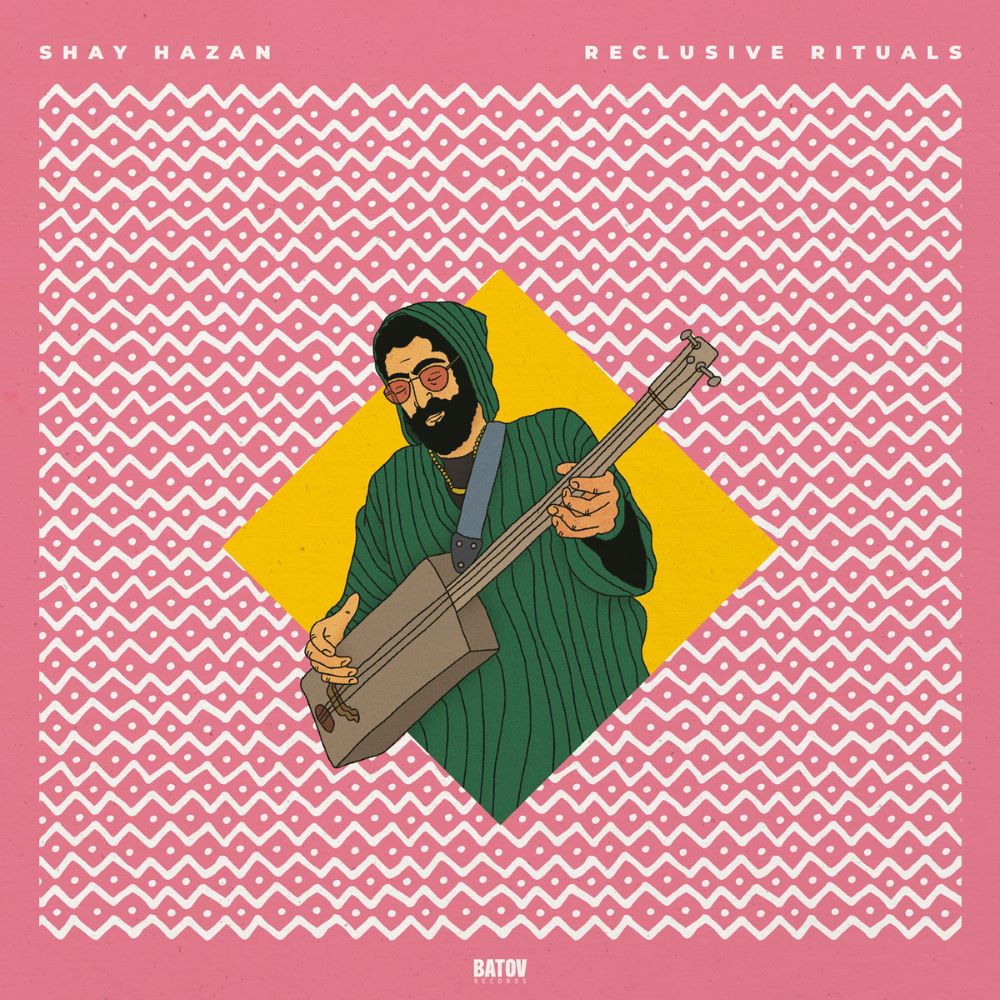
Shay Hazan - Reclusive Rituals (December 10, 2021 Batov Records)

The multi-talented Shay Hazan fuses rubbery North African Gnawa grooves, with haunting jazz horns and hip hop inflected beats on ‘Reclusive Rituals’. His first project for international groove artisans, Batov Records.

Tel-Aviv based musician Shay Hazan is a composer, producer, bassist & bandleader. His versatile bass is frequently heard on national radio, providing the hits of tomorrow with a foundation in the groove. Hazan’s presence has been felt on major international stages having toured with popular hip hop ensemble, Lucille Crew, and Batov fans will have heard his bass lines propelling the grooves of Sandman Project’s breakthrough EP, ‘Royal Family’. Moreover, Hazan’s straight jazz project, the Shay Hazan Quintet has been heavily playlisted across Spotify editorial playlists and recently released a fast-selling 7” on Jazzman Records.

Having commenced producing the album during the first Covid lockdown, this process of creating the album was a marked departure from previous projects. Whereas he would normally call and gather his band together to record his new compositions live, Hazan would come up with a groove first before sending the recording parts to a drummer in Berlin or a saxophonist in Tel Aviv to add a complementary rhythm or melody, and then finally editing the results himself. As Hazan puts it, “So technically I had the role of the composer and the producer as well as the Guimbri player.”

“I made this album In order to satisfy the inner urge for simple grooves and the search for a different and new sound that draws inspiration from ancient places with great tradition but still corresponds with the world and the period in which I live and the way I express myself.”

Having already mastered the double and electric bass, Hazan learned how to play the three-stringed Guimbri: a camel-skin-covered bass plucked lute used by the Gnawa people of North Africa, as heard on their hypnotic music. Hazan repurposes the unique qualities of the instrument with a jazz approach, no doubt inspired somewhat by his introduction to the instrument: “The truth is that my first acquaintance with the Gimbri was by bassist William Parker, who is not a traditional Gnawan player, but an American musician, identified with jazz and improvised music. that I have been following for years. Once I saw him play with this thing in a show and my mind exploded, I started researching where it came from and listening to music from Morocco and North Africa”.
The title, ‘Reclusive Rituals’, is inspired by a Jean-Michel Basquiat interview from 1985 where he discusses his reclusiveness and the public demand for gossip on well-known figures. In particular, how advantageous it can be to stay out of the limelight, as the crowd’s very nature is to eventually turn on their idols. Hazan interpreted this to imply that personal behavioral patterns are significantly affected by the fear of negative responses, often leading them to non-action: “Basquiat's words have been resonating in my head for a long time. I see around me a lot of people who for fear of receiving negative criticism, do not initiate or create anything.

And in a certain place, I'm a little scared to be in this place myself and feel the need to keep searching and creating all the time without being influenced by criticism, for better or worse.”

The guimbri’s natural inclination to groove is instantly felt on the Gnawa-meets-Afrobeat first single, “Afrobeatz”, which is destined to play a large role in DJs record bags as dancefloors reopen. But the laidback, beat-driven foundation opener “Deloop” and “Pink Collar” reveal Hazan’s affinity for hip hop and RnB, in particular the UK label Village Life, whose cutting edge blend of underground jazz and hip hop was a lockdown favourite.

‘Reclusive Rituals’ is an exciting new chapter in Shay Hazan’s career. His most personal, hands-on album to date, fusing his love of jazz, hip hop, and Gnawan music. As open-minded purveyors of the finest grooves, Batov Records is its perfect home. 

1. Deloop
2. Pink Collar
3. 123 Birds
4. Basquiat
5. Guimbri Retreat
6. Bob Dealer
7. Afrobeatz
8. Remove the Talk

Shay Hazan - Guimbri, bass, guitar

Tal Avraham - Trumpet (on tracks #2 #3 #4 #6)
Eyal Netzer - Saxophone (on track #7)
Doron Segal - Noise, programming, editing and keyboards (on tracks #4 #8)
Milton Michaeli - Keyboards (on track #6)
Nir Tom Sabag - Drums and percussions (on tracks #4 #6 #7 #8)

Mix and Mastered by Asaf Shay, Halal Studio.
Album art by Omer Porat.

Recorded at all participants' home studios (2020)

Nadav Berkovits - Waking the Heart (December 10, 2021 Ubuntu Music)

In his Debut Album 'Waking the Heart’, Nadav is exposing a variety of influences from Straight Ahead Jazz to North African Rhythms, and Afro Cuban music, influenced by his musical journey to Cuba. The album features some of the best Israeli Jazz musicians including Itamar Borochov on Trumpet, Yuval Drabkin on Tenor Sax, Omri Bar Giora on Guitar, Oz Yehiely on Bass, Shai Yuval on Drums and Nadav Berkovits on Piano.

Nadav on the album: "For me ‘Waking the Heart’ was a spiritual journey started back in 2018 when I traveled to Cuba where I was exposed to a new world of culture and music. This experience led me to an inner search and compose my own music. Some of the tunes were written in Havana and some of them in India, Sinai (Egypt), and Jerusalem. In 2020 when covid-19 started and everything stopped I had the opportunity to get in the studio with some of my best friends and best musicians around.

I really hope it will inspire you.

Yours Truly, Nadav"

1. The Dream
2. Ras (feat. Itamar Borochov)
3. España
4. Song for Avi
5. Eurydice
6. Ensof
7. Lament

Nadav Berkovits - Piano
Itamar Borochov - Trumpet (Tracks 1,2)
Yuval Drabkin - Tenor Saxophone (Tracks 1,5,7)
Omri Bar Giora - Guitar (Tracks 1, 4)
Oz Yehiely - Bass
Shai Yuval - Drums

All compositions by Nadav Berkovits

Recorded at Yellow Submarine
Sound Engineer - Shalom Benizri
Mix - Yaron Mohar
Master - Helik Hadar

Track 4 'Song for Avi' is dedicated to two of my biggest teachers in life- Avi Feiler and Avi Adrian

Album cover art - Nadav Berkovits
Graphic Design - Noy Elitzur, Talia Hamburg

Produced by Nadav Berkovits
Executive Producer: Martin Hummel
Ubuntu Music

Eduardo Elia / The art of not falling - Improvisations on Schoenberg's Op19 piano pieces (December 10, 2021 577 Records)

Eduardo Elia’s new project, a vivid solo piano project, pays homage to Austrian composer Arnold Schoenberg, inspired by and grounded in Schoenberg’s proclamation that, “The expression 'atonal music' is most unfortunate, it is on a par with calling flying 'the art of not falling.” In 1911, Schoenberg composed his now-renowned "6 Little Piano Pieces Op19," a project that challenged the parameters established until then. He was searching for a spontaneous sound that would emulate a free association of ideas, especially as they were produced by improvisation, "an expression of the feeling as if it were really the feeling." A century later, Eduardo Elia used these six short pieces as an initial point to improvise, by rereading the written material and, once presented, improvising on it. 

To close the recording, in ‘The Art of Not Falling,’ a freely improvised take pays homage to the music developed by Schoenberg during that era. The resulting project is an elegant and simple series of compositions that simultaneously draws on the music of the Austrian composer, but reveals the personal voice of the contemporary Argentinian pianist.

1. I
2. II
3. III
4. IV
5. V
6. VI
7. The art of not falling

Eduardo Elia: Piano

Recording, mixing and mastering by Pablo Granja
Recorded on February 20, 2021, at Paseo del Buen Pastor, Córdoba, Argentina
Piano provided and supervised by Miguel Puch (Pianos Puch)

Beverly Glenn-Copeland - Keyboard Fantasies Reimagined (December 10, 2021)

Keyboard Fantasies Reimagined is a collection of songs from the now legendary album, Keyboard Fantasies, re-worked and re-imagined by a collection of creative kindred spirits. Shared so far from this collection is “Ever New (Kelsey Lu’s Transportation)” and Sunset Village (Blood Orange Remix) with more to come. The album is available for pre-order now.

1. Track 1
2. Track 2
3. Track 3
4. Track 4
5. Blood Orange - Sunset Village (Blood Orange Remix)
6. Kelsey Lu - Ever New (Kelsey Lu's Transportation)
7. Track 7
8. Track 8

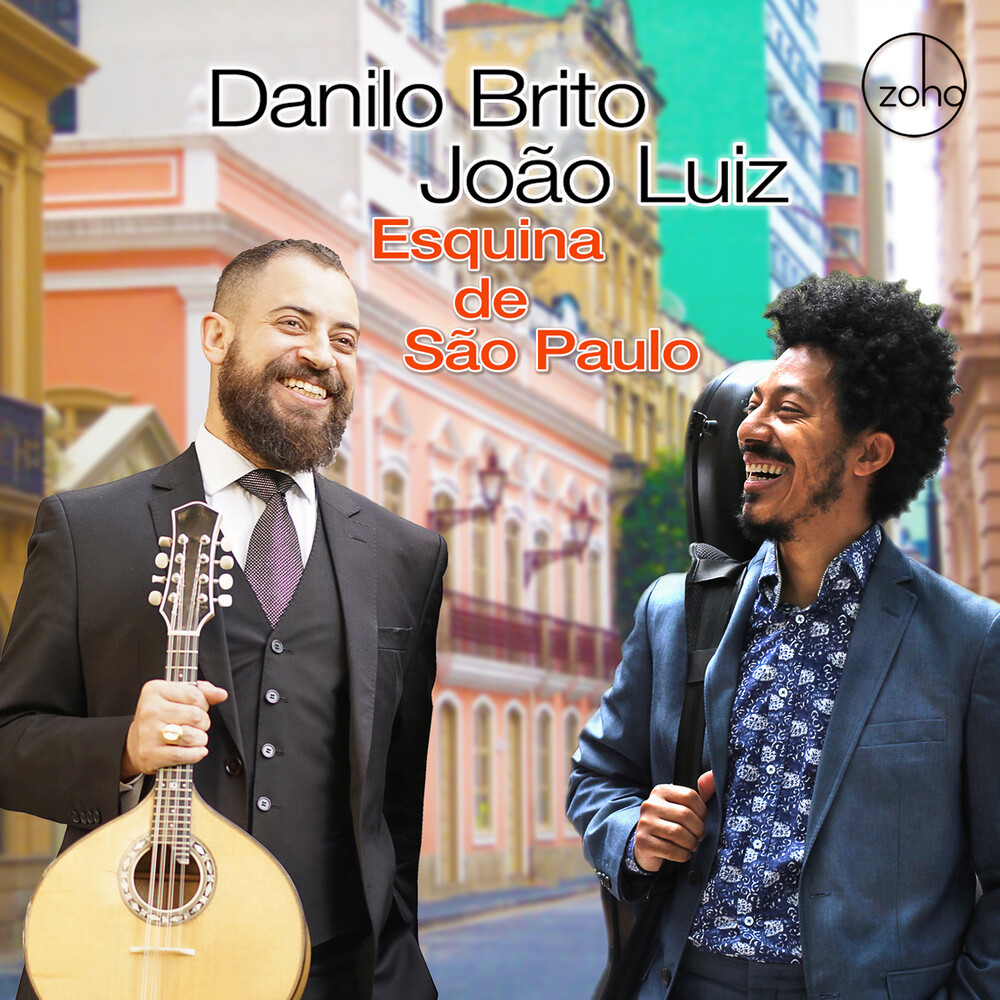
Danilo Brito / João Luiz - Esquina de São Paulo (December 10, 2021 ZOHO Music)

When stars come together, an album like this is born. João Luiz and Danilo Brito are both master musicians in their own rights, playing music at the highest level. A virtuoso of the popular music of his native Brazil, guitarist Luiz began playing professionally during his childhood and was later trained in classical guitar by his mentor, Henrique Pinto. He has collaborated with the likes of Yo-Yo Ma, Paquito D’Rivera, Sérgio Assad, Leo Brouwer, Egberto Gismonti, Bridget Kibbey, and Clarice Assad. He’s also an integral member of the New York creative community, as the director of chamber music at CUNY Hunter College.

Danilo Brito is a genius on the mandolin and an authority in Choro. He is also a celebrated composer and arranger. Choro has the same cultural parents as jazz and blues. European forms melded with African ideas to produce a family of fresh, new forms throughout the New World - marked by virtuosity, syncopation, counterpoints, and improvisation with an intense expression of feelings, from cheerful to melancholy.

João and Brito first met in 2004 at the Visa Music Award. Though it was a quick encounter, Brito’s was able to “see the brilliance of João’s playing.” Brito continued, “I realized that he had a sound of a classical guitarist but was full of Brazilian swing of popular music.” Years later, in 2017, they performed together at Jazz at Lincoln Center in New York. “The energy was so good that we went on a tour the next year,” said Brito.

You can hear their energy and magnetism on Esquina de Sao Paulo (“Sao Paulo Street Corner”.) You can also hear their friendship. The repertoire came from options Brito showed João that came from that first performance in NY, when he was a featured guest, and the duo's tour the following year. Brito had made some home recordings and sent them to João. Of course, João was duly impressed and rendered them afresh with his arrangements.

Gargalhada was composed by Pixinguinha in 1917 for flute. It is a Schottische, a European dance genre, but it has strong Brazilian characteristics and feelings. This is clearly an advanced piece, with its progressive sections moving from delicate to dynamic. Brito and João move through the number with precision and heart.

The title track Esquina de São Paulo appears for the first time on this album. It plays as a tango initially but turns into a waltz in parts B and C. The title refers to the old serenades made by inspired musicians such as Francisco Mignoni, a great Brazilian pianist composer who characterized his romantic waltzes as “valsas de esquina” that we could thus translate as “street corner waltzes.” The interplay between Luiz and Brito is on full display in this number, as they seamlessly move between sections with dexterity and grace.

Feia is a waltz by Jacob do Bandolim originally recorded by the author in 1948, which later received a new recording with grand orchestra. “Feia” means “ugly” in feminine, as “waltz” [valsa] in Portuguese is a feminine word.

Salsito no Choro is a groove-oriented selection that has its first recording on this very album. The duo performed with Paquito D’Rivero in New York. The piece moves between a choro in the A section which alludes to the salsa, allusion to Cuba, where D’Rivera was born. The title “Salsito” is a mashup of Salsa and Paquito.
The duo’s upbeat Benzinho is a choro by Jacob do Bandolim that he first recorded in 1955 and then again in 1961. This rendition is exquisitely arranged by João, and the performance evokes a romantic, hopeful vibe.

Despertar da Montanha is a composition by Eduardo Souto that some identify as Brazilian Tango and others as Fado-Choro. It’s a kind of Tango that’s very different from Argentinian Tango. This is an elegant, more pensive piece where we can experience the strings become heartstrings, evoking feelings of warmth and nostalgia.

Primas e Bordões is a Choro by Jacob do Bandolim that has been rarely recorded. There was a clip from a TV show in 1965 There was a clip from a TV show in 1965 with the song. That is the version that everybody knows. It’s radiant, and Brito wanted to highlight it. Parts A and B are Brito's mandolin solo and João comes in for part C.

Perigoso is by Orlando Silveira, the Brazilian accordionist, conductor and composer. Choro music can be technically difficult. Composers create “challenges” for the musicians, which demand a lot from them. Certain pieces are “dangerous” to play. So, maybe this is an explanation for the name “Perigoso.” It has a winding melody that is difficult to play.

Chovia by Brito is a waltz, melancholic, composed in a moment of inspiration, of introspection, on the balcony of an apartment while it was raining on a gray afternoon in São Paulo. The melody flowed easy and within five minutes the song was ready, almost the same duration of this piece. It was originally recorded in 2008 on the album Sem Restrições

Not only is this an album of incredible merit, it’s also a testament to friendship borne through music. That these two remarkable musicians have come together to render such a masterpiece is a shining example of collaboration, camaraderie, and creativity. It has been an honor to help produce this project with them.

Kabir Sehgal, producer, is a Multi Grammy & Latin Grammy Award winner.

1. Gargalhada (Pixinguinha) 5:39
2. Esquina de Sao Paulo (Danilo Brito) 5:12
3. Feia (Jacob do Bandolim) 4:33
4. Salsito no Choro (Danilo Brito) 6:04
5. Benzinho (Jacob do Bandolim) 3:30
6. Primas e Bordoes (Jacob do Bandolim) 3:08
7. Despertar da Montanha (Eduardo Souto) 4:53
8. Perigoso (Orlando Silveira) 3:45
9. Chovia (Danilo Brito) 5:19

Danilo Brito - mandolin
João Luiz - guitar

Produced by: Danilo Brito, João Luiz, Kabir Sehgal. All Arrangements by: João Luiz. Recorded & edited by: Dave Cook. Recording location: Greenville Church, Scarsdale, NY. Recording date: April, 23, 2018.

Mixed & mastered by: Dave Cook at Area 52 Studios. Photography by: Maria Silvia, Andrea Johnson. Art direction and Package Design by: Al Gold. Executive Producers: Joachim "Jochen" Becker and Maria Silvia.

João Luiz plays on a Sérgio Abreu guitar, 2017 and uses Augustine Regal Blue strings.

Thursday, December 9, 2021

Oan Kim Releases Leftfield New Jazz Track 'Mambo'

OAN KIM

RELEASES LEFTFIELD NEW JAZZ SINGLE

‘MAMBO’

Mambo is the latest single from Oan Kim’s upcoming album ‘Oan Kim & the Dirty Jazz’. Inspired by the likes of Archie Shepp and Charles Lloyd, Oan’s inimitable jazz saxophone style is neatly entwined in this mysterious and minimal track.

The single follows on from the first release of the album Wong Kar Why, which features French musician Edward Perraud. The album was produced by Oan himself in his home studio in Paris, with Oan playing saxophone and guitar throughout. On Mambo, he explains ‘as with most of this album I wanted to mix different genres. It all started with the guitar and bass line alla Nick Cave or Timber Timbre. This bass line really sets a particular mood of subdued tension, that I wanted to do a jazz saxophone track on.’

Also singing on the track, Oan added ‘the lyrics describe a compulsive liar enjoying the joy and laughter that his lies provoke’.

‘I called it Mambo because it reminds me of music from the Mambo era and I liked the connotations, but it’s clearly not a mambo per se’.

Oan’s compelling sound palette follows from studies at Conservatoire National Supérieur de Musique de Paris and the Bill Evans Piano Academy, whilst also being fascinated by contemporary music and the indie scene in which he played for a number of years with electro-rock duo Chinese Army and rock band Film Noir.
Having pursued a career as a filmmaker and photographer in parallel to his music, the multifaceted creative has won awards such as Silver Horn of the Krakow Film Festival, Emerging Documentary Filmmaker at DMZ festival, Swiss Life 4 Hands Award and more, as well as being a co-founding member of one of the foremost photo agencies in France, MYOP Agency.

Bringing together his musical and artistic influences into a melting pot of creativity, Oan’s passion for music and filmmaking is evident with the mesmerizing music video for Mambo. Featuring two contemporary dancers, the video showcases the ‘dynamics of seduction within a dance number’.

Inspired by a mix of Pina Bausch and Fred Astaire, the video aims to show ‘where a couple is gaging each other, getting closer, pushing back, pulling closer, embracing, controlling the other, or falling into each other's arms’, whilst also keeping the urban settings of dance similar to in the film Pina by Wim Wenders. 

The dance is based on these ‘push/pull dynamics’, borrowing elements of ballroom dancing that match the retro elements of the music.

Mambo, the second single from the upcoming album ‘Oan Kim & The Dirty Jazz’, is available now on all major platforms.

OAN KIM - ‘MAMBO’ OUT NOW

TAKEN FROM THE UPCOMING ALBUM ‘OAN KIM & THE DIRTY JAZZ’ 

(OUT FEBRUARY 2022)

Wednesday, December 8, 2021

Bruno Vansina - ANYR (a New York recording) December 8, 2021

This recording with Teun Verbruggen and Pascal Niggenkemper dates from 2015 and was done in New York during a tour through the USA with the Flat Earth Society Orchestra. I had met Pascal one year before at a rehearsal with Steve Nelson in preparation for my 'Stratocluster' album.

We had a day off in New York, contacted Pascal and reserved a little basement studio. I remember that after just a couple of hours we were back outside somewhere in a quiet neighborhood of Brooklyn, the sun was shining and I was chatting with Teun Verbruggen, waiting for a taxi to take us back 'downtown'. What better way to spend the afternoon? We where living the dream. I cherish that feeling with this modest album. - BV

1. Estelle 10:45
2. Guacamole 07:20
3. Triologic 08:12
4. Von Zacken 06:26

All songs by Bruno Vansina except ‘Estelle’ by Malik Mezzadri.

Bruno Vansina - alto saxophone
Pascal Niggenkemper - double bass
Teun Verbruggen - drums

Recorded by Jim Clouse at studio Park West, Brooklyn NY, 24th June 2014.
Mixed by Joseph Branciforte, New York, 16th March 2015.
Master by Pierre Vervloesem at studio Fiasco, Bruxelles, May 2015.

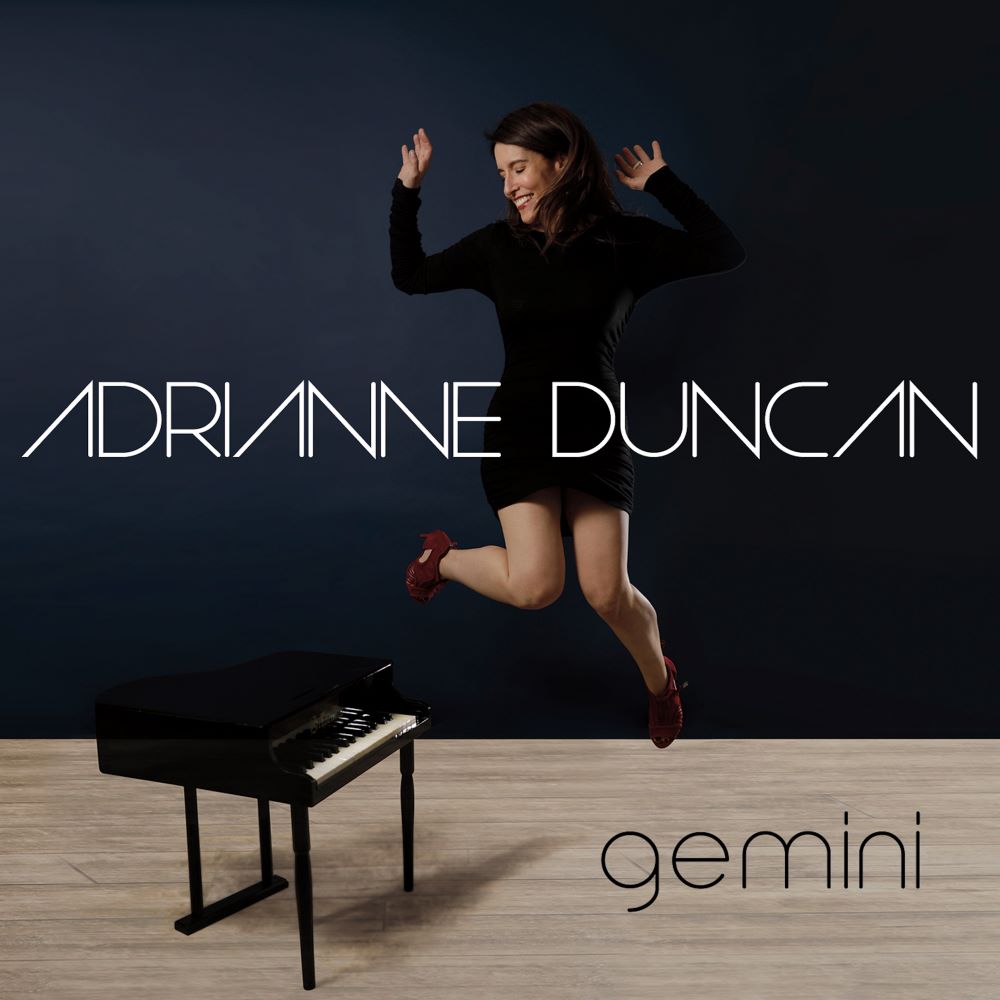
Pianist/Composer/Vocalist ADRIANNE DUNCAN Leads Top Ensemble on "GEMINI"

PIANIST, COMPOSER/ARRANGER, VOCALIST ADRIANNE DUNCAN LEADS A TOP ENSEMBLE ON HER NEW FULL-LENGTH ALBUM GEMINI

Three evocative vocal originals, an instrumental, and an imaginative reworking of The Police’s classic “Roxanne” take listeners on a rousing journey

“On her Gemini, the vocalist/pianist/composer proves herself an adept and compelling artist in the jazz genre, one who isn't afraid to take some chances. . . . ‘Roxanne’ is a particularly fine take on the tune, from a particularly promising jazz artist.”
— All About Jazz ★★★★

In honing her own creative voice as a rare quadruple-threat female jazz artist, pianist/composer/arranger/ vocalist ADRIANNE DUNCAN has also discovered the ideal way to present it: with the devoted group of musicians and friends heard on her inspired recording GEMINI. The versatile rhythm section features Duncan on piano with DAN LUTZ on acoustic and electric bass and JIMMY BRANLY, who mixed the album, on drums. Vibraphonist NICK MANCINI achieves a beautiful blend with Duncan’s instrument, serving the multifaceted songs with his fine touch and displaying high-level virtuosity in the bargain. A small but highly colorful contingent of woodwinds, with JOHN TEGMEYER on clarinet and KATISSE BUCKINGHAM on flute and saxophone, brings an added dimension and sparkling improvisatory flair.

Although Duncan, an Atlanta native now based in Los Angeles, followed a non-linear path to jazz, her earlier activities laid the groundwork for it in every way. She is the daughter of renowned classical guitarist and educator Charles Duncan. She grew up performing in — and winning — major competitions as a high-achieving classical pianist, also playing celeste, organ and other specialized keyboards as a member of the Atlanta Youth Symphony. Later she studied theater (earning a degree from Northwestern University), which in addition to full-time professional acting work, also led directly to singing.

Though Duncan chose not to pursue a classical piano career, she continued her deep study of music and later brought the piano back strongly into her performance, with a voice instructor’s encouragement. “These things were so separate in my mind, classical piano and singing/musical theater,” she recalls. “I was singing jazz in bands in Chicago, but I was the singer up front — I don’t think I even told anyone I played.” And yet play she does, on the level demanded of a competitive concert pianist, with a harmonic knowledge and fluid, lyrical touch of someone who’s closely studied the jazz piano legacy as well. As a self-accompanying singer, inhabiting her original story-oriented lyrics with a resonant tone and a fresh and expressive spirit, she’s furthering a tradition that spans from Nat Cole, Shirley Horn and Andy Bey to Diana Krall and Dena DeRose.
Duncan was also nurtured as a fiction writer and screenwriter starting in high school, so her approach as a lyricist tends toward the literary, and her compositions have a cinematic sense of scope. Both “Elijah” and “Home at Last” on Gemini have original short stories attached to them, readings of which Duncan hopes to include in performances down the road. The former has a relaxed tempo with enigmatic chords as the story unfolds, buoyed by riveting clarinet and tenor sax solos as the tune edges upward into double-time funk/fusion. The latter was inspired by an image Duncan saw in a dream, of an unloved trophy wife ascending in a glass elevator, somehow revealing every detail of her sorrowful life. Dark minor cadences and shifting tempos evoke an unsettled ambiance, made all the more dramatic by the imaginary French/English phone conversation Duncan overdubs in the song’s final abstract out-of-tempo moments.

“He’s Not Quite You,” which “predicts the end of a relationship” according to Duncan, stretches from a rueful ballad into a more exuberant, in-the-pocket samba feel for Mancini’s energized vibes solo over an extended coda. And the title track “Gemini,” the sole instrumental piece, reveals another facet of Duncan’s compositional gifts. The grooving, churning odd-meter structure gives ample space to all the soloists, beginning with a heated round of trading between flute and clarinet, followed by drums over an ostinato and finally vibes on the closing vamp.

“My starting to write was a direct result of studying jazz piano,” Duncan explains. “I didn’t think it would lead to composing; my intention was just to start accompanying myself. I studied with John Novello, who’s a fantastic B3 player, and I was learning all the Bill Evans voicings. I made flashcards, put them in a box and shook them up and I’d randomly get some chords next to each other, and that was how I started writing.”

But that wasn’t all: Duncan also began to reharmonize, transforming song after song, and one of these was the 1978 rock classic “Roxanne” by The Police. The characterological story-song theme suits the album and Duncan’s lyrical style, and the band digs in accordingly. “I love it when I’m listening to a song and I’m not aware what it’s going to be,” Duncan remarks. “That’s what I wanted with ‘Roxanne.’ I’m also drawn to songs that don’t necessarily have a basis in reality and also have that ‘Rashomon’ aspect of different people’s points of view. I also like songs that start one way and finish another way, and I think every one of the songs on Gemini does that. I love to be taken on a journey.”

In addition to her own project, Duncan has performed and recorded with some of Los Angeles’ most noted musicians, including Otmaro Ruiz and Catina DeLuna on the Grammy-nominated Lado B Brazilian Project, with whom she toured Brazil on keyboards and vocals. She has played and sung on numerous recordings, including The Jazz Chamber with legendary multireedist Bennie Maupin, and also performs regularly with her seven-person vocal improvisation collective Fish To Birds. She served as musical director of the show Twins for its premiere in Berlin, and founded and produced the LA Modern Jazz Series, which showcased world-class creative jazz musicians. As a producer and arranger, Duncan’s projects include albums for actor-singers Jacqueline Emerson (The Hunger Games) and Larry Wolf (Pound, Putney Swope). Her piano playing can be heard on film soundtracks including The Chameleon and The Young Kieslowski, as well as the short films Impact! The Musical and Na Na Na (Na).

1. HE’S NOT QUITE YOU 9:16
2. ELIJAH 9:55
3. GEMINI 6:56
4. HOME AT LAST 8:56
5. ROXANNE 6:00

Adrianne Duncan piano, vocals
Nick Mancini vibraphone
Dan Lutz bass
Jimmy Branly drums
Katisse Buckingham flute, saxophone
John Tegmeyer clarinet

All compositions by Adrianne Duncan except

“Roxanne” written by Sting
Arrangements by Adrianne Duncan
Produced by Adrianne Duncan

TATA VASQUEZ & HIS ORCHESTRA - ECSTASY (Jazz Room Records)

Super obscure New York Latin Jazz superbly produced by Eddie Drennon of the massive Disco hit of the early 1970's "Let's do the Latin Hustle".

Drennon was also a well known arranger and producer on the underground Latin Circuit and produced this way out, leftfield and very different to the typical "Salsa" style release current at that time. Some very jazz oriented playing on top of the "El Barrio" Vox Pop sounds of the streets and underlaid with some funky and fiery latin percussion.

"Suite Guaracha" was picked up on by the London Ibiza crew in the 90's and the Ursula 1000 & Gamm Nu-Jazz crew in the 2000's, played all over the alternative club circuit but has still managed to stay under the radar since then, but now a staple of the Worldwide Sound appearing on DJ Playlists in the hippest spots from Tokyo to Hamburg, New York to Barcelona.

Very different from the usual run of the mill late 70's Fania outings which might be a clue as to it's somewhat unique sound stylings. Funky, gritty, raw, fat jazzy and spooky backing vocals. It's Strictly Jazz Room!

1. LA BARBERIA 04:24
2. COOL BREEZE 03:41
3. MALDITO VICIO 03:53
4. EL LOCO 04:55
5. SUITE GUARACHO - PART 1 03:22
6. SUITE GUARACHO - PART 2 05:55
7. ORGULLO Y VANIDAD 07:01

Tuesday, December 7, 2021

Nublu Orchestra conducted by Butch Morris - Live at Joe's Pub NYC (December 2021 Nublu Records)

Once upon a time, for a few years at the dawn of the 21st century, Avenue C in New York City's East Village had its own Zubin Mehta, its own Herbert Von Karajan, its own Daniel Barenboim. He was a veteran of both the Vietnam War and, even more heroically, NYC's avant-garde jazz scene. His name was Lawrence "Butch" Morris and he was a well-established legend. The orchestra he conducted and the repertoire they played differed considerably from those employed by the above-named gentlemen in style, substance, tools and content. It was a motley crew of musicians from a wide array of backgrounds, styles, disciplines and genres, and the music he drew out of them, far from a set-in-stone catalog of well-established pieces from the European classical tradition, was informed by jazz improvisation, feeding off of the electricity of the streets around them and spontaneously creating the sound of NOW, on the fly and out of thin air, brought to life by each exacting stroke of Butch's baton. Each performance was a unique moment never to be repeated and there were no "hits" you were guaranteed to hear. But the recordings of these performances are revelatory and give a strong sense of something strange, new, mysterious and wonderful about to happen, or that's happening already, and these are the recordings, made all around the world, that Nublu Records is now presenting to you.

The history of Butch Morris and the Nublu Orchestra goes back to the late 90s and the friendship between Butch and Nublu's founder and owner, musician Ilhan Ersahin. Butch and Ilhan became great friends and Butch was present at the very inception of the club. Butch actually became, along with the legendary Atlantic Records founder Ahmet Ertegun, a patron saint of sorts for Nublu, except that Butch stopped in for his customary nightcap every single night and regaled everybody with his hip, knowing, offbeat wisdom and humor. The kind you'd expect from a man who once released an album called "Current Trends In Racism In Modern America (A Work In Progress)." Several years into the club's existence after its official 2002 opening, with a core roster of musicians, bands and DJs having quickly begun to establish itself, the idea came up to form a supergroup of sorts, or more ambitiously, an orchestra, comprised of players who were at the club on a weekly and often daily basis, to be conducted by Butch. But instead of playing the cornet he was known for, Butch would conduct all these players in a very strict and demanding (but loving) way, not just waving a baton but getting what he wanted from a particular player by using nothing more than a glance. Players came to recognize these glances and fear them, not wanting to be singled out during the inevitable band meetings/pep speeches/dressing downs Butch would administer in the basement band room between sets. The Nublu Orchestra also distinguished itself via the use of beats and electronics that were brought in by different contributors, and which also served to distinguish the Nublu Orchestra from Butch's other Conduction work, which he had pioneered and was noted for.

It wasn't long before Butch had whipped the Nublu Orchestra into good enough shape to take on the road to the world beyond Avenue C and the dozen recordings being released now were taped all over: Bergamo, Paris, São Paulo, Lisbon, Rome, Skopje, Saalfaden, Pomigliano, Sant'Anna Arresi and good old NYC at Nublu where it all began, and also at Joe's Pub. The 12th title in the series is called "Encores" and consists of just that, brief encores performed at assorted shows around the world. Butch conducted the Orchestra for the final time in 2012 and sadly passed away in January 2013. His spirit (as well as a giant portrait of him) still permeates Nublu, both its original location and its newer location at 151 Avenue C, as well as on the fantastic recordings that Nublu Records is very proud to now present to you. 

1. Conduction No. Unknown 42:39

Recorded live at Joe's Pub New York City on an unknown date in 2004.

Line Up:

Lawrence D. ‘Butch’ Morris (Conduction)
Sabina Sciubba (Vocal)
Graham Haynes (Cornet)
Eddie Henderson (Trumpet)
Clark Gayton (Trombone)
Ilhan Ersahin (Tenor Saxophone)
Jonathon Haffner (Alto Saxophone)
Jana Andevska (Violin)
Thor Madsen (Guitar)
Jessie Murphy (Bass)
Didi Gutman (Keyboards)
Kenny Wollesen (Drums)

+

Project Coordinator: Velibor Pedevski
Mastered by Thor Madsen at Mazza Mansion, Copenhagen 2020
Cover Art by Ertac Uygun
℗ & © 2021, Nublu Records

Alister Spence / Joe Williamson / Christopher Cantillo - Curve (December 2021)

‘Brilliant musicianship, masterful playing and imaginative improvisational skills.’ Eyal Hareuveni, Salt Peanuts

‘Distinctive cohesiveness’ John Shand, Sydney Morning Herald

‘The hope is that this trio didn’t just “Begin” but will continue to make CDs like this for a long time.’ Ken Waxman, The Wholenote

Curve, is the second release by Australian pianist Spence, and Canadian born ex-pat Joe Williamson, and Christopher Cantillo from Sweden.

The trio first met in 2009 when Spence was invited to play at the Vilnius Jazz Festival. Since then, they have performed in 2011, 2013, and 2015, in Sweden, Norway, and the UK, as a trio, and with sax players Raymond MacDonald (Scotland), and Daniel Rourke (Australia).

1. Örnsberg Songbook 1 00:53
2. Deflect 04:59
3. Opening 08:42
4. Örnsberg Songbook 2 01:53
5. Slow Spin 07:55
6. Point of Rest 06:54
7. Örnsberg Songbook 3 00:43
8. Modulus 08:21
9. Generation 07:26
10. Örnsberg Songbook 4 01:01
11. Distribution 07:50
12. Örnsberg Songbook 5 01:31

Alister Spence – piano, prepared piano
Joe Williamson – double bass
Christopher Cantillo – drums, percussion

Recorded at Ton & Tråd, Örnsberg, Sweden on 24th February 2011
Mixed by Tim Whitten, November 2016
Mastered by Doug Henderson, September 2021
Producer: Alister Spence
Design: Cheryl Orsini
Cover and disc photographs: Alister Spence
Recording ©: 2021 Alister Spence
Artwork ©: 2021 Alister Spence
©All rights reserved
High quality audio files available for download: 24bit 48kHz

Jean​-​Charles Capon / Philippe Maté / Lawrence "Butch" Morris / Serge Rahoerson - Jean​-​Charles Capon / Philippe Maté / Lawrence "Butch" Morris / Serge Rahoerson (souffle continu records)

In November 1976, Jef Gilson’s phone rang. What a surprise! It was Serge Rahoerson, one of the musicians he had met in Madagascar at the end of the 60s and who had played on his first album “Malagasy”. Rahoerson announced that he was in Paris for a few days. Immediately, Jef wanted to organise a recording session, starting the next day. He thought of a trio including Serge, Eddy Louiss on organ and cellist Jean-Charles Capon, who had also been on one of the trips to Tananarive and so had also known Rahoerson there.

Unfortunately, Eddy Louiss –who had already played with Gilson and Capon on the album “Bill Coleman Sings And Plays 12 Negro Spirituals” in 1968- had to drop out at the last minute: he was delayed by a session with Claude Nougaro. Jean-Charles Capon had also become a sought-after studio musician since his trip to Madagascar in 1969. He appeared on several key albums on the Saravah label including the now famous “Comme À La Radio” by Brigitte Fontaine, “Un Beau Matin” by Areski and “Chorus” by Michel Roques, without mentioning the album by his own Baroque Jazz Trio. He was also to be found with Jef Gilson for his album on Vogue with the ex-drummer from Miles Davis’ first great quintet, Philly Joe Jones, or also in the orchestra led by Jean-Claude Vannier for the album “Nino Ferrer & Leggs”. He also played regularly on albums by Georges Moustaki.

Jean-Charles Capon and Serge Rahoerson found themselves thus in the studio, with Jef at the controls. He had decided to record the rhythmic structure right away. He would find the soloists later, that didn’t worry him. Serge Rahoerson was on drums. Though a saxophonist by training, Jef remembered that Serge was also capable of great things behind a drum kit: he was the improvised drummer on their cover of “The Creator Has A Master Plan” on the album “Malagasy”... The great memories came flooding back (the nod on the title “Orly - Ivato”), and the old magic worked again.

Brought in momentarily from Europamerica, Gilson’s new big band, in which JC Capon also played, the saxophonists Philippe Maté, from France (another Saravah stablemate) and the American Butch Morris (soon to be a key member of David Murray’s band) were invited to record their parts later and Gilson mixed it all as if it had been one single session (as he had already done on other albums, with the tracks by Christian Vander recorded before the creation and success of Magma).

The album would not appear until 1977, on Palm, Jef’s own label, and was dedicated to the memory of Georges Rahoerson, Serge’s father, who had also played on the album “Malagasy” and who had died prematurely at the age of 51 in 1974.

“I only received my own copy of the album in 1981 when I came to live in France definitively”, a still-moved Serge Rahoerson told us in 2013. “I was playing in a club one night and Jef turned up by surprise with a copy of the album for me, I was so pleased to see him again. When I arrived in France, I told everyone that I had played with Jef Gilson a few years previously, and I was surprised to learn that so few people knew of him. For us, he was of one of the great jazz visionaries.”

Jérôme “Kalcha” Simonneau

1. Spanish Cake Walk 04:59
2. Blues For Guy Labory 06:15
3. Orly - Ivato 06:44
4. Complainte 06:25
5. Mode De Fa - Salegy Drums Solo 11:10

Jacques Thollot - Watch Devil Go (souffle continu records)


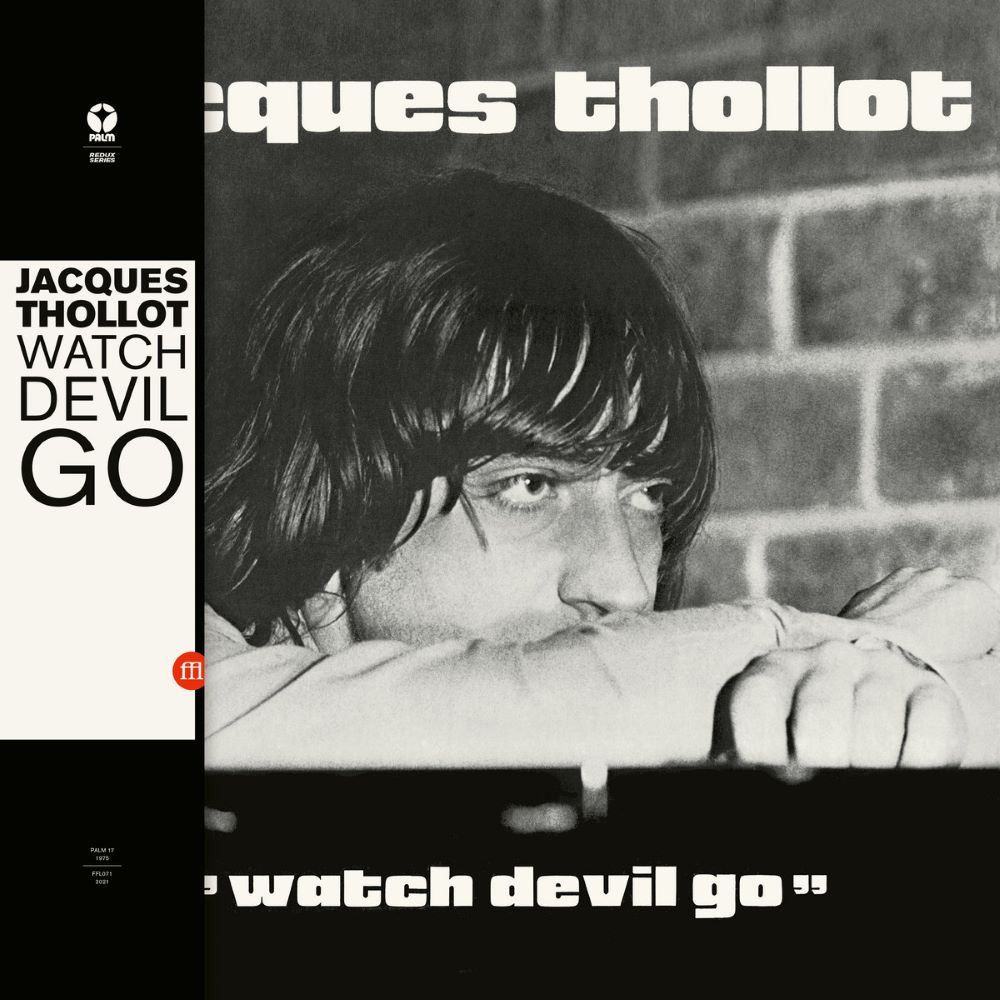
To write these few lines, we spoke to saxophonist François Jeanneau, an old friend of Jacques Thollot who also played on several of his albums, including the “Watch Devil Go” which interests us here. He told us a story which, according to him, sums up the personality of Thollot. A noted studio had reserved three days for a Thollot recording session. The first morning was devoted to sound checks and putting some order in the score sheets which Jacques would hand out in a somewhat anarchic manner. Then everyone went for lunch. When the musicians returned to the studio, Thollot had disappeared. He wasn’t seen again for the three days. When he reappeared, he had already forgotten why he had left, The music of Jacques Thollot is in the image of its’ author: it takes you somewhere, suddenly escapes and disappears, returning in an unexpected place as if nothing had happened.

Four years after a first album on the Futura label in 1971, Jacques Thollot returned, this time on the Palm label of Jef Gilson, still with just as much surrealist poetry in his jazz. In thirty-five minutes and a few seconds, the French composer and drummer, who had been on the scene since he was thirteen, established himself as a link between Arnold Schoenberg and Don Cherry. Resistant to any imposed
framework and always excessive, Thollot allows himself to do anything and everything: suspended time of an extraordinary delicacy, a stealthy explosion of the brass section, hallucinatory improvisation of the synthesisers, tight writing, teetering on the classical, and in the middle of all that, a hit; the title-track - that Madlib would one day end up hearing and sampling.

“Watch Devil Go” was in the right place in the Palm catalogue, which welcomed the cream of the French avant-garde in the 70s. But it is also the story of a long friendship between two men. Jacques Thollot and Jef Gilson had known and respected one another for a long time. Though barely sixteen years old, Thollot was already on drums on the first albums by Gilson starting in 1963 and would play in his big band (alongside François Jeanneau once again), ‘Europamerica’, until the end of the 70s.

In a career lasting half a century and centred on freedom Jacques Thollot played with the most important experimental musicians (Don Cherry, Sonny Sharrock, Michel Roques, Barney Wilen, Steve Lacy, François Tusques, Michel Portal, Jac Berrocal, Noël Akchoté...) and they all heard in him a pulsation coming from another world.

Jérôme "Kalcha" Simonneau 

1. Kanêphoros 01:22
2. Up-Down 01:59
3. Watch Devil Go 03:16
4. In Extenso 07:05
5. Go Mind 01:44
6. Tryptique Pour La Foire Des Ténèbres De Ray Bradburry 02:32
7. Le Ciel Manque de Généalogie 00:43
8. Kamikaze's Nightmare 03:00
9. Entre Java et Tombok 02:08
10. Eddy G. Always Present 00:57
11. Before In 00:41
12. Eleven 01:04
13. La Dynastie des Wittelsbach 03:45
14. 1883-1975, Heavens 00:45
15. Au Stylo Feutre, Un Paysage 02:58
16. Canéphore 01:34

Alain Coyral / Akoy Kartet - Tous les Quatre

1. Cassandre 06:04
2. Nom de code 07:00
3. Daft Mood 04:49
4. Cool 04:30
5. To Troy 07:24
6. Tous les Quatre 04:32
7. Chérie Chérie 06:31
8. Joe 06:05

Alain Coyral (Soprano and tenor sax, composition)
Sebastien "Iep"Arruti (Trombone)
Serge Moulinier (Keys)
Christophe Jodet (Bass)
Didier Ottaviani (Drums)

Chris Morrissey - Impact Winter Formal (December 2021 Edition Records)

Described by Chicago Reader as “casually clearing the way for one potential path for jazz to progress into the future”, Chris Morrisey is a musician with an uncanny ability to blend styles and genres. Informed as much by alternative music of the 90s like Elliot Smith and Bjork as contemporary Jazz of that era, it was the presence of Happy Apple, the hyper original punk Jazz group from Minnesota (Dave King, Michael Lewis and Erik Fratzke) that installed his sense of what was possible in music.

This new set of work, his fifth record as a leader, represents his most authentic blend of all his influences in one melting pot. Here’s a musician as adept as a singer-songwriter as an improvising Jazz musician and composer.

With Impact Winter Formal, he gives up on straddling two genre worlds and instead has both feet firmly planted in a totally new one that is personal and looking-forward, complex but immediate, tuneful and inspiring. The result is brilliant, engaging and emotive featuring some of the most interesting and creative contemporary musicians in New York including Philip Dizack, Ryan Ferreira, Dan Rieser, Jon Cowherd, Josh Dion, Grey McMurray and Jason Rigby.

1. Don't Look so Serious 05:02
2. The Indigos 07:38
3. Ode to All Night 06:47
4. It's Cruel That It Ends 06:00

Chris Morrissey - Bass and Singing
Philip Dizack - Trumpet
Ryan Ferreira - Guitar
Dan Rieser - Drums
Jon Cowherd - Piano

except on THE INDIGOS, which is Chris Morrissey, Bass and Singing - Philip Dizack, Trumpet - Josh Dion, Drums - Grey McMurray, Guitar - Jason Rigby, Saxophone

All songs by Chris Morrissey (chris morrissey music, bmi)

Recorded at The Bunker Studio in Brooklyn, New York between February 2019 and April 2021

Recorded and co-produced by John Davis

Mixed by John Davis at The Bunker Studio in April 2021

Monday, December 6, 2021

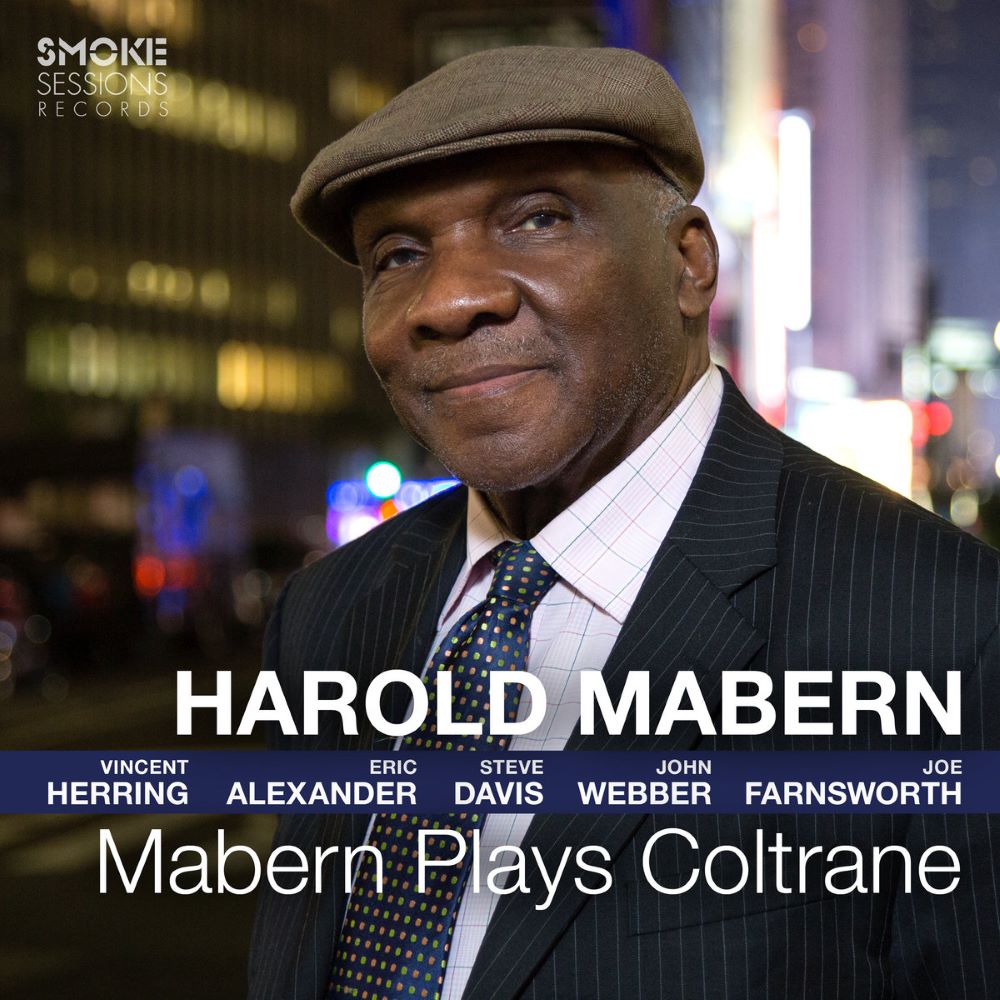
Harold Mabern - Mabern Plays Coltrane (December 2021 Smoke Sessions Records)

MABERN PLAYS COLTRANE, a vibrant live recording of Harold Mabern performing the music of John Coltrane with an all-star sextet including Eric Alexander, Vincent Herring, Steve Davis, John Webber, and Joe Farnsworth.

Mabern held a special reverence for John Coltrane. “He was very influential in my life and my playing, too,” Mabern once said. “After being around him and seeing what a great human being he was – man, I wish the whole world could have known John Coltrane.”

MABERN PLAYS COLTRANE is culled from the final three-nights of a three-week residency at Smoke’s annual year ending John Coltrane Festival that started in 2017 ended with these performances that Mabern and the band played in January 2018. The resulting recordings also produced two earlier albums: THE IRON MAN, which shined a spotlight on Mabern the performer and interpreter and offered a glimpse into a typical evening’s performance and MABERN PLAYS MABERN, which commemorated Mabern’s gifts as a composer and followed his untimely death at age 83 on September 17, 2019. Mabern Plays Coltrane is the album that was originally planned for those live recording sessions. Mabern had always played a key role in the festival since its inaugural edition in 2011. From the initial weeklong fest through its later three- and four-week incarnations, Mabern was the headliner for much of the annual run, an indication of both his appreciation for Coltrane as a forbear and mentor as well as his own vital role at Smoke.

“Playing John Coltrane's music with Harold was like tapping into the source,” says Farnsworth. “He was like the vortex, and it all flowed through him. It was intense. Having Harold on the stage, given how much he loved John Coltrane, it elevated the spirit of the music tenfold.” 

1. Dahomey Dance 07:13
2. Blue Train 10:42
3. Impressions 09:41
4. Dear Lord 05:36
5. My Favorite Things 11:47
6. Naima 09:09
7. Straight Street 10:51

Harold Mabern - piano
Vincent Herring - alto saxophone
Eric Alexander - tenor saxophone
Steve Davis - trombone
John Webber - bass
Joe Farnsworth - drums

Recorded Live January 5, 6 & 7, 2018 at SMOKE, NYC

Produced by Paul Stache & Damon Smith

Recorded by Paul Stache with Owen Mulholland & Jeff Citron
Mixed & Mastered by Chris Allen
Photography by Jimmy & Dena Katz
Design by Damon Smith & Paul Stache
All compositions by John Coltrane
except “My Favorite Things” by Richard Rodgers & Oscar Hammerstein II
“Dear Lord” was previously included on The Iron Man: Live at Smoke

Eric Alexander appears courtesy of HighNote Records

Executive Producers: Paul Stache & Molly Johnson