Thursday, December 6, 2018

Allison Au Quartet - Wander Wonder (January 11, 2019)


"...engaging, carefully crafted jazz.”
- Glen Hall, Exclaim! Magazine

"Canada has found a new jazz ambassador!
- Lance Liddle, Bebop Spoken Here

Featured on the list “10 Rising Female Instrumentalists You Should
Know”
- Rusty Aceves, SF Jazz


Wander Wonder opens with ‘The Valley,’ a lush sonic amuse-bouche that features keyboardist Todd Pentney front and center on the Prophet Rev2 while the other band mates attentively weave in and out of the background. The following track, ‘Future Self,’ begins with a hypnotic vamp that eventually blossoms into Au’s angular melodic statements on the saxophone. ‘The Rest Is Up To You’ is an amalgamation of influences; a sort of Wayne Shorter-esque composition that also draws much inspiration from Brazilian pop music of the ‘70s. ‘Looking Up’ showcases some of Au’s strongest penmanship as a composer as it highlights the ensemble’s ability to transition seamlessly between rich contrasting sections.

The pensive ballad, ‘Morning,’ establishes an atmosphere of repose and calm as the instruments are slowly, yet thoughtfully layered in. The album continues with ‘The Lie That Saves Us All’, a contemporary swing tune of changing meter and harmonic textures. ‘Red Herring’ emerges as an exploration of asymmetric melodies and equally jagged counter parts deftly executed by the rhythm section. ‘Grounds’ serves as an eloquent interlude to the robust exposition ‘Force Majeure’ that showcases Ragnelli’s apt drumming sensibility in a concluding solo. ‘A Trick of the Moonlight’ is a fitting finale; a introspective ballad that draws inspiration from a novel by British author Zadie Smith.   

Juno-award winning Jazz Saxophonist, Composer and Arranger, Allison Au refuses to be defined. Born to a Chinese father and Jewish mother, and raised in the multicultural metropolis of Toronto, Allison found music as a young child. Exposed to a wide array of musical styles, she was captivated by the unhinged freedom of Jazz. Jazz became Allison’s lab for self-expression, exploration, and musical experimentation. Her work weaves a mosaic of influences into a seamless and soulful sound, a concoction steeped in the tradition of Jazz but skillfully laced with elements of Classical, Pop, R&B/hip hop, Latin, and world music. 


Au’s music transports you to a place where instrumentals ring bold and emotions run free. Melodies cascade and collide, highlighting Au’s gift for layering voices and rhythms. Her writing showcases the color and character of each instrument, while providing ample room for her band mates to push her compositions to new heights.  

Au earned her first Juno nomination for her debut album, “The Sky Was Pale Blue, then Grey” in 2013, and in 2016 seized the Juno for "Best Jazz Album of The Year: Group" for “Forest Grove.” 

Formed in 2009, the Allison Au Quartet has toured extensively in Canada and the US. The group was awarded the TD Jazz Fellowship Scholarship (2011), The Alfred and Phyllis Balm Scholarship (2012), and The Margareta and Benno Nigg Scholarship (2013) for three consecutive artist residencies at the Banff Centre.


Most recently the Allison Au Quartet has won the 2017 Montreal Jazz Festival TD Grand Prix de Jazz, received the 2017 Halifax Jazz Festival Sting Ray Rising Star Award, and was named a 2017 Finalist for Toronto Arts Foundation Emerging Jazz Artist Award.

Allison Au will be releasing Wander Wonder on Friday, January 11th, 2019.

Todd Pentney Piano, Prophet Rev2
Jon Maharaj Bass, Electric Bass
Fabio Ragnelli Drums

Produced by Todd Pentney
Recorded August 6-7 2018 by David Hermiston at
Inception Sound Studios, Toronto
Mixed by David Hermiston
Maststered by João Carvalho

1. The Valley (2:09)
2. Future Self (6:19)
3. The Rest Is Up To You (6:26)
4. Looking Up (5:09)
5. Morning (5:42)
6. The Lie That Saves Us All (6:04)
7. Red Herring (5:07)
8. Grounds (3:02)
9. Force Majeure (8:00)
10. A Trick Of The Moonlight (5:24)


Monday, December 3, 2018

Satoko Fujii's "Diary 2005-2015: Yuko Yamaoka plays the music of Satoko Fujii" (LIBRA RECORDS 2018)

Satoko Fujii Turns 60!

Composer-pianist Satoko Fujii Unearths Hidden Gems from Her Daily Composition Diary

Classical Pianist Yuko Yamaoka Brings Fujii’s Compositional Musings to Life


The pianist’s compositional talents certainly match her improvisational ones…” 
― Andy Hamilton, Jazz Review (UK)

“Fujii is simply one of the most important composers of our time: she gives new meaning to the term ‘panstylistic.”
― Alan Young, Lucid Culture

Jazz critics voted Fujii into four categories of the 66th Annual DownBeat International Critics Poll in 2018 as one of the world’s top pianists, composers, arrangers and big band leaders


Writer Mike Chamberlain once said of pianist-composer Satoko Fujii, “The woman is bursting with musical ideas.” After over 100 albums as a leader or co-leader, if any further evidence of her rich imagination is needed, Diary 2005–2015: Yuko Yamaoka plays the music of Satoko Fujii provides it.  Available November 30, 2018 via Libra Records, the double album overflows with musical ideas—118 of them to be exact. Selected by Fujii from a decade’s worth of composition notebooks, this collection of more than 100 very short pieces offers a unique and fascinating window into the creative process of one of the most fertile minds in modern jazz. Classical pianist Yuko Yamaoka’s vivid performance brings every facet of these little compositional jewels to sparkling life. 

Every time Fujii sits down to practice piano, she begins by practicing composing for 15 minutes. She’s done this since 2005. Some of these exercises grew into compositions that she recorded. For example, “052013” became “Ichigo Ichie,” the title track of her 2015 Orchestra Berlin CD. “012707” evolved into “Tokyo Rush Hour,” recorded on her 2008 duet CD with Natsuki Tamura, Chun. But the vast majority of these hundreds of short pieces simply accumulated on her piano top and in boxes.

At the urging of her husband, trumpeter Natsuki Tamura, Fujii sat down and reviewed the first ten years of her diary compositions, each one identified by the date on which it was written. From this vast trove of music she selected highlights for classical pianist Yuko Yamaoka to perform. Fujii has known Yamaoka since her student days at New England Conservatory and enlisted her to perform on Fujii’s New York Orchestra debut South Wind.


Many of the pieces are constructed using a single idea, upon which Fujii elaborates. For instance, “062605” is a melody made using only the interval of the perfect 5th. On “020505,” the left hand plays only on the black keys of the piano, the right hand only on the white keys. Of course it’s what she does with the initial idea that makes the music so intriguing and attractive. 

The clarity of Yamaoka phrasing lets Fujii’s creativity shine through. She highlights the tensions created by the unusual bass note rhythm of “091209,” and the smooth, almost classical, counterpoint of “091309.” She effortlessly follows the flowing logic of the single line in “032313” and the unexpected melodic turns of the lovely “123106.” Her bright, nuanced touch gives shades of feeling to each miniature, whether it’s the wistful lilt of a waltz in “050509” or the sensual slink of the tango in “041514.” The longest of the compositions lasts a mere two minutes, which makes the album something like a book of aphorisms—the compositions’ brevity is actually the soul of their appeal.

“I still continue composing like this everyday,” Fujii says. “It is now more like my life! I think doing it has helped me expand my ideas. I don’t want to repeat myself; I don’t want to make the same music over and over. Writing everyday makes me push myself to think of new ideas. But at the same time, I have found I do have a style, I discovered that even new ideas have something in them that makes them sound like mine. Sometimes I don’t know if this is good or bad. But Natsuki thinks this is good because it shows I have some originality.”


After 11 months and 11 releases, Fujii’s remarkable and unprecedented kanreki year concludes in December with Kikoeru: Tribute to Masaya Kimura, the explosive sixth release from the Satoko Fujii Orchestra Tokyo. 

Critics and fans alike hail pianist and composer Satoko Fujii as one of the most original voices in jazz today. She’s “a virtuoso piano improviser, an original composer and a bandleader who gets the best collaborators to deliver," says John Fordham in The Guardian. In concert and on more than 80 albums as a leader or co-leader, she synthesizes jazz, contemporary classical, avant-rock, and Japanese folk music into an innovative music instantly recognizable as hers alone.

Over the years, Fujii has led some of the most consistently creative ensembles in modern improvised music, including her trio with bassist Mark Dresser and drummer Jim Black, the Min-Yoh Ensemble, and an electrifying avant-rock quartet featuring drummer Tatsuya Yoshida of The Ruins. Her ongoing duet project with husband Natsuki Tamura released their sixth recording, Kisaragi, in 2017. “The duo's commitment to producing new sounds based on fresh ideas is second only to their musicianship,” says Karl Ackermann in All About Jazz. Aspiration, a CD by an ad hoc band featuring Wadada Leo Smith, Tamura, and Ikue Mori, was released in 2017 to wide acclaim. “Four musicians who regularly aspire for greater heights with each venture reach the summit together on Aspiration,” writes S. Victor Aaron in Something Else. She records infrequently as an unaccompanied soloist, but Solo (Libra), the first of her 12 birthday-year albums, led Dan McClenaghan to enthuse in All About Jazz, that the album “more so than her other solo affairs—or any of her numerous ensembles for that matter—deals in beauty, delicacy of touch, graceful melodicism.”

As the leader of no less than five orchestras in the U.S., Germany, and Japan, Fujii has also established herself as one of the world’s leading composers for large jazz ensembles, leading Cadence magazine to call her, “the Ellington of free jazz.” 


Sunday, December 2, 2018

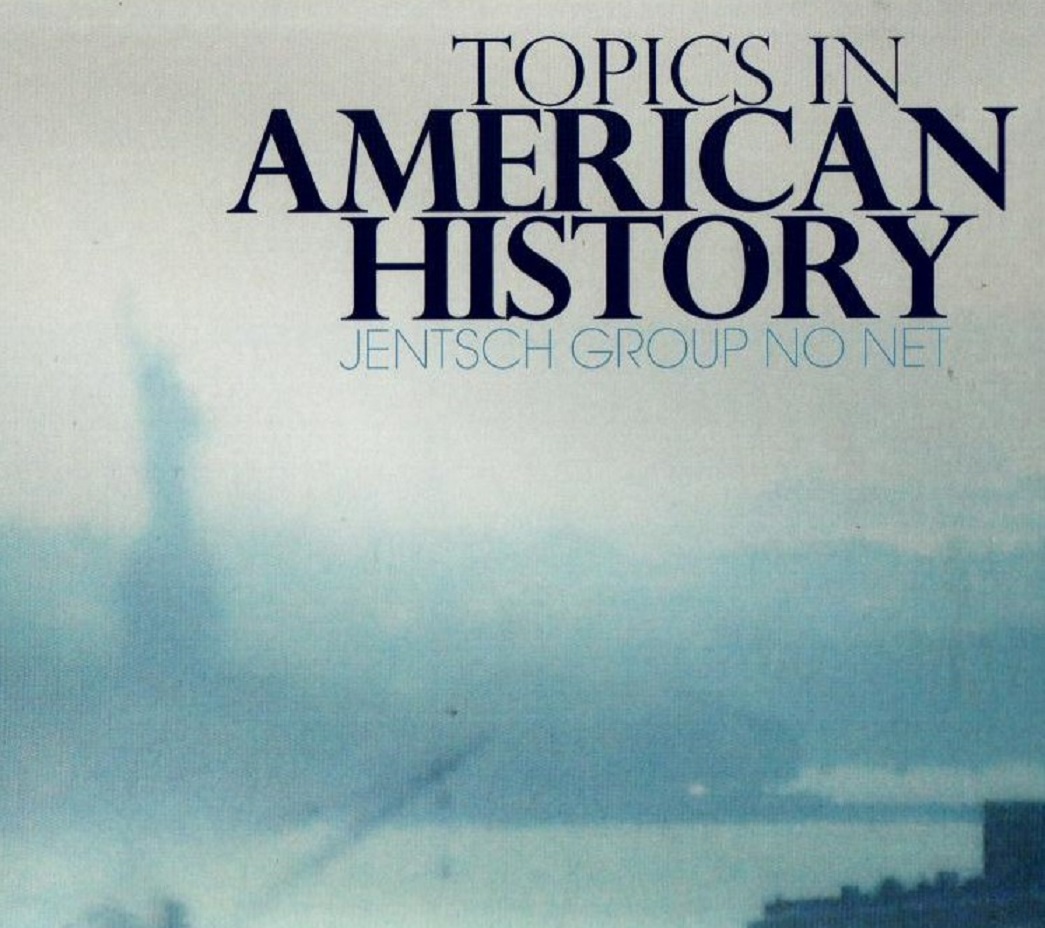
Chris Jentsch: Jentsch Group No Net – Topics in American History


Live recording of Chamber Music America commission hits all the right notes

Jentsch’s all-star Jentsch Group No Net features flutist Michel Gentile, clarinetist Michael McGinnis, saxophonist Jason Rigby, trumpeter David Smith, trombonist Brian Drye, pianist Jacob Sacks, bassist Jim Whitney, drummer Eric Halvorson, conductor JC Sanford

“(Jentsch) writes lavish suites – which he then plays with remarkable terseness and attention to detail. His narratives are vivid and often very funny. His latest, Topics in American History, couldn’t be more relevant.”
— New York Music Daily

 “Chris Jentsch’s Brooklyn Suite was one of last year’s most satisfyingly ambitious jazz efforts.”
— Richard Gehr, Village Voice


On his new album, acclaimed guitarist and composer Chris Jentsch pairs his extraordinary skill at writing long form musical suites with his expertise in history. Jentsch earned a B.A. in history from Gettysburg College, but his approach to expressing his knowledge through music is anything but academic. Topics in American History (out November 30, 2018 on Blue Schist Records), featuring jazz interpretations of seven historical events and concepts, takes listeners on an emotionally exhilarating, compellingly thoughtful journey through selected corners of our nation’s past. “In learning about music there is always the historical facet,” says Jentsch. “Aspects of classical music, world music, jazz, and now even rock music have their backgrounds of decades or even centuries past. With the Topics project, for the first time, to express my present I have merged what I have learned from the chronicles of music with my general interest in American history.” 

The hour-long Topics, a result of a Chamber Music America/Doris Duke New Jazz Works commission, follows Jentsch’s previous highly-acclaimed large ensemble works including Miami Suite, Brooklyn Suite, and Cycles Suite. The new CD is a live recording of the Topics premiere, presented on December 2, 2016 at ShapeShifter Lab in Jentsch’s hometown of Brooklyn. Combining the immediacy and excitement of in-the-moment performance with Jentsch’s masterful musical vision, the recording features Jentsch Group No Net’s roster of extraordinary musicians: flutist Michel Gentile, clarinetist Michael McGinnis, saxophonist Jason Rigby, trumpeter David Smith, trombonist Brian Drye, pianist Jacob Sacks, bassist Jim Whitney, drummer Eric Halvorson, and conductor JC Sanford.

Jentsch’s large group music generally invokes contemporary improvisation with an eclectic mix of influences ranging from jazz to rock and world to classical, always striving for a careful balance between lyricism and dissonance, and a deliberate combination of complexity and simplicity. “1491,” the CD’s first track, brings us into Jentsch’s vision with the ensemble producing airy, gently percussive bell and bird-like sounds that capture a Caribbean beach at the dawn of European entry. 

As the piece develops with a walking bass ostinato, interweaving horn lines, and plaintive, wandering flute, the sense of change to come is unmistakable. “Manifest Destiny” explores ideas about America’s spread across North America with a harmonically rich expansiveness that gives the soloists plenty of room to stretch out and explore. An animated full band statement announces “Lincoln-Douglas Debates,” which features raucous, spirited interplay between trumpet and trombone—the clear winner is the listener. 


“Tempest-Tost,” which takes its title from an inscription on the Statue of Liberty, captures the weariness, hope, and awe of the huddled, yearning masses making their way through Ellis Island. It also offers poignant connections to the present day, drawing inspiration from Jentsch’s sympathy for the plight of refugees and his gratitude for his own citizenship status. “Suburban Diaspora” delves into the idea that a shared cultural heritage exists among American middle class Baby Boomers who were raised in the burbs then migrated to urban and rural areas. With its tight cluster chords, fascinating harmonies, searching solos, and staggered entrances, the gripping “Dominos” evokes the dread and uncertainty of the Cold War and McCarthyism.

The suite closes with “Meeting at Surratt’s,” an homage to Mary Surratt, the first woman executed by the United States government after Abraham Lincoln’s assassins plotted their crime at her boarding house. From the opening march cadence of the snare drum to the powerful anthem-like build that follows, the piece is a fitting conclusion to a superior jazz suite. The band is in top form throughout, with notable solos from the horns, flute, piano, and bass. Jentsch’s exemplary guitar playing presides over it all, with stunning effects, muscular lines, and consummate musicality.

Topics in American History by Christopher Jentsch and Jentsch Group No Net has been made possible with support from Chamber Music America’s 2015 New Jazz Works Program funded through the generosity of the Doris Duke Charitable Foundation.


JENTSCH GROUP NO NET
Michel Gentile, flutes
Michael McGinnis, clarinets
Jason Rigby, saxophones
David Smith, Trumpet, flugelhorn
Brian Drye, tromboneJacob Sacks, piano
Jim Whitney, acoustic bass
Eric Halvorson, drums, percussion
JC Sanford, conductor

1 1491 11:36
2 Manifest Destiny 11:36
3 Lincoln-Douglas Debates 09:37
4 Tempest-Tost 09:12
5 Suburban Diaspora 07:26
6 Dominos 09:24
7 Meeting at Surratt’s 06:23


Chris Jentsch is a Brooklyn-based composer, bandleader, and guitarist working primarily in jazz and contemporary improvisational forms. Based in NYC since 1999, his main ensemble is Jentsch Group in its trio, quartet, nonet, or large configuration. As a composer he has been the recipient of grants, commissions, or fellowships from the Maelstrom Percussion Ensemble, the Penfield Commission Project, American Composers Forum, the Composers Assistance Program of the American Music Center, New Music USA, Meet the Composer, New York State Council on the Arts, Ucross Foundation, the Commission Project, the New Music Collective, the Donald Knutson Memorial Faculty Development Fund, and Chamber Music America/Doris Duke New Jazz Works.

As a bandleader and sideman Jentsch has worked with such diverse musical personalities as George Russell, John Cage, Maria Schneider, and Chris Wood. He appears as a guitarist on the CD John Cage, Volume 11. He is also featured in Scott Yanow’s book The Great Jazz Guitarists. All About Jazz says, “Jentsch is more than just a seasoned musician; he’s a composer who can convey his ideas on a grand scale.” Of Brooklyn Suite, DownBeat said that Jentsch “created a contrasted and kaleidoscopic patchwork with marvelous melodies, splendid voicings, and a skillful use of dynamics.” Jentsch has released five CDs as a leader: Media Event (1998); Miami Suite (1999); Brooklyn Suite (2007); and Cycles Suite (2009). Fractured Pop, a CD/DVD production featuring Jentsch’s jazz quartet was released in 2017. Jentsch attended the Berklee College of Music and has liberal arts and jazz guitar degrees from Gettysburg College, the New England Conservatory, and the Eastman School of Music. 

He earned the Doctor of Musical Arts degree from the University of Miami in 1999 and is published by the University of Northern Colorado Press, Advance Music, and Fleur de Son Records.

Jeff Ballard - Fairgrounds (EDITION RECORDS January 25, 2019)


Honest, inventive and adventurous, Fairgrounds is the embodiment of Jeff Ballard’s ceaseless desire and energy to move people emotionally, physically and intellectually. His second album as a leader, sees the US drummer set on a new trajectory of increased recorded output, focus as a bandleader with a new home at British label, Edition Records.


“The only direction or concept I imposed on the players in this group was to feel an absolute freedom to play (or not) whatever they want at any given time. Totally freedom was the only restriction. Structures came from content, or sometimes the structure was already there if we happen to play a specific song but it would be a very new version each time. The music and how we played it came from the moment we all shared then and there, always.” JEFF BALLARD


Jeff Ballard ranks among the most inventive and adventurous drummers of his generation. He makes music that feels like the 21st century – open, fluid, ever-developing; a sound informed by jazz but truly coming to life where musical worlds collide: acoustic and electric, swinging and ambient, analogue and digital, accessible and experimental.

The virtuoso drummer, who made his name playing with Ray Charles, Chick Corea, Pat Metheny and Brad Mehldau, is not inhibited by convention. His music is honest, original and adventurous with a ceaseless desire and energy to move people emotionally, physically and intellectually. Jeff’s latest project and album ‘Fairgrounds’, released on Edition Records, provides a freedom to explore and to express himself with musicians who are close to his heart and mind.

The result is highly captivating and bursting with energy. With a rich and flexible musical language, embracing influences as diverse as Jazz, Rock, Pop, Electronica and West African music, ‘Fairgrounds’ is a unique insight into the distinctive sound world of Jeff Ballard.


LIONEL LOUEKE guitar, vocals
KEVIN HAYS piano, keyboards, vocals
REID ANDERSON electronics
PETE RENDE piano, fender rhodes

Guest appearances: 
CHRIS CHEEK tenor saxophone (track 5 and 11)
MARK TURNER tenor saxophone (track 6 and 8)

All songs written and arranged by Fairgrounds
except for:
Hit The Dirt by Kevin Hays
Miro by Reid Anderson
Cherokee Rose by Chris Cheek

1. Grounds Entrance
2. YEAH PETE!
3. The Man's Gone 03:56
4. I Saw A Movie
5. Hit The DIrt
6. Twelv8
7. Marche Exotique
8. Grungy Brew
9. Miro
10. Soft Rock
11. Cherokee Rose

Recorded live between March 1 and 20, 2015 while on tour in Europe (Amsterdam, Berlin, Dublin, Munich, Molde, Odense, Paris, Rome, Tours, Terrassa, Vienna, Zurich)

Mixed by Pete Rende
Mastered by Nate Wood

Hey! Today's early Cuneiform classic $5.00 album is...

Saturday, December 1, 2018

Frank Kimbrough - Monk's Dreams: The Complete Compositions of Thelonious Sphere Monk (SUNNYSIDE RECORDS 2018)


The genius of pianist and composer Thelonious Monk is unassailable. Since his death in 1982, he has become recognized as one of the greatest composers of jazz – and of the wider world of music. The year 2017 was the centennial of Monk’s birth, and brought scores of tributes, including a well-received stay of pianist Frank Kimbrough’s quartet at the Jazz Standard club in New York City. 

Like many jazz pianists, Kimbrough found Monk’s music a revelation when he first heard it. From the outset of his career, Kimbrough has returned time and again to Monk’s compositions. After nearly four decades of study, reflection, and performance, Kimbrough has established a relationship with these pieces and found a way to express himself through the prism of Monk. 

When the Standard approached Kimbrough to put together a quartet to play Monk’s music, he picked the brilliant rhythm section of bassist Rufus Reid and drummer Billy Drummond. His choice for lead horn voice was the multi-instrumentalist Scott Robinson, with whom he has played for many years and in many combinations, most notably with the Maria Schneider Orchestra. 

After the first set of the October 17th, 2017 performance at the Standard Kimbrough’s friend Mait Jones urged that the group record Monk’s entire oeuvre, a feat that Kimbrough had never considered. A jazz fan and co-presenter of his own Princeton series JazzNights Jones began a lifelong appreciation of Monk when he heard the master live at the Five Spot in New York City in 1957. 

Over the next few days, Jones doubled down on his intent to make the project reach fruition, bringing in his friend and fellow jazz head, Dr. Dorothy Lieberman, to help co-produce the effort. 


The musicians began the intensive work such a project demands. Finally, in April of 2018 Kimbrough led a trio and then the quartet at Jazz at the Kitano, polishing 30 new tunes on the way to the full Monk catalog of 70 pieces. 

For the recording, Matt Balitsaris provided his renowned Maggie’s Farm studios and an optimistic plan of recording a disc’s worth of material each day for six days. The musicians recorded each day from 11 to 5 or 6 in two three-day intervals broken up by a three-day respite. Miraculously this ambitious plan succeeded, with most tunes needing only one or two takes. Robinson picked his axe of choice on the spot, from the standard (tenor sax and trumpet) to the exotic (bass saxophone, echo cornet, bass clarinet, and contrabass sarrusophone). The resultant tracks are fresh, varied, and inspired. 

Highlights of the group’s takes on these classic pieces include Robinson’s juggling of trumpet and tenor sax on “Thelonious” and the ensemble’s free-wheeling energy on “Skippy.” “Locomotive” is the picture of peaceful beauty, whereas “Jackie-ing” is all jumps and starts. Reid and Robinson play beautifully on “Reflections” and a lovely solo performance of “Crepuscule with Nellie” showcases Kimbrough’s command of the piano and Monk’s language. 

The recordings form a fantastically diverse collection. On the six-CD set, titled Monk's Dreams: The Complete Compositions of Thelonious Sphere Monk, Monk’s compositions are played in various configurations, most by the quartet, but others in smaller combinations, even solo piano. The package also includes beautifully penned liner notes from Nate Chinen (New York Times, WBGO and NPR) along with notes from members of the ensemble and the producers of the album. 


1. Thelonious 04:51
2. Light Blue 06:15
3. Played Twice 04:41
4. Ba-lue Bolivar Ba-lues-are 05:00
5. Ask Me Now 05:31
6. Humph 04:36
7. Bright Mississippi 05:50
8. Reflections 05:02
9. Bemsha Swing 04:41
10. Teo 06:02
11. Blue Sphere 04:22
12. Crepescule with Nellie 02:28
13. Think of One 04:28
14. 52nd Street Theme 02:24
15. Eronel 05:23
16. Bluehawk 05:30
17. Little Rootie Tootie 06:07
18. Two Timer 03:17
19. Ruby, My Dear 04:39
20. Boo Boo's Birthday 05:11
21. San Francisco Holiday 05:12
22. Functional 04:24
23. I Mean You 05:05
24. Shuffle Boil 05:42
25. Monk's Dream 05:53
26. Evidence 05:31
27. Misterioso 03:54
28. Four In One 06:00
29. Brake's Sake 05:22
30. Pannonica 04:17
31. Bye Ya 04:28
32. North of the Sunset 02:45
33. Introspection 03:59
34. Wee See 04:49
35. In Walked Bud 04:10
36. Nutty 06:45
37. Trinkle Tinkle 04:35
38. Blues Five Spot 05:09
39. 'Round Midnight 05:23
40. Jackie-ing 02:40
41. Well You Needn't 05:40
42. Sixteen 04:03
43. Locomotive 04:37
44. Gallop's Gallop 04:13
45. Children's Song 04:47
46. Blue Monk 06:44
47. Friday the 13th 05:18
48. Criss Cross 04:17
49. Raise Four 03:35
50. Let's Call This 05:07
51. Who Knows 03:56
52. A Merrier Christmas 03:40
53. Stuffy Turkey 05:19
54. Monk's Point 03:27
55. Work 03:23
56. Brilliant Corners 06:44
57. Off Minor 03:46
58. Hackensack 05:27
59. Oska T 03:18
60. Let's Cool One 05:57
61. Hornin' In 04:24
62. Coming On The Hudson 03:46
63. Straight No Chaser 04:46
64. Monk's Mood 05:09
65. Green Chimneys 03:28
66. Rhythm-A-Ning 05:36
67. Ugly Beauty 04:32
68. Skippy 03:41
69. Something In Blue 04:43
70. Epistrophy 04:25


Harriet Tubman - The Terror End of Beauty (SUNNYSIDE RECORDS 2018)


The runner dashes toward the cliff’s edge, his hang glider’s wings rattling above. He has reached the crest and, before he can think to stop, he is falling. For those few seconds before the wind mercifully sweeps him away, he is in a freefall, in a state of exhilaration, heightened awareness and, perhaps, terror. Yet, he has committed himself and had to push through the fear in order to soar. 

The members of Harriet Tubman find this an apt analogy for their musical approach. For over two decades, guitarist Brandon Ross, bassist Melvin Gibbs and drummer JT Lewis have thrown themselves into making music that is sans genre, infective and overpowering. Their years of experience playing alongside and driving many of the improvised music, jazz and rock’s most celebrated ensembles have prepared them to run this gauntlet, The Terror End of Beauty. 

The world of progressive and improvised music has lost a number of luminaries over the past few years. The passing of Ornette Coleman, Cecil Taylor and Ronald Shannon Jackson, among others, has left their heirs to grab the reins of the avant-garde. Harriet Tubman is ready to take the lead in this regard and show the world at large where the music is going. The band lives in the musical space between improvisation and composed music, giving all they have on every performance. Harriet Tubman also continues the legacy of being activists in their music, as can be read quite clearly in tone and title. 

As their illustrious predecessors have done, Harriet Tubman approaches their music making without preconceived notions of what it needs to be. It is only music that is necessary to make and, to make it, the band must commit fully to its creation. Harriet Tubman has taken this approach to live performance, bowling over musicians and fans alike, and, up to this point, in the recording studio, having released live performances, whether in concert or through-performed in the studio. 

The Terror End of Beauty finds Harriet Tubman utilizing the studio mastery of legendary producer/engineer Scotty Hard to expand and amplify their sound. Hard essentially becomes a fourth member of the ensemble as his musical insight, collaborative approach and technical expertise shape the sound of the new recording. So in essence, The Terror End of Beauty finds the trio modulating their core approach by augmenting their sound in the studio, taking their latent sound and coming up with something completely different. 

The recording begins with Gibbs’s “Farther Unknown,” a follow up to his “Wadmalaw Island” from Power Tools’ s Strange Meeting that continues his evocation of his Gullah/Geechee heritage.. It is based on the ancestral African-American multi-rhythm called “ patting juba,” with Gibbs splitting the two overlapping time signatures embedded in it between an intricate “phrase rhythm” melody played by Ross and the foundational three event Gullah/Geechee rhythm played by himself while the simpatico Lewis plays the multi-rhythmic “weave” that is the heart of the “juba” pattern. The loping “3000 Worlds” reinvents an earlier Harriet Tubman song but with its melody played as a retrograde inversion by Ross over a dub bass and strong backbeat with Hard adding mysterious loops and effects. 

The ghost of blues legend Willie Dixon presides over “The Green Book Blues,” an intrepid, trucking song that echoes the changing landscapes of African American migration, from the quasi-Mandinka groove of the first section of the song, to the Afrofuturist blues of the second, which kicks in after a dub drop. The title refers to The Negro Motorist's Green Book, which informed black auto travelers of locations that would and would not be accepting of their presence. A murky commentary on the gentrification/colonization axis, “Unseen Advance of the Aquifarian” is an intense example of the trio’s ability to create a moving piece while jamming. Emanating from another dark jam, “Prototaxite” is named for a towering, prehistoric fungus and tackles the idea of “doom music” coming from the black musical experience, or rather a very slow and loud extension of the blues. 

“Drumtion” is an incredibly played feature for Lewis, which highlights his singular approach to the drumset, focusing on the musicality of his playing and his attention to a melodic approach. Having recently created a unique, looped arrangement to play with Cassandra Wilson, Ross brought in his evocative cover of Bob Marley’s “Redemption Song,” which emphasizes the emotional force of the tune while harkening to the deeply holistic spirit of Alice Coltrane’s ashram chanting. The funky “Five Points” is another very slow and loud extension of the blues, a minimalist construction which grows out of three separate grooves, one in 4/4, one in 5/4 and the third in 6/4, into another magical, rhythmic dub-infused creation. 

Gibbs brought in the haunting “The Terror End of Beauty,” a fresh and laid back tribute to friend, mentor and guitar legend Sonny Sharrock that finds brute force in an elegiac soul music form. The final composition by the band evokes Gibbs’s tour and pilgrimage to the city of Tuljapur in India and its Bhavani temple, “Tuljapur Handprint” is a mediation on the “reality” of life always being present even in the most hallowed of places, in this case a dusty town that shows a priest’s blessing with a handprint on the worshipper’s dirty clothing. 

The music of Harriet Tubman encapsulates the essence of Great Black Music, from blues to soul to jazz and rock to the rhythms, modes and composition strategies at the heart of Electronic Dance Music. The band’s singular blend can be heard in its most crystallized form on their new The Terror End of Beauty, which finds Harriet Tubman focusing their sound with the help of producer Scotty Hard in both a heavy and open-handed fashion. 


1. Farthur Unknown 05:50
2. 3000 Worlds 04:31
3. The Green Book Blues 05:01
4. Unseen Advance of the Aquifarian 05:41
5. Prototaxite 03:01
6. Drumtion 02:29
7. Redemption Song 06:17
8. Five Points 03:01
9. The Terror End of Beauty 06:32
10. Tuljapur Handprint 03:04

Giants of Jazz Honor the Great *CLAUDIO RODITI* This Weekend @ SOPAC :: Saturday, December 1 @ 8pm


Giants of Jazz Honoring Claudio Roditi

Saturday, December 1, 2018 @ 8pm

Dizzy Gillespie All-Star Big Band
Paquito D’Rivera
Cyrus Chestnut
Antonio Hart
Trio Da Paz
Roberta Gambarini
Maucha Adnet 
Roseanna Vitro
Romero Lubambo
Nilson Mata
Daduka Da Fonseca
Cafe
Diego Urcola
TS Monk
Dave Stryker
Freddie Hendrix
Mark Gross
Jeb Patton
Abelita Mateus
Tommy Campbell
Evan Sherman
Vince Ector
Roger Squitero
Jason Jackson
Bruce Harris
Frank Basile
Andres Boiarsky
Mike Lee
John Dukic
Steve Davis
Russell Hall
Frank Greene
Douglas Purviance

Saturday, December 1 at 8PM

Tickets: $50-$60 
Box Office: (973) 313-2787

The annual Giants of Jazz concert will celebrate its 21st year by honoring the great Brazilian trumpet master Claudio Roditi. The Dizzy Gillespie All-Star Big Band, Paquito D`Rivera, Roberta Gambarini, Antonio Hart and more will perform in his honor on the night the Jazz stars come out to shine.

During Claudio’s long and distinguished career he played and recorded with an encyclopedia of 20th century Jazz greats including Dizzy Gillespie, McCoy Tyner, Paquito D`Rivera, Herbie Mann, James Moody, Jimmy Heath, Horace Silver, Joe Henderson, the Dizzy Gillespie All-Star Big Band, and Tito Puente to name a few.

Join us as world-famous Jazz musicians take the stage to honor Claudio Roditi, musician extraordinaire, at this year’s Giants of Jazz.


Born in 1946 in Rio de Janeiro, Brazil, Claudio Roditi began his musical studies when he was just six years old. By the time he was twelve, he had already become a serious Jazz listener. In 1966, he was named a finalist at the International Jazz Competition in Vienna, Austria. It was in Vienna where Claudio met Art Farmer, who was one of his idols, and the friendship inspired the younger trumpeter to follow a career in Jazz.

A determined Claudio then relocated to Boston in 1970 to study at Berklee College of Music. Arriving in New York in 1976, Claudio performed and/or recorded with Charlie Rouse, Herbie Mann, Paquito D’Rivera, Joe Henderson, Horace Silver, Tito Puente, and McCoy Tyner, among others. Beginning in 1989, Claudio traveled for five years as a member of Dizzy Gillespie’s United Nation Orchestra. Then, he lead his own bands and is a featured performer with several groups: Trio da Paz and Friends as well as the Dizzy Gillespie All-Star Big Band, led by John Lee, the outstanding bassist who played with Dizzy for the last ten years of his life.

Claudio has twenty-four critically acclaimed albums to his credit as well as two Grammy Award nominations for BRAZILLIANCE x 4 in the 2009 Best Latin Jazz Album category and for SYMPHONIC BOSSA NOVA in the 1995 Best Solo Performance category.

Claudio’s extensive performing, composing and recording experience, combined with his innate love of music and working with musicians, gives him a special gift to transmit his knowledge and experience in his teaching career. Whether teaching at colleges, summer Jazz residencies, or in private master classes, Claudio brings his enthusiasm for the trumpet, Jazz and Brazilian music directly into the classroom and concert hall.

A lifelong passion for the trumpet gives Claudio Roditi an open spirit for music.  This fuels an ongoing search for personal expression and musical perfection. As Neil Tesser of the Chicago Reader wrote, “. . . I can think of only a handful of modern trumpeters who combine brain and soul, technique and wisdom in a way that matches Roditi’s.”

9º Festival Porta-Jazz


Festival Porta-Jazz :: Epicentro local de um movimento internacional

Chris Cheek, Ohad Talmor, Thomas Morgan, Jeff Williams, JZ Replacement, Eliot Zigmund e Frederico Heliodoro são alguns dos músicos de renome que se juntam, este ano, ao Festival Porta-Jazz naquela que é a edição mais internacional de sempre.

De 1 a 9 de Dezembro, o Porto recebe a 9ª edição do festival cuja programação conta com cerca de 30 concertos, entre estreias e parcerias artísticas inéditas, mas também um encontro de escolas, oficinas e jam sessions. Ponto de encontro de um movimento internacional, o Festival Porta-Jazz assume-se como promotor de intercâmbios inéditos entre músicos de Jazz e são muitas as parcerias inéditas: o saxofonista Ohad Talmor junta-se ao supergrupo de 12 músicos da Porta-Jazz, CORETO; o contrabaixista Thomas Morgan alia-se a Marcos Cavaleiro, André Fernandes e João Guimarães; o saxofonista Chris Cheek toca com o quarteto MAP, liderado por Paulo Gomes; o baterista Jeff Williams com Demian Cabaud, Ariel Bringuez e Angela Cervantes em “Astah”, e com o quarteto de Gonçalo Marques composto por Jacob Sacks e Masa Kamaguchi; e Eliot Zigmund (baterista que gravou com Bill Evans) com Manel Fortià e Carlos Azevedo.

Mas há mais. O Festival Porta-Jazz fez uma encomenda ao saxofonista José Soares, que se vai apresentar com dois dos mais importantes músicos da cena de Amesterdão, Joris Roelofs e Harmen Fraanje. A trompetista Susana Santos Silva regressa a casa para um concerto único e exclusivo na Igreja  de Cedofeita, com Torbjörn Zetterberg e Hampus Lindwall, que vai tocar no órgão de tubos construído por Th. Kuhn.

O baterista Mário Costa apresenta o seu álbum "Oxy Patina", onde demonstra excelência enquanto instrumentista e compositor. O saxofonista José Pedro Coelho recupera o álbum "Passarola Voadora"; o baterista Alexandre Coelho apresenta em quarteto "Idiosyncrasies"; e o colectivo pLoo o novo disco, "Pele de Papel"; discos editados este ano com o Carimbo Porta-Jazz.

Resultado da parceria com o Guimarães Jazz, o espectáculo Cotovelo, do guitarrista e compositor Nuno Trocado, que nasce da junção da sua música com o texto de Jorge Louraço interpretado por Catarina Lacerda, será apresentado nesta edição.

E há ainda que celebrar duas parcerias com outros movimentos homólogos: a associação Suíça AMR que abre o festival com o grupo Shu-Shaz Quintet; e o festival austríaco Bezau-Beatz que, para além de trazer ao Porto os grupos Intensivstation e Hang Em High, irá juntar músicos da Porta-Jazz e do movimento Austríaco num concerto espontâneo e inédito.

Ao longo de nove dias, a cidade está de portas abertas e envolvida no sucesso do Festival Porta-Jazz. O Teatro Rivoli,  a Casa da Música, a FEUP (Faculdade de Engenharia da Univ. do Porto), o Passos Manuel, a ESMAE (Escola Superior de música, Artes e Espectáculo), o Hot Five, a Casa de Ló, a Sala Porta-Jazz e a Igreja de Cedofeita vão receber mais de uma centena de músicos e dezenas de estudantes de música, portugueses e estrangeiros.

Encontros organizados mas também improvisados, como é o caso das sessões do Clubedo onde diariamente, após os concertos nos auditórios, o público é convidado a viver o ambiente dos clubes que programam habitualmente Jazz na cidade. Aqui poderão assistir a concertos exclusivos, trios informais de jazz e jam sessions abertas à comunidade de músicos que do encontro no palco fazem soar a criatividade e a dinâmica do jazz do Porto.

Os bilhetes para os concertos custam 5€ por sessão (única ou dupla), excepto na FEUP, ESMAE e na Igreja de Cedofeita cujo acesso é gratuito. Como é habitual, os Membros da Porta-Jazz têm entrada livre em todos os espectáculos do festival. 


Recorde-se que o Festival Porta-Jazz acontece anualmente desde 2010 e cumpre um papel importante na vida cultural da cidade, tendo-se tornado uma referência incontornável para o jazz em Portugal.

A Associação Porta-Jazz afirma-se, a cada ano, como a maior plataforma de incentivo à criação e divulgação de jazz em Portugal. Resultado do trabalho desenvolvido pela associação e pelo seu braço editorial, o Carimbo Porta-Jazz, este festival é uma oportunidade para ouvir, ver e viver o pulsar de uma comunidade altamente criativa e que muito tem contribuído para a dinâmica cultural de Portugal.

PROGRAMAÇÃO

1 Dezembro
19:00 Sala Porta-Jazz: Frederico Heliodoro Quarteto (BR,PT)
22:00 Sala Porta-Jazz: Shu Shaz Quintet (CH, RU, IT)
23:00 Casa de Ló: Clubedo JZ Replacement (UK, RU)

2 Dezembro
21:30 Casa da Música: Demian Cabaud "Astah" (AR, SP, CU, US)
22:30 Casa da Música: Mario Costa "Oxy Patina" (PT, FR)
23:30 Hot Five: Clubedo Pedro Neves/ João Paulo Rosado/Miguel Sampaio

3 Dezembro
21:30 Igreja de Cedofeita: Santos Silva / Zetterberg / Lindwall (PT, SE)
22:30 Casa de Ló: Clubedo Miguel Meirinhos / Yudit Almeida / João Cardita

4 Dezembro
22:00 ESMAE: Ploo "Pele de Papel" (PT)
23:00 ESMAE Clubedo ESMAE Jam session

5 Dezembro
21:30 FEUP: Quarteto de Gonçalo Marques feat. Jacob Sacks, Masa Kamagushi, Jeff Williams (PT, US, JP)
23:00 Casa de Ló: Clubedo Eurico Costa / Demian Cabaud /José Marrucho

6 Dezembro
22:00 Passos Manuel: Cotovelo (Guimaraes Jazz / Porta-Jazz #4) (PT, UK)
23:00 Hot Five: Clubedo Eliot Zigmund / Manel Fortià / Carlos Azevedo (US, SP, PT)

7 Dezembro
21:30 Rivoli (grande auditório): José Soares convida Joris Roelofs e Harmen Fraanje (PT, NL)
22:30 Rivoli (grande auditório): MAP feat. Chris Cheek (PT, US)
23:30 Casa de Ló: Clubedo Ricardo Moreira / Nuno campos / Ricardo Coelho

8 Dezembro
18:00 Rivoli (pequeno auditório): José Pedro Coelho "Passarola Voadora" (PT, SP, AR)
19:00 Rivoli (pequeno auditório):Hang em High (PL, CH, AT)
21:30 Rivoli (grande auditório): Marcos Cavaleiro feat. Thomas Morgan (PT, US)
22:30 Rivoli (grande auditório): Ohad Talmor + CORETO (US, PT)
23:30 Rivoli (café): Clubedo ESMAE Jazz Ensemble

9 Dezembro
18:00 Sala Porta-Jazz: Intensivstation (DE, CH, AT)
19:00 Sala Porta-Jazz: Alexandre Coelho "Idiosyncrasies" (PT)
22:00 Sala Porta-Jazz: Porta-Jazz / Bezau-Beatz Reunion (PT, AT)
23:00 Hot Five: Clubedo Paulo Gomes / João Paulo Rosado / Filipe Monteiro

OFICINAS e ENCONTRO DE ESCOLAS ao longo da semana.

Clubedo: concerto + jam session

Patrick Shiroishi - The Sparrow's Tongue (2018)


Very excited to announce that my 6th solo record, The Sparrow's Tongue will be released next month via Fort Evil Fruit!!  It will feature poetry by my grandfather and recited by my mother.  Recording of the record was completed a little under a year ago and mastered by Alan Jones.  

In other news Danketsu 9 released a recording of our first show on Never Anything Records.  I'm very proud of what we did during our first meeting and hoping we will continue playing and releasing together.  Also, a vinyl release of the Simple Affections record will be out in the coming days via Recital.  Finally, an improv that was done during Jasmin Blanco's art instillation with Zachary Paul, Jason Adams & Derek Gaines was released via The Tapeworm.

- Patrick Shiroishi


Uzuko Shiroishi: voice
Seiji Inoue: tankas

1. the footsteps of crows 02:00
2. grasshopper tactics 10:22
3. the crocodile's dilemma 07:48
4. be a lion, i will still be water 11:11
5. when the dog got his cat eyes 02:31

Recorded live at 2575 Mission, Los Angeles, California on the 23rd of November, 2017

Mixed by Patrick Shiroishi
Mastered by Alan Jones
Artwork by Michael Hentz

Danketsu 9 - Thahraas (2018)


Amandeep Brar - accordion
Ang Wilson - flute
Jason Adams - cello
Kelly Coats - flute
Ken Moore - double bass
Mallory Soto - voice
Noah Guevara - guitar
Patrick Shiroishi - tenor saxophone
Pauline Lay - violin

1. nepravda 23:59

Recorded live at Ham and Eggs on the 12th of March, 2018