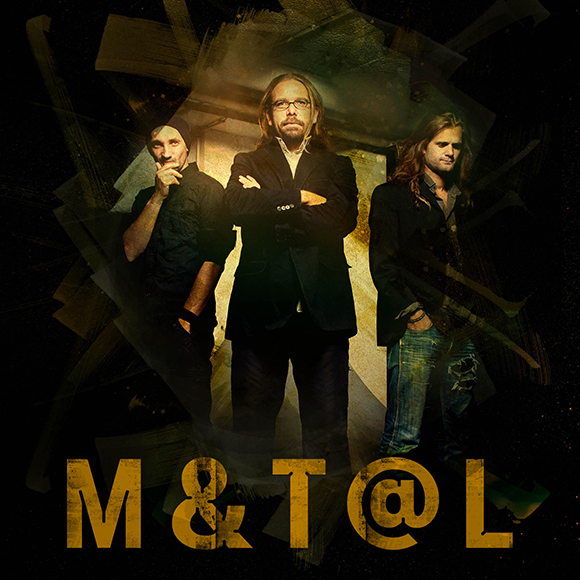
With each of these past 2 albums, I felt that, after each one, this would surely be my last one! It has been quite a journey, and through "PARTING SHOT"(2011), "SUBTEXT"(2014), and now "BACKLOG"(2016), I can honestly say that I feel a little closer to having completed this exploration into carving a particular musical territory that offers a perspective on just how the guitar, as I hear it and conceive of it, can be an important voice in Latin Jazz - now, and in the future.
Within the confines of a studio recording, it is much easier to to bring this all into clearer focus, but even in doing that, it is still most difficult, because I sought to retain certain key elements from the Eyewitness period of music-making, which began in the '80s, and embraced two more decades after that. Perhaps, "PARTING SHOT" was my most noble attempt to do that, because you heard the inclusion of both Anthony Jackson and Manolo Badrena and a song selection that included almost all original music. It should be mentioned that the presence of a keyboard was only on 1 tune, and the guitar performed virtually all the essential tasks. With "SUBTEXT," gone were Jackson and Badrena, and, of the 10 song package, only 3 were originals, and the role of the keyboard, and Rob Mounsey took on far greater importance.
Now, we have arrived at "BACKLOG," and there are no original songs at all, only interpretations of favorite songs of mine from the great Jazz catalog, 2 standards, and the inclusion, for the first time, of an R&B classic, with Latin leanings, from the great Stevie Wonder.
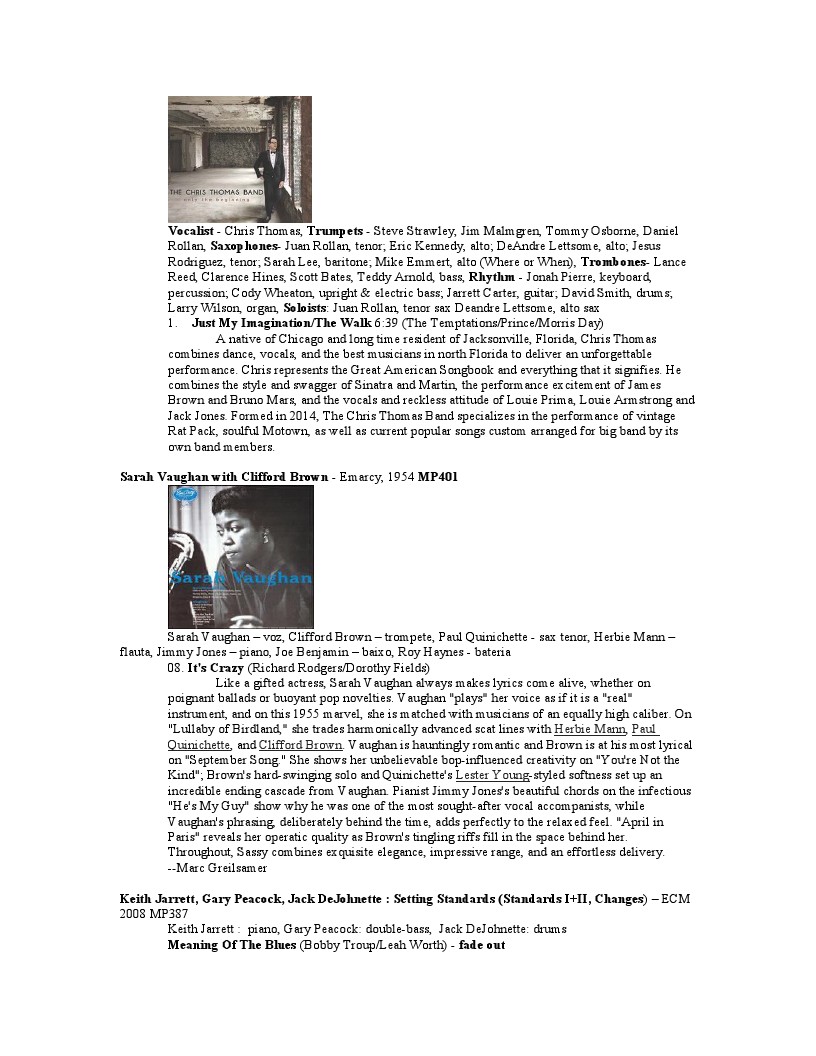
 Throughout it all, the presence of Marc Quiñones and Bobby Allende has remained constant over the 3 albums, and for the last two, their brother in arms, Rubén Rodríguez has become a fixture on both Baby Bass and Electric Bass. As it drew nearer and nearer to actually coordinating the rehearsals and the recording sessions, I had little doubt that Dennis Chambers would join us again to complete the cycle. But, no matter how hard we tried to make this happen, with everyone together at the same time, on the same days, the various schedules would not allow it to happen, and with great sadness, I had to let go of the idea that Dennis would be there with us.Rob Mounsey Ruben Rodriguez Steve Khan There wasn't much time to make an informed decision about what I felt would be the right direction to go in the choice of a drummer, but, after carefully considering all the elements that I feel that I need from that instrument - also, not often an integral part of Latin music - I felt that Mark Walker would be the best choice for the music. Lucky for us all, Mark had a small window in his busy schedule and things worked out.
Mark and I have not really played together all that much but we did do some work together with the Caribbean Jazz Project, and he did a great job back then between 1999-2002. Of course, many music fans are familiar with Mark's playing through his ongoing work with Paquito D'Rivera and, one of my favorite groups of all time, Oregon. When I wrote about "SUBTEXT" in 2011, I spoke at length about Mariana Ingold and Kit Walker, no relation, and how their song, "Vuelo" had touched me. Guess who played drums on that tune? Yes, Mark Walker!!! Though "Vuelo" is musically unrelated to what we were about to do, his sensitivity to that music, not to mention his big sound, convinced me that he would be the right player for this project as well.
Though both Randy Brecker and Bob Mintzer appeared on "BORROWED TIME"(2007), I had never really thought of having guest soloists on any of the subsequent recordings. However, with Randy's contribution to "Bird Food" on "SUBTEXT," that all seemed to change. So, for this new recording, as there were some excellent song options, I called upon Randy, Bob, and another old and dear friend and musical colleague, Mike Mainieri to fill those roles. Needless to say, I was thrilled to have them, and in each case, their playing was simply outstanding, to say the least. I have been a fan of the voice and singing of Tatiana Parra for a number of years now, and even though she had appeared on "PARTING SHOT," I could not be certain that she would want to be a part of the concept that I had in mind for "Catta" on this new project. Though it took some time, and some contemporary communications gymnastics, she was able to find the time to perform the complex vocalese sections for my interpretation of Andrew Hill's tune. Obviously, having these four wonderful artists on the recording gives the project scope and variety, and helps to present alternate linear colors and perspectives.
On "SUBTEXT," as there were 9 tunes in total, I suggested that, perhaps, people should try listening to the album in groups of 3 tunes at a time. For "BACKLOG," as there are 10 tunes, I tend to think that one might try breaking the album up into two halves, 5 tunes apiece. This, I believe. offers a good sense of the music in total, and gives the listeners a nice break in the middle. Again, it's just a thought, because I don't really believe that anyone is going to sit there and listen to nearly 70-minutes of music in one sitting without a break. This just does not happen in contemporary life! So, I will attempt to talk briefly about each tune though breaking the album in half as it were.
Prior to actually recording the album, I had made a series of demos for each of the tunes, and as the weeks and months passed, I began to formulate my own sense of what the most musical sequence might be for the album as a whole. Of course, as time passed, and with the input of those involved, and other trusted friends, that sequence, especially at the top, changed, and changed again. It wasn't long before I realized that Thelonious Monk's "Criss Cross" would be the best way to begin the album. Firstly, it is the most transparent and guitar-centric of all the tunes, and, in that way, draws a clear line back to "PARTING SHOT."
Apart from my love for a couple of versions by Monk himself, I have always loved the way that the great Kenny Kirkland interpreted this piece, but, I had to find a means to separate my interpretation from his - which had been done as a guaguancó. With the expert counsel and wisdom of Marc Quiñones, the piece was transformed into what you now hear. It is also most important to note that the album begins with the sound of Rubén Rodríguez' Baby Bass, which appears on 7 of the 10 tunes, and forms the overall sound of the recording. I am especially happy that the album begins by presenting wonderful solos at the end from both Bobby Allende(conga) and Marc(timbal). With that, I believe that we have given shape to what is to come.
During a 2003 European tour with Terri Lyne Carrington, Greg Osby, and Jimmy Haslip, I had the privilege of playing some of Greg's music, now, "Concepticus in C" marks the 2nd of the tunes that we performed live that I have recorded. Like "Heard," which appeared on "SUBTEXT," "Concepticus" is played here as Cha-cha-cha, and anchored by Rob Mounsey's spectacular interpretation of the keyboard arrangement that I wrote for the piece. As I attempted to do with "Heard," I took Greg's brilliant melodic lines and harmonized them as I saw fit. If one knows Greg's recorded version from his own CD, "ZERO," you can hear the difference. The [B] section really had no specific written melody, so I listened to our live performance, and grafted fragments of what Greg had played onto my arrangement. As it always is for me, I could listen to how Marc Quiñones chose to interpret the [A] melody sections 1,000 times, and never get tired of it. It is, yet again, a great example of Marc's unique musicianship skills.
 For the longest time, I had felt that Ornette Coleman's "Latin Genetics" would open this album, but, as time went by, it began to slide down in the order, and eventually landed in its present spot. During the past two albums, I had hoped that we would have played something as a plena by now, but each time that I did a demo and used that rhythm from Puerto Rico, when the rehearsal came, as it did for "Bye-ya" from "PARTING SHOT," Marc said to me: "No, we're going to do it as a bomba!" And that was the end of the discussion. This time, I begged and pleaded, and he granted me my wish. Randy Brecker's appearance on trumpet is, for me, one of the true high points on the album, I just love everything that he played, and what he played served to inform my own playing as well. So much of Randy's linear style is encompassed within this particular solo. For me, it's just a classic, right down to the very end, and his final phrases over the held chord. I don't know what it is, but when non-Latinos listen to a piece like this, especially these rhythms, their first thought or vision seems to be of driving down the highway in a convertible with the top down, and heading somewhere to have a margarita, piña colada, or mojito!Randy Brecker Bob Mintzer Tatiana Parra Mike Mainieri When music writers include a perception like that in a review it is always so upsetting to me - it's just so stupid and ill-informed. I'd prefer that they would write that it made them feel like dancing, that would be much more appropriate. So, knowing that I might be facing something like that, I wanted to move this piece down a bit in the order.
I hadn't recorded a tune of my father's, Sammy Cahn, since "You're My Girl" appeared on "BORROWED TIME," but for some reason, "Our Town" had been in my thoughts for some time prior to selecting the music for this album. I have known this song since childhood, as it was written for the for the NBC televised version of Thornton Wilder's great play of the same name, and would star Frank Sinatra, Paul Newman and Eva Marie Saint. Ironically, the Emmy winning song, "Love and Marriage" came from that same show. But, of course, I always loved the theme song, and the beautiful Nelson Riddle arrangement. For my interpretation, I chose to combine two rhythms, the "Afro" beat from the conga, and the more traditional bolero rhythm supplied by the timbal and maracas. The finale of the piece goes into a cha-cha-cha. Rob Mounsey's gorgeous orchestration and arrangement, added to my original sketch, is really the fulfillment of wonderful dream about what this piece could be.
Since the mid-'60s and my college years at U.C.L.A., I have always loved Bobby Hutcherson's "HAPPENINGS" album, and in 1974, I had recorded his beautiful composition, "Bouquet" on the duet album "TWO FOR THE ROAD" with Larry Coryell. The uptempo "Head Start" was to be the first of two songs drawn from this great old Blue Note album. To feature another vibraphonist seemed like such an ordinary idea to me that, at first, I thought about a couple of other options, but, when it came down to it, I wanted to have Mike Mainieri play on this one, and that choice could not have turned out any better.
Again, as a group, we return to a more transparent texture with the vibes and the guitar at the melodic and harmonic center. Though both are certainly chordal instruments, there really is no comping per se behind either solo, which allows for greater harmonic freedom. In essence, you have the lines of the soloist in a dialogue over Rubén's electric bass lines. As we arrive at the reprise of the opening montuno, we have the first of Mark Walker's fantastic drum solos.

The second half of the album, if I might be allowed to refer to it this way, begins with another Bobby Hutcherson tune from the "HAPPENINGS" album. This one was titled "Rojo," and I had been yearning to record this song for years, I just couldn't figure out a way to do it without employing a keyboard. I had written an arrangement of it for the Caribbean Jazz Project, thinking that the vibes and guitar could cover all the complex clusters, which originally came from Herbie Hancock's brilliant acoustic piano treatment of the melody sections. But, that arrangement never saw the light of day. So, I decided to do a more Latin-oriented treatment for this recording, and knew that all of the keyboard parts would be handled perfectly, and with loving care by Rob Mounsey. Because of the density of the clustered voicings, I felt that any electric guitar sound would make a wash out of it all, and so I decided that I was going to play my Martin MC-28 steel-string acoustic as the principal melodic voice. This is what you now hear. The long acoustic guitar solo is followed by terrific solos from both Bobby Allende(conga) and Marc Quiñones(timbal) - all leading to a reprise of the melody, and a final montuno ride-out with Mark Walker soloing all the way.
A second Ornette Coleman tune, but from a very different time period in his visionary career, "Invisible" comes from one of his earliest albums, "SOMETHING ELSE!!!"(Contemporary) 1958, and it is an album that featured a piano. Each time that I have heard this tune, I have felt that Ornette's playing, and concepts were a bit constricted by having the chords, and the chord changes applied so literally. There seemed to be the absence of space. So, in this interpretation, though there are chord changes to be sure, both Bob Mintzer and I play pretty much unaccompanied, and that's really how I like it. In the end, this is much more in the spirit of the Ornette that we have all loved so much! As I wanted to have another "voice" on the recording, the wonderful sound and playing of Bob Mintzer on tenor sax was the perfect choice for me, and, for this tune. It is yet again, the expression of another old and treasured musical and personal friendship.

On each of the recent recordings since "BORROWED TIME," I have tried to do something new and interesting with the Afro-Cuban 6/8 feeling. For this album, after a great deal of thought, I wanted to see if I could actually do a ballad, retaining its beauty while having all the expected rhythms from the mambo bell and conga playing.
Those elements would be joined by Rubén's baby bass, but Mark Walker and I would be, in essence, playing in 4/4(in two) against that.Bobby Allende Marc Quiñones Mark Walker To put all of this into practice, I chose Johnny Mandel's gorgeous song "Emily," which I have adored for the longest time. As it is often played as a ballad in 3/4, I knew that it would fit perfectly with the rhythmic concept that I had in mind. I have always been especially fond of the Paul Desmond interpretation with a wonderful arrangement by Don Sebesky, and the omnipresent piano of Herbie Hancock from his 1968 album titled, "SUMMERTIME." I just had to find a key that would feature the guitar in the nicest possible register. I decided that, for me, Bb major would be the best of all the options.
During the solo section, I also felt that a brief modulation might be just the perfect touch, and after one failed attempt, I came upon a transition to E major for 16 bars, and that proved to be just right. as it took me away from all the areas that the tune had previously touched upon. Though I had laid out some basic string pads à la Clare Fischer, Rob Mounsey turned that foundation into something far more beautiful than I could ever have imagined. Now, this is one of my favorite pieces on the entire recording.
"Go Home" is a Stevie Wonder tune that I have always loved since first hearing it on his 1985 album, "IN SQUARE CIRCLE"(Motown). It is so fascinating to me how so many great musicians and composers relate to their own sense of what Latin music is, or might be. The cowbell patterns, if you can call them that, that appear within Stevie's original version have nothing at all to do with any of the classic mambo bell or cha-cha bell patterns known to most musicians and fans of the genre. So, given that, I felt that I could do a loving interpretation of the tune, but with a more authentic approach from the rhythmic side of things.
For this interpretation, we decided to alternate between the Oriza rhythms, and what Marc Quiñones describes as a double-bell pattern for most of the body of the song. I had never really heard something like this until, totally by accident, I saw the YouTube video of Marc demonstrating his Pearl salsa bell. Along the way, I wrote out a couple of reharmonizations of one of the contrasting sections to the main melody, and again, those sections were performed to perfection by Rob Mounsey. This is also the only tune on this recording, and since "Zancudoville" from "PARTING SHOT," where I played played with a very particular kind of 335 overdrive sound - one which I love very much because of the nasty, wicked feeling that it conveys. This is the first time in ages that I can recall covering an R&B tune from the past.

"BACKLOG" closes out with my interpretation of pianist/composer Andrew Hill's "Catta," which first appeared on Bobby Hutcherson's 1965 album, "DIALOGUE"(Blue Note). Many years later, I lent that very LP, along with an extra LP copy that I had of Cal Tjader's "SOUL BURST" album from 1966, to Don Grolnick. It wasn't long thereafter that "Catta" became the opening track for my dear friend's "MEDIANOCHE"(Warner Bros.) album from 1996. For me, that version became a classic, as it featured: Dave Valentín; Michael Brecker; Mike Mainieri; Andy González; Milton Cardona; Steve Berrios; and Don Alias. In order to completely separate my interpretation of this tune from Don's, the focus went from the keyboard to the steel-string acoustic guitar, as I hoped to add a greater sense of romance and mystery to the piece. I then composed several ensemble sections, with lush harmonies, influenced by Clare Fischer, and hoped to add the beautiful voice of Brasilian singer, Tatiana Parra to sit on top of these harmonies.
Though within the arrangement there is a specific timbal solo, the design of the arc of this piece was to feature the brilliance of Marc Quiñones, and how he spontaneously interprets the written figure. His performance shows him as the spectacular musician that he is!!!
For me, and for widely varied reasons, all the albums beginning with "THE GREEN FIELD"(2005) have been exceptionally difficult on all levels to get done. In that regard, "BACKLOG" was no different. I began with one idea in mind about how I thought it best to bring that concept into reality, and some of the decisions that I had made initially just did not turn out as planned! I never had to actually "go back to the drawing board" and start all over again, but this recording had its own path. By the end, all the stress and the tension really wore me down to a point where I think that I could have easily been cast as an extra on the popular TV show, "THE WALKING DEAD." Still the prime directive is to always finish what you start. And once you take your first steps down this path, finishing, and finishing well is the only acceptable result.
As it always should be, I am simply so very grateful for the musical and personal contributions from: Rubén, Marc & Bobby, and Mark Walker, the core group for the recording. Then there are the immense contributions made by Rob Mounsey! Finally, for his Herculean efforts to craft the overall sound of the recording, I'm so thankful that I had James Farber by my side to serve as the sonic/audiophile voice of reason. Any recording should always be a team effort, but this one was really just that, and the contributions that everyone made can never, in my eyes, be minimized!!!
01. Criss Cross (Entrecruzado) (Thelonious Monk)(5:45)
02. Concepticus in C (Greg Osby)(5:38)
03. Latin Genetics (Genética Latina) (Ornette Coleman)(8:05)
04. Our Town (Nuestro Pueblo) (Sammy Cahn-Jimmy Van Heusen)(7:10)
05. Head Start (Ventaja) (Bobby Hutcherson)(5:56)
06. Rojo (Bobby Hutcherson)(6:40)
07. Invisible (Ornette Coleman)(8:26)
08. Emily (Johnny Mandel-Johnny Mercer)(6:01)
09. Go Home (Vete a Casa) (Stevie Wonder)(7:53)
10. Catta (Andrew Hill)(8:29)
Steve Khan: guitar
Rubén Rodriguez: baby bass, electric bass
Mark Walker: drums
Marx Quiñones: timbales, bongo, percussion
Bobby Allende: conga, bongo
Randy Brecker: trumpet (3)
Bob Mintzer: tenor sax (7)
Mike Mainieri: vibes (5)
Rob Mounsey: keyboards (2, 6, 7, 9) orchestrations
Tatiana Parra: voice (10)
Catta







 Throughout it all, the presence of Marc Quiñones and Bobby Allende has remained constant over the 3 albums, and for the last two, their brother in arms, Rubén Rodríguez has become a fixture on both Baby Bass and Electric Bass. As it drew nearer and nearer to actually coordinating the rehearsals and the recording sessions, I had little doubt that Dennis Chambers would join us again to complete the cycle. But, no matter how hard we tried to make this happen, with everyone together at the same time, on the same days, the various schedules would not allow it to happen, and with great sadness, I had to let go of the idea that Dennis would be there with us.Rob Mounsey Ruben Rodriguez Steve Khan There wasn't much time to make an informed decision about what I felt would be the right direction to go in the choice of a drummer, but, after carefully considering all the elements that I feel that I need from that instrument - also, not often an integral part of Latin music - I felt that Mark Walker would be the best choice for the music. Lucky for us all, Mark had a small window in his busy schedule and things worked out.