Showing posts with label Tiger Turn. Show all posts

Friday, February 25, 2022

NEW RELEASE: Kristen Lee Sergeant’s ‘Falling’ is due out February 25, 2022 via Tiger Turn

Kristen Lee Sergeant presents magical concept album ‘Falling’ due out February 25, 2022 via Tiger Turn

Release show at Joe’s Pub on March 31, 2022


Tiger Turn Productions is delighted to announce the February 25, 2022 release of Falling, a new album by effervescent vocalist Kristen Lee Sergeant.  This wide-ranging new release further enhances the singer’s well-earned reputation for artistic versatility; here, she combines the roles of vocalist, composer, artist and curator in a striking departure from her previous two critically acclaimed albums. Accompanied by Jeb Patton (piano), Hannah Marks (bass), Jay Sawyer (drums), Jody Redhage Ferber (cello) and Ted Nash (soprano saxophone), Sergeant surrenders herself entirely to the concept of ‘falling’ in a daringly creative leap of faith. 

Based in New York City, both her debut and sophomore releases (Inside Out and Smolder) were awarded DownBeat Magazine ‘Editor’s Pick’ designations and she was praised for “moments of engaging drama, whether she’s seductively sliding into a note with a near-whisper, delivering a breathy revelation or belting out a lyric with full-throated muscularity”. That variety of musical color derives from Sergeant’s rich tapestry of influences that stretch far across artists (Dianne Reeves, Judy Garland, Joni Mitchell and Fiona Apple) and art forms (jazz, theater, opera and 1970s pop). 

Falling, her third studio album, sees a change of direction as Sergeant revisits her formative feel for musical drama. A wholly-immersive experience, Falling is a full-bodied concept album that brings listeners on an extraordinary musical journey, touching on numerous emotional high points along the way. Informed by the precarious times we’re in, but never bogged down by it, Sergeant’s latest is an exploration of the feeling, the state, and even the mythos surrounding the act, and the gravity, of ‘falling’. 

The aptly titled “Let’s Fall” sets the scene, as Sergeant drops headfirst into a dusky night-time landscape full of nocturnal thrills. It flashes through vaudevillian chansonnery and bristling quintet textures, where Patton emerges as a stellar soloist. Sergeant’s natural penchant for storytelling appears on the mythical cathartic journey of  “Sisyphus”, where she tells the age-old tale of “pushing that rock up that hill”. Perpetual resistance is eventually overtaken by a sense of acceptance, as the tune settles into a bobbing, lilting feel that transports the musicians higher and higher.

Sergeant composed “Infinity Blues” after meeting an astronaut, and this piece begins its flight with Nash’s searching soprano solo. “Swing doesn’t have to be retro,” Sergeant notes. She sings, “I’ve got the infinity blues / I want no weight in my shoes”, epitomising the song’s essential, existential drifting through life.
Kristen Lee Sergeant by Jordan Frey

Chiaroscuro” is an allusion to Renaissance art captured in music, with well-crafted counterpoint featuring starkly lit moments that wax and wane throughout. Next up, the ingenuity of Sergeant the lyricist comes to the fore as “Honey” squeezes out a stream of rich, gooey imagery over a classic get-up blues, where bassist Hannah Marks really lays it down. 

More strong imagery flows out of the ensemble on the fluttering “Birdsong”, as Sergeant warns us of the dangers of settling for illusory comfort when freedom is still an option. “The prize isn’t worth the game,” Sergeant reflects on “Better Off”, but this is an altogether more personal affair, that’s fleetingly brief yet packed with lingering sentiment. “Aren’t I naked enough for you?” she sings, pointedly.

Myths and legends abound on this record – next is the bold, dramatic “Orpheus”. What might Hades sound like? Drummer Jay Sawyer gives us some sort of answer, grooving through triple time into a head-nodding pocket surrounded by Greek chorus-style vocal arrangements. “Autumn Nocturne” then takes it down a notch in a cool, elegant presentation of Sergeant the vocal technician. The energetic span of “Black Magic” is fuelled by Nash and Sergeant’s warring trades and vaults into unhinged surrender. 

With elements of jazz, musical theater, chamber music and 1970’s pop dotting her vast musical landscape, Sergeant paints a vivid musical portrait that is easy to get lost in. “From Greek myths to outer space, I hope to bring listeners on a rewarding and thoughtful journey in sound,” Sergeant reflects. “And I get to be their Virgil, stumbling down ahead of them.” Conceived as a rich multidisciplinary work, partnered with the recording is an immersive conceptual concert, scheduled to take place on March 31 at Joe’s Pub within The Public Theater in New York City.

1. Let’s Fall
2. Sisyphus
3. Birdsong
4. Chiaroscuro
5. Honey
6. Infinity Blues
7. Better Off
8. Orpheus
9. Autumn Nocturne (Josef Myrow, Kim Gannon)
10. That Old Black Magic (Harold Arlen, Johnny Mercer)

All music by Kristen Lee Sergeant unless otherwise noted

Kristen Lee Sergeant (vocals, song, arrangement)
Jeb Patton (piano)
Hannah Marks (bass)
Jay Sawyer (drums)
Jody Redhage Ferber (cello)

and Ted Nash (soprano saxophone)

Friday, August 27, 2021

OUT FRIDAY: Carlos Henriquez's THE SOUTH BRONX STORY via Tiger Turn

Virtuosic Bassist Carlos Henriquez pays tribute to the South Bronx on The South Bronx Story, His Revelatory New Album due out August 27th, 2021 via Tiger Turn

“The most important Latin jazz artist in New York City today, the heir to the legacy of Tito Puente.” New York Latin Culture
Tiger Turn is delighted to announce the release of The South Bronx Story, a bold multi-movement work by celebrated bassist and composer Carlos Henriquez. Due out on August 27, 2021, this career-defining release is a retrospective of the social history of the South Bronx, and draws from Henriquez’s personal Puerto Rican heritage. For the occasion Henriquez has enlisted an elite ensemble of musicians for the date in trombonist Marshall Gilkes, saxophonist Melissa Aldana, pianist Robert Rodriguez, drummer Obed Calvaire, trumpeters Michael Rodriguez and Terell Stafford, and percussionist Anthony Almonte as well as the multifaceted Jeremy Bosch on flutes and vocals.

Carlos Henquriez is one of the preeminent bassists of his generation. A member of the Jazz at Lincoln Center Orchestra for over two decades, Henriquez is one of the first truly bilingual musicians, in that he is a master of both jazz and Afro-Latin traditions. His upbringing in the South Bronx, a rich musical hub that boasts local legends such as Tito Puente, Eddie Palmieri, Celia Cruz, played a major role in the virtuoso’s musical and personal development. On The South Bronx Story, which is Henriquez’s third release as a leader and a follow up to his 2018 tribute to Dizzy Gillespie, Dizzy Con Clave, the bassist and composer takes listeners on a wide-ranging musical journey through his stomping grounds. This project first premiered in 2018 at Jazz at Lincoln Center to wide acclaim. 

“[On The South Bronx Story], I am using my music, experience, and heritage as a Puerto Rican growing up in the Bronx to tell a story that looks back and forward,” says Henriquez. “Jazz is American, born out of the melting pot of our Afro-American experience. And in the American spirit, jazz has adapted with different cultures, cities, people, and places and become an expression of one’s identity. This project represents just that–the tragedy, violence, and history isn’t over, but there is hope in the future. Music, dance, and the arts can bring that all together and transcend to showcase a common humanity.”

On The South Bronx Story, Henriquez takes inspiration from personal experience and history. Movements like “Soy Humano” (I Am Human) speaks to the obstacles Henriquez and family faced dealing with the housing system and financial turmoils growing up, while “Guajeo De Papi” is a testament to fatherhood in honor of his father, Jorge Henriquez, who provided for his family even during tough times. “My dad is loved by many and a pure example of how a man can be defined. I am so proud of him and truly honored to have written this tune for him,” Henriquez shares. Another standout, the salsa-tinged “Hydrants Love All”, was written with Henriquez’s brother in mind, and the summer days they shared together playing amongst the fire hydrants on the hot Bronx streets. 
Other tracks ingeniously reference significant people as well as events that created the diverse culture of New York’s South Bronx. Movements include “Black Benji”, a piece inspired by Cornell Benjamin, who is credited for promoting peace among the gangs in the Bronx; “Mama Lorraine” about the life and work of activist Lorraine Montenegro who, along with Evelin Lopez Antonetty, founded the United Bronx Parents but tragically died in Puerto Rico in the aftermath of Hurricane Maria; “Borough of Fire” for the devastating burnings of low income buildings during the 1970s; and “Moses and the Cross” about the divisive legacy of Robert Moses and the construction of the Cross Bronx Expressway.

The album features many moments of inspired soloing. On “Black Benji”, Melissa Aldana gets plenty of room to stretch, showing absolute command of the horn. Marshall Gilkes and Terell Stafford trade colorful phrases over the form in “Guajeo de Papi”, while Michael Rodriguez spins many beautiful lines with a gorgeous Flugelhorn tone on “Mama Lorraine”. Throughout, the versatile Jeremy Bosch (widely known as one of the lead singers in the GRAMMY winning ensemble Spanish Harlem Orchestra) pivots between burning on the flute and singing; particularly his soneo on the mambo section of “Moses on the Cross” recalls the great singers of the Fania era. 

This seamless blend of lineages into a cohesive whole underscores the massive impact of the Puerto Rican diaspora in the music and culture of the borough, reminding listeners that Latino culture cannot possibly be separated from New York culture, and Bronx culture cannot be separated from Jazz. “Being a born breaded Bronxnite, I have seen first hand the values and instincts which allowed me to understand the family of my community. Integration, which was the key growing up for me, was a cultural aspect that made me appreciate those I grew up playing with. As we listen to the different songs on this project you will see how influential the streets have proven to be for me.” 

1. The South Bronx
Featuring Melissa Aldana [Tenor Sax], Terell Stafford [Trumpet], Anthony Almonte [Congas], Obed Calvaire [Drums]

The first song, The South Bronx expresses the soul of the place. Saxophonist Melissa Aldana plays melodies that encompass the grit, the glory, and the groove of my childhood journey.

2. Hydrants Love All
Featuring Jeremy Bosch [Vocals], Michael Rodriguez [Trumpet] & Terell Stafford [Trumpet]

I wrote Hydrants Love All in remembrance of the many days of joy my brother and I experienced playing in the water from open hydrants. When the heat of summer was most overbearing, those hydrants brought the neighborhood together. We played a competitive game with Goya bean cans with both bottom and top cut out. Whoever could funnel the most water was crowned king of the hydrants. Something so simple provided so much fun…there was never a single problem or fight when we were under those waters; we felt the love that surrounded us. And even though the structural challenges that made life so much harder in The South Bronx are still the norm, these experiences gave me the insight, optimism, and energy to reach higher.

3. Boro of Fire
Featuring Marshall Gilkes [Trombone], Michael Rodriguez [Trumpet], Anthony Almonte [Congas], Obed Calvaire [Drums]

Boro Of Fire is my take on an important event that gave The South Bronx its nickname, “The Burning Boro”. Greedy landlords and corrupt political insiders aided and abetted the burning of buildings, and the fire department had no choice but to let them burn. However, amidst all of this corruption and destruction, there was always a glimmer of hope….the people. They continued fighting to make life as beautiful and hopeful as it could possibly be. I enlisted the horns of Terrell Stafford, Marshall Gilkes, Jeremy Bosch, Melisa Aldana, and Michael Rodriguez to create the discordant sounds of fire trucks, police sirens, and general pandemonium. They each play improvised solos and written parts that reflect the chaos and resolve, evoking characteristic sounds of the streets.

4. Moses on the Cross
Featuring Melissa Aldana [Tenor Sax], Jeremy Bosch [Vocals], Terell Stafford [Trumpet]

Moses On The Cross is a perspective on The Cross Bronx Expressway and its creator Robert Moses. Like many urban renewal programs of that time, The Cross Bronx “unified” New York by destroying ethnic neighborhoods and deepening the racial and economic divide between citizens. As a result, property values on the north side of the highway soared and those on the south side declined. In my ‘hood, we all hated this freeway because it destroyed culture, undermined working-class people, and created greater inequality….and it still does. May Robert Moses live on in infamy for this civic crime.

5. Momma Lorraine
Featuring Michael Rodriguez [Flugel Horn], Robert Rodriguez [Piano]

Mama Lorraine is inspired by Lorraine Montenegro. She was the daughter of Evelina Antonetty, who was the founder of “The United Bronx Parents.” This organization advocated for quality social services and helped single mothers by providing drug rehabilitation and childcare. Her daughter Lorraine became a fighter for all the people of The South Bronx. Lorraine’s name on the streets was “La Americana.” Even gang leaders listened when she spoke. In the documentary “Rabble King” from the 1970s, she discussed neighborhood issues with gang members. Watching it reminded me of how much I loved her, and of how much she and her mother assisted members of the community through dire times.

In researching for this piece, I discovered that Lorraine is the mother of my hero and South Bronx poster child, Joe Canzo, Jr. He is a well-respected firefighter and photographer who documented the South Bronx through the ’70-’80s. His father, Joe Sr. was Tito Puente’s right-hand man and was a staple of our culture. Joe Sr. is a true historian of Afro Cuban and Afro Puerto-Rican music as well as a guiding light for anyone wanting to understand the Mambo Era in NYC. Joe Jr. was inspired by his dad to love the Arts and Hip Hop.

In 2017, we lost Lorraine due to hurricane Maria which devastated Puerto Rico. Her quick action and love for The South Bronx communities will last forever. I’ve composed a lyrical ballad for her which is played majestically by Michael Rodriguez & Robert Rodriguez. This story would be incomplete without a proper testament to her. (Thank you, Lorraine.)
6. Soy Humano
Featuring Jeremy Bosch [Vocals], Michael Rodriguez [Trumpet]

Soy Humano (I am Human) is about the obstacles my family faced dealing with the twin turmoil of not enough money and a broken housing system that gave greater support to families with absent fathers. We lied to survive and were “fatherless on paper.” I came to realize that the system was designed to reward families for being broken and that there were many strange forms of ‘assistance’ designed to reinforce the feeling that we were inferior. Over time, the negative effects of these efficient systems took a crucial toll on us. I can still vividly recall waiting with my dad in long lines to pick up a box of government cheese. Luckily, with a father who served in Vietnam, a mother who was an O.T.C teacher, and a brother who danced his tail off, I was given a strong belief in myself and in the human value we all have. That feeling is in every note of this suite.

7. Black (Benji)
Featuring Melissa Aldana [Tenor Sax], Carlos Henriquez [Spoken Word]

Black ( Benji ) The South Bronx Story remembers Cornell Benjamin, a member of the street gang, The Ghetto Brothers. “Black Benji” was his nickname. Amongst the gangs, he was the sole peacemaker who would call for some sort of unity when things got out of hand. On December 21, 1971, while attempting to bring peace with a rival gang, Cornell was murdered. This caused a chain reaction of vengeance across all of the gangs. His death would eventually lead to a major meeting of gang leaders at the Boys and Girls club on Hoe Avenue. That night, a groundbreaking truce was struck. We began to see a profound unity between Latinos and Blacks on our streets.

Tenor saxophonist Melisa Aldana plays a hopeful melody to evoke the feeling of unity and resolve. It reflects the resilience of South Bronx natives during a time of uncertainty.

8. Guajeo De Papi
Featuring Carlos Henriquez [Bass], Jeremy Bosch [Flute], Terell Stafford [Trumpet], Marshall Gilkes [Trombone], Robert Rodriguez [Piano]

El Guajeo De Papi is another testament to fatherhood. My father, Jorge Henriquez, taught me what it means to provide when times are rough. He walked those tough lines that a father is sometimes forced to walk. He was a pure example of manhood and was loved by many. His extreme cool during tight times for our family showed me how to face pressure with grace. I am so proud of him and truly honored to have written this for him. He was one of those rare dads who consistently figured out a way to provide in spite of relentless uphill battles.

9. Fort Apache
Featuring Michael Rodriguez [Trumpet], Melissa Aldana [Tenor Sax], Robert Rodriguez [Piano], Anthony Almonte [Congas], Obed Calvaire [Drums]

Fort Apache was written to honor the Gonzalez Brothers, Jerry, and Andy. Both made enormous contributions to the worlds of Jazz and Latin Jazz. My musical concept on this entire recording is an extension of their musical innovations. Jerry and Andy each set a path for many young musicians of all backgrounds who continue to search for that very essence that I am reaching for. This album and all of my music will forever have some percentage of their musical DNA.

10. Hip Hop Con Clave
Featuring Jeremy Bosch [Vocals], Robert Rodriguez [Piano], Anthony Almonte [Congas], Obed Calvaire [Drums]

Last but not least, Hip Hop Con Clave, was written to acknowledge a form of expression that was born in the ’70s In the Black and Latino communities of The South Bronx…..Hip Hop. My lyrics and music are in the spirit of the original Hip Hop culture (before it took over mainstream American popular music). In those early days, block parties all over The South Bronx with Latinos and Blacks provided an opportunity for different subcultures to come together. Though violence and discord got all the attention, in real life, people expressed values of unity, freedom, and righteousness through love, family, and the community at these parties.

On this tune, we hear Jeremy Bosch express his Pregones about the subjects at hand. We also get to hear the vibrant rhythms of Obed Calvaire and Anthony Almonte, as they support the iconic Hip Hop Basslines and melodic statements that shook the ’70s in The South Bronx (and will continue to echo for years to come).

This suite of pieces is incredibly personal to me and it represents only the beginning of the building blocks of my musical journey. I am so proud to be from The South Bronx!

These songs were first performed live at the Appel Room at Jazz at Lincoln Center on November 16 and 17, 2018. I want to express my deepest gratitude to Jazz at Lincoln Center for supporting me in my career as a member of the Jazz at Lincoln Center Orchestra and especially for commissioning this composition.´

Friday, May 7, 2021

NEW RELEASE: Glenn Close & Ted Nash Present TRANSFORMATION – New Album out May 7, 2021 via Tiger Turn

Iconic Emmy & Tony Award Winning Actress Glenn Close and Grammy Winner Ted Nash Present Collaborative Album Transformation: Personal Stories of Change, Acceptance, and Evolution

Due out on May 7, 2021 via Tiger Turn   

Featuring special guests Wayne Brady, Amy Irving,

Matthew Stevenson, Eli Nash and the Jazz at Lincoln Center Orchestra with Wynton Marsalis

Tiger Turn is proud to announce the release of Transformation: Personal Stories of Change, Acceptance, and Evolution, a landmark recording of reedist Ted Nash and actress Glenn Close’s star-studded, multidisciplinary masterwork. Featuring Wayne Brady, Amy Irving, Matthew Stevenson, Eli Nash,  and the Jazz at Lincoln Center Orchestra (JLCO) with Wynton Marsalis. This groundbreaking new release will be available as a CD and digitally on all platforms on May 7, 2021. 

Nash and Close know a thing or two about transforming the stuff of life into art. Close, immortalized by all-consuming, Oscar-nominated roles in Fatal Attraction and Dangerous Liaisons, is just as much a cultural touchstone for children of the ’90s for playing the delightfully sinister Cruella de Vil of 101 Dalmatians. Nash, long a JLCO woodwinder, has been no less brilliant as a total immersionist, earning a reputation as a prolific composer for taking compelling subject matter and transforming it into arresting musical narratives. His last two JLCO-commissioned suites for big band—Portrait in Seven Shades (2010) and Presidential Suite (2016)—met with sterling results. Among the luminaries lending their voices to that latter, Grammy-winning project was Glenn Close.

With Transformation, Close has returned for another collaboration with Nash, this time taking on a co-leading role, curating the literary source material for accompanying spoken word performances and voicing some of it herself. The chosen pieces explore the many facets of transformation in the tangible and intangible sense. “Transformation is the highest expression of change. Transformation dictates a dramatic alteration of form or character — sometimes both. The highest compliment one can give a piece of music, or writing, is that it has been transformative for the one who experiences it,” comments Nash. 
About Transformation: 

From the start, Close’s literary selections prove to be compatible partners for Nash’s compositions. Actor and comedian Wayne Brady introduces “Creation, Part I” by reciting the opening lines to English poet Ted Hughes’ Tales from Ovid. Brady’s voice is so authoritative, it’s as though he’s relating Genesis as a first-hand account. Close, no less divinely commanding herself, joins Brady in alternating verses, while the orchestra colors the readings with expressionism steered by pianist Dan Nimmer and bassist Carlos Henriquez and punctuated by short bursts from Sherman Irby on alto saxophone and Wynton Marsalis on trumpet. 

“Creation, Part II” moves beyond meditations on man’s creation to his evolutionary journey, the beginnings of which are interpreted here as endearingly unsteady. Musically, this dynamic is communicated with clarity and levity, as drummer Obed Calvaire’s brushes serve as a foil for Paul Nedzela’s bass clarinet and Henriquez’s bass, which play the tune’s playfully mischievous opening theme in unison. The entrance of Chris Chrenshaw’s trombone announces a transformation is underway—from gawky and lovable to industrious and self-assured. By the time Nedzela enters with a baritone saxophone solo, man knows it’s the man. When, to close, there’s a restatement of the opening theme, the notes are the same but the music projects a more aggressive attitude; Calvaire’s ditched the brushes for sticks. 

The next two tracks, “Dear Dad/Letter” and “Dear Dad/Response” make for an emotionally affecting sequence. First, Nash’s son Eli, backed by the orchestra, reads the letter he wrote several years ago, when he first came out to his father as a transgender man. “I am not changing me,” Eli says, “just my physiology, just how people see me.” Nash’s response, with an opening vamp reminiscent of Herbie Hancock’s “Maiden Voyage,” is rife with pride and unconditional love. But words do not adequately capture Nash’s depth of feeling; that’s the music’s job. 

Languid and hypnotic piano from Nimmer introduces Nash’s interpretation of poet Conrad Aiken’s Preludes for Memnon. Close’s voice is flanked by Nimmer’s piano and Irby’s alto flute as she reads an excerpt about the timeless and inevitable cycle of destruction and generation of natural life. Irby and trumpeter Ryan Kisor lead woodwind and trumpet sections that recreate the imagery of the reader’s mind’s eye, while quartet work from Nimmer, Enriquez, Calvaire and Kisor leads the tune beyond the text’s blast radius. 

Next is “One Among Many,” a composition that accompanies the story of formerly imprisoned political radical Judith Clarke. Calvaire’s locomotive-sounding brushes and the on-the-move quality of Henriquez’s bass ostinato, followed by low woodwinds and Nimmer’s balletic piano, conjure the aural symphony of the subway system and frame Clarke’s words of gratitude—spoken by actress Amy Irving— for the mundane freedoms taken for granted until they’re taken away. Still, her crime and its fallout continue to haunt her; she yearns to be fully transformed. The orchestration contemplates being physically free yet still seeking psychological and emotional liberty, with solos from Nimmer and Elliot Mason on trombone before a drum solo from Colvaire links the composition’s cocktail of emotions together.

 On “Rising out of Hatred,” disc two’s opener, a noirish orchestration punctuated by piercing, plaintive calls from Tatum Greenblatt’s muted trumpet serves as score to the story of two college kids—one an observant Jew, the other the heir to a prominent white nationalist family— able to forge an unlikely friendship borne from their shared humanity. 

Brady returns as author and spoken-word performer on “A Piece by the Angriest Black Man in America (or, How I Learned to Forgive Myself for Being a Black Man in America).” Accompaniment is limited primarily to Henriquez and Calvaire who cultivate a coffeehouse poetry-slam vibe. Though carefully timed horn bursts, feathery dustings of flute riffs, and an abridged Brady rendition of an old Chaka Kahn tune find their way in here, as Brady reveals the tenuous relationship with his mother Tessa, and recounts her calling him an “ugly Black [expletive].” 

Ultimately forgiving his mother, Brady concludes by talking about how fatherhood has led him to prioritize forgiveness—of himself as well as others—for the sake of becoming a better role model. It’s on that note that we transition to “Forgiveness,” Nash’s fully instrumental interpretation of the concept. Marsalis, Nimmer, and Nedzela are featured generously here, on what is perhaps Transformation’s most symphonic piece, characterized by distinct movements, as forgiveness is not something one arrives at instantly but, instead, incrementally, in stages. 

Transformation closes with “Wisdom of the Humanities” and “Reaching the Tropopause.” On the former, Irving returns to read words written by biologist E.O. Wilson that offer a stern warning to humans. Wilson marvels at mankind’s but condemns “greed and ignorance” for threatening the environment, calling for a “new transformation in the human status” if we are to save our planet. The latter, borrowed from Tony Kushner’s Angels in America, sees both Brady and Close fittingly returning to lend their voices to the program’s culmination. Meanwhile, Nash’s musical response brings the words to life. Propelled by the rhythm section, Marsalis and Goines soar above the rest, first with individual solos on trumpet and tenor sax, respectively, then trading licks with each other before a dramatic ending.

It’s the type of ending that provides energy as well as the emotional and intellectual heft. It also motivates in a very immediate sense, making for a timely mixture of qualities to aid in the transformations we all seek this year. 

NEW RELEASE: Renowned Violinist Alí Bello To Release ‘Inheritance’ Leading the Sweet Wire Band, New Album Due Out May 7 via Tiger Turn

Renowned Violinist Alí Bello Presents Inheritance, His New Album Leading the Sweet Wire Band

Featuring special guests Regina Carter, Jaleel Shaw, Jeff Lederer & Jorge Glem

Due out May 7, 2021 via Tiger Turn

Tiger Turn proudly presents Inheritance, the sophomore release by Venezuelan-born, New York-based violinist and composer Alí Bello. Due out on May 7, 2021, this rich new recording showcases Bello’s unique amalgam of modern jazz and musical traditions from Venezuela and the Caribbean. An entirely original set of nine compositions, Inheritance documents the dazzling compositional output of the acclaimed leader and showcases the spirited rapport of his renowned Sweet Wire Band. Featured special guests include Regina Carter, Jaleel Shaw, Jeff Lederer and Jorge Glem

A veteran of the New York music scene for over two decades, Alí Bello has become known as a musician of incredible versatility. A fixture in the emblematic bands of Johnny Pacheco and Paquito D’Rivera, Bello is also a highly sought-after sideman for artists such as Orquesta Broadway, La Típica 73, Raul Jaurena and Pedro Cortés. He can also be found on occasional stints with mainstream superstars such as Beyoncé, The Roots and Jay-Z. His Sweet Wire Band, made up of pianist Gabriel Chakarji, bassist Gabriel Vivas, drummer Ismael Baiz and percussionist Manuel Márquez have become New York City mainstays, known for their unique fusion of contemporary jazz and Afro-Venezuelan/Caribbean musical styles. Their debut release Connection Caracas – New York (Zoho Music), was released in 2013 to worldwide critical acclaim, having placed on several year-end best-of lists. Inheritance is the long-awaited follow up, and uncovers new shades of maturity and growth. Alí shares: “Inheritance is a recapitulation. A way to move forward through the lessons learned. It’s the result of conveying all the parts that make my music and create new original ideas rooted in the culture, traditions, and experiences that make me and my music as a whole”.
On Inheritance, Bello captures the essence of the music from his native Venezuela and filters it through the lens of an artist that has been deeply exposed to a broad diversity of musical styles in the United States. In his liner notes, producer Kabir Sehgal says “Inheritance is a result of  long time growth and an evolution of different styles and genres that constitute Alí’s personal musical heritage from his homeland and his career experiences.” Indeed, Bello has a profound understanding of Venezuelan musical traditions, and has equally acquired invaluable experience in some of the most iconic Salsa and Latin jazz ensembles of all time. This recording integrates those two sides of Bello’s musical artistry as well as his aptitude for production.

The music featured on Inheritance draws heavily on Venezuelan traditions, and Bello’s core group of sidemen are all versatile Venezuelan expats who are well versed in all these styles. Afro-Venezuelan rhythms from the North Coast serve as the foundation for tunes like “Kaleidoscopic Sunset” and “For all Saints”, displaying drummer Baíz’s adaptations of these rhythms in harmonious unity with percussionist Márquez who plays an array of traditional Venezuelan drums such as the Fulía, the Paila and the Cumaco, among others.

Compositions “Caracas” and “Jojo” present some of the more urban folk styles of Onda Nueva and Merengue Caraqueño respectively – styles of great rhythmic complexity that originated in the capital city of Caracas. Bassist Vivas lends the project a robust electric tone and deft precision while Chakarji plays mainly electric piano, skillfully accompanying the soloists with deft sonic choices.
Regina Carter lends her unmistakable sound to “Song To Marina”, a lush bolero track in which both violinists blend in concert, harkening back to the splendid singer duets known in the genre. In “Bello’s Blues” the close intervals of violin and soprano saxophone in the melody recall the idiosyncratic themes of Thelonious Monk. Jaleel Shaw plays a harmonically ingenious solo while the rhythm section burns on a brisk San Millan rhythm here, while Jeff Lederer shines on “Jojo”. On the Venezuelan joropo “Cepa”, Bello enlists the talents of Jorge Glem on the Venezuelan cuatro – a central instrument of this music.

The orchestration and arrangements featured throughout Inheritance reveal a new perspective on the rich folkloric musical traditions Bello draws from. The violin is an uncommon instrument in this music, yet Bello’s creativity and command places it right at home. The final three notes of the bright closer “Ousia” represent an apex of the jubilant journey of Inheritance. Indeed, Alí Bello’s latest effort is a joyous listen from beginning to end, though the naturally cheerful makeup of the music never sacrifices depth or content –  and in that balance lies Alí Bello’s great artistry.

1. Kaleidoscopic Sunset (6:41)
2. Heartbeat (7:12) (feat. Jaleel Shaw)
3. Caracas (6:07)
4. Song To Marina (5:51) (feat. Regina Carter)
5. Bello’s Blues (6:55) (feat. Jaleel Shaw)
6. Jojo (5:09) (feat. Jeff Lederer)
7. For All Saints (5:07)
8. Cepa (4:06) (feat. Jorge Glem)
9. Ousia (4:11)

All music composed and arranged by Alí Bello (AGBA Music Publishing)

The Sweet Wire Band
Alí Bello - acoustic, electric, and baritone violins
Gabriel Chakarji - keyboards
Gabriel Vivas - bass guitar
Ismael Baiz - drum set
Manuel Márquez - fulía, cumaco, clarín, paila, bumbac, congas, bongos, güira, bell, and maracas

Featured Artist
Regina Carter - violin (track 4)
Jaleel Shaw - soprano & alto sax (tracks 2 and 5)
Jeff Lederer - clarinet (track 6)
Jorge Glem - Venezuelan cuatro (tracks 6 and 8)

Guest Artist
Javier Olivencia - soprano & tenor sax (tracks 1, 7 and 9)
Jeremy Smith - maracas (tracks 3 and 8)
Manuel Rangel - maracas (track 6)
Eddie Venegas - trombone (track 7)
Bambam Rodríguez - bass guitar (track 8)

Produced by Alí Bello & Kabir Sehgal

Recorded by Ismael Baiz & Alí Bello

Friday, April 30, 2021

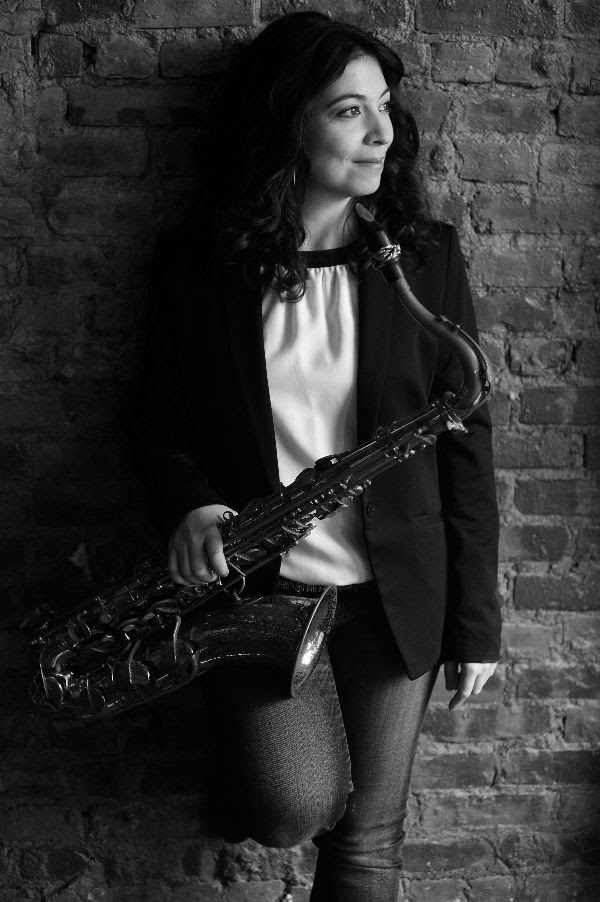
OUT FRIDAY: Saxophonist Berta Moreno's 'TUMAINI' - New Album via Tiger Turn

Saxophonist Berta Moreno Presents Tumaini
Her Genre-Defying New Album with The Afro-Jazz Soul Project

Due out April 30, 2021 via Tiger Turn 

Tiger Turn is delighted to announce the release of Tumaini, a new album by Madrid-born, New York-based saxophonist and composer Berta Moreno. To be released on all digital platforms on April 30, 2021, Tumaini is an uplifting and joyous musical journey that takes listeners on a vibrant tour of Kenya. Informed by the bandleader’s life changing experience volunteering in the Kawangware region several years ago, this heart-led new release seamlessly intertwines elements of soul, jazz and traditional African styles. 

Joining Moreno is a multicultural outfit she calls the Afro-Jazz Soul Project made up of a versatile rhythm section featuring bassist Maksim Perepelica from Latvia and Raphaël Pannier from France. This rock-solid duo hits the many rhythmic guideposts of the pieces with ease and precision while the enigmatic Argentinian percussionist Franco Pinna provides an expansive sonority to the project. The pianist and keyboardist Manuel Valera from Cuba proves to be an inspired choice as he infuses the material with lush harmony and creative improvisations. Vocalist Alana Sinkëy from Guinea-Bissau shines as the emotive core of the group, delivering beautiful renditions of the lyrical material while displaying a rich variety of surprising timbres. 

Tumaini, which is Moreno’s sophomore album,  takes inspiration from a life-changing experience Moreno had in Kenya several years back when she visited and worked with the children of the Kawangware neighborhood - one of the most economically challenged locales in the country - through the Little Ray of Hope School. The eight original compositions on Tumaini (“Hope” in Swahili”), are directly inspired by this resilient community and particularly the children, whose positive outlook and joyous attitude deeply moved Moreno. The resulting work is a powerful and profound narrative that takes listeners on a journey through Africa’s Savannah landscapes and sunsets to the heart of Kawangware. Much of the music maintains an uplifting tone, deriving its momentum from the use of rhythmic ideas that can be found in the music of East Africa and juxtaposing it over contemporary jazz concepts of harmony and melody.
In the liner notes, author and producer Kabir Sehgal notes: "Berta Moreno has created a musical gem, inspired by real-life experiences. She spent life-changing weeks in Kenya, where she learned about new traditions, cultures, and perspectives. It's there when she decided to create an album that fused her artistic vocabulary with that from this part of Africa. These 8 original compositions are beautifully conceived, lushly rendered, and exquisitely performed. Brava, Maestra!"

Tunes like “Karibu”, and “Mandhari” (I and II) maintain a modern aesthetic full of modular rhythmic structures that evolve through the compositions and often surprise with the astute ways in which they develop. The band also showcases its aptitude at generating rhythmic momentum on “Afrika” with an infectious groove that wouldn’t be out of place in a Fela Kuti album, while the bright “Dance” maintains an effervescent Latin jazz style. 

The introspective “Hope” is the centerpiece of the album expressing the deep personal changes the composer went through during and after her trip. Bringing attention to the stark contrast of the busy modern life in New York City, where it can be challenging to establish a true and honest human connection, with Kawangware where Moreno found a renewed sense of hope in people and human values. To reflect those dramatic changes, the composition starts with a sparse and mournful tone that slowly develops into lighter and more open harmonies, to outline this journey and transformation. 

Throughout the album Moreno plays a dynamic role, often switching between improvising over the forms, doubling written parts, playing harmony parts to other instrumentalists, and playing backgrounds, showcasing her ability to think of the saxophone in a broader function than just a soloist. Compositionally, the many themes and moods of the album compliment each other while providing enough variety for the listener to find themselves in constant discovery. 
Berta Moreno is a seasoned bandleader who has brought her bands to some of the most notable festivals and stages across Europe and the United States, such as the North Sea Jazz Festival. A regular in New York City, prior to the COVID-19 lockdown Moreno was a ubiquitous presence at many of the New York City clubs. Her first album Little Steps was received with critical acclaim by American and European press. It was featured in Downbeat Magazine, won a Global Music Awards Gold Medal for Best Jazz Album of 2018, as received a nomination for Best Jazz Album by The 16th Independent Music Awards (US), and The MIN Music Awards (Spain).

Tumaini is a worthy follow up and a true labor of love by this dedicated artist. A beautiful tribute to a region and its people. Berta Moreno has drawn profound meaning from her unique experience and poured it all into this highly personal work, representing a new highlight of her already bright career.

1. Karibu 05:24
2. Afrika 04:07
3. The Beauty of the Slum 04:52
4. Dance 04:55
5. Mandhari I 03:41
6. Mandhari II 04:09
7. Hope Intro 01:36
8. Hope 06:31
9. Christine 05:19
10. Kutembea 06:05

Berta Moreno- Tenor Sax
Alana Sinkëy- Voice
Manuel Valera- Piano/keyboards
Maksim Perepelica- Bass
Raphaël Pannier- Drums
Franco Pinna- Percusiion/ Arpa Legüera
Maria Alejandra Jimenez, Sinuhé Padilla-Isunza- Choir voices in "Afrika"