Saturday, January 8, 2022

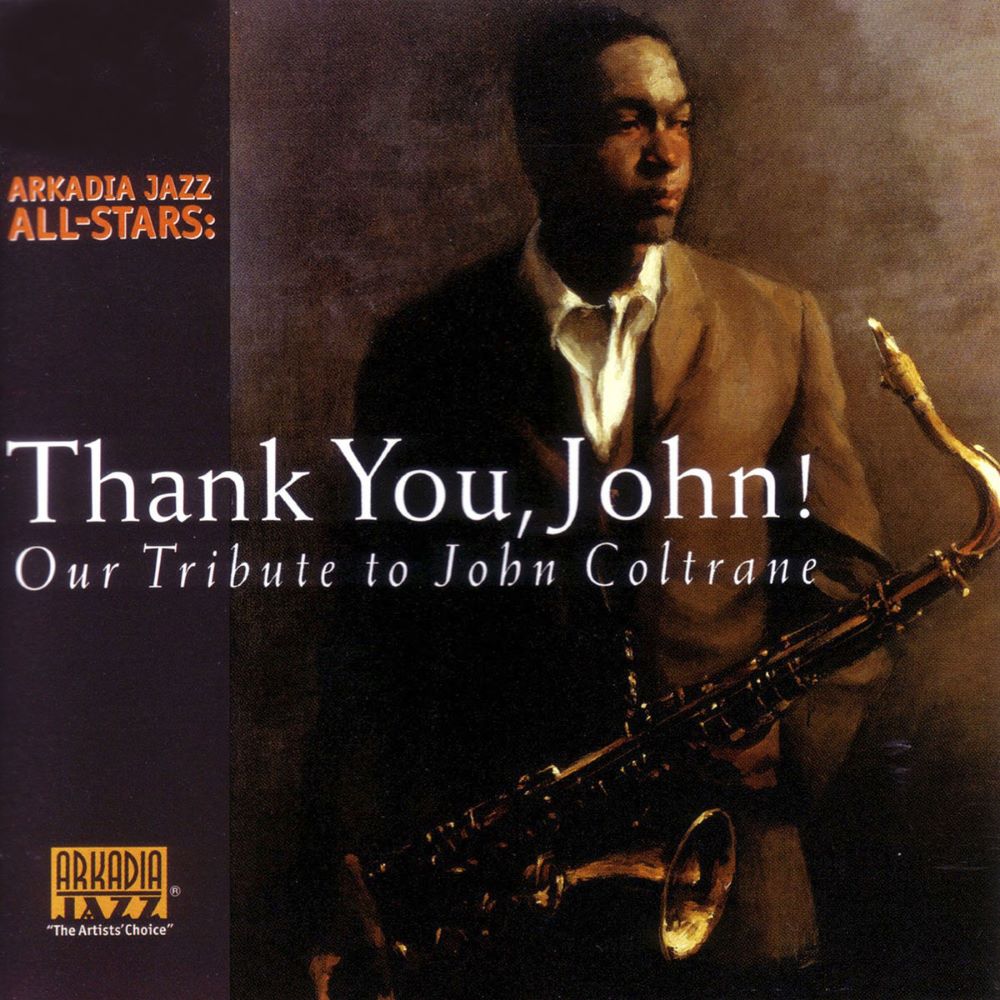
Arkadia Jazz All-Stars / Thank You, John! (January 2022 Arkadia Records)

“5 STARS! …”Thank You, John!” is a look at the sax genius’ music with stars from the (Arkadia) label. The variety of performers produces a range of approaches… …an album that will leave you humming – and respecting Coltrane.” – Bob Karlovits, Pittsburgh Tribune-Review

This album, the “Arkadia Jazz All-Stars: Thank You, John! – Our Tribute to John Coltrane”, nominated for a Grammy Award for “My Favorite Things”, is a testament and tribute, from the elite Arkadia roster, to the awesome accomplishments and musicality of John Coltrane. From Bebop to Hip-Hop to Bossa Nova, all of the artists on this album have benefited from Saxophonist John Coltrane’s music, teaching, and influence. Wide in scope and deep in nature, Coltrane’s influence remains alive more than 50 years after his death, and will surely be felt by future generations.

“…a superb tribute to ‘Trane. “Thank You” is a salute from a variety of (Arkadia Jazz) artists, who play his music their way without trying to emulate the Coltrane sound – and the result is vibrant and fresh.” – Jared Rutter, Players- August 1998

We at Arkadia Records feel it is important to honor the legacy of some of Jazz’s greats. For our “Thank You” series of musical homages, we asked our artists go into the studio and record an all new, previously unreleased song either derived from or influenced by the enduring legacy Jazz’s royalty. The liner notes contain reflections by each of the artists about John Coltrane.

From celebrated Jazz luminaries such as Benny Golson and Billy Taylor, to Latin Jazz stars Nova Bossa Nova, and everything in between such as pianist Ted Rosenthal, Saxophonist extraordinaire David Liebman (whose track of My Favorite Thinks received a Grammy Award Nomination), and Hip Hop/Jazz fusion hip hop group Red Time, this album, “Arkadia Jazz All-Stars: Thank You, John”, all new recordings from the Arkadia roster of artists, creates a lasting tribute to one of Jazz music’s most prolific and important artists.
“A most savory and consumer-friendly clutch of fresh compilations… a top-of-the-ladder cast…. rewarding jazz without compromise.” – Dr. Herb Wong, Jazz Educators Journal

“…very moving, emotionally poignant… This is a beautiful album.” – Jeanette Housner, Victory Review

To the younger generations who never got to see Coltrane, Bird or Miles, the current jazz masters are the true link to the great historical figures. From Benny Golson and Billy Taylor, to Joanne Brackeen and David Liebman, to Randy and Michael Brecker, Pat Metheny and Dave Holland – all of whom have played with the Great Ones – they now carry the torch into the future. Even though we can choose to look back, Jazz can only move forward. “The Stars Of Jazz Volume 1” is proof that the future is for us to hear, right now.

“These (Arkadia Jazz) artists have chosen to approach the music individually and let their performances elucidate how they feel about Coltrane and what they think of his music. This is the only way that this tribute album for someone of such gigantic stature as Coltrane is going to work, and it certainly does here. Liebman… gets some sparks going. Then there are some purely unexpected delights, like Nova Bossa Nova. The best overall cuts are still the most straight- ahead pair from Billy Taylor. This is a successful tribute that could have been a real disappointment.” – James Lien, CMJ New Music Report

1. Benny Golson, Mike LeDonne, Dwayne Burno, Joe Farnsworth - Syeeda’s Song Flute 06:53
2. Dave Liebman, Vic Juris, Tony Marino, Jamey Haddad - My Favorite Things* 05:13
3. Nova Bosa Nova; Bob Mintzer, Claudio Roditi - Moment’s Notice 04:48
4. Benny Golson, Mike LeDonne, Dwayne Burno, Joe Farnsworth - Naima 05:39
5. Benny Golson, Mike LeDonne, Dwayne Burno, Joe Farnswort - Touch Me Lightly 06:33
6. Ted Rosenthal, Dean Johnson, Ron Vincent - Giant Steps 04:26
7. Nova Bosa Nova; Bob Mintzer, Claudio Roditi - The Night Has a Thousand Eyes 06:43
8. Dave Liebman, Vic Juris - I Want to Talk About You 04:52
9. Billy Taylor - Moment’s Notice 05:29
10. Red Time - Take the Trane 04:42

Sethstat - White Night (Live at PMGRF11) January 2022 PMGJazz

Close your eyes.
Imagine a top jazz night out.
FREE download this one.
Press play.
You're there :)

One of the best concerts of 2021
as a FREE DOWNLOAD for you, our faithful.
Sethstat have done it again.
May we all be blessed by this music.
With all the love...

1. Korab 09:38
2. Wired 09:10
3. Afyon 07:56
4. Yeager 10:10
5. MVP 09:09

SETHSTAT -“White Night “ Live at PMG Recordins Festival 11

All music composed and arranged by SETHSTAT
Recorded on 25.09.2021 by Dorian Jovanovic at PMG Recordings Festival 11
Mixed by Vladan Drobicki

SETHSTAT:
Vasko Bojadjiski
Vladan Drobicki
Panche Bujukliev
Pavel Drobicki
Dino Milosavljeviќ

Cover art by Violeta Kachakova
Produced by Vladan Drobicki for PMGJazz
PMGJazz 029 / 2022

Sean McGowan - Union Station (January 2022)

Modern original Jazz & Groove music for classic guitar-organ-drums trio.

Sean McGowan is a fingerstyle jazz guitarist who combines many diverse musical influences with unconventional techniques to create a broad palette of textures within his compositions and arrangements for solo guitar.

1. Union Station 01:13
2. Around the Corner 04:03
3. North: Cheyenne 01:19
4. Hickory Stripe 04:42
5. Blue No. 4 03:10
6. Sunflower Poetic 03:46
7. Boxcar Interlude 01:29
8. Narrow Gauge 07:57
9. Come Back To It 05:08
10. Lanterns On The Wall 06:42
11. Joie de Vivre 00:42
12. Under The Western Stars 04:38
13. Now Open 04:36
14. Cumbres & Toltec 03:27
15. Silverpoet 04:42
16. Red No. 5 05:38
17. South: Santa Fe 00:57
18. Cimarron 04:40
19. Palo Duro Canyon 02:31
20. Amarillo 03:25

Giulio Corini / Roberto Soggetti - First Time Ever I Saw Your Face (January 2022)

1. All The Way (Jimmy Van Heusen/Sammy Cahn) 05:01
2. Samba Do Aviao (Antonio Carlos Jobim) 05:30
3. Lover Man (Jimmy Davis/Roger Ramirez/James Sherman) 02:21
4. The First Time Ever I Saw Your Face (Ewan MacColl) 03:50
5. I'll Be Seeing You (Eddie Heywood) 06:01
6. Stella By Starlight (Victor Young/Ned Washington) 04:20
7. Rene And Georgette Magritte With Their Dog After The War (Paul Simon) 04:53
8. Stomping At The Savoy (Edgar Sampson) 03:56

Roberto Soggetti: piano
Giulio Corini: double bass

Recorded at Monolith Studio by Michele Marelli
Mixed by Roberto Soggetti
Cover Photo: Stefano Soggetti

Blue Moods - Myth & Wisdom (January 2022 Posi-Tone Records)

All too often we encounter the sad reality that the songwriting of many influential jazz artists, who are regularly proclaimed as masters by the critics, languish in relative obscurity, while their compositions remain recondite, or at best, largely unfamiliar to a vast segment of contemporary audiences. In the hope of remedying this situation and creating new interest in these artists, Posi-Tone is initiating a series of “Blue Moods” releases. These introductory programs are focused on a single artist to re-present some of their vital works to a new group of listeners. 

This 2022 premier volume spotlights the compositions of Charles Mingus, and celebrates the “Myth & Wisdom” of his masterful musical artistry. These collaborative releases will feature the members of our musical repertory theatre company performing succinctly focused and interpretive reenactments to highlight some of the “great plays” of these under appreciated songwriters.

1. Better Get It In Your Soul 04:52
2. Nostalgia In Times Square 05:07
3. Tonight At Noon 04:31
4. Duke Ellington's Sound Of Love 05:50
5. Orange Was The Color Of Her Dress, Then Silk Blue 07:15
6. Peggy's Blue Skylight 05:06
7. Pussy Cat Dues 05:38
8. Pithecanthropus Erectus 07:53
9. Portrait 06:26
10. Reincarnation Of A Lovebird 07:52

Diego Rivera - tenor saxophone
Art Hirahara - piano
Boris Kozlov - bass
Joe Strasser - drums
David Kikoski - piano 5, 8, 9

Marc Free - producer
Nick O’Toole - engineer
recorded June 4-5, 2021 at Acoustic Recording, Brooklyn, NY
mixed & mastered at Woodland Studio, Lake Oswego, OR
photography by Anna Yatskevich
package design by Alex Koehler

Farnell Newton - Feel The Love (Posi-Tone Records)

Emotional integrity is the keynote address when Farnell Newton plays his trumpet with heartfelt and hopeful expressiveness entreating us to “Feel the Love.” As this 2021 album covers a wide range of moods and genres, Newton's trumpet playing remains steadily focused on portraying the subtle and tasteful elements of his style. He pushes melodicism to the forefront while also demonstrating his formidable command of the instrument. The whole album is truly a labor of love. To make this happen, Newton traveled east from Portland Oregon to New York City, to work with Posi-Tone and their capable rhythm section of pianist Art Hirahara, bassist Boris Kozlov, and drummers Rudy Royston and Joe Strasser.

The album also features wonderful guest appearances from several of Farnell's favorite saxophonists, including Jaleel Shaw, Braxton Cook, Brandon Wright, and Patrick Cornelius. With an amazing combination of diverse talents, several brilliant performances, and an evocative program of musical compositions, Farnell Newton keeps everything moving steadily straight forward, and continues to announce he is an important and emerging voice on today's jazz scene.
1. Feel The Love 04:43
2. Affectionately Roy 04:16
3. I'll Catch You 04:50
4. A Child Not Yet Born 05:13
5. The Bluest Eyes 06:34
6. Litoral 06:52
7. Pale 06:06
8. The Force Of Gravity 04:34
9. Laws Of Motion 04:37
10. Lawn Darts 05:19
11. Our Chosen Family 05:44

Farnell Newton - trumpet
Art Hirahara - piano
Boris Kozlov - bass
Rudy Royston - drums & percussion on all but 4, 6, 9
Braxton Cook - alto saxophone on 2, 10
Jaleel Shaw - alto saxophone on 3, 5, 7
Joe Strasser - drums on 4, 6, 9
Brandon Wright - tenor saxophone on 4
Patrick Cornelius - alto saxophone on 6, 9
Michael Dease - trombone on 7

Marc Free - producer
Nick O’Toole - engineer
recorded June 21, 2018 & September 17, 2019 (4, 6, 9) at Acoustic Recording, Brooklyn, NY
mixed & mastered at Woodland Studio, Lake Oswego, OR
photography by Andrew Wallner
package design by Jamie Brunson

Friday, January 7, 2022

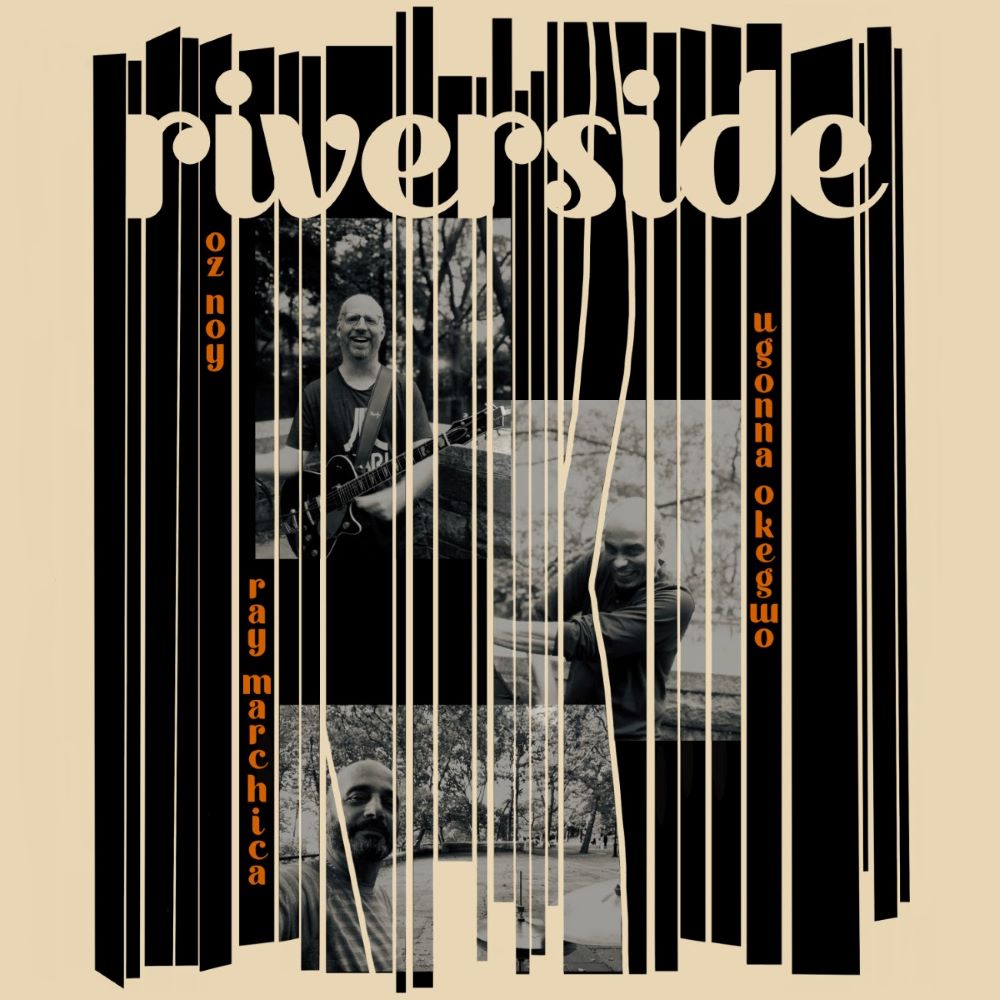
Have You Heard? Oz Noy, Ugonna Okegwo, Ray Marchica "All The Things You Are" (January 7, 2022 Outside in Music)

Their first release as a trio, Riverside is a fresh, life-affirming collection of standards that stems from the group’s spontaneously assembled outdoor jams held in Riverside Park, New York City during lockdown.

As individuals, this dynamic trio has a wide range of performing credits – Ugonna Okegwo as a celebrated sideman with Jacky Terrasson and Tom Harrell, Ray Marchica as a Broadway and session player (plus two albums as a leader) and Oz Noy as one of fusion’s most sought after individual voices.

All three have worked on the New York scene for the past two decades, so when the COVID-19 lockdown hit, it was a huge blow to both their livelihoods and their creative spirits. When, summer came around, and the chance presented itself for housebound musicians to meet up and play outdoors. Oz called upon his neighbors Ugonna and Ray and invited them down to the park for a jam session – Ugonna on upright, Marchica with a small drum set, and Noy on electric guitar, with a battery-powered amp. The sessions went on through the summer months until the weather turned in October. But instead of packing up entirely, the group went into the studio, satisfied that they had created a sound, and a feeling amongst the group. We welcome their debut single, "All The Things You Are".


Pat Matshikiza & Kippie Moketsi (feat. Basil Mannenberg Coetzee) - Tshona! (April 15, 2022 We Are Busy Bodies)

As a member of the all-star Jazz Epistles in the late 1950s, saxophonist Kippie Moeketsi (also spelled Moketsi during his tenure with the As-Shams record label in the 1970s) was one of the pioneering forces of modern South African jazz. While Jazz Epistles bandmates Hugh Masekela and Abdullah Ibrahim would go on to build their careers in the United States in the 1970s, it was at home in South Africa that Moeketsi would leave his mark on the domestic jazz discography. From the outset of record store owner Rashid Vally's forays into the production of independent jazz in the early 1970s, Kippie Moeketsi played a key role, notably as a featured sideman on Abdullah Ibrahim's Dollar Brand Plus 3 in 1973.

While Moeketsi had a reputation as a great interpreter of standards with a firm grasp of jazz as an American idiom, he notably steps into deep South African jazz territory with a pair of his own compositions on the album Tshona! (released on Vally's nascent As-Shams/The Sun label in 1975). With equal participation from pianist Pat Matshikiza (also a well established South African jazz figure at the time), Tshona! emerges as one of the great South African jazz collaborations of the 1970s and is revered as a canonical recording from this era. Moeketsi and Matshikiza were flanked by the Soweto's hottest rhythm section by way of drummer Sipho Mabuse and bassist Alec Khaoli of Harari and featured on tenor sax was none other than Basil Coetzee, who's contribution to Abdullah Ibrahim's breakout hit record Mannenbeg - 'Is Where It's Happening' the year prior had earned him the esteemed appellation Basil "Mannenberg" Coetzee.

With the album cover bearing a playful illustration of a pair of township thugs by artist Mafa Ngwenya, Tshona! is the ultimate jazz document of its time and place - modern, urban, original, authentic and unmistakably South Africa. Moeketsi and Matshikiza would continue to record together for As-Shams/The Sun with Moeketsi featured on Pat Mathsikiza's Sikiza Matshikiza album in 1976. Matshikiza returned the favour in 1977, appearing on Moeketsi's Blue Stompin' album, which featured the Hal Singer Quartet on the title track. 

1. Tshona 11:40
2. Stop and Start 05:09
3. Umgababa 11:11
4. Kippie's Prayer 03:35

Pat Matshikiza - Piano
Kippie Moeketsi - Alto Saxophone
Basil Coetzee - Tenor Saxophone
Alec Khaoli - Bass
Sipho Mabuse - Drums
Dennis Phillips - Alto Saxophone on "Tshona"

"Tshona" and "Stop and Start" composed by Pat Matshikiza
"Umgababa" and "Kippie's Prayer" composed by Kippie Moeketsi

Recorded at Gallo Studios
Recording Engineer: Peter Ceronio
Produced by Rashid Vally

Cat. No. GL 1796
Original Release 1975
We Are Busy Bodies Reissue 2022

Alessandro Galati / Palle Danielsson / Peter Erskine - Traction Avant special edition (The Complete Sessions) January 2022 JAzZMUD

I inaugurate this new year with the release of an album in which I have inserted several new songs found while listening to the original tapes of a studio session that has brought a lot of luck to my career, allowing my music to be known all over the world.

After a few days of careful listening, I chose eight unreleased tracks, adding them to those originally contained in the Traction Avant CD.

The result is a double album in which the atmosphere is incredibly magical: my compositions, standards and free improvisations alternate in a new balance that I hope will meet the taste of many old and new fans.

A. Galati

1. How Sweet is the Ozone 06:12
2. Floating #1 04:04
3. Andre 07:44
4. Traction Avant 05:39
5. J.S. What 05:49
6. Wassily 08:14
7. Solar 07:59
8. Floating #2 05:33
9. Amaxonia 08:31
10. Blues as you Please 02:16
11. Someday my prince will come 06:09
12. Crinkle 04:52
13. Palle's solo 01:38
14. Red Milk 07:42
15. Ripple 07:07
16. Blues as you Please (alt.version) 06:51
17. You don't know what love is 07:06
18. Solar (alt. version) 07:51

ALESSANDRO GALATI - piano
PALLE DANIELSSON - bass
PETER ERSKINE - drums

Recorded by Jan Erik Kongshaug at Larione 10 (FI)

Tony Malaby 'The Cave of Winds' – Jan. 7 via Pyroclastic Records

Saxophonist/composer Tony Malaby reconvenes his stunning quartet Sabino with guitarist Ben Monder, bassist Michael Formanek and drummer Tom Rainey
 
The Cave of Winds, due out January 7, 2022 via Pyroclastic Records, draws inspiration from Malaby’s Covid-era sessions under a NJ turnpike bridge

" [The] tenor and soprano saxophonist Tony Malaby has earned a reputation as one of New York’s stalwart improvisers, through an array of sideman appointments and some rigorously rewarding albums."
– Nate Chinen, New York Times
 
" Malaby will play inside, outside and all around his saxophone, but never once will it sound out of place with whatever else is happening."
– Paul Acquaro, The Free Jazz Collective 

The 2020 pandemic forced most of us indoors, musicians included, resulting in a surfeit of new solo projects and home recordings. Saxophonist Tony Malaby took the opposite approach. Having hosted regular sessions at his home for years, resulting in countless new collaborations and inspired breakthroughs, he decided to take these creative get-togethers out into the streets (both as an antidote for cabin fever and out of consideration for his suddenly homebound neighbors).
 
Beginning in July of 2020, Malaby began hosting regular sessions underneath a turnpike overpass near his home in New Jersey. Leading a trio featuring bassist John Hébert and drummer Billy Mintz, Malaby invited such improvising luminaries as Tim Berne, Mark Helias, Ches Smith, William Parker and others to join him in the graffiti-covered, reverberant enclave that buzzed with the sound of nearby pedestrians, overhead traffic and the usual collision of nature and humanity that fuels the city.
 
“My artistic discipline comes from playing sessions,” Malaby says. “I just couldn't let that go. It was something I needed just to keep my head above water with everything that was happening with the pandemic and the [presidential] election. Everything was nuts, so I just had to go down there and throw sound with my guys. It got me through and kept me positive.”
 
The turnpike sessions proved to be not only a respite from Covid-related stir craziness but also a source of considerable inspiration for Malaby. The saxophonist felt rejuvenated by the freedom and unique sonic qualities of the space, elements that he wanted to carry into the studio. Feeling that a guitar quartet would make the ideal setting, he reconvened Sabino, the group with which Malaby recorded his debut album in 2000. With bassist Michael Formanek, drummer Tom Rainey and guitarist Ben Monder (stepping in for the original album’s Marc Ducret), he recorded the adventurous new album The Cave of Winds, due out January 7, 2022 via Pyroclastic Records.
 
While there are natural rock formations that share the name in both Niagara Falls and Colorado, The Cave of Winds is Malaby’s affectionate nickname for the turnpike bridge that he made his musical home for the better part of a year. “It was like a tunnel down there,” Malaby recalls. “Wild, crazy things would happen while we were playing in that cavern. Trucks were rolling by, sirens going off, birds singing. We would be down there in 30-degree February weather and the wind would be howling. It was incredible.”
 
The compositions that make up The Cave of Winds were directly inspired by Malaby’s tenure under the bridge. With the literal and figurative space offered by that environment, he was prompted to pen minimal pieces ripe for expansion by the trio and their guests; at the same time, they also are colored by a return to more traditional jazz contexts by this inveterate free improviser.
“Billy Mintz and John Hébert got me into playing standards and jazz repertoire again,” Malaby explains. That comes into play here. We still play freely, and so, you know, but doing that led me to think about harmonic color, the richness of my roots and the joy of playing changes with someone like Ben Monder.”
 
One of the most striking examples of this collision of the tradition and Malaby’s intrepid spirit is the album’s closing track, “Just Me, Just Me.” A contrafact based on the chord changes of the classic “Just You, Just Me” (memorably recorded by the likes of Nat King Cole and Thelonious Monk, among countless others), the tune is far more agitated experience than its jaunty predecessor, and while the title is a tongue-in-cheek play on the original it also captures the fervent individuality of these four musicians.
 
Similarly, the burnished bop melody of “Corinthian Leather” is a loose reinterpretation of Dizzy Gillespie’s “Woody ‘n You,” leading to unspooling invention from both Malaby and Monder as they stretch the flexible theme beyond recognition. Monder’s roaring heavy metal distortion introduces “Scratch the Horse,” which draws inspiration from the Native American ceremonies depicted in the Richard Harris western A Man Called Horse. “Recrudescence” is a hypnotic group improvisation reflecting on the cyclical nature of the musical life, interrupted though it may have been by recent events, while “insect Ward” suggests a sanctuary for Malaby’s restless, flitting soprano (parried by Formanek’s buzzing bowed bass). “Life Coach” is a duo improvisation by Malaby and Rainey dedicated to their former bandleader, bassist Mark Helias, whose presence the saxophonist insists he can hear in the rhythm and language they share.
 
The Cave of Winds marks the closing of a few chapters for Malaby. For one, it spells the end of the turnpike sessions and the period of research and exploration they represented. Coinciding with the lifting of pandemic-era restrictions, Malaby also left the New York area after more than 25 years for Boston, where he’s taken a position on the faculty of Berklee College of Music.
 
The album also brings Malaby’s career full circle as he embarks on this new venture. 20 years after the release of Sabino he revisits that quartet with three of his most longstanding collaborators. Malaby met Formanek while the saxophonist was still a student at William Paterson University, when both played with the Mingus Big Band. They were both enlisted by saxophonist Marty Ehrlich for a band that also included Tom Rainey on drums, forging a connection that would remain strong for the next three decades.
 
While Ducret was featured on the 2000 album, Ben Monder actually precedes him as Sabino’s guitarist, in an early version of the quartet that featured Jeff Williams and Ben Street. Malaby had initially heard the brilliant guitarist in Marc Johnson’s short-lived band Right Brain Patrol, then approached him at the bar of the Knitting Factory. They met again a week later on a session led by Guillermo Klein and have been working together regularly and fruitfully ever since.
 
Like the primal space its name implies, The Cave of Winds is vast and tempestuous, opening into a reservoir of mystery and inviting the curious to venture deep within. Encouraged by Malaby’s dauntless curiosity, these four stellar musicians delve into the furthest reaches and emerge with inspired riches.

1. Corinthian Leather
2. Recrudescence
3. Scratch the Horse
4. Insect Ward
5. The Cave of Winds
6. Life Coach (for Helias)
7. Just Me, Just Me

Tony Malaby - Tenor and Soprano Saxophones
Ben Monder - Guitar
Michael Formanek - Double Bass
Tom Rainey - Drums

All compositions by Tony Malaby (Chubasco Music/ Sesac) except 'Recrudescence' by Monder/ Formanek/ Rainey/ Malaby

Recorded at Samurai Hotel Studios on June 24, 2021
Mixed and Mastered by Mike Marciano at Systems Two Long Island

Graphic Design by Hidde Dijkstra
Cover Art: 'Lost in Thoughts' by Marieken Cochius
Photo by Peter Gannushkin

Produced by Tony Malaby
Executive Producer: Kris Davis


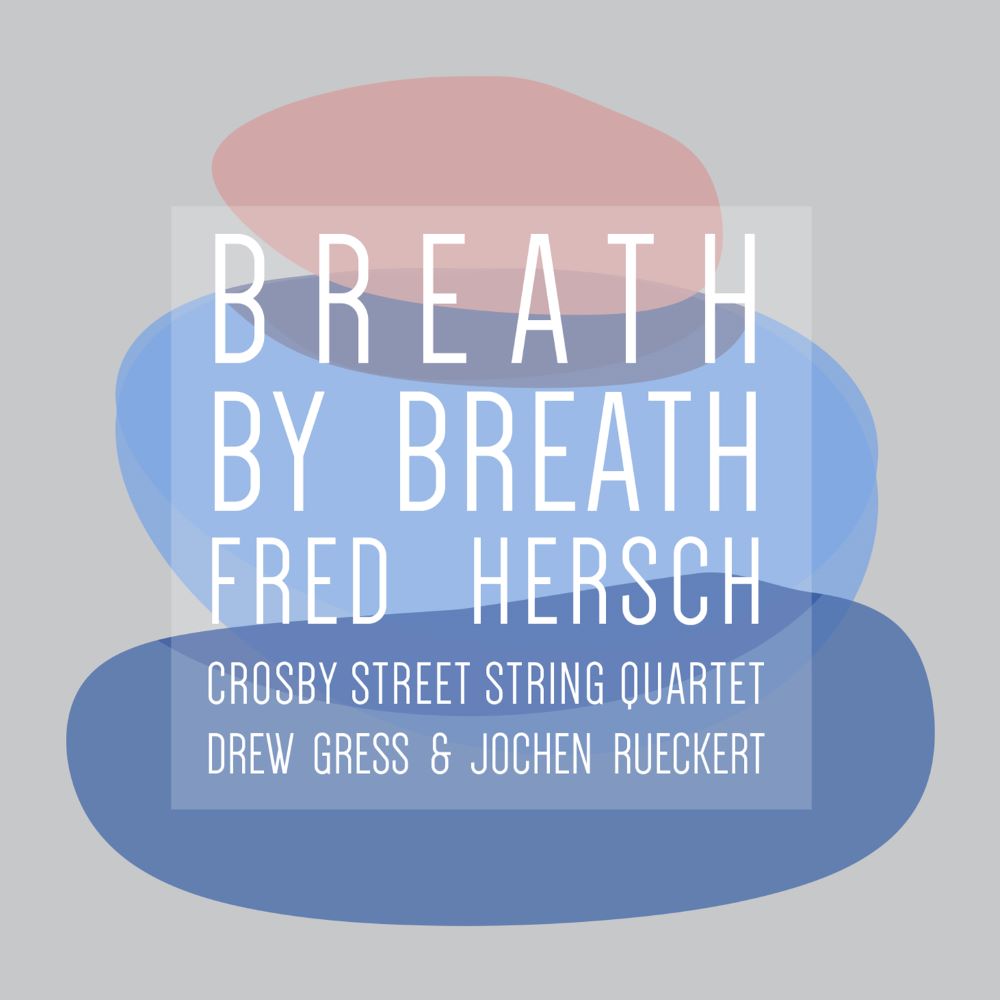
Fred Hersch's Breath by Breath out Jan. 7, 2022 via Palmetto

Pianist/Composer Fred Hersch reemerges from pandemic isolation with an ambitious new album pairing jazz piano trio with string quartet
 
Breath By Breath, due out January 7, 2022 via Palmetto Records, features a stunning new suite inspired by Hersch’s meditation practice performed by Hersch with Drew Gress, Jochen Rueckert, Rogerio Boccato, and the Crosby Street String Quartet

"[Fred Hersch is] a pianist, composer and conceptualist of rare imaginative power.” 
– Nate Chinen, The New York Times

“Hersch’s work has developed an intensity of intelligence and emotional directness unparalleled among his peers.”
– Steve Futterman, The New Yorker 

Album release concert January 9 at Village Vanguard, NYC 
Pianist Igor Levit premieres new Hersch work January 13 at Carnegie Hall 

Iconic pianist/composer Fred Hersch was an early adopter of new technologies and new ways forward when the pandemic hit in early 2020. But he’s also been among the most eager to return to live performance and collaboration now that life has begun to resume some semblance of normality. In August he returned to the studio to record one of his most ambitious projects to date: Breath By Breath, his first album ever pairing jazz rhythm section with string quartet.
 
“I’ve put all my streaming gear away,” declares Hersch, whose lockdown months started off with daily performances on Facebook and culminated in last year’s solo release Live From Home. “It was great while that was what it was, and now I'm in this place where it's live or nothing.”
 
Due out January 7, 2022 via Palmetto Records, Breath By Breath draws inspiration from the pianist’s longtime practice of mindfulness meditation, centered on the new eight-movement “Sati Suite.” But while the album is certainly contemplative and lustrous, it’s far from being merely an ambient backdrop for blissful relaxation – the music on Breath By Breath is as fully engaged and emotionally rich as any that Hersch has made over the course of his remarkable career.

In part that’s due to the musicians Hersch has enlisted for the album. Bassist Drew Gress was a member of the pianist’s first trio and has been an inspiring bandstand partner for more than three decades. Jochen Rueckert is one of the most in-demand drummers on the modern scene, having played with such greats as Kurt Rosenwinkel, Mark Turner, Melissa Aldana and Pat Metheny. The Crosby Street String Quartet, named for the NYC address where they first rehearsed with Hersch, combines four of the city’s busiest freelance string players: violinists Joyce Hammann and Laura Seaton, violist Lois Martin, and cellist Jody Redhage Ferber. 

“String quartets have been some of my favorite music to listen to my whole life,” Hersch explains. As he writes in the album’s liner notes, “I grew up listening to string quartets as a very young musician in Cincinnati. My piano teacher was the wife of the cellist in the famous LaSalle Quartet. I used to lie on the rug in their living room as an elementary school student while they rehearsed, quietly following along, hearing how the viola part meshed with the first violin, or the second violin and the cello. And ever since I started studying composition at age eight, almost all of my music has always focused on four melodic parts - so string quartets are a natural musical configuration for me.” 

The string writing on Breath By Breath spotlights the broad scope of Hersch’s compositional imagination. With each piece the quartet seems to take on a new role in relation to the piano trio: a lush background on one tune, an equal partner in dialogue on the next, an abstract instigator on yet another. “It was important to me that we record live with the strings so I could interact with what they were playing,” Hersch says. “I didn't want to lay down the music and then have them come in later and overdub. I felt like the fun of the project was to do it live.”

“Sati” is a Pali word meaning “mindfulness” or “awareness,” an idea that is central to Hersch’s meditation practice – which itself took on an even more profound importance during the pandemic. “It basically saved me,” he says with no hint of exaggeration. “Meditation is not about not emptying your mind; it's about observation. The phrase I like to use is, ‘relax, allow and observe.’ When I meditate it’s about recognizing sensations or thoughts as they come in and out, observing them and realizing that they're just phenomena. The brain thinks, and there's nothing wrong with that.”
The first movement, “Begin Again” references the cycle of renewal that begins fresh with each moment. Other pieces touch on different aspects of the process. “Know That You Are,” the composition that initiated the suite, refers to the foundational instruction, “When you sit, know that you are sitting and when you breath, know that you are breathing.” The often frantic activity of a mind struggling to be at rest is the subject of “Monkey Mind,” while “Mara,” which features a guest appearance by percussionist Rogerio Boccato, is the name of the god who tempted Buddha with wine, women and wealth.

Bringing meditation to the forefront of his music brings Hersch full circle in a sense, as he recognized when he began the practice decades ago. “When I started, I realized that in a way I've been meditating my whole life – but on a piano bench. I close my eyes when I play and I go into in that world. Occasionally I get distracted, but I don't get wrapped up in it. Instead of my breath being an anchor, the anchor is the sound that I get, the tactile feeling of my fingers on the keys, hearing the space around the music, and leaving that space for other musicians to contribute.”

Breath By Breath, then, is a recognition that meditation has been a way for Hersch to align his daily existence with the enlightened state he reaches while playing the piano. With the release of this captivating new recording, the rest of us are fortunate enough to glimpse that place and to feel its life-affirming impact on our own hearts and souls.

Fred Hersch
A select member of jazz’s piano pantheon, Fred Hersch is an influential creative force who has shaped the music’s course over more than three decades. A fifteen-time Grammy nominee, Hersch has long set the standard for expressive interpretation and inventive creativity. A revered improviser, composer, educator, bandleader, collaborator and recording artist, Hersch has been proclaimed “the most arrestingly innovative pianist in jazz over the last decade” by Vanity Fair, “an elegant force of musical invention” by The L.A. Times, and “a living legend” by The New Yorker. For decades Hersch has been firmly entrenched as one of the most acclaimed and captivating pianists in modern jazz, whether through his exquisite solo performances, as the leader of one of jazz’s era-defining trios, or in eloquent dialogue with his deeply attuned duo partners. His brilliant 2017 memoir, Good Things Happen Slowly, was named one of 2017’s Five Best Memoirs by the Washington Post and The New York Times.

The Sati Suite

1. Begin Again 6:52
2. Awakened Heart 4:13
3. Breath by Breath 6:22
4. Monkey Mind 4:01
5. Rising, Falling 5:03
6. Mara* 4:38
7. Know That You Are 3:41
8. Worldly Winds 5:26

Fred Hersch, piano

Crosby Street String Quartet
Joyce Hammann & Laura Seaton, violins
Lois Martin, viola
Jody Redhage Ferber, ‘cello

Drew Gress, bass
Jochen Rueckert, drums
*Rogerio Boccato, percussion

Fred Hersch – Breath By Breath
Palmetto Records – PM2198 – Recorded Aug. 24-25, 2021
Release date January 7, 2022

Taru Alexander - Echoes of the Masters (January 7, 2022 Sunnyside Records)

In the jazz community, there are individuals who come to the music as a birthright. There are countless musical families whose members continue to pass the gift of music on from generation to generation. Drummer Taru Alexander was endowed with music by his father, saxophonist Roland Alexander, and an extended family of professional musician mentors in his native Brooklyn, New York.

The younger Alexander celebrates the legacy of his father and his father’s peers on his new recording, Echoes of the Masters, a collection of pieces by well-known jazz composers performed by an outstanding group of musicians who came of age under the tutelage of legendary performers on the bandstand.

Taru Alexander was born into the music. His father, Roland, began taking him to gigs at 3 years old. The boy was entranced by the drums and began to pick them up naturally before he was 10. By the time he was 13 years old, Alexander was performing alongside his father and bass legend Reggie Workman, with whom he studied at Brooklyn’s famed New Muse School in Crown Heights. Further study with drummers Rudy Collins, Andre Strobert, Walter Perkins, and La Guardia Music & Art’s Justin DiCioccio prepared Alexander for life as a professional drummer.

A lifetime of musical experience has imbued Alexander with the skills, the knowledge, and the swagger to play jazz as it should be played. His credentials spread from bands led by Roy Hargrove, Gary Bartz, Carlos Garnett, and many more, so when he was considering who should join him on his new recording, Alexander wanted to include other musicians who had truly paid their dues.

Originally from Memphis, Tennessee, pianist James Hurt has been a focal part of the New York jazz scene since he arrived in 1994. Among many ensembles, Hurt was a member of Roland Alexander’s band, where he met Taru Alexander. Hurt also performed with groups led by Abbey Lincoln, Sherman Irby, Russell Gunn, and many others.

Alexander met saxophonist Antoine Roney and bassist Rashaan Carter on a recording session led by saxophonist Michael Marcus in 2008. Alexander was so impressed that he made note to contact them when he was able to record on his own. Roney has been a stalwart leader and sideman in New York alongside fantastic musicians like Jacky Terrasson, Donald Byrd, John Patton, and his brother, Wallace Roney. Carter carries the history of the jazz bass on his shoulders having studied with Buster Williams, Reggie Workman, and Ron Carter. He continues to be one of the strongest players in New York.

During the pandemic, Alexander reached out to these stalwart musicians to be his band of certified players on his new album.

The recording launches into gear with a high octane take of the elder Alexander’s “Change Up,” a piece penned in the 1970s that bridges the gap between the earlier generation’s verve with the younger generation’s swagger. Taru Alexander’s drums propel the quartet with great solos from Roney and Hurt. Thelonious Monk and Coleman Hawkins’s “I Mean You” adds guest vocalist HANKA to the quartet for this swinging rendition of the classic tune, which is followed by Buster Williams’s “Deception” performed in a firey rendition.

Roland Alexander wrote “Kojo Time” for his son at the time of his birth and while the father was in Europe, the echo of a European ambulance signaling the to be drummer’s arrival can be heard in the theme. Alexander fell in love with McCoy Tyner’s “Peresina” from the pianist’s Expansions record, wearing it out after regular listens. The quartet honors the piece with an expansive reading with gorgeous features for the entire band. The recording concludes with Wayne Shorter’s “Pinocchio,” Hurt’s ambient piano leading to an up-tempo ensemble romp over Alexander’s persistent beat.

On Echoes of the Masters, Taru Alexander creates an aural tribute to his father, the great Roland Alexander, and the tremendous musicians who passed the tradition down to him and the future generations through their impact on the bandstand and their examples off of it. 

1. Change Up
2. I Mean You
3. Deception
4. Kojo Time
5. Peresina
6. Pinocchio

Taru Alexander - drums
Antoine Roney - tenor saxophone
James Hurt - piano
Rashaan Carter - bass
Hanka G. - vocalist (track 2)

Dave Stryker with String Quartet - As We Are (January 7, 2022)

“I’ve always loved the way Dave plays guitar. He’s a soulful, blues-oriented player, with a beautiful touch and tone. His originals were fun to play, with plenty of harmonic sophistication, but lyrical, too. He’s the real deal.”
– John Patitucci

“It’s my dream project,”  Dave Stryker repeats several times in a conversation about his 34th release as a leader, As We Are, on which the guitar master addresses one of the few configurations he hasn’t tackled during 40-plus years in the jazz trenches.
 
Stryker, not predisposed to hyperbole, isn’t exaggerating. How else to describe an opportunity to record a suite of new originals with a band propelled by all-world bass-drum partners John Patitucci and Brian Blade, fleshed out by harmonically erudite pianist Julian Shore’s bespoke string quartet arrangements that include room for a couple of soaring violin solos by the luminous Sara Caswell? Stimulated by the chance to make music together after long isolation, all members interact with crackling, pent-up energy.

“I always wanted to do something where strings would really be integrated into the music, not a coloring or sweetening that comes in later,” Stryker says. Shore rises to the occasion, imparting a lush, fulsome sound to the two violins, viola and cello, creating sections that offer texture and contrast.

In keeping with the dream project Stryker reached out to two of the greatest musicians alive today - Patitucci and Blade who happily signed on. Six new Stryker originals, one Shore original and Nick Drake’s River Man are arranged with string quartet by Shore to create one of the most truly beautiful and exciting recordings in recent times.
1 Overture - Dave Stryker / Julian Shore - BMI) 1:10
2 Lanes - Dave Stryker (D. Strike Music - BMI) 6:14
3 River Man - Nick Drake (BMG Rights Management - ASCAP) 9:01
4 Hope - Dave Stryker (D. Strike Music - BMI) 6:24
5 Saudade - Dave Stryker (D. Strike Music - BMI) 5:52
6 One Thing At A Time - Julian Shore (Julian Shore Music - BMI) 7:17
7 As We Were - Dave Stryker (D. Strike Music - BMI) 5:46
8 Dreams Are Real - Dave Stryker (D. Strike Music - BMI) 7:18
9 Soul Friend - Dave Stryker (D. Strike Music - BMI) 6:52
 
Dave Stryker - guitar
Julian Shore - piano
John Patitucci - bass
Brian Blade - drums

String Quartet:
Sara Caswell - violin 1 (solo, tracks 3 and 9)
Monica K.Davis - violin 2
Benni von Gutzeit - viola
Marika Hughes - cello
Music Arranged by Julian Shore
 
Produced by Dave Stryker
Executive Producer - Rick Simpson
Engineered and mixed by Chris Sulit at Trading 8s Studio, Paramus NJ June 2, 10,11, 2021
Mastered by Michael Perez-Cisneros

Photos and Graphic Design by Chris Drukker
Cover photo by Charles F. Scott IV
Liner Notes - Ted Panken

Jamie Breiwick & Jay Mollerskov - Solve for X (January 7, 2022 B Side Recordings)

Original improvised works for trumpet and electronics

In approaching this project, our initial discussion led to the idea of creating an album of electronic works based completely on Jamie's trumpet playing as the sole sound source. Any synths and software involved would only be used to process and manipulate recordings of his trumpet playing. This ended up being a fun challenge!

The general approach was that Jamie would start by recording clips of solo trumpet playing. Sometimes these were short melodic improvisations, sometimes single notes. I would then take these and manipulate them electronically. Sometimes this meant processing it with a eurorack modular system (including Make Noise Morphagene, 4MS DLD, Happy Nerding FXAid, Orthogonal Devices ER-301, and many others,) as well as Monome Norns, Ciat Lonbarde Cocoquantus, and several VST plugins on the computer.

Sometimes I had a pretty concrete idea in mind of how to approach a new track, whether that be granular synthesis, spectral processing, looping etc. Other times I took snippets of material and just explored and played with them, and it was never long before a road forward presented itself.

One of the biggest challenges for me while working on the electronic processing was that, mutes aside, trumpet has a certain timbre to it. While this is great and makes the instrument what it is, I often found that one of the main elements in coming up with new material for each new track was finding ways to manipulate it into a wide array of textures to keep things varied from piece to piece. The upside is that the timbre of the instrument, as well as Jamie's unique and beautiful voice as an artist, lend a cohesiveness to the entire project even when the approach to constructing each track was often quite different

Once I recorded tracks of this manipulated/processed trumpet sound, I sent those back to Jamie and he would record usually around two or three takes, improvising over the material I sent him. Then the last step was me taking this new material to chop/edit it, and constructing it into a final track along with the previously processed material.

I tend to work quickly on this sort of project, a habit going back decades, but the logistics of passing material back and forth and discussion over how to approach new tracks led to this project taking the better part of a year to complete. I think we both knew it was going to be special as soon as we listened to the first completed track back when we first began working on everything.

Jamie & I came up together on trumpet and guitar respectively, spending countless hours practicing, performing, and listening together throughout high school, college, and the years that followed. I would not be the musician I am today without our friendship, especially in those early years of high school and college, learning from/with each other and keeping each other motivated. It is with that in mind that I find it ironic that it took us this long to make an album together! That said, I am not surprised it was something so creatively different than anything I could have imagined back then.

Although we both spent a lot of our time in those student years (although I think most of us that travel these creative channels consider ourselves forever students) really digging into jazz and its legacy, there was always another side to things as well. Between playing in our college Contemporary Music Ensemble and other pursuits outside of school, exploring the works of John Cage, John Zorn, Anthony Braxton, Cornelius Cardew, Cecil Taylor, and many others was part of a creative path that led us here. I've got much gratitude for that time spent exploring together as well as the many teachers/mentors who introduced us to so many paths to explore. I'm honored to count many of those people as friends now years later.

While this album was a studio project, composed and constructed over time, it is with excitement that I look forward to continuing this duo project in a live setting as well. We've walked down many roads together, but there are so many left to explore!

J. Mollerskov, 12/29/21

1. Unfolding
2. Remainder
3. Heaps
4. Strata
5. Summoning Moons
6. Traces of Things
7. For Norm
8. Reflect

Jamie Breiwick, trumpet and flugelhorn
Jay Mollerskov, electronics
Nolan Breiwick, trumpet (8)

All compositions by Jamie Breiwick and Jay Mollerskov
All trumpets recorded by Jamie Breiwick at home
Edited, mixed, and mastered by Jay Mollerskov
Cover art "Solve for X" by Jay Arpin
Inside photo by Jamie Breiwick
Design by Jamie Breiwick, B Side Graphics

Simon Sieger / Joel Grip / Michael Griener - Elastic Bricks (January 7, 2022 Umlaut Records)

With a sound reminding us of acoustic piano trios from the 50s and 60s, Oùat sets out to discover a standard song format of today. Even though the nine original compositions on this release are performed instrumentally, they all stand in close relation to text and the vocal; first there was the word, then the simultaneous hearing and speaking, reading and writing of the music and its meaning. The forms are elastic and tend to give the improvisers open access to a great variety of techniques heralding the expressionism as well as romanticism in jazz and classical music. The resonances are dense like dry bricks piled up to conquer and question the times we are living today. The whole recording process have been followed by writer Erin Honeycutt who let us fall back into the word and the thought in her digging as well as constructing liner notes.

Oùat is a trio that found its origins in instinctive moments cast over the front and rear windows of jazz history. On their home ground in Berlin (Au Topsi Pohl) they have performed the music of Ellington, Hasaan Ibn Ali, Elmo Hope, Per Henrik Wallin and Sun Ra. Their debut album of strictly original material, Elastic Bricks, might remind you of Hindemith's dream holiday in Tangier. Sounds and tempi in a strange mix of recognisable disarray and unrecognisable order.

Oùat (Once upon a time) is collective storytelling, about what, where, and at, bringing forth questions about being when and where. Its members play revolving roles in the creative music scenes in Europe, from Marseille to Dala-Floda via Berlin. Their individual work encompass groups like Monks Casino, [ahmed], and Art Ensemble of Chicago. 

1. Shall we
2. Mother and Son
3. Sommer
4. Dala-Floda Departure
5. Height of Nothingness
6. Tibia of the Mole
7. Weihnachten
8. Topsi Dance
9. Borghini Ballade

Simon Sieger: piano
Joel Grip: bass
Michael Griener: drums

All compositions by Joel Grip, except A3 and A5 (by Simon Sieger and Joel Grip) and B3 (by Simon Sieger).

Recording: March 24-25, 2021 at Traumton, Berlin- Spandau
Engineering: Andreas Lammel
Mixing and digital premastering: Alexis Baskind
Vinyl Cut: Kassian Troyer at Dubplates and Mastering/ Berlin
Cover painting and photos: Joel Grip
Liner notes: Erin Honeycutt
Produced by Topsi Series for Umlaut Records

The Dave Wilson Quartet - Stretching Supreme (Live at Chris' Jazz Cafe) January 7, 2022

MULTI-INSTRUMENTALIST DAVE WILSON RELEASES
STRETCHING SUPREME
A Tribute to John Coltrane, Coming January 7, 2022 on Dave Wilson Music

John Coltrane is one of the great cultural icons of the 20th century. Even today, more than a half century after his death, his influence transcends musical boundaries, and his brooding, spiritual sax sound still resonates with music lovers of all stripes. STRETCHING SUPREME, the newest CD from reedman DAVE WILSON, is an homage to Wilson’s idol, whose music changed the course of Wilson’s life and career.

Five of the compositions on STRETCHING SUPREME were recorded live at Chris’ Jazz Café in Philadelphia, the city’s premiere jazz venue, in 2017, while two others were also recorded live at Chris’ at a 2018 performance. This is Wilson’s seventh CD as a leader and follows One Night At Chris' (2019), There Was Never (2015), Spiral (2010), My Time (2006), Through the Time (2002), and, with his early Traditional Jazz group the Canal Street Hot 6, Back in the Day (2004). Reviewer Scott Yanow says, “An excellent tenor and soprano-saxophonist, Dave Wilson has long had his own sound. While well versed in bop and inspired by Dexter Gordon and John Coltrane, Wilson is not shy to take his improvisations a bit outside when it fits the music.”

Wilson plays tenor, alto and soprano sax, clarinet, and flute. He is also a composer, arranger, bandleader, teacher, and entrepreneur with a successful business, Dave Wilson Musical Instruments, which specializes in buying and selling vintage and contemporary woodwind and brass instruments. He lives in the Central PA/Delaware Valley area, but he grew up in Bronxville, NY, a small village just north of New York City. He began studying the clarinet when he was in fourth grade but switched to the sax after he bought Live at the Village Vanguard, an iconic Coltrane recording whose lyrical and emotional quality captured Wilson’s imagination. As a youth, Wilson was in a variety of bands, playing funk and even blues harmonica, but by the time he was 14, his interest in improvisation and love of Coltrane’s music ineluctably set him on the path to becoming a jazz musician. Over the years, he studied the saxophone with many top jazz artists, including Dave Liebman, Joe Lovano, Bill Barron, and Ralph Lalama.

As with a number of other musicians, such as Phil Woods, Dave Liebman, and Bob Dorough, to name just a few, Wilson found a home in the Central PA, area. He moved to Lancaster County to go to school, met the woman who would be his wife, and decided to settle down there to enjoy the less hectic lifestyle and the many opportunities that the region afforded.

Although Wilson’s main love and focus is as a modern jazz musician, he has enjoyed playing in bands performing a variety of styles, including the Happy Wanderers German Band, who play authentic German music, and the Rampart Street Ramblers, (successor to the Canal Street Hot 6), which was founded by Wilson and carries on the tradition of Traditional New Orleans/early jazz music. On the other end of the music spectrum is Wilson’s Free Jazz Explorations project, an experimental and avant-garde undertaking that attempts to return jazz to its more primitive, often religious roots, with an emphasis on collective improvisation. But Wilson’s main activities are centered around his quartet, trio, and duo work. Working in different configurations, Wilson’s jazz groups play concerts, festivals, colleges, clubs, and private functions, mostly in the Central Pennsylvania area, and as well as around Philadelphia, Pittsburgh, Baltimore, Washington D.C., and New York City.
Five of the seven tunes on STRETCHING SUPREME were recorded on a single evening at Chris’ Jazz Café, in October of 2017, as part of a “Tribute to John Coltrane”, while two of the tunes, “On the Prairie” and “Days of Wine and Roses,” come from a performance in March of 2018 at Chris’ which produced the One Night At Chris' album. Those tunes feature Philly legend DAN MONAGHAN on drums. One Night At Chris' garnered stellar reviews and charted on regional and national radio stations. Wilson had wanted to include “On the Prairie” and “Days of Wine and Roses,” on One Night At Chris' but didn’t because of space. He felt their tone and style worked well on STRETCHING SUPREME and so was happy to have the opportunity to release them.

Unlike One Night At Chris', Wilson did not intend to record the concert that produced STRETCHING SUPREME and did not set up the room for a live recording; however, Chris’ resident sound engineer, Sean Svadlenak, recorded the performance and offered the recording to Wilson. Although Wilson received a two-track recording, he liked what he heard from the music and gave it to top-notch engineer Kent Heckman of Red Rock Recording, near Stroudsburg, PA, to enhance the sound quality. There were no edits or overdubs, and the recording represents the full, exciting sound and impressive improvisatory chops of the band, which comprises Wilson’s old friend, Lancaster County pianist and unsung East Coast All-Star KIRK REESE; bassist TONY MARINO, who has played with jazz luminaries such as Bob Dorough, Phil Woods, and Dave Liebman; and drummer ALEX RITZ, a long-time member of the Dave Liebman band.

Wilson opens the CD with the first two movements of Coltrane’s suite “A Love Supreme,” which he divides into three parts, “Intro to Part 1: Acknowledgement,” “Part 1: Acknowledgement,” and “Part 2: Resolution.” Wilson had never played the tune in live performance before, but right from the opening Intro, we can hear Coltrane’s influence on Wilson’s sound. But Wilson is not merely an imitator -- he has a style and approach that is clearly his own while capturing Coltrane’s passion and intensity. “Dear Lord” and “Naima” are two other compositions written by Coltrane. “Dear Lord” appeared on Coltrane’s album Transition which many consider a bridge between his classic quartet recordings and the more experimental works of his last years. Coltrane composed “Naima” for his first wife whose nickname was Naima. Coltrane’s first love song, Wilson and band play it with a slow, Latin feel.

“On the Prairie” and “Days of Wine and Roses” are not part of the Coltrane canon. “On the Prairie” was composed by Wilson, who says it came to him “in a dream on a cold winter’s night,” while “Days of Wine and Roses” has been widely recorded, including by McCoy Tyner and Dexter Gordon, another major influence on Wilson. However, the style, tone, and emotional intensity of these compositions and arrangements make a fitting tribute to Coltrane.

Dave Wilson is not a player concerned with making an album for commercial tastes. For him, music is a personal statement as well as an art. He is guided by his love of improvisation, emotional intensity, and spiritual cognizance. On STRETCHING SUPREME, he takes John Coltrane’s music and stretches it in a shape that adheres to his own vision of his music and the world.

1. Intro to Part 1: Acknowledgement 02:17
2. Part 1: Acknowledgement 13:24
3. Part 2: Resolution 09:22
4. On The Prairie 11:22
5. Days Of Wine and Roses 13:33
6. Dear Lord 11:31
7. Naima 14:55

Dave Wilson tenor and soprano saxophones
Kirk Reese piano
Tony Marino bass
Alex Ritz drums
Dan Monaghan drums (4 & 5)

Produced by Dave Wilson

Recorded live by Sean Svadlenak at Chris’ Jazz Café in Philadelphia, PA on 10-19-2017. “On The Prairie” and “Days Of Wine And Roses” recorded on 3-29-2018.

All tracks presented here are in their full lengths as performed.

Mixed and mastered by Kent Heckman at Red Rock Studios, Saylorsburg, PA.