Friday, December 14, 2018

Betty Bryant - PROJECT 88 (January 11, 2019)


PIANIST, VOCALIST AND COMPOSER BETTY BRYANT (“COOL MISS B”)
RELEASES HER NINTH CD AS A LEADER
“PROJECT 88”

BETTY BRYANT has a long and storied career as a pianist, composer, and singer. A child of the Depression, she began playing piano around the age of four when her parents invited two music teachers, who had fallen on hard times, to live with their family. Although it was a difficult era for most, that turn of events led to a lifelong career in music that is going as strong as ever today.

Besides performing regularly around Los Angeles to packed houses, Bryant is releasing PROJECT 88, her ninth CD. The title is a double entendre, since the piano has 88 keys and Bryant turned 88 a year ago. The CD features a mix of standards and originals penned by Bryant.

PROJECT 88 was produced by Bryant’s close friend, ROBERT KYLE. The two have been friends for 30 years, and Kyle has either produced or co-produced most of her CDs. A saxophonist and flutist, Kyle is a mainstay on the Los Angeles jazz scene and a touring and recording artist who has worked with many top names in both the jazz and pop worlds, including Natalie Cole, Della Reese, Francisco Aguabella, Michael McDonald, Johnny Mathis, Linda Ronstadt, Carole King, Kenny Loggins, Lou Rawls, and Christina Aguilera, to name just a few.

Kyle assembled a top-notch band for this project including bass player TOM GARGANO, who has played on all of Bryant’s previous releases. Kyle and Bryant wanted to create different sounds and styles for the CD, so they switched around the rhythm section as appropriate. Gargano plays on five of the tunes, while RICHARD SIMON plays bass on three and HUSSAIN JIFFRY plays electric bass on two numbers. Kyle also brought on board three different drummers for this outing: JAMES GADSON, QUENTIN DENNARD SR., AND KENNY ELLIOTT as well as Brazilian percussionist CASSIO DUARTE. Kyle also plays tenor and flute on several tunes, and renowned Brazilian guitarist KLEBER JORGE, who has a very busy touring schedule but was in town when Bryant was in the studio, appears on one tune. Each player has their own, unique style that added different and exciting textures to these performances.

Bryant sometimes plays solo or duo, but prefers to play in trio or quartet settings, so the addition of a horn section with Kyle -- TONY GUERRERO on trumpet (who also contributed the horn arrangements), RYAN DRAGON on trombone, JEFF DRISKILL on alto sax, and JAY MASON on bari sax – was thrilling for her.

Robert Kyle bestowed the sobriquet “Cool Miss B” on Bryant because of her cool demeanor and the swinging, bluesy style that she developed in her early years in her hometown of Kansas City, MO. Segregation was rife in those days. Black musicians could perform in white clubs, but black people couldn’t sit in the audience. Most of the Black musicians in town knew each other, and Bryant became friendly with Jay McShann, who took her under his wing and brought her on stage to play and sing in Whites-only clubs. It was an invaluable educational experience that has helped shape Bryant’s sound.

Bryant came to Los Angeles in 1956 to seek more opportunities. Finding work was slow-going at first, but things started to change for her when she replaced Earl Grant, her close friend from Kansas City, who left his regular gig at a club called “Ye Little Club” in Beverly Hills. She began working steadily from then on.


As her reputation grew on the West Coast, she was also embraced by her hometown, and “Betty Bryant Day” was declared in Kansas City In 1987. She was awarded the keys to the city, and a famous photograph of Betty with Jay McShann hangs in the lobby of the American Jazz Museum there.

Besides singing and playing piano all around Southern California, Bryant had an extended run in Brazil and also spent 13 years shuttling back and forth to Tokyo to work at the upscale Tableaux Lounge. In 2012 she was a featured performer at the Boquete Jazz and Blues Festival in Boquete, Panama, and she has also performed in the Middle East. In Hollywood, the “Betty Bryant Birthday Bash” has become a hugely popular annual event at Catalina Jazz Club.

PROJECT 88 opens with “Love Came & Went,” one of Bryant’s originals. Guerrero and Kyle thought it would be a good idea to add horn arrangements to a couple of Bryant’s older tunes, and the result is a swinging, big band sound. “Catfish Man” is another Bryant original. It’s a newer, bluesy tune about people who misrepresent themselves on social media. Other Bryant originals include “Cho-Cho,” which was co-written by Bryant and Kyle and features vocals and acoustic guitar work by Kleber Jorge. “My Beloved” is a rhumba with tasty percussion by Cassio Duarte. It’s one of Bryant’s first compositions, which she wrote with encouragement from one of her teachers who recognized her potential early on. And “It’s Hard to Say Goodbye,” which appeared on Bryant’s first CD but is re-worked here with a horn section, fittingly closes the CD. Bryant often uses the tune to end her performances.

Bryant also covers several standards, including “Lady Be Good,” which she performs in a trio setting with Simon on bass and Elliot on drums. “Just You, Just Me” features Bryant trading vocals with drummer Gadson. “But Beautiful,” which has superior lyrics by Johnny Burke to Jimmy Van Heusen’s classic melody, includes a heartfelt vocal by Bryant. “Ain’t Nobody’s Business” has been one of her favorites ever since she heard Jimmy Witherspoon singing the song with Jay McShann back in her days in Kansas City.

Betty Bryant lives and breathes music. It’s why she keeps a busy schedule playing and recording year after year. Despite her age, she hasn’t missed a beat. Rather, her singing and playing show the depth and assurance that comes when inborn talent is enhanced by great experience.


Tony Guerrero trumpet (1, 4, 6, 8, 10)
Tomas Gargano bass (3, 4, 5, 6, 8)
Richard Simon bass (1, 2, 10)
Hussain Jiffry bass (7, 9)
James Gadson drums (3, 4) & vocal (4)
Kenny Elliott drums (1, 2, 5, 6, 8, 10)
Quentin Dennard Sr. drums (7, 9)
Robert Kyle tenor sax (1, 3, 5, 10) & flute (4, 7, 9)
Ryan Dragon trombone (1, 10)
Jeff Driskill alto sax (1, 10)
Jay Mason bari sax (1, 10)
Cassio Duarte percussion (7, 9)
Kleber Jorge guitar (7) & vocal (7)

Produced by Robert Kyle
All tracks arranged by Betty Bryant except 1 & 10 arranged by Tony Guerrero and 4 arranged by Robert Kyle

1. LOVE CAME & WENT 3:12
2. LADY BE GOOD 4:00
3. CATFISH MAN 5:23
4. JUST YOU, JUST ME 4:27
5. BUT BEAUTIFUL 5:36
6. AIN’T NOBODY’S BUSINESS 5:47
7. CHO-CHO 3:50
8. THEY SAY IT’S WONDERFUL 3:34
9. MY BELOVED 5:14
10. IT’S HARD TO SAY GOODBYE 4:10


Tuesday, December 11, 2018

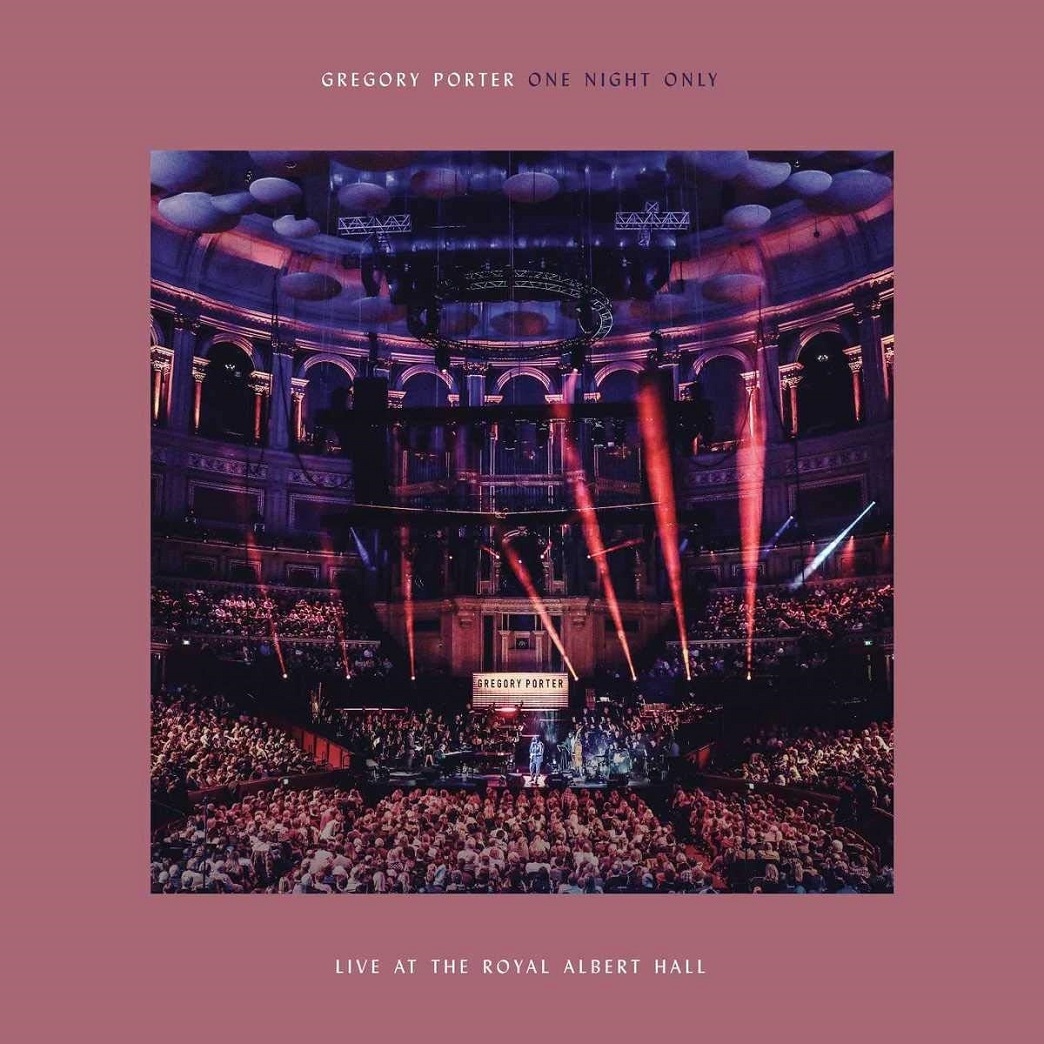
Gregory Porter - One Night Only Live At The Royal Albert Hall (BLUE NOTE 2018)


Gregory Porter One Night Only – Live at the Royal Albert Hall captures the two-time GRAMMY-winning singer in a stunning live performance at the famed London venue with his band accompanied by the London Studio Orchestra conducted and arranged by Vince Mendoza. Porter sings songs from his acclaimed recent album Nat King Cole & Me, as well as favorite songs of his own including “Hey Laura,” “No Love Dying,” “Don’t Lose Your Steam,” and “When Love Was King.”

1. Mona Lisa (04:13)
2. But Beautiful (04:49)
3. Nature Boy (03:36)
4. L-O-V-E (01 :58)
5. Quizas, Quizas, Quizas (04:02)
6. Miss Otis Regrets (04:00)
7. Pick Yourself Up (02:56)
8. In Heaven (02:54)
9. When Love Was King (07:09)
10. The Lonely One (04:04)
11. Ballerina (02:22)
12. No Love Dying (05:25)
13. I Wonder Who My Daddy Is (03:38)
14. Sweet Lorraine (02:30)
15. For All We Know (05:27)
16. The Christmas Song (03:51)
17. Smile (04:09)
18. Hey Laura (03:36)
19. Don’t Lose Your Steam (06:29)

Playlist for Tom Ossana ~ The Thin Edge ~ December 12, 2018 MST 7:00 to 9:00p.m.


http://www.kzmu.org/listen.m3u ~ Use this link to access the show online.


Sunday, December 9, 2018

Anguish - Anguish (RareNoise Records 2018)


The dark, impossibly intense dirges, industrial noise onslaughts and banshee-like free jazz wailing heard throughout Anguish could be an imposing soundtrack for a dystopian, post-apocalyptic future. This powerhouse, inter-generational offering and RareNoise Records debut brings together an unlikely gathering of members of the New Jersey-based experimental hip-hop group Dälek (electronic musician and vocalist Will Brooks with guitarist-keyboardist Mike Mare), the Swedish free jazz group Fire! Orchestra (tenor saxophonist Mats Gustafsson, drummer Andreas Werliin) and the classic ‘70s German krautrock band Faust (keyboardist and 68-year-old founding member Hans Joachim Irmler). 

Recorded in just three days during the summer of 2018 at Faust’s Scheer Studios, located in a former factory perched on the banks of the Danube in Swabia, Germany, near the Swiss border, Anguish stands as a hard-hitting manifesto for the next evolution in the hip-hop legacy. 


From the droning opener, “Vibrations,” fueled by ambient loops and sparked by Gustafsson’s cathartic, blast furnace intensity on tenor, to the slamming, industrial-tinged closer, “Wümme,” Anguish is an iron fist upside the head of complacency. “Cyclical Physical” is the sound of rage with an in-your-face rap from Brooks while the moody title track features a jazzy backdrop that has Gustafsson nimbly shadowing Brooks’ pointed spoken word rap. “Gut Feeling” is a hard-edged noise rock / metal romp with Brooks shouting the combative refrain: “Fuck your frail feelings!” 

The instrumental interlude “Brushes for Leah” is a dark, imposing soundtrack underscored by drummer Werliin’s subtle brushwork while Brooks spits thought-provoking verse with flowing aplomb on the ambient backdrop of “Healer’s Lament.” 

Gustafsson erupts with caustic abandon on the throbbing instrumental “DEW” then blows sinuous lines around Brooks’ vitriolic rap on the low-end industrial groover “A Maze of Decay.” Werliin's thunderous backbeat drives the kinetic closer “Wümme,” a krautrock flavored instrumental named for the rural German town where Faust formed in 1971. 


Will Brooks (dälek) - vocals, SAMPLR, Eventide/Elektron effect pedals, 1 note on MOOG rogue, 3 notes on grand piano
Mats Gustafsson - tenor saxophone,
live - electronics, 3 notes on grand piano
Hans Joachim Irmler - synthesizers, vocals
Mike Mare - guitar, electronics, synthesizer
Andreas Werliin - drums, percussion

Tracklisting:

Vibrations
Cyclical/Physical
Anguish
Gut Feeling
Brushes for Leah
Healer’s Lament
DEW
A Maze of Decay 
Wümme 

Recorded and mixed by Johannes Buff
Assistant Engineer: Jan Wagner
Recorded at Faust Studios
Scheer, Germany July 14 - 19, 2018
Mixed at END NOTE
Bayonne, Basque Country July 23 - 27, 2018

Spiritual counsel - LENNI

Mastered by Michael Fossenkemper
Mastered at Turtle Tone Studios, NYC, NY

All songs composed by Will Brooks, Mats Gustafsson, Hans Joachim Irmler, Mike Mare, and Andreas Werliin
All song published by Mayan Ruins Music (SESAC), Mike Mare Music (BMI),
All lyrics by Will Brooks, Mayan Ruins Music (SESAC) except “Healer’s Lament” by Kamau Daáood.
Executive Producer for RareNoiseRecords:
Giacomo Bruzzo
Design & Layout by Paul Romano
Sculpture by Darla Jackson


Eraldo Bernocchi - Like A Fire That Consumes All Before It (RareNoise Records 2018)


RareNoiseRecords co-founder, multi-instrumentalist and composer Eraldo Bernocchi has created an evocative soundtrack for a new documentary film on American artist Cy Twombly. Imagined and produced by Michele Buongiorno, written and directed by Andrea Bettinetti, Cy Dear was presented privately at the Museum of Modern Art in New York City in the Spring of 2018 and will have its festival premiere this Fall. Bernocchi’s soundtrack is suitably atmospheric, underscoring the life and times of the American painter-sculptor-photographer, whose work influenced a generation of younger artists including Jean-Michel Basquiat, Anselm Kiefer, Francesco Clemente and Julian Schnabel. 

“I had total freedom from the director and the production,” says the Italian guitarist and electronics maestro on creating the soundtrack to Cy Dear. “We worked as a team in order to create the best film possible in total freedom. Nobody ever asked me to change anything as my ideas were reflecting in a natural way those of the director and production. Each one of us melded and worked as if we had known each other forever. The end results are an incredible documentary and this record.” 

While the atmospheric soundtrack to Cy Dear may recall Bernocchi’s previous ambient recording on RareNoise, 2005’s Winter Garden, his very personal statement on Like a Fire That Consumes All Before It casts its own compelling spell on listeners. “This work bears my signature,” he says. “It’s a side of me that’s always been there. Note after note, take after take, I became part of this story. I brought my memories.” 

Though 80% of the sounds heard on Like a Fire That Consumes All Before It were generated by guitars, Bernocchi’s main instrument, they are adroitly disguised by the composer through deft use of echo, delay and reverb. “I used guitars mainly as a tool and when I really wanted to ‘sing’ a theme,” he says. “I had this guitar theme that was ringing in my ears and I started to sing harmonies that were dragging the piece deeper and deeper into the memory waters, where everything starts to blur and only emotions are floating. So I approached the guitars like an orchestra, layering part after part, singing aloud what I was hearing in my head and heart. And when the music was emotionally taking over, I chose and selected those parts pushing on the edge of feelings.”

He cites the track “Like I Wasn’t There” as an example of using his sound processing techniques in the studio to create evocative feelings in the listener. “This is one of the most touching pieces of the soundtrack,” Bernocchi explains. “It’s about the whole relationship between father and son, the absence, the omnipresent art, the emptiness of rooms and palaces, the memories that slowly creep one after another until they build a story that is true but its communication form has been shaped by time and events.” 


Bernocchi adds that none of the tracks on Like a Fire That Consumes All Before It were named for individual Twombly paintings. “The titles are related to moments in the film, to my personal experience/story, to people that were important for Cy Twombly and to words or phrases they said in the movie. This work had actually started as a soundtrack but in the end it became a story — his story, their story, my story. There are a lot of personal things in the music, mostly private. There’s a deep sense of memory in the documentary, a sense of time gone, brief meetings. Scene after scene, I realized there was a lot of my personal path too.” 

As for the album title, the composer says, “It’s such a strong and meaningful phrase, perfectly describing my approach to life since I was a kid — the passion, the flame that in the end often consumes everything around yourself. Twombly painted it as part of the Iliad series but when I saw the paintings and the words I immediately thought it was perfect for the record.” 

The final track on the collection, “Near By Distance,” is the only one that generates a steady, highly charged rhythmic pulse. “It’s dedicated to my friend (Swiss-born Italian trance music producer and DJ) Robert Miles, who passed away last year,” says Bernocchi. “The pulse just happened by chance. I liked it and I kept it. The piano theme reminded me of Robert’s melodies. I often think that I’d love to play it for him.” 

Bernocchi’s created his soundtrack over a four-month span of intensive creativity. “I was inspired by the amazing and immortal story of this art giant,” he says of Twombly. “I was also inspired by his incredible paintings, by my memories, and also by the life he lived with Nicola dal Roscio, the adventures they surfed together. And in certain moments on this project I asked myself what Ennio Morricone, my favourite composer ever, would have done on specific tracks. He very likely would have reduced the number of instruments and layers to concentrate on themes and emotions. This is what I did on tracks where you can clearly ear a theme.” 

Being self taught, Bernocchi has evolved his own vocabulary in the studio. It’s an approach based more on emotion than notation. “I know how I want to feel when I listen to a track and the emotions I’d like to live,” he says. “And the challenge on a project like this, where I played all the instruments myself, was to temper all the ideas I was planning to use. I hate overproduced music. Super-layered tracks make me nervous. I trust one note, one single note, a riff. That riff can say more than a whole orchestra. So, I had to keep the ‘other me’ at bay sometimes and be absolutely merciless. Because in the end, Cy Twombly was the protagonist in this story, not me.” 


01 - Meet me where you know
02 - To make things float
03 - From a distance
04 - White
05 - The silver laugh
06 -A child and a pencil
07 - The gold house
08 - Like I wasn’t there
09 - A letter and a place
10 - The never ending pier
11 - 1-10” of happiness
12 - Swirling colours
13 - We had a good time
14 - A crack in time
15 - The space between
16 - Out in the blue
17 - Like I wasn’t there (reprise)
18 - Near by distance

Music from and inspired by the film “Cy Dear”
A documentary film about Cy Twombly

“Near by Distance” dedicated to Robert Miles
“Out in the blue” dedicated to Sally Mann

All music composed, arranged, produced and mixed by Eraldo Bernocchi
Published by RareNoisePublishing (PRS) and Antiphona (SACEM)
Recorded at Transmutations Studios, London
Mastered at Turtletone Studios (NYC) by Mike Fossenkemper
Executive Producer for RareNoiseRecords: Giacomo Bruzzo
Eraldo Bernocchi plays Nude Guitars and thanks Elektron Music Machines.

Cover image: Cy Twombly, "Fifty Days at Iliam (Part V - The Fire That Consumes All Before It)", 1978
© Cy Twombly Foundation, Courtesy of the Nicola Del Roscio Archives
Graphic Design by Petulia Mattioli


Colin Edwin and Lorenzo Feliciati - Twinscapes Vol​.​2: A Modern Approach To The Dancefloor (RareNoise Records 2018)


Bassists Colin Edwin and Lorenzo Feliciati Blend ‘80s Pop and Prog On Twinscapes Vol.2: A Modern Approach To The Dancefloor 

For their second Twinscapes collaboration, bassists Colin Edwin (of Porcupine Tree and Metallic Taste Of Blood) and Lorenzo Feliciati (Naked Truth, Berserk!) address their respective ‘80s pop roots in the context of the same ambient soundscapes, freewheeling improvisations and prog-rock flurries that graced their 2014 self-titled RareNoise Records debut. Picture Soft Cell jamming with King Crimson, Ultravox with EL&P, Depeche Mode with Gentle Giant and you’ve got an idea of what’s happening on Twinscapes Vol.2: A Modern Approach To The Dancefloor.

In exploring dance floor music on Twinscapes 2, multi-instrumentalists Edwin and Feliciati pay homage to some iconic ‘80s bands while also pushing the envelope on that idiom. “As with the first album, there was no conscious decision or discussion to sound a particular way,” says Australian-born Edwin, “but I guess it’s the case that both Lorenzo and I have a connection with having played progressive rock and also that we were both around in the ’80’s, so that shared history has kind of come out on this record. As before, we’ve simply followed our instincts and common ground.” 

The Italian-born Feliciati recalls that, contrary to popular belief, the ‘80s was indeed a fertile period for musical experimentation. “I remember buying Genesis’ Trick of the Tail, which I still love today, and the first Devo album. And I clearly remember being exposed and enjoying music from new wave bands like The Stranglers, Human League, Ultravox and Japan together with fusion bands like the Mahavishnu Orchestra and Weather Report. I saw the last tour that Jaco Pastorius did with Weather Report promoting Night Passage…the night that changed my life. And I also remember going to see Talking Heads live with the Remain in Light band featuring Adrian Belew. From my point of view, everything happening in music then was with elements of Prog, Jazz, Rock, African music. So I always disagree that the ‘80s was a poor decade for music.” 

Edwin heartily concurs. “I think there was some really quite unusual and adventurous music on the charts back in the ’80’s, Japan being a great example. They had chart success but the music was quite unique and very original. Though a little more obscure, another example would be Stump, whom I first saw playing live on prime time TV. I can’t imagine a present day equivalent getting similar exposure.” 

Edwin also remembers the ‘80s being a particularly bass-centric era for music. “I was certainly aware of Ultravox, Soft Cell and Human League, all bands who were known for using synths and adopting the nascent technology of the time. But there was also a lot of really upfront and prominent bass playing in that era, from mainstream things like Mark King with Level 42 and Pino Palladino on those Paul Young records to things like Siouxsie and the Banshees and Bauhaus, Peter Hook with Joy Division and New Order, Bruce Thomas with Elvis Costello and Kevin Hopper with Stump.” 

Edwin and Feliciati apply their own formidable bass chops to the ten potent tracks on Twinscapes Vol. 2, while Lorenzo adds on keyboards and guitars in the studio and Colin contributes rhythm design and programming. They share bass duties on all tracks, with Edwin focusing strictly on his signature singing fretless bass sound and Feliciati alternating between groove-heavy fretted bass and more lyrical fretless bass. “One of the great things about working with Lorenzo is that we don’t really need to discuss things a great deal,” says Edwin. “We often have similar ideas about how things should fit together or how to create a full sound without getting in each other’s way. We’re also a good partnership in that we share enough similar opinions and ideas to fit together without conflict, but we have enough differences to make things move in unexpected directions and push each other to try new ideas.” 


Adds Feliciati, “Twinscapes is a dual bass project but from my point of view it's a creative collaboration between two composers/multi instrumentalists/ arrangers and producers. I am sure that who bought the first album will be delighted from this new one. It's 100% Twinscapes. We are a ‘progressive’ band because we like to let the music show the direction instead of using the same formula again and again. It's been very natural, when we start to compose a song together — or exchange files — to let the music drive us instead of trying to push it in a more planned direction. It’s fun and always challenging.” 

Twinscapes Vol.2 opens with the straight-up dance floor number “Tin Can,” which is actually a nod to’70s experimental German ‘krautrock’ band Can while pieces like "Future Echo," "Precipice" and "Heat Collison" carry more of a prog-rock/fusion vibe. “We certainly have to acknowledge a certain prog-rock and fusion influence,” says Edwin, “but to me it’s all just about making the music work in an interesting and engaging way. And actually I think ‘Heat Collision’ has quite an emotional pull. For me, it has a real atmosphere.” 

The moody “Bedroom Corner” features Edwin playing the melody on fretless bass while Feliciati holds down the groove on fretted bass. “In a Haze” has Edwin exploring eBow on his fretless bass before the pieces builds to a grand bass crescendo. Edwin’s singing fretless bass is also prominent on “The (Next) Level” while the slow rolling anthem “In a Daze” builds to orchestral proportions on the strength of Feliciati’s layered distortion guitars. 

One of the more intriguing tracks on the album is “Severing Suns,” which blends rich chord voicings with Gregorian-styled choral music and prominent fretless bass playing. “This is really quite a special track,” says Edwin. “Voices and vocals in general really fascinate me, and I have a special fascination for the connection between voice and bass. It’s perhaps our most experimental track with a lot of unexpected elements: the blend of basses, vocals, electronics, and textures, but with a strong groove too.” 

The exotic “Ghost of Tangier” is a powerful showcase for Twinscapes drummer Robert Gualdi. “It’s really meant as a space for Roberto to do his thing,” says Edwin. “We often have a track in the live set where we create some textural backing for him to improvise against and this is a quite similar to a lot of those moments. Roberto is an all-around creative drummer, equally comfortable with odd times and slamming 4/4, playing structured parts and also improvising. 
He has the requisite sensitivity for the more reflective moments but he’s not afraid to let his inner hooligan out for the rockier parts too.” 

Adds Feliciati, “On that track we gave Roberto complete freedom. It’s basically a drums solo/composition where we added all the textures to boost the atmosphere that was already there with just drums. Roberto is an incredibly musical drummer, not a common thing. He is a top session man and he is one of the busiest drummers in Italy, but in Twinscapes he helps the music with a very creative approach and doing a deep research for the right sounds. And he is always groovy and in the pocket. After his contribution on the first Twinscapes album we did a lot of gigs as a trio with him and we were extremely pleased by his musicality. There is quite a lot of improvisation in our performance so Twinscapes needs a very solid drummer but one with a creative approach and with big ears. Roberto is all of that, and he is also a wonderful person to work, travel and play with.” 

Regarding the nature of their collaborative process in the studio, Edwin explains, “We tend to make decisions and work very fast, and there’s a mixture of improvisation and carefully structured elements for sure. And in fact, there are a lot of moments across various tracks where I can’t distinguish who is doing which part, or where I’ve completely forgotten who did what. So we’ll certainly have some fun when it comes to playing these tracks live.” 

While this second Twinscapes outing is a continuation of Edwin’s and Feliciati’s indelible chemistry together in the studio, they hint at even more things to come in the future. “We’re still exploring for sure,” says Edwin. “Twinscapes is much more than just an excuse to dig out my ebow and more obscure pedals and pick up the bass. I think Lorenzo and I have a really good creative partnership and we have done some really memorable gigs too. So we still have a lot more to discover and I am looking forward to playing this new material live. As with the tracks from the first album, I am sure they will be great to explore and develop in front of an audience.” 


Steve Kuhn Trio - To and From the Heart (SUNNYSIDE RECORDS 2018)


Having just celebrated his 80th birthday, pianist Steve Kuhn has continued to get to the heart of things with his long-standing trio of bass guitarist Steve Swallow and drummer Joey Baron. The ensemble’s deeply resonant relationship can be heard on their new recording, To and From The Heart, a poignant collection of pieces that showcases these masters’ highly wrought abilities in wringing emotion from the ether. 

The legendary Kuhn has been a notable exponent of jazz’s adaptability and creativity since his professional debut nearly 60 years ago. His early work with the leaders of jazz’s vanguard, including Coleman Hawkins and Chet Baker, along with his forays into the avant-garde with John Coltrane, Gary McFarland and Pete La Roca, amongst many others, have solidified his credentials. 

The past few decades have found the pianist focusing more and more on the expressivity of the piano trio format. Kuhn has worked with a number of different amalgamations of musicians of the highest caliber, including Ron Carter, Jack DeJohnette, Buster Williams, etc. But it has been his most recent trio roster that he has found most comfortable over the last two decades. 

Bassist Steve Swallow is a perfect foil for Kuhn, as he can be a supportive part of the rhythm team or highly tuneful solo voice. His remarkable ability as a composer is also highlighted on To and From The Heart, as it features two of his original compositions. Drummer Joey Baron is the heartbeat of this body, as he can be a font of energy or a cool stabilizer. 


To and From The Heart was recorded at the illustrious Sear Sound Recording Studio in New York in September of 2017 with the assistance of producer Artie Moorhead and engineer Katsuhiko Naito. 

The program begins with Swallow’s “Thinking Out Loud,” a bright but introspective piece that allows for thoughtful solos from Kuhn and Swallow. Leslie Bricusse and Anthony Newly’s waltzing “Pure Imagination” floats in a tide of nostalgia and calm. Swallow’s “Away” is quietly devastating with its simplicity and beauty. The heartrending continues with Raymond Evans and Jay Livingston’s touching “Never Let Me Go,” which leads to Michika Fukumori’s upbeat and lively “Into The New World.” The recording concludes with a long rumination on two of Kuhn’s original pieces, “Trance / Oceans In The Sky,” providing a sweeping and dramatic close. 

Over his career, Steve Kuhn has fashioned his music into a conduit for emotion. His new recording, To and From The Heart, with his grand trio of Steve Swallow and Joey Baron encapsulates his ethos of wearing his feelings on his sleeve and to express them with the most reciprocative of bandmates.

Steve Kuhn - piano
Steve Swallow - bass guitar
Joey Baron - drums

1. Thinking Out Loud 07:49
2. Pure Imagination 06:15
3. Away 06:00
4. Never Let Me Go 04:38
5. Into The New World 05:29
6. Trance/Oceans In The Sky 16:29


Saturday, December 8, 2018

Ivan 'Mamão' Conti - Poison Fruit (FAR OUT RECORDINGS January 25, 2019)


From an artist in their seventies, you probably wouldn’t expect to hear an album like this. But Brazilian drumming legend Ivan ‘Mamão’ Conti has been experimenting and innovating for the last half a century. As one third of cult Rio jazz-funk trio Azymuth, Mamão was at the root of the group’s ‘samba doido’ (crazy samba) philosophy, which warped the traditional samba compass with jazz influences and space age electronics. Even with his lesser known jovem guarda group The Youngsters, Mamão was experimenting with tapes and delays to create unique, ahead-of-its-time sounds, way back in the sixties. More recently Mamão recorded an album with hip-hop royalty Madlib under the shared moniker ‘Jackson Conti’. 

With his first album in over twenty years, and the first to be released on vinyl since his 1984 classic The Human Factor, Mamão shares his zany carioca character across eleven tracks of rootsy electronic samba and tripped out jazz, beats and dance music. Featuring Alex Malheiros and Kiko Continentino on a number of tracks, the Azymuth lifeblood runs deep, but venturing into the modern discotheque (as Mamão would call it), Poison Fruit also experiments with sounds more commonly associated with house and techno, with the help of London based producer Daniel Maunick (aka Dokta Venom) and Mamão's son Thiago Maranhão. 

Ivan 'Mamão' Conti

Take a bite of Mamão’s psychoactive Papaya and join the maestro on a weird and wonderful stroll through the Brazilian jungle. 

United by a love for the music of Mamão and Azymuth, the CD and digital edition also feature the previously released remixes and dubs from some of today’s most forward-thinking producers with a penchant for percussion, including IG Culture, the 22a crew, Max Graef and Glenn Astro. 

1. Aroeira
2. Jemburi
3. Encontro
4. Bacurau
5. Ninho
6. Ilha Da Luz
7. O Ritual
8. Poison Fruit
9. Que Legal
10. Ecos Da Mata
11. Tempestades
12. Ilha Da Luz (aka Mamão’s Brake) Tenderlonious Remix
13. Encontro (aka Azul) Glenn Astro Remix
14. Que Legal Reginald Omas Mamode IV Remix
15. Encontro (aka Azul) Max Graef Remix
16. Poison Fruit (Dokta Venom's Digital Dub Mix)

Os Catedraticos - Ataque [1965] FAR OUT RECORDINGS December 2018


One of Brazil’s most prolific artists, Eumir Deodato has racked up 16 platinum albums, won a Grammy (and been nominated for two more), and sold over 250 million records in the USA alone. After moving from Rio de Janeiro to New York in the late 60’s, Deodato would work as a composer, arranger, producer and keyboardist on nearing 500 records, under his own name and with the likes of Aretha Franklin, Earth Wind & Fire, Frank Sinatra, Kool & The Gang, George Benson, Tom Jobim and Bjork, to name a just a few. 

But before that, a young Deodato had already cemented his status in Brazil as one of the country’s top musical minds. In the mid-sixties, when he wasn’t working with the likes of Roberto Menescal, Joao Donato, and Marcos Valle, Deodato recorded a string of albums with his lesser known instrumental samba jazz and bossa nova ensemble Os Catedráticos. 

Eumir Deodato

A masterpiece of hip Brazilian swing, Ataque reflects the deeper, groovier side of that magical, hazy sound of sixties Rio, with monster samba grooves backing big brass arrangements and scorching organ solos. Amongst Deodato’s own tracks, there are compositions by Marcos & Paulo Sergio Valle, Baden Powell and Luiz Bonfa, arranged for a big horn section, which includes trombone player Edson Maciel, and given an extra dose of cool from the inimitable drums of Wilson Das Neves and Ruebens Bassini on percussion. 

An elusive long player in the cannon of killer, groovy Brazilian music, with vinyl copies near impossible to find for less than three digits, Ataque finally gets the official Far Out reissue treatment: re-mastered from the tapes and pressed to 180g vinyl. Now available for the first time outside of South America. 

1. Ataque (Full Attack) 02:09
2. Os Grilos (Crickets Sing For Anamaria) 02:19
3. É Bom Parar 01:43
4. Feitinha Pro Poeta 02:00
5. Terra De Ninguém 03:28
6. Razão De Viver (A Little Tear) 03:11
7. Tristeza (Goodbye Sadness) 03:47
8. Samba Do Dom Natural 01:15
9. O Sol Nascerá 01:30
10. Samba De Rei 01:19
11. Até De Cavaquinho 02:12
12. Porque Somos Iguais 02:42

Itiberê Orquestra Familia - Pedra Do Espia (FAR OUT RECORDINGS 2018)


Itiberê Zwarg is an award-winning Brazilian bassist and the longest-serving member of Hermeto Pascoal’s ground-breaking ensemble ‘O Grupo’. Since their first meeting in 1977, the two have been closely collaborating to create a unique musical language: a genre-defying polyharmonic, polyrhythmic music, now widely studied by musicians and musicologists alike, known as ‘Universal Music’. 

Back in 1999, Itiberê led a workshop at Villa Lobos School of Music, with twenty-nine of Rio de Janeiro’s most exceptionally talented young musicians. Employing the principles of Universal Music alongside his long-held belief in the powers of listening and intuition, over the course of many months, with regular intensive 7 hour rehearsal sessions, Itiberê composed and arranged in real time, transcribing the improvisations of the prodigious orchestra while allowing the players freedom to experiment. The result was Pedra do Espia, an Amazonian orchestral masterpiece which is as difficult to categorise as it is fun to listen to. 

Itiberê Zwarg

Named after the beachside viewing point which translates as ‘Spy’s Rock’, where Itiberê would sit as a child, daydreaming and gazing out over the Brazilian coast, the record harnesses the pure creativity of youth and nature, creating a magical sense of innocence amongst the striking compositions and astonishing musicianship. 

On the original liner notes from the 2001 CD release, Itiberê guarantees the record to be “surprising in its uniqueness, it’s harmonic richness, it’s exuberant melodies and rhythmic variations like nothing heard before.” Bringing the album to vinyl for the first time, alongside a full 16 track CD and digital release, Far Out Recordings are honoured to present this overlooked masterpiece from one of the greatest minds in Brazilian instrumental music. 

1. Na Carioca 07:01
2. Bota Para Quebrar 06:17
3. De Coração Aberto 04:05
4. Forró No Encontro Dos Rios 04:07
5. Curupira 04:05
6. Arco-Iris De Som 03:36
7. No Varal 04:20
8. Toada Cigana 09:19
9. Doce 08:12
10. Vale de Luz 02:56
11. De Repente 06:23
12. Muito Natural 06:53
13. Ao Pé Da Lareira 06:23
14. Hora Da Prece 03:33
15. 17 De Janeiro 04:33
16. Pedra Do Espia 11:18