Friday, August 27, 2021

Kenny Garrett | "Sounds from the Ancestors" | August 27 via Mack Avenue Records

Kenny Garrett Recalls the Sounds of
West African Music and its Role in Jazz,
Gospel, Motown, Hip-Hop and More

Sounds from the Ancestors,
Available August 27 via Mack Avenue Records

Acknowledges Ancestral Roots
with Cosmopolitan Album that Both
Incorporates and Defies the Jazz Genre
with Stellar Contributions from
Vernell Brown, Jr., Corcoran Holt, Ronald Bruner
and Rudy Bird Plus Special Guests

Kenny Garrett’s latest release, Sounds from the Ancestors, is a multi-faceted album. The music, however, doesn’t lodge inside the tight confines of the jazz idiom, which is not surprising considering the alto saxophonist and composer acknowledges the likes of Aretha Franklin and Marvin Gaye as significant touchstones. Similar to how Miles Davis’ seminal LP, On the Corner, subverted its main guiding lights – James Brown, Jimi Hendrix and Sly Stone – then crafted its own unique, polyrhythmic, groove-laden, improv-heavy universe, Sounds from the Ancestors occupies its own space with intellectual clarity, sonic ingenuity and emotional heft.
 
Sounds from the Ancestors examines the roots of West African music in the framework of jazz, gospel, Motown, hip-hop, and all other genres that have descended from jùjú and Yoruban music,” explains Garrett. “It’s crucial to acknowledge the ancestral roots in the sounds we’ve inhabited under the aesthetics of Western music.”
 
Indeed, Sounds from the Ancestors reflects the rich jazz, R&B and gospel history of his hometown of Detroit. More important though, it also reverberates with a modern cosmopolitan vibrancy – notably the inclusion of music coming out of France, Cuba, Nigeria and Guadeloupe.
 
“The concept initially was about trying to get some of the musical sounds that I remembered as a kid growing up – sounds that lift your spirit from people like John Coltrane, ‘A Love Supreme;’ Aretha Franklin, ‘Amazing Grace;’ Marvin Gaye, ‘What’s Going On;’ and the spiritual side of the church,” Garrett explains. “When I started to think about them, I realized it was the spirit from my ancestors.”
 
The core ensemble for Sounds from the Ancestors consists of musicians that Garrett has recorded and toured with in recent past – pianist Vernell Brown, Jr., bassist Corcoran Holt, drummer Ronald Bruner and percussionist Rudy Bird. The album also features guest appearances from drummer Lenny White, pianist and organist Johnny Mercier, trumpeter Maurice Brown, conguero Pedrito Martinez, batá percussionist Dreiser Durruthy and singers Dwight Trible, Jean Baylor, Linny Smith, Chris Ashley Anthony and Sheherazade Holman. And on a couple of cuts, Garrett extends his instrumental palette by playing piano and singing. 
“It’s Time to Come Home,” a sauntering yet evocative Afro-Cuban modern jazz original, kicks off the album. Garrett’s melodic passages, marked by capricious turns and pecking accents, signals a “call to action” for kids around the world to come home after playing outside all day. While Garrett originally composed the song in 2019, this incarnation reflects his experiences playing with iconic Cuban pianist and composer Chucho Valdés.
 
Garrett then pays tribute to the late, great trumpeter and composer Roy Hargrove with the dynamic “Hargrove,” a bracing original that evokes the namesake’s mastery of reconciling hard-bop’s intricate harmonic and interactive verve with late-20th century hypnotic R&B grooves and hip-hop bounce. The song also slyly references John Coltrane’s A Love Supreme, which accentuates both the earthy and spiritual nature of Hargrove’s music and Garrett’s saxophone virtuosity. “What I respected about [Hargrove] is that he was borrowing from all the different genres, different experiences and bringing it to the table,” Garrett says. “And that's what I did on this track.”
 
Traces of the Black American church also surge through “When the Days Were Different,” a warm mid-tempo original with a melody that faintly recalls Sounds of Blackness’ 1991 gospel classic, “Optimistic.” “The idea was to take it back to the church,” Garrett explains. “[The song] reminds me of being at a gathering with family and friends having a good time eating, drinking and spending quality time together.”
 
On the rhythmically intrepid “For Art’s Sake,” Garrett pays homage to two legendary drummers – Art Blakey and Tony Allen. Bruner concocts a stuttering rhythm that alludes to both modern jazz and Nigerian Afrobeat, while Bird adds polyrhythmic fire with his circular conga patterns. On top, Garrett issues one of his patented searing melodies that twists and swirls as the propulsion slowly gains momentum.
 
Drums and percussion are again highlighted vividly on the swift “What Was That?” and “Soldiers of the Fields/Soldats des Champs.” The former finds Garrett in quintessential form as he navigates through a thicket of torrential polyrhythms and a jolting harmonic bed with the steely determination and dexterity associated with Coltrane and Jackie McLean. The latter is a magnificent two-part masterpiece that integrates martial beats, Guadeloupean rhythms and a haunting cyclical motif on which Garrett crafts pirouetting improvisations that dazzle with their initial lithe grace and increasing urgent wails. Garrett explains that “Soldiers of the Fields/Soldats des Champs” is a tribute to the legion of jazz musicians who fought to keep the music alive. “They’re the first ones to get hit and shot at in the line of fire on the fields of justice. ‘Soldats des Champs’ is also a tribute to the Haitian soldiers who fought against the French during the Haitian Revolution.” 
 
The leader’s love for Afro-Cuban jazz returns on the dramatic title track, which begins with Garrett playing a slow melancholy melody on the piano before the music gives way to a soul-stirring excursion, filled with passionate vocal cries from Trible and moving Yoruban lyrics from Pedrito, paying respect to Orunmila, the deity of wisdom. “[The song] is about remembering the spirit of the sounds of our ancestors – the sounds from their church services, the prayers they recited, the songs they sang in the fields, the African drums that they played and the Yoruban chants,” Garrett says. The album closes as it opened with “It’s Time to Come Home;” this time Garrett uses his saxophone as a rhythmic instrument to have a conversation with the percussionist without the vocal accompaniment.
 
With his illustrious career that includes hallmark stints with Miles Davis, Art Blakey and The Jazz Messengers, Donald Byrd, Freddie Hubbard, Woody Shaw and the Duke Ellington Orchestra, as well as a heralded career as a solo artist that began more than 30 years ago, Garrett is easily recognized as one of modern jazz’s brightest and most influential living masters. And with the marvelous Sounds from the Ancestors, the GRAMMY® Award-winning Garrett shows no signs of resting on his laurels.

1. It’s Time to Come Home
2. Hargrove
3. When the Days Were Different
4. For Art’s Sake
5. What Was That?
6. Soldiers of the Fields / Soldats des Champs
7. Sounds from the Ancestors
8. It’s Time to Come Home

Stream Singles "For Art's Sake" (avail. June 18)
and "Sounds from the Ancestors" (avail. July 23)

Web Web x Max Herre - Web Max (August 27, 2021 Compost Records)

The fourth album by Web Web “WEB MAX” is a great spiritual jazz work - sometimes floating, sometimes soulful, always intense, and a wonderful homage to early 70s Jazz. Web Web mastermind Roberto Di Gioia is accompanied for the first time by Max Herre as a composer, musician, and producer. Both came together with guest musicians such as Mulatu Astatke, Brandee Younger, Charles Tolliver (Strata East), and others to deliver a virtuoso masterpiece.

WEB MAX
In the winter of 2014, German rapper/producer Max Herre and Italian-German pianist Roberto Di Gioia played a tremendous show together. The two had been guest musicians at a few gigs for Gregory Porter, who in turn kindly accepted their invitation to perform at Herre’s MTV Unplugged session (produced by Herre alongside Di Gioia and Samon Kawamura as production team KAHEDI). Porter’s approach to the jazz quartet inspired Max to reflect how a rap artist could work in a more freely-flowingmusical environment. Di Gioia’s inspiration was a bit more straightforward: in the 80s, Di Gioia had played with jazz legends like Woody Shaw, Johnny Griffin, and James Moody, but he’d largely left the jazz stages of his early years behind — just one random jam session with Porter’s musicians during soundcheck relit his passion immensely. A short time later, Herre called Di Gioia saying “Let’s get a spiritual jazz session going.”

Now, six years later, the album WEB MAX is the amazing result from the spur of that moment. It is a wonderful homage to the cosmic open-mindedness of early 70s jazz, to the transcendent sublimity of spiritual sound.

WEB MAX is the fourth album in four years by the highly acclaimed Web Web quartet, consisting of keyboardist/pianist Roberto Di Gioia, saxophonist Tony Lakatos, bassist Christian von Kaphengst, and drummer Peter Gall, all of them longtime performers of the highest virtuosity, signed to Michael Reinboth’s Compost Records.

The one and a half minute intro is called “The Prequel,” introducing the journey with feverish drums, nervous bass, hoarse saxophone, and splintering piano. It kicks and feels like a lost recording from a jazz cellar of the late 60s. “But it was actually created in the KAHEDI apartment studio in Berlin,Kreuzberg,” says Di Gioia with a grin. On one hand, the song is unusual, because the rest of WEB MAX was recorded during completely analog sessions that the band and Herre recorded between 2018 and 2020 in the legendary Munich Mastermix-Studio.

At the same time, it nicely illustrates the threshold on which the project moves. As impressively as WEB MAX evokes a bygone era, it moves confidently into the here-and-now. The slightly distorted sound, for example, comes from a four-track recorder that Di Gioia transferred the recordings to, and then bounced them from. Not a replica, but an emulation. Or like Roberto Di Gioia states: “The very own derivative of the absorbed.”

A good example is Turquoise,” inspired by the famous Lebanese singer Fairuz (Arabic for turquoise) and her brother-in-law, the composer Elias Rhabani. The wide, flattering melodic arc plays with all sorts of African and Eastern influences, like it was recorded for a Middle-Eastern Quentin Tarantino movie. The ballad “Thesa-Mbawula” – with its flowery, musing melody – is reminiscent of the South African pianist Abdullah Ibrahim. Furthermore, it is a nod to Herre’s father-in-law (the father of Herre’s wife, soul singer Joy Denalane) – the title means “Embers,“ which was his nickname as a soccer player during his youth in Johannesburg.

And emphatically, WEB MAX creates a direct connection into history. The song “Intersections” features the 79 year old trumpeter Charles Tolliver, whose label Strata East was perhaps the most important center of spiritual soul jazz in the early 70s. Jazz history also runs through the biography of Di Gioia, who played with deep jazz legends like Clifford Jordan and Buster Williams from Munich to Detroit in the mid-80s.

“Meskel Flower” features Mulatu Astatke, the father of Ethio-jazz. That collaboration came about thanks to Ben Abarbanel-Wolff (heard playing saxophone on “The Prequel”), who played with Astatke’s backing band The Heliocentrics. “Ben introduced us to Astatke after a concert in Berlin, and the next day we were together in the studio,” recalls Herre. With his vibraphone, Astatke conjures up the pentatonic scale emblematic of Ethio-jazz, which itself was the result of a cultural exchange — in the early 60s, Astatke was the first African to study at the prestigious Berklee College in Boston, and he brought jazz back to his homeland in the early 70s.

On “Satori Ways,” New York-based Brandee Younger brings a touch of atmospheric depth with her harp, evoking the spirit of pioneers like Dorothy Ashby and Alice Coltrane. Tony Lakatos‘s dark-hued alto flute illuminates the unusual timbres and arrangement of this piece.

The only words on the album belong to Yusef Lateef, the great saxophonist and flutist who passed away in 2013. On “Akinuba / The Heart,” in the form of a poem Lateef talks about “The Heart” along a repetitive bass line. “I was particularly impressed by his musical lyrics. And how close his music melts with the topics he is talking about; says Herre. The poem ends with the words: the heart is born pure.”

Herre’s voice, on the other hand, can only be heard as an occasional whispering falsetto in cosmic spheres. His electronic “rustle” (as he calls it) and the groovy, minimalist thrusts of his Wurlitzer may seem modest at first amid the other virtuoso instrumentalists. However, it is precisely this simplicity that proves to be an integral piece. “Simplicity is sometimes the most sophisticated effort”, explains Di Gioia. “And he has something special there that I don’t have. Max plays like an indie guitarist who just hits that one note that makes people freak out.“ And Herre replies with a laugh: “I am a rhythm pianist. I actually just play a few repeating chords at a time, almost like a hip-hop sample.“

Herre’s love for jazz goes back to his teenage years in Stuttgart, way back before his hip-hop career.

And that too began around 1990, when jazz became a go-to for hip-hop groups like A Tribe Called Quest or Gang Starr. This influence carries from Herre‘s former group Freundeskreis, to his solo albums produced with Di Gioia, and finally all the way to WEB MAX. “I benefit from my experience with hip-hop, because there is an importance of continuing on the loop.“ says Herre. 

Of course, it also brings something to bear in the production process, in the subtleties or niceness of its texture. And last but not least, Herre says it was Kendrick Lamar who played an important role in the renewed interest in spiritual jazz by the masses — Lamar’s work with musicians like Kamasi Washington has resulted in a new interest in jazz artists. “But in the end, this genre is also about communication, unity, and being deeply moved,” says Herre in the Zoom call. “Just as with instrumentalists, any virtuosity is internalized. Same as I am coming from the story, I have to conduct the story.” While Di Gioia adds: “It’s very emotional what we’re playing here, it is not interchangeable. It all comes with love from the heart, with all the energy and spirit we have.”

1. The Prequel
2. Satori Ways (feat. Brandee Younger)
3. Akinuba / The Heart (feat. Yusef Lateef)
4. Meskel Flowers (feat. Mulatu Astatke)
5. Intersections (feat. Brandee Younger & Charles Tolliver)
6. Turquoise
7. Liberation March
8. Thesa-Mbawula
9. Whirlin‘
10. The Sequel

Band members:
Max Herre – Wurlitzer, Synthesizers, Percussion, Backing Vocals
Roberto Di Gioia – Fender Rhodes, Piano, Organ, Synthesizers, Percussion Tony Lakatos – Flute, Altoflute, Tenorsaxofone
Christian Von Kaphengst – Upright Bass, Fender Jazzbass
Peter Gall – Drums, Percussion

Special Guests:
Charles Tolliver – Trumpet („Intersections“)
Mulatu Astatke – Vibes („Meskel Flowers”)
Brandee Younger – Harp („Akinuba“, „Intersections“)
Yusef Lateef – Words („Akinuba“)
Ben Abarbanel-Wolff – Tenorsaxofone („The Prequel“)
Philip Sindy – Trumpet („Intersections “, „Thesa-Mbawula“, „The Sequel“)

Alex Lefaivre Quartet - Naufragés (Friday, August 27th 2021 on Multiple Chord Music)

Alex Lefaivre is a bassist, composer and educator based in Montreal. He is a founding member of Parc X Trio, winners of the 2010 TD Grand Prix de Jazz at the Festival International de Jazz de Montréal. He is also a founding member of Multiple Chord Music (MCM), a jazz label that has released over fifty recordings by many of Quebec’s top jazz artists including Gentiane MG & Frank Lozano, Benjamin Deschamps, Rachel Therrien, Rémi-Jean LeBlanc, Joel Miller, François Jalbert & Jérôme Beaulieu.

On his new album Naufragés (“Castaways”), Lefaivre presents a mix of five original compositions and three covers that reflect his contemporary aesthetic and visceral sound. After many failed attempts at scheduling the recording during to the COVID 19 pandemic, the group finally managed to assemble at Montreal’s Studio Madame Wood on April 5th 2021. Recorded over the course of two spontaneous sets of music, the listener can feel the urgency and sheer joy erupting out of Alex and his bandmates Erik Hove, Nicolas Ferron and Alain Bourgeois. The session was recorded and mixed by Simon l’Espérance and was mastered by LeFaivre himself.

Naufragés’ eclectic and cinematic contemporary jazz style features echoes of punk, disco, Film Noir and even reggae, giving the music a biting energy that oscillates freely between raw, rough textures and moments of refined grace, all the  while leaving lots of room for these brilliant musicians to stretch out.

Naufragés will be released worldwide on Friday, August 27th 2021 on Multiple Chord Music.
1. Time of the Barracudas 5:34
2. Boiler Room 7:43
3. Sneaked 6:09
4. Hommage jazz à “Passe Partout” 3:55
5. Reset 7:39
6. Sly 6:42
7. Sin City 6:21
8. Immigrant Song 4:48

Erik Hove - Alto Saxophone
Nicolas Ferron - Guitar
Alex Lefaivre - Bass
Alain Bourgeois - Drums


Ex-Vitamins | "Ex-Vitamins" | Available August 27th, 2021

Anonymous Performer and Composer
Recruits All-Star Cast for High Energy Project;
Encourages Artists to Respond Instinctually with First Take Recordings

Eponymous Release Ex-Vitamins
Features Mark Guiliana, Nate Smith, Ben Wendel,
Tim Lefebvre, Shayna Steele, and More

Available Everywhere August 27

There is something both soothing and terrifying when a schedule clears. The opportunity to reclaim a bit of time that had been put aside for someone else can feel like an unexpected vacation. How we react and what we create during those unexpected and challenging breaks is what sets us apart. Ex-Vitamins was on that perpetual touring/recording/touring carousel before everybody’s schedule cleared. They worked tirelessly in front of crowds that could rival the population of most American towns.
 
A curious anonymity can wash over a tight band playing before a stadium crowd. The personality in the spotlight becomes oversized while the rest of the band focuses on that amplification, holding up mirrors to create an even brighter center point. Ex-Vitamins knows those crowds weren’t there to see him. They were there to see his boss. Ex-Vitamins has a lot of friends who did that for a living; musicians who once referred to David Bowie, St. Vincent, Paul Simon, Taylor Swift, Demi Lovato, or others as the boss. 
 
During the world’s unexpected hiatus, Ex-Vitamins set about creating a project that resulted in a series of songs and hypnotic music videos that untangle a funky brain far from rehearsals and shows and tours. “I had always wanted to take what I’ve learned in those musical situations and do something creative with it. I kept referring to it as a laptop side project,” the elusive composer said from his modest New Jersey studio. “I didn’t want attachment to any preconceived notions about how it should sound or what lane it goes into. I just wanted to make music.” So, with the spotlight off and the world retreating to their electrified caves, Ex-Vitamins assembled some friends and created a whole different beast.
  
The energy of contact-less collaboration bursts through from the very first seconds of the album and never slows down. “Some of these guys play in situations where they need to play the same kind of thing night to night. When they did whatever they wanted to, I got some unexpected results. I never had to say, ‘can you try something else?’ I value these guys’ voices so much on their own instruments. I called them for a reason. I didn’t just need a guitar. I needed Max Bernstein on this. I didn’t just need drums. I need what Mark Guiliana or Nate Smith can bring. These are guys that have their own voice.”
 
And that sound is not bound by time or travel restrictions. This album was recorded by musicians in New York, California, Arizona, Tennessee, and France. Smith, who was in Nashville, pounds out a strong backbeat for “Intro” that makes way for an orchestra of sounds: New Power Generation horns rise up in waves; a limber and soulful piano solo fights for space. “On some of these tunes, when I sent the music out it was, ‘don’t listen to it until you are ready to record. First take. Have as many toys as you can in the room. Send it back.’” 
 
Guitarists Robin Macatangay and Bernstein join Smith for “Are You Proud.” Together they engage in a funky rhythm guitar battle whose essence floats through the next two tracks as Bernstein stays for “Toronto” and “Ism.,” the latter of which takes the affair down a different ‘80s avenue. Visions of Morris Day and Rick James dance above Guiliana’s unmistakable drum kit. “Some of these songs initially felt like I was waiting for someone to come lay a topline melody, but the more I played them the more I got used to them existing on their own. Now I think adding anything else would get in the way,” says Ex-Vitamins.
 
“Hello, Let’s Go” features haunting synthesizers amid pounding drums. As the tune builds, another voice enters that shifts the whole experience. “I wrote a bridge to it and sent it to saxophonist Ben Wendel and he put the whole thing into outer space. There’s something very fulfilling about that arpeggiated bass line, that pulsing feel. It feels like it could go on forever.”
  
Vocalist Shayna Steele provides the swagger for “Fake Out,” her enthusiasm carrying the tune with a force that evokes great shouters like Tina Turner and Merry Clayton. Like any funky endeavor, a lot of weight falls on the bass player. Tim Lefebvre does here, as he does elsewhere on the album, just what makes him such an in-demand low-end master. “Every time I think I know what Tim’s going to play, he plays something else that’s even hipper. That’s the mark of an unbelievably creative musician,” says Ex-Vitamins. Drummer Chris Kimmerer is no slouch either. His driving push makes this collaboration a standout.
 
Ex-Vitamins bookends the album with a nod to their jazz roots in moments of lithe dexterity. “I wanted something athletic” he says of the unexpected solo, his sound is aggressively showered with a weighty grind. “You Are #9” brings back a few of the albums stand-out performers - Lefebvre, Guiliana, Kimmerer, Bernstein – for one last hurrah, an ascending thump in an optimistic direction.
 
“This past year was a time when everybody got a lot of perspective on what it is they do and what it is they like to do. That informs what I asked for from them, and it informs what they gave me. I was more open than ever to say, ‘do your thing.’ I want to have even less say in how it is that you do it,” says Ex-Vitamins on his first, self-titled album Ex-Vitamins. And that’s the point. Music for music’s sake. What secrets lie stacked in the basement studio? Who wants to help find out? The results may surprise you.

For more information on Ex-Vitamins, please visit:

Rodrigo Domínguez / Mariano Otero / Sergio Verdinelli - Borocotopo (August 27, 2021 Ears & Eyes Records)

This Alter Ego of Domínguez, BOROCOTOPO, allows the channeling of very particular music, very playful and somewhat innocent since BOROCOTOPO does not care about "what they will say". Diving into its musical depths, this group uses everything at its disposal: groove, simple melodies, atonalism, noise, etc. but always with a very high degree of interaction: BOROCOTOPO plays with his friends! BOROCOTOPO wants to share his first album with everyone!

The group was formed at the beginning of 2018, from the idea of ​​making music that had the main components of groove, free improv, and singable melody, and also the exclusive use (for the first time in his career) of the alto sax as a lead instrument. Domínguez, Otero, and Verdinelli, have been playing together for many years, and have developed a very special language and rapport, but with this line-up, at some point, music began to emerge that seemed to come from elsewhere, that would not have worked the same in other context or other instrumentation. Then the name came up, which is a childish deformation (because that is how Rodrigo Domínguez understood it) of a cartoon character from the 1970s. It was clear that this music drew its vitality and innocence from that childhood and hence the use of “cartoon music” when describing aspects of this project.

In 2019 the trio toured several cities within Argentina, and on that tour, the group's repertoire and personality were consolidated. In some concerts, Ernesto Jodos and Sergio Wagner joined in, and they brought such vibrant colors to the trio that it was decided to invite them for the recording. The album was recorded in January 2020, just before the COVID-19 pandemic, and it was a photograph of that evolution. The music continues to evolve since then!
Rodrigo Domínguez

1. (mucho mejor que esta) Pocilga (feat. Ernesto Jodos) 08:10
2. Borocotopo
3. Miyazaki (feat. Sergio Wagner)
4. Jodido
5. Bolero
6. Bill (feat. Sergio Wagner)
7. Enamorada del Muro (feat. Ernesto Jodos)

BOROCOTOPO is:
Rodrigo Domínguez - alto sax/compositions
Mariano Otero - electric bass
Sergio Verdinelli - drums

Special guests:
Ernesto Jodos - Fender Rhodes on “Pocilga” and “Enamorada del muro”
Sergio Wagner - cornet on “Miyazaki” and “Bill”

Recorded by Mariano Otero at Insigno in Buenos Aires, Argentina
Mixed by Mariano Otero & Francisco Amenábar
Mastered by Francisco Amenábar

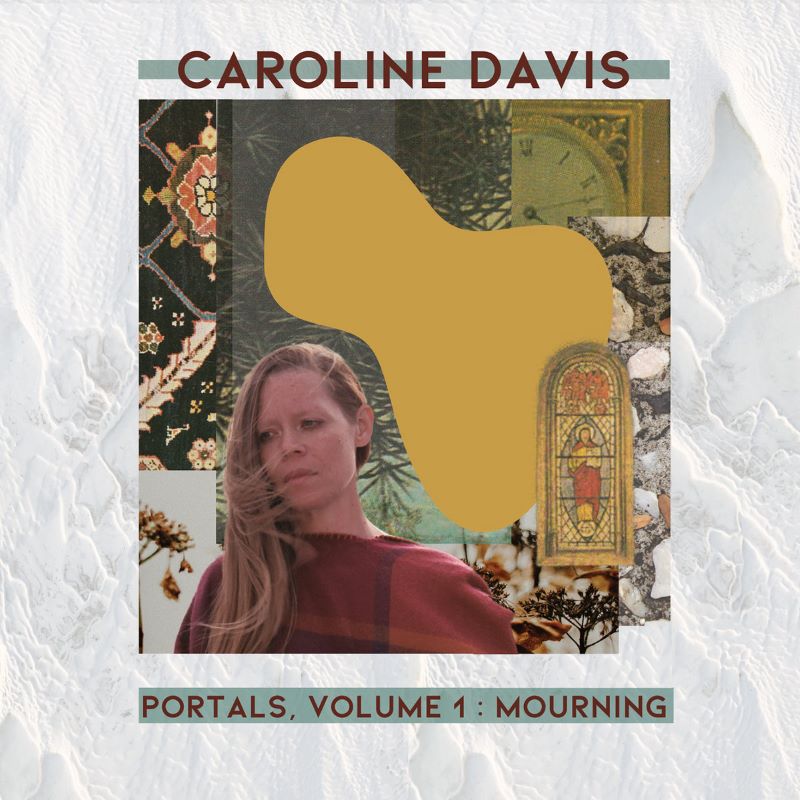
Caroline Davis - Portals, Volume 1: Mourning (August 27, 2021 Sunnyside Records)

One challenge of this frustrating time has been finding methods to handle grief. The loss of loved ones, enforced isolation, and abounding uncertainty have only heightened anxiety and its painful effects. Learning how to cope with grief and work through it is imperative for one’s mental health.

Saxophonist and composer Caroline Davis has done much to try to allay her own emotions after the harsh period she dealt with in 2019. Davis lost her father early in the year and was trying to cope with this devastating event when the pandemic descended. She turned to research and creation to work herself out again. Her new recording, Portals, Volume 1: Mourning, is a culmination of a year of suffering, accepting, and channeling her mourning through a unique process to find equilibrium through composition and reflection.

Davis has always found ways to deepen her musical work by allowing her current preoccupations drive the generation of her art. When her father suddenly passed, Davis was stunned and needed to find a way to express her feelings. She read about grief and trauma, studying the work of Bessel van der Kolk, Mary Oliver, Resmaa Menakem, and Margaret Stroebe. Kübler-Ross’s five stages of grief did not occur in a similar sequence for Davis, so she looked toward the self-help and mystical teachings her father expressed interest in, even up until his passing.

Looking back on her time with her father, Davis began to realize that she must deal not only with the immediate results of his passing but with the legacy of residual pain that he inflicted, intentionally or not. Living at a distance from one another, and his workaholic lifestyle, made things difficult in their relationship. Davis was still wrestling with this.

A welcome aid to Davis’s recovery and work was a residency at the McDowell Artists’ Colony in New Hampshire. At McDowell, she was able to begin sculpting what would become the pieces on Portals, Volume 1. A grant from the Jerome Foundation made it possible for her to complete the remainder of the compositions and recording in 2020.

Portals, Volume 1 is a collection of pieces that Davis wrote for her current quintet along with a string quartet, her first time orchestrating for this instrumentation. The quintet has been her regular group since 2019 and features trumpeter Marquis Hill, pianist Julian Shore, bassist Chris Tordini, and drummer Allan Mednard. For the string quartet, Davis knew that she desired string players who placed improvisation at the center of their practice. Having had the good fortune to work previously with a number of multi-talented players, she was able to recruit violinists Mazz Swift and Josh Henderson along with violist Joanna Mattrey and cellist Mariel Roberts.
The recording was made at Oktaven Audio in Mt. Vernon, New York during December 2020. The studio was a perfect environment for the musicians, and each had COVID tests prior to the dates. Engineer Ryan Streber offered advantageous assistance, helping with pacing and following the musical scores, insuring that every nuance was captured.

The music that Davis composed followed three distinct themes, all tied to recovering from the effects of trauma. The first refers to the intellectual thinking brain and how grief can reorganize one’s memories. The other two focus on the emotional and somatic impacts of grief, one relating to the experience of love and the other associated with bodily and chemical reactions to traumatic events. The experience of trauma is remembering, and reflecting on the past helps to consolidate, as feelings can be complicated and change over time. Examining her bodily reactions and re-drawing physical elements like heart rate, breathing, and eye movements, became a central part of Davis’s practice. These strategies recognized the full scope of using her body as a portal in the process of healing.

The recording begins with “Yesterday’s Seven Thousand Years,” a dynamic piece for the quintet that builds from the rhythm of a quatrain from The Rubaiyat of Omar Khayyám, a poem that Davis discovered when looking back at her father’s photo, accompanied by a quote from this poem as the caption, in his high school yearbook. The next two pieces, “Hop On Hop Off” and “Highlighter Hearts,” are paired, and reflect on specific memories of Davis’s father, fond memories that are also tied to discontent. The first mirrors a hop on, hop off bus tour, the rhythm is the bus slowing down and speeding up, skipping and extending through the piece before halting for a cello feature from Roberts. The swirling “Highlighter Hearts” refers to loving but rushed letters that her father used to send, written in highlighter as it was at hand in the quick, as he was always working.

Davis meditated on nature frequently during her process, especially on textures that could be transferred to human experience. Though her approach to texture in rhythm and harmony can be heard on every piece, “On Stone” is the most representative of this grief as tactile manifestation, as Davis asked the string players to express this hard nature in their improvisations. Continuing that thought, “How to Stop a Drop of Water from Evaporating” takes the rhythm and rationale of one of her father’s riddles (the answer is to throw the water into the sea) and construct a groove-based tune. This piece and “Acephalous Placebo” channel Davis’s father’s interest in energy and faith-based healing, the latter utilizing the ratio of 5:6 to inform the harmonic and rhythmic directions of the composition.

The quiet “Respite” is just that and a thematic foreshadowing of the recording’s conclusion. The tense “Left” deals with the apprehension of being abandoned as a child and the anxiety of not knowing what to do, a violin feature building into an intense ensemble explosion. The subtle “Faced” is entirely improvised and leads to “The Inflated Chariot Awaits Defeat,” a moving meditation on pride and its senselessness with Davis’s poetry and saxophone driving into a dramatic ensemble workout. The recording concludes with the haunting “Worldliness and Non-Duality,” which honors Davis’s father’s last words to her, about his attempts to accept non-duality.

Caroline Davis’s Portals, Volume 1: Mourning is simultaneously melancholy and bright. This is entirely appropriate as the best way to conquer grief is to face the trauma and mindfully engage in its bodily affectations, a message to reflect on as the world begins to blossom again.

1. Yesterday's Seven Thousand Years
2. Hop On Hop Off
3. Highlighter Hearts
4. On Stone
5. How To Stop a Drop of Water From Evaporating
6. Acephalous Placebo
7. Respite
8. Left
9. Faced
10. The Inflated Chariot Awaits Defeat
11. Worldliness and Non-Duality

Caroline Davis - alto saxophone
Marquis Hill - trumpet
Julian Shore - piano
Chris Tordini - bass
Allan Mednard - drums
Mazz Swift - violin
Josh Henderson - violin
Joanna Mattrey - viola
Mariel Roberts - cello

Recorded by Ryan Streber at Oktaven Audio (December 2020)
Mixed & Mastered by Dave Darlington
Original Artwork by Alexa Lima
35mm Photography by Attis Clopton

Ben Goldberg / Todd Sickafoose / Jordan Glenn - THOUGHT OUT, VOL. 1: BAKE A CAKE (August 27, 2021 Ben Goldberg / BAG Production Records)

THOUGHT OUT is a series of recordings initiated by Todd Sickafoose and Ben Goldberg. Here, in Volume One, we have a trio with the amazing Jordan Glenn.

1. BAKE A CAKE 1 13:26
2. BAKE A CAKE 2 24:01

Todd Sickafoose - bass
Jordan Glenn - drums, vibraphone, percussion
Ben Goldberg - clarinets

Recorded by Billy Barnett at Gung Ho Studio, Eugene, Oregon December 2018
Mixed by Todd Sickafoose
Mastered by Liberty Ellman
Cover Art by Grady McFerrin

Arthur Lyman - Island Vibes (August 27, 2021 Aloha Got Soul)

Merging the sounds of nature along with his resounding vibraphone, Arthur Lyman and producer Gordon Broad created Island Vibes, an ambient/jazz/field recording album that exhibits the pure weightlessness of Lyman’s music.

A lost gem from the exotica pioneer's catalog — and his last recorded album — Island Vibes paints a meditative tropical canvas of the Hawaiian Islands’ natural beauty. A welcomed sonic transport to paradise, much needed in a (post-)pandemic world.

Originally recorded with Broad Records, who’s responsible for Phase 7’s Playtime and other important 1970s and 80s-era local records.

At eight years old, Arthur Lyman's music was already being played in public spaces via a toy marimba performance on the radio. While Lyman laughed about the experience, he would continue performing and ultimately debuted professionally at 14 with a jazz group. His skills earned him a place as a vibraphonist alongside exotica pioneer Martin Denny, although Lyman would leave the Denny's group soon after to pursue a solo career.

Island Vibes would become Lyman’s final recorded album, an embodiment of the term of "relaxation", relying solely on Lyman’s instrumentation and the quaint lull of ocean waves to produce a picturesque atmosphere.

1. ‘Imi Au Ia ‘Oe (King's Serenade)
2. Waipi‘o
3. Old Plantation (Ku‘u Home)
4. Medley: Pua Mana (Sea Breeze) / Paoa Kalani / Whispering Reef
5. The Magic Islands
6. Akaka Falls
7. Shells
8. Hana
9. Medley: Manu ‘O‘o / Yellow Bird

Restored and remastered by Jessica Thompson

GABO - Jungle Fever (August 27, 2021 Sola Terra)

The Glasgow African Balafon Orchestra (GABO) is a cocktail of musicians of all different backgrounds, bringing together the distinct flavours of the world through the joy of orchestral music. It is a unique blend and fusion of musicians, folklorists and storytellers representing the best musical flavours and stories of our shared humanity.⠀
The infectious energy of GABO is built around Ambatarian Philosophy—a past-present which is secretly woven and embedded in Jang-da—the traditional African wooden xylophones. The Jang-da tradition – a folklore and oral convention of passing messages of hope within the stories of everyday life through the vortex of music – is an almost forgotten ancient African philosophy that teaches us to celebrate life as an endless opportunity of eternal joy. ⠀
GABO’s philosophy is sharing the ripple effects of joy in communal music, storytelling and group bonding—a great source of mutual energy exchange that brings people together on a fair playing ground where every soul’s desire can be fully realised through music. In Gabo’s world; no one is left out feeling isolated, unappreciated, unrelated or unloved. We are never alone because we all belong to a shared experience of music. ⠀
GABO believes that there is more love in the world today than hatred, and we are inspired by this belief. We focussed our best creative healing energies on sharing the love of Afrobeat, global jazz, soul, funk, and some traditional tunes from rural Africa and other parts of the world that have not been previously heard by the rest of the world. 

1. Ambatayala
2. Co
3. Soulee
4. Dilimba
5. Chafoogalo
6. Somebody Go
7. Jungle Fever

+ All compositions by the GABO Collective
+ Recorded at Dystopia Studios, Glasgow
+ Track by Luigi Pasquini & Melanie Dutton
+ Mastered by John Mcbain
+ Artwork & design by C. O. Turner

Nat Birchall - Ancient Africa (August 27, 2021)

Hailed by Gilles Peterson as “one of the best musicians in the UK”, saxophonist Nat Birchall remains one of the UK’s hidden jazz treasures. Playing tenor and soprano saxophones, he is a band leader, composer and arranger ( and occasional DJ ) who has grabbed listeners attention with his soulful sound and inspirational spiritual music.

1. Ancient Africa
2. Paladins
3. Mirror Mi
4. Song For John Blanke
5. Malidoma
6. Ancestral Dance

Arpeggio Jazz Ensemble / Le - Le (August 27, 2021 Jazz Room Records)

Recorded in the 1980's and snapped up upon arrival in Europe by the Soho Boho's, Acid Jazzuals, Cuboppers, Jazz Massivists and Mojo Jazzmuziker, "Le-Le" by The Arpeggio Jazz Ensemble is a unique one off Spiritual Soul-Jazz outing with Avant Garde touches and more than a hint of Afro-Cuban Orientalism.

The percussion drenched title track has that special Worldwide Sound and the Cool Jazz Get Down Groove of "Wet Walnuts and Whipped Cream" is a DJ's delight, whether played over the Airwaves or to a crowded Dancefloor.

An adventurous jazz outfit that has been playing around Philadelphia since its formation in 1979. The Ensemble was founded by Warren Oree, an acoustic bassist, producer and composer who continues to lead the band. Eclectic and far from predictable, on this album the Ensemble has embraced a variety of acoustic and electric jazz styles combining them with African and Middle Eastern influences and mixed together with the "New Thing" have managed to make a timeless underground classic.

1. STRAUSS
2. YOU LEFT ME YOUR SMILE
3. LE-LE
4. WET WALNUTS AND WHIPPED CREAM
5. ONE MORE VODKA
6. THE INFIDELS

Framework - Cognitive Dissonance (August 27, 2021 Shifting Paradigm Records)

1. New Anthem
2. Hitchens
3. Anyway
4. Pre-Conceived Notion
5. Relapse
6. Dawkins
7. Bluetrois
8. Changes We Can Believe In
9. Valentune
10. Tortured Thoughts
11. Cognitive Dissonance 01:54
12. New Anthem (alternate take)

Chris Olson - Guitars
Chris Bates - Bass
Jay Epstein - Drums

Orignial compositions by Chris Olson – Olegan Pub ASCAP
Recorded by JT Bates, Alex Proctor, Robbie Barr
at The Boardroom Aug-Sep 2020 Minneapolis
Mixed by David Bates, 1100fps
Mastered by Bruce Templeton, Microphonic
Design by Jamie Breiwick, Bside Graphics

Don Tiki - Hot Like Lava (August 27, 2021 Aloha Got Soul)

Don Tiki, the leaders of exotica's turn-of-the-21st-century revival, bring their soundtrack for a Technicolor Polynesian pop paradise to Aloha Got Soul in 2021.

Each LP includes a pair of custom Don Tiki 3D glasses.

Don Tiki debuted from Honolulu in 1997 with the album, 'The Forbidden Sounds of Don Tiki', featuring the legendary Martin Denny in what would become one of his final recordings before his passing. The group, led by Fluid Floyd (Lloyd Kandell) and Perry Coma (Kit Ebersbach), draws inspiration from the original masters of the exotica sound, Denny, Arthur Lyman and Les Baxter, to bring such evocative music into the 21st century.

Following 'The Forbidden Sounds', Don Tiki's recordings further deepened the group's reverence for and exploration of the poly-rhythmic, mid-century sounds pioneered by Denny, Baxter, and Lyman. Those albums, originally available on compact disc, include 'Skinny Dip with Don Tiki' (2001), a remix album entitled 'Adulterated–The Remix Project' (2004), 'South of the Boudoir' (2009), and 'Don Tiki's Hot Lava Holiday Songs' (2012).

'Hot Like Lava' collects the group's top instrumentals for an exhilarating, paradisiacal ride through the world of tiki subculture on lava-colored vinyl.

1. All Quiet Flows The Don
2. Primitiva
3. Flower Humming
4. Hot Like Lava
5. El Producto
6. Maidenhair Fern
7. Bwana Banana
8. Tinfoil Hats
9. Barbi in Bali
10. Itchy Palms
11. Pussyfooting

Chloe Jackson-Reynolds - Solo Mood Improvisations, Summer 2021 (September 12, 2021)

1. Disk One, Cut One
2. Disk One, Cut Two
3. Disk One, Cut Three
4. Disk One, Cut Four
5. Disk One, Cut Five
6. Disk One, Cut Six
7. Disk One, Cut Seven
8. Disk One, Cut Eight
9. Disk One, Cut Nine
10. Disk One, Cut Ten
11. Disk One, Cut Eleven
12. Disk One, Cut Twelve
13. Disk One, Cut Thirteen
14. Disk One, Cut Fourteen
15. Disk One, Cut Fifteen
16. Disk One, Cut Sixteen
17. Disk One, Cut Seventeen
18. Disk One, Cut Eighteen
19. Disk One, Cut Nineteen
20. Disk Two, Cut One
21. Disk Two, Cut Two
22. Disk Two, Cut Three
23. Disk Two, Cut Four
24. Disk Two, Cut Five
25. Disk Two, Cut Six
26. Disk Two, Cut Seven
27. Disk Two, Cut Eight
28. Disk Two, Cut Nine
29. Disk Two, Cut Ten
30. Disk Two, Cut Eleven

Chloe Jackson Reynolds - Flute, Alto Saxophone, Tenor Saxophone, Baritone Saxophone, Alto Recorder, Mixing

Samo Salamon & Friends - Almost Alone Vol. 3 (August 2021)

I'm really happy to present to you the last volume of the trilogy Almost Alone – the third volume of three volumes of a really amazing pan-European guitar project I started in May 2020 during the Corona lockdown.

The project features 36 fantastic jazz guitarists from 35 different European countries - all these musicians are amazing guitarists and composers and I'm really thankful that they contributed their amazing share to the compositions I wrote.

Here are the guitarists featured on Almost Alone Vol. 3:

Susanna Risberg (Sweden)
Maxime Delpierre (France)
Ronny Graupe (Germany)
Francesco Diodati (Italy)
Saso Popovski (North Macedonia)
Mikkel Ploug (Denmark)
Igor Osypov (Ukraine)
Vincent Koning (Holland)
Sandro Zerafa (Malta)
Michal Bugala (Slovakia)
Taulant Mehmeti (Albania)

1. Sing feat. Susanna Risberg 04:12
2. Home feat. Maxime Delpierre 06:54
3. All Mice Gone feat. Ronny Graupe 06:02
4. Surrender feat. Francesco Diodati 04:44
5. Hebe feat. Saso Popovski 06:42
6. The Young Hair feat. Mikkel Ploug 05:38
7. Ode to a Broken Pencil feat. Igor Osypov 06:04
8. Fall Memories feat. Vincent Koning 04:56
9. There's a Gekko in the House feat. Sandro Zerafa 04:22
10. Sunny Days feat. Michal Bugala 06:42
11. Moonless feat. Taulant Mehmeti 06:40

Samo Salamon (Slovenia) - electric and acoustic guitars, mandoline, bass, moog, synths
Susanna Risberg (Sweden) - electric guitar
Maxime Delpierre (France) - electric guitars
Ronny Graupe (Germany) - electric guitars
Francesco Diodati (Italy) - electric and acoustic guitars
Saso Popovski (North Macedonia) - electric guitar
Mikkel Ploug (Denmark) - electric guitar
Igor Osypov (Ukraine) - electric guitars
Vincent Koning (Holland) - electric guitar
Sandro Zerafa (Malta) - electric guitar
Michal Bugala (Slovakia) - electric guitar
Taulant Mehmeti (Albania) - electric guitar

Recorded between May and November 2020.
Produced, mixed and mastered by Samo Šalamon.
All tunes written by Samo Salamon and published by Sazas.
Cover design by Kristijan Robič.

Markus Stockhausen Group - Tales (August 27, 2021 o-tone music)

What difference does it make for music whether it is composed or improvised? What difference does it make for a narrative whether it is performed orally or recorded in writing? Markus Stockhausen's quartet album "Tales" suggests such questions and provides more than one answer. Music exists virtually on recordings, in scores, in repertoires and traditions. But it is only real when it is heard and experienced together with listeners.

The album "Tales" consists of three CDs. The first is dedicated to composed pieces, the other two contain improvisations by the quartet.

In Markus Stockhausen's current quartet, four temperaments come together and form a common, extremely differentiated group sound. There is always the clear, perfectly articulated tone that has always been Markus Stockhausen's trademark. There is Jörg Brinkmann on cello, singing, with great soloistic melodic arcs, delicate and elegant, even when rhythmically grounded, as would otherwise be the task of a double bass. Jeroen van Vliet on piano is a wonderful ensemble musician with a profound harmonic presence, finding and asserting his spaces without being orchestral; in improvised pieces he can be heard again and again on the synthesizer: restrained, never hankering for effects, with great melos and intense economy of sound, never with amorphous filler. Finally, Christian Thomé on drums combines filigree, sonorous playing with the casually exercised ability to play rhythm without marking it.

The nine composed pieces on the first CD are of sovereign clarity, almost classically constructed and played. The notated passages go far beyond what is called "thematic material" in jazz. They act as binding frameworks of tonal resources, formal structures, sound strategies and moods. They define the musicians' space of movement without these definitions being perceived as a restriction. They thus give the music a deep calm and the listener a basic confidence in what is to be expected.

The two improvised CDs show that the consensus in the quartet reaches far even without compositional guidelines. It is elastic and allows for broader tonal and playful freedoms. Basically, even for the electronic sounds of the synthesizer, one listens to each other in the joint musical work, takes up suggestions, enriches them and pushes them further. That one takes time and gives time.
The tension that arises is never one to tear. It is borne by a generous consensus. A consensus that is not put to the test, but is carefully and always explored anew.

Each of the 25 pieces of this great album forms its own narrative, with its own course, its own form, its own vocabulary, its own content. What they all have in common is that they take responsibility for the time they shape. The offerings are not necessarily translatable into language, but sometimes one can find suitable words. The titles of the pieces make such attempts. They also make clear that the music has a connection to what is happening in the world outside of itself. The palpable lightness in the opening piece, "Sunday Morning," speaks for itself and needs no further translation. The final track, however, contains something of a confession. It applies beyond the horizon of this album to Markus Stockhausen's music, perhaps as the fundamental narrative of all music: "Peace Is Possible", peace is possible.

"I hope you have time. But you don't have to hear everything right away. On the one hand, the compositions with clearly structured sequences, actually enough music for a beautiful CD, and then the wide field of free improvisations, which open up undreamed-of spaces for us. There we give you an insight into our "musical workshop". The result is a variety of moods, atmospheres, musical dreams, fantasies, glimpses of light and abysses, glimmers of hope, moments of joy, abundance, pleasure, but also of searching, of melancholy, longing - and peace." Markus Stockhausen 

TALES - by Hans-Jürgen Linke

1. Sunday Morning
2. A Smile
3. Shades Of Bliss
4. Better World
5. Not In Vain
6. To See
7. Flow
8. There Is Always Hope
9. Destiny
10. Guideline
11. Blossom
12. Cape Verde
13. Little Prayer
14. Through The Mist
15. Essentials
16. Clearing
17. Transformation
18. Gathering
19. Nice Jörg
20. Sounds Of Hope
21. Longing
22. Simple Tale
23. Bright Side
24. Late Dance
25. Peace Is Possible

Markus Stockhausen: flh, tp
Jörg Brinkmann: cello
Jeroen van Vliet: piano, synth
Christian Thomé: drums

David Leon - Aire De Agua (August 27, 2021 Out Of Your Head Records)

I met David when he was attending the School for Improvisational Music summer workshop. Instantly impressed with his versatility as a composer and improviser, I could see he was eager to relocate to New York and make his mark on the creative music scene. After he moved, I requested to mentor David through The Jazz Gallery’s mentorship program during which we performed a series of shows, comprising duo dates as well as a quartet alongside Tom Rainey and Michael Formanek. For the project, he composed pieces that fluidly combine written material and improvisation. It was clear that he was moving towards a personal language through these compositions and refining his expression as a composer and improviser.

Aire De Agua is further evidence of that evolution. Poised for expansion, David gleans conceptual ideas from art forms outside music; at the same time, he allows his work to reflect what he observes and experiences. Selecting a durational performance from artist Marina Abramovic as structural impetus for composing “Bluest Blue,” David pays tribute not only to her work but to her influence: “Marina is an inspiration to me, as someone who pushes her mind and body beyond their limits in pursuit of something greater.” Choreographer Pina Bausch’s works sparked his idea for “Pina,” a piece that obscures the ensemble’s timbral identities through what he calls “sonic illusion” in which the snare drum’s cross stick imitates the saxophone’s slap tongue.

Meaningful connections with fellow artists shape David’s artistic vision. His compositions become vessels for his bandmates to express themselves, connecting with the music and each other. I find it fitting the title track of his debut record features his fellow artists’ performances perhaps more explicitly than his own. In David’s words, Aire De Agua attempts to offer “a dynamic where all four voices are closer to equal in weight". To me, this notion—along with the inclusion of a saxophoneless trio piece “A Hug A Day”—reflects his capacity for expressive empathy and, ultimately, artistic growth.

A powerful and rewarding listen, Aire De Agua documents an initial upsweep of what promises to be the long elegant arc of David Leon’s career. The creative energy and humanity behind each composition—scripted and spontaneous—kindles an inexhaustible motivation to refine his voice and elevate his craft.

- Kris Davis

1. Strange and Charmed
2. Horrible, Horrible Service
3. Pina
4. Aire De Agua
5. First You Must Learn the Grip
6. A Hug a Day
7. Expressive Jargon II
8. Bluest Blue

David Leon - alto saxophone
Sonya Belaya - piano
Florian Herzog - bass
Stephen Boegehold - drums

Produced by David Leon & Eva Lawitts
Mixed and Mastered by Eivind Opsvik, Greenwood Underground
Recorded on February 9, 2020 at Big Orange Sheep in Brooklyn, NY
All compositions by David Leon (Davidleonmusic, ASCAP)

Bram Weijters' Crazy Men - The Return (August 27, 2021 Sdban Records)

Bram Weijters' Crazy Men is a thrilling take on Belgian jazz-rock and fusion from the 1970s. Consisting of musicians from a wide array of contemporary jazz bands including Lucid Lucia (ex BRZZVLL), Dans Dans, STUFF. and Cargo Mas, the ensemble is led by Antwerp based piano and keyboard player, Bram Weijters.

On a continuous quest to explore the roots of early Belgian jazz rock, the spark for this very special collaborative project was ignited by the reissue of composer, arranger, pianist, and keyboardist Koen de Bruyne’s 1974 rare Belgian gem, ‘Here Comes the Crazy Man!’ via Sdban Records in 2015, which spawned the release of Bram Weijters' Crazy Men’s debut album ‘Here They Come’ in 2019.

Continuing their obsession with premium experimental jazz-rock, ‘The Return’ takes further inspiration from the period with 14 reworking’s of compositions from artists including Philip Catherine, Placebo, Palle Mikelborg ensemble, Bob Porter, Cos and Koen de Bruyne. But this is no lazy rehash, copy or rip-off. Pyschedelic, free-spirited and infectiously groovy, ‘The Return’ perfectly captures the inspiring crossover energy that seemed to prevail in the Belgian jazz scene of the 70s. Take ‘Nineteen Seventy Fourths’ for example. Influenced by the Philip Catherine recording of the same name which appeared on the ‘September Man’ (1974) album, Bram Weijters' Crazy Men breathe new life into the track which floats anywhere between heavy funk and psychedelic jazz rock and also takes inspiration from the Palle Mikelborg ensemble live version performed at Jazz Middelheim in August 1974.

Elsewhere, a reworking of Placebo’s ‘Planes’ is inspired by two memorable live performances of the track from Marc Moulin’s jazz-fusion band; ‘Placebo Live in Temse’ (1972) and ‘Placebo Live in Bruxelles’ (1973). An all-out assault of crossover energy, it fizzes with dramatic trumpets and a racing rhythm section while ‘Carol’, originally recorded by Steve Houben, Mauve Traffic for the album ‘Oh Boy’ (1979) brings the pace right down and allows Weijters’ piano to take centre stage. 

1. The Beginning
2. Nineteen Seventy Fourths
3. The Silver Eye
4. Pathetic Sounds
5. The Silver End
6. Planes (intro)
7. Objíždka
8. Planes
9. Carol
10. Nasca
11. Transvested Express / Postaeolian Train Robbery
12. Chiang Mai
13. Chief Of Freen Bean / Oh Boy
14. Reine De La Vallée

Edison Herbert - Time For Love (August 27, 2021)

Edison Herbert a sensitive and melodic musician who plays the guitar from the heart.

Edison has performed with the Guildhall Big Band/Randy Brecker, jazz warriors, Julie Dexter, Clarke Peters, Rose Royce, Monroe Kent, Cherisse Scott, Kim Burrell, composed for BBC Radio 4.

George Benson commented, "I really enjoyed your playing, You’re one of the few cats who can make that thing sound so good."

My new project ‘Time For Love’ has taken me on a long and winding road.  Living the lockdown life and pulling a new album together has been an interesting ride.

In 2019 the Arts Council sponsored the recording my new album. I decided I would put together a new band who would be involved in my project right from the start. The plan was six months from start to finish.

I called up some musicians I had worked with and three of them agreed to commit to regular rehearsals with a view to recording an album.

Once I had my drummer, keyboard player and bass guitarist I set about writing, arranging and choosing my tracks for the album. An eclectic mix of six originals and four well known covers. A new challenge and a departure from the jazz trio style of my last two albums.

Everything was going according to plan up until March 2020 when the pandemic interrupted our flow. 

Our rehearsals stopped but we kept in touch and remained positive. I continued to work behind the scenes until we could get back work.After lockdown, I set up two days of rehearsals to reconnect with the music and each other. We spent a productive couple of days getting our heads around the diversity of my choice of songs for this project. Great to be back in a live music environment after months of isolation.

In August we went into Tileyard Studios and recorded an amazing new album titled “Time or Love”. The creative process was inspiring, with some very special moments shared between us. Our musical connection combined with the wide range of tracks, resulted in a lively exchange of ideas that kept enthusiasm levels high.

I am so excited. 2021 is here and at last it’s time for the fun to begin. I hope you will join me on this journey as I spread some joy and love through my music.

- Edison Herbert

1. Why Not?
2. I Wanna Wake Up With You
3. Changes
4. Time For Love
5. You Know
6. In Your Eyes
7. Is She Is She Not
8. E's Train
9. Just Because
10. Make You Feel My Love