Thursday, February 4, 2021

Cecil Taylor at AngelicA 2000 Bologna (i dischi di angelica 2020)


 In the year 2000, when Bologna was European Capital of Culture, AngelicA Festival, then in its tenth edition, invited Cecil Taylor to hold a concert at the Teatro Comunale - Opera House of Bologna: solo, with his piano (and his dance and his poetry readings) he opened an evening that ended with a rendition of the luminous piece Coptic Light by Morton Feldman performed by the Orchestra del Teatro Comunale di Bologna, conducted by Jurjen Hempel.

This unusual juxtaposition (not in the history of the festival!) should not surprise: initially ascribed only to free jazz, throughout the decades Taylor’s music has been re-evaluated in all its formal complexity, and is nowadays recognised as one of the most singular productions in the musical landscape of the Nineteenth century.

The additional uniqueness of this release is that it adds a second CD, titled Rap, to the recording of that memorable concert, which documents the public meeting-interview that Taylor agreed to give in Bologna on the following day.

Moderated by the musicologist (and founding member of the band Stormy Six) Franco Fabbri, and transcribed and notated in its entirety in the forty pages booklet (in English/Italian) by the jazz critic and historian Francesco Martinelli, Taylor opened the meeting by reading a complex statement of his on the definition of music, inclusive of an explanatory glossary at the end. What came after was no less bewildering, with Taylor using the moderator’s questions as a springboard for an explosive tour de force of quotes and references: from the classical ballet stars Katherine Dunham and Maya Plissetskaya and the tap dancers Bojangles and Nicholas Brothers to the petroglyphs of the Hopi Native Americans and the Coptic manuscripts, the structures of Xenakis and the architect Calatrava, the Orisha deities and the dynamics of cell growth in bark, Derek Bailey and Stravinsky…

Thus offering the listeners an experience almost equivalent to the extraordinary internal mobility of his concerts, and a precise grid of interpretation of the imaginaries he drew from to create his unique sound, scenic and vocal theatre.

The release is completed by No Matter What - Montage of Meanings, an homage that the director of the festival Massimo Simonini paid to Taylor in May 2020, editing together extracts of the concert and of the public meeting.

1. Dance of All Seasons - part 1 26:34

2. Dance of All Seasons - part 2 26:51

3. Dance of All Seasons - part 3 12:35

4. Audience / Applause 01:31

5. Dance of All Seasons / Possessing a Door 10:03

6. The Arc of Suspension 07:33

7. No One has the Ownership of Pure Genius 05:02

8. Through the Devotion to Sound to Make Words 03:20

9. I Have Many People That I Bow To 08:24

10. The Ingredient of Life 11:48

11. And Then Usually You Have a Good Time 03:44

12. No Matter What 03:17


Track 1, 2, 3, 4: Dance Of All Seasons

Cecil Taylor: piano, voice

music and poetry by Cecil Taylor

Recorded by BH Audio at the Teatro Comunale di Bologna, May 10, 2000, during AngelicA, Festival Internazionale di Musica, 10th edition, may 5>13 + july 5>6, 2000, Bologna, Italy

Track 5, 6, 7, 8, 9, 10, 11: Rap

Cecil Taylor: voice

Franco Fabbri: interviewer

words and poetry by Cecil Taylor

Recorded at the Palazzo dei Notai, Bologna, May 11, 2000, during AngelicA, Festival Internazionale di Musica, 10th edition, may 5>13 + july 5>6, 2000, Bologna, Italy

Track 12: Montage of Meanings - No Matter What

Cecil Taylor: piano, voice

Massimo Simonini: montage (of meanings)

music, poetry and words by Cecil Taylor

Montage produced by Massimo Simonini at Home Studio, Vignola, May, 2020

40 pages booklet with photos, transcription and translation by Francesco Martinelli of the words and poetry by Cecil Taylor.

Note - June 2020

track titles have been given by the production and have a merely indicative value in order to follow and identify the subjects and statements discussed by Cecil Taylor in the talk of CD 2. Correspondingly to CD 1 and to CD 2 has been assigned a title, inspired by the talk itself.


Producer - Executive Producer: Massimo Simonini

Mastered in May 2020 by Bob Drake at Studio Midi-Pyrénées, La Borde Basse, Caudeval, France

Design: Massimo Golfieri, Concetta Nasone

Peter Brötzmann & Maâlem Moukhtar Gania & Hamid Drake - The Catch of a Ghost (i dischi di angelica 2020)


 “3 names, 3 cultures, 3 continents, 3 different concepts of time and timing – this is the essence of this trio. This is what we have to bring together. I am rather optimistic.” Peter Brötzmann, Wuppertal, 1st April 2019


With these simple words Peter Brötzmann, one of the greatest representatives in the development of a unique European approach to free improvisation since the ‘60s, announced the unprecedented trio lined up for his return to AngelicA festival in 2019. A trio in which, to the trusted Hamid Drake – one of the best living drummers and his historic collaborator since the times of the Die Like a Dog quartet –, he added Maalem Mokhtar Gania, last representative of a legendary line of Gnawa music masters from Essaouira, son of Maalem Boubker Gania and brother of Maalem Mahmoud Gania, who died prematurely and had been the protagonist with Brötzmann and Drake of an explosive trio in Wels in 1996.
The Bologna trio documented in the CD The Catch of a Ghost thrilled and surprised the attending audience with the great energy and liveliness of the sound textures created by the dialogue among the musicians, but also with the continuous ability to (re)invent itself coupled with boundless physical force of Brötzmann’s emission, who proved that at the age of 78 that he has nothing to envy to his younger self of 50 years ago, at the beginning of his career.

1. The Catch of a Ghost 33:29
2. Almost With The Sun 11:12
3. Sound That Shimmers 13:16
4. Dip And Dive 14:13

Premiere recording


Music by Peter Brötzmann, Maâlem Moukhtar Gania, Hamid Drake

Roscoe Mitchell - Splatter (i dischi di angelica 2020)


 Internationally renowned musician and composer Roscoe Mitchell, since his debut with Sound in 1966, has defined his style through an innovative approach towards composition in what is traditionally an improvised music genre, pre-empting the development of jazz and its relationship with contemporary music in the following decades.

Splatter, drawn from two concerts held at the AngelicA festival in Bologna in 2017, presents the most recent developments of this research, with two examples from his cycle Conversations for large orchestra. Started in 2016, it is based on the transcription and subsequent orchestration of what originated as his improvisations with the trio including Craig Taborn and Kikanju Baku, for the album Conversations I and II which was released in 2014.


From the evening with the Orchestra del Teatro Comunale di Bologna directed by Tonino Battista, the CD includes the Italian premiere of Splatter and the word premiere of Distant Radio Transmission, a work which further broadens the reflections on the relationship between composition and improvisation, incorporating the contribution of two improvisers (Thomas Buckner and Mitchell himself) in response to, and counterbalancing, the “improvised/transcribed/composed” material.

The lion’s share of the CD is represented by a duet, the fruit of a proposal by the Festival, a concert with a musician that Mitchell met for the first time on the same day: Francesco Filidei. Filidei, from Pisa, is an organist and former assistant of Jean Guillou at Saint-Eustache’s Church in Paris, as well as a composer whose music has been performed at the most significant contemporary music festivals by orchestras like Itinéraire, Nouvel Ensemble Modern, Ensemble intercontemporain, Percussions de Strasbourg, Quartetto Prometeo and Klangforum Wien.

Breath and Pipes, recorded at the Basilica di Santa Maria dei Servi in Bologna, is a testament to this encounter: as Joshua Marshall writes in the CD liner notes, it is “an improvisatory tour de force, demonstrating the uncanny sort of electrokinetic thrill which emerges out of the capacity of two brilliant improvisers to truly surprise one another”.


Premiere recording

Roscoe Mitchell alto, soprano, sopranino saxophone
Orchestra del Teatro Comunale di Bologna
Tonino Battista conductor
Thomas Buckner baritone voice
Francesco Filidei organ

1 - SPLATTER for orchestra
Music by Roscoe Mitchell, Craig Taborn, Kikanju Baku
Transcription and orchestration by Christopher Mega Luna

2 - DISTANT RADIO TRANSMISSION for improvisers and orchestra
Music by Roscoe Mitchell, Craig Taborn, Kikanju Baku
Transcription by Stephen P. Harvey
Transcription and orchestration of air sounds for strings by John Ivers
Orchestration by Roscoe Mitchell

3 - BREATH AND PIPES
Music by Roscoe Mitchell, Francesco Filidei

Wednesday, February 3, 2021

Anthony Braxton & Jacqueline Kerrod - Duo (Bologna) 2018 (i dischi di angelica 2020)

Anthony Braxton, composer, multi-instrumentalist and true giant of creative music, in 50 years of career and with more than 300 albums in his name as part of the most diverse line-ups, had never played in an instrumental duo with a harp; it is what AngelicA festival suggested to him for his return to Bologna in 2018, which followed his concert in a duo with Richard Teitelbaum in 2006; the suggestion was well received by the musician, and the festival set up the evening to be not just a fleeting encounter, but to also be professionally recorded in view of a potential future release and the result is indeed the CD Duo (Bologna) 2018.

Expressing himself through a wide range of mediums, from solos to large orchestras to multimedia projects, and drawing inspiration from a broad range of influences, from John Coltrane to Karlheinz Stockhausen, through decades of career Anthony Braxton has created a unique music system which celebrates the concept of global creativity and shared humanity, and which, in his own words, originates from “a research on composition, a synthesis between the concept of jazz improvisation and the complexity of contemporary classical music”.

Jacqueline Kerrod, of South-African origins, has performed as part of prestigious classic-contemporary line-ups like Modern Ensemble, Talea Ensemble and Alarm Will Sound but has also experience of participating in “pop” projects as one half of the voice and harp duo Addi & Jacq. Since 2016 she has taken part in Braxton’s projects such as the opera Trillium J, the 12+1 ensemble and the sextet ZIM Music, proving to be the ideal partner for this venture where different worlds meet – to the extent that the duo born at AngelicA festival is still in high demand at numerous other festivals to this date. 

Anthony Braxton & Jacqueline Kerrod

1. Composition 189 - primary 10:56

2. Composition 189 - secondary 1 29:01

3. Composition 189 - secondary 2 09:11

4. Composition 189 - secondary 3 06:54

5. Composition 189 - secondary 4 (encore) 03:22

Anthony Braxton: alto, soprano, sopranino saxophone

Jacqueline Kerrod: harp

Flatbosc & Cautery (NoBusiness Records)


 1. Biomes 11:08

2. Roughly Parallel 12:18

3. X-ularities 8:27

4. Tenuous Links Beyond 7:37

5. Small Ways, Chasmal 21:37

6. Tangible Thin Threads 3:46


Frank Gratkowski - alto saxophone, clarinets, flutes

Achim Kaufmann - piano

Wilbert de Joode - bass

Tony Buck - drums, percussion

Katarsis4 - Live At The Underground Water Reservoir (NoBusiness Records)

Katarsis4: Saxophone Quartet from Lithuania founded by Arminas Bižys, Kazimieras Jušinskas, Algirdas Janonis, and Danielius Pancerovas.

Their music moves between structurally free improvisation, which makes it sound each time differently, as well as academic music and the motives of Lithuanian folk music.

The saxophone quartet creatively presents the instrument itself - extending the use of saxophone by unusual methods. Also, the quartet not only uses extended techniques for extracting saxophone sounds but also objects from a daily basis.

Track List

1. Part 1 23:28

2. Part 2 14:20


Arminas Bižys - alto, baritone sax

Algirdas Janonis - alto sax, hornpipe

Danielius Pancerovas - baritone, alto sax

Kazimieras Jušinskas - soprano, alto sax


Timo Lassy & Teppo Mäkynen - Live Recordings 2019​-​2020 (February 19, 2021 We Jazz Records)


 The dynamic duo of tenor saxophonist Timo Lassy and drummer Teppo Mäkynen return with a double LP of live recordings captured in 2019 and 2020. The We Jazz Records release "Live Recordings 2019-2020" follows the duo's 2019 LP which was shortlisted for "Jazz Album Of the Year" at Gilles Peterson's Worldwide Awards. While the studio album versions were studies in improvisational brevity, the live album lets the long-time collaborators really let loose and build memorable sonic narratives around the compositions. The album is produced and edited by Teppo Mäkynen, also known as a sought-after producer with the knack for looking at the big picture.

From the subtle minimalism of "Fallow" via the ambient of "Aero" to the riff-heavy groove of "Calling James", Timo Lassy & Teppo Mäkynen breathe their music as one unit, building it based on a mutual trust as fellow musicians. Their duo shows have quickly become celebrated examples of what a long history of playing together can enable on stage when paired with the right mindset and a shared musical goal. This live album follows the ethos of both documenting what's happening and expanding on what was captured in the studio earlier.

1. Fallow (live)

2. Zomp (live)

3. Liberty (live)

4. Hypno (live)

5. Aero (live)

6. Kobi (live)

7. Solution Black (live)

8. Ecru (live)

9. Telemagenta (live)

10. Calling James (live)


Timo Lassy, tenor saxophone

Teppo Mäkynen, drums

All compositions by Timo Lassy & Teppo Mäkynen

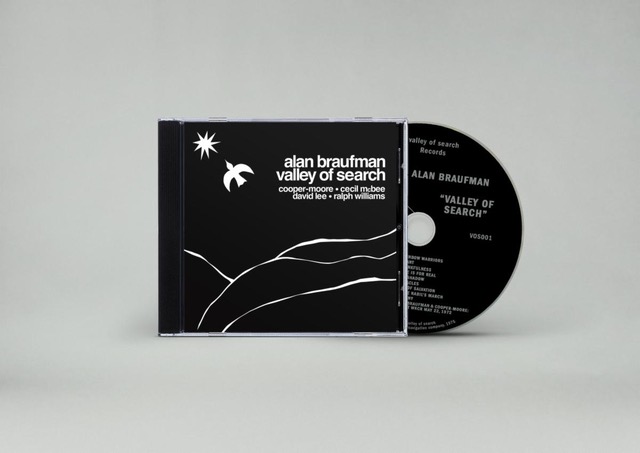
Alan Braufman / Angel Bat Dawid Remix (released February 3, 2021)


ANNOUNCES VALLEY OF SEARCH CD & LIMITED VINYL PRESSING OF 1972 "LIVE AT WKCR" SESSION

HEAR THE FIRE STILL BURNS NOW VIA VALLEY OF SEARCH

"In 2020, we need the meditative focus and impassioned intensity of an artist like Alan Braufman more than ever" - Rolling Stone


Following the release of his new album The Fire Still Burns, Alan Braufman returns today to share a remix for "Sunrise" courtesy of Angel Bat Dawid. One of the standout tracks from Alan's new record, Angel Bat Dawid puts her own psychedelic and glitched out take on "Sunrise," which leans heavily on James Brandon Lewis' tenor melody. In addition the remix, Alan is also announcing that his 1975 album Valley of Search will release on CD for the first time, and that his classic 1972 WKCR session will be receiving a limited vinyl pressing.

Speaking on the remix, Angel says: "The fire most definitely still burns with Alan Braufman! His music, his legacy, the spirit, and importantly history of the whole downtown New York City improvised music scene still carries so pervasively and strongly as ever in these new releases. I feel honored and grateful to be able to do a remix on his beautiful glorious anthem "Sunrise." I had a lot of fun exploring new sounds and I loved listening to the OG recording stems. It was like having a personal intimate solo concert with some of my favorite musicians like James Brandon Lewis all up in my earhole! I had a blast and am ever so grateful!"
he Fire Still Burns released on August 28, 2020, two years after the rerelease of Valley of Search. The album is preceded by singles "Sunrise," "Home," and "No Floor No Ceiling." "When I found out that my 1975 album, Valley of Search, was getting reissued in 2018, I felt a wave of inspiration," says Alan. "In preparing for the first live performance of Valley of Search in decades at both WNYC's Greene Space and Brooklyn's National Sawdust, I realized that, of course, I would need some new music to play as well. I sat down at the piano to noodle around a bit and 20 minutes later, I'd written 'Home.' I gave it this name because, I was coming back home - to New York City - to play music. The other tunes on the album also seemed equally inspired. I've always thought of writing music was more like finding music. The music on this album was easy to find."


The Fire Still Burns is only the second album to be released under Alan's own name, following Valley of Search. The new album features Cooper-Moore (piano), James Brandon Lewis (Tenor sax), Andrew Drury (drums) and Ken Filiano (bass) as well as Alan himself (alto sax, flute).

Alan Brafman by Gabriela Bhaskar

Alan Braufman is an instrumental figure in New York City downtown culture. Born in Brooklyn, after studying at Berklee College of Music he moved to a vacant building at 510 Canal Street in Manhattan alongside several other musicians. Monthly rent at the time was $140 for a floor, and the space was transformed into a practice space and venue. This gritty, improvised set up in downtown Manhattan would blaze a trail for generations of creatives and set a do-it-yourself tradition for young jazz acts in the city that is followed to this day. During this period Alan recorded Valley of Search at 501 Canal Street, and released it with the label India Navigation. The album is a perfect snapshot of the energy and creativity of its era, and would come to achieve cult status. It was highly sought after by vinyl collectors, and in 2018 Alan reissued Valley of Search.
The Fire Still Burns
Valley of Search
August 28, 2020

1. Sunrise
2. Morning Bazaar
3. No Floor No Ceiling
4. Home
5. Creation
6. Alone Again
7. The Fire Still Burns
8. City Nights

Tuesday, February 2, 2021

Cowboys & Frenchmen - Our Highway (February 26, 2021 via Outside In Music)


 Cowboys & Frenchmen offer a cohesive view of America on eclectic new video album

Our Highway, due out February 26, 2021 via Outside In Music, reflects on the balance of nature and humanity, the mundane and the spiritual, accompanied by stunning visuals of life on the road


"[Cowboys & Frenchmen] is smart, cohesive, and credible in a way like The Bad Plus or Mostly Other People Do The Killing, using virtuosic skills and rhythmic power to walk the line between irony and earnestness, with listenability as high a priority as group creativity." – Howard Mandel, DownBeat


“The swirling layers this group is able to build upon is remarkable, and when one really listens deep into the music, the interaction is breathtaking.” 

– Geannine Reid, All About Jazz 

Video Album Premiere February 26 via Live From Our Living Rooms


On their forthcoming release, Our Highway (due out on February 26, 2021 on Outside In Music), the inventive quintet Cowboys & Frenchmen reflect on the nomadic life of touring musicians while widening their gazes to take in the landscapes and byways that connect America’s towns and cities.

Recorded live at SubCulture in New York City, the “video album” juxtaposes high-definition footage of the band — saxophonist/co-founders Ethan Helm and Owen Broder, pianist Addison Frei, bassist Ethan O’Reilly and drummer Matt Honor — onstage in one of the Big Apple’s most renowned venues with beautifully shot footage taken during a cross-country tour.

The video captures the hectic pace of big cities, the majestic tranquility of nature and the unexpected surprises and tiresome aggravations that arise while hustling from nightclub to nightclub. Conceived long before the COVID pandemic, these images assume added resonance in light of a lockdown that’s kept most of these venues dark for the better part of the past year.

“Watching this video come together, I got emotional remembering how happy I was when I was the most stressed out,” laughs Helm. “It really comes across that those times when we could get out there and struggle were actually the good times. That made a huge change in the way I think about Our Highway.”

An audio-only edition of Our Highway will be released digitally on February 26, 2021. The band will also partner with venues across the country to present the full video album as live-streaming events, allowing each space to offer the experience to their audiences for a 24-hour period. While far from a typical album release tour, the partnerships offer an innovative new virtual highway for Cowboys & Frenchmen to traverse.

While Helm and Broder typically split compositional duties on the band’s projects, Helm took the lead for Our Highway, writing all of the music and envisioning the theme. Broder contributed to the concepts in the video, and the whole band took turns filming over the course of their travels. Significantly, the majority of the footage comes from one of three locations: Broder’s hometown of Jacksonville, Florida; Helm’s native Yorba Linda, California; and the band’s birthplace and home, New York City. “When you’re always in motion, sometimes you have to invent your own sense of home,” Helm points out.


Broder connects that notion with the struggles of making a life in music. “A lot of what we do has to do with finding a balance in our lives – dealing with all that comes with living in New York while piecing together the disparate elements of a freelance career, and also balancing the different paces of life. I really like removing myself from the concrete jungle and being out in nature for a little while, but I don't think that I would like either one to the exclusion of the other.”

Though it arrives during the aftermath of a divisive presidential election, Our Highway looks past politics and offers a more united, holistic perspective of America. “ “It’s a view of the country through our eyes and through the windows of our band’s minivan,” Broder says. “It’s closer to a memoir than a political position.”

“Our Highway was inspired in part by something I’ve noticed when we’ve been on tour,” Helm explains. “It’s amazing to me just how much music connects with people. We see it at every single performance; we have no idea who voted for whom when we’re on the road, but people everywhere come together and enjoy the music. I can’t help but think that’s meaningful.”

A suite collectively entitled “American Whispers” weaves through the album, representing the tension between humanity and the natural world — towering “Pines,” fast-rushing “Streams,” daunting “Mountains,” their imposing stature shaping the frenetic tempos and angular melodies of the pieces. Inspired by Alice Coltrane, “Alice in Promisedland” takes the opposite viewpoint. The piece channels the great harpist/pianist/composer’s spiritual philosophy to locate the harmony between natural splendor and encroaching civilization, illustrated here by relocating the band members to a bustling public park.

The title of “An Old Church” offers a synecdoche for those idyllic scenes of American life that a band on the move rarely has time to stop and appreciate. The somber interlude “Where Is Your Wealth?” can be heard as an accusatory demand or a spiritual challenge, in either case raising questions about what we truly value in life. “Gig Life” celebrates the funky, offbeat experiences that forge the bonds of a band, while “The Farmer’s Reason” ends the album with a gorgeously reflective slice of Americana, as mythic as it is profoundly meaningful.

“For us, the traveling is not separate from the art,” Helm concludes. “It’s all part of one lifestyle. Jazz musicians are really lucky because our art form allows us to place a frame around a snapshot in time. The music is always in motion, which is a special quality that we want to highlight with Our Highway.”


New York City-based Cowboys & Frenchmen offers a new take on instrumentation, composition and orchestration for the jazz quintet. Founded by saxophonists Owen Broder and Ethan Helm, the band garnered stellar reviews with its 2015 debut, Rodeo. Their 2017 follow-up, Bluer Than You Think, received a four-star review from DownBeat Magazine, and was celebrated with an eight-market tour visiting historic stages including Blues Alley (Washington D.C.) and Cliff Bell’s (Detroit). The inspiration for the band’s name comes from a short film by David Lynch, The Cowboy and The Frenchmen — a Western with a unique, left-field interpretation of that classic genre echoed in Cowboys & Frenchmen’s inventive approach to jazz: one foot firmly planted in a genre, the other busy trying to kick down the genre’s door.

1. American Whispers: Pines
2. Alice in Promisedland
3. American Whispers: Streams - An Old Church
4. Where Is Your Whealth?
5. Gig Life - American Whispers: Mountains
6. The Farmer's Reason


Composer
Ethan Helm

Producer
Ryan Truesdell

Mixing Engineer
Brian Montgomery

Mastering Engineer
Sonny Nam
Jacob's Well Mastering

Recording Engineers
James Hartnett
Mac Stringer

Recorded Sept. 29, 2019 at SubCulture, NYC
Release date February 26, 2021


Tuesday, January 29, 2019

Ryan Raziano Quartet - Blue into Gray (2019)


The Ryan Raziano Quartet was formed in the Fall of 2017 with the simple goal of having an excuse to explore and play music that wasn't limited to any outward constraints. Though the musicians have individually known and performed with each other for years on the Mississippi Gulf Coast, it wasn't until the conception of this group that they played together all on the same stage as one group. 

The quartet started by performing music of a more modal approach, including Charles Lloyd, Joe Henderson, and John Coltrane compositions. It was very quickly understood that there was something a little more unique about this group, as the comfort and musical empathy among the members grew into a synergy that expanded the music beyond what was expected. With this, original repertoire composed by members of the band was added, and by the end of that Winter the performances had grown from covers to all-originals. 

The material on this album presents the music from this period, which were composed by both Ryan Raziano and Buddy Dubourg. The recordings capture the essence of this synergy between saxophonist Ryan Raziano, pianist Buddy Dubourg, bassist David Pellow, and drummer Pete Wehner, and all of the compositions combine to create a unified overarching mood and entry of the group's inception.


Buddy Dubourg - piano
David Pellow - bass
Pete Wehner - drums

1. Three Blind Squirrels 8:13
2. Blue into Gray 7:39
3. Last One Left Behind 5:21
4. Induced Thoughts 8:44
5. Lay It Back 7:21
6. Mysterious Journey 8:03
7. Gossamer 7:49
8. First Flight 5:51
9. Latecomer's Lullaby 6:16


Cæcilie Norby - Sisters in Jazz (ACT MUSIC 2019)


Look at the history of jazz, and it is all…frankly...a bit male. There have, of course, always been very prominent female jazz singers, but female instrumentalists and composers such as Jutta Hipp, Carla Bley or Geri Allen are few and far between. Today, even though men are still in the majority, female emancipation in jazz has definitely happened. Women are increasingly raising their profile and their visibility, and really making their presence felt. And the album "Sisters in Jazz" is proof positive of just how good a thing that is.

Jazz is feminine too. In fact, this short sentence serves as a very apt description of Cæcilie Norby's new album. The Danish singer has never been afraid to explore new avenues artistically. Her unique and versatile singing style has enabled her to collaborate with top instrumentalist on the International Jazz Scene. Most of whom have been male! So when producer Siggi Loch presented her with the idea of an all female band, celebrating women in Jazz, she was delighted. She says: "There is no doubt that strong, compentent female musicians are underrepresented on the music scene- nor is there any doubt that they excist!!“

With Rita Marcotulli (piano), Nicole Johänntgen (saxophone), Hildegunn Øiseth (trumpet), Lisa Wulff (double bass) and Dorota Piotrowska (drums), Loch has placed a band of outstanding European instrumentalists alongside the singer. After a Jazz at Berlin Philharmonic concert which he curated in November 2017 under the title "Sisters in Jazz" (with Terri Lyne Carrington as leader), he has taken the idea of the female band further, and provided Norby with strong female musicians for a studio album.

All the compositions were written by women, by jazz pioneers such as Betty Carter ("Droppin' Things"), Abbey Lincoln ("Love Has Gone Away") and Nina Simone (“Do I Move You?”) or the queen of the thoughtful singer-songwriters herself, Joni Mitchell ("Big Yellow Taxi" and "Man From Mars"). Plus two songs by Norby, and one by Rita Marcotulli.


"This album celebrates women in jazz,” says Norby. “That's why it was important to me that there were women artists who had a strong influence on my life and artistic development. Abbey Lincoln's and Nina Simone's songs don’t just have great melodies, but also great lyrics. I wanted to have lyrics that would fit with my age and life experience. “Bonnie Raitt's song "All At Once", for example, is a kind of love song, but it's also about broken hearts and families that are falling apart. These are grown-up, mature lyrics full of experience, not the usual jazz love songs."

The countries of origin of the musicians are very diverse, as are their artistic influences. "Sisters in Jazz" demonstrates the power of improvised music and its ability to bring people and even nationalities together. The music on the album encaptures the scintillating piano solos by Italian Rita Marcotulli, trumpet lines with a very unique sound by Norwegian Hildegunn Øiseth, the saxophone sound of the Swiss player Nicole Johänntgen which is very deeply rooted in tradition - here together with a powerful, grooving rhythm section with Lisa Wulff, from Northern Germany and Dorota Piotrowska, who originally hails from Poland. The percussionist Marilyn Mazur joins as a guest on four pieces. Whether they’re playing easy swing, or cool, or elegiac-nordic, or hard-hitting, or getting drenched in the blues, the musical range of “Sisters in Jazz is impressively wide.

The age range between the youngest musician in the line-up and the oldest is 30 years. "Sisters in Jazz" thus refers to another factor that is of only peripheral importance in jazz: the age of the players. "That's the great thing about jazz, borders like nationality, gender and age just disappear as soon as you start to make music."

Jazz is music of strong personalities who communicate with each other, jazz is timeless and ageless, knows no national borders and should also completely overcome gender boundaries. Because when the recording light goes on in the studio, all discussions of gender are over: "As soon as you play, it's all about listening and interacting. Then, it’s only the musical personality that counts", says Norby. There is only one conclusion: jazz is not male, jazz is not female, but it is above all one thing: human.


Cæcilie Norby / vocals & percussion
Rita Marcotulli / piano
Nicole Johänntgen / saxophone
Hildegunn Øiseth / trumpet
Lisa Wulff / bass
Dorota Piotrowska / drums
Marilyn Mazur / percussion (04, 06, 07 & 09)

1 Easy Money ( Rickie Lee Jones) 04:20
2 Willow Weep For Me ( Ann Ronell ) 04:49
3 Droppin‘ Things ( Betty Carter) 04:34
4 Man From Mars ( Joni Mitchell) 06:24
5 Naked In The Dark ( Cæcilie Norby) 03:59
6 First Conversation ( Cæcilie Norby) 04:58
7 Puzzled ( Rita Marcotulli / Cæcilie Norby) 03:47
8 Love Has Gone Away ( Abbey Lincoln) 04:25
9 Big Yellow Taxi ( Joni Mitchell) 04:04
10 All At Once ( Bonnie Raitt) 05:54
11 Will You Still Love Me Tomorrow ( Carole King & Gerry Goffin) 04:52
12 Do I Move You ( Nina Simone) 03:43

Produced by Siggi Loch with the artist

Recorded and mixed by Thomas Vang at Village Studios, Copenhagen, Denmark
Additional recordings by Lars Danielsson at Tia Dia Studios, Mölnlycke, Sweden
Mastered by Klaus Scheuermann


Emile Parisien Quartet - Double Screening (ACT MUSIC 2019)


There probably isn’t another jazz musician anywhere in Europe receiving as much acclaim at the moment as French soprano saxophonist Emile Parisien. The concert recording "Sfumato Live in Marciac" (CD and DVD), with Joachim Kühn at the piano, plus guests Michel Portal, Vincent Peirani and Wynton Marsalis, was released in 2018 and was greeted with rapturous enthusiasm: "An outstanding voice in contemporary jazz", remarked ARD Parisien, and with good reason. Arte Metropolis discerned a "magician on the saxophone", The Times of London called him "Europe's leading soprano saxophonist," and for Der Spiegel, it was "a pleasure to watch Emile Parisien perform his great art". In the US, Downbeat Magazine even considered it an understatement to limit Parisien’s importance to the sphere of European jazz, while Rolling Stone magazine confirmed him not only as perhaps the best saxophonist of his generation but also as the leader one of today's most impressive bands. And this is just a sample from many such plaudits...

So it is not overstating the case to describe Parisien as an artist who is setting the direction for his instrument. In the years since Sidney Bechet, John Coltrane and Steve Lacy, no player has devoted him- or herself to the soprano saxophone as intensively or with such a propensity to innovate. No one has brought out the vital, incisive, exotic, vibrato-rich tone of the instrument with such ease, and also recalibrated it and placed it at the centre of wholly new concepts.

Parisien's new album "Double Screening" marks a return to the quartet format, and combines all of the qualities of this exceptional musician. Parisien lets jazz shine through in a way that is inimitable: he poses questions, he elaborates, he finds new answers and new ways to re-define the old. It can be visionary; it is also joyous.

Parisien is increasingly integrating elements from his homeland as he creates a whirling mix of chanson with contemporary classical music, and also with French and North African folklore. His playing radiates improvisational dynamism and originality.

He stacks up the ideas at a fast pace but concentrates on making his lines readily comprehensible to the listener. He doesn't have to overwork any single motif, because they come to him so thick and fast. He never goes the simple route, and yet the compositions, which are all by him or the band members, have rousing energy, demanding arcs of concentration, and astonishing stringency. These organized jollifications are full of unexpected feints and sudden twists and turns. The boundaries between composition and improvisation are cast to one side. The superb way in which these band members communicate with each other and avoid any sense routine is a joy to experience. This jazz is fresh, frantic and original; and it calls out for all the superlatives.

Emile Parisien's prodigious gifts as an instrumentalist are in no doubt; in fact, it is not something he ever needs to prove. When he traverses into expressive free jazz areas, then rushes through tricky melody lines at top speed, lingers over complex ideas, or makes the soprano saxophone sound for a while like a Japanese Shakuhachi flute, it always has the purpose of serving the art. And there again, it's not about just the soloist either, but rather the band which instinctively, almost dreamily steers a course between the succinct and the emotionally honest, jumping out of the rough and immediately landing in the smooth. The music is built with precision, and yet it is full of spaces for individual spontaneity. This is new European jazz that is aware of its traditions, but can also depart from them to break new ground: it’s furious, it’s virtuoso and never ceases to take the emotions by surprise.


Emile Parisien / soprano & tenor sax
Julien Touéry / piano
Ivan Gélugne / bass
Julien Loutelier / drums

1 Double Screening I ( Julien Loutelier) 03:16
2 Double Screening II ( Julien Loutelier) 04:11
3 Spam 1 ( Emile Parisien) 02:05
4 Hashtag I ( Emile Parisien) 02:17
5 Hashtag II ( Emile Parisien) 03:59
6 Hashtag III ( Emile Parisien) 04:09
7 Hashtag IV ( Emile Parisien) 02:50
8 Spam 3 ( Ivan Gélugne) 01:58
9 Deux Point Zéro ( Julien Touéry) 04:20
10 Elégie pour Carte Mère ( Julien Touéry) 03:47
11 Malware Invasion ( Julien Touéry) 07:50
12 Algo ( Ivan Gélugne) 03:46
13 Spam 2 ( Julien Loutelier) 01:12
14 Daddy Long Legs ( Julien Loutelier) 05:43

Recorded and mixed by Philippe Teissier Du Cros at Studio Gil Evans de La Maison de la Culture, Amiens (France), December 2017
Mastered by Klaus Scheuermann